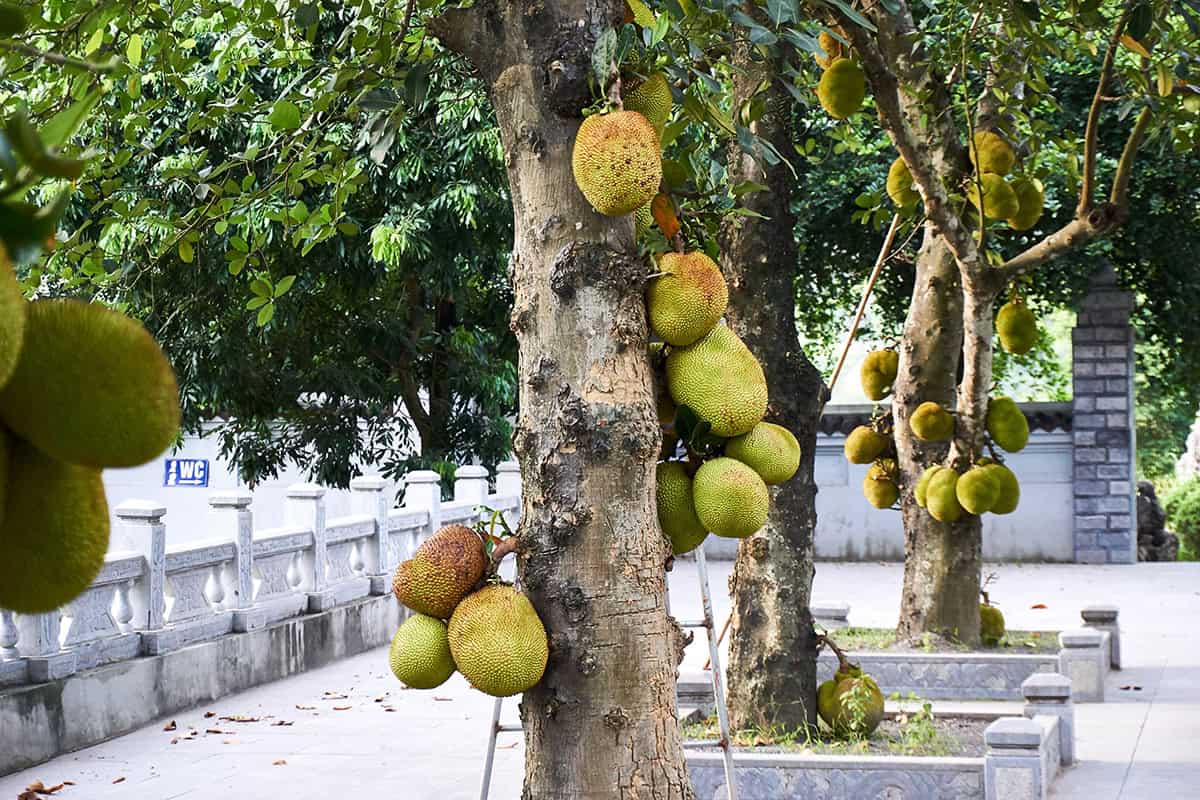
Jackfruit grows the largest fruit of any tree, and a single one hanging off the trunk tips the scale at 10 to 60 pounds or more.
Inside, dozens of golden, waxy pods smell like a mix of banana and pineapple, and unripe fruit cooks into a meat substitute. The tree, native to India and the national fruit of Bangladesh, needs steady heat, full sun and soil that drains fast.
Its sticky latex clings to knives and hands, and the harvest section includes a simple trick for cutting fruit cleanly.
Table of Contents
Quick Care Summary
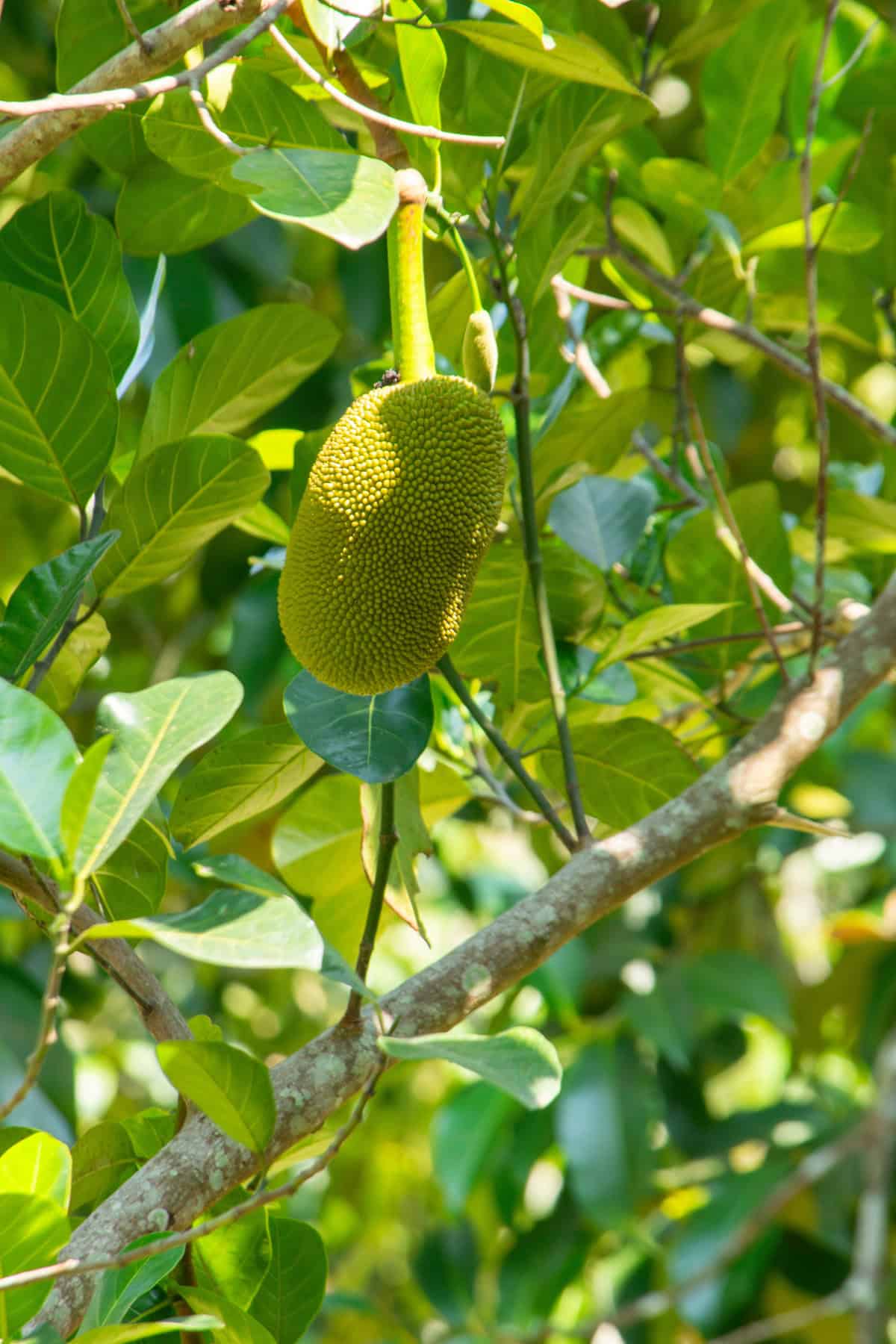
Warmth, sun and space matter most, and jackfruit outgrows most expectations in the right climate.
- Light: Full sun, 6–8 hours or more
- Soil: Well-drained sand, loam or rocky soil; pH 6.0–7.5
- Watering: Regular while young; deep soaks in long dry spells
- Temperature: 70–90°F; leaves damaged at 32°F
- Humidity: Moderate to high
- Fertilizer: Balanced fertilizer with trace elements, several times a year
- Propagation: Grafted trees or fresh seed
- USDA Zones: 10–11
- Fruiting season: Summer into fall
Jackfruit roots die after a few days in flooded soil, so drainage comes first. Grafted trees produce good fruit within a few years in warm climates.
Plant Overview
Jackfruit, Artocarpus heterophyllus, forms a straight trunk and a dense, rounded crown of thick, glossy leaves. Its fruit grows directly from the trunk and main branches, and each one forms from hundreds of fused flowers.
In frost-free climates, the tree holds its leaves year-round. Unpruned trees reach 30 to 40 feet in home landscapes, and regular pruning holds them much lower. Early growth is slow, and the pace picks up once the roots establish.
- Botanical name: Artocarpus heterophyllus
- Common names: Jackfruit, jak, kathal
- Plant type: Evergreen tropical fruit tree
- Mature size: 30–40 feet tall in home landscapes
- Growth rate: Moderate to fast in warm climates
- Toxicity: Fruit and roasted seeds are edible; the milky latex irritates sensitive skin
- Native region: Western Ghats of southern India
Lighting Requirements
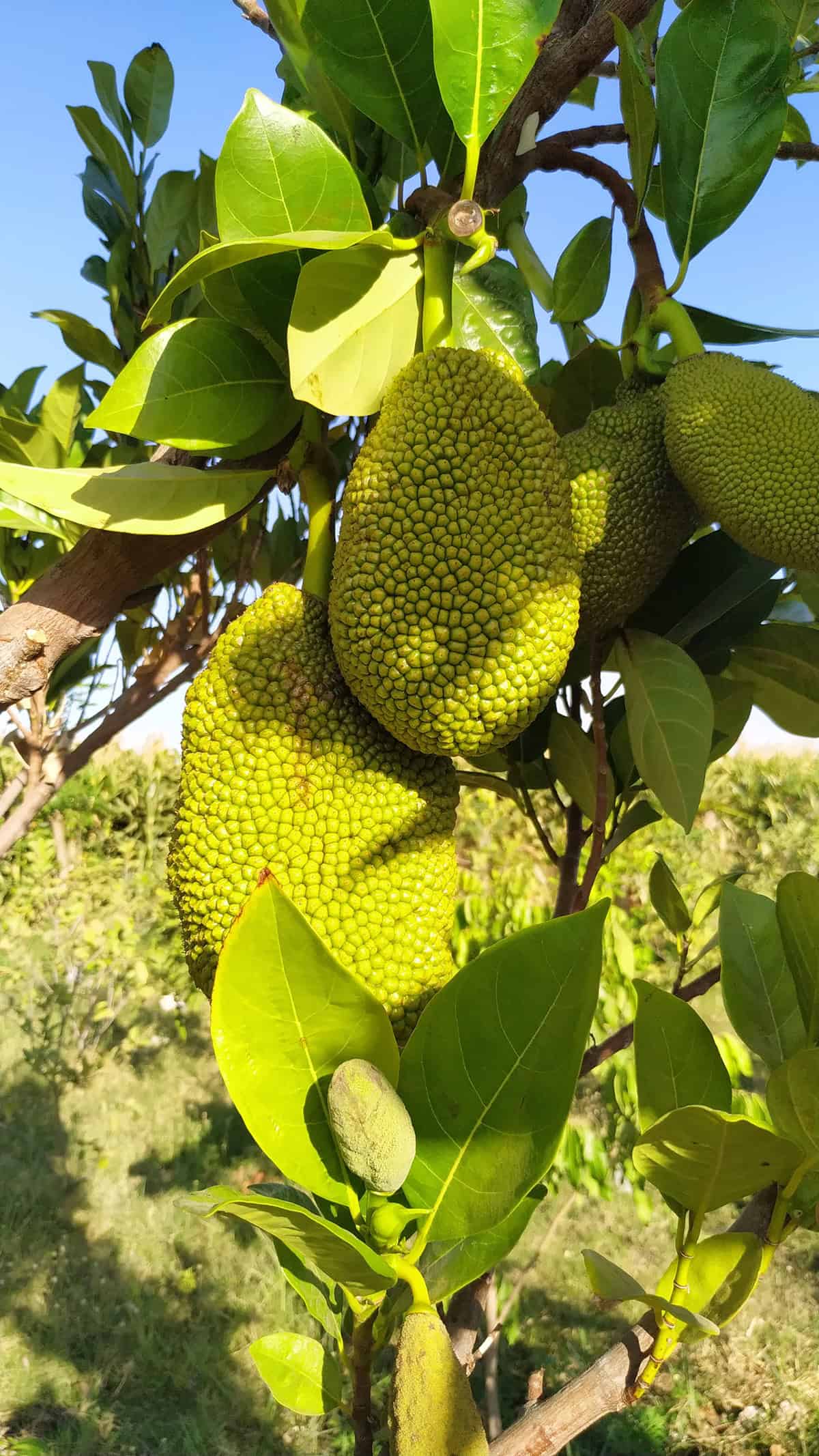
Jackfruit needs six to eight hours of direct sun at minimum. Shady spots or sites near tall buildings produce fewer flowers, thin branches and poor fruit.
Choose the sunniest, most open spot available. Shade cloth during brutal heat waves protects young trees for a short time, but the tree needs full sun soon after.
Indoor growing rarely succeeds, even with grow lights running 10 to 12 hours a day, and container trees need the brightest location available. Cloudy or cool spells slow flowering and delay harvests, and the best fruit comes from steady sun and warmth.
Watering Needs
Young jackfruit trees need steady moisture during their first few years. In dry spells, water a couple of times a week, enough to hold the top few inches of soil moist and never swampy. A finger test shows when to water.
Established trees handle short droughts, but deep watering during long dry periods improves the fruit. Soak the soil down to the deeper roots, and water less when rain returns or the weather cools.
Standing water kills jackfruit quickly, since roots rot within a few days of waterlogging. Mulch holds moisture, as long as a gap separates it from the trunk.
Soil Preferences
Fast-draining soil matters most for jackfruit. After heavy rain, the ground should dry quickly, and spots where puddles linger are poor planting sites.
Sand, sandy loam and rocky ground all grow good trees as long as water moves through. Drainage matters more than richness.
In flood-prone yards, plant on a mound 2 to 3 feet high to lift the roots above wet soil. Compacted or sticky clay suffocates roots and cuts fruit production.
A pH between 6.0 and 7.5 is best, and slightly alkaline soil is fine with sharp drainage. In very alkaline areas, chelated iron prevents yellow leaves.
Backfill mostly with native soil instead of heavy compost, and loosen a wide area around the hole. A 2- to 4-inch mulch layer, pulled back from the trunk, evens out moisture and builds topsoil over time.
Temperature and Humidity
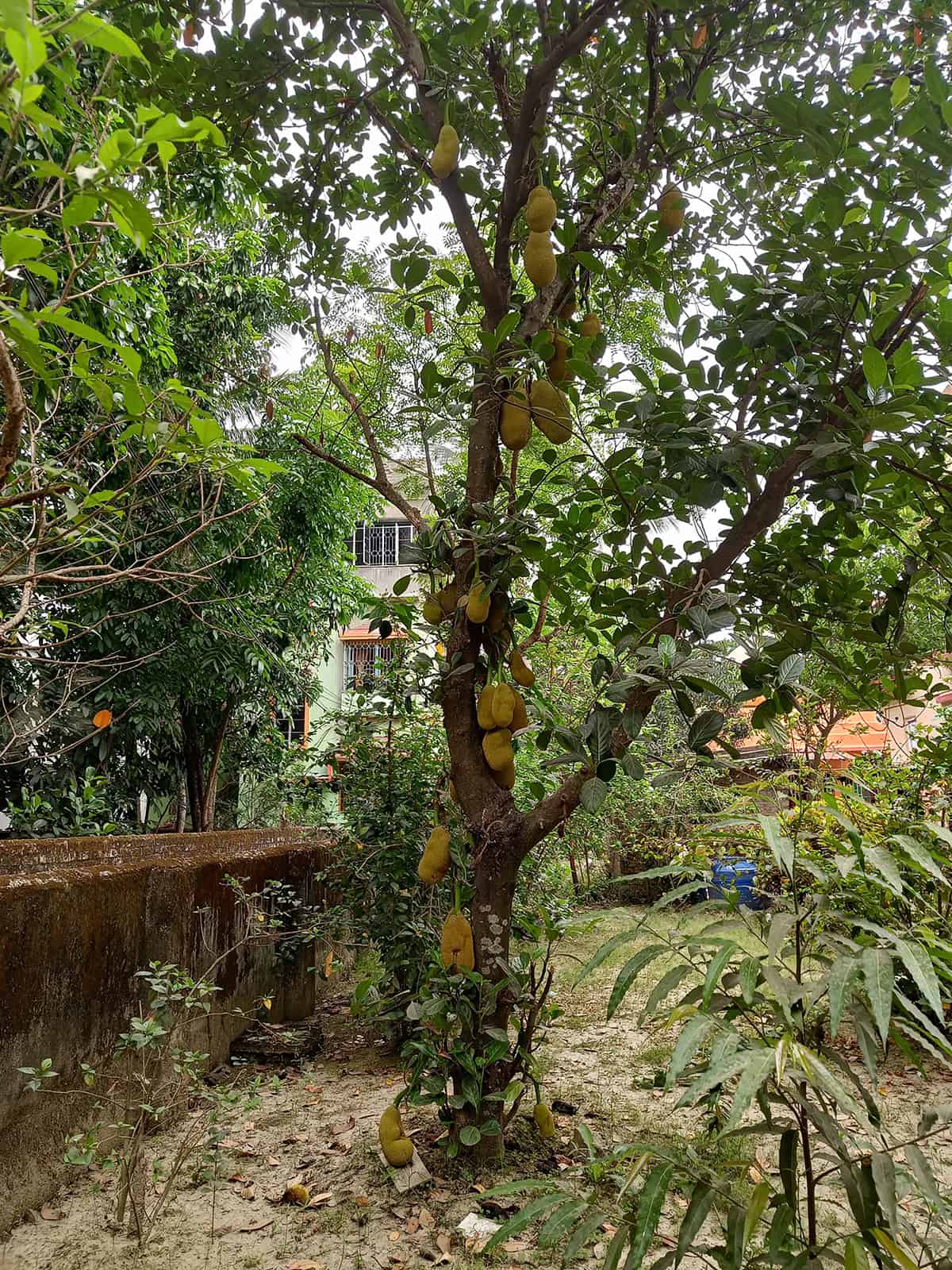
Jackfruit grows best between 70°F and 90°F. Growth slows below 60°F, leaves suffer at 32°F, and a hard frost near 28°F kills most trees.
USDA Zones 10 and 11 are best, and sheltered spots in Zone 9b succeed occasionally. Frost cloth or a site beside a heat-reflecting wall protects young trees during cold snaps.
Moderate to high humidity supports healthy leaves and fruit development, and dry air stresses young trees, which need extra water during droughts. In muggy regions, good air movement limits fungal problems.
Fertilizer Guidelines
Start feeding jackfruit once new growth appears after planting. A balanced fertilizer such as 6-6-6 or 8-3-9 with trace elements fits its needs.
During the first year, apply about a quarter pound per tree every couple of months, scattered over the root zone away from the trunk and watered in.
Increase the amount as the tree grows. Mature trees need two or three feedings between bloom and post-harvest, and too much nitrogen late in the year reduces flowering.
Watch micronutrients, especially iron in high-pH soil. Foliar sprays with minor elements and chelated iron drenches prevent yellowing. Trees in rich soil need less fertilizer.
Container Cultivation
Jackfruit grows in a container on patios and in small yards, although it takes effort. Choose a wide pot at least 18 inches deep, since shallow pots cramp the roots and stall growth.
A heavy, stable pot with large drainage holes prevents tipping as the tree grows top-heavy. Use a loose, fast-draining blend of potting soil with sand or perlite and organic matter, and skip garden soil.
Place the pot in six to eight hours of direct sun, and move it to the warmest, most sheltered spot available when frost threatens. Water when the top couple of inches dry, empty the saucer and water less in winter.
Feed every two months during active growth, with larger doses as the tree fills out, and repot every few years. Regular pruning holds a potted jackfruit to a manageable size.
Potting and Repotting
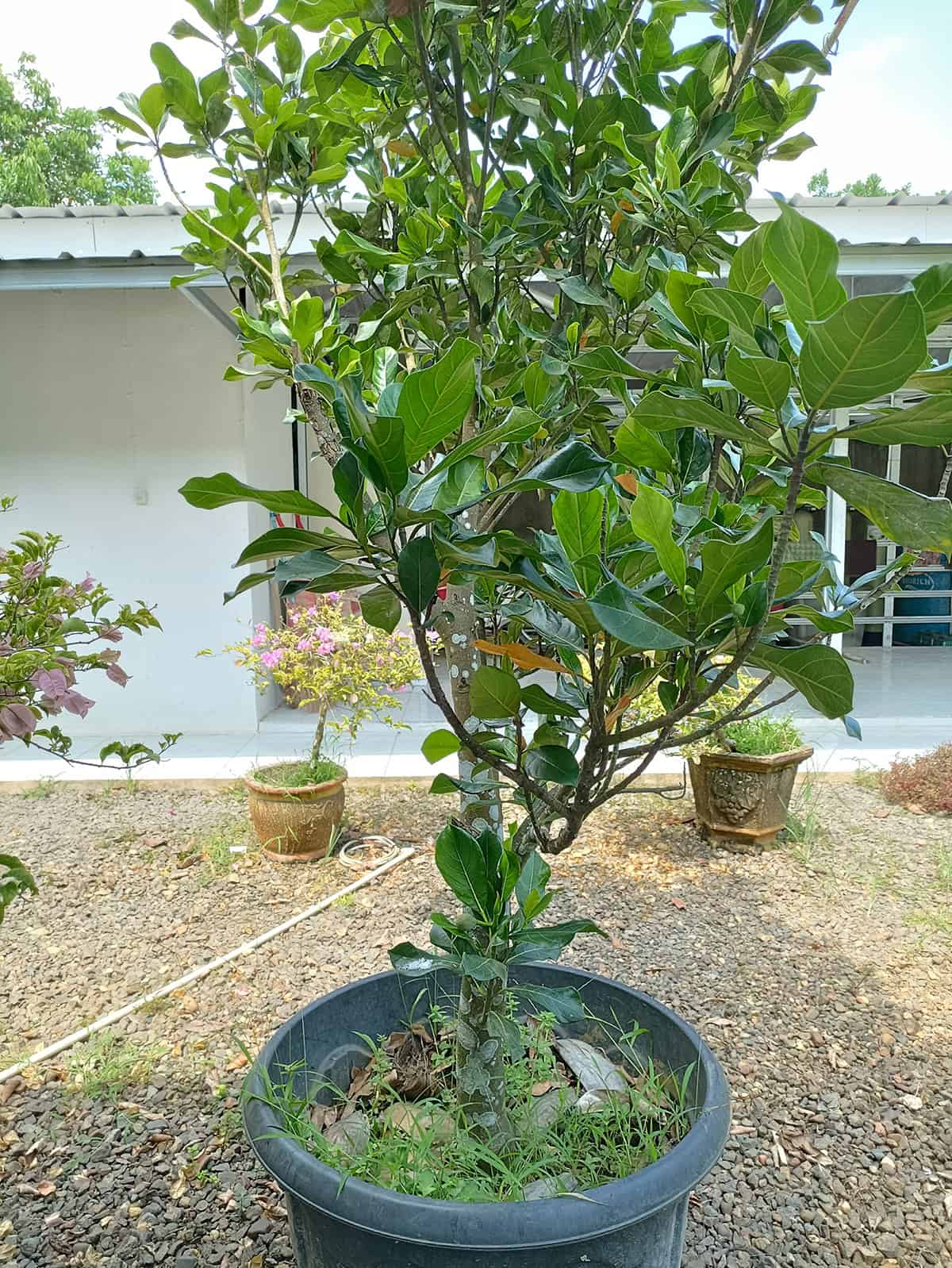
Start a container jackfruit in a pot of at least 15 to 25 gallons with drainage holes, and move up as the roots fill it.
Use a fast-draining potting blend of sand, pine bark and perlite, and set the root crown slightly above the soil line to prevent rot.
Place the pot in full sun, and move it indoors or into shelter during cold snaps, since even light frost causes serious damage.
Every couple of years, or when roots circle the pot and growth slows, slide the tree out, loosen the roots and trim dead or damaged ones. Move it to a pot a few inches wider, water deeply and resume light feeding once new growth appears.
Pruning Techniques
Unpruned jackfruit grows too large for most backyards. A height between 8 and 14 feet makes harvests safer and reduces broken limbs.
Start shaping early. Choose three or four strong side branches with wide angles, and remove weak or crowded shoots for a sturdy framework that carries heavy fruit.
Cut back vertical shoots to limit size and open the canopy, since more light inside improves flowering and fruit set. Clean shears limit the spread of disease.
Prune once or twice a year, after harvest. Remove dead or damaged wood first, then shorten long branches for balance. On young trees, limit the crop to one fruit per main branch until the tree establishes.
Propagation Methods
Most home growers start jackfruit from seed or buy grafted trees.
Fresh seed sprouts easily but loses viability within weeks, so sow it soon after harvest from a healthy tree. Plant it in deep pots for the taproot, in warm, moist conditions. Seedlings fruit in three to four years in good conditions, though flavor, size and yield vary from the parent.
Grafting joins a scion from a known variety onto vigorous rootstock and produces a tree that matches the parent. Side veneer grafting is the most common method, and cleft grafting and chip budding also succeed. Grafted trees fruit sooner and more predictably.
Semi-hardwood cuttings root occasionally with rooting hormone and high humidity, but results vary, and most home growers skip them.
Fruiting and Harvest
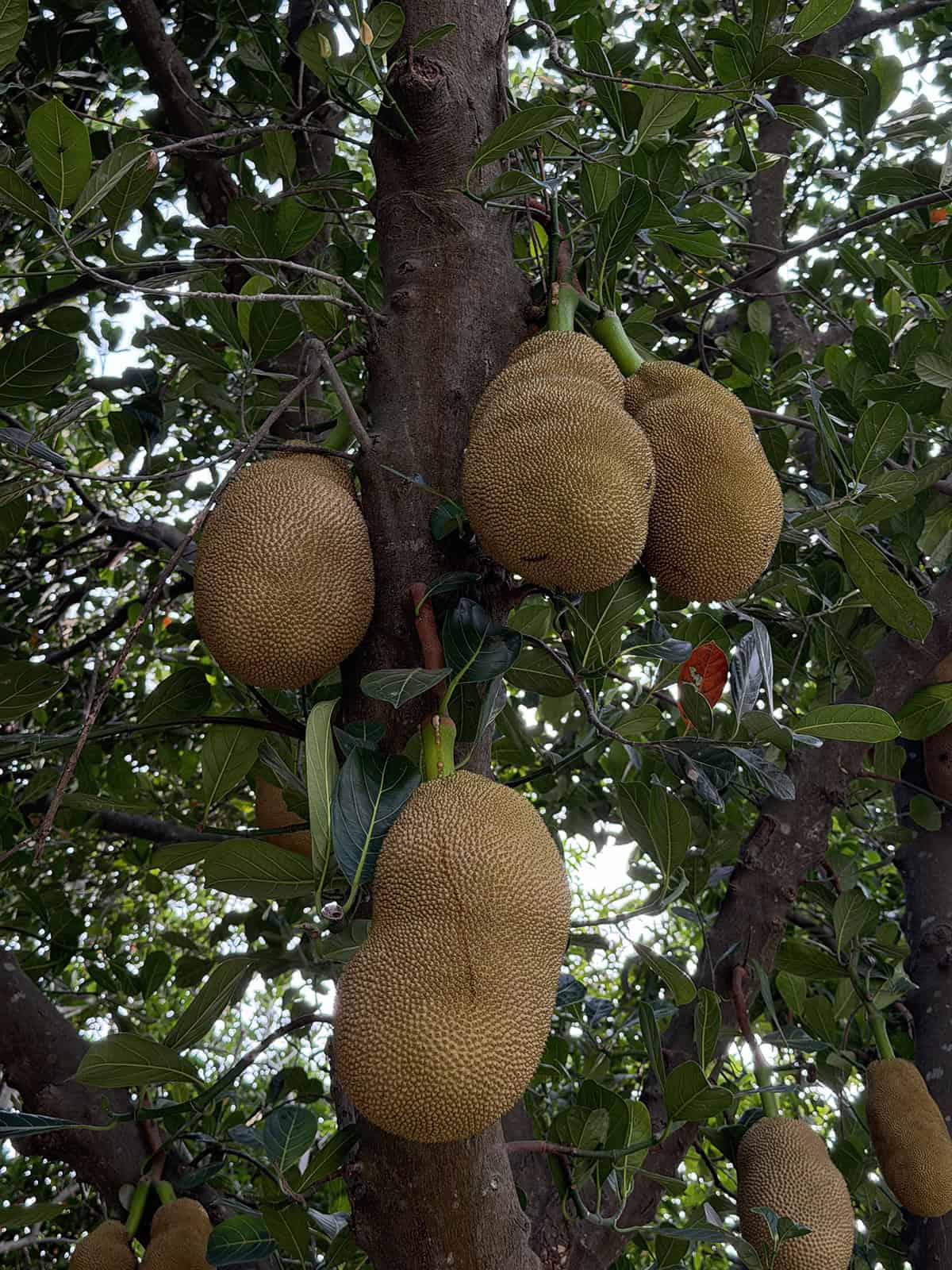
Grafted jackfruit trees produce their first crop three to four years after planting, while seedlings take longer. Consistent warmth supports steady flowering and fruit set.
Mature trees produce dozens of fruit each season, and well-tended older trees exceed a hundred. Individual fruit reaches 35 inches long and more than 50 pounds, with size varying by variety and care.
As fruit ripens, the skin shifts from deep green to a paler yellowish tone, the spines flatten slightly and a tap produces a dull, hollow sound. The scent also grows strong and sweet.
For shipping, pick fruit as it starts to yellow, and for home use, wait for deeper color and a strong aroma. Cut the stalk with a sharp blade or pruning saw and leave a stub for carrying.
Heavy fruit needs slings or ties to protect branches. Handle each fruit gently, since bruises shorten its life. Before opening a fruit, coat the knife and hands with cooking oil, which stops the sticky latex from clinging.
Common Problems
Young trees drop clusters of blackened flower spikes, which alarms many growers. These are male flowers, which appear first and fall naturally, while female flowers set fruit as the tree matures.
Rhizopus rot flares up after rain and lingering humidity, with soft, dark patches on flowers and young fruit. Remove affected fruit right away and thin the canopy for airflow.
Scale insects cluster on leaves and stems, sap strength and leave sticky honeydew that attracts black sooty mold. Horticultural oil or insecticidal soap controls them, applied outside the heat of the day.
Slow or stunted growth points to soggy soil or dry spells, which also cause leaf drop. Well-drained soil and mulch hold moisture steady.
Cold snaps threaten trees outside the tropics, and a brief freeze kills young trees. Covers, windbreaks and sheltered planting spots protect them in borderline zones.
Popular Varieties
Named jackfruit varieties differ widely in size, shape, flesh firmness and sweetness, and a reputable nursery matters, since seedlings vary.
‘NS1’, from Malaysia, produces medium to large fruit with rich yellow, firm and sweet flesh on a smaller tree. ‘J-31’ thrives in warm, humid climates and produces heavy crops with firm flesh that holds up in cooking.
‘J-30’ has mild, balanced sweetness and manageable fruit size, and ‘Gold Nugget’, selected in Australia, produces small fruit with deep orange, intensely flavored flesh.
Many tropical growers still plant seedlings, but named, grafted varieties produce far more predictable fruit.