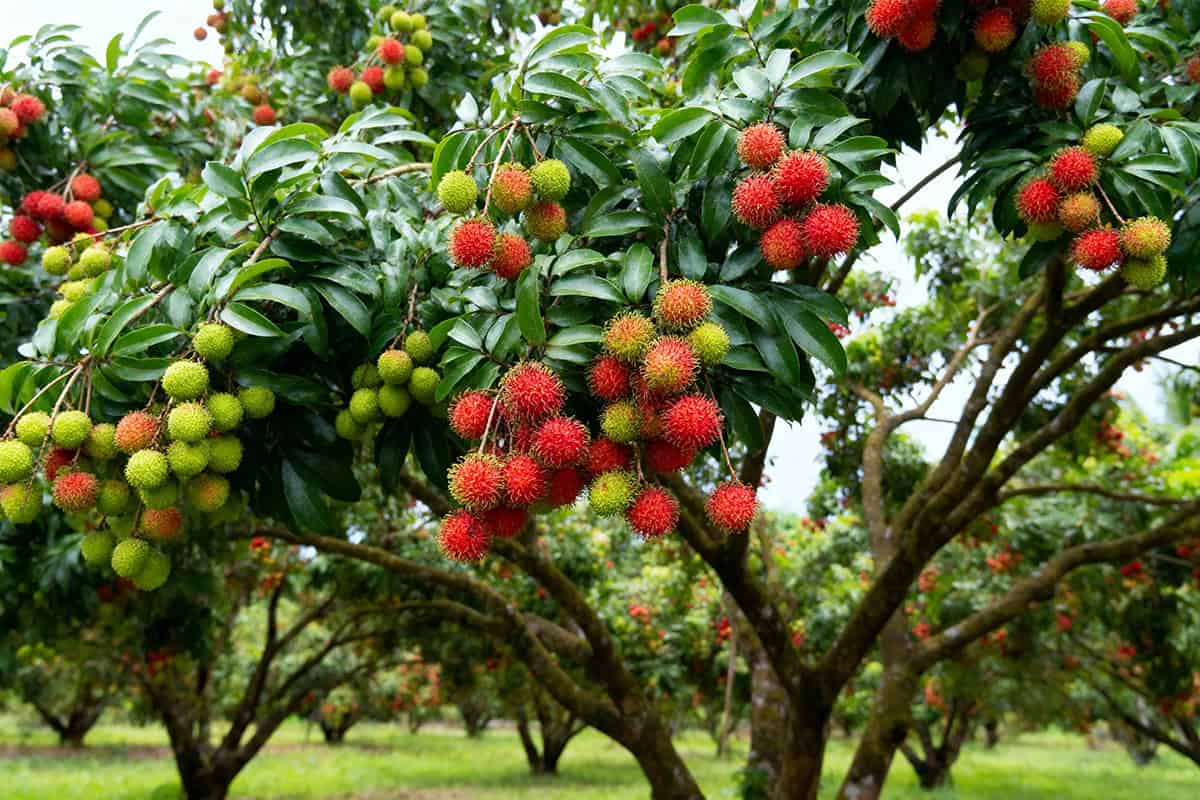
Rambutan fruit looks like a red sea urchin, covered in soft, hair-like spines, and its name comes from rambut, the Malay word for hair.
Under the leathery rind sits translucent, sweet flesh much like lychee, its close relative. Year-round warmth, humidity above 70 percent and deep, slightly acidic soil produce good crops.
Rambutan stops ripening the moment it leaves the tree, and the harvest section explains how rind color signals the right day to pick.
Table of Contents
Quick Care Summary
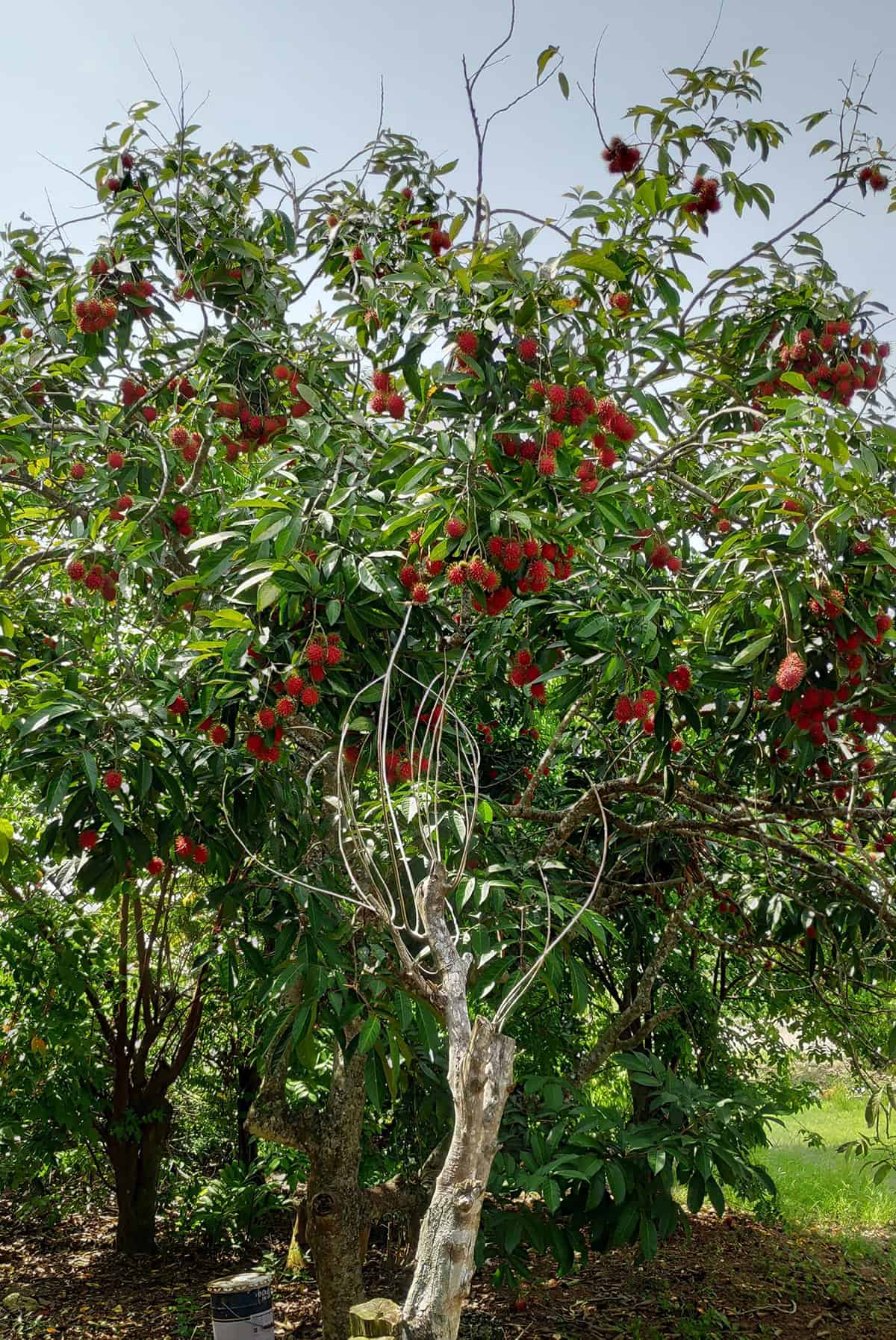
Rambutan needs warmth, humidity and steady moisture, and cold or drought stunts it quickly. Frost-prone gardens and small spaces call for a greenhouse or container plan.
- Light: Full sun; light shade only in extreme heat
- Soil: Deep, loose loam rich in organic matter; pH 5.5–6.5
- Watering: Even moisture
- Temperature: 70–90°F; damaged below 50°F
- Humidity: 70 percent or higher
- Fertilizer: Balanced during growth; more potassium before flowering and fruiting
- Propagation: Grafted or air-layered trees for good fruit
- USDA Zones: 11–12 outdoors; marginal in 10b
- Fruiting season: Late spring through summer in most tropical regions
Pick fruit only when the rind is fully red or yellow, since rambutan ripens no further off the tree. Stored cool, at 50°F to 54°F, and humid, it lasts about two weeks.
Plant Overview
Rambutan, Nephelium lappaceum, belongs to the soapberry family, Sapindaceae, along with lychee and longan. Its nickname, hairy lychee, comes from the soft spines on the rind and the similar sweet, juicy flesh.
Steady heat and moisture produce a rounded, dense canopy that lasts for decades. Clusters of red or yellow fruit hang from the branch tips, and each fruit holds a single seed wrapped in translucent, vitamin C-rich flesh.
- Botanical name: Nephelium lappaceum
- Common names: Rambutan, hairy lychee
- Plant type: Evergreen tropical fruit tree
- Mature size: 40–60 feet tall in the ground; smaller with pruning
- Growth rate: Moderate in good conditions
- Toxicity: Flesh is edible; the seed and rind are discarded
- Native region: Malaysia and Indonesia
Frost kills the tree, and steady warmth is essential for flowering and fruit set.
Light
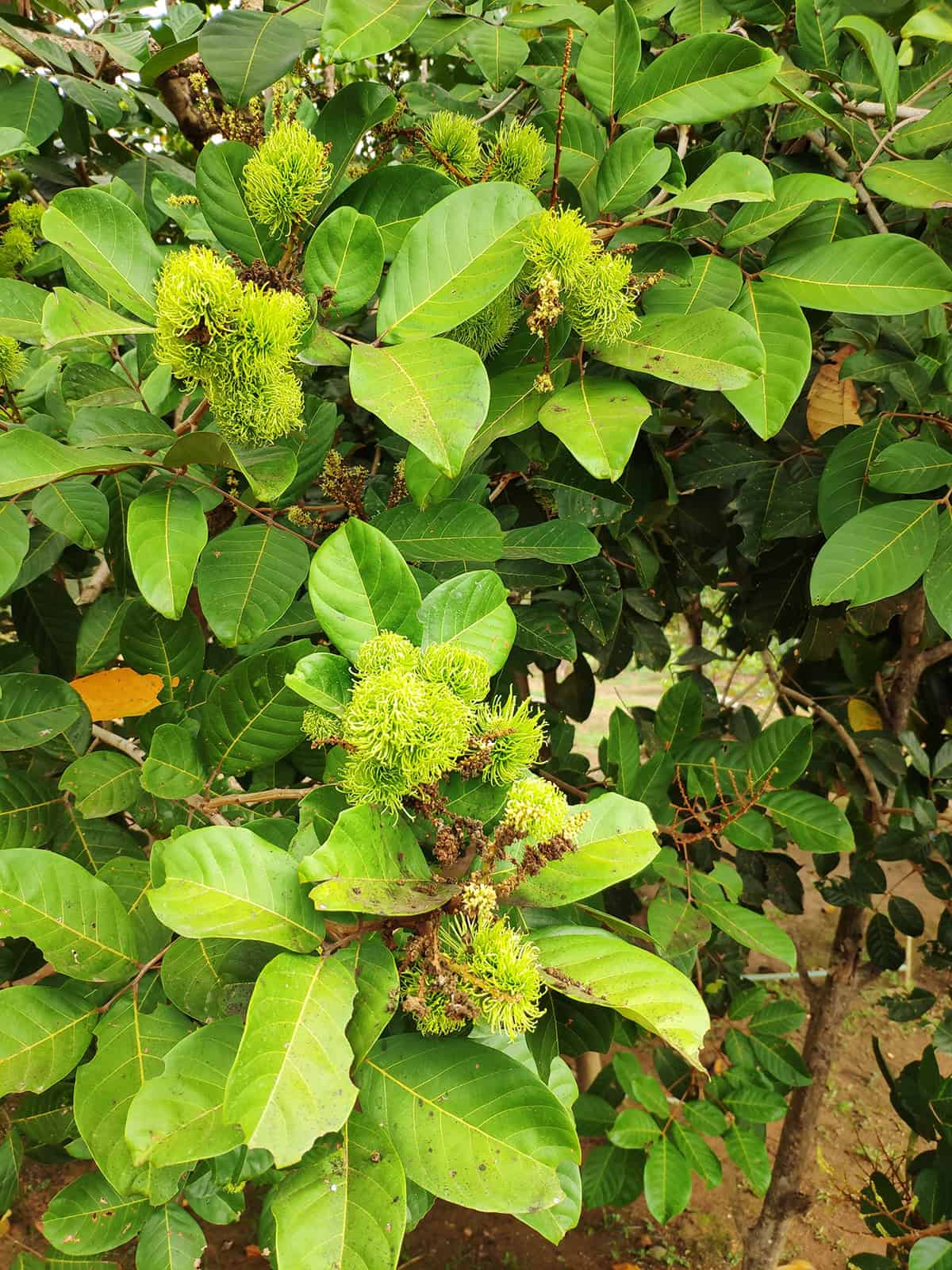
Full sun for most of the day, ideally 6 to 8 hours of direct light, produces strong growth, good fruit set and a dense canopy.
Young trees tolerate some shade during brutal summers, but heavy shade cuts flowering, shrinks the harvest and weakens the branches.
In the tropics, full sun after a short dry spell triggers the main flush of blooms, and low light delays flowering and reduces fruit size.
Indoor and greenhouse trees need a south-facing window or strong grow lights. Pale leaves and stretched shoots point to too little light, and healthy, well-watered trees handle tropical sun with only rare scorch in extreme heat.
Water
Rambutan needs moist soil, never soggy, since roots rot quickly in standing water. Check about six inches down, and water when the soil is dry at that depth.
Young trees need the most attention during their first couple of years. After planting, check them daily for two weeks, then weekly, with adjustments for rain and heat.
Deep, less frequent watering encourages deep roots and drought resilience better than frequent sprinkling. Water at the drip line instead of at the trunk.
Drip irrigation or a soaker hose delivers slow, steady water efficiently. Morning watering limits evaporation and dries the leaves before night, which helps prevent disease.
Soil
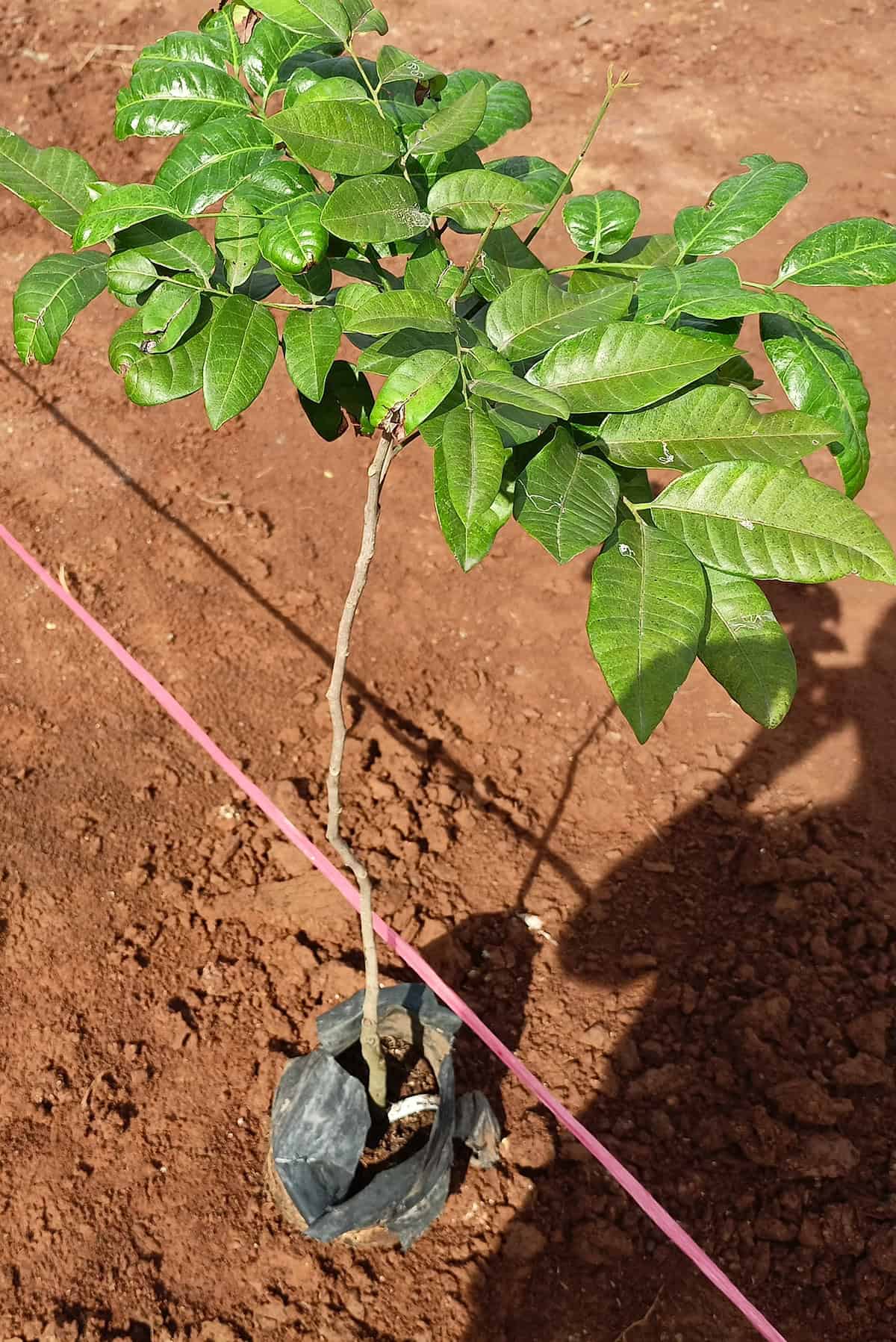
Rambutan roots need soil that drains quickly but holds some moisture, and sites where puddles linger after rain are poor choices.
Loam produces the healthiest trees. Heavy clay suffocates roots and holds too much water, while pure sand leaves them dry and underfed.
A slightly acidic pH between 5.5 and 6.5 is best. Test before planting and adjust with lime or sulfur, since alkaline soil blocks nutrient uptake.
Sloping ground drains well in high-rainfall areas, and raised beds help on slow-draining flats. Instead of filling a small hole with rich mix, mix compost or other organic matter into the soil at least a foot deep over a wide area, which lets roots spread into native soil. Mulch with a gap of a few inches around the trunk.
Temperature & Humidity
Rambutan grows reliably and fruits well when temperatures hold above about 68°F, with daytime highs between 75°F and 90°F. Below 50°F, the tree struggles, especially during long cool nights, and chilling injury darkens or bronzes the fruit skin.
Frost sets young trees back or ruins a crop, so borderline climates need a greenhouse or a movable container.
Relative humidity of 70 to 90 percent supports healthy growth, while dry air causes leaf scorch, fewer flowers and browning fruit. Moist air also extends shelf life, and low humidity speeds skin darkening after harvest. Regular irrigation, mulch and windbreaks raise humidity around the tree.
Equatorial regions with steady rain and low evaporation are rambutan’s natural home, and drier or cooler areas need extra effort year-round.
Fertilizer
Young rambutan trees need more frequent feeding than mature ones, and balanced, steady nutrition produces a fuller canopy and better fruit.
For the first three years, apply a balanced fertilizer such as 10-10-10 or 12-12-12 with micronutrients every couple of months, spread under the canopy and watered in.
Older trees shift toward potassium. As fruiting season approaches, a high-potassium formula such as 8-6-32 improves fruit quality and sweetness, and excess nitrogen produces a leafy tree with sparse crops.
Feed between early spring and midsummer during active growth, and skip late feedings that push soft, cold-sensitive growth. Compost or well-rotted manure once or twice a year improves the soil and reduces the need for synthetic fertilizer.
Growing in Containers
Rambutan grows in containers with careful attention to climate and space. Choose a heavy pot at least 20 to 24 inches wide with plenty of drainage, which prevents the top-heavy tree from toppling, and repot every couple of years.
Use a rich mix that holds moisture and drains fast, such as potting soil, compost and coarse sand or perlite, and set the root flare just above the soil line.
Outdoor pots need full sun, and indoor trees need a south-facing window or strong grow lights, with temperatures between 70°F and 90°F and no cold drafts.
Water when the top inch dries, and let the excess drain. Indoor humidity is a challenge, and a humidifier or pebble tray helps. Feed every six to eight weeks during growth, and less in cooler months.
Potting & Repotting
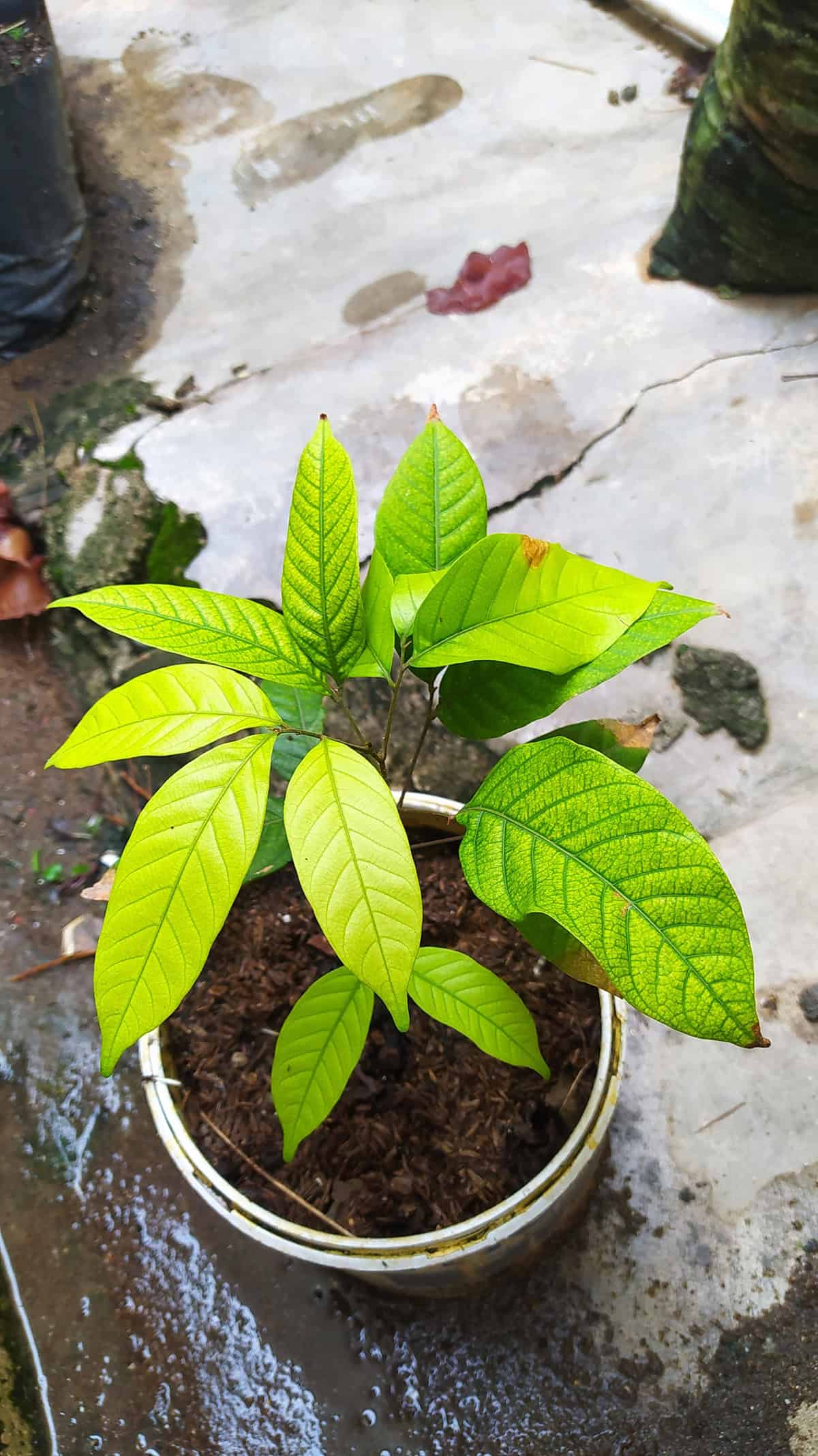
Outside the tropics, large containers hold rambutan. Young trees grow best in pots at least 18 to 24 inches across with wide drainage holes.
Use a loose, airy potting mix for tropical plants or fruit trees, and skip garden soil, which compacts, drains poorly and carries pests.
When roots circle or fill the pot, move the tree up a size during warm weather and active growth, since rootbound trees stall.
Cover the drainage hole with mesh, add fresh mix so the root ball sits an inch or two below the rim, set the tree at its original depth, fill around it and firm gently. Soak the pot afterward, place the tree in bright, indirect light for a few days and resume feeding only after new growth appears.
Pruning
Pruning puts fruit within reach and lets sunlight into lower branches, which improves flowering and fruit set. Once or twice a year is enough.
Prune after harvest or during a dry spell, and avoid heavy cuts before cool weather, which stresses the tree and reduces the next crop. Sharp pruners, loppers and saws make clean cuts.
Remove dead, diseased or broken branches first, along with rubbing branches and narrow forks that split under heavy fruit. Strong, wide-angled branches form the best framework.
Thin by cutting back to main limbs or the trunk, just outside the branch collar, with no stubs. Use a three-cut method on limbs over 2 inches thick to prevent bark tearing.
Shorten the tallest leaders to control height, since horizontal branches fruit better than upright ones, and reduce an oversized tree gradually over several seasons. Disinfect tools after cutting diseased wood.
Propagation
Rambutan grows from seed, air layers and grafts, but the results differ.
Seeds lose viability quickly and need sowing fresh from ripe fruit in moist, well-drained mix, where they sprout in two to three weeks in warm conditions.
Seedlings take five to eight years to fruit, and fruit size, sweetness and yield vary widely. Many seedlings also grow into male trees that bear no fruit.
Air layering and grafting produce trees identical to the parent, with earlier, more reliable crops. Commercial orchards rely on grafted trees for uniformity and an earlier payoff.
Fruiting & Harvest
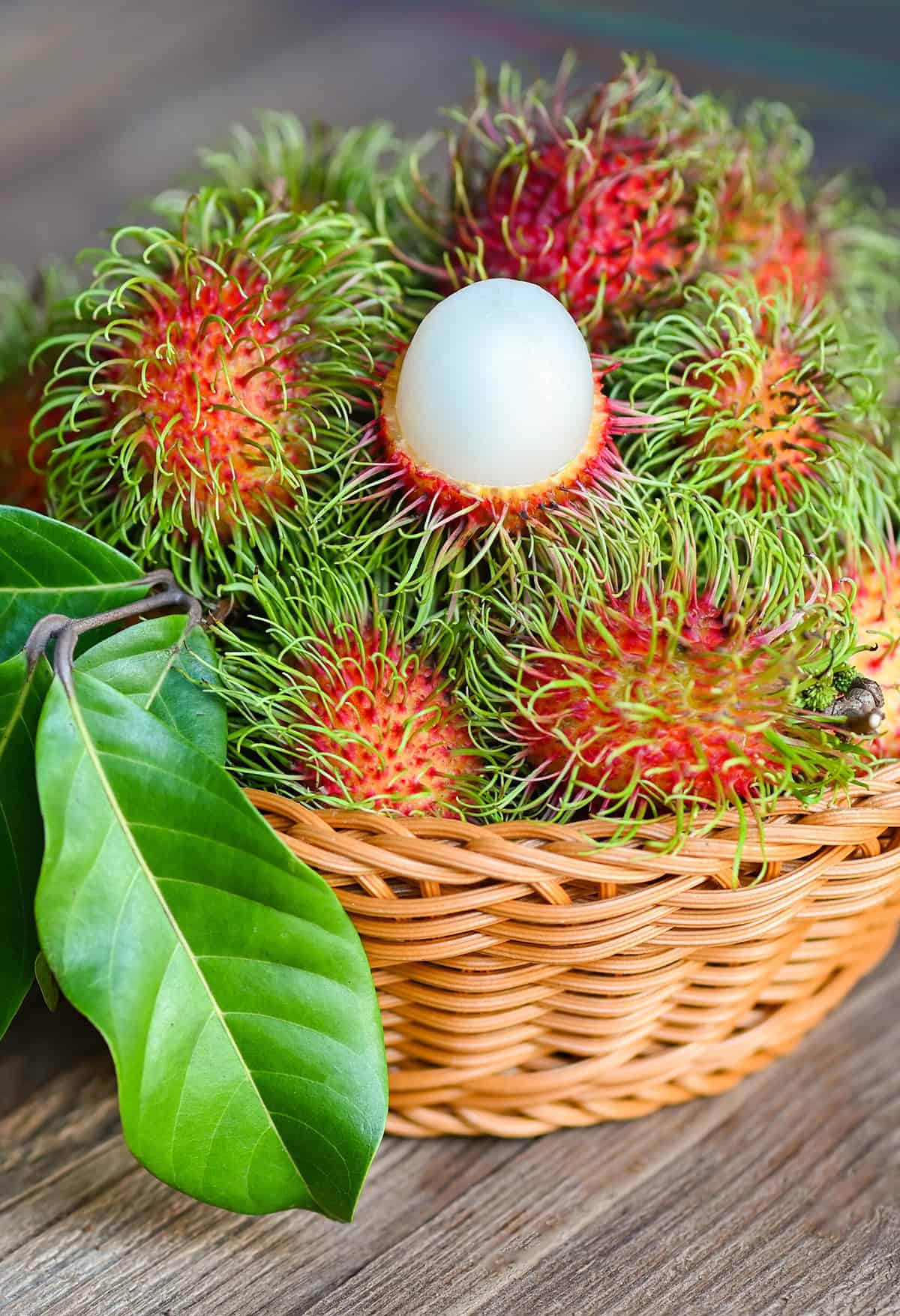
Seedlings take four to six years or more to fruit, and grafted trees fruit sooner. Most trees produce one main crop a year, and climates with distinct seasons occasionally produce a smaller second crop from early or late varieties.
Trees bloom after a stretch of dry weather, and fruit sets in clusters at the branch tips. Inside the bristly rind, the sweet, translucent flesh clings to a single seed.
Ripeness shows in the rind, which colors fully red, red-yellow or yellow by variety. Cut whole clusters with sharp, clean tools, since tugging at individual fruits bruises and scars them, and rough handling browns the skin and shortens shelf life.
Rambutan stores best at 50°F to 54°F with 90 to 95 percent humidity, where it lasts nearly two weeks. At room temperature, the fruit shrivels and darkens within a couple of days.
Common Problems
Soggy soil suffocates rambutan roots and leads to yellow leaves, slow growth and root rot. Check drainage after heavy rains.
Warmth and humidity encourage fungal disease. Dark, sunken blotches on fruit or leaves after wet spells point to anthracnose, and powdery mildew dusts young shoots and flowers with pale fuzz. Pruning dense or infected growth improves airflow.
Mealybugs, scale and aphids curl leaves and leave sticky residue that grows sooty mold. A strong spray of water reduces their numbers, and horticultural oil controls heavier infestations.
Fruit flies leave tiny punctures and mushy spots as larvae feed inside. Traps reduce numbers, and prompt harvest as soon as fruit colors is the best protection.
Poor nutrition, low humidity and wild weather swings leave trees more vulnerable to every problem, and regular checks with quick responses limit damage.
Popular Varieties
Only a handful of named rambutan varieties appear in backyard groves and small farms, and they differ in sweetness, how freely the flesh separates from the seed and ripening time. Grafted trees from trusted nurseries produce predictable fruit.
‘Rongrien’, from Thailand, produces bright red, bristly fruit with sweet flesh that separates cleanly from the seed, and it bears reliably in warm, humid conditions.
‘Seechompoo’ has firmer, crisp flesh and pinkish-red skin that deepens as it ripens, and its sweet flavor and even clusters make it a fresh-market favorite.
‘Binjai’, from Indonesia, has dark red skin and thick, sweet flesh with little tartness, and the seed slips out easily. It grows vigorously near sea level in the tropics.
Yellow and orange types also exist, though they appear less in plantations. Fruiting once or twice a year depends on local weather and variety, so matching the choice to the climate matters most.