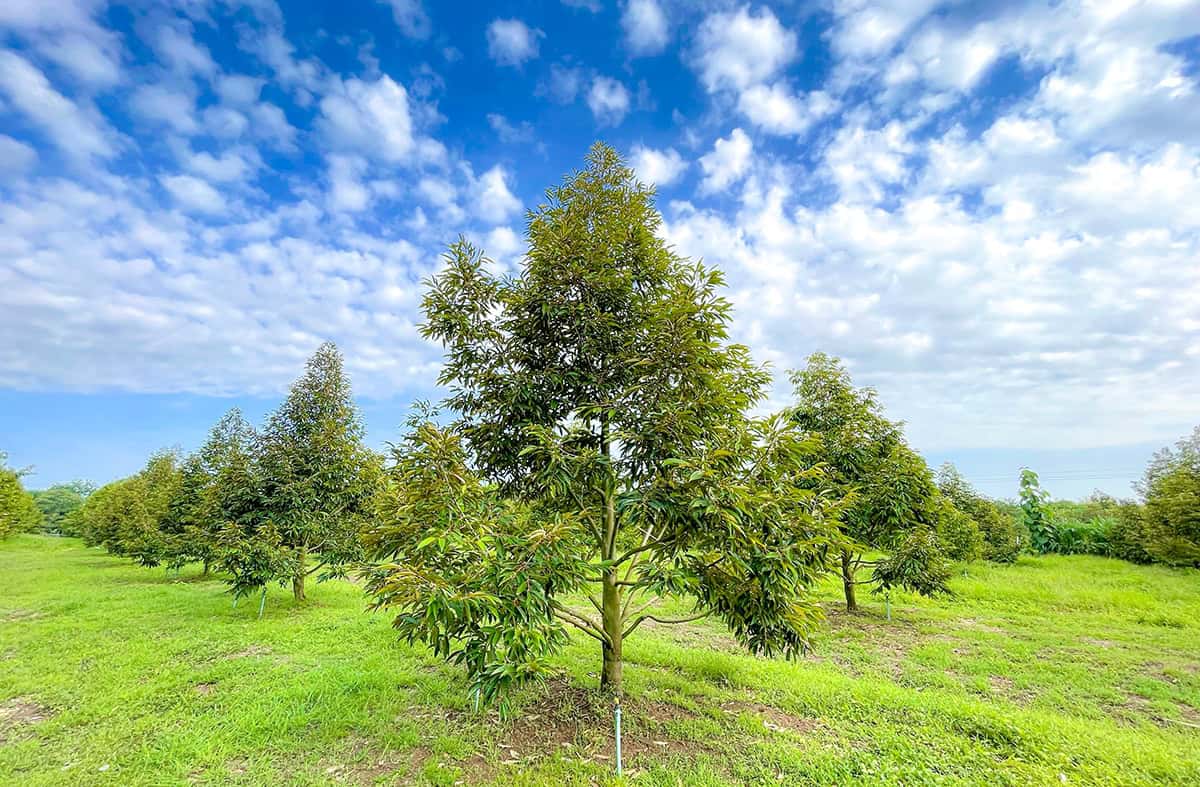
Growing your own durian tree is a long-term project that pays off with unforgettable harvests. Warm temperatures, rich soil, and steady care help young trees establish strong roots. Once they settle in, they become a striking feature in the landscape. This guide covers everything you need to know.
Table of Contents
Quick Care Summary
Heat, humidity, and rich, deep soil—these are non-negotiables for durian. The tree likes elbow room and sunlight, and it’s a long-haul project.
Light: At least 6–8 hours of direct sun.
Soil: Deep, fertile loam loaded with organic matter; pH 6.0–7.0.
Water: Keep moisture steady all year; a short dry spell can help flowering in mature trees.
Temperature: 75–95°F; frost is a dealbreaker.
Humidity: High, always.
Fertilizer: Go for a balanced mix with extra potassium, several times a year.
Propagation: Grafted trees for fruit, seed for rootstock.
USDA Zones: 10–12.
Fruit Season: Usually late spring through summer, but climate can shift timing.
Durian’s sweet spot is within 16 degrees of the equator. Annual rainfall between 1,500 and 3,000 mm keeps things moving. Young trees hate strong wind and cold snaps, so shelter them well.
Spacing matters—plan on 25–40 feet between trees. Light pruning shapes the structure and keeps weak wood out of the picture. For mature trees, a brief dry spell before bloom, then moderate water after fruit set, is ideal. Don’t drown the roots at this stage; too much water means bland fruit.
Pick fruit when the aroma is unmistakable and it’s ready to drop. Handle with care—those husks are no joke. Stick with regular care for steady yields and a robust canopy.
Plant Overview
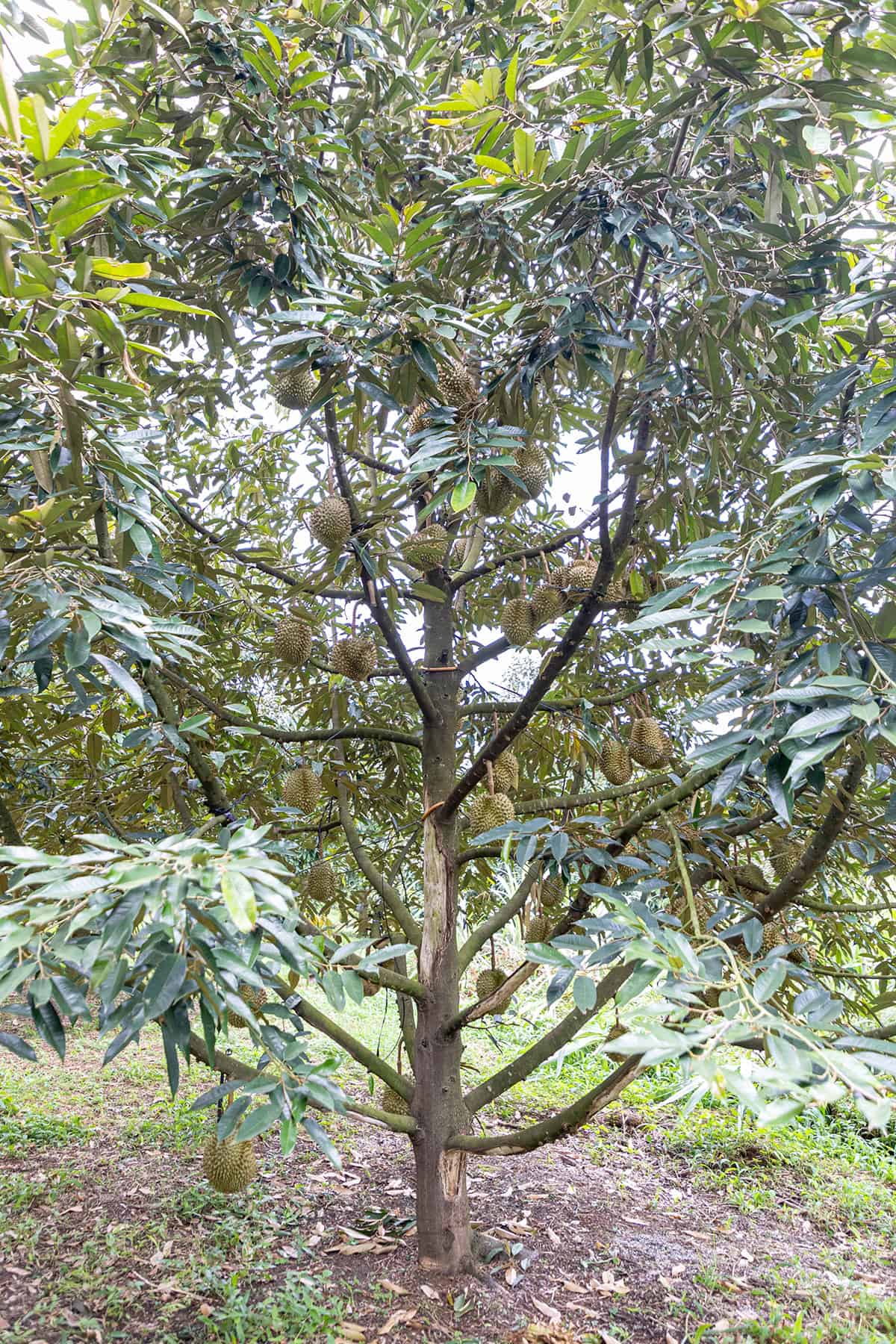
Durian comes from Durio zibethinus, a tropical evergreen that’s famous (or infamous) for its big, spiny fruit. In Southeast Asia, it’s often called the “king of fruits.” This tree craves warmth and humidity, and it’ll stretch out for decades if you let it. Planning ahead is essential—a durian orchard is a commitment.
Stable heat, deep soil, and consistent moisture aren’t optional. Under perfect conditions, a durian can tower over 80 feet, though grafted varieties stay more manageable. Fruit takes years; how many depends on your care and climate. The ripe fruit’s scent is legendary—some love it, some can’t stand it—but the flesh is rich and sweet.
Botanical name: Durio zibethinus
Common names: Durian
Plant type: Tropical evergreen fruit tree
Mature size: 50–100 feet tall in ground
Growth rate: Moderate when conditions are right
Toxicity: Fruit is edible, but skip the alcohol with fresh durian
Native region: Southeast Asia
Light: Needs full sun
Soil: Deep, fertile, well-drained, slightly acidic
Water: Steady moisture, no waterlogging
Temperature: 75–95°F is the sweet spot
Humidity: Always high
Fertilizer: Balanced, during active growth
Propagation: Grafted plants or fresh seed
USDA zones: 10–12
Fruit season: Changes by region, usually late spring to summer
Light
The mood around a durian tree should be bright and open—sunlight fuels lush growth and fruiting. Aim for an exposed spot where the canopy soaks up at least 6 to 8 hours of direct sun daily. Dense leaves and sturdy branches come from this kind of exposure.
For seedlings, a touch of shade in year one helps. That harsh midday sun can be a bit much for shallow roots, so consider a shade cloth or let taller plants filter the glare until your sapling toughens up.
Once mature, these trees don’t want overhead competition. Shade from buildings or larger trees cuts back flowering and yield. Even light is key, so don’t let the canopy get crowded.
Near the equator, day length barely changes, and durian trees lean into that stability. In greenhouses, crank up the light—clean glass, good spacing. If the light’s weak, expect a scraggly canopy and not much fruit.
Water
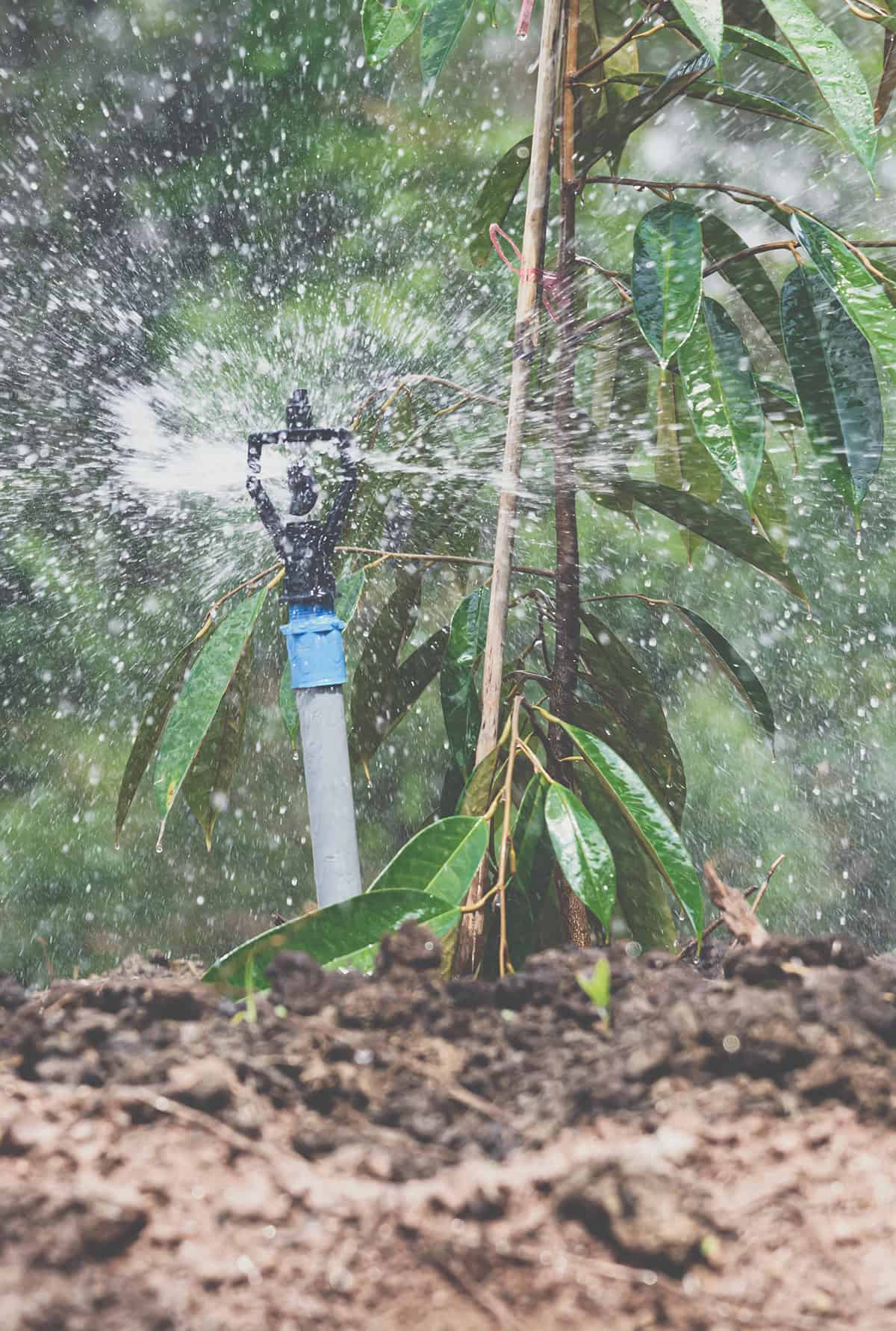
Durian roots thrive when moisture is steady but never soggy. Letting the soil dry out stresses young trees and slows everything down. On the other hand, swampy conditions will knock back flowering and fruit set.
In the tropics, mature trees can guzzle water, especially during growth spurts. Southeast Asian growers report a single tree can use a surprising amount of water during peak periods. Rainfall between 1,500 and 3,000 mm a year, spread out, keeps things on track. If rainfall falls short, you’ll need to step in with irrigation.
Drought hits young trees hardest. Water deeply two or three times a week when it’s dry, letting the topsoil dry a bit in between. Shallow, frequent watering just won’t cut it.
Drip irrigation is a solid choice here, targeting the root zone and helping you dial in soil moisture. Clean water and steady pressure are important—clogged systems are a headache.
Ease up a little on watering before flowering to encourage buds. Once fruit sets, go back to regular moisture. Standing water near the trunk is a recipe for root decline, so keep drainage in mind.
Soil
Texture and structure make all the difference for durian roots. Loamy soil, loaded with organic matter, is the gold standard—sandy soils dry out too quickly, and heavy clay suffocates roots.
Drainage can’t be ignored. Water needs to move through, not pool around the trunk. In rainy climates, mound up the planting site or create a gentle slope to keep roots high and dry.
Aim for soil pH between 5.0 and 6.5. That slight acidity helps with nutrient uptake. It’s worth testing before you plant and adjusting with lime if you’re too acidic.
Invest time in soil preparation—mix in compost or well-rotted manure months before planting. Skip raw fertilizer in the planting hole; roots prefer growing into native, improved soil.
Keep topsoil loose, not packed down. Mulch helps keep moisture steady and weeds at bay, but don’t let it touch the trunk. That gap prevents rot and lets air flow.
Temperature & Humidity
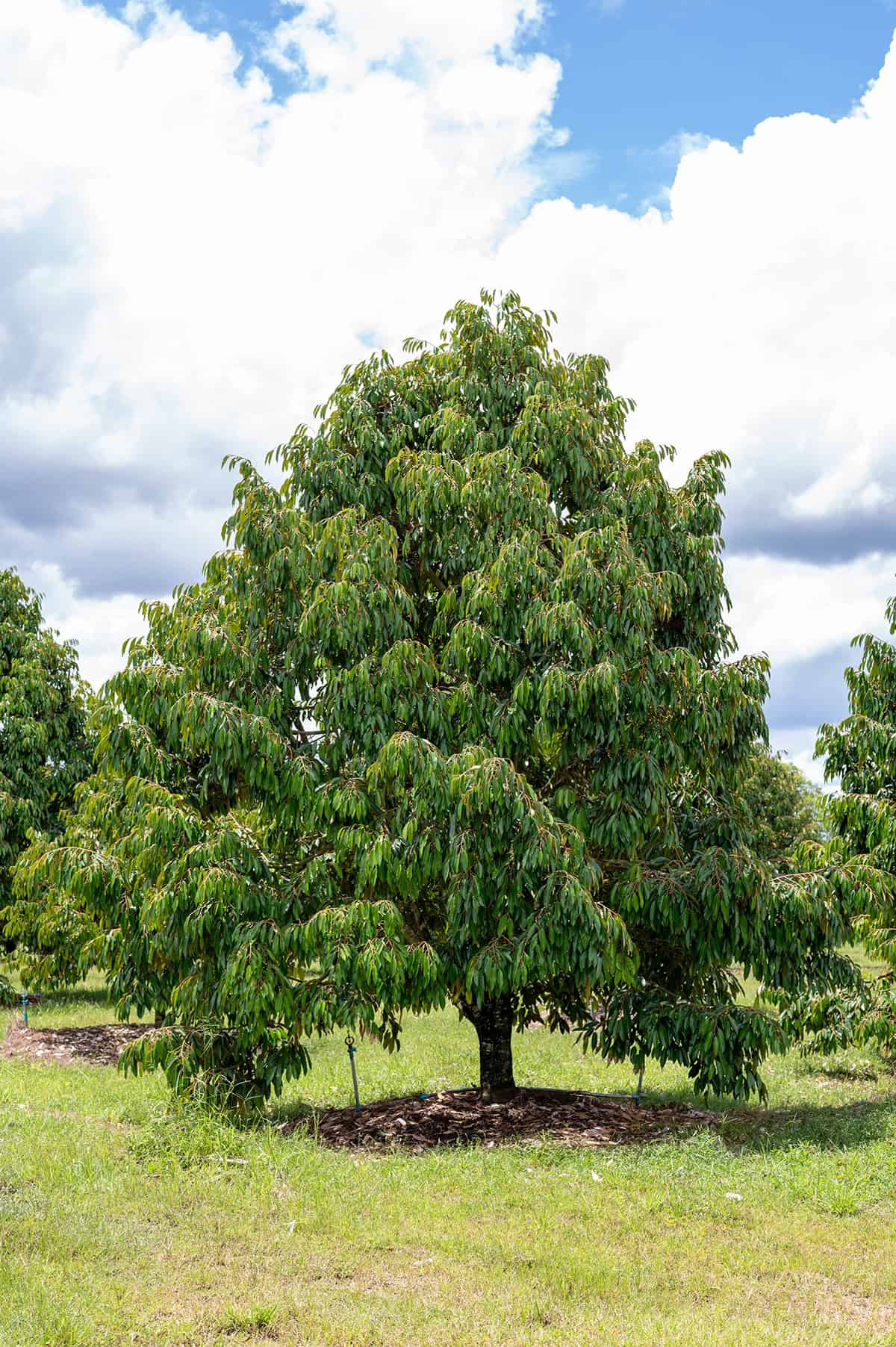
Atmosphere matters—durian wants warmth and moisture in the air. Daytime temperatures between 75°F and 90°F (24–32°C) keep things humming. Dip below 72°F (22°C) and you’ll see growth slow, leaves drop, and flowering falter.
Lowland tropics are ideal, but if you’re up to about 2,600 feet (800 m) and it stays warm, you’re still in the game. Cool nights or wild temperature swings are trouble, especially for young trees.
Humidity? Think 75–80% relative humidity most of the year. Dry air scorches leaves and saps vigor. Strong winds compound the problem by stripping away that protective moisture.
Rainfall totals of 60–120 inches (1,500–3,000 mm) annually, spread out, are what you’re aiming for. Long dry spells stress the tree and cut fruit yields. Irrigate during droughts to keep soil from drying out.
In cooler spots, greenhouses or controlled setups are your only real option. Nights need to stay warm, and humidity should be kept high. Sudden cold snaps will ruin your fruiting plans.
Fertilizer
Feeding durian isn’t a set-and-forget job—nutrients need regular top-ups for leaves, flowers, and fruit to develop well. Even rich soil gets depleted under tropical conditions.
Start with a balanced NPK fertilizer while the tree is young. Something like 14-14-14 or 16-16-16, applied every couple of months during growth, sets a good foundation.
As the tree bulks up, nudge up the nitrogen for structure, but once you see flowers, ease off and boost potassium instead. Formulas like 12-12-17 help fruit quality.
Scatter fertilizer under the canopy, keeping it away from the trunk. Concentrate within the drip line where feeder roots are active. Water it in so nutrients reach the roots.
Compost once or twice a year helps keep soil lively, especially in sandy ground. Don’t overdo it late in the rainy season if waterlogging is an issue.
How much to use? It depends on tree age and size. Young trees like smaller, frequent doses; mature ones need more, but less often. A soil test will keep you from guessing.
Growing in Containers
Container growing is an option if you’re short on space or your climate isn’t quite right. Best for young or grafted trees, though—don’t expect massive fruit harvests long-term.
Pick a large, solid pot with plenty of drainage. Start with at least 20 gallons of soil, but be ready to size up as roots expand. Durian sends down a taproot and spreads wide, so depth is important.
Choose a deep, loose mix—something rich in organic matter, slightly acidic (pH 5.5–6.5), and quick-draining. Heavy garden soil just compacts and stunts growth.
Full sun is still a must, so set the pot where it gets all-day light. Keep it above 70°F and shield from wind, since containers dry out fast and roots can get cold.
Water until you see it drain from the bottom, then let the top inch dry before watering again. Don’t let the root ball dry out, but avoid sogginess.
Feed with a balanced fertilizer containing all the essentials—nitrogen, phosphorus, potassium, and trace elements. Go light but regular during the growing season. Every few months, flush the pot to prevent salts from building up.
Prune to keep the size manageable, and repot when roots start circling or pushing out. Container-grown durian needs more hands-on care, but you get more control over its environment.
Potting & Repotting
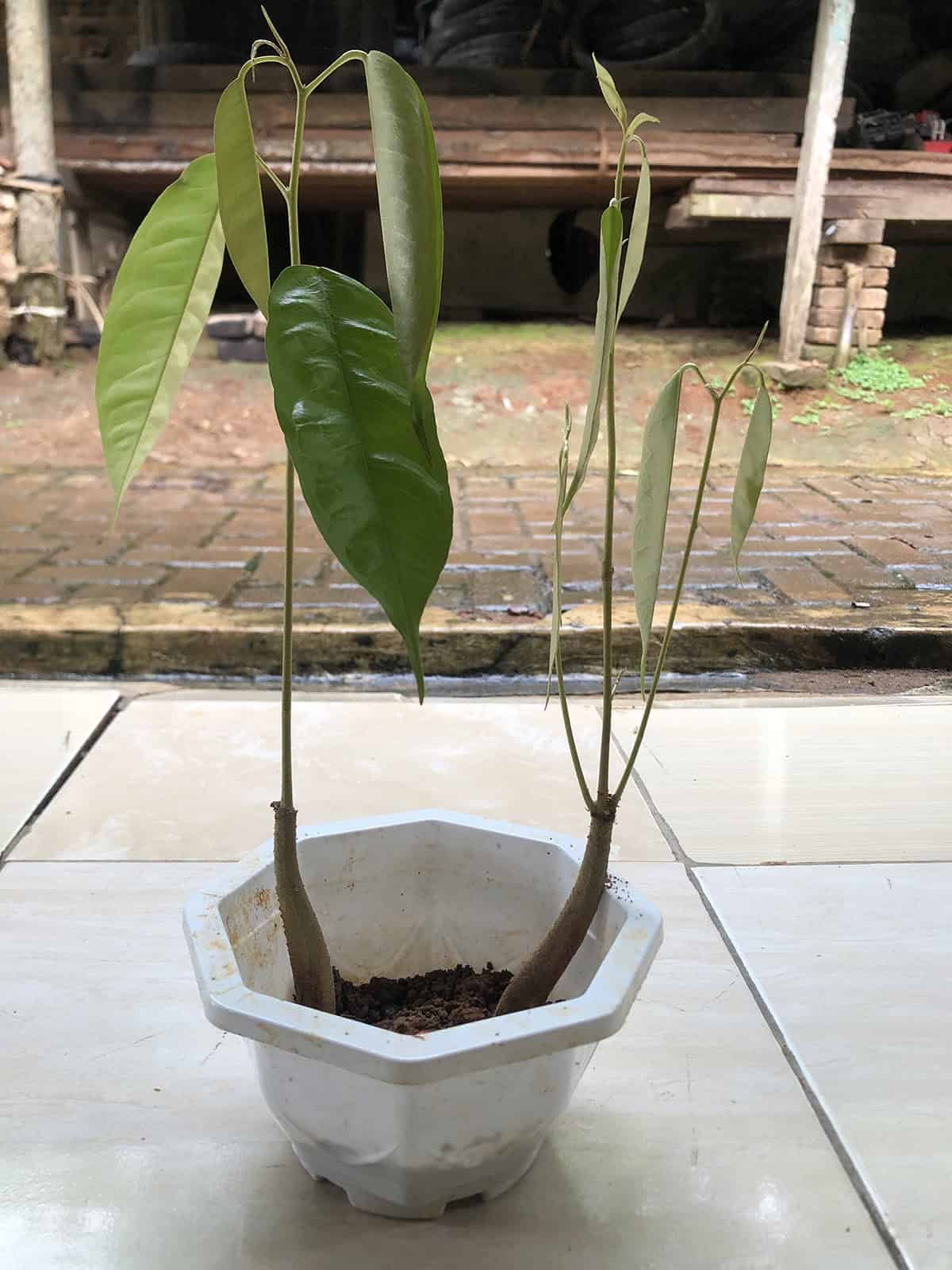
For young durians in pots, space and warmth are non-negotiable. Deep containers with wide drainage holes are key—shallow pots cramp the taproot and weaken the tree.
A loose, well-drained mix is your best bet. Blend good potting soil with coarse sand or perlite, plus compost for organic matter. You want moisture retention without sogginess. Heavy soils just suffocate roots.
Watch for roots circling or poking through drainage holes—time to size up. Move to a pot just a bit larger to avoid waterlogged soil. Try to keep the root ball intact and disturb roots as little as possible.
Set the tree at the same depth as before. Don’t bury the trunk deeper. Firm the soil gently and water thoroughly to settle it in.
After repotting, give the tree a few days in bright shade. Keep it warm and humid. Wait for new growth before feeding again.
Pruning
Shaping starts early with durian—light, thoughtful pruning builds a strong framework. Mature trees usually just need a few maintenance snips.
Once your tree hits 3 to 4 feet, pick three to five sturdy scaffold branches with wide angles from the trunk. Thin out weak or crowded shoots to keep the canopy balanced.
A single, clear central leader is important for supporting future fruit. Remove any rivals early to prevent split trunks. Keep scaffold branches spaced so light filters into the canopy.
Dead, damaged, or diseased wood can go any time. Make clean cuts just outside the branch collar for quick healing. Avoid topping; big stubs weaken the tree and hurt fruit quality.
Save major cuts for late dormant or dry periods—never just before cold or heavy rains. Overdoing it with the pruners can set back flowering and delay fruit.
If the tree gets too tall for easy picking, shorten select upper branches rather than hacking off the top. Careful, selective pruning keeps the tree strong and fruit coming.
Propagation
Warm, humid air clings to the soil as you tuck a plump durian seed into the earth, hoping for a miracle. Fresh seeds—those just pried from ripe fruit—demand urgency; they dry out fast and, honestly, you’ll want deep, loose soil to give those long taproots space. Patience, though, is non-negotiable: seedlings might keep you waiting seven, sometimes ten years, and the fruit? It’s a bit of a genetic lottery.
Some folks just don’t have the patience for that gamble. Grafting steps in as the shortcut, matching a sturdy rootstock with a proven, flavorful variety. Nurseries lean on techniques like budding or cleft grafting, coaxing young plants into uniformity. The payoff? Trees that fruit in four to six years, and you pretty much know what you’re getting. If you’re buying, check for a clean, healed graft union and roots that look lively—no one wants a dud.
Trying to root durian from cuttings? Don’t bother. Air layering, too—just not worth the trouble. Home growers almost always circle back to seeds or grafted plants, and that’s probably for the best.
Fruiting & Harvest
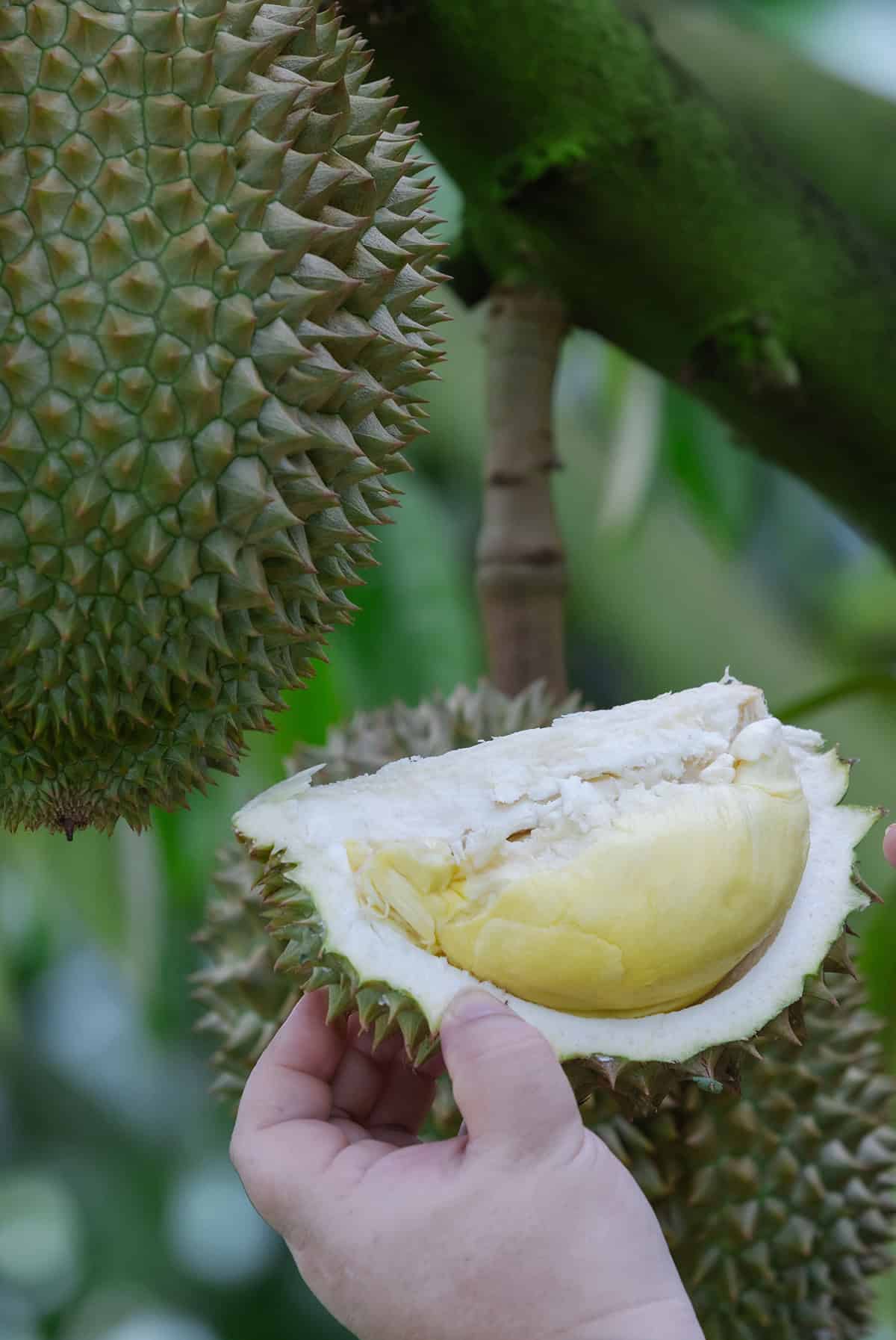
The anticipation builds for years before a durian tree finally blooms. Grafted trees jump the queue, setting fruit much sooner than their seedling cousins. After a spell of dry weather, clusters of flowers burst open—usually at night, when bats and insects get to work moving pollen around. Sometimes, if fruit set disappoints, you can step in and hand-pollinate; evenings work best.
When the tree sets more fruit than it can handle, thinning becomes a bit of a ritual. Pruning away the runts and the overcrowded clusters saves branches from snapping and helps the keepers size up nicely. It’s a little ruthless, but that’s how you get those hefty, even fruits.
As the season shifts, the husk’s color tells you harvest is near—dull olive gives way to a lighter green-yellow. Some fruits drop on their own, thudding to the ground when ready, while others get snipped early (always with a bit of stem left on) to finish ripening off the tree. That drop—sometimes it’s the only real sign you’ll get.
Handling these spiky giants takes care. Bruises or rough treatment can spell disaster, especially if rain’s been heavy; wet conditions often lead to soggy, spoiled flesh. Stash unripe durians in a cool, humid spot—somewhere around 13–15°C—if you want to stretch out the ripening and keep the flavor at its best.
Common Problems
A soggy patch of ground spells trouble for durian roots. Fungal diseases, especially root rot, thrive when drainage is poor, and the first hints show up as yellowing leaves, sluggish growth, or branches dying back. Sometimes, it’s phytophthora at work—a nasty soil-borne fungus that turns roots dark and mushy and can take down a tree faster than you’d think.
Keeping the soil loose and water moving away from the trunk is your best defense. Mulch and weeds around the base? Not ideal—too much moisture invites problems. It’s a balancing act: water deeply, but don’t let it pool.
Nutrient issues sneak up, too. Overdoing nitrogen gives you lush leaves but skimpy flowers and poor fruit set. The tree wants a steady diet, but nothing extreme. And if the watering schedule swings wildly, expect flowers and young fruit to drop. Even strong winds can send immature durians tumbling.
A little vigilance goes a long way. Spotting trouble early—whether it’s soggy roots, leaf color shifts, or odd fruit drop—lets you step in before things spiral. Sometimes, it’s just about catching problems before they get out of hand.
Popular Varieties
Across Southeast Asia, durian fans chase after certain cultivars like rare treasures, each promising its own quirks and pleasures. Local climate, tradition, and whatever the market’s hungry for tend to nudge growers in one direction or another. Some folks want a backyard treat; others think in truckloads.
Musang King—well, that one’s a phenomenon. The flesh glows almost gold, thick and impossibly creamy. It’s got this oddly perfect dance between sweetness and a gentle, grown-up bitterness. Not the easiest tree to please, though. Relentless warmth and sticky air are pretty much non-negotiable.
D24, or Sultan if you’re feeling formal, leans softer—both in bite and color. It’s mellow, sweet, with just a flicker of bitterness. The fruits can get hefty, and these trees seem to settle in happily anywhere the tropics sprawl out flat and steamy.
Monthong gets around, especially in Thailand and wherever exports land. The segments are generous, seeds surprisingly petite, and the aroma won’t bowl you over. That tough husk? It’s a shipper’s dream, keeping everything intact on the road.
Red Prawn practically glows from the inside—deep orange, sometimes veering red. It’s sweet, sure, but there’s a faint, almost boozy tang beneath it all. Silky texture, too. These need rich earth and steady water if you’re hoping for a decent harvest.