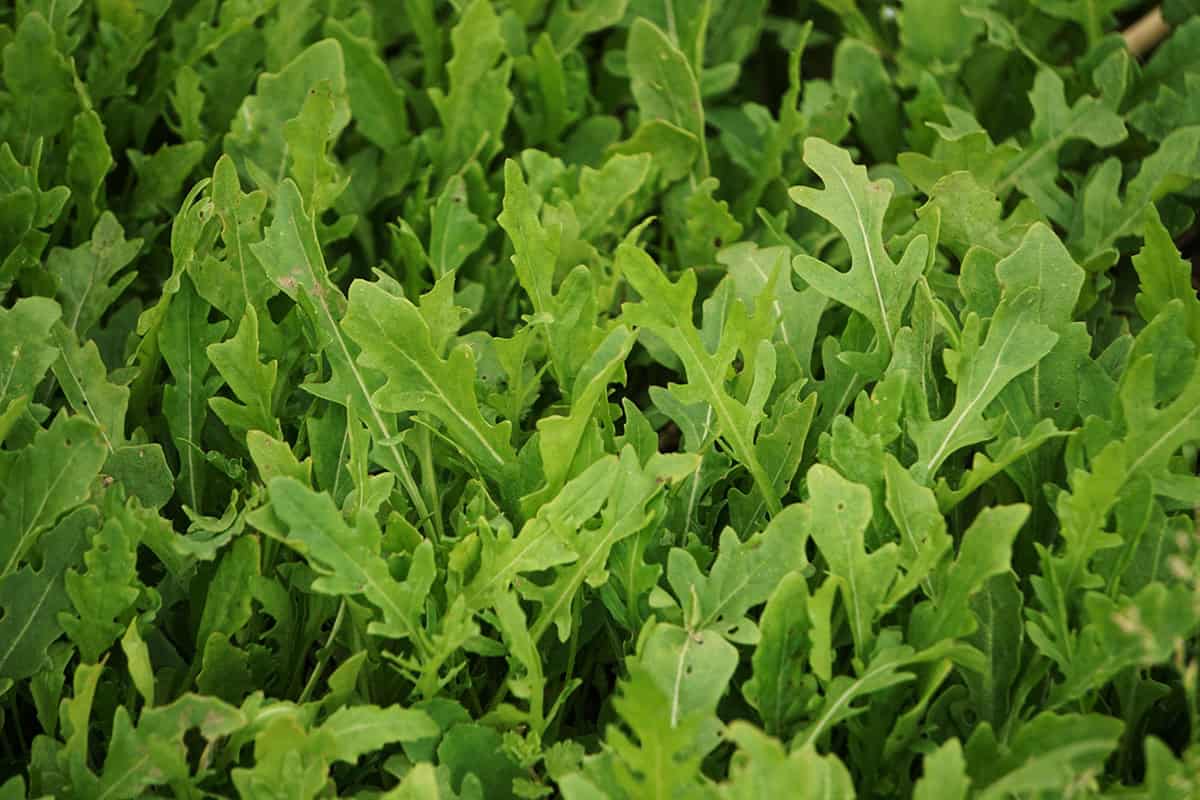
Arugula reaches the salad bowl about four weeks after sowing, and its lobed leaves carry a peppery bite that sharpens as they mature.
A cool-season member of the mustard family, it thrives in spring and fall and bolts quickly once summer heat arrives. A sunny windowsill, a 6-inch-deep pot or a corner of a raised bed is enough space for steady harvests.
Bolting causes most of the frustration, and the light section and the problem notes explain how to delay it.
Table of Contents
Variety Selection
Arugula varieties differ in leaf shape, flavor and how fast they bolt, and the species or cultivar on the seed packet matters for both flavor and hot-weather performance.
Common Types And Flavor Differences
In US supermarkets, arugula means Eruca sativa, also written Eruca vesicaria, with broad, lobed leaves and a peppery flavor that is gentler when picked young. Wild arugula, Diplotaxis tenuifolia, has finer, deeply cut leaves and a sharper heat that lingers. Both belong to the mustard family, which explains their spicy edge.
Seed packets use many names. Garden rocket, roquette, rucola and rocket all refer to Eruca sativa, while wild arugula and wild Italian rocket refer to Diplotaxis tenuifolia. Check the botanical name when flavor matters.
Best Varieties To Grow
‘Astro’, an Eruca sativa type, grows fast with a mild flavor for salad blends and quick baby greens. ‘Runway’ also grows quickly and produces large leaves. ‘Sylvetta’, a wild arugula, grows slowly but tolerates heat longer than most, which makes it useful in late spring. Wild Italian rocket has a strong flavor and handles some warmth.
Botanical Names And Common Names Explained
Botanists classify most cultivated arugula as Eruca sativa, labeled Eruca vesicaria subsp. sativa in older catalogs, and wild types belong to Diplotaxis tenuifolia. Both are in the Brassicaceae family with cabbage and kale.
In India, oil from Eruca sativa seeds is called taramira and appears in traditional remedies and cosmetics, a name worth knowing when shopping internationally.
Planting
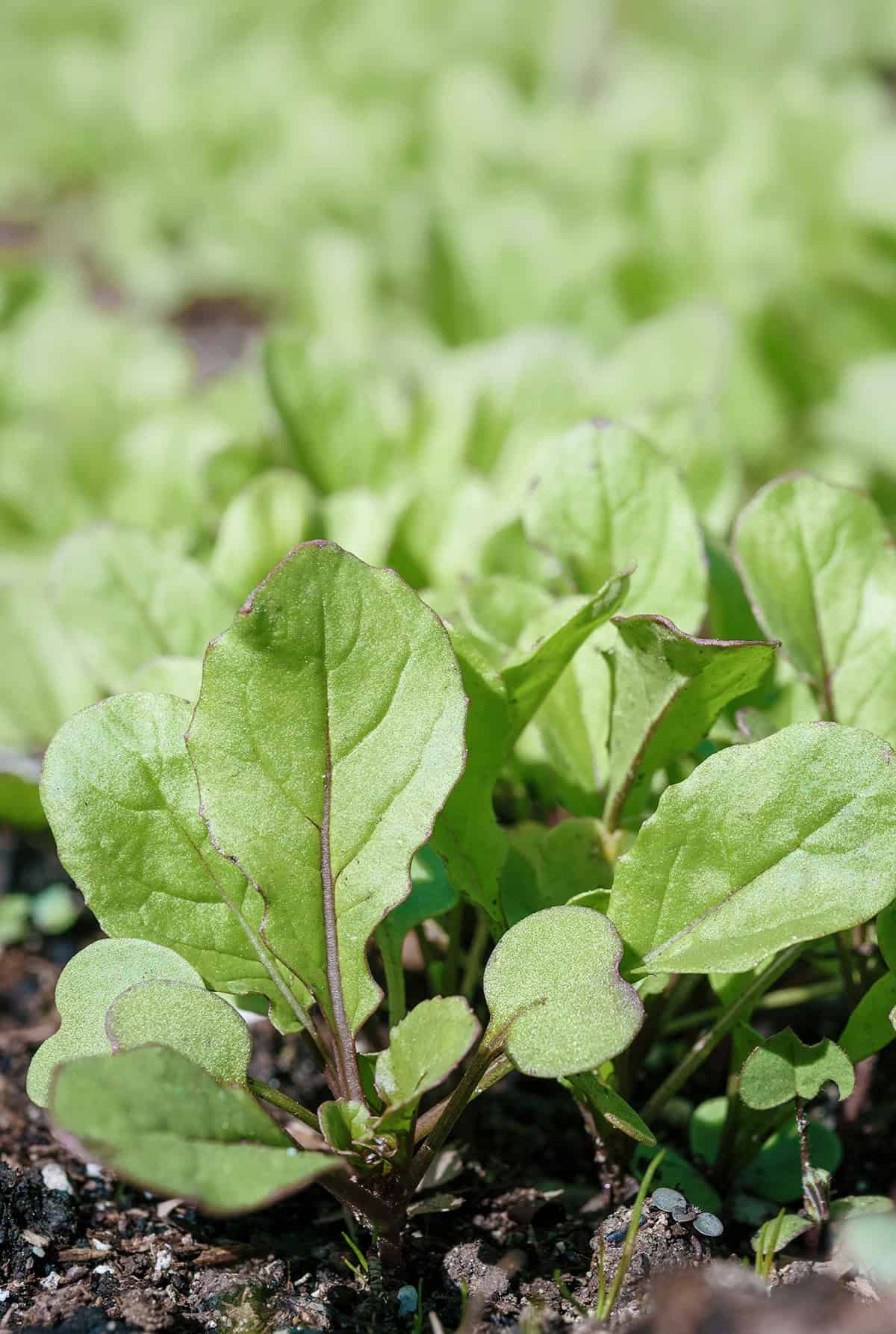
Timing, soil preparation and steady moisture decide how arugula starts. Careful attention to all three produces better leaves and a longer picking season.
When To Plant Arugula
Arugula seeds germinate in soil as cool as 40°F. In most US regions, sow in early spring, between late February and April, and again in late summer, six to eight weeks before the first frost, for a fall or early winter harvest.
Midsummer heat causes trouble. Once soil passes about 70°F, arugula bolts quickly and the leaves grow tough and bitter. Sow every couple of weeks during cool stretches for a steady supply.
Where To Plant Arugula
Well-drained soil enriched with compost and a pH between 6.0 and 7.0 produces the best arugula. Skip beds that recently grew cabbage, kale or other brassicas, since pests and diseases linger in the soil.
In cool weather, plant in full sun. As the season warms, afternoon shade holds the leaves tender and delays bolting.
Container And Drainage
Arugula grows on windowsills, in raised beds and in pots at least 6 inches deep with drainage holes. Shallow pots dry out quickly, which harms flavor and growth, and terracotta dries faster than plastic or glazed ceramic and needs more frequent watering.
Use potting mix in containers, since garden soil compacts and stunts the roots.
Soil
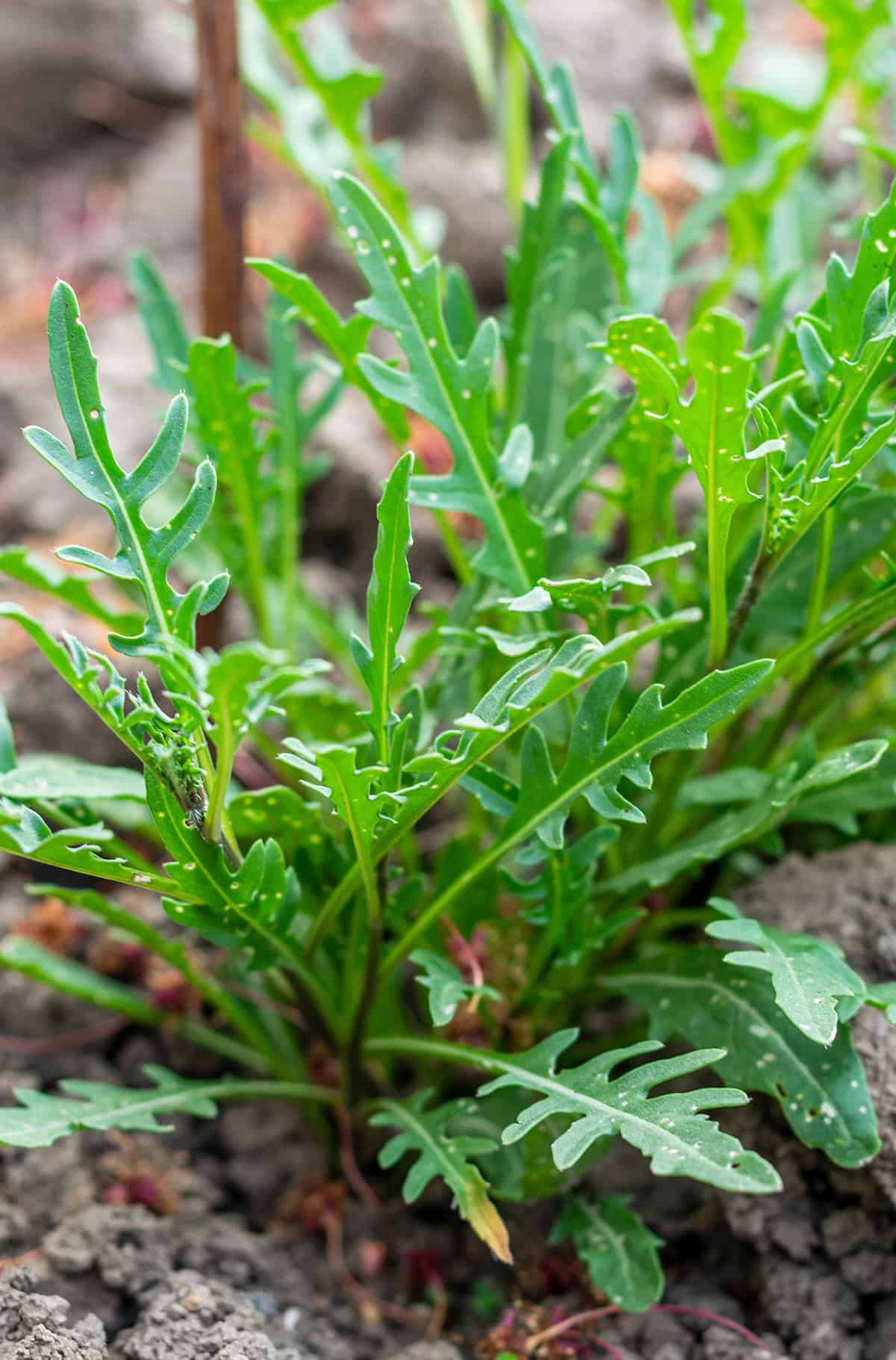
Two or three inches of compost mixed into the top 6 inches of soil before sowing produces more tender leaves and faster growth. In heavy clay, raised beds or containers are easier.
Sowing Seeds
Sow arugula directly instead of transplanting, which is quicker and easier. Sow seeds a quarter inch deep and about an inch apart, in rows 10 inches apart, or scatter them for a dense patch to cut and regrow. Sprouts appear in about a week, a little longer in chilly weather.
Spacing
For full-size leaves, thin seedlings to about 6 inches apart once they are a couple of inches tall, and add the thinnings to a salad. For baby leaves, leave plants closer and harvest early before the patch grows congested.
Growth Time
Expect baby leaves in about four weeks and full-size leaves in six to eight. Sow every two to three weeks for a steady supply instead of one large harvest.
Light
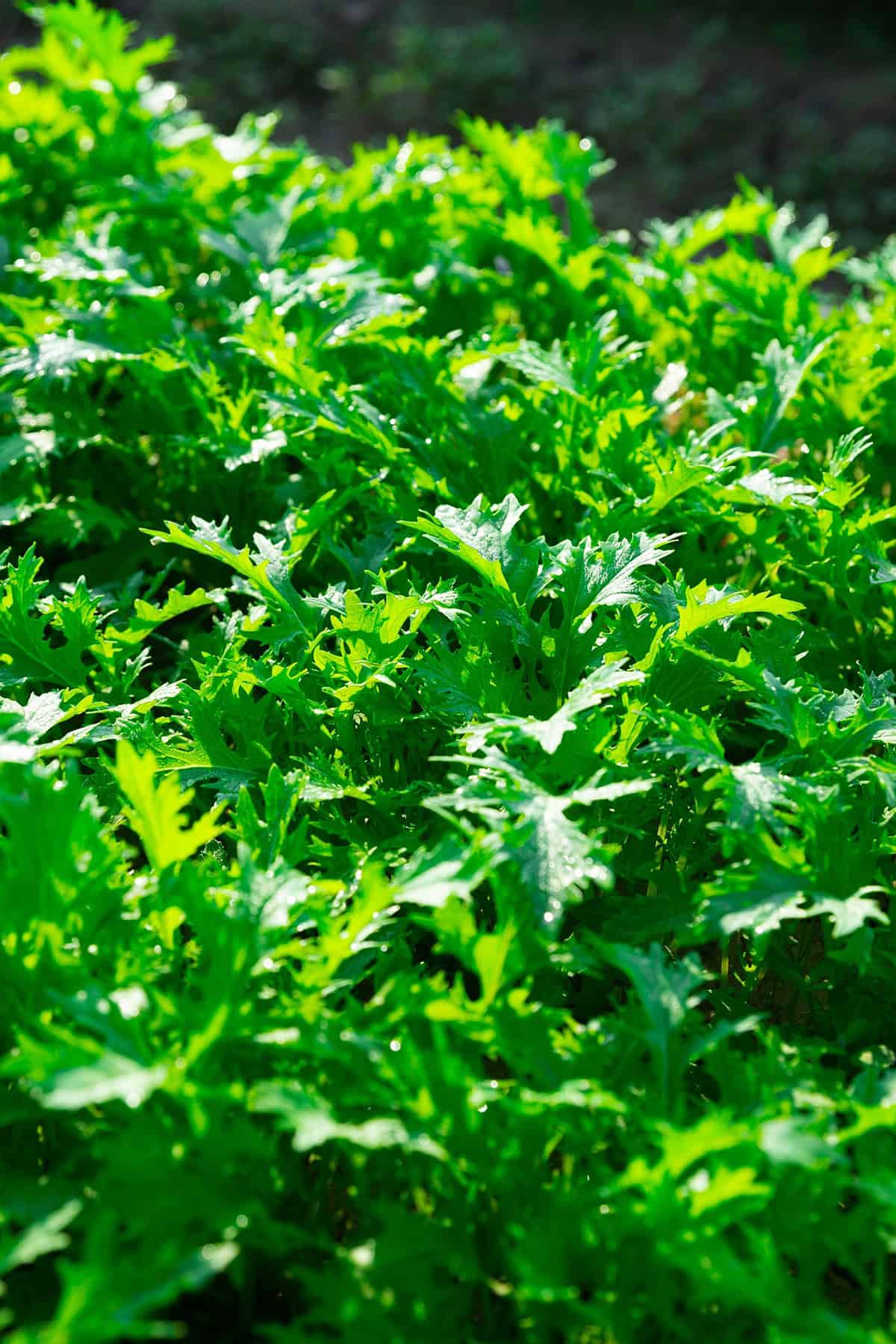
Light needs shift with the season. Careful management of sun exposure extends how long arugula produces.
Full Sun Vs Partial Shade
Six or more hours of sun in spring and fall produce lush leaves with balanced flavor. Partial shade slows growth and produces less robust plants, though arugula still grows there.
Using Shade To Delay Bolting
When daytime highs climb into the mid-60s °F and beyond, afternoon shade delays bolting. Shade cloth of 30 to 40 percent or dappled light from a nearby shrub cools the plants enough to extend the harvest by a week or two.
Row covers, used mainly against flea beetles, also buffer temperatures slightly.
Seasonal Light Adjustments
Maximize sun in early spring, then add shade as the heat builds. Fall crops take full sun again as days shorten and cool. In mild climates, USDA Zones 8 and warmer, arugula overwinters under a cold frame or low tunnel.
Water
Leaf quality depends heavily on consistent watering, and a simple routine produces tender, well-flavored arugula.
Keeping Soil Evenly Moist
Arugula needs moist, never soggy soil. In cool weather, watering every two or three days is enough, and rain stretches the interval. When the top inch is dry, water deeply to encourage strong roots, since light watering leads to shallow roots and plants that wilt in the first sun.
How Water Stress Affects Flavor And Growth
Drought stress sharpens the bitterness, toughens the leaves and speeds bolting. Steady moisture, neither bone-dry nor swampy, produces palatable, productive plants.
Watering Containers Vs Garden Beds
Containers dry out faster than garden beds, especially in warm weather, and potted arugula may need daily water. Check pots every morning during heat waves, and never let the soil dry to dust. A thin layer of mulch holds moisture in beds and pots alike.
Feeding
Arugula feeds lightly. In well-prepared soil, a short crop needs no extra fertilizer at all.
Compost And Soil Fertility Basics
Compost mixed in before sowing covers the plant’s needs for four to eight weeks, since it feeds slowly and holds moisture. Two to three inches mixed into the top layer before planting is plenty.
When Extra Fertilizer Helps
In sandy soil, or where compost was skipped, a diluted balanced liquid fertilizer such as half-strength 10-10-10 or fish emulsion once or twice in the season improves leaf size and color. Apply it a couple of weeks after germination if plants look weak.
Avoiding Overfeeding
Excess nitrogen produces lush, fast growth, but it also speeds bolting, dulls flavor and attracts pests to the soft leaves. Deep green plants that fill in well need no extra feeding, and pale or stunted growth calls for fertilizer only after watering is ruled out.
Harvest, Regrowth, And Problems
Good harvest timing and quick responses to common setbacks extend the arugula season and produce repeat harvests from the same plants.
How To Harvest Arugula
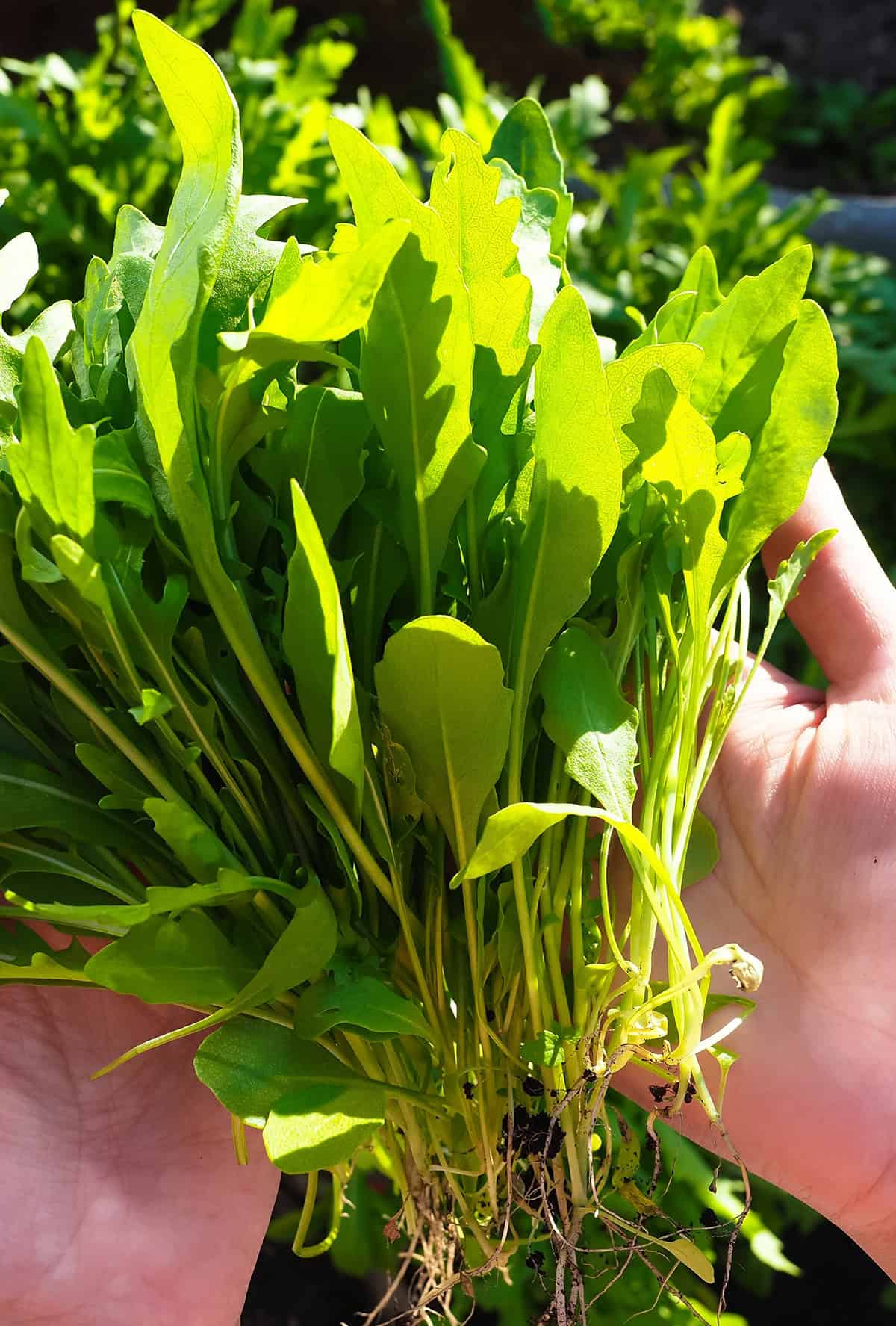
Snip outer leaves or cut whole stems just above the soil with scissors. An intact crown regrows for another round. Morning harvests produce the crispest leaves.
Continuous Harvest And Cut-And-Come-Again Regrowth
Cut-and-come-again harvesting trims the plant back and lets it regrow. Cut to about an inch above the soil, and new leaves appear within a week or so in cool weather. Most plants produce two or three good harvests before the flavor grows too strong or the leaves toughen, and the next sowing should be ready by then.
Harvesting Baby Leaves Vs Mature Leaves
Baby leaves, picked at 2 to 3 inches, are ready three to four weeks after sprouting and taste mild and soft. Mature leaves, a couple of weeks later, have more flavor and substance. For mild greens, harvest early and frequently, and for a stronger peppery bite, let leaves size up but pick before flowering begins.
Edible Flowers And Saving Seeds
Bolting plants produce small, edible cream-colored flowers, yellow on wild arugula, with a gentle peppery taste for salads and garnishes. To save seed, let a few plants flower and set pods, then collect the pods once dry and before they split. Stored cool and dry, the seeds last three to five years.
Common Pests
Tiny holes peppering the leaves point to flea beetles, which build up quickly in spring. Floating row covers placed at planting protect seedlings at their most vulnerable, and larger plants tolerate minor feeding once the covers come off.
Cabbage worms leave ragged bites and green droppings. Hand-picking controls small numbers, and Bt (Bacillus thuringiensis) targets caterpillars in larger outbreaks while sparing pollinators and beneficial insects.
Common Diseases And Prevention
Yellow, angular spots with gray fuzz underneath on damp, chilly mornings signal downy mildew. Space plants for airflow, avoid overhead watering and remove affected leaves quickly.
White rust causes chalky blisters under the leaves, pale patches on top and twisted growth, and it spreads quickly through a bed. Pull infected plants right away and discard them away from the compost, rotate planting spots each year and clear old stems and debris after harvest.
Troubleshooting Common Problems
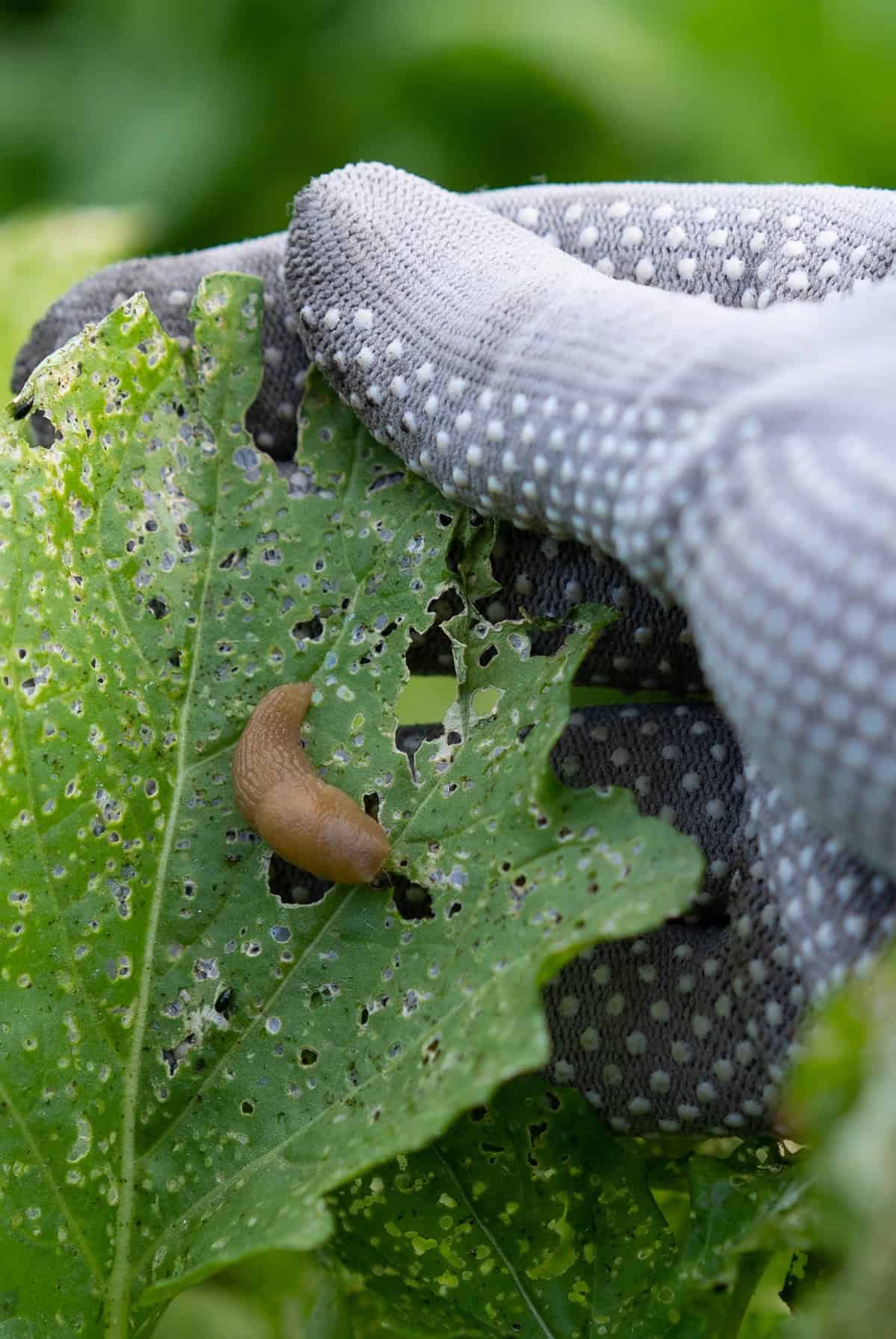
Most arugula problems in home gardens come from poor timing, temperature swings or persistent insects, and correct timing prevents many of them.
Bolting sends up a tall, spindly flower stalk, and summer heat shifts the flavor from peppery to harsh within days. Bolted plants are past saving, so pull them and resow in a cooler spot or wait for autumn. Succession planting avoids the worst hot spells.
Harsh flavor in plants that have yet to bolt comes from dry soil or late picking, and steady watering with early, frequent harvests corrects it.
Stretched, pale seedlings need more sun, and a brighter spot or thinner spacing fixes them.
Flea beetles slip through small gaps, so check every seam and edge of a row cover where damage appears, and a mulch layer under the cover helps block them.
Repeated downy mildew or white rust in the same bed calls for moving arugula and other brassicas to a fresh spot for a season or two, which breaks the disease cycle.