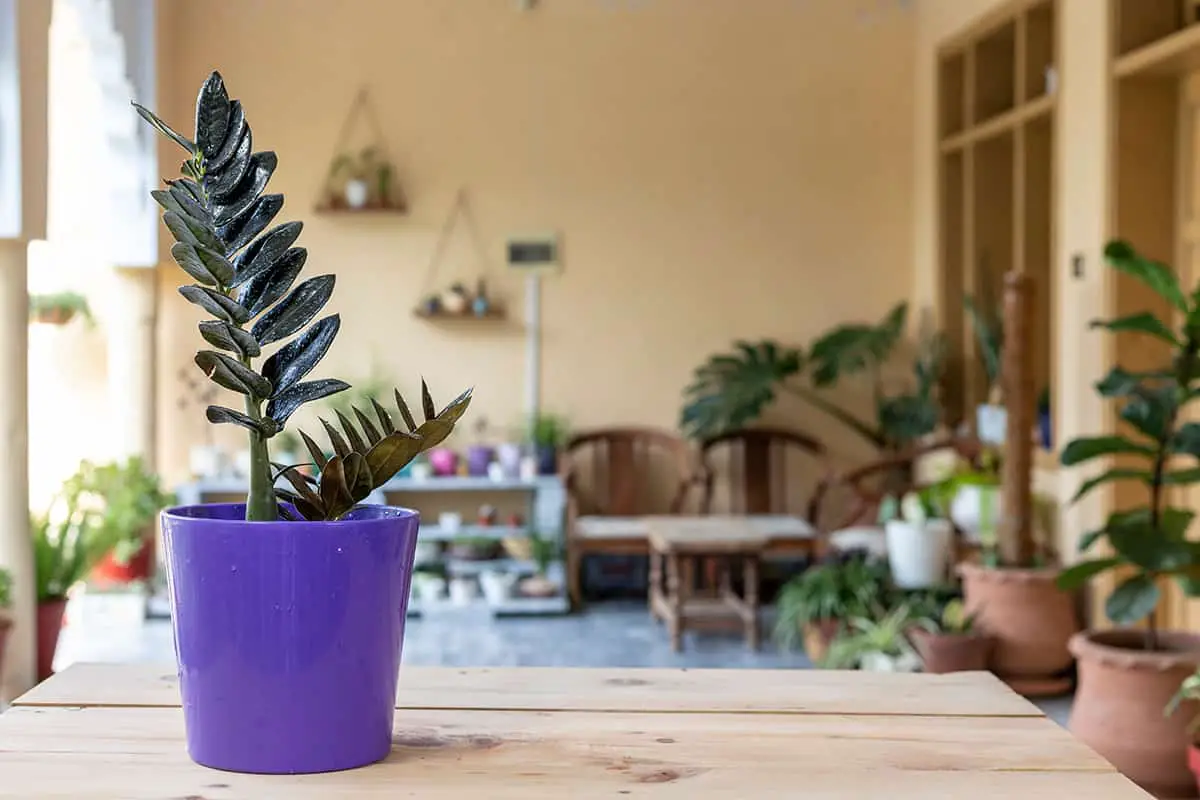
Pure black leaves are rare in nature. Most “black” houseplants are deep burgundy, purple or a green dark enough to read as black in a room.
Those inky leaves make bright pots, pale walls and green plants look sharper, and several of the darkest options rank among the easiest to grow.
Fifteen moody picks are gathered here, with care notes that protect their deep color and one bright green partner for contrast.
Table of Contents
- Black Coral Snake Plant
- Raven ZZ Plant
- Black Velvet Alocasia
- Black Magic Colocasia
- Burgundy Rubber Plant
- Black Prince Echeveria
- Aeonium ‘Zwartkop’
- Purple Knight Alternanthera
- Black Pagoda Lipstick Plant
- Philodendron ‘Black Cardinal’
- Darth Vader Begonia
- Schismatoglottis ‘Moonlight’
- Peperomia Caperata ‘Raven’
- Black Hoya
- Pilea Peperomioides ‘Chinese Money Plant’
Black Coral Snake Plant
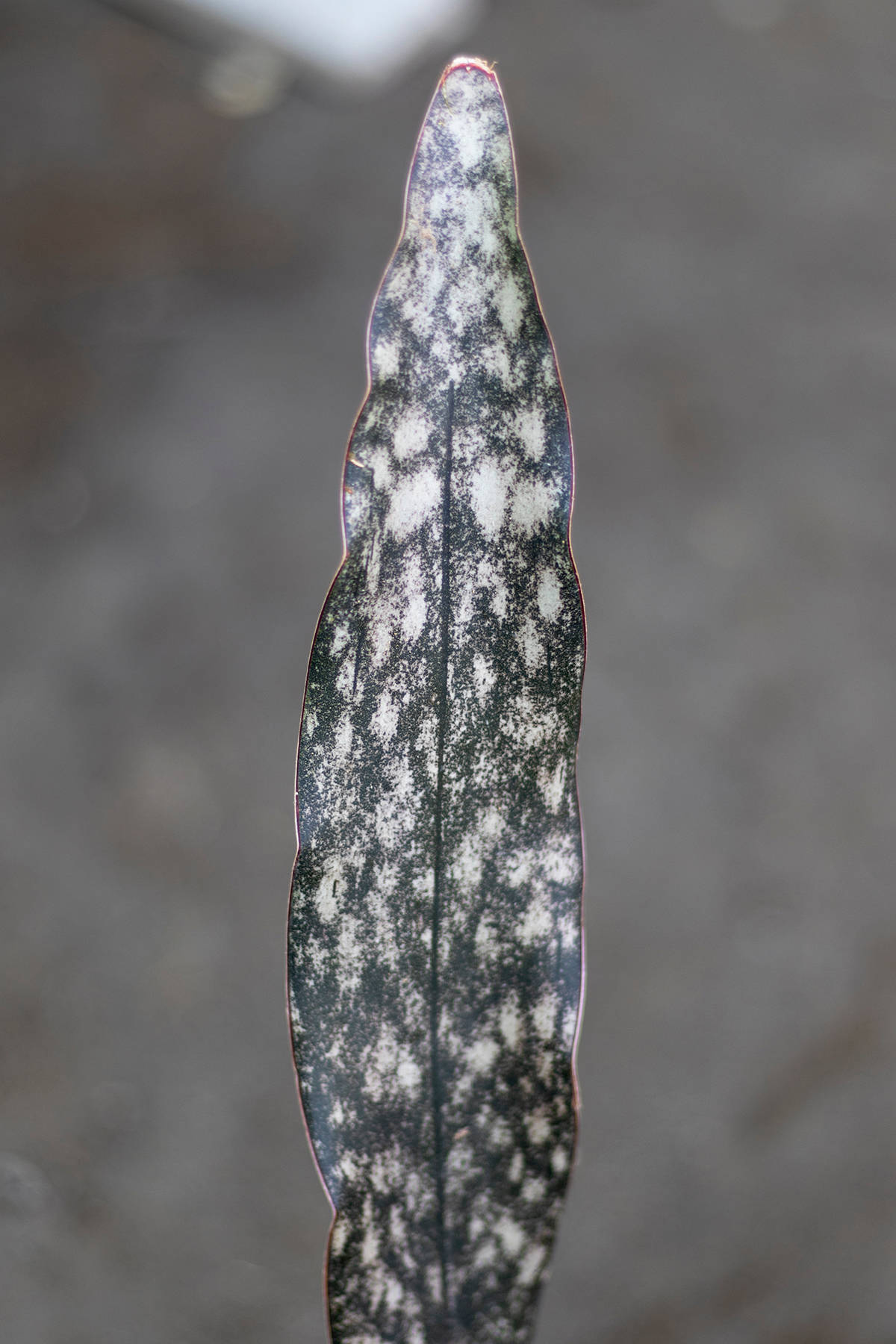
The Black Coral Snake Plant (Dracaena trifasciata ‘Black Coral’) has very dark green, upright, sword-shaped leaves with faint silvery-green crossbands. From across a room, the leaves read as nearly black.
It’s one of the easiest plants here. It grows in low to bright indirect light, in a gritty, well-draining mix, and it needs water only once the soil dries completely.
It grows slowly, and repotting every few years into a pot just one size larger prevents soggy soil. Lab studies cited by Colorado State University found snake plants absorb benzene, formaldehyde and trichloroethylene, though a single plant has little effect on a whole room’s air.
Raven ZZ Plant
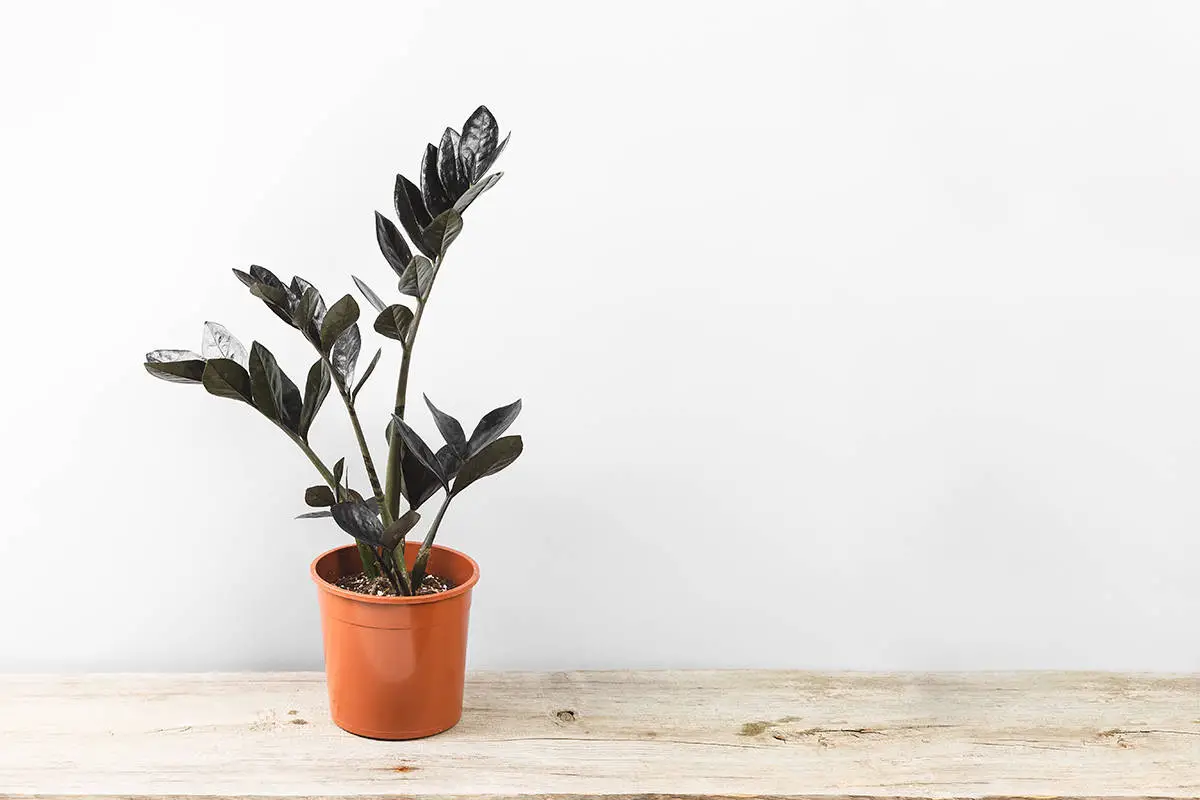
The Raven ZZ Plant (Zamioculcas zamiifolia ‘Dowon’) unfurls bright lime-green new stems that darken within weeks to glossy purple-black. It grows slowly to about 3 feet tall and wide.
It handles low light and partial shade, which makes it a strong choice for rooms far from windows. Water only when the soil is fully dry, in a pot with good drainage, since the thick rhizomes rot in wet soil.
It shrugs off missed waterings and dry air. All parts are toxic to pets if eaten.
Black Velvet Alocasia
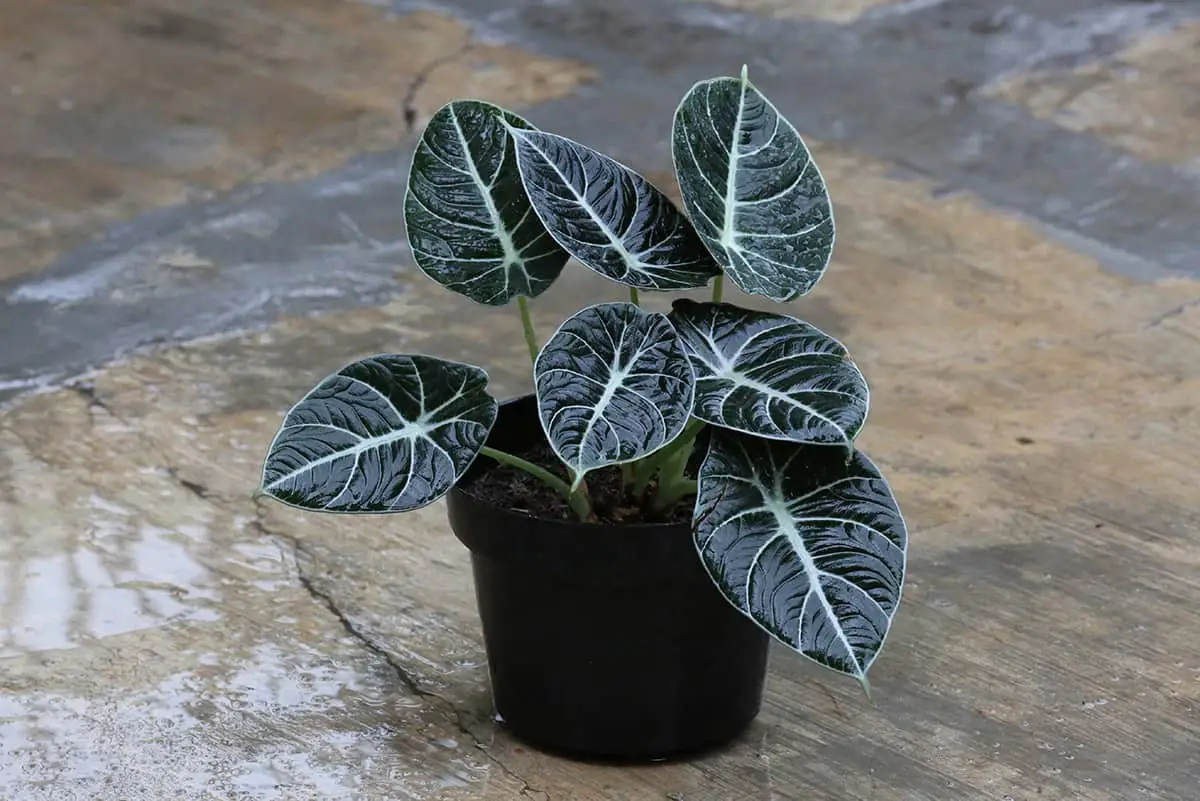
The Black Velvet Alocasia (Alocasia reginula) has thick, velvety, nearly black leaves with bold silver veins. It’s a compact plant, typically under a foot tall and up to 18 inches wide.
Native to Borneo, it needs high humidity, warmth and a light, airy, humus-rich mix. It prefers temperatures of 68 to 77 degrees Fahrenheit and has no frost tolerance, which means a warm indoor spot in bright, indirect light.
Water when the top inch or two of soil dries, and never let it sit in soggy soil, which rots the corm. Feed lightly during spring and summer, and expect slower growth or a short rest in winter.
Black Magic Colocasia
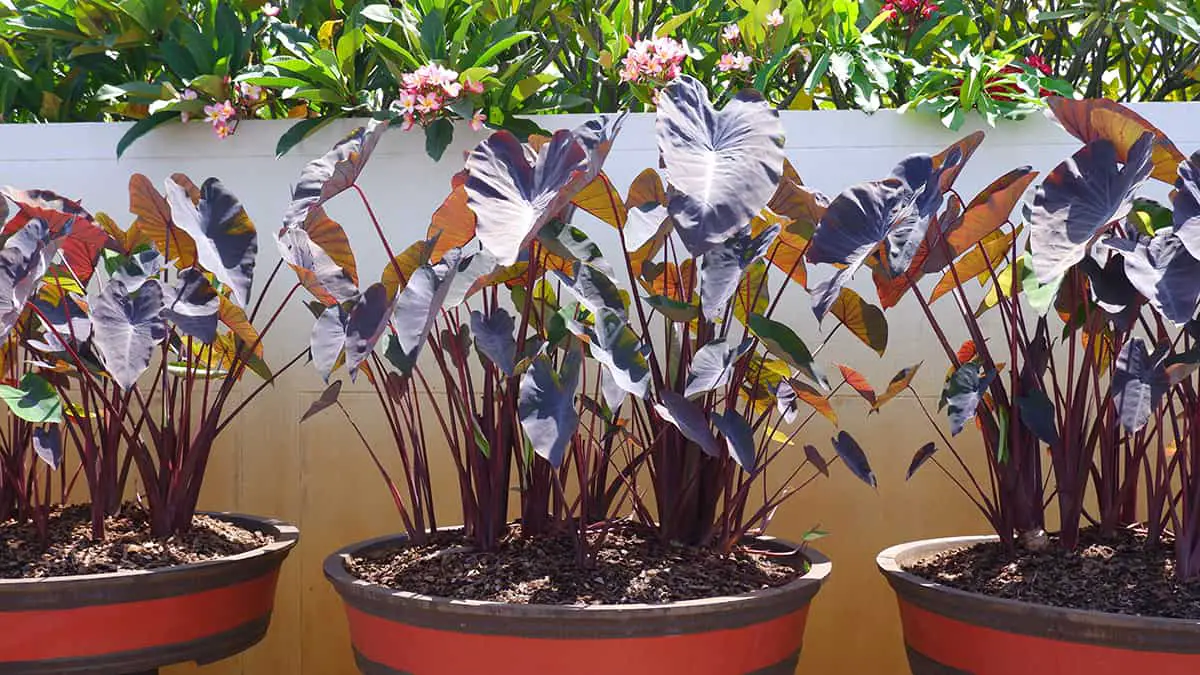
Black Magic Colocasia (Colocasia esculenta ‘Black Magic’) carries huge, heart-shaped leaves in deep purple to nearly black on tall stems. The species, taro, comes from tropical Southeast Asia.
It grows best in rich, moist, fertile soil with a pH of 5.5 to 6.5, and it needs constant moisture, even standing in shallow water. Indoors, it requires a warm, humid room with bright light and a few hours of direct sun, and outdoors it handles sun to part shade, with afternoon shade in hot climates.
Most growers grow it outdoors in summer and store the corms dry indoors over winter. Divide the corms to propagate. All parts are toxic if eaten raw.
Burgundy Rubber Plant
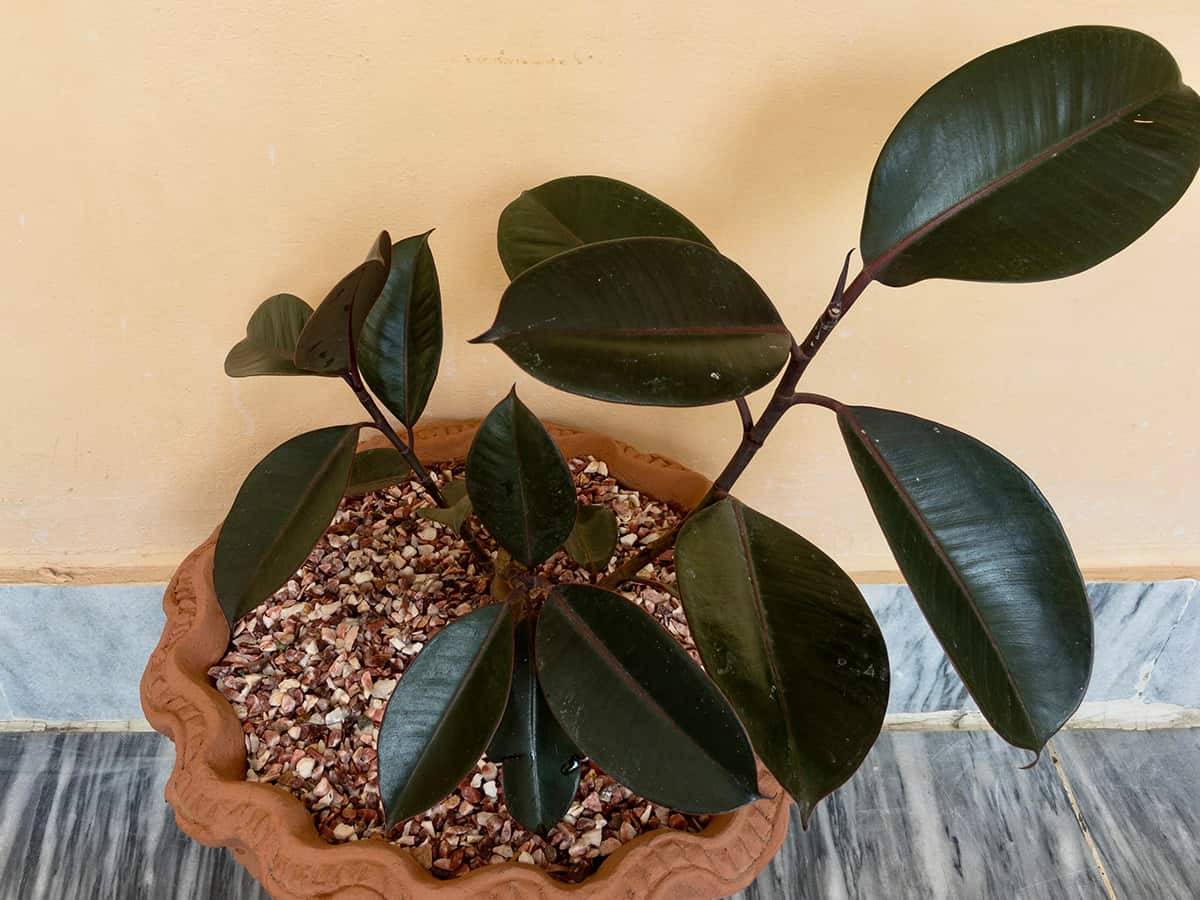
The Burgundy Rubber Plant is a cultivar of Ficus elastica, sold as ‘Burgundy’ or ‘Black Prince’, with large, glossy maroon-black leaves and red new sheaths.
It grows best in bright, indirect light near a sunny window, with a little gentle morning sun. Harsh afternoon sun scorches the leaves. Daytime temperatures of 75 to 80°F and nights of 60 to 65°F are its sweet spot, and cold drafts cause leaf drop.
Water thoroughly once the top inch of soil dries, in a well-draining mix. Wipe the leaves now and then to remove dust and help them absorb light.
Black Prince Echeveria
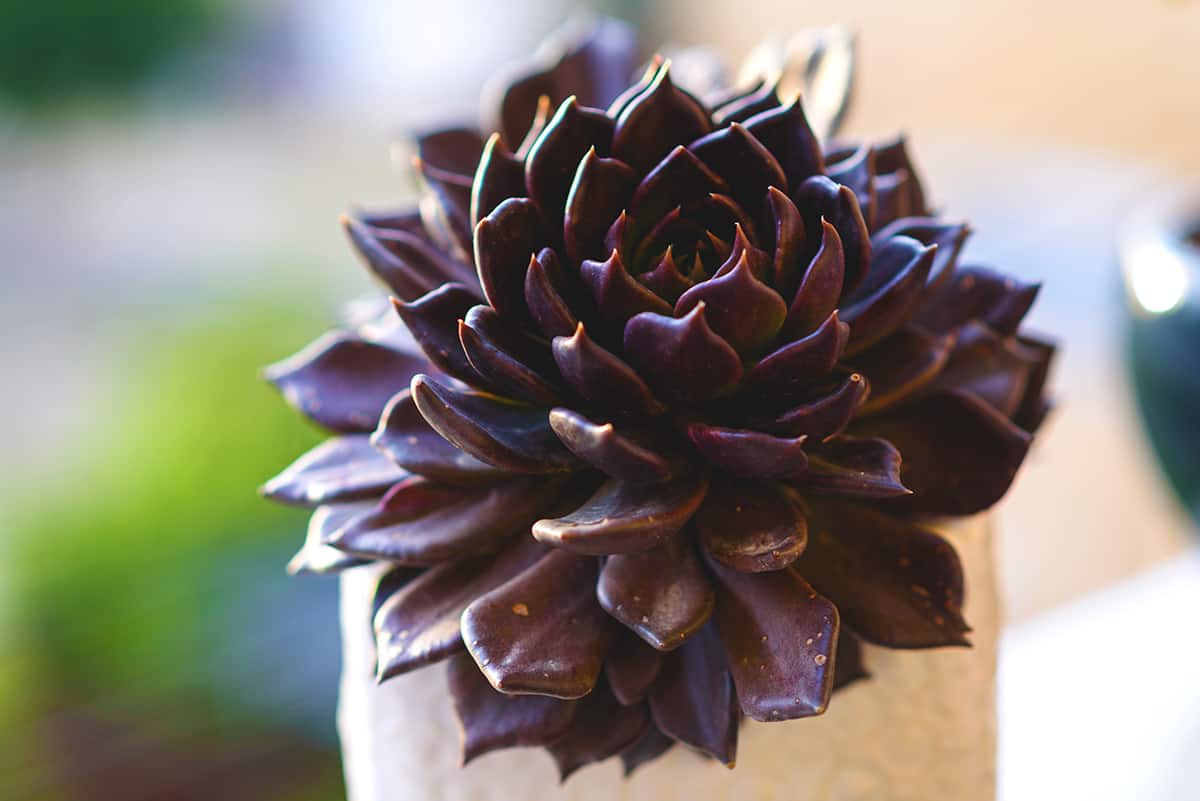
The Black Prince Echeveria forms star-shaped rosettes of thick, pointed leaves in deep chocolate-purple, nearly black in strong light. In fall, it sends up stalks of red flowers.
Like most echeverias, it needs several hours of direct sun a day, and in dim light, it fades to green and stretches. Water sparingly, only after the soil dries completely, in a gritty cactus mix.
It produces offsets around the base, and both pups and single leaves root easily. Black Prince pairs well with pale blue and silver succulents in mixed arrangements.
Aeonium ‘Zwartkop’
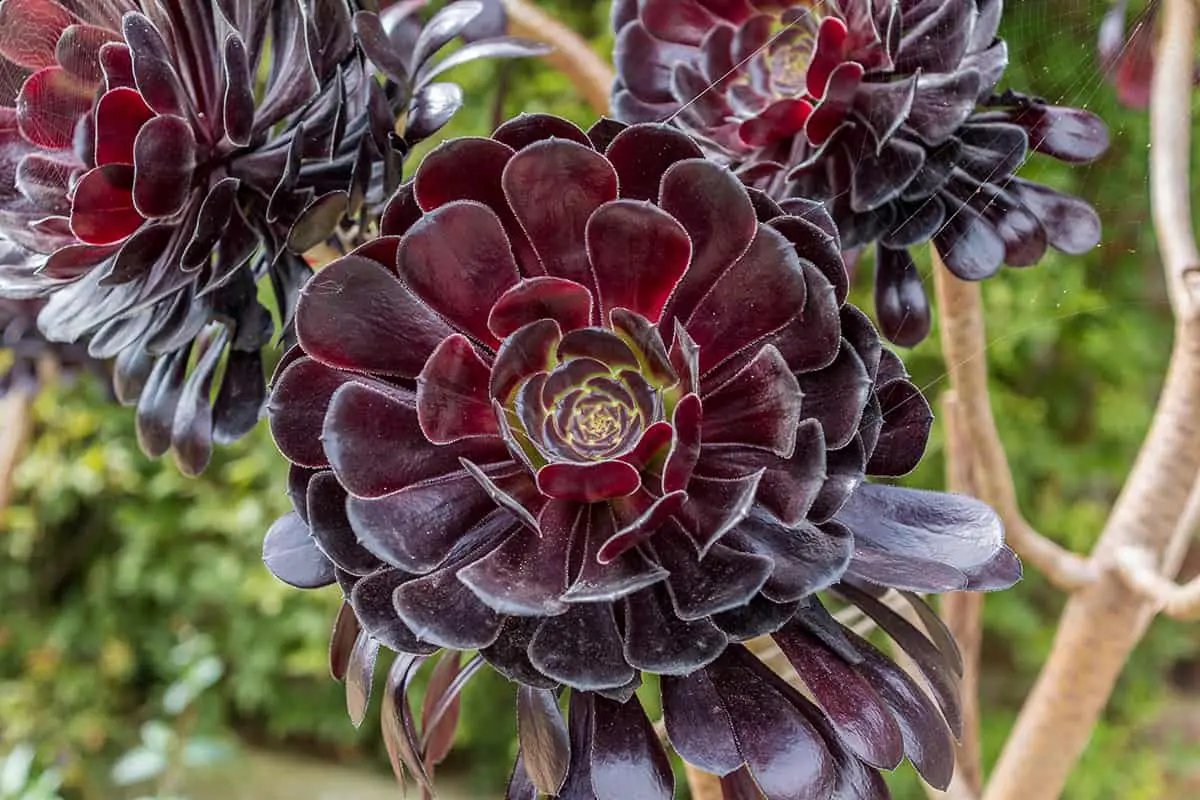
Aeonium ‘Zwartkop’ (Aeonium arboreum ‘Zwartkop’) carries glossy rosettes of deep purple-black leaves on branching stems, a striking, tree-like succulent.
Aeoniums come from the Canary Islands, Madeira and North Africa, and they grow in mild, cool seasons. ‘Zwartkop’ actively grows in fall, winter and spring and rests in summer heat, when its rosettes tighten. Wisconsin Horticulture notes that its dark color holds through winter.
Full sun produces the darkest color, and shade fades the leaves to green. Use a fast-draining mix, water regularly during the cool growing season and cut back sharply in summer.
Purple Knight Alternanthera
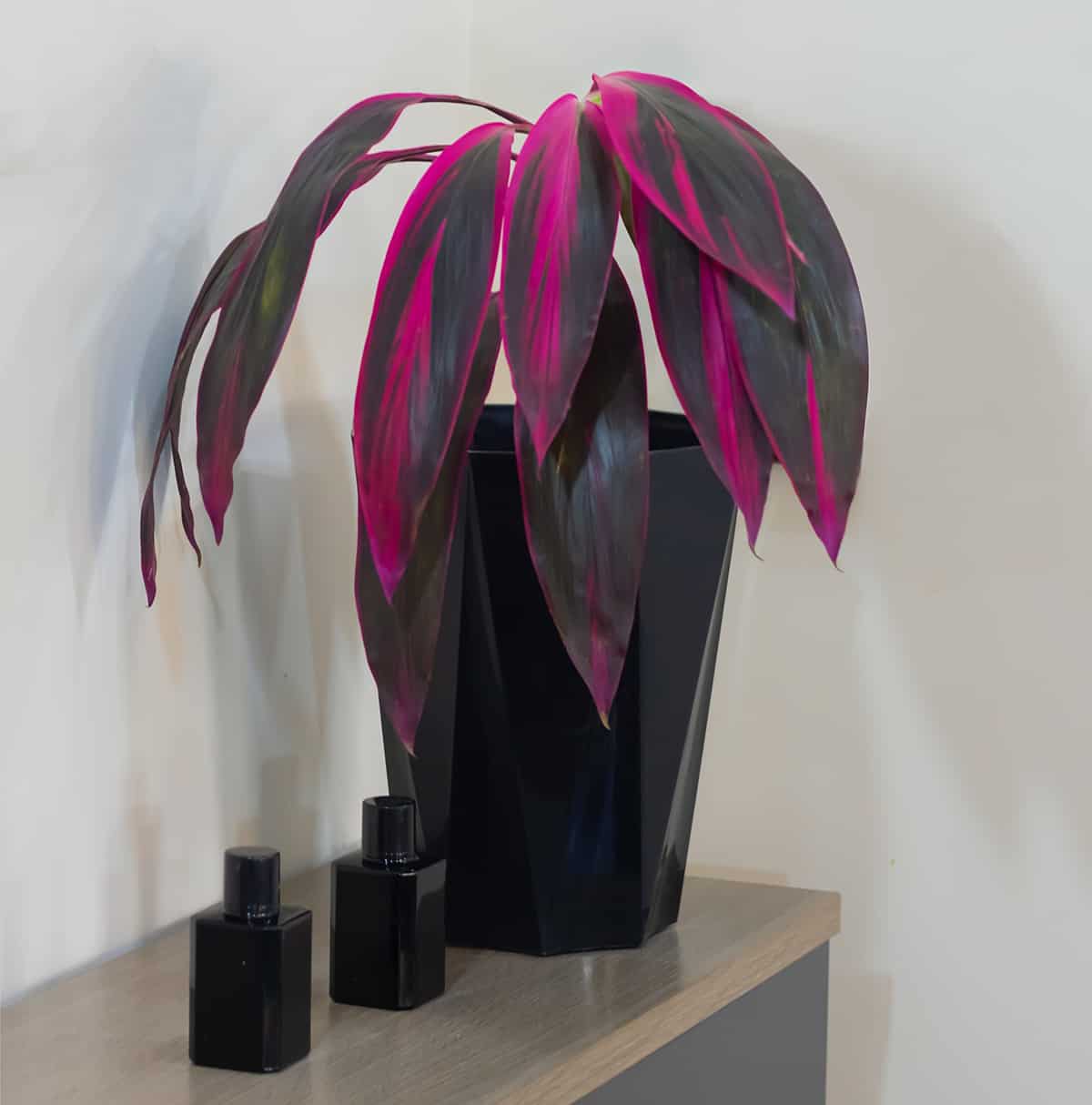
‘Purple Knight’ alternanthera (Alternanthera dentata ‘Purple Knight’) has glossy, deep purple leaves that look nearly black. It grows quickly to about 18 to 36 inches tall and is mostly grown as an annual outdoors.
Indoors, it needs the brightest spot available, since full sun holds the deep color and low light leads to green, leggy stems. Plant it in rich soil, and water regularly for consistent moisture.
Outdoors, it handles heat, humid summers and short dry spells, and it makes a bold contrast plant in containers and beds.
Black Pagoda Lipstick Plant
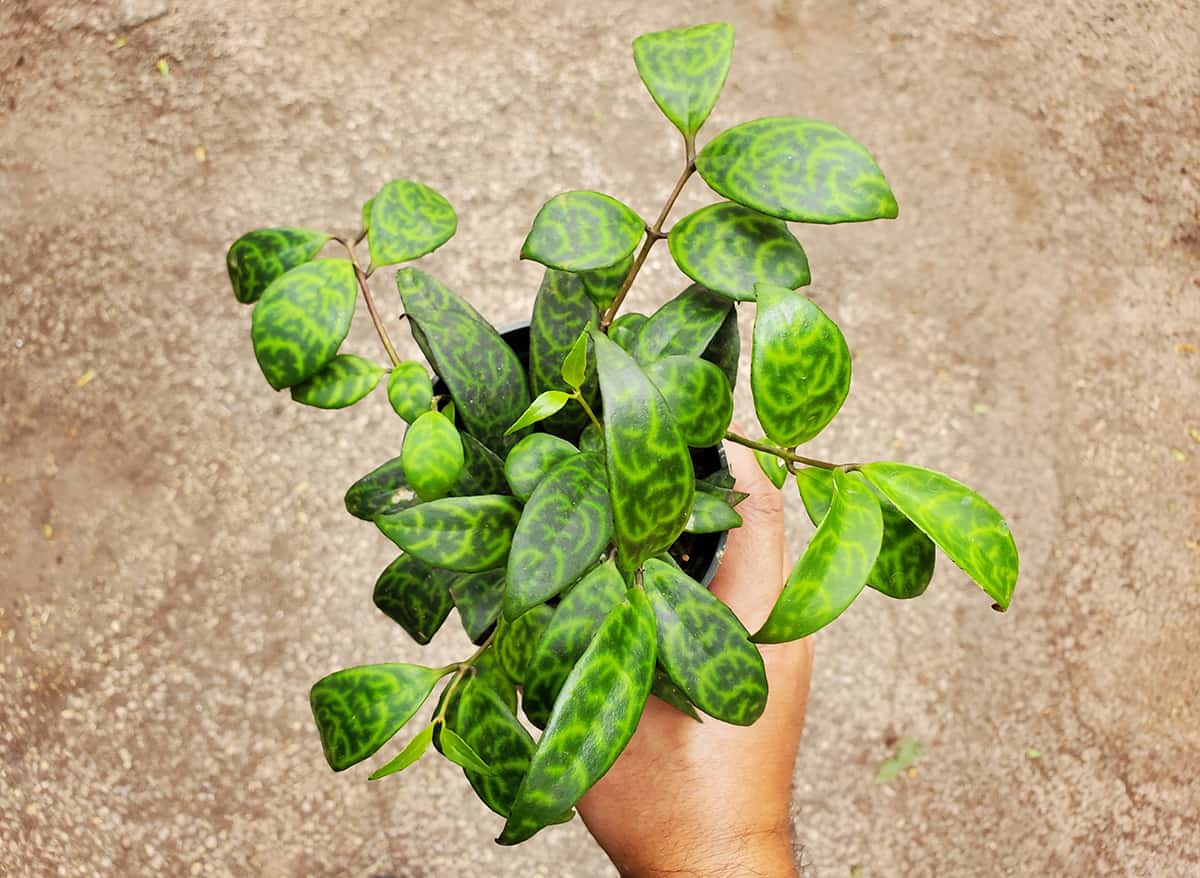
Black Pagoda lipstick plant (Aeschynanthus ‘Black Pagoda’) trails long stems of waxy leaves mottled in dark green and maroon, with purple-black undersides. Clusters of tubular, yellow-green to orange flowers appear on mature plants.
It’s an epiphyte, and it grows best in bright, indirect light, high humidity and temperatures between 60 and 80°F. Below 50°F, it drops leaves. Use a light, airy potting mix, and let the top inch dry between waterings.
Propagate from stem tip cuttings placed in moist potting mix, at about 70°F and high humidity.
Philodendron ‘Black Cardinal’
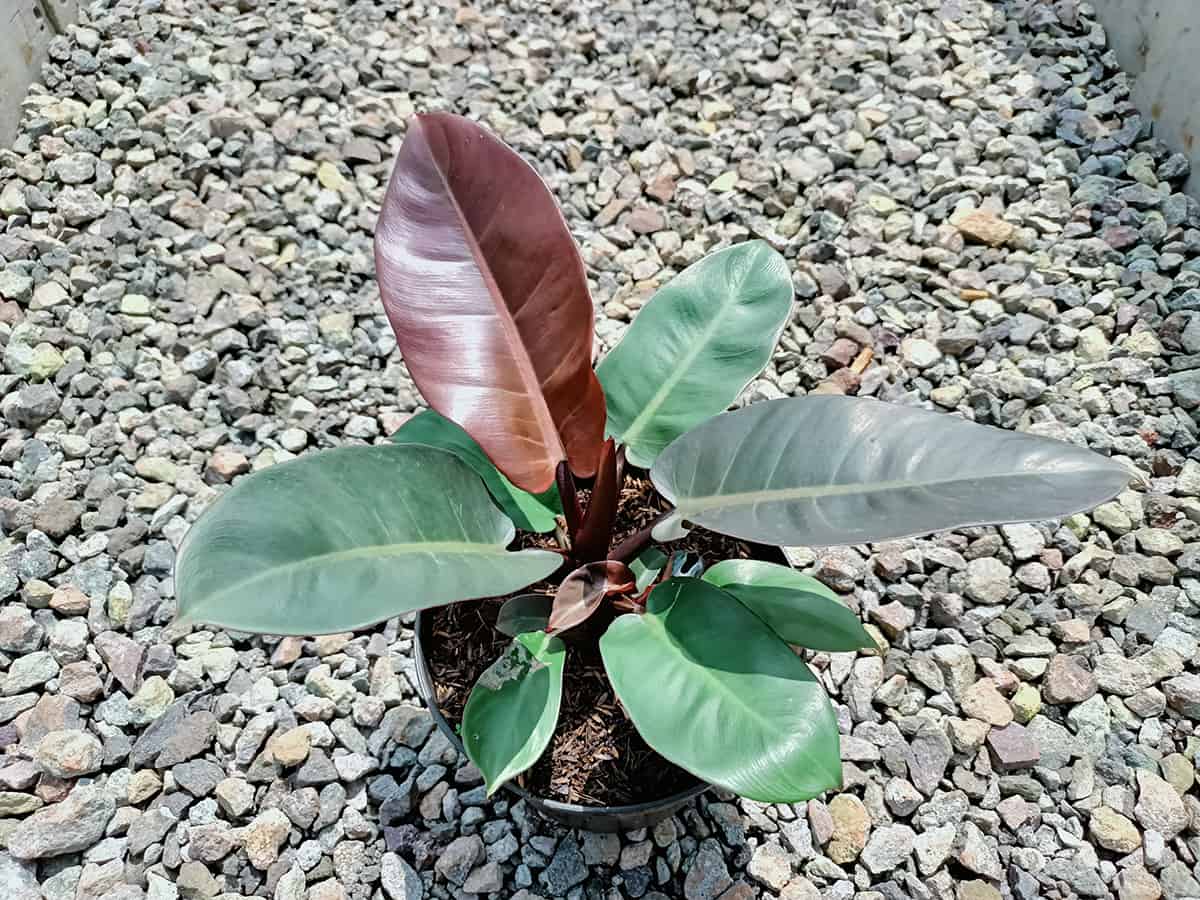
Philodendron ‘Black Cardinal’ unfurls glossy burgundy leaves that darken to nearly black, on a compact, self-heading plant. The leaves reach 8 to 10 inches long, held on sturdy, reddish stems.
It tolerates moderate light, though bright, indirect light holds the darkest color. Water when the top inch of soil dries, in a well-draining mix, and avoid soggy soil. Temperatures above 65°F are its comfort zone.
Its aerial roots are natural and harmless. Check occasionally for spider mites, aphids and mealybugs, and treat them early with insecticidal soap.
Darth Vader Begonia
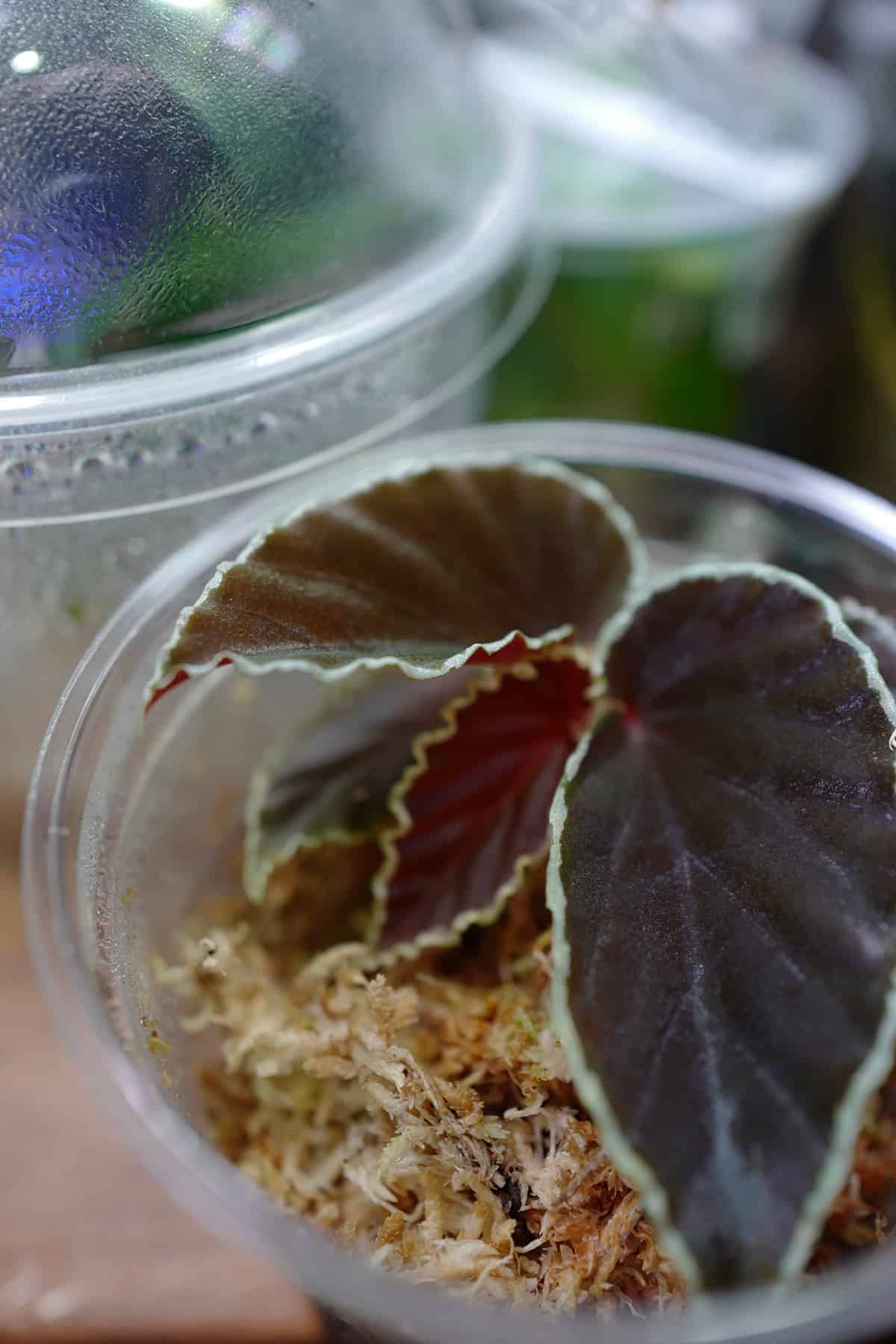
The Darth Vader begonia, named after the Star Wars villain, is a rhizomatous begonia with round, crinkled, nearly black leaves and deep red undersides. It’s one of the roughly 2,000 species and hybrids in the begonia family.
It needs bright light with a little gentle direct sun, a well-draining mix and a pot with drainage holes. Water when the top inch of soil dries, and never let the pot sit in water.
Feed every four weeks during the growing season with a balanced, water-soluble fertilizer at half strength. Humidity of 50 percent or more prevents crispy leaf edges, and a humidifier or a pebble tray helps.
Schismatoglottis ‘Moonlight’
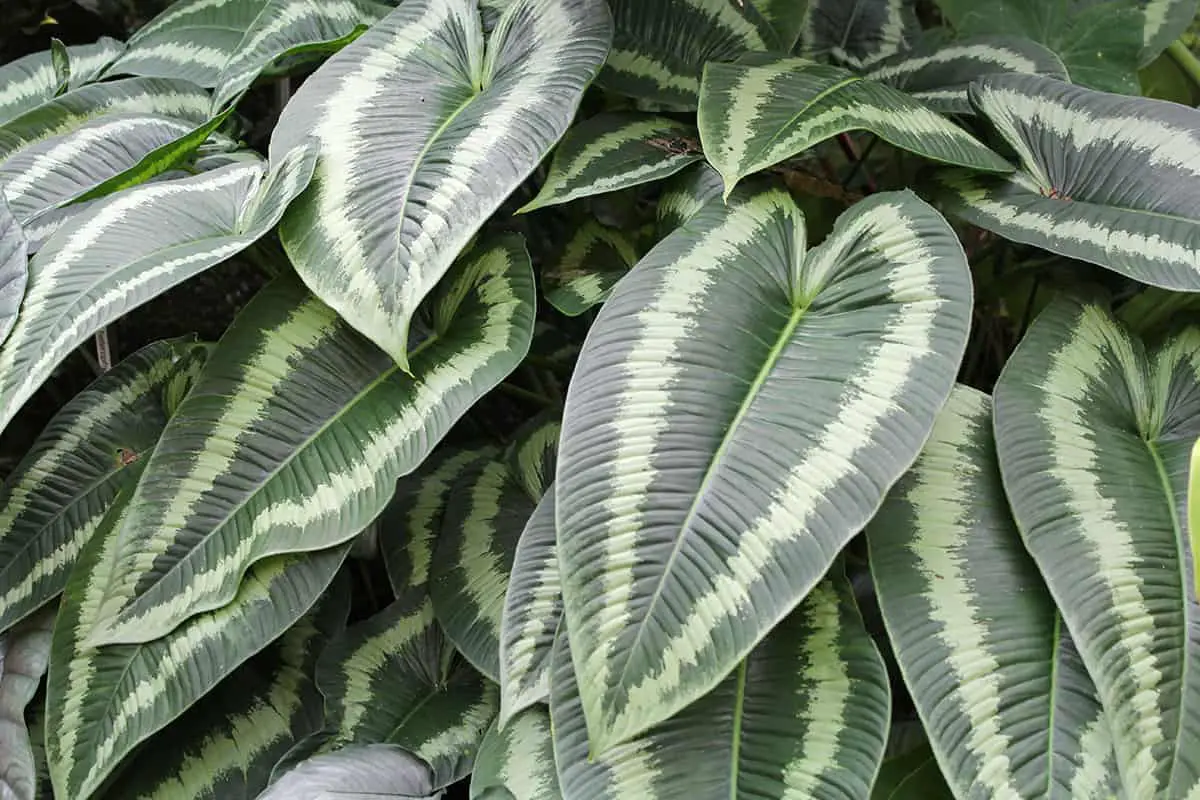
Schismatoglottis ‘Moonlight’ is an aroid with dark green, heart-shaped leaves washed with silvery-gray markings. It’s the lightest plant on this list, and its dark edges and silver centers pair beautifully with the true black-leaved varieties.
It grows easily in medium to bright indirect light, in a well-draining potting mix that holds steady moisture. Water when the top inch dries, and avoid soggy soil.
Remove old, yellowing leaves at the base to tidy the plant and encourage fresh growth, and inspect the undersides now and then for pests.
Peperomia Caperata ‘Raven’
Peperomia caperata ‘Raven’ has deeply rippled, glossy leaves in a deep purple-black, packed into a tight, compact mound. It belongs to the pepper family, Piperaceae, and the species is native to Brazil.
It needs bright, indirect light for the darkest color and a light, well-draining potting mix. Water only when the top half of the soil is dry, since its thick leaves store water and overwatering leads to root rot. It appreciates moderate humidity.
At a maximum of about 8 inches tall, ‘Raven’ fits shelves, desks and small spaces, and it’s non-toxic to pets.
Black Hoya
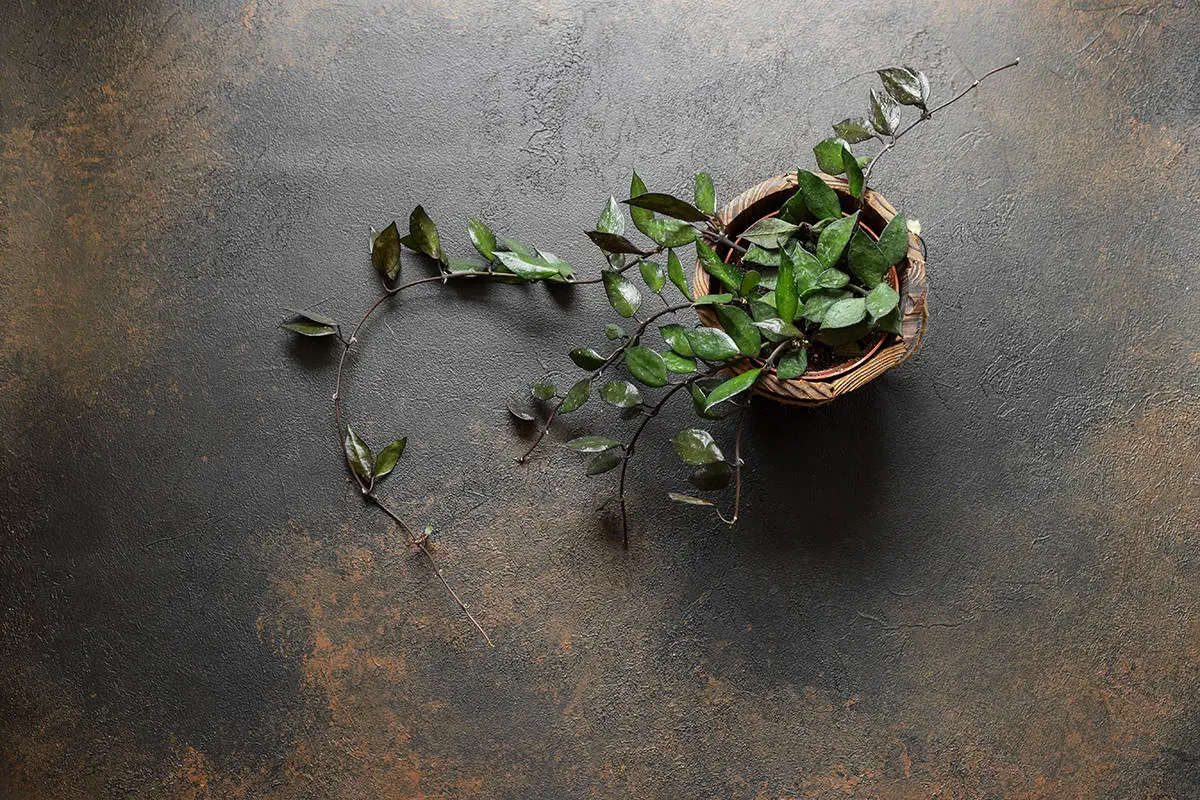
“Black hoya” most commonly refers to Hoya pubicalyx ‘Black Dragon’, a vining hoya with long, dark green leaves and clusters of fragrant, star-shaped flowers in deep maroon, nearly black.
It grows best in bright, indirect light, with a little morning sun, and low light prevents flowering. Let the soil dry slightly between waterings, then water thoroughly until it drains, since overwatering causes root rot.
Young plants may take 2 to 3 years to bloom. Leave the flower spurs in place after blooming, since new clusters form on the same spurs.
Pilea Peperomioides ‘Chinese Money Plant’
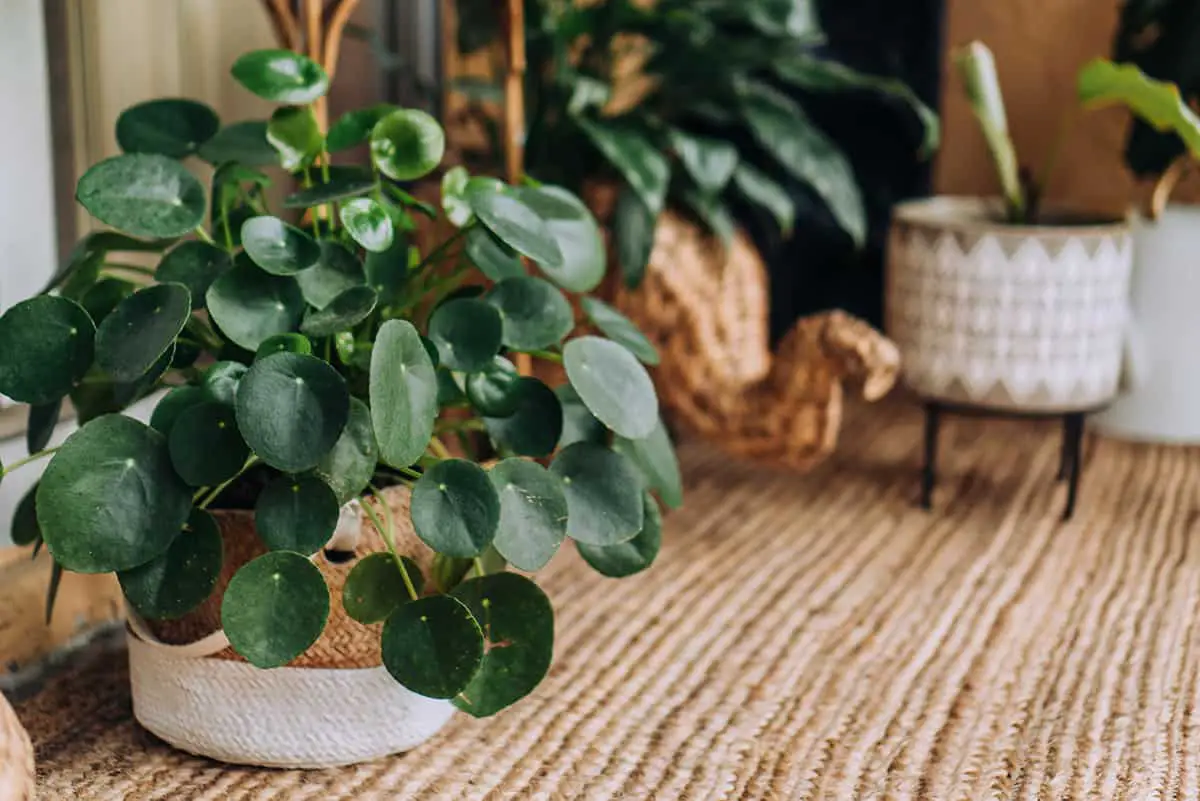
The Chinese money plant (Pilea peperomioides) has no dark leaves at all. Its round, coin-shaped leaves are bright green, and it’s a favorite partner for dark plants, where the contrast makes both look bolder.
It needs bright, indirect light, and harsh direct sun scorches the leaves. Rotate the pot weekly for even growth. Temperatures between 60 and 75°F are best.
Let the top inch or two of soil dry between waterings, in a well-draining mix, and feed monthly in spring and summer with a balanced houseplant fertilizer. Moderate humidity is plenty.