
A bathroom with no window still has the steam and warmth that many houseplants love. Light is the real challenge, since every plant needs it, and a ceiling bulb switched on for ten minutes a day falls short.
A ten-dollar outlet timer and a daylight bulb decide success here just as much as the plant itself does.
Table of Contents
- Best Plants For Bathrooms Without Windows
- ZZ Plant (Zamioculcas zamiifolia)
- Snake Plant (Sansevieria)
- Pothos (Epipremnum Aureum)
- Spider Plant (Chlorophytum Comosum)
- Peace Lily (Spathiphyllum)
- Cast Iron Plant (Aspidistra Elatior)
- Philodendron
- Boston Fern (Nephrolepis Exaltata)
- Chinese Evergreen (Aglaonema)
- Parlor Palm (Chamaedorea Elegans)
- Bamboo Palm (Chamaedorea Seifrizii)
- Dracaena
- Calathea
- English Ivy (Hedera Helix)
- Other Ferns (Holly, Button And Rabbit’s Foot)
- Lucky Bamboo
- Anthurium
- Orchid (Phalaenopsis)
- Arrowhead Plant (Syngonium Podophyllum)
- Bird’s Nest Fern (Asplenium Nidus)
Best Plants For Bathrooms Without Windows
Plants in a windowless room live on artificial light alone. The low-light plants here manage under ordinary LED fixtures only if the lights are on for 8 to 12 hours a day. A daylight LED bulb (5000 to 6500K) or a small grow light on a timer is the easiest fix. Another option is to move plants to a bright window for a week every few weeks to recharge.
The Boston fern, calathea, English ivy, the other ferns, anthurium and orchid love the humidity but need a grow light. The rest handle low light well.
ZZ Plant (Zamioculcas zamiifolia)
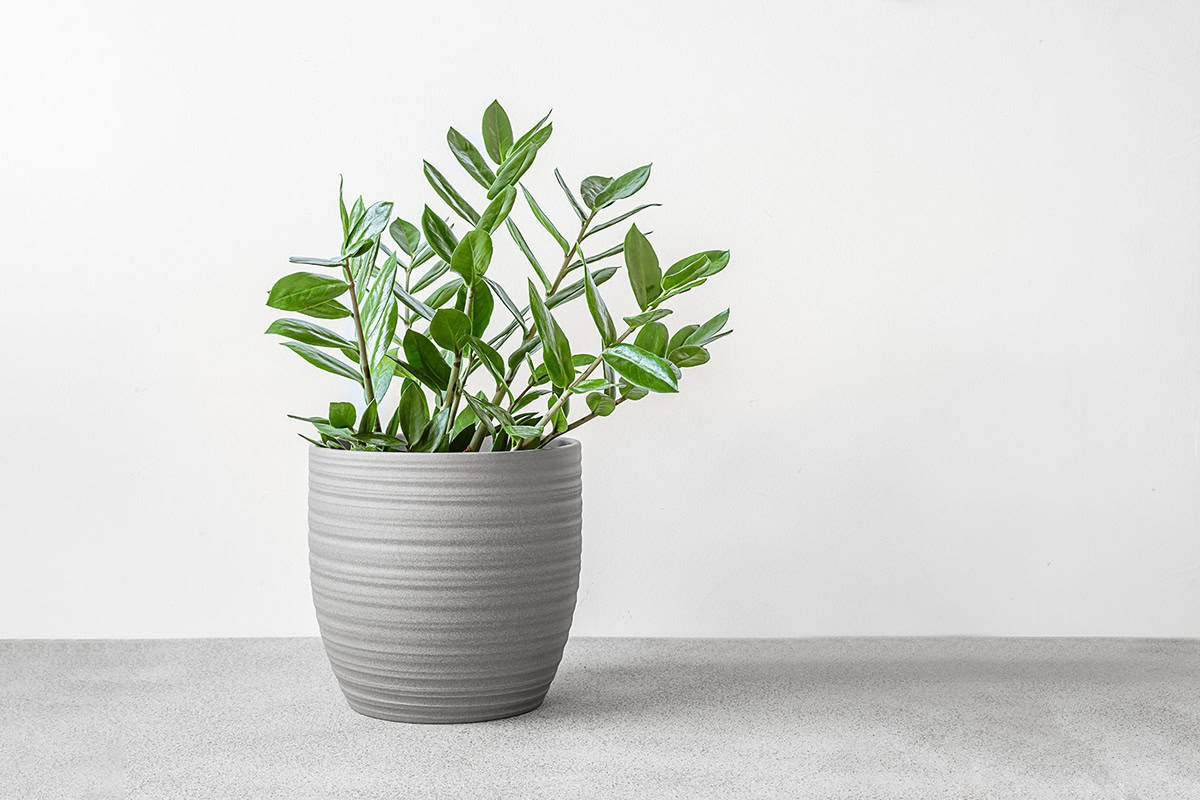
The ZZ plant is the toughest choice for a windowless bathroom. It grows slowly under artificial light, stores water in thick underground rhizomes and handles both steamy and dry air.
Water only when the soil is completely dry, roughly every two to three weeks. Its glossy leaves reflect what little light the room has. All parts are toxic if eaten.
Snake Plant (Sansevieria)

The snake plant, now classified as Dracaena trifasciata, tolerates low light and long gaps between waterings. Its stiff, upright leaves fit neatly into narrow spots beside a sink or tub.
Let the soil dry completely between waterings, and use a pot with a drainage hole. Bathroom humidity is fine for it, as long as the soil itself dries out. It’s mildly toxic to pets.
Pothos (Epipremnum Aureum)

Pothos is one of the most reliable trailing plants for low artificial light. Its heart-shaped leaves look lush tumbling from a shelf or a hanging pot.
Water when the top half of the soil is dry. Trim long vines to encourage fuller growth, and root the cuttings in water for new plants. Variegated types lose some of their pattern in dim rooms. Pothos is toxic to pets.
Spider Plant (Chlorophytum Comosum)

Spider plants have long, arching leaves striped green and white. They tolerate fairly low light, though their stripes fade and growth slows in a very dark room, so a daylight bulb or small grow light helps.
Water when the top inch of soil is dry, and use a well-draining mix. A hanging basket makes good use of vertical space in a small bathroom. Spider plants are non-toxic to cats and dogs.
Peace Lily (Spathiphyllum)

Peace lilies tolerate low light and love bathroom humidity. They grow happily under artificial light, though flowers appear only with brighter light or a grow light.
Water when the top inch of soil is dry. The plant droops when thirsty and recovers quickly after a drink. Peace lilies are toxic to pets.
Cast Iron Plant (Aspidistra Elatior)
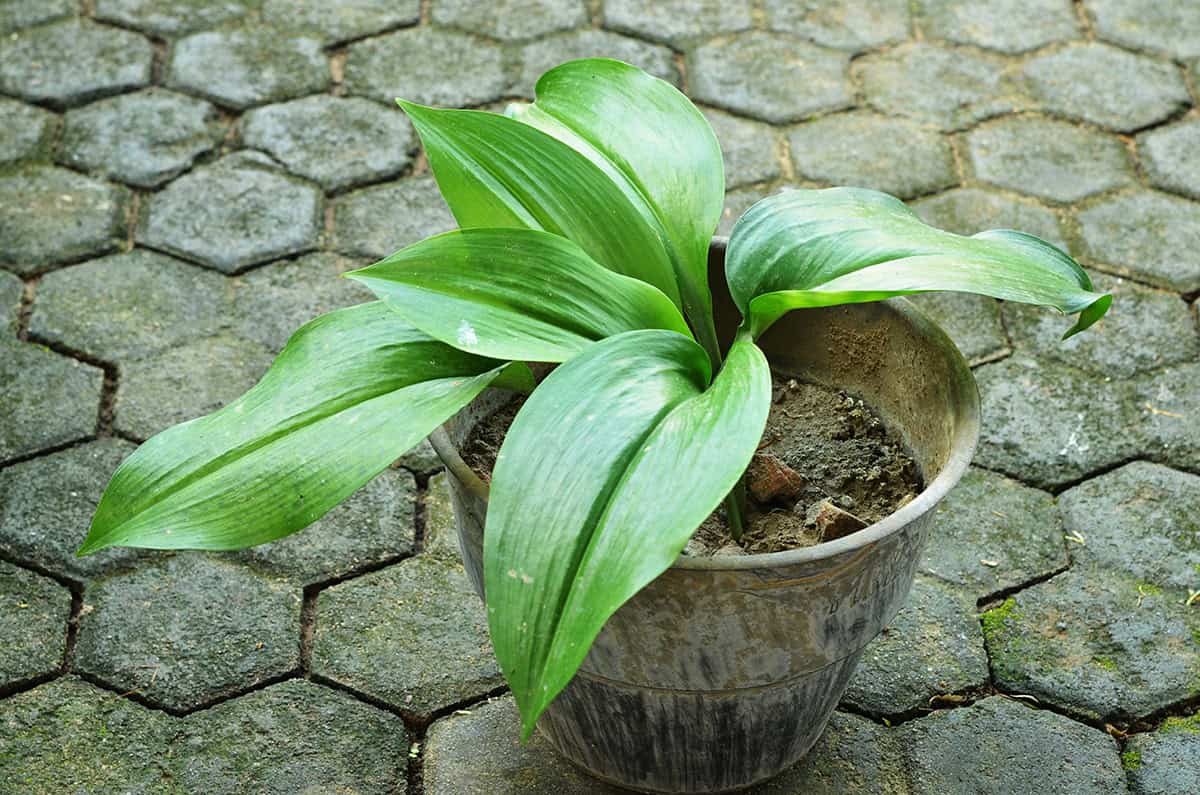
The cast iron plant earns its name in dark, neglected corners where other plants fail. Its broad, dark green leaves grow slowly and need little care.
Water when the top couple of inches of soil are dry, and dust the leaves now and then for a glossy sheen. It’s non-toxic to pets.
Philodendron
Heart-leaf philodendron and other vining types handle low light and enjoy warm, humid air. Their trailing stems soften a shelf or the top of a cabinet.
Water when the top inch or two of soil is dry. In very dim rooms, the gaps between leaves grow longer, a sign that the plant wants more light. Philodendrons are toxic to pets.
Boston Fern (Nephrolepis Exaltata)

Boston ferns love bathroom humidity, and their arching fronds add a soft, spa-like look. They need moderate light, though, so in a windowless bathroom a grow light on a timer is a must.
Water whenever the surface starts to dry, for soil that is evenly moist and never soggy. Steam from showers handles the humidity, so misting is optional. Boston ferns are non-toxic to pets.
Chinese Evergreen (Aglaonema)
Chinese evergreens handle low light and humid air well. Plain dark green types are the best choice for a dim bathroom, while pink and red varieties need brighter light to hold their color.
Water when the top inch or two of soil is dry. Avoid cold drafts and temperatures below about 60°F. Aglaonema is toxic to pets.
Parlor Palm (Chamaedorea Elegans)

The parlor palm is one of the few palms that thrives in low light. Its soft, feathery fronds lend a small bathroom a tropical look.
Water when the top inch of soil is dry, and use a pot with good drainage, since soggy soil causes root rot. It thrives in bathroom humidity. It’s non-toxic to cats and dogs.
Bamboo Palm (Chamaedorea Seifrizii)
The bamboo palm grows slender, cane-like stems topped with airy fronds. It tolerates low to medium light and appreciates humidity.
Water when the top inch of soil dries. It grows taller than the parlor palm, up to 4 to 6 feet indoors, so it fits a large bathroom best. It’s non-toxic to pets.
Dracaena
Dracaenas such as Janet Craig and the corn plant tolerate low light and humid air. Their long, strappy leaves add height to a corner.
Water when the top half of the soil is dry. Brown leaf tips point to fluoride or salts in tap water, so filtered water helps. Dracaenas are toxic to pets.
Calathea

Calatheas, members of the prayer plant family, fold their leaves upward at night and lower them by day. Their patterned leaves love high humidity, which makes a bathroom a natural home.
They need medium, indirect light, so add a grow light in a windowless room. Water with filtered or rain water when the top inch of soil is barely dry, since calatheas dislike both drought and soggy soil. They’re non-toxic to pets.
English Ivy (Hedera Helix)
English ivy enjoys humidity and cool rooms, and its trailing vines look classic on a shelf. It needs bright, indirect light, though, and grows thin and leggy in a dark room, so a grow light is essential.
Water when the top inch of soil is dry. Pinch the tips for fuller growth. English ivy is toxic to pets and people if eaten.
Other Ferns (Holly, Button And Rabbit’s Foot)
Beyond the Boston fern, several other ferns handle bathroom conditions. Holly fern is the most tolerant of low light, while button fern and rabbit’s foot fern do best with a grow light.
All of them like evenly moist soil and the steam from regular showers. Most ferns are non-toxic to pets.
Lucky Bamboo
Lucky bamboo is a dracaena, Dracaena sanderiana, and no relation to true bamboo. It grows in a vase of water and tolerates low light and humidity.
Change the water every week or two, and use filtered or distilled water, since chlorine and fluoride cause yellow leaves. Cover the roots fully. Lucky bamboo is toxic to pets.
Anthurium

Anthuriums have glossy, heart-shaped leaves and waxy red, pink or white flowers. They love humidity, but they need bright, indirect light to bloom, so a grow light is essential in a windowless bathroom.
Water when the top inch of soil is dry, and wipe the leaves to remove dust. Anthuriums are toxic to pets.
Orchid (Phalaenopsis)

Phalaenopsis orchids enjoy bathroom humidity, but they need bright, indirect light to rebloom. In a room with no window, place them under a grow light for 10 to 12 hours a day.
Pot them in bark-based orchid mix, and water when the roots look silvery, about once a week. Feed with a diluted orchid fertilizer during active growth. They’re non-toxic to pets.
Arrowhead Plant (Syngonium Podophyllum)

Arrowhead plants grow arrow-shaped leaves in green, cream or pink. They tolerate low light and enjoy humidity, though pink types fade toward green in dim rooms.
Water when the top inch of soil is dry. Young plants grow bushy, and older ones start to vine, so add a small pole or let them trail. Arrowhead plants are toxic to pets.
Bird’s Nest Fern (Asplenium Nidus)

Bird’s nest ferns form a rosette of wavy, bright green fronds around a central crown. They tolerate low to medium light and love humidity.
Water around the edge of the pot, and avoid pouring water into the center of the rosette, which rots the crown. Let the top inch of soil dry slightly between waterings. They’re non-toxic to pets.