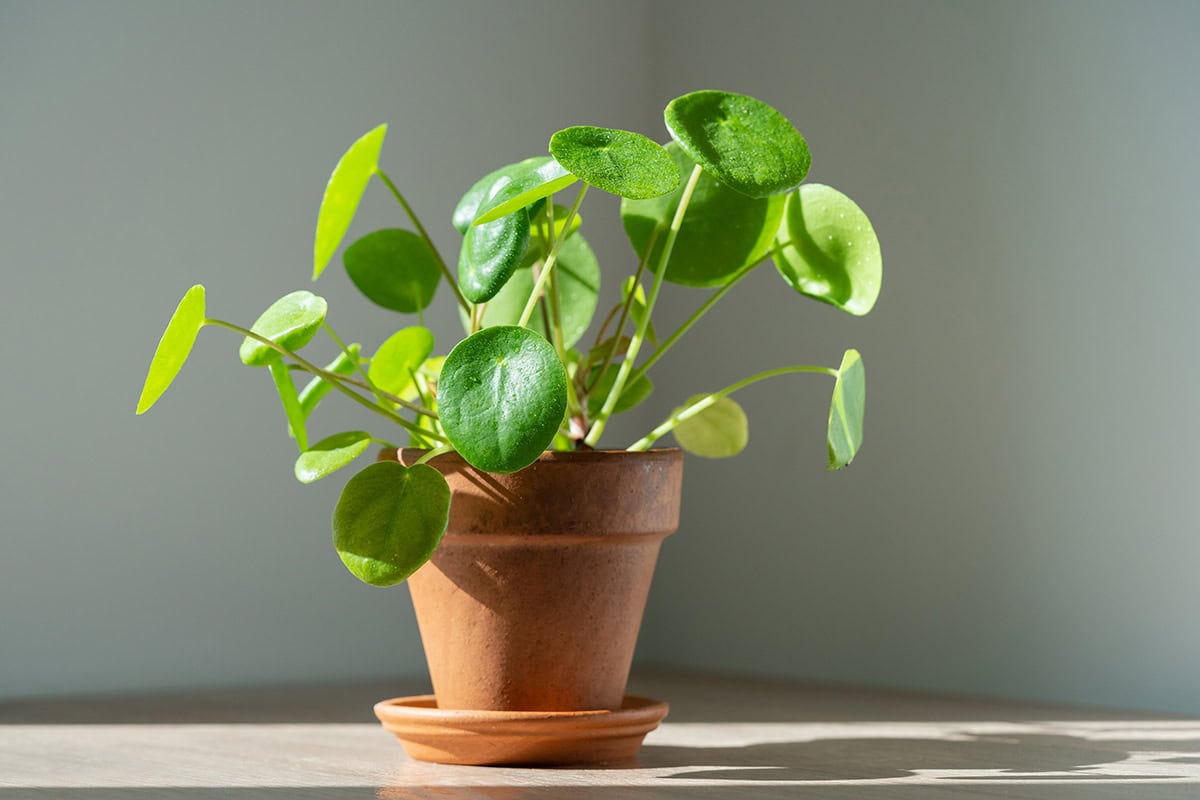
Pilea peperomioides spent decades as a plant people passed hand to hand, traced back to a Norwegian missionary who carried cuttings home from China in 1946.
Those round, coin-shaped leaves on thin stalks are still the reason it shows up on countless shelves. The plant also makes pups constantly, which is how the sharing tradition carries on.
Separating those pups is a job for later in the guide, after the light and water basics.
Table of Contents
Light
Chinese money plant needs plenty of bright, indirect light. Direct sun scorches the leaves quickly.
An east-facing window is ideal. Near a south-facing window, pull the plant a few feet back from the glass or filter the light with a sheer curtain.
Stretched, leggy growth means the plant wants more light. Rotate the pot by a quarter every week for even, upright growth.
In darker rooms, a lamp with an LED grow bulb fills the gap, especially in winter. Pale or crispy patches signal too much light, while dropping leaves and slow growth point to too little.
Soil
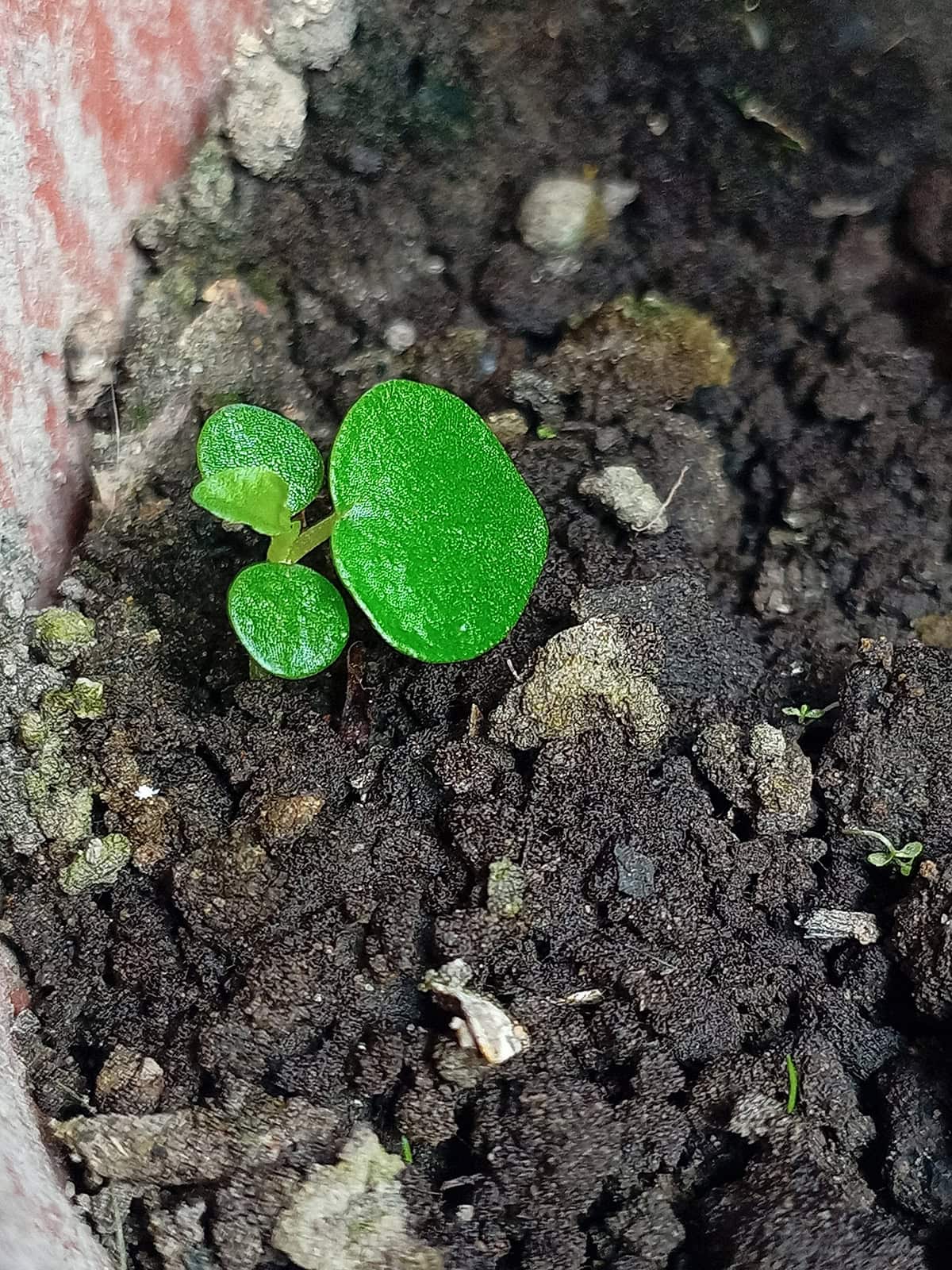
Pilea needs a loose, well-draining soil that holds a little moisture and dries reasonably fast. Heavy, dense soil causes root problems.
A houseplant potting mix with added perlite or pumice is a good base, and extra perlite lightens a heavy blend. Aim for a pH between 6.0 and 7.0, since strongly acidic or alkaline soil leads to yellow leaves and stunted growth.
Use a pot with drainage holes, because waterlogged roots rot quickly. Avoid clay-heavy soil, which holds water for too long.
Replace the top layer of soil each spring to refresh nutrients and prevent mineral buildup.
Water
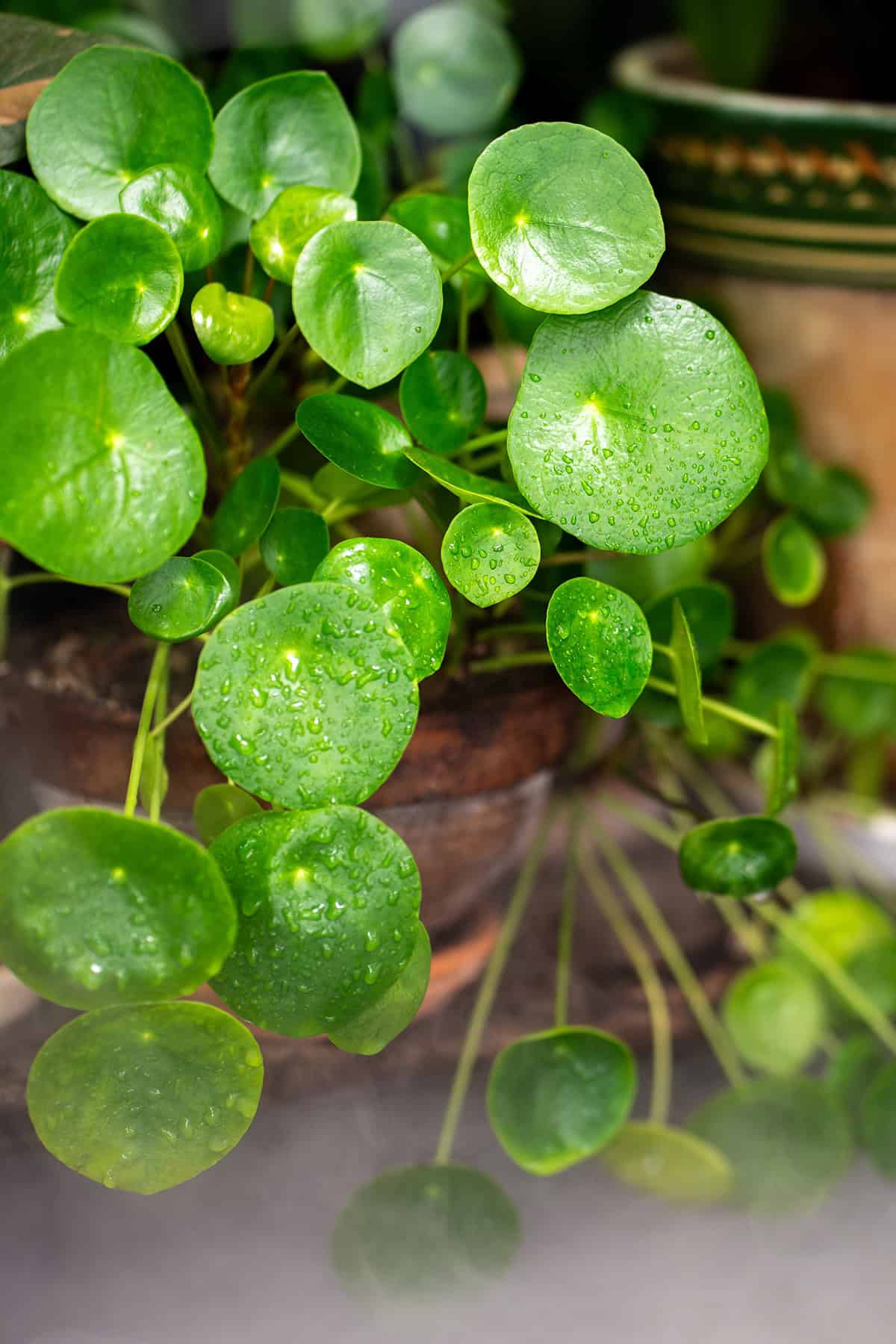
Chinese money plant likes lightly moist soil that is never soggy. Push a finger into the top inch and water once it is dry. Overwatering is the most common killer, so never let the pot sit in water.
Let the excess drain away and empty the saucer. Spring and summer growth calls for more frequent watering, and winter calls for much less, since growth slows and wet soil becomes risky.
Room-temperature tap water is fine in most homes, though filtered water helps if your water is very hard. Drooping leaves on dry soil perk up after a drink, and yellow, mushy leaves point to overwatering.
Adjust the routine to your home. Dry air and strong light both speed up how fast the soil dries, and a pebble tray nearby adds a bit of humidity.
Temperature And Humidity
Pilea grows best between 65°F and 85°F. Avoid cold drafts and spots right beside heaters or radiators.
Average household humidity is enough, though the plant appreciates levels above 50 percent. In very dry homes, set the pot on a tray of pebbles and water. Sudden temperature swings stress the plant, so a steady spot is best.
Warm rooms with moderate humidity produce the largest, glossiest leaves.
Fertilizer
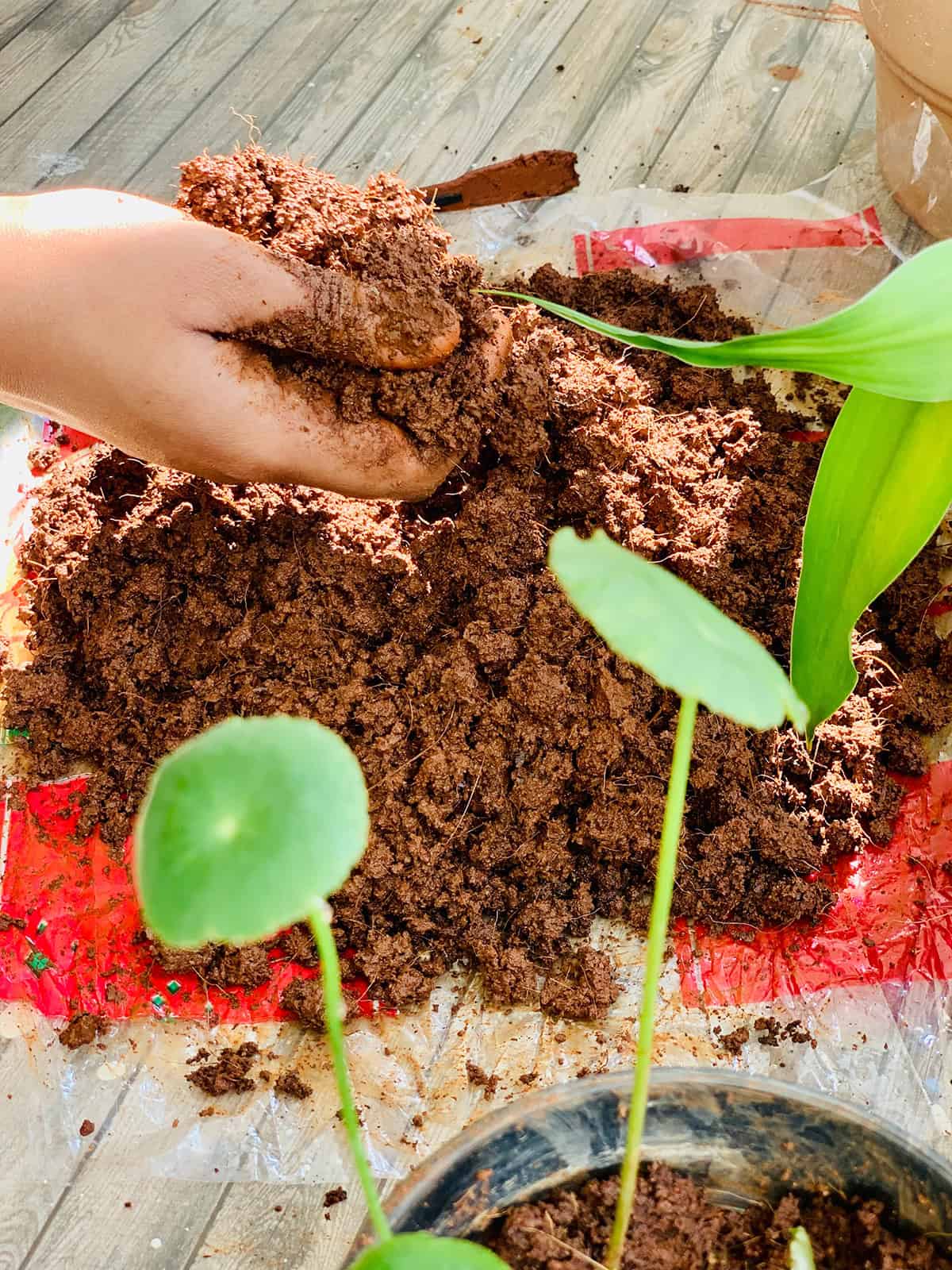
Feed Chinese money plant once a month in spring and summer with a diluted, balanced liquid fertilizer. Cut back or skip feeding in the cooler months, when growth slows.
A balanced formula such as 10-10-10 or 20-20-20 at half strength is plenty. Overfeeding causes more harm than underfeeding and shows up as yellow leaves or a white crust on the soil. If that happens, flush the pot with plain water and let it drain well.
Fish emulsion and seaweed extract are good organic options at a weak dilution. A quick note on the calendar after each feeding prevents accidental double doses.
Odd-looking leaves are a cue to review the feeding routine.
Propagation
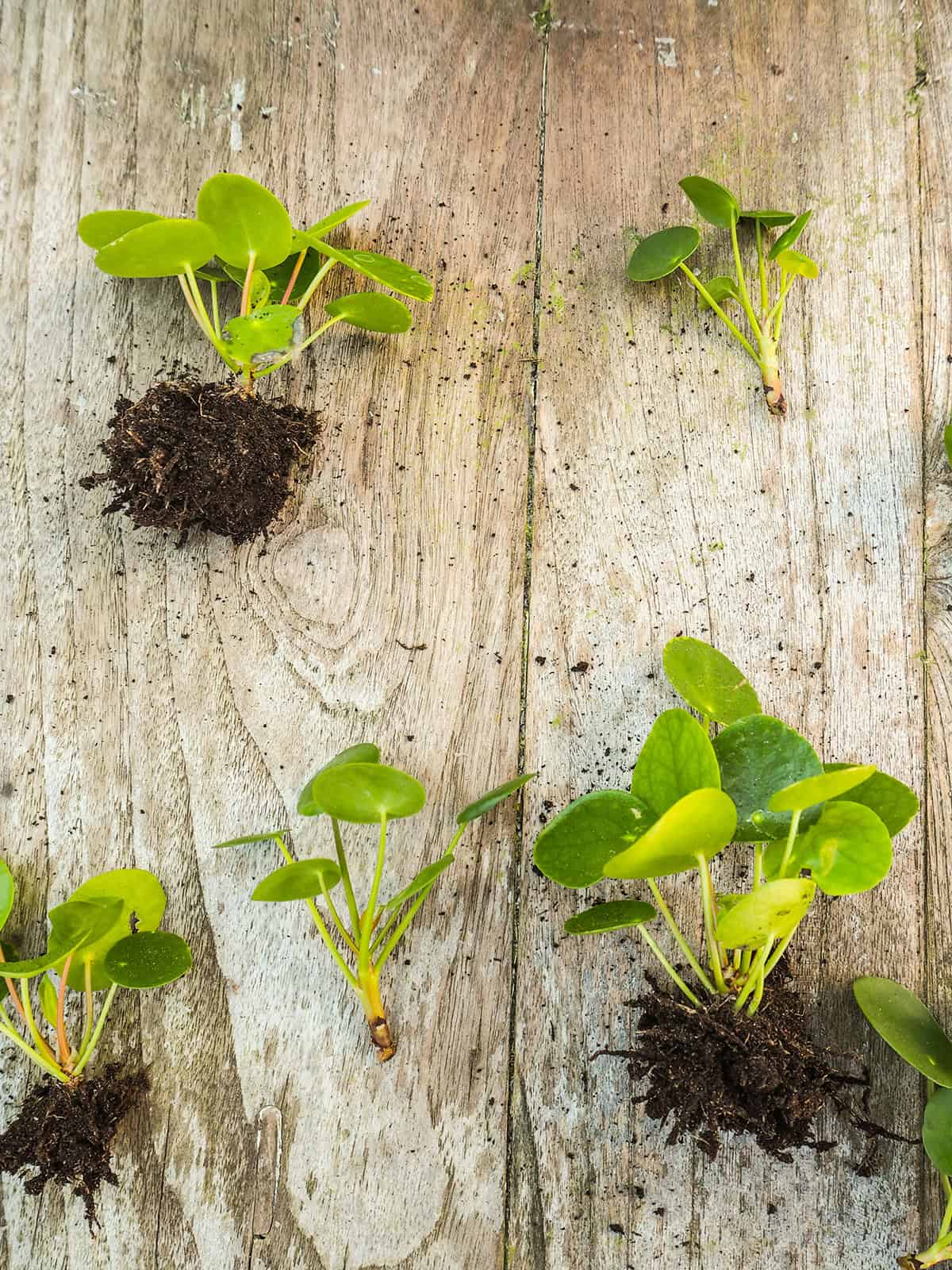
Few houseplants are easier to propagate than Chinese money plant. Small pups sprout from the soil around the base and along the main stem. Once a pup has a few leaves and stands 2 to 3 inches tall, dig gently to find where it joins the root and cut it free with clean scissors or a knife.
Plant the pup in a small pot of moist, well-draining mix, or root a stem pup in a glass of water. Water lightly, place it in bright, indirect light and expect roots within a few weeks. Once established, care for it like an adult plant. Spring and early summer are the best times, while the plant is actively growing.
Extra pups make easy gifts for friends, which is how the plant spread around the world in the first place.
Pruning
Chinese money plant needs very little pruning. Snip dead or yellow leaves at the base of the leaf stalk with clean, sharp scissors as soon as you spot them, and leave healthy growth alone.
Trim a few leaves from the fuller side of a lopsided plant, and rotate the pot regularly. Removing pups at the base directs energy into larger leaves up top, and the pups root easily in water before moving to soil.
A light trim after winter helps the plant recover. Remove no more than a third of the leaves at once to avoid stress.
Potting And Repotting
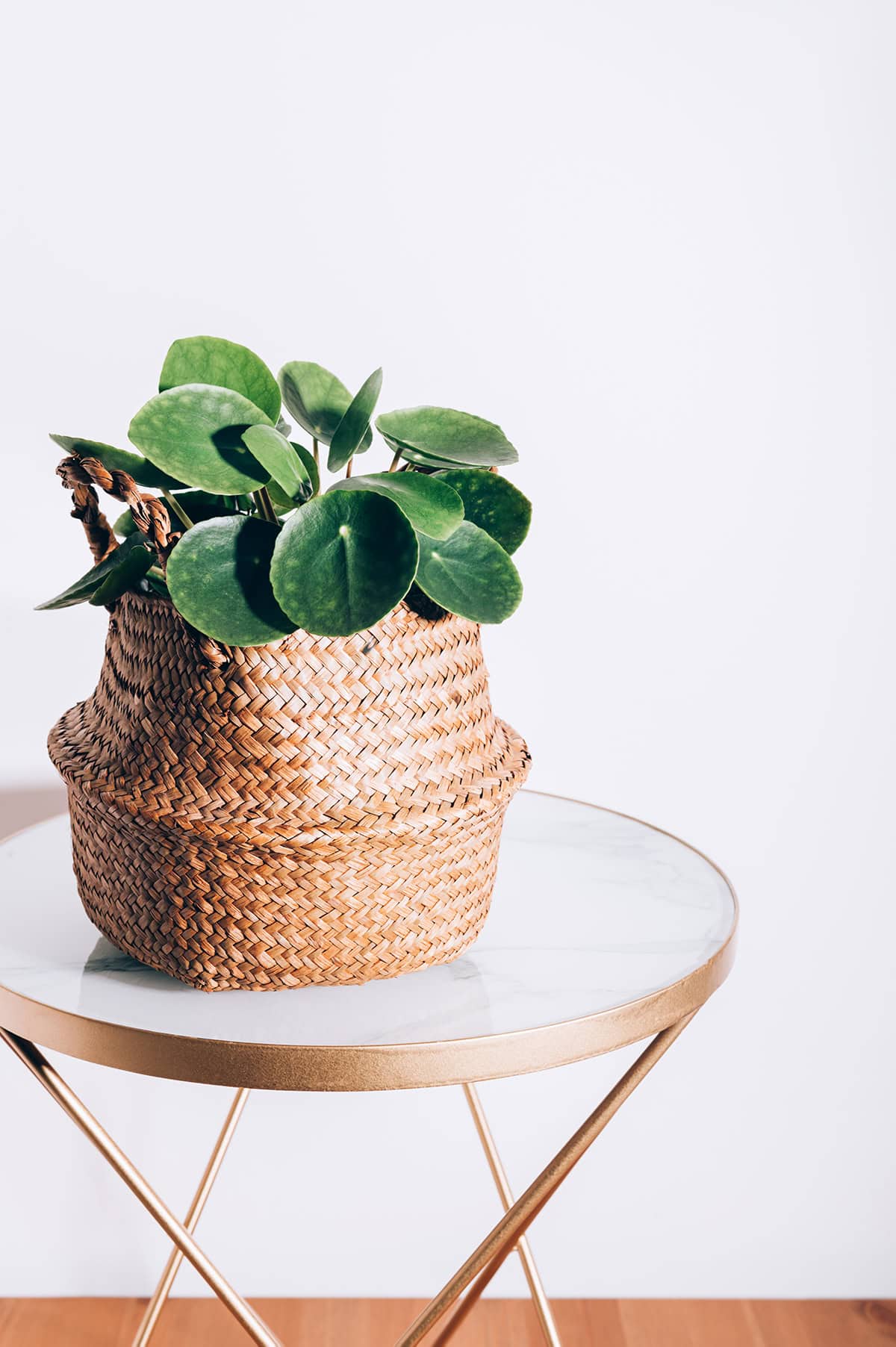
Choose a pot with drainage holes, because Pilea hates soggy roots. A peat-based or all-purpose houseplant mix is fine. Repot when roots circle the bottom or poke out of the drainage holes, ideally in spring as new growth begins.
Go up only an inch or two in pot size, since an oversized pot holds water for too long. Add fresh mix to the new pot, set the plant in and fill around the sides. Water thoroughly, watch for stress over the next couple of weeks and wait before fertilizing.
Separate any pups during repotting and pot them up on their own. Repot only when necessary, since many plants grow happily in the same pot for a few years. Water regularly after the move and avoid soaking the mix.
Common Problems & Troubleshooting
Yellow leaves on Chinese money plant are a sign of too much water or soggy soil. Check for drainage holes, a surprisingly common culprit, and let the soil dry before the next watering. Older lower leaves also yellow and drop naturally as the plant grows.
Limp, drooping leaves come from either too much or too little water. Test the soil with a finger. Bone-dry soil means the plant is thirsty, and wet soil means it needs a break.
Brown, crispy leaf edges point to low humidity. A humidifier nearby or a cluster of plants raises the moisture in the air.
Small new leaves or stalled growth suggest too little light or a lack of nutrients. Move the plant to a brighter spot out of direct sun, and feed with a balanced fertilizer during the growing season.
Spider mites and aphids sneak up on Pilea. Check the undersides of the leaves for tiny insects or webbing, wipe the leaves with a damp cloth and treat with insecticidal soap if needed.
Plant Varieties
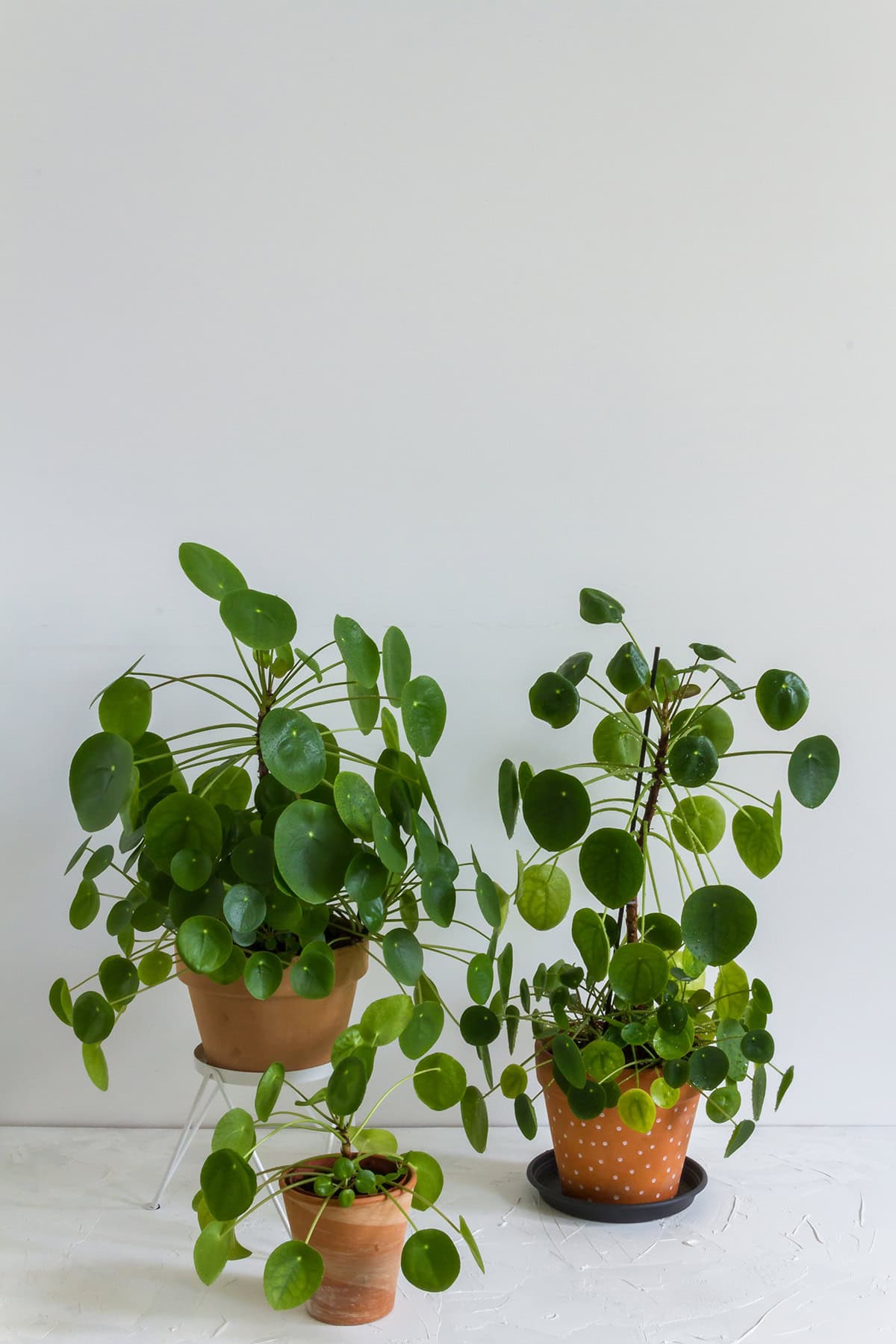
Nearly every plant sold as Chinese money plant is Pilea peperomioides, the classic species found in shops and plant swaps.
Variegated forms with cream or white splashes, such as ‘White Splash’ and ‘Mojito’, are harder to find. They need brighter light to hold their markings.
The Pilea genus holds more than 600 species, though only a handful are grown as houseplants. Pilea involucrata, the friendship plant, and Pilea cadierei, the aluminum plant, show up in garden centers most frequently. Both are different plants from the Chinese money plant, yet their care is similar.
Leaf shape is the easiest way to tell them apart. Other pileas have oval, quilted or colorful leaves, and the Chinese money plant stands out with round, coin-like leaves on long stalks.
Check the label before buying, since some sellers use the name Pilea for several different plants.