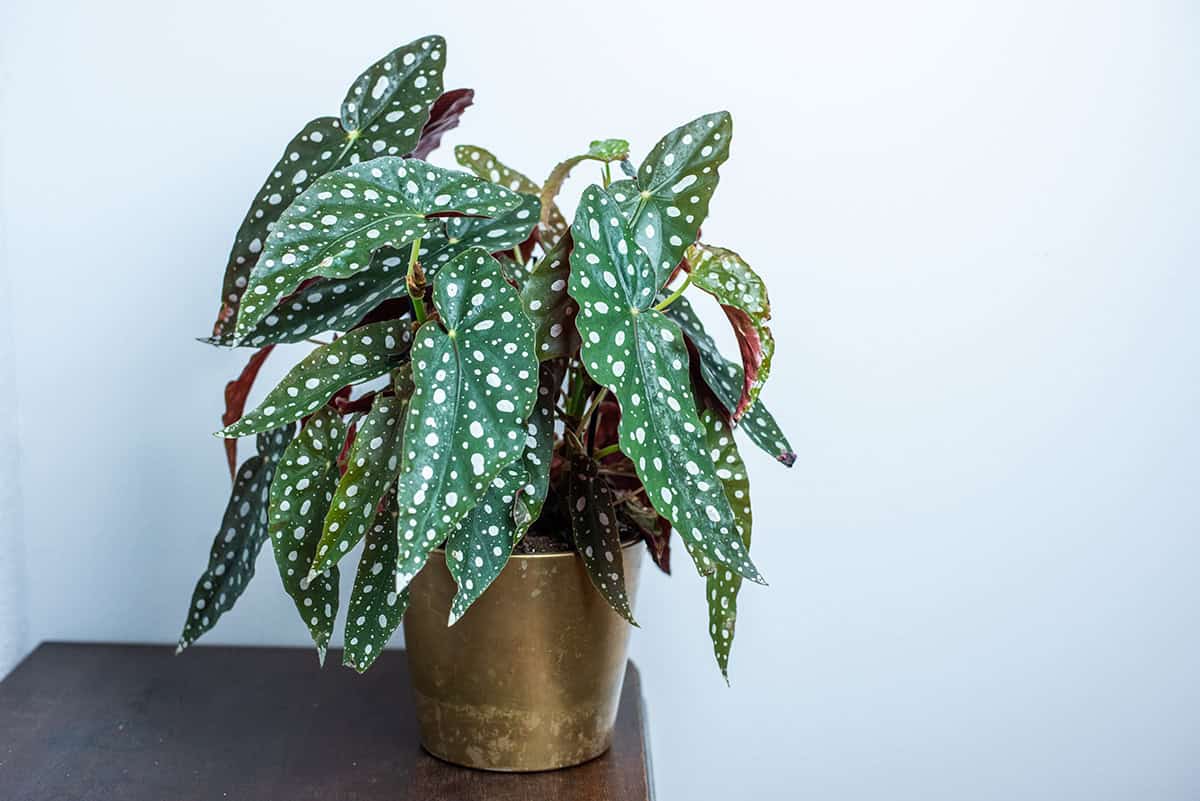
Hypoestes phyllostachya looks as if someone flicked a paintbrush across every leaf. The freckles come in pink, red or white, and they glow brightest in steady, filtered light.
The plant is small, fast and cheap, which makes it a favorite for terrariums and mixed pots. It also sulks dramatically when the soil dries out, then perks up within hours of a drink.
Pinching is the trick behind a bushy plant, and the pruning notes show where to make the cut.
Table of Contents
Light
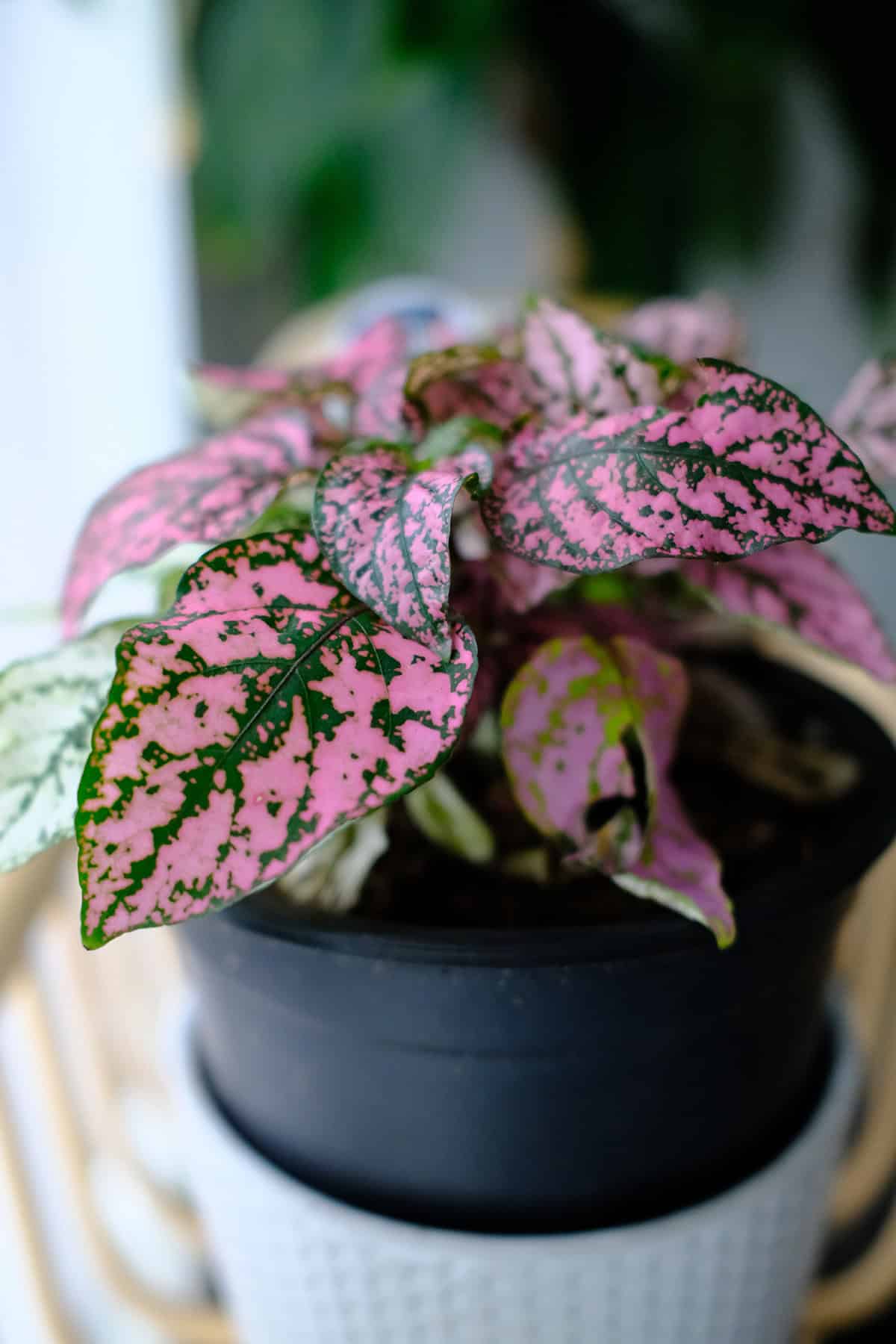
Bright, indirect light produces the boldest leaf color on polka dot plant. Direct sun scorches the thin leaves, and too little light washes the spots out.
A window with filtered sunlight is ideal, and east- or north-facing windows are safe choices. Hang a sheer curtain over a south or west window to soften the light.
In a dim room, an LED grow light fills the gap. Low light shows up as leggy stems and pale leaves.
The spots are the best guide. Bright, crisp markings mean the light is right, while a stretched, dull plant needs a spot closer to the window or lamp.
Soil
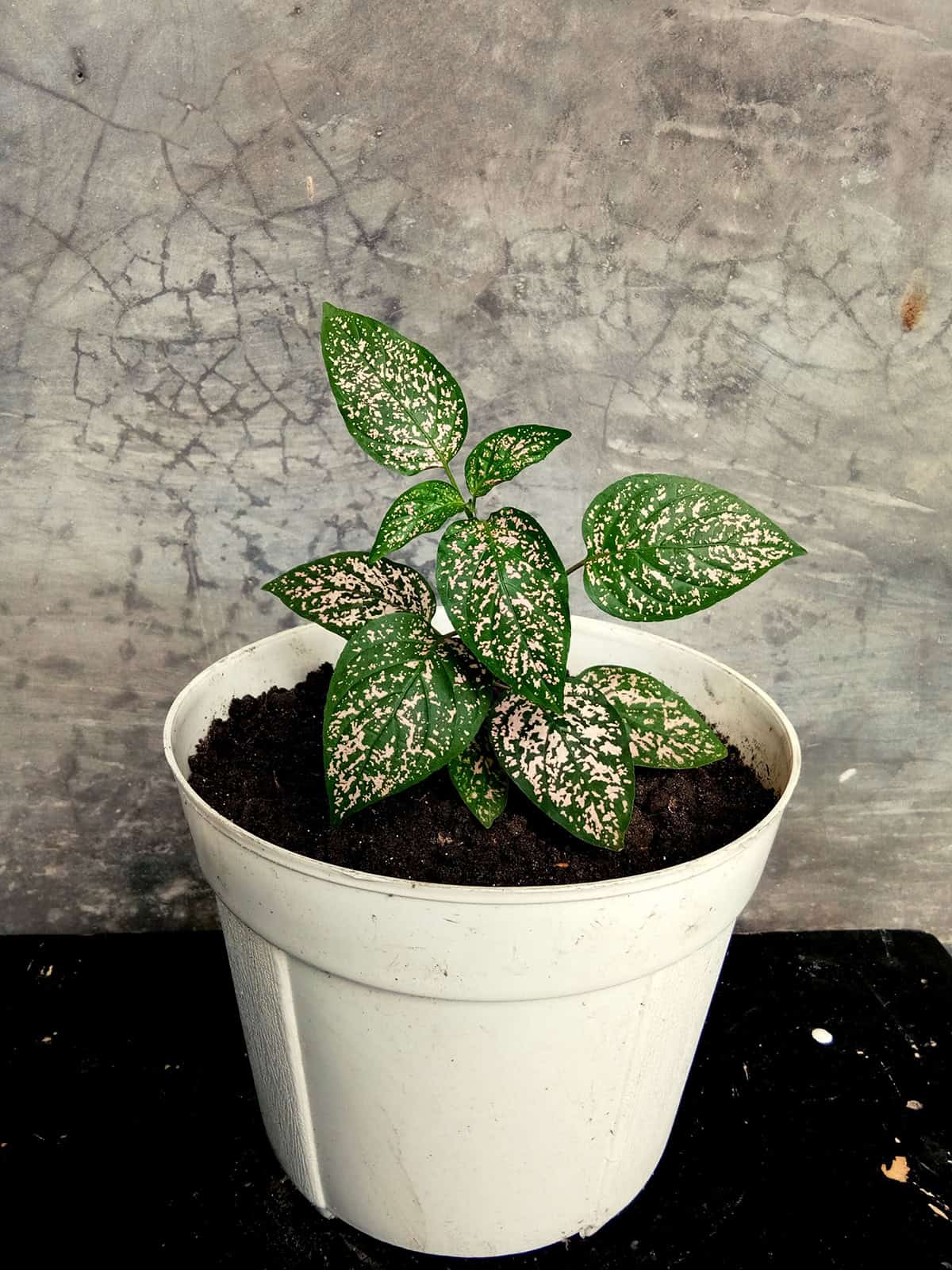
Use a soil that drains well and holds a little moisture. A rich, peat-based potting mix with plenty of organic matter is a good match.
Heavy garden soil holds too much water and suffocates the roots. Standard bagged houseplant mix is fine.
A drainage hole is essential so excess water escapes. Loosen compacted soil before watering.
These plants like steady moisture and dislike both soggy and bone-dry soil, so check the pot every couple of days in dry indoor air.
Water
Polka dot plants like evenly moist soil, neither drenched nor bone dry. Push a finger into the top half inch and water once it is dry.
Empty the saucer after watering, because soggy soil leads to root rot. Room-temperature water is best, since cold water shocks the roots.
Hard or salty water leaves a white crust on the soil or pot rim. Flush the soil from the top about once a month to clear the salts.
Growth slows in winter, so let the soil dry slightly more between waterings. In summer, water more frequently for crisp, colorful leaves.
Water before the plant wilts. A wilted plant recovers after a drink, but repeated droughts weaken it and fade the leaves, which makes a steady routine the best approach.
Temperature And Humidity
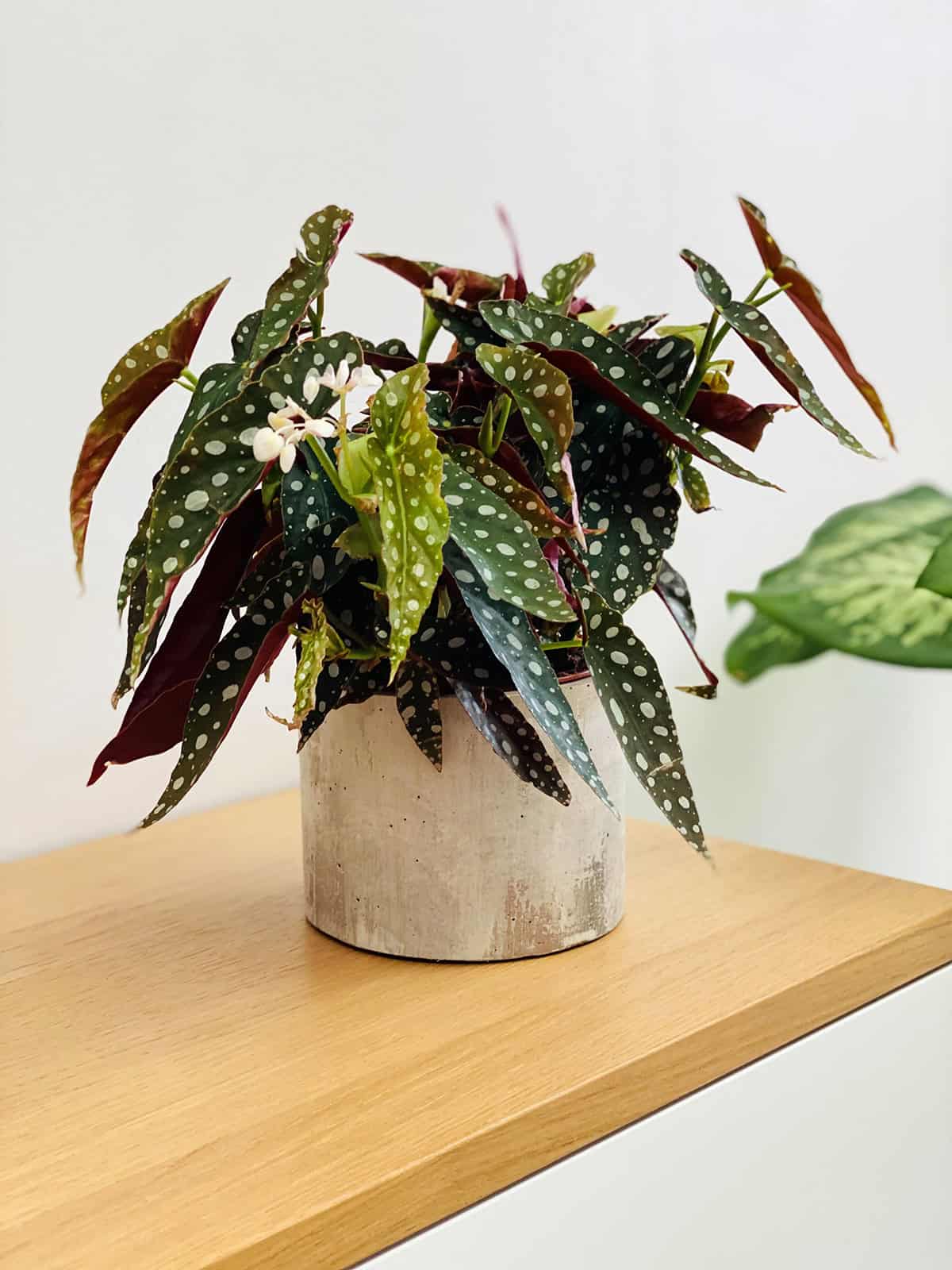
Polka dot plants prefer warm, steady temperatures between 65°F and 75°F. Cold drafts and sudden swings cause leaf damage.
Humidity matters a lot. Dry air browns and curls the leaves, and a pebble tray with water under the pot raises the moisture.
A small humidifier helps in dry homes. Bathrooms and kitchens with good light are naturally humid spots.
Most plants perk up in summer when the air is more humid. Winter heating dries the air, so check the leaves for stress during those months.
Fertilizer
Feed polka dot plant every two to four weeks from spring through early fall with a balanced, water-soluble fertilizer. Stop feeding in late fall and winter.
A balanced formula such as 20-20-20 supports strong foliage and bright color. Overfeeding burns the leaves and dulls the spots.
Dilute the fertilizer to half strength and apply it after watering to protect the roots.
Pale leaves or sluggish growth suggest the plant needs more nutrients. Rich, colorful spots mean the routine is on track.
Propagation
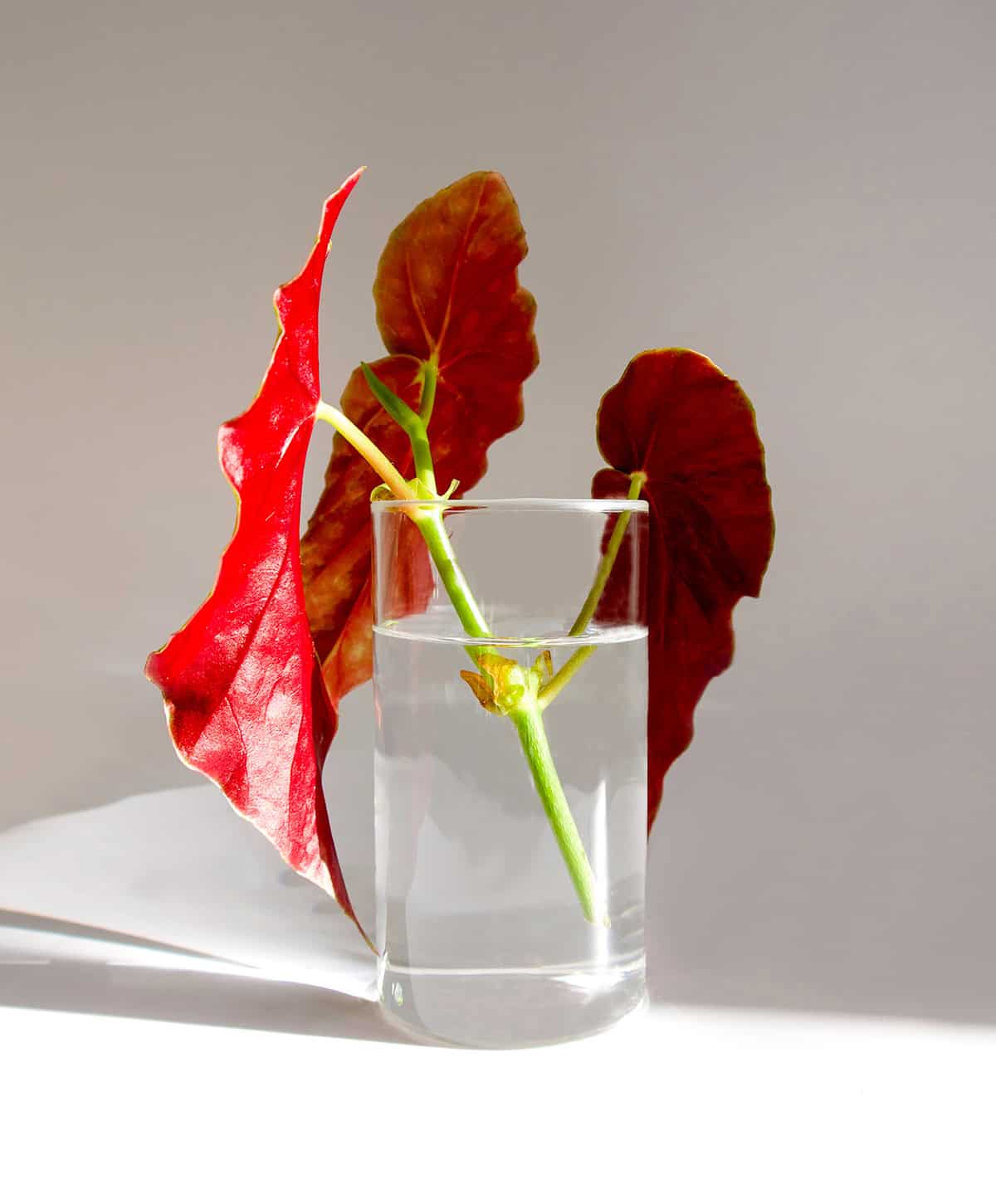
New polka dot plants are easy to start from stem cuttings, which root quickly and reliably.
Snip a healthy stem with a few leaves and set the cut end in water or moist potting mix. Roots appear in one to two weeks.
Move the rooted cutting to a small pot with well-draining mix. Water lightly so the mix is damp and never soggy, and place it in bright, indirect light.
Mature plants also divide at repotting time. Split the root ball gently into sections, each with roots and leaves.
Seeds also sprout readily. Press them lightly onto moist mix at about 70°F, and seedlings appear within two weeks.
Use sharp, clean scissors for every cut, and hold off on fertilizing new cuttings until they settle in.
Pruning
Regular pinching produces a full, bushy polka dot plant. Pinch back leggy or tall stems with your fingers or clean, sharp scissors.
Cut just above a leaf node, where new growth sprouts. Remove faded or damaged leaves at the same time.
Take off no more than a third of the leaves at once. Light, frequent trims produce a better shape than one heavy cut.
Pinch off flower spikes as they appear. Polka dot plants decline after flowering, so removing the spikes extends the plant’s life.
Regular trims also open the plant to light and air. Shape it into a neat mound or leave it a little loose.
Potting And Repotting
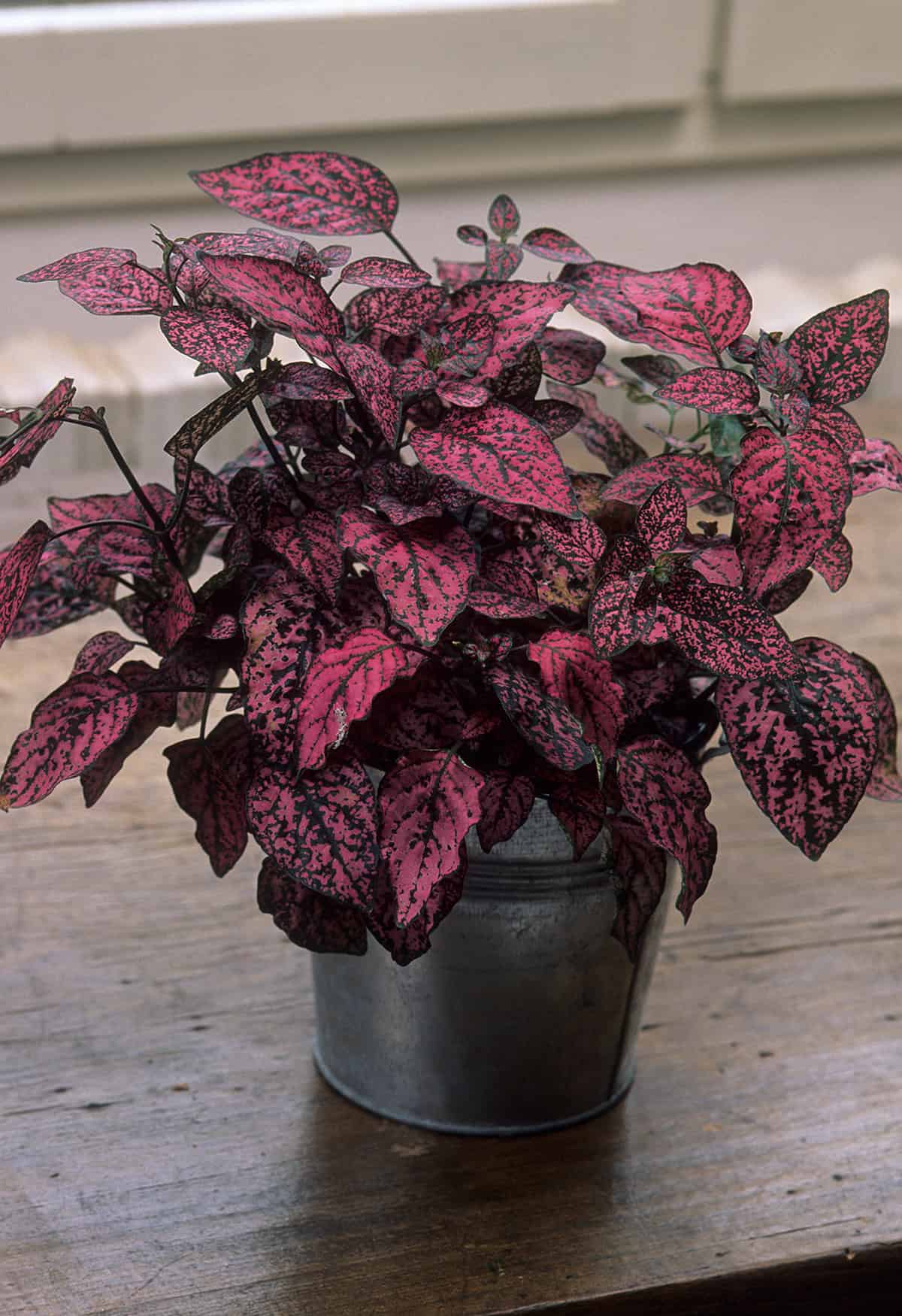
Choose a pot with drainage holes and a light, well-draining mix. Dense soil holds too much water and rots the roots.
Go up only one pot size when repotting. A 4- to 6-inch pot is plenty for a small plant.
Repot every one to three years, or when roots poke from the drainage holes, growth slows or the soil dries out very fast.
Loosen tangled roots gently during repotting. A piece of mesh or a pot shard over the drainage hole holds the soil in place.
Water well after repotting and return the plant to its usual spot out of direct sun. Wilting afterward is a sign of transplant shock or too much water.
Check for pests and dead roots while the plant is out of its pot.
Common Problems & Troubleshooting
Yellow or drooping leaves point to watering trouble, from too much or too little. Aim for slightly moist soil, neither bone dry nor swampy.
Fading color means the plant needs more light, while too much direct sun scorches the leaves.
Wilted or misshapen leaves suggest root rot or pests. Check for mushy stems, aphids, whiteflies and mealybugs, and treat insects with insecticidal soap before the problem spreads.
Stretched, spindly growth means the plant is reaching for light. Move it somewhere brighter, away from harsh midday sun, and pinch the stems back for a bushier shape.
Brown tips come from dry air or excess fertilizer. Raise the humidity and cut back on feeding.
Plant Varieties
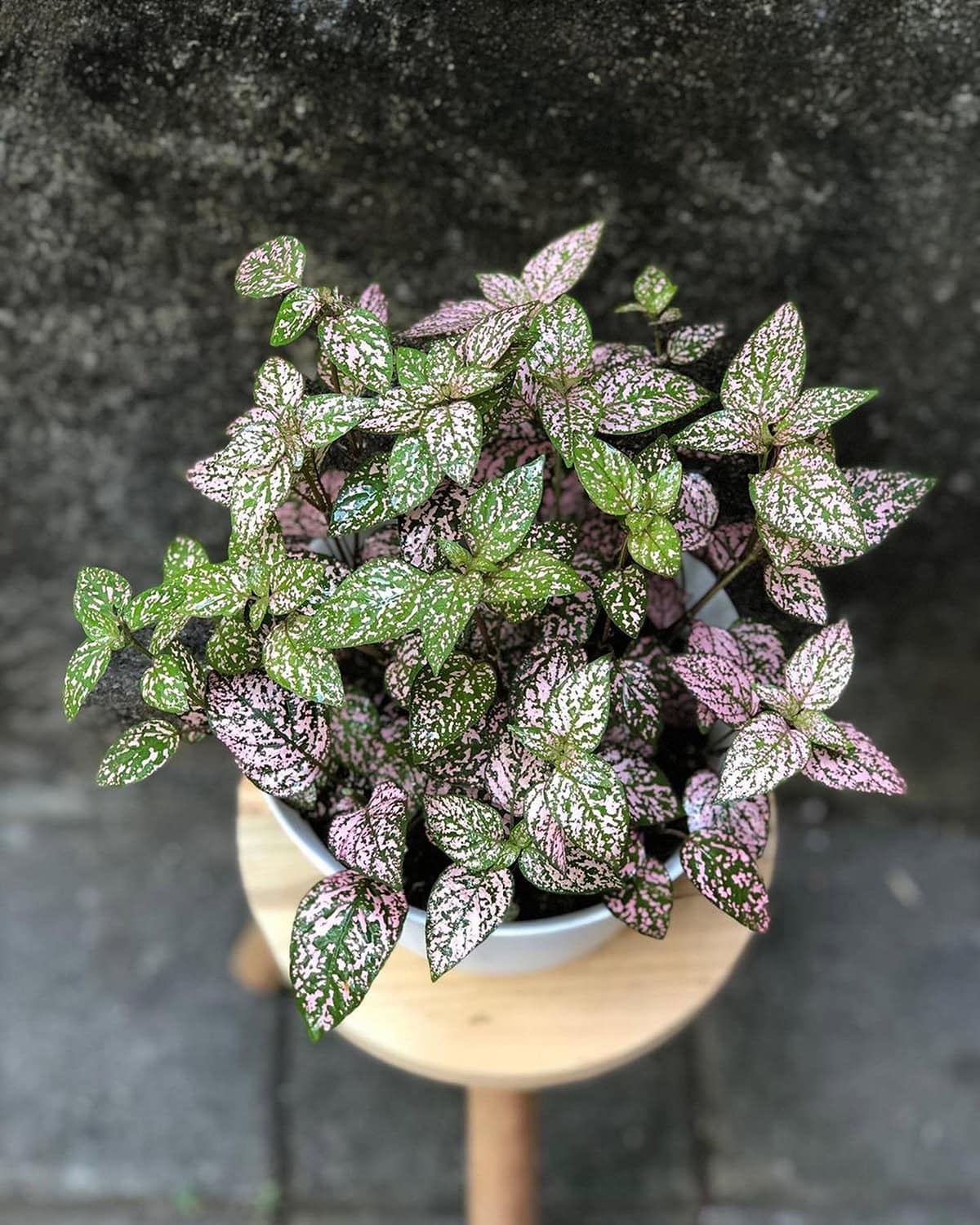
Polka dot plants come in several color patterns. Most have green leaves dotted or splashed with pink, red or white, and some mix two colors.
The Splash Select series includes the classics, ‘Pink Splash’ with bold pink spots, ‘Red Splash’ with deep red splotches and ‘White Splash’ with pale markings.
The Confetti series has denser spotting in shades of pink, rose, red and white. Newer cultivars add brighter colors, larger or smaller dots and colored leaf edges, though growth habits are nearly identical.
Every type shares the same care, and colors look richest in bright, indirect light. All the common indoor varieties are compact enough for containers and terrariums.