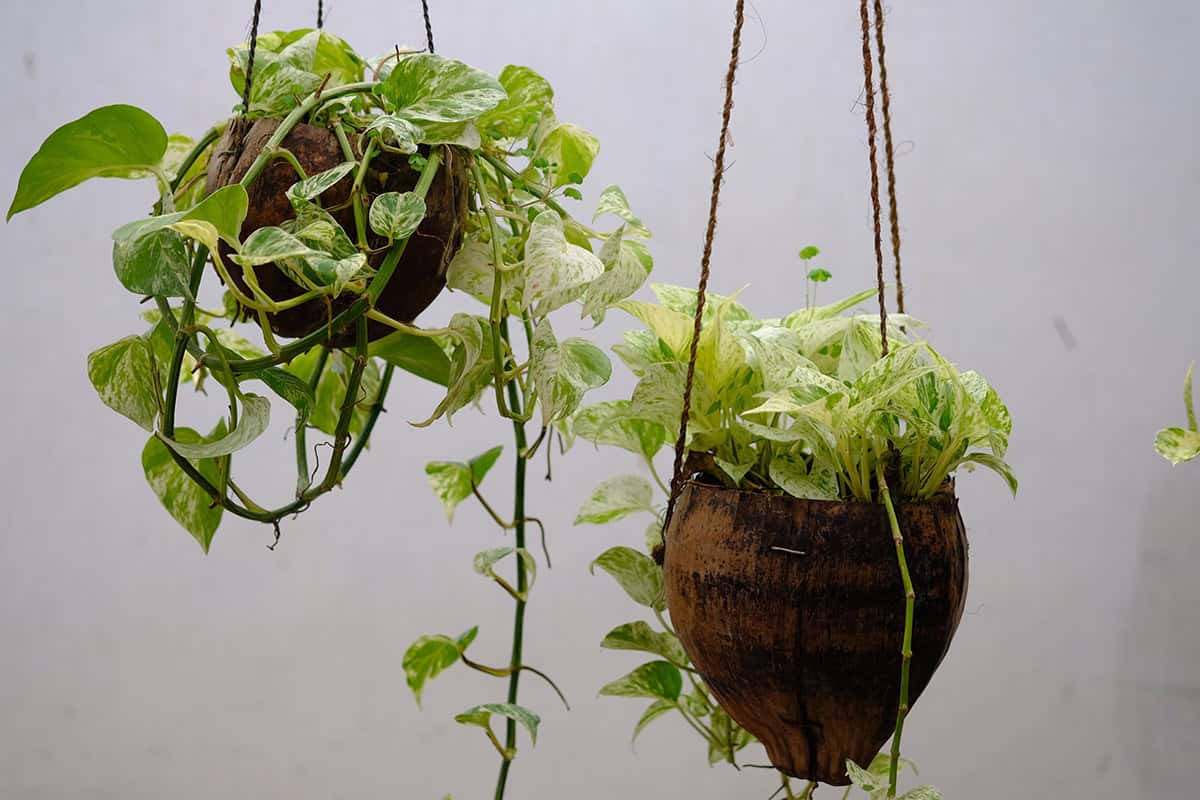
A pothos cutting stretches several feet along a curtain rod in a single growing season.
Trailing and climbing plants fill the vertical space that floor plants leave empty, such as bookshelf tops, curtain rods and hanging baskets.
Pet safety varies a lot across the 24 picks, and each entry flags which ones belong on a high shelf.
Table of Contents
- Meet Your New Favorite Vines
- Golden Pothos (Epipremnum aureum)
- Heartleaf Philodendron (Philodendron hederaceum)
- Satin Pothos (Scindapsus pictus)
- English Ivy (Hedera helix)
- Arrowhead Vine (Syngonium podophyllum)
- String of Hearts (Ceropegia woodii)
- String of Pearls (Senecio rowleyanus)
- String of Bananas (Senecio radicans)
- Hoya (Hoya carnosa and others)
- Neon Pothos (Epipremnum aureum ‘Neon’)
- Cebu Blue Pothos (Epipremnum pinnatum ‘Cebu Blue’)
- Swiss Cheese Vine (Monstera adansonii)
- Grape Ivy (Cissus rhombifolia)
- Wax Ivy (Senecio macroglossus)
- Purple Heart (Tradescantia pallida)
- Inch Plant (Tradescantia zebrina)
- Wandering Dude (Tradescantia fluminensis)
- Black-Eyed Susan Vine (Thunbergia alata)
- Rex Begonia Vine (Cissus discolor)
- Lipstick Plant (Aeschynanthus radicans)
- Creeping Fig (Ficus pumila)
- Jasmine (Jasminum polyanthum)
- Dischidia (Dischidia nummularia, Dischidia ruscifolia)
- Maidenhair Vine (Muehlenbeckia complexa)
Meet Your New Favorite Vines
Vining plants add movement and greenery to dull rooms. Most tolerate a wide range of light, which explains why they appear in apartments and offices alike.
Golden Pothos (Epipremnum aureum)
Glossy, heart-shaped leaves splashed with yellow make golden pothos the classic starter vine. Train it up a moss pole or let it trail from a shelf.
Low to moderate light is fine. Water when the top inch of soil dries, and trim the stems now and then for a bushier plant.
Forgetful waterers have little to worry about, since the plant bounces back quickly from a missed drink. It is toxic to cats, dogs and children, so place it out of reach.
Heartleaf Philodendron (Philodendron hederaceum)
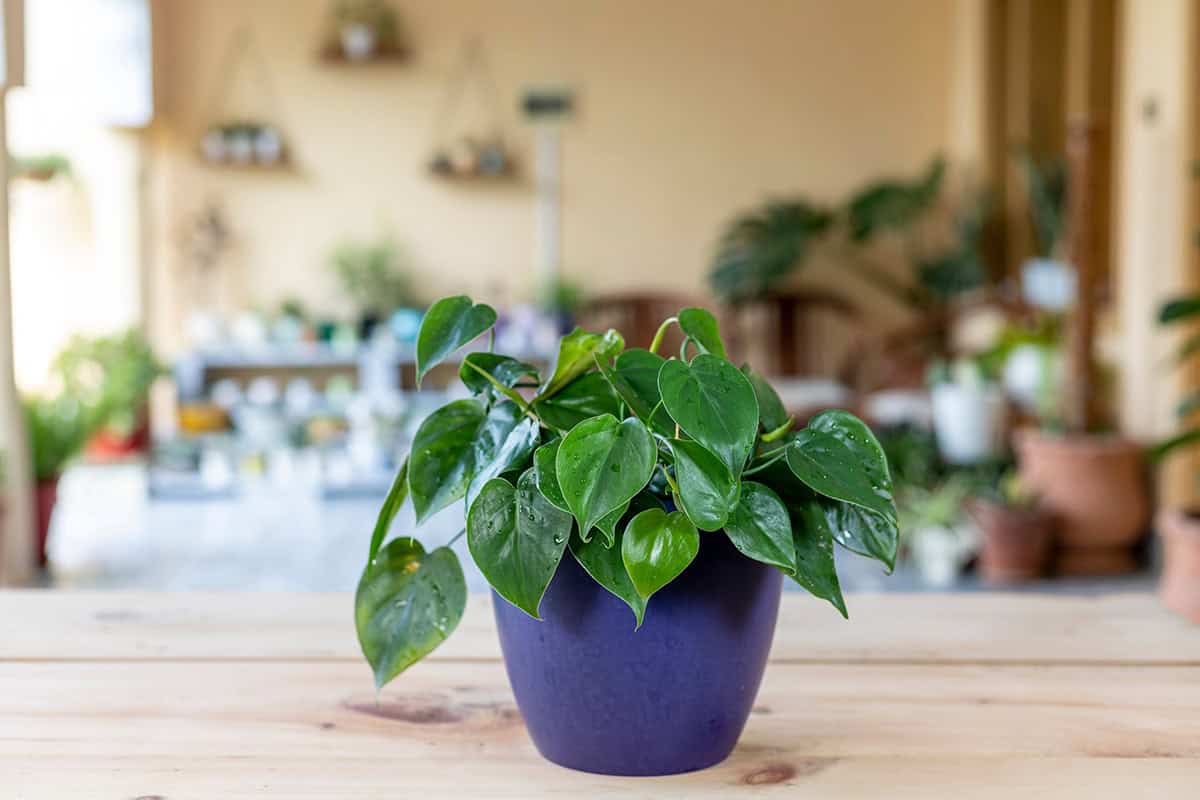
Deep green, heart-shaped leaves look good in nearly any room, and heartleaf philodendron handles low light well.
Let the vines hang or train them up a support. Water when the top of the soil is dry, and maintenance ends there.
Leaves grow larger as the plant matures. It is toxic to pets, so tuck it onto a high shelf or into a corner out of reach.
Satin Pothos (Scindapsus pictus)
Velvety, silver-dusted leaves set satin pothos apart, and they really are soft to the touch.
Bright, indirect light produces the best silver markings, though the plant tolerates dimmer spots. Let the soil dry a little between waterings.
It drapes beautifully from a basket or climbs a pole with little effort. Like true pothos, it is toxic to pets and children.
English Ivy (Hedera helix)
English ivy has lobed leaves on flexible stems that climb or cascade in any direction.
Brighter light produces richer color, though the plant adapts to medium light. Let the soil dry slightly before watering, and prune freely, since ivy responds well to a haircut. Spider mites love dry indoor air, so rinse the leaves now and then.
Long stems spill nicely off shelves and bookcases. It is toxic to pets, and outdoors it spreads aggressively enough to count as invasive in many regions.
Arrowhead Vine (Syngonium podophyllum)
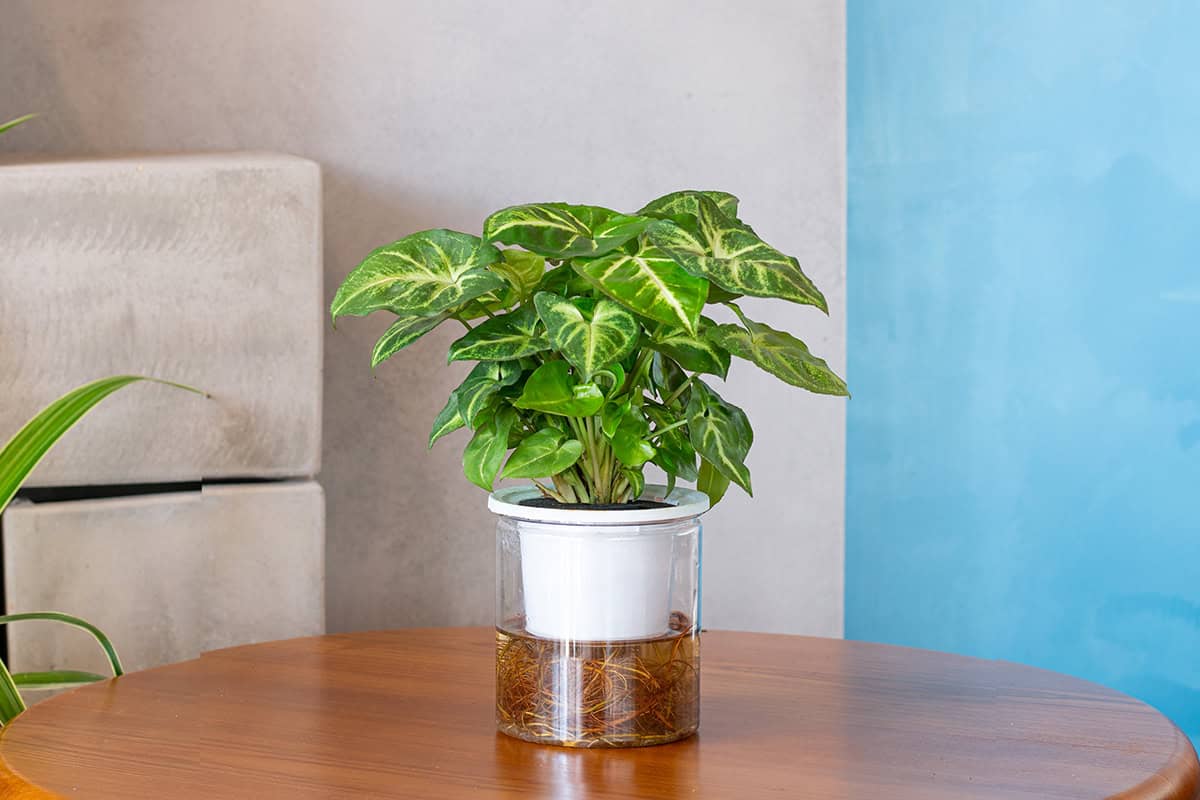
Arrowhead vine changes shape as it matures, with arrow-shaped leaves that split into lobes on older plants. Colors range through green, pink and cream.
Moderate to bright, indirect light is best, and average household humidity is fine.
Water when the top inch dries. Let it climb, or trim the vining stems for a compact, bushy plant. The sap is toxic to pets.
String of Hearts (Ceropegia woodii)
Dainty, heart-shaped leaves with purple undersides dangle from the wiry stems of string of hearts, along with small, bead-like tubers.
Bright, indirect light and a few hours of gentle sun produce the best color. Let the soil dry out well between waterings.
Hanging pots show off the long strands best. The plant is non-toxic to pets, a rare bonus among trailing succulents.
String of Pearls (Senecio rowleyanus)
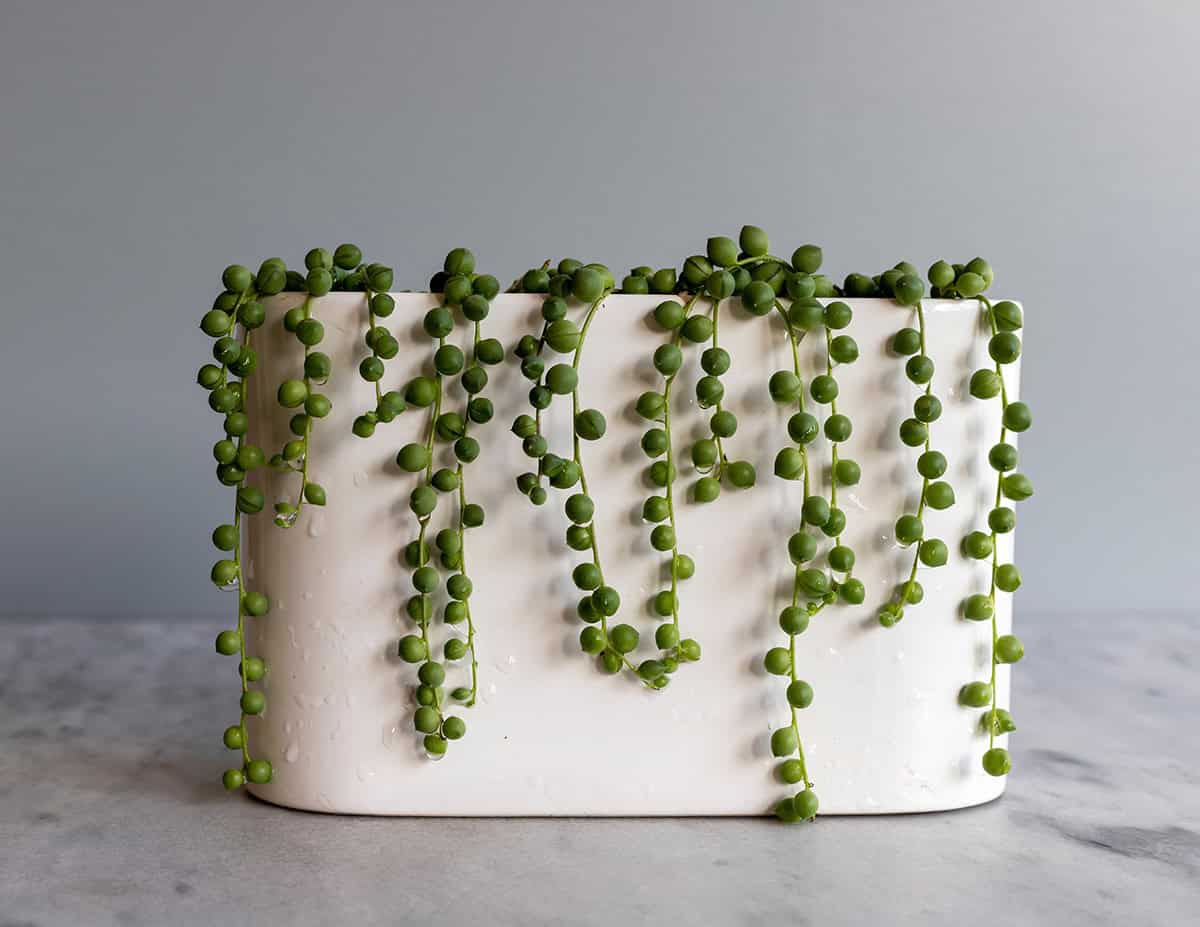
Round green beads on long strands make string of pearls instantly recognizable, and the strands reach several feet with good care.
Bright, indirect light is a must, with some direct morning sun welcome. Water only when the soil is completely dry.
A sandy, gritty cactus mix prevents wet roots, the main cause of failure. The plant is toxic to pets, so hang it well out of reach.
String of Bananas (Senecio radicans)
Banana-shaped leaves on fast-growing stems lend string of bananas a playful look, and it fills a hanging pot quickly.
Bright, indirect sunlight is ideal. Let the soil dry fully between waterings, since overwatering is the main threat.
Well-grown plants produce small, fragrant white flowers. Like string of pearls, it is mildly toxic to pets.
Hoya (Hoya carnosa and others)
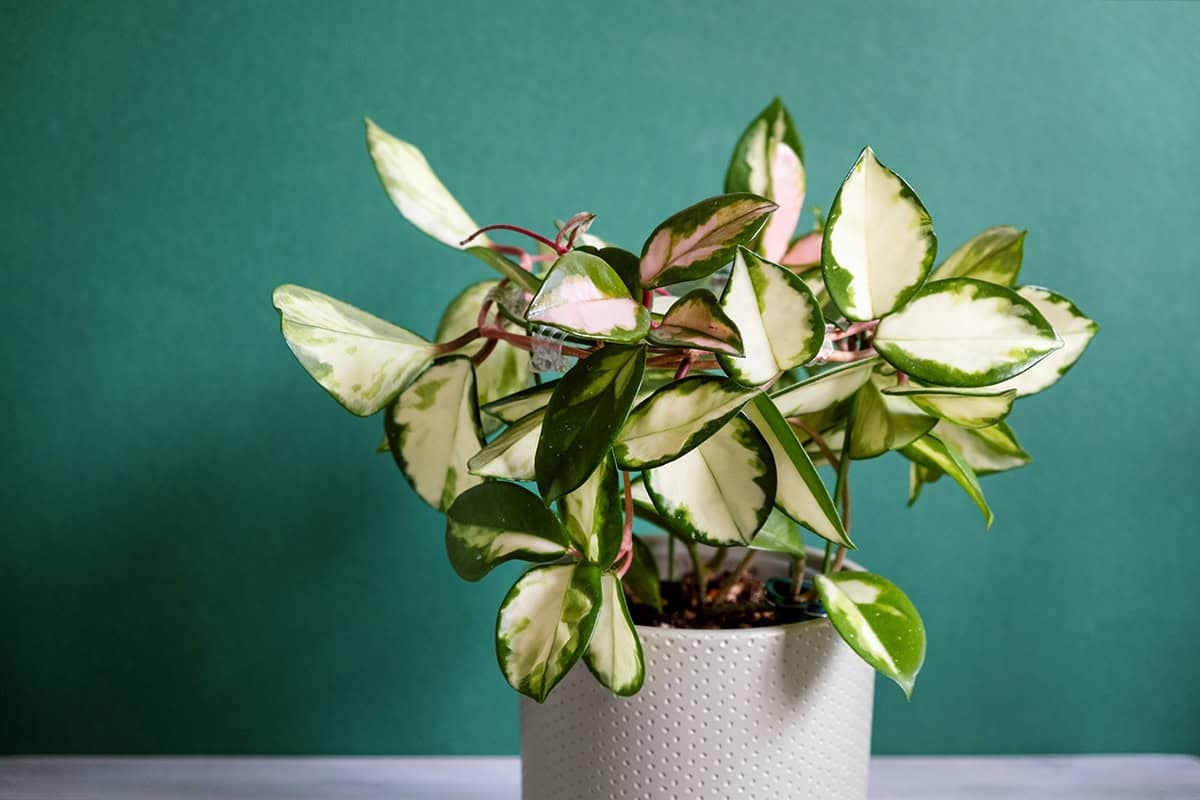
Hoyas, also called wax plants, have thick, shiny leaves on long, twining stems. Mature plants produce clusters of star-shaped, fragrant flowers.
Bright, indirect light and moderate watering are best. Let the soil dry at least halfway before watering again.
Let the stems climb a trellis or hang from a basket, and guide them gently as they grow. Leave old flower spurs in place, since hoyas rebloom from the same spurs, and enjoy the bonus that hoyas are non-toxic to pets.
Neon Pothos (Epipremnum aureum ‘Neon’)
Bright chartreuse leaves make neon pothos glow, with the strongest color in brighter light, though it holds its hue in medium light as well.
Care matches regular pothos. Water when the top inch dries, and trim for a bushier shape.
The stems look great in baskets or running along a shelf. Like its relatives, it is toxic if pets chew it.
Cebu Blue Pothos (Epipremnum pinnatum ‘Cebu Blue’)
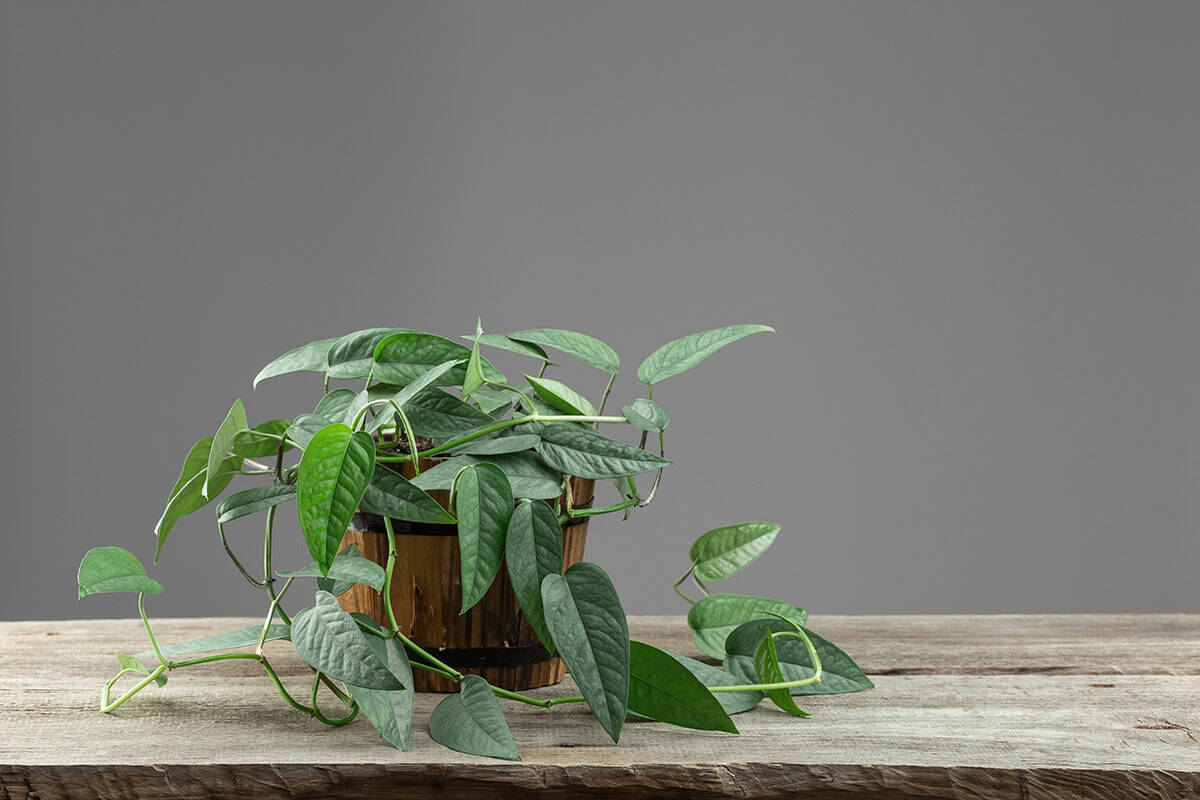
Slim, silvery-blue leaves make Cebu Blue pothos a collector favorite. It trails or climbs with a little support.
Moderate to bright, indirect light is best. Let the soil dry almost completely before watering.
Mature plants on a pole to climb develop larger, split leaves. Trim for a neat shape, or let it sprawl for a looser look. It is toxic to pets.
Swiss Cheese Vine (Monstera adansonii)
Thin, trailing stems carry leaves full of oval holes on Swiss cheese vine, a look that earned the plant its nickname.
Bright, indirect light and moderate humidity produce the biggest leaf holes.
Water when about half the soil is dry, in a pot with good drainage. All parts are toxic to pets and children.
Grape Ivy (Cissus rhombifolia)
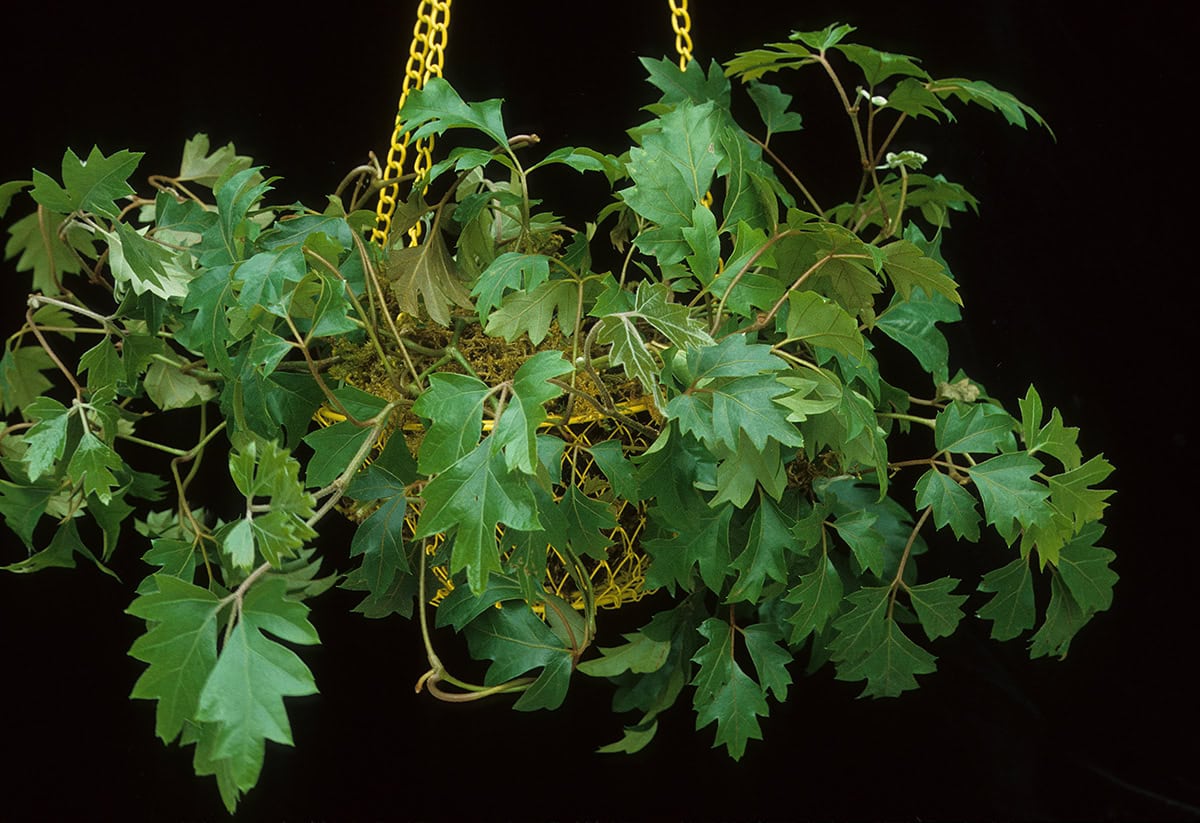
Grape ivy has soft, shiny leaves with toothed edges on flexible vines that climb or trail.
Low to moderate light is fine. Water when the surface of the soil is dry.
Non-toxic to cats and dogs, grape ivy is a safer pick for pet owners, and it forgives a missed watering or two.
Wax Ivy (Senecio macroglossus)
Wax ivy grows fast, with thick, triangular leaves that spill over baskets or climb a support. Despite the ivy-like look, it is a succulent.
Bright, indirect light and a completely dry pot between waterings are what it needs.
Variegated forms carry cream or yellow edges. It is mildly toxic, so place it away from pets and children.
Purple Heart (Tradescantia pallida)
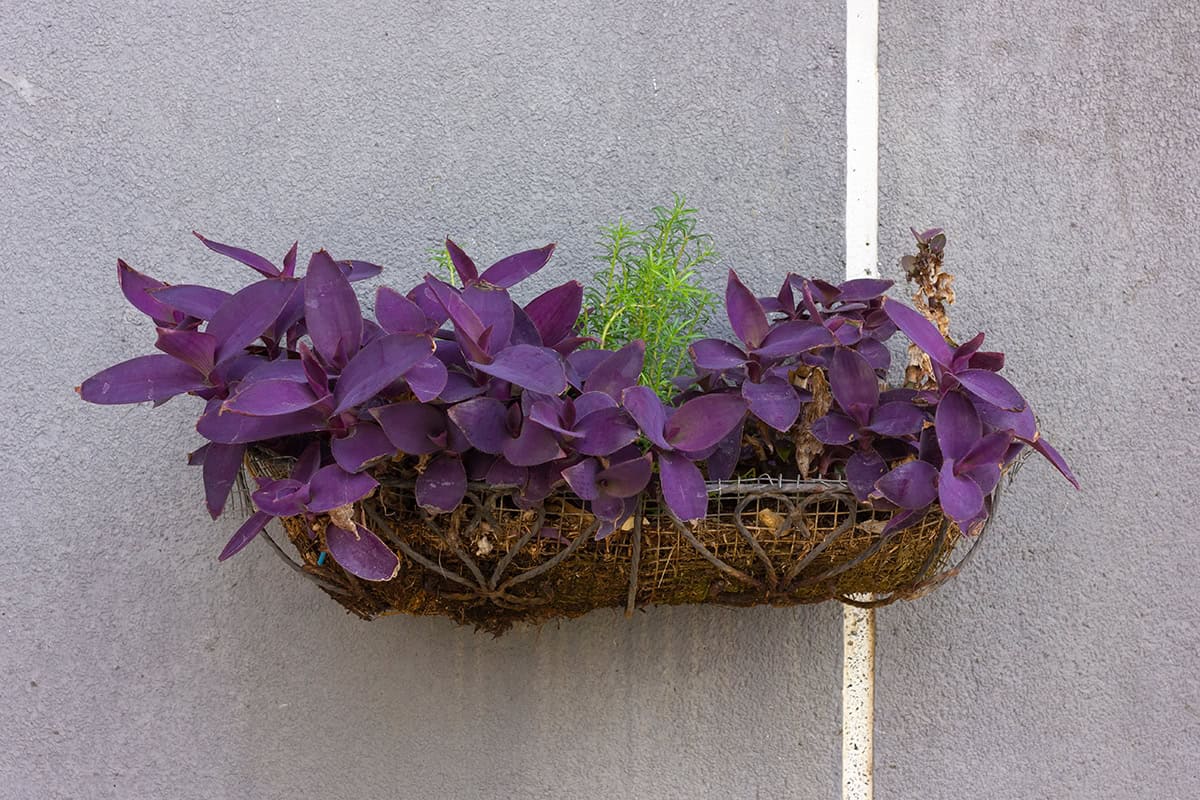
Deep purple leaves on trailing stems make purple heart impossible to miss. Bright light produces the richest color, and moderate light is fine.
Water when the top half of the soil dries. Regular snipping produces a fuller plant with deeper color.
Small pink flowers appear now and then. The sap irritates skin, and the plant is mildly toxic to pets.
Inch Plant (Tradescantia zebrina)
Silver-striped purple and green leaves, fast growth and a trailing habit make inch plant a classic for hanging baskets and shelves.
Bright, indirect light is best. Let the soil dry about halfway before watering again.
Pinch the stems for a bushier, more colorful plant. The sap irritates pets that chew it, so hang the pot out of reach.
Wandering Dude (Tradescantia fluminensis)
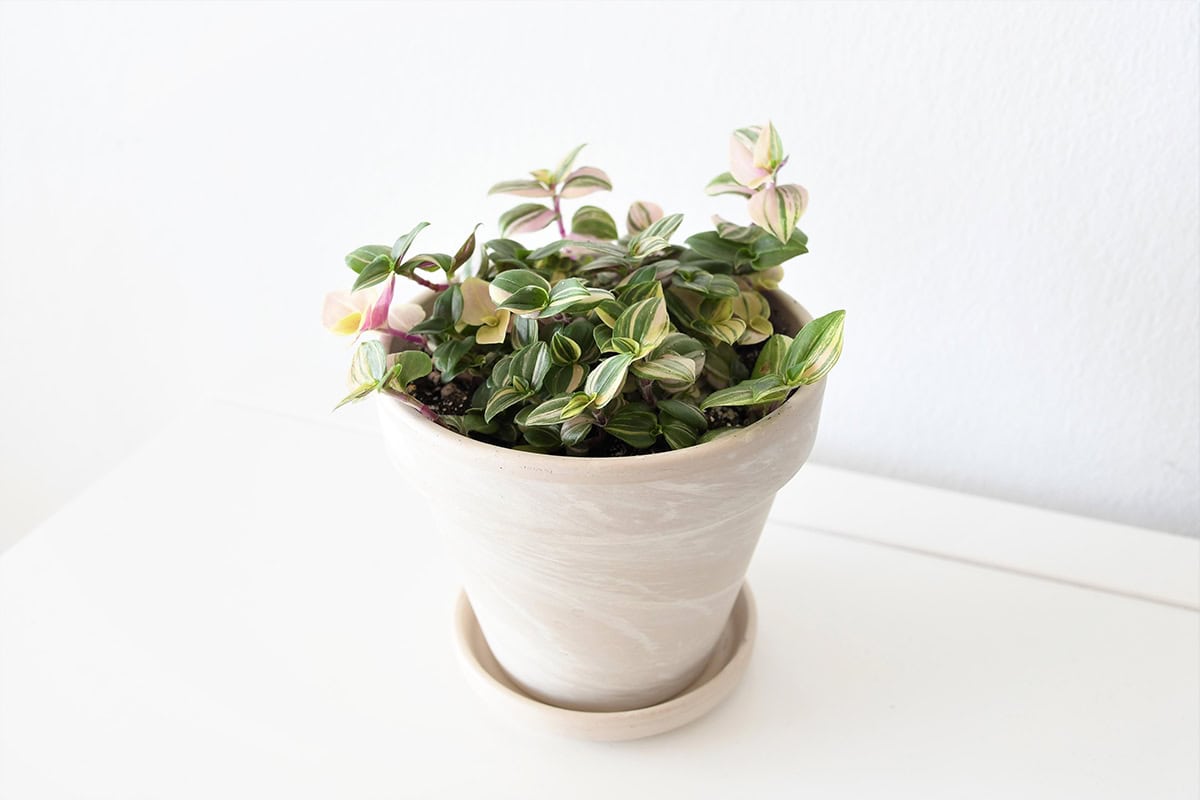
Small, shiny leaves line the fast-growing, trailing stems of this tradescantia. Bright, indirect light is best, though it tolerates less.
Water when the soil is slightly dry. Low light leads to leggy stems.
Pinch back the stems for a compact shape, and place the plant away from pets, since the sap irritates skin.
Black-Eyed Susan Vine (Thunbergia alata)
Cheerful yellow-orange flowers with dark centers make black-eyed Susan vine a rare blooming choice for indoors. It needs a trellis or string to climb.
Bright light with a few hours of direct sun is best for flowering. Water when the top inch of soil is dry.
The vines grow quickly, and enough light means a steady run of blooms. The ASPCA lists it as non-toxic to cats and dogs.
Rex Begonia Vine (Cissus discolor)
Metallic silver, green and burgundy patterns cover the leaves of rex begonia vine, a grape relative unrelated to true begonias.
Bright, filtered light and high humidity are essential. Let the top of the soil dry before watering.
Provide a support for climbing, and use a pebble tray or humidifier for crisp leaves. Most sources list it as safe around pets.
Lipstick Plant (Aeschynanthus radicans)
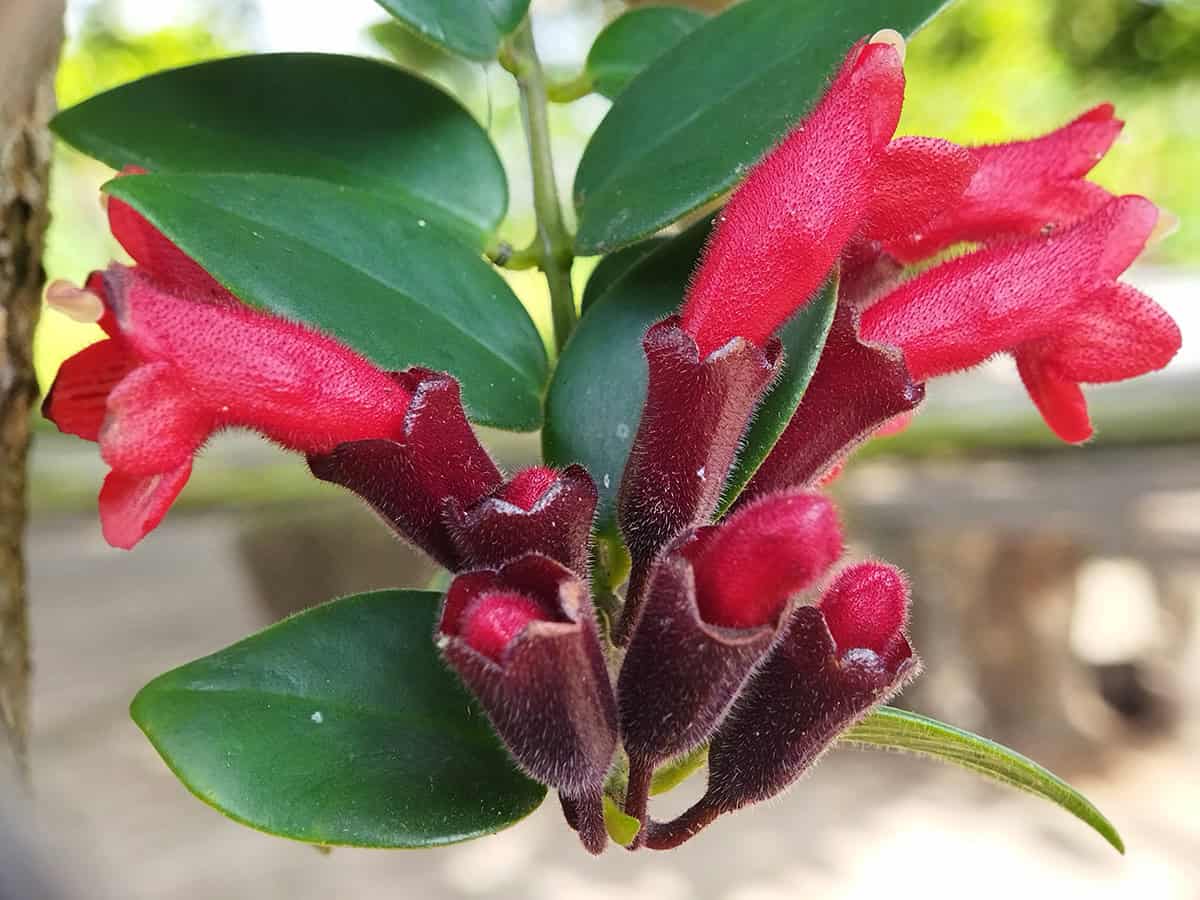
Shiny green leaves and red tubular flowers that emerge from dark cups, like lipstick from a tube, make lipstick plant a fun choice for hanging containers.
Bright, indirect light and some humidity encourage blooms. Water so the soil is evenly moist and never soggy.
Prune after flowering to encourage new growth. Lipstick plant is non-toxic to pets.
Creeping Fig (Ficus pumila)
Tiny, heart-shaped leaves on creeping fig form a flat, dense mat that clings to walls, moss poles and topiary frames.
Bright, indirect light and steady moisture are best, since the thin leaves crisp quickly in dry soil. Water when the top half inch dries.
It thrives in terrariums and humid bathrooms. The milky sap irritates skin and upsets the stomachs of pets, so place it out of reach.
Jasmine (Jasminum polyanthum)
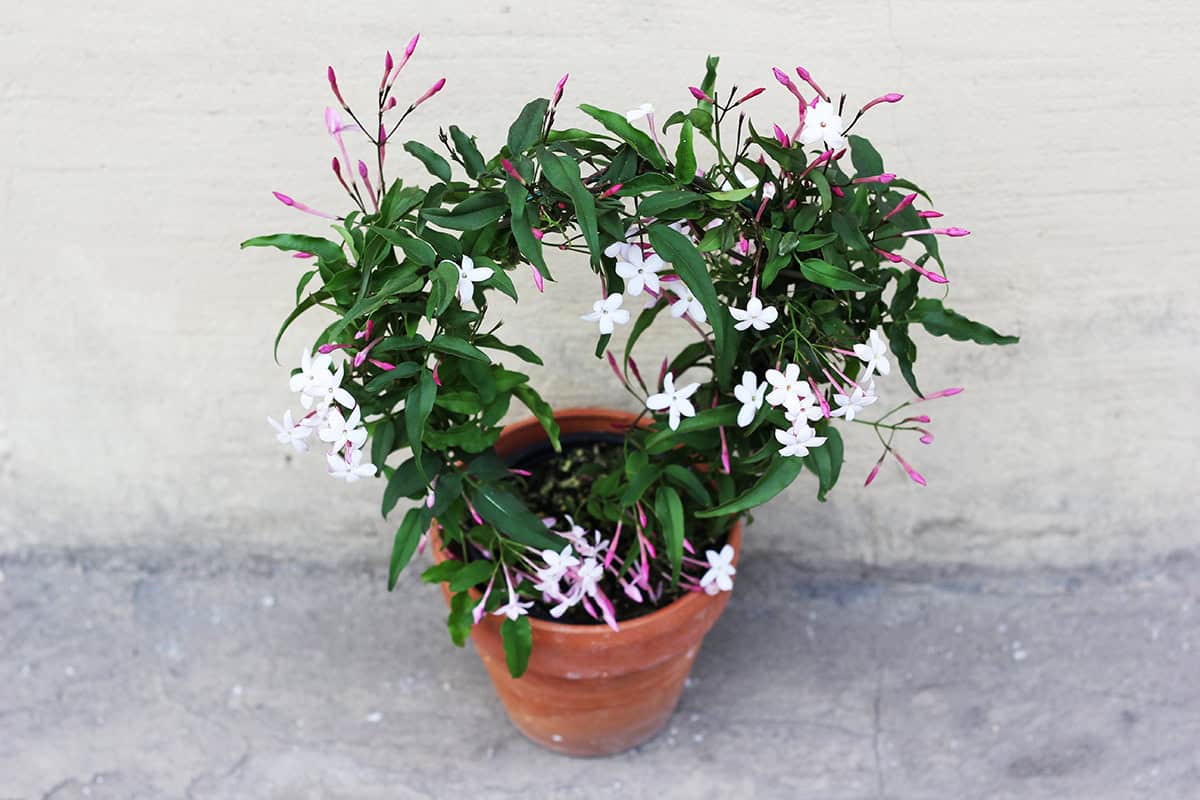
Pink jasmine fills a room with fragrance when clusters of white, pink-backed flowers open on twining stems in late winter or early spring.
Plenty of bright light, with a few hours of direct sun, and moderate humidity produce healthy leaves and flowers. A cool period in fall, around 40°F to 50°F, triggers the buds.
Water evenly during active growth and cut back in winter. Jasminum polyanthum is non-toxic to pets.
Dischidia (Dischidia nummularia, Dischidia ruscifolia)
Small, thick leaves on skinny, trailing stems lend dischidia a quirky look. Many species grow as epiphytes in the wild.
Bright, indirect light and moderate humidity are best. Water when the mix is nearly dry all the way through.
Use a chunky, well-draining mix of bark and perlite, and let the stems climb or hang. Most species are considered safe for people and pets.
Maidenhair Vine (Muehlenbeckia complexa)
Wiry stems and clusters of tiny, round leaves form a dense tangle on maidenhair vine, yet the plant looks light and airy.
Bright, filtered light is best, and the plant tolerates some shade. Let the top of the soil dry before watering, since soggy roots cause problems.
It scrambles up a small trellis or trails from a hanging basket. Muehlenbeckia is non-toxic to pets, and regular snipping produces a tidier, fuller plant.