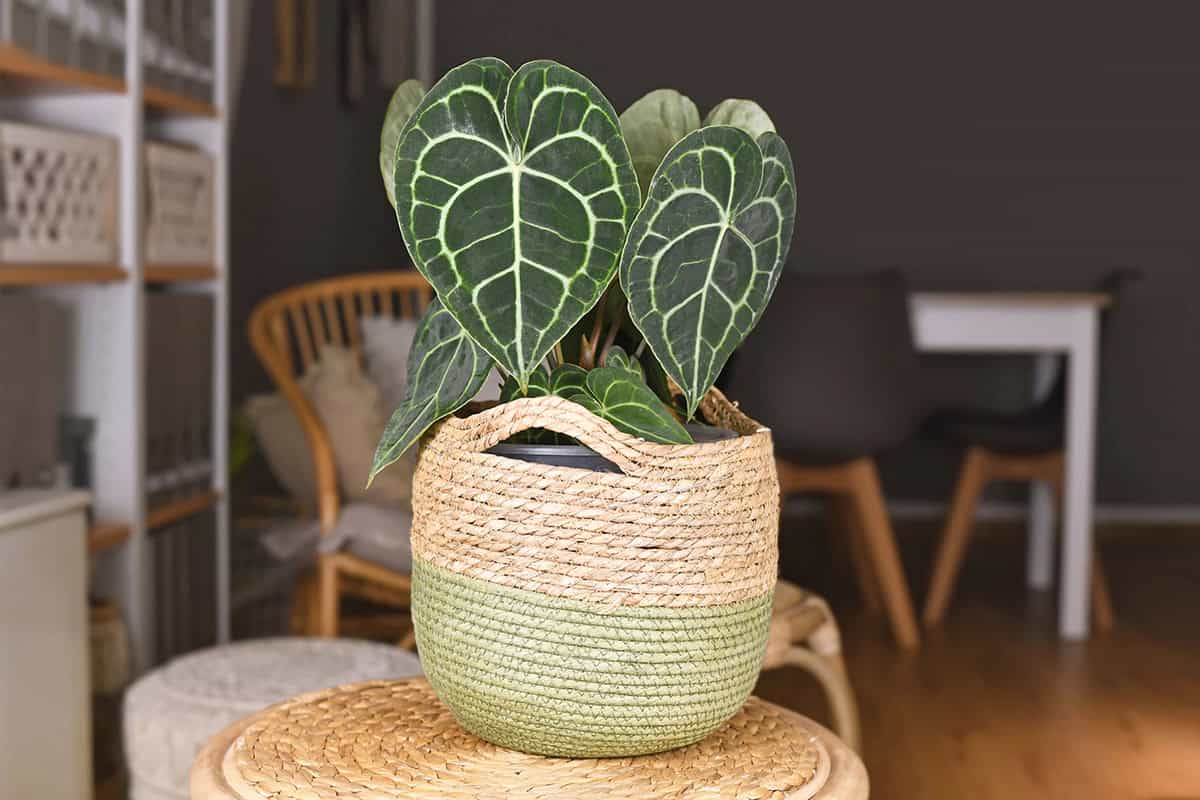
In the wild, Anthurium clarinervium clings to limestone rocks in the forests of southern Mexico, its roots wrapped around stone and leaf litter instead of buried in soil.
That origin explains its needs indoors, which come down to a chunky, fast-draining mix, warm temperatures and humidity above 60 percent.
Crisp brown leaf edges are the warning sign most growers meet first, and dry air is almost always the culprit.
Table of Contents
Quick Care Summary
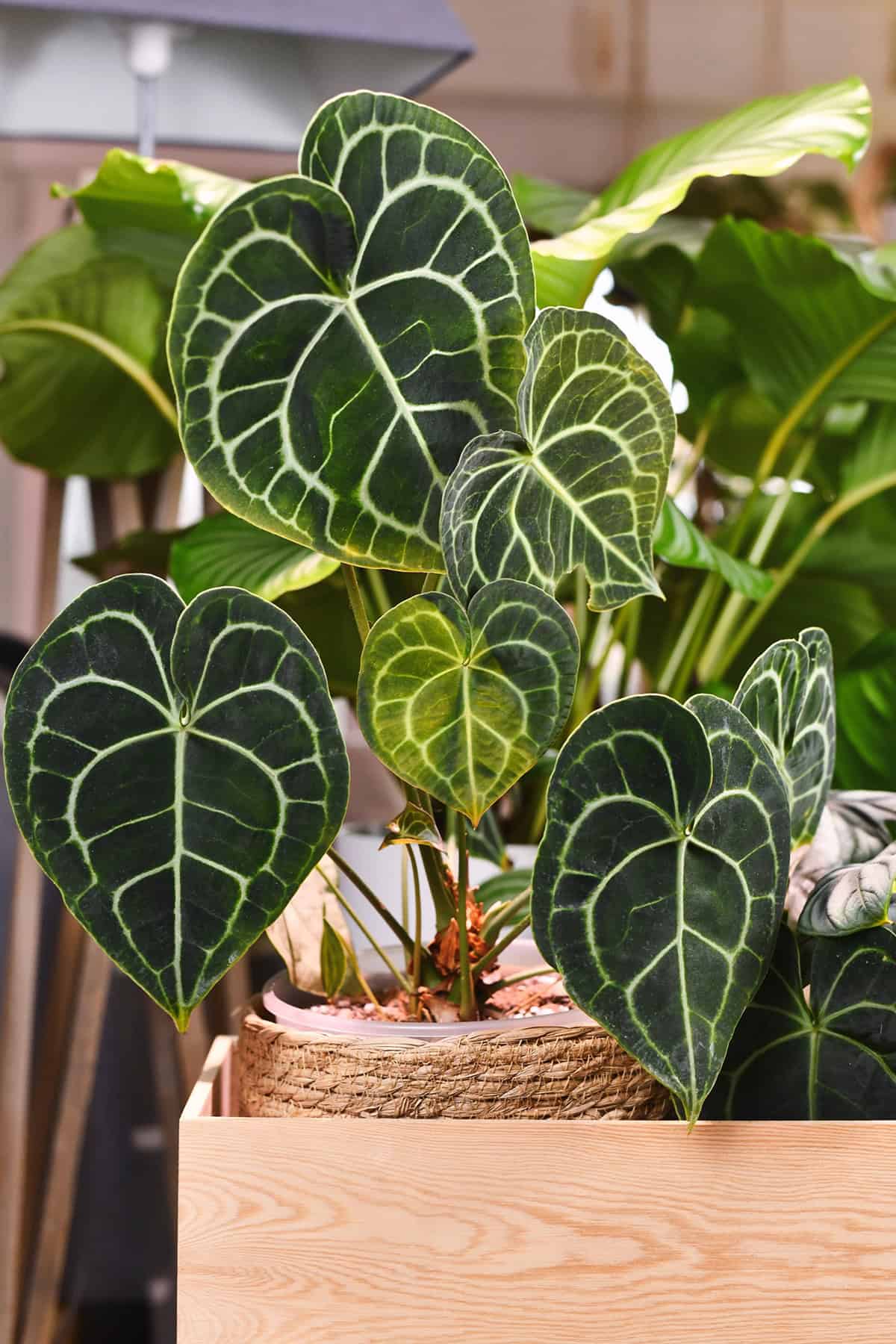
Filtered light in generous amounts matters most, since direct sun scorches the leaves and too little light shrinks them.
Skip heavy, dense soil. A blend of orchid bark, perlite and peat or coco coir drains excess water quickly and lets roots breathe. Let the top inch of soil dry before watering to prevent root rot, and water less in winter.
Temperatures between 65 and 85°F are ideal, and cold drafts or nights below 60°F damage the leaves.
Humidity matters a great deal, ideally above 60 percent, since dry air causes crispy brown edges. A pebble tray or humidifier helps in dry homes.
A diluted, balanced fertilizer about once a month during active growth is plenty. Overfeeding causes salt buildup and root damage, and winter feeding is unnecessary.
Division is the main propagation method. Separate healthy sections with roots and pot them up individually.
Light: Bright, indirect
Soil: Chunky, airy and fast-draining
Watering: When the top inch is dry
Temperature: 65 to 85°F
Humidity: 60 percent or higher
Fertilizer: Diluted, balanced, monthly during growth
Propagation: Division
Plant Overview
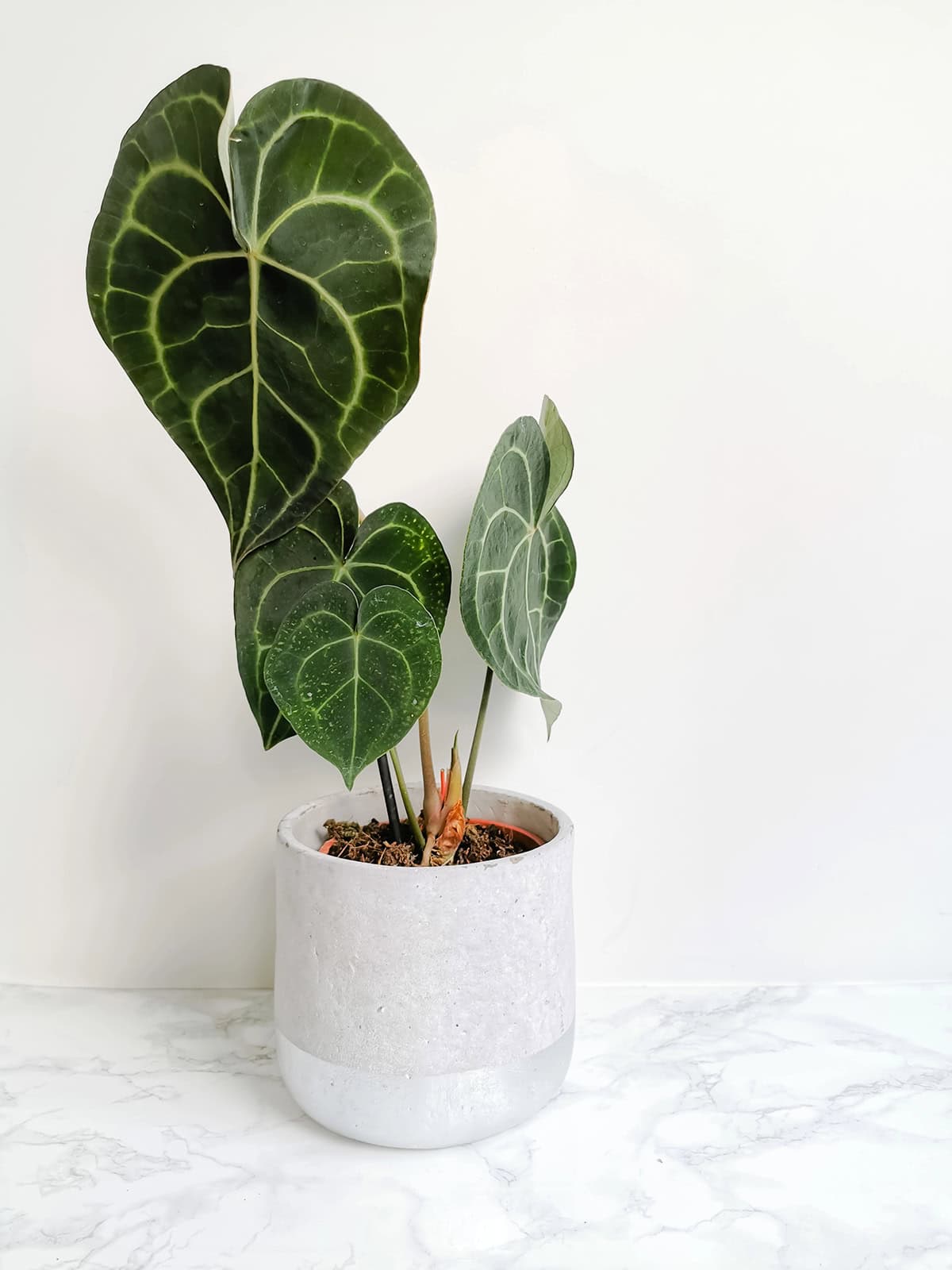
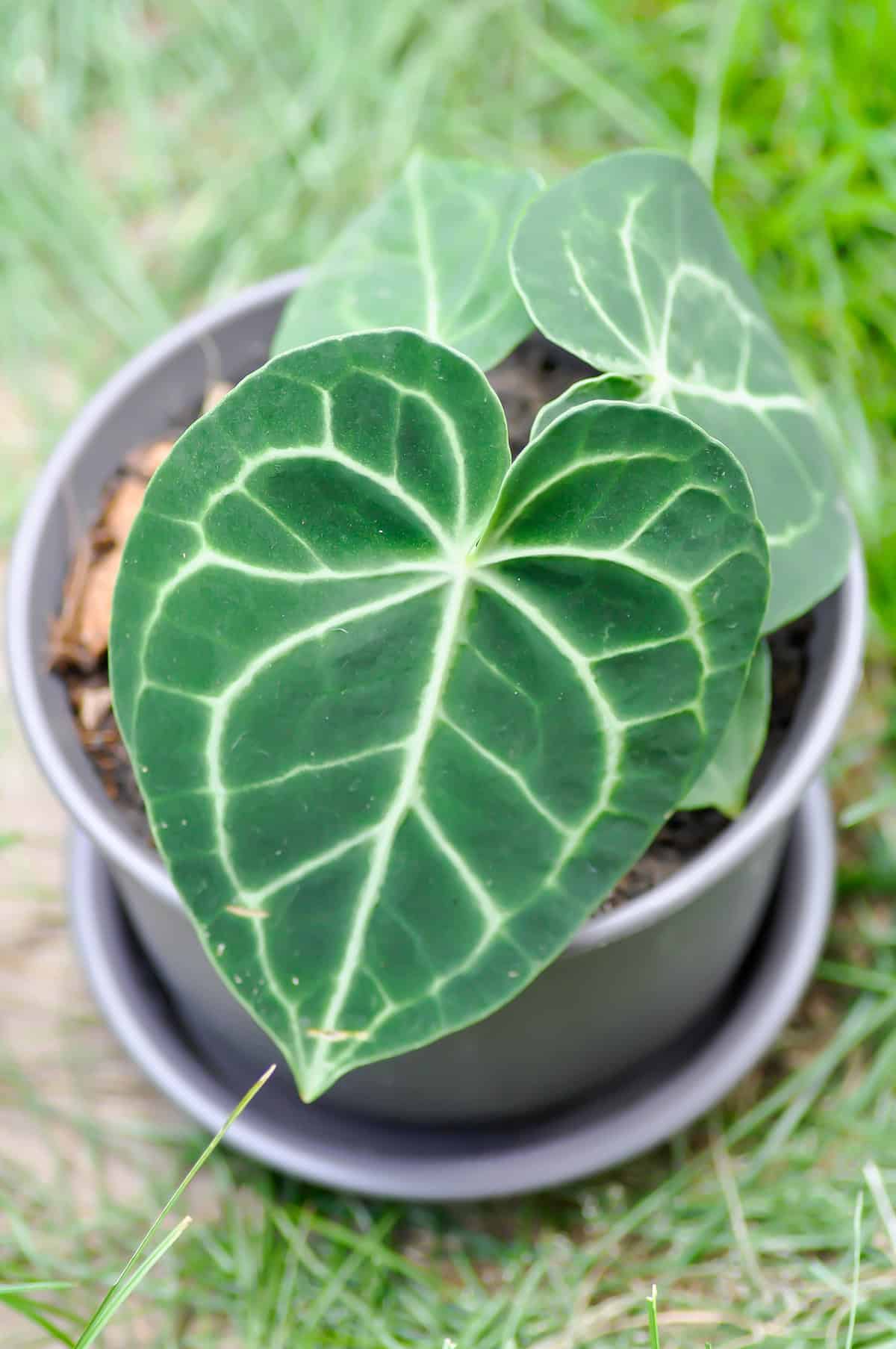
Few growers notice the flowers, since the heart-shaped, velvety leaves steal all the attention. The thick leaves with crisp white veins are almost plush to the touch, and the plant’s compact size fits a desk or shelf.
Native to southern Mexico, this aroid grows on limestone rock in warm, humid forests. Indoors, steady light and careful watering reproduce those conditions, and growth is slow but steady with consistent care.
Botanical name: Anthurium clarinervium
Common names: Velvet cardboard anthurium
Plant type: Tropical perennial
Mature size: 1 to 2 feet tall and wide
Growth rate: Slow to moderate
Toxicity: Toxic if eaten, so place it away from pets and children
Native region: Chiapas, southern Mexico
Bold veins on firm, dark leaves make this plant a striking contrast piece. It needs little pruning and looks lush all year with decent care.
Light
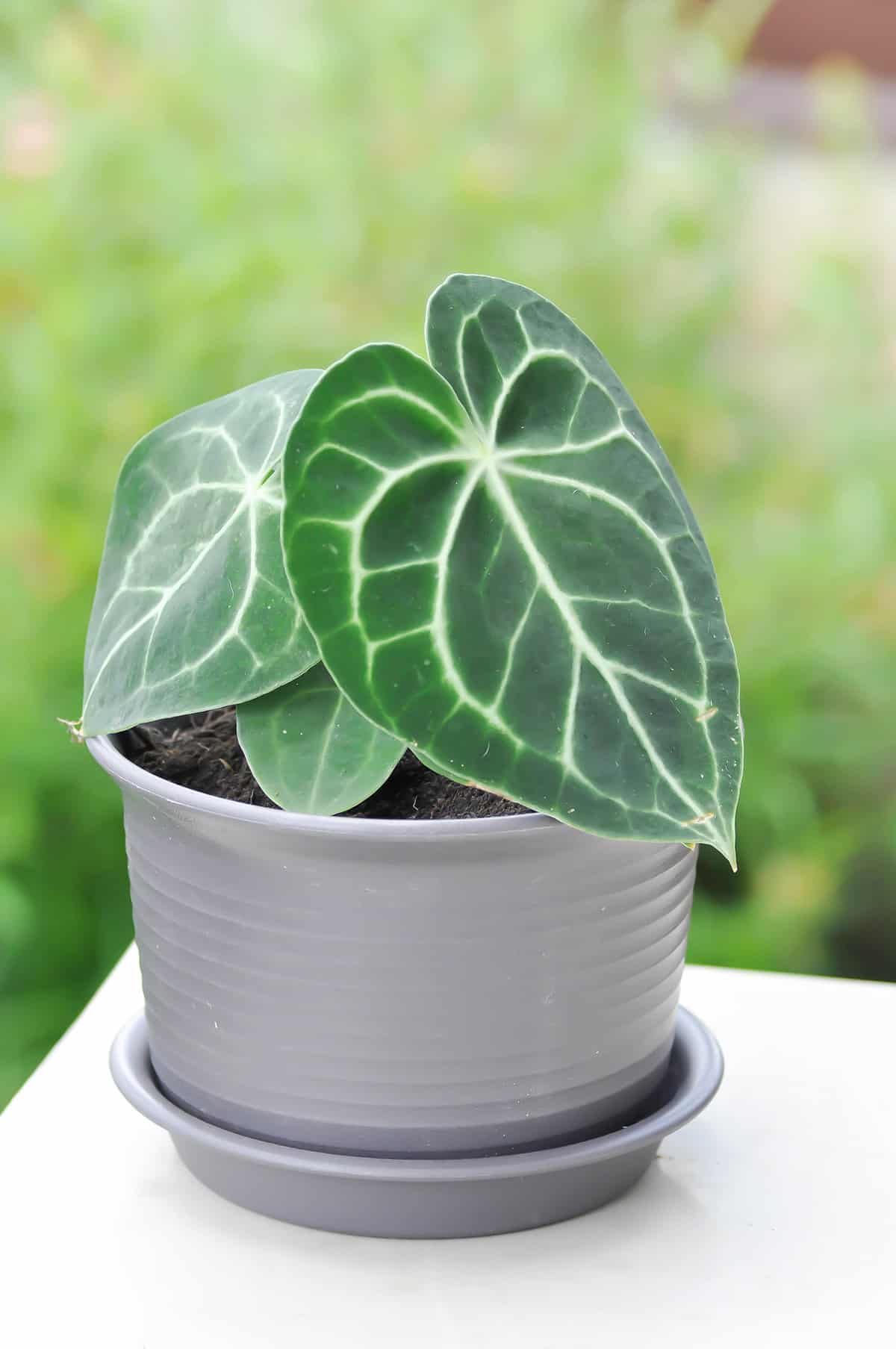
Filtered light like the brightness under a forest canopy is ideal. An east-facing window with gentle morning sun is a good fit, and a bright north-facing room also succeeds. With only south or west windows, set the pot back from the glass.
Too much sun causes pale patches and crispy tips, and the veins lose their contrast.
Dim corners slow growth and shrink the leaves. The plant survives there but loses its impact.
In gloomy homes, a full-spectrum LED grow light about a foot above the plant and set to 10 to 12 hours a day fills the gap.
Rotate the pot every couple of weeks to prevent leaning.
Water
Water once the top inch or two of the mix dries out, and judge by touch instead of a fixed schedule.
Soak the mix thoroughly so the excess drains away, and avoid letting the pot sit in a puddle, since waterlogged roots rot.
Watering frequency depends on temperature, light and pot size. Warm, bright rooms mean thirstier plants, and cool, dim spots slow everything down.
The leaves signal problems early. Droopy or dull leaves suggest thirst, and yellow leaves or leaf drop call for less water and a drainage check.
Room-temperature water is best, since very cold water shocks the roots. With hard tap water, flush the mix occasionally with distilled or filtered water to clear mineral salts.
Soil
Dense, soggy mixes rot these roots, and airy, fast-draining blends let them breathe.
Combine equal parts orchid bark, perlite and peat moss or coco coir for a chunky mix that drains quickly and resists compaction.
Standard potting soil is too heavy alone, so lighten it with plenty of bark and perlite if it is the only option.
Aim for a pH between 5.5 and 7.0. Organic content is helpful, but avoid mixes that break down into mush, and replace the mix every couple of years.
Drainage holes are essential, since the roots need air as much as water.
Temperature & Humidity
Warmth matters a great deal. Daytime temperatures of 70 to 85°F are ideal, with nights down to about 65°F, and colder nights stall growth and damage leaves.
Place the plant away from open windows, doors and forceful vents, since sudden chills stress it quickly.
Humidity matters just as much, ideally 60 to 80 percent. Dry air causes brown, crispy edges and sluggish new growth, and a humidifier, a pebble tray or a cluster of plants raises local moisture.
Bright bathrooms make surprisingly good homes, thanks to their naturally higher humidity.
Fertilizer
A little fertilizer goes a long way in spring and summer. Use a balanced, water-soluble fertilizer at half the recommended strength once a month, and skip feeding in fall and winter.
This plant is sensitive to salt buildup, so dilute generously and choose a formula with micronutrients such as magnesium and iron, which support deep green leaves and bright veins.
Flush the mix with plain water every few months to clear leftover fertilizer. If growth stalls or leaves pale, check light and watering before adding more fertilizer.
Potting & Repotting
A snug pot with a drainage hole is best, and a move to a bigger pot is necessary only once roots circle or escape the pot. Move up just an inch or two in size.
Use a coarse, airy mix of peat or coco coir, pine bark and perlite, since this rock-dwelling plant suffocates in heavy soil.
Moisten the new mix before repotting. Ease the plant out gently, loosen packed roots and replant at the same depth, with the mix filled loosely around the root ball.
Leave space at the top for watering, water after repotting and let the excess drain. Spring or early summer is the safest time, since the plant dislikes disturbance.
Pruning
Tidy growth means minimal pruning. Snip off yellow, brown or damaged leaves as they appear.
Use sharp, clean scissors or pruners and cut close to the base for a clean look and less disease risk.
Check every few weeks for spent flowers and worn leaves, and remove a few outer leaves if the plant gets crowded, which improves airflow and light.
Skip heavy shaping, since this plant needs none, and disinfect your tools before and after use.
Propagation
Division of a healthy, mature plant is the simplest way to multiply Anthurium clarinervium, ideally in early spring.
Unpot the plant gently and loosen the root ball. Separate natural clusters so each has roots and at least one leaf. Use a sterile knife on tangled roots, and dust large cuts with powdered charcoal to prevent rot.
Pot each section in a small container of chunky aroid mix. Water lightly for slight moisture and high humidity, avoid soggy conditions and provide bright, indirect light and warmth around 70°F while new roots establish.
Common Problems
Yellow leaves point to too much water or poor drainage in most cases. Check for mushy roots and a sour smell, signs of root rot, and trim damaged roots and repot in fresh, airy mix if needed.
Crispy brown edges appear when humidity drops or the mix dries out completely. A humidifier or pebble tray makes a big difference.
Faded leaves or bleached veins point to harsh light. Move the plant out of direct sun into filtered light.
Dark, mushy leaf spots suggest disease from poor airflow or wet foliage. Prune affected leaves with clean tools, and avoid misting the leaves directly.
Spider mites and mealybugs appear occasionally, with fine webbing, cottony patches or sticky residue as clues. Treat with insecticidal soap or neem oil, and check the undersides of leaves regularly.
Varieties
No two Anthurium clarinervium plants look quite alike. Some leaves are long and slender, others broad and rounded, and the veins range from thick and bold to fine, with leaf size shifting with age and care.
The deep green, velvety surface catches the light, crossed by white veins so crisp they look painted on. Mature plants occasionally produce small berries after flowering.
Labels such as ’round form’ and ‘narrow form’ describe leaf shape more than official cultivars. Growth habit is the same, though the proportions alter the plant’s character.
It is easy to confuse this species with other velvet-leaf anthuriums. Anthurium crystallinum has longer, softer leaves with finer, silvery veins, and Anthurium andraeanum is a different plant entirely, with glossy leaves and colorful spathes.
When choosing a plant, look for symmetry and strong vein contrast. Healthy, sturdy foliage matters far more than whether the leaves are slightly rounder or more pointed.