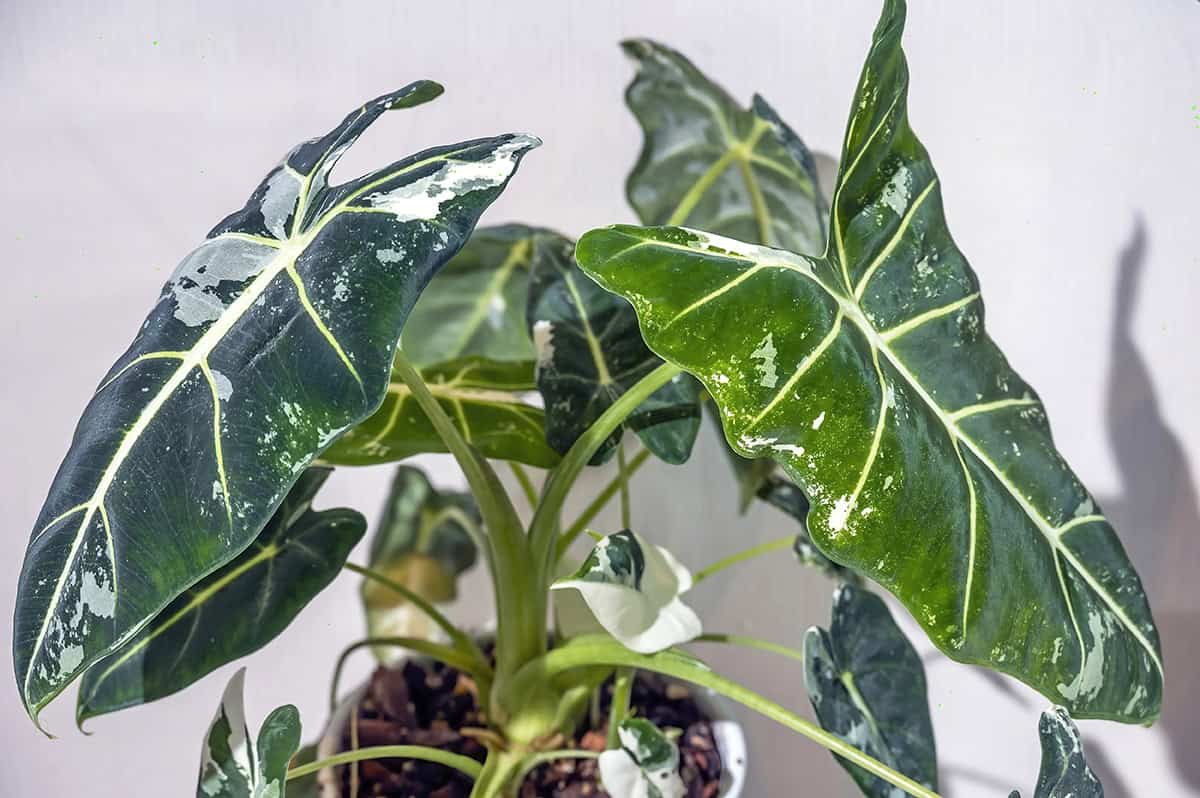
An Alocasia ‘Frydek’ that loses leaves in late fall has frequently gone dormant, a natural winter rest that sends many owners rushing for the trash bin too soon.
The rhizome underneath survives and pushes up new velvet leaves once warmth and longer days return in spring. During the growing season, it wants bright, filtered light, airy soil and humidity of 60 percent or more.
Telling dormancy apart from rot is the most useful skill for this plant, and the water and problem sections cover the signs of both.
Table of Contents
Quick Care Summary
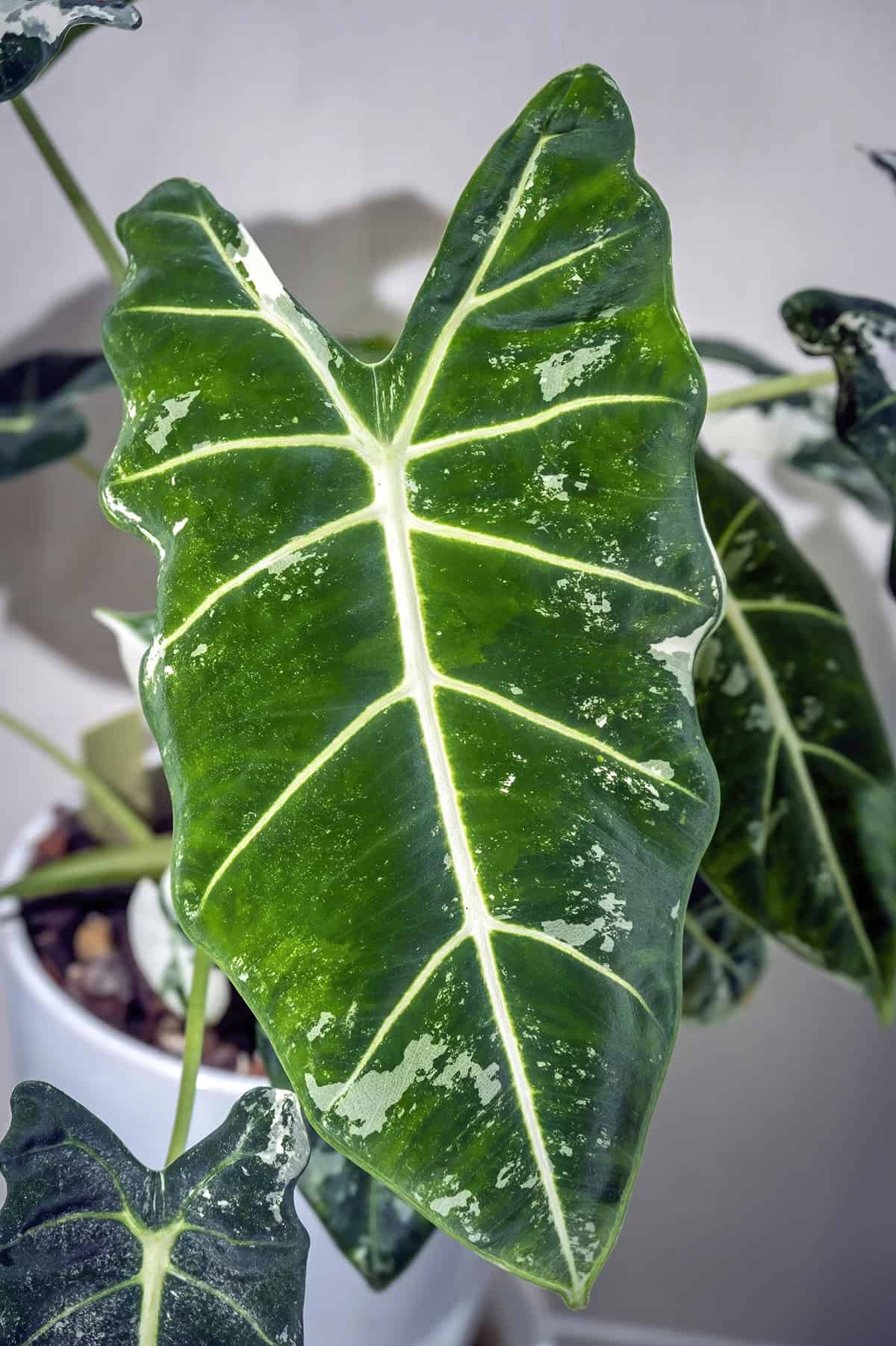
Velvety leaves with bold white veins and a hint of burgundy underneath make Alocasia ‘Frydek’ a foliage plant first, since the flowers are insignificant. It needs steady warmth, moisture and humidity, and it shows displeasure quickly when light or watering is off.
- Light: Bright, indirect light, since direct sun scorches the leaves
- Soil: A loose, airy mix of peat or coco coir with perlite
- Watering: When the top inch of soil is dry, with moist but never soggy roots
- Temperature: 65 to 85°F, away from chills and drafts
- Humidity: 60 percent or higher, since dry air crisps the edges
- Fertilizer: Balanced liquid feed every 4 to 6 weeks in the growing season, with a break in fall and winter
- Propagation: Division of offsets or corms during active growth, each piece with roots and a growth point
Plant Overview
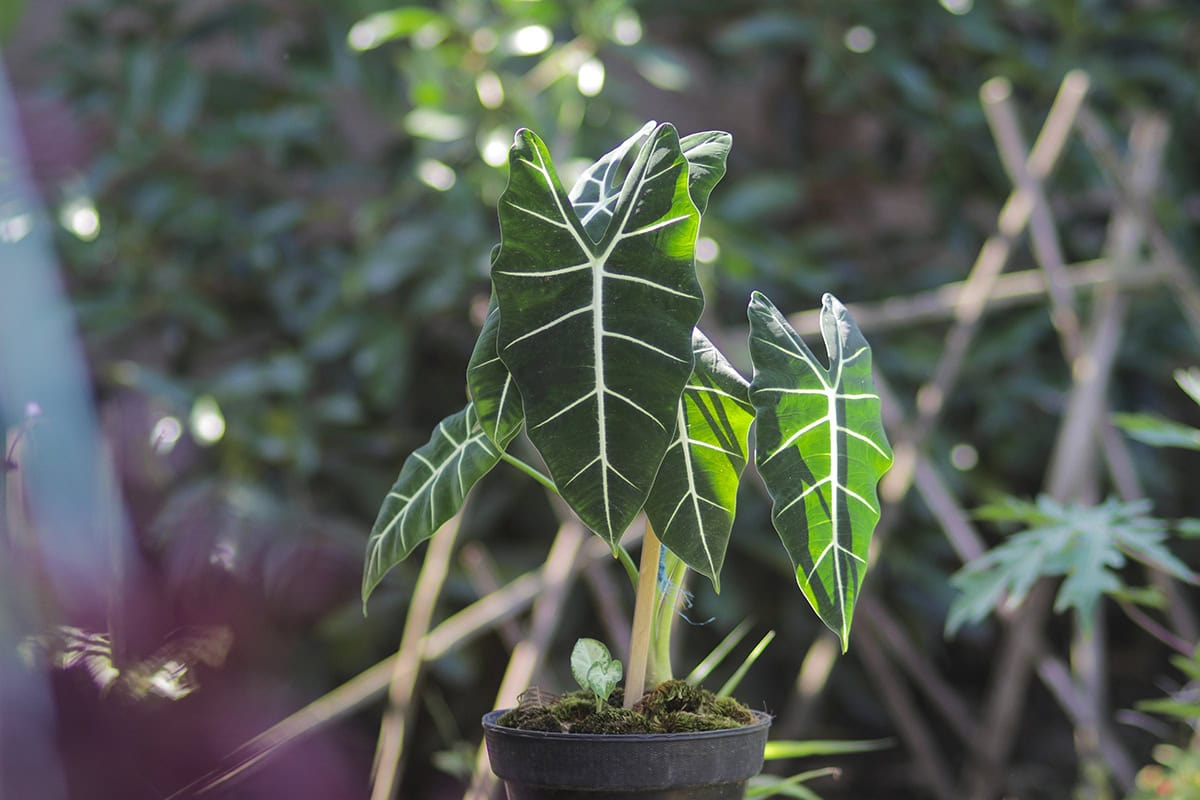
Deep green, velvety leaves with striking white veins make ‘Frydek’ hard to miss, and its upright, arrow-shaped foliage livens up any bright room.
This aroid comes from the Philippines and belongs to the same family as colocasia and other elephant ears. Its leaves point upward and outward on long stems, where colocasia leaves droop downward.
- Botanical name: Alocasia micholitziana ‘Frydek’
- Common names: Green velvet alocasia, Frydek elephant ear
- Plant type: Tropical perennial
- Mature size: 2 to 3 feet tall and wide indoors
- Growth rate: Moderate in steady conditions
- Toxicity: Toxic to pets and people if chewed
- Native region: The Philippines
Light
Frydek thrives in filtered brightness. The white veins look sharpest in plenty of diffused light, and direct midday sun scorches the leaves quickly.
East-facing windows provide bright light with little risk of burning, and south- or west-facing windows succeed with a sheer curtain to soften the glare. Set the plant a little back from the hottest glass.
Growth slows sharply in dim corners. Pale, undersized leaves and floppy stems signal a need for more light, and a grow light overhead for 10 to 12 hours a day fills the gap in dark rooms.
Water
Watering takes a little finesse. The soil should be damp but never swampy, so let the top inch or two dry before watering again, and check with a finger instead of following a schedule.
In late fall, many plants slow down or go dormant and drop leaves. Water a dormant plant sparingly until new growth appears in spring, and empty the saucer after every watering.
Use room-temperature water and pour slowly for an even soak. Drooping leaves with dry soil mean the plant needs more frequent watering.
Soil
Alocasia ‘Frydek’ grows best in a fluffy mix that drains well and holds enough moisture for its thirsty roots. Heavy garden soil leads to root rot.
Peat or coco coir retains moisture, and perlite or pumice adds air, with orchid bark improving airflow further. Aim for a slightly acidic pH of 5.5 to 6.5.
Lighten plain potting soil with extra perlite and bark, and use pots with drainage holes. Refresh the mix every year or two, since old mix compacts and smothers roots.
Temperature & Humidity
Daytime temperatures of 65 to 85°F produce the healthiest growth. Below 60°F, growth stunts and leaves suffer damage.
Place it away from cold breezes, open windows and air conditioning, since sudden chills cause yellowing or leaf drop.
Humidity is just as important. Levels above 50 percent are the minimum, and 60 to 70 percent produces crisper, healthier foliage. Dry winter air is a real challenge, and a humidifier or a cluster of tropical plants raises moisture.
Fertilizer
Well-fed roots produce better foliage, with timing and moderation as the keys. Feed with a balanced liquid fertilizer, such as 10-10-10 or 20-20-20, at half strength, and only while new leaves are forming in spring and summer.
Container plants use up nutrients faster in strong light and warmth. Washed-out leaves or slow growth call for slightly more frequent feeding, though excess fertilizer scorches roots and leaf edges.
Flush the soil with clean water every few months to clear excess salts, a job good drainage makes easy.
Potting & Repotting
Start with drainage. Choose a pot with holes and a chunky, airy mix of coco coir, perlite and a little bark.
Avoid sizing up too fast. A pot an inch or two wider than the old one is enough, since a larger pot holds wet soil too long. Set the crown at its original depth and press the soil gently around it.
Repot every year or two, once roots circle or escape the pot. Spring is best, as the plant gears up for new growth.
Water the day before repotting to ease the move. Slide the plant out, loosen tight roots and settle it into fresh mix, then water lightly and place it in bright, indirect light.
Pruning
Frydek needs little trimming. Remove only yellow, brown or mushy leaves, which protects the rest of the plant.
Use sharp, clean scissors or shears and cut as close to the base as possible, since leaves pulled off by hand damage the crown.
Check the plant regularly, especially after seasonal changes, since older lower leaves fade as new ones emerge. Remove pest-damaged leaves promptly and put them in the trash, never the compost. Clean tools before and after use.
Propagation
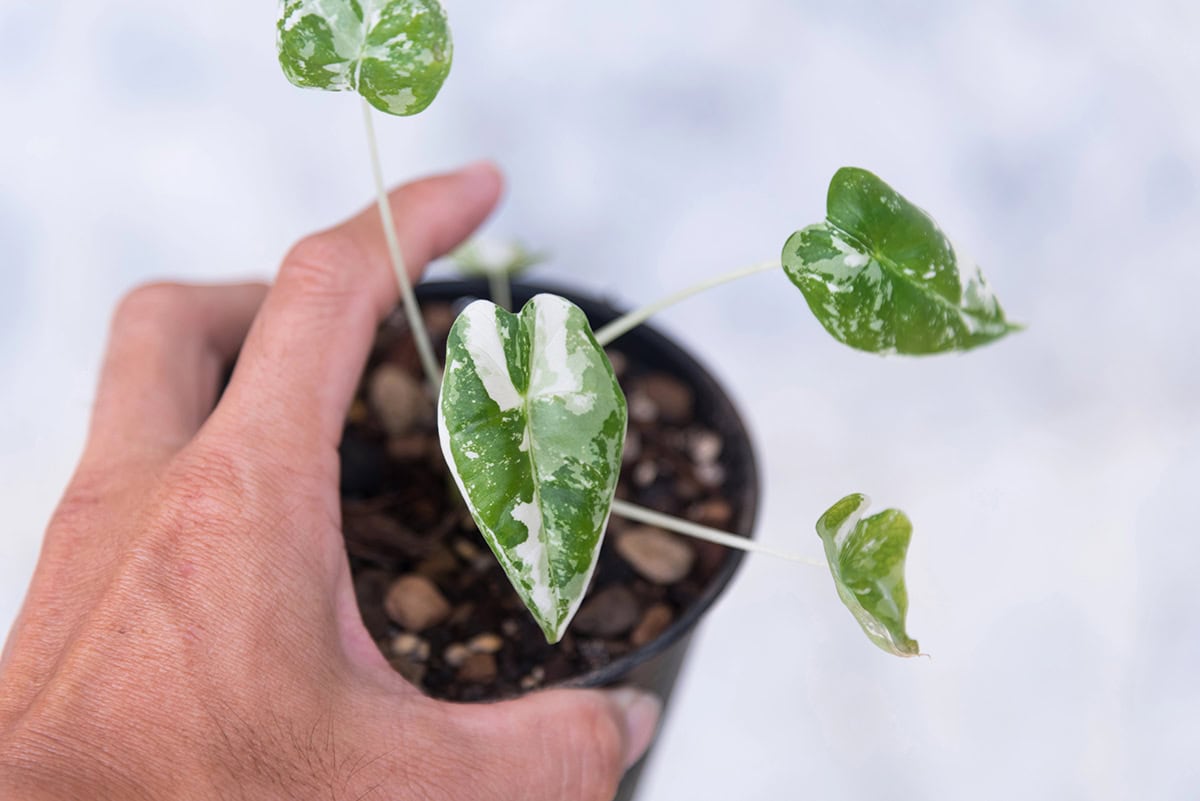
Dividing the plant multiplies Frydek most reliably, ideally in spring or early summer during active growth.
Remove the plant from its pot and gently separate the root ball. Look for natural clumps or offsets, each with its own roots and a section of rhizome, along with small corms tucked among the roots, which grow into new plants in moist mix. Cut stubborn sections apart with a clean knife and dust the cuts with fungicide.
Pot each division in a small container of well-draining mix, and water just enough to settle the soil.
Bright, indirect light and warm, humid air help the new plants recover, though growth pauses for a few weeks while roots establish.
Seed is impractical, since indoor plants rarely flower and fresh seed loses viability quickly.
Common Problems
Yellow leaves point to watering problems in most cases, either too much water and root rot or too little and crispy edges. Check the soil before every watering.
Drooping or curling leaves suggest temperature swings or cold drafts, and low humidity causes brown tips. Steady, warm conditions prevent both.
Brown spots signal fungal problems or leaf burn, more likely when the leaves are wet or sun-baked. Water at soil level and provide indirect light.
Spider mites and thrips appear on occasion, with tiny dots, fine webs or dull leaves as clues. Check the undersides regularly and treat early with insecticidal soap or neem oil.
Slow growth points to low light or too few nutrients. Feed during the growing season with diluted fertilizer, and stop when the plant goes dormant.
Varieties
The standard form of Alocasia micholitziana ‘Frydek’ carries deep green, velvety leaves streaked with bold white veins. The upright leaves set it apart from drooping colocasia and lend a tidy, architectural look.
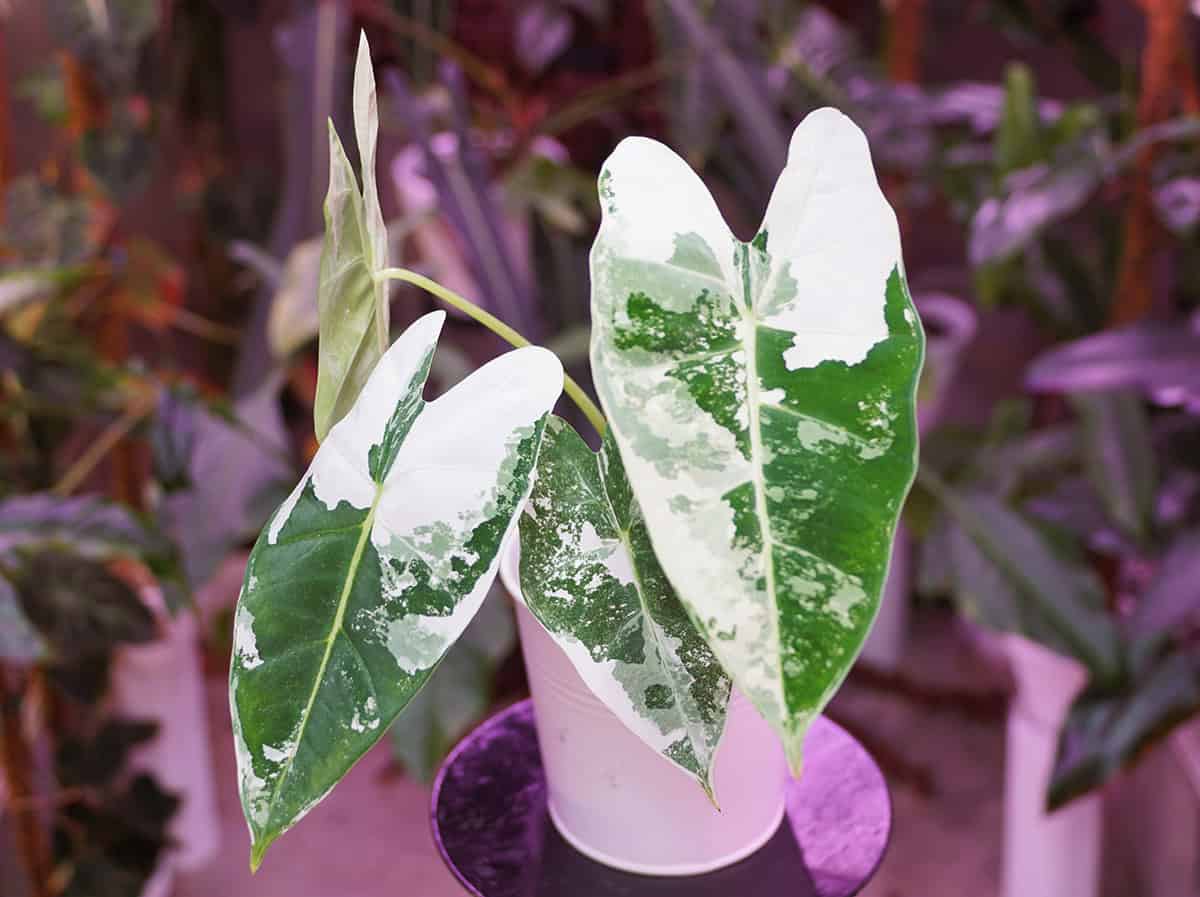
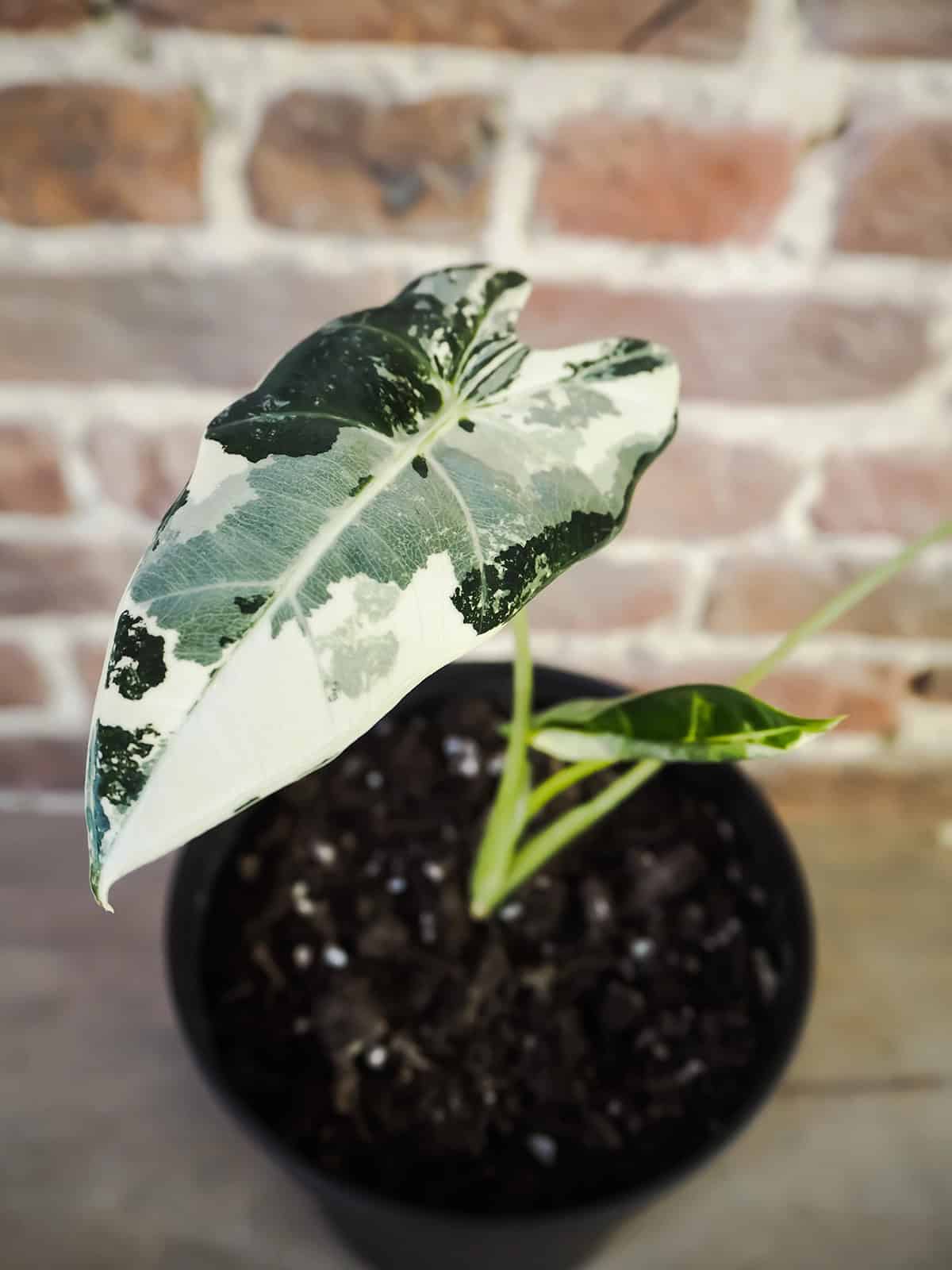
‘Frydek Variegata’ is the wild card. Patches of white or cream appear at random, with half a leaf pale on one and a few flecks on another. Variegated plants grow slowly and need brighter light, short of direct sun.
Lookalikes and hybrids complicate things. Alocasia reginula ‘Black Velvet’ has smaller, nearly black, plush leaves, and ‘Polly’ and ‘Amazonica’ have glossy leaves with sharp white veins and a different shape.
Garden centers lump all of these together as elephant ears, which helps little. A true Frydek has matte, velvety leaves, never shiny, with crisp veins that stand out sharply.