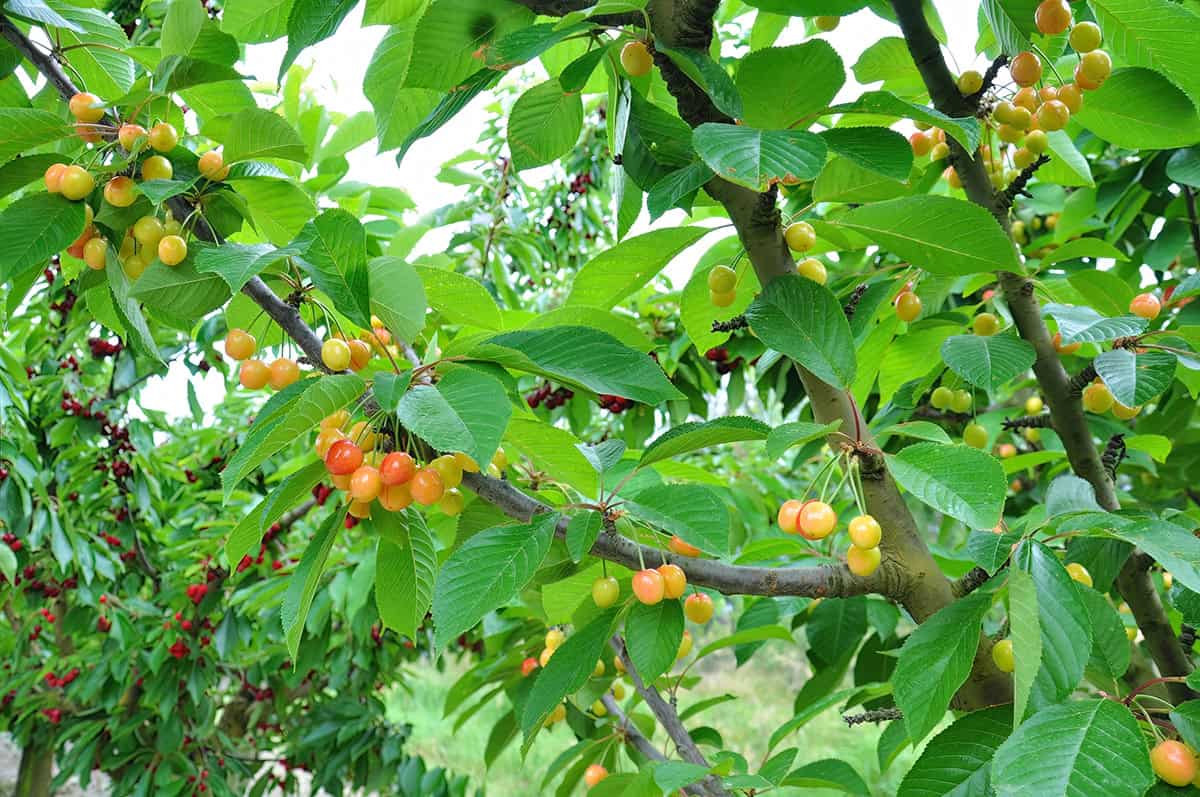
Cherry blossoms open early in spring, and a single late frost wipes out the season’s fruit in an afternoon. Site choice therefore matters a great deal, and a sunny slope with fast-draining soil protects both the flowers and the roots.
Pollination is the other early decision. Several popular sweet cherries refuse to set fruit alone, and a check of which ones before buying saves years of waiting.
Table of Contents
Soil
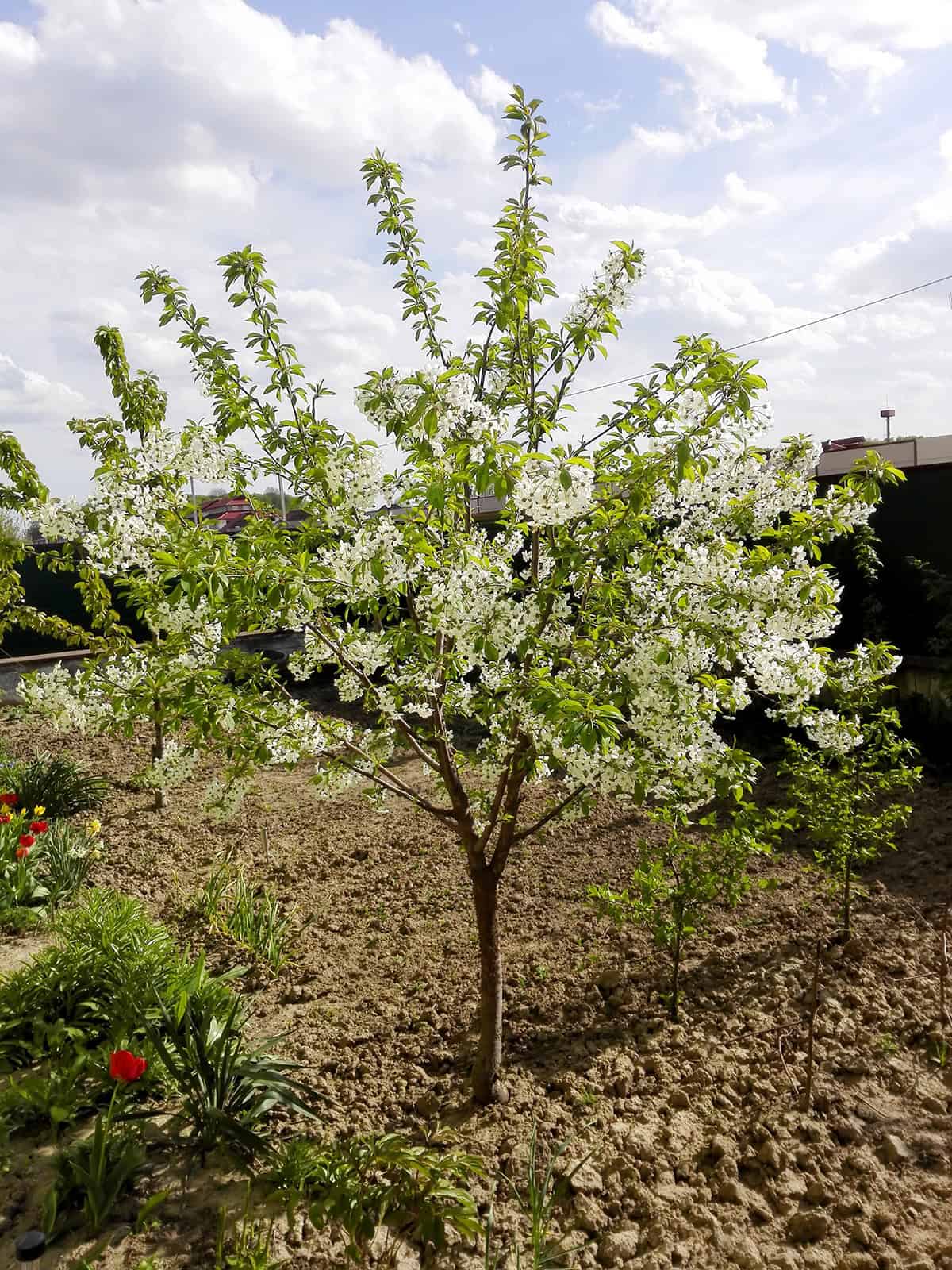
Cherries need deep, loose loam, ideally 3 to 4 feet of workable soil, so the roots anchor and spread. Waterlogged ground weakens trees and invites root rot and disease.
Heavy clay that holds water after rain is a poor match, and very sandy soil needs frequent watering. Soil that drains within a day is the goal.
Salt levels should be low. A pH between 6.0 and 7.0 is best, and alkaline soil slows growth.
Break up any hardpan before planting so the roots get air and room. Where drainage is slow, plant on a raised mound or berm to lift the roots above wet soil.
Higher ground also helps against frost, since cold air settles in low spots.
Planting
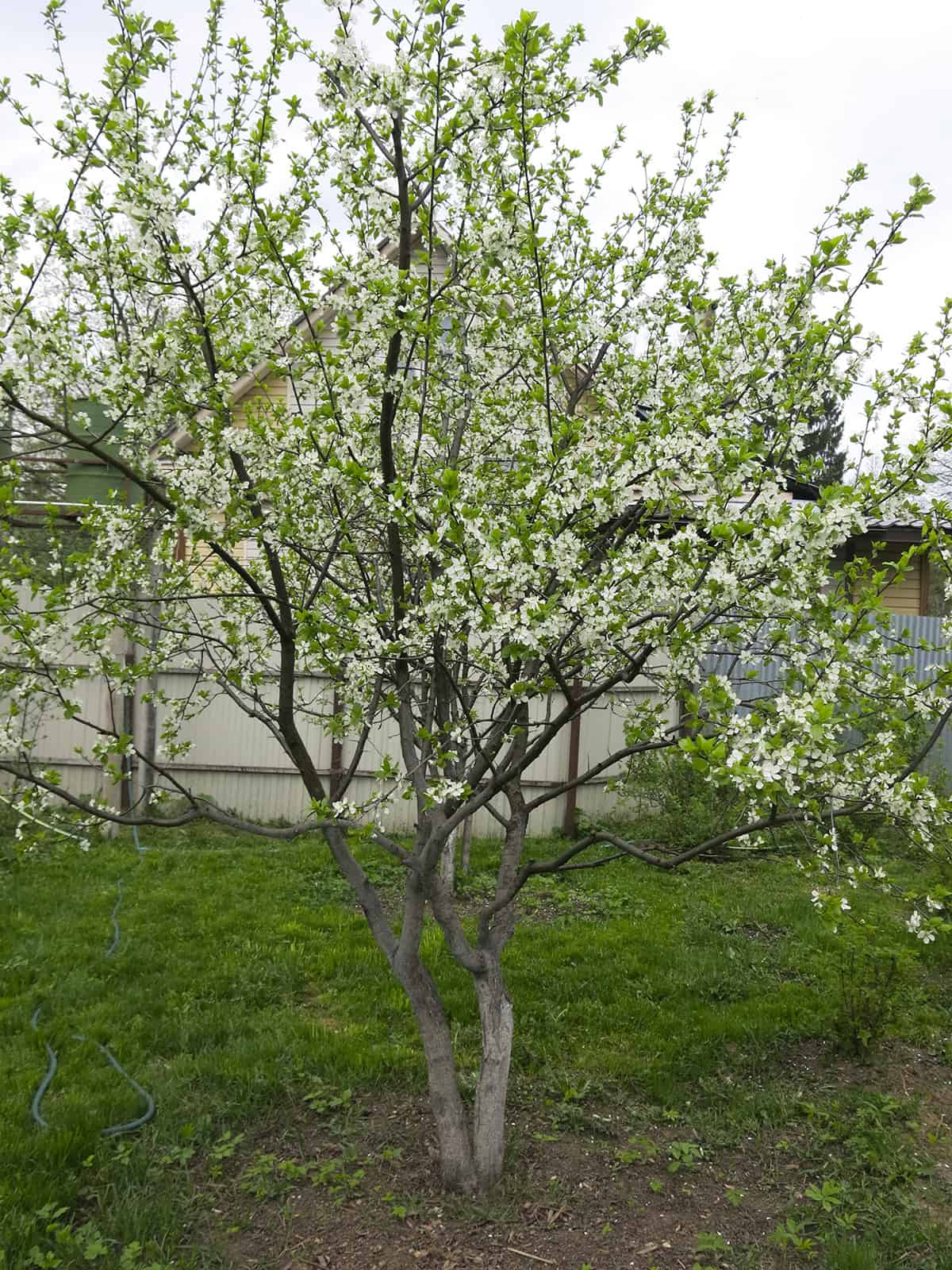
Choose a site with at least six hours of direct sun and fast drainage, away from low dips where cold air collects. A breezy spot dries the leaves and reduces disease.
Plant in early spring once the ground thaws and hard frosts are over, and set bare-root trees before their buds break. Space sweet cherries 15 to 20 feet apart and tart cherries 12 to 18 feet apart, and plant a pollination partner nearby for most sweet varieties.
Dig a hole twice as wide as the root spread and only as deep as the roots. Set the graft union a few inches above the soil line, backfill with the native soil, firm it and water deeply. Add a light layer of mulch, pulled back from the trunk.
Recommended Varieties
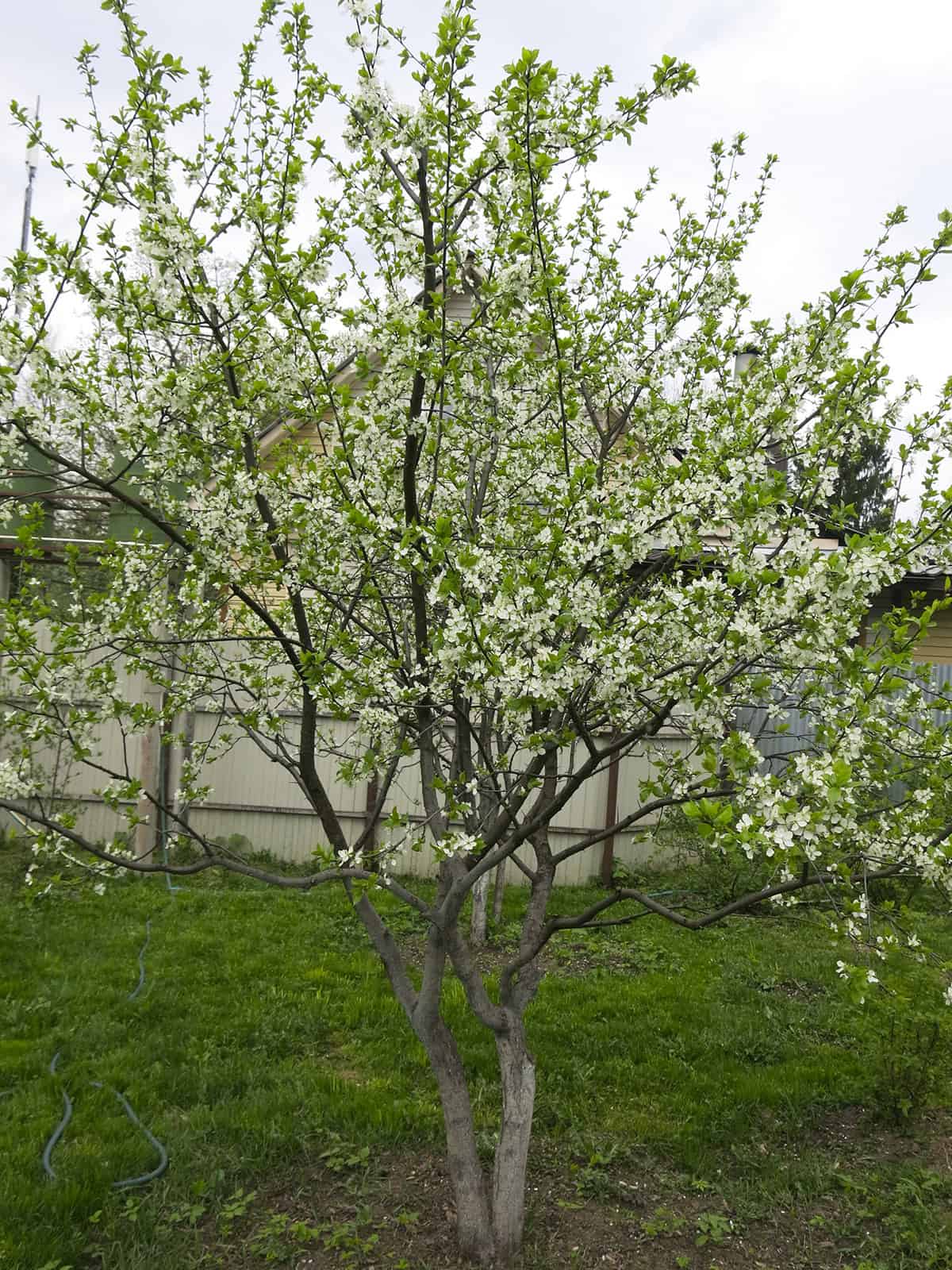
Climate and pollination drive the choice. Sweet and tart cherries differ in flavor, size and care, and most sweet types need a second variety blooming at the same time.
For fresh eating, ‘Bing’ is the classic, firm and dark red, but it needs a pollinator. ‘Rainier’ has yellow skin with a red blush and also needs a partner. ‘Lapins’ and ‘Stella’ are self-fertile sweet cherries, a big help in small yards.
For baking and preserves, ‘Montmorency’ is the long-standing tart favorite, cold-hardy and reliable. ‘North Star’ is a naturally dwarf tart cherry that reaches only 8 to 10 feet.
Check your hardiness zone and match bloom times when combining varieties. Local extension offices list the cherries that perform best in your area.
Light
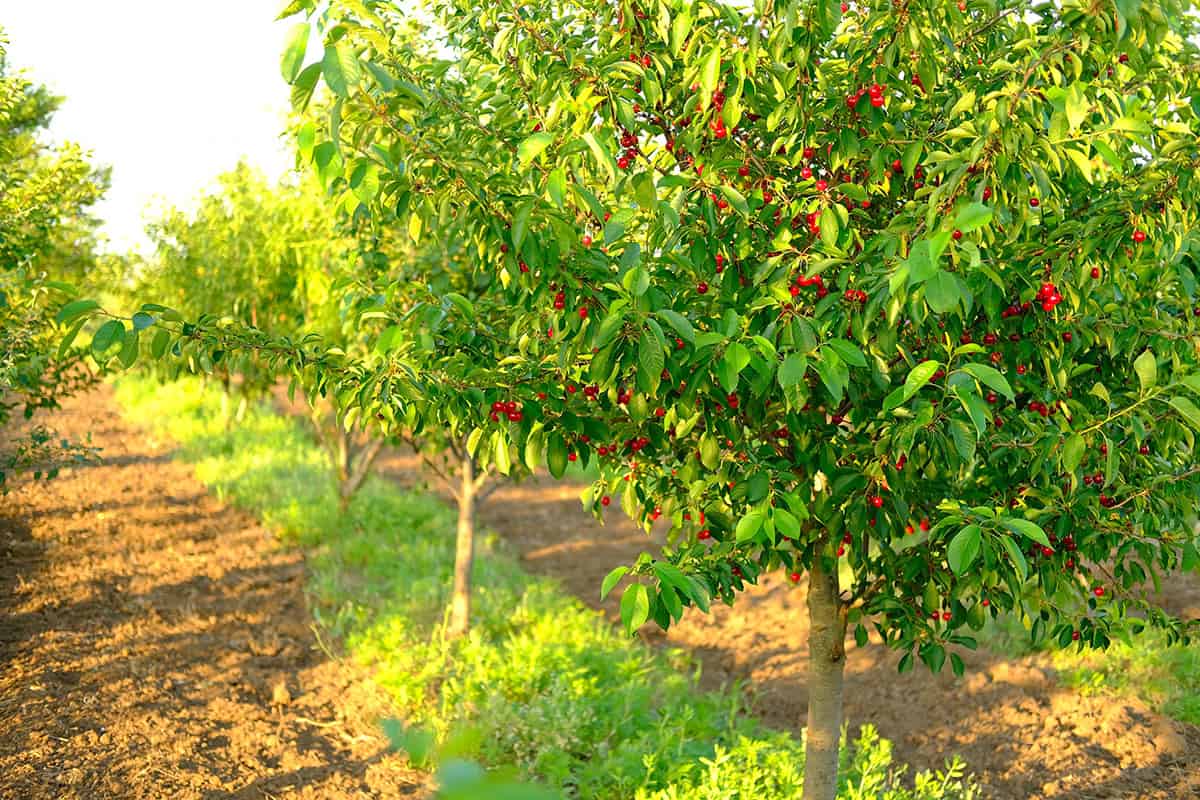
Cherries grow and fruit best with six to eight hours of direct sun a day. Less light means fewer blossoms and smaller harvests.
Sun from midmorning to late afternoon matters most. In shade, flowers and fruit drop, and leaves dry slowly after rain, which invites disease.
Elevated sites protect early blossoms from frost, a particular risk for sweet cherries. Tart cherries bloom later and escape some of that danger.
Avoid spots shaded by tall buildings or dense tree lines. South- and west-facing exposures receive the most light, though early warmth against a south wall pushes blooms open before the last frost. In frost-prone areas, a north-facing slope delays bloom and lowers that risk.
Water
Young trees need consistent moisture. Soak the root zone right after planting and water to maintain moist, never soggy, soil, since dry spells in the first year slow establishment.
For the first few years, water deeply every week or two during dry weather, adjusted for soil and climate. Sandy soil dries out fast, and clay holds water longer.
Established trees tolerate short dry spells, but even moisture during flowering and fruit development produces a better crop. Water when the soil is dry 6 to 8 inches down.
Slow, deep watering is best, and light sprinkles reach only the surface. Mulch holds moisture and evens out soil temperatures, but pull it back from the trunk.
Feeding
Fertilizer helps cherries in moderation, and too much produces soft growth and fewer cherries. A soil test shows what the tree needs and whether the pH sits in the 6.0 to 7.0 range.
Cherries take up most of their nutrients from bloom through early shoot growth, so fertilize in early spring, just before or at bloom.
Nitrogen needs a careful hand. Young trees should grow 15 to 30 inches of new shoots a year, and mature trees 8 to 15 inches. Reduce the dose the following year if growth exceeds that.
Spread fertilizer under the canopy, away from the trunk, and water it in. Skip late-summer feeding, which delays dormancy and increases winter damage.
Small, narrow leaves point to zinc deficiency, which a zinc spray corrects. Avoid adding nutrients as insurance, since excess throws the tree off balance.
Growth Time
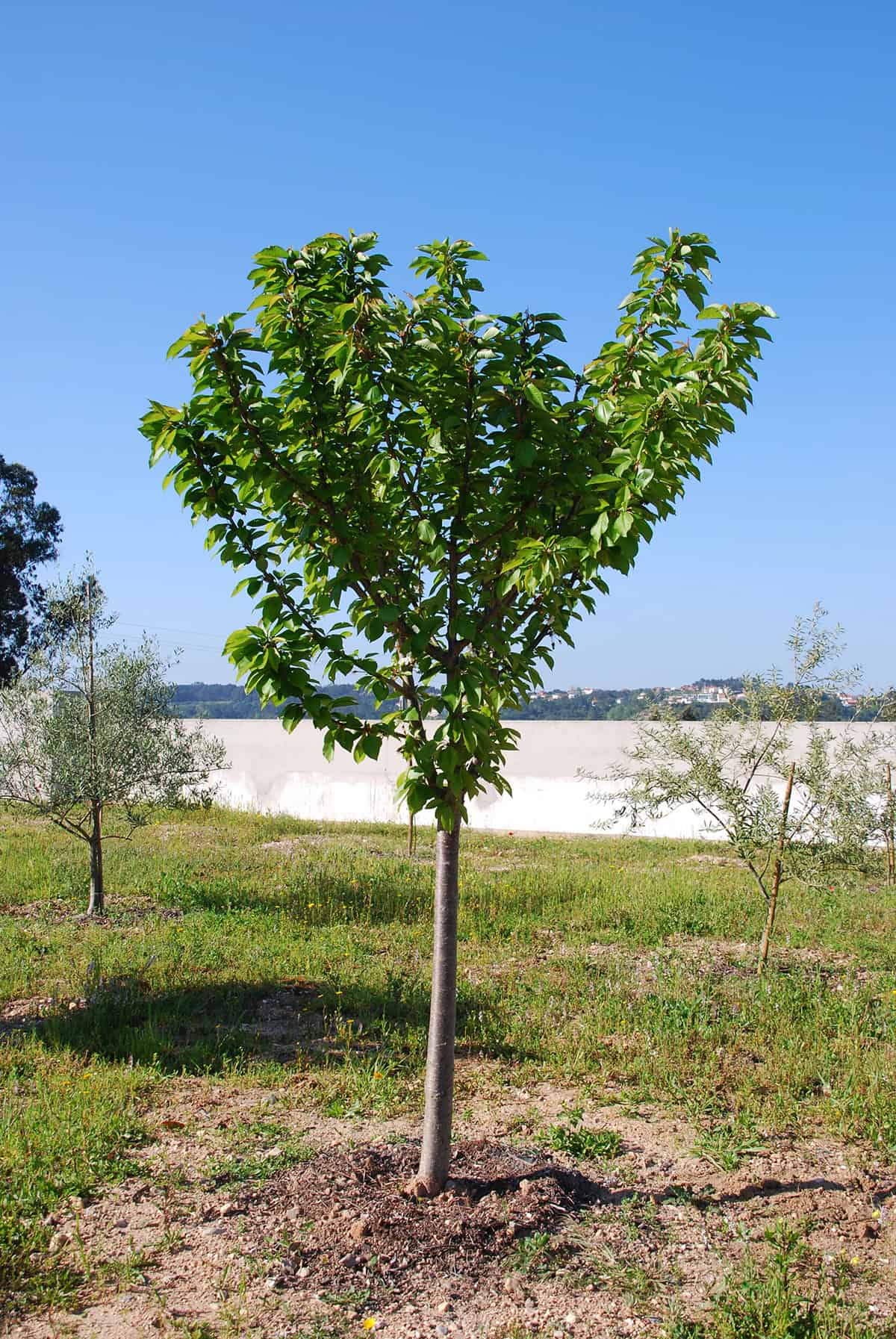
Most cherries begin producing two to five years after planting, with rootstock making the biggest difference. Dwarfing rootstocks such as Gisela shorten the wait by a year or two.
Sweet cherries on standard rootstock reach 30 to 40 feet at maturity, and tart cherries are smaller and adapt to more climates. Tree size affects pruning and harvest effort far more than the start of fruiting.
Cherries bloom early in spring, and late frosts destroy a season’s crop in some years. Flowering time is fixed, but a well-chosen site shields blossoms from the worst cold.
First harvests are light, and yields climb as the tree fills out with regular pruning. A well-tended cherry tree produces for decades.
Growing in Containers
Dwarf and compact cherries grow well in pots, which restrict the roots and limit the tree’s size for patios and balconies. Containers also allow full control over soil and position.
Choose a container of at least 15 to 20 gallons with good drainage holes, and fill it with a well-draining potting mix instead of garden soil. Full sun is still essential for fruit, and a self-fertile variety is the safe pick unless a second potted cherry sits nearby.
Water when the top inch dries, since pots dry out faster than garden beds. Fertilize in early spring, and again after harvest if growth is weak. Prune each year to open the canopy and control height, and repot every few years to refresh the soil and check the roots.
Harvest
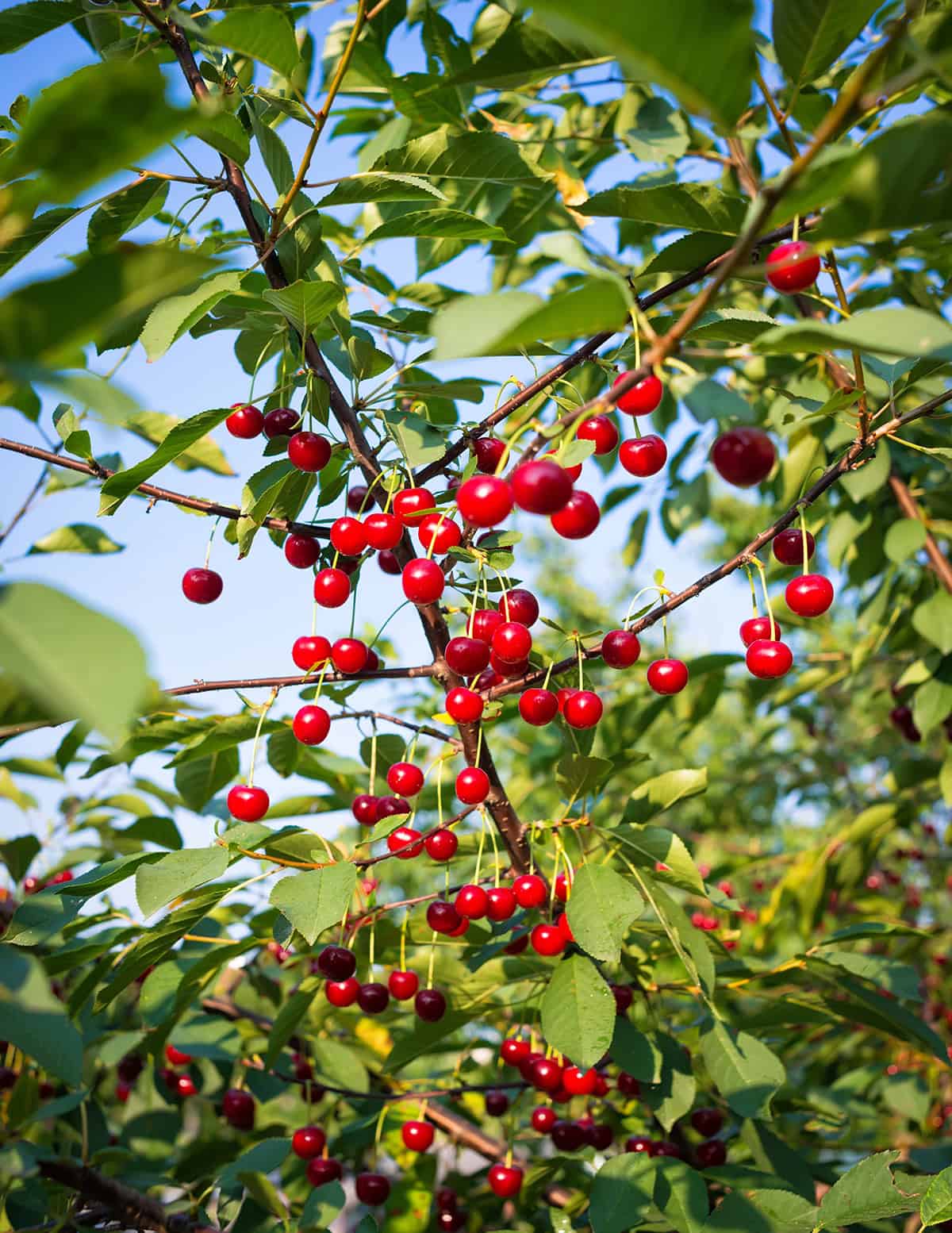
Cherries ripen between late spring and midsummer, with location and variety setting the timing, and sweet cherries ripen before tart ones. Deepening color and slightly softer flesh signal readiness.
Taste a few from different parts of the tree to judge flavor and firmness, since size alone is a poor guide.
Pick in dry weather, because wet cherries split and spoil fast. Grip the stem and pull gently, or snip stubborn fruit with pruners.
Leave the stems on for longer storage, and use shallow containers to prevent bruising. Move the fruit out of the sun and into the refrigerator quickly.
Cherries ripen fast and stop improving once picked, so harvest promptly within the short window.
Common Problems And Troubleshooting
Cool, damp weather leaves cherry trees open to disease. Bacterial canker causes sunken bark patches, gummy ooze and dieback on branches. Prune out affected wood in dry weather and disinfect tools between cuts. Excess nitrogen and crowded branches make canker worse, so feed lightly and thin for airflow.
Brown rot attacks blossoms and fruit and makes them soft and brown, especially during long spring rains. Cherry leaf spot dots the leaves with small purple spots and causes early leaf drop. In wet years, a fungicide applied at bloom helps, and a cleanup of fallen leaves limits the spread.
Gummosis, the oozing of sticky sap, follows injury, insect attack or disease. Look for borers, cankers or mower damage before treating. Waterlogged soil that rots the roots and crown is another cause, and good drainage with moderate watering prevents it.