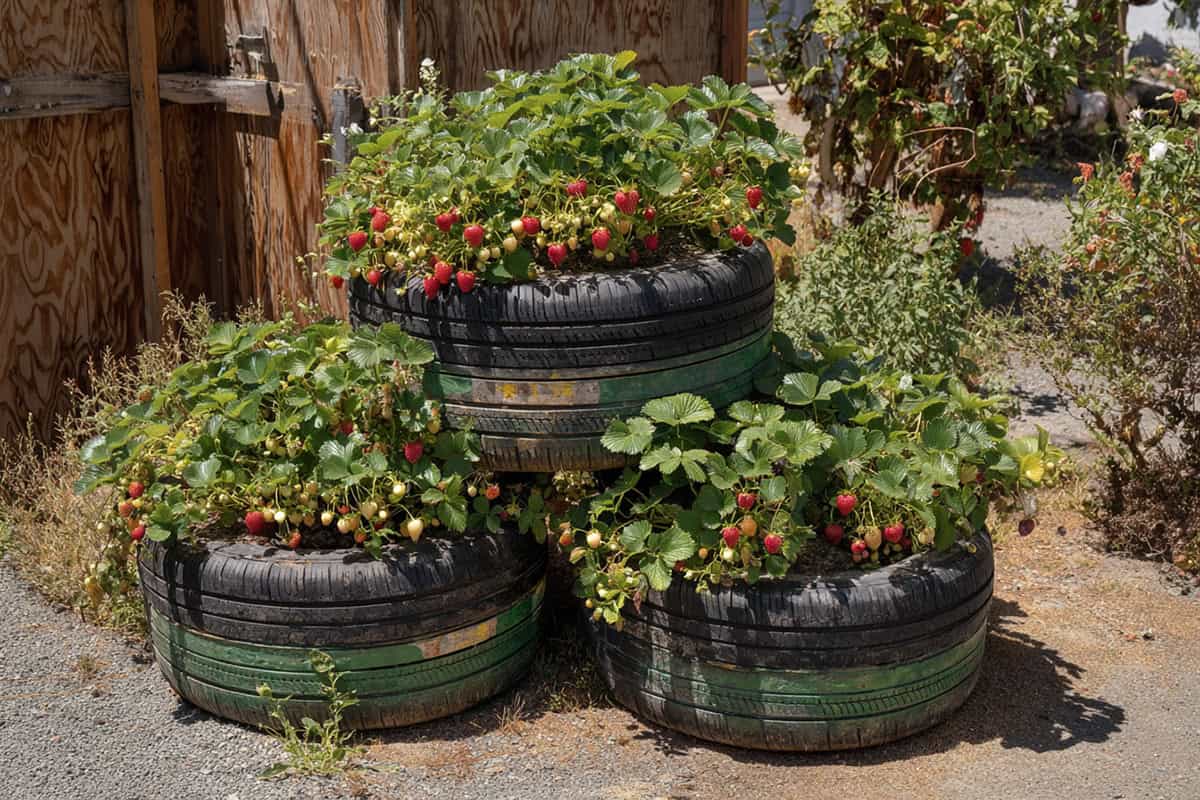
Fresh-picked berries from your own setup just hit differently. With a little creativity, strawberries can thrive almost anywhere—tiny patios, balconies, tucked corners, or right in the backyard. Smart strawberry planter ideas make it possible to harvest your own fruit even in tight spots, boost drainage, and keep those berries within arm’s reach.
No sprawling garden? No problem. Vertical stacks, hanging baskets, wall-mounted pouches, and raised beds all pull their weight for strong, healthy strawberry plants. Plenty of these planters double as container gardens, perfect for decks or apartment living.
Below, you’ll find a bunch of practical ideas and designs for strawberry planters—some DIY, some repurposed, some modular.
Table of Contents
- DIY Vertical and Stacked Planter Designs
- Strawberry Old Tire Stack Planter
- Wooden Vertical Strawberry Tower from Reclaimed Boards
- Wall-Mounted Vertical Strawberry Pot Columns with Irrigation Pipe
- Tiered Pyramid Wooden Strawberry Planter Structure
- Tiered Fabric Raised Bed Strawberry Rings
- Tiered Fabric Grow Bag Strawberry Tower
- Stacked Terracotta Strawberry Tower Planter
- Stacked Round Pot Strawberry Tower
- Stacked Pallet Wood Strawberry Planter Box
- Stacked Modular Strawberry Planter Tower
- Solid Wood Vertical Strawberry Tower with Built-In Top Planter
- Slim Garden Post Strawberry Planter with Minimal Openings
- Rotating Multi-Tier Wooden Strawberry Tower Planter
- Greenhouse Multi-Row Strawberry Tower System
- Creative Hanging and Wall-Mounted Ideas
- Terracotta Hanging Strawberry Basket
- Strawberry Window Box Rail Planter
- Strawberry Shoe Organizer Vertical Planter
- Strawberry Rolling Ladder Cart Planter
- Strawberry Ladder Shelf Vertical Garden
- Strawberry Hanging Rope Tier Basket Planter
- Strawberry Hanging Mason Jar Planter Set
- Strawberry Hanging Coconut Shell Planters
- Minimal Wall-Mounted Strawberry Planter Grid
- Hanging Recycled Bottle Strawberry Wall Grid
- Hanging PVC Pipe Strawberry Column Planter
- Hanging Fabric Pocket Strawberry Wall Garden
- Repurposed and Upcycled Planter Ideas
- Raised Beds, Modular Systems, and Edging
- Strawberry Tree Ring Planter Bed
- Strawberry Spiral Garden Bed
- Strawberry Barrel Planter with Side Openings
- Raised Cinder Block Strawberry Bed with Center Tower
- Cinder Block Modular Strawberry Grid Planter
- Multi-Level Wooden Platform Strawberry Planter Display
- Multi-Level Garden Bed with Ground and Elevated Rows
- Corner Wall Rail Strawberry Planter System with Horizontal Channels
- Innovative Planters Using Common Materials
DIY Vertical and Stacked Planter Designs
Piling up planters isn’t just a space-saver—it keeps berries clean and makes picking a breeze. Wood, fabric, plastic, even old junk can turn into a sturdy strawberry tower. Just make sure it drains well and basks in the sun.
Strawberry Old Tire Stack Planter
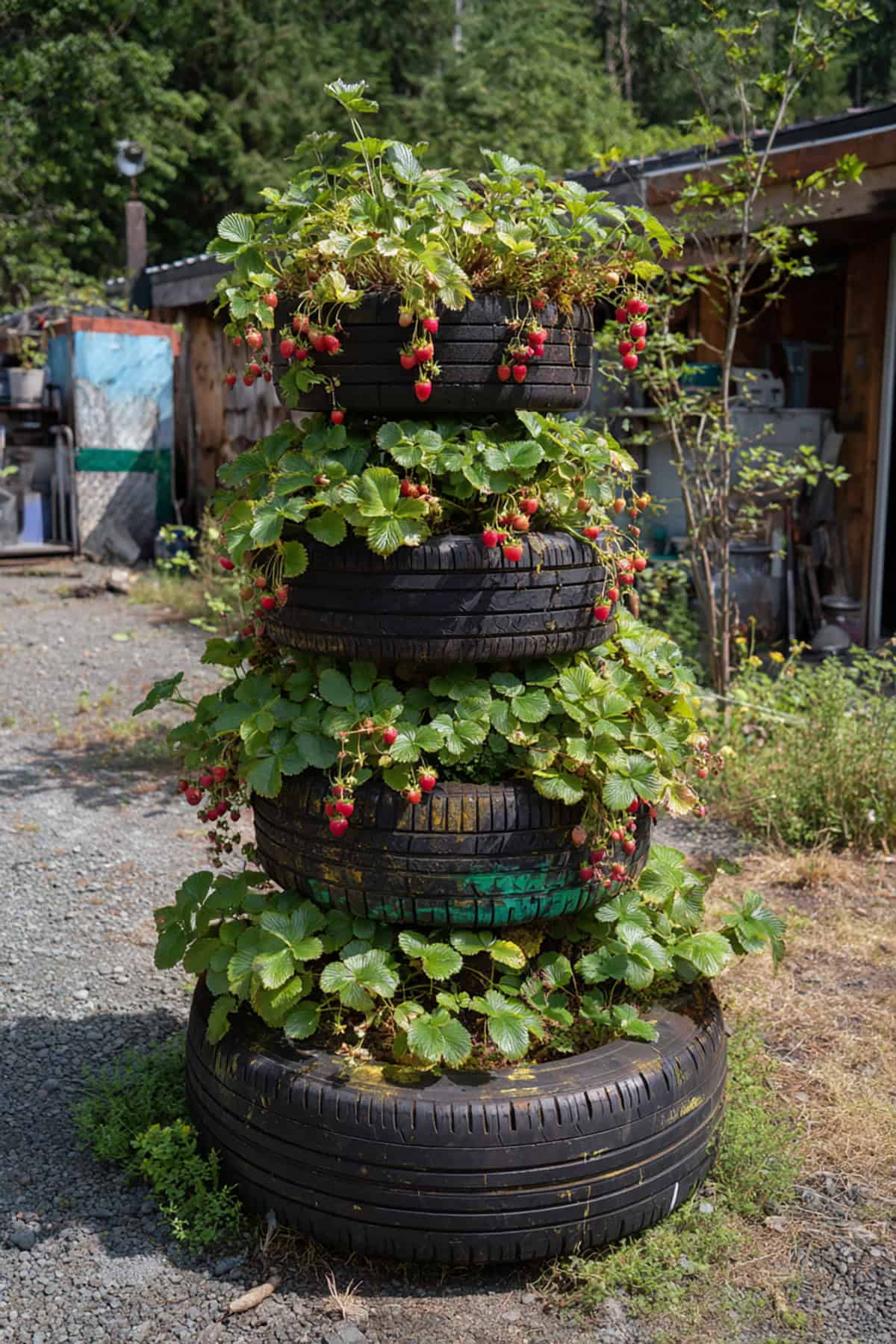
Repurposing old tires? They’re tough and stackable—just what you need for a berry tower. Stack a couple (or more), fill each with soil, and cut holes around the sides for planting. Watch out though: black tires soak up heat, so the soil dries out fast.
If the bottom tire sits on concrete, drill out some drainage. Go for a fluffy potting mix with compost to keep things loose. Six hours of sun is the sweet spot for placement.
This approach fits patios or gravel patches. A coat of exterior paint can tone down the “tire” look and reduce heat. Skip any tires that look sketchy or are treated with chemicals.
Wooden Vertical Strawberry Tower from Reclaimed Boards
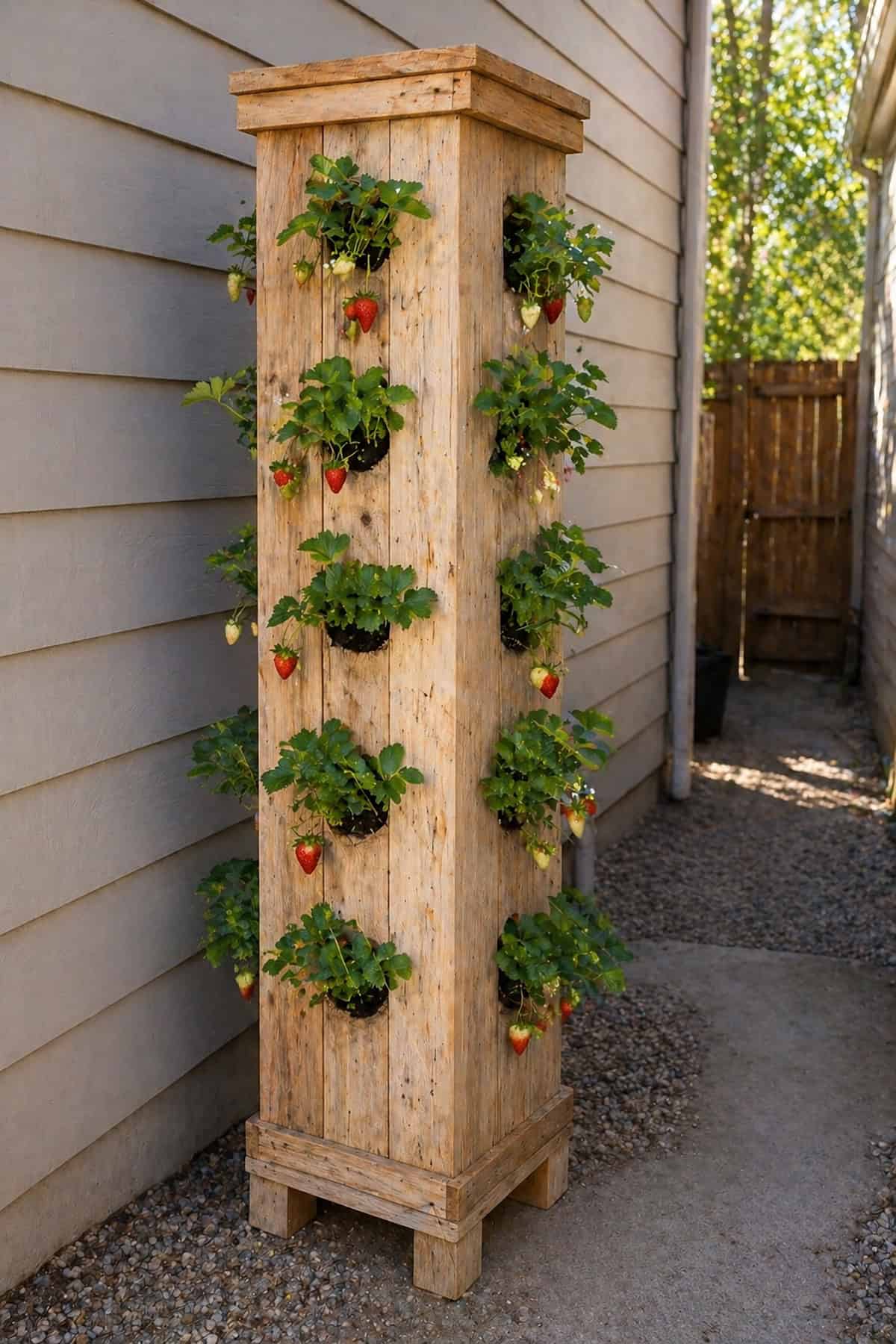
Old boards lying around? They’re perfect for a tall, compact wooden tower. Cut staggered holes on all sides, and if you want to get fancy, add a gravel-filled pipe down the middle for better watering.
Cedar or other rot-resistant wood holds up best. Lining the inside with landscape fabric keeps soil where it belongs. For stability, anchor the tower to a wide planter box.
Stagger holes about 6–8 inches apart so each plant gets its fair share of space and sun. This style tucks nicely against a fence or wall.
Wall-Mounted Vertical Strawberry Pot Columns with Irrigation Pipe
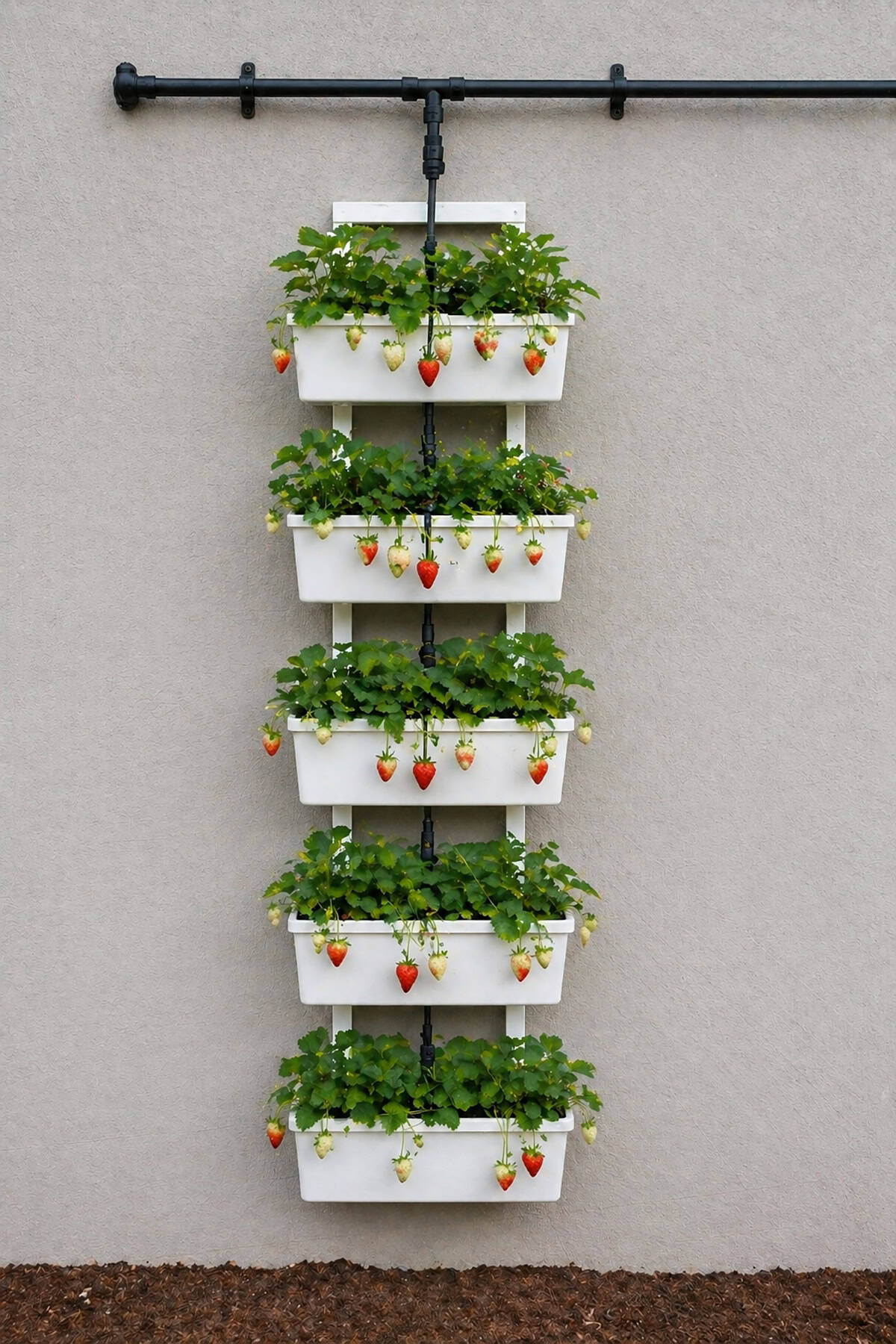
Mounting pots on a wall saves floor space and makes picking easier. Stack pots or PVC tubes on a solid frame, and run a perforated irrigation pipe down the middle for hands-off watering.
Walls that get strong sunlight—especially south-facing ones—are ideal. Use anchors that can handle outdoor weight.
This setup keeps fruit off the ground and cuts down on bending. Lightweight containers are easier on your fasteners, but don’t forget about drainage—otherwise, you’ll end up with stained walls.
Tiered Pyramid Wooden Strawberry Planter Structure
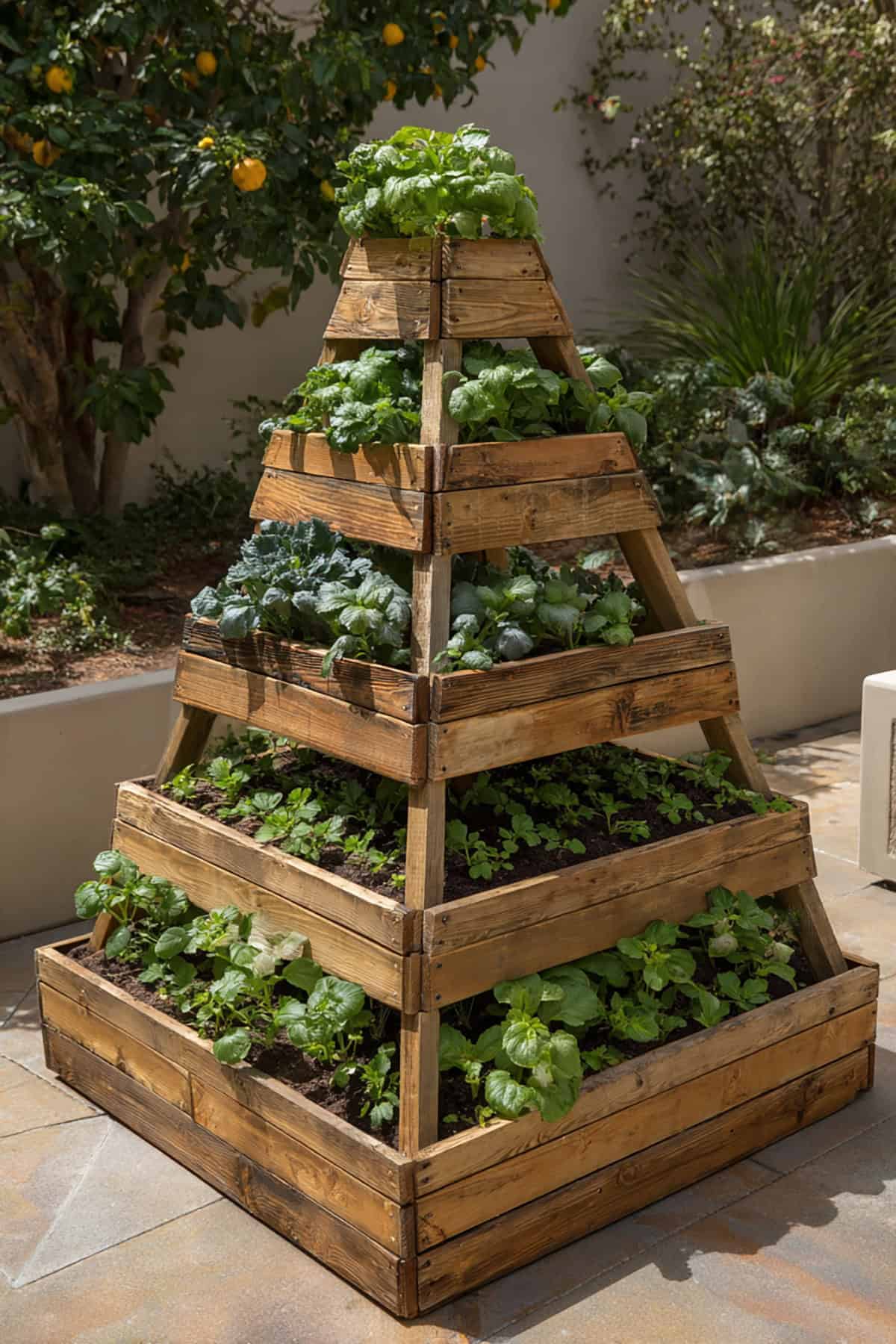
Pyramid planters catch the eye with their wide base and narrowing tiers. Build square frames, stack them up, and plant along the edges for a layered effect.
The tiered shape encourages airflow and sunlight if you orient each level right. Exterior screws and weather-resistant wood hold everything together.
Level ground is a must. Fill tiers with rich, loose soil, and you’ve got a backyard focal point that’s as productive as it is striking.
Tiered Fabric Raised Bed Strawberry Rings
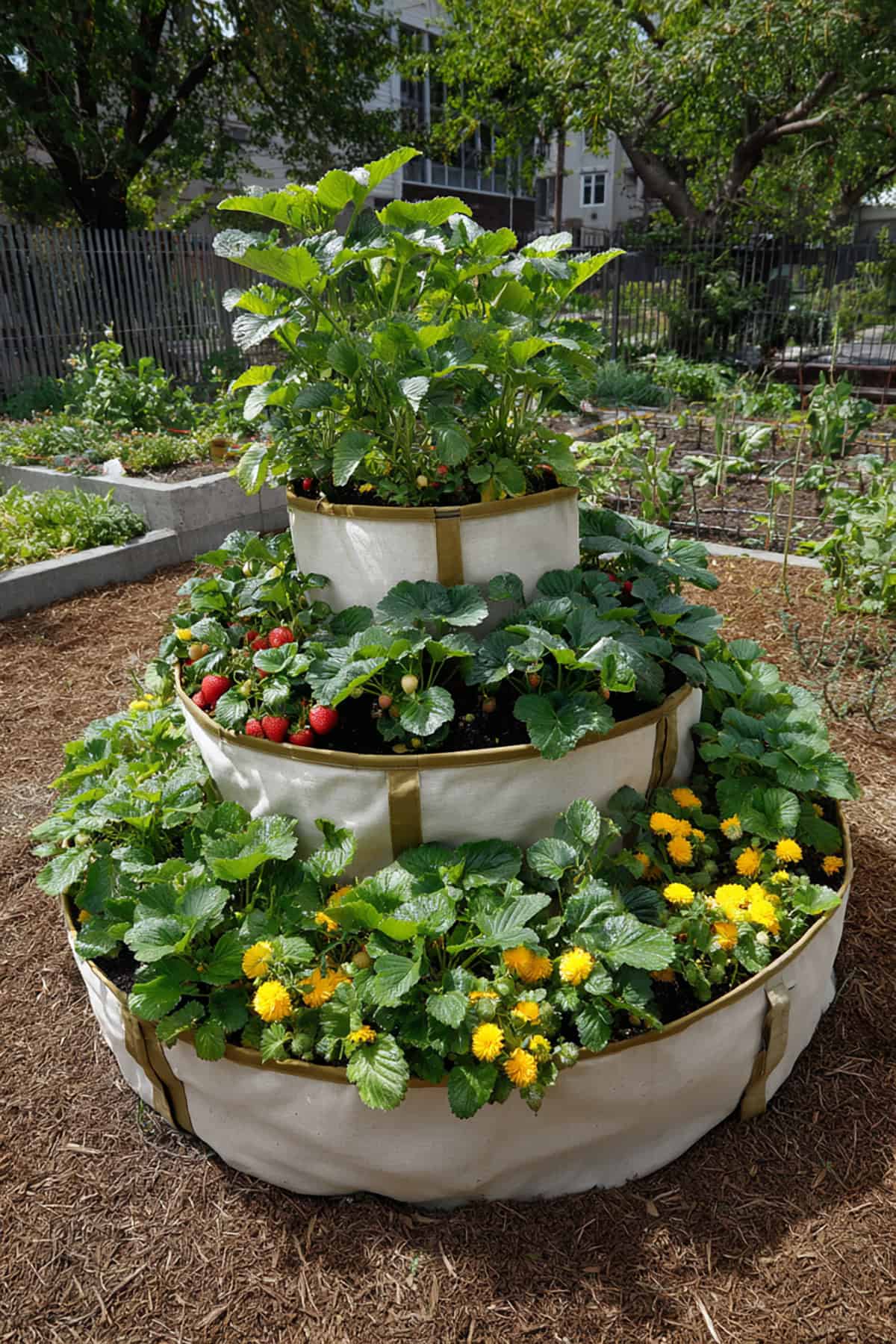
Soft-sided fabric rings stack up quickly—no tools needed. Each ring sits atop the next, forming a lightweight, breathable tower.
Assembly is a breeze, and the whole thing is easy to move, making it a good pick for renters. The tradeoff: fabric dries out faster, so you’ll need to water more often, especially when it’s hot.
Setting the base on mulch or gravel helps keep weeds at bay.
Tiered Fabric Grow Bag Strawberry Tower
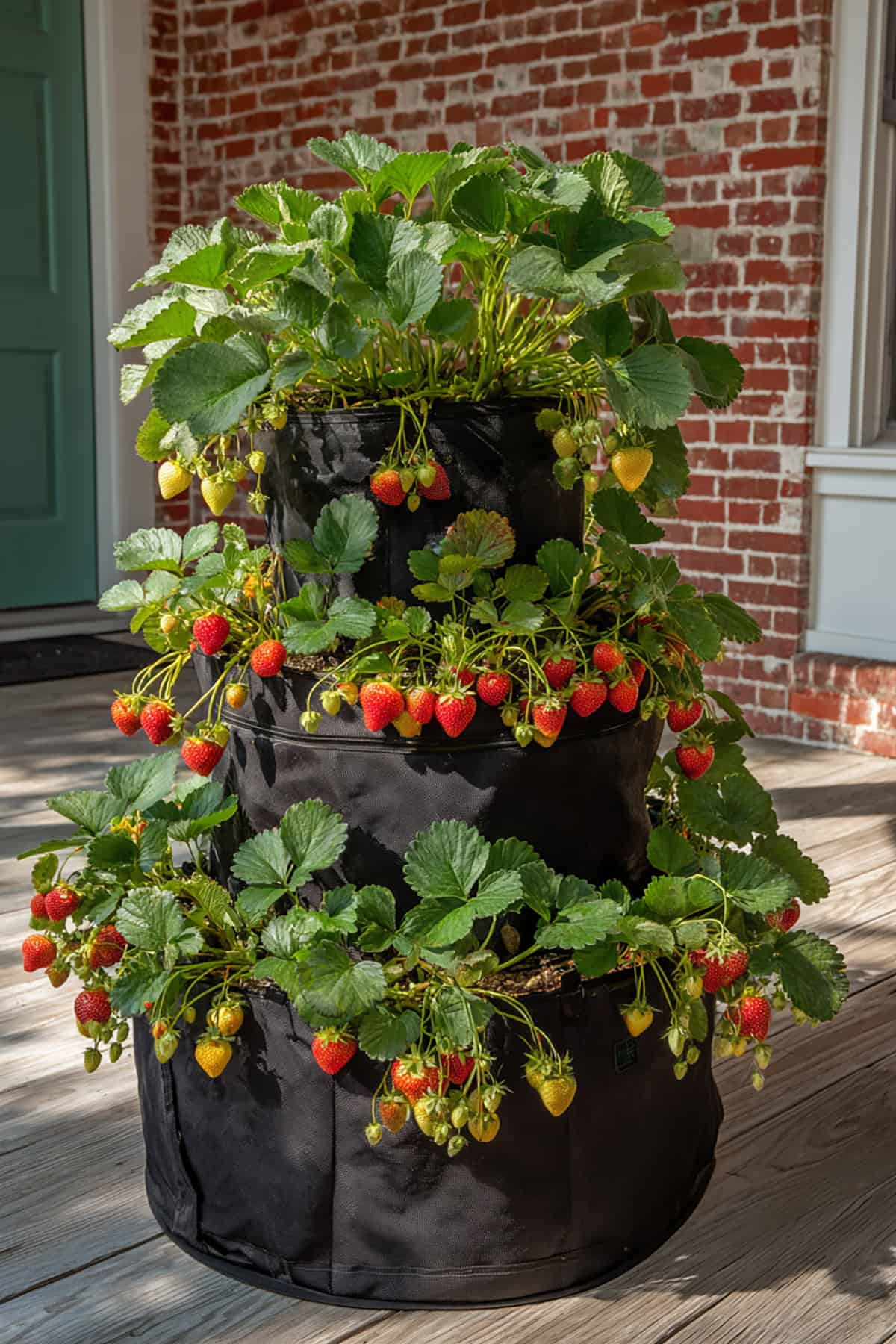
Grow bags with multiple pockets wrap around a central column, each holding a strawberry plant. These towers are tailor-made for balconies or small patios.
Choose a potting mix that holds moisture, and consider a perforated center pipe for even watering. Give the tower a spin every few days so all sides get sun.
Fruits stay off the ground and are clean. Come winter, just fold it up and stash it away. Look for UV-resistant fabric if you want it to last more than a season.
Stacked Terracotta Strawberry Tower Planter
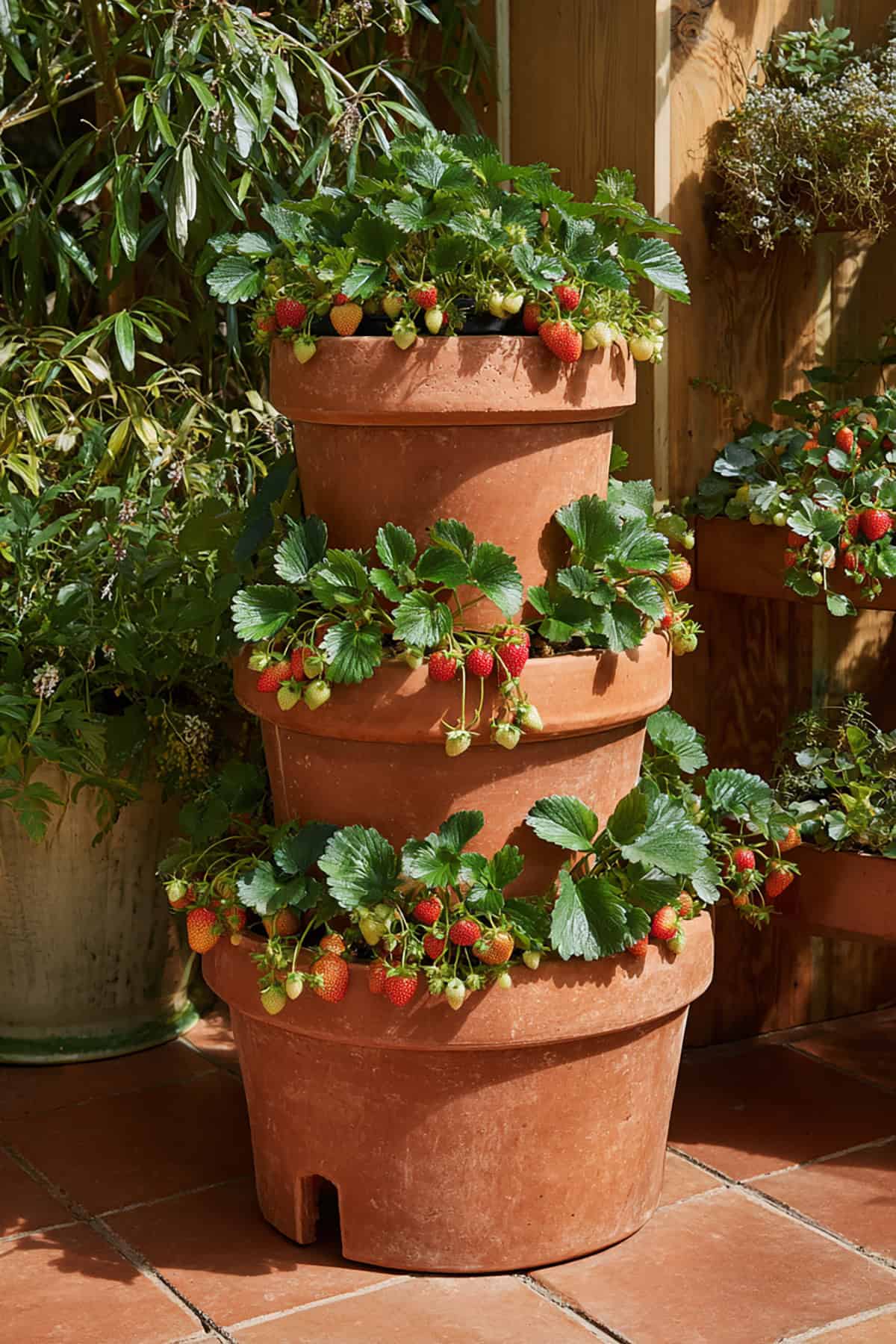
Clay pots never go out of style. Stack them with a support rod, fill with soil, and plant around each rim. Offset the pots for more space.
Terracotta breathes, which is great for roots but means you’ll need to check moisture often. The weight keeps the tower stable—no worries about wind knocking it over.
For slower drainage, seal holes in upper pots. Always set on a solid surface.
Stacked Round Pot Strawberry Tower
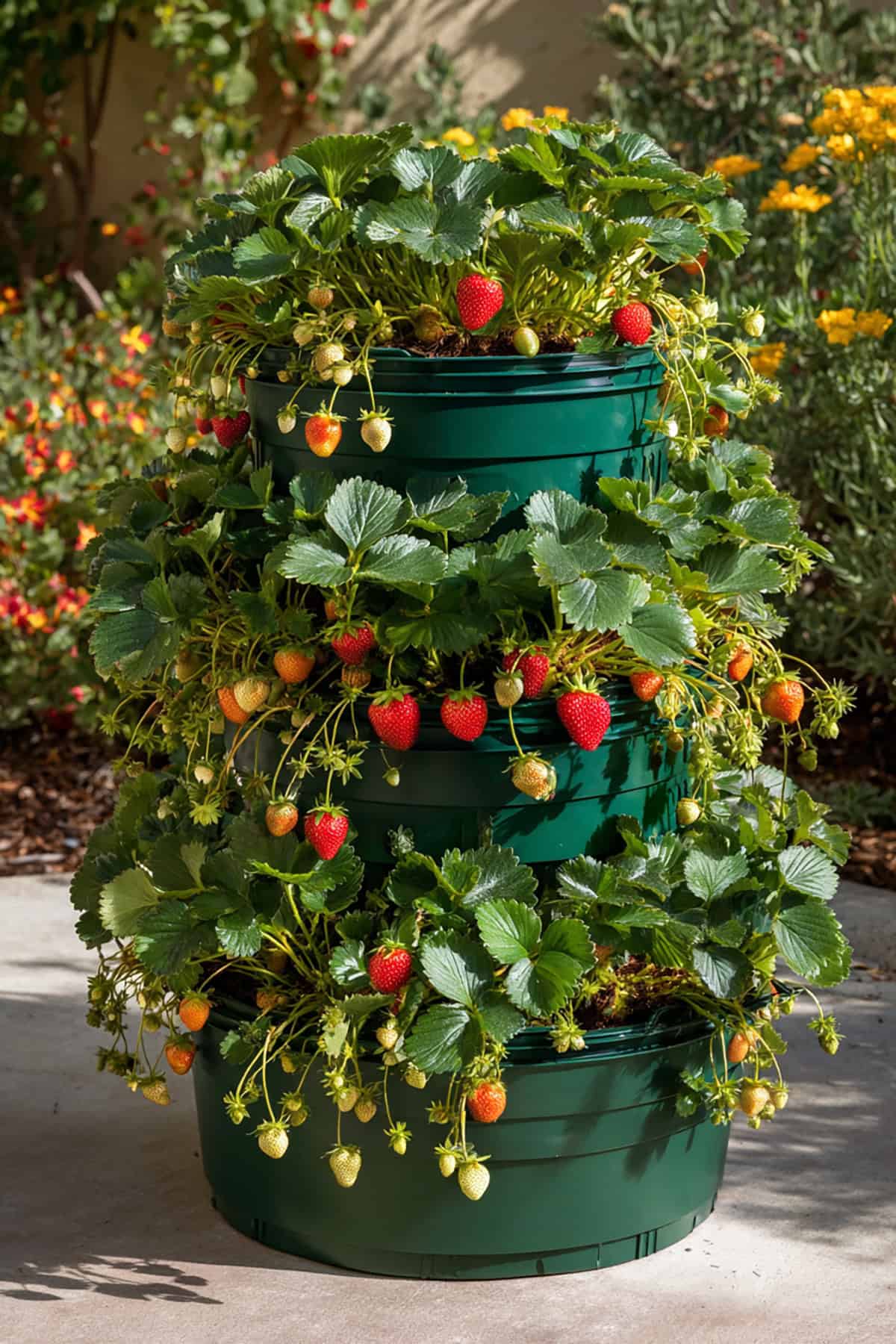
Plastic pots, when offset and stacked, create a compact vertical garden. Cut side holes before stacking for bonus planting spots and secure the whole thing with a central stake.
This method crams a lot of strawberries into a small footprint. Go for lightweight pots so the base isn’t overloaded, and make sure each tier drains well.
Full sun is key. Feed every few weeks and thin runners to keep things from getting overcrowded.
Stacked Pallet Wood Strawberry Planter Box
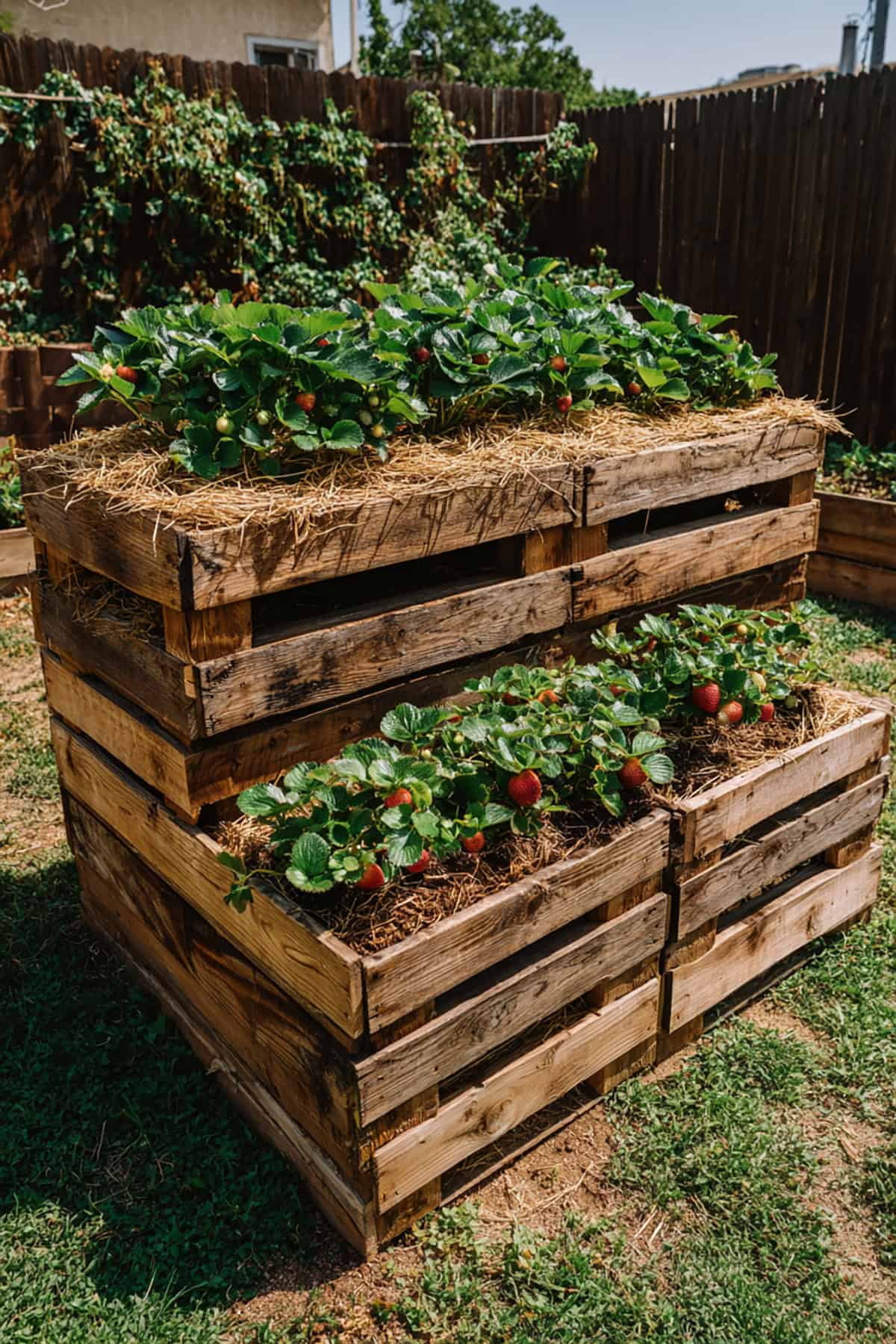
Pallets can become vertical planters with a few tweaks—close up gaps, staple fabric to the back and bottom, and fill with soil between the slats.
Lean your pallet planter against a fence or wall. It doubles as a privacy screen and a strawberry garden. Always use heat-treated pallets (look for “HT” stamps) for safety.
Water slowly to help the soil settle. Check for stray nails and sand down rough spots before planting.
Stacked Modular Strawberry Planter Tower
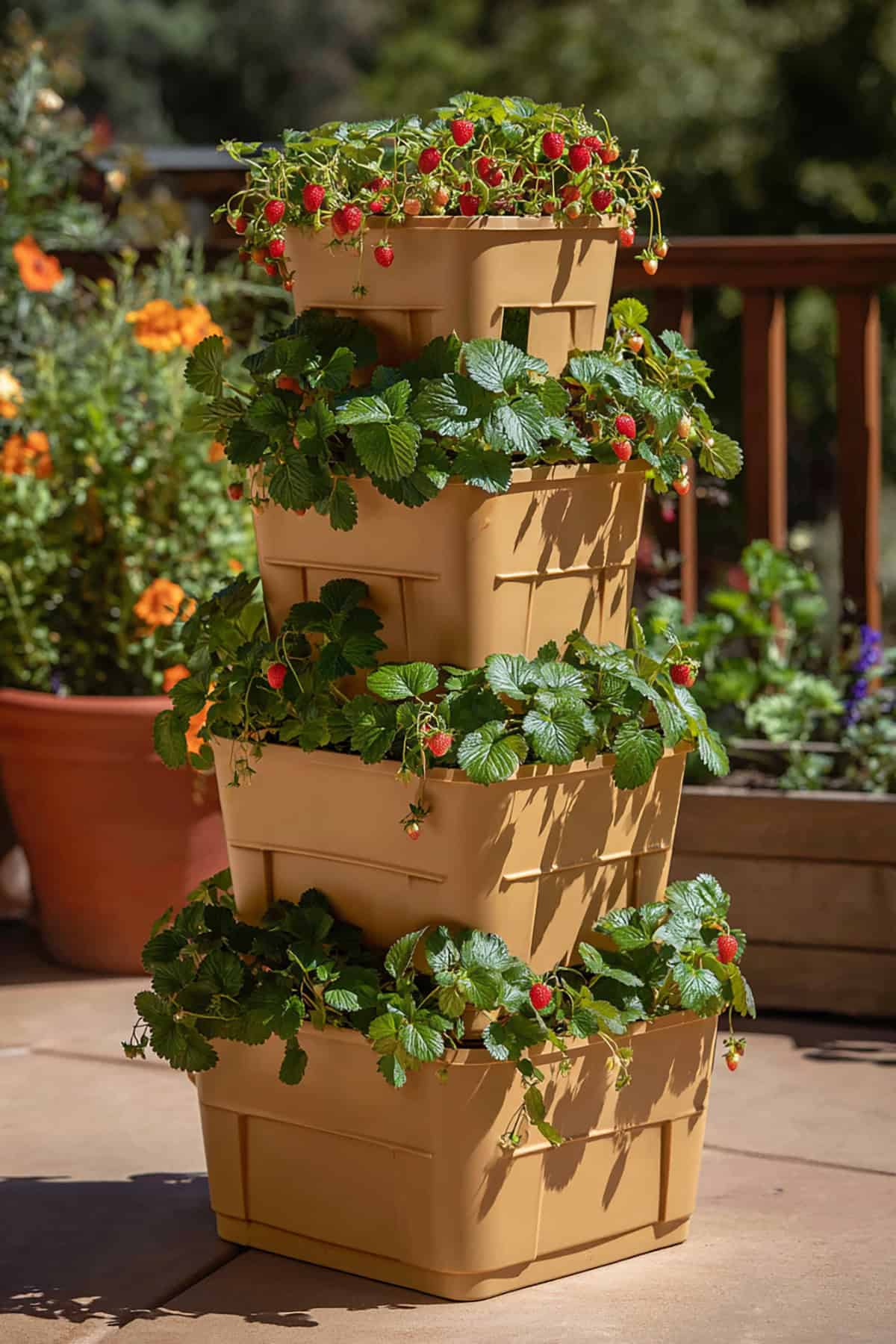
Snap-together plastic modules make assembly quick and painless. Each piece locks into the next, with built-in pockets for plants. Warm-toned finishes blend in with most patio setups.
Some kits come with a reservoir up top for easy watering. Follow the instructions for safe stacking, and keep the base wide for stability.
Minimal fuss, no woodworking required. Just check connections each season so the tower stays upright.
Solid Wood Vertical Strawberry Tower with Built-In Top Planter
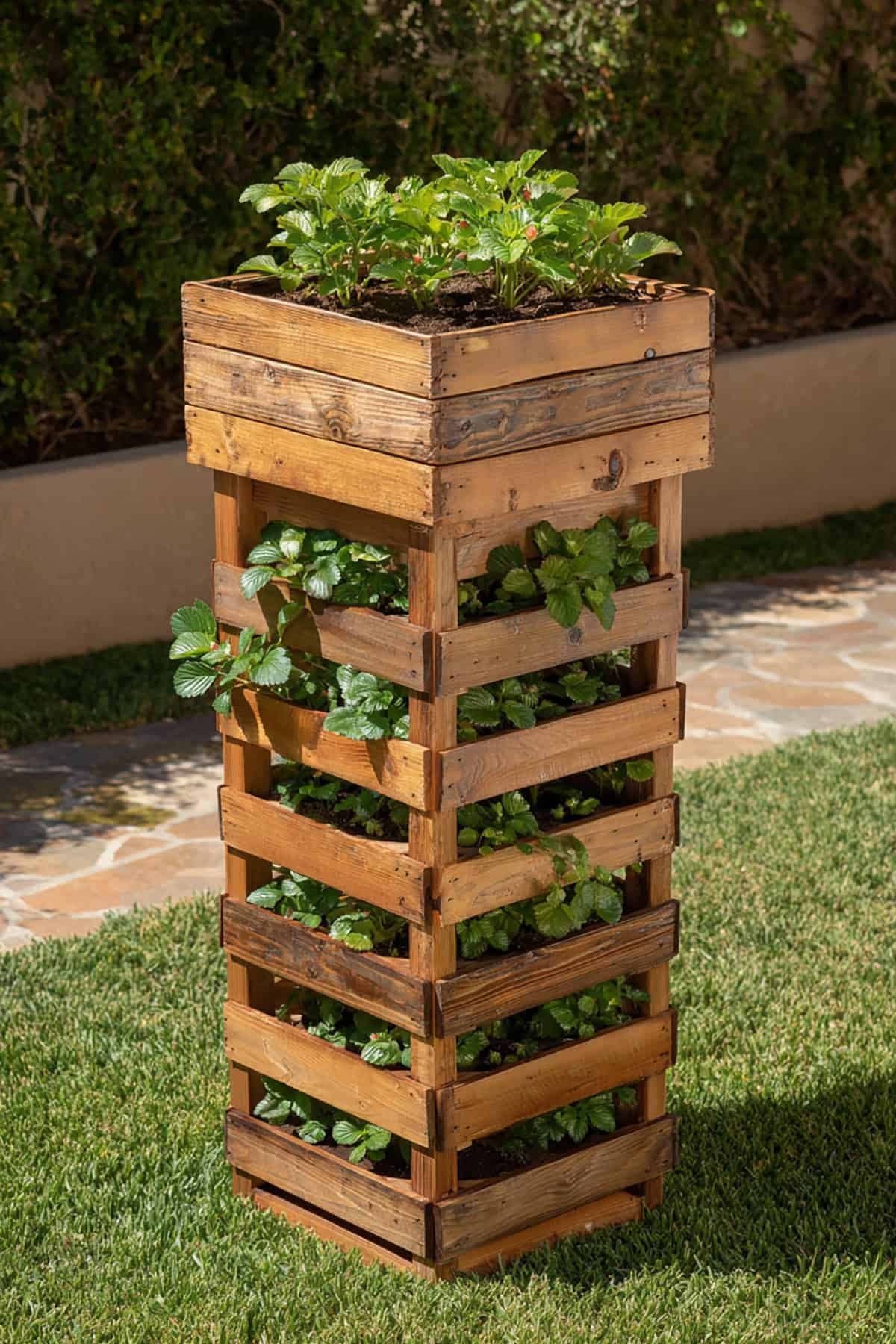
Here’s a twist: a solid wood column with planting holes along the sides, plus a roomy top for herbs or extra strawberries. It’s part vertical tower, part raised bed.
Anchor the base in a heavy planter box, and use exterior glue and screws for strength. Sealing up joints helps the wood last longer.
Heavier, larger varieties do best lower down; smaller alpine types can go higher. This keeps the tower balanced and healthy.
Slim Garden Post Strawberry Planter with Minimal Openings
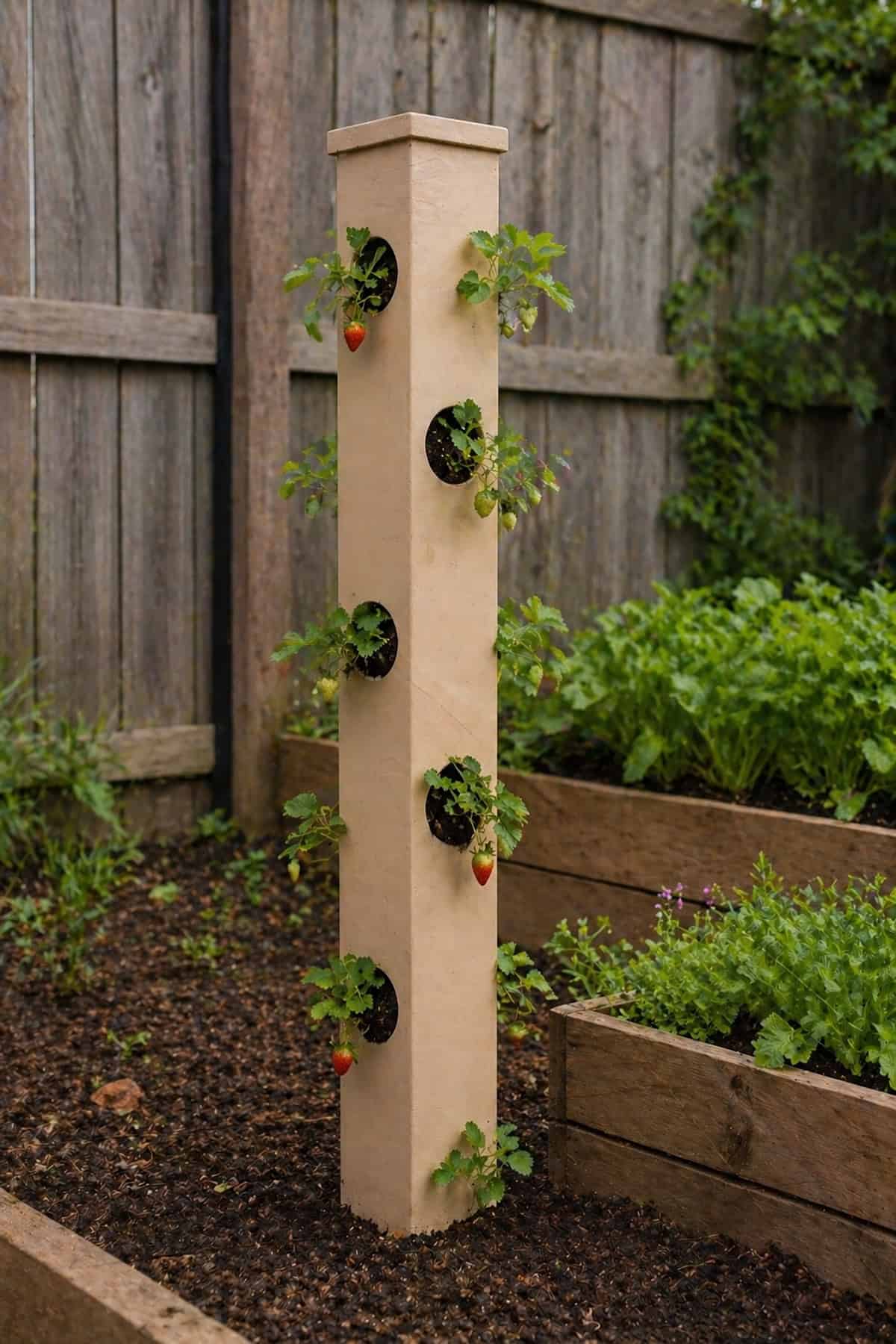
Tight on space? A skinny post—just 6–8 inches wide—lets you tuck strawberries into corners. Small, evenly spaced holes keep the profile narrow, so soil volume is limited and watering needs a bit more attention.
A central watering tube helps keep things even. Use a light soil mix and attach the post to a fence or stake for support.
This style is handy along walkways, keeping berries at eye level for easy picking.
Rotating Multi-Tier Wooden Strawberry Tower Planter
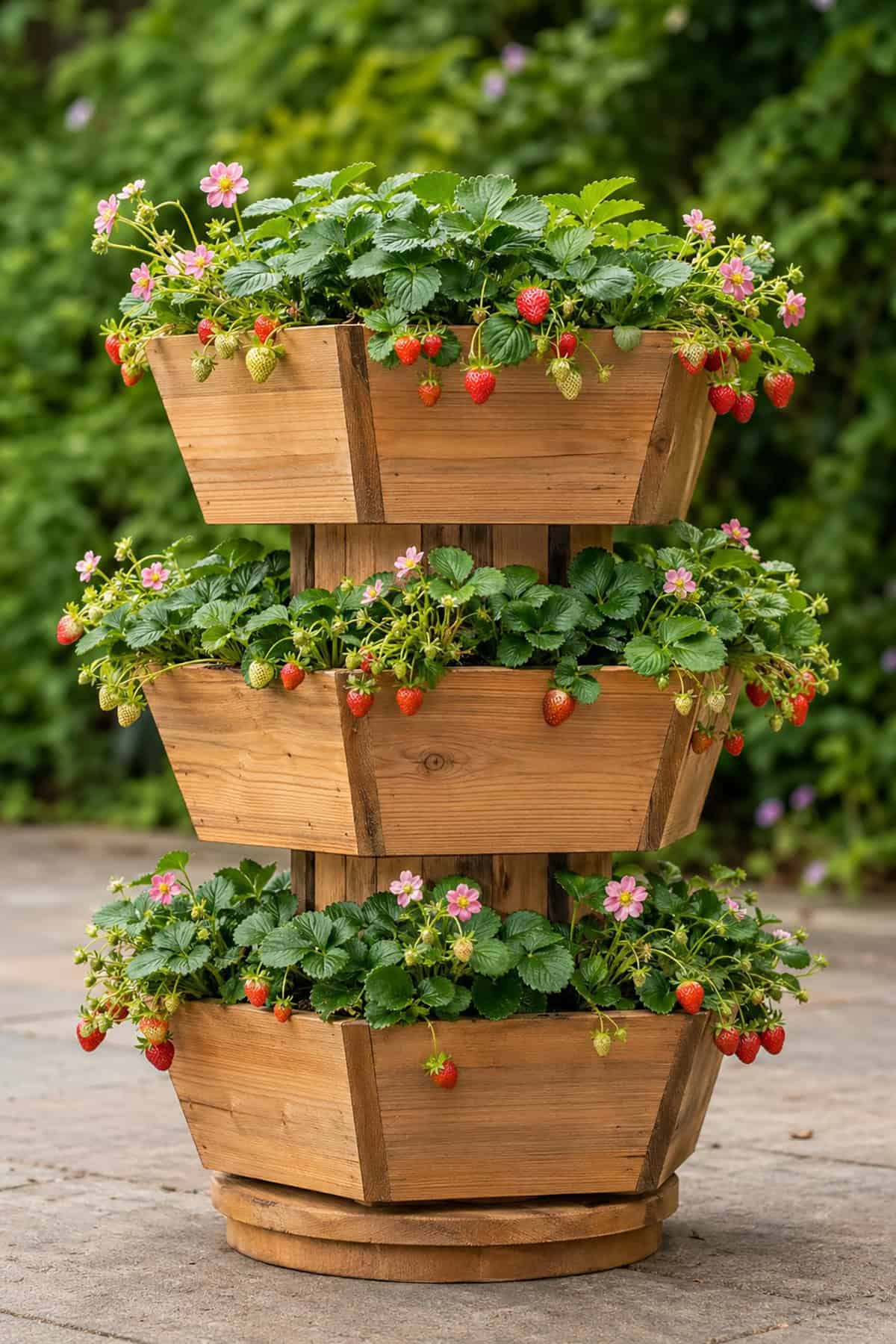
Imagine a strawberry tower on a lazy Susan—just give it a spin for even sun. Several wooden tiers stack up on a heavy-duty swivel base.
Metal bearings rated for outdoor use are a must. Balance matters; don’t go too tall or it’ll wobble.
This rotating setup is a game-changer for small patios. More sun all around means better fruiting.
Greenhouse Multi-Row Strawberry Tower System
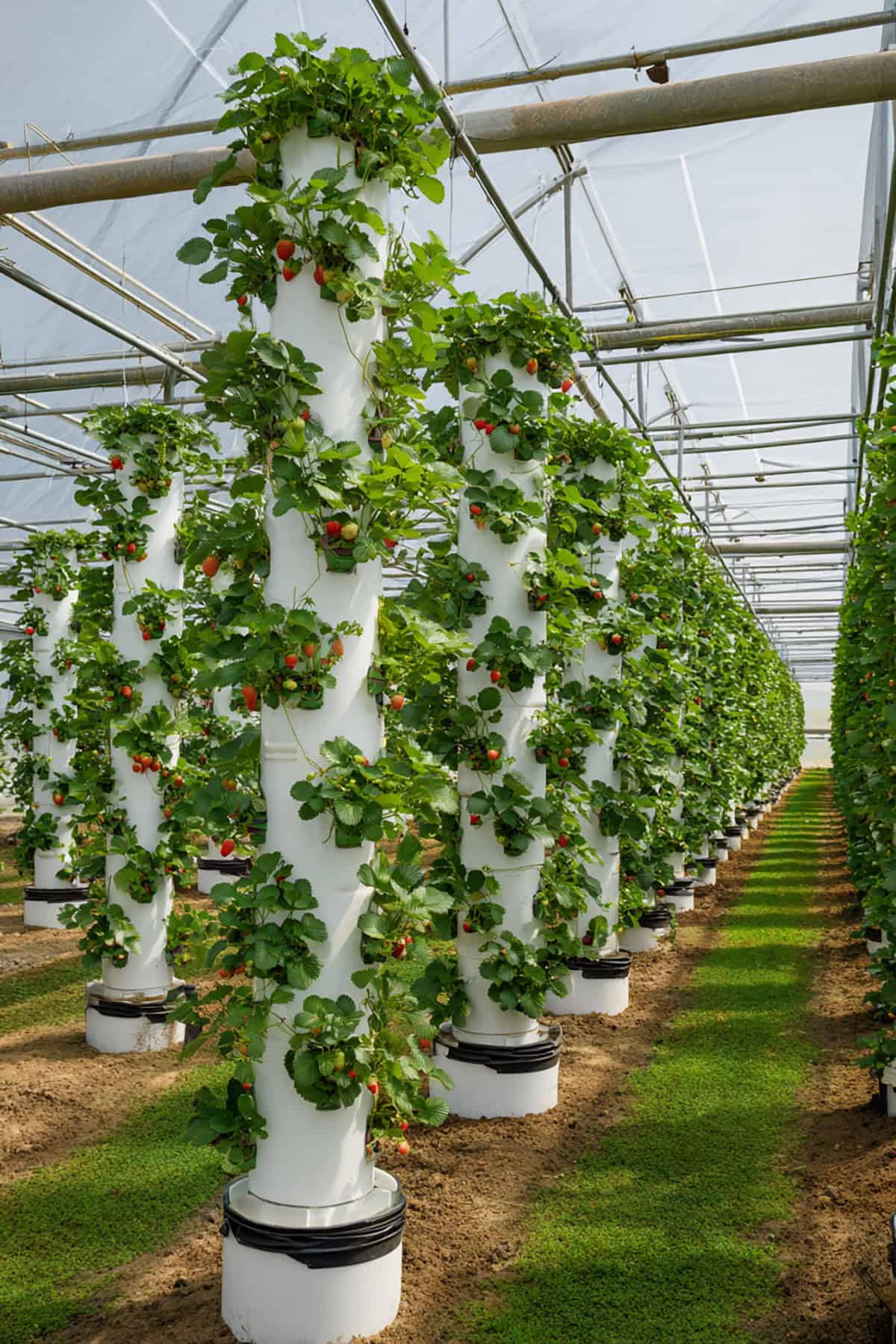
If you have a space like a greenhouse, you can line up several vertical columns—stacked containers or hydroponic channels work. Controlled conditions mean strawberries nearly year-round if you stay on top of things.
Drip lines or central pipes provide steady water. Proper spacing keeps air moving. Keep an eye on temperature and humidity—disease loves a stuffy greenhouse.
Creative Hanging and Wall-Mounted Ideas
Getting strawberries off the ground frees up space and keeps fruit cleaner. Hanging setups and wall planters are especially good for tight quarters.
Terracotta Hanging Strawberry Basket
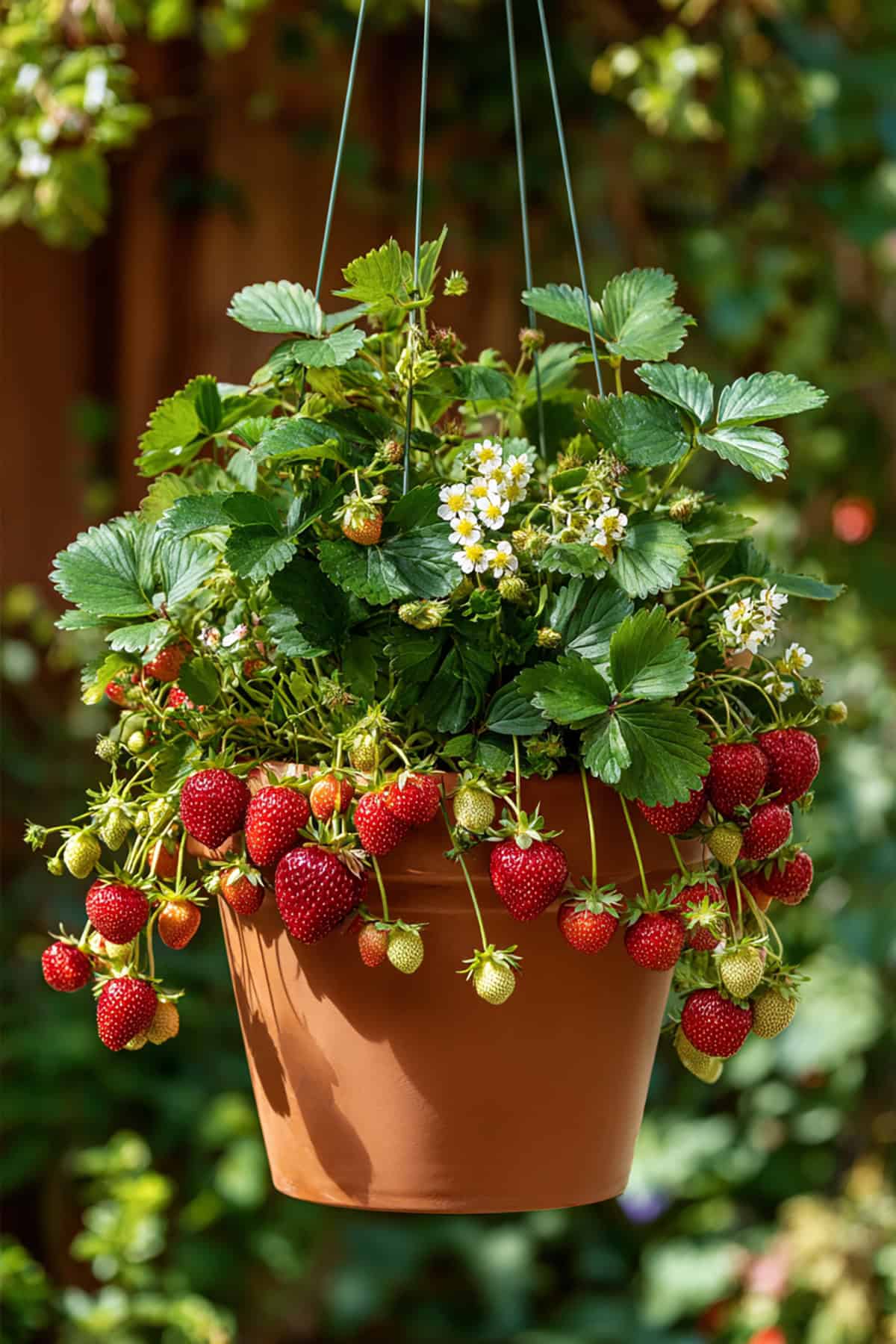
Tiered clay pots with side pockets hang together for a classic look. Soil fills the center, and strawberries poke out from every level—ideal for patios or small yards.
Clay breathes, helping roots but also drying out fast. Use a light, well-draining mix and water more often than you’d expect.
Day-neutral types like ‘Albion’ or ‘Seascape’ churn out berries all season. Hang from a solid ceiling hook—wet soil gets heavy, so check the chain and anchor each spring.
Strawberry Window Box Rail Planter
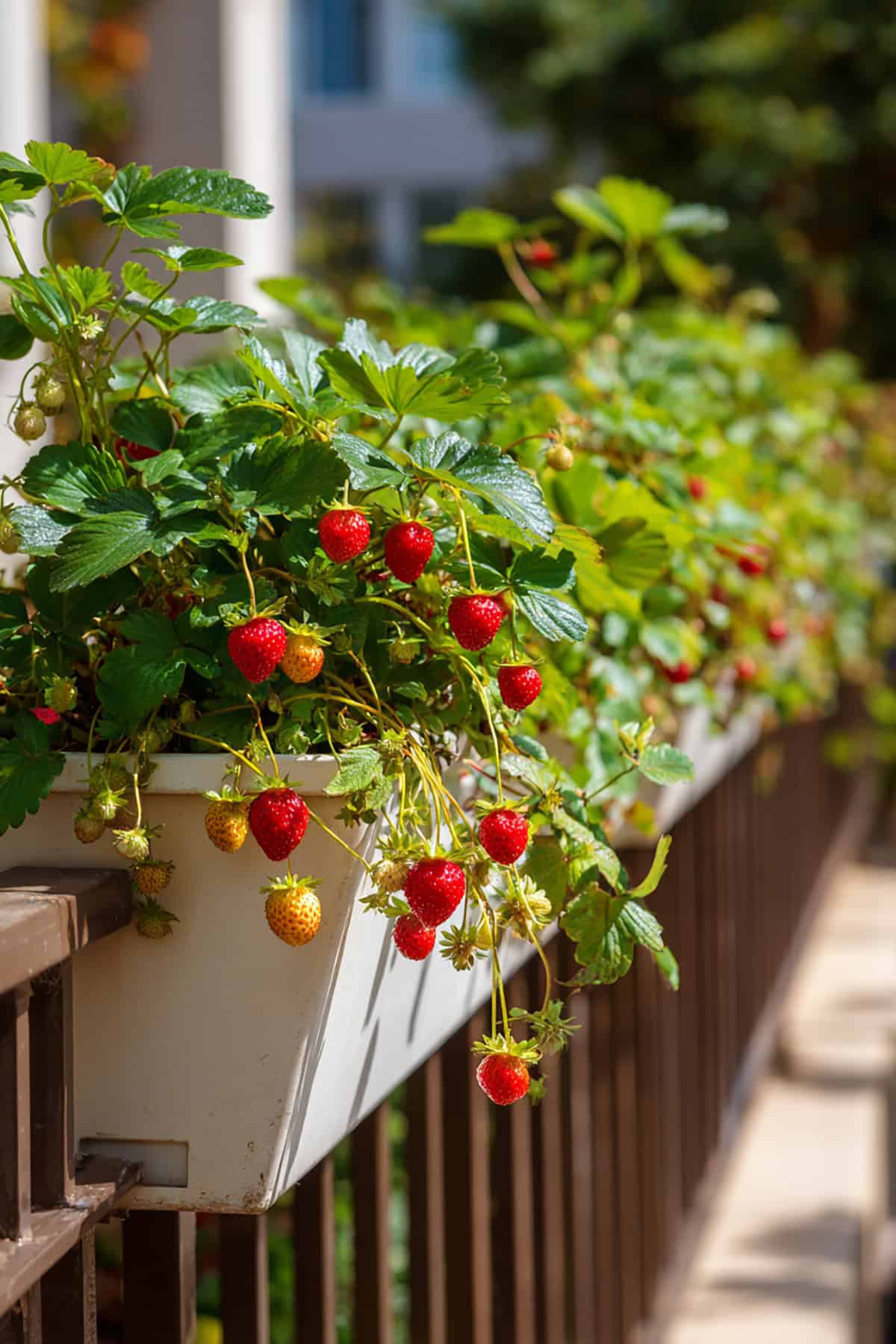
Window boxes turn balconies into strawberry patches. Attach a deep box (at least eight inches) to the railing or under a window with sturdy brackets.
Fill with fertile, well-drained soil, pH around 5.6–6.5. Full sun—south or west exposure—makes a big difference in fruit set.
Space plants about eight inches apart and snip off extra runners for a tidy, productive box. Water when the top inch dries out, and feed after planting and again post-harvest. Drainage holes are non-negotiable.
Strawberry Shoe Organizer Vertical Planter
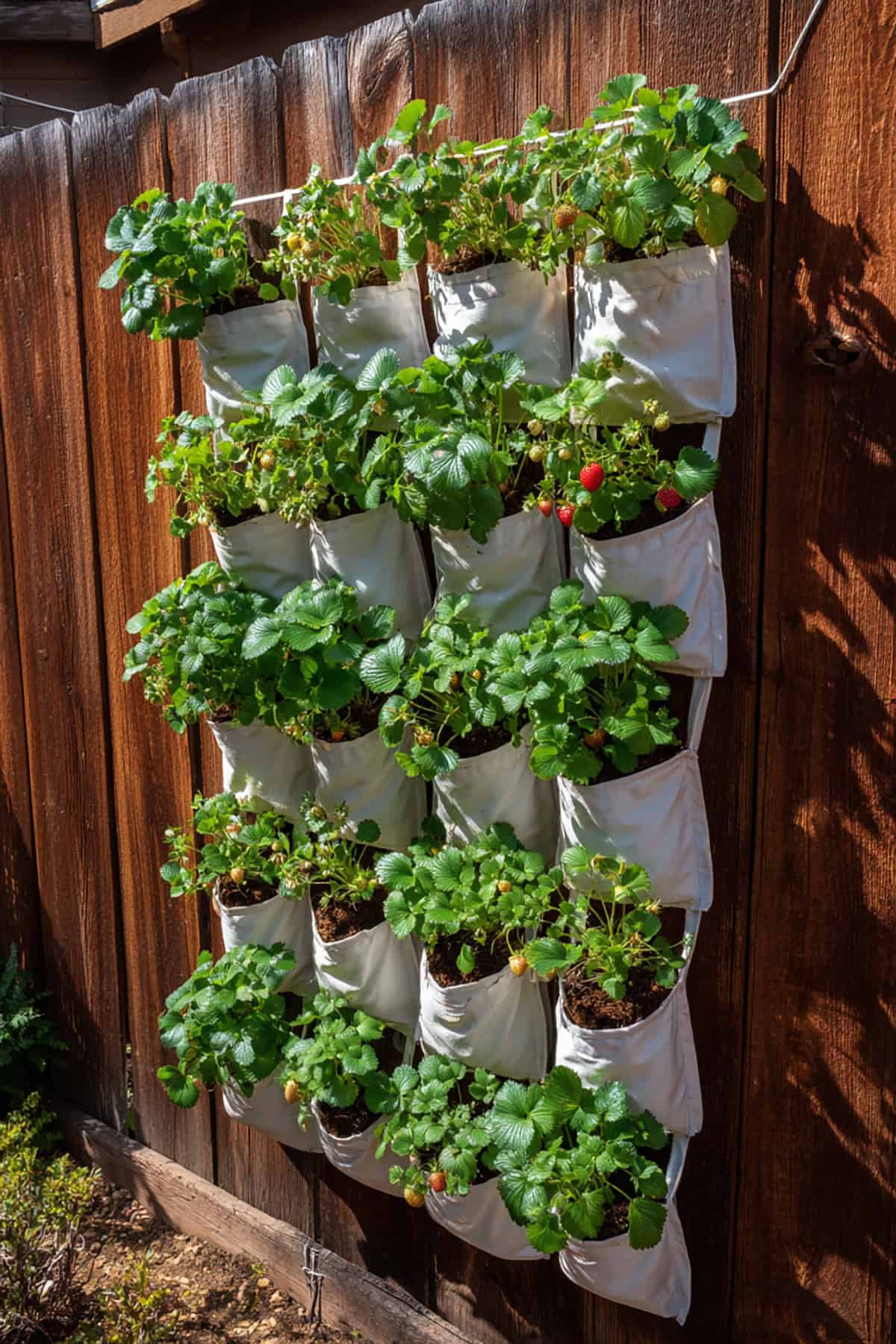
Fabric shoe organizers double as vertical strawberry gardens. Hang one on a fence or frame, popping a plant into each pocket.
Drainage is crucial—cut small slits if needed so water doesn’t pool. Fill with a lightweight mix and pick compact or day-neutral varieties, since pockets are tight.
Frequent watering is part of the deal, but it’s easy to take down and store at season’s end. Swap out plants yearly for best results.
Strawberry Rolling Ladder Cart Planter
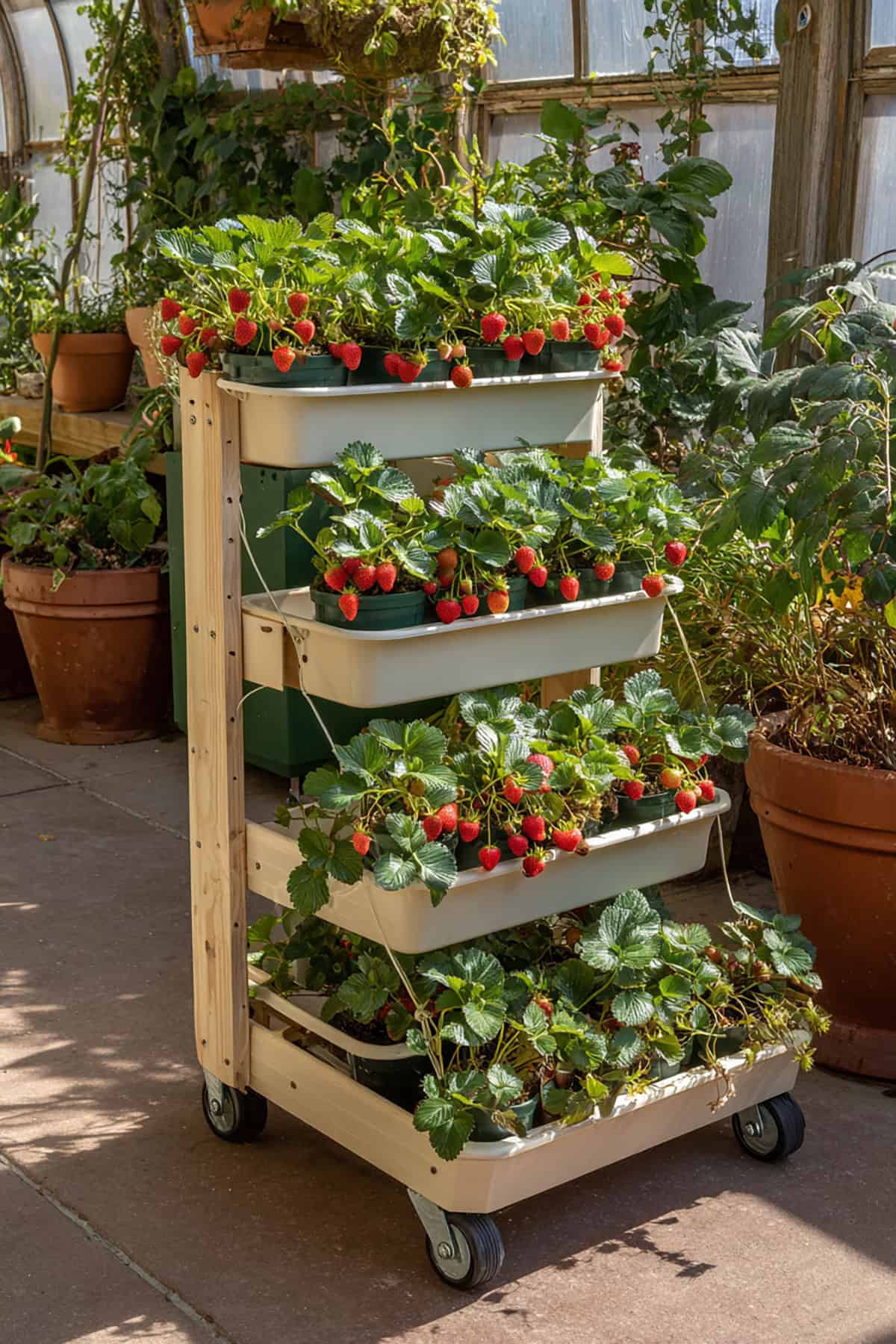
A rolling cart with ladder-style shelves lets you chase the sun. Set containers on each step, keeping the heaviest on the bottom for balance, and lock the wheels in place.
Good airflow around leaves keeps disease in check and makes picking easier. If rain’s coming or frost threatens, just wheel the whole setup under cover.
Strawberry Ladder Shelf Vertical Garden
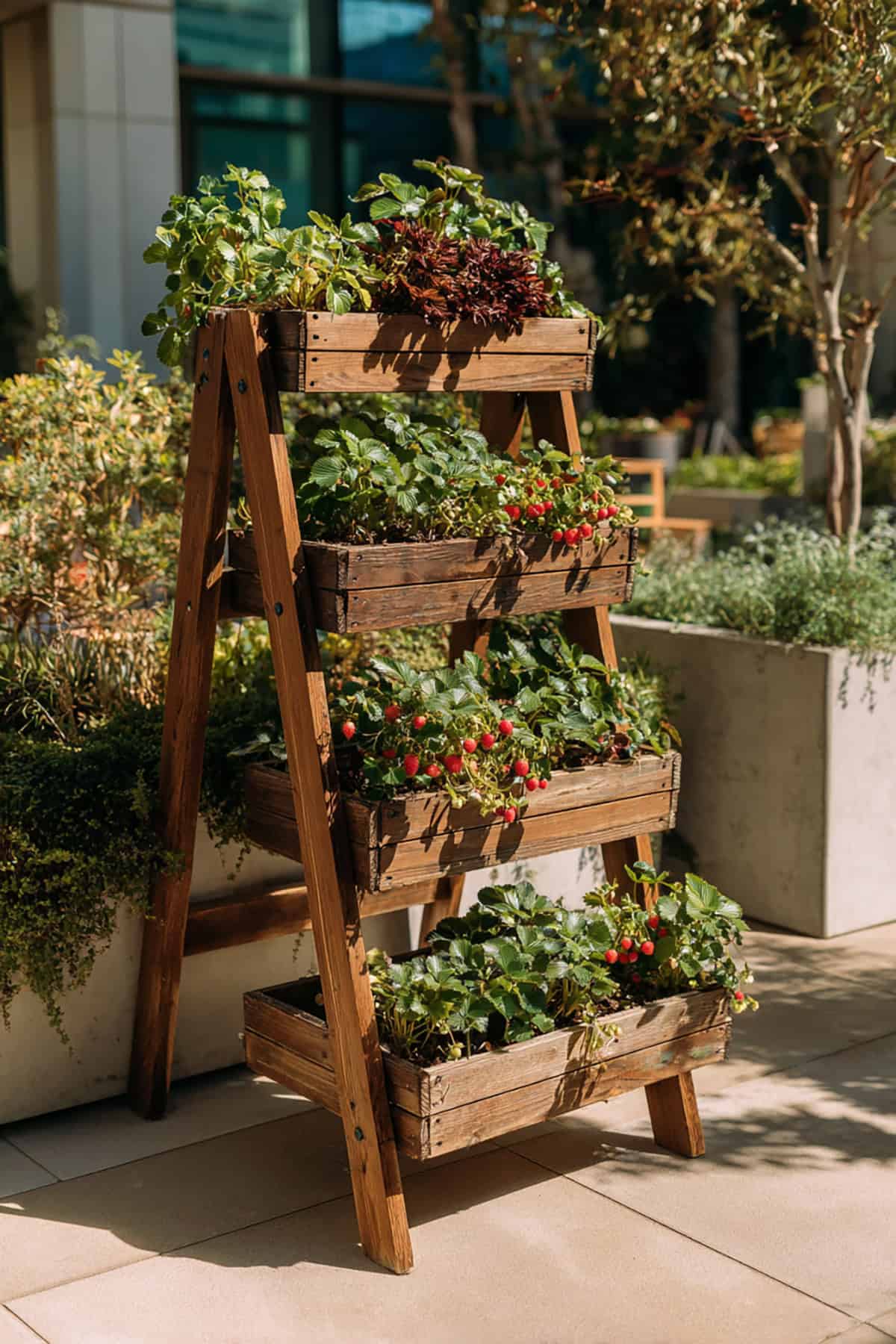
Leaning a wooden ladder against a wall and loading up the rungs with troughs or pots makes for a tidy, space-saving strawberry garden. Each shelf gets its own row of plants.
Secure the ladder so it doesn’t shift, and use exterior wood or seal it—wet soil does a number on untreated lumber. Sun-lovers go up top; lower shelves get less light, so rotate pots if you notice uneven growth.
Harvesting at eye level is a back-saver, and fruit stays cleaner than if it were on the ground.
Strawberry Hanging Rope Tier Basket Planter
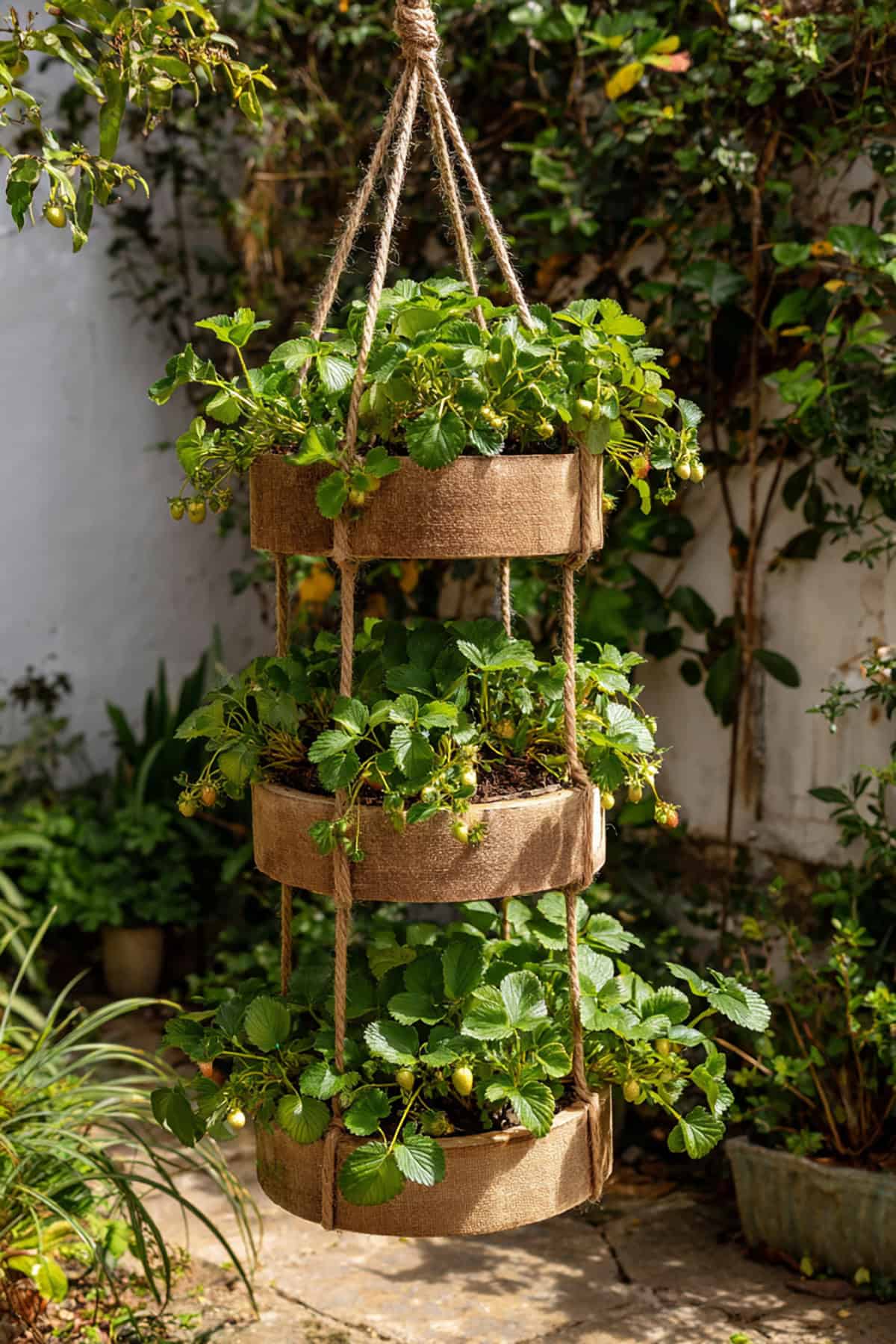
Stacked baskets strung along a central rope create a vertical column of berries. Lightweight plastic or resin baskets keep things manageable for the hook and ceiling.
Good drainage at each level is non-negotiable. Water from the top so it trickles down through the tiers. In hot climates, afternoon shade helps—strawberries slow down when it’s over 90°F.
Check ropes and knots before hanging; swap out anything frayed. Overhead weight isn’t something to risk.
Strawberry Hanging Mason Jar Planter Set
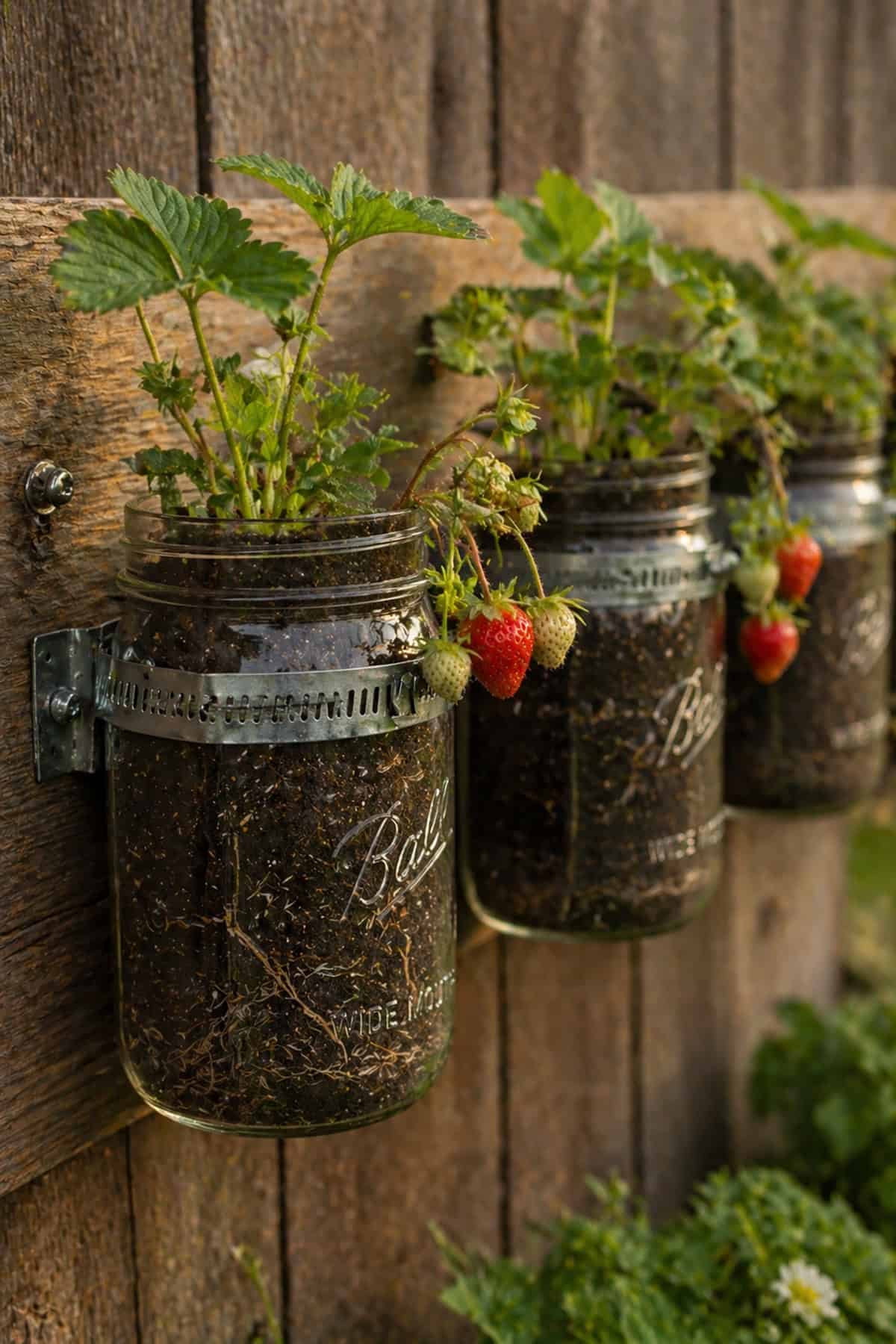
Sunlight streaming through glass jars can turn a window into a quirky strawberry showcase. Macramé holders or metal clamps keep jars suspended from a sturdy bar, but make sure you’ve drilled drainage holes in the bottom.
Start with a layer of gravel before adding potting mix—keeps that hole from clogging. Go easy on the watering; soil dries out faster in jars, but overdoing it just makes a mess.
Stick to one compact plant per jar. Day-neutral types squeeze into tight quarters best, but don’t expect a bumper crop.
Give them strong light, ideally by a south-facing window. A weekly spin helps keep growth even on all sides.
Strawberry Hanging Coconut Shell Planters
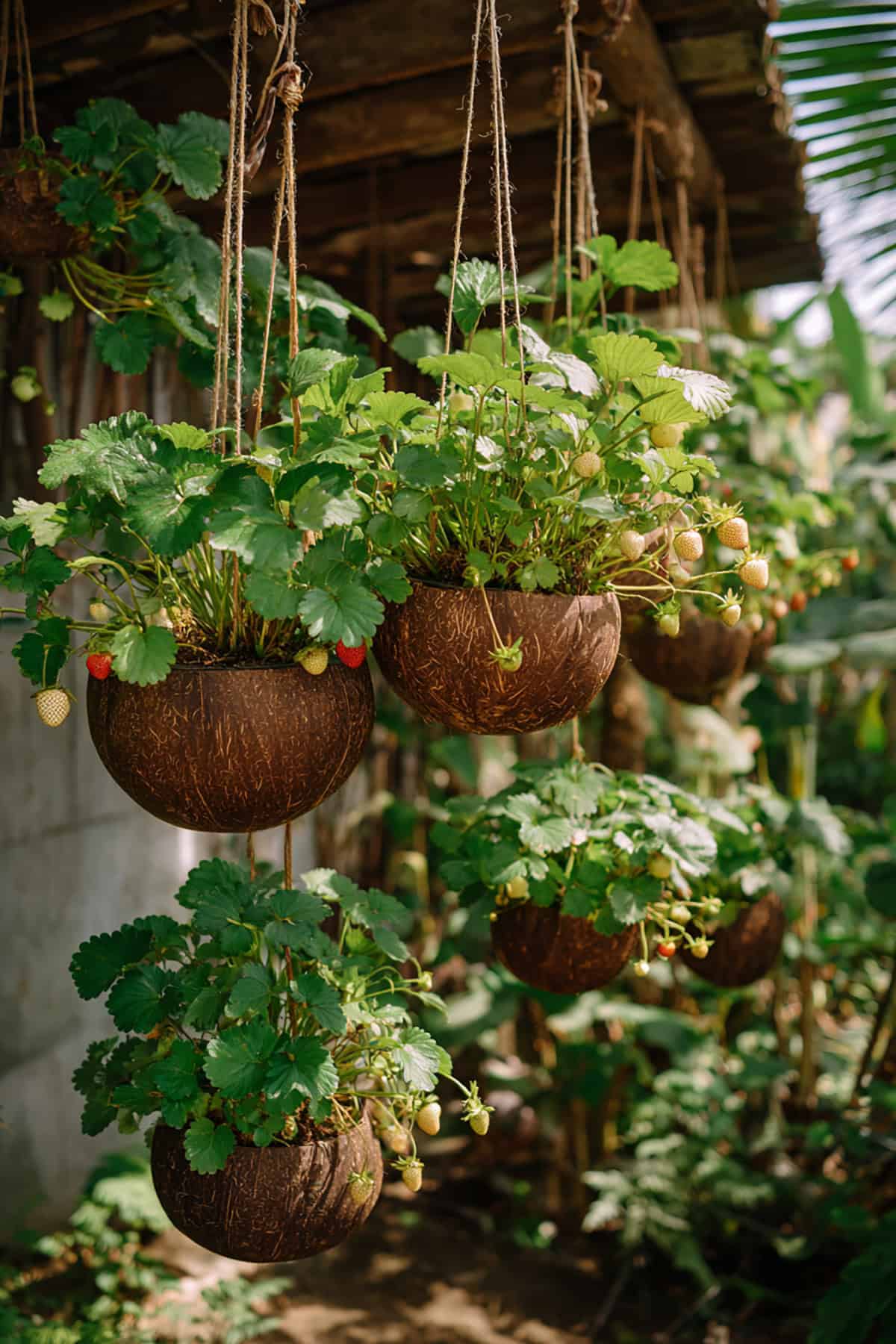
Earthy coconut shells, once emptied, make rustic homes for strawberries. Drill in a few drainage holes, string some cord through the sides, and hang them solo or stacked in a cluster.
Landscape fabric inside keeps soil from escaping. Fill with rich, loose mix—strawberries in small containers crave nutrients.
With so little soil, you’ll be watering often but don’t drown them. Warm days dry things up fast, and dry soil means tiny berries.
Great for adding a touch of handmade charm to a patio wall or balcony.
Minimal Wall-Mounted Strawberry Planter Grid
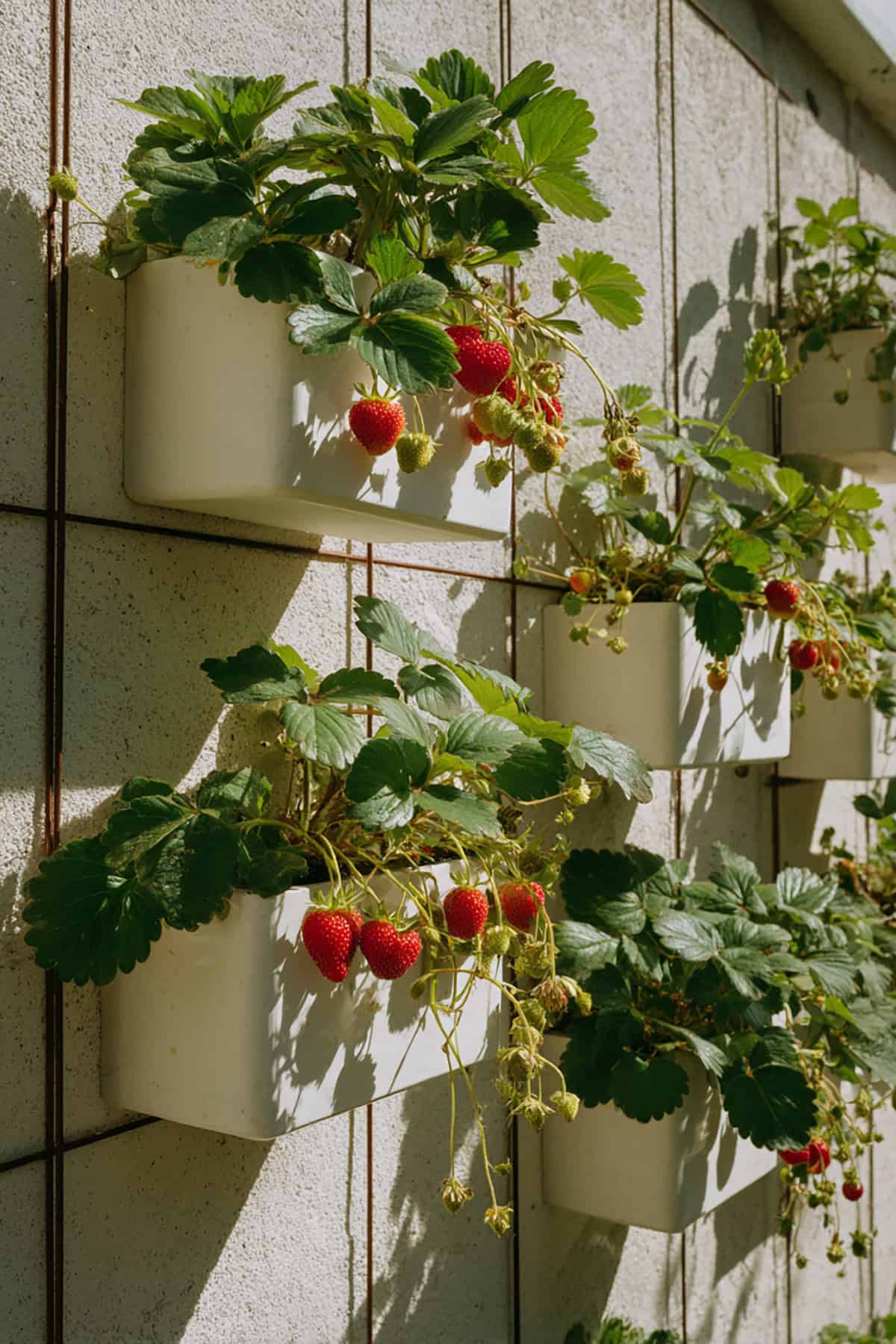
Sometimes a bare wall just begs for a grid of strawberries. Attach pots to a wood or metal frame, mount it to studs or masonry, and you’ve got a living wall.
Spacing matters—too close and air can’t flow, which brings on disease. Fences and blank walls work especially well for this setup.
Drip lines along the top row help with even watering, but drainage still needs attention.
Hanging Recycled Bottle Strawberry Wall Grid
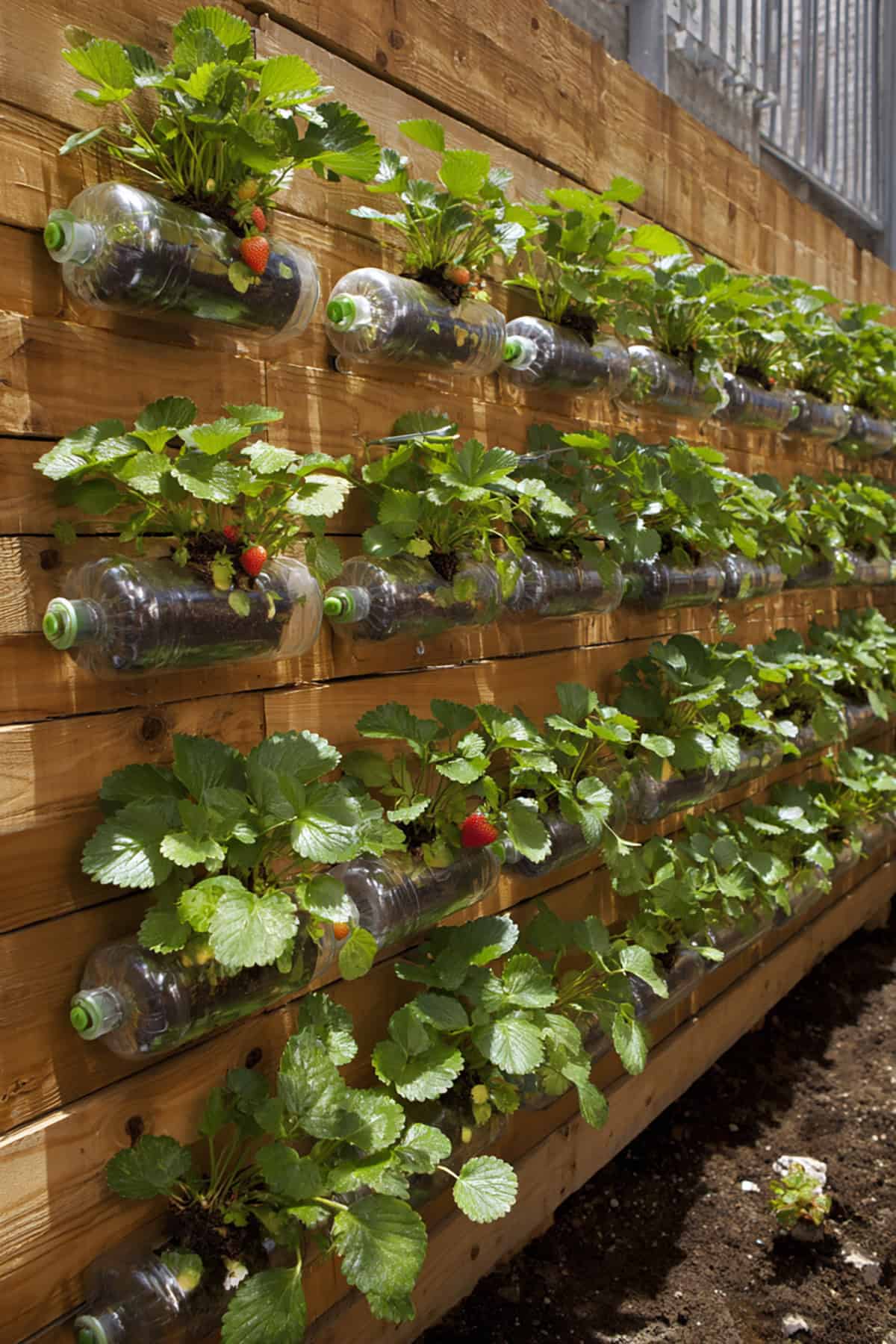
Old plastic bottles get a second life as strawberry planters. Cut side holes, lay them horizontal on a frame or fence, and poke drainage holes at the base.
Wire or cord through the neck keeps each bottle steady. If they tilt, soil just spills out—frustrating, honestly.
Compact plants fit best. Water lightly and frequently. Sun can make thin plastic brittle, so check for cracks now and then.
Hanging PVC Pipe Strawberry Column Planter
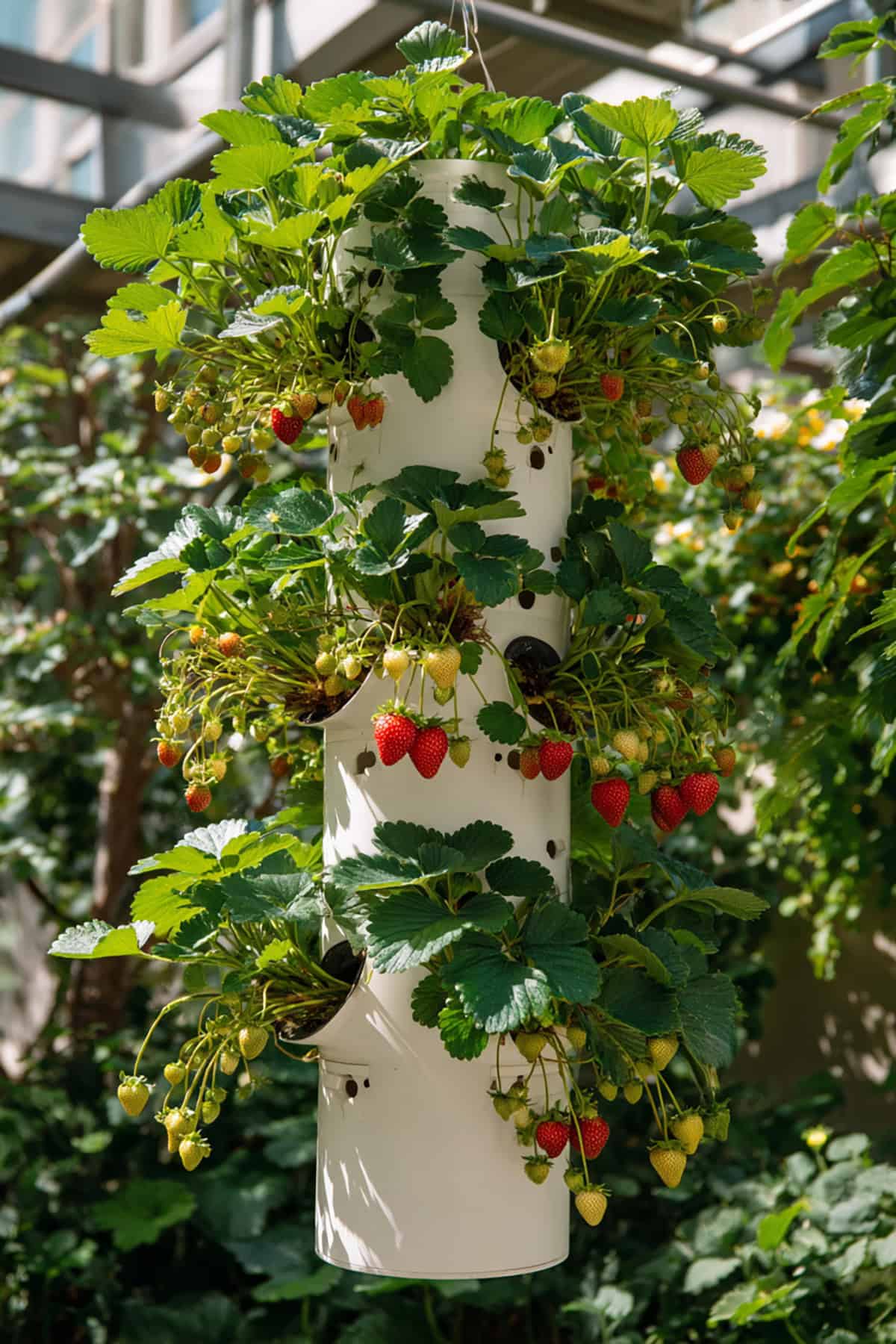
Vertical columns of PVC, dotted with planting holes, turn empty corners into strawberry towers. Evenly spaced cuts along the pipe, a bottom cap, and drilled drainage holes set the stage.
Hang from a sturdy beam, maybe with a perforated tube inside for watering—gets moisture to the roots further down.
Work your way up, filling and planting as you go. Day-neutral cultivars seem to handle the odd shape best.
Full sun is key. If sunlight’s lopsided, rotate the column now and then for balanced growth.
Hanging Fabric Pocket Strawberry Wall Garden
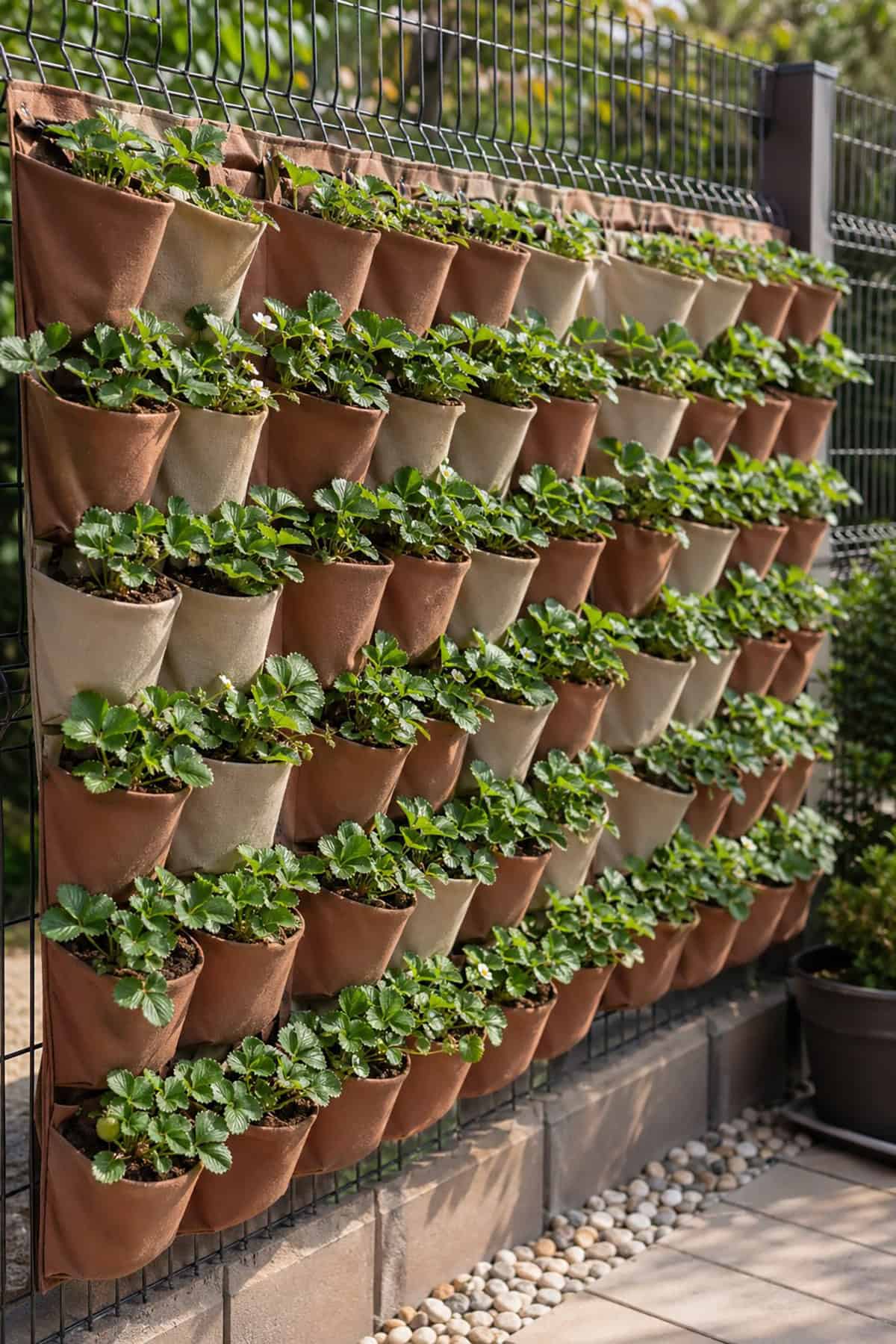
Panels of fabric pockets can transform a fence into a lush strawberry wall. Secure with screws or anchors, and each pocket cradles a plant or two.
Breathable fabric helps avoid soggy roots. Poor drainage spells trouble for strawberries.
Fertile, compost-rich mix gives the best results. It’s worth checking the pH before planting—slightly acidic is the sweet spot.
Drip lines across the top row send water trickling down. Some pockets dry out faster than others, so don’t assume even moisture everywhere.
Repurposed and Upcycled Planter Ideas
Old containers—drawers, barrels, whatever—can work surprisingly well for strawberries. As long as you’ve got good drainage, safe materials, and plenty of sun, the original purpose hardly matters.
Strawberry Repurposed Metal Drawer Planter Stack
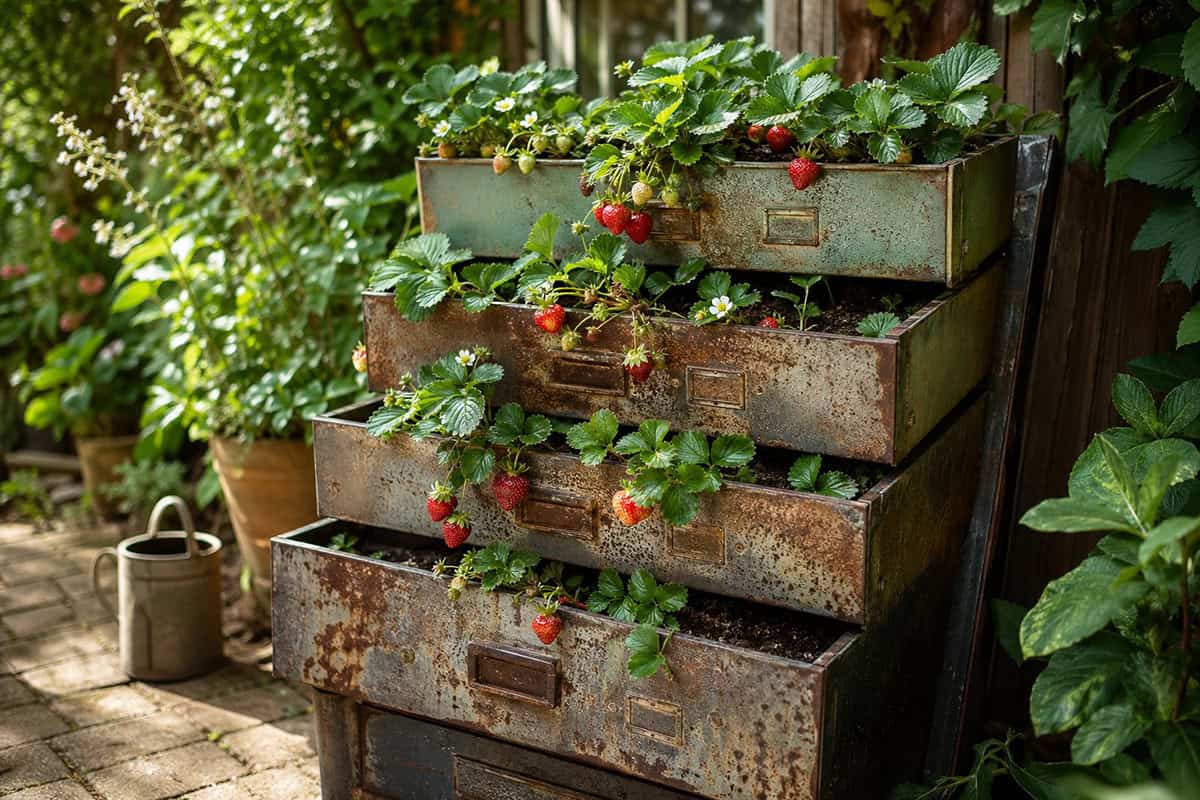
Stacked metal drawers bring a sturdy, industrial vibe to a vertical strawberry garden. Two to four drawers on a solid base, held together with brackets or a frame, and you’re set. Just drill drainage holes in each one.
Landscape fabric keeps soil from leaking out. Quality potting mix and about 8-inch spacing between plants works best. Most drawers fit two or three plants, depending on their width.
Metal heats up fast, so on hot days, soil dries quickly—check often and water when the top inch feels dry. Runners can take over, so snip them to focus growth on fruit.
Day-neutral types usually give the most reliable results. Treat the setup as annual and refresh plants each spring for better yields.
Blue Barrel Vertical Strawberry Planter with Side Pockets
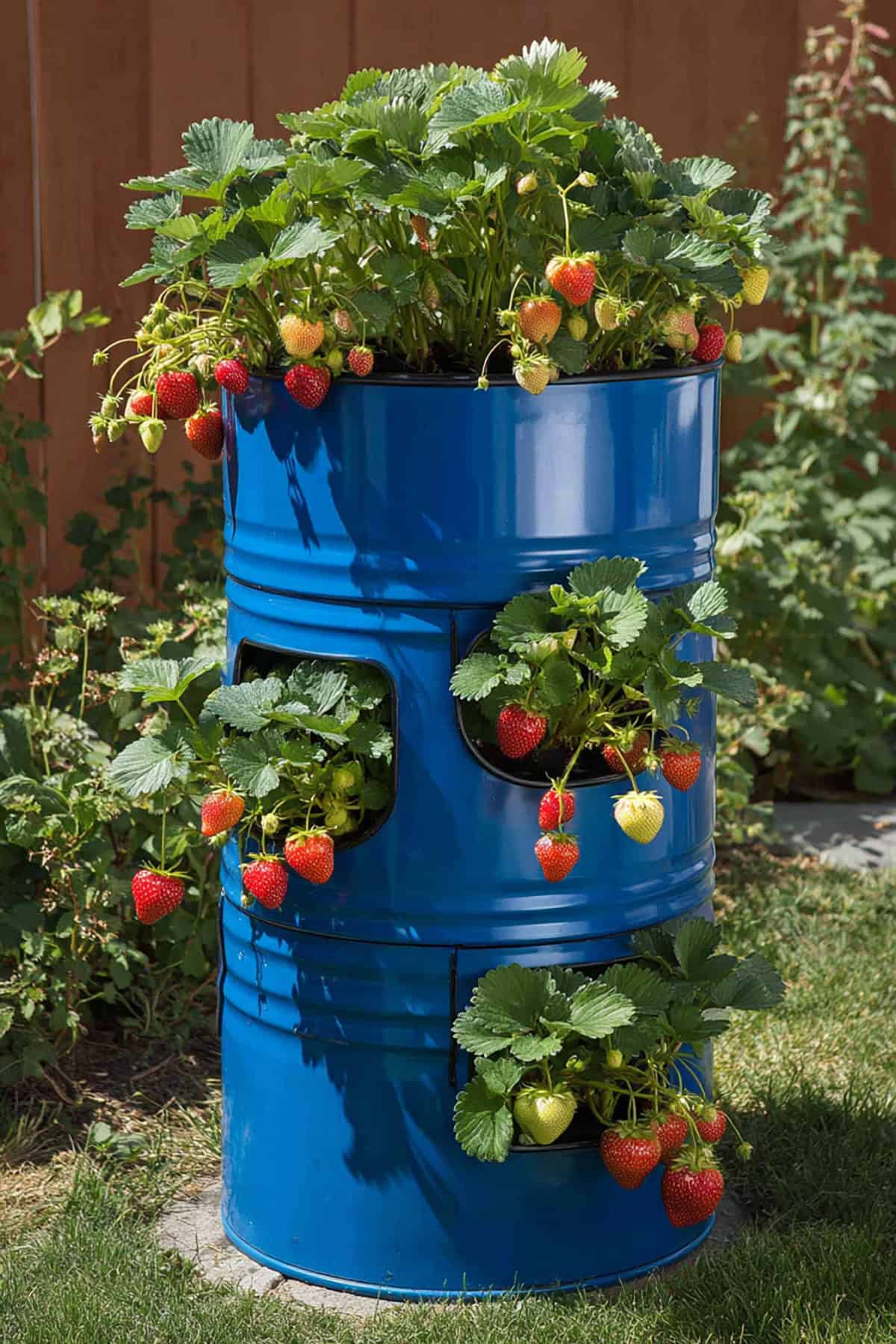
Big blue barrels—think 30 to 55 gallons—offer loads of planting space in a compact shape. Cut staggered pockets all around, drill drainage at the base, and you’re ready to plant.
Each pocket should hold a single plant. Fill the barrel layer by layer, firming soil as you go to avoid air gaps.
Rotation helps all sides get sun, but the upper pockets tend to dry out faster. Water slowly from the top, waiting until it drains from below.
Fertilize a couple times through the season with something balanced and water-soluble. Day-neutral or everbearing types keep the harvest coming.
Raised Beds, Modular Systems, and Edging
Raised and modular beds give you more control—better drainage, easier harvest, and cleaner fruit. You can squeeze these setups into small patios, big yards, or awkward side yards without much fuss.
Strawberry Tree Ring Planter Bed
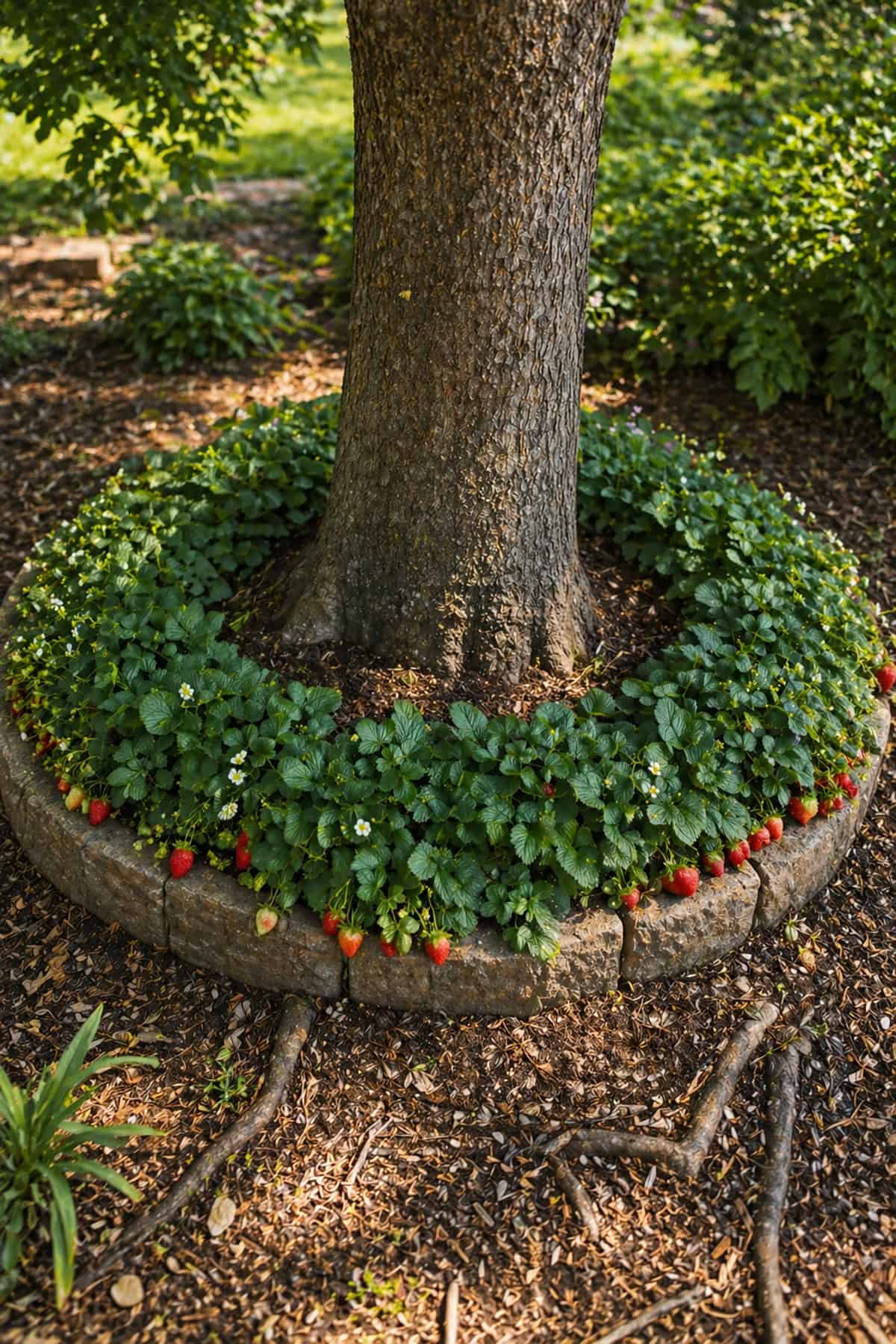
Unused space around a tree trunk? Turn it into a circular strawberry bed, but keep at least 18 to 24 inches away from the trunk to avoid fighting tree roots. Strawberries love sun, so pick trees with airy canopies.
Raise the bed 8 to 12 inches for drainage. Compost boosts soil quality, and pH between 5.6 and 6.5 hits the mark.
June-bearing types give one big flush of fruit; day-neutrals spread the harvest out. Mulch with straw to keep berries clean and edge the ring with stone or brick to hold soil in place.
Strawberry Spiral Garden Bed
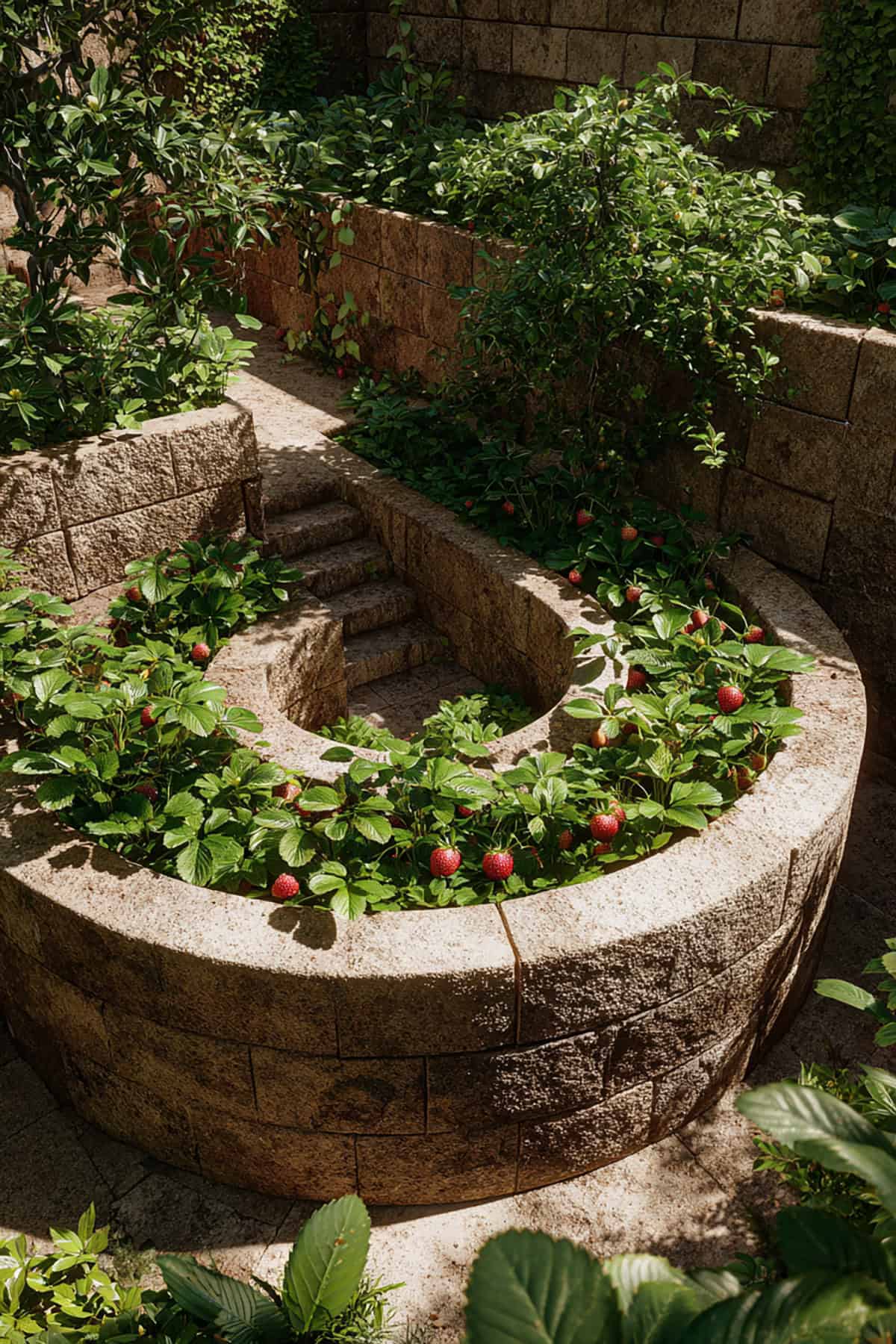
Spirals pack more plants into a small spot. A coiled mound rises up, creating zones with different drainage—drier at the top, moister at the bottom.
Build it 18 to 24 inches tall in the center, using stone or block to hold the shape. Good drainage at the base is a must.
Day-neutrals thrive up top where it’s dry; June-bearers do better lower down. This setup lets you fine-tune water without splitting into separate beds.
Strawberry Barrel Planter with Side Openings
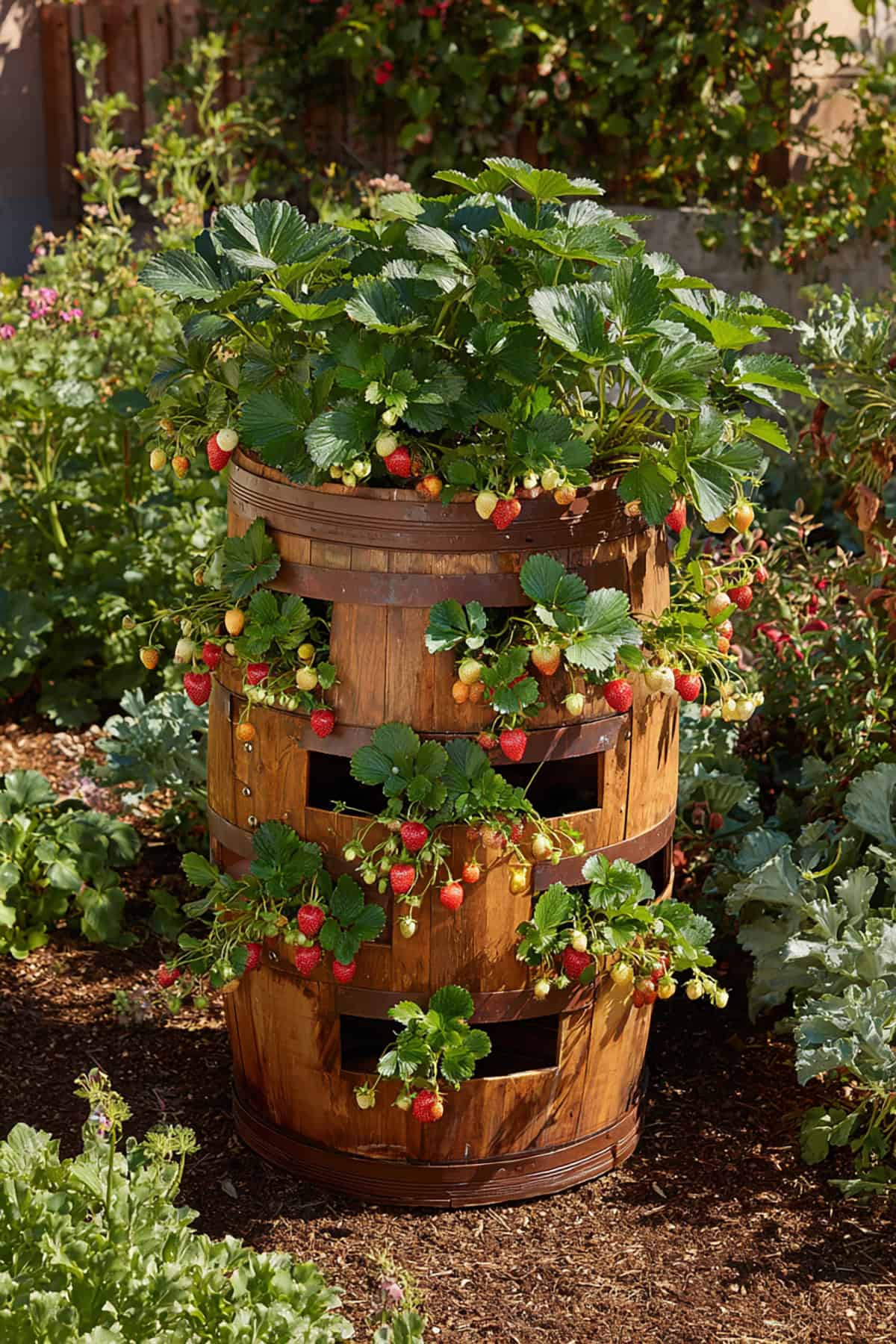
Vertical barrels with side pockets let you cram a bunch of plants into one spot. Cut staggered holes, fill with loose, fertile mix, and make sure drainage holes are at the bottom.
Strawberries hate soggy soil, so a well-drained potting mix is key. If your garden soil is heavy or off-pH, this solves the problem.
Full sun is essential, and rotating the barrel every few days helps all the plants get their share. Day-neutral varieties are less prone to runners and suit these systems.
Raised Cinder Block Strawberry Bed with Center Tower
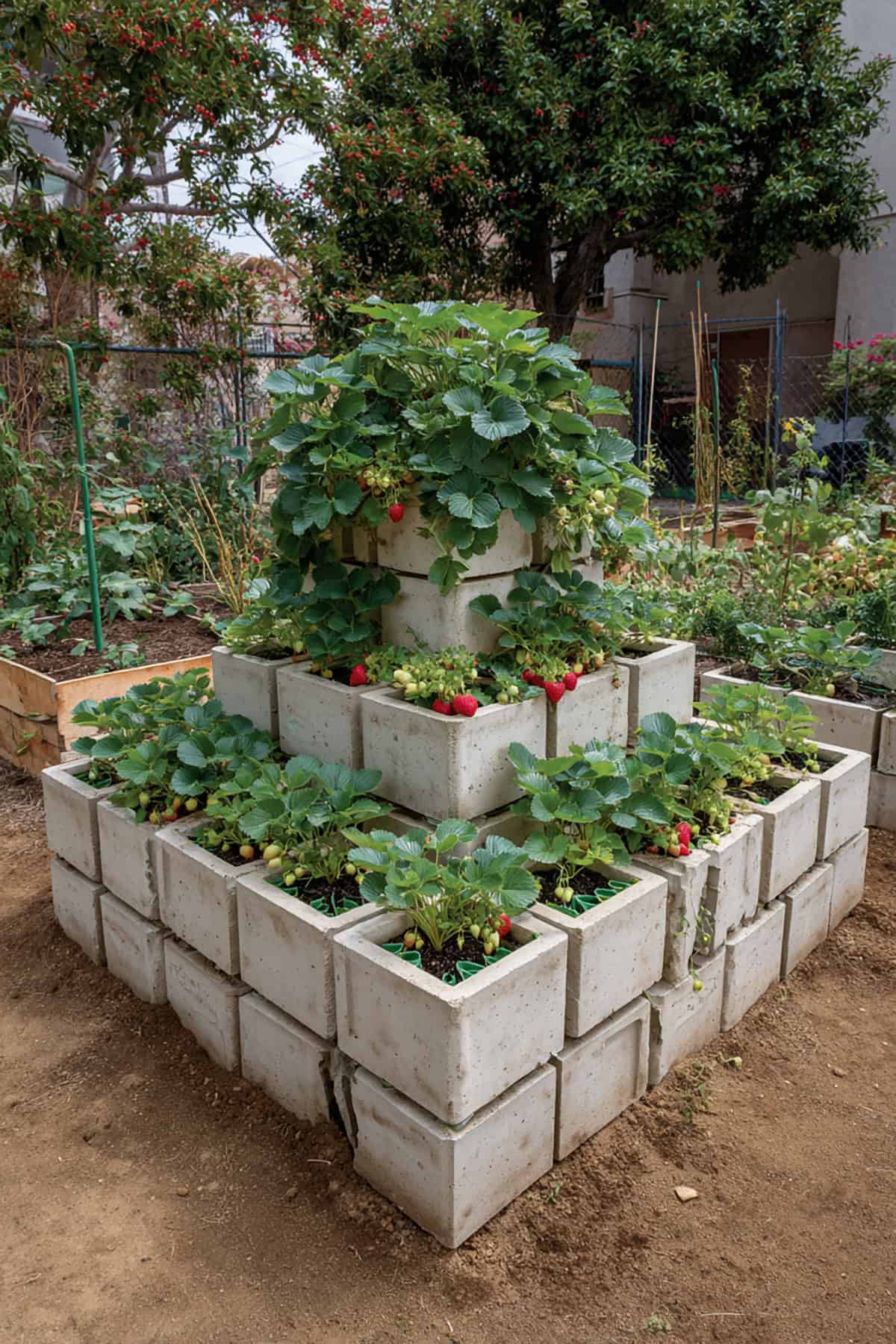
Cinder blocks offer a sturdy, modular way to build raised beds. Stack them into a ring, add a center tower for bonus planting spots, and fill the block cores with soil for extra space.
Keep the bed at least 10 to 16 inches tall for drainage. Raised beds help where clay soil holds too much water.
Start with certified, disease-free plants. Replace every few years to keep yields up. The raised design makes picking easier and keeps berries off the dirt.
Cinder Block Modular Strawberry Grid Planter
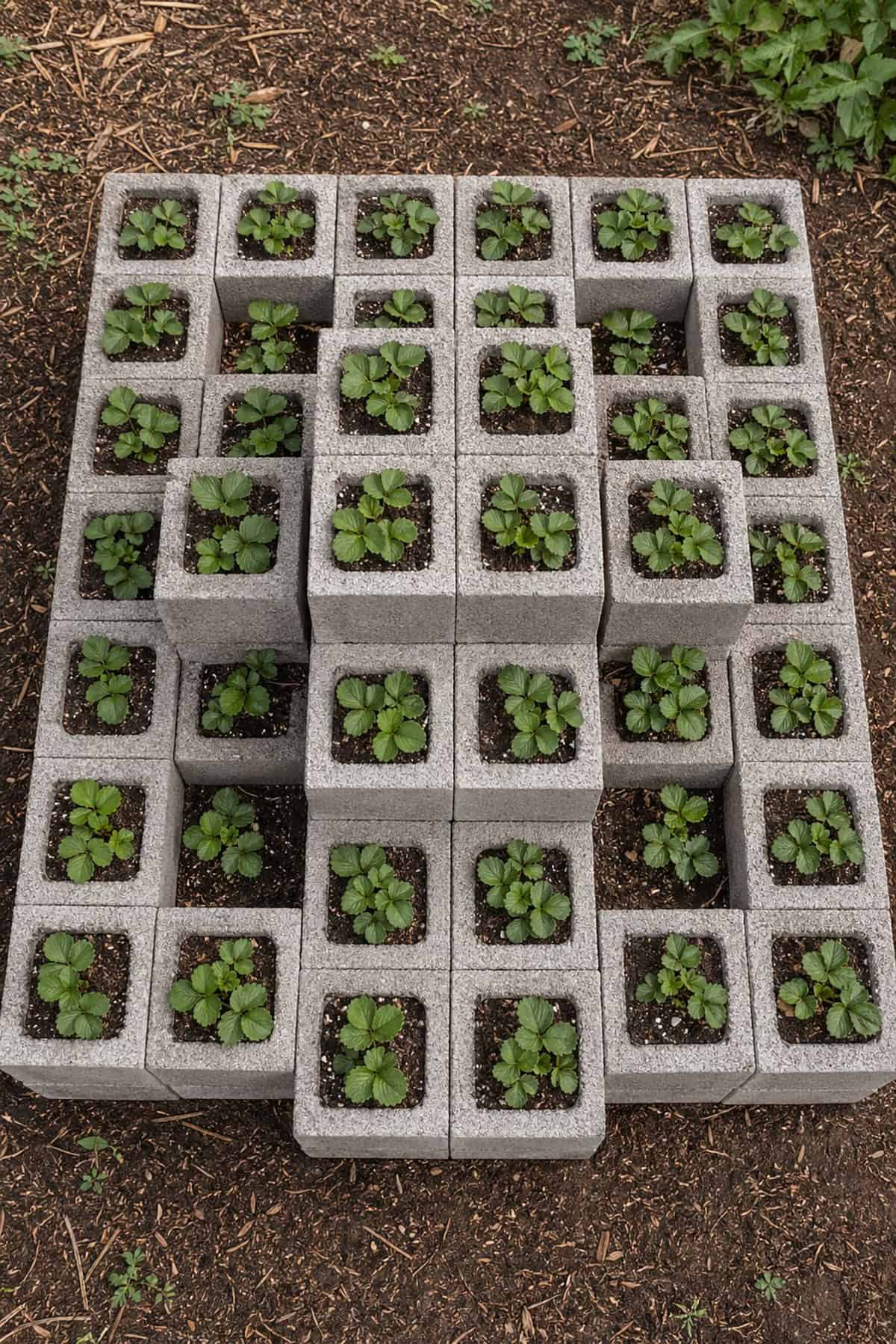
Arranging cinder blocks in a grid creates a bunch of mini beds—each one its own little experiment. This makes it easy to separate varieties or stagger planting times.
Fill each cell with nutrient-rich, slightly acidic soil. Testing and adjusting pH before planting pays off.
If one area declines, you can replant just that section. The block walls hold soil in place and cut down on erosion.
Multi-Level Wooden Platform Strawberry Planter Display
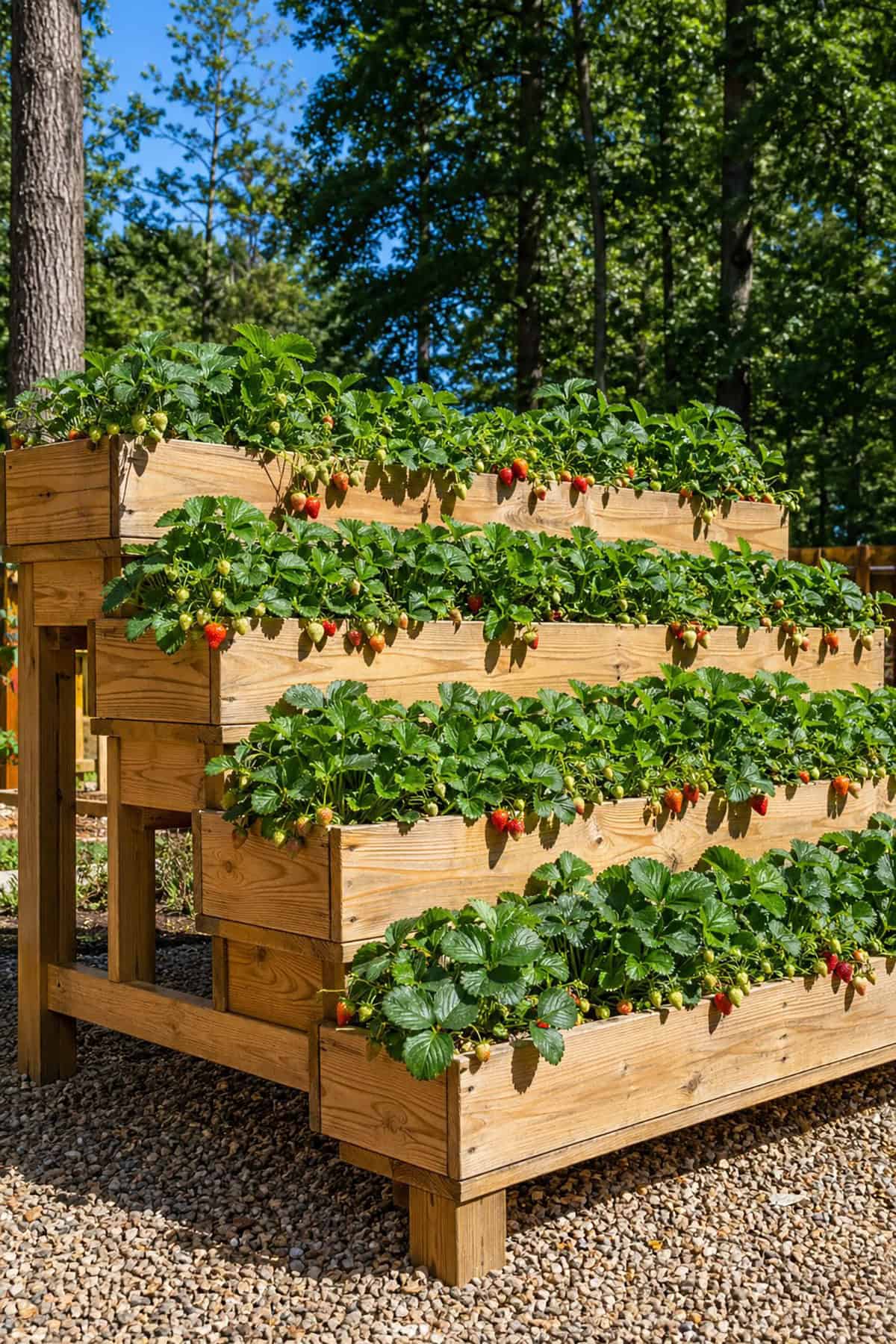
Tiered wooden platforms raise strawberries up to waist level, sparing your back and improving airflow. Better circulation means fewer disease headaches.
Each tier should be 8 to 12 inches deep for good root growth. Use weather-resistant lumber and line with landscape fabric for drainage.
Day-neutrals handle the elevation well, fruiting through the season as long as temps stay in their comfort zone. Six hours of direct sun keeps them happy.
Multi-Level Garden Bed with Ground and Elevated Rows
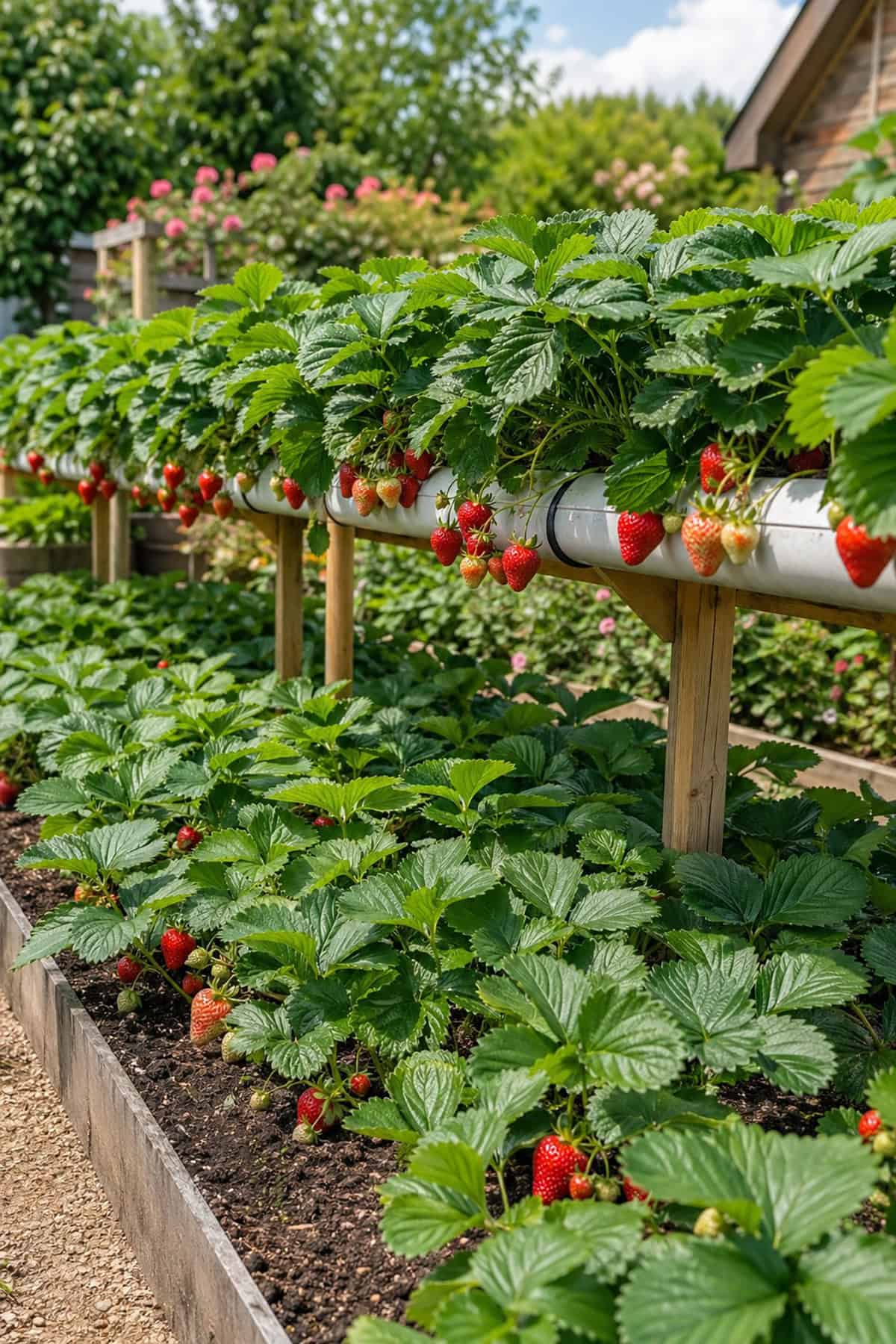
Mixing in-ground and raised rows in one layout lets you match each strawberry type to its preferred space. June-bearers sprawl on the ground; day-neutrals fit nicely in raised rows.
Space plants for air and access. Raised sections help with drainage if your soil is heavy. Fertile, loose mix keeps all levels productive.
When plants age out after a few years, you can refresh one row at a time. Defined borders make maintenance easier.
Corner Wall Rail Strawberry Planter System with Horizontal Channels
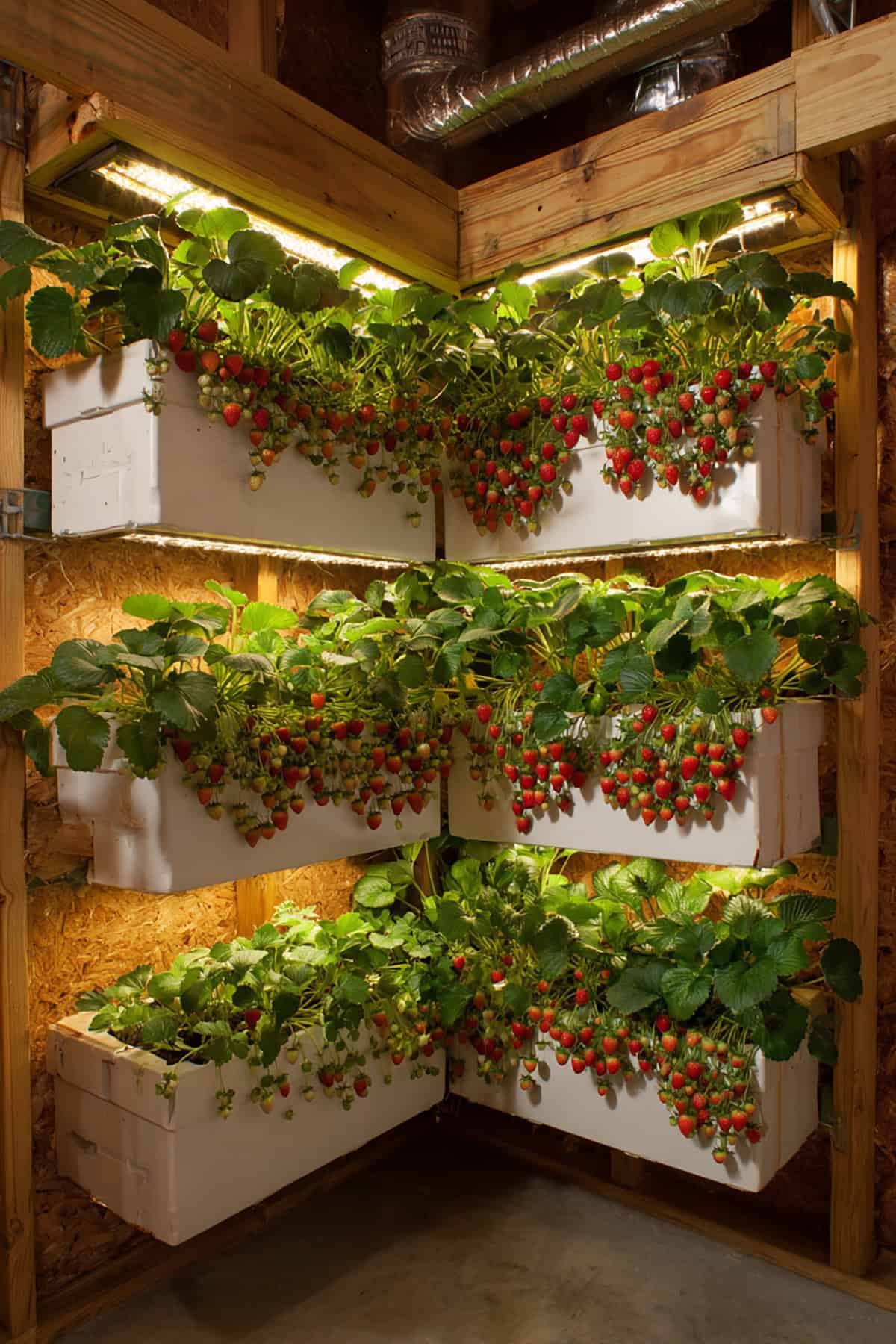
Horizontal rails or rain gutters mounted in a corner create a tidy, eye-level strawberry setup. Channels need a slight tilt for drainage, and food-safe materials keep things edible.
Drill holes every 8 to 10 inches, and let excess water escape through end caps. Lightweight mix prevents compaction in these narrow spaces.
Perfect for patios and balconies—berries stay clean and within reach. Day-neutral varieties make the most of limited space.
Innovative Planters Using Common Materials
Everyday stuff—buckets, PVC, classic strawberry pots—can be turned into practical planters with a few tweaks. Drainage holes, good soil, and steady watering make all the difference. Plus, vertical setups mean less bending and easier picking.
Perforated Bucket Vertical Strawberry Planter
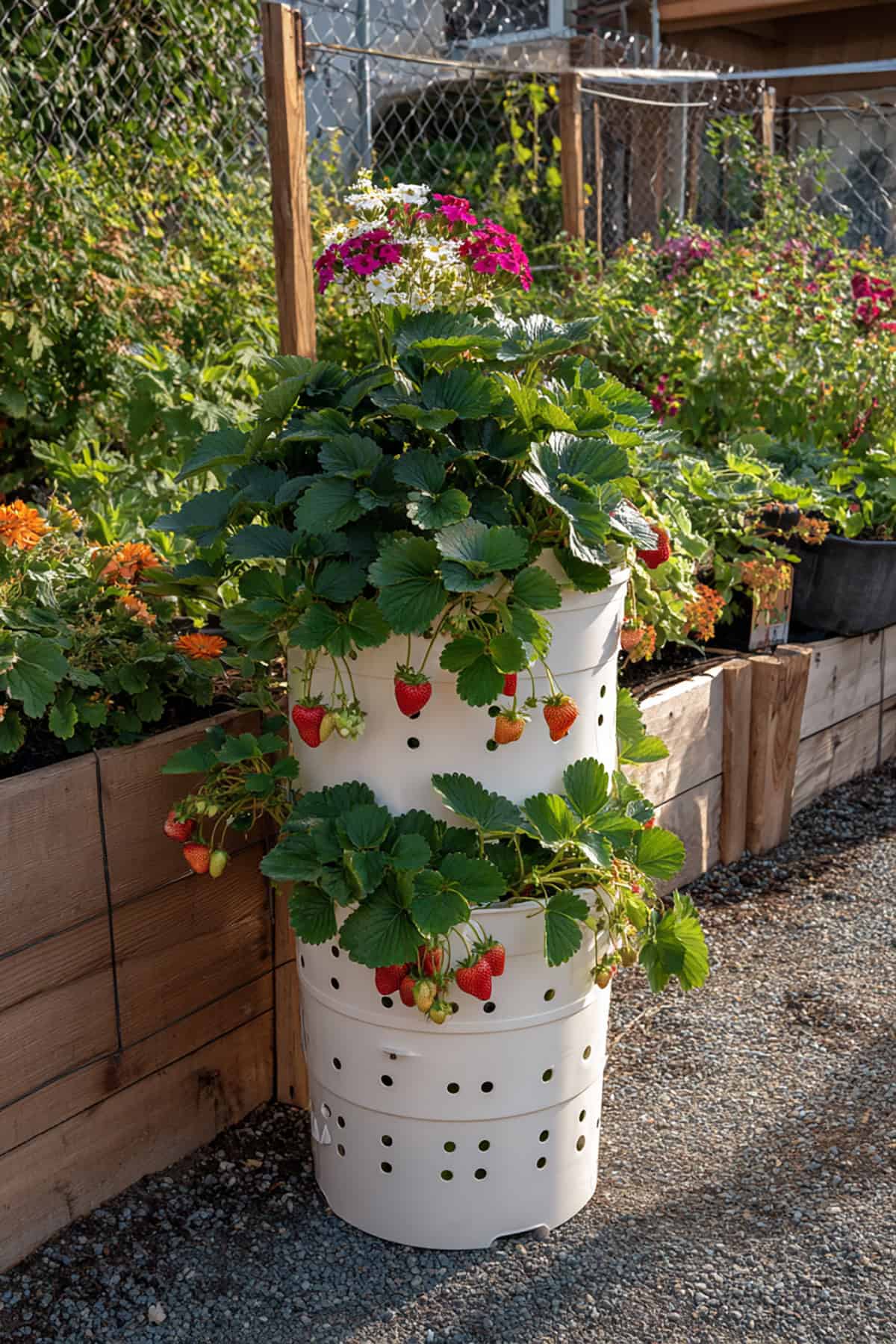
A sturdy 5-gallon bucket, drilled with staggered 1½- to 2-inch holes, becomes a space-saving vertical planter. Don’t forget plenty of drainage at the bottom.
Two inches of gravel first, then light, quick-draining potting mix. Pop one plant in each side hole, with a couple more on top.
Some folks add a narrow perforated pipe down the center for better watering. Always water from the top and rotate the bucket weekly for even sun.
PVC Strawberry Tower Planter in Large Pot
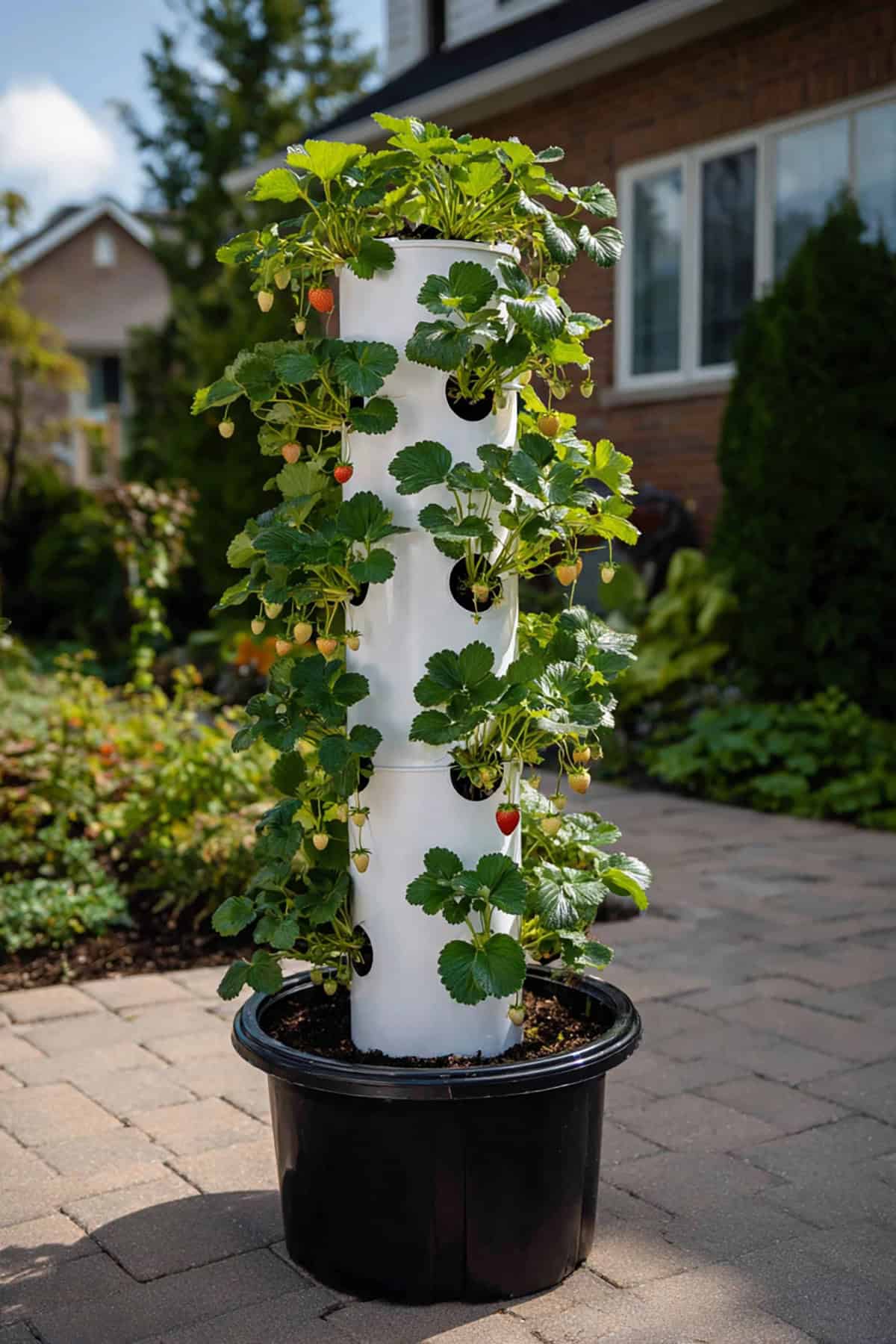
Vertical PVC tubes, anchored in a big pot, work well on patios. Four- to six-inch diameter pipe, four feet tall, with 2-inch planting holes cut every 6 to 8 inches—pretty straightforward.
Packing the base pot with soil or gravel keeps things stable. Cap the bottom, drill drainage holes, and fill the tube with rich, fast-draining mix.
Some people add an inner watering tube for even moisture. Day-neutral or everbearing types stretch out the harvest.
Six hours of sun is a must, and a balanced liquid feed every few weeks keeps plants productive.
Horizontal PVC Pipe Strawberry Bed
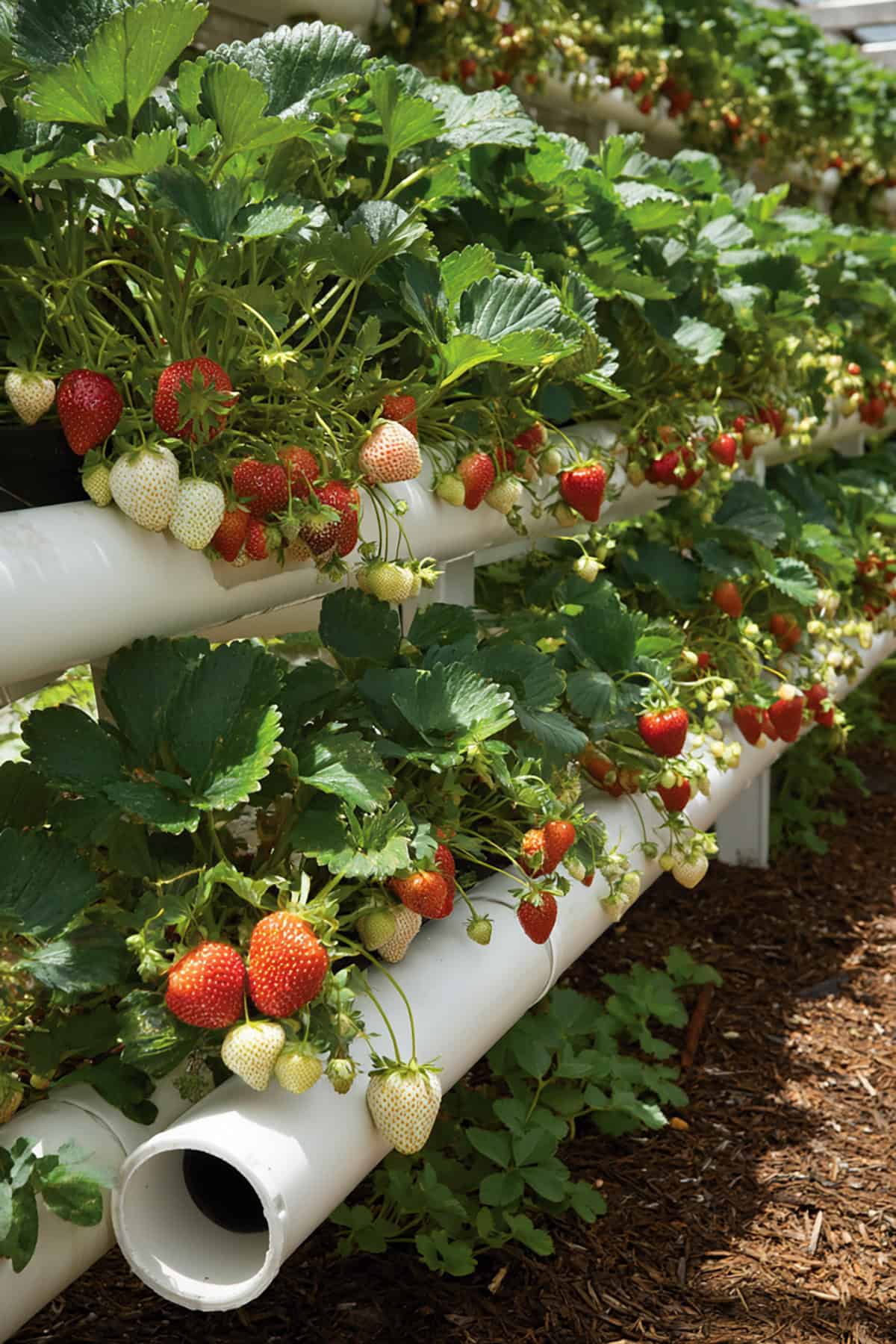
Running a pipe along a fence or railing instantly creates a slim, tidy growing spot. A 4-inch PVC tube works well—just cut wide, circular holes spaced every 8 inches along the top, making sure they’ll fit the root balls.
Don’t forget drainage: punch a handful of small holes along the underside. Use solid brackets to support the pipe and keep it level. Both ends should be capped, otherwise soil will spill out.
Loosely fill the tube with a rich, organic potting mix. Push each strawberry plant through a top hole, easing roots into place, then gently pack soil around them. Watering takes a bit of patience; go slow so you don’t flush soil out through the openings.
Glossy Blue Ceramic Strawberry Jar Planter
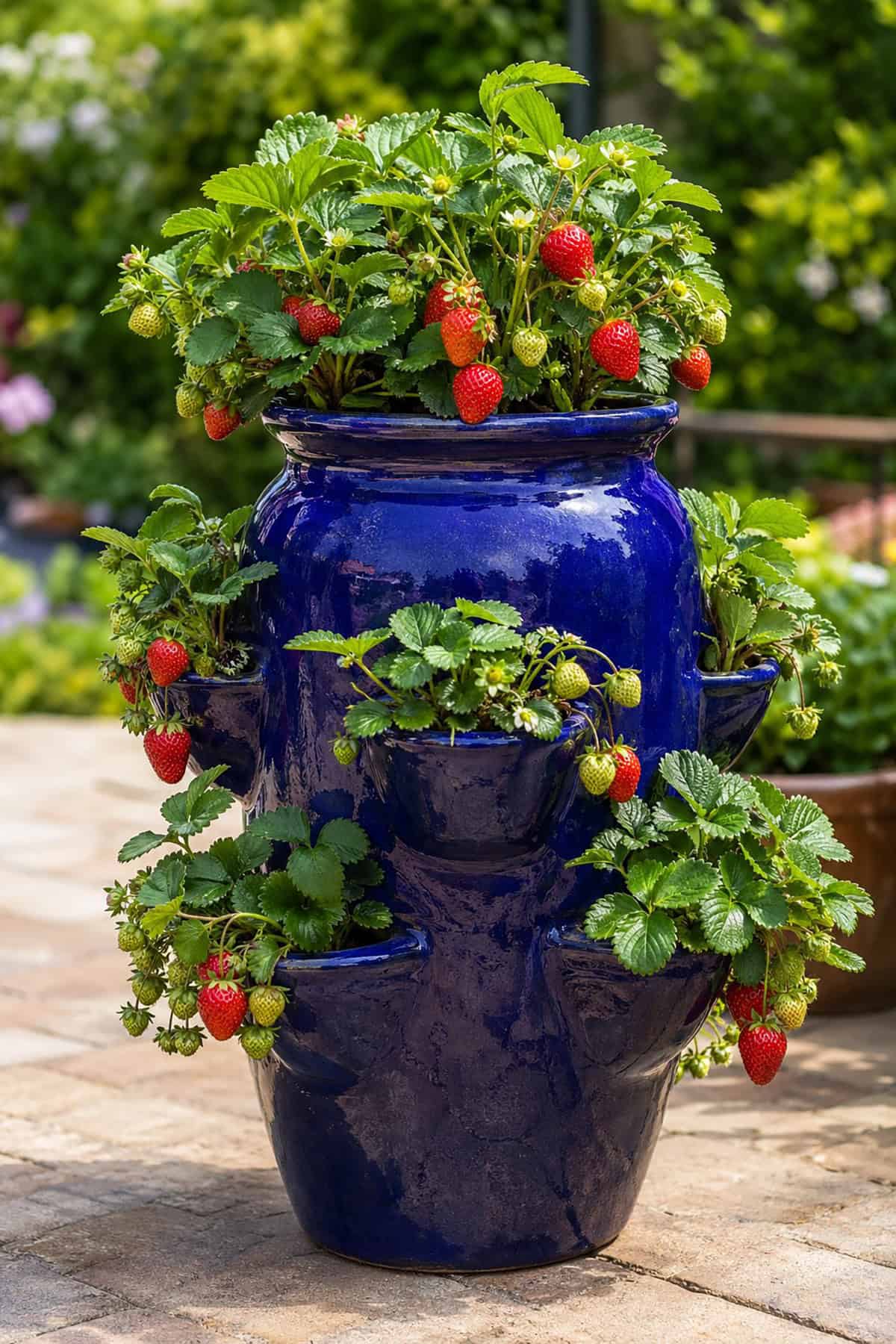
Deep blue ceramic jars catch the eye and won’t tip over easily. Their wide top and pocketed sides let you tuck in strawberries at different heights—one per pocket, then a few more up top.
Start by popping a pottery shard over the drainage hole. Add soil in stages, planting as you go so roots stay anchored. It’s a bit of a puzzle, but oddly satisfying.
Moisture lingers longer in ceramic than in plastic, so you’ll want to check the soil with a finger before watering. Set the jar where sunlight pours in, and air circulates well.
Compact, non-runner types work best here. If runners appear, snip them off to keep things tidy and focused on fruit.
Glazed Ceramic Multi-Pocket Strawberry Jar
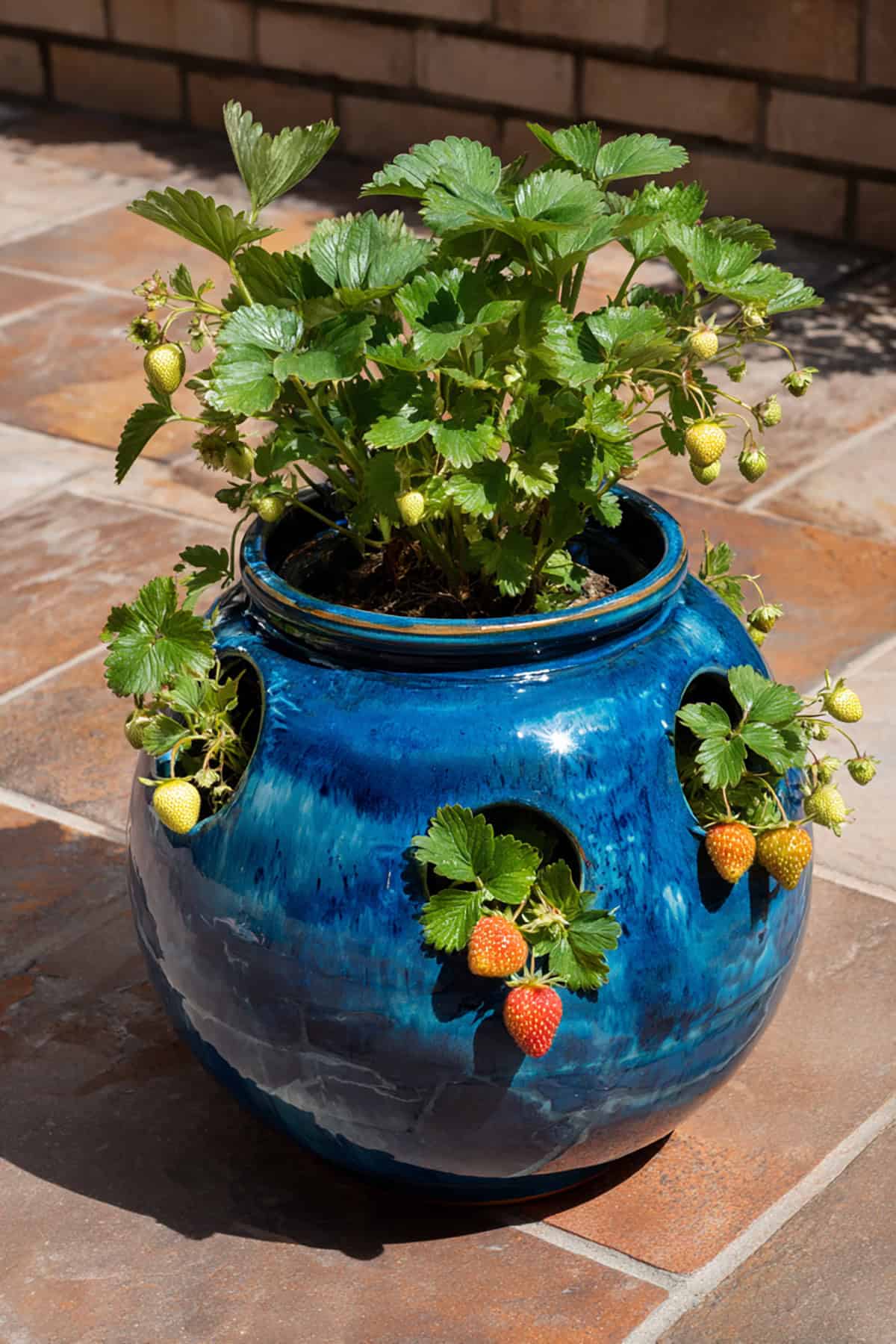
Clusters of side pockets scattered around these jars open up a surprising amount of growing room—no need to claim extra garden real estate. With some jars, you’ll spot eight or more little doorways for your strawberry starts, and suddenly, you’re looking at a compact berry patch in a single pot.
Honestly, drainage is non-negotiable here. Soggy roots spell disaster for strawberries, so a sharp-draining potting mix is essential. If the jar’s bottom hole is blocked or water pools underneath, it’s bad news—always double-check before planting.
It’s tempting to cram in extra plants, but one per pocket is just right. Tuck each one in, tamp the soil, and work a bit of slow-release fertilizer into the mix. Once berries start blushing, don’t wait—pick them right away to dodge pests and keep your plants churning out more fruit.