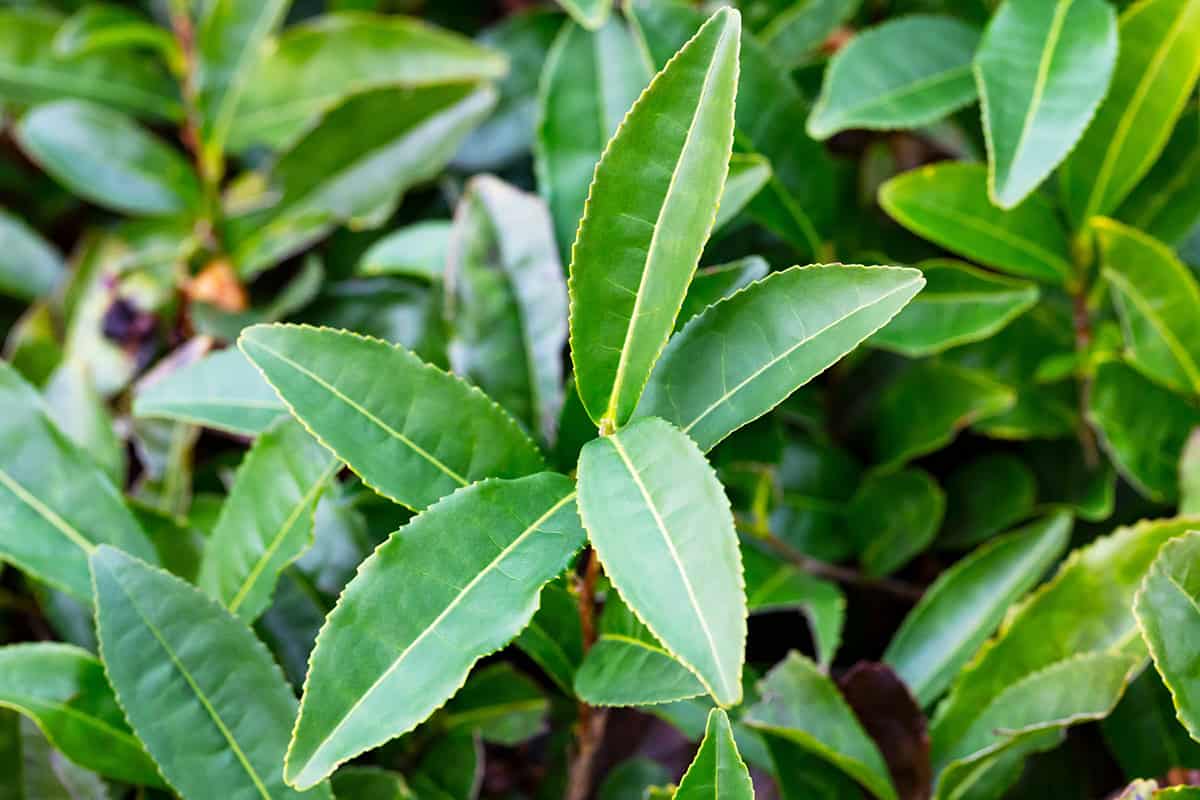
Every cup of green, black, white and oolong tea comes from the same shrub, Camellia sinensis, and the difference lies only in how the leaves are processed.
A glossy-leaved evergreen with small white flowers in fall, it grows outdoors in mild climates and in large pots elsewhere. Acidic soil, steady moisture and a few years of patience lead to the first homegrown harvest.
Only the top two leaves and a bud get picked, and the harvest section explains how to process them into each style of tea.
Table of Contents
Quick Care Summary
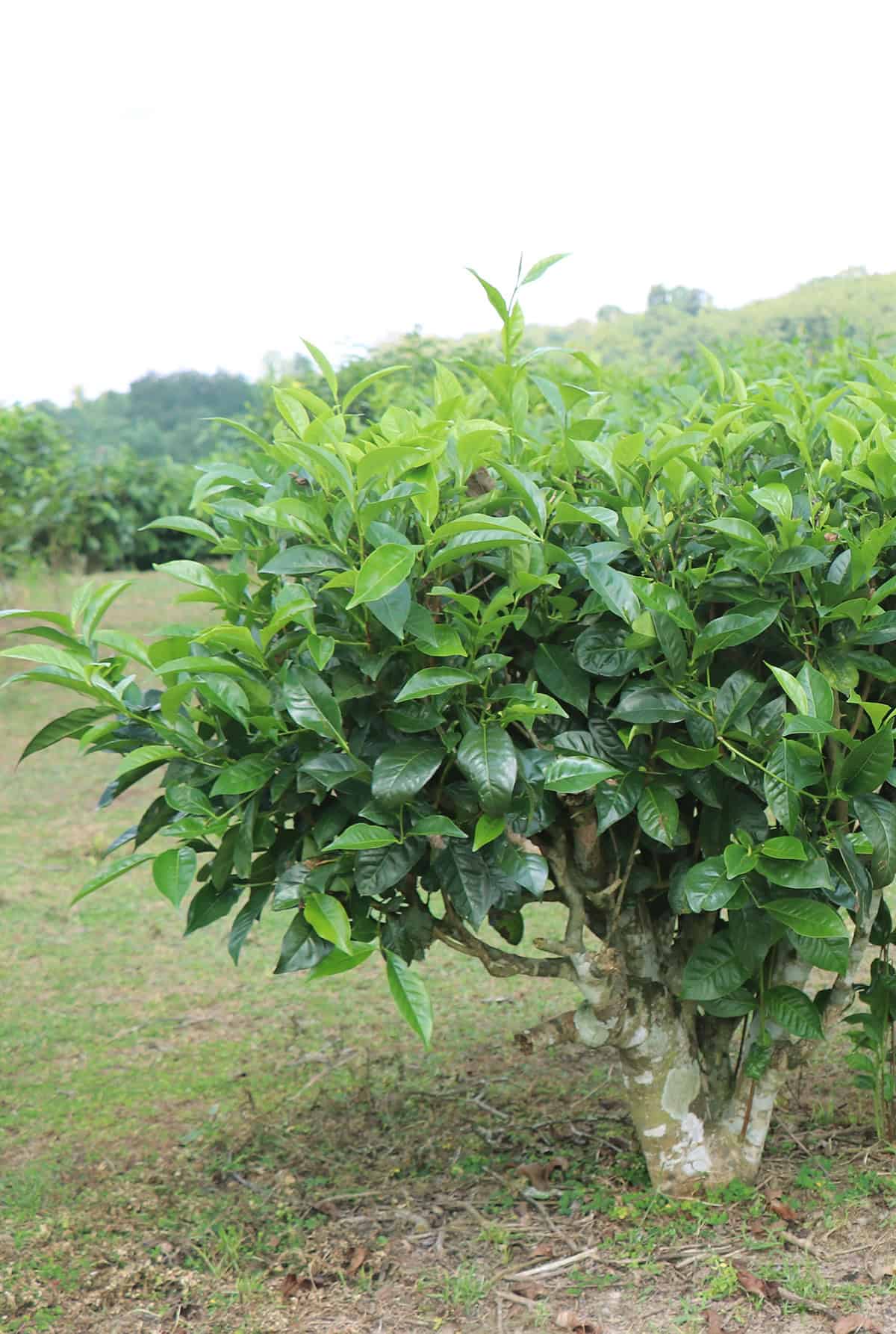
In the ground or in a large pot, Camellia sinensis grows best in mild, moist, acidic conditions, and a well-sited shrub produces its first tea leaves within a few years.
- Light: Full sun or partial shade; afternoon shade in hot climates
- Soil: Acidic, well-drained, pH 4.5–5.5
- Watering: Even moisture, 2–3 times a week while establishing
- Temperature: Best in temperate climates; protect from hard frost
- Humidity: Moderate to high
- Fertilizer: Acid-forming camellia or azalea fertilizer
- Propagation: Semi-hardwood cuttings or seeds
- USDA Zones: 7–9; some China-type plants to Zone 6 with protection
Plant in spring after frost, or in early fall in mild regions, in a spot sheltered from wind. Young plants need steady moisture for their shallow, fibrous roots.
Space hedge plants 2 to 4 feet apart and single shrubs about 6 feet apart, and prune to waist height for easy picking. Skip harvesting in late fall and winter, and expect the first real harvest after three or four seasons.
Plant Overview
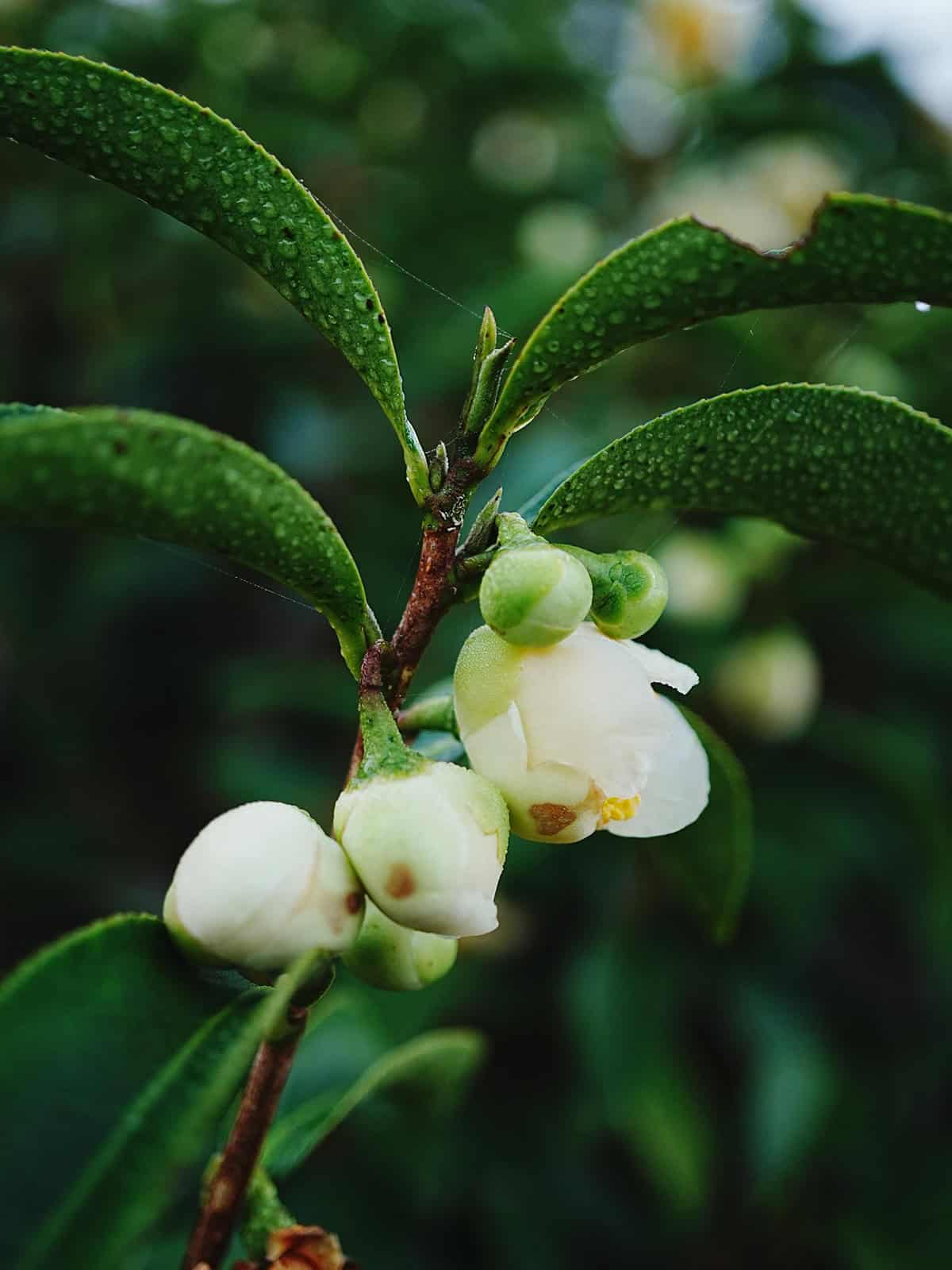
Glossy, serrated leaves and small, fragrant white flowers in fall mark Camellia sinensis, an evergreen shrub that pruning holds to a manageable size. Unpruned plants grow into small trees.
Tea comes mainly from two varieties. The China type, var. sinensis, is compact and cold-tolerant, while the Assam type, var. assamica, grows larger and needs warmth.
- Botanical name: Camellia sinensis
- Common names: Tea plant, tea camellia, tea bush
- Plant type: Evergreen shrub or small tree
- Mature size: 3–6 feet pruned; 15 feet or more unpruned
- Growth rate: Moderate
- Toxicity: Non-toxic to people; leaves contain caffeine, which harms pets in quantity
- Native region: Southern China, northeast India and Southeast Asia
Well-tended shrubs produce leaves for decades.
Light
About six hours of sun produce dense leaves and strong shoots, and in regions with punishingly hot afternoons, light afternoon shade prevents leaf burn.
In cooler climates, full sun is fine, and in shadier gardens, bright partial shade still produces a decent crop, though growth slows.
Indoors, a sunny south- or west-facing window is best, and a full-spectrum grow light placed close to the plant helps where natural light is weak. Frequent moves stress the leaves, so a single steady spot is best.
Water
Tea plants have shallow roots and suffer quickly in drought, while soggy soil rots them. During dry weather, deep watering two or three times a week is enough, with a finger check before each watering.
Sandy soil dries fast and needs more frequent watering, and heavy soil holds water longer, at times too long. A layer of bark or wood chip mulch holds moisture and cools the roots. Water less in winter, but never let the soil dry out completely.
Soil
Tea plants need acidic soil, with a pH between 4.5 and 5.5 for healthy growth and good leaf quality. Alkaline soil slows growth and harms flavor, so test before planting and amend as needed.
Loose, quick-draining soil is best. Heavy clay benefits from pine bark, composted wood chips or coarse organic matter, and the methods used for blueberries apply to tea as well.
In pots, use an acidic mix labeled for camellias or azaleas, or a blend of peat and pine bark, since regular potting soil is too alkaline. Garden soil compacts in containers and strangles the roots.
Elemental sulfur or ammonium-based fertilizers lower the pH when it creeps up, and a thick bark or wood chip mulch holds moisture and helps maintain acidity.
Temperature & Humidity
Tea grows best between about 60°F and 85°F. Short heat waves above 90°F stress the plant, especially in dry air, and afternoon shade is essential in scorching regions.
China-type plants grow outdoors year-round in Zones 7 to 9 in a sheltered spot. In Zone 7, cold snaps below 10°F call for frost cloth or a site near a south-facing wall, and cold winds damage the leaves. Assam types need warmer conditions, roughly Zones 9 to 11.
Low humidity leads to crispy leaves and poor growth, and mulch and steady watering help in dry climates. Indoors, a humidifier or pebble tray raises humidity.
Sudden cold causes leaf drop and damages new buds. Place potted plants away from heaters and drafts, since stable conditions produce the healthiest growth.
Fertilizer
Small, regular feedings outperform large, infrequent ones, about every other month during the growing season. Nitrogen drives lush new leaves, and phosphorus, potassium and magnesium matter too.
A balanced fertilizer with 6 to 10 percent nitrogen fits most gardens. Start with 1/8 to 1/4 pound for young shrubs and increase to 1 to 2 pounds for mature plants.
Yellow leaves with green veins point to iron deficiency, especially in alkaline soil, and chelated iron or iron sulfate corrects it.
A foliar feed a few times during warm months is optional. Stop feeding as fall approaches, since late fertilizer produces tender growth that suffers in cold.
Growing in Containers
Containers put tea on patios and balconies and let the plant move away from frost or blazing sun, though they need close attention to soil, water and winter care.
Choose a deep pot of at least 5 gallons with plenty of drainage holes, since the shallow roots fill the space quickly.
Use an acidic, well-draining camellia or azalea mix, or a homemade blend of peat and pine bark, with a pH between 4.5 and 5.5.
Place the pot in good sun, and move it into afternoon shade during intense heat. Rotate it now and then for even growth. Water when the top inch of soil dries, which happens fast in summer.
Feed with a slow-release fertilizer for acid-loving plants in spring and early summer, and skip feeding in fall. When frost threatens, move the pot inside or wrap it, since container roots freeze much faster than roots in the ground.
Potting & Repotting
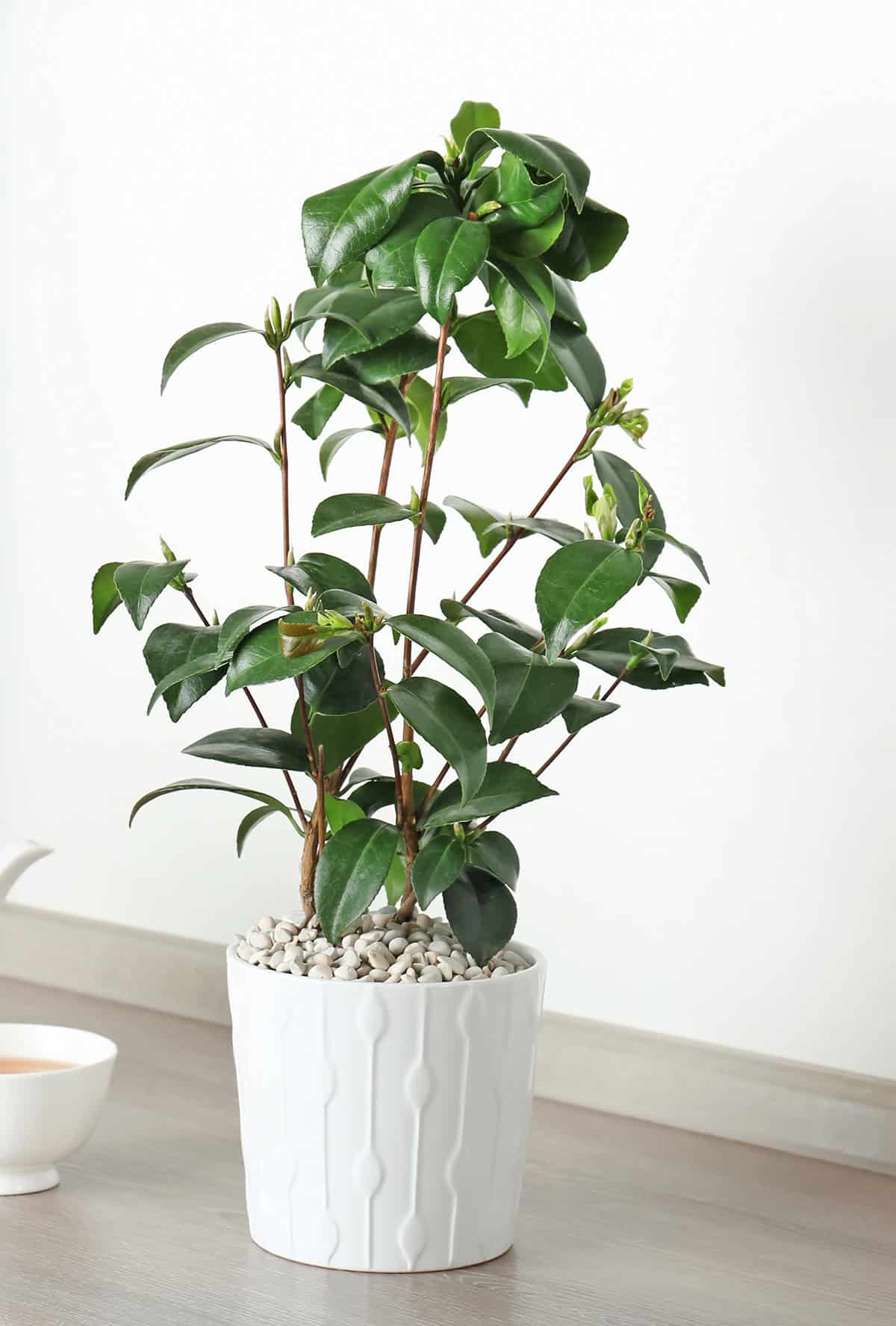
Use pots with several drainage holes, skip attached saucers and skip the gravel layer, since a pottery shard over the hole holds the soil in place.
Fill with loose, acidic potting mix, and avoid packing it tightly around the roots. Set the root ball 1 to 2 inches below the rim.
Young plants benefit from yearly repotting in spring, one size up at a time. Older shrubs need a new pot every two or three years, with the top few inches of mix replaced in between.
Gently tease out circling roots and trim as needed, plant at the same depth, firm the mix and water right away. Place the plant in light shade for a week or two before returning it to its usual spot, and wait for new growth before resuming feeding. In cool months, water lightly to prevent soggy roots.
Pruning
Regular pruning produces a dense, low shrub that is easier to harvest and healthier overall.
Start shaping in early spring, before new growth appears. Cut the main stems back to about 3 feet, roughly waist height, to encourage side shoots and hold the leaves within reach.
Remove weak, crossing or damaged branches at the same time, and open the center slightly for light and air, which reduces fungal problems.
Avoid major pruning late in the year, and in cold climates, hold off between October and late winter. Once the plant matures, a light trim after each harvest flattens the top into a plucking table and encourages fresh shoots.
Propagation
Cuttings produce clones of the best plants, while seeds produce variable seedlings with different leaves and growth.
Take semi-hardwood cuttings 4 to 6 inches long with a couple of nodes from healthy, vigorous plants at least three to five years old. Strip the lower leaves, leave one or two at the tip and insert the end in a moist, acidic medium with a pH of 4.5 to 5.5.
A mix of peat, perlite and vermiculite drains well and lets air reach the stem. Warm, humid conditions between 65°F and 75°F encourage roots, which appear in a few weeks, though a strong plant takes months to develop.
Grow rooted cuttings in pots for up to a year, then introduce them to outdoor conditions over several weeks, sheltered from cold and wind, before planting them in acidic, well-drained soil.
Fruiting & Harvest
Mature tea shrubs bloom in autumn with small white flowers that attract bees, followed by round seed capsules used for propagation. The leaves are the harvest, so steady, lush foliage matters most.
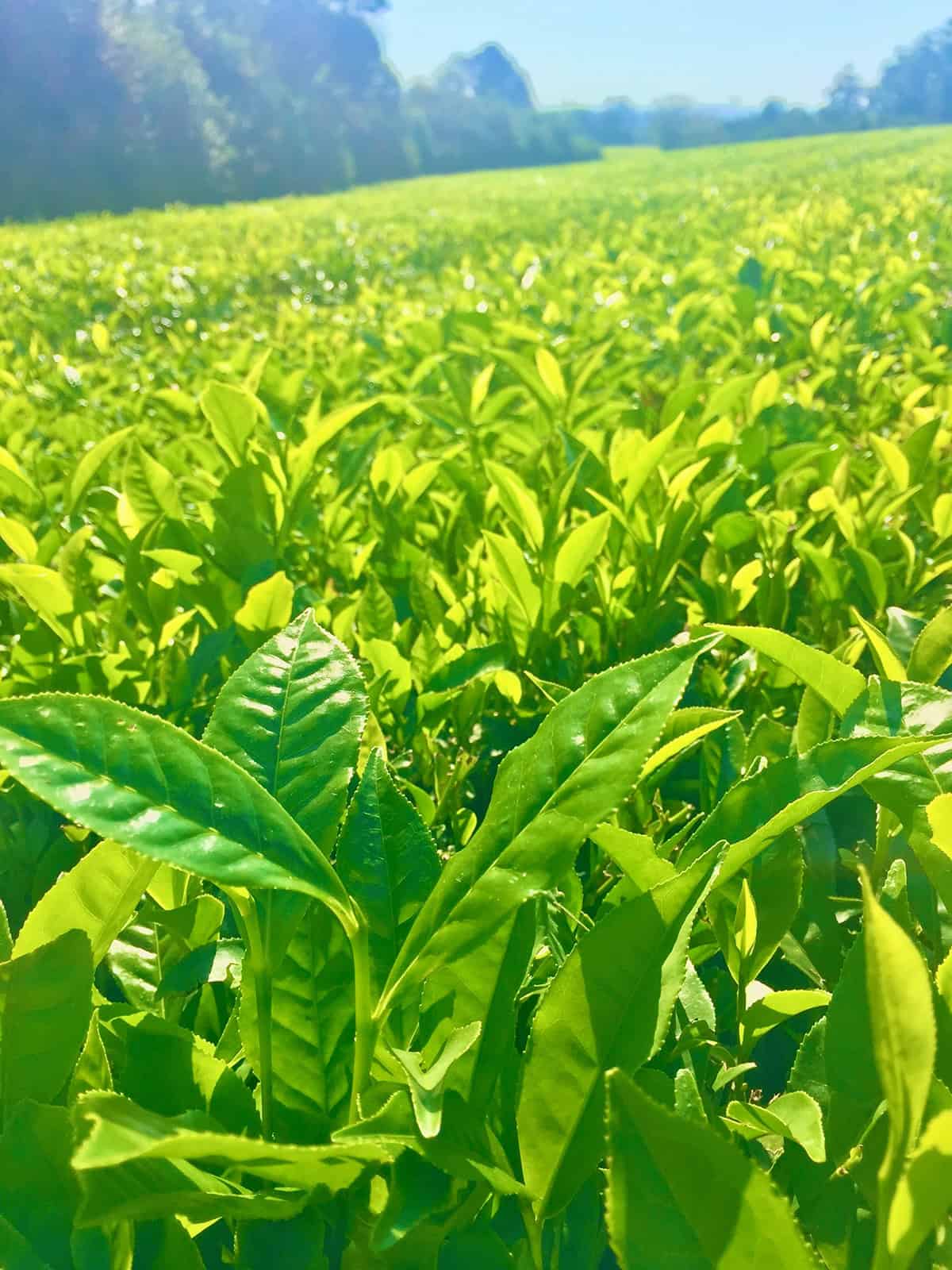
Once the plant pushes vigorous new shoots in spring, check it every week or two. Pick the top two leaves and the bud with clean shears or by pinching, since they hold the best flavor.
Processing starts right after picking. For green tea, heat the leaves immediately to stop oxidation, then roll and dry them. Black tea oxidizes fully before drying, and oolong and white teas fall in between, with each method shaping flavor, aroma and color. All of these teas come from the same plant.
Common Problems
Warm, damp weather and poor airflow encourage fungal disease, and crowded plants with wet leaves are most at risk.
Algal leaf spot causes raised gray-green patches with dark edges on older leaves, especially in damp weather. Prune out affected sections and water at the base so the foliage dries quickly.
Blister blight, a disease of tea in humid regions, causes pale, blistered spots that swell and warp young shoots. Remove infected growth, and use a labeled fungicide for severe cases.
Yellow leaves, weak stems and sudden collapse point to root rot from soggy, poorly drained soil, and acidic, well-drained beds with careful watering prevent it.
Aphids curl new shoots and leave them sticky, spider mites cause speckled, bronzed leaves, and tea scale produces yellow patches and leaf drop. A strong spray of water, horticultural oil or insecticidal soap controls most pests, and regular checks under the leaves catch them early.
Popular Varieties
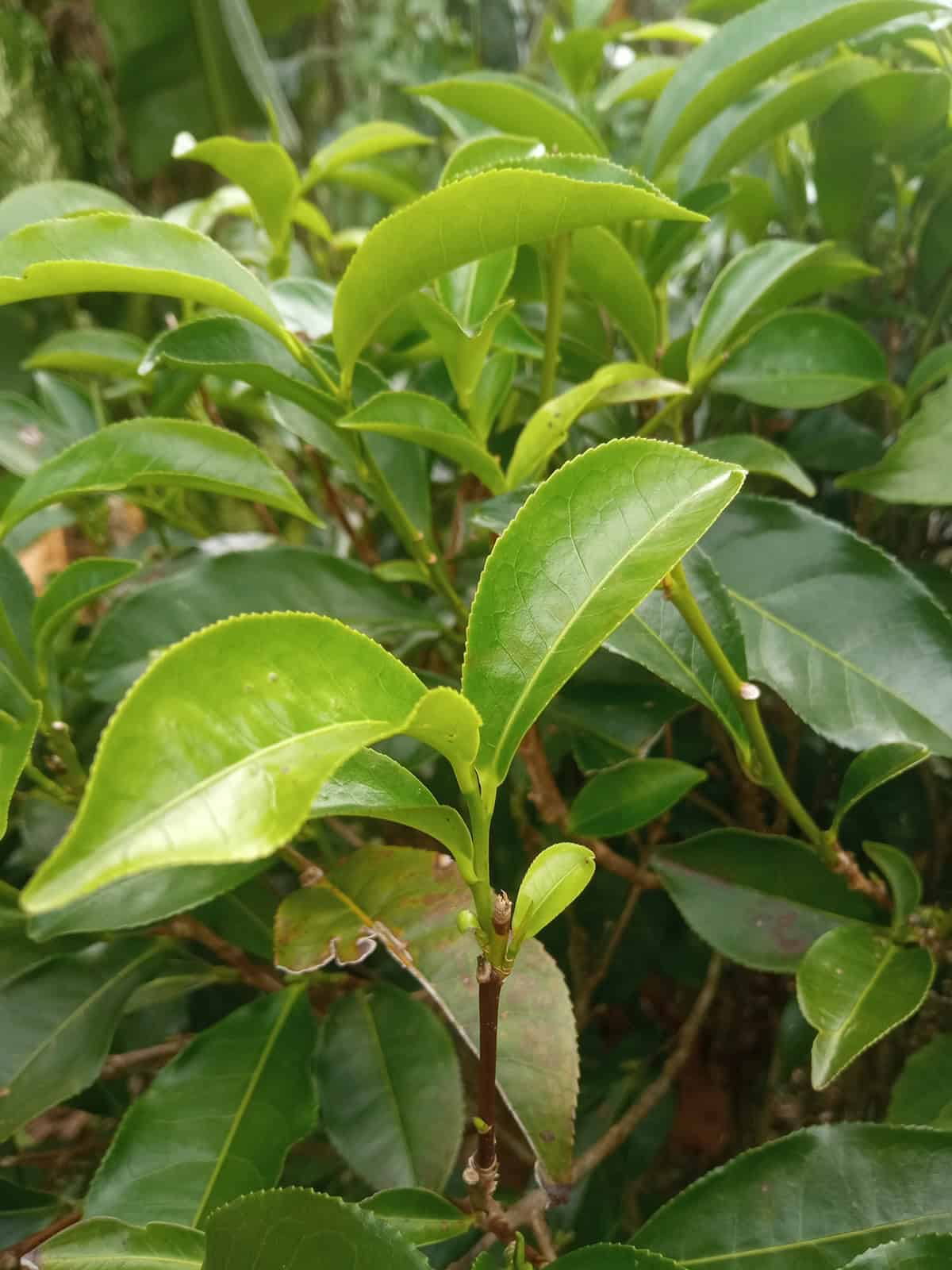
Most tea plants descend from Camellia sinensis var. sinensis or Camellia sinensis var. assamica, and local climate decides which one thrives.
The China type, var. sinensis, handles cold winds and light frost, with some plants surviving in Zone 6. Its smaller, finer leaves make green, white, oolong and black teas.
The Assam type, var. assamica, originated in the Assam region of India and grows into a larger plant with broad leaves. It needs warm, humid conditions, roughly Zones 9 to 11, and produces strong, malty black teas.
Cultivated selections add higher yields, extra cold hardiness or compact growth for containers. Climate, available space and the style of tea wanted guide the choice.