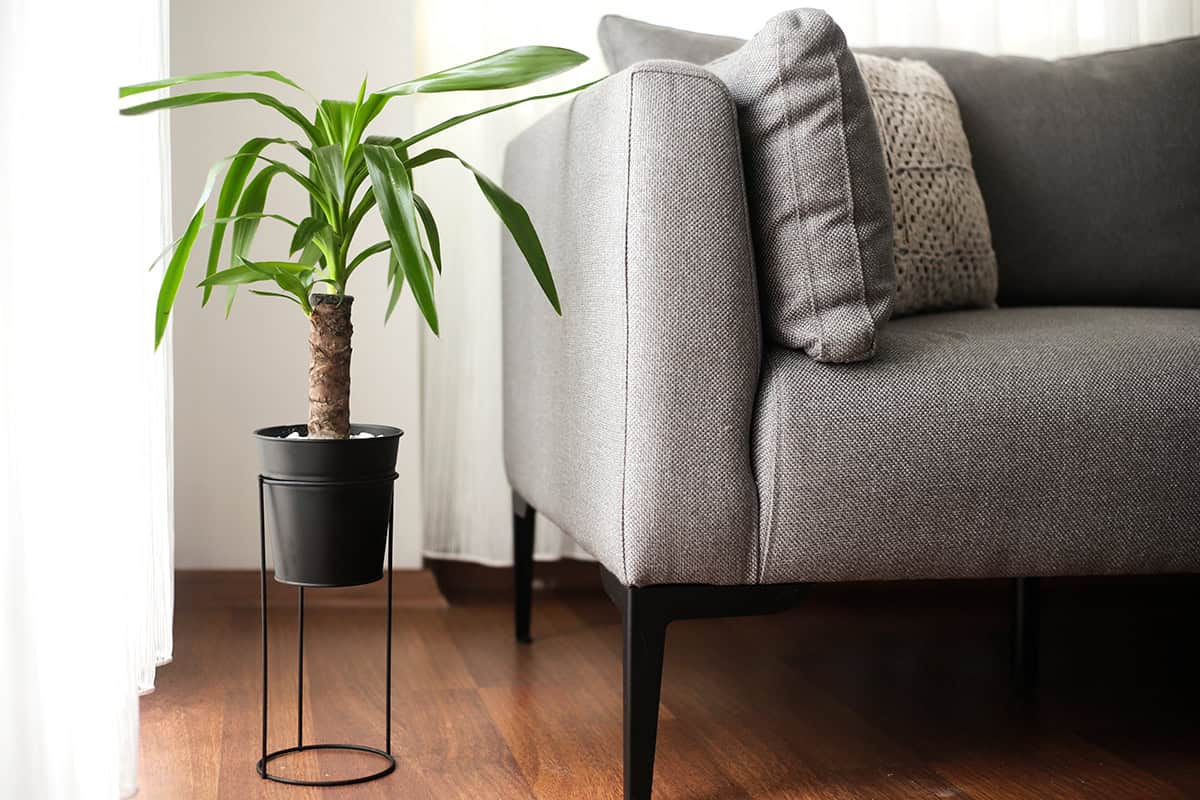
Thin, red-edged leaves sprout in tufts at the tips of Dracaena marginata’s bare canes, which lean and bend toward the light as the plant ages.
It handles dim corners, missed waterings and dry indoor air better than most houseplants. Fluoride in tap water and soggy soil are its two real weaknesses.
Light needs open the care notes, and the fix for those brown tips arrives a little later.
Table of Contents
Light
Place Dracaena marginata near a window with bright, filtered light for the strongest growth. Direct afternoon sun scorches the leaves, so a sheer curtain or a spot a few feet from a south or west window is safer.
The plant tolerates low light better than most houseplants, although growth slows and the canes grow thinner. More light means sturdier stems and fuller leaf heads.
Rooms with little daylight are fine with help from a grow light. A standard LED bulb a couple of feet above the plant provides enough light for steady growth.
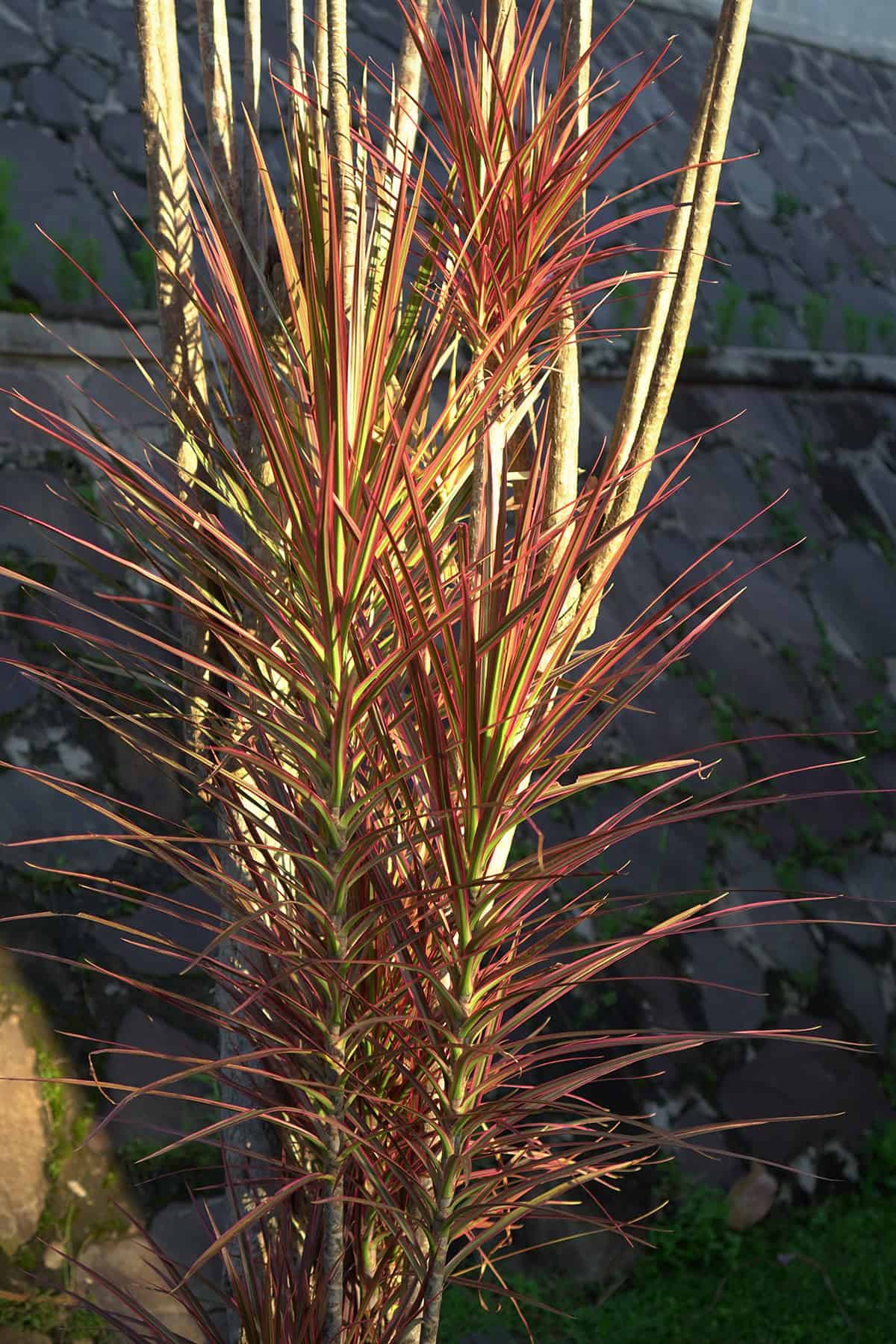
Leaf color shifts with the light. Bright rooms produce richer red margins and deeper green, while dim corners fade the colors.
Set the pot a few feet from radiators and heaters. Heat and strong light together dry and damage the foliage.
Soil
Dracaena marginata grows best in a loose potting mix that drains quickly and holds a little moisture. Bagged houseplant mix with added perlite or bark is a good match.
Heavy, dense soil traps water around the roots and leads to rot. Pure sand drains too fast. Aim for a light mix that lets excess water run straight out.
A pH between 6.0 and 7.0 is right, and most commercial houseplant mixes fall in that range. Mixes with added fertilizer are fine, though plain mix makes feeding easier to control.
Loosen compacted soil before planting. When you water, the excess should drain from the pot within a few seconds.
Garden soil is too heavy for containers. Stick with ingredients made for potted plants.
Fresh mix every two to three years, at repotting time, replaces the nutrients and structure that old soil loses.
Water
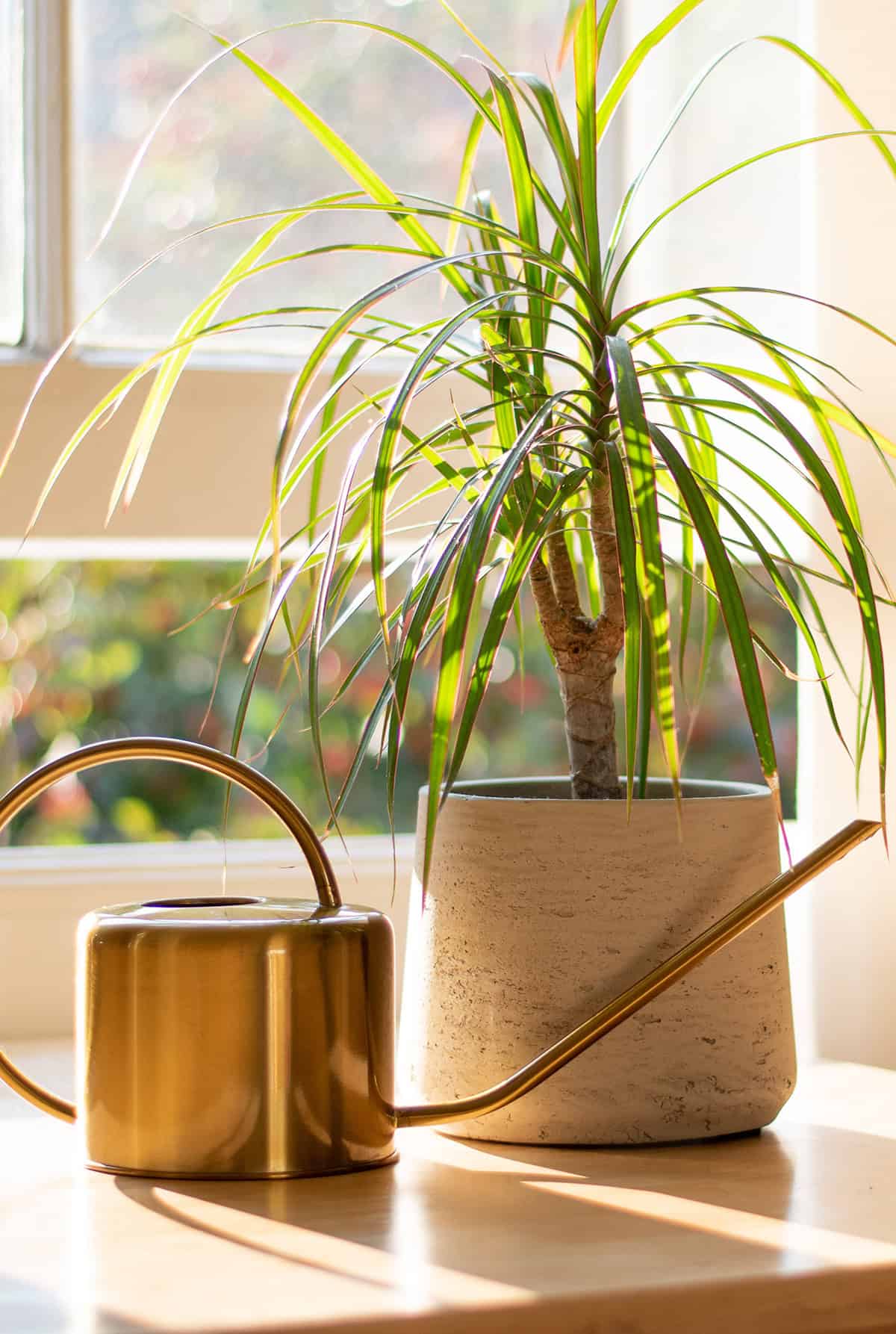
Let the top inch of soil dry before watering again, and test it with a finger first. Water thoroughly until the soil is evenly moist, then empty the saucer.
Soggy roots are the fastest way to lose a Dracaena marginata. Overwatering causes root rot and yellow leaves, so drainage holes are essential.
Use room-temperature water. Rainwater, distilled water or filtered water is best, because dracaenas react to fluoride in tap water with brown leaf tips. Letting tap water sit overnight removes chlorine but leaves the fluoride behind.
Spring and summer growth dries the soil faster, so check more frequently in those months. In fall and winter, the plant slows down and needs much less water.
When in doubt, wait another day. Dracaena marginata survives underwatering far better than overwatering.
Temperature And Humidity
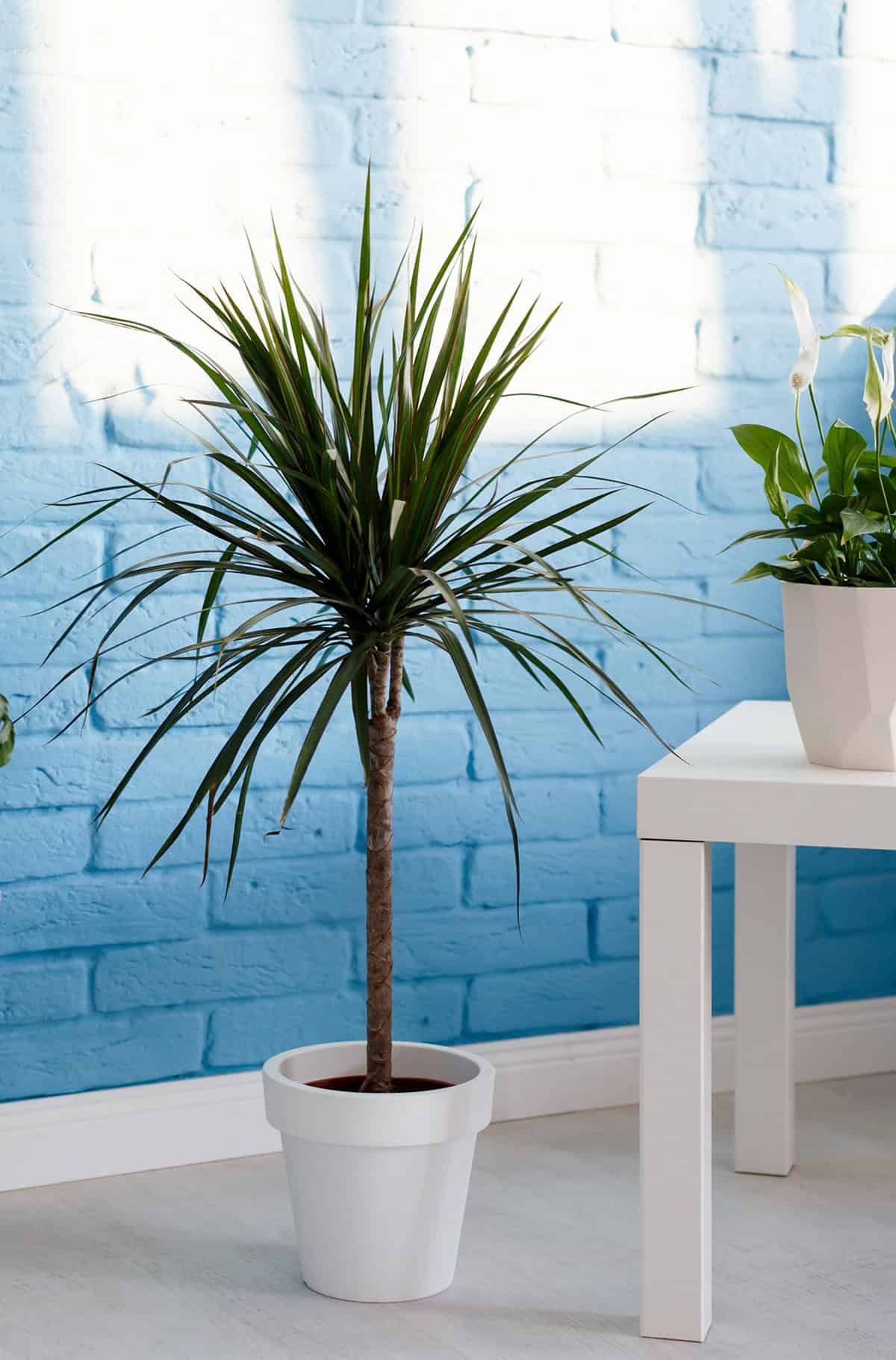
Dracaena marginata grows best between 65°F and 80°F. Temperatures below 55°F stress the plant.
Cold drafts and sudden swings cause leaf drop, and frost kills the plant. Move it away from drafty windows, doors and air-conditioning vents in winter.
Moderate humidity around 40 to 60 percent is ideal, although the plant adapts to typical indoor air. Very dry air browns the leaf edges.
Heaters dry indoor air in winter. A small humidifier or a cluster of plants raises moisture levels more effectively than misting.
Drooping leaves or browning tips signal stress. Check for drafts, heat sources and dry air, then adjust the spot.
Fertilizer
Feed Dracaena marginata with a balanced liquid fertilizer or one with a ratio close to 3-1-2. Steer clear of formulas high in fluoride or boron, since both cause brown leaf tips.
Fertilize about every two months from spring through early fall, while the plant is actively growing. Skip feeding in winter, when growth slows.
Slow-release pellets or water-soluble fertilizer both do the job. Apply to moist soil, and flush the pot with plain water every few months to wash out salt buildup.
Pale leaves and stalled growth point to hunger, while healthy leaves and steady growth mean the schedule is right. Overfeeding causes more damage than underfeeding, so a lighter dose is the safer choice.
Propagation
Stem cuttings are the easiest way to propagate Dracaena marginata, and they refresh an older plant at the same time. Both small and large plants root readily.
Use sharp, clean pruners to cut a healthy stem at least 4 to 6 inches long. Strip the lower leaves and leave a tuft at the top.
Root the cutting upright in moist potting mix, perlite or a glass of water. Water rooting lets you watch the progress.
Roots form within a few weeks in bright, indirect light. Water lightly to hold the mix damp, or change the water weekly.
Once roots reach 1 to 2 inches, move the cutting to a small pot with fresh mix. New leaves at the top confirm it has taken.
Shelter cuttings from direct sun until roots appear, since harsh light dries them out. Extra plants make easy gifts for friends.
Pruning
Prune Dracaena marginata when it grows too tall or lanky. The main cane takes a cut at any height, and new shoots sprout just below the cut.
Topping the plant pushes it to branch. Two or three new shoots appear on the stem within a few weeks, for a fuller, bushier plant.
Use sharp, clean pruners for a clean cut that heals fast and resists disease. Cut where you want new branches to form.
Trimmed tops root easily in water or moist soil, so every pruning session doubles as propagation.
Once a year is enough for most plants. Remove no more than a third of the plant at a time to avoid stress.
Potting And Repotting
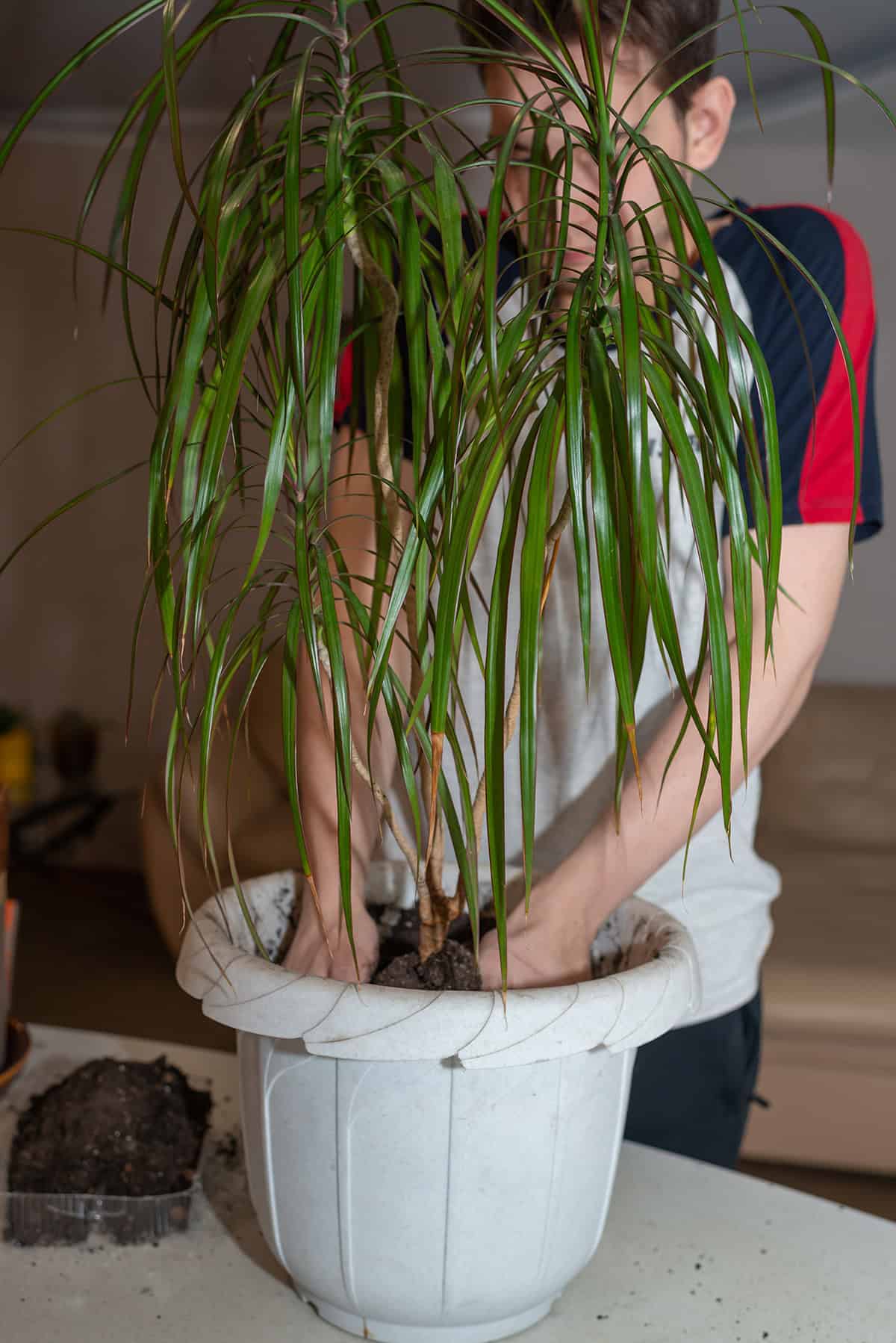
Choose a pot with drainage holes so the roots never sit in water. A loose, well-draining houseplant mix with some organic matter holds the right amount of moisture.
Go up only one size when repotting. Dracaena marginata grows happily a little root-bound, and an oversized pot holds excess water that leads to rot.
Check the roots every couple of years. Roots poking out of the drainage holes or circling the pot mean the plant needs more room, and spring repotting allows the best recovery.
Handle the roots gently, fill in around them with fresh mix and firm the soil lightly.
Repotting every 2 to 3 years is plenty, and frequent root disturbance stresses the plant.
Water thoroughly after repotting and return the plant to its usual spot. Wait about four weeks before feeding to avoid burning tender roots.
Common Problems & Troubleshooting
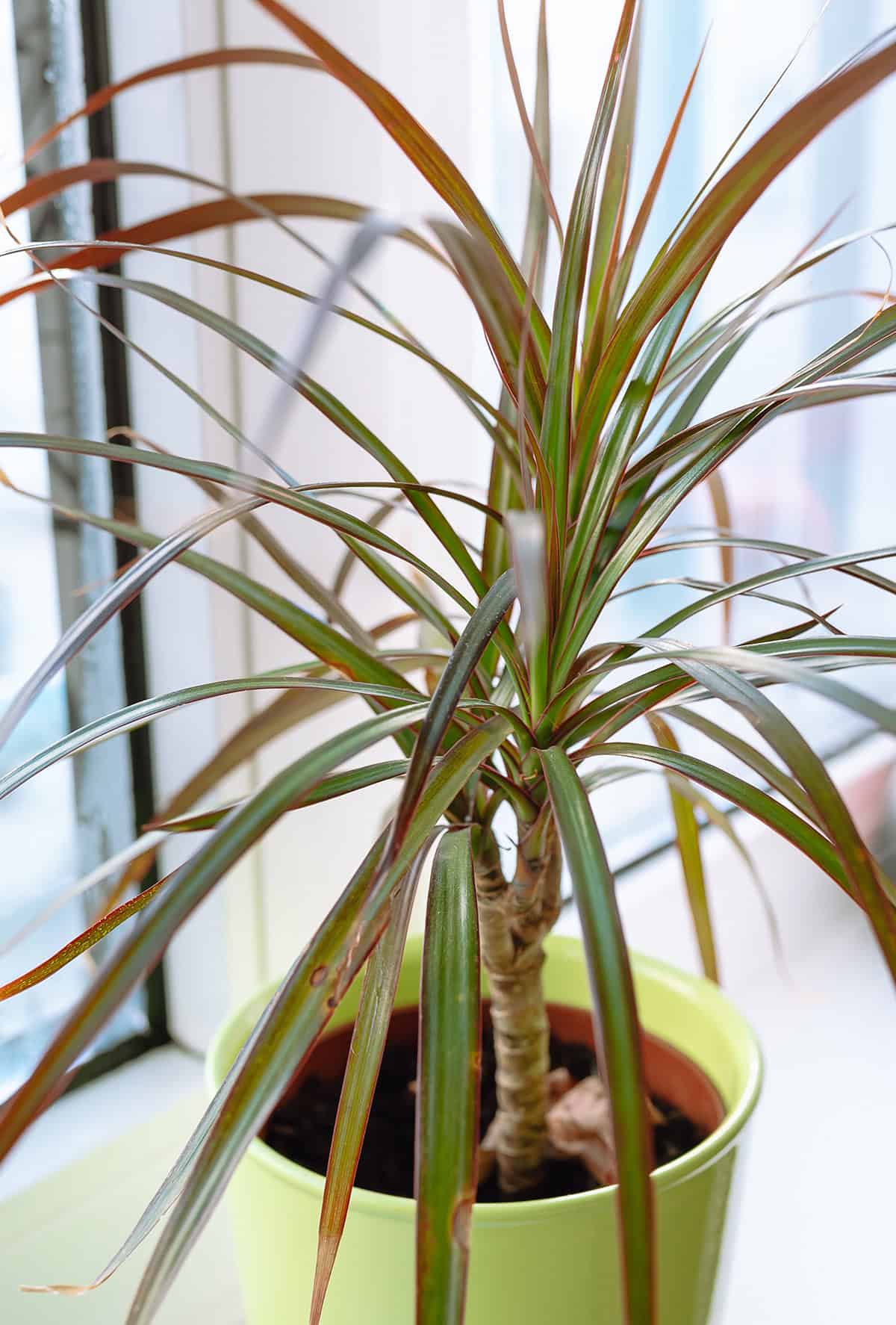
Brown leaf tips come from dry air or fluoride in tap water. Distilled water or rainwater prevents most of the damage, and a humidifier helps in winter.
Yellow leaves are a sign of overwatering, so let the soil dry a little before the next drink. Shedding one or two lower leaves at a time is normal as the plant grows taller.
Soft, mushy stems or sudden leaf drop point to waterlogged soil. Check that the pot drains freely, and trim away rotted roots if needed.
Spider mites leave fine webbing and tiny brown specks. Mealybugs show up as white, cottony clumps. Wipe the leaves with soapy water or treat with insecticidal soap to clear them.
Long, skinny stems with sparse leaves mean the plant needs more light. Move it closer to a bright window, out of harsh direct sun.
Plant Varieties
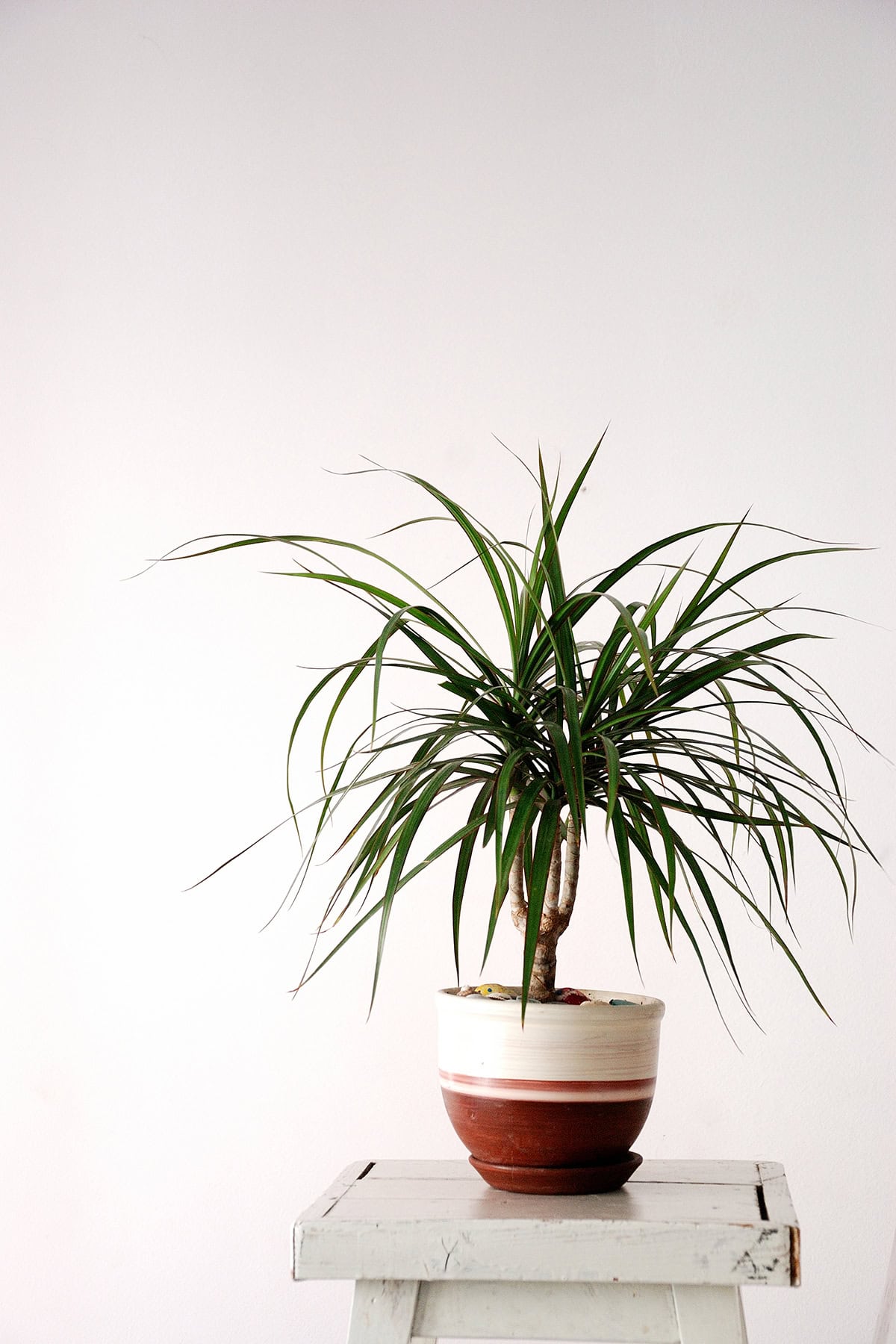
Dracaena marginata comes in several cultivars with different leaf colors, and the care is the same for all of them.
The standard form has long, narrow green leaves edged in purple-red. Indoors it reaches 6 feet or more over many years, though most owners prune it shorter.
‘Tricolor’ adds a cream stripe beside the red edge for a lighter look. ‘Colorama’ carries wide pink-red bands that make the whole plant look rosy from across the room.
‘Bicolor’ shows red and green stripes along each leaf. Older plants of any variety develop bending, sculptural canes as they lean toward the light.
Since care needs are nearly identical, pick whichever color fits your room.