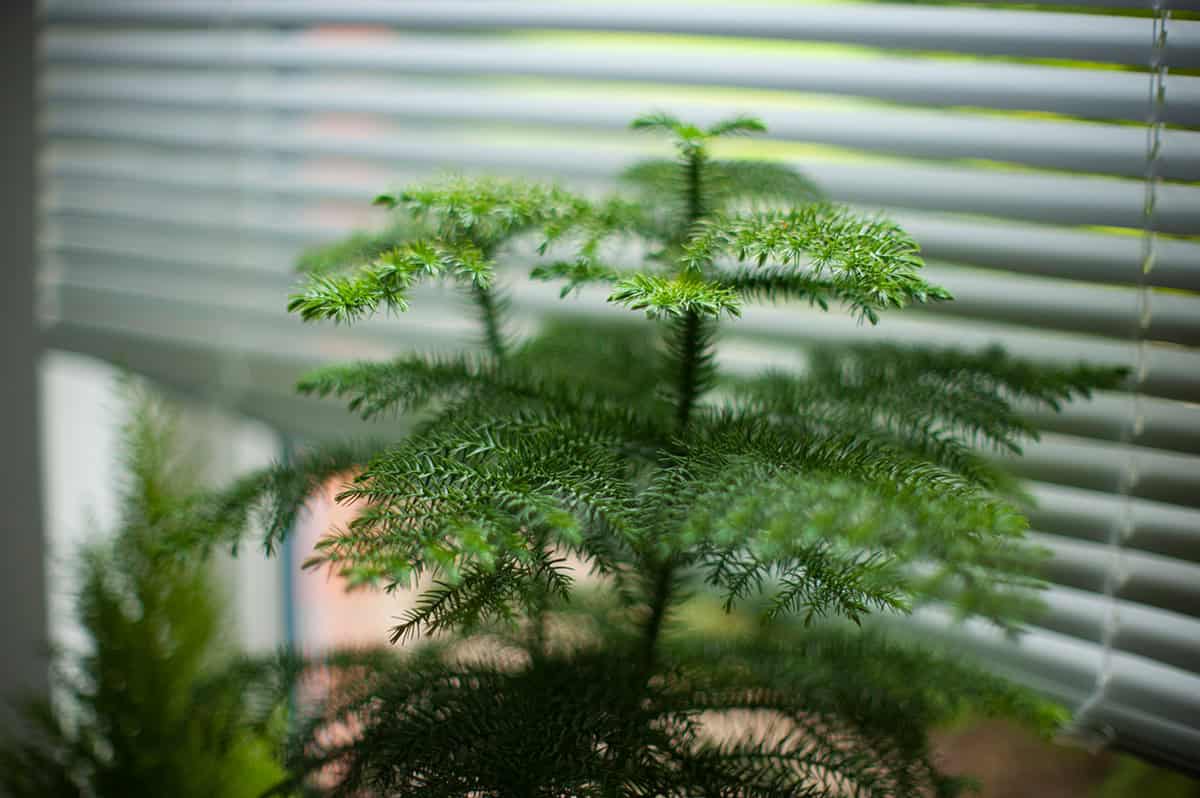
Norfolk Island pine is a conifer from a single small island in the South Pacific, and it is no true pine at all.
Its soft branches grow in tidy, even tiers, which explains why stores stock them by the hundreds as living Christmas trees each December.
Long after the holidays, it thrives on bright light and humid air, and the light section explains why weekly rotation matters.
Table of Contents
- Light
- Soil
- Water
- Temperature And Humidity
- Fertilizer
- Propagation
- Pruning
- Potting And Repotting
- Common Problems & Troubleshooting
- Plant Varieties
- Frequently Asked Questions
- What are the optimal lighting conditions for a Norfolk Island pine when grown indoors?
- How do you water and maintain the soil moisture for a healthy Norfolk Island pine indoor plant?
- Can Norfolk Island pines be pruned, and if so, what is the proper technique?
- What temperature and humidity levels are ideal for an indoor Norfolk Island pine?
- How can you troubleshoot common problems with Norfolk Island pines?
- What is the average growth rate of a Norfolk Island pine when it’s kept indoors?
Light
Norfolk Island pine needs plenty of bright, indirect light, somewhere between harsh rays and a gloomy corner. East, west and south-facing windows are good choices.
Rotate the pot by a quarter every week for even branches and a straight trunk. Strong afternoon sun scorches the needles, so filtered light is safer.
In dim rooms, the tree survives but grows sparse and leggy. Make moves to lower light gradually to avoid shock.
Artificial light helps in winter. A fluorescent or LED grow light for about 12 hours a day holds the tree’s color through dark months.
Yellow or dropping needles point to a need for more light.
Soil
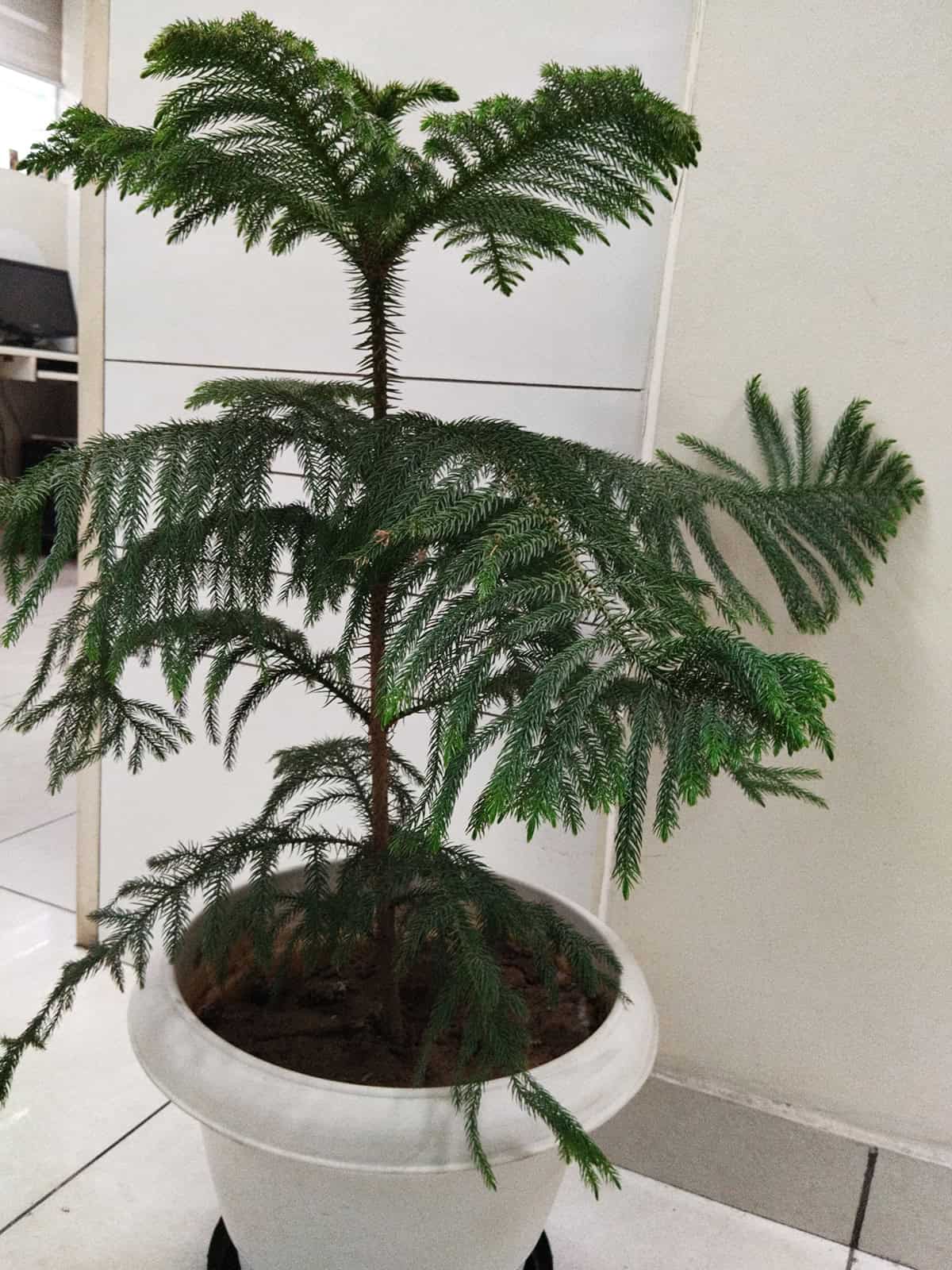
Norfolk Island pine adapts to most potting mixes but hates soggy roots. A standard mix with some organic matter is fine, as long as it drains well.
Slightly acidic to neutral soil, around pH 6.0 to 7.0, is best. Lighten a heavy, clumpy mix with perlite or coarse sand.
Avoid garden soil and clay-heavy blends, which hold water and damage the roots. A light, airy mix is the goal.
Let the soil dry slightly between waterings, and water again once the top inch is dry. Moist soil is the target, never a marsh.
Water
Barely moist soil is the target, neither swampy nor bone dry. Let the top inch dry before watering.
Water until it drains from the bottom, then empty the saucer.
Humidity matters a great deal. Dry air causes brown needle tips, and a pebble tray with water under the pot or a cluster of plants raises the moisture.
Use room-temperature water, since icy or hot water shocks the roots.
Yellow or crispy foliage points to watering trouble, from too much or too little, so review the routine.
Growth slows in winter and the tree needs less water. Check the soil before every watering.
Temperature And Humidity
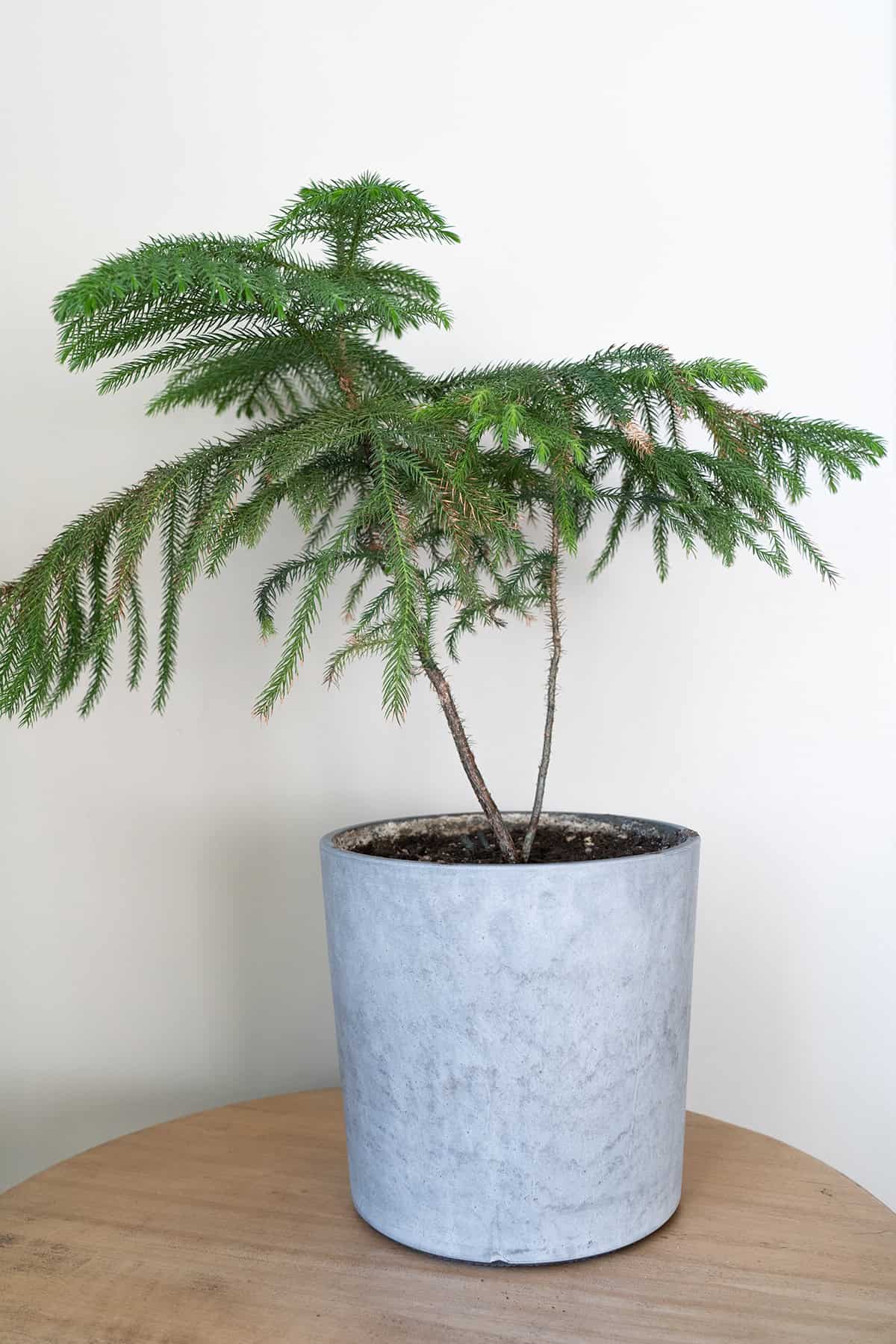
Norfolk Island pine grows best between 60°F and 75°F. Cold drafts and sudden chills cause damage, so place it away from heaters, air conditioners and drafty windows.
Humidity matters as much as temperature. The tree comes from a humid island climate, and dry indoor heat is hard on it.
Aim for at least 50 percent humidity. A small room humidifier or a tray of water nearby helps in dry air, and light misting adds a short boost.
Grouping plants together raises the moisture around them. Check temperature and humidity now and then for lush, healthy needles.
Fertilizer
Feed Norfolk Island pine during spring and summer with a balanced, water-soluble fertilizer such as 20-20-20 or 15-15-15, diluted to half strength.
Once a month during the growing season is plenty. Skip fertilizer in fall and winter, when growth stops and extra nutrients cause trouble.
Water dry soil before feeding to avoid burning the roots.
A balanced liquid houseplant fertilizer mixed as directed is another option. The tree grows slowly and needs little feeding.
Brown tips or heavy needle drop after feeding point to overfeeding. Cut back and flush the soil with plain water to clear any buildup.
Propagation
New Norfolk Island pines come from seed. Fresh seeds sprout in two to three weeks with warmth and light moisture.
Cuttings root, though side-branch cuttings grow sideways for life and never form the classic upright shape. Only the vertical leader produces a normal tree.
Spring and early summer are the best seasons for sowing, when warmth speeds germination.
Sow seeds in a pot of well-draining mix, cover them lightly and place the pot somewhere bright and out of direct sun.
Water sparingly so the surface is just damp, since soggy mix rots the seeds.
Move seedlings to a brighter spot once they appear. Growth is slow at first, and a seedling takes years to reach the size of a store-bought tree.
Pruning
Norfolk Island pine needs little pruning. Remove dead or brown lower branches for a neat look, since they never regrow.
Use sharp, clean pruners and cut close to the trunk while leaving the bark intact. Remove only what is clearly dead or damaged.
Leave the soft growing tip at the top alone. Cutting it ends upward growth and ruins the shape of the tree.
Light, occasional trims are enough for this slow grower.
Check for pests or unusual spots while pruning, and remove affected branches early to stop problems from spreading.
Potting And Repotting
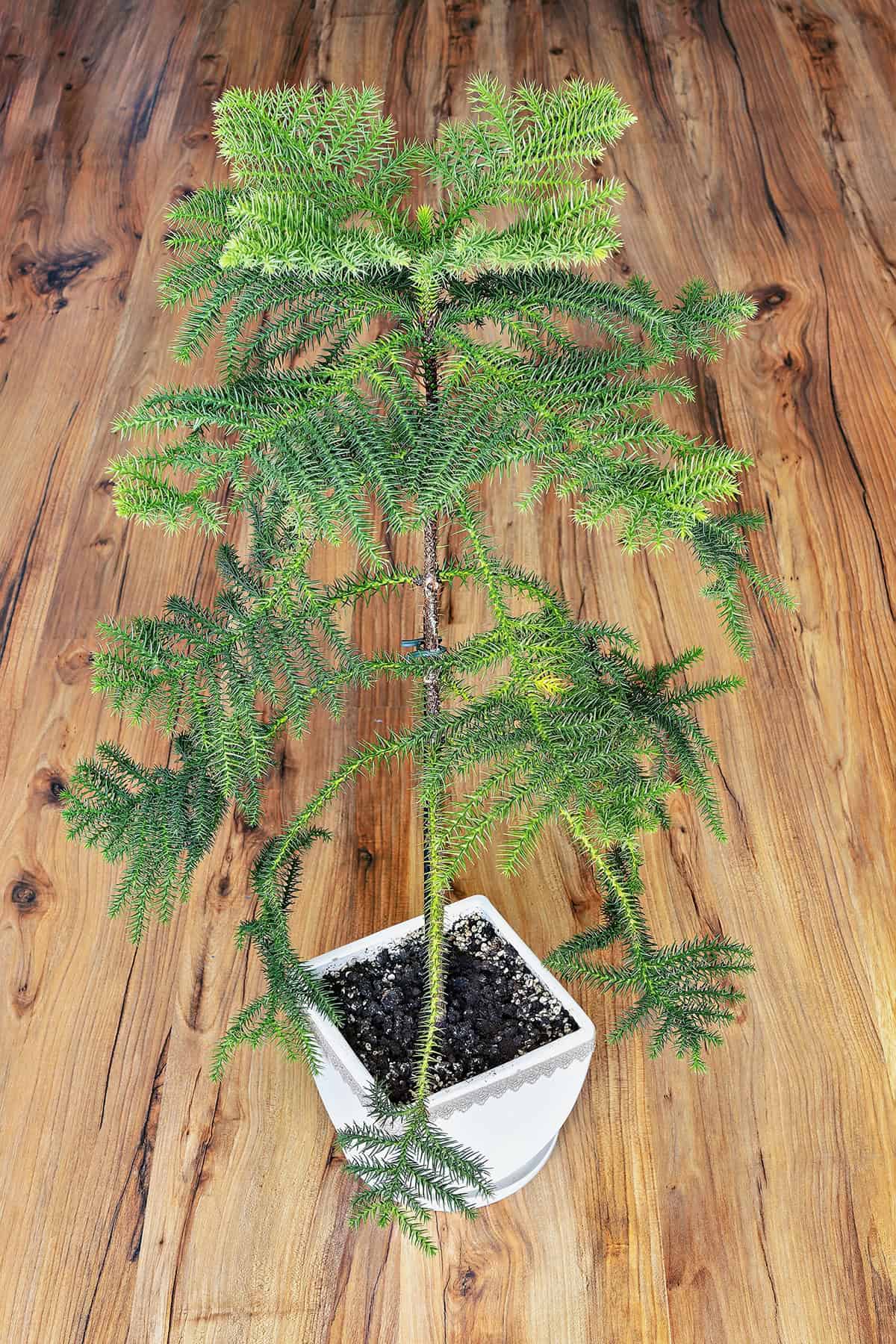
Choose a pot with drainage holes just a few inches wider than the root ball, filled with a well-draining, slightly acidic mix.
Place the pot in bright, indirect light, away from deep shade or harsh sun. Water so the soil is moist and never waterlogged.
The tree grows slowly and needs repotting only every two to four years. Check the roots once a year, and move up a size when they circle the pot.
Spring or early summer is the best time. Water the plant the day before, then loosen the roots gently and settle the tree into fresh mix.
Set the trunk at its original depth, firm the soil lightly and water well before returning the plant to its usual spot.
A few yellow needles after repotting are normal. Raise the humidity and watch the tree for a week before returning to the regular routine.
Common Problems & Troubleshooting
Needle drop points to dry air in most cases, and a humidifier or trays of water nearby help. Lower branches also yellow and drop when light is too low or the soil dries out completely.
Brown or yellow needles suggest watering or light trouble. Water only when the topsoil dries, and place the tree in plenty of indirect light.
A lopsided tree is reaching for the light. Rotate the pot every week for even growth.
Spider mites leave fine webs and tiny moving dots on the needles. Wipe the branches with a damp cloth and raise the humidity to control them, and use insecticidal soap for heavy infestations.
Stunted growth suggests a root-bound tree. Move it to a slightly bigger pot with fresh, well-draining mix.
Cold drafts damage the needles, so place the tree away from chilly windows and doors.
Plant Varieties
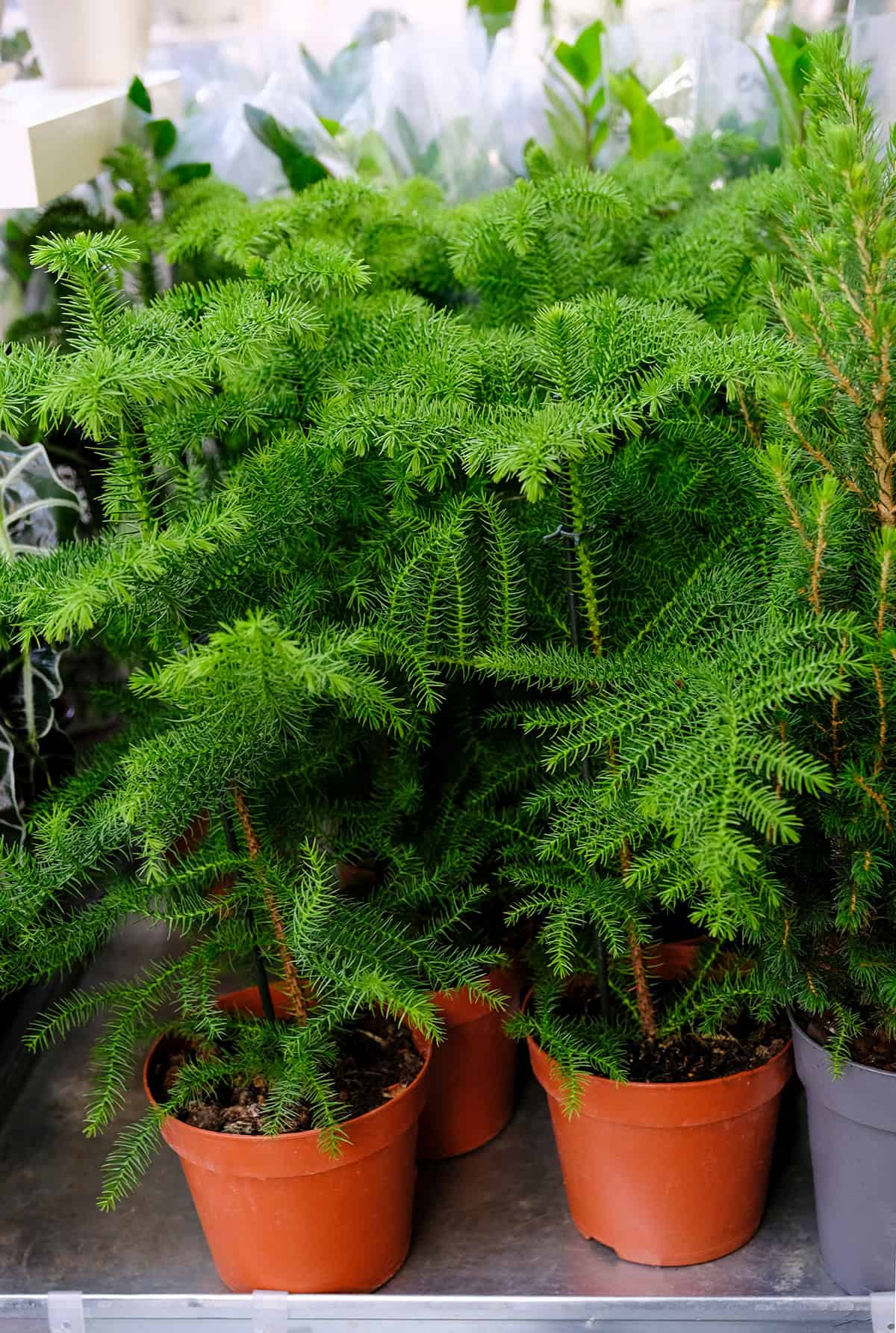
The plant sold as Norfolk Island pine is Araucaria heterophylla, a conifer native to Norfolk Island in the Pacific between Australia and New Zealand.
Some labels call it star pine. The name Australian pine belongs to a different tree, Casuarina, so check the botanical name when shopping.
Named indoor varieties are rare. Most plants grow from seed and look much alike, with small differences in fullness and habit. Many pots hold several seedlings planted together for a fuller look.
Young plants have soft, fine needles and the classic pyramid shape. Indoors, they reach about 6 to 9 feet over many years, while outdoor trees in frost-free climates top 100 feet.
Choose a healthy plant in the right size for your space, with dense, green branches down to the soil line.
Frequently Asked Questions
Light, water, pruning and growth rate top the list of Norfolk Island pine questions.
What are the optimal lighting conditions for a Norfolk Island pine when grown indoors?
Set the tree near a bright east, west or south-facing window. Rotating the pot by a quarter every week produces straight, balanced growth.
How do you water and maintain the soil moisture for a healthy Norfolk Island pine indoor plant?
Water once the top inch of soil is dry, and avoid letting it dry out completely. A well-draining mix prevents roots from sitting in water.
Can Norfolk Island pines be pruned, and if so, what is the proper technique?
Trim dead or brown branches at the trunk with sharp, clean scissors, and leave the main growing tip alone to preserve the shape. A light trim is enough.
What temperature and humidity levels are ideal for an indoor Norfolk Island pine?
Temperatures between 60°F and 72°F are best, away from drafts. Humidity above 50 percent is ideal, and a humidity tray or humidifier helps in dry air.
How can you troubleshoot common problems with Norfolk Island pines?
Yellow needles point to overwatering or poor drainage, and brown tips to dry air or excess fertilizer. A lopsided tree needs more frequent rotation or better light. Problems caught early are the easiest to fix.
What is the average growth rate of a Norfolk Island pine when it’s kept indoors?
Indoors, the tree grows about three to six inches a year, and less in low light or with irregular watering. Even after many years, it rarely tops eight feet in a typical home.