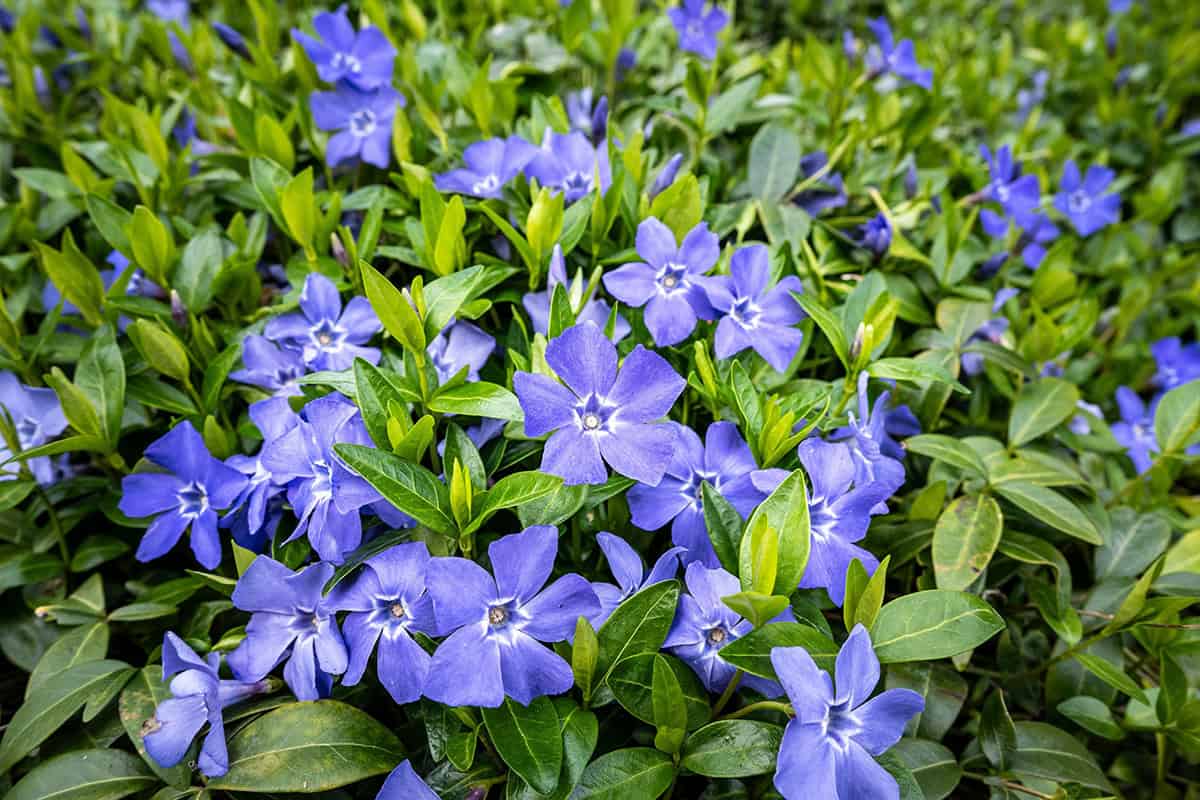
Minor vines, better known as Vinca minor, periwinkle or creeping myrtle, cover bare, shady ground with glossy evergreen leaves and lavender-blue spring flowers. The stems root wherever they touch soil, and a handful of plants knit into a dense mat within a couple of seasons.
It asks for partial shade and decent drainage and little else. That same vigor lands it on invasive plant lists in several states, a fact worth weighing before the first plug goes in the ground.
Table of Contents
Light
Vinca minor grows best in partial to full shade, under trees or along the north side of a house. In cool climates, it tolerates more sun, and a few hours of morning light produce more flowers.
In deep, all-day shade, growth slows, fewer flowers form and the stems stretch thin. Trim back leggy stems to encourage a denser mat.
In hot climates, shield it from afternoon sun, which scorches and yellows the leaves. Dappled light under deciduous trees fits it well, with spring sun before the canopy fills in and shade in summer.
Aim for a balance of light and shade for dense coverage and steady spring flowering, and avoid sun-baked slopes in warm regions.
Soil
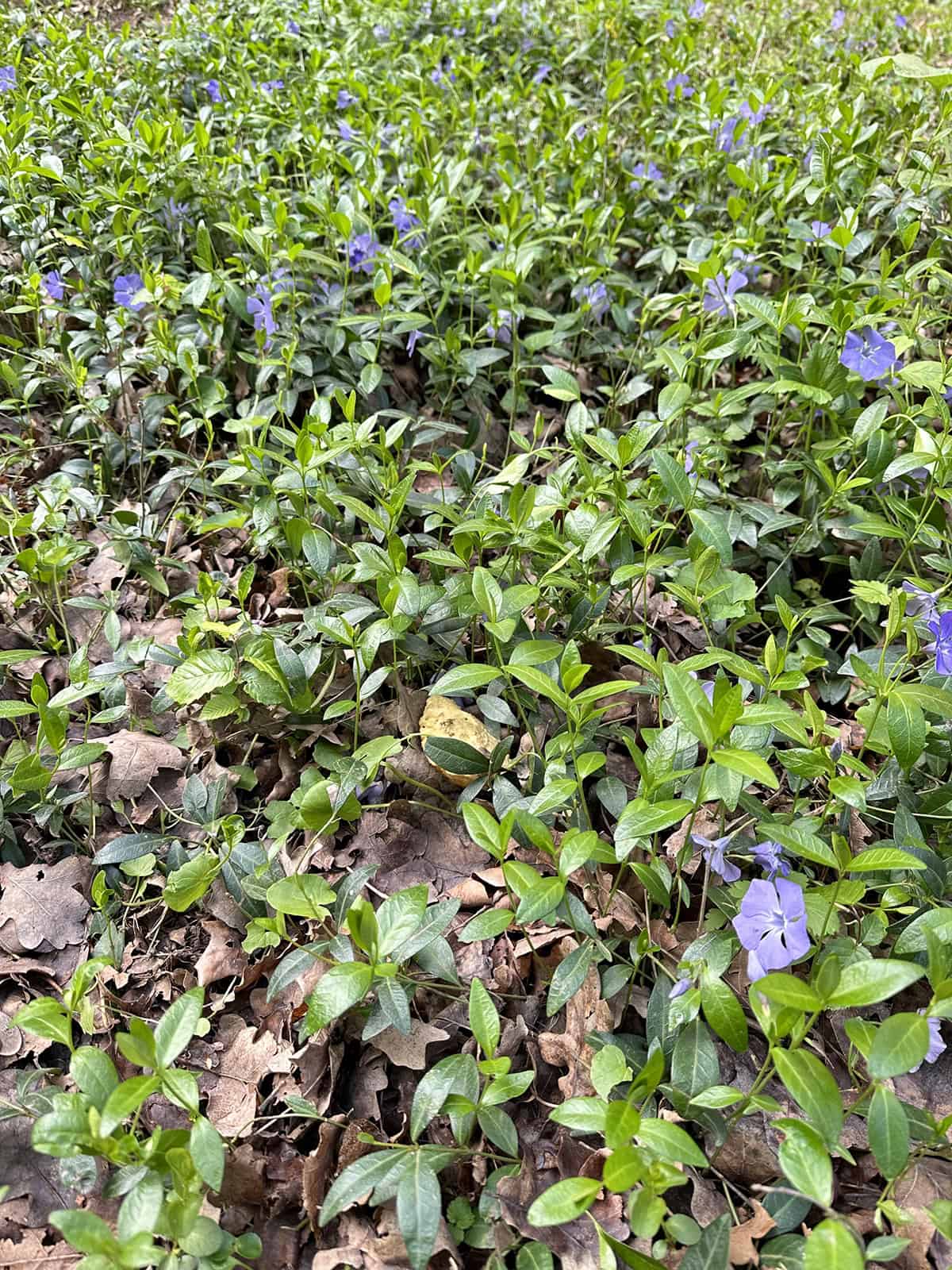
Healthy soil supports a quick, even spread. Check the soil structure and drainage before planting, since poorly drained areas lead to root rot and stem dieback.
Vinca minor grows best in loose, well-drained soil rich in organic matter. Mix compost into compacted ground to improve structure and hold moisture, short of waterlogging.
Test the soil pH before planting. Vinca minor tolerates a wide range, from about 5.5 to 7.0, and lime or sulfur corrects extremes.
Good soil structure spreads water evenly, and organic matter feeds beneficial microbes that help roots absorb nutrients. Once the planting fills in, avoid digging through it, since the mat binds and protects the soil.
Sandy soil benefits from regular compost to improve water retention. In heavy clay, raise the bed or add organic matter to improve drainage and aeration.
Water
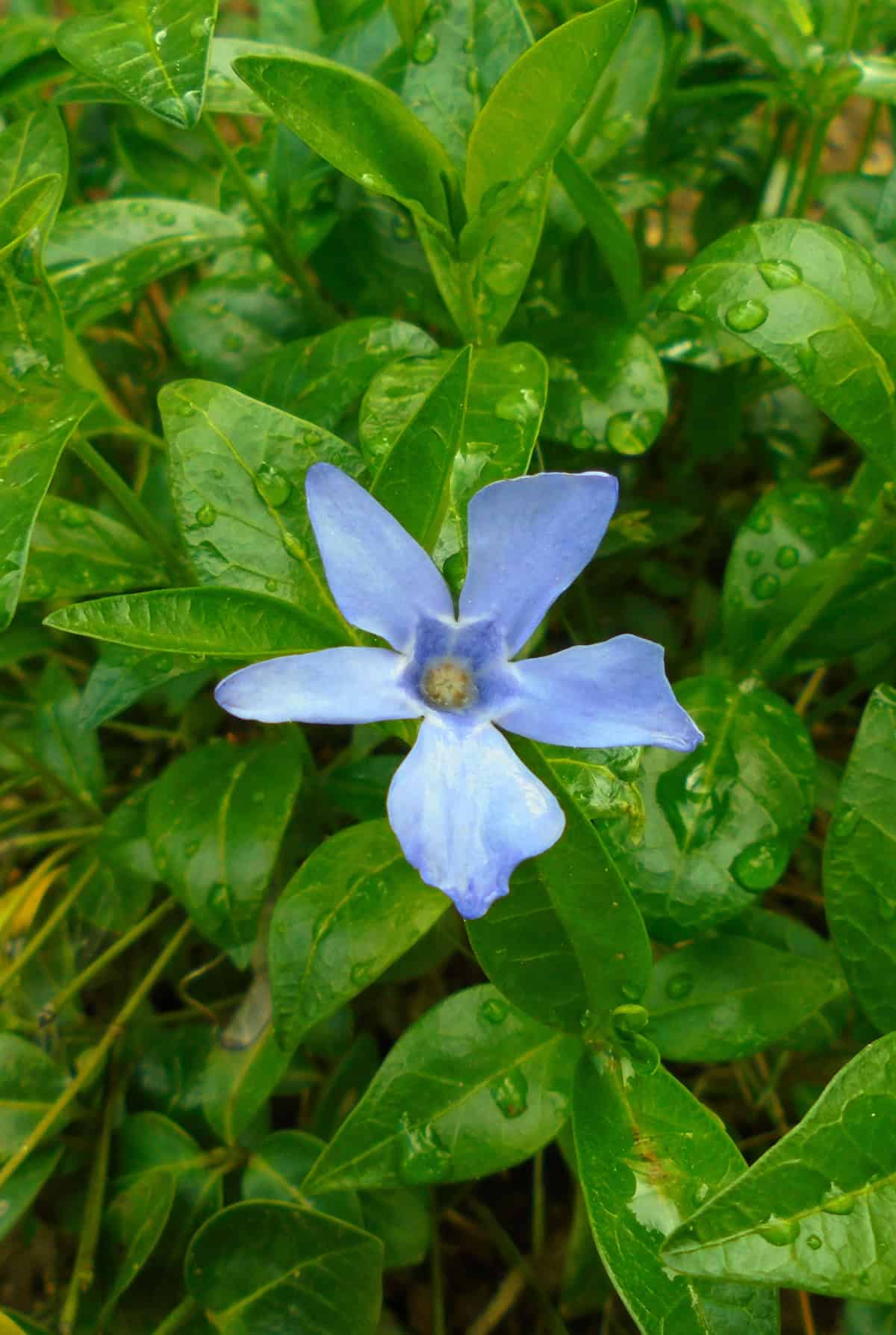
Consistent moisture during the first growing season helps the roots establish. After that, Vinca minor tolerates dry spells well, especially in shade.
Water deeply so moisture reaches about 6 inches down, which encourages a strong root system, since shallow watering leads to weak roots and poor drought tolerance.
Check soil moisture before watering by pressing a finger about two inches into the soil, and water when it seems dry.
Water in the early morning, which reduces evaporation and lets the leaves dry during the day. Wet foliage overnight raises the risk of stem blight.
Hot or windy weather increases water needs, and sandy soils dry faster than clay. Adjust the routine to your site.
Temperature and Humidity
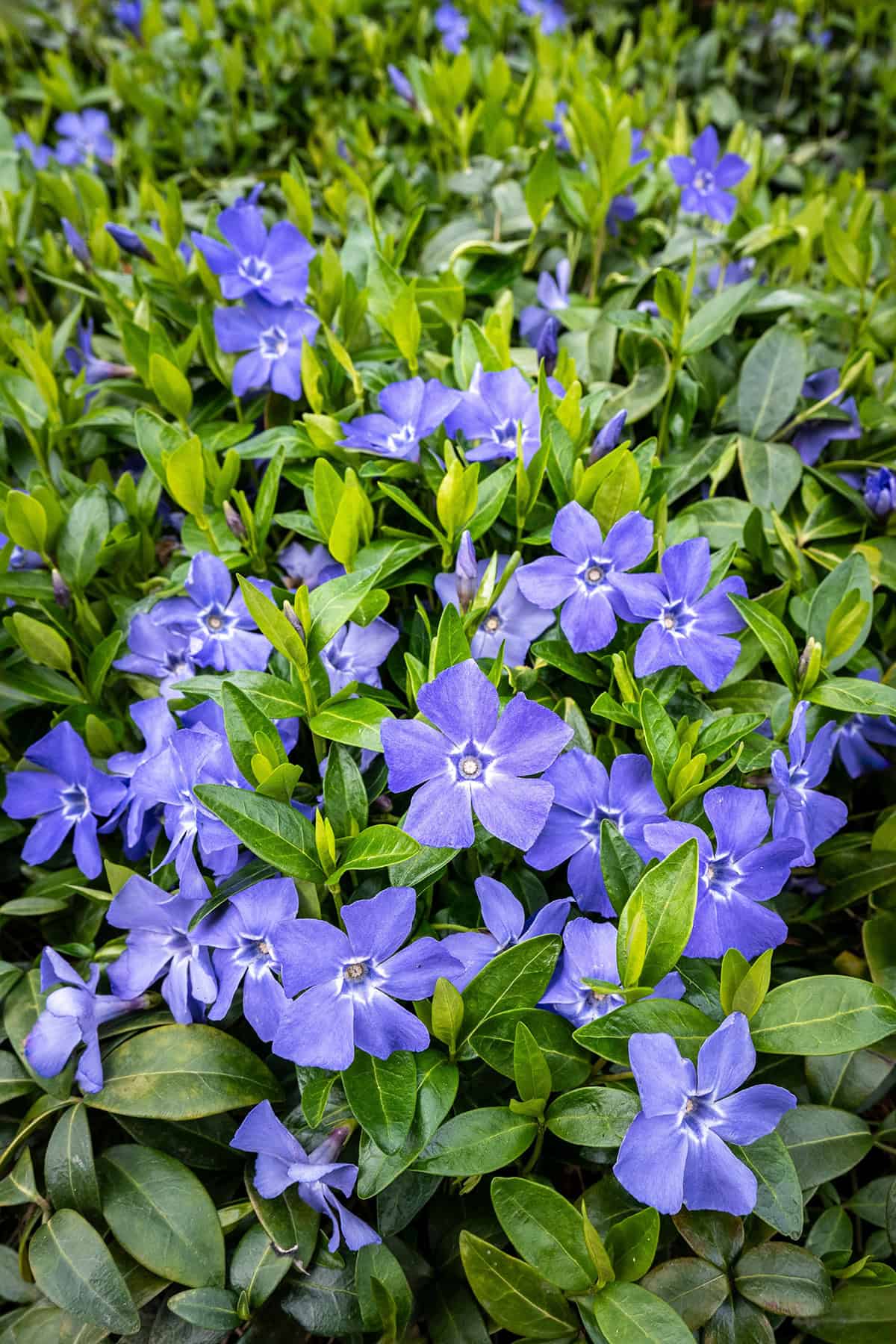
Vinca minor handles cold well and grows in USDA zones 4 to 8, as an evergreen through most winters. Growth slows in cold weather, and long stretches of heat above 90°F stress the plant.
Humidity matters mainly for disease. Warm, humid, still air encourages fungal stem blight, so good airflow helps in muggy regions.
In hot climates, plant it where afternoon shade protects the leaves from scorch. In cool areas, more sun produces steadier growth and more flowers.
Harsh winter wind and sun dry the evergreen leaves and brown their edges in exposed spots. A sheltered site or a light layer of evergreen boughs reduces the damage.
Summer calls for attention to heat stress and water loss. Container plants need shelter in winter, since roots in pots freeze more easily than roots in the ground.
Fertilizer
Vinca minor needs little fertilizer. A balanced formula such as 10-10-10, applied lightly, covers its needs, and a soil test shows any real shortage.
Feed once in early spring before new growth appears. Skip mid-summer applications unless you are correcting a deficiency.
Use small amounts on young plantings to prevent root damage, since excess nitrogen pushes leafy growth at the expense of flowers. Spread fertilizer evenly over the bed, and brush any granules off the leaves.
Watch growth and leaf color during the season. Pale leaves suggest a nitrogen shortage, and poor flowering points to too much shade in most cases.
Water after fertilizing so nutrients move to the roots, since dry soil reduces uptake and raises the risk of fertilizer burn. Maintain moist, never soggy, soil for a few days afterward.
Propagation
Vinca minor propagates easily from stem cuttings, division or layered stems, and each method produces plants identical to the parent, which preserves a favorite cultivar.
For cuttings, choose healthy, pest-free shoots of current-season growth, 4 to 6 inches long. Softwood cuttings in late spring root fastest.
Remove the lower leaves to expose the nodes, then insert the cuttings in a clean rooting medium such as sand, perlite or a peat and perlite mix. Hold the medium moist and never waterlogged.
Maintain a warm, humid environment under a clear cover, in good light out of direct sun.
Roots form within 2 to 4 weeks in good conditions. Move rooted cuttings into small pots, then harden them off gradually before planting out.
Division and layered stems need even less effort. Dig up rooted sections of the mat in spring or fall and replant them, or pin a long stem to the soil, and it roots on its own within weeks.
Pruning
Pruning controls the spread and refreshes an older planting. Shear or mow the bed after the spring flowers fade, with the mower at its highest setting, to encourage dense new growth.
Remove dead, damaged or diseased stems first, back to healthy tissue, to reduce the risk of stem blight.
Trim back runners that creep beyond the desired area, into lawns, beds or nearby woodland. An edging strip or a yearly cut along the border holds the planting in its place.
Prune right after flowering, since Vinca minor blooms in spring on the previous year’s stems, and a late cut removes next year’s flowers.
Make clean cuts with sharp tools, since dull blades crush stems and slow healing. On individual stems, cut just above a leaf node.
Potting and Repotting
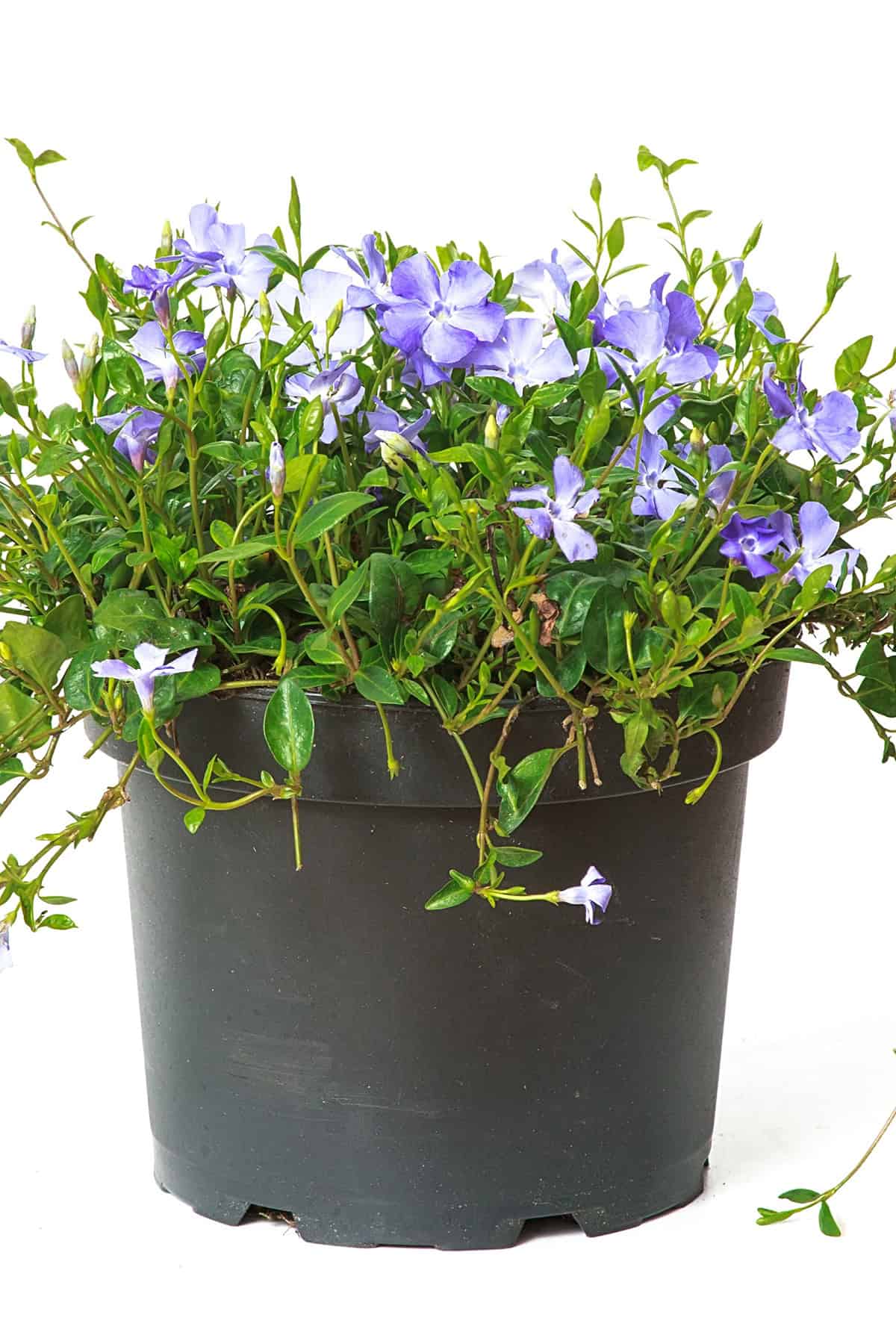
Choose a container with drainage holes to protect the roots from excess water, and match the size to the plant, since an oversized pot holds excess moisture.
Vinca minor serves as a trailing spiller in window boxes, baskets and mixed containers. A standard, high-quality potting mix fits it well.
Repot when roots fill the container or poke through the drainage holes, yearly for vigorous plants and every two to three years for slower ones.
To repot, ease the plant from its old container, loosen compacted roots gently and set it at the same depth in fresh potting mix.
Water thoroughly after repotting to settle the soil, leave space at the top for watering and place the plant in light shade for a few days to reduce stress.
Common Problems & Troubleshooting
Vinca minor spreads aggressively and smothers small plants nearby. It escapes into woodlands, where it crowds out native wildflowers, and several U.S. states list it as invasive, so plant it away from natural areas and check local guidance first.
Thin, sparse growth points to deep shade, root competition from trees or poor soil. Topdress with compost, thin overhanging branches and water during dry spells to thicken the mat.
Pests trouble Vinca minor rarely, though aphids, spider mites and scale appear now and then. Inspect leaves for spots, fine webs or sticky residue, and treat early with insecticidal soap.
Fungal stem blight and dieback strike in wet, humid weather, with stems that wilt, blacken and die back in patches. Improve drainage and airflow, avoid overhead watering and remove infected stems.
Few flowers point to deep shade or excess nitrogen in most cases, and more light, a lighter hand with fertilizer and a post-bloom shear restore flowering. All parts of the plant are toxic to pets and people if eaten.
Plant Varieties
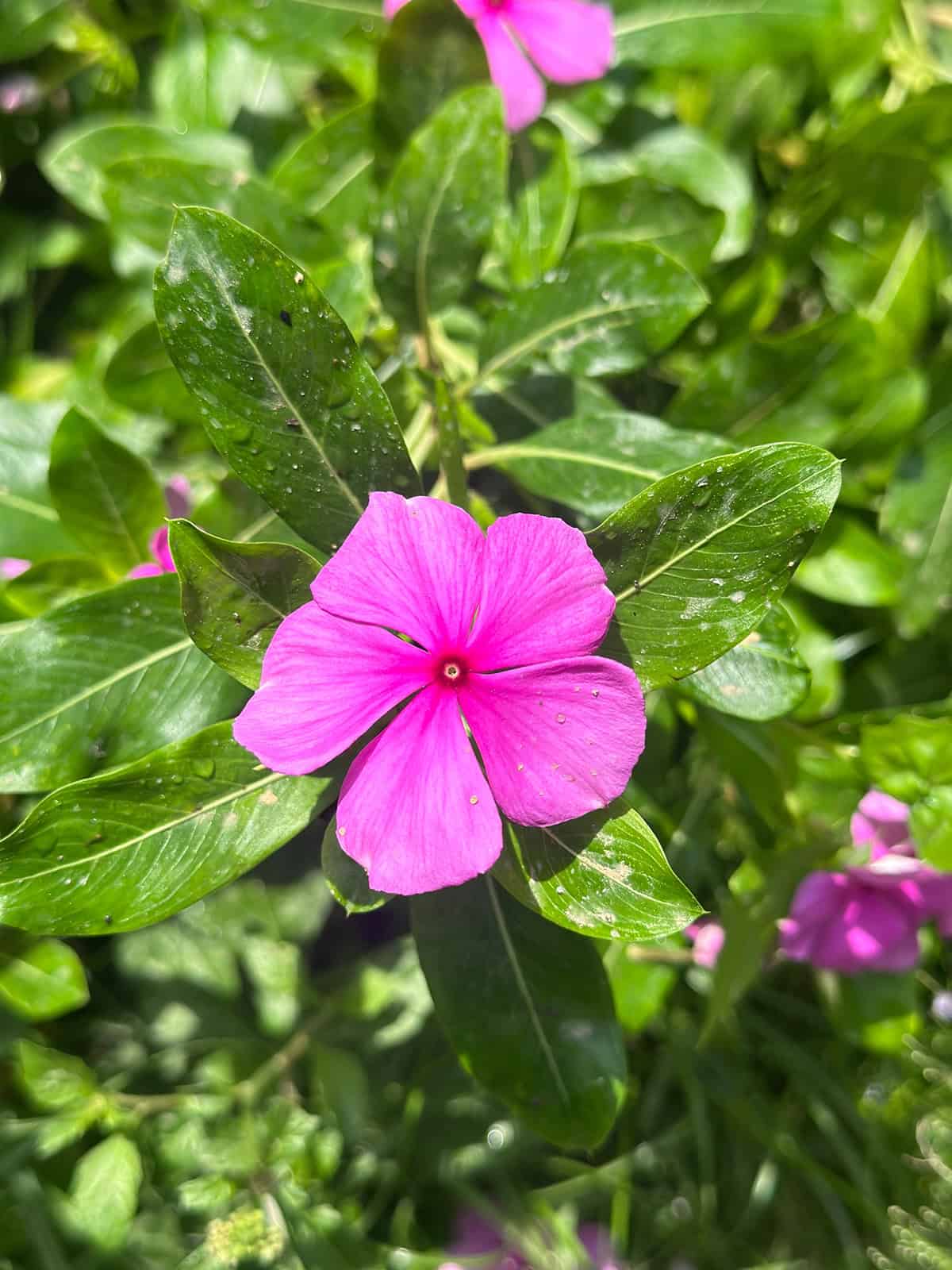
Several periwinkle species and cultivars grow as groundcovers, each with its own habit and look. Some spread slowly, and others race across the ground. Space, climate and the look you want guide the choice.
Vinca minor ranks among the most common evergreen groundcovers for shade. It forms dense mats of trailing stems that root where they touch the soil, with small purple, blue or white flowers. ‘Bowles’ carries large lavender-blue blooms, and ‘Alba’ flowers white.
Several cultivars stand out for their foliage and blooms. ‘Illumination’ has gold leaves edged in green, and ‘Ralph Shugert’ has dark leaves edged in white, a bright contrast in shady corners. Double-flowered forms such as ‘Flore Pleno’ produce fuller, rosette-like blooms.
Vinca major, or bigleaf periwinkle, has larger leaves and flowers and grows faster. It handles cold less well, roughly zones 7 to 9, and spreads even more aggressively in warm regions, so it needs firm control.
For containers and defined beds, compact or slower selections fit best, since walls or pot edges limit their spread.