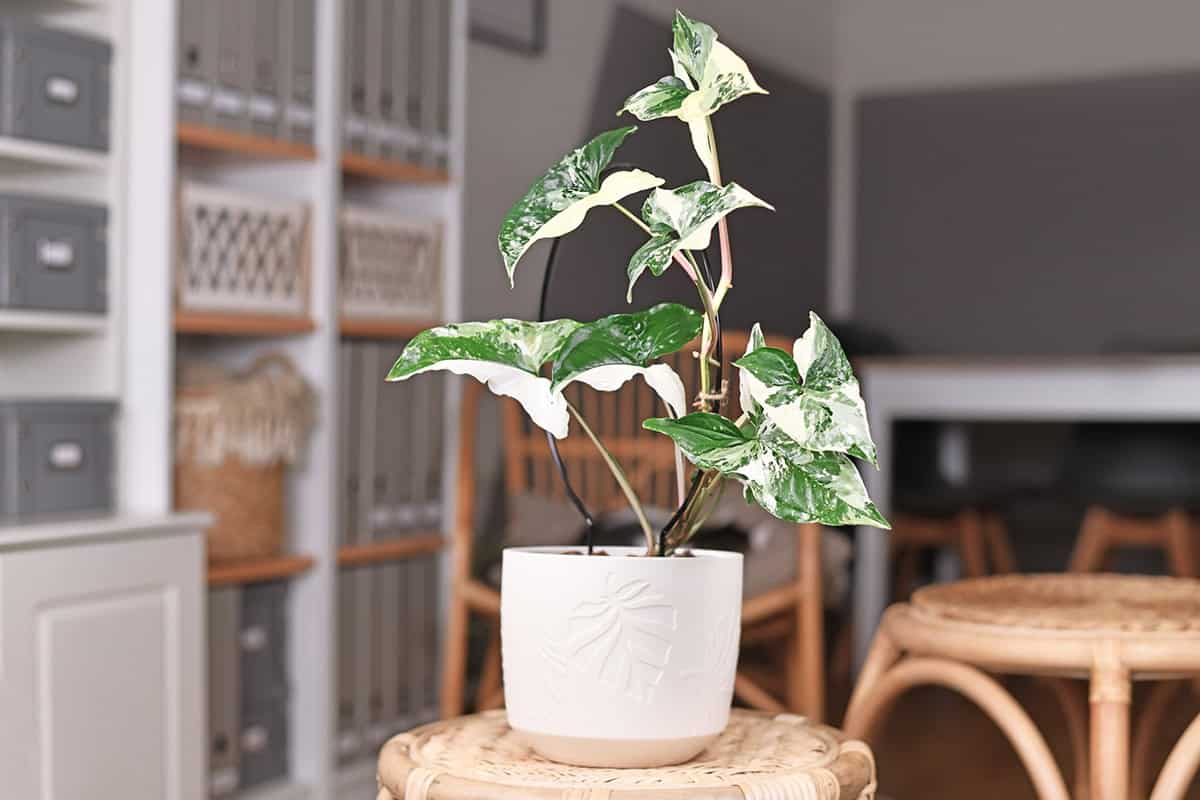
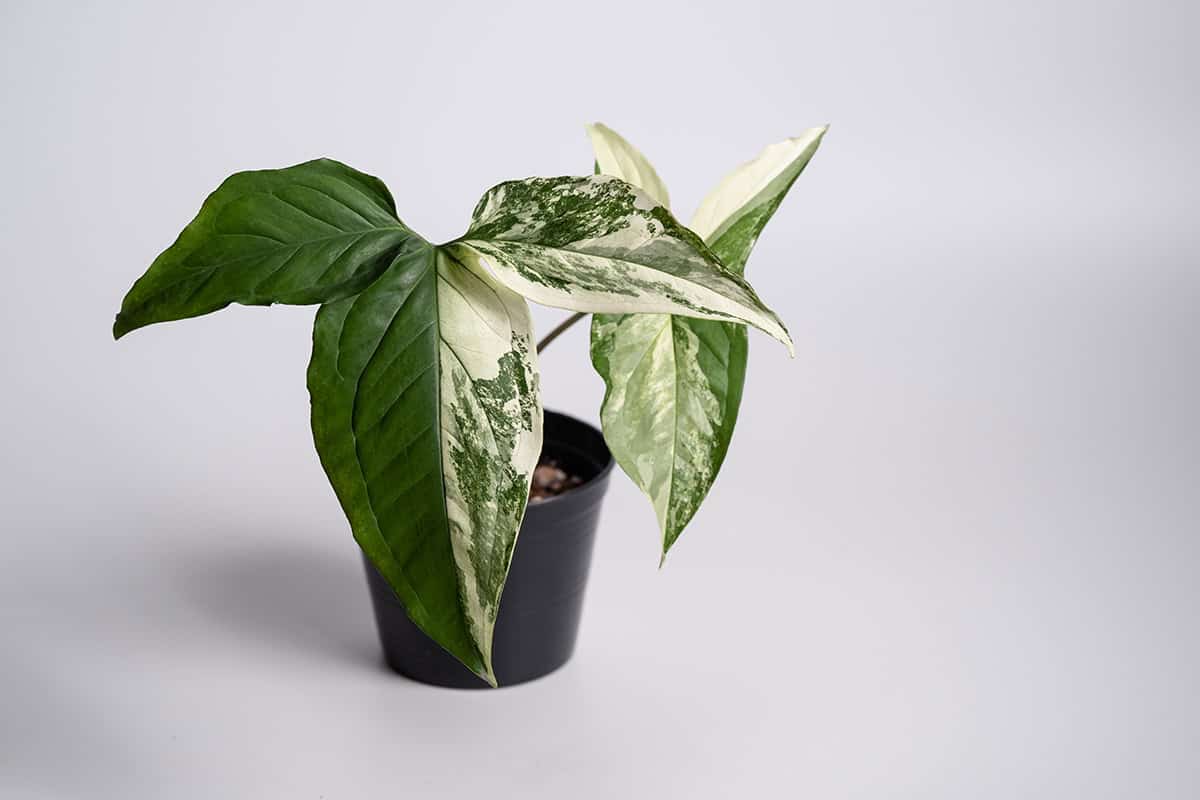
Syngonium podophyllum ‘Albo-Variegatum’ splashes arrow-shaped leaves with patches of snowy white, and no two leaves carry the same pattern. The vine climbs a moss pole or trails from a shelf, and its leaves split into lobes as the plant matures.
Bright, indirect light protects the white sections, and direct afternoon sun scorches them fast. Plain green shoots creep onto most Albos eventually, and an early cut on those shoots decides how much white the plant holds onto.
Table of Contents
Quick Care Summary
Variegated arrowhead vines thrive in plenty of bright, indirect light and warmth. Light and watering habits both affect the amount of white in the leaves, and stable, warm conditions produce a compact, lush plant.
Light: Bright, indirect light. White areas scorch fast in direct sun, and low light reduces variegation.
Soil: A chunky, loose aroid blend with organic matter that drains quickly and holds a little moisture.
Watering: Water when the top 1 to 2 inches of soil dry. Never let the pot stand in water, and cut back in winter.
Temperature: 60 to 85°F. Drafts and chilly rooms stress it, and temperatures below 55°F cause damage.
Humidity: 50 percent or more, with bigger leaves at 60 percent and above.
Fertilizer: Half-strength balanced liquid fertilizer once a month in the growing season.
Propagation: Stem cuttings with at least one node, rooted in water or moist mix in a warm, bright spot.
Plant Overview
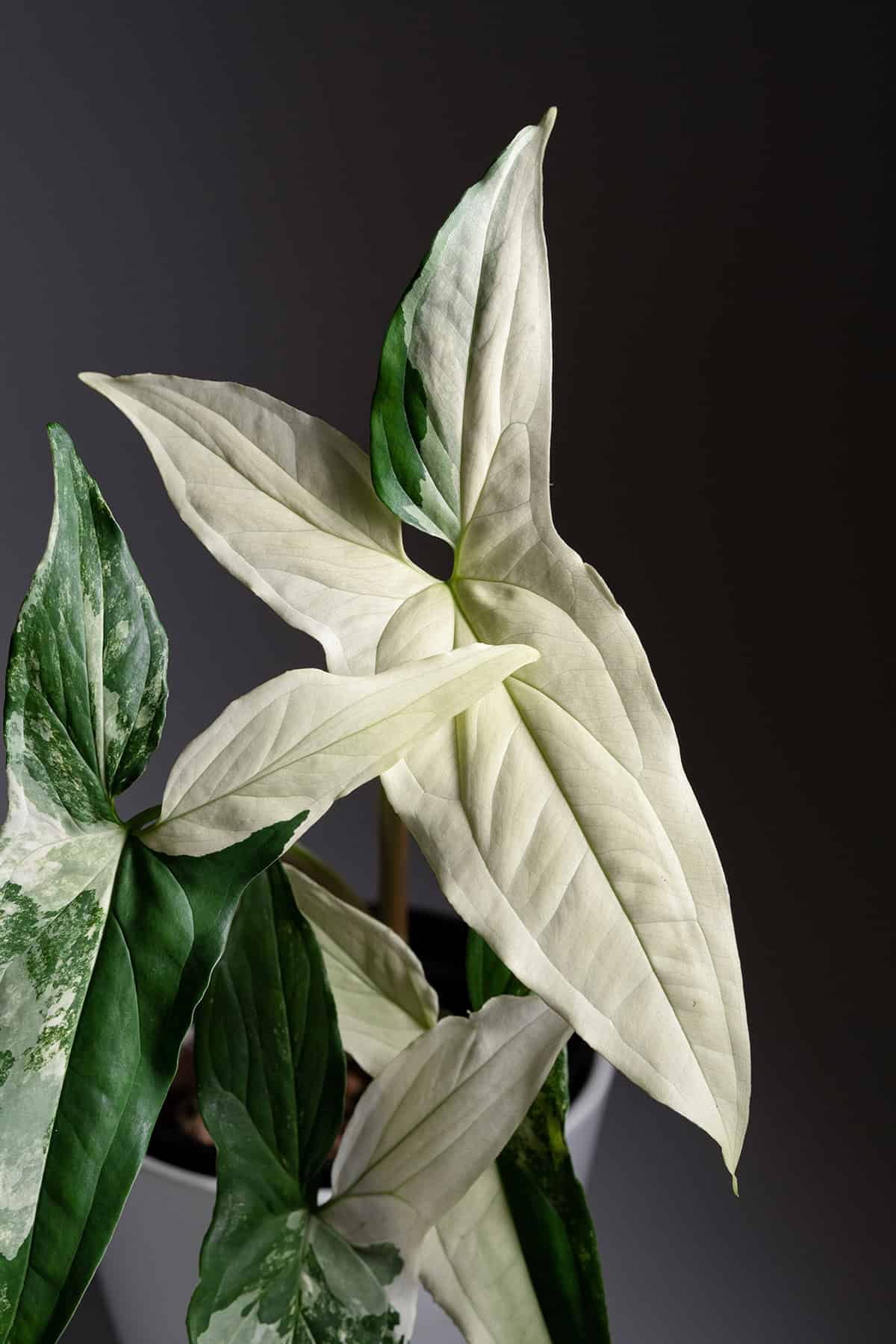
Syngonium Albo stands out for its white marbling, compact vines and leaves that change shape with age. It fits a hanging basket or a moss pole beside a desk equally well.
As the plant matures, the simple arrow leaves split into more intricate, lobed shapes. Pruning and pot size control its spread, and good light maintains crisp, bold variegation.
Botanical name: Syngonium podophyllum ‘Albo-Variegatum’
Common names: Syngonium Albo, variegated arrowhead plant
Plant type: Tropical perennial vine
Mature size: 3 to 6 feet indoors with support, smaller with regular trimming
Growth rate: Moderate in warmth and bright light
Toxicity: Toxic to pets and people if chewed, due to calcium oxalate crystals
Native region: Tropical forests of Mexico, Central America and northern South America (species)
A member of the Araceae, this vine climbs trees in steamy forests in the wild. Indoors, it thrives in similar warmth with moderate to high humidity.
Light
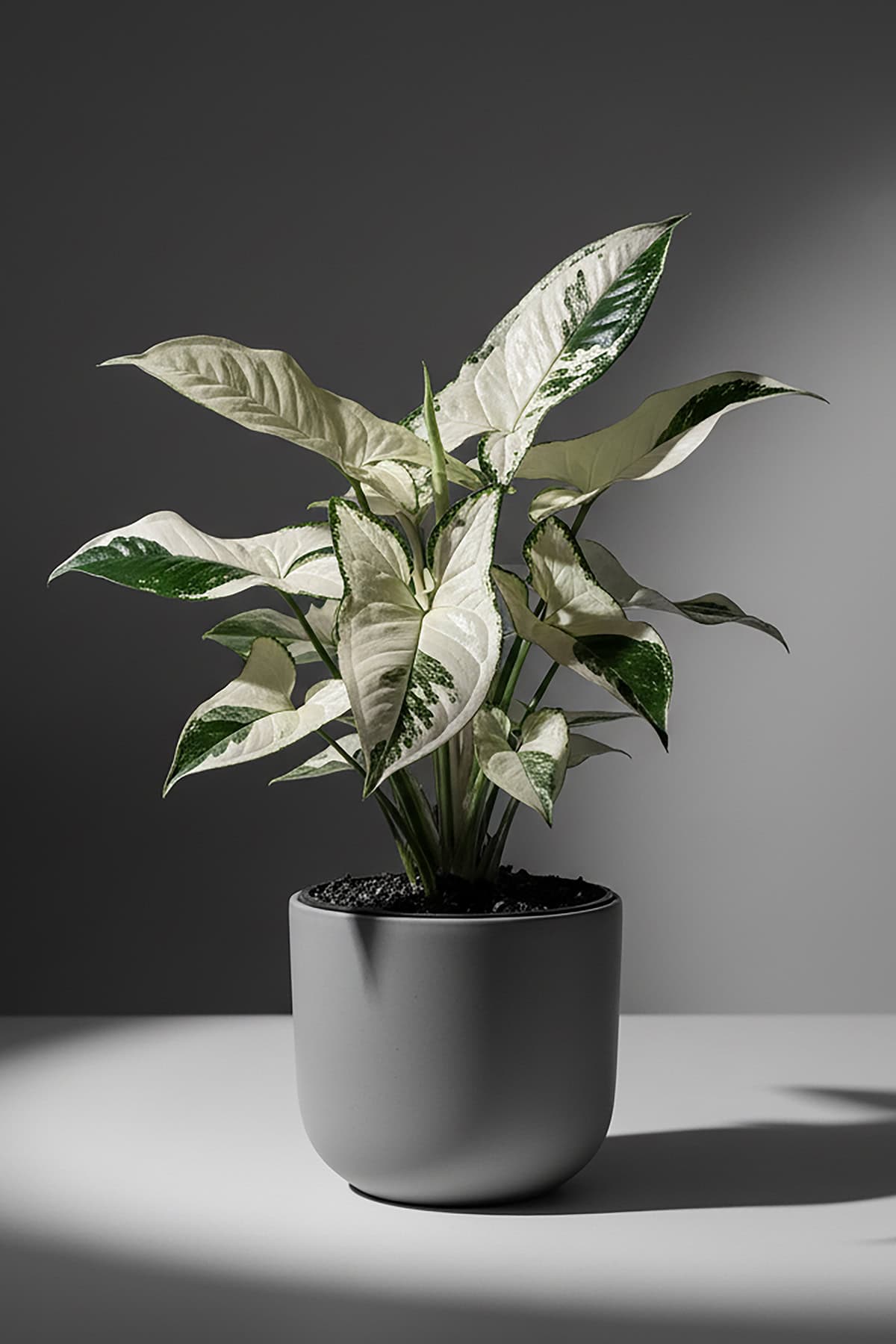
Soft, filtered sunlight shows off the white patches best. An east window provides gentle morning sun, and a bright north window fits too. Mild morning sun is fine, though afternoon glare burns the delicate white sections.
In dim corners, the contrast dulls, new leaves lean green and growth slows. The species evolved under a forest canopy, far from harsh, direct light.
Dry, faded patches or crispy edges on the white parts signal too much sun. Pull the pot back or diffuse the light.
A quarter rotation of the pot every week or so prevents leaning and evens out the color on each side.
In a home short on natural light, a full-spectrum LED grow light 12 to 18 inches above the plant for 10 to 12 hours a day fills the gap.
Water
Let the top of the soil dry a little before watering. Push a finger in, and water once the top inch or two dries, or wait if it still holds moisture.
Soggy roots spell disaster, and root rot sets in fast when water pools at the bottom. Choose pots with drainage holes and empty the saucer after watering.
In warm months, weekly watering covers its needs in most homes. As temperatures drop and growth slows, space waterings out, and let the soil come closer to dry in winter.
Room-temperature water protects the roots from shock. Very hard tap water leaves mineral spots on the leaves, and filtered or distilled water avoids the problem.
Yellow leaves signal too much water, and crispy brown tips point to thirst or dry air. Adjust the routine to your home’s conditions.
Soil
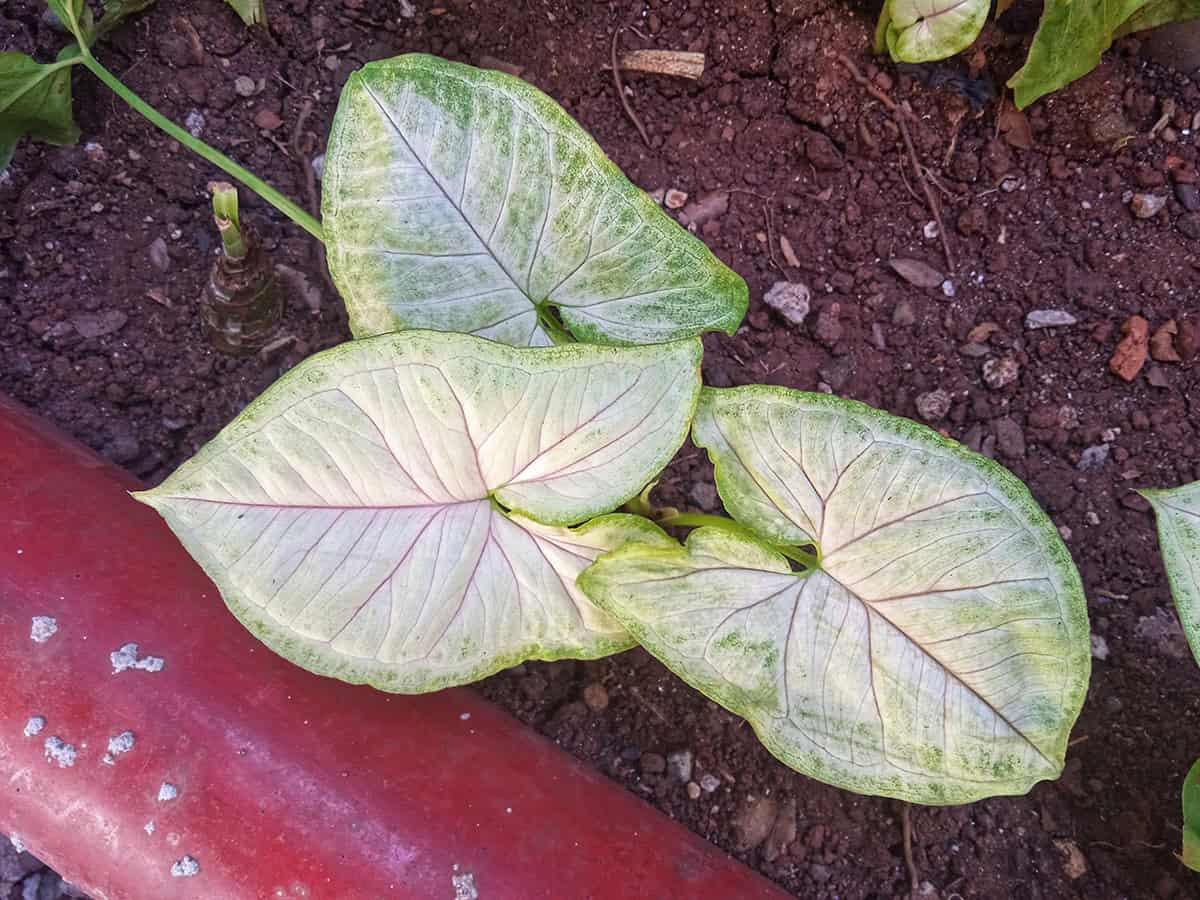
Tropical vine roots need room to breathe. A chunky, loose mix mimics their natural habitat and resists sogginess.
Start with a rich indoor potting soil, then mix in a couple of handfuls of perlite, coarse sand or pumice for drainage. Orchid bark adds structure.
Aim for slightly acidic to neutral soil, pH 5.5 to 7.0. Heavy, dense mixes and garden soil fail here, since roots need air.
After watering, let the top inch or so dry before the next round. Drainage holes matter, since water sitting at the bottom leads to rot.
Refresh the soil every year or two to revive the plant and prevent compaction. Go up just one pot size when repotting to avoid soggy conditions.
Temperature & Humidity
A warm, steady environment matters most. Daytime temperatures of 70 to 85°F fit Syngonium Albo well, and nights down to 60°F are fine, though sudden chills and blasts from heaters or air conditioners cause stress.
Cold snaps below 55°F lead to leaf loss and stalled growth, and rooms above 90°F fade the variegation and wilt the foliage. Place the plant away from drafty windows, doors and radiators.
Humidity matters too, at 50 percent or more, and 60 to 80 percent produces lush, oversized leaves. Most homes fall short in winter, and a group of plants or a humidifier raises the moisture in the air.
Fertilizer
In spring and summer, a monthly dose of balanced liquid fertilizer at half strength sustains steady growth. A 10-10-10 or 20-20-20 blend fits well.
Cut back on feeding once autumn arrives and growth tapers off, since excess fertilizer during rest leads to salt buildup and root problems. Every couple of months, flush the soil with distilled water to clear residue.
Variegated types need less food than their solid green relatives, and too much nitrogen leads to floppy stems and weaker contrast. With slow-release pellets, a light sprinkle in early spring covers the season. When in doubt, feed less.
Potting & Repotting
Use a pot with a drainage hole. In a decorative planter, set the plant in a nursery pot inside to avoid trapped moisture.
Choose a chunky, airy mix, such as a commercial aroid or indoor blend with peat, coco coir and perlite. Orchid bark improves airflow around the roots. The goal is moist, never soggy, soil.
Repot every year or two, or when growth slows and roots circle the pot. Move up just one pot size to avoid waterlogged soil.
Water the plant the day before repotting. Tip it out gently with the root ball intact, settle it at the same depth in the new pot, fill in with fresh mix and leave a little space at the top for watering.
Check the roots as you go and trim away mushy or dark ones with disinfected scissors. Healthy roots look firm and pale.
After repotting, water thoroughly and let it drain, and hold off on fertilizer for a few weeks while the plant adjusts.
Pruning
Regular trims produce a bushy, tidy Syngonium Albo. When vines grow unruly, snip them back just above a leaf node to encourage branching and a fuller look.
Use sharp, clean scissors or pruners, wiped down before and after to avoid spreading disease. Remove damaged or yellow leaves as soon as they appear.
Young plants shape most easily, so prune early. For a leggy or wild plant, cut back several vines at once, up to a third of the plant at a time.
Cut any all-green stem back to a node with white in its leaves, since reverted growth outpaces variegated growth and takes over the plant. Healthy trimmings with at least one node double as propagation material, rooted in water or moist soil.
Propagation
Snip a healthy stem just below a node to start a new Syngonium Albo. Each cutting needs at least one node and a leaf, ideally one with good variegation.
Set the cut end in a glass of water or in moist soil, with the node buried and the leaf above the surface. In water, change it every few days. Roots appear in two to four weeks.
Once roots reach an inch or two, pot the new plant in a small container of well-draining mix, and hold it warm and lightly moist. Division of a mature root ball also succeeds, with roots and a node in each piece.
Common Problems
Yellow leaves signal overwatering or poor drainage in most cases. Soggy roots suffocate fast, with a sour smell or mushy stems to follow. Let the soil dry more between waterings and check the drainage.
Crispy brown edges point to dry air or underwatering, and variegated leaves react strongly to swings in humidity and moisture. For curled or faded leaves, raise the humidity and check the light, since too much sun burns the white parts.
Aphids, mealybugs and spider mites hide on leaf undersides and along stems. Look for sticky spots, fine webs or pale dots, then wipe the leaves and treat with insecticidal soap as needed.
Bacterial leaf spot and rot appear in warm, damp rooms, with dark, mushy spots that spread quickly. Remove affected leaves and isolate the plant, since good airflow and dry foliage hold disease in check.
Varieties
Cultivars of Syngonium podophyllum sold as Syngonium Albo, or ‘Albo-Variegatum’, show shifting patterns of white and green. The variegation varies leaf to leaf, with bold, snowy blocks on one and faint marbling on the next.
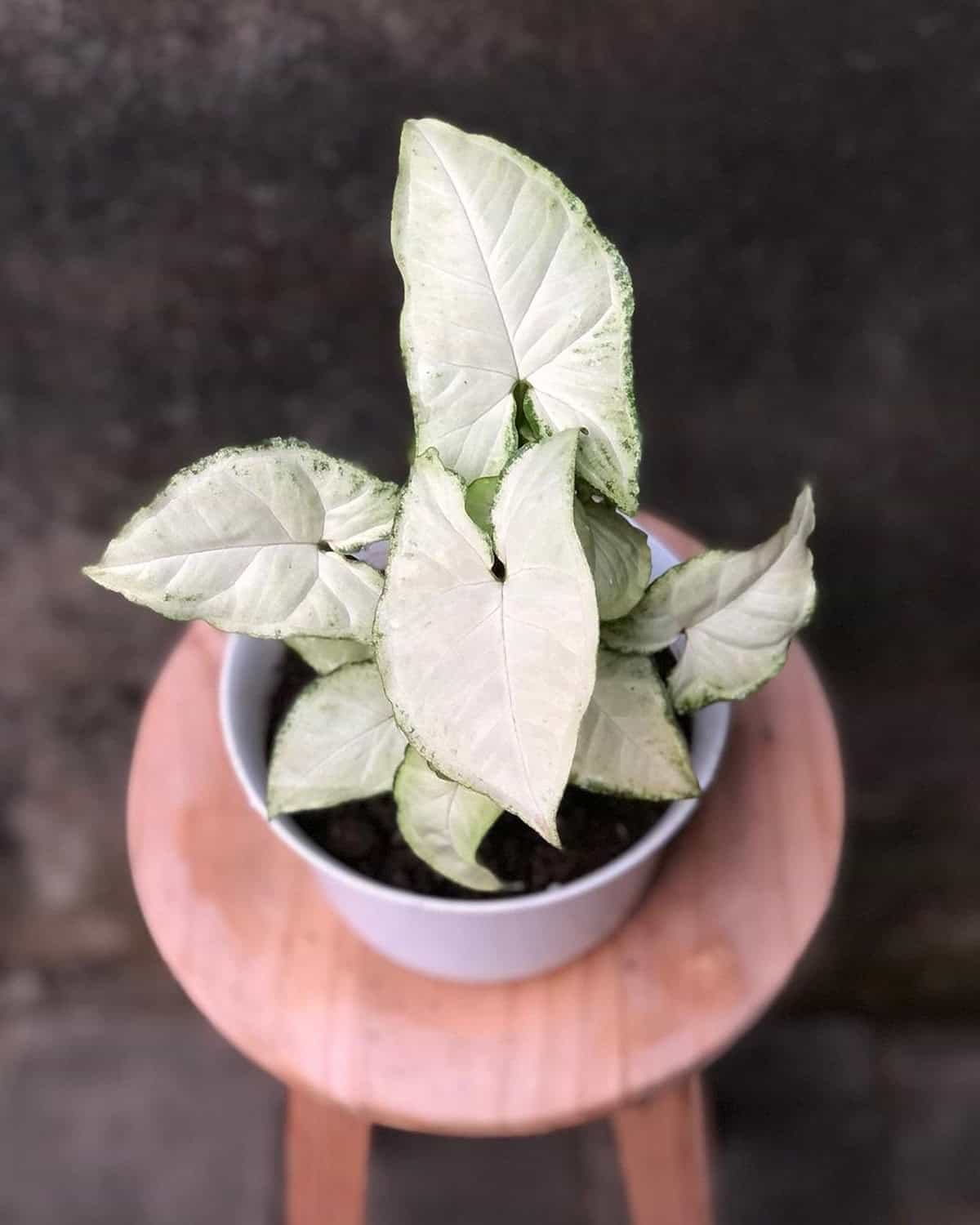
For a subtler look, ‘White Butterfly’ carries pale, creamy green centers with darker green at the margins. The effect reads soft and uniform.
Pink varieties have surged in popularity. ‘Milk Confetti’ scatters pink flecks over mint and cream, and ‘Neon Robusta’ carries a warm, rosy blush across the whole leaf. These skip the high contrast of Albo in favor of steady, cheerful color.
In a tight space, compact or dwarf types branch low and grow tidily. Climbing forms stretch up a pole and produce bigger, more dramatic leaves as they mature. Plants also trail nicely from a shelf.
Young plants hold the classic arrow shape. With enough light and a support to climb, mature leaves grow deeply lobed and look almost unrecognizable next to the juvenile form.