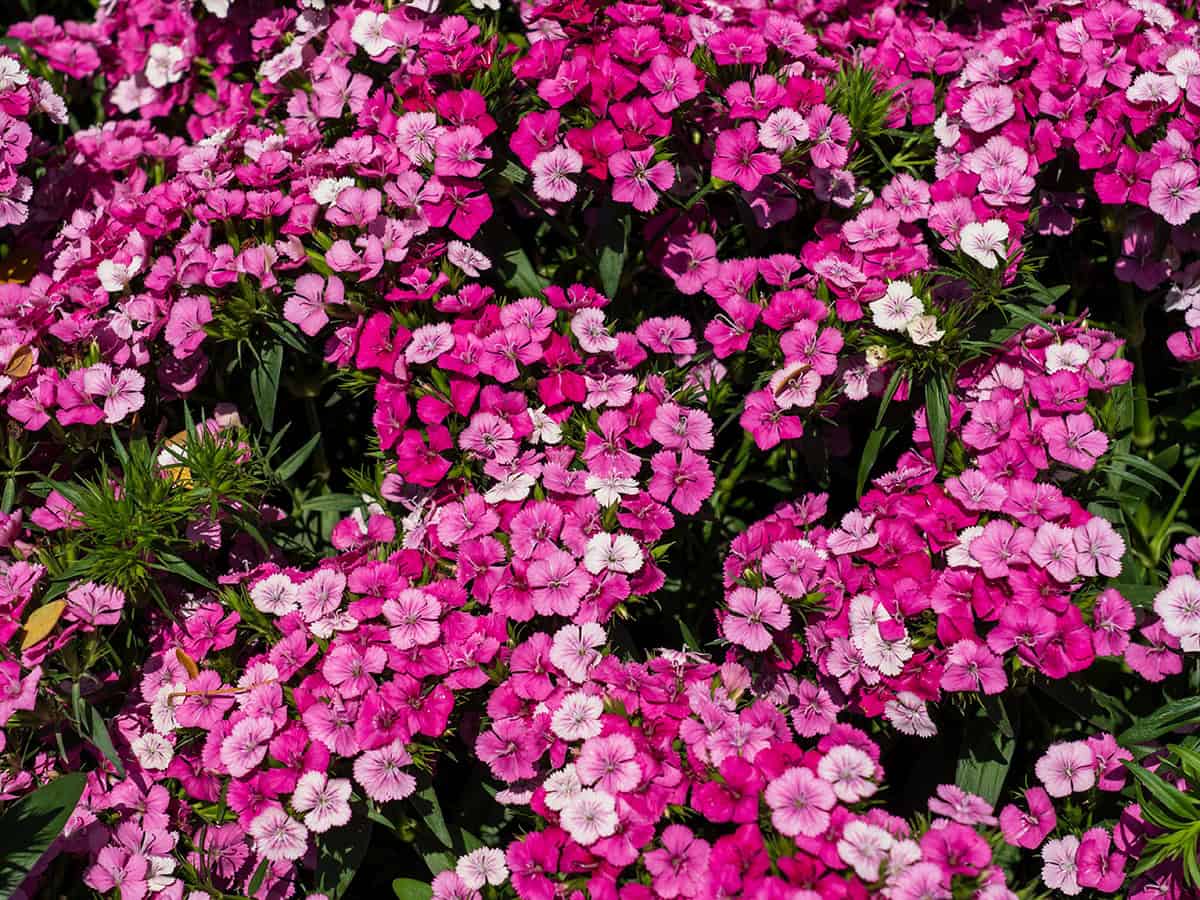
Sweet William carries its flowers in flat, tightly packed clusters, and each tiny bloom has a fringed edge and a light clove scent.
Most plants grow as biennials, with a low rosette of leaves in the first year and a burst of color the following spring. Full sun and well-drained, slightly alkaline soil produce the strongest show.
Ten care topics trace that two-year life, with the named varieties saved for the end.
Table of Contents
Light
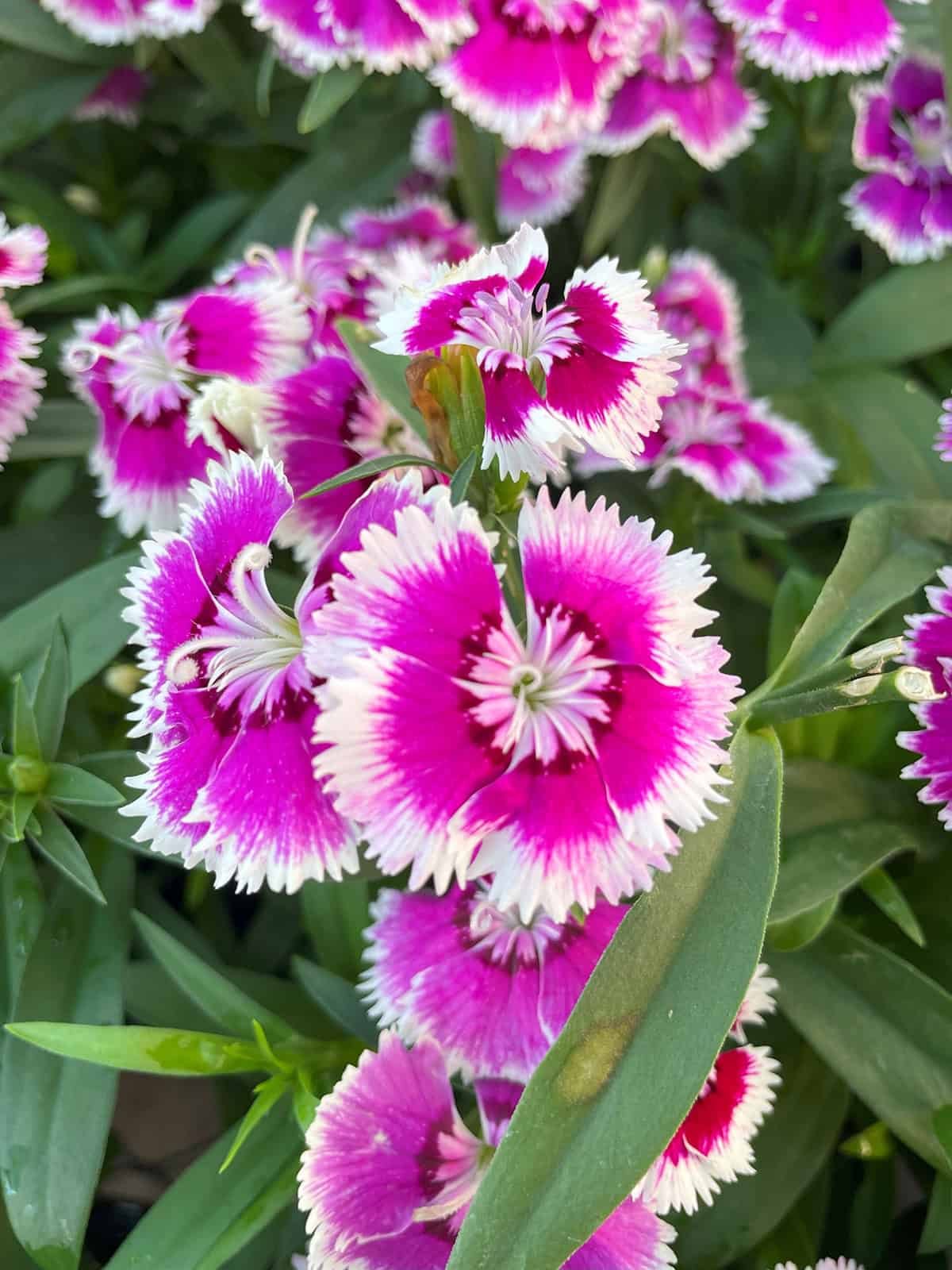
Six or more hours of direct sun each day produce the most flowers and the richest colors on Sweet William. Plants in full sun also grow shorter, sturdier stems.
In hot regions, a patch of afternoon shade protects the blooms from fading early. Morning sun with shade after lunch is a good compromise in Zones 8 and 9.
Low light shows up quickly as tall, floppy stems and sparse flower heads. Taller perennials and shrubs cast more shade than expected by midsummer, which is why the front of a border tends to be the best spot.
Soil
Sweet William likes loose, well-drained soil with a pH between about 6.5 and 7.5. Wet, heavy ground around the crown leads to rot, especially over winter.
Clay soil benefits from a few inches of compost dug in before planting. Raised beds and slopes also help water drain away from the roots.
Acidic garden soil gets a light dusting of garden lime in fall, based on a soil test. Avoid packing the soil down around young plants, since loose ground lets the roots spread and anchor the clumps.
Water
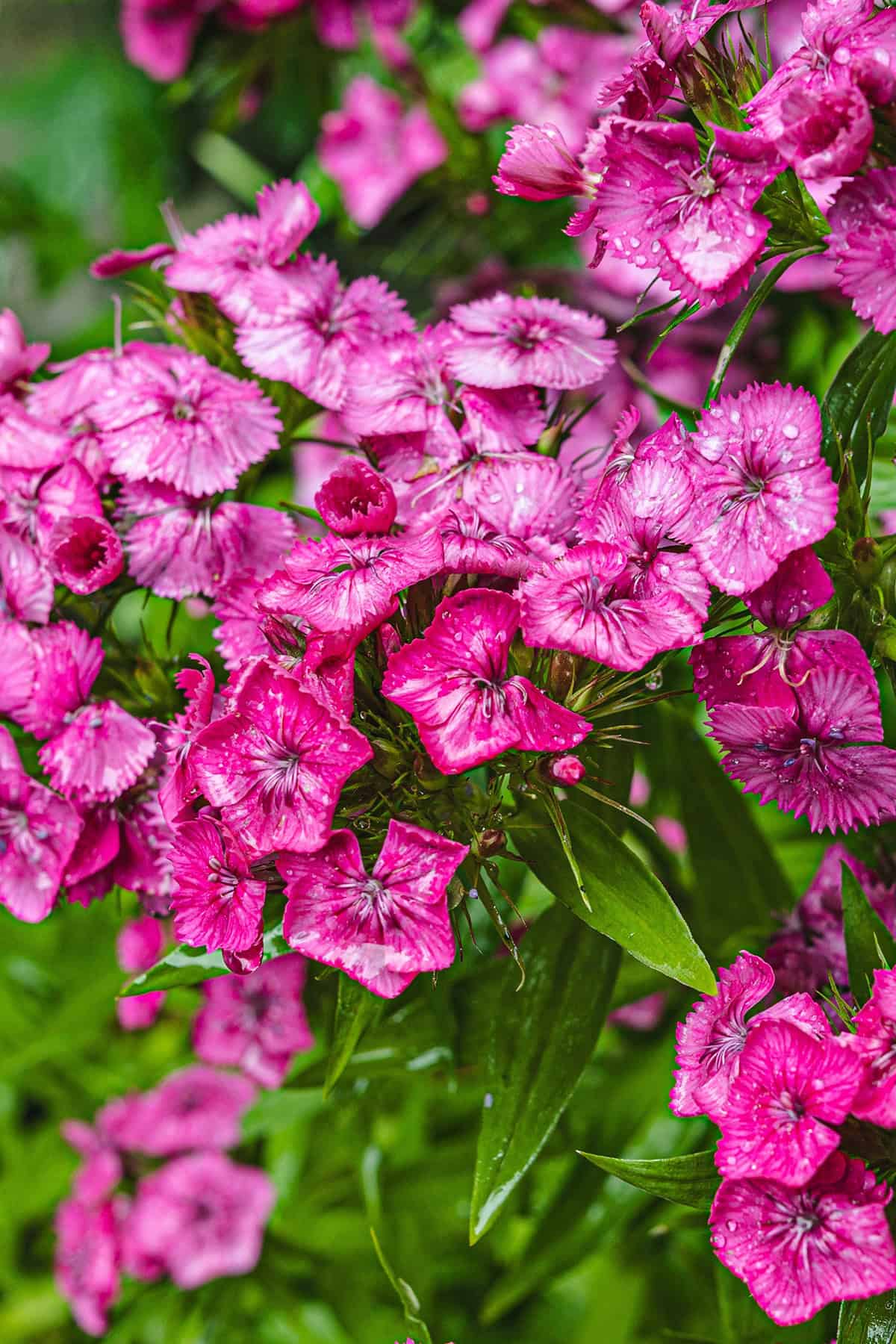
About an inch of water per week, from rain or the hose, covers Sweet William’s needs through spring and early summer. Water deeply at the base and let the top inch of soil dry before the next round.
Push a finger into the soil to check. Dry at the first knuckle means it is time to water, and damp soil means waiting another day or two.
Plants in sandy soil, containers or full sun dry out fastest during summer heat. A thin layer of mulch slows evaporation, but pull it back an inch or two from the stems to protect the crown.
Overhead sprinklers wet the foliage and encourage leaf spot and rust. Morning watering at soil level dries the leaves quickly and lowers that risk.
Temperature And Humidity
Cold winters pose little threat to Sweet William, which is hardy in USDA Zones 3 to 9. Growth and flowering peak when days run between about 50°F and 70°F.
Long stretches above 80°F shorten the bloom period and weaken the plants. In the Deep South, gardeners treat Sweet William as a cool-season annual and plant it in fall for spring flowers.
High humidity raises the risk of fungal disease. Space plants 8 to 12 inches apart for airflow, and clear away weeds that trap moisture around the stems. During a heat wave, water early in the day and add shade cloth over container plants on the hottest afternoons.
Fertilizer
Light feeding produces the best Sweet Williams. Heavy doses of nitrogen push leafy growth and soft stems at the expense of flowers.
Mix compost into the bed at planting time, then apply a balanced slow-release fertilizer such as 10-10-10 in early spring as new growth appears. A second light feeding after the first flush of blooms is optional.
Water after each application to move the nutrients down to the roots. In rich garden soil, compost alone is enough for the whole season.
Propagation
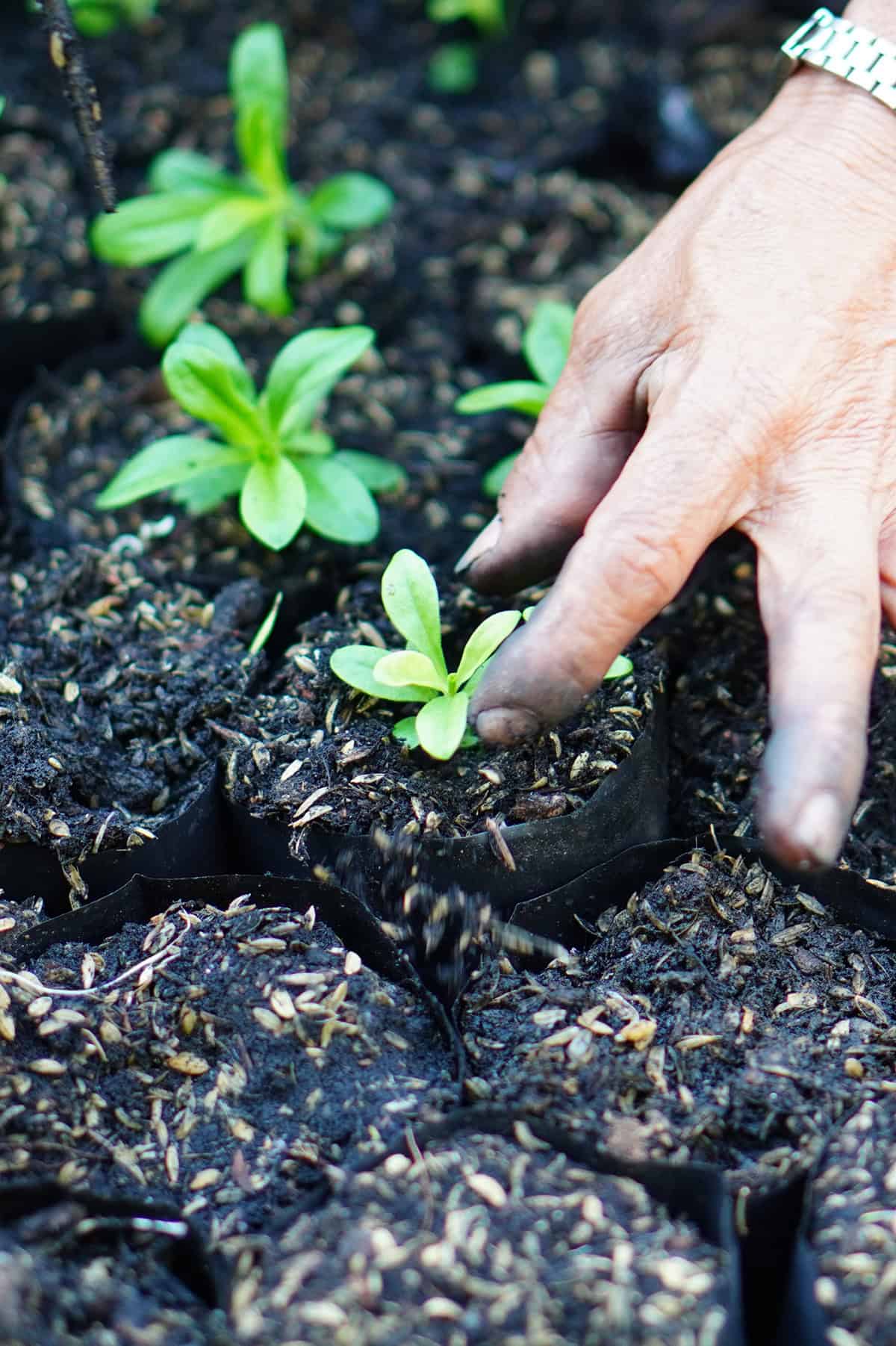
Most gardeners grow Sweet William from seed. Sow it outdoors in late spring or early summer, about 1/8 inch deep, and expect sprouts in one to three weeks. These seedlings form leafy rosettes the first year and flower the following spring.
Indoors, start seeds six to eight weeks before the last frost date. Early-sown plants occasionally flower in their first summer.
Mature plants also drop seed freely. Leave a few flower heads to ripen, and new seedlings will appear around the parents each year, which sustains a patch long after the original plants die. Self-sown seedlings from mixed plantings show a range of colors.
Cuttings preserve a favorite color exactly. Take 3- to 4-inch non-flowering shoots in late spring or summer, dip the ends in rooting hormone and set them in moist, gritty mix. Roots form in about three weeks. Established clumps that behave as short-lived perennials also divide in early spring or fall, and each piece needs its own roots and leaves.
Pruning
Deadheading extends the flowering season. Snip faded clusters back to the next set of leaves as soon as the petals wither, and the plant directs its energy into new buds instead of seed.
After the main bloom, cut the flower stems down close to the foliage. This tidies the plant and encourages a smaller second flush in cooler climates.
Leave a few heads to set seed for next year’s seedlings. Pull yellow or damaged leaves at the base to improve airflow, and use clean, sharp pruners to avoid spreading disease.
Potting And Repotting
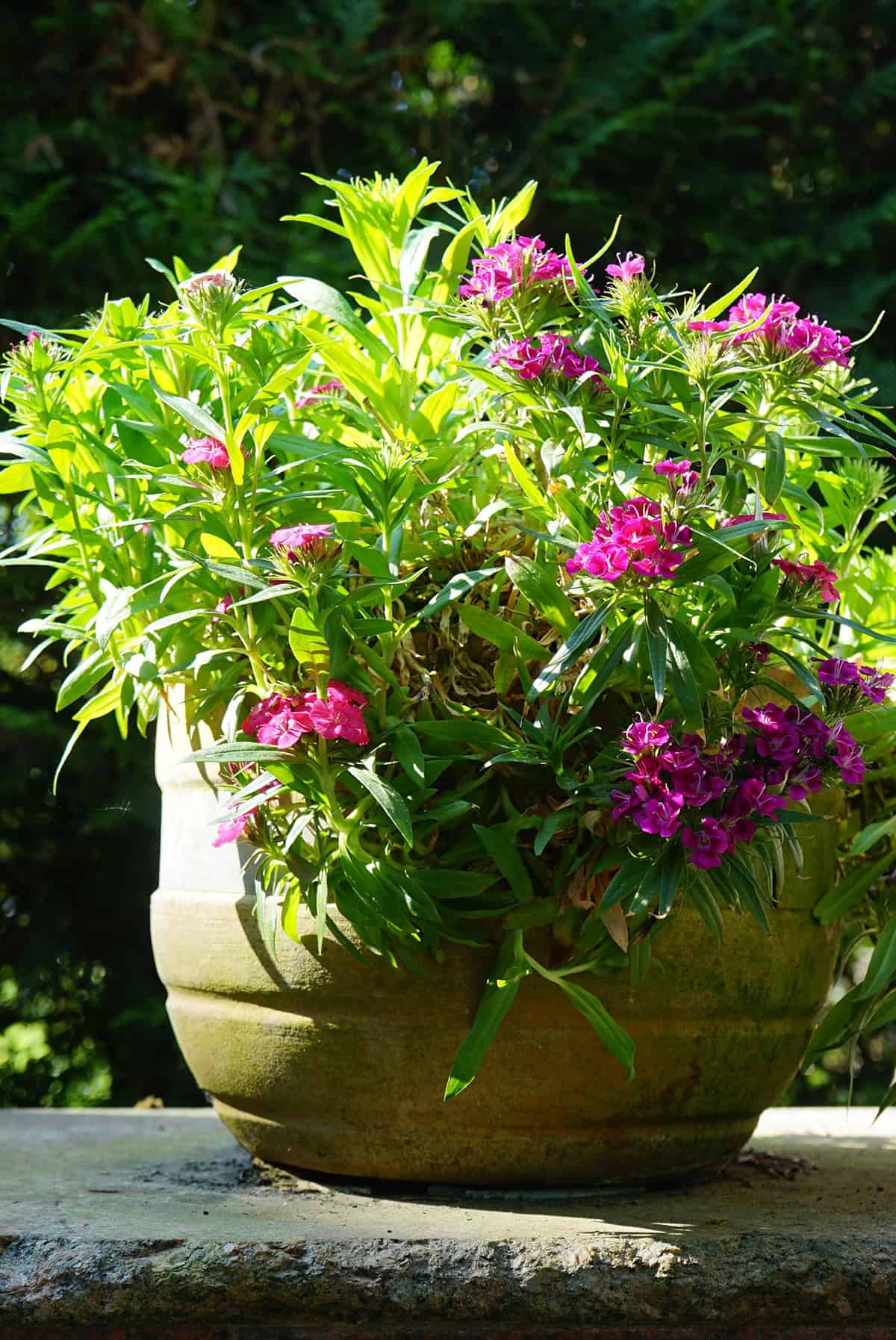
Compact varieties grow well in pots at least 8 inches wide with drainage holes. Use a standard potting mix with extra perlite or coarse sand for faster drainage.
Set the plant at the same depth it grew in the nursery pot, fill around the roots and firm the mix lightly. Water thoroughly after planting, and avoid soggy soil during the first week.
Since Sweet Williams live only two or three years, most container plants never need repotting. If roots circle the pot or poke out of the drainage holes, move the plant to a container one size larger with fresh mix in early spring.
Common Problems & Troubleshooting
Wet, poorly drained soil causes crown and root rot, the most serious problems for Sweet William. Yellow lower leaves and mushy stems at the base are the warning signs. Improve drainage and water less to prevent them, because rotted plants rarely recover.
Rust shows up as orange or brown pustules on the undersides of leaves, and leaf spot leaves tan patches with dark edges. Remove infected leaves, space plants for airflow and water at the soil line.
Aphids cluster on new shoots and flower buds, while slugs chew ragged holes in the leaves during damp weather. A strong spray of water or insecticidal soap controls aphids, and beer traps or hand-picking at night handle slugs.
Few flowers on healthy-looking plants point to too much shade or too much nitrogen. First-year plants produce mostly leaves, since most Sweet Williams flower in their second season.
Plant Varieties
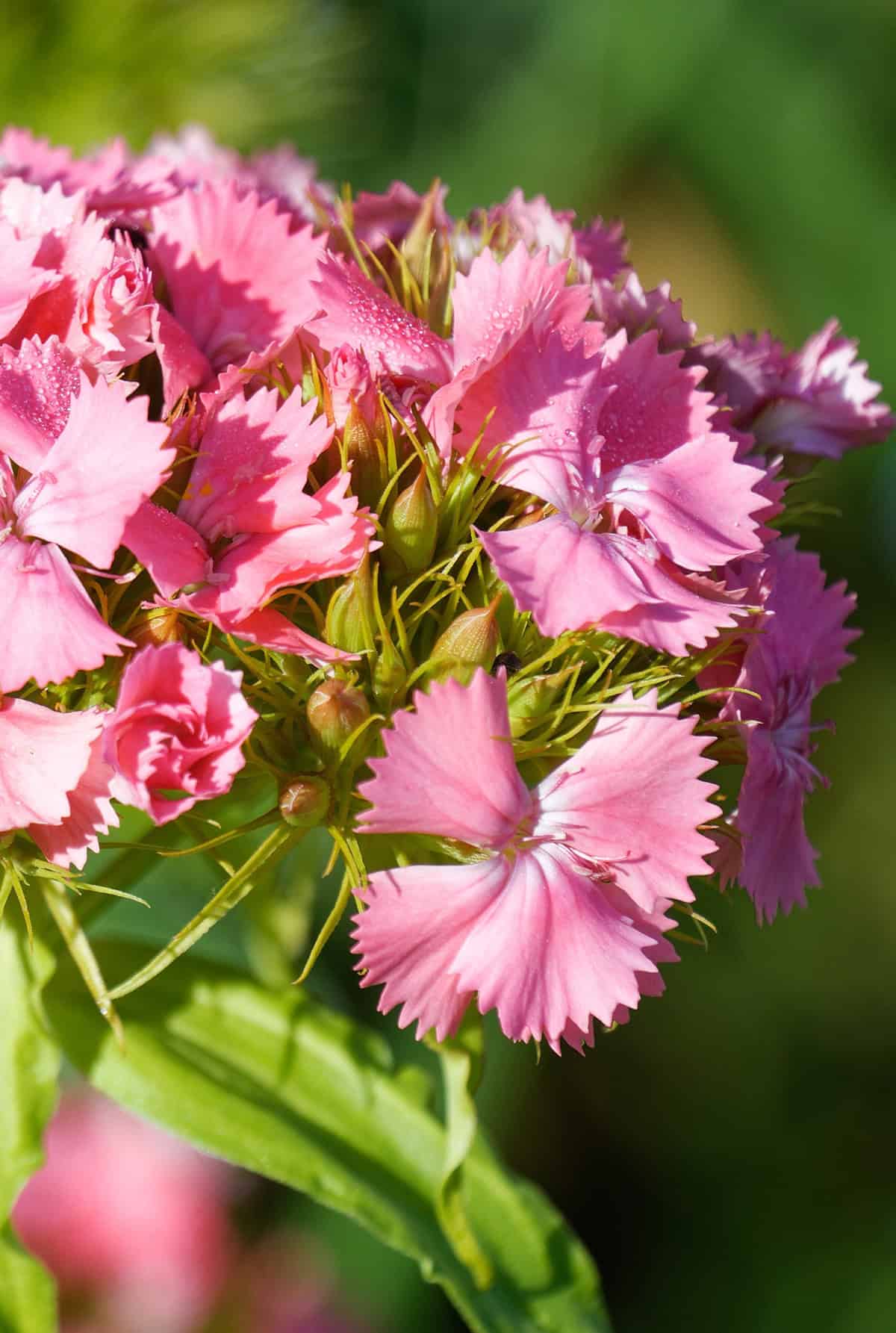
Sweet William, Dianthus barbatus, comes in white, pink, red, purple and bicolor forms, and many flowers carry a contrasting eye or zoned rings. Heights range between about 6 inches for dwarf types and 24 inches for tall cutting varieties.
‘Sooty’ has deep burgundy, almost black blooms and dark foliage. ‘Albus’ produces pure white clusters, and ‘Newport Pink’ carries soft salmon-pink flowers on tall stems for cutting.
Dwarf mixes such as ‘Indian Carpet’ reach about 6 inches and fit edging and containers. Double-flowered strains have extra petals for fuller heads, and seed mixes produce a patchwork of colors in a single sowing.