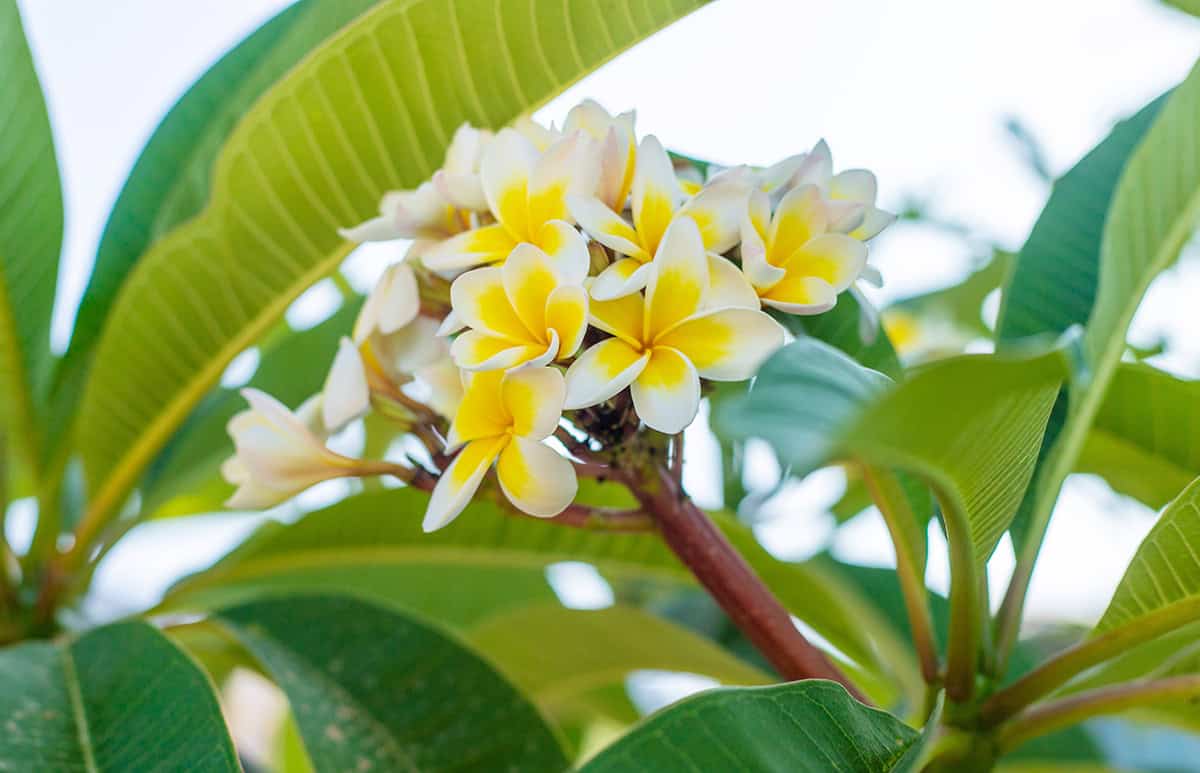
You walk outside and see a plumeria in full bloom. Its vibrant colors and sweet fragrance draw you in right away. Growing and caring for a plumeria can be simple and rewarding.
You only need full sun, well-drained soil, and regular watering during warm months to help your plumeria thrive. Plumerias grow best with plenty of sunlight and enough water to support growth in summer.
Once settled in, plumeria becomes drought and salt tolerant. With basic care, you can enjoy beautiful, fragrant blooms year after year. Whether you keep your plant in a pot or in your yard, you can enjoy its striking flowers with just a few easy steps.
Table of Contents
Light
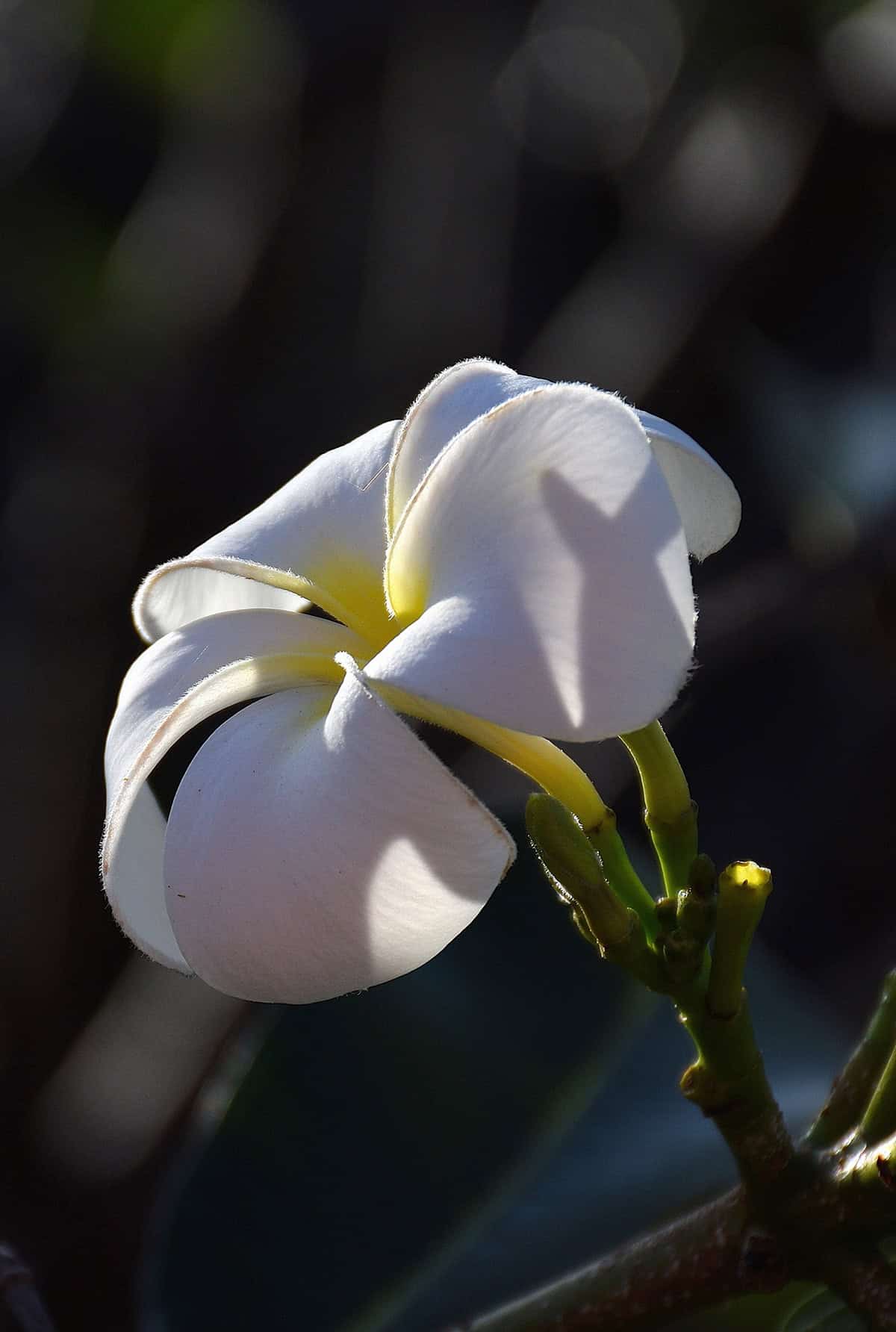
Your plumeria needs sunlight to grow well. Full sun helps it bloom. Choose a spot that gets at least six hours of direct sunlight each day.
This plant thrives in bright conditions. Sunlight drives healthy leaf growth and encourages strong blooms. A sunny spot outdoors works best if you live in a warm climate.
If you grow plumeria indoors, use the brightest window available. Place it near a south- or west-facing window to maximize light. Move your plant outdoors in summer if possible.
Lack of light leads to weak stems and fewer flowers. If you notice stretching or pale leaves, increase the light. Small, compact plants with firm stems mean you have enough light.
A balance of sun and shade is possible in very hot areas. Afternoon shade can prevent scorching. However, plumerias prefer sun over shade most of the time.
Soil
Choose soil that drains well to help your plumeria thrive. Excess water can cause root rot and other problems. Plumeria prefers sandy or loamy soil that does not hold too much moisture.
Mix equal parts sand, compost, and garden soil to create a suitable environment. The roots need good airflow and should not stay wet. If you plant in a container, make sure the pot has drainage holes.
Check soil before watering. Dry soil below the surface signals it is time to water again. Consistent wetness will damage your plant’s roots.
Enrich soil with organic matter. Well-rotted compost or leaf mold helps support healthy growth. Plumeria does best when the soil nutrients remain balanced. Use a slow-release fertilizer during the growing season if the soil lacks nutrients.
Water
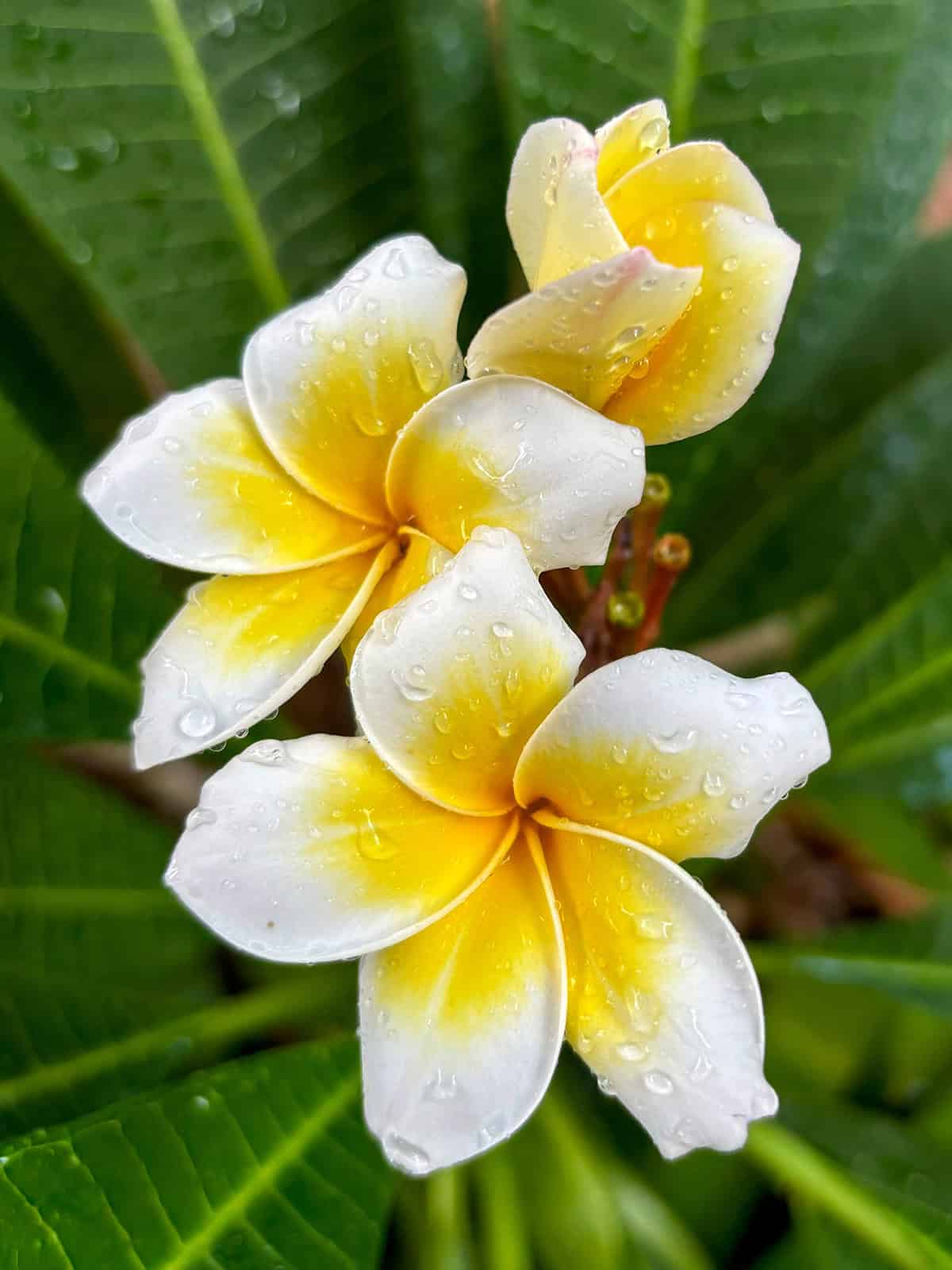
You need to provide consistent moisture when growing plumeria. Overwatering leads to root rot, while underwatering causes leaves to drop. The key is keeping soil slightly moist but never soggy.
Water your plant when the top inch of soil feels dry. In the active growing season, that might mean watering every few days in hot weather. Plumeria prefers deep watering that reaches the roots.
Let excess water drain freely from the container or garden bed. Never leave your plant sitting in water. Plumeria tolerates drought once established but handles regular water best for strong growth.
Water less when the plant is dormant or leaves start to yellow and fall. In winter, plumeria goes dormant and needs little to no water. Resume watering only when new growth appears in spring.
Humidity is less important than soil moisture. Good airflow helps prevent fungal problems. Focus on watering at the base of the plant, not on the leaves.
Temperature And Humidity
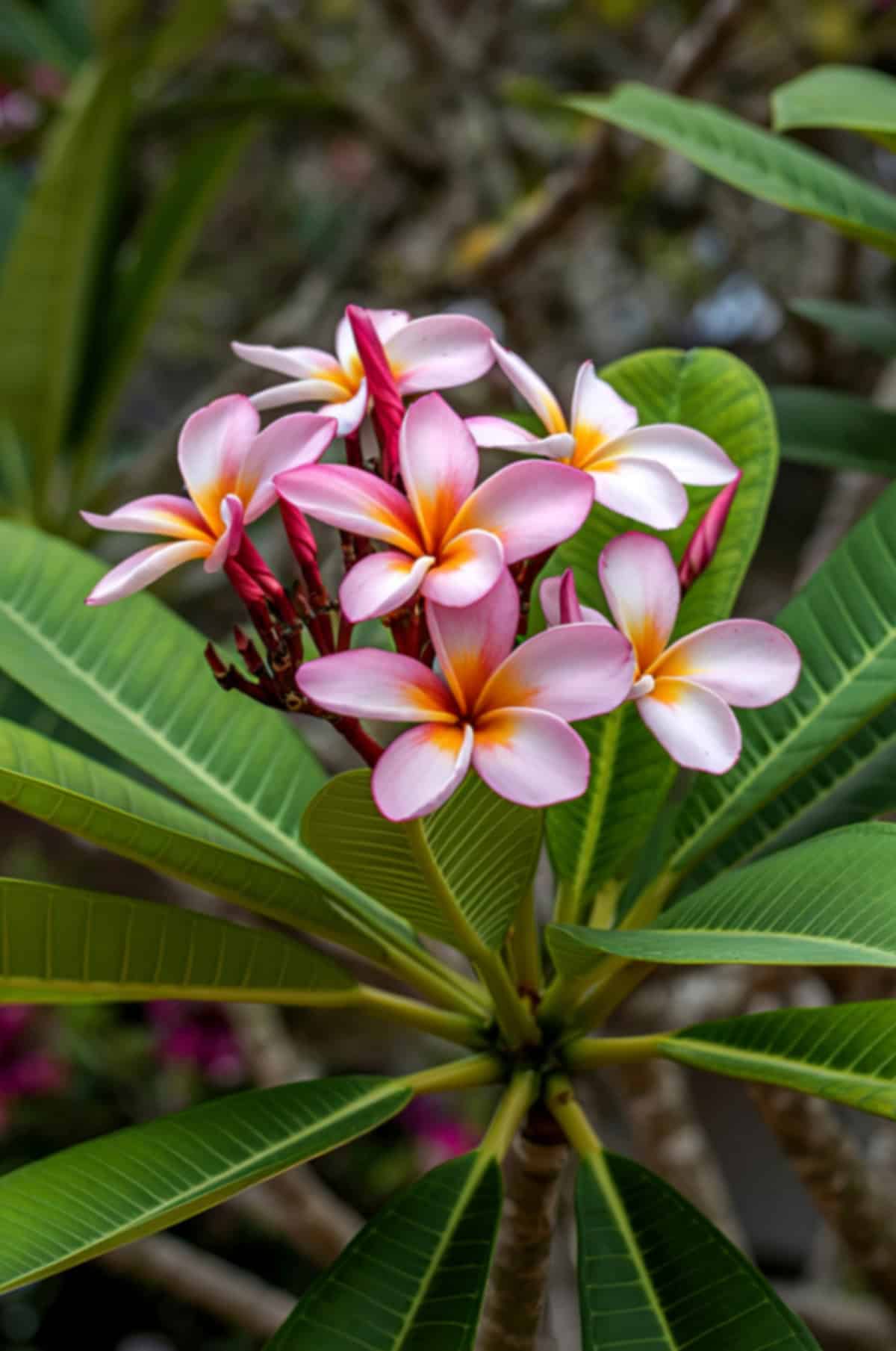
You need to give plumeria warmth for it to thrive. It grows best when temperatures are between 65°F and 85°F. If temperatures drop below 50°F at night, bring the plant indoors.
Humidity helps plumeria grow well. It prefers high humidity, especially if grown indoors. When air is dry, mist the leaves lightly or use a tray of water nearby.
Outdoor plumeria should stay in a sheltered spot if you live in a cooler climate. Place it in a container so you can move it inside as needed. Always keep it away from cold windows or drafty areas indoors.
Sudden temperature drops or cold winds can damage the plant. Protect young or potted plants from chilly nights. Monitor your indoor humidity and temperature if growing plumeria inside.
Fertilizer
You need to feed plumeria regularly during the growing season. Use a high-phosphorus fertilizer to encourage more blooming. A good choice is a 10-30-10 formula.
Apply fertilizer every three to four months while the plant grows. Place fertilizer around the root zone but keep it away from the trunk. Water the soil well after each application.
Always avoid fertilizing in the dormant winter months. The plant will not use much food when it is not growing. Skip fertilizer if you see yellow leaves, as this may indicate overfeeding.
Select slow-release or water-soluble types. Both can work well with plumeria. Choose the one that fits your routine best.
Maintain good soil drainage to prevent root rot when applying fertilizer. Plumeria roots do not like to stay wet after feeding. Remember to use clean water to help nutrients move to the roots.
If you use compost, limit its amount. Too much compost may lower bloom production by adding excess nitrogen. Aim for balanced plant growth and strong, frequent flowers.
Propagation
You can propagate plumeria mainly by using cuttings. This is the most reliable way to get plants that are true to the parent. Seeds work, but new plants often look different and may lack desired traits.
Cut a healthy tip about 12 to 24 inches long. Let the cutting dry in a shady place for about two weeks before planting. This step helps prevent rot.
Place the cutting in well-drained soil after it cures. Water it sparingly at first to avoid rotting the base. Once roots form, increase watering.
Plumeria can also be propagated by seeds, but most gardeners prefer cuttings. Grafting and air layering are less common but possible for experienced growers.
Once your cutting takes root, keep it in a warm and sunny spot. Avoid overwatering during this stage. With patience, you will see healthy shoots and new growth.
Pruning
Pruning supports healthy plumeria growth and improves appearance. You can prune to remove damaged, dead, or weak branches. This allows strong stems and new shoots to develop.
Early spring is a good time to prune. Your cuts will encourage better branching. Pruning at this time helps produce more blooms during the season.
Use sharp, clean pruning shears. Always cut just above a node or leaf. Make each cut at a slight angle for best results.
Keep the plant’s natural shape in mind. Remove branches that cross or grow inward. You may also cut back tall or leggy growth to keep plumeria compact.
Do not over-prune. Most plants need only minimal shaping once mature. After pruning, avoid watering cuts to reduce disease risk.
Pruning can also control size if you grow your plumeria in a pot. Shorter, well-branched plants adapt better in containers. Regular trimming helps you manage space and light.
You may notice sap after pruning. Let the cuts dry before handling or moving the plant. The sap can irritate skin, so wear gloves if needed.
Potting And Repotting
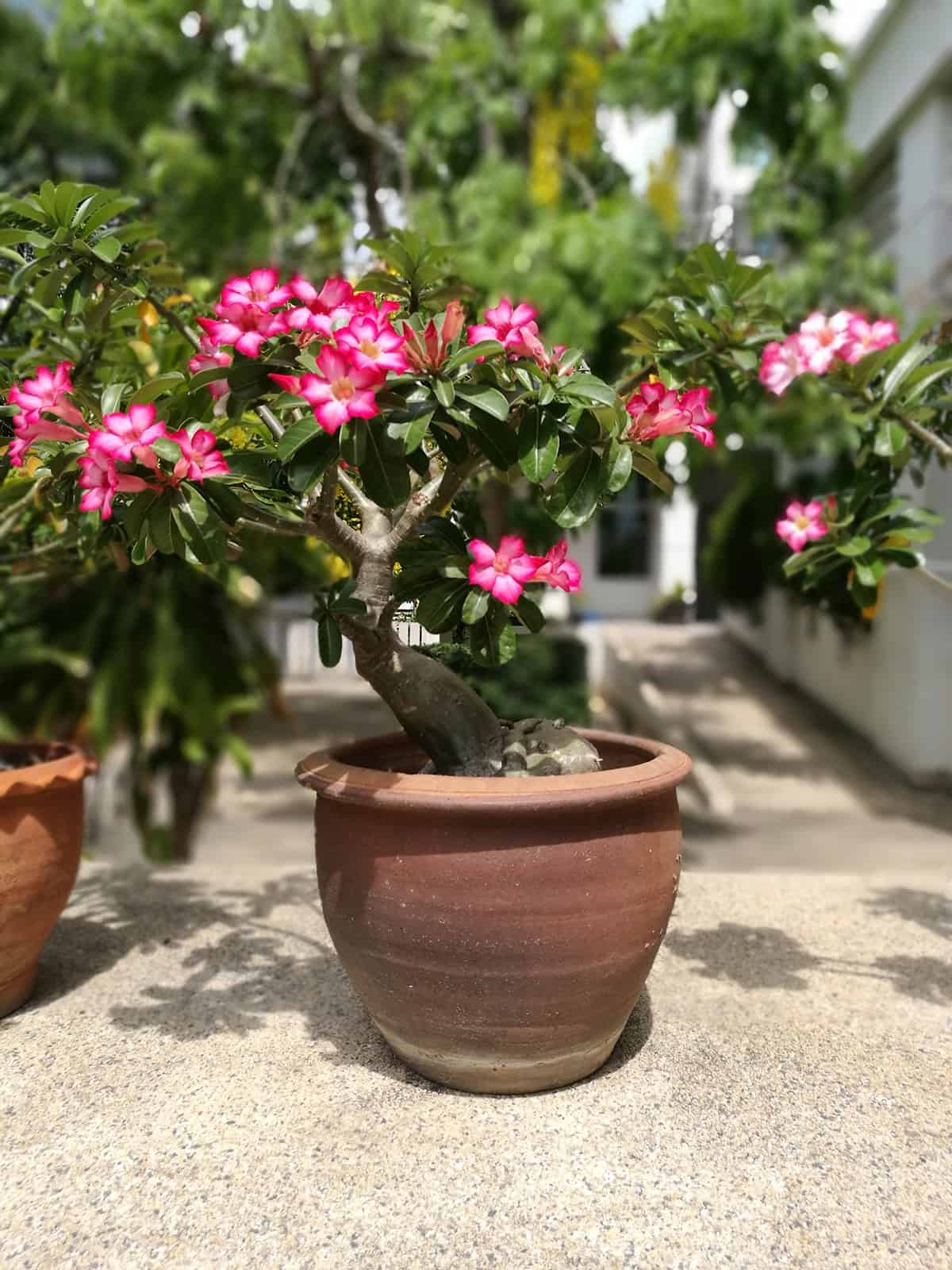
To pot a plumeria, use a container with drainage holes. Choose soil that drains well, such as cactus or succulent mix. You want the roots to stay moist but not soggy.
Select a pot slightly larger than the root ball. A tight pot encourages flower production. Make sure the root crown sits just above the soil surface.
Repot your plumeria when roots fill the pot or water runs straight through. Late winter or early spring works best, just before new growth starts. Avoid repotting during the dormant season.
When moving up a pot size, handle roots gently to avoid damage. If reusing the same pot, trim roots carefully and refresh the soil. Water thoroughly after repotting but do not let the plant sit in water.
Keep recently potted or repotted plumerias in a location with bright indirect light for a few days. This helps reduce transplant stress. Once settled, move them to full sun for best growth.
Common Problems & Troubleshooting
Plumeria plants are not usually fragile, but problems can appear. You may notice pests like spider mites, whiteflies, or mealybugs on leaves. These insects feed on the plant’s sap and can weaken growth.
Use insecticidal soap if you spot pests. Spray the affected areas and repeat as needed. Always follow label instructions to protect the plant and yourself.
Rust is a common fungal issue. Look for orange spots or powder on the underside of leaves. This disease spreads during humid and warm periods.
Remove and dispose of infected leaves right away. This reduces spores for next season. In stubborn cases, use fungicides labeled for rust on ornamental plants.
Yellowing leaves or stunted growth can signal overwatering or poor drainage. Plumeria roots need air to stay healthy. Let soil dry before watering again.
Leggy growth or sparse flowering often comes from low sunlight. Move your plant to a brighter location if you see long, weak stems.
For flower drop, check for sudden temperature changes or extreme dry spells. Water consistently and keep your plumeria sheltered from harsh drafts.
If you notice symptoms not covered here, inspect your plumeria and soil closely. Check for hidden insects, soil problems, or rot. Adjust care as needed and observe any changes.
Plant Varieties
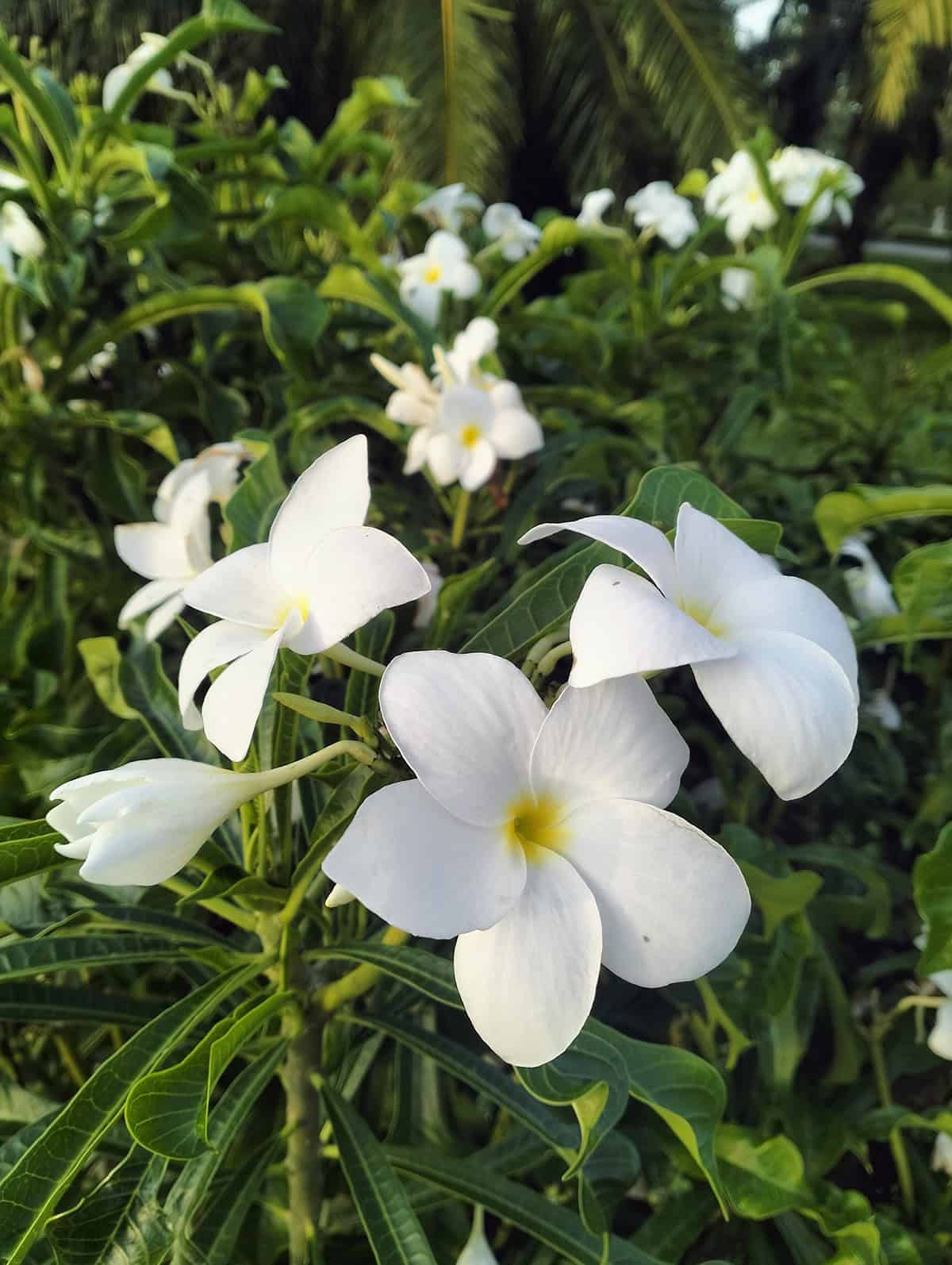
You will find over a dozen species of plumeria, each with unique features. Most garden varieties belong to Plumeria rubra, Plumeria obtusa, or Plumeria pudica. The species can differ in flower shape, fragrance, and leaf form.
Some plumerias display bold red, pink, or yellow flowers. Others have softer white or cream petals. Hybrid varieties expand the color range and offer new patterns. You can select a plumeria based on its blossom color and scent if you have a personal preference.
Flowers from Plumeria obtusa have rounded petals and a strong, sweet smell. Plumeria rubra tends to produce more color diversity, from deep red to vibrant pinks and yellows. Plumeria pudica stands out for its slender leaves and pure white flowers.
Many types grow well both in the ground and in containers. Mature size and growth habit depend on the species and your growing location. Compact forms exist for smaller gardens or pots. Some trees remain small, while others reach several meters.
Check the plant tag or description when you choose a plumeria. Flower color often matches the parent plant’s blooms, but variations can happen, especially in seedlings. Look for a variety suited to your climate zone for best results.