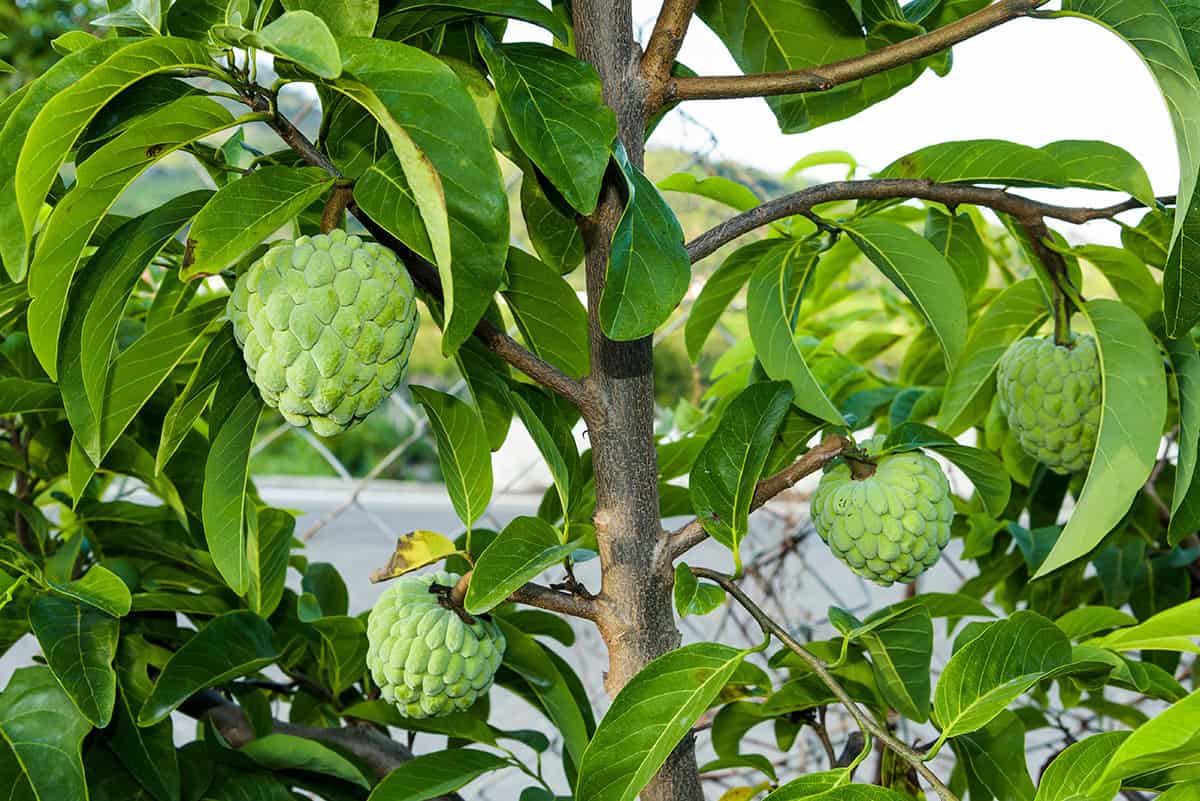
Each custard apple grows as a knobbly green globe of loose segments, and once ripe it pulls apart in the hand to show sweet, creamy white pulp.
Botanically, the tree is Annona squamosa, called sugar apple, sweetsop or sitaphal in different regions, and it grows compact enough for a backyard. Steady heat, full sun and soil that drains fast produce the sweetest crops.
Hand pollination at dusk raises yields considerably, and the fruiting section explains the timing.
Table of Contents
Quick Care Summary
Custard apple needs steady heat, open sky and soil that drains fast. Left unpruned, the tree tops out around 15 to 20 feet, and good spacing and airflow help both fruit and tree health.
- Light: Full sun, at least 6–8 hours daily
- Soil: Well-drained sandy or loamy soil; pH 6.0–7.5
- Watering: Moderate and regular; less during dormancy
- Temperature: 73–94°F for best growth
- Humidity: 70 percent or higher during flowering
- Fertilizer: Balanced fertilizer; lighter nitrogen once fruiting begins
- Propagation: Seed, grafting or budding
- USDA Zones: 10–11
- Fruiting season: Midsummer through fall
Choose the warmest spot in the yard that drains well after rain, since soggy roots and cold below 30°F damage the tree. Plant 15 to 20 feet from buildings and other trees, and prune to control size and strengthen branches as fruit adds weight. Good pollination and steady moisture during bloom produce the most reliable crops.
Plant Overview
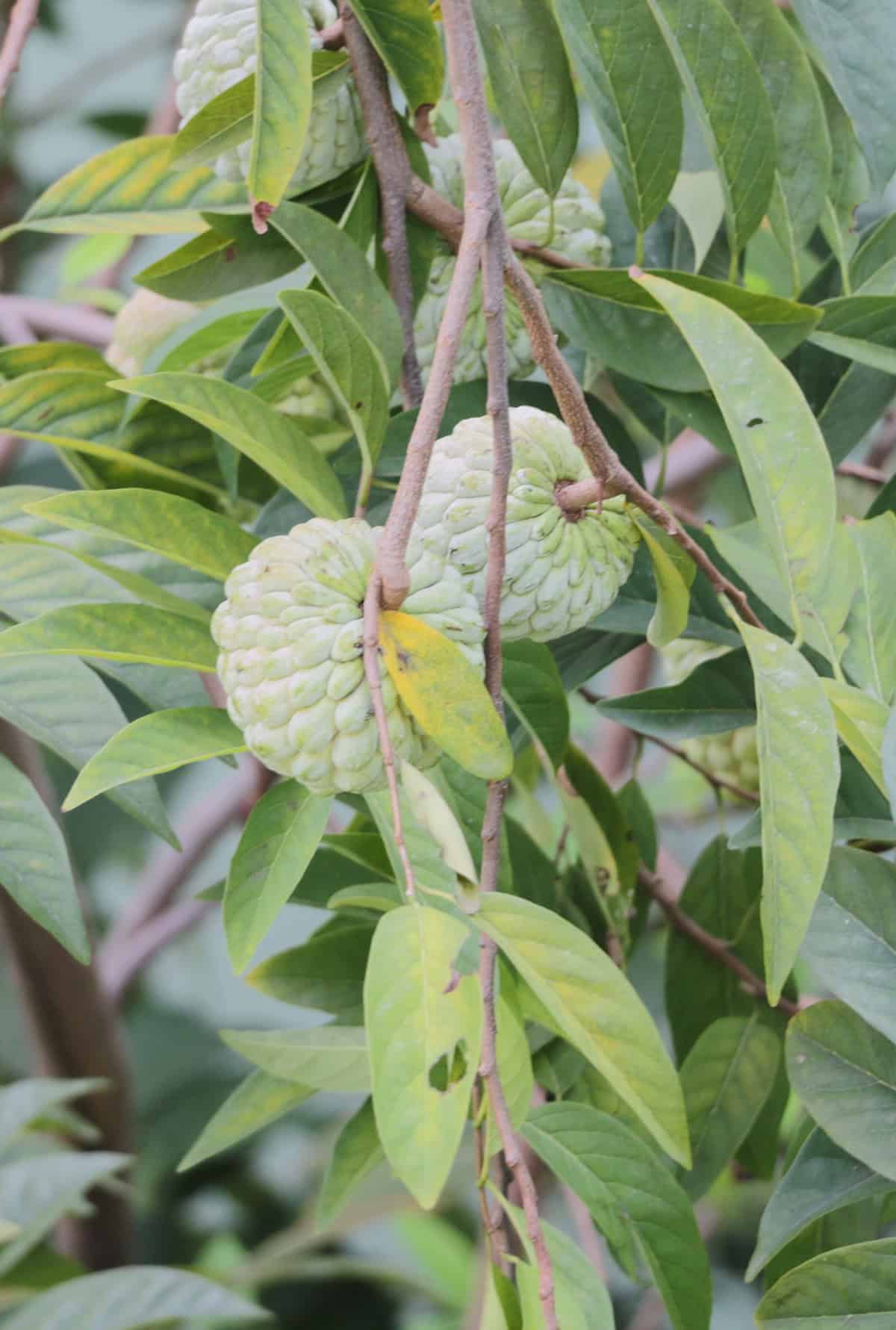
Annona squamosa grows into a compact, open tree with thin, aromatic leaves that drop briefly in cool or dry seasons. The round or heart-shaped fruit has white, sweet pulp around glossy black seeds and ripens between midsummer and fall.
The common name custard apple causes confusion, since it also refers to Annona reticulata in the Americas and to atemoya in Australia.
- Botanical name: Annona squamosa
- Common names: Custard apple, sugar apple, sweetsop, sitaphal
- Plant type: Deciduous or semi-deciduous fruit tree
- Mature size: 15–20 feet tall and wide
- Growth rate: Moderate
- Toxicity: Seeds are toxic, especially when crushed, and seed powder irritates the eyes
- Native region: Tropical Americas and the West Indies
A sunny, sheltered planting site and a short dry spell before flowering produce more fruit. Grafted trees fruit within a few seasons.
Light
Custard apple needs at least 6 to 8 hours of direct sun a day for proper flowering and fruit development.
Young trees tolerate light shade, but too much leads to spindly branches and few fruit, and partial sun reduces the crop.
Where afternoon sun is intense, young trees scorch, and light shade during the hottest hours helps until the roots establish. Indoor growing rarely succeeds, even with a south-facing window or strong grow lights, so container trees belong outdoors in the brightest spot available during warm months.
Water
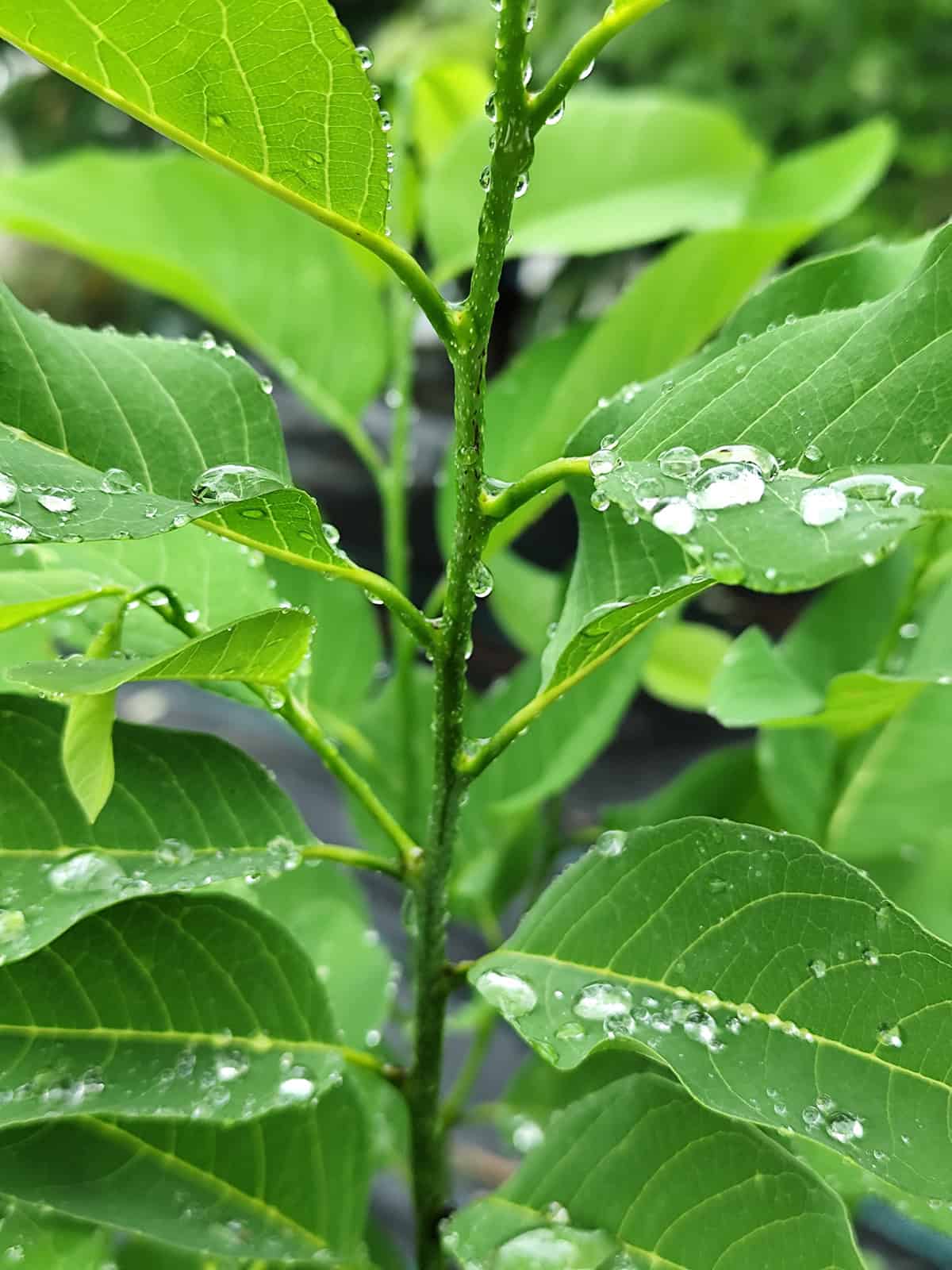
The roots need steady moisture but rot in soggy soil. Aim for evenly moist ground, never standing water.
During the first year, water young trees whenever the top couple of inches of soil dry. Deep watering builds roots that handle dry spells later.
Older trees handle short dry periods, but long droughts shrink the fruit and cut yields. Increase watering during bloom and fruit development, since dry soil at flowering reduces fruit set.
As weather cools and growth slows, water less, and let the surface dry between soakings. Sandy soil dries fast and needs more frequent watering, while heavy soil holds water longer, and yellowing or wilting there points to excess water. Rainfall and temperature set the schedule better than the calendar.
Soil
Custard apple roots need quick drainage. Where puddles linger after rain, choose another spot or raise the planting area, since soggy ground causes root rot and stunted growth.
Sandy, loamy and light limestone soils all grow healthy trees as long as water drains away. Rich soil with excess nitrogen pushes leaves at the expense of fruit.
A slightly acidic to neutral pH between 6.0 and 7.5 is best, and a soil test guides any adjustment with lime or sulfur.
Heavy clay needs amendment for drainage, or a raised bed or mound. Compost improves structure and moisture, but mix it evenly through the planting area so the roots spread outward.
Temperature & Humidity
Days between 73°F and 94°F produce the strongest growth, and flowers and fruit develop poorly in long cool spells.
Frost damages young trees at 30°F to 32°F, and mature trees suffer below about 28°F. Covers and sheltered planting spots help in borderline climates, and cold pockets are poor sites.
In mild winters, the tree drops some or all of its leaves and recovers quickly once spring warms.
Flowering and early fruit set need humidity of 70 percent or higher, and dry air with wind causes flower drop. Windbreaks hold moisture around the tree, though the soil still needs good drainage in humid weather.
Fertilizer
Young trees need frequent, balanced feeding with nitrogen, phosphorus and potassium. For the first few years, apply a fertilizer such as 6-6-6 or 8-3-9 every six to eight weeks during the growing season, scattered under the canopy and watered in.
Once fruiting begins, reduce nitrogen to limit leafy growth, and feed three or four times a year.
Micronutrient sprays with magnesium, zinc and manganese improve leaf color and fruit in spring and early summer, applied outside the heat of the day.
Skip fertilizer during cold snaps or when the tree shows cold stress, and feed less in naturally rich soil.
Growing in Containers
Custard apple grows in a large container of at least 20 to 30 gallons with plenty of drainage holes.
Place the pot in six to eight hours of full sun, with temperatures ideally between 70°F and 90°F, and move or protect it when frost threatens.
Use a fast-draining mix of potting soil with coarse sand or perlite, and skip garden soil.
Water deeply, then wait until the top inch or two dries, and water less in cool weather. Fertilize with a balanced product every couple of months in spring and summer, with less nitrogen after the third year. Prune lightly to let light into the center, and repot every few years.
Potting & Repotting
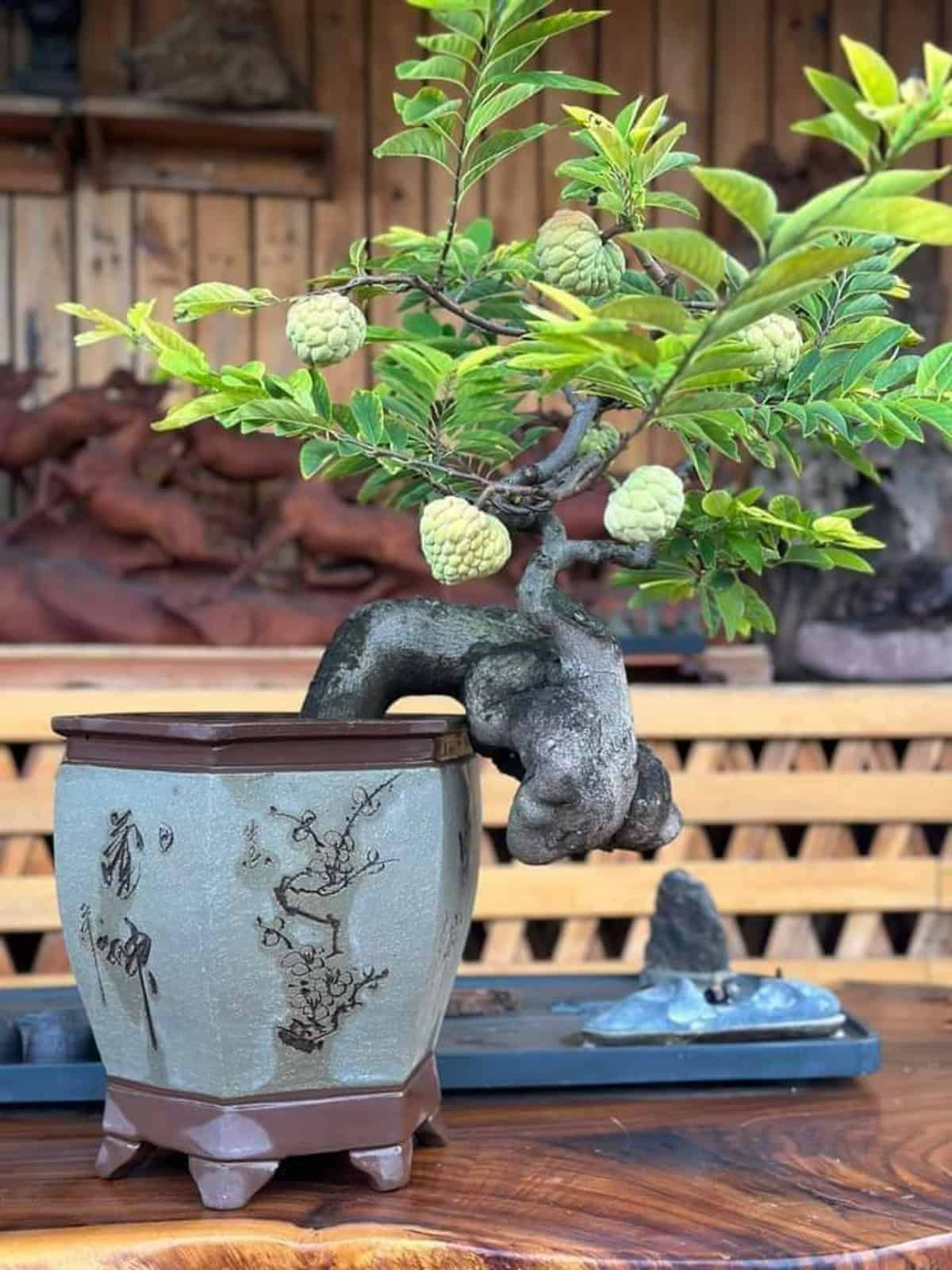
Start a young tree in a 12- to 16-inch container with good drainage, filled with a gritty, well-draining mix. Oversized pots hold excess water and rot the roots.
Repot every couple of years, and move up just a few inches in diameter each time. Shake off some old soil, loosen circling roots gently and trim only dead or damaged ones.
Water well after repotting, then let the top layer dry before the next watering. Return the tree to full sun once it settles, and move the pot indoors before freezes in colder areas.
Pruning
Early pruning controls size and improves fruit. In the first year, choose three or four sturdy side branches spaced evenly around the trunk as the main structure, and remove weak, crowded or poorly angled shoots.
Hold the tree under about 12 feet for easy harvest, and cut long branches back to outward-facing buds.
Prune in late winter or early spring, before new shoots appear, or after harvest in warm regions where the tree drops its leaves. Avoid heavy cuts while flowers or fruit are present. New growth after pruning carries the next flowers.
Remove dead, damaged or diseased wood as soon as it appears, along with water sprouts and vertical shoots that shade the center. Use clean, sharp tools, disinfect them between trees and cut close to the branch collar. Young trees need a light trim each year, and older ones more thinning.
Propagation
Home growers start custard apple from seed most easily, though seedlings vary. Fresh seeds from ripe fruit sprout best.
Rinse and dry the seeds for a day, then plant them about an inch deep in fresh, well-drained mix above 70°F, and hold it moist. Sprouts appear in three to four weeks.
For predictable fruit, buy grafted trees, which nurseries produce by joining named varieties to seedling rootstock. Veneer or cleft grafts during active growth succeed on healthy, vigorous rootstock with the cambium layers lined up and tightly secured, and shade protects the new graft.
Shield budding also succeeds in high humidity. Once the union heals, remove shoots below it. Grafted trees fruit sooner than seedlings.
Fruiting & Harvest
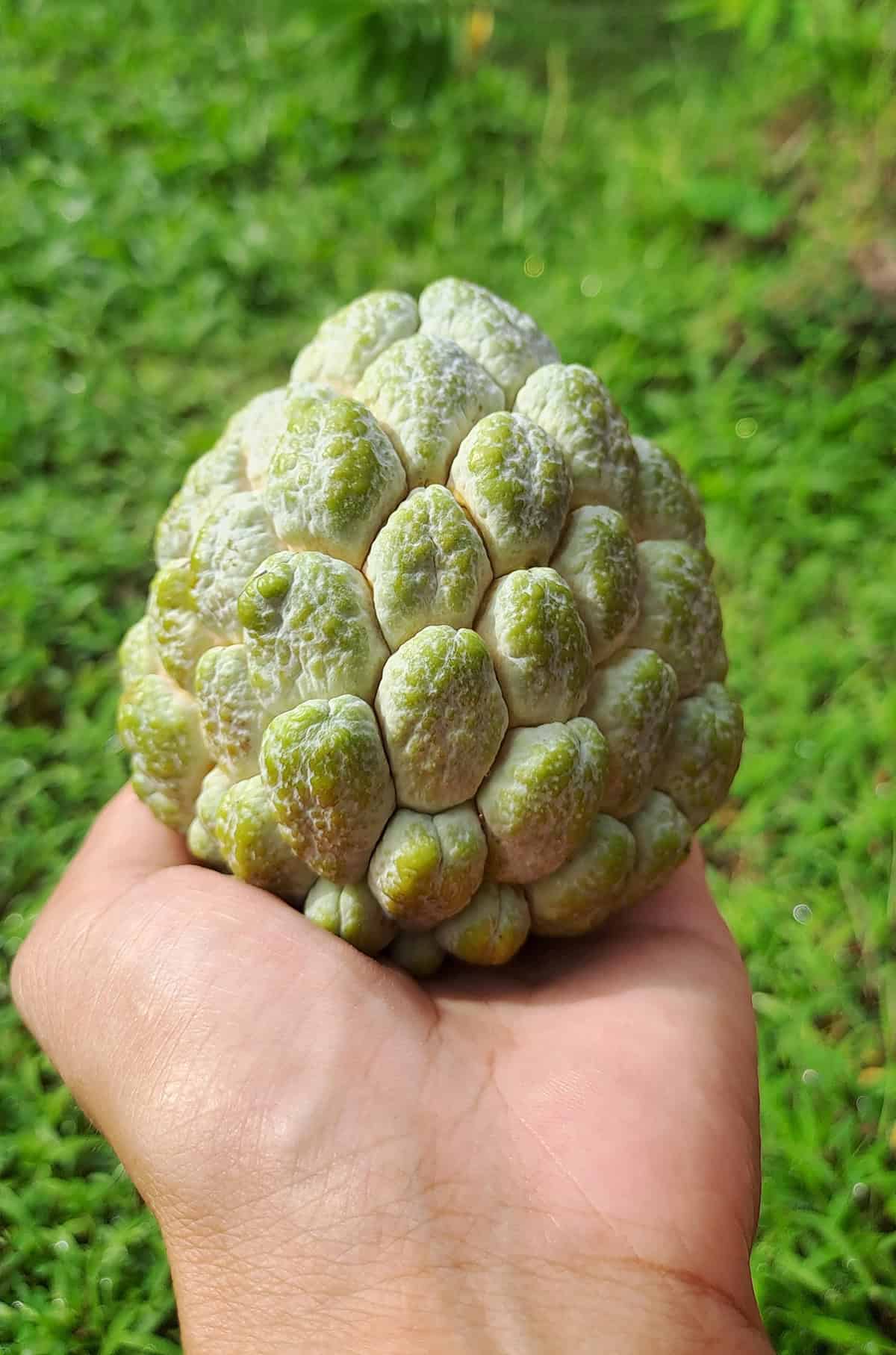
Seedling trees fruit three or four years after planting, and grafted trees sooner. Flowers open in spring as the weather warms, and mildly dry air with light breezes improves fruit set.
Yields depend on pollination, and in many gardens few insects visit the flowers. Each flower opens first in a female stage and later releases pollen in a male stage, so hand pollination in the evening helps. Brush pollen from flowers in the male stage into flowers in the female stage for larger, better-shaped fruit.
Between late summer and autumn, the fruit softens, the skin lightens and the segments separate slightly. Pick when a gentle squeeze leaves a slight dent, before cracks appear, since overripe fruit splits quickly.
Moderate nitrogen once fruiting starts and steady moisture between bloom and harvest support the crop. A healthy tree produces 20 to 50 fruit in a good year.
Common Problems
Frost near 30°F kills young custard apple trees, and older trees lose branches on cold nights. Avoid frost pockets and wrap young trunks on freezing nights.
A week of soggy soil leads to root rot, with yellow, wilting leaves and sudden decline. Quick drainage is essential, and low spots that hold water after rain are poor sites.
Dry air during flowering reduces fruit set, and wind scars fruit and knocks off blossoms. Windbreaks and evenly moist soil between bloom and harvest help.
Salt in the soil or irrigation water burns leaf tips and, over time, defoliates the tree.
Excess nitrogen produces lush foliage with few flowers, while too few nutrients lead to small fruit and spindly growth.
Scale, mealybugs and fruit borers attack leaves and fruit. Regular checks, insecticidal soap and bagged fruit control them.
Popular Varieties
Several Annona species and hybrids share the custard apple name, and they differ in fruit shape, flavor and cold tolerance.
Annona reticulata, called bullock’s heart or custard apple in the Americas, bears heart-shaped fruit with smooth, reddish-brown skin and soft, mildly sweet flesh. The tree grows larger and needs frost-free conditions.
Sugar apple, Annona squamosa, produces segmented fruit that falls apart when ripe, with rich, custardy white pulp. ‘Lessard Thai’ carries large green fruit, and ‘Kampong Mauve’ has reddish-purple skin.
Atemoya, a cross between sugar apple and cherimoya, tolerates cooler nights. ‘Gefner’ sets fruit reliably with little hand pollination, while other cultivars need help. Winter temperatures and available space decide the best choice, and local extension agents know which ones succeed in the region.