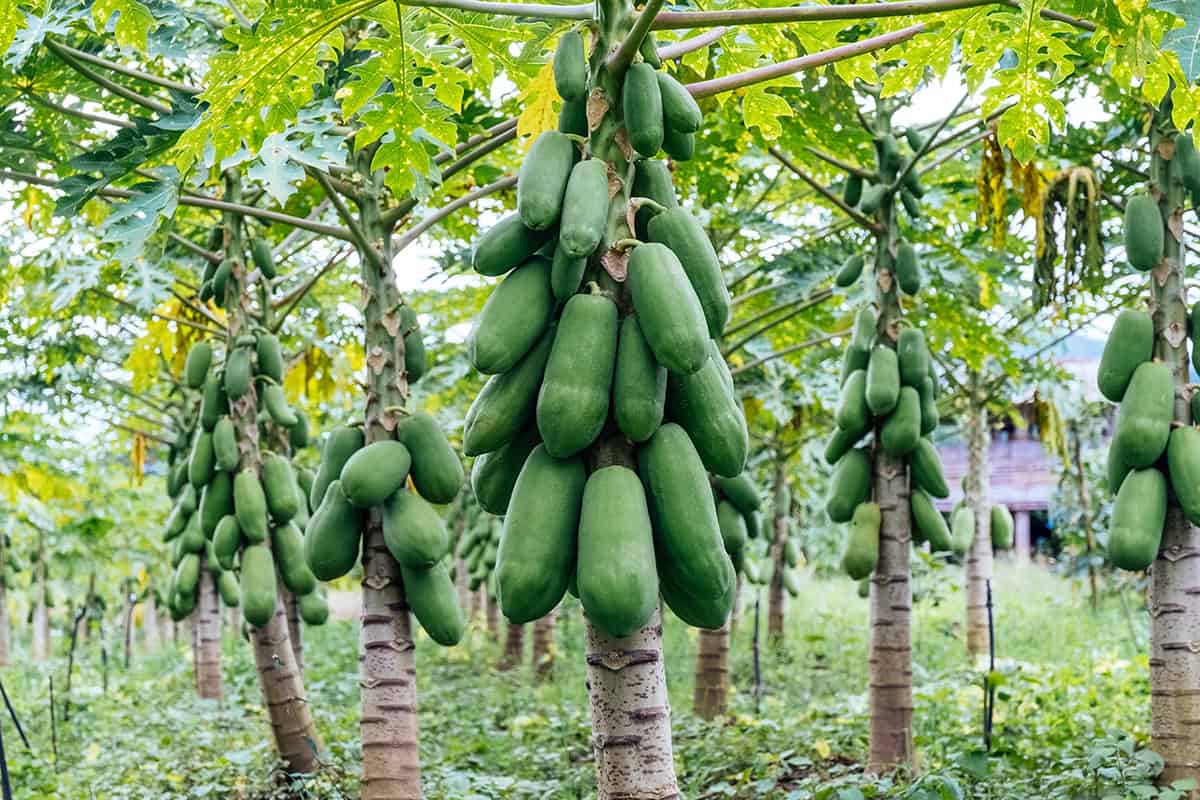
A papaya seed grows into a fruiting plant in as little as seven months, with a single trunk topped by an umbrella of deeply lobed leaves.
Despite its tree-like look, the plant is a giant, short-lived herb, and its fruit hangs in clusters straight from the stem. Warmth, full sun, sharp drainage and light, frequent feeding produce sweet, heavy crops.
Every seedling matures as a male, female or bisexual plant, a detail that decides the harvest, and the propagation section explains how to sort them.
Table of Contents
Quick Care Summary
With warmth, sun and good drainage, papaya races from seed to fruit. Cold, soggy roots and strong wind cause most failures.
- Light: Full sun, at least 6–8 hours daily
- Soil: Well-drained sandy or loamy soil; pH 5.5–7.0
- Watering: Even moisture; avoid soggy or flooded soil
- Temperature: 70–90°F; damaged below 31°F
- Humidity: Moderate to high
- Fertilizer: Small, frequent doses of balanced fertilizer
- Propagation: Seed or nursery plants; female or bisexual plants for fruit
- USDA Zones: 9b–11
- Fruiting season: 7–11 months after planting, then year-round in warm climates
Choose a warm, sheltered spot with sharp drainage, and build a mound where soil runs wet. In cold climates, a large pot moves inside when frost threatens. Water regularly, feed lightly and frequently, and check the flower type if fruit fails to appear.
Papaya Plant Overview
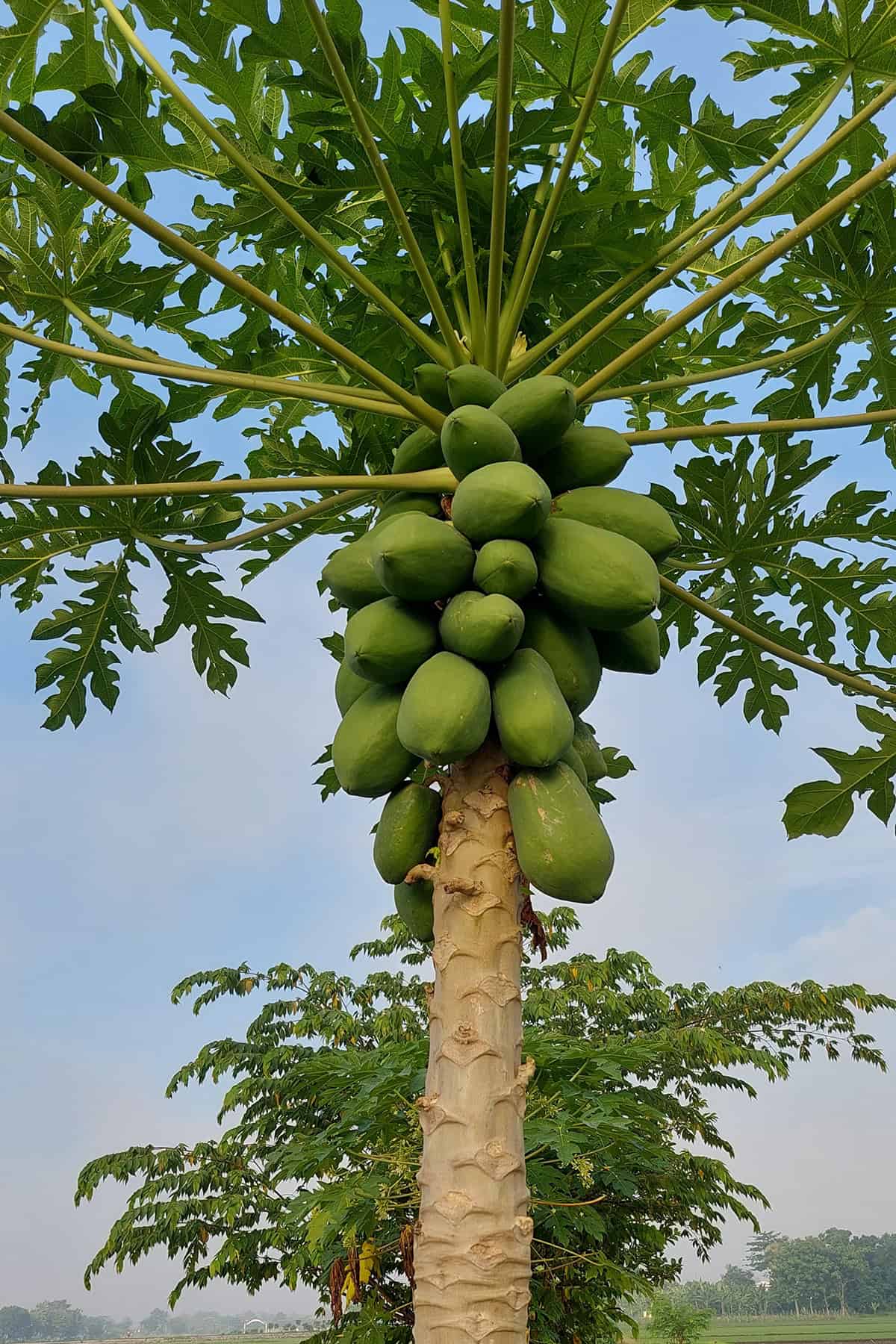
Carica papaya grows fast and produces sweet, buttery fruit. Despite the tree label, it is a giant, short-lived herbaceous plant with a soft, hollow-centered trunk.
A single upright trunk carries a crown of large, lobed leaves with a palm-like silhouette, and plants reach 10 to 20 feet. Flowering starts as early as six months from seed in steady warmth, and cold spells slow or halt fruiting.
- Botanical name: Carica papaya
- Common names: Papaya, papaw; pawpaw in Australia
- Plant type: Short-lived tropical perennial
- Mature size: 10–20+ feet tall; 3–10 feet wide
- Growth rate: Fast
- Toxicity: Milky latex in unripe fruit and stems irritates skin
- Native region: Southern Mexico and Central America
Light
Papaya needs at least six to eight hours of direct sun daily, and more produces sturdier stems and more flowers.
In cooler regions, a south- or west-facing spot catches the longest sun. In scorching climates, light afternoon shade prevents leaf burn, but deep shade weakens the plant.
Indoors, place papaya beside a sunny window or in a sunroom, and add a strong grow light above the leaves where sun is limited.
Shade from trees or buildings leads to stretched stems, pale leaves and poor fruit. Open space around the canopy lets it catch the most sky and helps air move.
Water

Papaya roots need damp soil that never becomes soggy. Standing water kills the plant quickly, and complete dryness stresses it.
Sandy or rocky soil needs more frequent watering, up to daily in summer, and cool weather calls for less.
In heavier soil, let the top inch or two dry before watering again, and watch for puddles near the trunk.
Erratic watering leads to flower drop, yellow leaves and small or lumpy fruit, so hold to a steady schedule once buds appear. Where the site floods after rain, raise the planting area so water drains away fast.
Soil
Heavy, wet or compacted soil kills papaya roots. Loose, crumbly, well-aerated sandy loam produces the best results, and clay needs compost or other amendments mixed in.
The soil should hold moisture but drain freely. Constant wetness causes flower and fruit drop, while bone-dry sand stresses the plant.
A pH between 5.5 and 7.0 supports the best nutrient uptake, and a soil test before planting shows any adjustment needed.
Compost or well-rotted manure improves structure and moisture, and raised beds help in soggy or high-rainfall regions. Pull weeds before planting, since they compete for water and nutrients, and spread a thin layer of mulch with a gap around the stem.
Temperature and Humidity
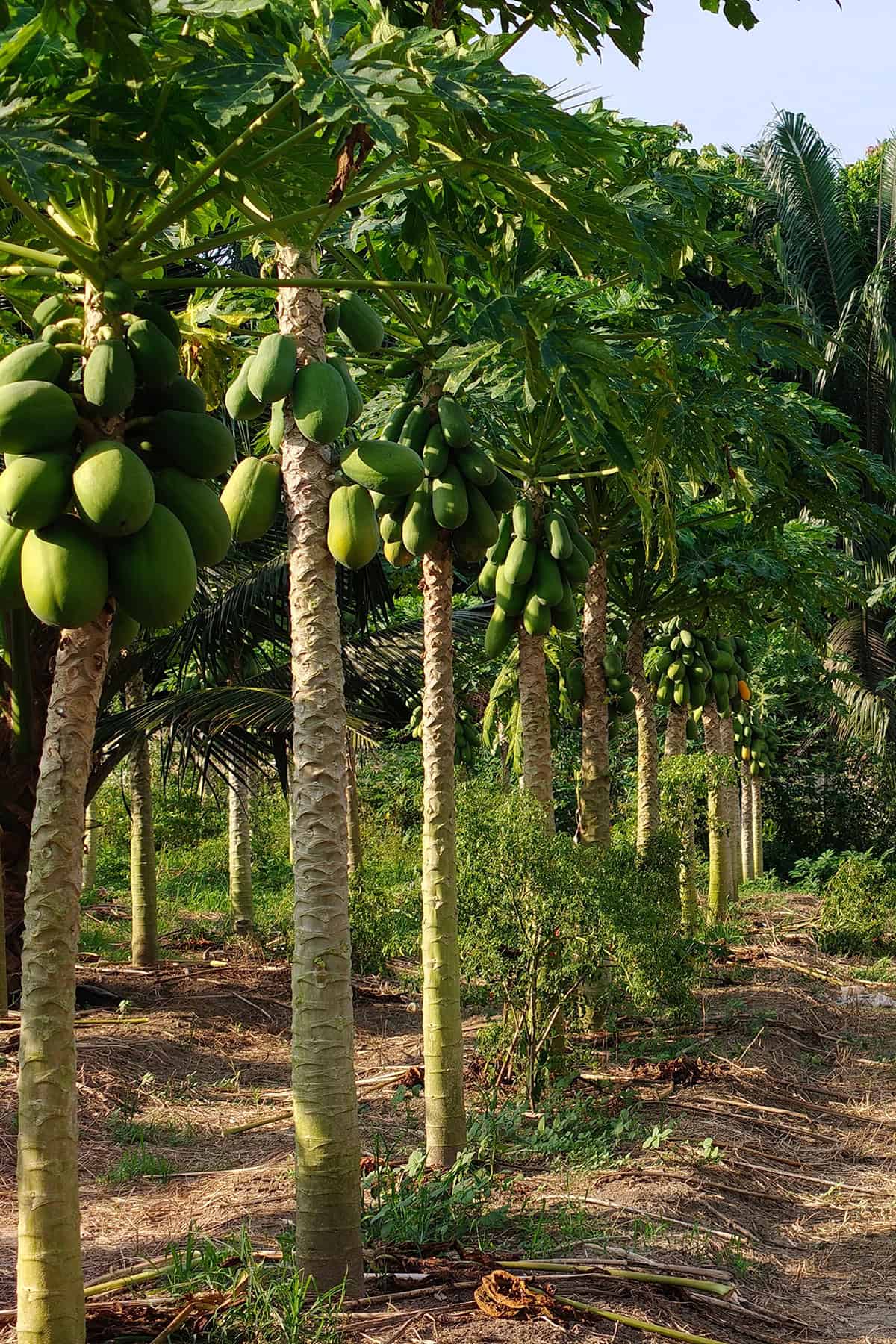
Papaya grows best between 70°F and 90°F. Growth slows below 60°F, and even light frost causes serious damage.
In USDA Zones 9b to 11, papaya grows outdoors year-round in the right spot, and borderline areas need frost protection or a site beside a south-facing wall.
Moderate to high humidity supports healthy leaves and flowers, while dry, windy air stresses young plants. Wind also strips moisture and chills the leaves, so exposed gardens need shelter, and greenhouse plants need steady warmth.
Cold soil below 60°F slows root growth and invites root problems.
Fertilizer
Papaya grows fast and needs a steady supply of nutrients for lush leaves and good fruit.
Apply small doses of a balanced fertilizer such as 10-10-10 or 14-14-14 every two to four weeks during the warm season, and avoid large, infrequent feedings. Scatter it around the root zone, away from the trunk, and water it in.
Young plants need less than mature ones. Increase the amount as the trunk thickens and flowers appear, and follow the label rates.
Yellow leaves point to a shortage of magnesium, iron or manganese, and a fertilizer with micronutrients corrects it. Composted manure is a good organic option, spread away from the stem, and excess nitrogen produces watery, bland fruit.
Growing in Containers
In small spaces or cold-winter regions, papaya grows in a large pot that moves inside when a freeze threatens. Choose a container of at least 15 to 25 gallons with plenty of drainage holes.
Use a light, well-draining potting mix for tropical fruit or citrus, and skip garden soil.
Place the pot in at least six hours of direct sun, and rotate it now and then for a straight trunk. Containers dry quickly, so water when the top inch is dry, thoroughly enough to reach all the roots.
Feed with small doses of balanced fertilizer every couple of weeks during growth, and less in cool weather. Tall potted plants tip in wind, so place the pot in a sheltered spot or stake the trunk, and move up a size when roots circle or growth slows.
Potting and Repotting
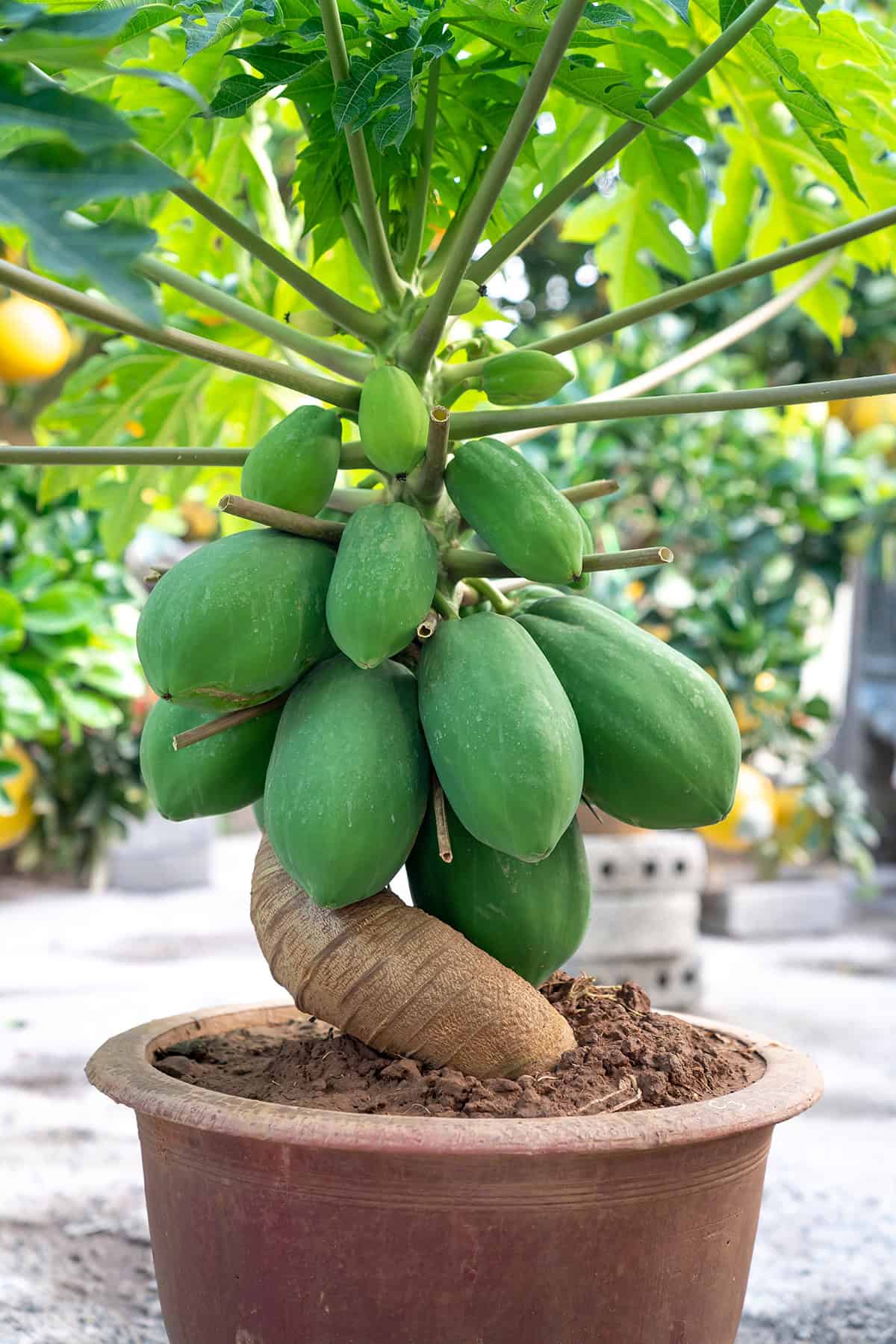
Container papaya needs a deep pot of about 15 to 25 gallons with drainage holes, since shallow pots stunt the taproot.
Use a loose, well-drained mix for fruiting or tropical plants, and skip gravel at the bottom, which slows drainage. Set the plant at its original depth.
Repot young papayas in spring as new growth starts, and increase pot size gradually to avoid excess wet soil around the roots. Mature plants resent disturbance, so repot them only when necessary.
Gently tease out circling roots and trim damaged ones before planting in fresh mix. Firm the mix, water well and leave an inch or two of space at the top for watering. Full sun and wind protection help potted papaya, and frequent moisture checks prevent drought stress.
Pruning
Papaya needs little pruning. Remove dead, diseased or damaged leaves close to the trunk with sharp, clean tools.
Lower leaves yellow and drop as the plant grows taller, and their removal improves airflow and limits pests. An open canopy lets sunlight reach the fruit.
When a plant grows too tall to manage, some growers cut the main stem about 3 feet above the ground to force new shoots. Several shoots appear, and growers choose the strongest one or two and remove the rest. Try this only on healthy plants, and cover the cut from rain to prevent rot.
Avoid heavy pruning during cold or wet spells, which slows flowering and fruiting, and clean tools before and after each session.
Propagation
Most growers start papaya from seed. Scoop seeds from a ripe fruit, rinse off the pulp and dry them for a day. Fresh seed sprouts faster and produces sturdier plants, and leftover seed stores in a cool, dry spot.
Sow seeds about half an inch deep in small pots of light, well-draining mix, and hold the mix moist at 70°F to 90°F in full sun. Sprouts appear in two to three weeks.
Move seedlings outside at about a foot tall, into a sunny, well-drained spot, 8 to 10 feet apart.
Each papaya plant develops as male, female or bisexual, and the type shows only when flowers appear, five or six months after sowing. Plant two to four seedlings per spot, then thin to one healthy female or bisexual plant once the flowers reveal the type. Seed from bisexual fruit of Solo-type papayas produces a high share of bisexual plants, and cuttings from mature plants preserve a plant’s sex, though they take more care to root.
Fruiting and Harvest
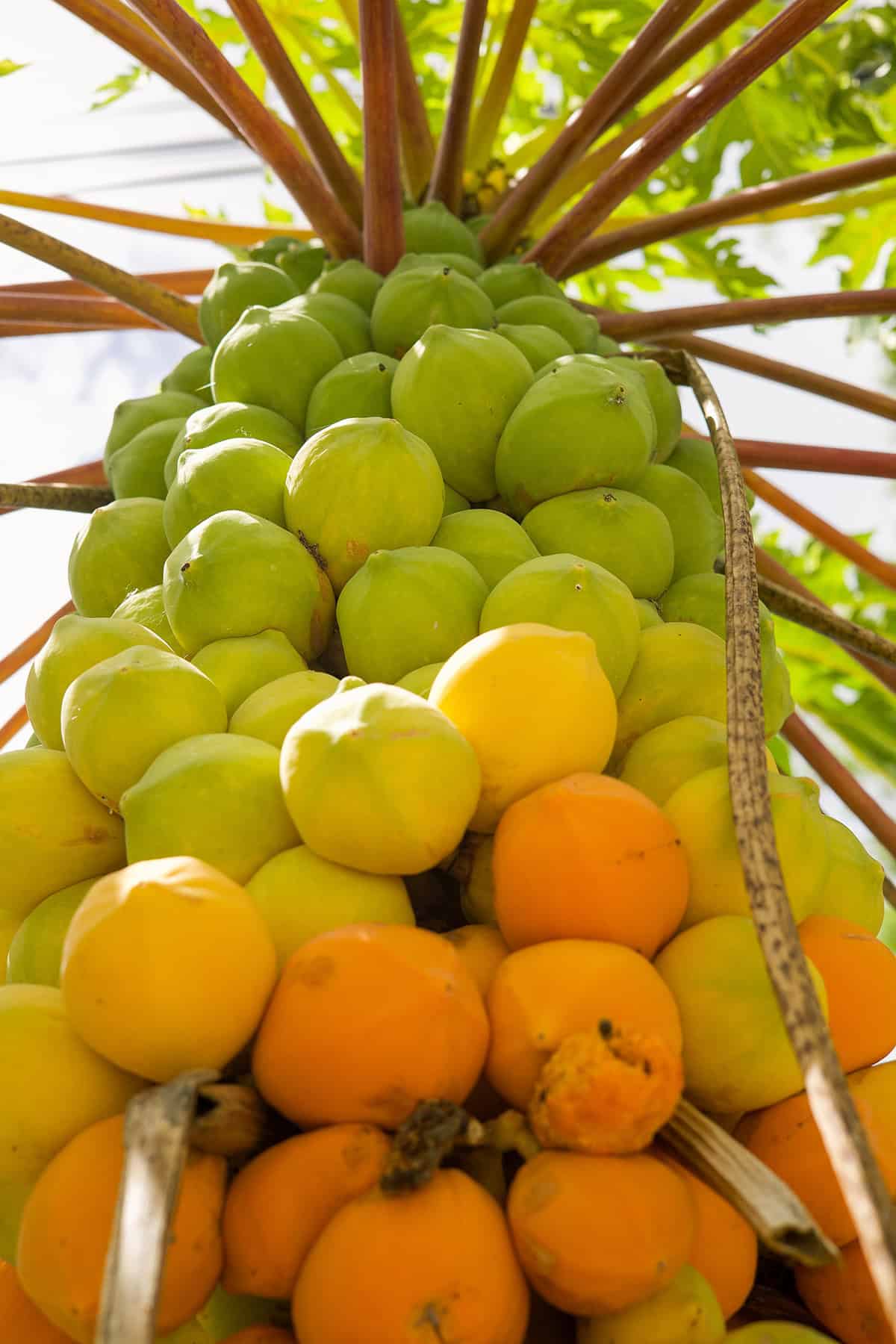
In warm climates, papaya fruits 7 to 11 months after planting. Flowers along the trunk develop into fruit clusters that hug the stem, and a single plant yields dozens of fruit over a season, with weather, care and plant sex deciding the total.
Fruit sets most heavily as temperatures warm through spring and summer, and growth runs smoothly between 70°F and 90°F. Cold snaps slow growth and fruit set, while steady watering and light feeding support the crop.
Harvest when the skin blushes from green to yellow or orange and the fruit yields slightly to gentle pressure. Cut it close to the trunk with a sharp knife instead of pulling, and let it sit on the counter for a couple of days to finish ripening.
Green, firm papaya goes into salads and curries, and homegrown fruit picked just before full ripeness tastes richer than store-bought. Ripe papayas last about a week in the refrigerator, and regular picking directs the plant’s energy into new fruit.
Common Problems
Cold below 31°F wilts foliage and scars fruit, and even a brief chill slows roots and halts flowering for weeks. Strong wind snaps the soft trunks, and dry spells cause leaf and fruit drop.
Waterlogged heavy soil suffocates the roots, yellows the leaves and collapses the plant quickly. Root-knot nematodes feed on roots underground and leave the plant weak and prone to toppling.
Papaya ringspot virus causes mottled leaves, ring-shaped marks on fruit and stunted growth. Pull up and remove infected plants right away to protect others, and choose resistant cultivars where the virus is common.
Anthracnose causes sunken patches on fruit that soften quickly in humid weather. Better airflow, prompt harvest and watering at the base limit it.
Papaya fruit flies lay eggs inside young fruit, and the larvae destroy the flesh. Paper bags over young fruit and cleanup of fallen debris help.
Yellow leaves also point to nitrogen shortage, and gentle, regular feeding corrects it.
Popular Varieties
‘Red Lady’ fruits quickly in warm weather, within about eight months of planting, and produces large, sweet fruit with reddish-orange flesh. It also tolerates papaya ringspot virus.
‘Maradol’ produces very large fruit with salmon-red flesh and heavy yields, and it needs room and steady heat, since cool nights slow it down.
‘Tainung No. 1’, a hybrid from Taiwan, produces uniform, predictable harvests and handles some common pests in reliably warm areas.
Solo-type papayas such as ‘Sunrise’ have small, smooth, sweet fruit sized for a single serving. Some strains suffer from ringspot virus, while Hawaii’s ‘Rainbow’ was bred to resist it.
Dwarf and semi-dwarf papayas fit containers and patios and are easier to protect from frost, which helps gardeners in marginal climates.