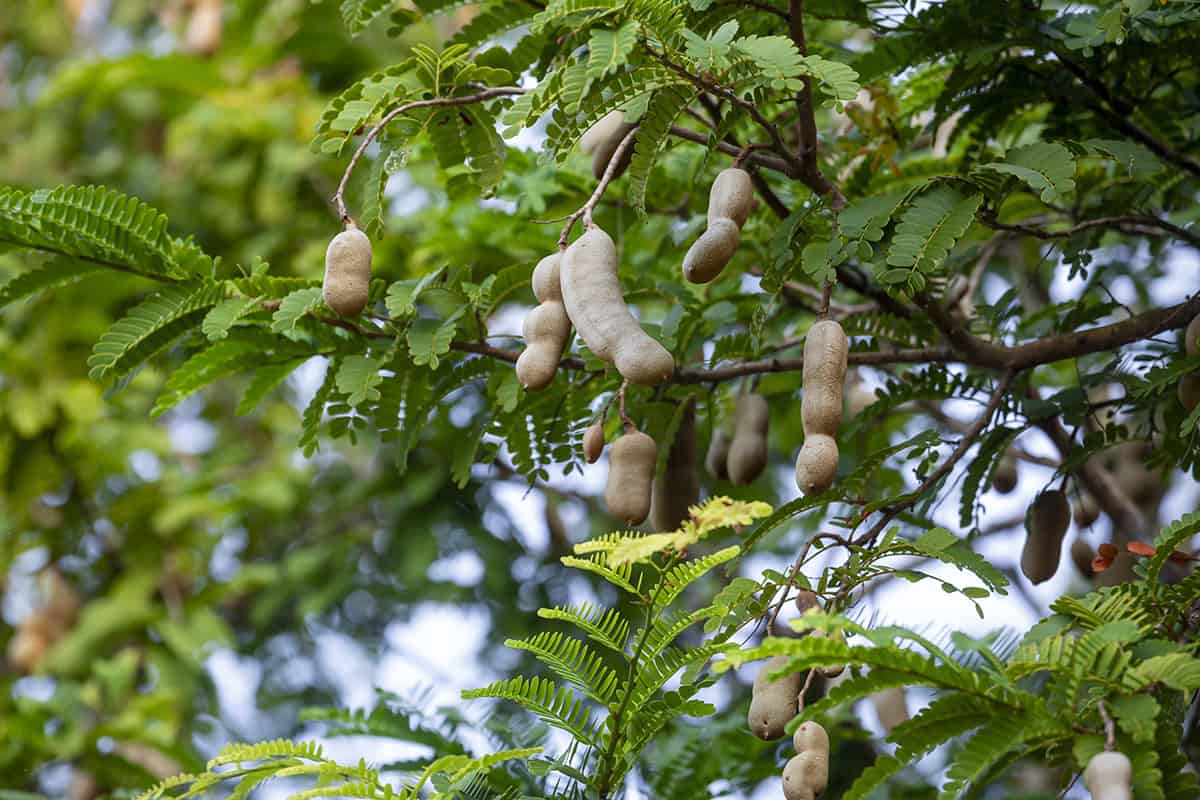
Tamarind grows into a broad, umbrella-shaped tree with feathery, blue-green leaves and brown pods packed with sticky, sweet-sour pulp.
The pulp flavors Worcestershire sauce, pad thai and countless chutneys, and trees in the tropics live for centuries. Full sun, fast-draining soil and protection from frost while young set the tree up for decades of pods.
Seedlings produce mostly sour fruit, which is why the varieties section points to grafted sweet types for fresh eating.
Table of Contents
Quick Care Guidance
Tamarind needs warmth and sunlight above all, and in nearly frost-free climates it settles in with ease. Established trees handle wind and drought, though young trees need regular care for the first few years and protection from cold snaps.
- Light: Full sun all day
- Soil: Fast-draining sand, loam or well-drained clay; adaptable pH
- Watering: Regular while young; drought-tolerant once established
- Temperature: 70–95°F; young trees damaged by frost
- Humidity: Moderate to high, though it tolerates drier air
- Fertilizer: Light, balanced feeding during active growth
- Propagation: Seed, cuttings, grafting or air layering
- USDA Zones: 10a–11
- Fruiting season: Late winter into early summer (varies by climate)
For good fruit, choose grafted or air-layered trees, train young trees to a single trunk with well-spaced branches, and plant away from patios and driveways where falling pods make a mess.
Essential Plant Details
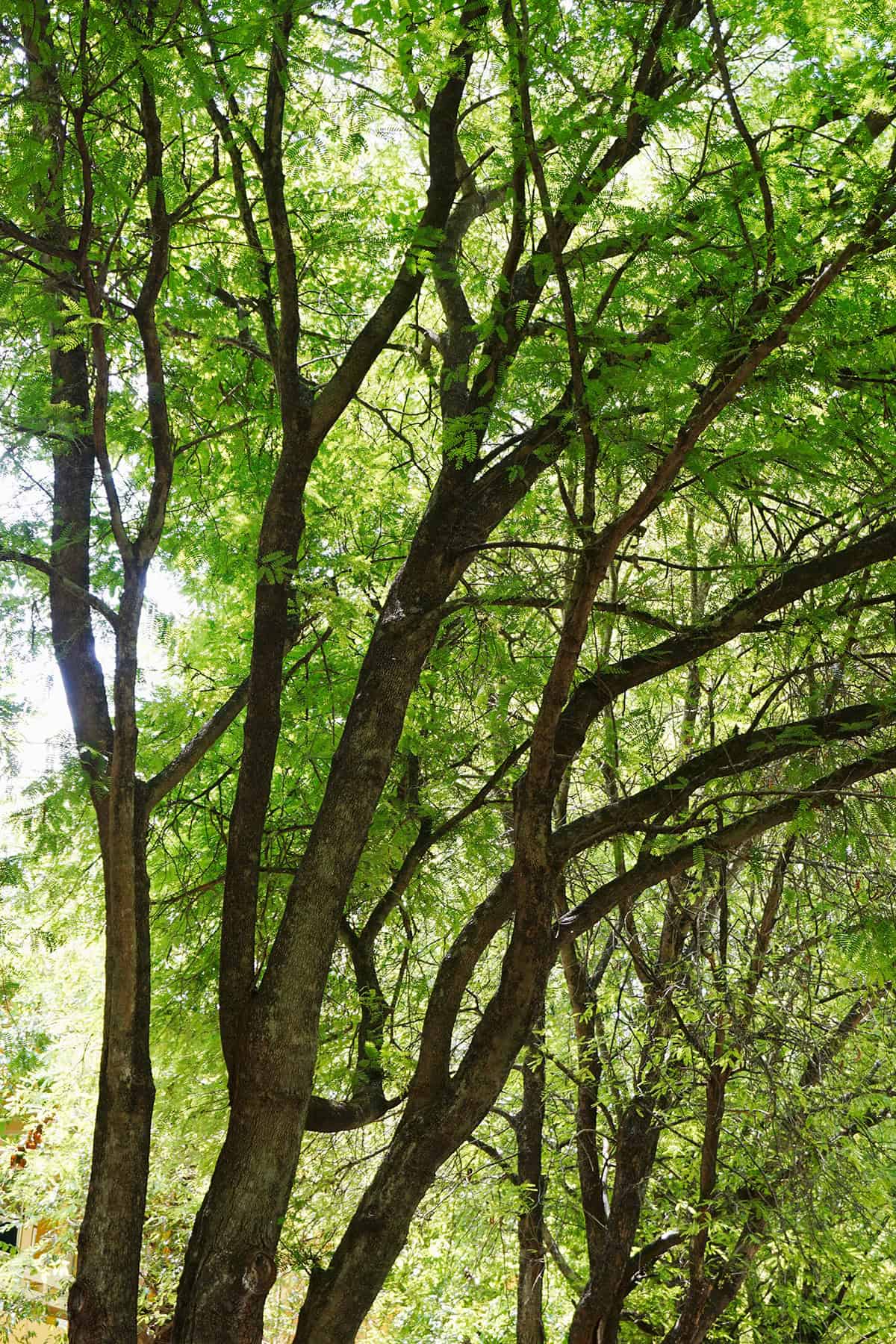
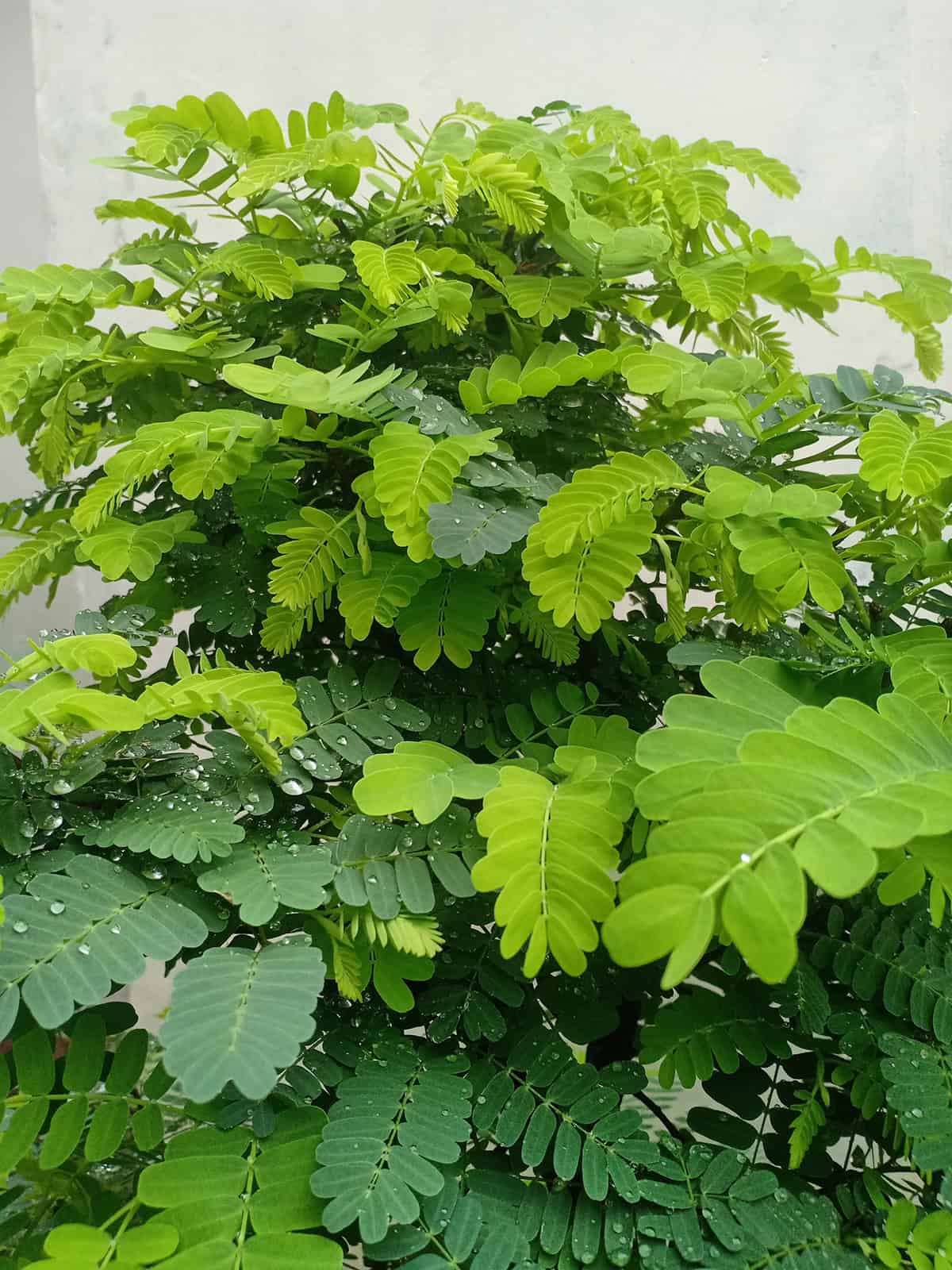
Tamarind trees develop into sprawling, umbrella-like landmarks with airy, blue-green, pinnate leaves that cast filtered shade, and the thick trunk gains character with age. Pale yellow flowers streaked with red appear in spring and summer, followed by curved brown pods.
- Botanical name: Tamarindus indica
- Common names: Tamarind, Indian date
- Plant type: Evergreen tropical fruit tree
- Mature size: 40–80 feet tall, 40–50 feet wide
- Growth rate: Slow to moderate
- Toxicity: Pulp is edible
- Native region: Tropical Africa, long naturalized in India and Southeast Asia
Trees live for centuries in the right climate, and once the roots run deep, they handle long dry spells. Room for roots and canopy prevents problems later.
Lighting Requirements
Tamarind needs at least 6 to 8 hours of direct sun daily, and more is better. In an open spot away from buildings and taller trees, the canopy fills in thick and the tree puts its energy into growth and fruit.
In shade, growth slows and flowering drops, and weak, spindly branches point to a need for more sun.
Indoor and greenhouse trees need a south-facing window and grow lights during darker months for compact growth.
Seedlings tolerate light shade, and in very hot climates, midday protection prevents leaf burn on the youngest plants.
Watering Needs
Young tamarind trees need deep, thorough watering, then a break until the top couple of inches of soil dry. This cycle encourages deep, anchoring roots.
During the first year, water once or twice a week, more during heat waves, and let rain take over when it falls.
Older trees handle dry spells, but consistent moisture improves fruit set and leaf health. Long, bone-dry periods leave the tree tired and less productive.
Water at the drip line, where most feeder roots grow, instead of at the trunk. Mulch cools the soil and slows evaporation, as long as it sits back from the base. Excess water, especially in heavy soil, causes root problems.
Soil Preferences
Tamarind roots need soil that drains fast, and puddles that linger after a big rain mark a poor planting spot. Sandy loam is best, but the tree adapts to any soil that drains easily, and slightly alkaline ground poses no problem.
Heavy clay needs sand or organic matter mixed in, or a mound that raises the crown above ground level so roots avoid standing water after storms.
Roots spread wide and deep, so plant well away from pavement and foundations to avoid cracked sidewalks and stunted growth.
Tamarind needs no special fertility. A little compost at planting is plenty, as long as the soil drains well and is loose.
Temperature and Humidity
Tamarind thrives in year-round warmth, with the best results between 70°F and 95°F. Short dips below that range cause little harm, but frost kills young trees.
Temperatures below 40°F stress the tree. Mature trees drop leaves after a cold snap and recover, while prolonged chill slows growth.
In regions with uncertain winters, grow tamarind in a container and move it indoors to a bright window away from drafts before cold arrives.
Dry indoor air causes leaf drop and brown tips, and a humidifier or pebble tray helps. Outdoors, well-watered trees handle dry air.
Fertilization Tips
Tamarind feeds lightly, and in decent soil it needs very little help. Watering and mulch matter more than fertilizer.
A simple soil test shows any deficiency, and only the missing nutrients need adding.
Fertilize between spring and midsummer, during active growth, and skip late feedings that push tender growth into cool weather. A slow-release, balanced fertilizer spread over the root zone, away from the trunk, and watered in is the safest choice.
A thin layer of compost under the canopy once a year improves soil structure around mature trees. Excess fertilizer stresses the tree, so less is better when in doubt.
Container Growing Methods
Containers make tamarind possible on patios and balconies and protect it from frost, since the pot moves with the weather.
Choose a large, sturdy, deep container with plenty of drainage, about 18 to 24 inches wide to start, and size up as the tree grows.
Use potting mix with coarse sand or perlite for drainage, and place the pot in the brightest spot available. Water when the top two inches dry, let the excess drain and water less in winter.
Feed with a balanced fertilizer every couple of months during the growing season, and stop as days shorten. Prune to control size and build structure, and repot every few years. Potted trees take years to fruit, and summers outdoors encourage flowering.
Potting and Repotting
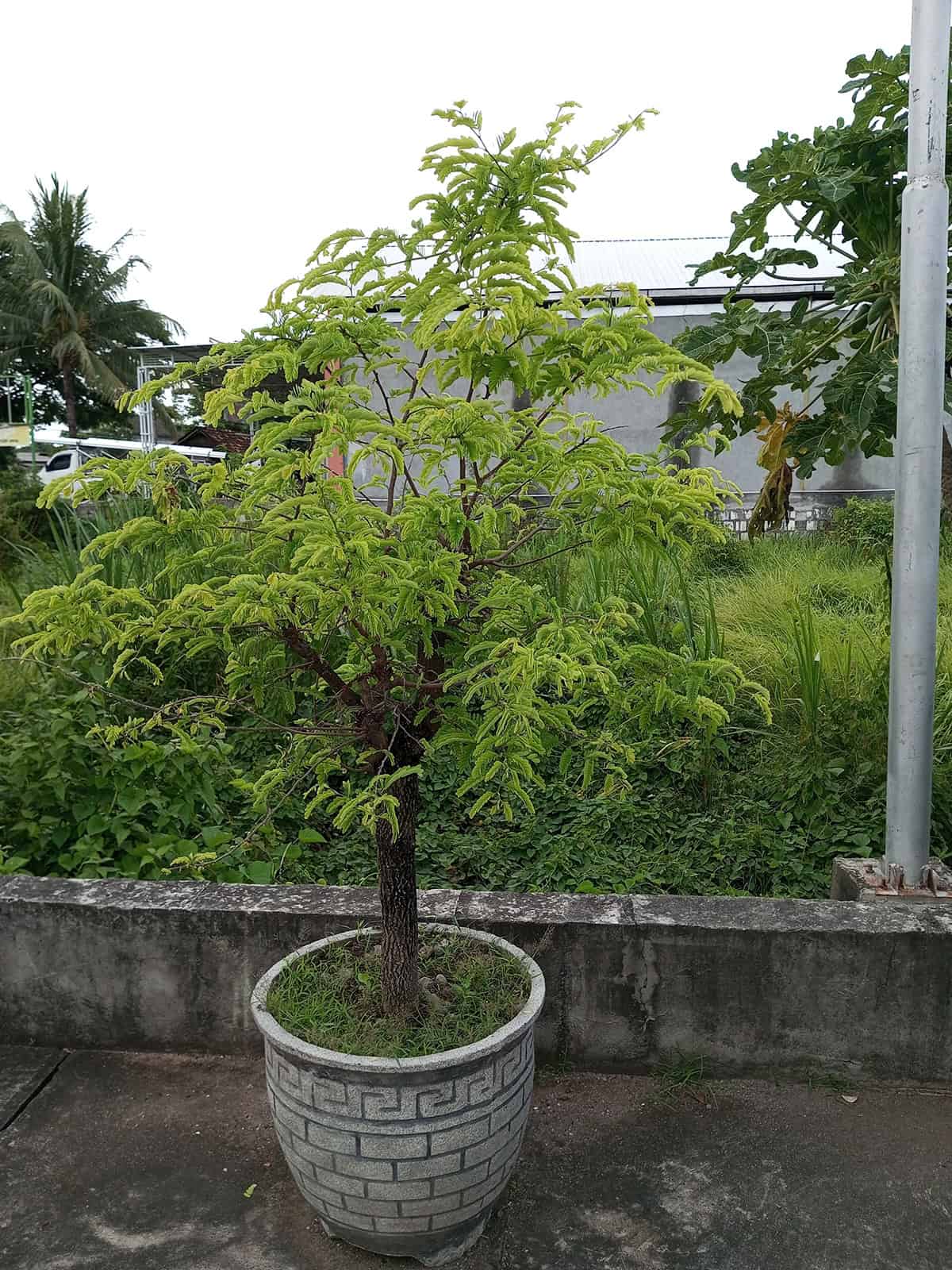
Container tamarind needs a roomy, deep pot with plenty of drainage holes for the taproot. Use a fast-draining blend of sand, loam and compost.
Every couple of years, check for circling or crowded roots. Move up a few inches in diameter, loosen tight roots, trim as needed and settle the tree into fresh mix.
Set the root ball just below the rim, firm the soil and water thoroughly. Afterward, place the tree in bright light, protect it from cold snaps and water a little more for a few weeks while the roots adjust.
Pruning Techniques
Prune tamarind patiently, with sharp, clean tools, since every cut is a wound. Start shaping early with one strong trunk and well-spaced main branches, and limit side branches to less than half the trunk’s diameter to prevent weak unions.
Remove dead, broken or diseased wood first, with cuts just outside the branch collar instead of flush with the trunk, which lets the tree heal naturally.
Thin a dense canopy for light and air, but remove no more than a quarter of the canopy at once.
Older trees need mostly safety and clearance pruning. A tree that outgrows its spot calls for a rethink of placement rather than hard cutting.
Propagation Methods
Tamarind grows easily from seed, though seedlings take longer to fruit and vary in pod quality. Remove the sticky pulp from seeds of ripe pods, then soak them in warm water for a day or sand them lightly to soften the tough coat.
Plant seeds about an inch deep in moist, well-draining mix, and hold the mix evenly moist and warm. Sprouts appear in one to three weeks.
Seedlings make fine shade and ornamental trees, but for consistent fruit, vegetative propagation is best. Semi-hardwood cuttings root best in warm, humid conditions, and grafting or air layering copies the parent exactly and produces earlier fruit.
Fruit Production and Harvest
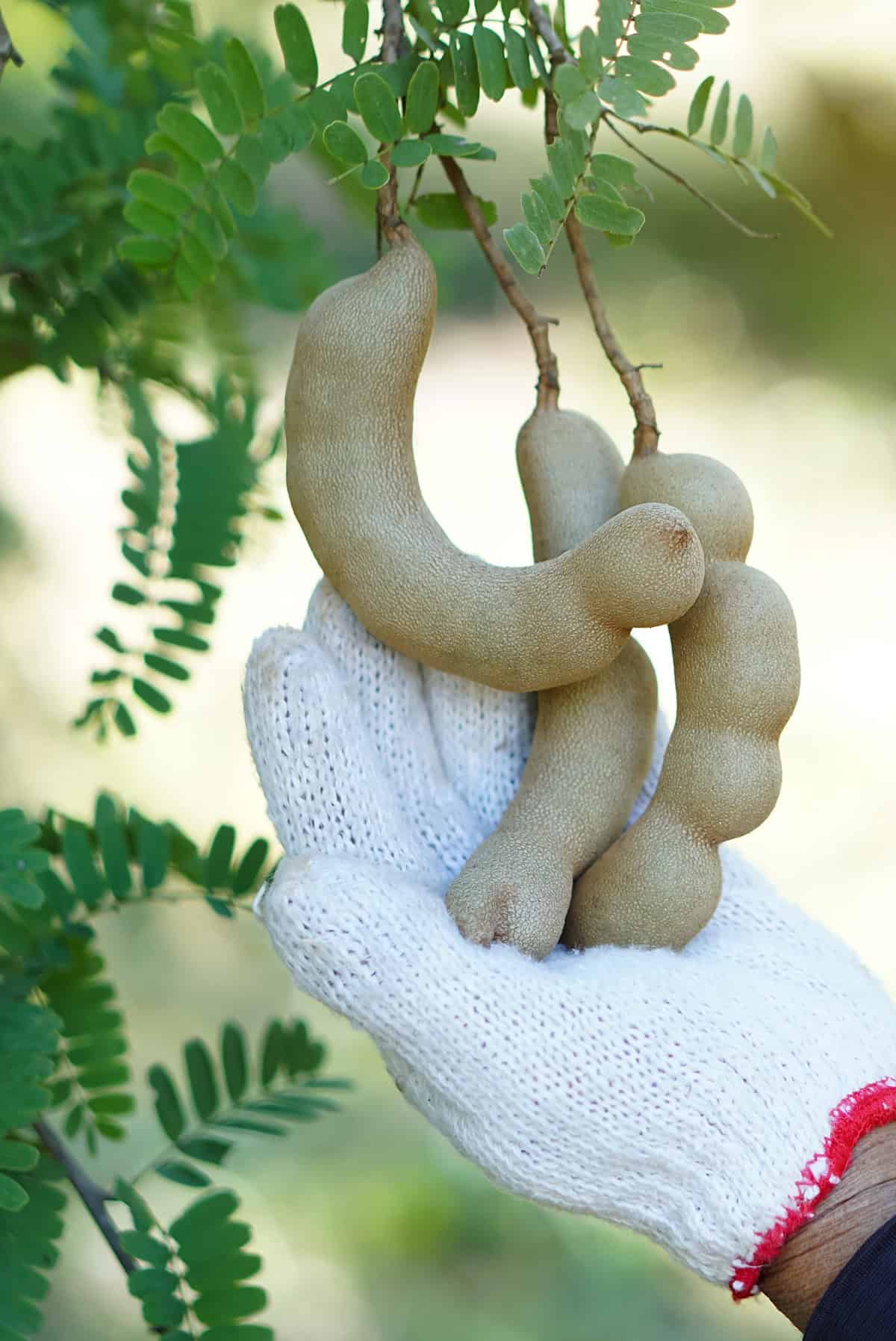
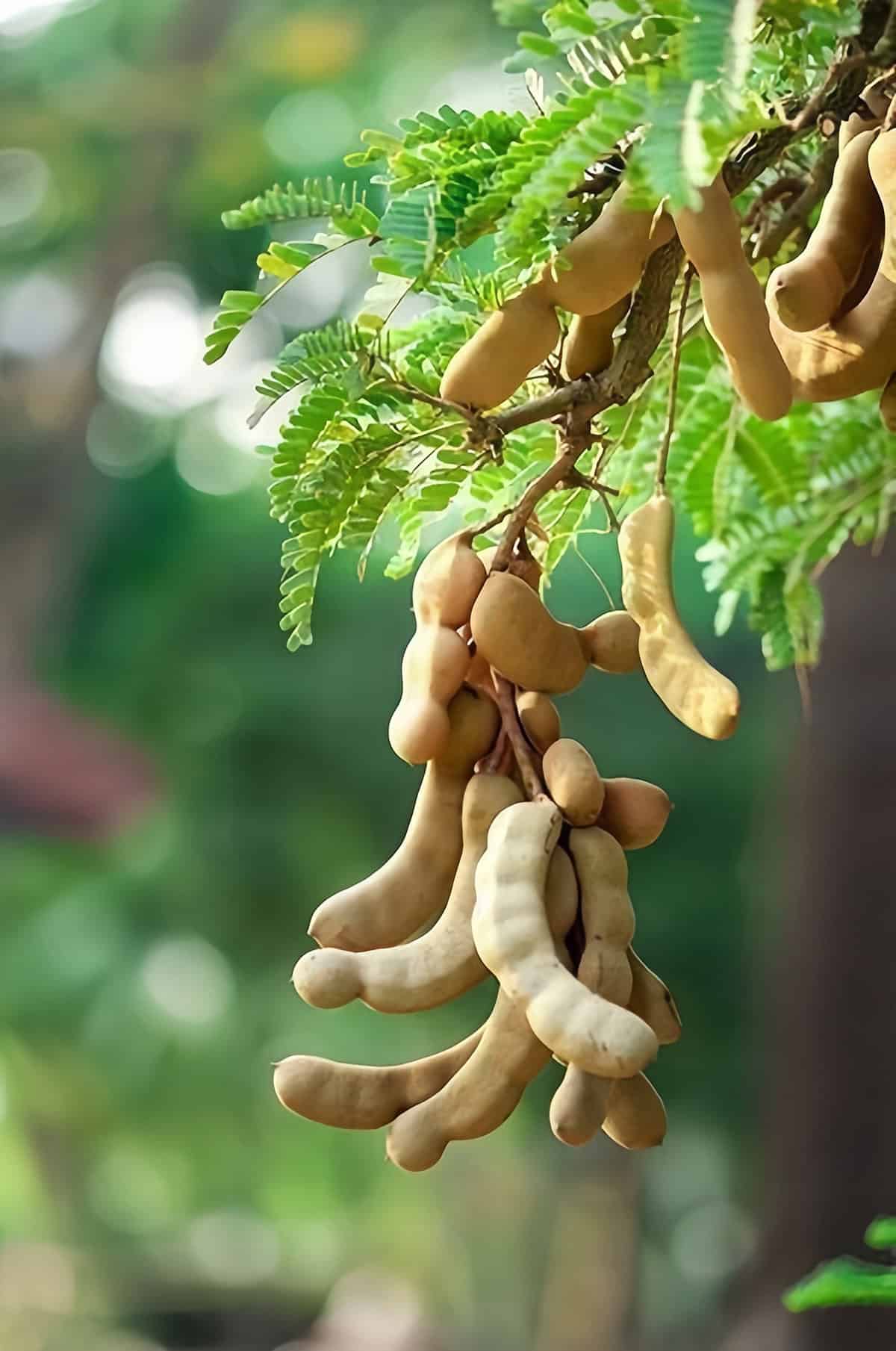
Seed-grown tamarinds take six to eight years to produce pods, and grafted trees fruit sooner. The curved pods hang along older limbs.
Pods start out green and hard. Over the following months, they brown, the shell dries and becomes brittle, and the pulp inside grows richer and tangier. Pods left too long split on the branch.
In many tropical regions, harvest runs between late winter and early summer. Ripe pods are crisp, brittle and heavy for their size. Snip clusters off with clean pruning shears and avoid nicking the wood. Handle them gently, since the shells crack easily. Stored in a cool, dry place, the pods last for weeks, and sealed pulp lasts much longer.
A healthy tree in good sun produces a heavy crop each year with regular pruning and light feeding.
Common Issues
Scale and mealybugs cluster on leaf undersides and young shoots and drain sap, which weakens new growth and yellows the leaves. Sticky residue on surfaces below the tree reveals them.
A strong spray of water or hand removal handles early infestations, and horticultural oil or insecticidal soap controls heavier ones. Prompt treatment prevents leaf drop and stunted growth.
Fallen pods leave a sticky mess near patios and driveways, so plant away from paved areas. Skipped early pruning leads to awkward branch angles and weak structure, and a single trunk with well-spaced main limbs prevents both. Root rot appears in waterlogged soil, and good drainage prevents it.
Notable Varieties
Tamarind falls into sweet and sour types. Sweet selections, popular for fresh eating, come mainly from Thailand, where ‘Si Thong’ and other makham waan, or sweet tamarind, types carry thick pods with brown, sugary pulp. They thrive in hot sun and dry air.
In India, Africa and the Caribbean, sour types dominate. Their tangy pulp flavors chutneys, drinks and sauces, and most seed-grown trees produce sour fruit.
Improved selections carry bigger pods, thicker pulp or heavier yields, and grafted trees match their parent. ‘Manila Sweet’, grown in Florida, is a sweet type sold as grafted trees.
For guaranteed sweetness, buy a named, grafted cultivar from a trusted grower, since cheaper seedlings mostly produce sour pods.