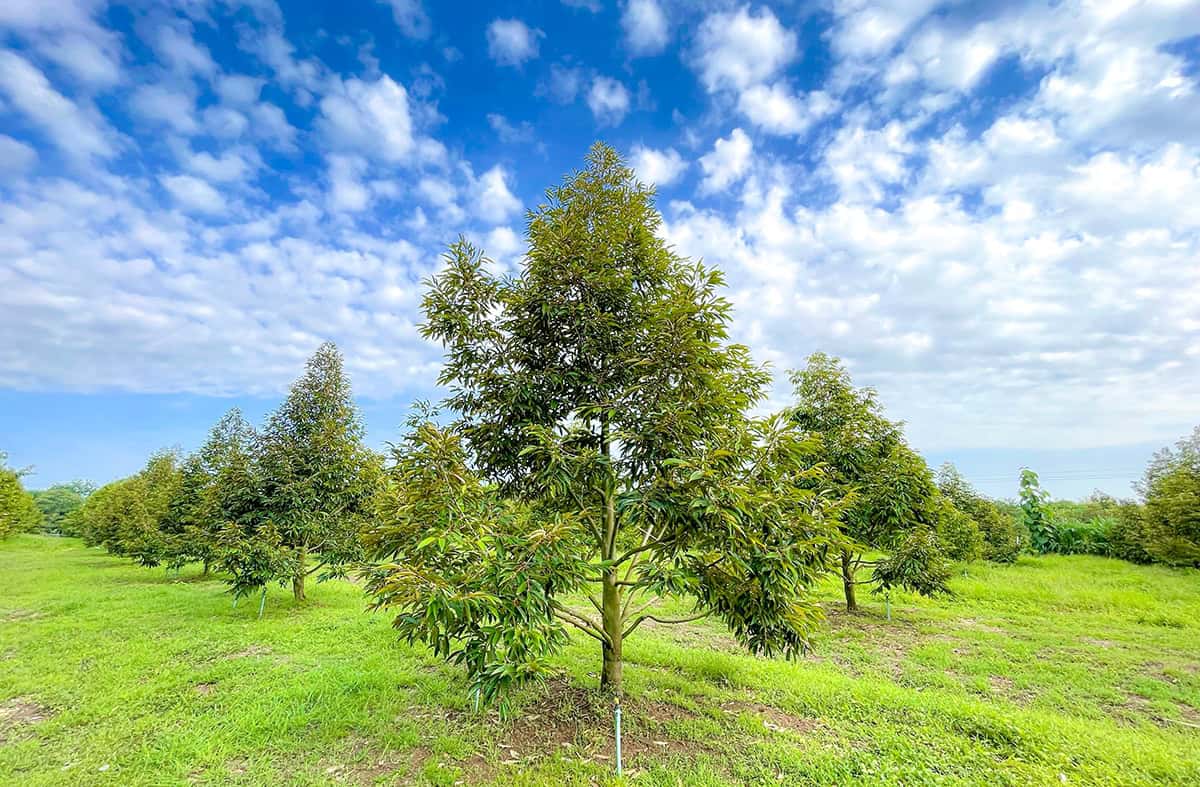
Durian fruit arrives armored in thick, sharp spines, and its custard-like flesh carries an aroma strong enough to get it banned on trains and in hotels across Southeast Asia.
Fans call it the king of fruits, and the tree that bears it grows only in steady tropical heat, high humidity and deep, rich soil. Grafted trees fruit in about five years, and seedlings take closer to ten.
Musang King, Monthong and two other prized cultivars, each with its own flavor, wrap up the guide.
Table of Contents
Quick Care Summary
Heat, humidity and rich, deep soil are essential for durian, and the tree needs room, sun and years of patience.
- Light: At least 6–8 hours of direct sun
- Soil: Deep, fertile loam rich in organic matter; pH 5.0–6.5
- Watering: Steady moisture all year, with a short dry spell before flowering on mature trees
- Temperature: 75–95°F; frost kills it
- Humidity: High, about 75–80 percent
- Fertilizer: Balanced mix with extra potassium, several times a year
- Propagation: Grafted trees for fruit; seed for rootstock
- USDA Zones: 11–12; marginal in 10b
- Fruiting season: Late spring through summer (varies by climate)
Durian grows best within about 16 degrees of the equator, with 60 to 120 inches (1,500 to 3,000 mm) of rain a year. Shelter young trees from strong wind and cold, and space trees 25 to 40 feet apart. Light pruning shapes a strong structure. Mature trees flower after a short dry spell and need moderate, steady water after fruit set, since excess water at that stage produces bland fruit.
Plant Overview
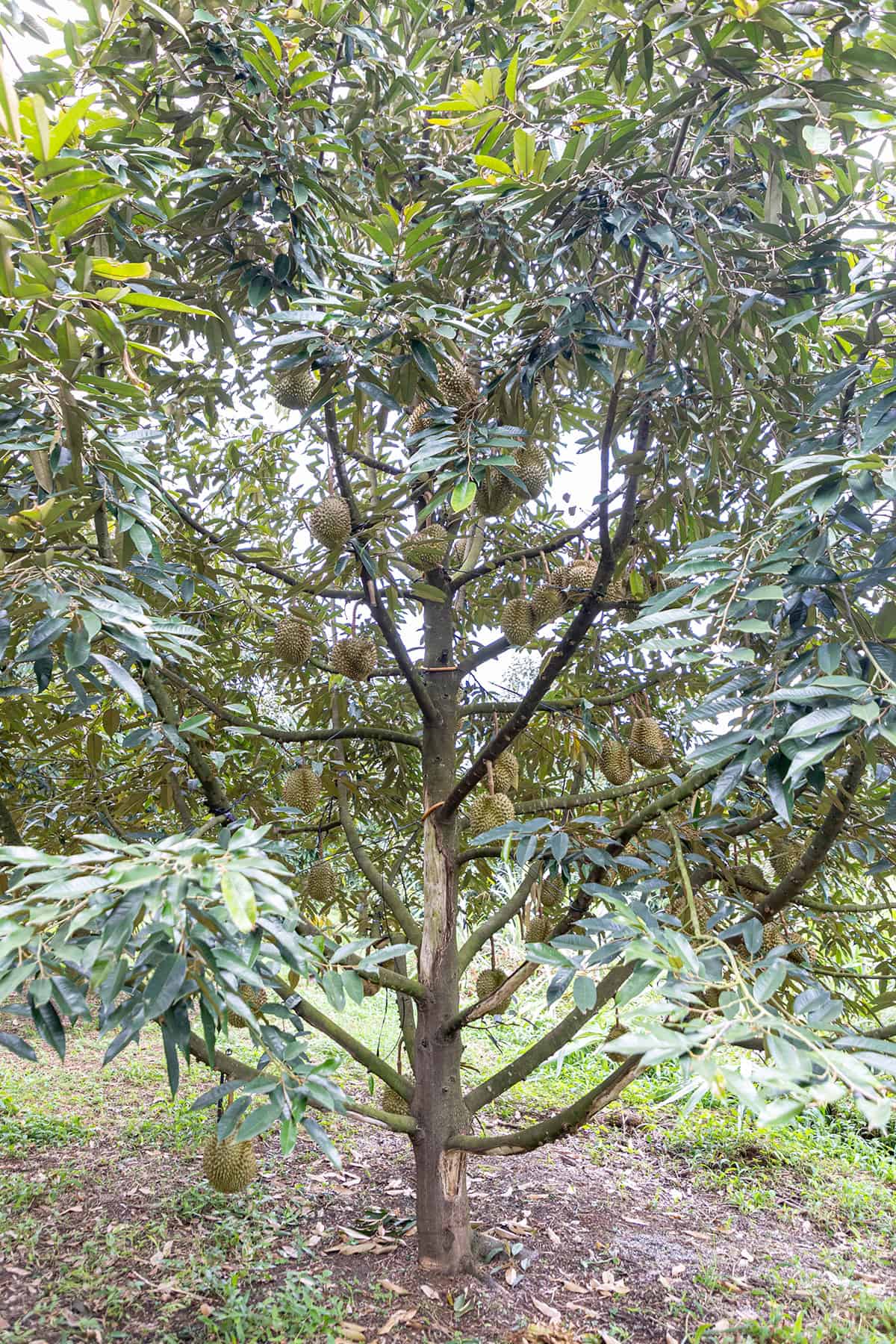
Durian comes from Durio zibethinus, a tropical evergreen famous for its large, spiny fruit and powerful aroma. In Southeast Asia it carries the title king of fruits. The tree needs warmth and humidity and lives for decades, so a durian planting is a long-term commitment.
Under ideal conditions, durian reaches more than 80 feet, while grafted trees grow more compactly. The ripe flesh is rich, sweet and creamy, and its scent divides people sharply.
- Botanical name: Durio zibethinus
- Common names: Durian
- Plant type: Tropical evergreen fruit tree
- Mature size: 50–100 feet tall in the ground
- Growth rate: Moderate in good conditions
- Toxicity: Fruit is edible; eating durian with alcohol is traditionally discouraged, since compounds in the fruit slow alcohol breakdown
- Native region: Borneo, Sumatra and the Malay Peninsula
Light
Durian needs an open site where the canopy receives at least 6 to 8 hours of direct sun daily, which produces dense leaves and sturdy branches.
Seedlings benefit from light shade during their first year, since harsh midday sun stresses the shallow young roots. Shade cloth or taller nurse plants filter the glare until the sapling toughens.
Mature trees need open sky. Shade from buildings or larger trees reduces flowering and yield, and a crowded canopy produces uneven light.
Near the equator, day length barely changes, and durian is adapted to that stability. In greenhouses, clean glass and generous spacing maximize light, since weak light produces a sparse canopy and little fruit.
Water
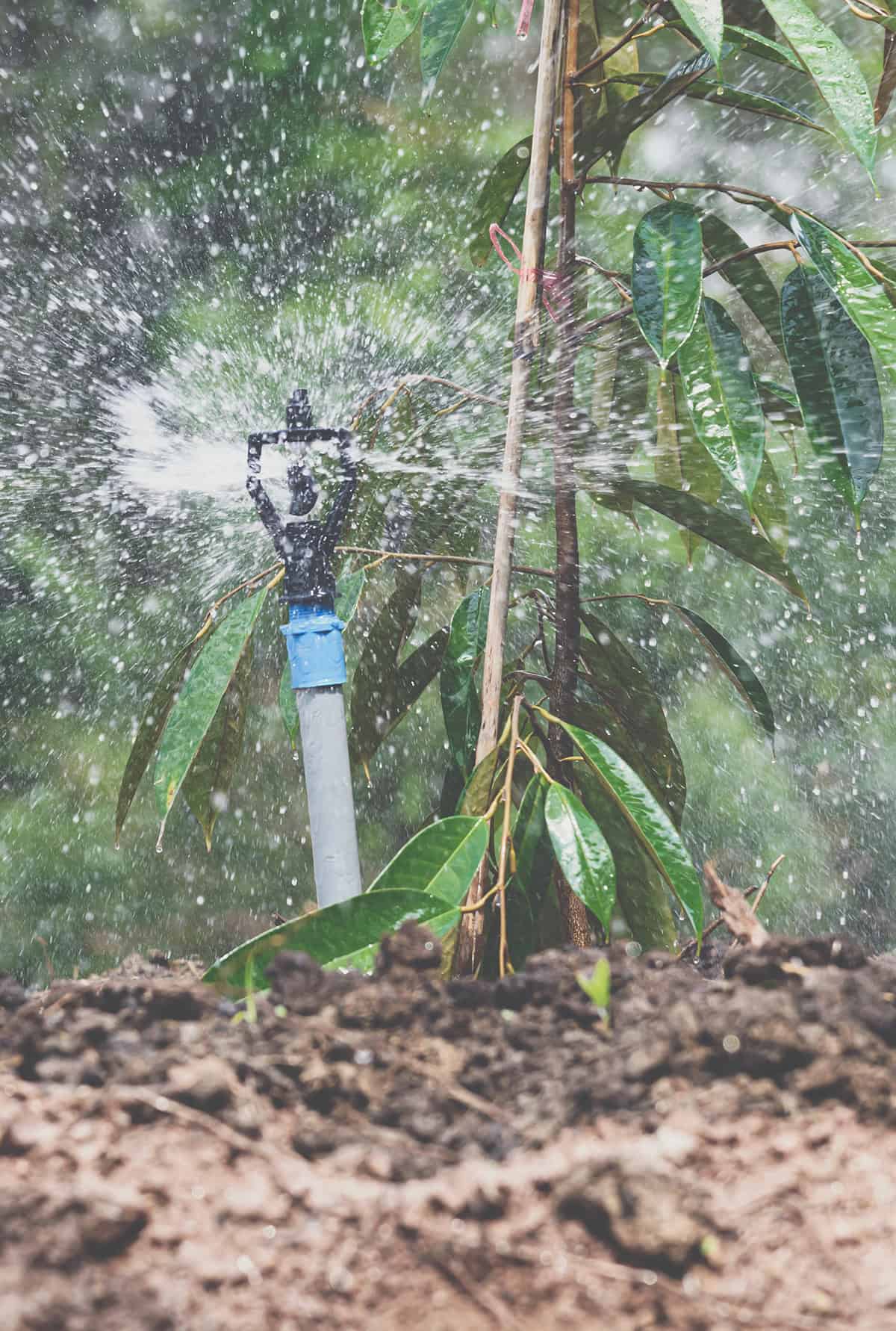
Durian roots need steady moisture and never soggy soil. Dry soil stresses young trees and slows growth, while waterlogged ground reduces flowering and fruit set.
Mature trees use large amounts of water during growth flushes. Annual rainfall of 60 to 120 inches, spread through the year, covers most needs, and irrigation fills gaps.
Young trees suffer most in drought. Water deeply two or three times a week during dry weather, with the topsoil drying slightly between waterings, since shallow, frequent watering leaves roots weak.
Drip irrigation targets the root zone and makes soil moisture easier to control, as long as the lines are clean and unclogged. Reduce watering slightly before flowering to encourage buds, then return to regular moisture once fruit sets. Standing water near the trunk causes root decline.
Soil
Loamy soil rich in organic matter produces the healthiest durian roots. Sandy soil dries too quickly, and heavy clay suffocates roots.
Water needs to drain through and away from the trunk. In rainy climates, plant on a mound or gentle slope to lift the roots.
A pH between 5.0 and 6.5 supports good nutrient uptake. Test before planting and add lime to soil that is too acidic.
Mix compost or well-rotted manure into the planting area months before planting, and skip raw fertilizer in the hole. Loose topsoil and a layer of mulch, pulled back from the trunk, hold moisture steady and suppress weeds.
Temperature & Humidity
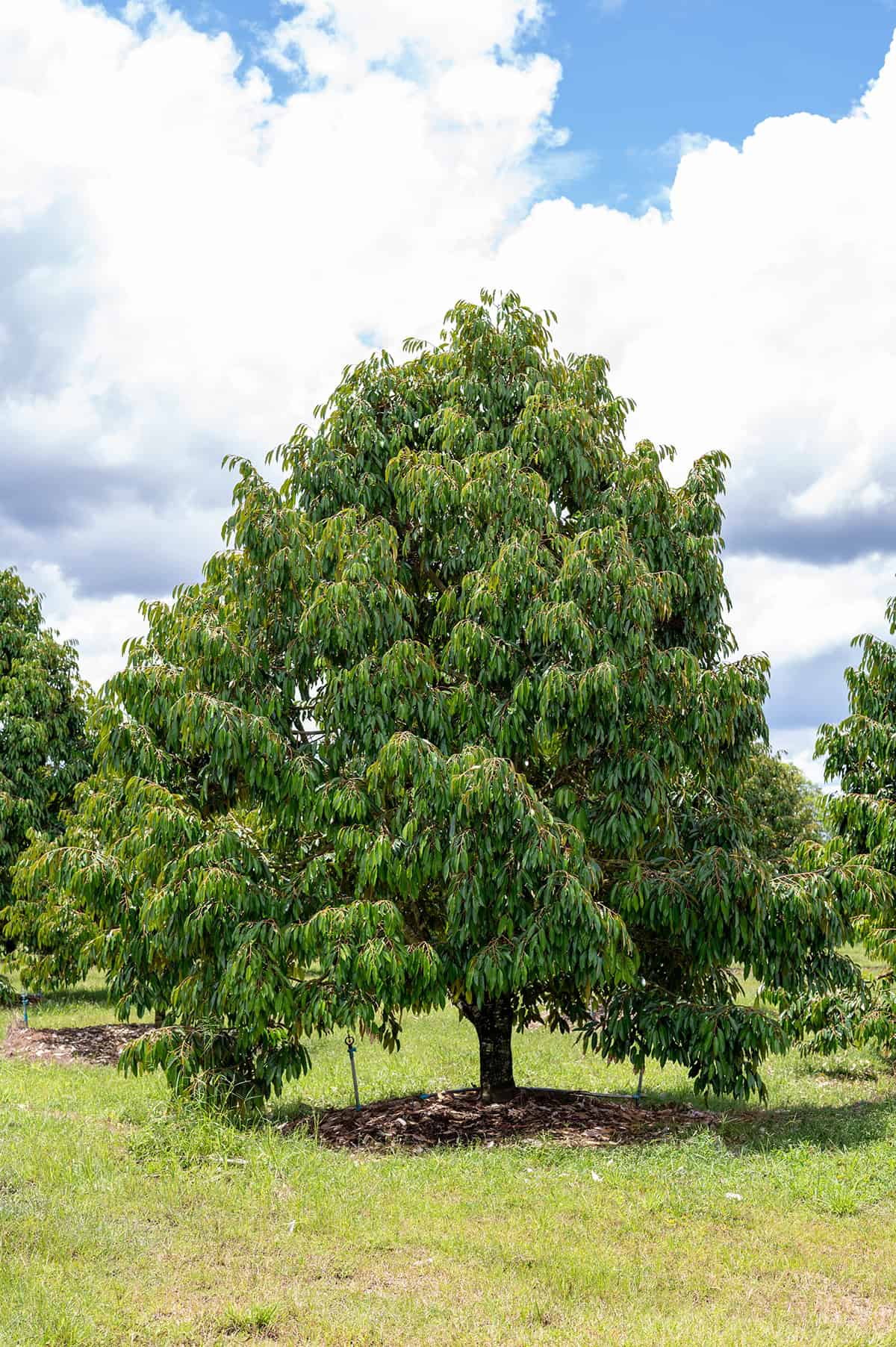
Daytime temperatures between 75°F and 90°F produce steady growth. Below about 72°F, growth slows, leaves drop and flowering falters.
Durian grows best in the lowland tropics, though warm sites up to about 2,600 feet (800 meters) also succeed. Cool nights and large temperature swings harm young trees.
Relative humidity of 75 to 80 percent most of the year supports healthy leaves, and dry air scorches them and saps vigor. Strong winds strip away moisture and worsen the damage.
Long dry spells stress the tree and cut yields, so irrigate during droughts. Outside the tropics, only a heated greenhouse with warm nights and high humidity grows durian, and sudden cold ruins fruiting.
Fertilizer
Durian needs regular feeding for healthy leaves, flowers and fruit, since tropical rain depletes even rich soil.
Young trees respond to a balanced fertilizer such as 14-14-14 or 16-16-16 every couple of months during growth. As the tree matures, slightly more nitrogen builds the framework, and once flowering begins, a potassium-rich formula such as 12-12-17 improves fruit quality.
Scatter fertilizer within the drip line, away from the trunk, and water it in. Compost once or twice a year improves soil, especially sandy ground, though heavy applications late in the rainy season worsen waterlogging.
Young trees take smaller, frequent doses, and mature trees larger ones less frequently. A soil test sets the right rate.
Growing in Containers
Containers hold young or grafted durian where space or climate falls short, though potted trees rarely produce large harvests over the long term.
Start with a large, solid pot of at least 20 gallons with plenty of drainage, and size up as roots expand. Durian sends down a taproot and spreads wide, so depth matters.
Use a deep, loose, slightly acidic mix (pH 5.5 to 6.5) rich in organic matter and quick-draining, and skip heavy garden soil.
Place the pot in all-day sun, hold temperatures above 70°F and shelter it from wind, which dries containers fast. Water until it drains from the bottom, then let the top inch dry before the next watering.
Feed lightly but regularly with a complete fertilizer during the growing season, and flush the pot every few months to clear salts. Prune to control size and repot when roots circle or push out.
Potting & Repotting
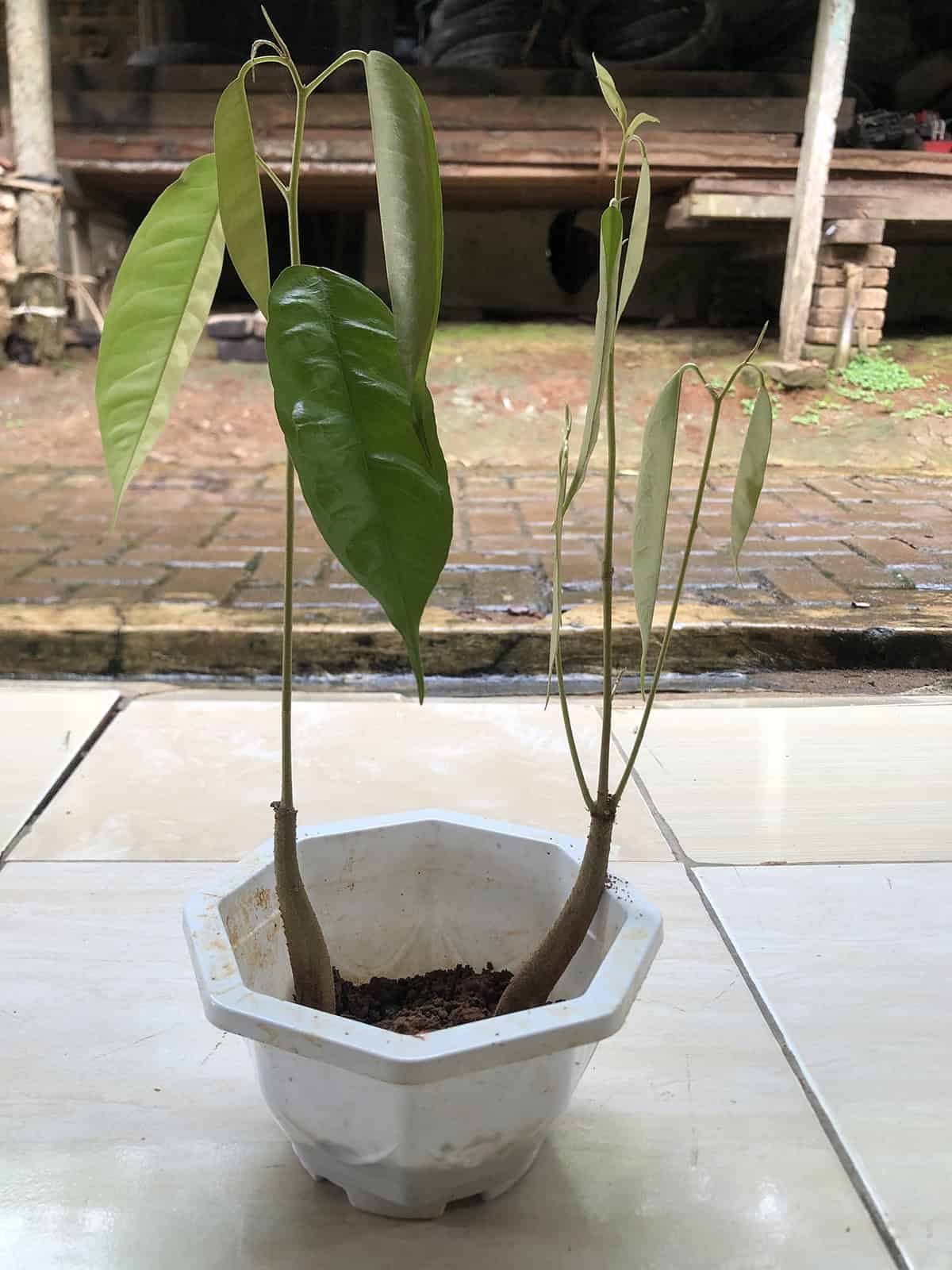
Young potted durians need deep containers with wide drainage holes, since shallow pots cramp the taproot and weaken the tree.
Blend good potting soil with coarse sand or perlite and compost for a loose mix that holds moisture and drains well.
When roots circle or poke through the drainage holes, move the tree to a pot just slightly larger, since oversized pots hold too much water. Disturb the root ball as little as possible, and set the tree at its original depth.
Firm the mix gently and water thoroughly. Place the tree in bright shade for a few days afterward, warm and humid, and wait for new growth before feeding again.
Pruning
Early, light pruning builds a strong durian framework, and mature trees need only occasional maintenance.
When the tree reaches 3 to 4 feet, choose three to five sturdy scaffold branches with wide angles, and thin weak or crowded shoots for a balanced canopy.
A single central leader supports future fruit, so remove rival leaders early to prevent split trunks. Space scaffold branches to let light into the canopy.
Remove dead, damaged or diseased wood at any time with clean cuts just outside the branch collar. Avoid topping, which weakens the tree and harms fruit quality.
Save major cuts for dry periods, never just before cold or heavy rain, since heavy pruning delays flowering. To control height, shorten selected upper branches instead of removing the top.
Propagation
Durian seeds lose viability within days, so sow them fresh from ripe fruit in deep, loose soil for the long taproot. Seedlings take seven to ten years to fruit, and the fruit varies from the parent.
Grafting joins a sturdy rootstock to a proven variety and produces trees that fruit in four to six years with predictable quality. Nurseries use budding or cleft grafting. When buying, check for a clean, healed graft union and healthy roots.
Cuttings and air layering root poorly in durian, and home growers rely on seedlings for rootstock and grafted trees for fruit.
Fruiting & Harvest
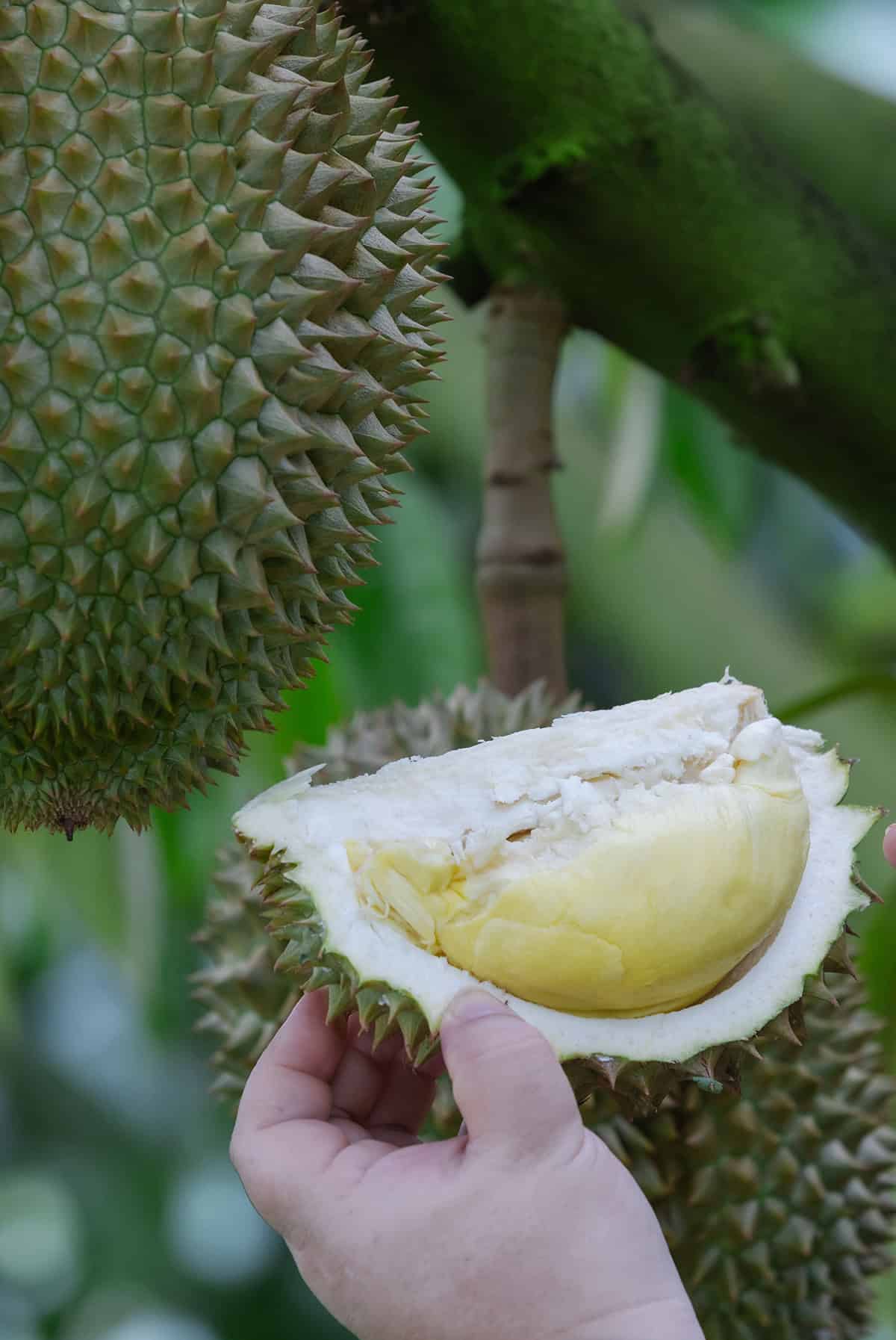
Grafted trees fruit years sooner than seedlings. Flowers open in clusters after a spell of dry weather, mostly at night, when bats and insects carry the pollen. Hand pollination in the evening improves poor fruit set.
When a tree sets more fruit than its branches hold, thin out small and crowded fruit. Thinning protects branches from breaking and helps the rest reach full size.
As harvest nears, the husk shifts from dull olive to a lighter green-yellow, and the aroma strengthens. Many ripe fruit drop on their own, while others are cut early with a piece of stem attached and finish ripening off the tree.
Handle the spiny fruit carefully with thick gloves, since bruises lead to spoilage, especially after heavy rain. Unripe durians store at about 55°F to 59°F in humid conditions to slow ripening.
Common Problems
Poorly drained soil leads to root rot. Phytophthora, a soil-borne water mold, darkens and softens the roots and causes patch canker on the trunk, with yellow leaves, slow growth and branch dieback as the first signs.
Loose soil and drainage away from the trunk are the best defense. Thick mulch or weeds against the base hold moisture and invite rot. Water deeply, but never let it pool.
Excess nitrogen produces lush leaves with few flowers and poor fruit set. Wild swings in watering cause flowers and young fruit to drop, and strong winds knock immature fruit down.
Durian fruit borers and psyllids attack fruit and new leaves in many growing regions, and regular inspection catches them early. Early action on soggy roots, leaf color changes or unusual fruit drop prevents bigger losses.
Popular Varieties
Across Southeast Asia, durian fans seek out particular cultivars, and climate, tradition and market demand guide growers’ choices.
Musang King, also known as D197, has thick, golden, very creamy flesh with a balance of sweetness and gentle bitterness. The tree is demanding and needs relentless warmth and humidity.
D24, or Sultan, has softer, paler flesh with mellow sweetness and a hint of bitterness. Its fruit grows large, and the trees adapt well across the flat, humid lowland tropics.
Monthong, the leading Thai cultivar, produces large segments with small seeds and a milder aroma, and its tough husk ships well. Red Prawn, or Udang Merah, has deep orange to reddish flesh with a sweet, slightly alcoholic tang and a silky consistency, and it needs rich soil and steady water to produce well.