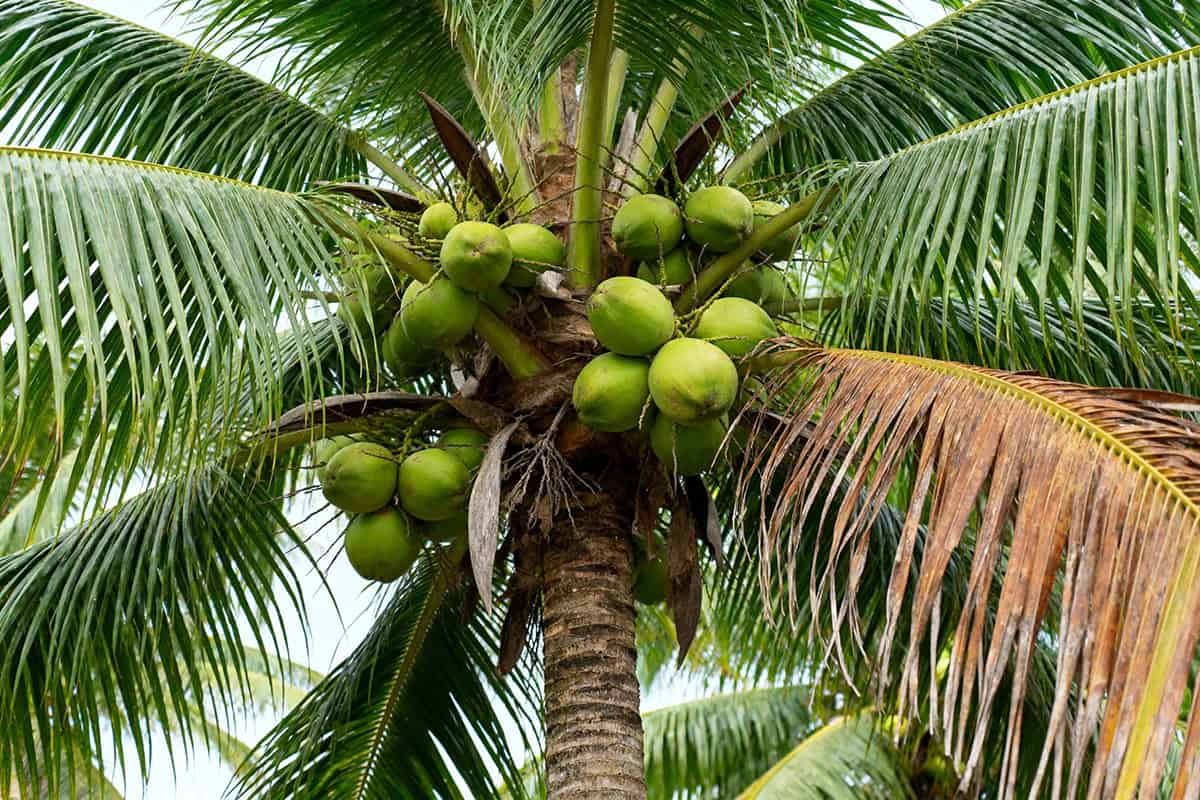
Fresh coconuts are only part of the reason gardeners love coconut palms. Their towering trunks and swaying fronds create a landscape that feels like a tropical getaway every day. Good planting practices and regular care help keep them growing strong. Read on to discover the best way to care for a coconut palm.
Table of Contents
Quick Care Summary
Only truly tropical or nearly tropical climates let you grow coconut palm outdoors year-round. This palm wants heat that doesn’t quit, blazing sun, and soil that never stays soggy. Cold snaps? Not its friend.
Water matters most the first year—don’t let it dry out. Mature trees can handle a brief drought, but they’ll always look and fruit better with regular drinks. Nutrient deficiencies pop up fast in poor soils, so a palm fertilizer is practically required.
- Light: Full sun; 6–8+ hours direct
- Soil: Sandy, fast-draining; pH flexible if drainage is good
- Water: About 1 inch weekly while establishing; keep roots out of standing water
- Temperature: Thrives above 70°F; freezes are deadly
- Humidity: High is best, but coastal breezes are fine
- Fertilizer: Palm formula, 3–4 times a year
- Propagation: Fresh whole coconut (with husk)
- USDA Zones: 10B–11
- Fruiting Season: Any time in the tropics; each nut matures in ~12 months
You won’t see flowers for four to six years, and real production takes patience. A well-grown palm can yield dozens of coconuts annually in the right spot.
Plant Overview
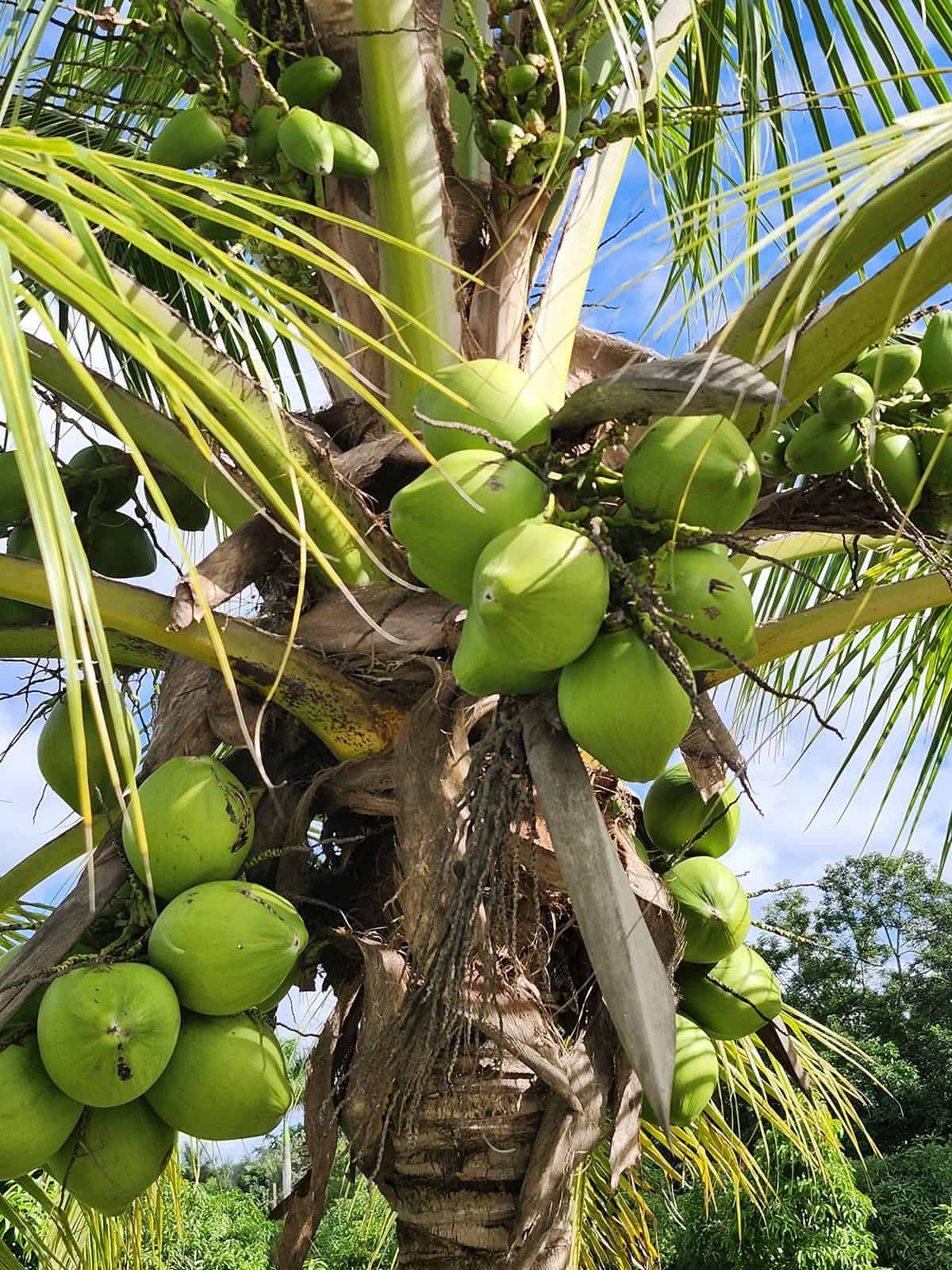
Among tropical fruit trees, Cocos nucifera stands out—everyone knows the coconut palm. Some folks call it a tree, but botanically it’s a palm, not a “tree” in the strict sense. It’s valued for its fruit, fibers, and oil.
A single, smooth trunk rises up, topped with a burst of long, arching leaves. In truly warm places, these palms can stretch 60 to 100 feet toward the sky. They’ll put on growth at a decent clip if they’ve got heat, sun, and moisture.
Forget about growing them where frost is a risk. Even a light chill can ruin the foliage or kill a young palm outright. On the other hand, wind and salty air rarely faze them.
Botanical name: Cocos nucifera
Common names: Coconut palm, coconut tree
Plant type: Evergreen palm, tropical fruit tree
Mature size: 60–100 ft tall; 20–30 ft spread
Growth rate: Moderate to fast in warm climates
Toxicity: Non-toxic to people and pets
Native region: Tropical coastal regions of the Indo-Pacific
Quick Care Summary
Light: Full sun
Soil: Well-drained, sandy or loamy
Watering: About 1 inch per week during establishment
Temperature: Warm year-round; no freezing
Humidity: Prefers high humidity
Fertilizer: Palm-specific fertilizer 3–4 times yearly
Propagation: Fresh seed (whole coconut)
USDA Zones: 10B–11
Fruiting season: Year-round in tropical climates
Light
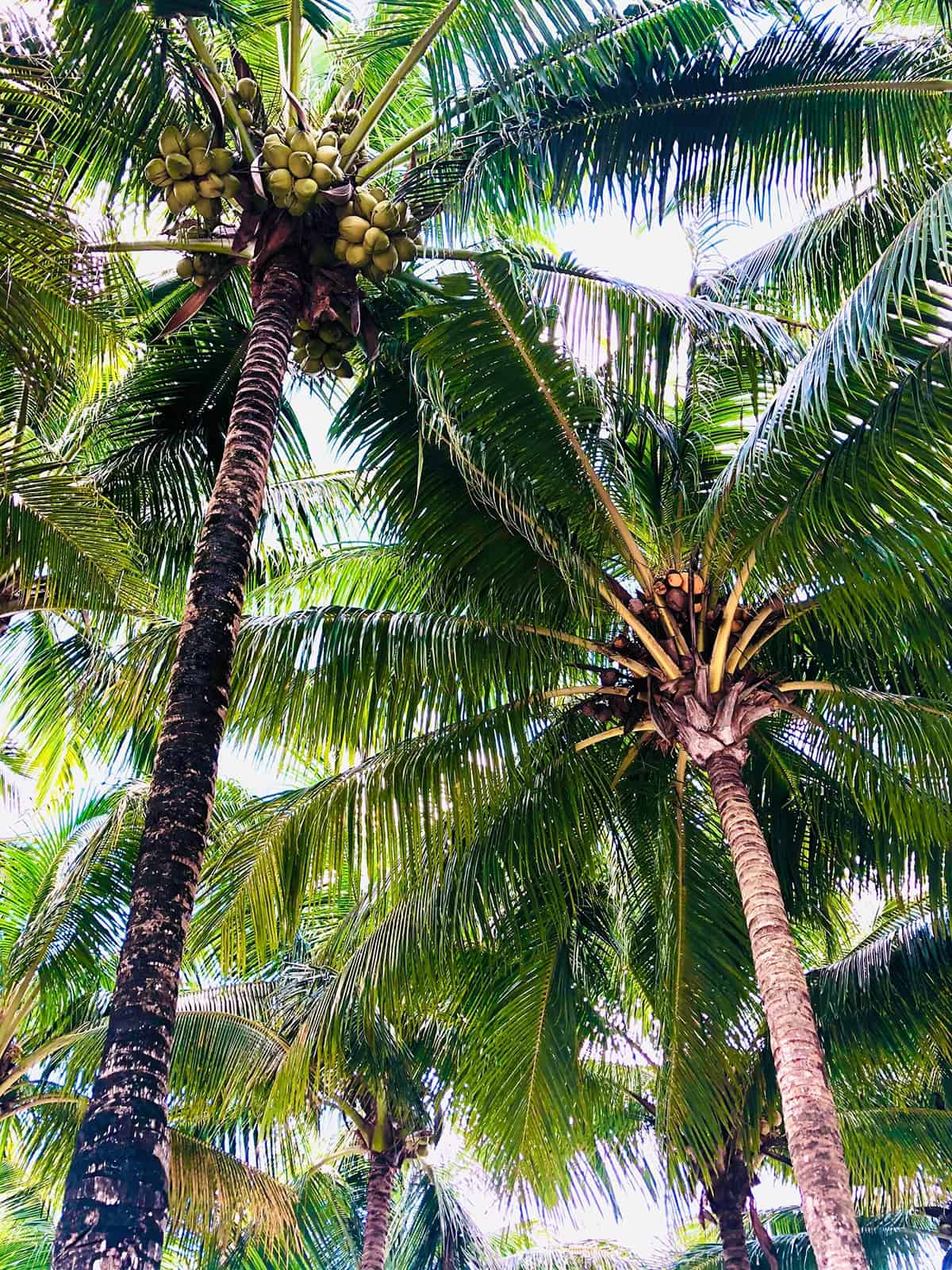
Sunlight rules here—coconut palms crave it. Six to eight hours of direct sun, minimum. Tuck it in the open, away from shade-casting buildings or trees. The more sun, the sturdier the trunk, the fuller the crown.
Shade, even for a few hours, slows things down. Leaves get pale, growth gets stringy. Young palms might tolerate a bit of filtered light, but they’ll always perform better with full exposure. Coastal breezes and sun together? That’s where these palms really shine.
If you’re growing one indoors, crowd it right up to a south- or west-facing window. No luck with the sun? A grow light, positioned close, is your friend. Give the pot a quarter-turn every so often to keep it from leaning toward the light. Too little sun, and fruiting is just a dream.
Water
Steady moisture—especially early on—is non-negotiable. About an inch of water each week does the trick for young palms. Deep watering helps roots reach down, not just spread out on the surface.
Letting the soil dry out is a rookie mistake. Stick a finger in; if the top few inches are dry, it’s time to water. Once the palm settles in, it can handle a bit more dryness, but not for long stretches.
What you don’t want is soggy soil. Roots suffocate and rot in standing water. Sandy or well-aerated mixes keep things draining while still holding enough moisture for healthy roots.
Soil
Loose, sandy soil is the ticket. Roots rot in heavy or waterlogged ground, so a spot where water drains away fast is ideal. After a rain, you shouldn’t see puddles hanging around.
If you’re stuck with clay or compacted soil, blend in coarse sand or organic matter to loosen things up. A slightly acidic to neutral pH is best, but this palm isn’t too fussy unless the soil’s way off. If growth stalls or leaves fade, it might be time for a soil test.
When planting, set the root ball just below the soil surface—about an inch down. Firm the soil gently, don’t stomp it. Water right away. A shallow layer of mulch helps keep moisture in and weeds out, but don’t pile it against the trunk.
Temperature & Humidity
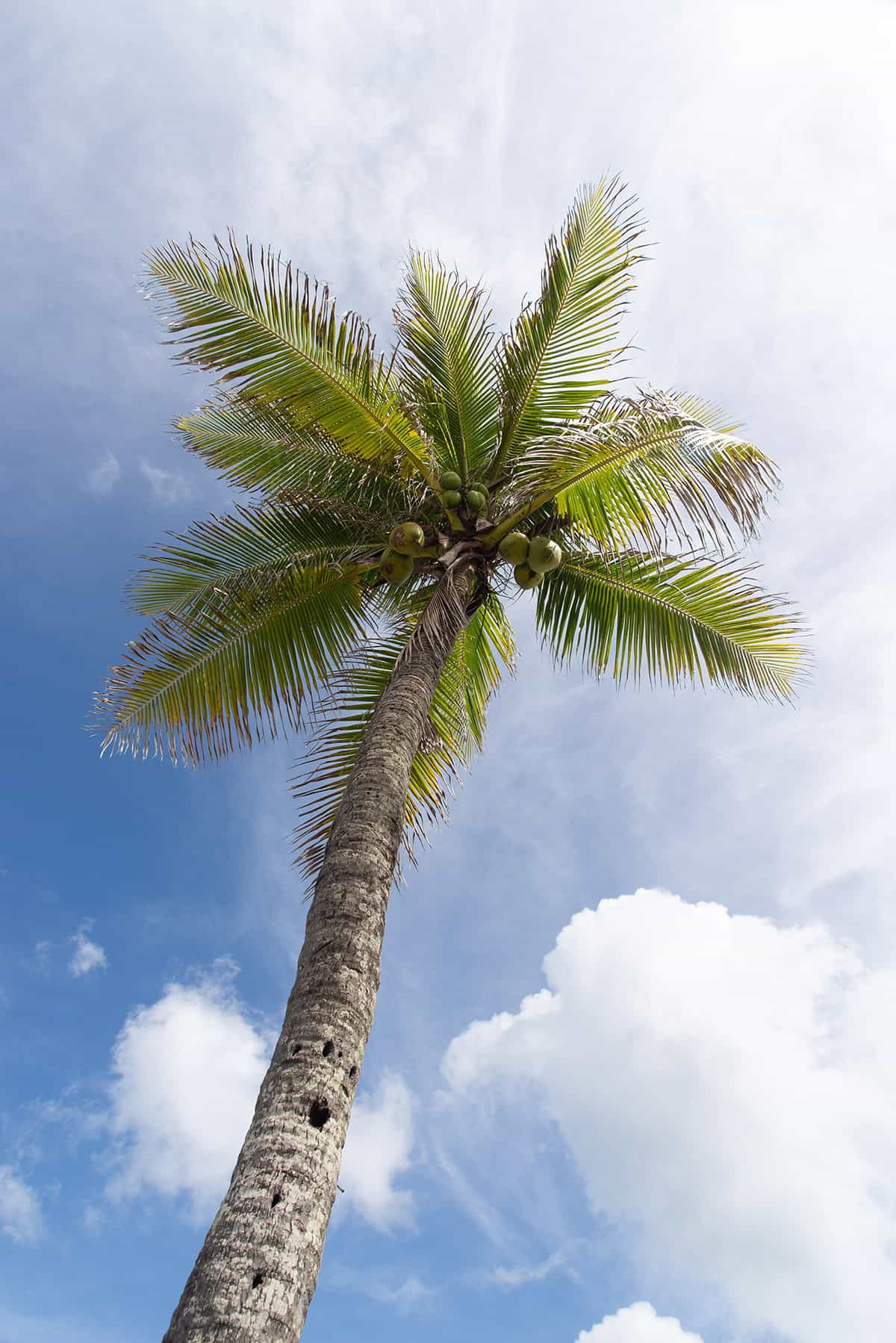
Hot, humid air is what keeps a coconut palm humming. Temperatures between 75°F and 95°F (24°C–35°C) seem to be the sweet spot. Brief heat waves are fine, but steady warmth matters more.
Drop below 60°F (16°C) and growth slows. Get close to freezing and you’re flirting with disaster. These palms are strictly for USDA Zones 10B–11—places where frost barely exists.
Humidity helps, too. 60% to 90% is ideal. Dry air, especially indoors, often browns the leaf tips and stunts new growth. Coastal gardens usually have enough moisture in the air, but inland or arid areas might need extra misting, grouped plants, or even a humidifier.
Cold snaps can be brutal. If you see a chilly forecast, cover young palms with frost cloth. Stable warmth and moist air mean more healthy fronds, and eventually, flowers and coconuts.
Fertilizer
Nutrient-hungry? You bet. Sandy soils, especially near the coast, are often short on the essentials. Waiting for yellow leaves is a losing game—feed on a schedule.
A palm-specific fertilizer, something like 8‑2‑12 with magnesium, works for most situations. Slow-release is best so nutrients don’t wash away. Sprinkle it under the entire canopy, keeping a buffer around the trunk, and water it in.
Four feedings a year is about right in warm climates. Ease up if growth slows in cooler weather. Container palms need lighter, more frequent doses—diluted, not dumped.
Watch for yellow edges on old leaves (magnesium deficiency) or a general pale look (low nitrogen). Catch and fix those early; palms take time to bounce back from a deficiency.
Growing in Containers
Not everyone gardens in the tropics, but you can still try a coconut palm indoors or on a patio if you get the basics right. Container life keeps it smaller, but with the right care, it’ll stick around for years.
Start with a pot at least 10 inches deep and wide enough for the coconut. Drainage holes are non-negotiable. Mix up a blend—coco coir or peat, bark, and coarse sand—for a loose, airy texture. Heavy, wet soil is a killer.
Set the sprouted coconut so the base sits just above the soil line, leaving part of the nut exposed. Water after planting to settle the mix. Bright light—ideally a south-facing window—is key. Keep temps in the 75°F to 95°F range, and don’t let it dip below 65°F.
Water when the top inch dries out, but don’t let it get soggy. Dump any water in the saucer after each drink. Cut back a bit in winter when growth slows.
Feed with a controlled-release palm fertilizer, following the label. Once a month, flush the pot with plain water to keep salts from building up.
Potting & Repotting
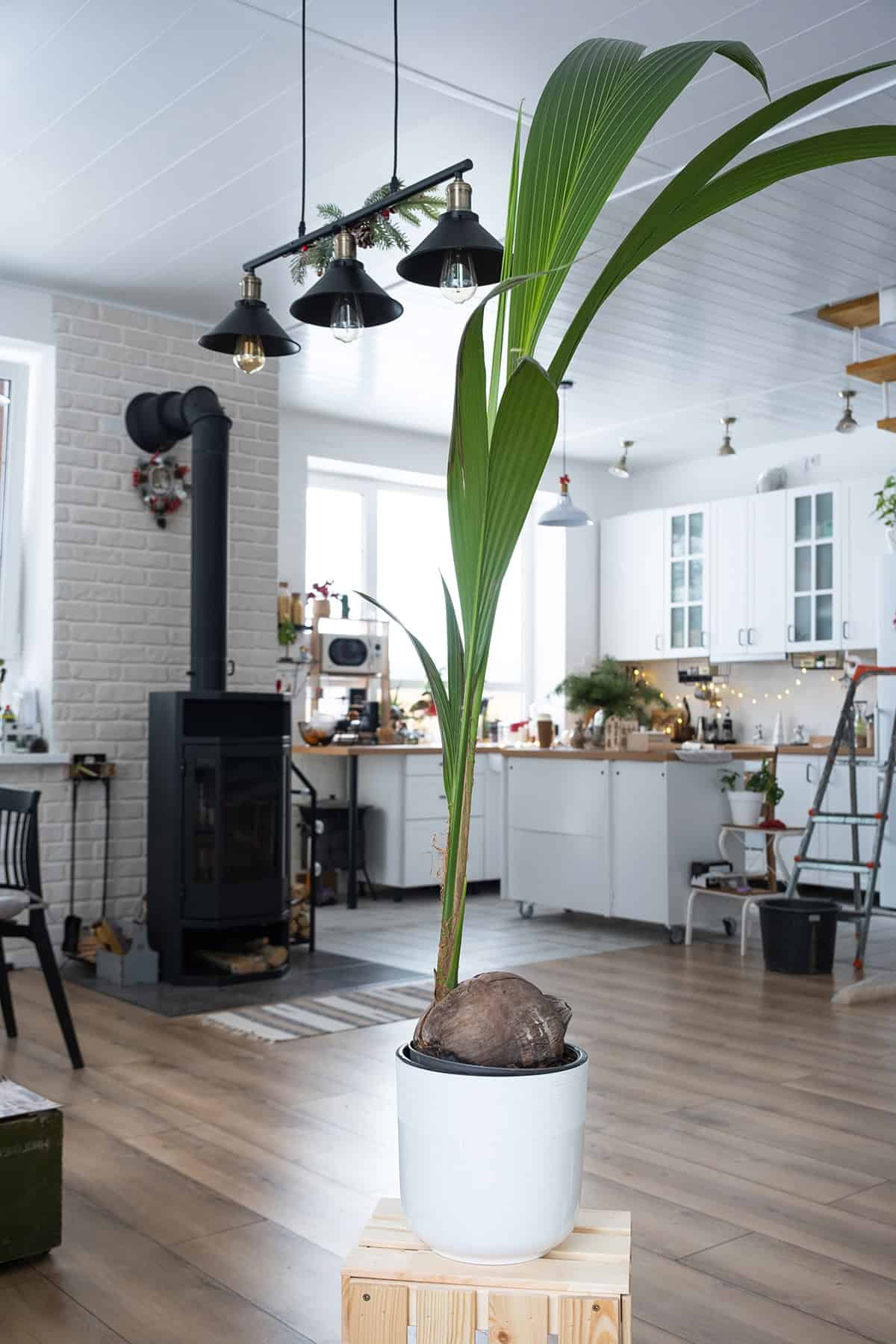
A deep container gives the palm’s taproot room to stretch. For a young plant, 10 inches deep is the bare minimum, and the pot should be wider than the nut. Make sure there are several drainage holes.
A gritty mix with sand or perlite is the way to go—not too heavy, not too dry. When planting, keep the pointed end of the coconut down, with about a third of the nut above the soil.
Full sun is best, and rotating the pot every few weeks helps keep the trunk growing straight. Water enough to keep the soil evenly moist, but never let it sit in water.
Repotting time? When roots fill the pot or sneak out the drainage holes. Move up just one pot size at a time to avoid shocking the plant. If the soil gets soggy or breaks down, swap it out for fresh mix and trim away any dead roots before replanting.
Pruning
Pruning a coconut palm isn’t something you’ll do often. With a single growing point at the top, you can’t control height by cutting the trunk. The goal is to remove only what’s dead or truly unsightly.
Snip off fully brown, dead fronds close to the trunk. Leave anything green, or even partly green, alone—those leaves are still working. Over-pruning weakens the palm and slows growth.
Don’t fall for the “hurricane cut”—that trend of leaving just a handful of fronds. Turns out, palms with fuller crowns fare better in storms. The extra foliage shields the bud and trunk.
If you’re worried about falling coconuts, you can trim off flower stalks or young fruit clusters before they get big. It’s safer to do this early, before the nuts become heavy.
Use sharp, clean tools and cut close to the trunk without gouging it. Never yank fronds that resist—they’ll leave wounds that invite disease and never really heal.
Propagation
Starting a coconut palm from seed is pretty straightforward, if you’re patient. The “seed” is the whole coconut, husk and all. Pick one that’s still heavy with liquid when you shake it—no cracks, mold, or signs of drying out.
Soak the nut in water for a couple of days to soften the husk and jump-start sprouting. Plant in a deep pot with drainage holes or directly in sandy soil if you’re somewhere warm. Lay the nut on its side, covering the lower two-thirds with soil and leaving the top third exposed.
Full sun and moist—but not soggy—soil are crucial. Warmth speeds things up; above 75°F is best. Sprouting can take weeks or even months, so don’t give up too soon.
Once a shoot and roots appear, keep up the watering and light. Transplant outdoors only if you’re in a frost-free zone; otherwise, keep it potted and protected from the cold.
Fruiting & Harvest
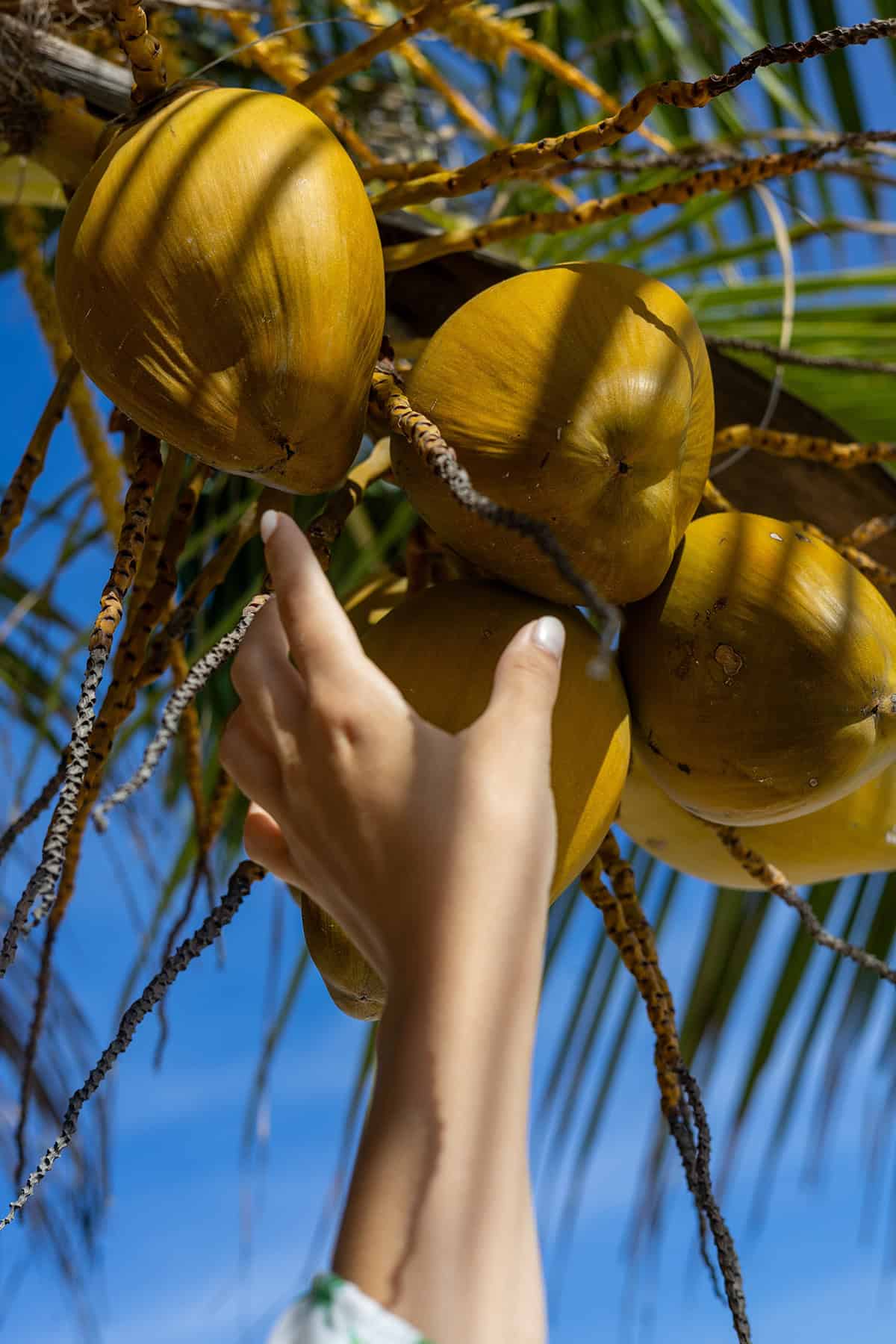
Patience is key—fruiting doesn’t happen overnight. Most palms need 6 to 10 years before they start producing coconuts. Dwarf varieties sometimes get there a bit sooner, while taller types can take longer. Each coconut takes about a year from flower to ripeness.
Young, green coconuts are prized for their mild, sweet water and soft meat. If you’re after firm white flesh for oil or milk, let them mature on the tree.
A thriving palm can yield dozens of coconuts a year under the right conditions. Fruits grow in clusters below the crown and ripen at staggered times, so you won’t get a single massive harvest.
Picking coconuts isn’t without risk—those nuts are heavy and can do real damage if they fall. Use a pole saw or climb (safely!) to cut clusters. Gather fallen nuts quickly and stash them in a cool, shaded spot until you’re ready to crack them open or process the meat.
Common Problems
It’s tough to ignore when fronds start yellowing or drooping. That’s usually a telltale sign of root rot sneaking in, especially if the soil’s soggy or water puddles stick around after rain. Letting the top layer dry a bit between waterings and sticking with loose, well-drained soil usually keeps things under control. When a palm’s too far gone, it’s best to take it out before the problem spreads to its neighbors.
Sometimes, the real culprit behind fading leaves is a lack of nutrients. If you’re seeing older fronds turning yellow or orange, potassium or magnesium might be missing from the mix. Regular feeding with a palm-specific fertilizer—especially one with the right micronutrients—really makes a difference during the growing season.
Disease can be a real headache, especially in warm climates where lethal yellowing lurks. You might notice fruit dropping too soon, flower stalks turning black, or the crown slowly collapsing. Once it takes hold, there’s really no reversing it. Pulling out infected trees quickly and chatting with local experts about resistant types is pretty much the only way forward if it’s a known issue nearby.
Foliage sometimes gets chewed up by pests, particularly the palm leaf skeletonizer. This little pest munches away between veins, leaving thin, brown patches that look almost scorched. When infestations get out of hand, younger palms can really struggle. It’s worth checking the fronds regularly and trimming out any badly damaged leaves before things escalate.
Weather throws its own curveballs. Cold snaps and powerful winds can leave coconut palms stressed or even stunted. These trees just don’t handle freezing, so planting in sheltered spots and giving young palms some wind protection is a smart move if your winters get dicey.
Popular Varieties
Sunlight streaming through a stand of towering coconut palms can make you feel small—these giants, sometimes stretching past 80 feet, have a commanding presence. Years pass before they offer their first harvest, but patience pays off. ‘Jamaican Tall’ and ‘Panama Tall’ are the kind you’ll spot anchoring old groves or lining driveways, standing up to storms and living for generations.
Down at eye level, a dwarf coconut palm brings a whole different vibe. Under 25 feet, with a neat, upright trunk, it fits into tight corners or by a pool without overwhelming the space. ‘Malayan Dwarf’ is a favorite, especially for those who want coconuts without climbing ladders. Early fruiting is a bonus—no need to wait a decade.
Hybrids like the Maypan coconut land somewhere in the middle. Born from ‘Malayan Dwarf’ and ‘Panama Tall’ parentage, Maypan doesn’t shoot sky-high but won’t stay pocket-sized either. Growers in disease-prone areas lean toward this one for its resilience, especially when lethal yellowing is a threat. Once it settles in, the fruit keeps coming.
Some folks chase the biggest coconuts, others just want an easy-care palm with a tidy look. Not every variety will check both boxes. It’s worth thinking about what you really want—shade, a tropical backdrop, or armloads of coconuts—before picking your palm.