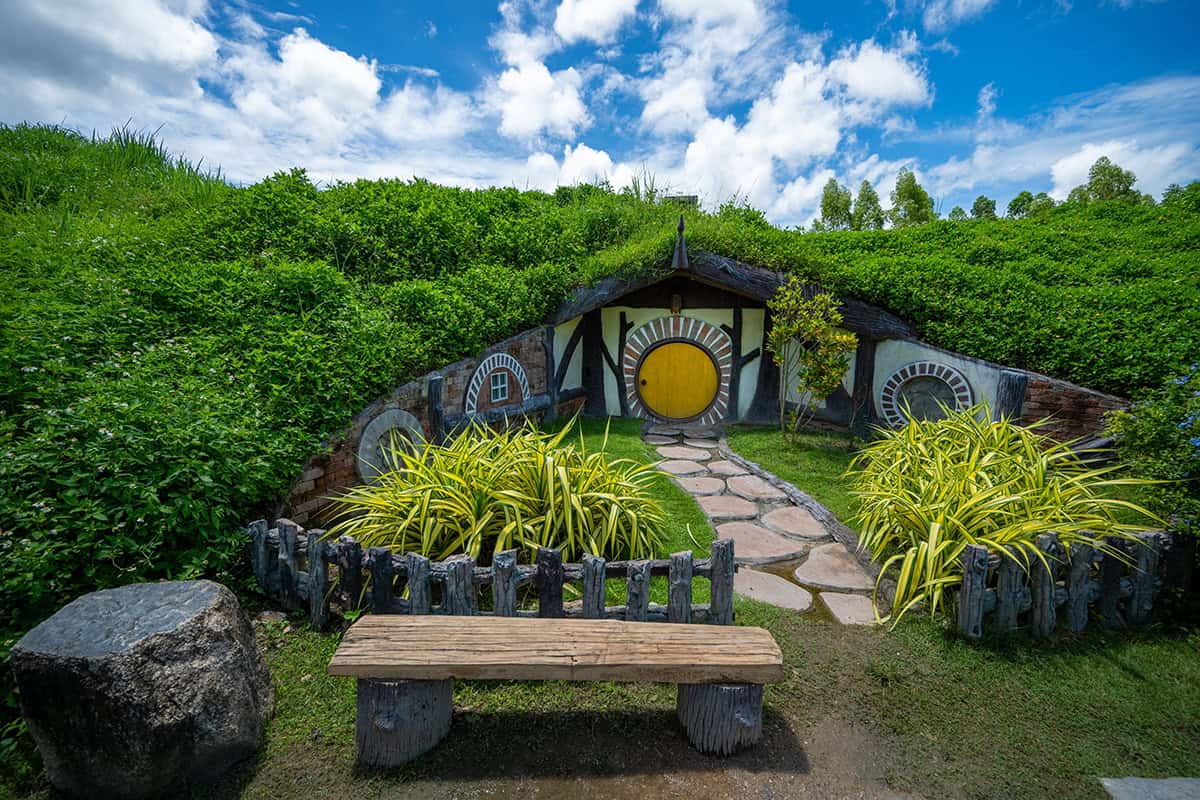
Some garden paths are just for walking, but others invite you to slow down, explore, and maybe even smile. Whimsical pathways have a way of turning ordinary corners into magical moments. These creative ideas will help you add charm, personality, and a little wonder underfoot.
Table of Contents
- Whimsical Pathway Ideas
- Curved Stone Pathway Through a Garden
- Mosaic Tile Path
- Stepping Stones Over Grass
- Fairy Tale Woodland Path
- Pebble Spiral Design
- Glow-in-the-Dark Path Stones
- Rustic Wooden Plank Path
- Brick Path with Grass Inlays
- Checkerboard Pathway
- Butterfly-Shaped Stepping Stones
- Arched Arbor Over Path
- Sea Glass Pathway
- Stepping Stones Through a Pond
- Pathway Lined with Lanterns
- Wood Slice Pathway
- Meandering Gravel Path with Flower Edges
- Brick and Pebble Mix Pathway
- Leaf-Shaped Concrete Stepping Stones
- Cobbled Path Through a Forest
- Painted Path Stones
- Pathway with Hidden Fairy Doors
- Log Border Pathway
- Pathway Through a Wildflower Meadow
- Mirror Mosaic Path
- Pathway Under String Lights
- Geode-Inspired Pathway
- Mushroom-Lined Pathway
- Herb-Lined Path
- Colorful Pebble Rainbow Path
- Winding Wooden Bridge Path
Whimsical Pathway Ideas
Ready to add personality underfoot? Let’s explore pathway ideas that go beyond the ordinary.
Curved Stone Pathway Through a Garden
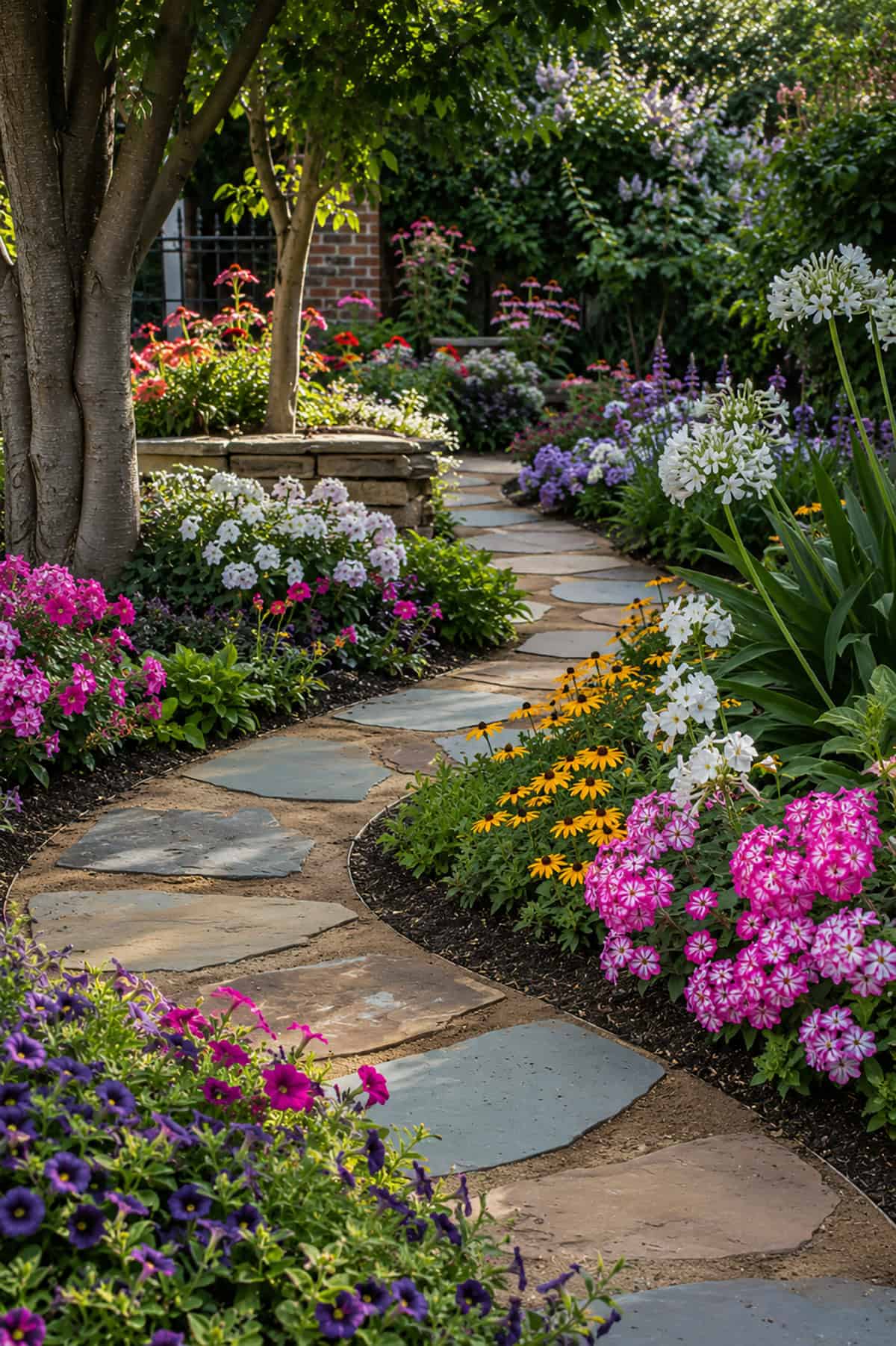
Curves in a path have a way of teasing the eyes and keeping the end just out of sight, and stretching the sense of space. You can add irregular bluestone or granite stepping stones, with their rough edges and uneven spacing, to give the whole path a relaxed, meandering quality.
Letting low plants—sedum, thyme—spill over the stones softens everything up. Shade calls for lush hostas and ferns, closing things in. In the sun, tall grasses or black-eyed susans loosen the edges and lean toward a meadow vibe.
Mosaic Tile Path
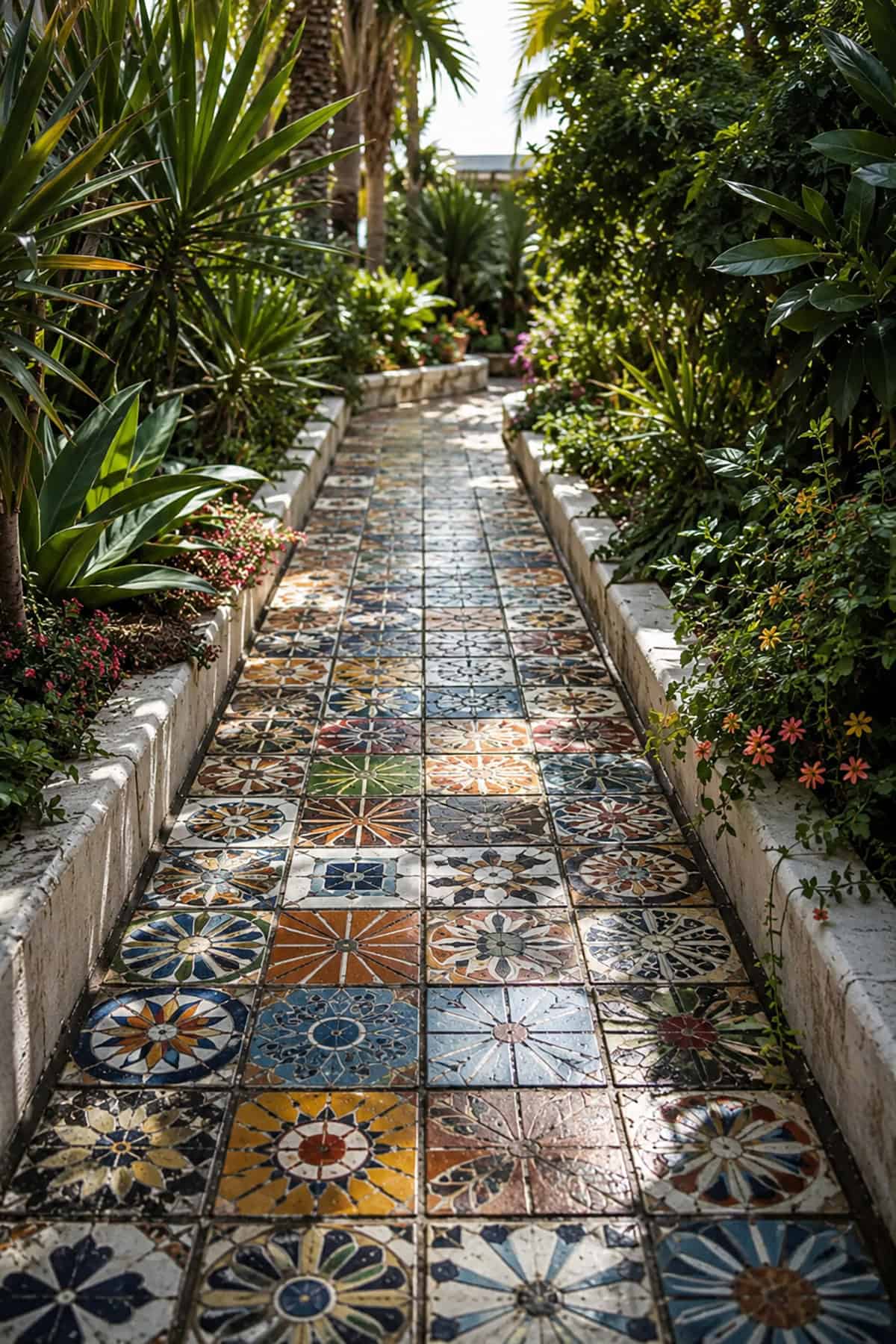
A mosaic tile path instantly turns your walkway into a vibrant, artistic feature. Broken ceramics, glass, or stones are arranged in colorful patterns—abstract or themed—to suit your garden’s character. Each step becomes a tiny gallery moment underfoot, offering personality and lasting beauty
Stepping Stones Over Grass
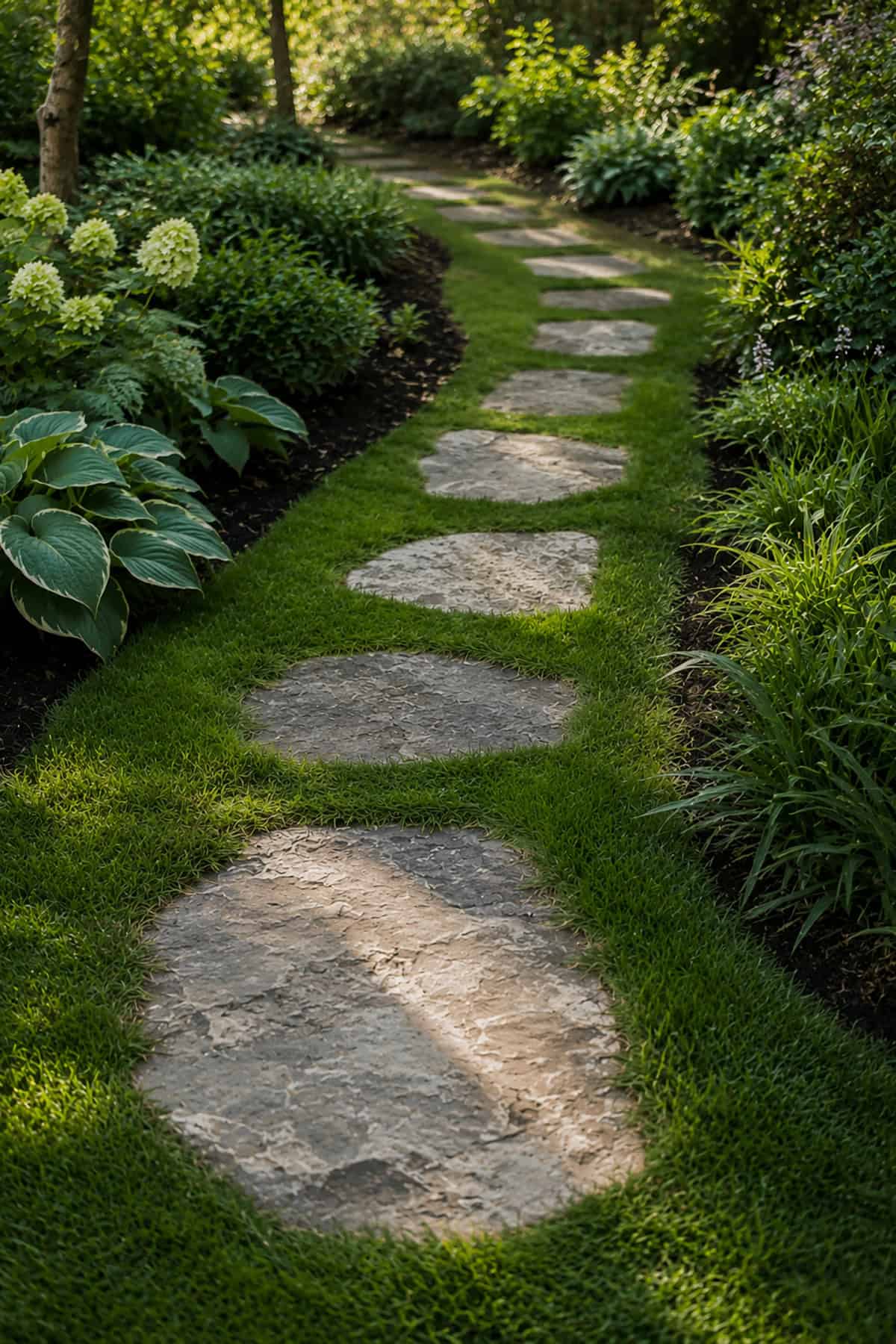
Pressing flat stones into the lawn is low-cost and ages with grace. Grass surrounding will thicken around each stone.
Round stones soften the look, while flagstone leans more wild. Don’t cram them side by side—set each for a natural walking stride and the path just feels better.
Set stones just below grade so the mower glides right over. Saves your back and keeps maintenance simple.
Fairy Tale Woodland Path
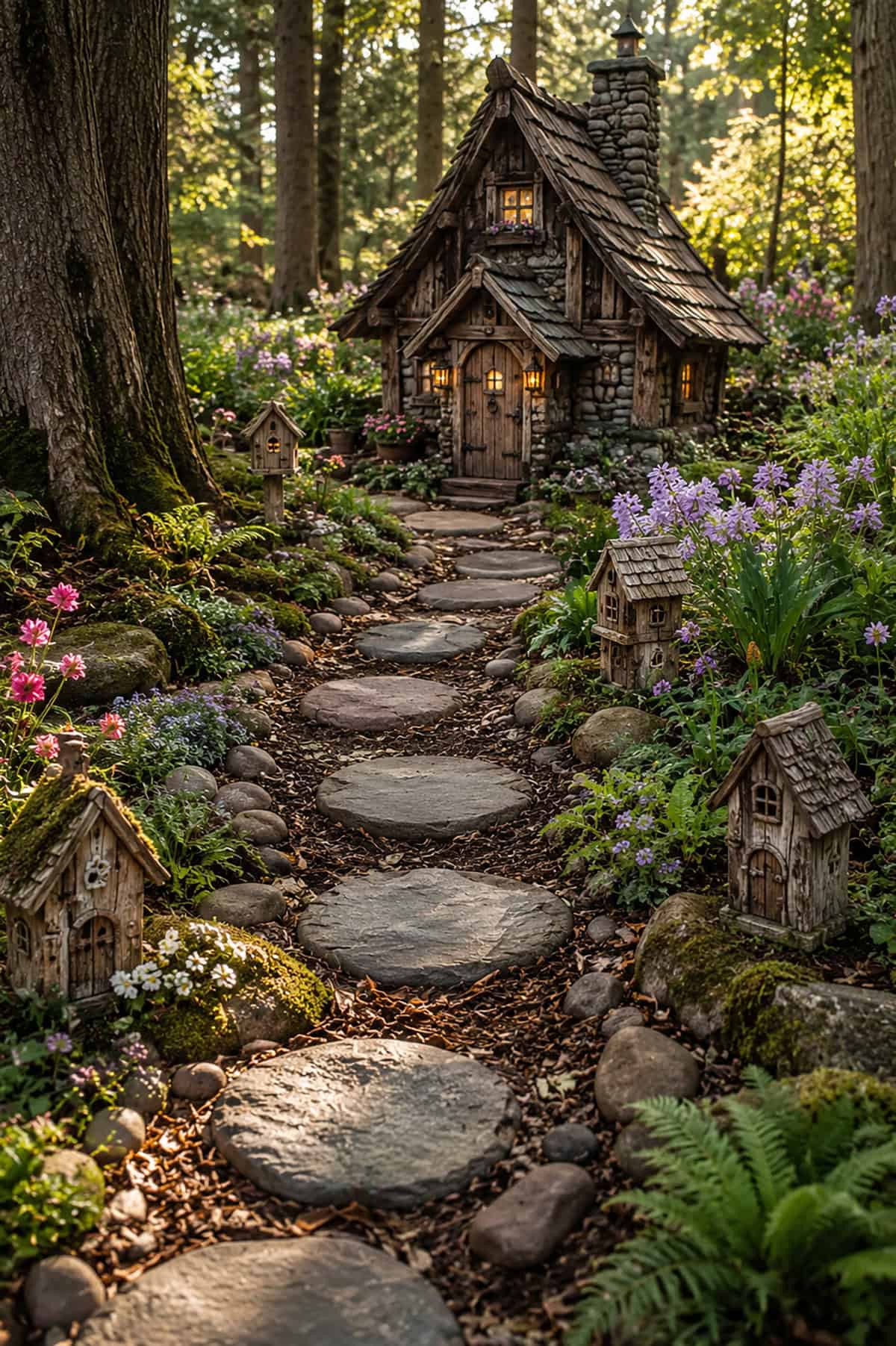
Under deep shade, with roots and damp soil, the path almost writes itself. Bark-clad stones or rough flagstone on a compacted base fit right in, feeling like they belong to the woods.
Ferns, hostas, and mossy rocks at the edge dial up the overgrown, secret-garden vibe. Tuck in a tiny figurine or a painted sign for a hint of story. Let the path narrow unexpectedly—it’ll feel like you’re ducking into a hidden world.
Lighting? Use it sparingly. A few low solar stakes, scattered rather than lined up, keep things magical.
Pebble Spiral Design
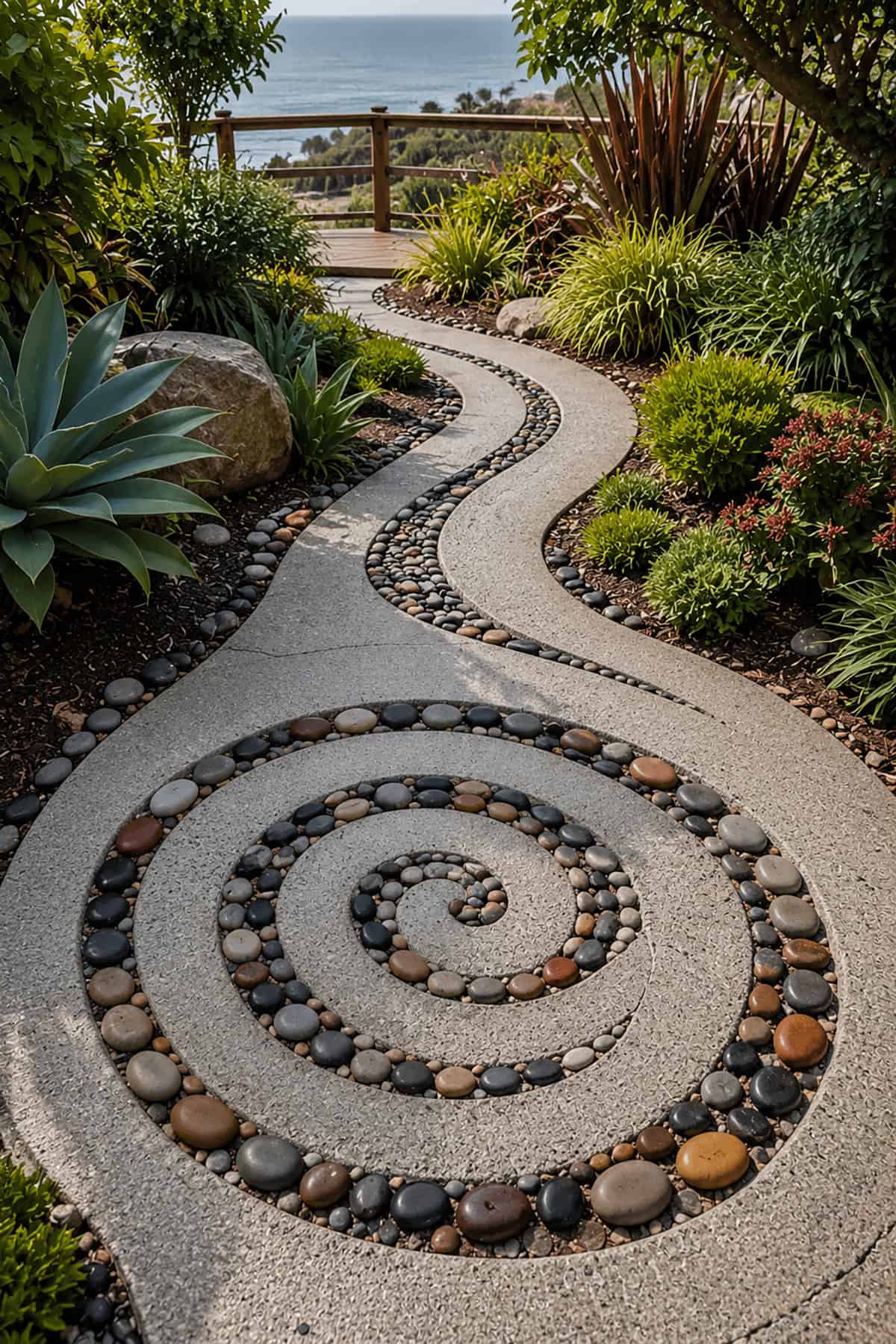
Spirals made from pebbles, set into a larger paved area, pull your attention and slow your steps. Great as a focal point at a junction or in a small courtyard where the eye needs somewhere to rest.
Stick to two or three pebble colors in tight rings for clarity. Mixing sizes—tiny river pebbles against chunkier stones—adds interest without making it busy. Matching the mortar to the pebbles keeps the design crisp.
Glow-in-the-Dark Path Stones
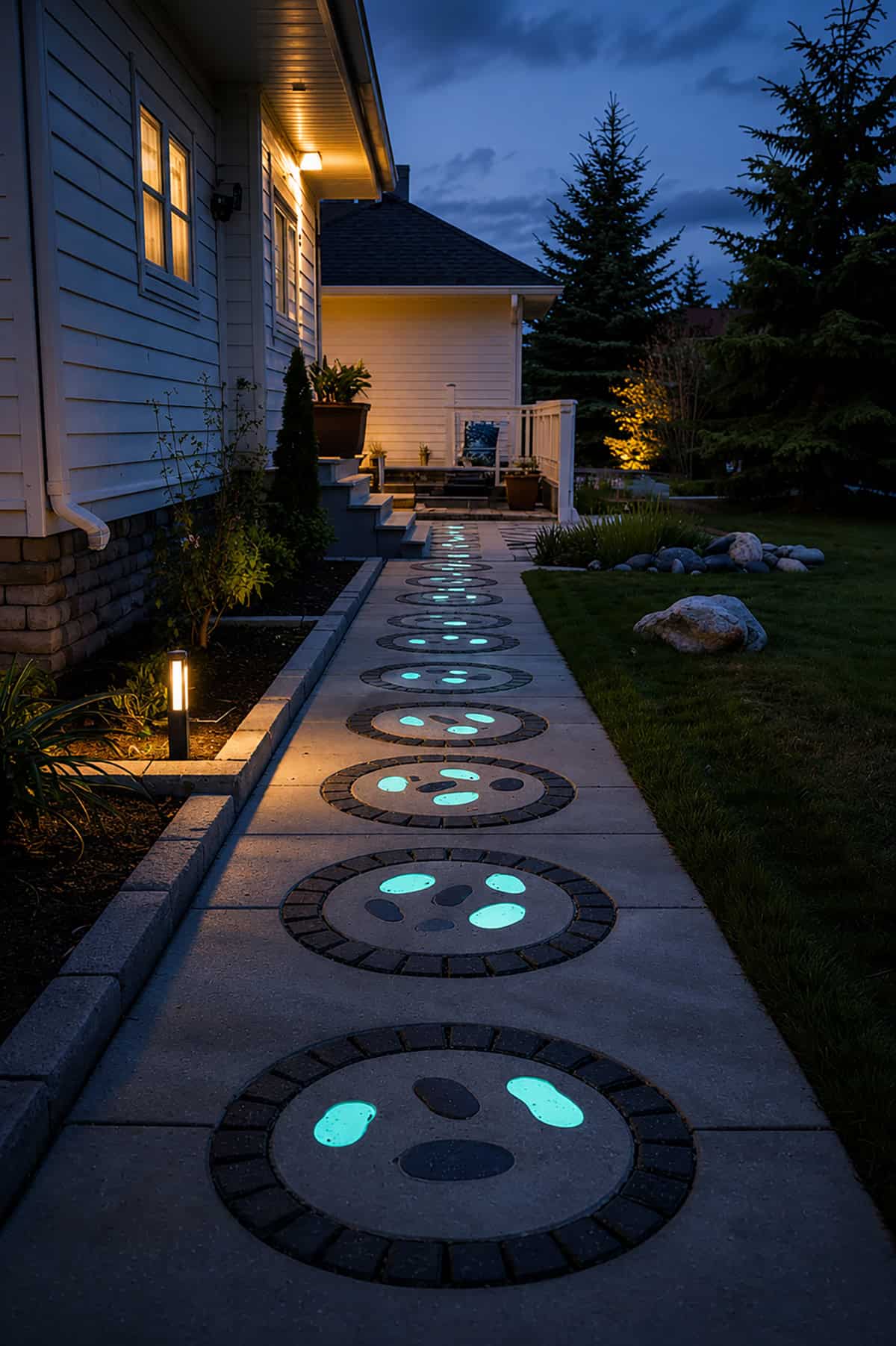
Phosphorescent pebbles or aggregate in stepping stones soak up sun by day and emit a soft blue-green glow after dark. It’s not a light show—just a gentle, practical shimmer that feels a bit magical.
Mix glow aggregate into cast concrete for an even effect. Embedding glow stones on top looks spottier—some folks like that. Just know: these need sunlight to charge, so deep shade means less glow. Kind of a bummer if you’re hoping for a night-light in the woods.
Rustic Wooden Plank Path
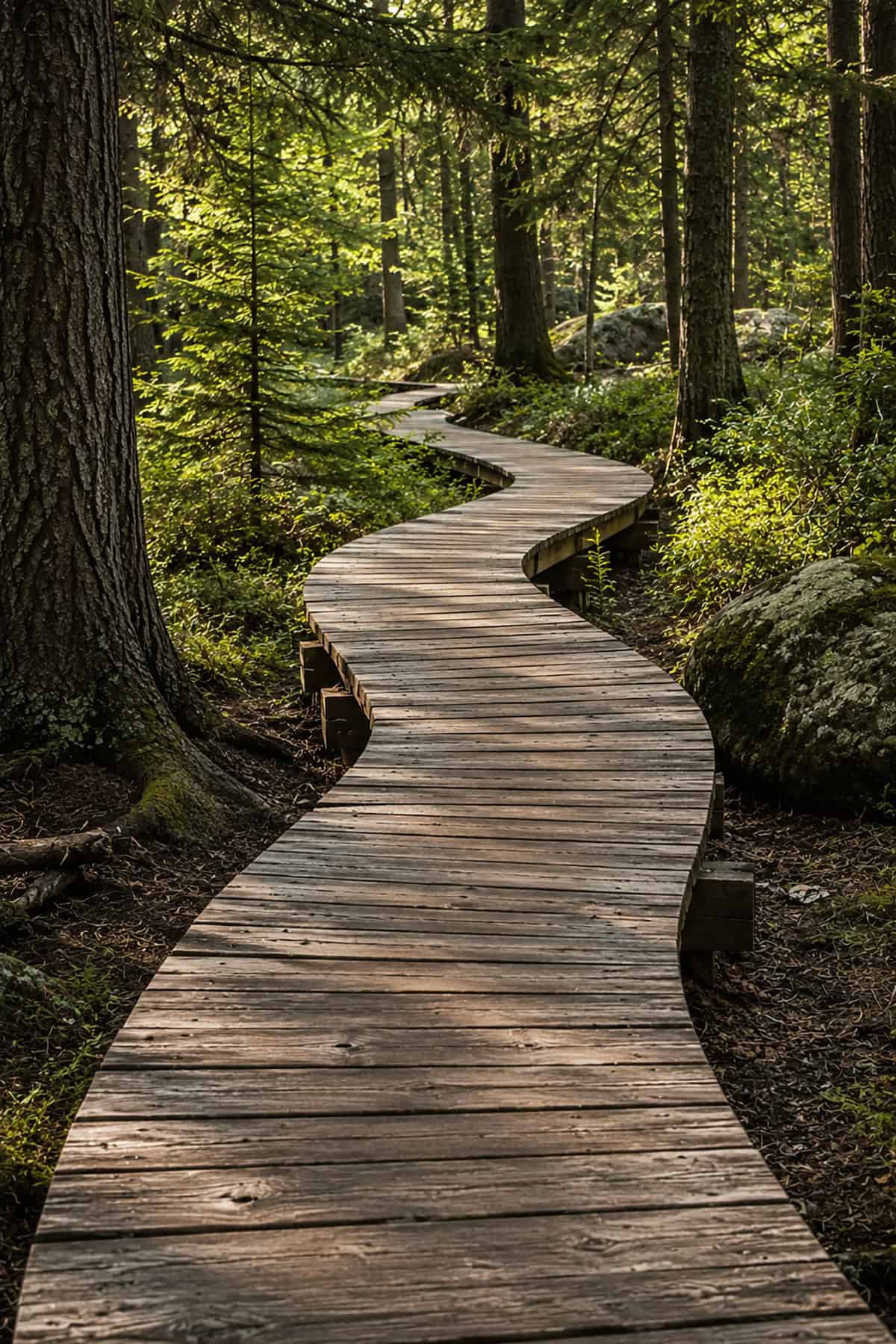
Rough cedar or reclaimed hardwood planks over gravel have a tactile honesty. Step and you’ll feel a slight give; the grain catches the light, and over time, moss and soil gather at the edges in a way that looks intentional, not neglected.
Leave gaps between planks for drainage—standing water is the enemy of longevity. Treat those cut ends before laying them down. Wide planks feel relaxed and casual, while narrow, staggered boards look more crafted.
Brick Path with Grass Inlays
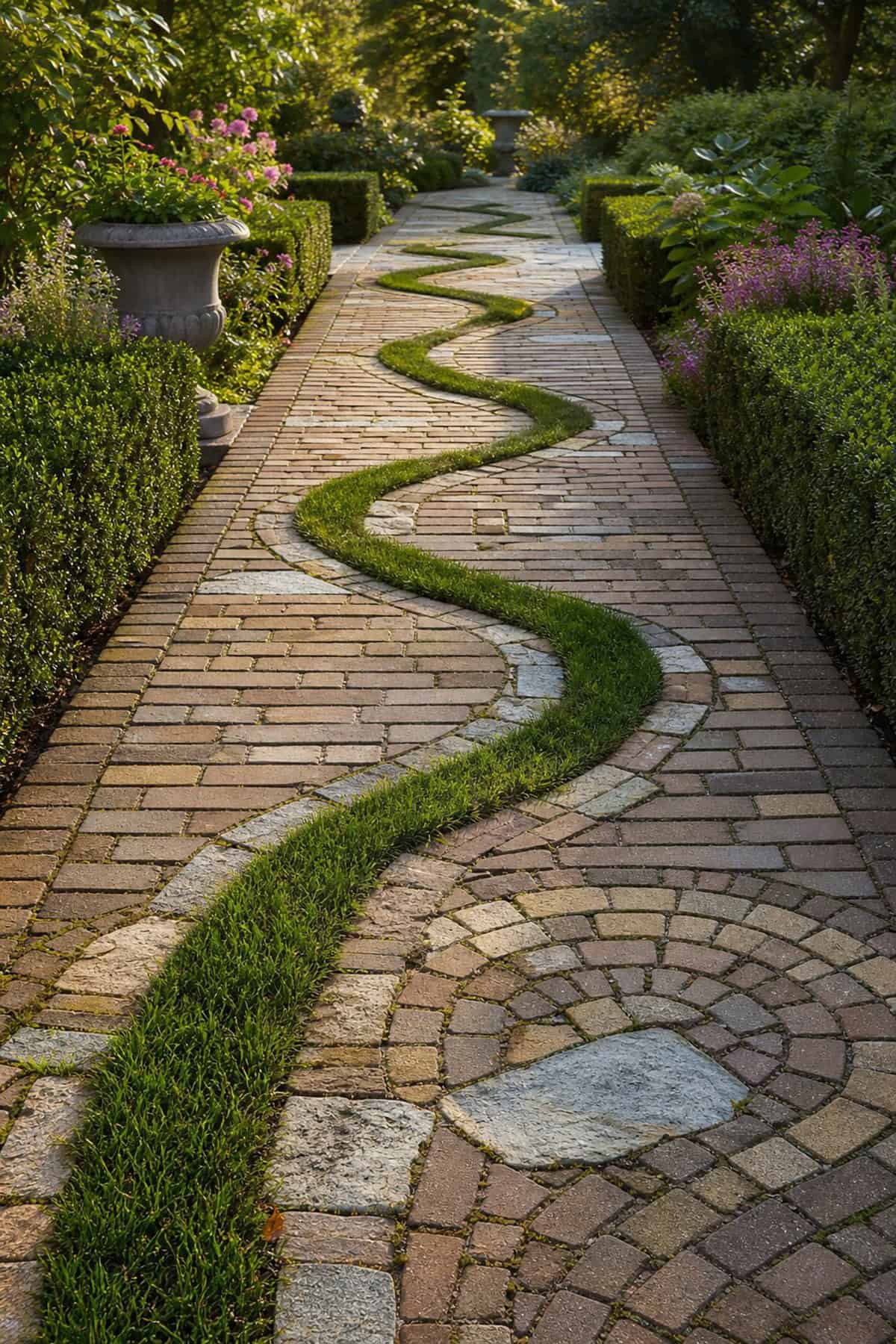
Alternating strips of brick and grass create strong lines and handle runoff well. The grass soaks up water, the brick stays solid underfoot, and the contrast between soft and hard gives the path a lively energy.
Running or stacked bond patterns both work. Herringbone’s trickier but adds a lot visually. Keep grass strips narrow for easy mowing, or swap in creeping thyme if you want to skip mowing altogether.
Checkerboard Pathway
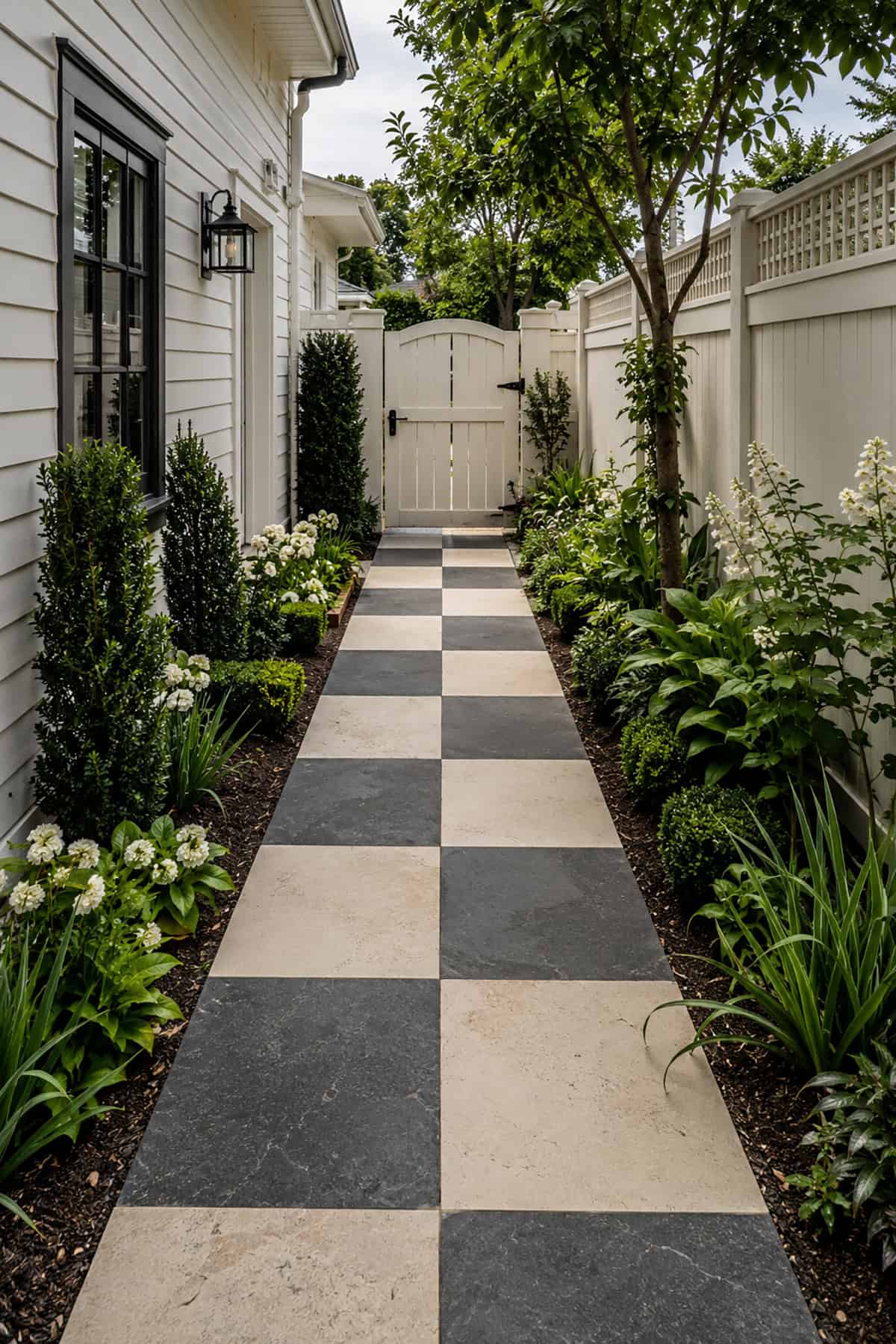
Lay down two contrasting hard materials in a grid, and you get a path that’s graphic, even a bit dramatic. Black slate and white concrete pavers? That’s high-contrast. Buff stone with dark basalt reads subtler. Swap in grass or groundcover for one of the squares, and you’ve softened the whole look.
Butterfly-Shaped Stepping Stones
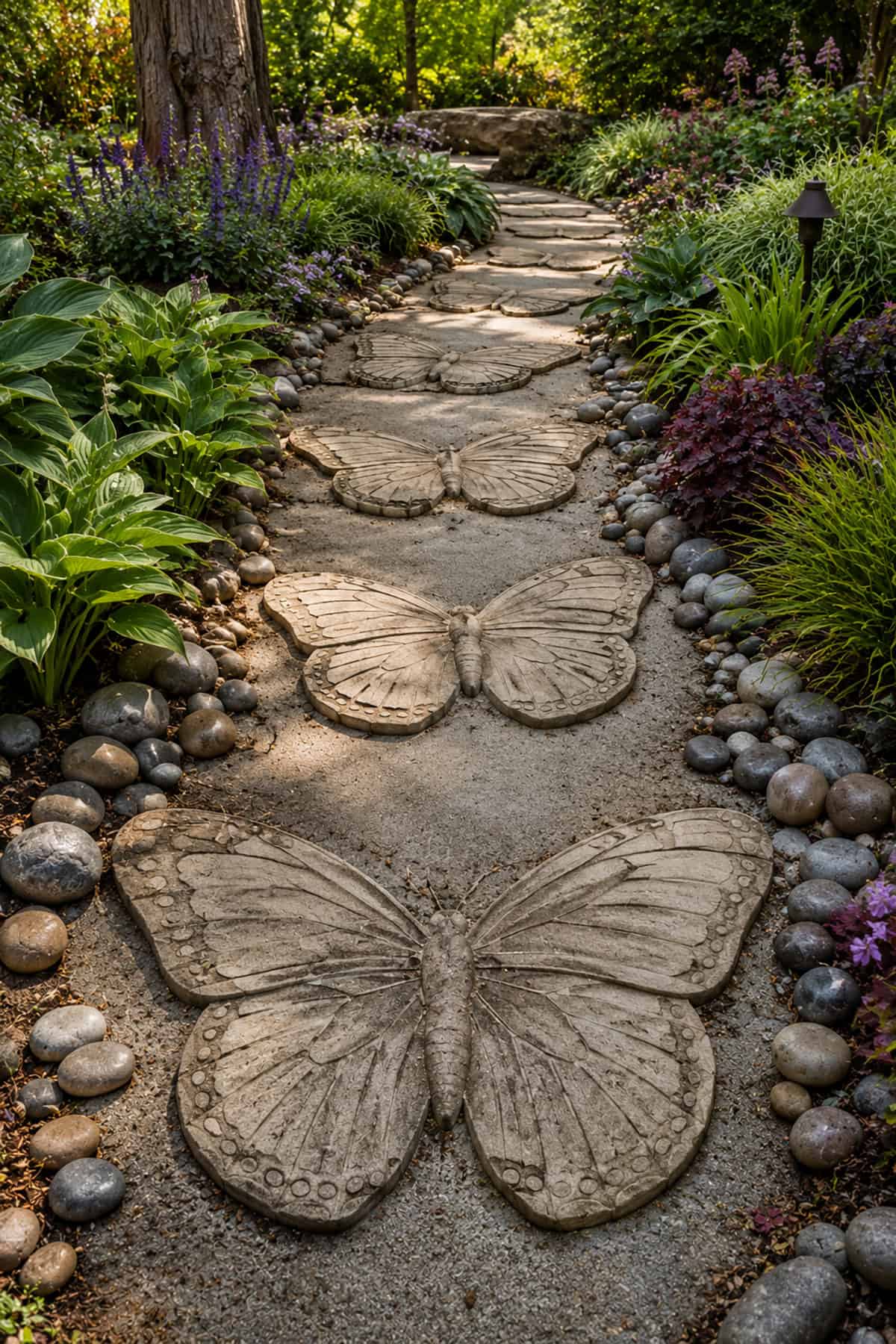
Butterfly-shaped stones add a touch of whimsy to any garden space. Place them along grassy trails or flower beds to guide movement while drawing attention to the path. Use bright colors to create a playful look or soft tones for a subtler style.
Arched Arbor Over Path
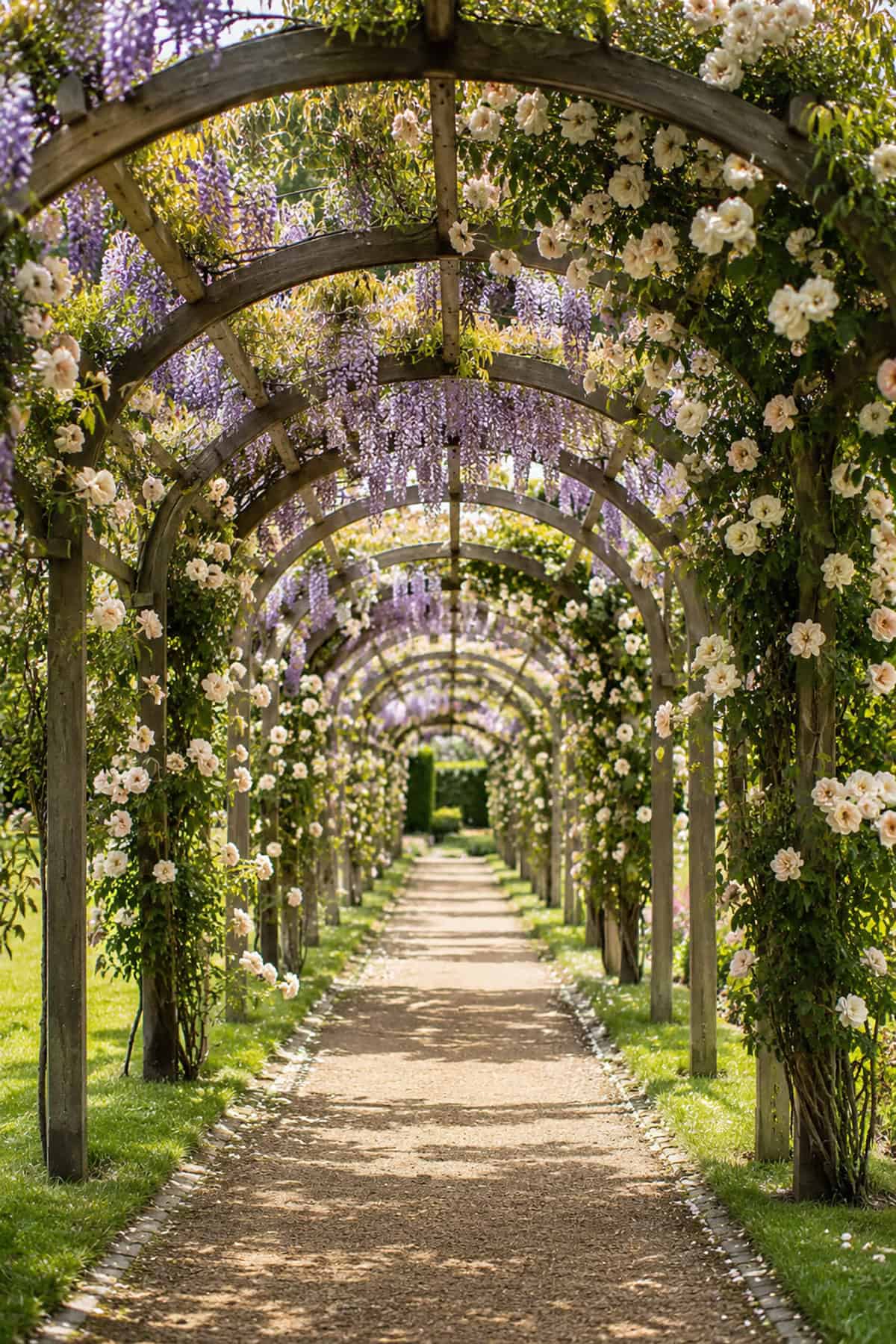
An arbor compresses the path’s width, frames your view, and suddenly you’re moving through a series of garden “rooms.”
Cedar and powder-coated steel are both solid choices. But honestly, what you grow over the arbor matters more: climbing roses, clematis, wisteria—pick your favorite. Go tall (at least seven feet) or risk feeling boxed in as plants fill out.
Underneath, a gravel or brick path balances the structure overhead with a more relaxed feel below.
Sea Glass Pathway
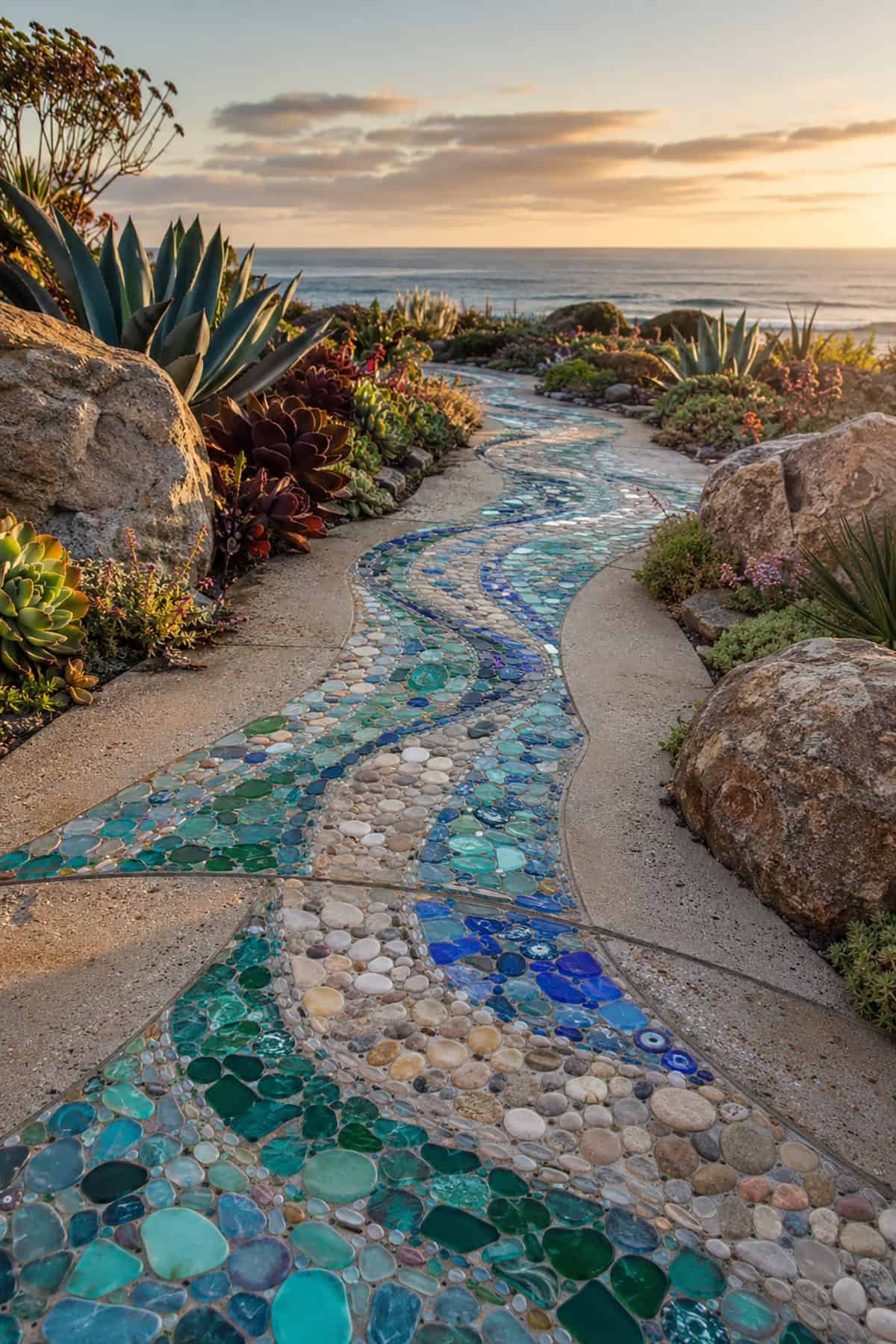
Tumbled glass in seafoam, amber, and clear shades brings a translucent shimmer that shifts with the light. Set it loose in a shallow frame or in mortar, and the color morphs as the sun moves.
Finding enough sea glass for a full path takes some effort. Bulk recycled glass aggregate can stretch your supply—mix with gravel if needed. If you’re setting it loose, skip barefoot walks; sharp edges have a way of working up over time.
Stepping Stones Through a Pond
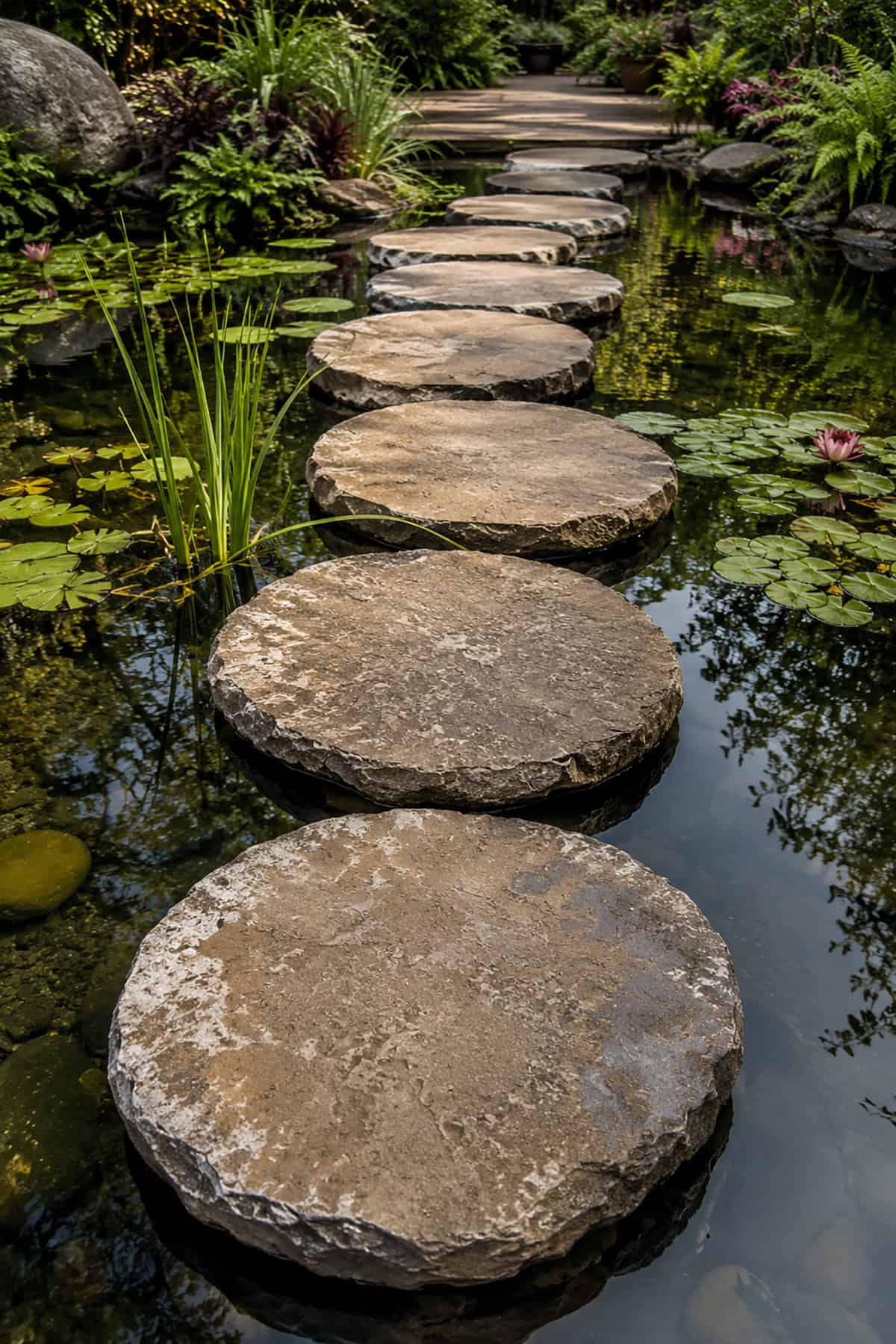
Flat stones set at water level across a shallow pond invite you to step right onto the surface. The gaps and heft of each stone matter—deliberate, not wobbly. Concrete or granite with real mass holds up best, especially if the water moves.
Mind the seasonal water level swings. Set each stone on a concrete footing to keep things stable. Surround with water iris or dwarf papyrus for a crossing that feels natural but never hidden.
Pathway Lined with Lanterns
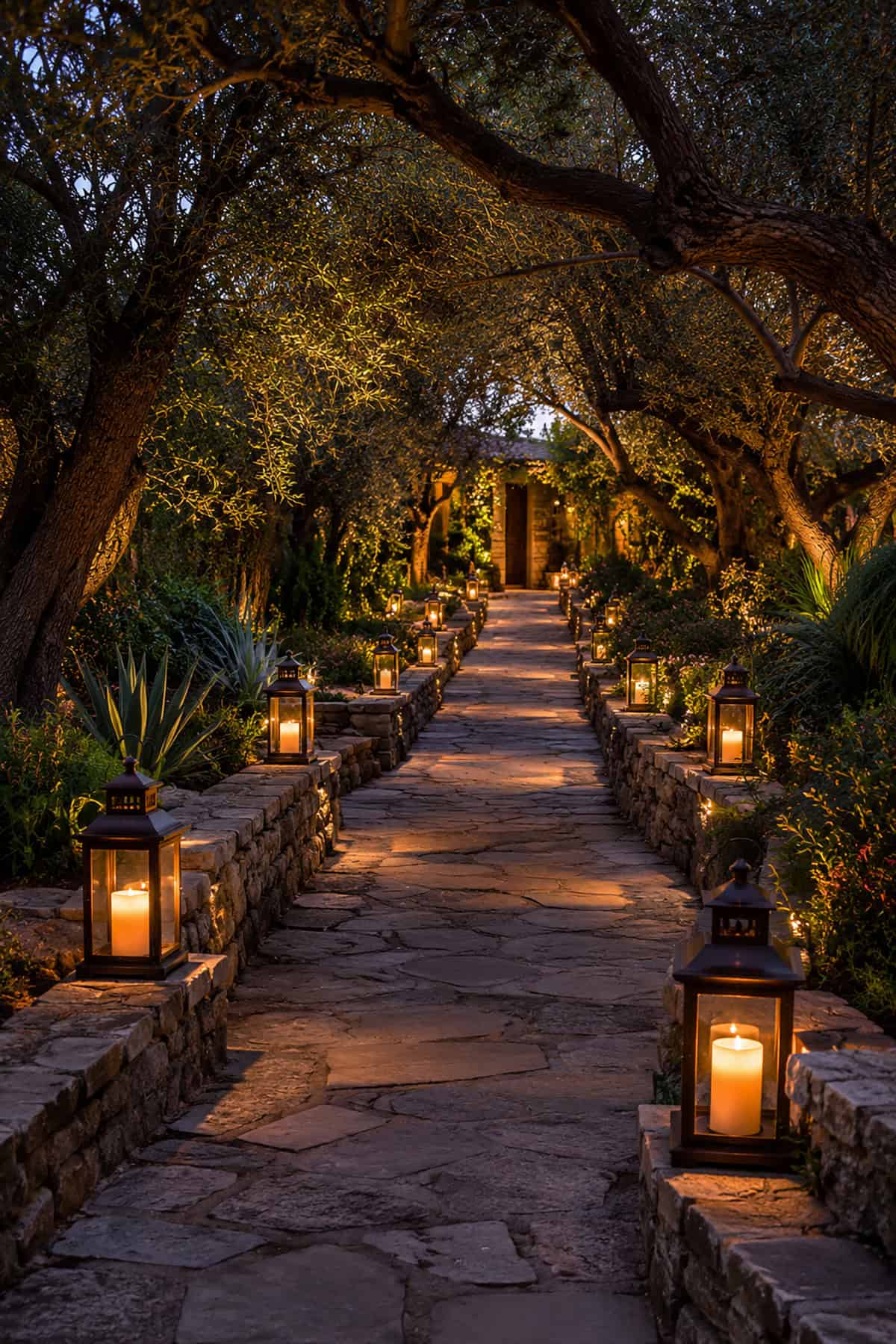
Line a path with lanterns and you get rhythm, safety, and atmosphere after dark—no wiring needed if you go solar. The style you pick says everything: hammered copper leans cozy, matte black feels modern, frosted glass softens the glow.
Four to six feet apart is the best for most lantern spacing. Keep the height consistent for a clean sightline.
Wood Slice Pathway
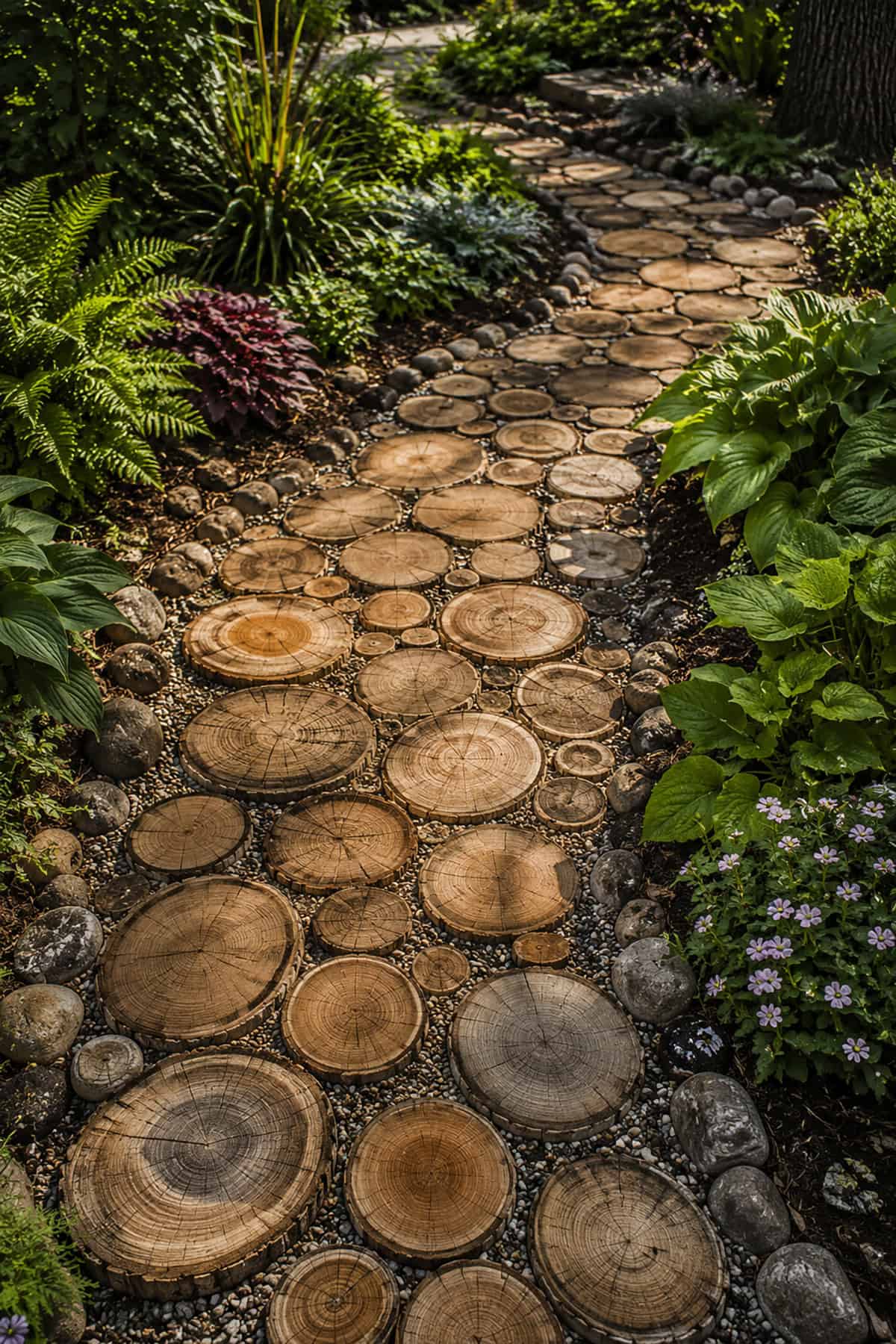
Cross-cut log rounds set in soil or gravel bring a tactile, rustic vibe. Each piece is unique, and as they weather to silvery gray, the look only improves—especially in woodland or cottage gardens.
They do tend to shift or sink if set straight into soil. A compacted gravel base with a layer of sand gives better results. Treat the ends for ground contact before laying them down. In shade, moss will eventually creep in, which just makes it better.
Meandering Gravel Path with Flower Edges
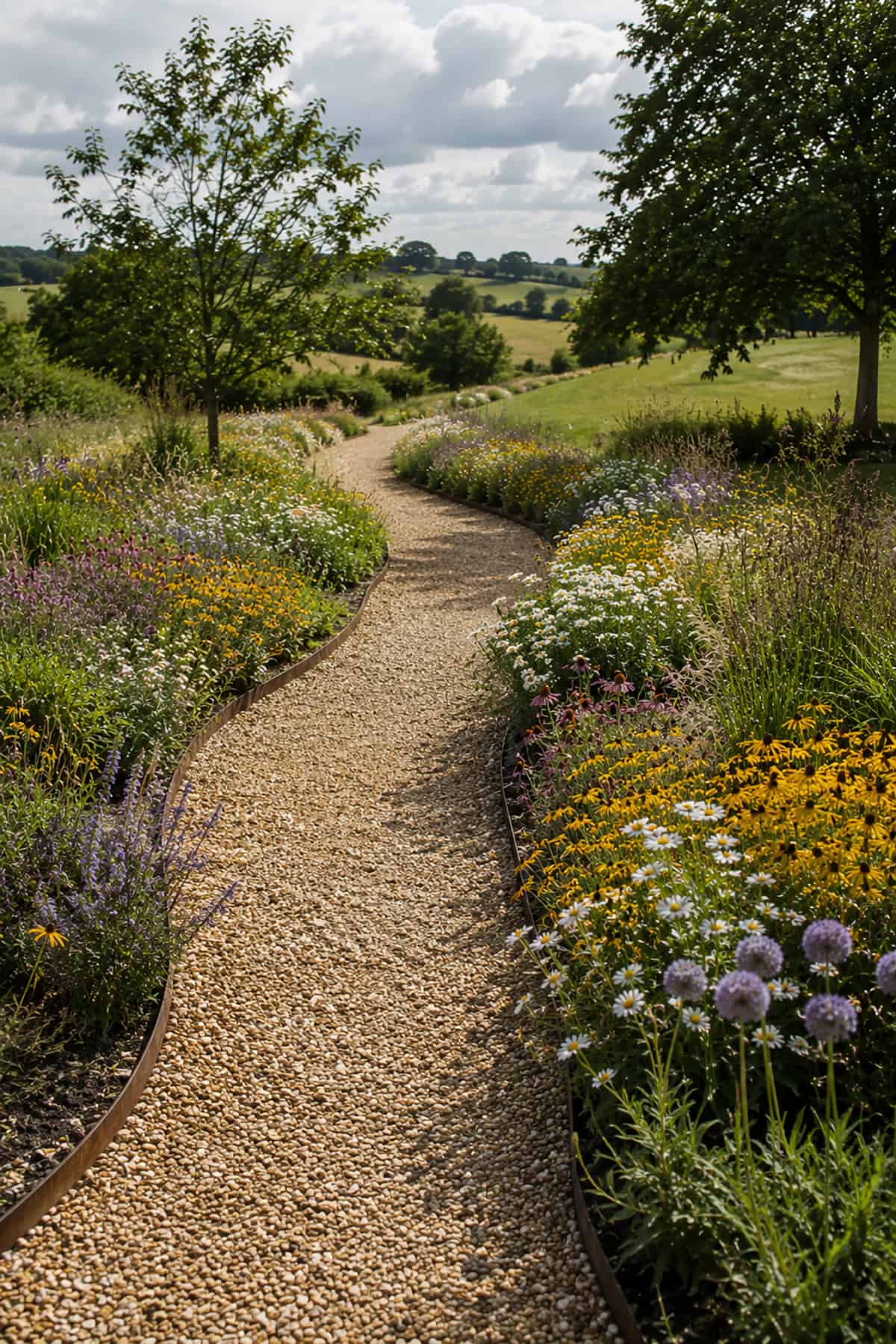
The crunch of gravel underfoot just slows you down, and a winding path lets lavender, thyme, or black-eyed susans brush your ankles. Edging is key—without it, gravel creeps into the beds and the line gets fuzzy by summer.
Brick and Pebble Mix Pathway
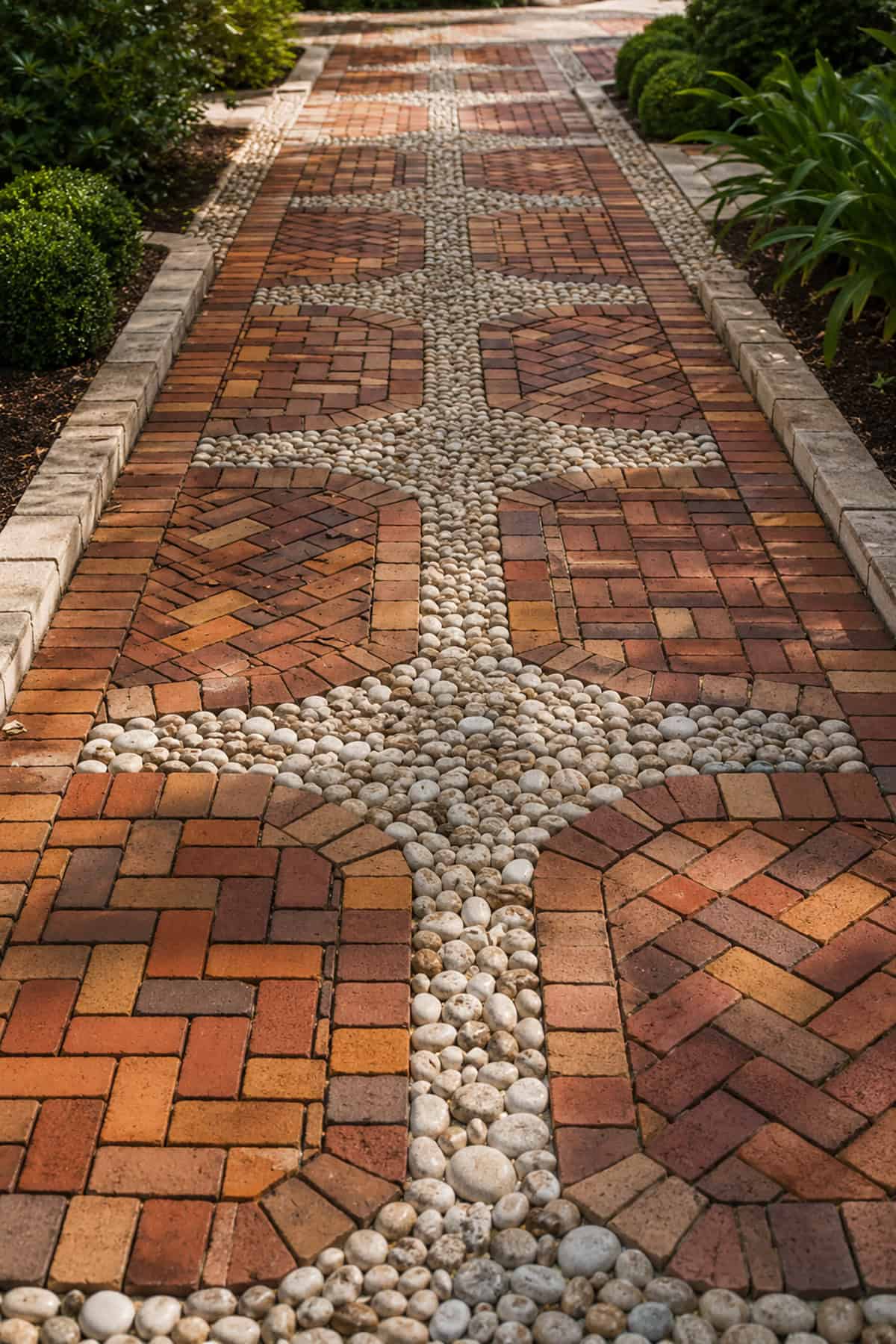
Running bond brick with pebble-filled gaps gives you stability plus good looks. Rounded pebbles catch the light differently than brick, and the mix of materials feels intentionally detailed.
Color pairing matters—a warm red brick with tan pebbles is cohesive, while gray brick with dark basalt pebbles brings a cool, modern note. Grout the pebbles for permanence, or leave them loose for better drainage (though you’ll need to rake them back into place now and then).
Leaf-Shaped Concrete Stepping Stones
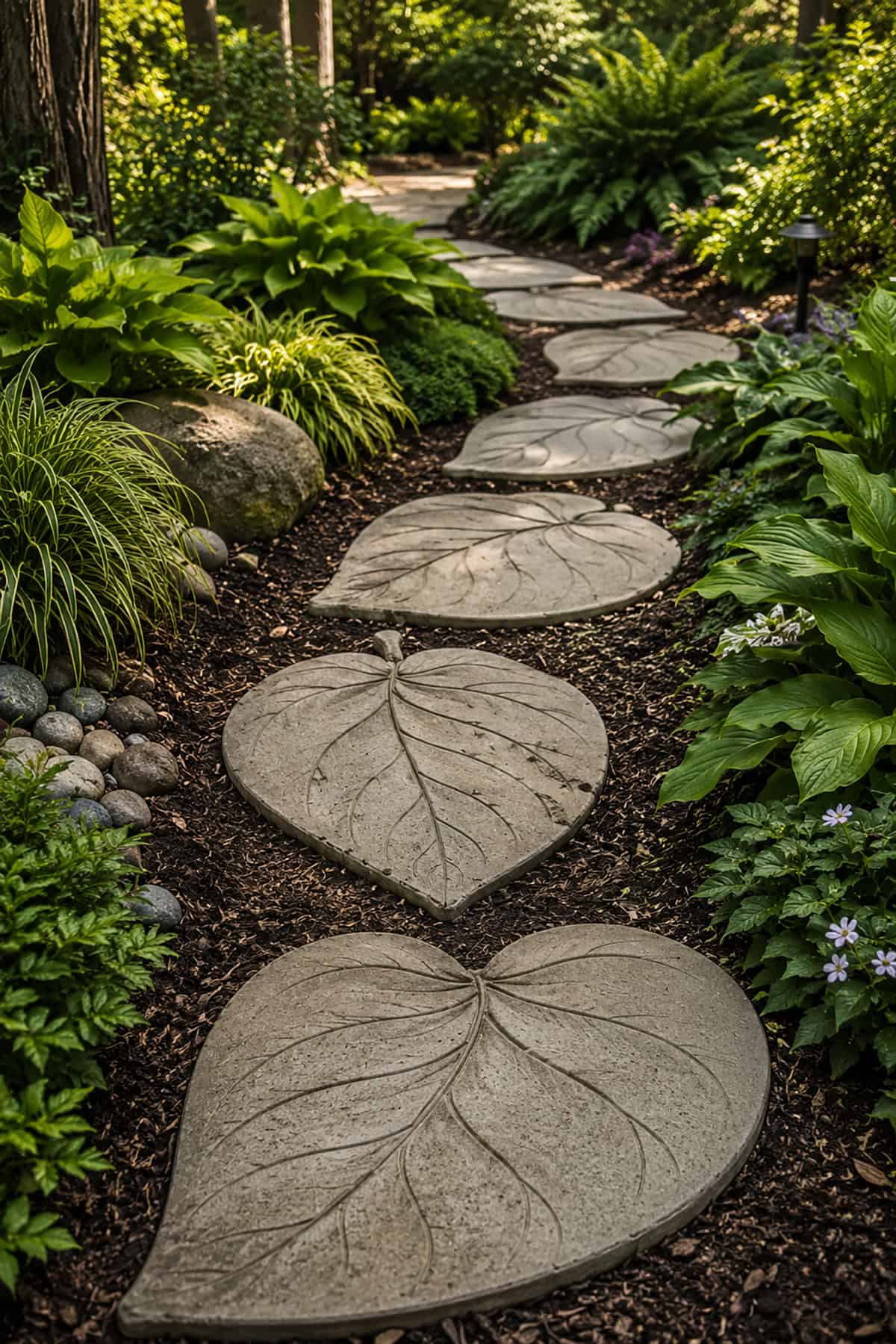
Imprints from rhubarb, hosta, or banana leaves pressed into wet concrete leave behind those unmistakable veins and bold shapes once the surface sets.
Mixing in iron oxide pigment shifts the color away from stark gray, giving the stones an earthier, more organic vibe. Tuck them through groundcover or lay them in a gravel path edged with flowers—suddenly, the leaf pattern stands out without getting lost in busy surroundings. A bit of surface sealant will keep the design crisp for years.
Cobbled Path Through a Forest
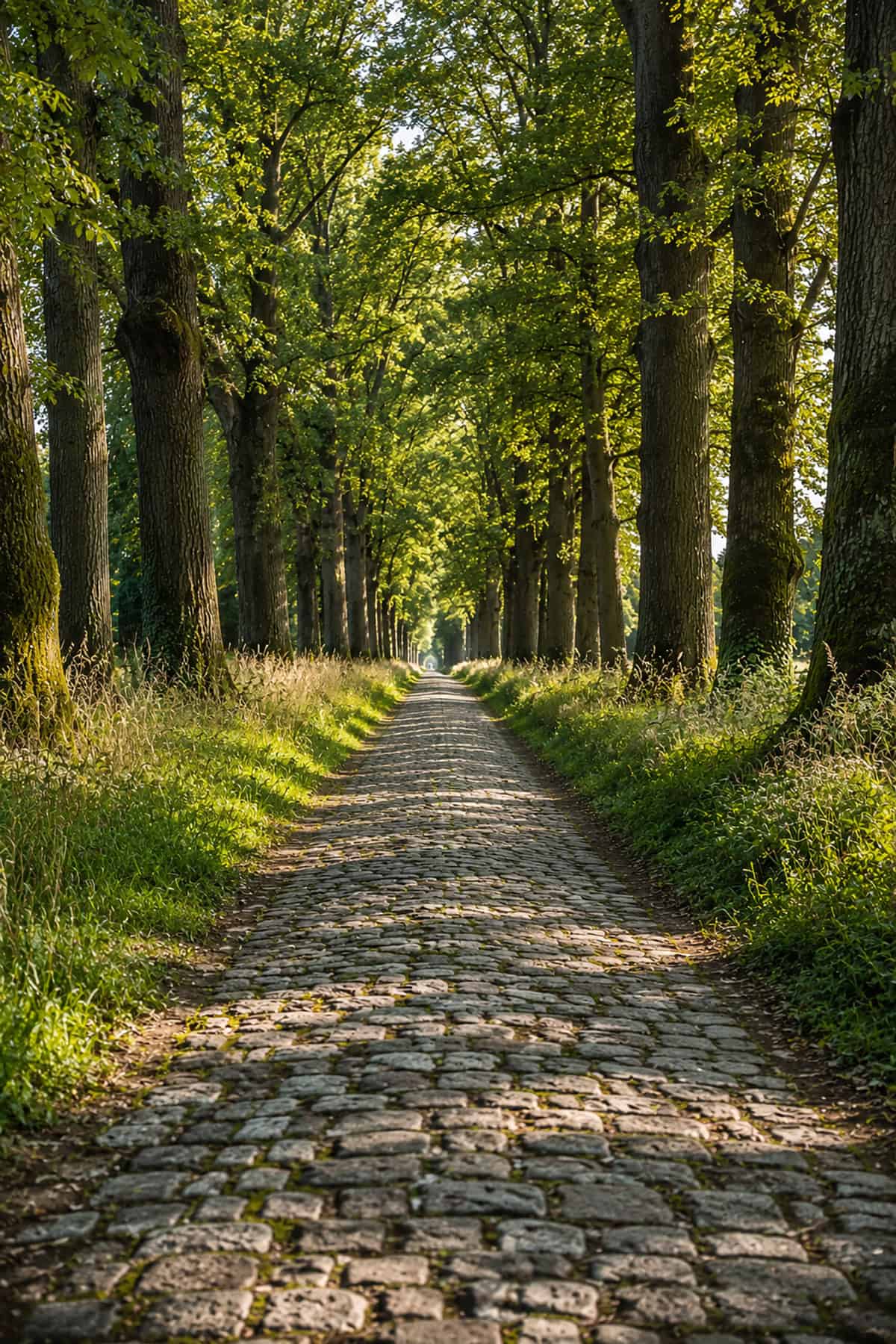
Dappled light, twisted roots, and a path of rounded cobblestones—there’s an undeniable sense of age in that setup.
Roots inevitably shift things around, so a sand bedding layer (instead of rigid mortar) makes it easier to adjust stones as the ground moves. Moss finds its way between cobbles in the shade, weaving everything together and softening the edges.
Painted Path Stones
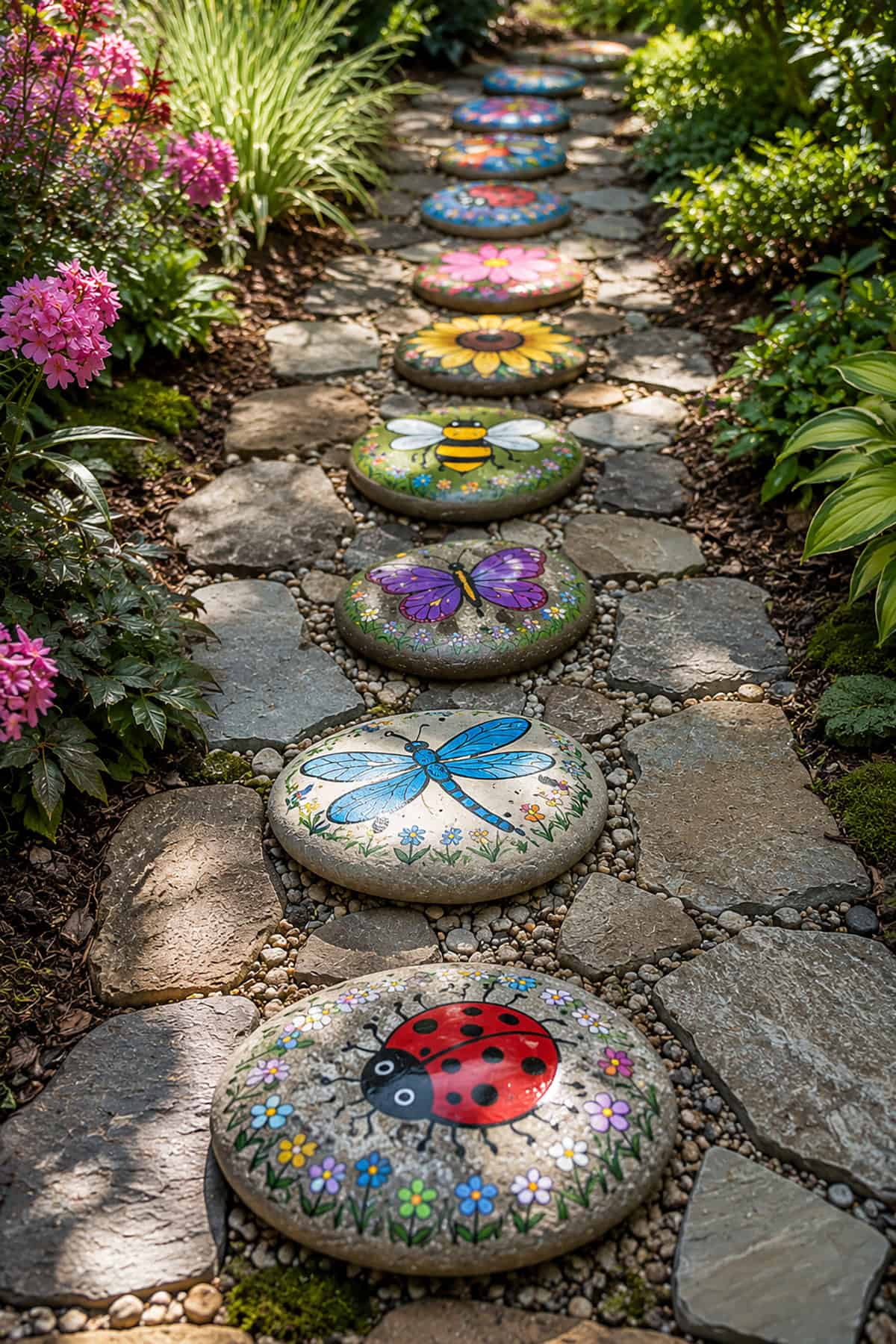
Painted stones turn your path into a playful, personalized feature. Use patterns, symbols, or even family artwork to create a trail that tells a story. Each stone becomes part of the journey, especially in children’s or creative garden spaces.
Pathway with Hidden Fairy Doors
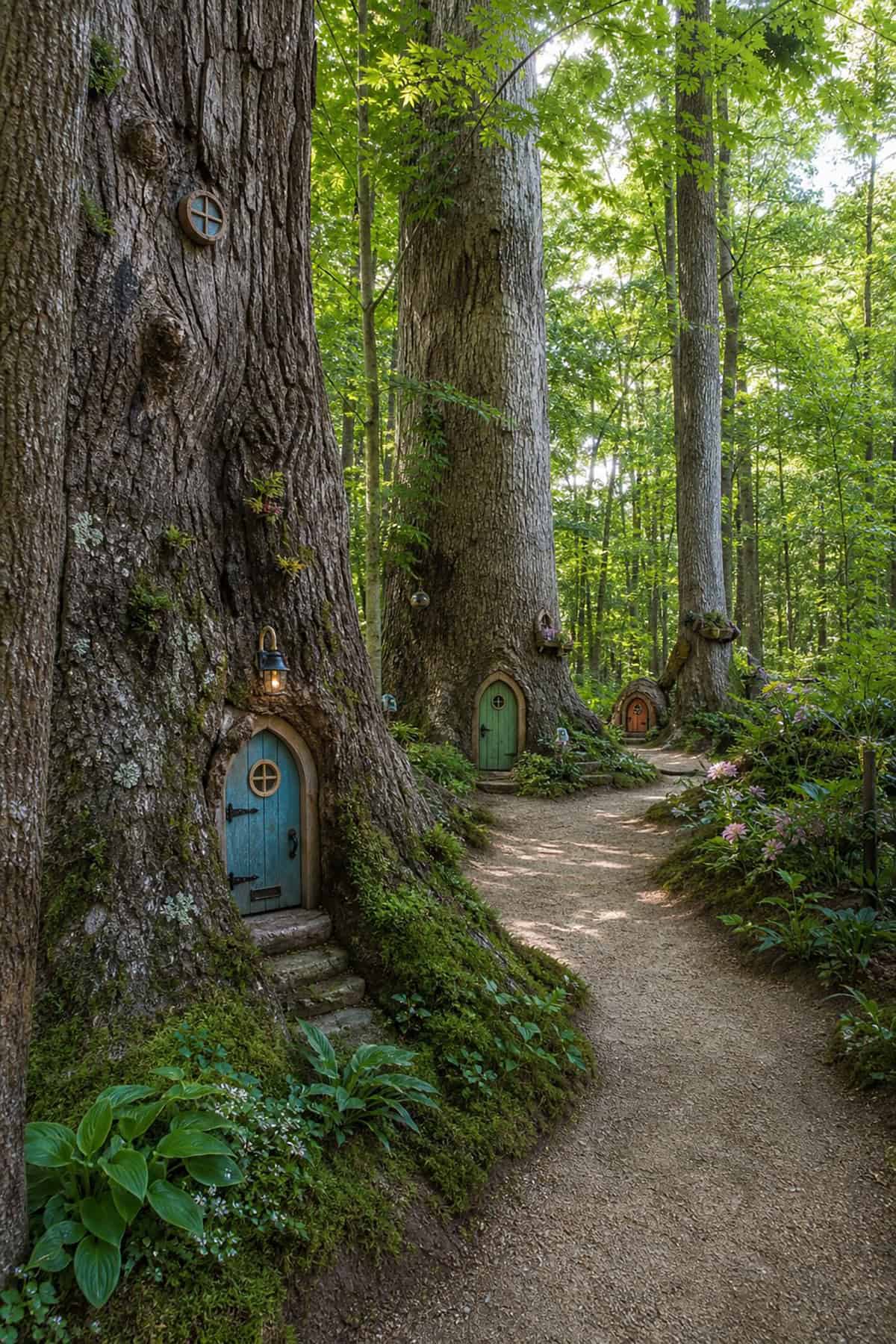
Tiny fairy doors tucked into the edges of a path invite surprise and imagination. Children love spotting them hidden in trees or nestled among roots. These elements add a layer of fantasy without altering the garden’s structure.
Log Border Pathway
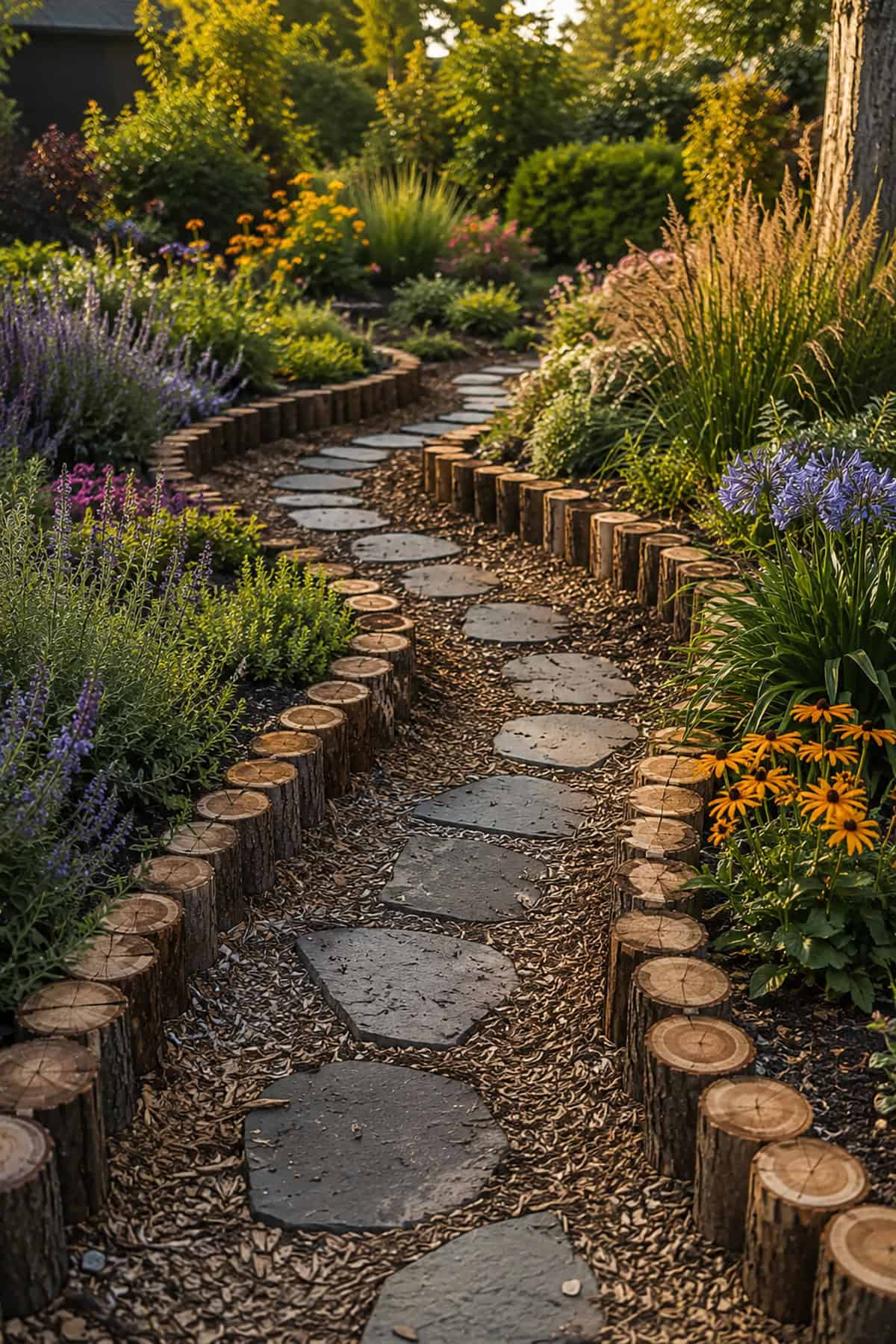
Log slices or sections lined up beside a walkway help define the path while keeping a natural look. This edging works particularly well in woodland or cottage-style gardens. Logs create a visual rhythm that makes the path feel grounded.
Pathway Through a Wildflower Meadow
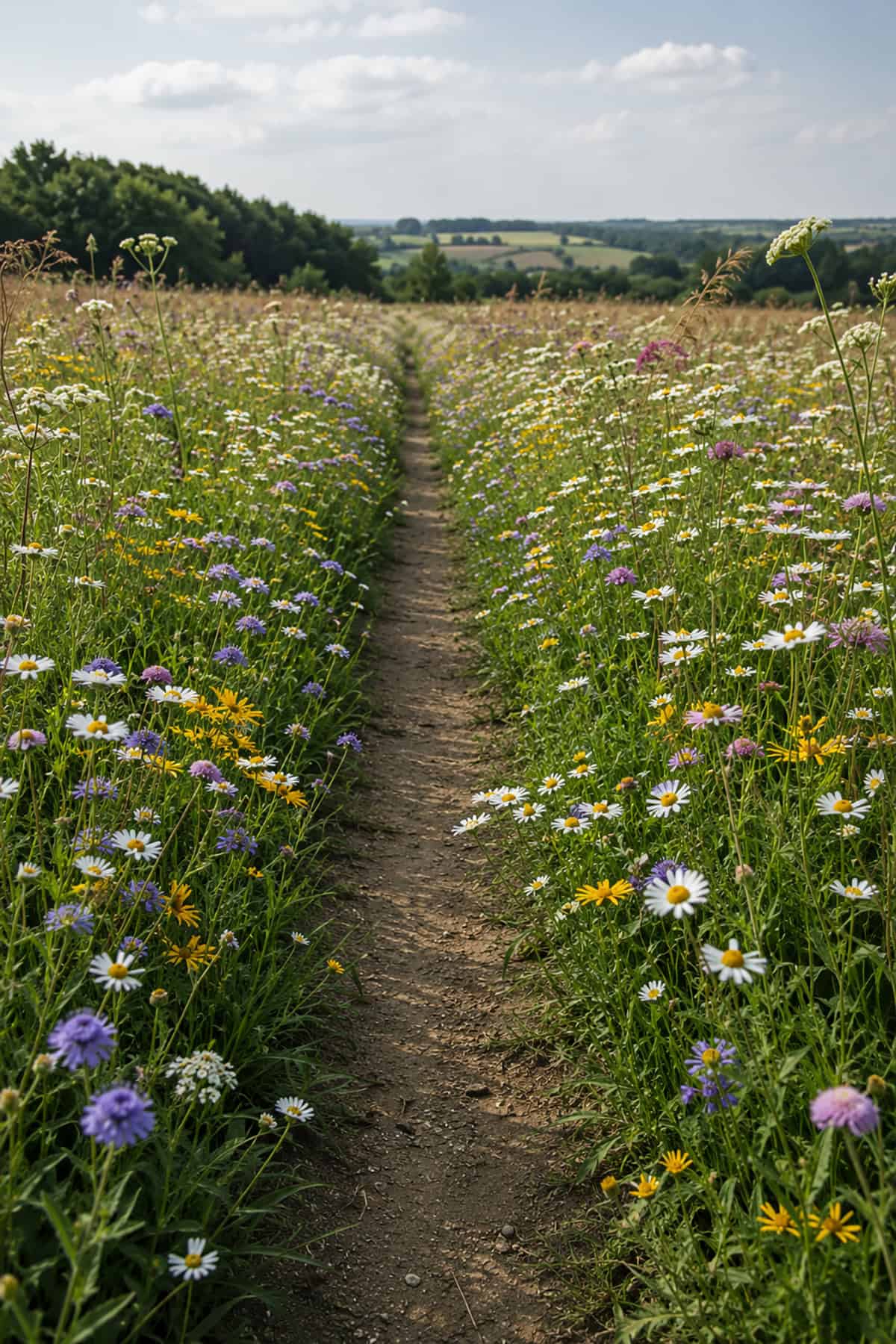
When flowers lean into the walk, the path feels alive and seasonal. A narrow route through daisies or zinnias buzzes with pollinators. You do need to mow or trim the edges, though, or the path disappears by midsummer.
Mirror Mosaic Path
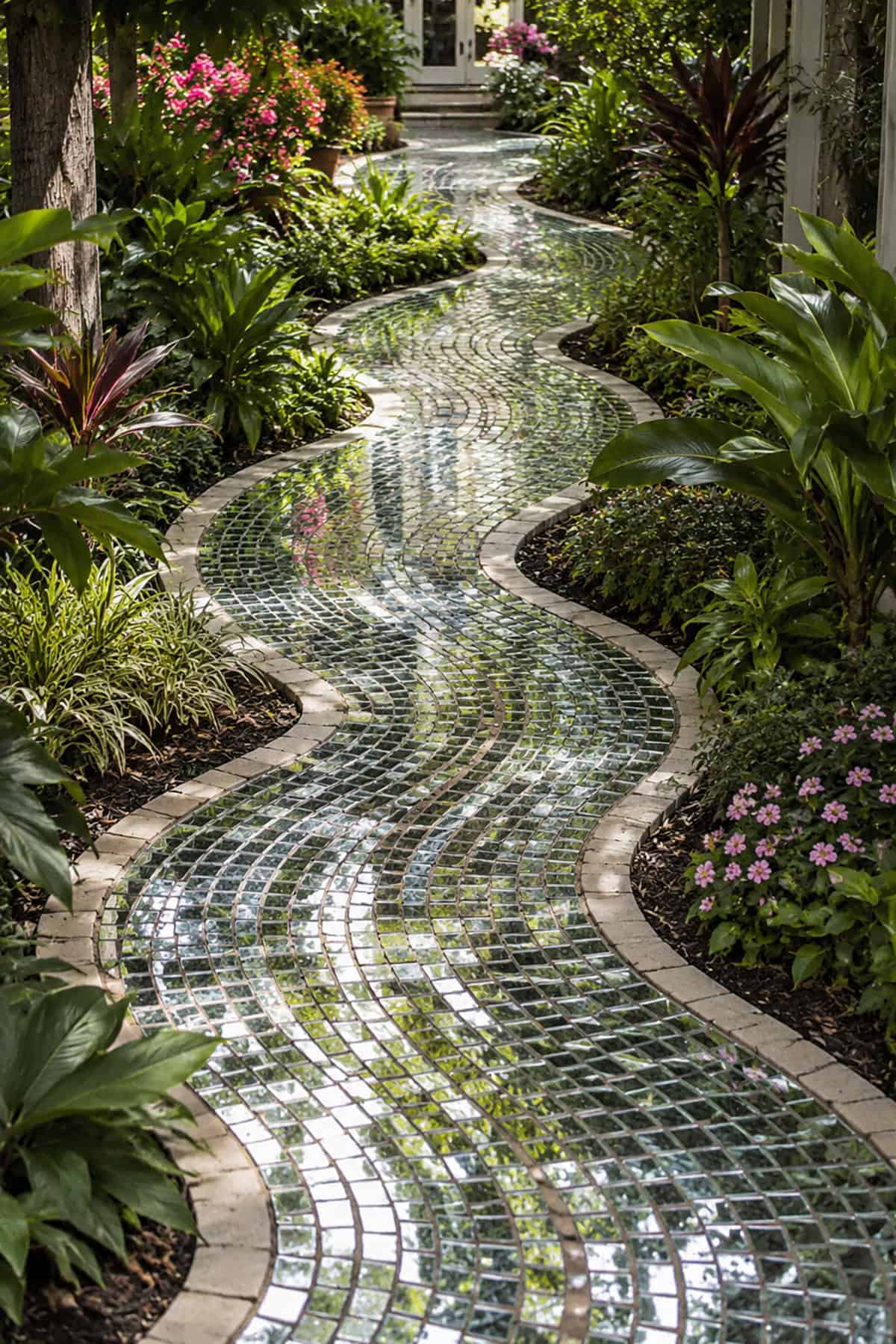
Shards of mirror, used sparingly, can brighten up shade with flashes of sky and leaves. Best as an accent—maybe around a patio or tucked into a seating nook.
The reflections bring unexpected sparkle to even the quietest corners of the garden. As the light shifts, the path takes on different moods throughout the day.
Pathway Under String Lights
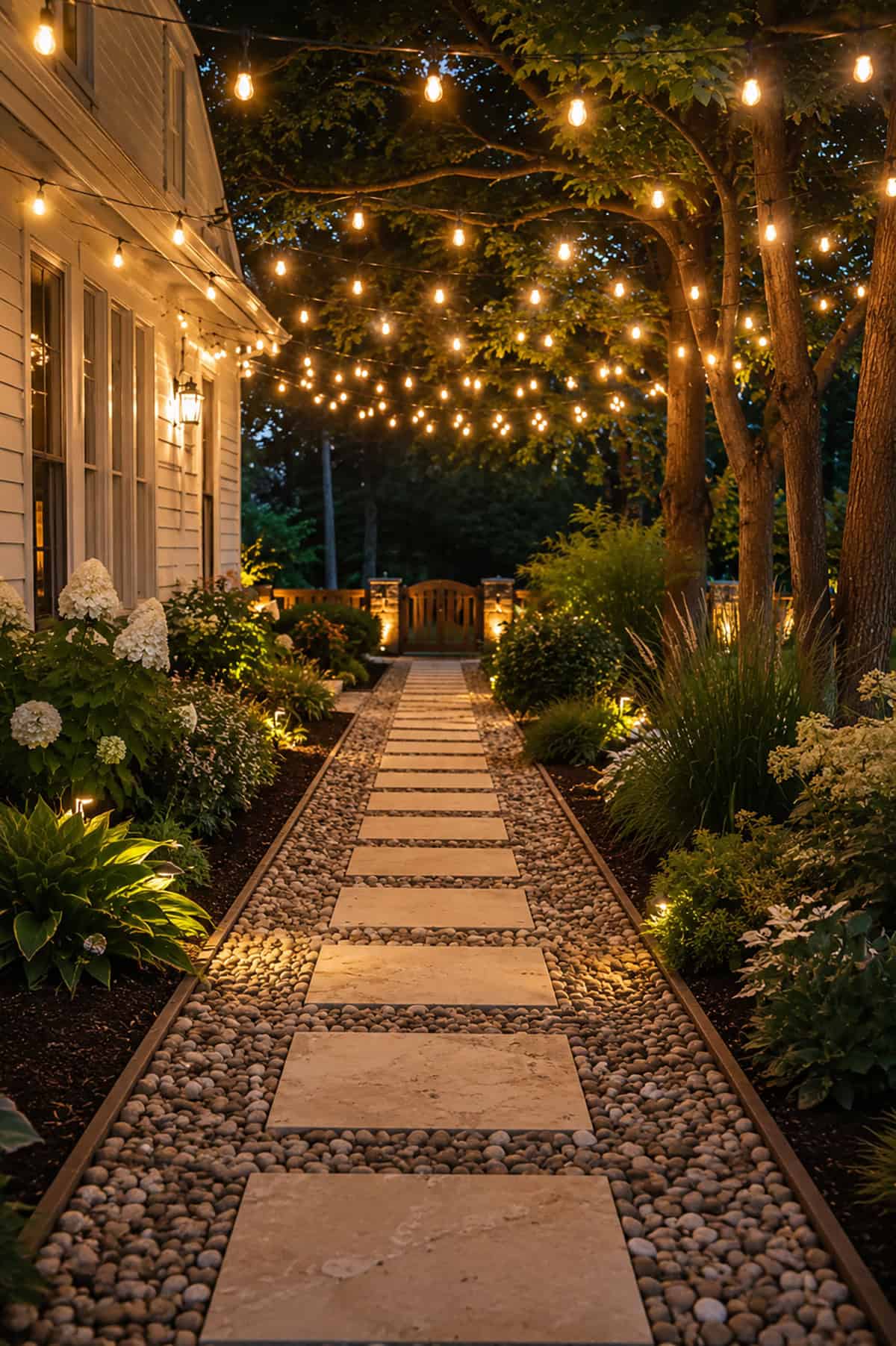
String lights overhead turn a garden path into an evening gathering spot. Run them between sturdy posts, a pergola, or tree branches, and keep them high so you’re not ducking.
Geode-Inspired Pathway
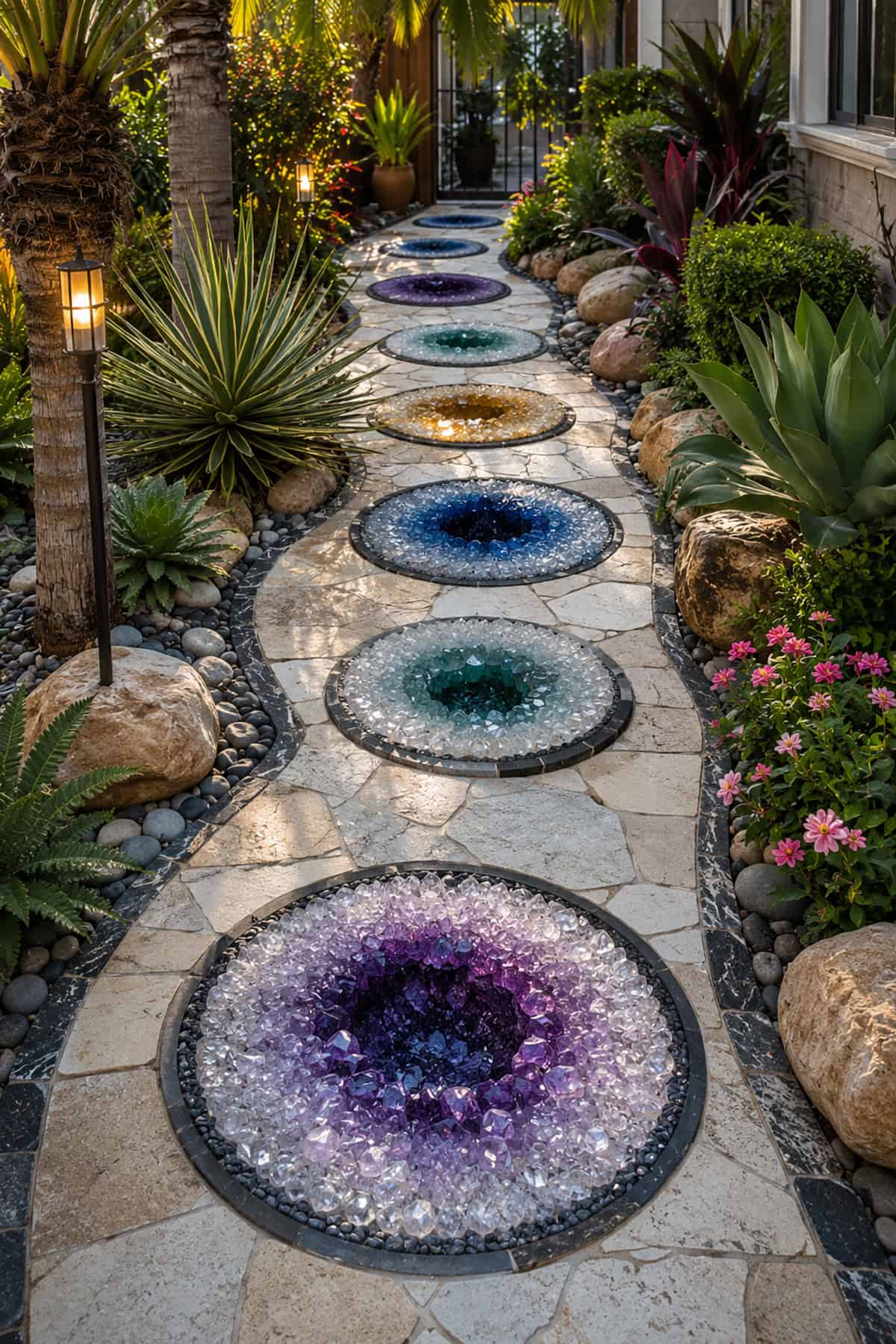
Color gradients in crushed stone can echo the look of a geode, especially as an accent band in concrete or pavers.
Mushroom-Lined Pathway
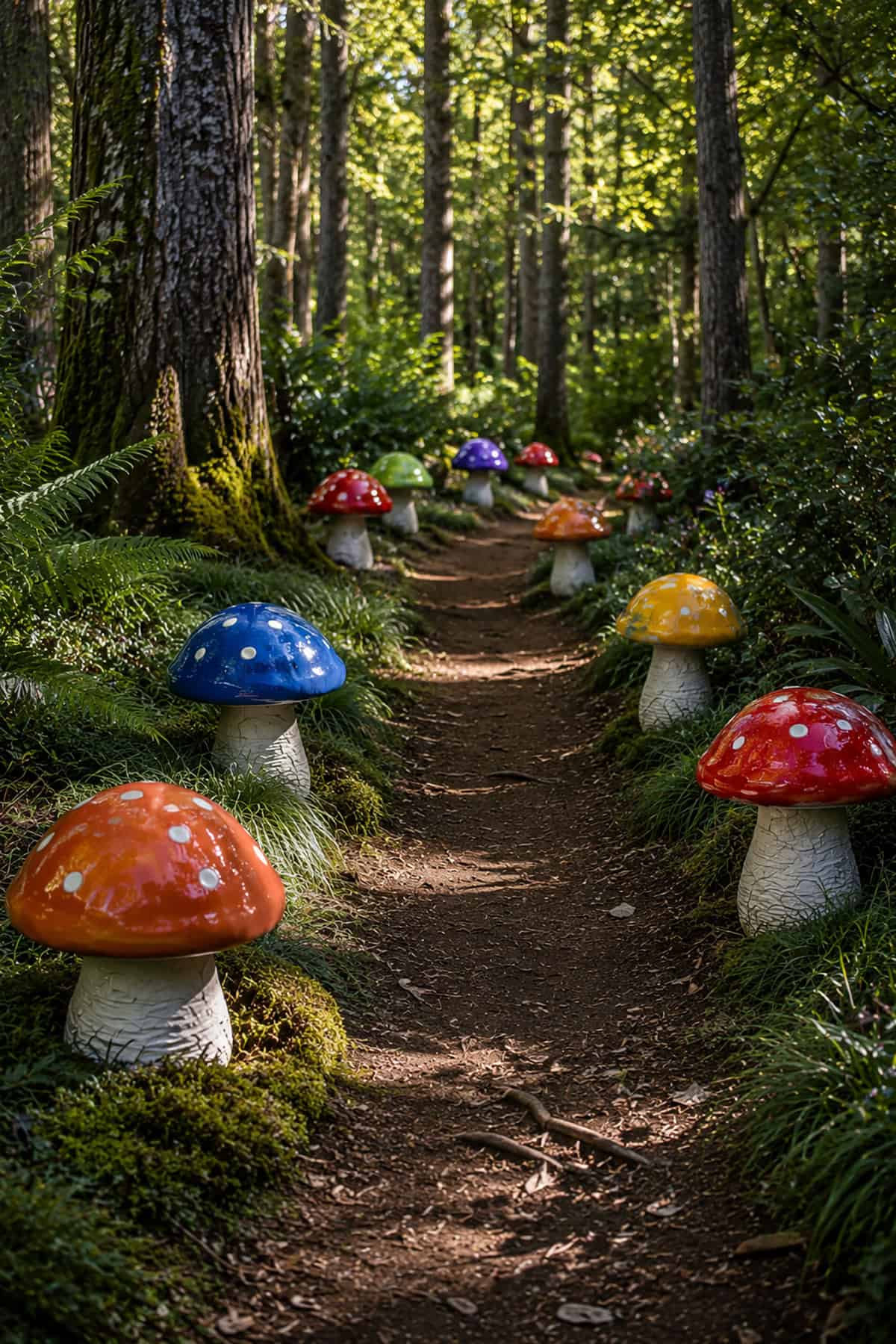
In shady areas, ceramic or stone mushrooms tucked among ferns and moss act as low-key punctuation. Skip the bright resin ones—they rarely age well. Place them at bends or in planting pockets.
Herb-Lined Path
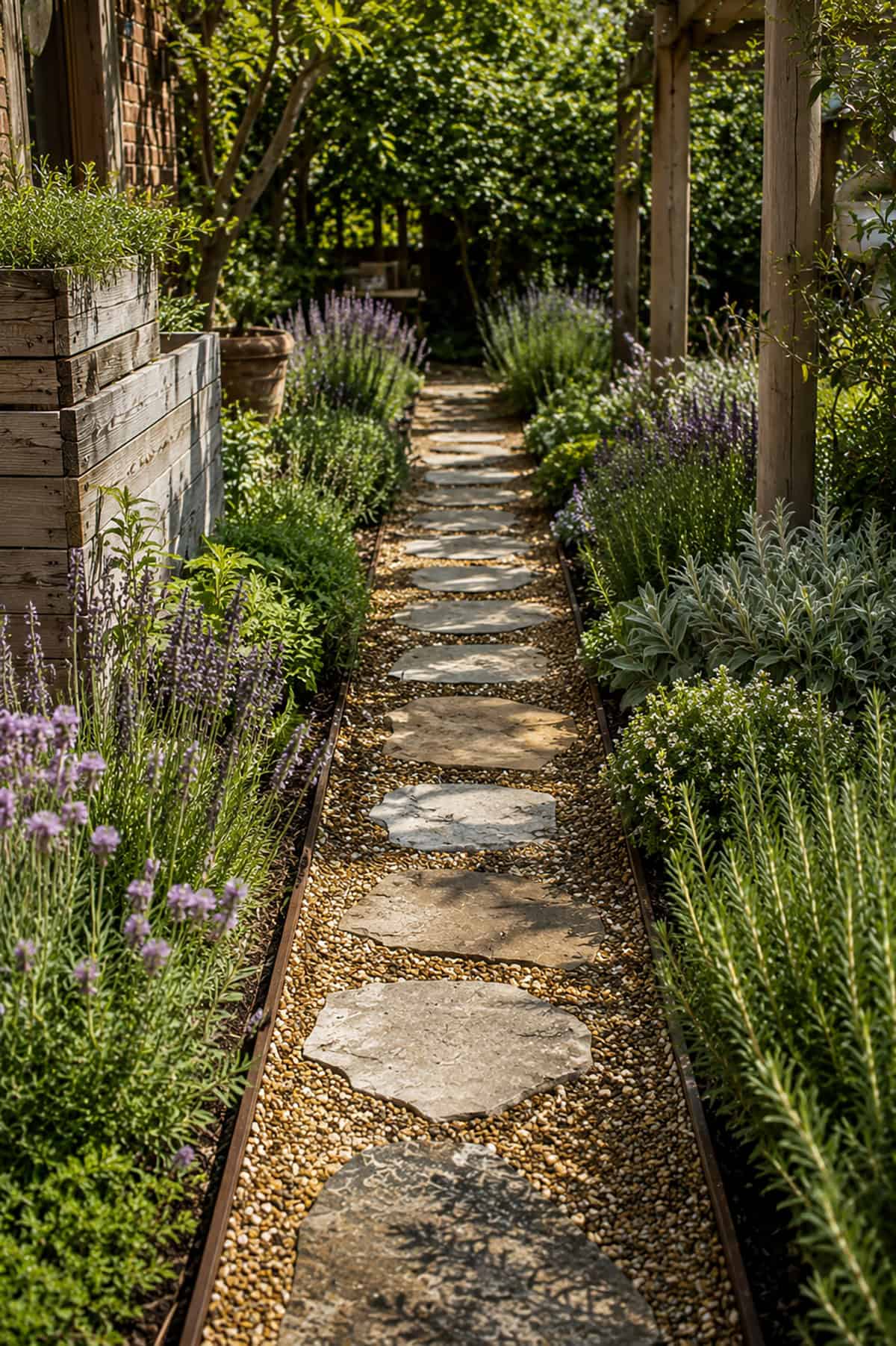
Herbs such as lavender, thyme, or rosemary planted along a path release their scents when brushed. These fragrant borders enhance both the look and the atmosphere of your walk. They also attract pollinators and keep the experience grounded in nature.
Colorful Pebble Rainbow Path
Arrange small pebbles by color to form a rainbow along your garden path. This design adds energy and brightness, making it especially fun in family-friendly spaces. The color transitions lead the eye forward and lift the mood instantly.
Winding Wooden Bridge Path
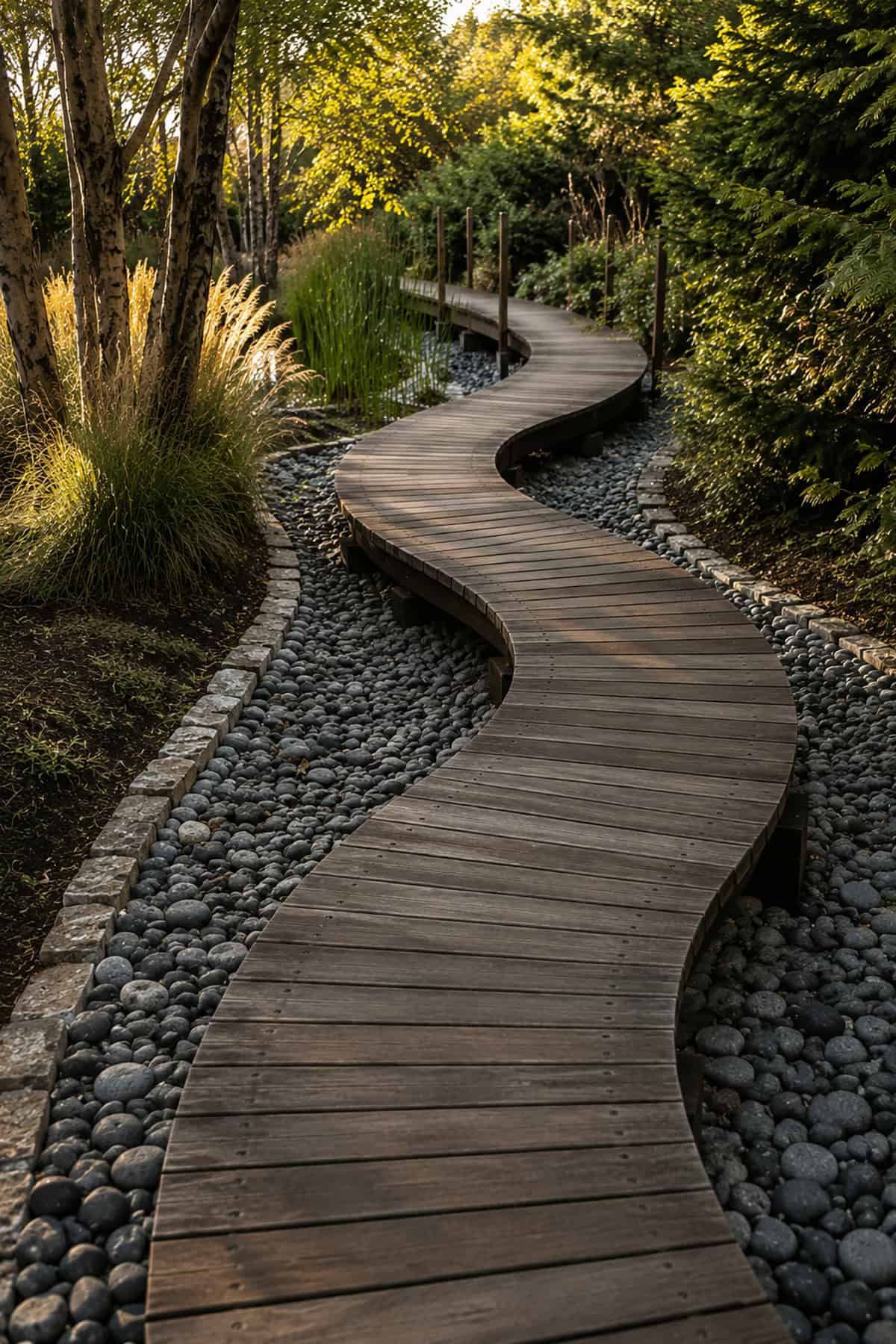
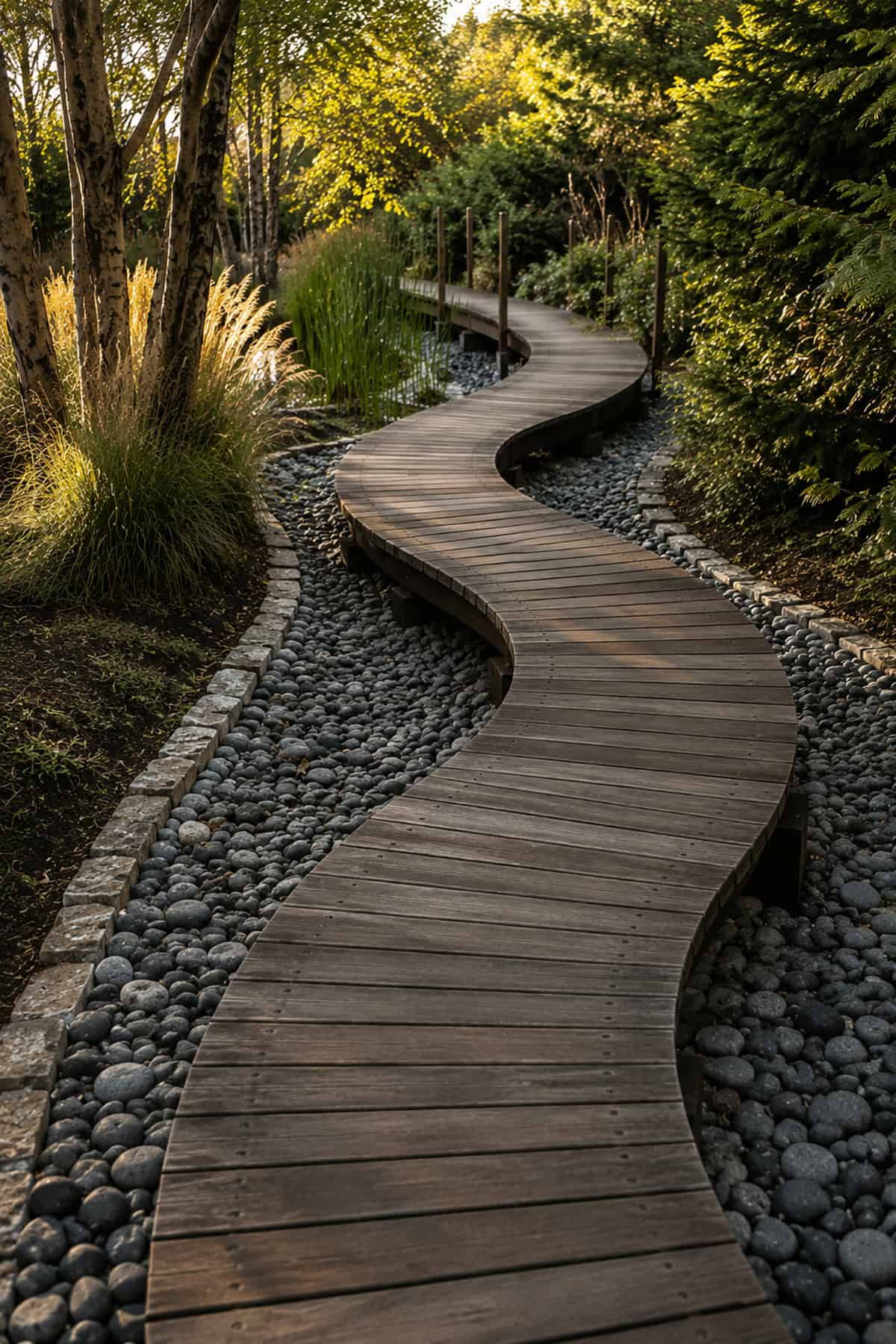
A wooden bridge placed along a curve or over a stream makes a moment of transition in the landscape. It connects different parts of the garden while introducing new views. The natural material helps it blend in with its surroundings.
I occasionally use AI-generated images to represent ideas that I cannot photograph or create myself. They serve as visual examples to support the content.