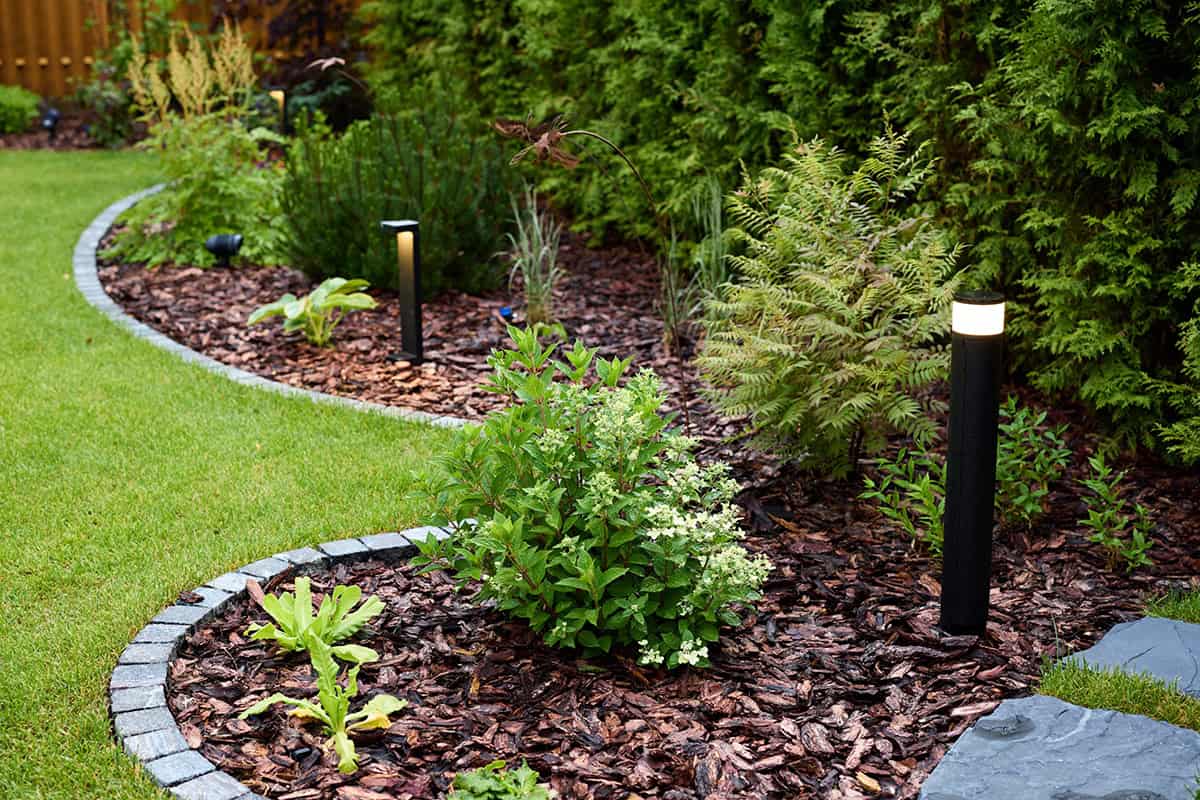
A tired yard rarely needs a landscaper’s invoice. Most of the fixes that make the biggest difference cost under $50 and take a weekend afternoon.
Salvaged bricks, free pallets and a pile of cardboard handle much of the heavy lifting.
Paths and beds lead off the thirty projects, since visitors notice those first.
Table of Contents
- Cheap Landscaping Fixes
- Gravel Path With Border Stones
- Mulched Flower Bed With Annuals
- DIY Tire Planters Painted Bright Colors
- Cinder Block Raised Bed Garden
- Wood Pallet Vertical Garden On Fence
- Rock Garden With Succulents
- Solar Lights Lining A Driveway
- Reclaimed Brick Garden Border
- Recycled Tin Can Herb Garden
- DIY Tree Ring With Stones
- Stepping Stones Set In Grass
- Hose Storage Made From A Wooden Crate
- Painted Terra Cotta Pot Tower
- Fence-Mounted Hanging Baskets
- DIY Wood Chip Pathway
- Garden Bed With Cardboard Sheet Mulch
- Reclaimed Wood Garden Sign
- Vintage Chair Planter
- Plastic Kiddie Pool Garden Bed
- Painted Stones As Garden Markers
- Simple DIY Trellis With Bamboo Or Sticks
- Reused Wine Bottles As Edging
- DIY Fire Pit With Concrete Blocks
- Hanging Mason Jar Lanterns
- PVC Pipe Garden Tool Holder
- Thrifted Bench In Garden Nook
- DIY Compost Bin From Pallets
- Old Wheelbarrow Planter
- Rope-Wrapped Planter From Bucket
- Rain Gutter Planter Wall
Cheap Landscaping Fixes
Each project below uses cheap or free materials and basic tools. Costs vary by region, but most land under $50, and many use items already in a garage or shed.
Gravel Path With Border Stones
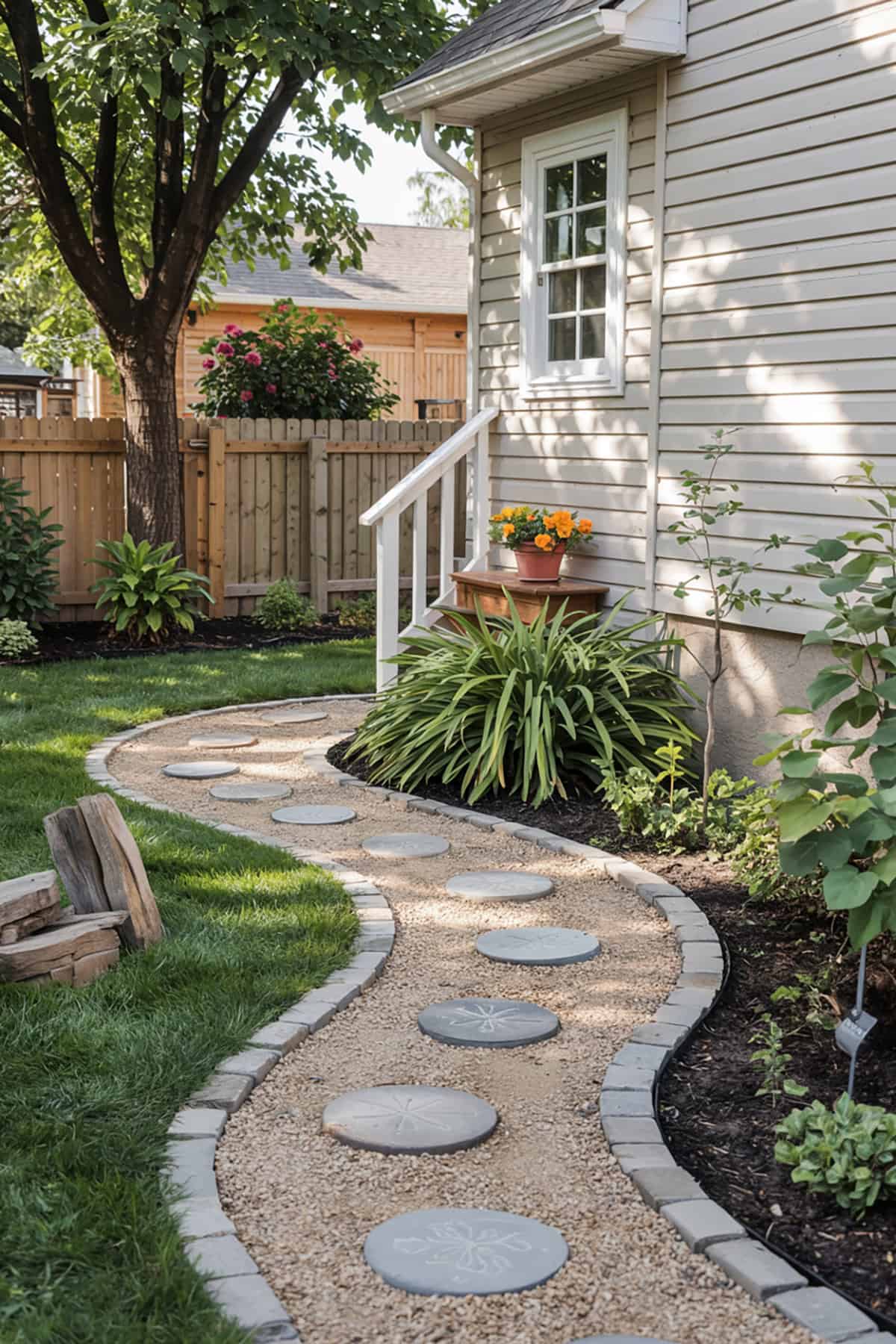
A gravel path costs a fraction of pavers and goes down in an afternoon. Mark the route with a garden hose, strip the sod 3 to 4 inches deep and lay landscape fabric to slow weeds.
Pour in pea gravel or crushed stone, rake it level and tamp it firm. Border stones along each side hold the gravel in place and frame the path with a clean edge. Gravel also drains well, so the route dries fast after rain.
Mulched Flower Bed With Annuals
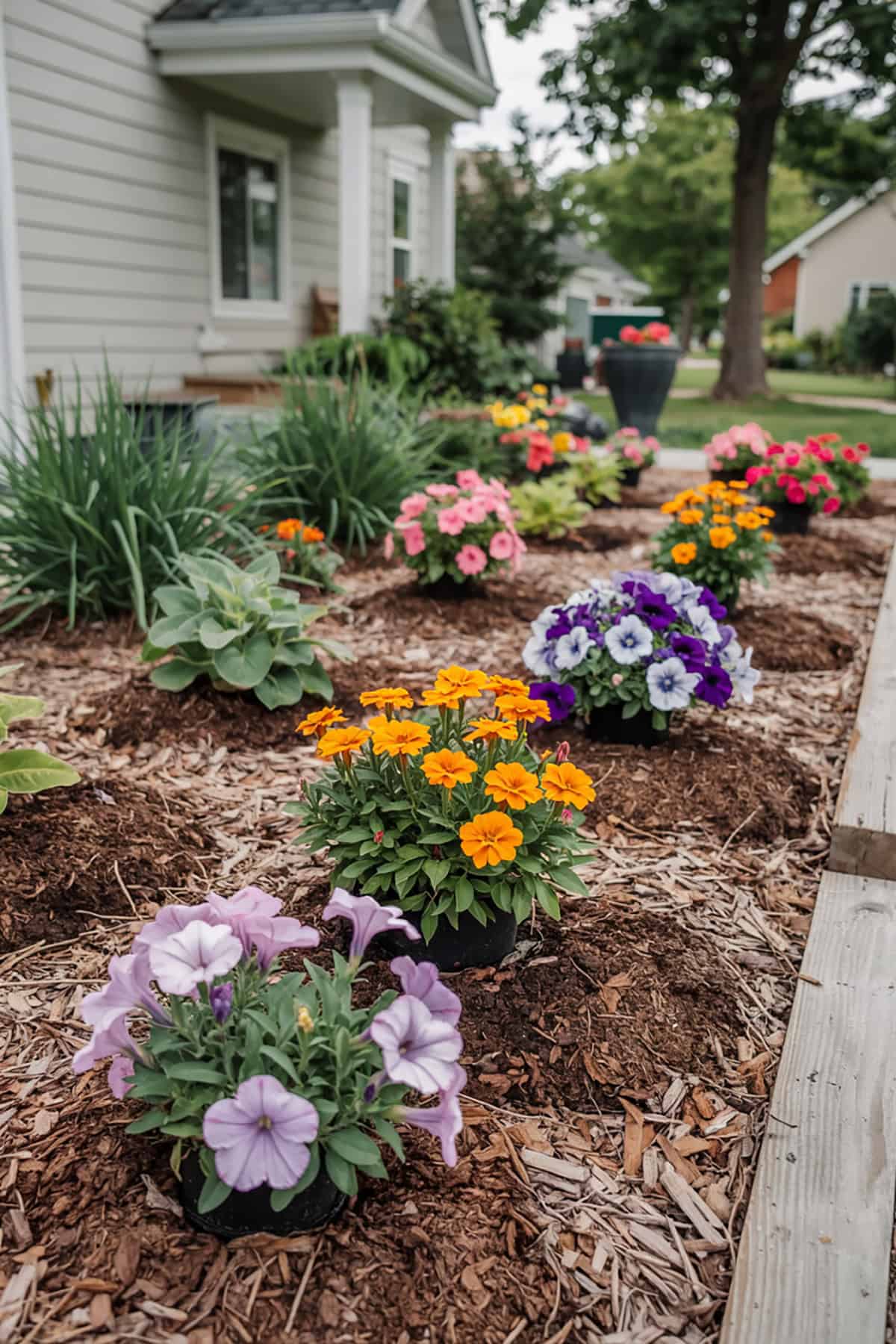
A fresh bed of annuals near the front steps lifts curb appeal for the price of a few flats of plants. Clear the weeds, loosen the soil and plant marigolds, zinnias or petunias in loose drifts.
Spread 2 to 3 inches of wood chips, pine straw or shredded leaves around the plants. Mulch holds moisture, blocks weeds and hides bare soil, all for very little money. Pull mulch an inch back from stems to prevent rot.
DIY Tire Planters Painted Bright Colors
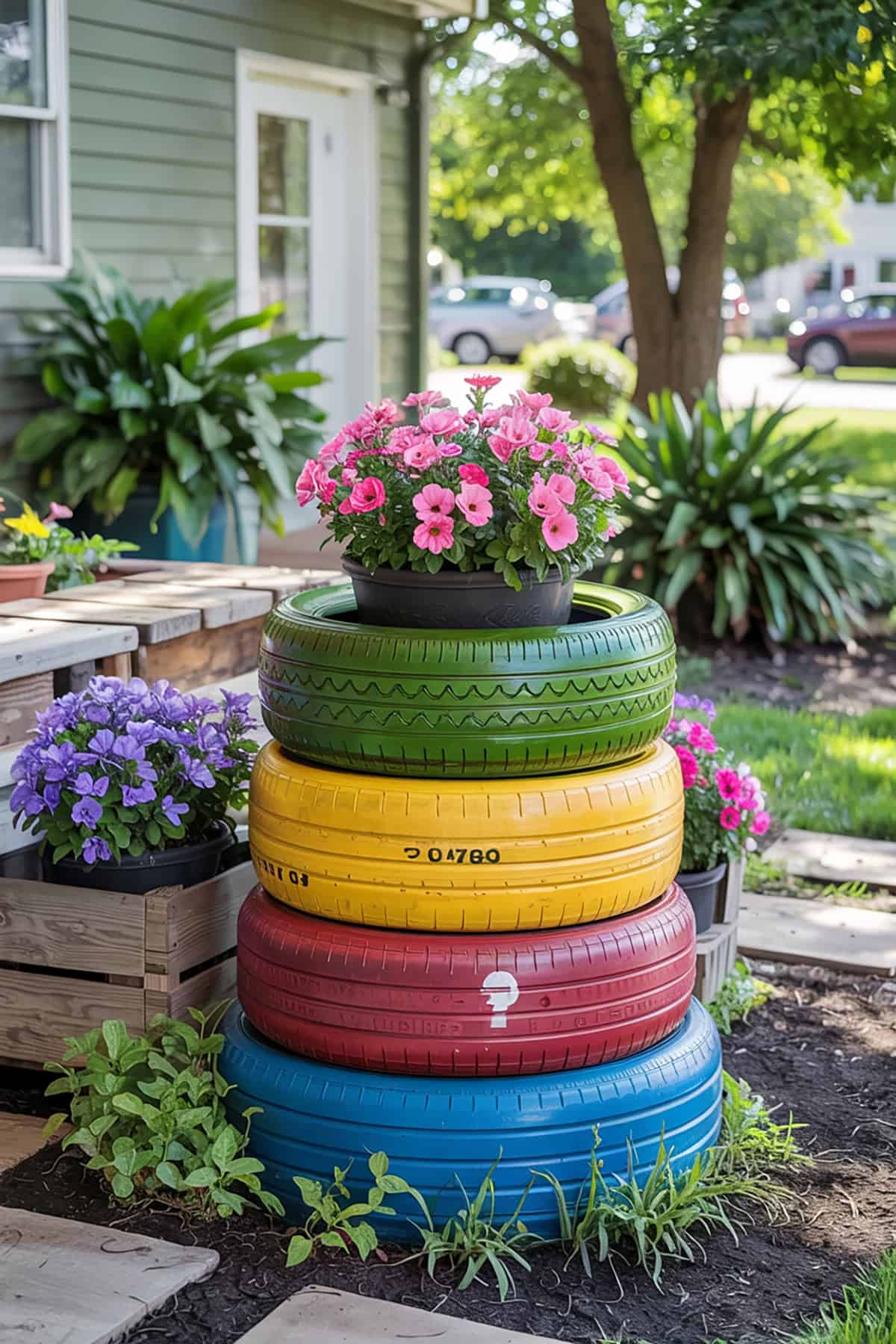
Scrapped tires find a second life as sturdy flower planters. Scrub them clean, paint them with exterior acrylic or spray paint, and stack two or three for a taller planter.
Line the inside with landscape fabric, fill with soil and plant annuals or trailing flowers. Tires may leach chemicals into soil over time, so stick to ornamentals and grow vegetables elsewhere. Tire shops frequently hand out used tires for free.
Cinder Block Raised Bed Garden
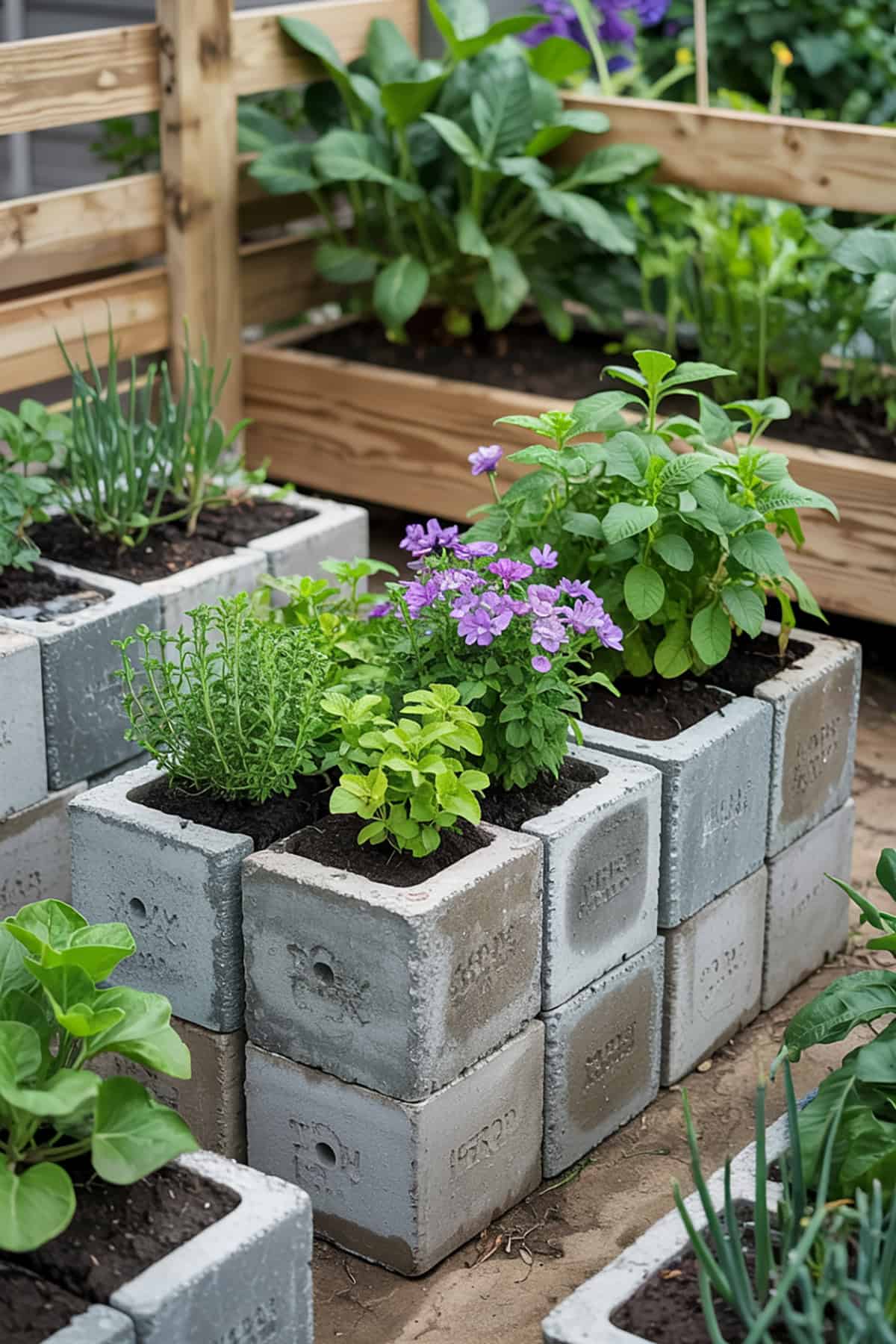
Cinder blocks stack into a raised bed with no carpentry at all. Level the ground, lay the blocks in a rectangle and add a second course for deeper soil.
The block holes double as small planters for herbs, marigolds or strawberries. Blocks hold heat in spring and last for decades. For vegetable beds, choose newer concrete blocks, since some older blocks contain fly ash.
Wood Pallet Vertical Garden On Fence
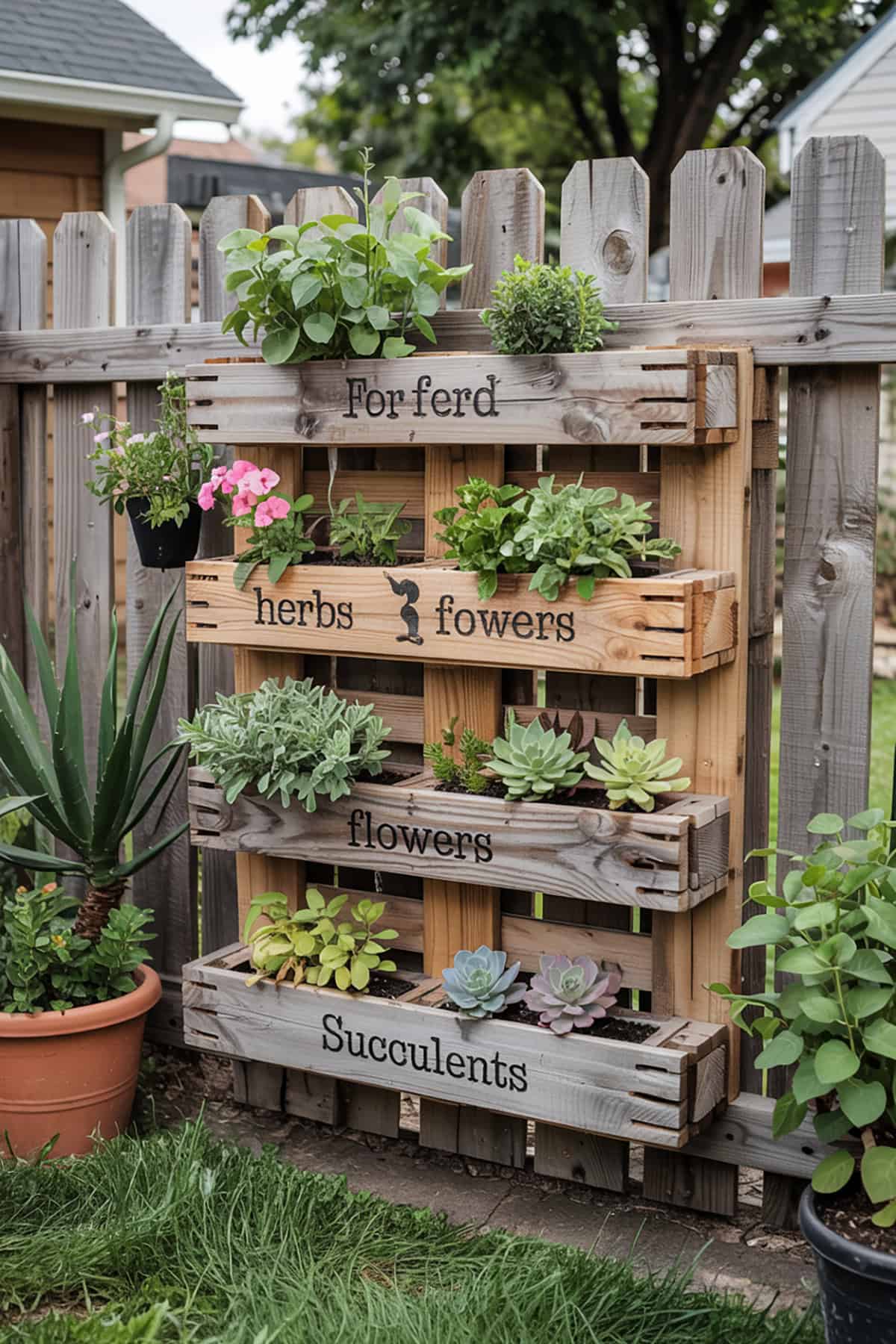
A pallet screwed to a fence becomes a vertical garden for herbs, lettuce or trailing flowers. Staple landscape fabric behind each slat opening to form pockets, then fill them with potting mix.
Secure the pallet with screws or heavy brackets, since wet soil adds a lot of weight. Pick pallets stamped HT, which means heat-treated, and avoid any stamped MB for methyl bromide. Many stores and warehouses let them go for free.
Rock Garden With Succulents
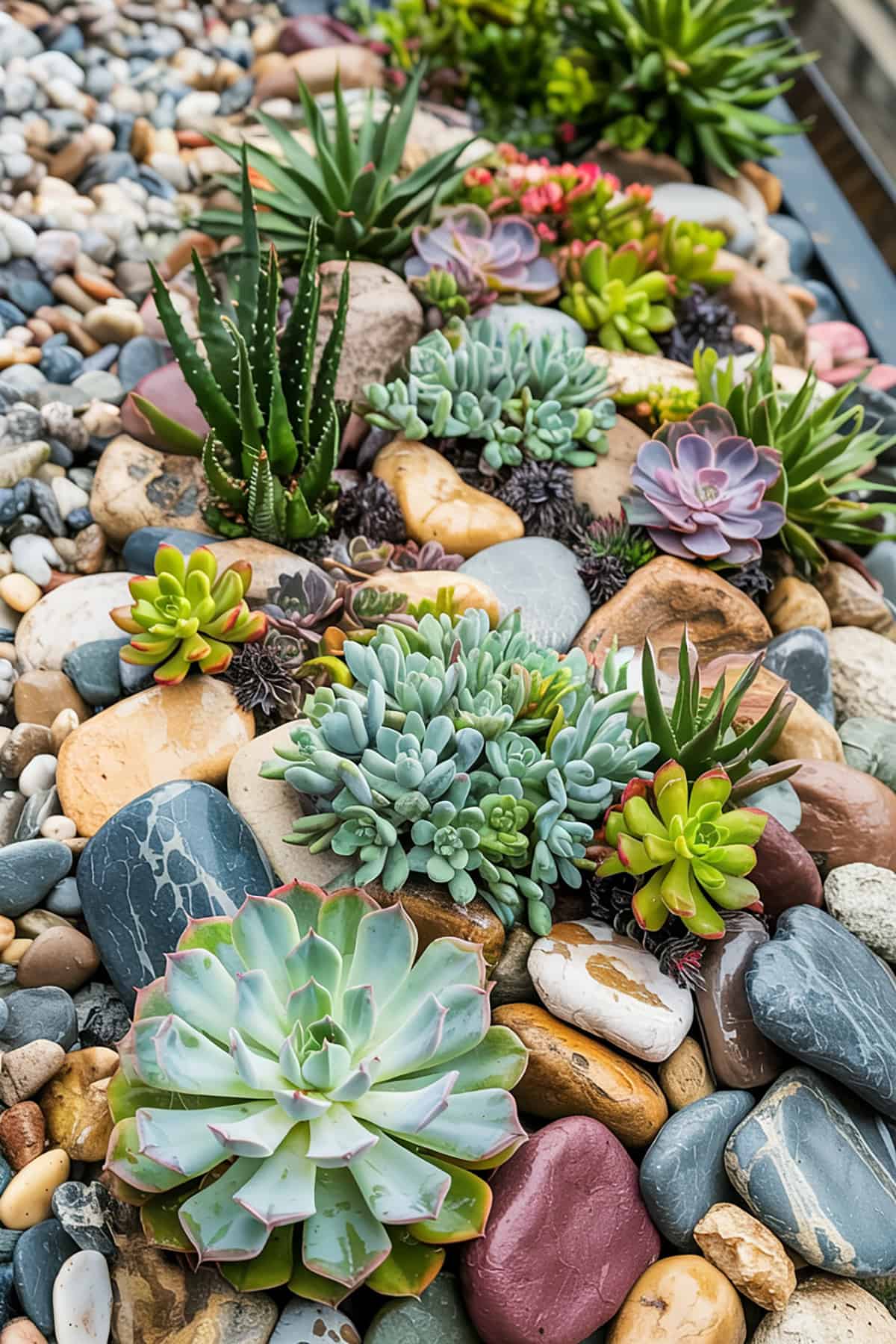
A dry, rocky corner of the yard makes a natural home for a rock garden. Collect stones of different sizes, bury the larger ones a third deep so they look settled, and fill the gaps with gritty soil.
Tuck hardy sedums, hens and chicks or ice plant between the rocks. These plants need almost no water once established and handle poor soil. Rocks collected on your own property push the cost close to zero.
Solar Lights Lining A Driveway
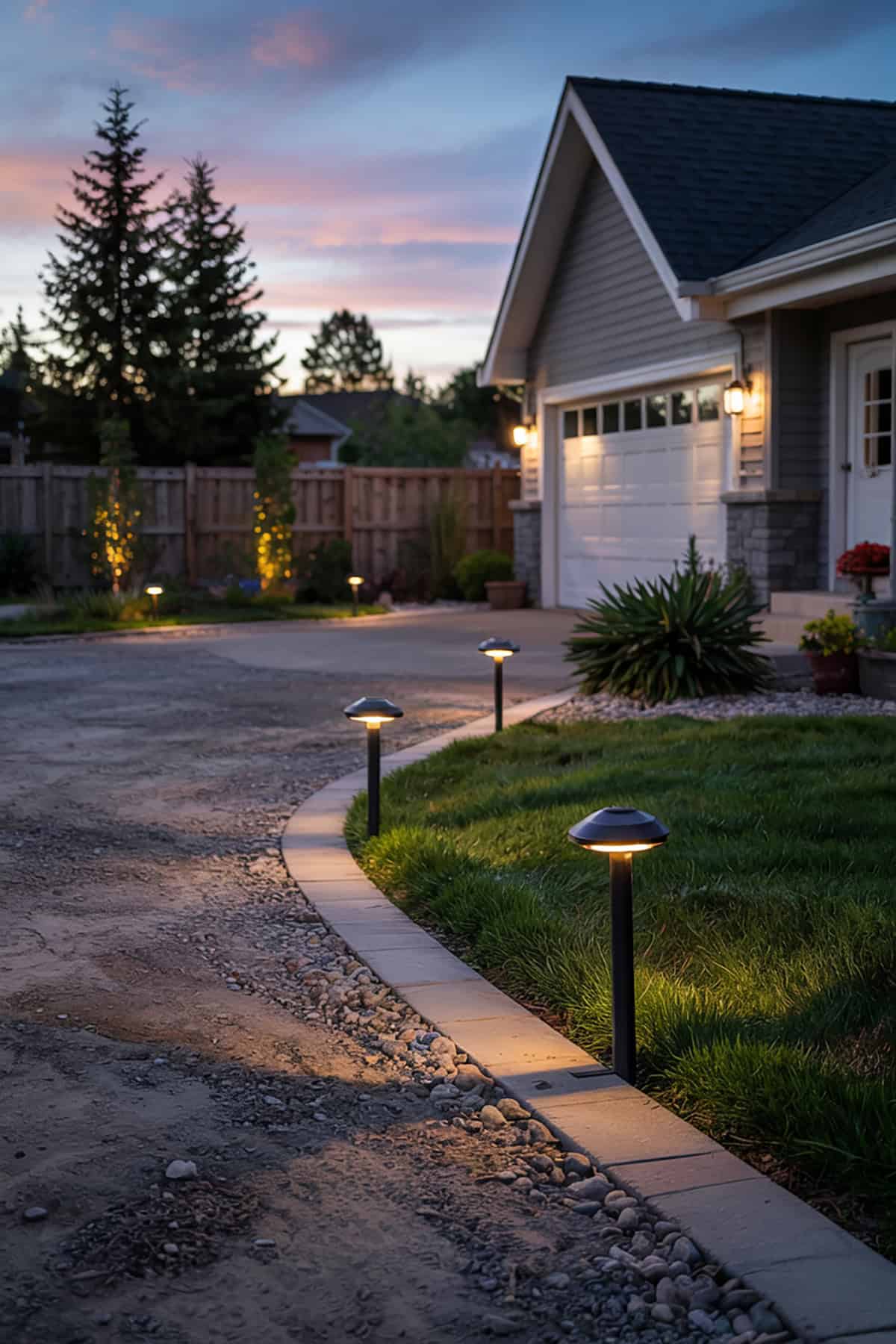
Solar stake lights mark a driveway or path for safer walking at night. Push them into the ground every 6 to 8 feet along the edge.
They need no wiring and switch on at dusk by themselves. Place them where they catch full sun during the day, since shaded lights run dim by evening. A pack of ten costs about the same as a takeout dinner.
Reclaimed Brick Garden Border
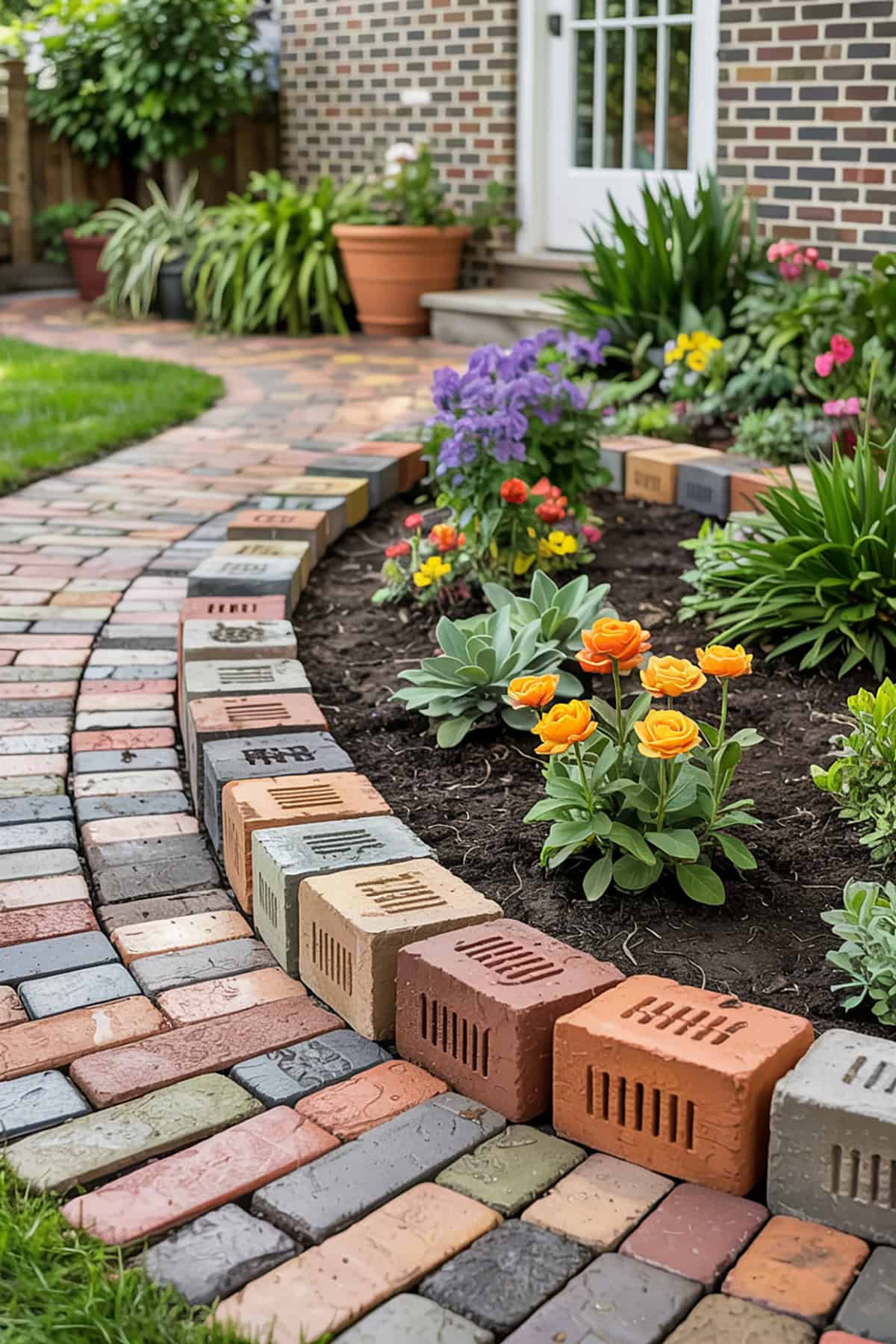
Leftover bricks from a renovation or a demolition site make a classic garden edge. Dig a narrow trench about half the brick’s height and set the bricks end to end, upright or angled in a sawtooth pattern.
Backfill the soil and tamp it firm so the bricks hold their line. Free bricks appear on local marketplace listings regularly.
Recycled Tin Can Herb Garden
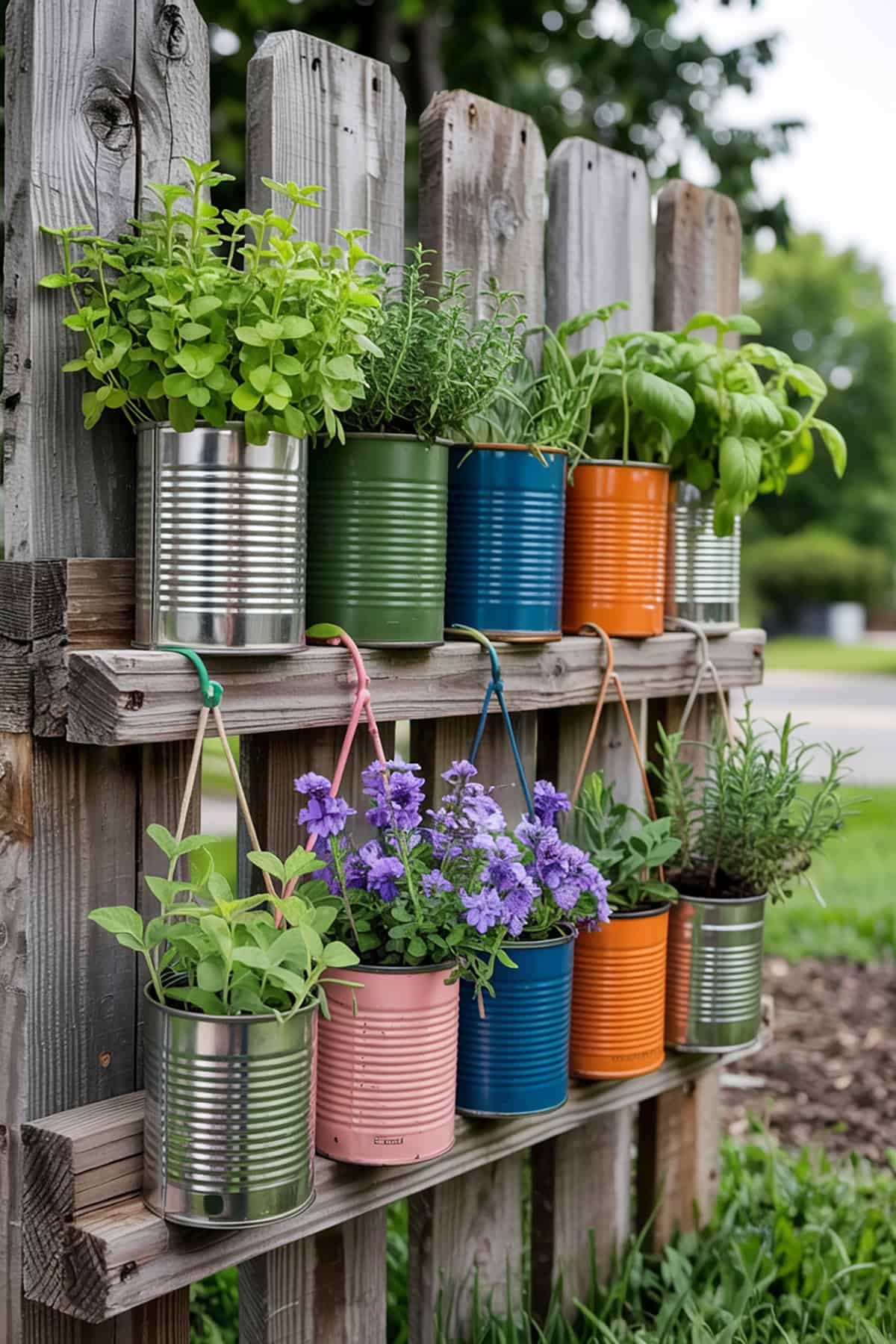
Empty tin cans become small herb pots with a few drainage holes punched in the bottom. Wash them, sand any sharp rims and paint the outside if you like.
Fill with potting mix and plant basil, parsley or chives. Line them up on a sunny patio ledge or hang them from a porch rail with wire. Metal heats up fast in summer sun, so water daily during hot spells.
DIY Tree Ring With Stones
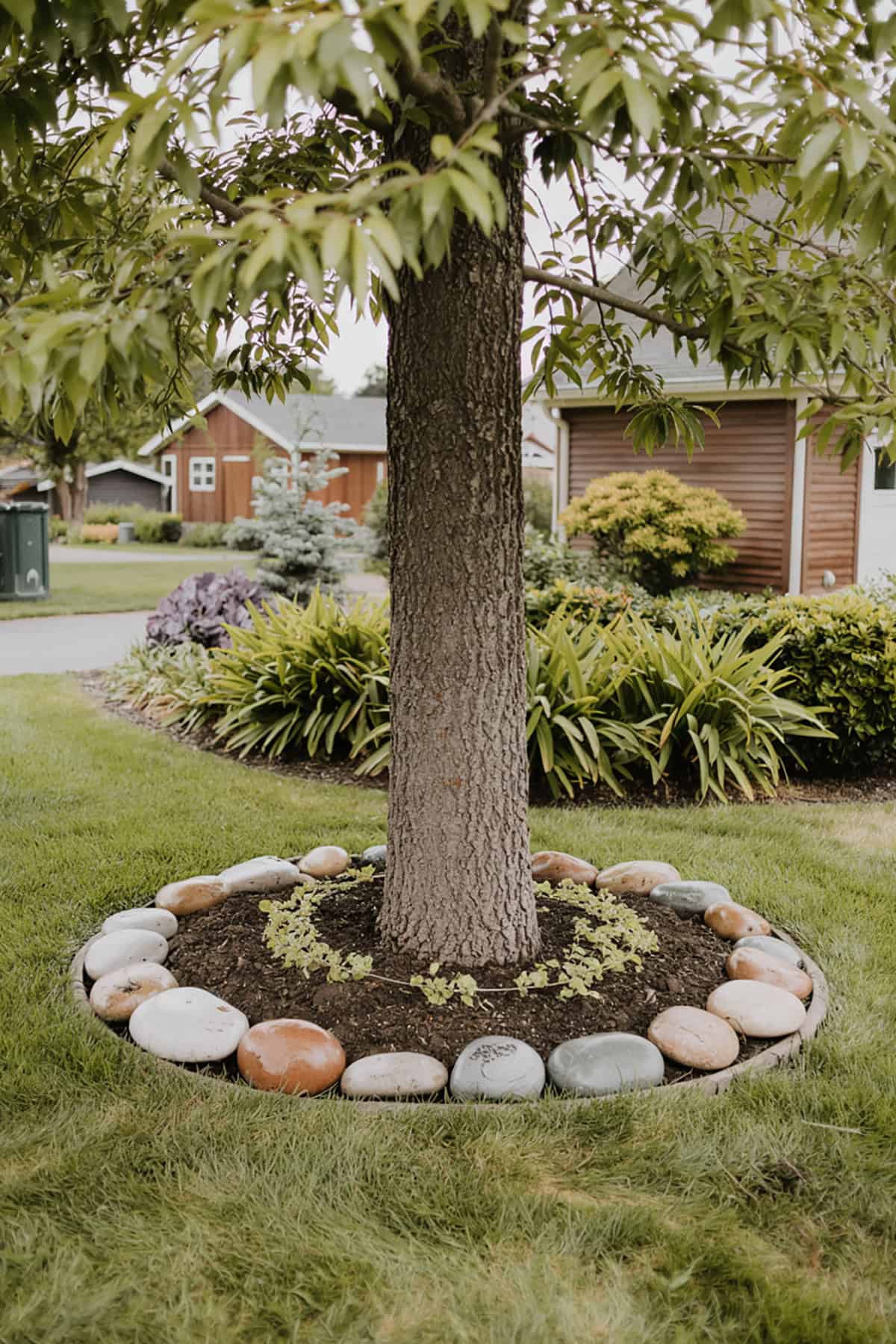
A stone ring around a tree trunk tidies the base and protects the bark from mowers and string trimmers. Lay a circle of rocks 2 to 3 feet out from the trunk, one or two rows wide.
Fill the ring with 2 to 3 inches of mulch, pulled a few inches away from the trunk itself. Volcano mulch piled against bark invites rot and pests, so aim for a flat donut shape instead.
Stepping Stones Set In Grass
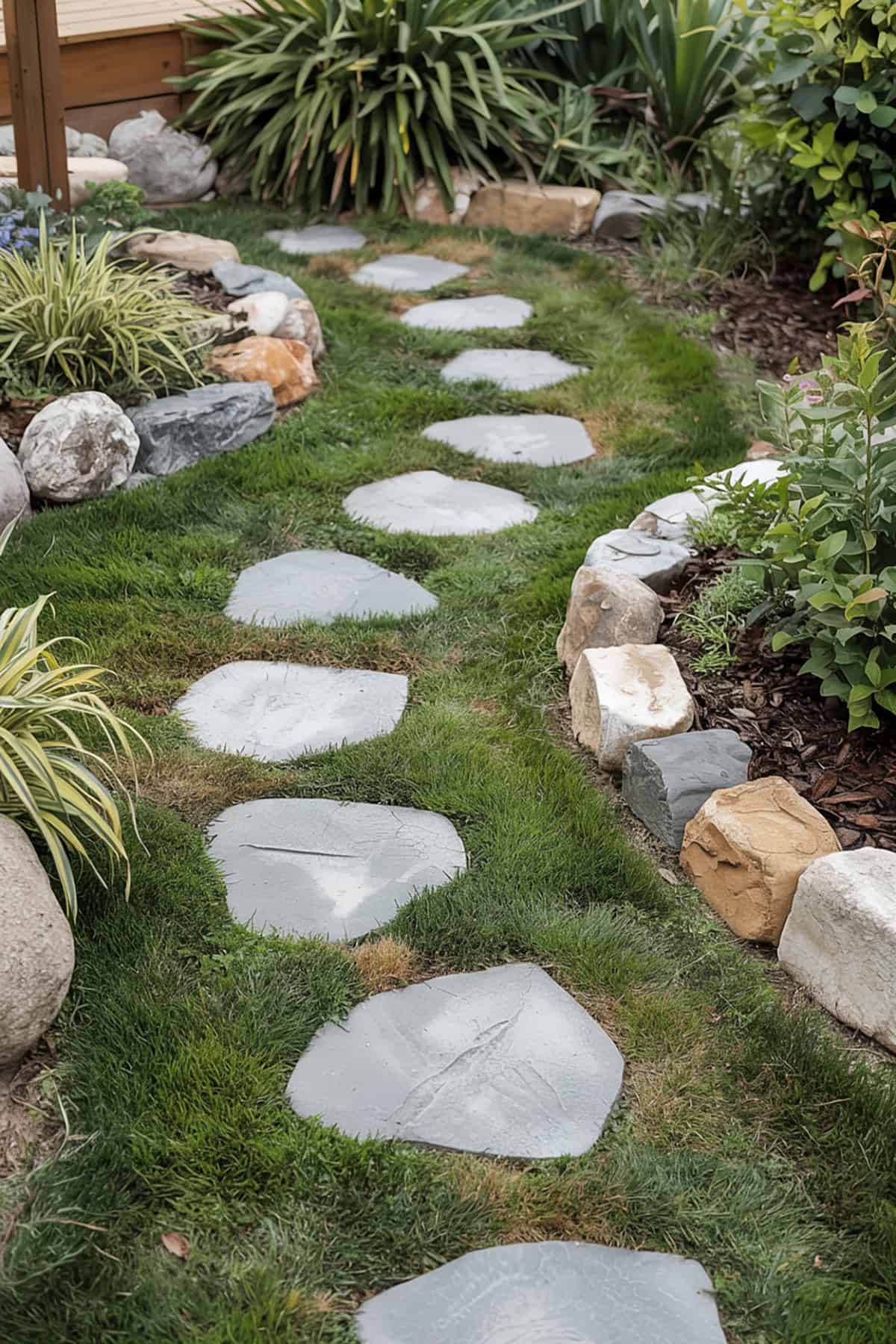
Stepping stones stop foot traffic from wearing a muddy track across the lawn. Buy flat flagstones or cast your own with a concrete mold.
Space them about 18 to 24 inches apart, center to center, to match a natural stride. Cut around each stone with a spade, remove the sod, and set the stone flush with the soil so the mower passes over it.
Hose Storage Made From A Wooden Crate
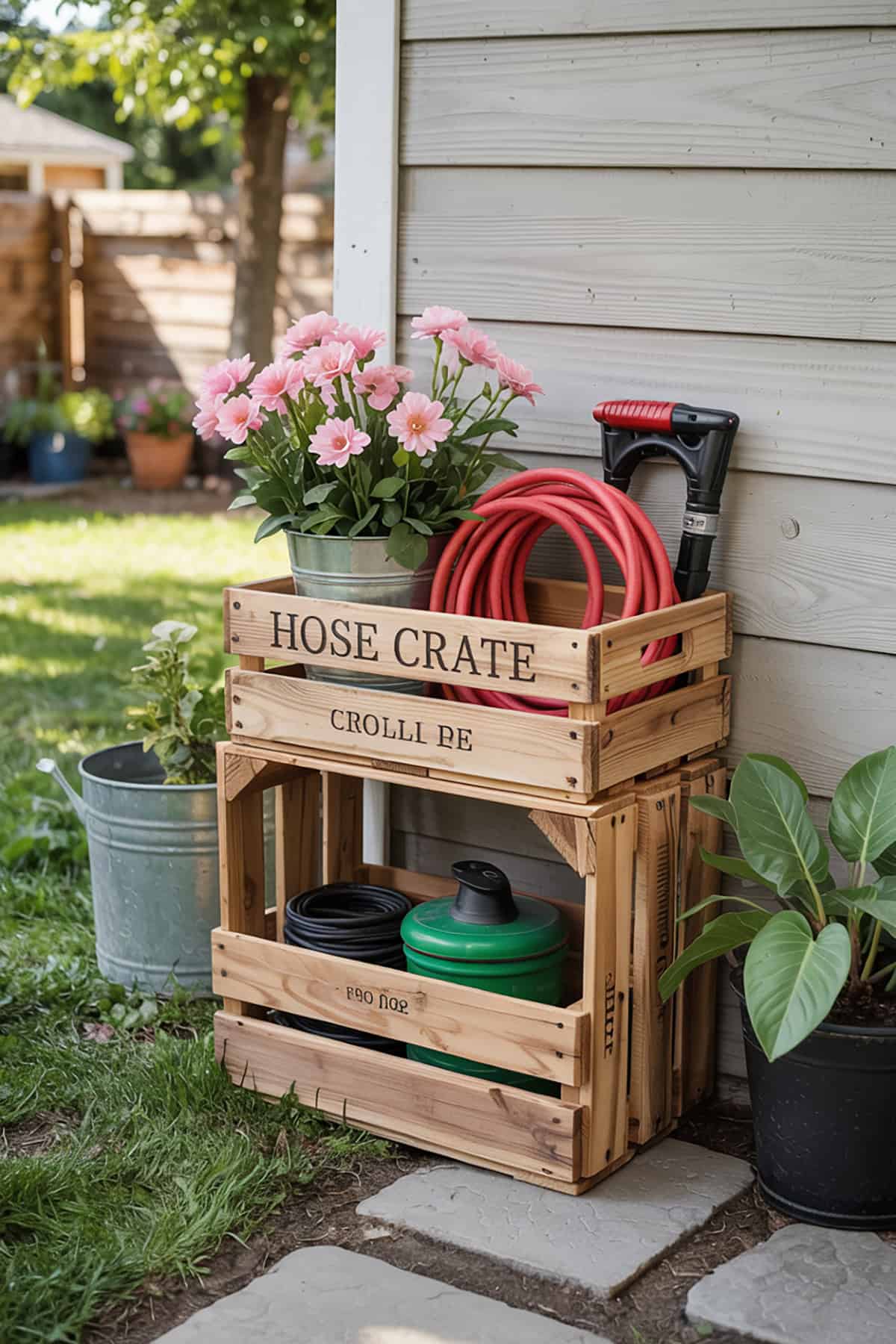
A wooden crate mounted near the spigot holds a coiled hose and its nozzle out of the grass. Drill a few drainage holes in the bottom and screw the crate to the wall or fence.
Paint or stain the wood to match the house trim. Thrift stores and craft shops sell crates for a few dollars, far less than a metal hose reel.
Painted Terra Cotta Pot Tower
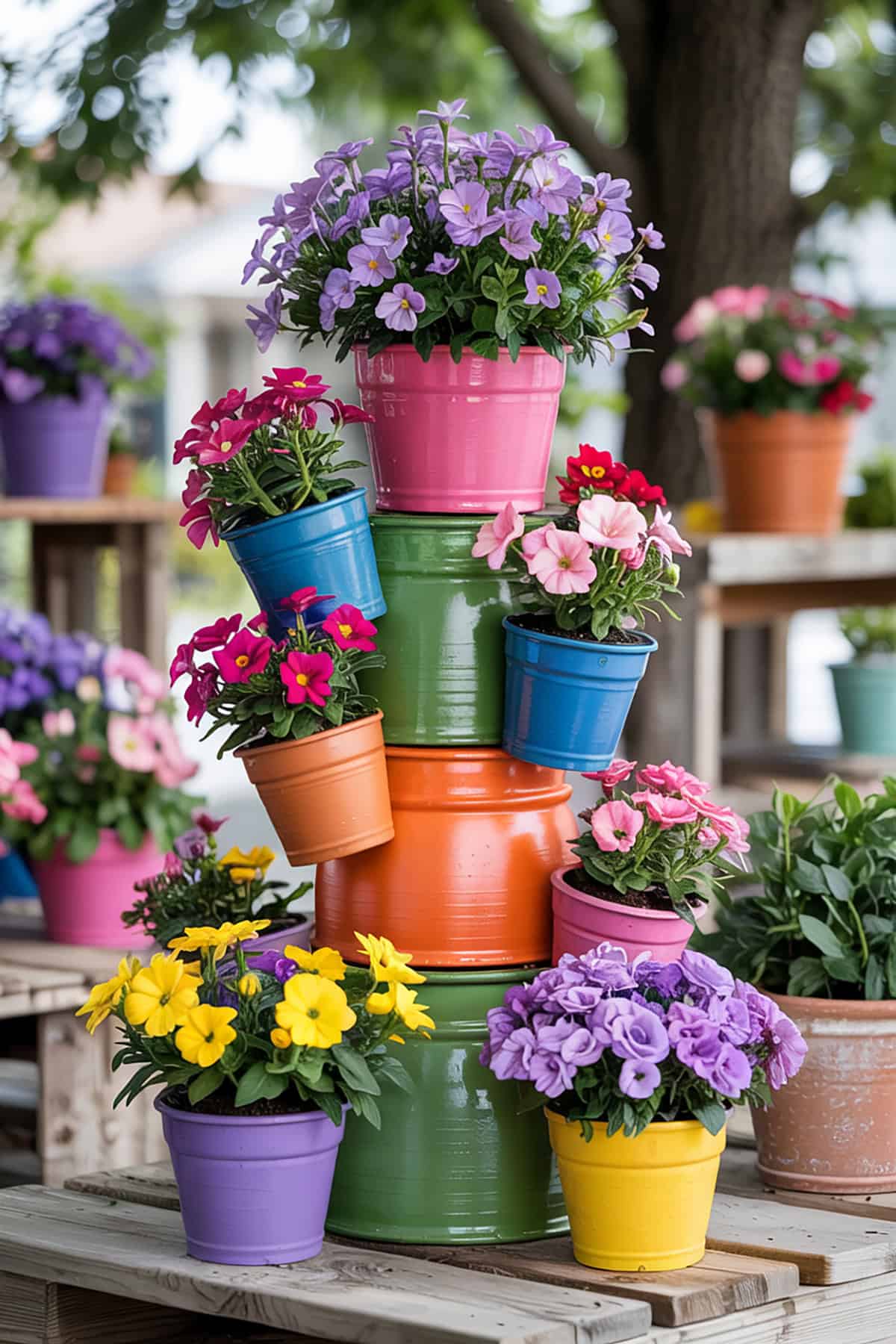
A tower of tilted terra cotta pots fits a lot of plants into one small footprint. Hammer a length of rebar into the ground, slide the largest pot over it and stack smaller pots at angles above.
Paint the pots with exterior paint first, and seal them if you like. Plant each tier with succulents, herbs or trailing annuals. Terra cotta dries quickly, so check the soil every couple of days in summer.
Fence-Mounted Hanging Baskets
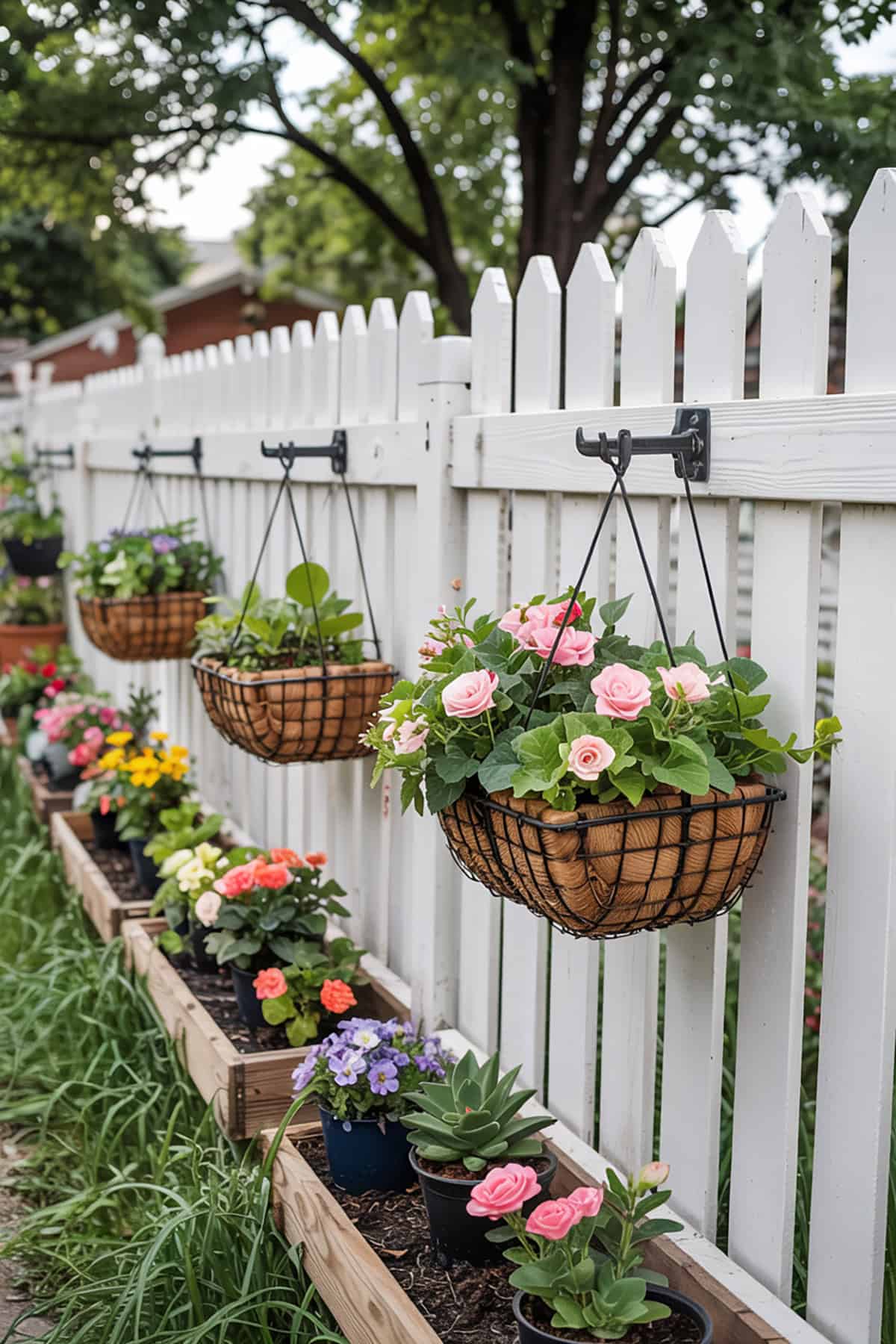
Hooks or brackets screwed into fence posts hold hanging baskets at eye level and dress up a bare fence. Fill coir-lined baskets with petunias, calibrachoa or trailing ivy geranium.
Baskets dry out faster than beds, so plan on daily watering in hot weather. Removable brackets help renters avoid damage to the fence.
DIY Wood Chip Pathway
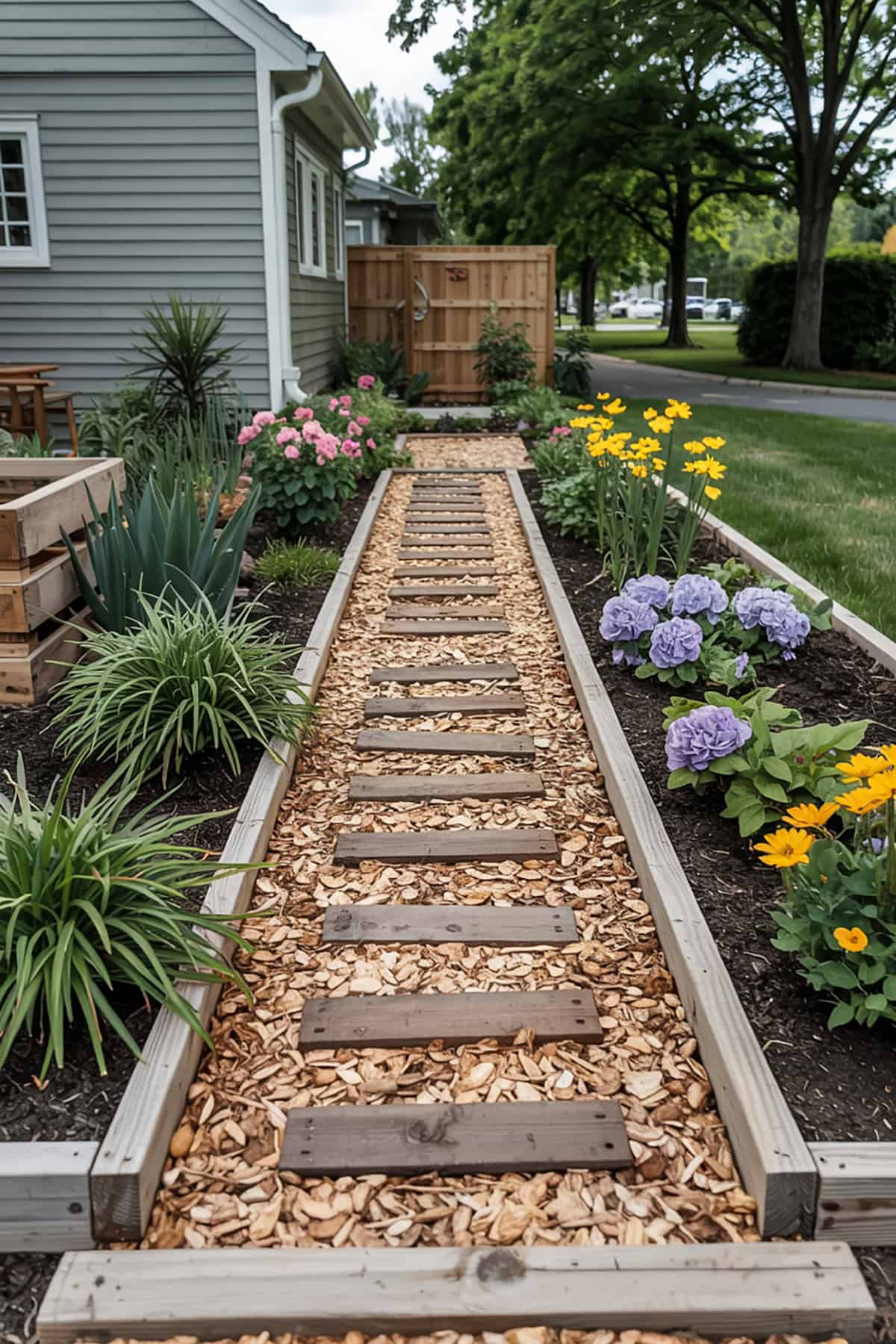
A wood chip path winds softly through planting beds or a vegetable garden. Mark the route, remove the grass and lay cardboard or landscape fabric underneath to slow weeds.
Spread chips 3 to 4 inches deep and rake them level. The chips break down over time and need a fresh layer every year or two. Tree service companies drop off loads for free through programs like ChipDrop.
Garden Bed With Cardboard Sheet Mulch
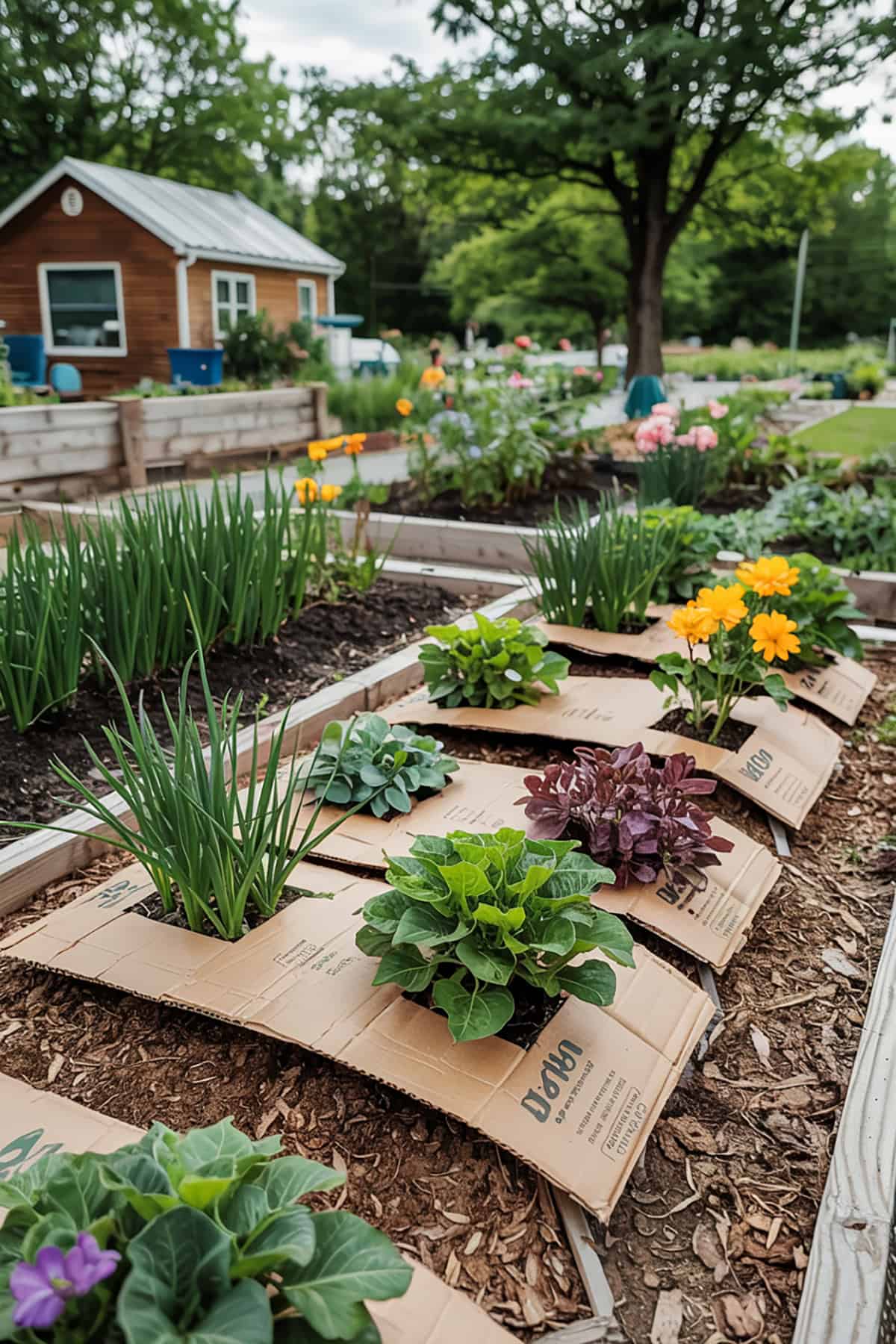
Cardboard sheet mulching builds a new bed right on top of the lawn, with no digging. Mow the grass short, then lay plain brown cardboard with all tape removed and overlap the edges by 6 inches.
Soak the cardboard and pile 4 to 6 inches of compost, soil and mulch on top. The grass dies under the cardboard within a couple of months as the layers break down. Plant through holes cut in the cardboard for an instant start.
Reclaimed Wood Garden Sign
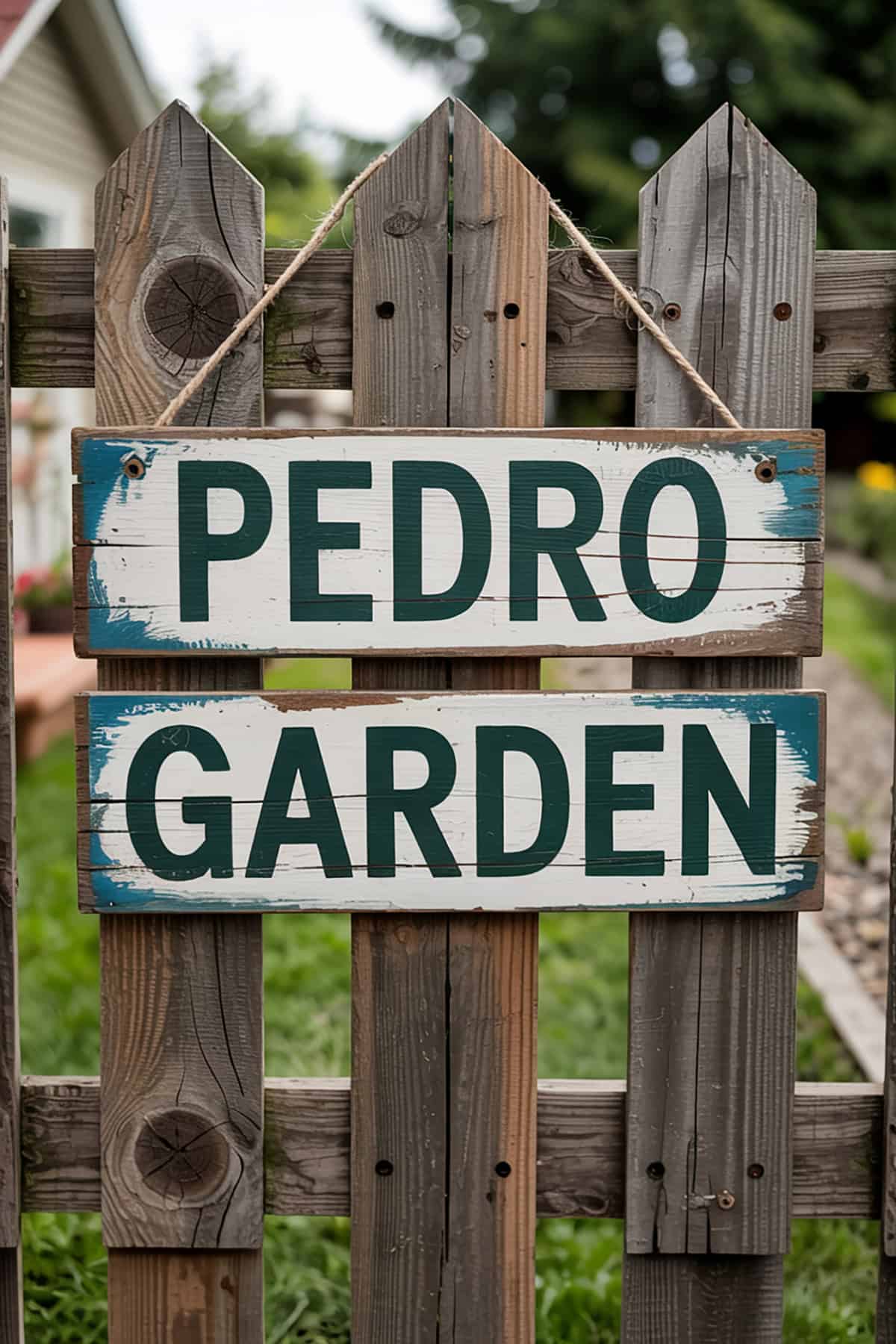
Leftover scrap boards double as rustic garden signs and plant labels. Sand the edges, stencil or paint the lettering, and seal the board with exterior varnish.
Mount the sign on a stake, post or fence near the bed it names. A few coats of sealer stretch the life of the wood through several seasons.
Vintage Chair Planter
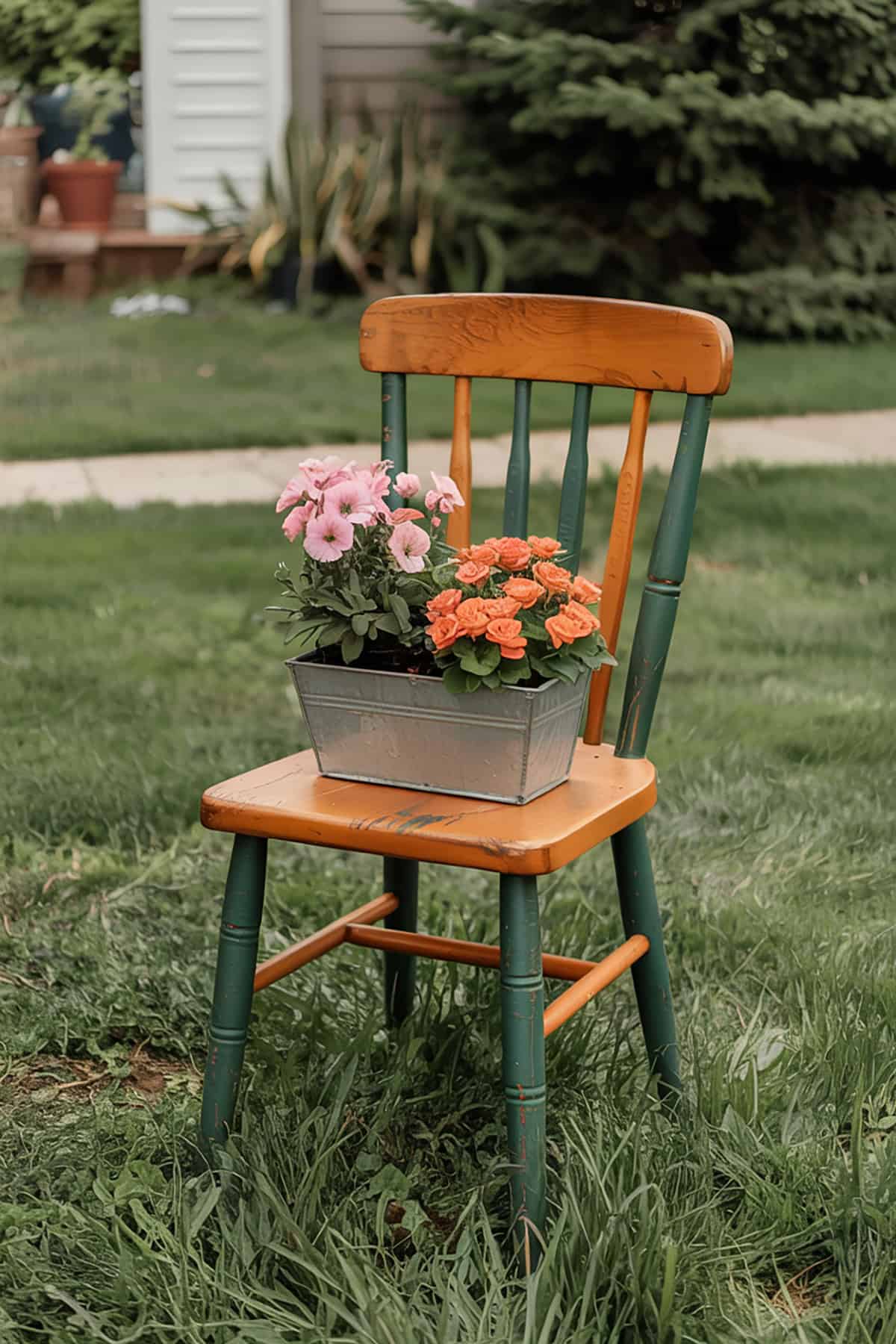
A broken chair with a missing seat becomes a quirky planter. Remove what’s left of the seat, then set a pot or a coir-lined basket into the frame.
Paint the chair a bright color or leave the old finish to weather. Place it along a path or at the edge of a flower bed, and fill the pot with trailing flowers that spill over the rails.
Plastic Kiddie Pool Garden Bed
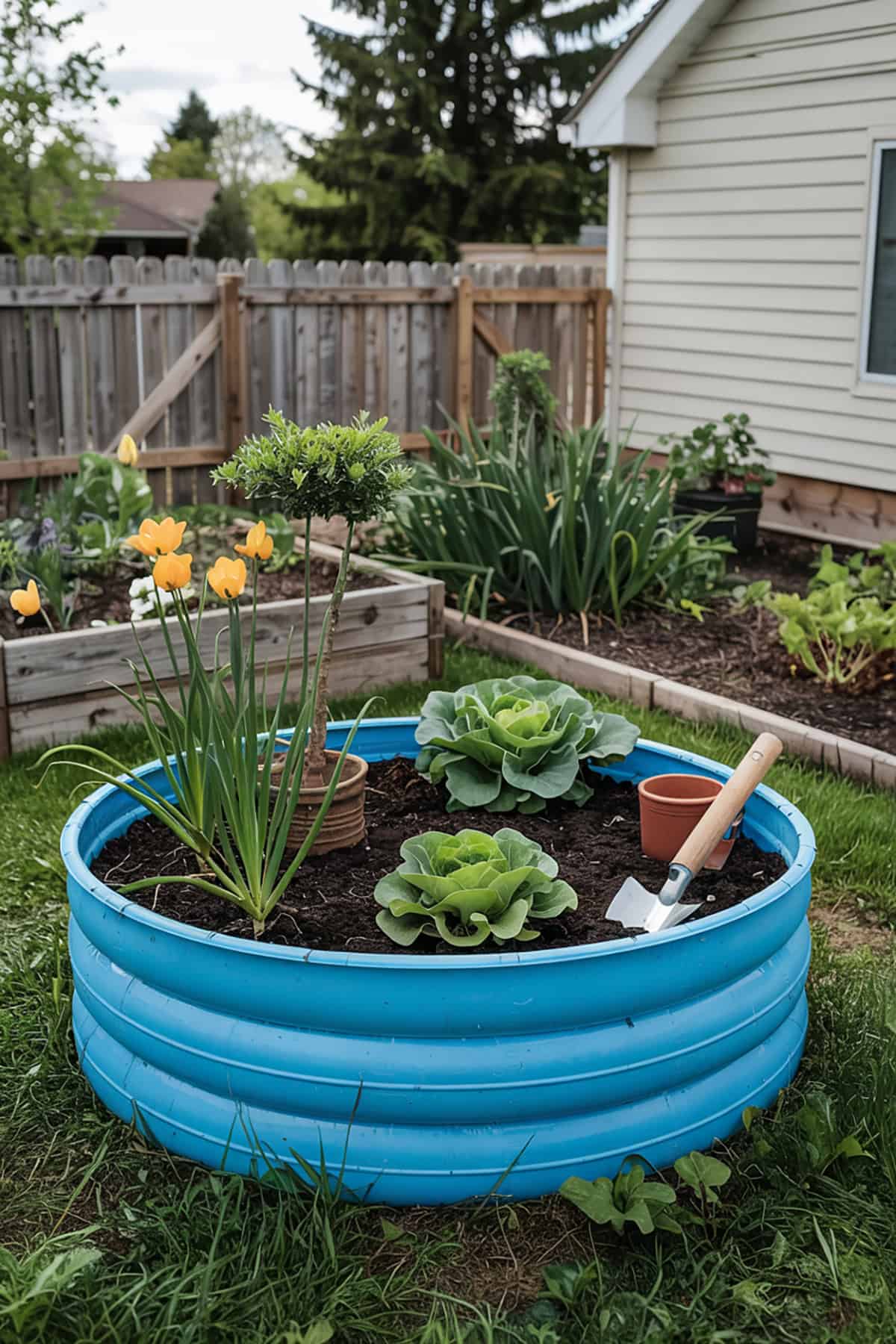
A plastic kiddie pool makes a cheap, shallow raised bed. Drill drainage holes every few inches across the bottom, set the pool in full sun and fill it with a mix of compost and potting soil.
Grow lettuce, radishes, herbs or flowers, which handle the shallow root space. End-of-season sales and yard sales list pools for a few dollars.
Painted Stones As Garden Markers
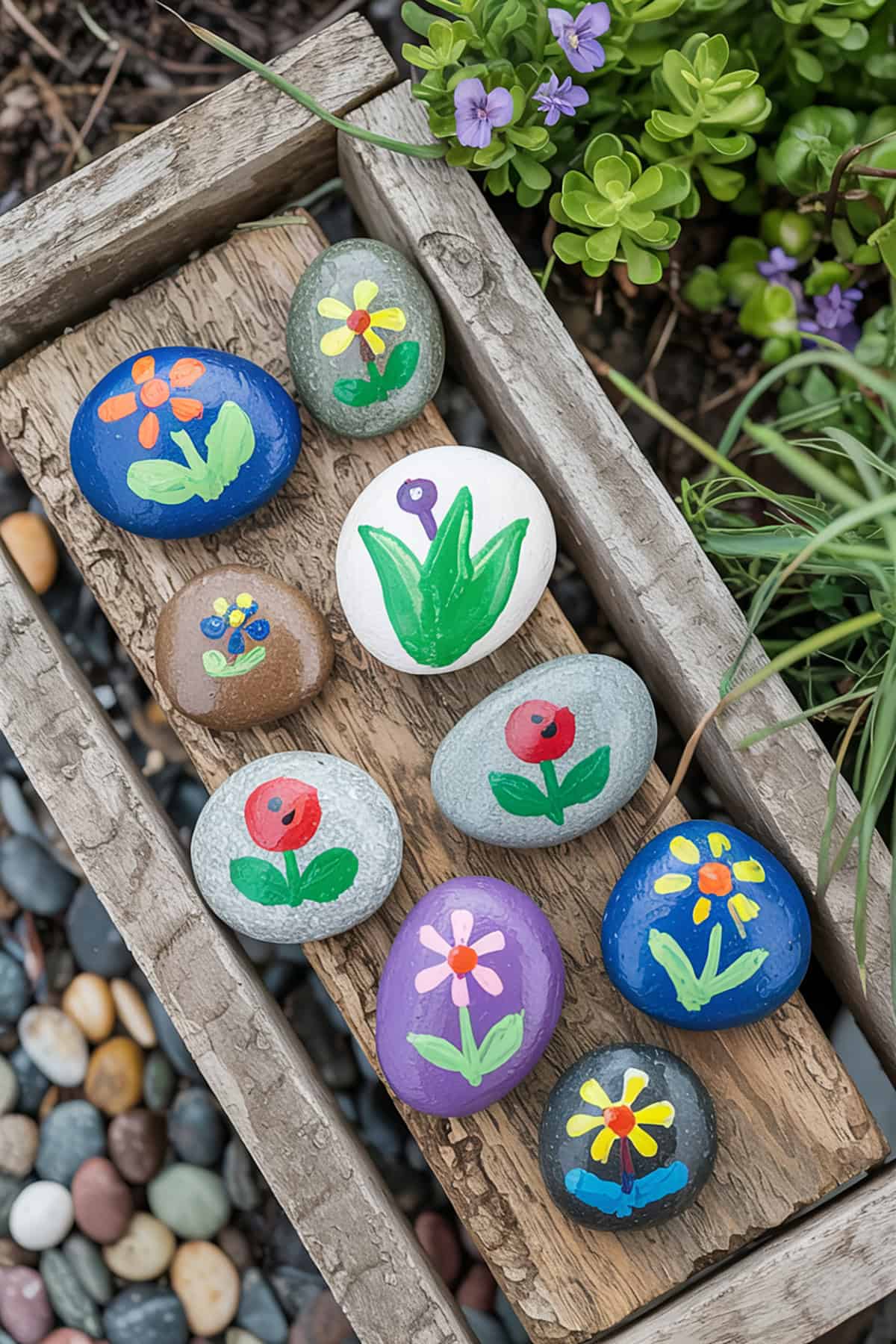
Durable plant markers start with a handful of flat river stones. Wash and dry them, write the plant names with paint pens or outdoor acrylic, and seal them with a clear exterior spray.
Set a stone at the end of each row or beside each herb. Kids love painting them on a rainy weekend.
Simple DIY Trellis With Bamboo Or Sticks
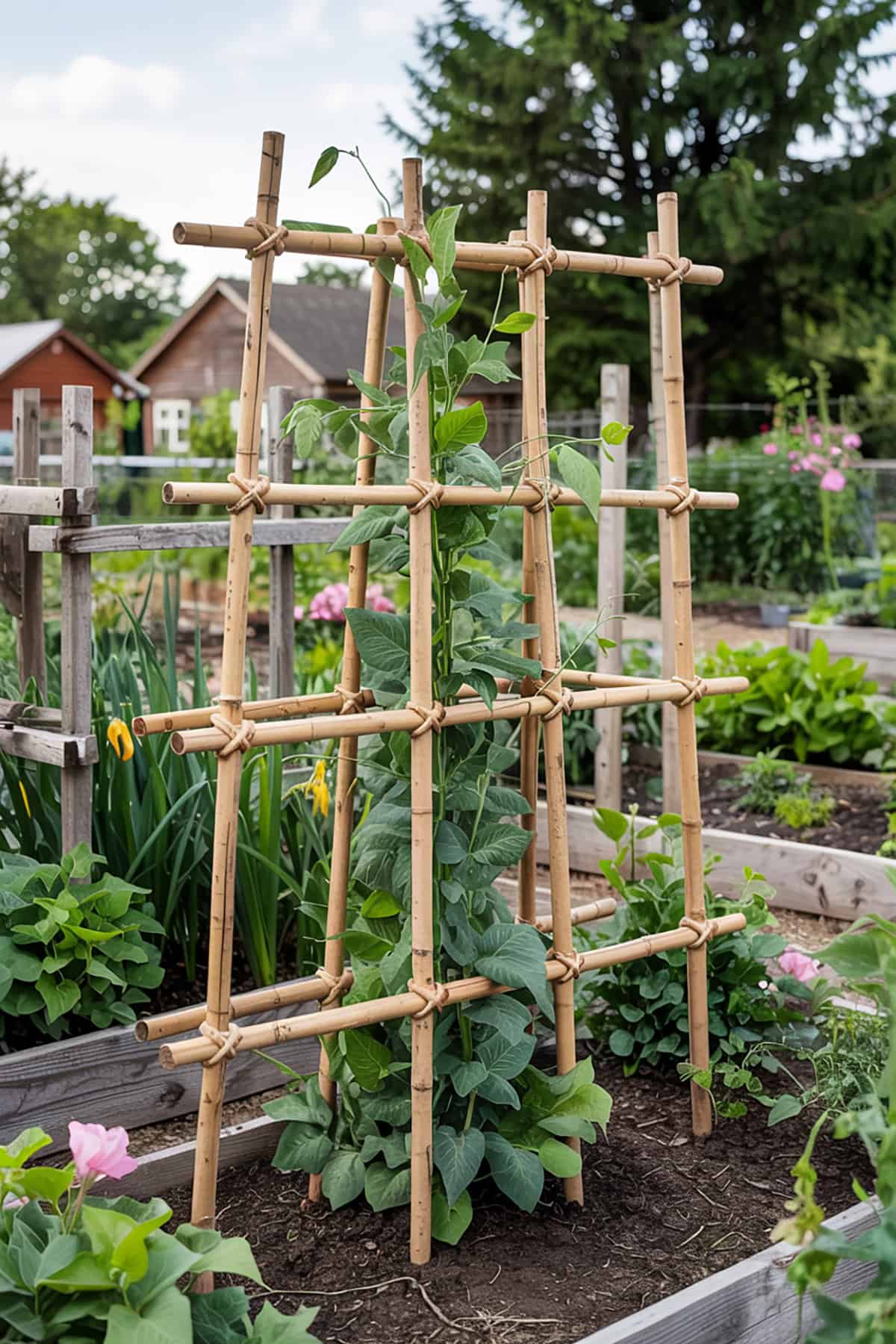
Bamboo canes or straight branches tied with twine form a sturdy trellis for peas, beans and cucumbers. Push three or four poles into the soil in a teepee shape and lash them together at the top.
For a flat trellis, lay poles in a grid and tie each crossing. Guide young vines onto the frame as they grow. Bamboo costs a fraction of a metal trellis and lasts two to three seasons.
Reused Wine Bottles As Edging
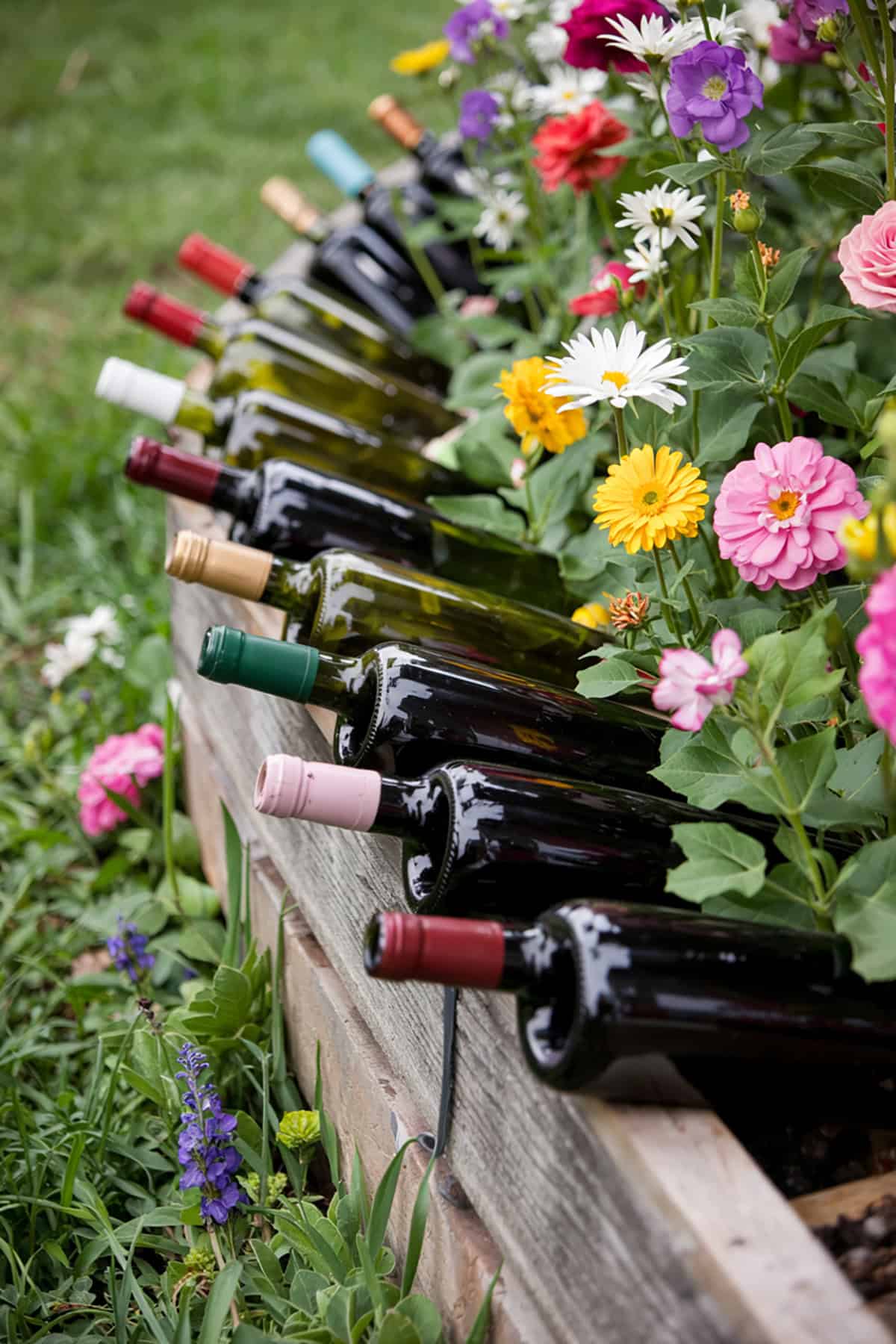
Wine bottles buried neck-down make a glassy edge around a flower bed. Soak off the labels, dig a narrow trench and press the bottles in side by side, about two-thirds deep.
Mixed colors catch the sun and glow in late afternoon light. Glass lasts indefinitely, so this edge needs no upkeep. Ask friends or a local restaurant to save empties, since a long bed uses a lot of bottles.
DIY Fire Pit With Concrete Blocks
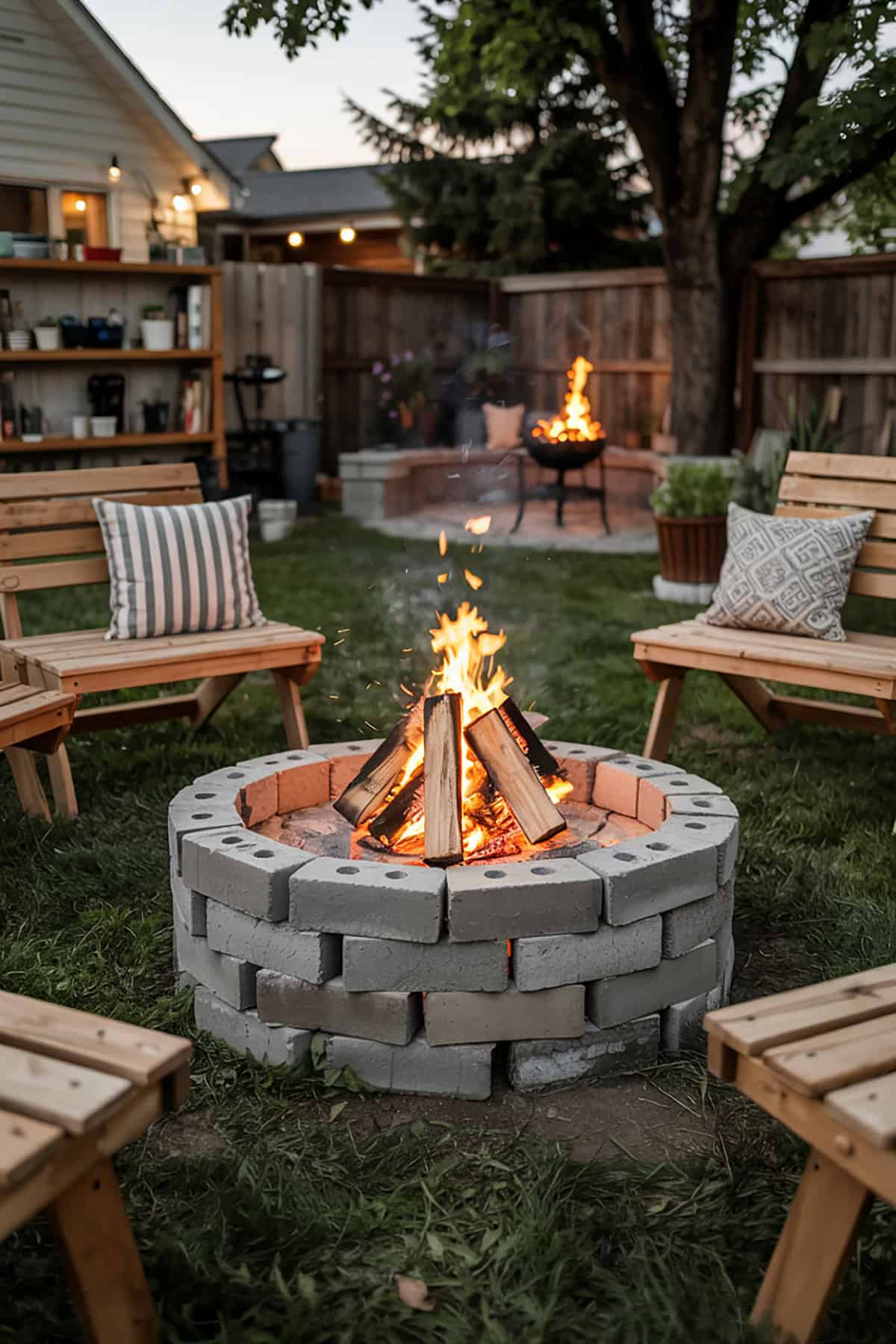
Retaining wall blocks stacked in a circle make a sturdy fire pit for a modest price. Clear the grass, level a 4-inch base of gravel and stack two or three courses of blocks, with small gaps at the bottom for airflow.
Standard concrete blocks crack and even burst from high heat, so line the inside with firebrick or a steel fire ring. Check local burn rules and set the pit at least 10 to 25 feet from buildings and low branches.
Hanging Mason Jar Lanterns
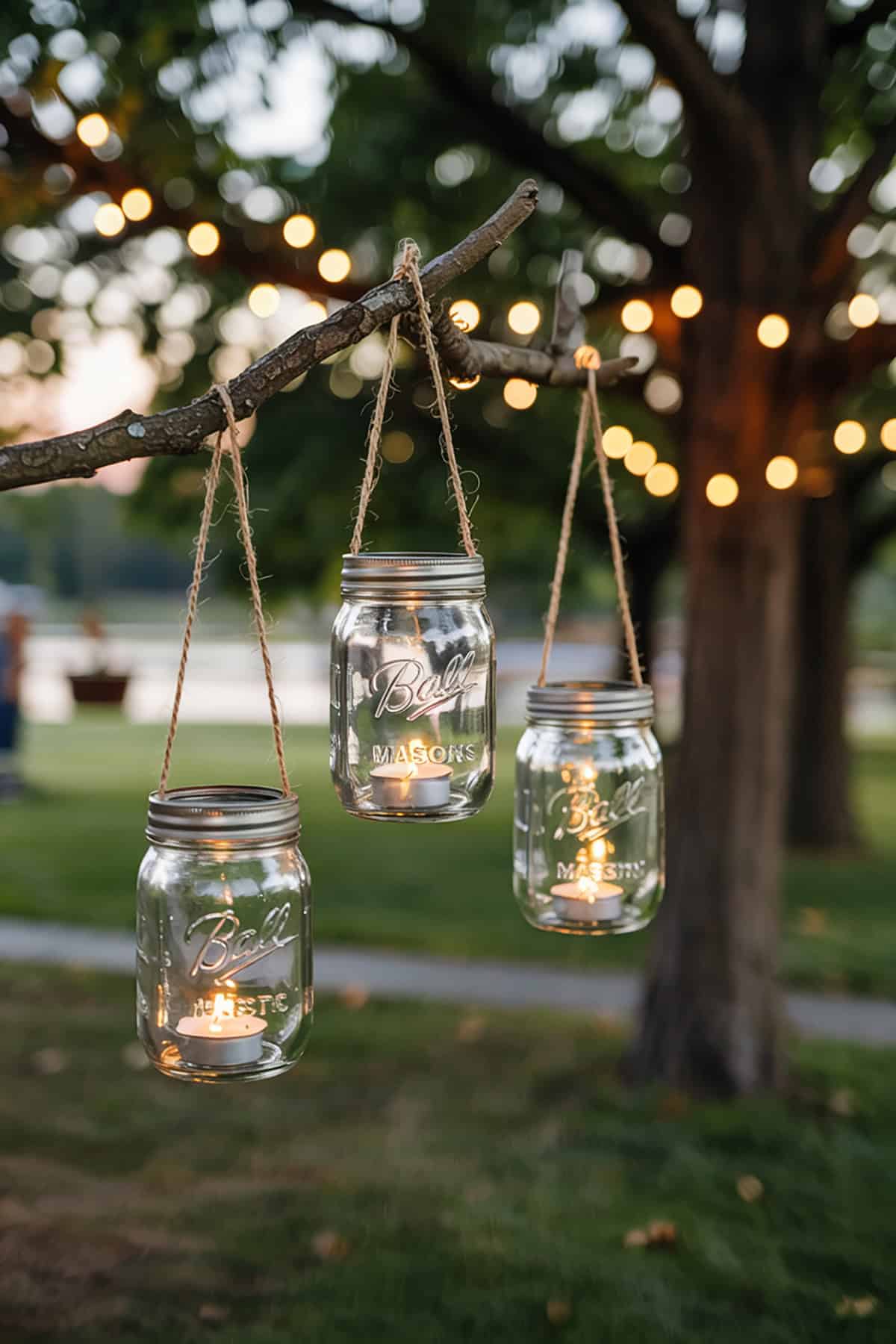
Mason jars hung from branches or shepherd’s hooks make glowing evening lanterns. Wrap wire around the jar neck to form a handle and hang the jars at different heights.
Battery tea lights or solar lids skip the fire risk of real candles under trees. Jars from the pantry or a thrift store cut the cost to pennies.
PVC Pipe Garden Tool Holder
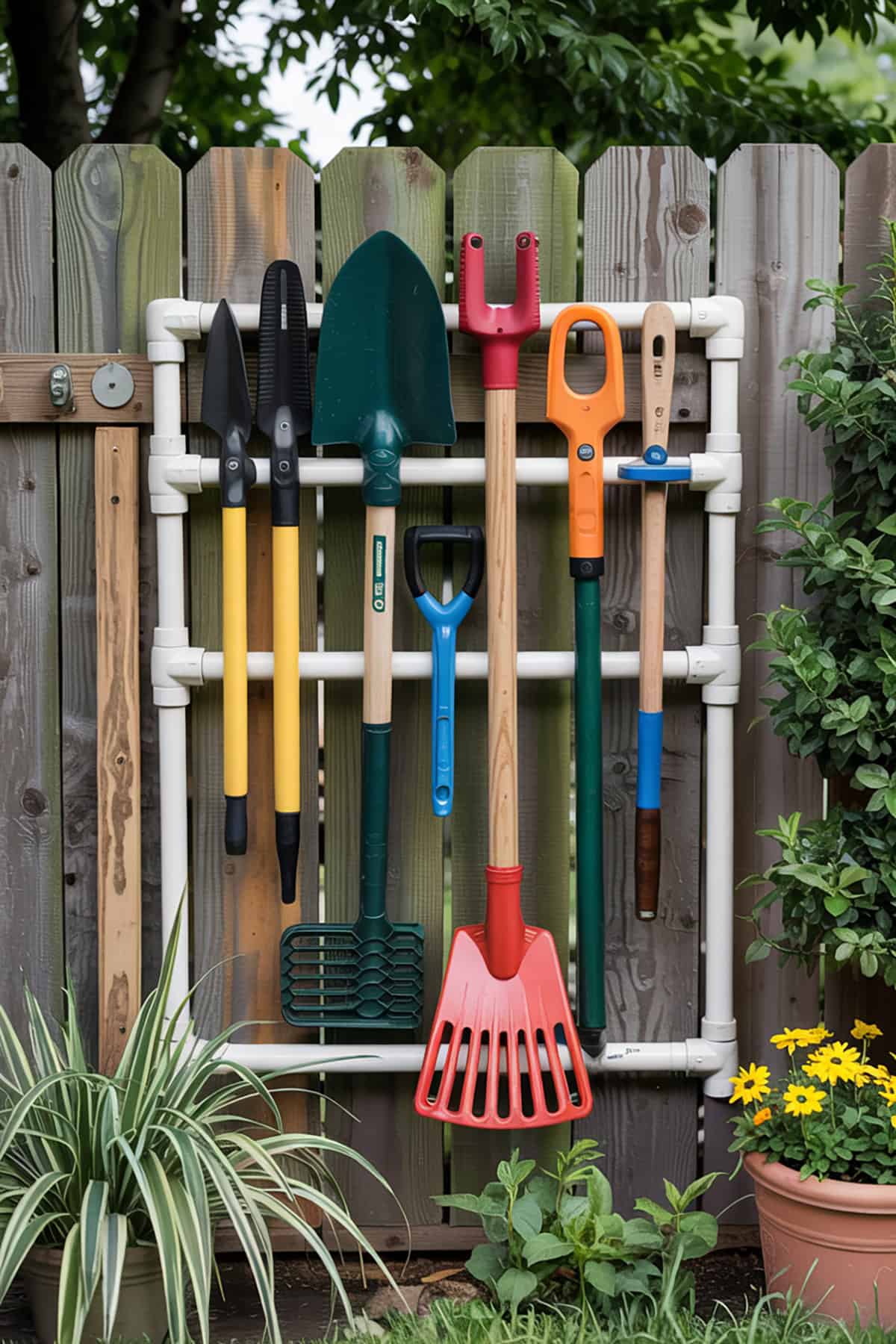
Short lengths of PVC pipe screwed to a shed wall or fence hold rakes, shovels and hoes upright. Cut 3-inch pipe into 8-inch sections and mount them in a row with screws through the back.
Slide each tool handle-first into its own tube. PVC handles rain and sun for years and lifts tools off the wet ground, which slows rust and handle rot.
Thrifted Bench In Garden Nook
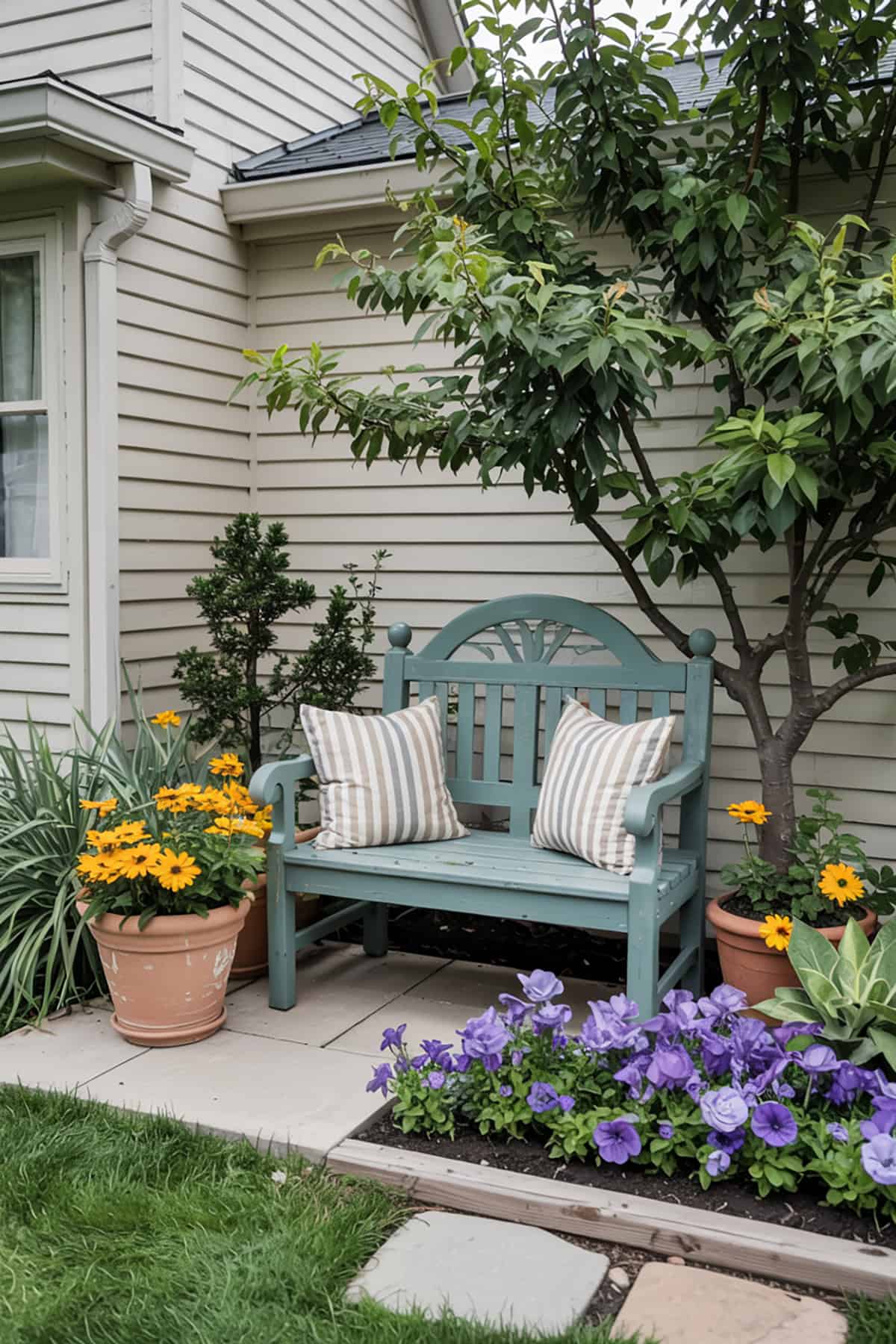
A secondhand bench sets up an instant resting spot in an empty corner. Garage sales and thrift shops sell wooden and metal benches cheaply, and a coat of exterior paint covers wear.
Place the bench under a tree, beside a flower bed or at the end of a path. A pair of outdoor cushions and a potted plant on either side complete the nook.
DIY Compost Bin From Pallets
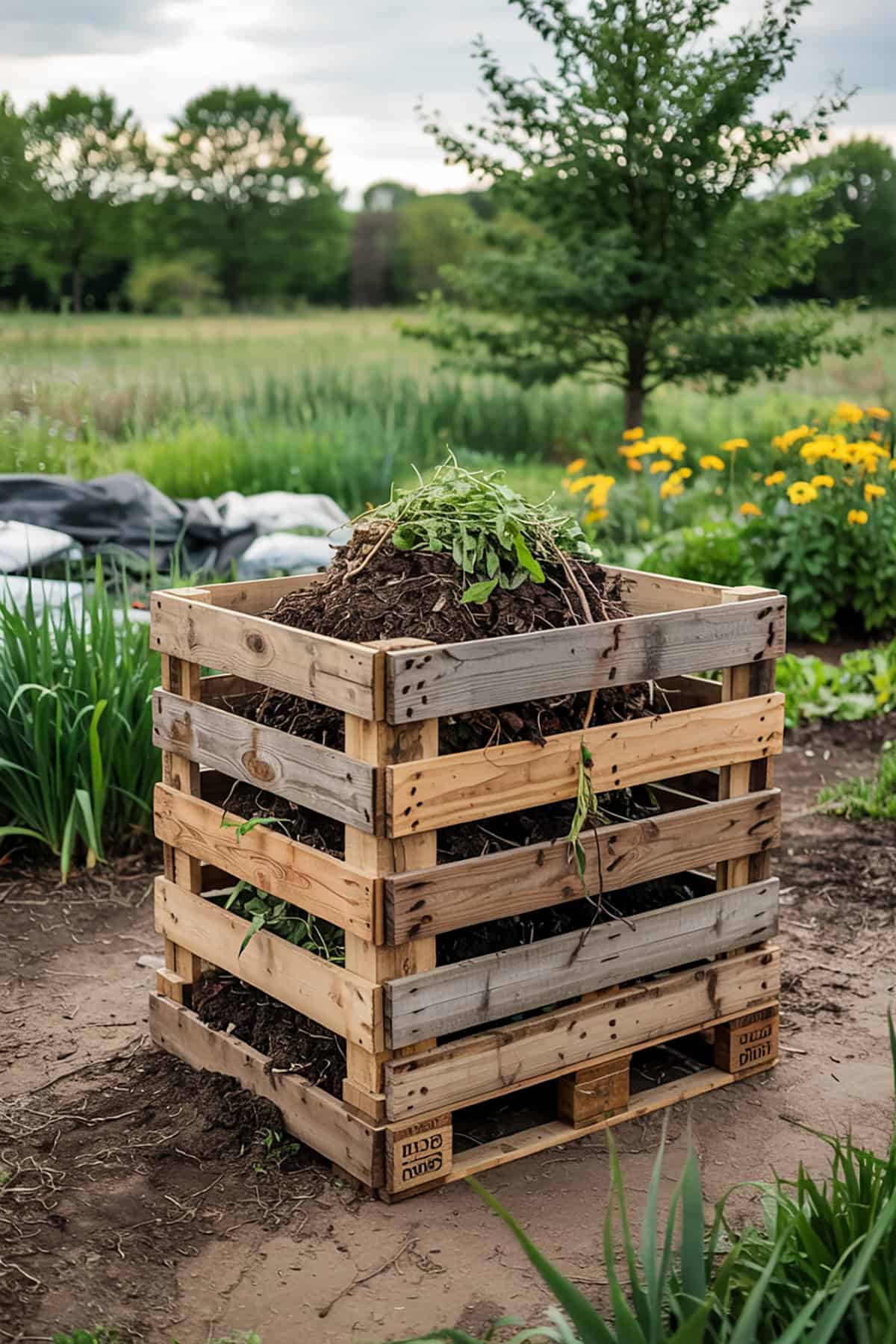
Three pallets stood in a U-shape and tied together with wire or zip ties form a free compost bin. An open front lets a pitchfork reach in, and a fourth pallet on hinges closes it up.
Layer green material, such as kitchen scraps and grass clippings, with brown material like dry leaves and shredded cardboard. The gaps in the slats let air reach the pile, and usable compost arrives in two to six months.
Old Wheelbarrow Planter
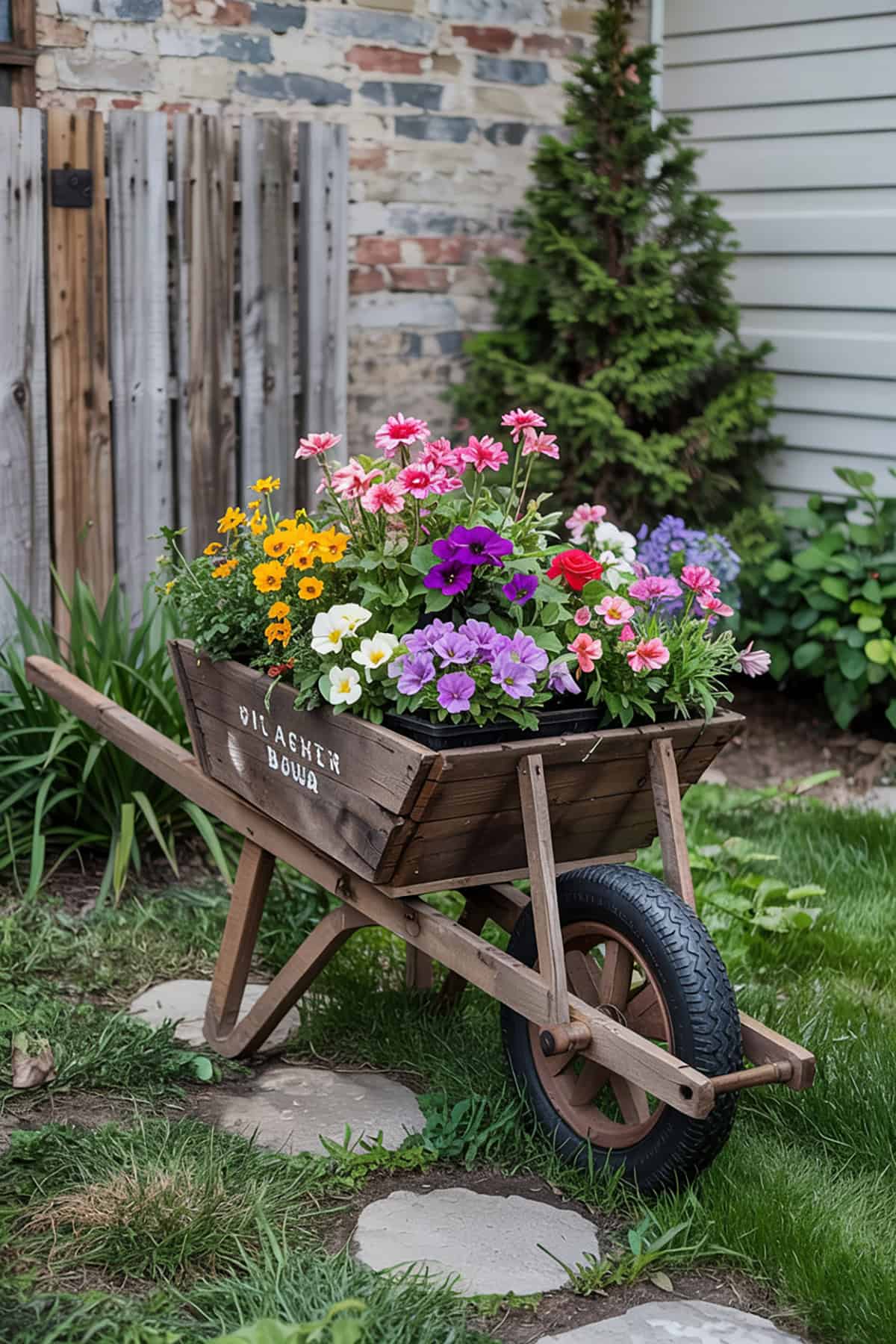
A rusty wheelbarrow becomes a mobile planter for flowers or herbs. Drill drainage holes in the bottom, add a layer of gravel and fill it with potting mix.
Roll it into the sun in spring or into shade during a heat wave. Trailing plants such as sweet potato vine or creeping Jenny spill over the sides for a lush look.
Rope-Wrapped Planter From Bucket
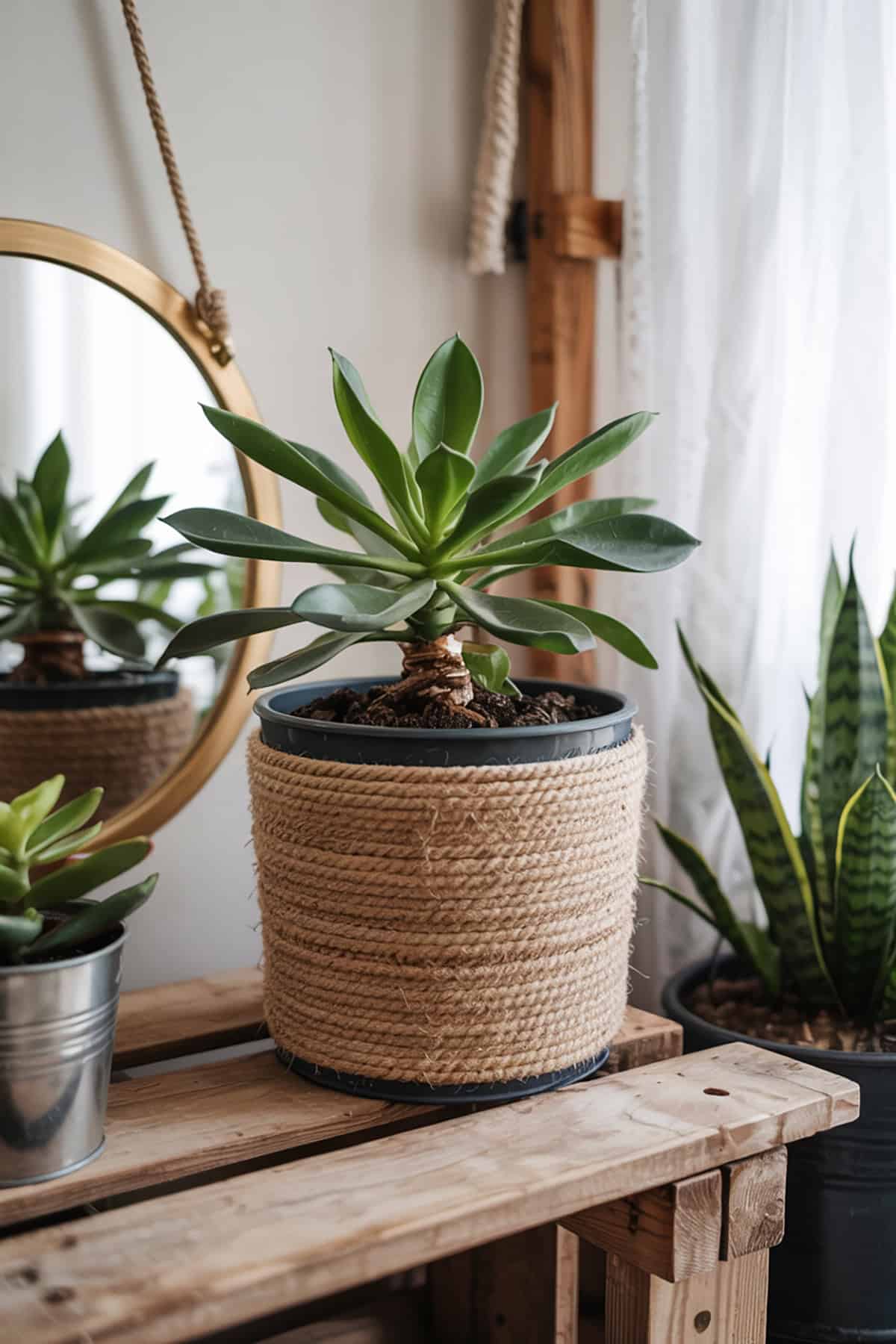
A plain plastic bucket hides under a wrap of natural jute or sisal rope. Drill drainage holes first, then run hot glue around the bucket in bands and wind the rope tightly from bottom to top.
Tuck the rope end inside the rim for a neat edge. The rope fades and weathers outdoors, so a coat of clear sealer extends its life. Fill the planter with flowers, herbs or a small tomato plant.
Rain Gutter Planter Wall
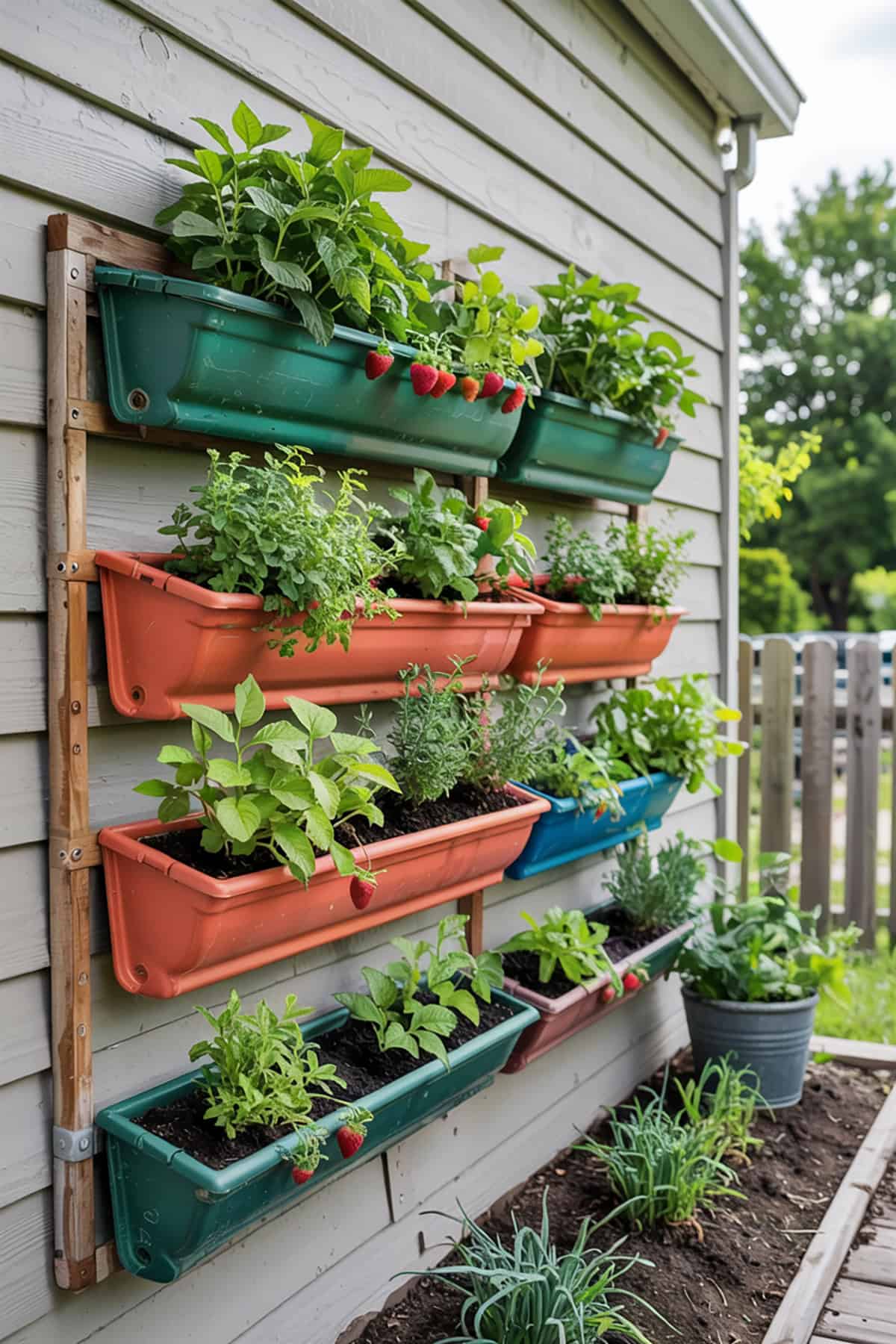
Lengths of vinyl rain gutter mounted on a fence or wall hold shallow-rooted crops in neat rows. Cap the ends, drill drainage holes every 6 inches and space the rows at least 12 inches apart so light reaches the lower levels.
Fill with potting mix and plant lettuce, spinach, strawberries or herbs. Shallow gutters dry out quickly, so check the soil daily in summer. Salvaged gutters from a roof replacement cost next to zero.