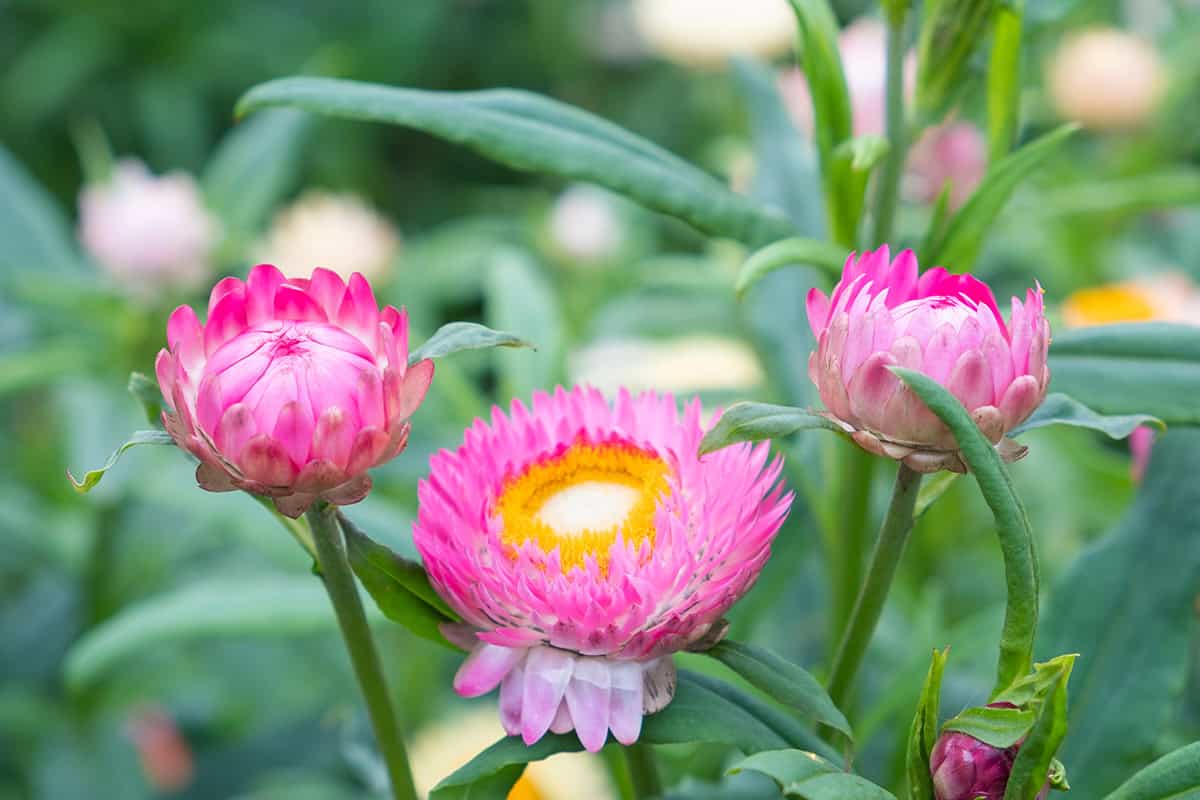
Strawflower petals crackle like paper when touched, and they hold their color for years once dried. The plant comes from Australia, which explains its love of strong sun, sharp drainage and long, warm summers.
Seed sown indoors in late winter produces a summer full of blooms for vases and dried bouquets. Giving those seedlings a sunny, well-drained start is what the rest of this guide is about.
Table of Contents
Light
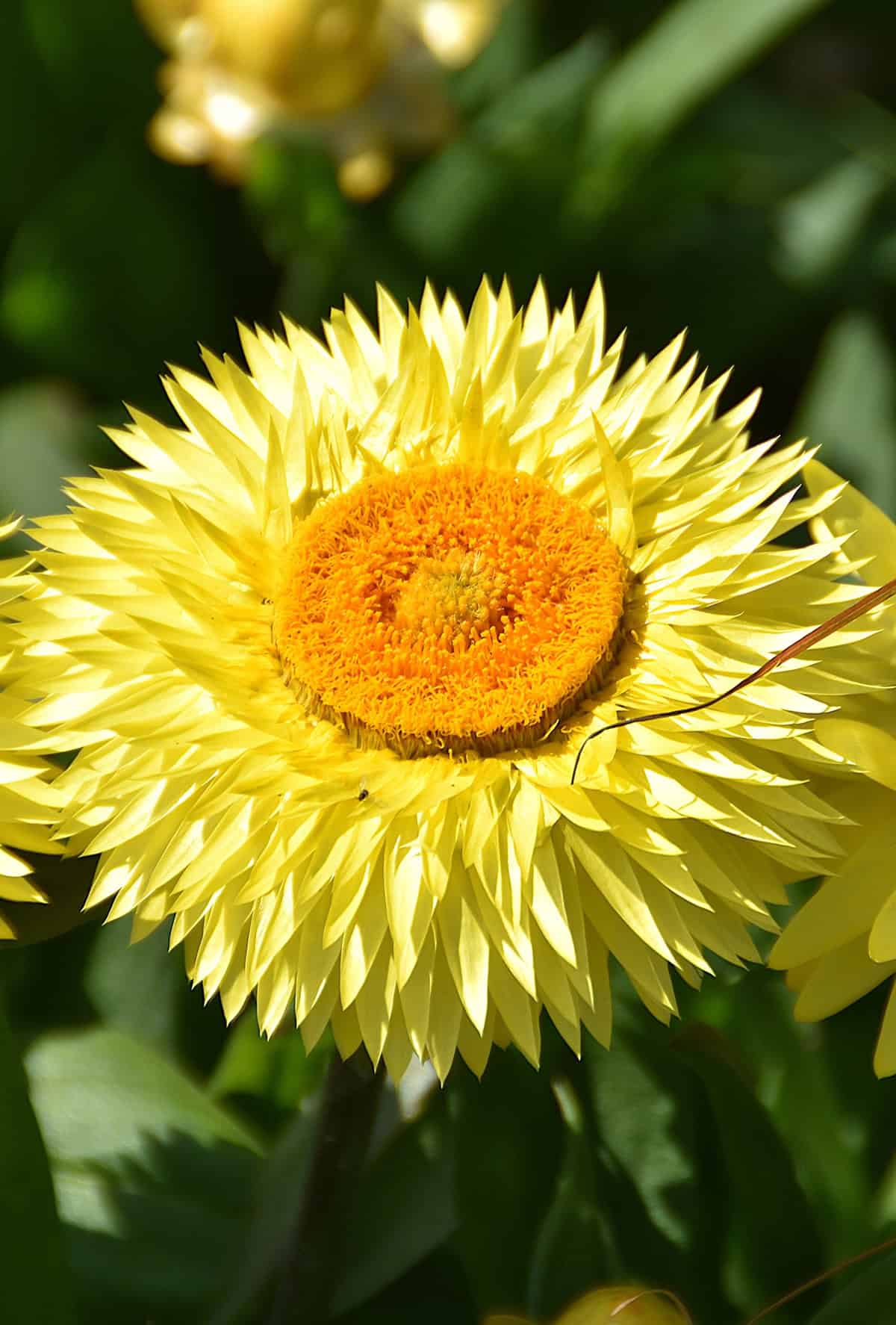
Strawflowers bloom best in full sun. Choose a spot that receives at least six hours of direct light, and eight hours produces even more flowers.
In too little light the stems stretch and lean, flop under the weight of the flower heads and produce far fewer blooms. Strong sun also dries the foliage quickly after rain, which cuts down on leaf diseases.
Plant them away from the shade of trees, fences and large shrubs. A bright, open bed or a sunny border edge is the best fit.
In containers, a south-facing balcony or patio is a good home. Seedlings started indoors need a grow light or a very bright window to avoid weak, leggy growth.
Soil
Well-drained soil matters more than rich soil for strawflowers. Heavy clay holds water around the roots and leads to rot, while sandy or loamy ground supports healthy growth.
A modest amount of compost improves structure and moisture retention in sandy soil. Strawflowers grow well in a pH range of about 6.0 to 7.5.
Clear weeds and stones before planting, and loosen the bed to a depth of 8 to 10 inches. In low spots that collect water, a raised bed or mounded row prevents waterlogging.
After heavy rain, the soil should drain within a few hours. Avoid piling on compost every year, because overly rich soil produces lush leaves and fewer flowers.
Water
Strawflowers handle dry spells better than most annuals once their roots are established. Overwatering causes more trouble than drought.
Push a finger into the soil, and water deeply once the top inch is dry. A slow soak at the base encourages deep roots, while frequent light sprinkles produce shallow ones.
Let the soil dry slightly between waterings, and avoid long stretches of wet ground.
New transplants and seedlings need regular water for the first few weeks. After that, established plants need water mainly during hot, dry weather.
Water at the base of the plant in the morning, which lets any splashed leaves dry during the day and reduces disease.
A thin layer of straw or fine bark mulch holds soil moisture and suppresses weeds around the plants.
Temperature And Humidity
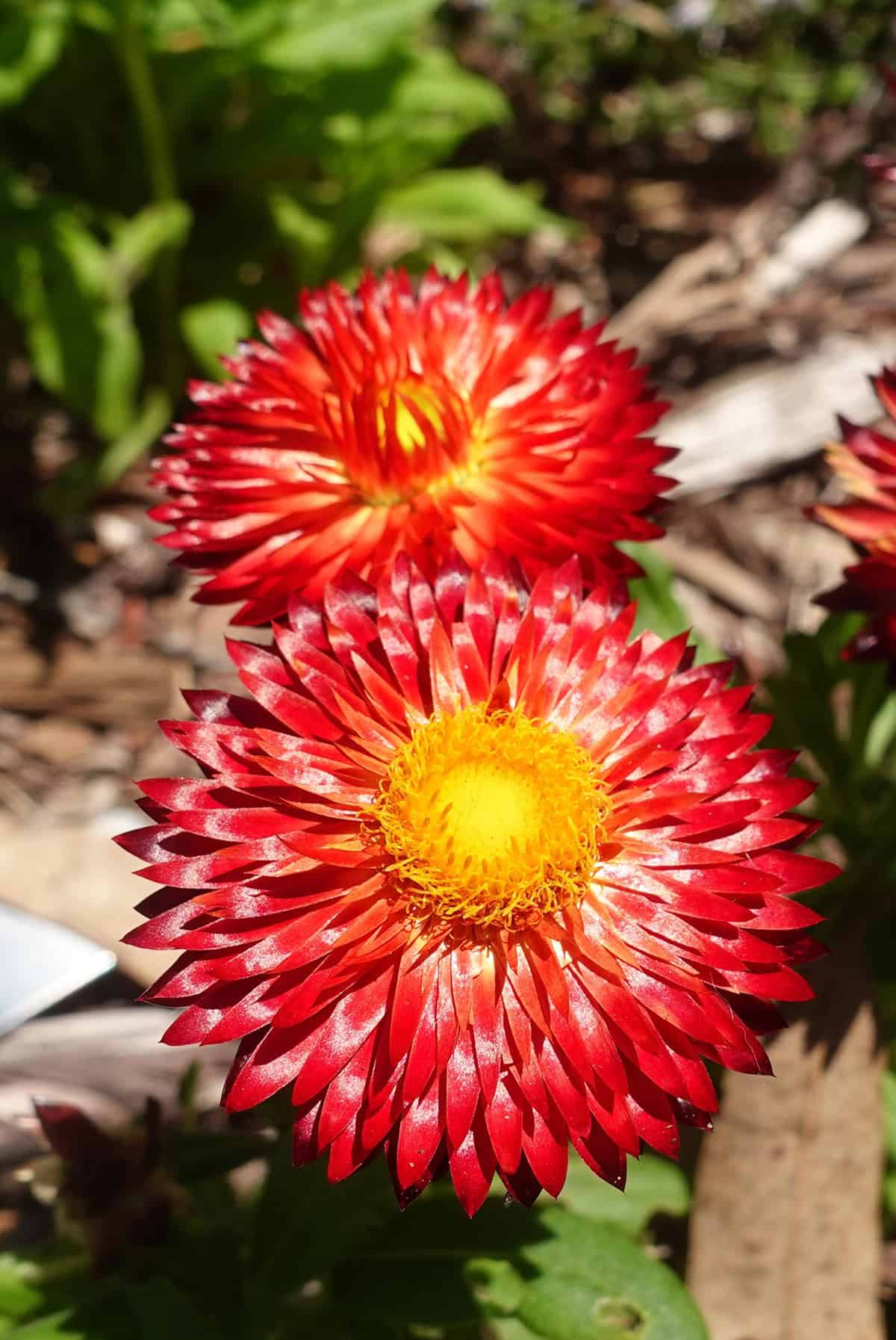
Strawflowers thrive in warm weather, with daytime temperatures in the 65°F to 85°F range. They handle summer heat well and slow down only in prolonged heat waves.
Young plants are frost-tender, so wait until the danger of frost has passed and the soil has warmed before planting out. Harden off indoor seedlings over a week first.
Dry air causes them little trouble. Good airflow matters more, especially in humid climates, and plants spaced 10 to 12 inches apart dry quickly after rain.
During extreme heat, individual flowers fade faster. A spot with light afternoon shade in the hottest regions extends the bloom life of each flower head.
Fertilizer
Strawflowers need very little fertilizer. Too much nitrogen produces tall, lanky plants with fewer blooms.
Mix a balanced slow-release fertilizer into the bed at planting time. In average garden soil, that single application carries the plants through most of the season.
In poor sandy soil or in containers, a diluted balanced liquid feed every four to six weeks supports steady flowering.
Skip high-nitrogen lawn-type fertilizers entirely. Plants grown on the lean side produce sturdier stems and more flowers for cutting.
Propagation
Seed is the easiest way to grow strawflowers. Sow indoors six to eight weeks before the last frost. Press the tiny seeds onto the surface of moist seed mix. Leave them uncovered, since they need light to germinate.
At 65°F to 75°F, seedlings appear in one to two weeks. Grow them on in bright light, and transplant outdoors once frost has passed.
Stem cuttings are another option. Take 2 to 3 inch pieces from healthy, nonflowering shoots, cut just below a leaf node and root them in moist, free-draining mix under a clear cover. Roots form in two to three weeks.
Strawflowers self-sow in mild climates when a few flower heads are left to dry on the plant at the end of summer.
Space transplants 9 to 12 inches apart for good airflow, and handle the young stems gently, as they snap easily.
Pruning
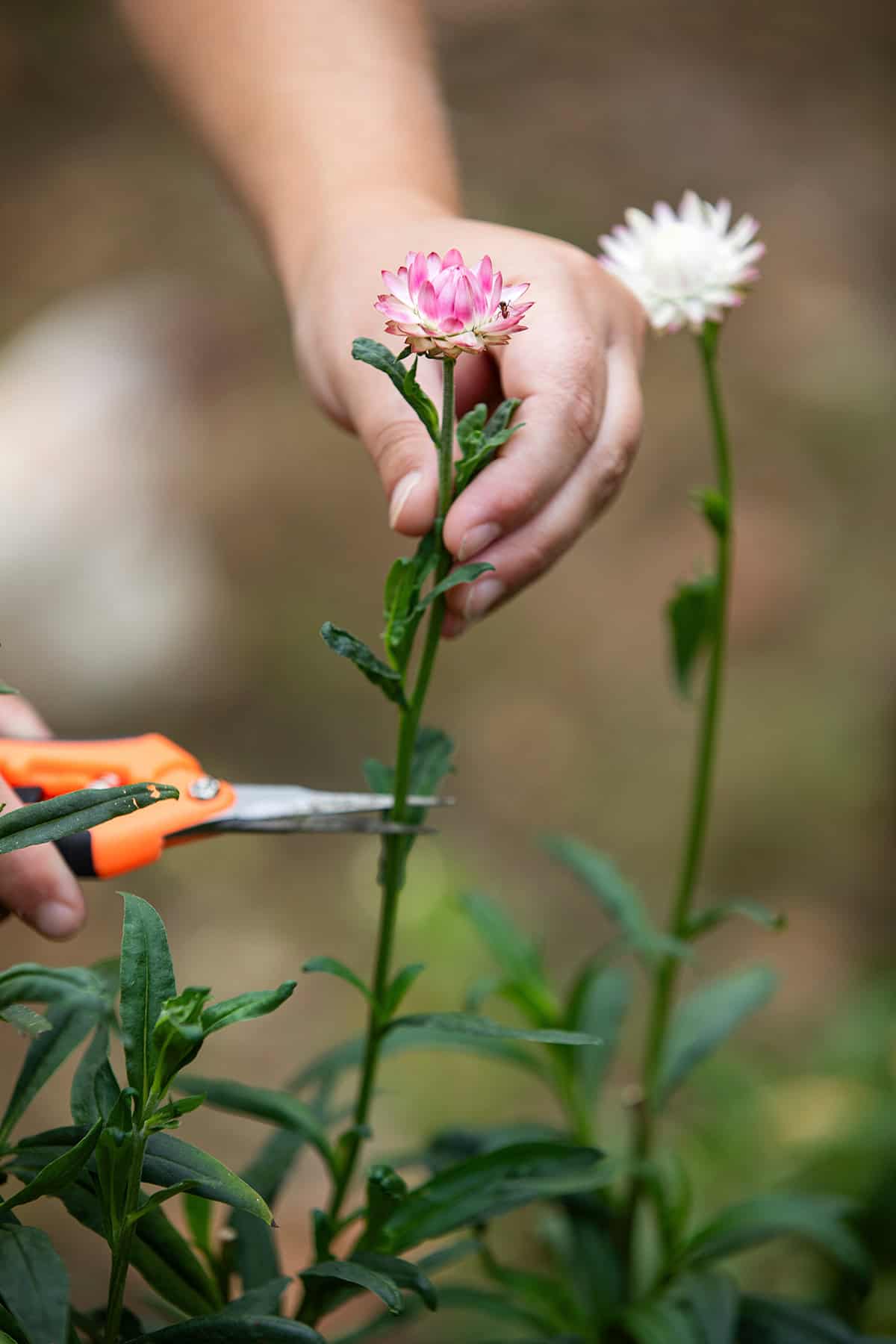
Regular deadheading extends the bloom season. Remove faded flowers down to the next side shoot, and new buds follow within a couple of weeks.
Cut away wilted or damaged stems as they appear. Clean, sharp pruners reduce disease risk.
Pinch the growing tips of young plants once they reach about 6 inches tall. This encourages branching, a fuller plant and more flowers.
For drying, cut flowers when the outer petals have opened and the center is still tight. Hang the stems upside down in a dark, airy room for two to three weeks.
Potting And Repotting
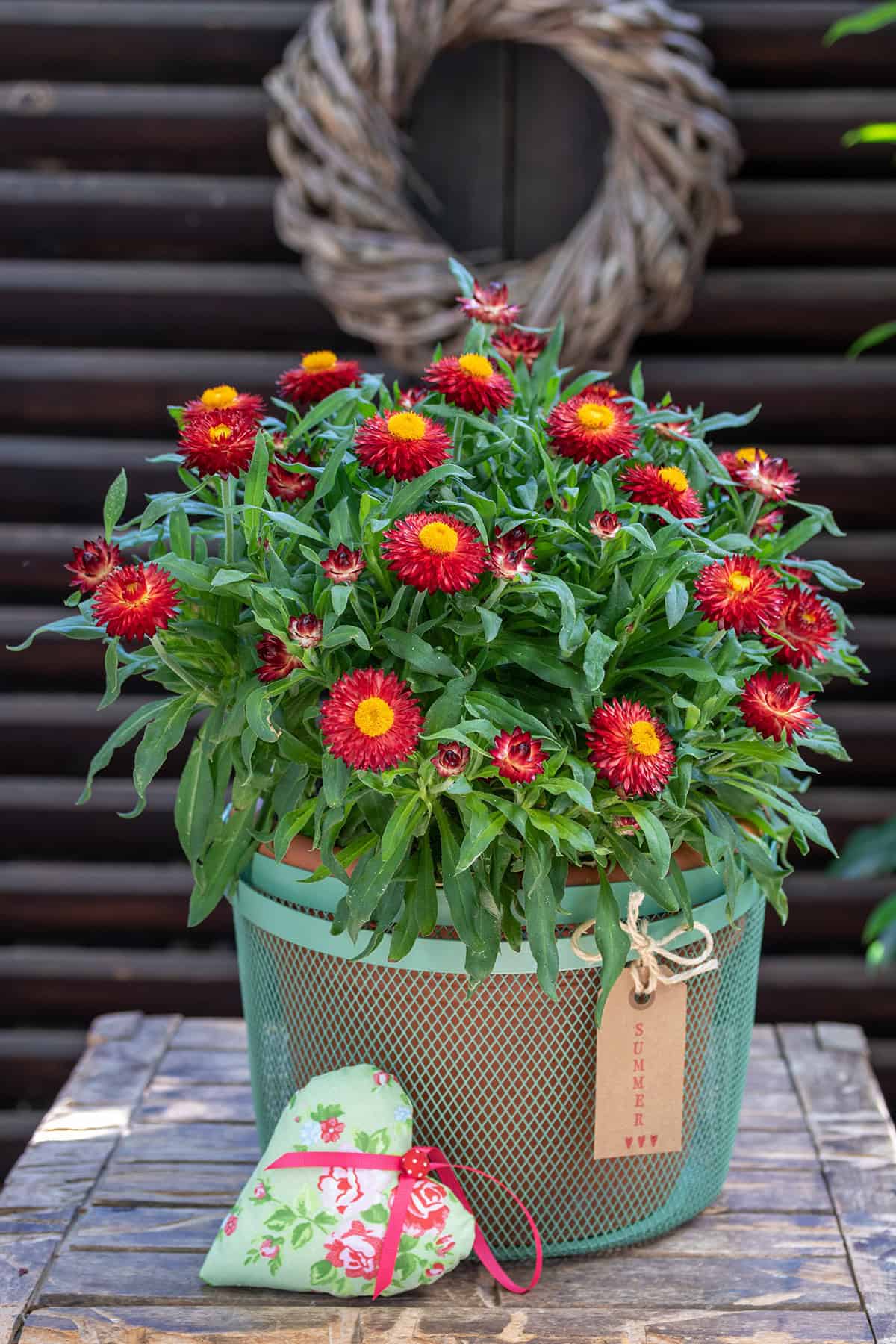
Drainage comes first for strawflowers in containers. Use a quality potting mix with extra perlite, and avoid heavy, moisture-holding blends.
Choose a pot with drainage holes. Set the plant in the center at the same depth it grew before, fill around the root ball and leave an inch of space below the rim for watering.
Repot when roots circle the pot or poke out of the drainage holes. Move up only an inch or two in pot size, and loosen any circling roots before settling the plant into fresh mix.
Water after repotting to settle the mix. Shade the plant from harsh sun for a day or two while it recovers, then return it to its usual spot.
Common Problems & Troubleshooting
Strawflowers are generally trouble-free, though a few problems appear. Leaf spot and powdery mildew show up during humid spells as brown patches or a white coating on the leaves.
Aphids and thrips attack new shoots and buds. A spray of insecticidal soap or a strong jet of water handles most infestations, and badly affected tips are easy to pinch off.
Poor drainage or overwatering leads to root rot. Mushy stems or wilting despite damp soil are classic signs. Improve drainage and let the soil dry between waterings.
Faded color and leggy growth point to a lack of sun. Six hours of direct light is the minimum for strong flowering.
Remove spent blooms and yellowing leaves regularly, and check plants weekly for pests or stress to catch problems early.
Plant Varieties
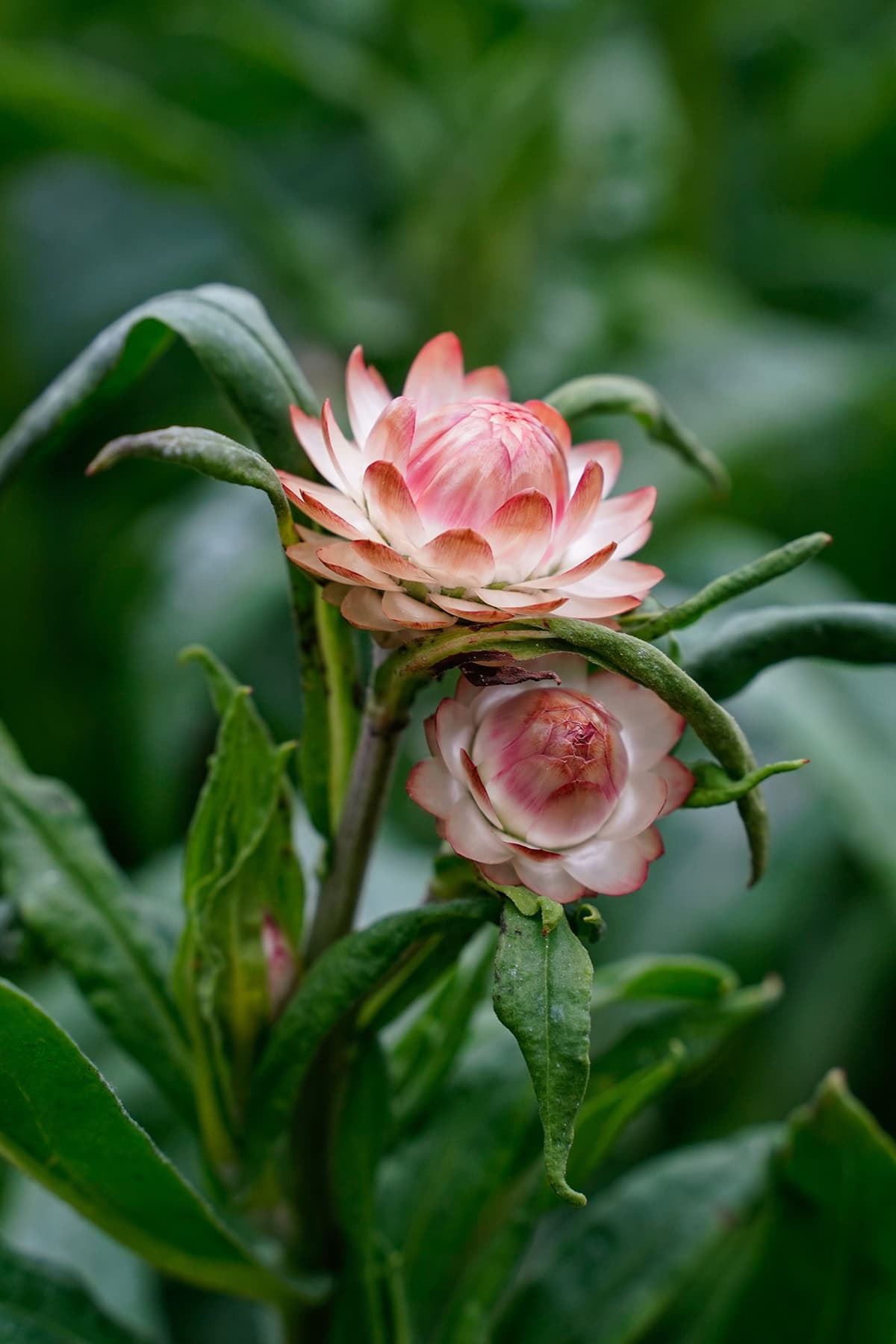
Strawflowers come in a wide range of sizes and colors. Most standard types reach 2 to 3 feet tall, while dwarf selections top out around a foot. Colors run through orange, yellow, red, pink, white and bronze.
Dwarf varieties shine in pots and window boxes on a small balcony or patio. Taller types belong at the back of a border or in a dedicated cutting bed, where their long stems are easy to harvest.
Newer hybrids add better disease resistance, larger flower heads and fuller doubles. Mixing colors in one bed makes for bright, informal bouquets.
Popular names include ‘Bright Bikini’, a dwarf mix around 12 inches tall, and ‘Swiss Giants’, a tall mix with big double flowers. ‘Silvery Rose’ produces soft pink blooms with a silvery sheen, and ‘Dragon Fire’ has deep red heads.
Read seed packets and plant tags for height and flower size, since these details decide where each variety belongs in the garden.