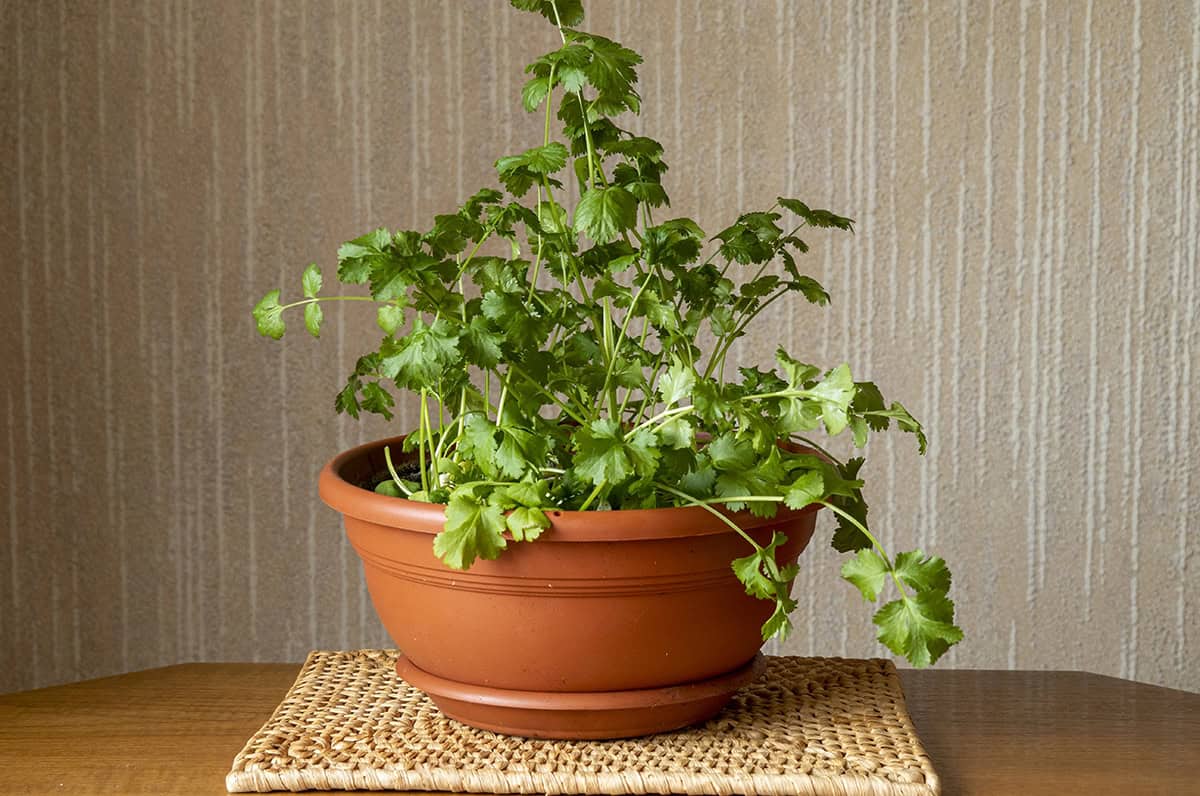
Cilantro is one of those herbs you either love or avoid completely. If you’re in the love camp, growing it indoors makes life easier. No last-minute grocery runs and no sad, wilted bunches in the fridge. A small pot near a bright window is often enough to keep a steady supply going. It does have a few quirks, though.
If you want fresh cilantro within arm’s reach, check out the full guide below.
Table of Contents
Indoor Cilantro: Quick Start
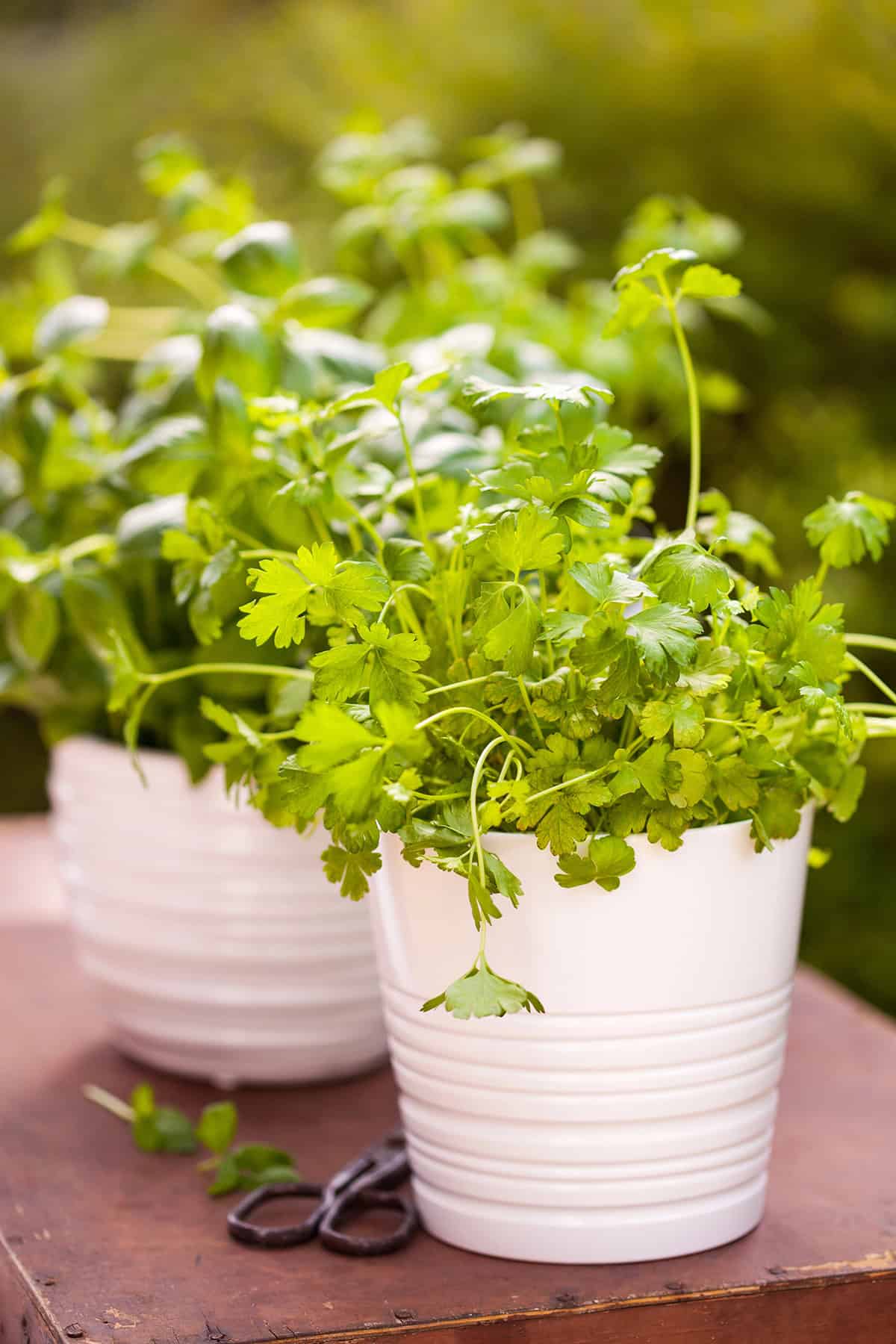
Getting cilantro going indoors doesn’t take much. A little light, shallow planting, and some gentle handling of the roots—that’s the gist.
What You Need
Drainage is more important than the size of your container, but you’ll want at least six inches deep so the taproot isn’t cramped. Go for loose, well‑drained potting soil, and skip the fertilizer at first.
Seed is the way to go indoors—cilantro hates having its roots disturbed. Drop seeds about half an inch deep and water until the soil’s evenly moist.
Light is everything for good leaves. South‑facing windows are best, aiming for five to six hours of direct sun. If that’s not happening, grab a basic grow light and keep it close to the leaves.
Keep the room cool, between 60°F and 70°F. If it gets too warm, the plants bolt and you’ll lose your harvest window fast.
What To Expect (Fast Timeline)
Seeds usually pop up in two to three weeks if you keep the soil moist. Indoors, they stay pretty compact—most top out at eight to twelve inches.
You can start snipping once plants hit about six inches. Trim the outer stems first, leave the center alone so growth keeps coming.
Cilantro’s quick, but it doesn’t last long. Even with good care, most indoor plants bolt in eight to ten weeks.
If you want a steady stash, sow new seeds every couple weeks. That way, you’re not left without fresh leaves when one batch goes to seed.
Seeds + Variety
Getting a solid indoor harvest starts with picking the right variety and prepping your seeds. Indoors, you control more variables, so small choices at the start make a bigger difference.
Best Cilantro Types For Indoors
Look for compact, slow-bolting types that don’t mind lower light and focus on growing leaves instead of rushing to flower.
Santo, Leisure, and Calypso are solid picks—they’re slow to bolt, bushy, and handle frequent cutting. You’ll get more usable leaves before the plant heads for seed.
Skip the generic seed blends for indoor growing. Those often get tall and woody if the room’s too warm. Labeled slow-bolt varieties give you more predictable growth and a longer harvest.
Why Splitting Seed “Pods” Helps
Those round “seeds” are actually pods with two seeds inside. The pod slows down water absorption, which drags out sprouting—kind of a pain indoors when space is tight.
Crack the pod gently in half before planting. That move speeds up germination and you’ll see more even sprouting—sometimes days sooner.
Quicker sprouting makes it easier to space your seedlings right from the start. Less crowding, happier roots, and better leaf production under indoor lights.
Pot + Soil Setup
Roots need space and soil that drains fast. A deep pot with a light mix keeps growth steady and avoids stressing the taproot.
Container Size And Drainage
Cilantro roots go straight down, so don’t skimp on depth. Go for 8 to 10 inches deep and 12 to 18 inches wide if you want a fuller crop. Shallow pots just make them bolt early.
Drainage holes are non-negotiable. Doesn’t matter if it’s clay, plastic, or fabric—just make sure water can get out fast.
Pop a saucer underneath but dump it after watering. Standing water is a recipe for root rot indoors. Set your pot somewhere a spill won’t wreck the floor.
Simple Potting Mix Rule
Cilantro likes loose, quick-draining soil that stays just a bit moist. Use a typical indoor potting mix—skip the garden dirt. Heavy stuff chokes the roots.
Add a little compost if you want, but don’t go crazy with fertilizer at the start. Too much nitrogen makes for floppy, weak growth.
Get the mix damp before you sow. Not soggy—just moist. That helps seeds sprout evenly and get going strong.
Planting
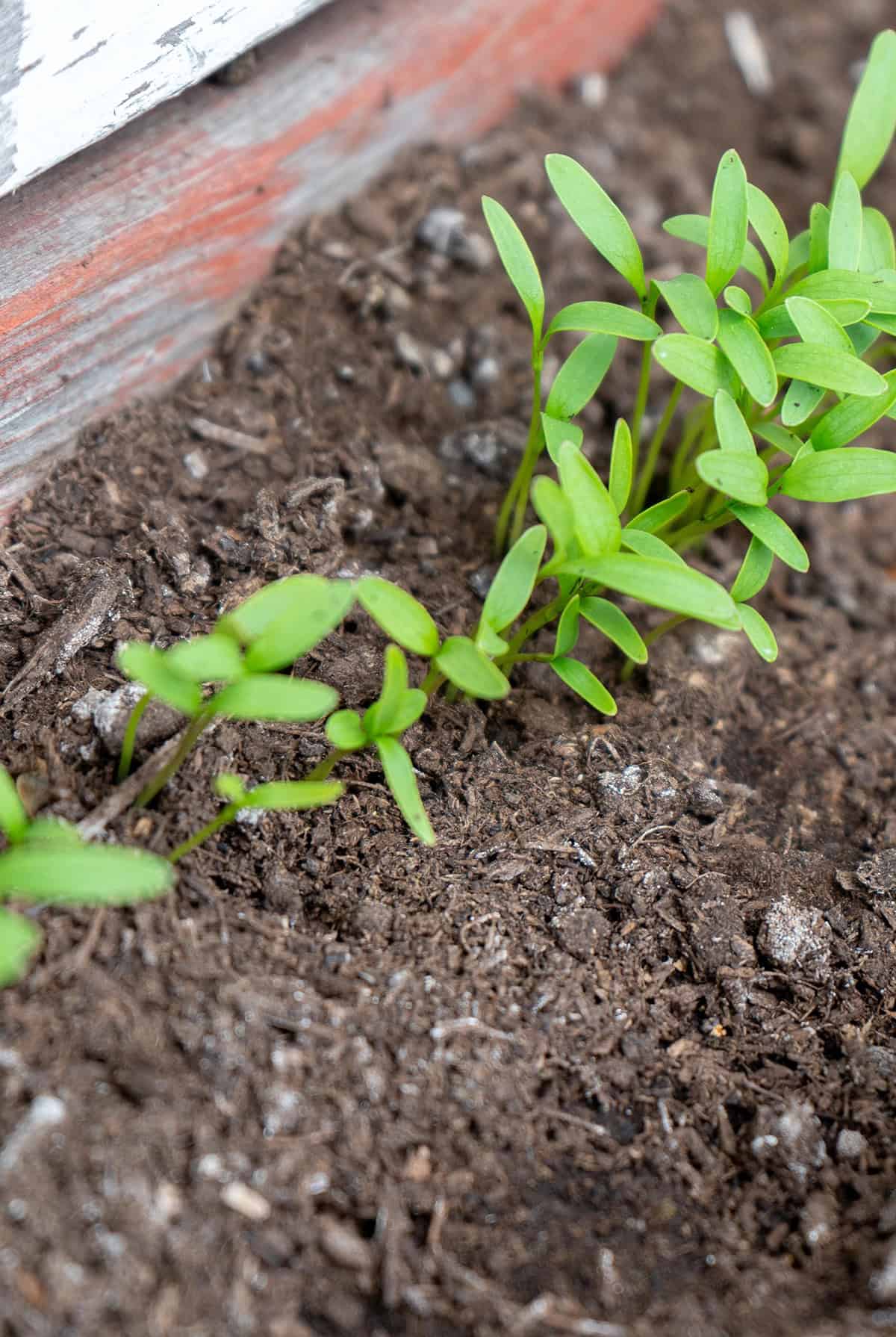
For indoor cilantro, it’s all about sowing at the right depth and timing your plantings. You’ve got control over spacing and when to start new batches as old ones bolt.
How Deep And How Dense To Sow
Shallow planting works best. Press seeds ¼ inch deep into damp mix and cover lightly. Go deeper and you’ll wait longer for sprouts.
Keep seeds 2 to 3 inches apart so each plant has room. In a 12-inch pot, that spacing keeps things from getting crowded. If you go tighter, you’ll get skinny, stressed plants.
Direct sowing’s better than transplanting—cilantro hates root disturbance. Containers should be at least 8 inches deep. Water after sowing to settle things, then keep the top layer just a bit damp until you see green.
Succession Planting For Nonstop Harvest
Instead of planting a bunch at once, stagger new seeds every 2 to 3 weeks. That way, as older plants bolt, you’ve got fresh ones coming up.
Indoor warmth makes cilantro flower faster, even with good light. Staggered planting keeps your leaf quality up. You’ll always have some plants ready while new ones are rooting in.
Use separate pots or split up a long planter so you can track what you planted when. Labeling helps—otherwise, it’s easy to lose track. It’s worth it for consistent flavor and harvests.
Light + Temperature
Strong light and cool temps are key for indoor cilantro. If either drifts, you’ll get leggy plants or they’ll bolt before you know it. Get both right early on for the best leaves.
Light Needs (Window Vs. Grow Light)
Cilantro needs five to six hours of direct light daily. South windows are best, east-facing is a backup. Weak light makes for spindly, small-leafed plants, even if everything else is dialed in.
If you’re lacking sun, a grow light does the trick. Keep it close—six to twelve inches above the leaves—and run it about twelve hours a day. Even coverage beats intensity here.
Give the pot a turn every few days so stems don’t lean too much.
How To Prevent Bolting Indoors
Heat is the enemy—cilantro bolts fast when temps climb. Keep the air between 50°F and 75°F for steady leaves. Anything over 80°F and you’ll see flowers in no time.
Keep pots away from heaters, ovens, and electronics. Window sills over radiators are a hidden problem in winter. Try to keep containers cool and don’t let them trap heat.
Letting the soil dry out will also speed up bolting. Keep it evenly moist, not soaked or bone dry. Cutting leaves regularly helps too, since it keeps the plant focused on foliage instead of seeds.
Watering
How you water makes a big difference for leaf quality and how long your plant lasts. Cilantro likes steady moisture but hates wet feet, and your method matters.
Keep Soil Evenly Moist (Simple Rule)
The goal is soil that’s just a bit damp a few inches down. Dry soil stresses cilantro and pushes it to seed. Too wet, and the roots get weak.
Skip the calendar—just stick your finger in the dirt. Water when the top inch is dry but it’s still cool below. Usually that’s every two to four days, but it depends on your room.
Always use pots with drainage. Letting water pool at the bottom is a fast way to kill the roots. Don’t forget to empty the saucer after watering.
Bottom Watering Vs. Top Watering
Both work, but each has its place. Top watering is quick—just pour slowly until water runs out the bottom.
Bottom watering gives you more control and keeps the leaves dry. Set the pot in a tray of water for ten to fifteen minutes, and let the soil soak it up.
Go with bottom watering if you’re fighting fungus gnats or surface mold. Top watering’s better if you’re fertilizing a lot and want nutrients to spread evenly. Once you pick a method, stick with it.
Feeding
Indoor cilantro doesn’t want much food. Overfeeding leads to bland taste and quick flowering. A light hand keeps leaves coming and plants compact.
If You Should Fertilize (And How Little)
If you’re using fresh potting mix, you can skip fertilizer for the first few weeks. Most mixes have enough nutrients for a month or so. Watch leaf color and growth—if they slow down or fade, it’s time to feed.
After that, use a diluted liquid fertilizer—about a quarter strength. Once every three or four weeks is plenty. Nitrogen helps with leaves, so a balanced or slightly nitrogen-lean formula works.
Don’t overdo it. Too much fertilizer leads to floppy growth and early bolting. Water the soil before you feed to protect the roots. If the plants look good, hold off on more food.
Everyday Care
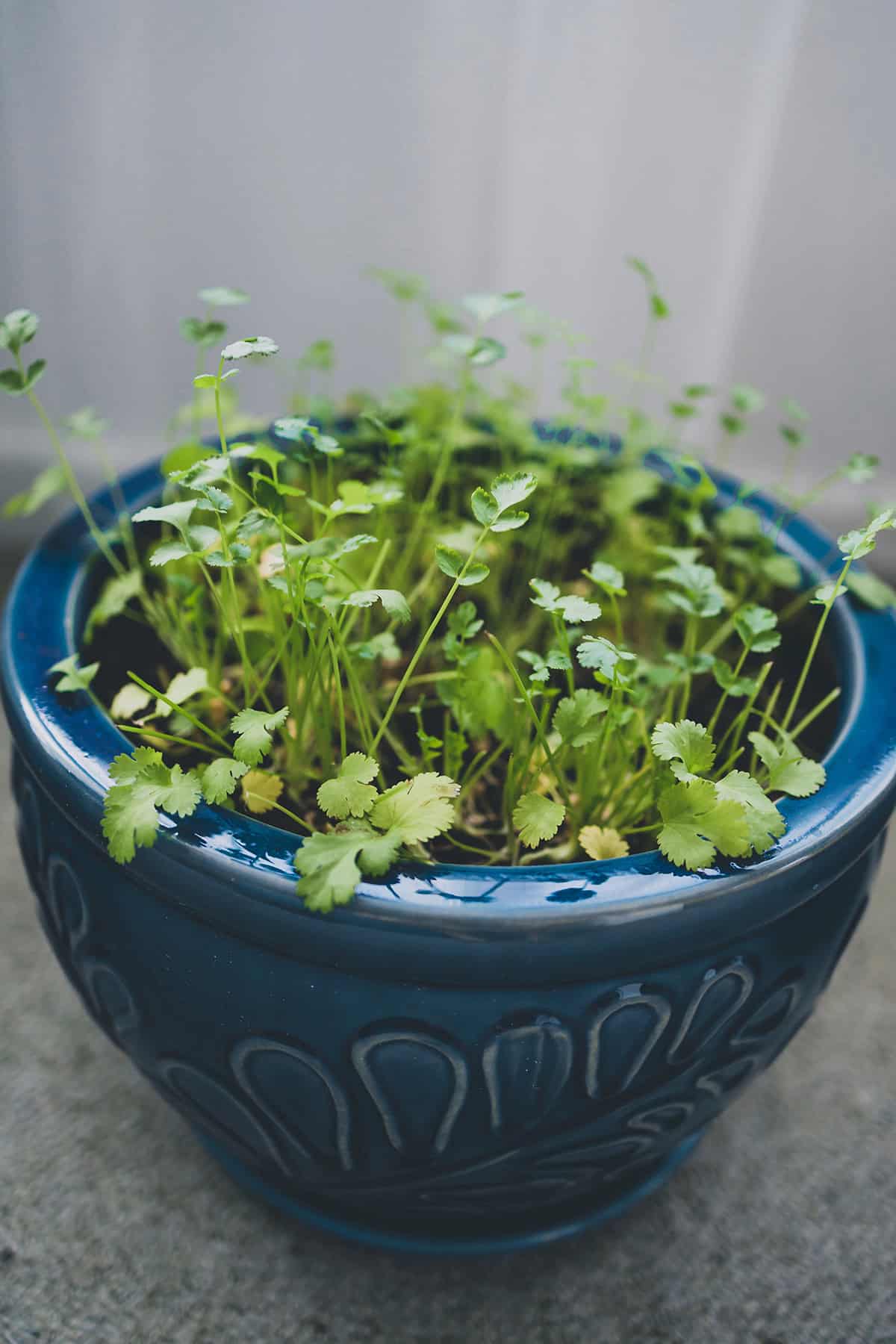
Keeping an eye on things daily makes a difference—compact, productive plants that don’t bolt too soon. Give them space, and deal with pests before they become a headache.
Thinning And Airflow Basics
If seedlings are crowded, they’ll struggle. Once they hit about two inches, thin them out so each one has space—about two inches apart. Snip extras at the soil line to avoid messing with the roots you want to keep.
Airflow is huge for healthy leaves. Put pots somewhere air moves a bit—near a doorway or use a fan on low. Just avoid blasting them so the soil doesn’t dry out too fast.
Light impacts spacing too. Strong light keeps plants compact, so less thinning is needed. If light is weak, give them more room to prevent flopping and disease.
Common Indoor Pests (Quick Fixes)
Aphids, spider mites, and fungus gnats are the usual suspects. Check under leaves and along stems a couple times a week. Sticky spots, pale marks, or tiny flies—those are your early warning signs.
Blast aphids and mites off with cool water. Repeat every few days till they’re gone. For stubborn bugs, use insecticidal soap (don’t let it soak into the soil).
Fungus gnats love wet soil. Let the top inch dry out between waterings, improve drainage, and ditch any standing water in trays to break their cycle.
Harvest
Cilantro indoors is all about timing and clean cuts. How you store it after picking can keep it fresh a while longer.
When To Cut (So It Regrows)
Start harvesting once plants are six to eight inches tall—usually 45 to 70 days in with decent light. Snip the outer stems, leave the center alone so it keeps growing.
Use clean scissors and cut stems an inch or two above the soil. Always leave at least half the plant—don’t scalp it. That way, it’ll regrow for another round.
Harvest small amounts often. Regular trims delay flowering and keep the leaves coming. If stems get thin or taste bitter, that batch is winding down—get new seeds started before you run out.
Storing Cilantro And Freezing Tips
After you snip some cilantro, don’t just toss it in the fridge. Give it a gentle rinse, pat it dry—seriously, don’t skip drying, or it’ll get soggy and sad way too fast.
If it’s just for a few days, stand the stems up in a glass with a little water, like a bouquet. Throw a bag over the top (nothing fancy, just loose), and stash it in the fridge. Swapping out the water every other day helps keep things crisp.
Want it to last? Chop the leaves, pack them into an ice tray, and top off each section with either water or oil. Freeze, then pop the cubes into a container for the long haul. It’s not perfect for salads, but it’ll punch up soups and sauces with that fresh flavor.