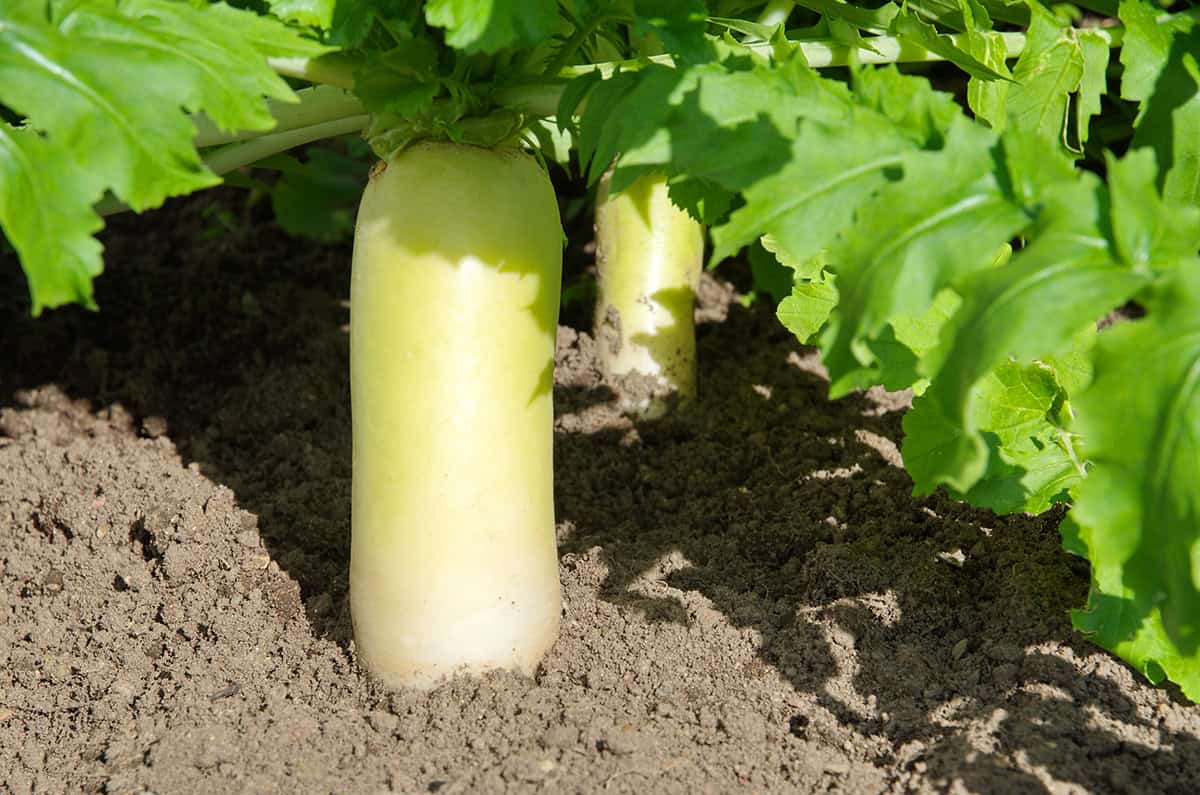
Daikon grows fastest and sweetest in the cool, shorter days of late summer and fall, when a single sowing yields long white roots in about two months.
Heat and long days push it to flower early, which leaves the roots pithy and harsh. Deep, loose soil matters almost as much as timing.
The variety notes come early for a reason, because the right pick for your heat or pot depth shapes every step after it.
Table of Contents
Soil
Daikon sends a taproot 12 inches or more into the ground, and long types such as ‘Minowase’ reach 18 inches. Loosen the bed to at least that depth with a garden fork or spade, since compacted or stony soil causes short, forked roots.
Loose, well-drained sandy loam or loam produces the straightest roots. Heavy clay drains slowly and stunts growth, and a few inches of compost improve it.
Moderate fertility is enough, and a pH between 6.0 and 7.0 helps the plants take up nutrients. A simple soil test before sowing answers any pH questions.
Planting
Daikon grows best in cool weather. Sow in early spring once the soil is workable, or in late summer for a fall crop, which tends to produce smoother, sweeter roots. Hot weather and long days trigger bolting and woody, sharp roots.
Choose a spot in full sun with deep, loose, well-drained soil. Compost helps poor ground, but skip fresh manure, which pushes leafy growth and leads to forked roots.
Sow seeds directly in the bed, since daikon resents transplanting. Plant them 1/2 to 3/4 inch deep, about 2 inches apart, in rows 12 to 18 inches apart. Thin seedlings to 4 to 6 inches apart once they have their first true leaves, and space large varieties wider still.
Water right after sowing, then water lightly every day or two until the seeds sprout, which takes about four to seven days.
Recommended Varieties
The classic long daikon, ‘Minowase’, matures in about 50 to 60 days and grows smooth white roots up to 2 feet long in loose soil. Its mild flavor shines in fall and early spring crops.
‘April Cross’ and ‘Summer Cross No. 3’ are hybrids bred to resist bolting, which makes them the better choice for spring sowings and warm spells. Both grow well in deep raised beds.
‘Miyashige’ produces thick, uniform, cylindrical roots and is a traditional fall variety. Harvest it on time for the mildest flavor.
‘Sakurajima’ grows enormous round roots, the heaviest of any radish, and it needs rich soil, plenty of space and a long, cool fall. In Japan it goes into simmered dishes and pickles, where its flavor mellows and sweetens.
Light
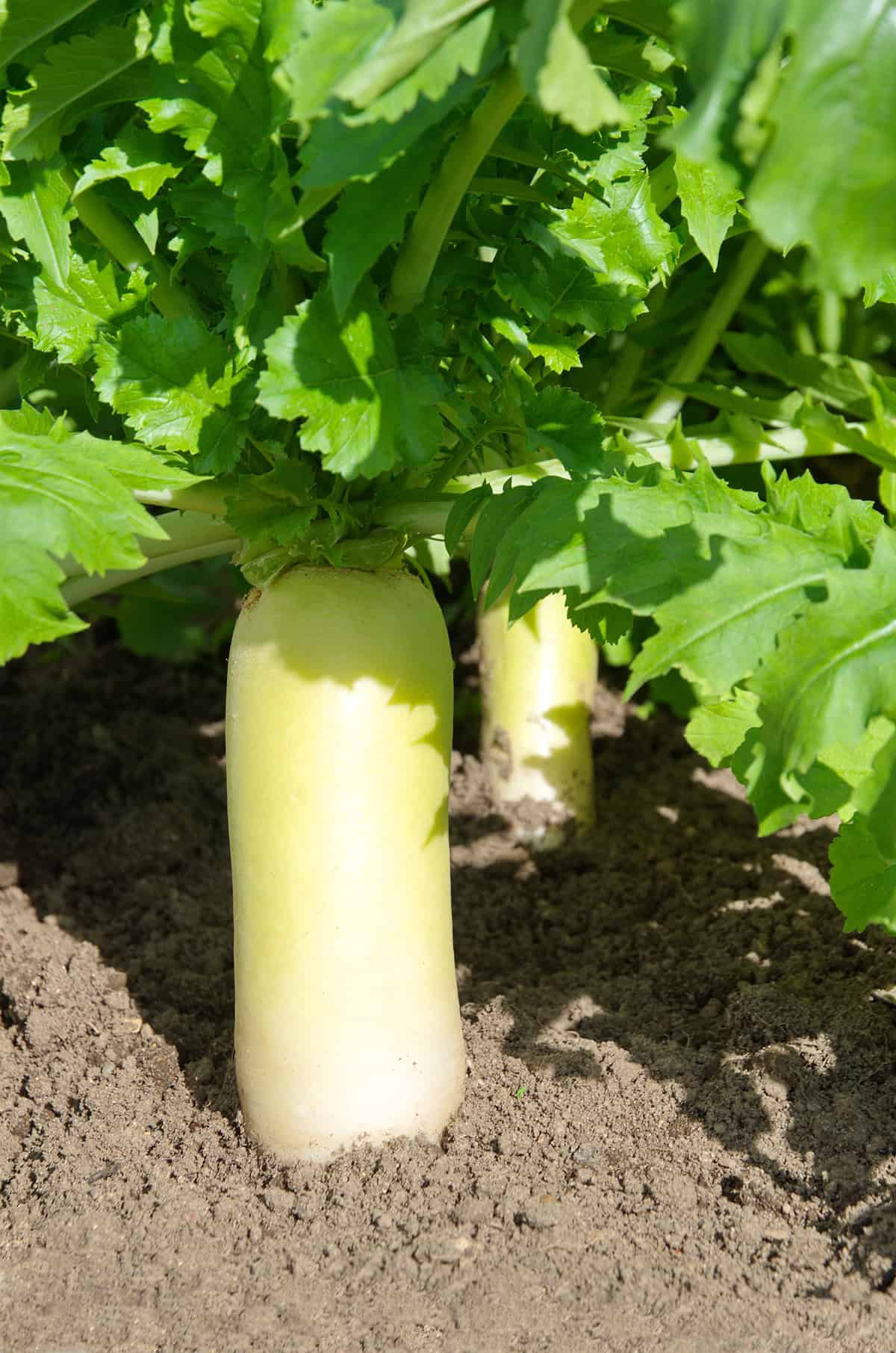
Daikon grows best in full sun, with at least six hours of direct light a day. Strong light produces bigger, sweeter roots in less time.
Partial shade slows growth and leaves the roots thinner. Short winter days stretch the timeline as well, so plan fall sowings early enough for the roots to size up before the days get very short.
Avoid spots behind fences or under trees. Cool air and plenty of sun together produce the crispest, mildest roots.
Water
Even moisture from sowing to harvest is the secret to tender daikon. Dry soil makes the roots tough, pithy and hot, and hot weather speeds up the problem.
Water deeply enough to soak the soil several inches down, where the long roots grow. Check before each watering, and water once the top inch or two is dry.
Sandy soil needs lighter, more frequent watering, and heavier soil takes slower, deeper soaks. Good drainage matters too, since soggy beds lead to split or rotting roots. A regular schedule beats occasional heavy soakings, which also cause splitting.
Feeding
A short season and a light appetite mean daikon needs little fertilizer. Finished compost mixed into the bed before sowing feeds the crop slowly through its two months in the ground.
On poor soil, add a light dose of balanced fertilizer at sowing or once seedlings settle in, and then stop. Excess nitrogen produces big leaves, small roots and hollow centers, and late feeding does more harm than good.
Soil pH near neutral helps the plants use the nutrients available. Adjust it with lime or sulfur before sowing if a soil test shows a need.
Growth Time
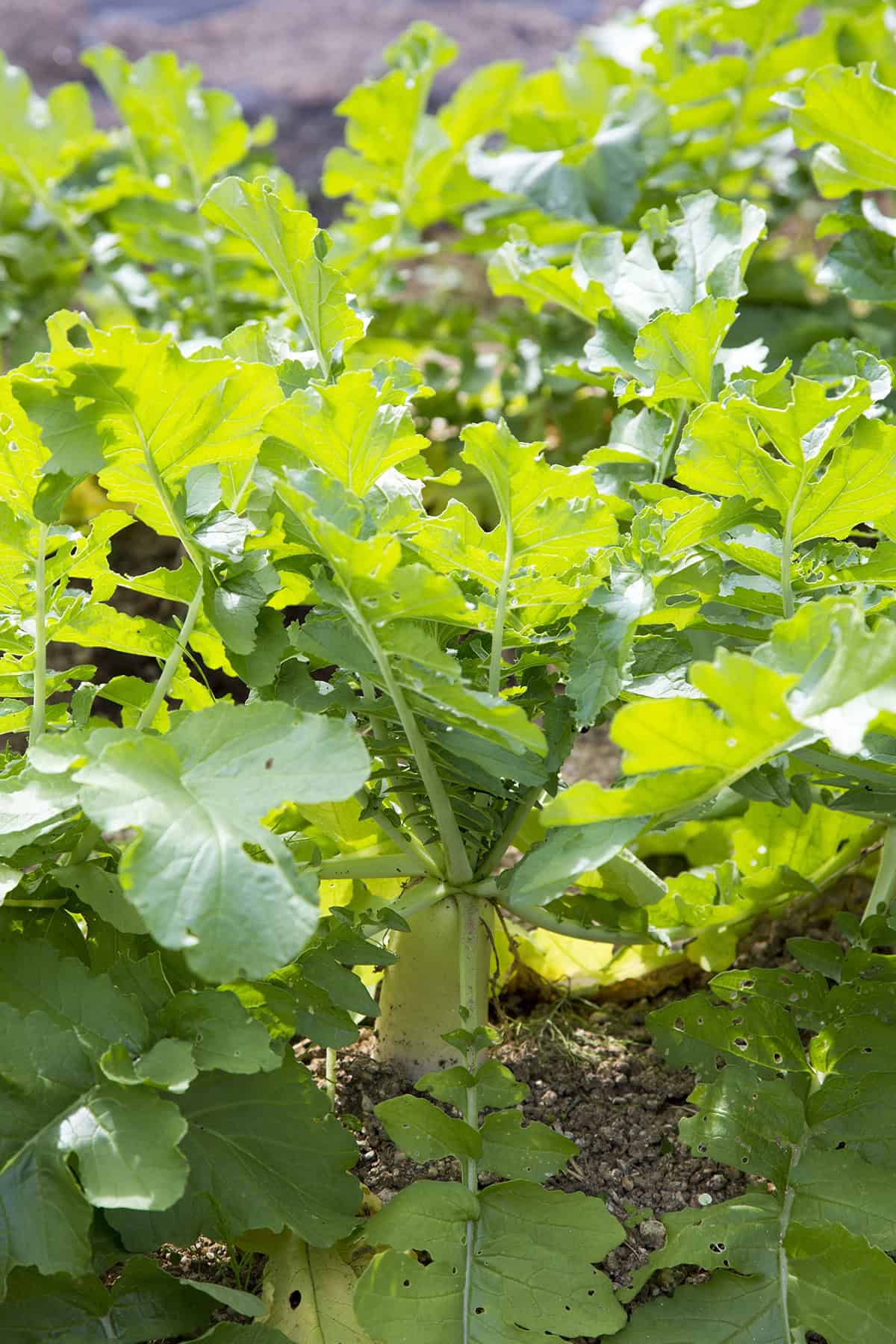
Most daikon varieties mature in 45 to 70 days, and giants like ‘Sakurajima’ take longer. Cool weather produces steady growth and crisp roots, and hot spells slow the plants and hurt quality.
The top of the root pushes above the soil as it nears maturity, firm and smooth to the touch. Roots left too long develop woody centers and extra heat.
Season shifts timing by a week or two, and fall crops tend to mature more evenly than spring ones. Note sowing dates, and check the roots every few days as harvest approaches.
Growing in Containers
Daikon grows well in containers as long as the pot is deep. Choose one at least 12 inches deep for shorter varieties and 18 inches or more for long types like ‘Minowase’, with drainage holes.
Fill it with a loose, well-draining potting mix with some compost. Sow seeds directly in the pot about 1/2 inch deep, and thin the seedlings to 4 to 6 inches apart.
Place the container in full sun. In hot weather, light afternoon shade helps tame the flavor. Pots dry out faster than beds, so check the moisture daily in warm weather.
Loosen the mix with a hand fork before pulling mature roots, since long daikon snaps easily.
Harvest
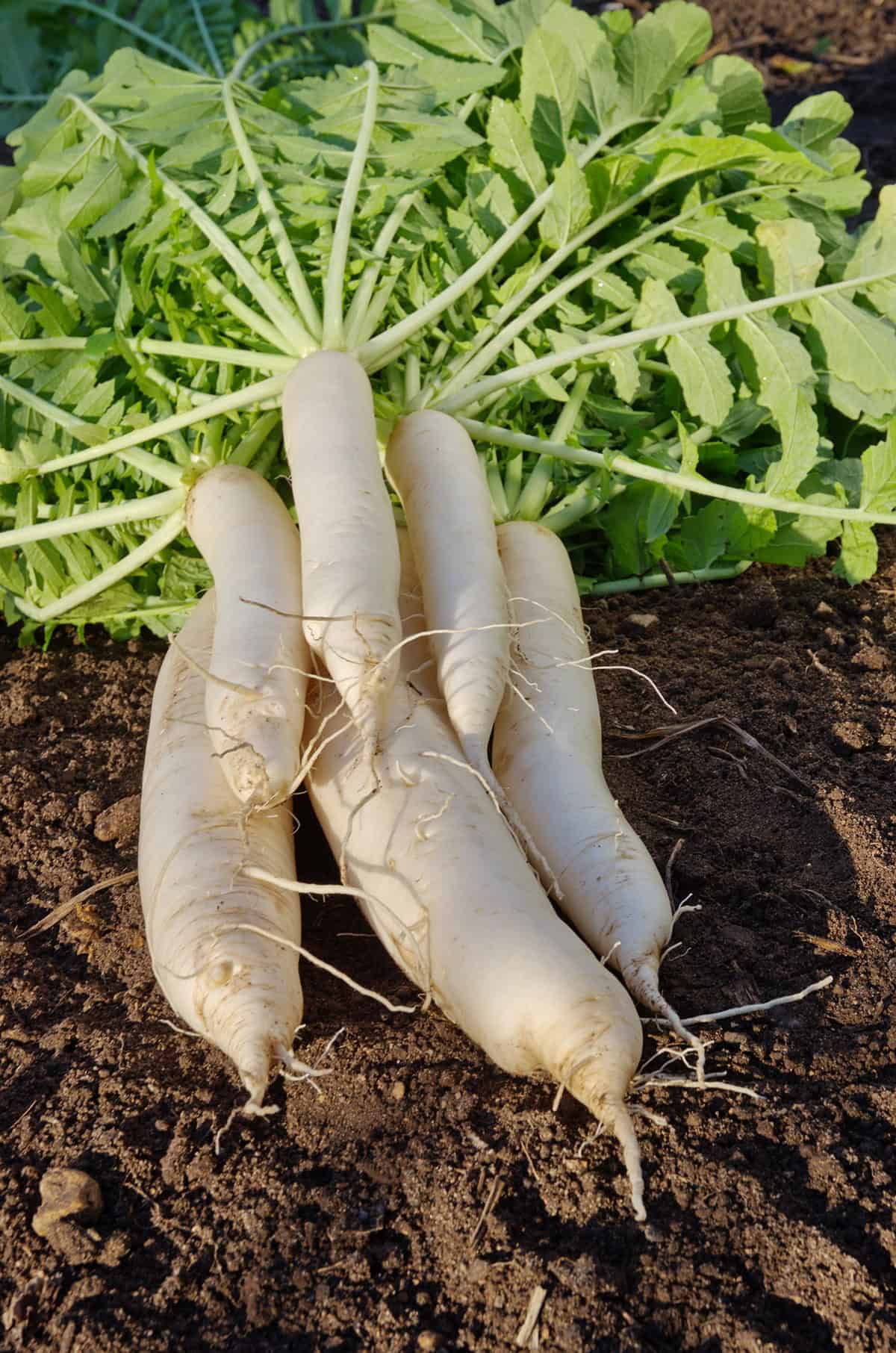
Harvest daikon 40 to 70 days after sowing. Variety and weather shift that window. Roots that measure 2 to 3 inches across at the shoulder are ready.
Pull them while the weather is still cool, since heat makes the roots hot and hollow. Daikon tolerates light frost, but a hard freeze damages roots left in the ground. Oversized roots grow woody, so harvest on time.
Loosen the soil first with a garden fork to avoid snapping the long taproots, then pull straight up by the leaves. Twist off the tops soon after harvest, since attached leaves draw moisture from the root.
Store unwashed daikon in a plastic bag in the refrigerator for two weeks or more, and fall-grown roots last longer. Wash and peel them just before use.
Common Problems and Troubleshooting
Tough, woody or very spicy roots come from heat, dry soil or a late harvest. Steady moisture, cool-season sowing and timely picking solve most flavor problems.
Twisted, forked or lumpy roots point to compacted or stony soil, so dig deep and clear out stones before sowing. Split roots follow uneven watering, especially heavy rain after a dry spell.
Flea beetles chew small holes in the leaves, aphids cluster on the undersides, and root maggots tunnel into the roots. Floating row covers placed at sowing block most of them, and a yearly change of bed for radishes and other brassicas reduces root maggot damage.
Lush leaves over small roots mean too much nitrogen, too little sun or crowding. Cut back on fertilizer, move future sowings to a sunnier spot and thin seedlings to the right spacing.