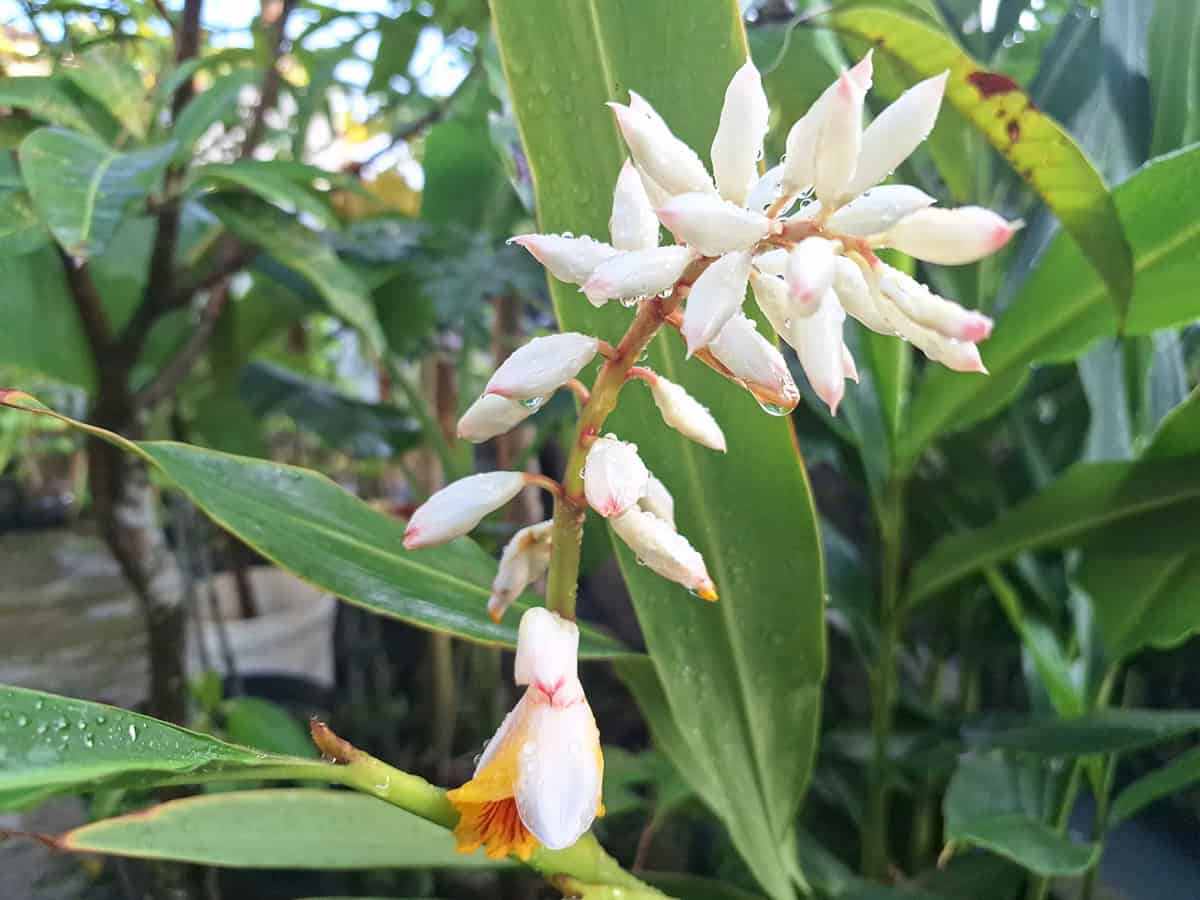
Thai tom yum and Indonesian rendang lean on galangal for a sharp, piney heat with a hint of citrus. The plant grows into a clump of tall, cane-like stems with long glossy leaves, and in a warm climate it pushes out new rhizomes for years.
Gardeners outside zones 9 to 11 grow it in a large pot and move it indoors for winter, and the harvest is ready about ten months after planting.
Table of Contents
Soil
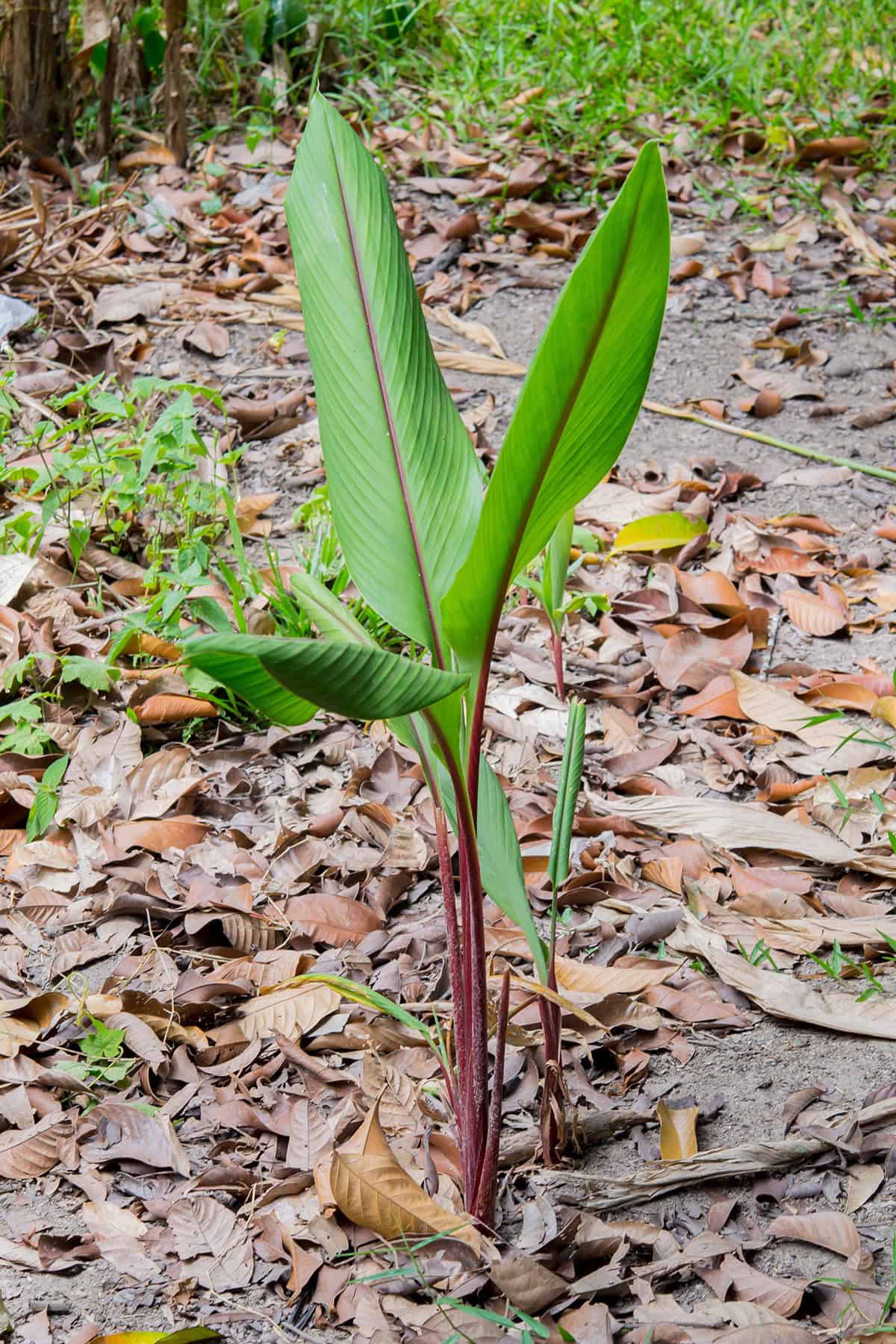
Strong rhizomes need loose, airy soil that drains well yet holds moisture. It should crumble in the hand, since heavy, compacted ground restricts growth and leads to rot. In clay-heavy yards, raised beds or large pots are the best options.
Compost or leaf mold improves structure and moisture retention while the soil still drains. Plenty of organic matter at planting produces larger rhizomes.
Galangal prefers slightly acidic to neutral soil, around pH 6.0 to 7.0. A soil test before planting prevents problems later.
Drainage is essential. Water deeply, then let the surface dry slightly. Rotating the planting spot every couple of years in the ground helps prevent soil-borne disease.
Planting
Choose rhizomes that are firm and show several buds, and skip any that are soft, shriveled or moldy. Asian markets and farmers markets stock fresh galangal, though rhizomes sold for planting are less likely to be treated.
Warmth is essential. Plant outdoors once the soil is above 65°F and all danger of frost has passed. In cool regions, start rhizomes indoors in pots and move them outside once nights warm up.
Plant each piece about 2 inches deep with the buds facing up. Allow room for spreading, since the rhizomes expand sideways under the soil.
Galangal grows best in partial sun, with four to six hours of direct light and protection from intense afternoon sun in hot climates. Steady moisture and good drainage are both essential.
Recommended Varieties
Two species are the main choices. Greater galangal (Alpinia galanga) is the classic culinary type, with large rhizomes, tall upright stems and a bright, piney heat for soups and curries.
Lesser galangal (Alpinia officinarum) grows smaller and has a sharper, more pungent flavor, and it is used in traditional remedies. Its compact size is an advantage in pots and small spaces.
Some nurseries sell galangal as Thai or Siamese galangal, which are regional names for greater galangal. Check the botanical name to confirm the species.
Both types thrive in warm climates such as Florida, Hawaii and southern California, with similar soil, water and light needs. Fresh, healthy rhizomes make the biggest difference at planting.
Light
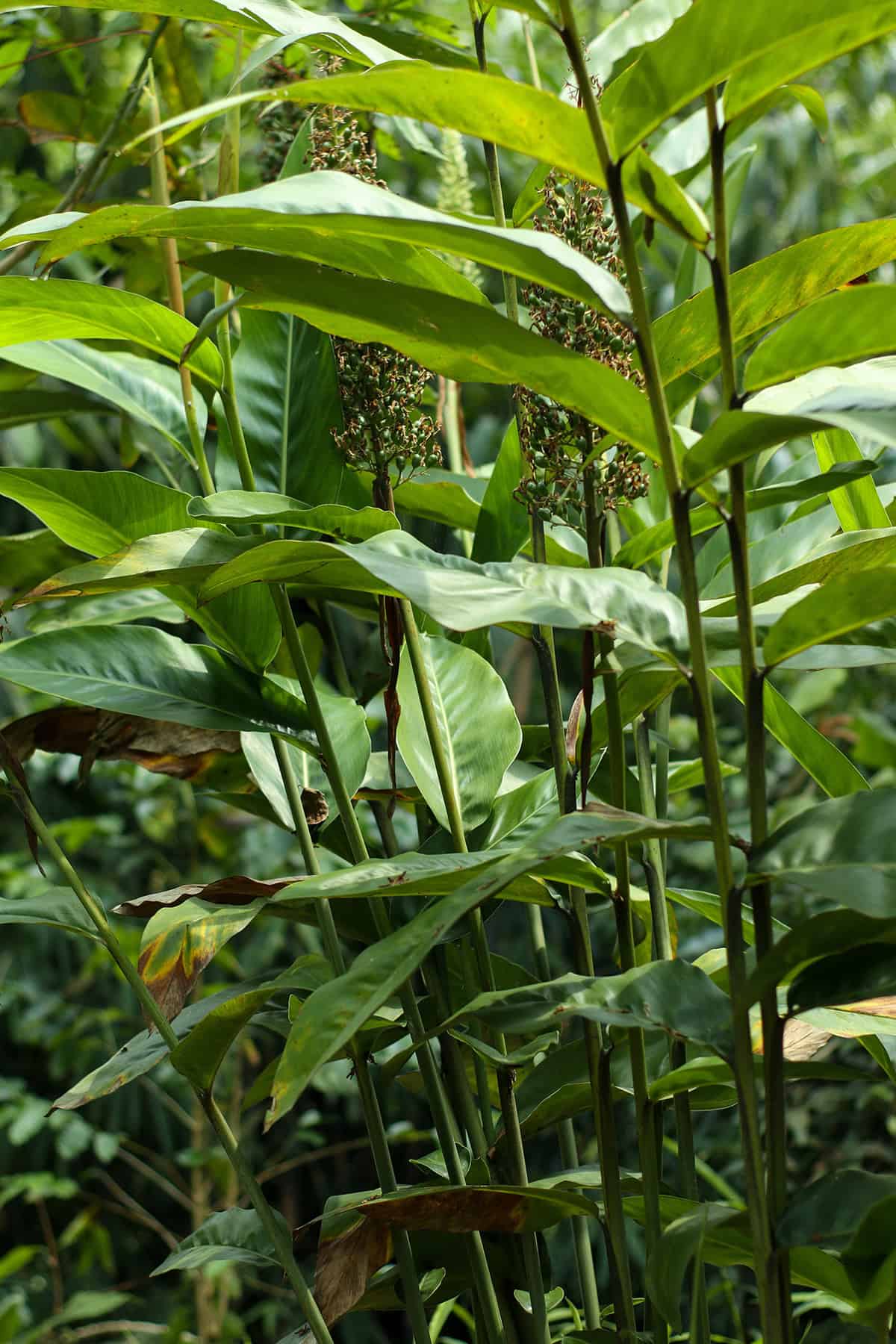
Galangal needs strong, steady light to produce healthy leaves and large rhizomes. In too little light, the stems weaken and the rhizomes develop poorly.
Outdoors, aim for four to six hours of direct sun, ideally in the morning, with light shade during the hottest part of the day. In mild climates, more sun is fine, while in very hot regions, afternoon shade prevents leaf burn.
Indoors, window light alone rarely provides enough energy. A full-spectrum grow light running about 12 hours a day fills the gap, set at the distance the manufacturer recommends.
Rotate the pot every week or so if the plant leans. When moving it from shade into sun, do it gradually to prevent scorched leaves.
Water
Aim for evenly moist soil, never soggy. Wet soil rots the roots, and dry soil stalls growth. The soil should be just damp to the touch.
Loose soil lets water drain freely, and raised beds and pots make good drainage easier. Containers need drainage holes.
Frequency depends on the weather. Hot spells and rapid growth call for more water, while cool weather and slow growth call for less. Check the soil instead of following a calendar.
Plants in partial shade hold moisture longer, while those in full sun dry out quickly and develop yellowing leaves when watering falls behind. Adjust the amount of water as well as the frequency to avoid drowning the roots.
When the plant goes dormant and the leaves fade, reduce watering. Water just enough to prevent the soil from drying out completely until new shoots appear.
Feeding
Galangal is a moderate feeder that benefits from steady nutrition. Mix compost into the soil before planting, and use a balanced fertilizer or one slightly higher in nitrogen and potassium, as with ginger.
Feed lightly every month or so during the warm season. In pots, a diluted liquid fertilizer prevents salt buildup, and in the ground, slow-release granules are simplest.
Pale leaves suggest a need for more nitrogen, while excess fertilizer produces soft, watery growth and weak rhizomes. Stop feeding once the leaves start to yellow at the end of the season.
Compost tea and aged manure are good organic options in moderation, and healthy soil needs very little else.
Growth Time
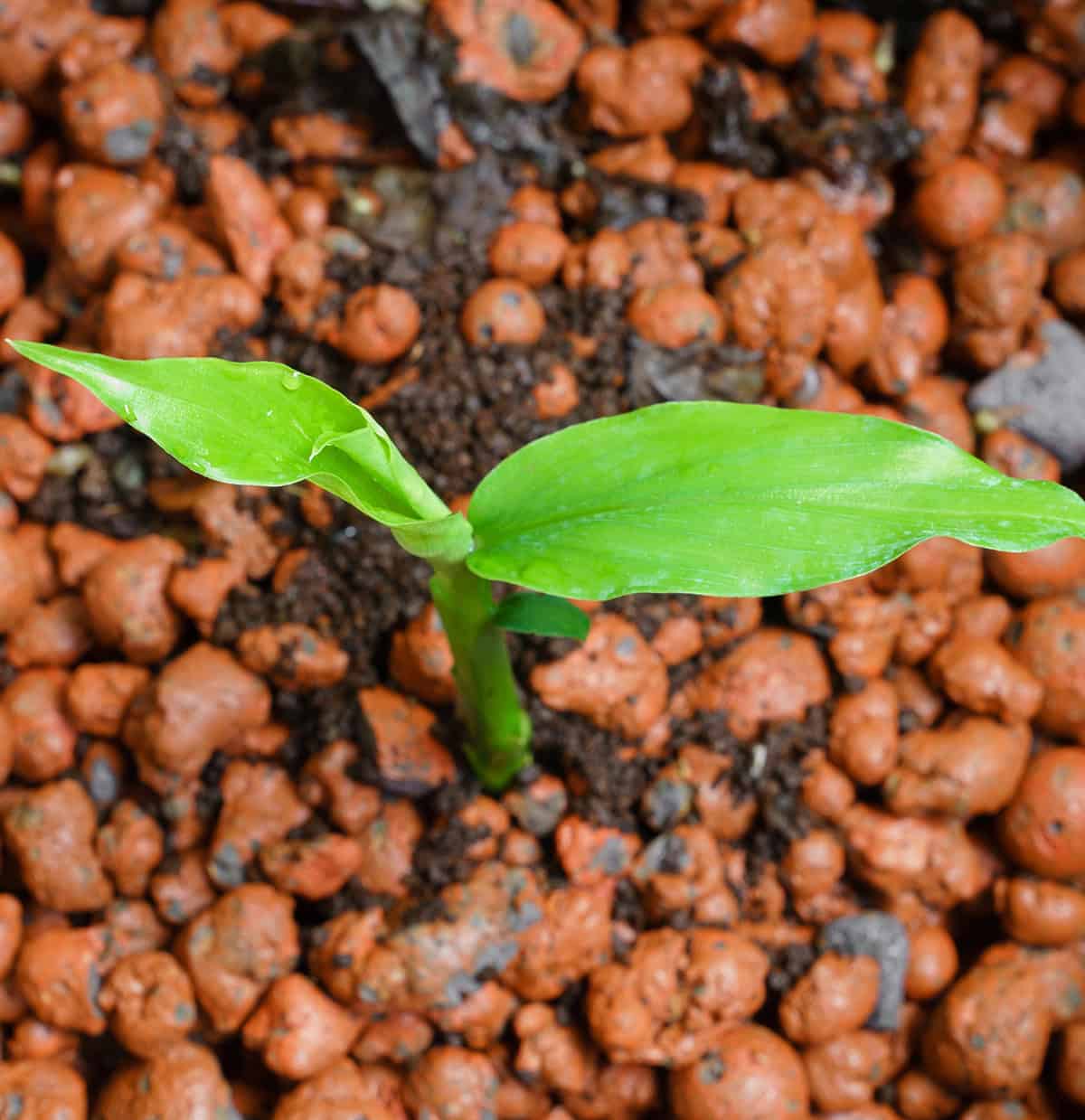
Galangal is slow to mature. As a tropical perennial, it needs plenty of heat before growth picks up, and cold weather stalls it.
Mature rhizomes take about 9 to 12 months. Young, tender pieces are ready after 4 to 6 months, though they are smaller and milder. Longer growing time and steady conditions produce a better harvest.
Frost kills the top growth, though the rhizomes survive light freezes in the ground and regrow in spring in zones 9 to 11. In shorter-season regions, pots and greenhouses extend the growing season.
Light affects timing too. Light shade of about 25% to 40% reduces stress and supports steady growth in hot climates, while deep shade produces leaves at the expense of rhizomes.
Growing Galangal in Containers
Galangal grows well in containers, which allow control over warmth, water and placement. Choose a sturdy pot at least 12 to 16 inches wide and deep enough for the spreading rhizomes.
Place the pot where it receives four to six hours of good light a day, with warmth above 65°F. Use a loose, fast-draining potting mix, and make sure the pot has drainage holes.
Plant a fresh rhizome just below the surface with the buds facing up. Water to hold the mix moist but never soggy, and feed monthly with a balanced fertilizer during active growth. When growth slows in fall, reduce watering and feeding, and move the pot indoors before temperatures drop below 50°F. Small pieces of rhizome are easy to harvest from the edge of the pot, and the rest of the plant carries on growing.
Harvest
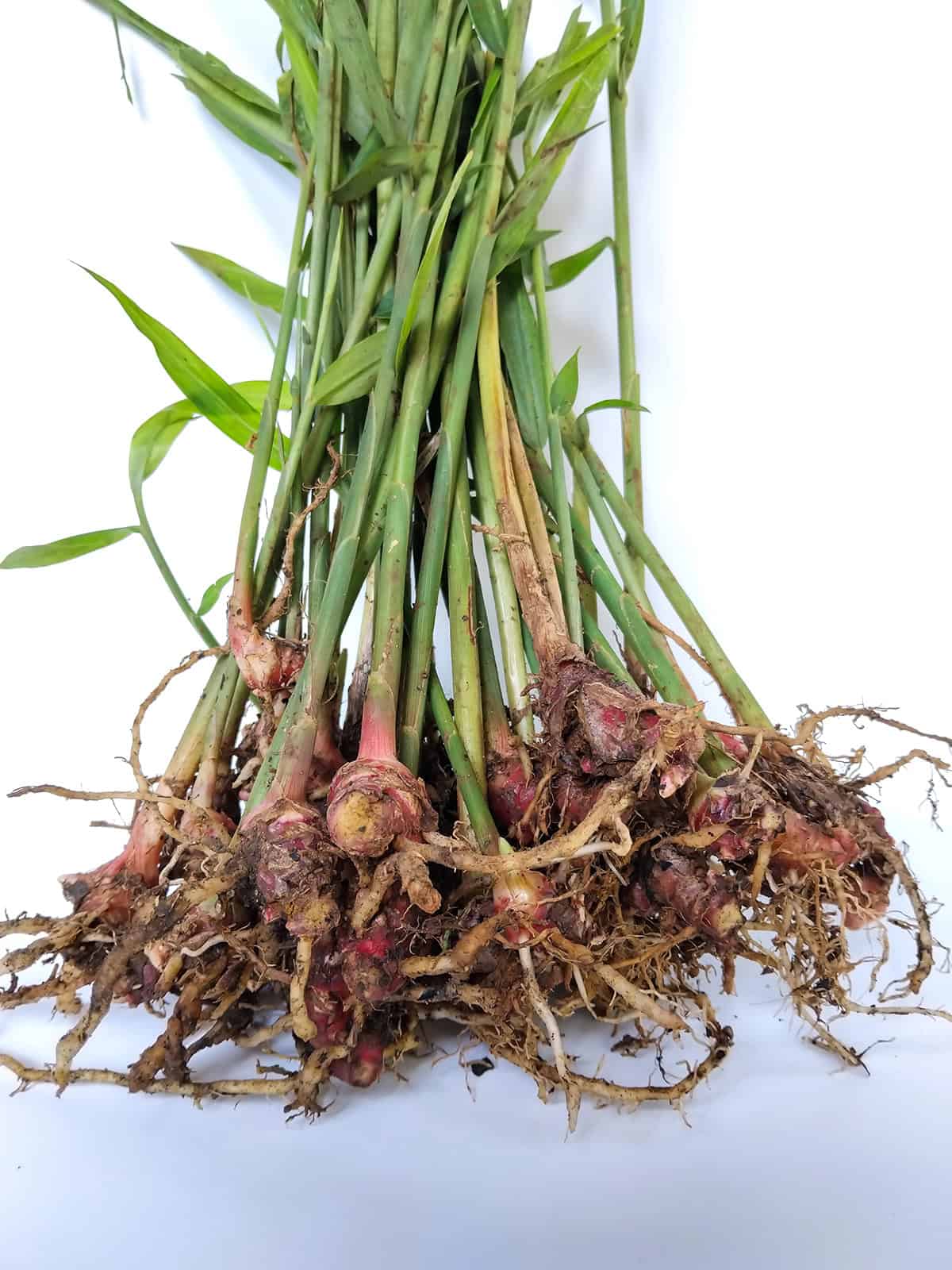
Young rhizomes are ready about four months after planting. They are tender and ideal for fresh recipes. Harvest only part of the clump to maintain the plant.
For larger, mature rhizomes, wait until the leaves yellow and die back, late in the warm season or in early fall in cooler regions, when the plant has stored its energy underground.
Loosen the soil a few inches from the stems with a garden fork or by hand, and take care to avoid slicing or bruising the rhizomes. Take what is needed, and replant the rest if frost is still weeks away.
Rinse the harvested rhizomes and let them air-dry. Refrigerate them in a breathable bag for short-term use, or freeze or dry them for longer storage.
Common Problems and Troubleshooting
Leaf color reveals a lot. Yellow leaves most commonly point to overwatering or poor drainage. Let the soil dry slightly more between waterings, and confirm that the pot drains freely.
A sour smell or mushy rhizomes signal rot from waterlogged soil. Cut away soft or blackened sections, water less and replant in fresh, airy soil.
Spider mites, mealybugs and scale appear at times. Look for webbing, sticky residue or cottony clumps on the stems. Wipe the leaves with a damp cloth, and treat heavier infestations with insecticidal soap.
Slow or spindly shoots point most of the time to cold. Galangal dislikes cool conditions, so maintain temperatures above 65°F and avoid drafts.
Washed-out leaves and weak growth suggest the plant needs feeding. Use a balanced fertilizer during active growth, and avoid overfeeding, which burns the roots and crisps the leaf tips.