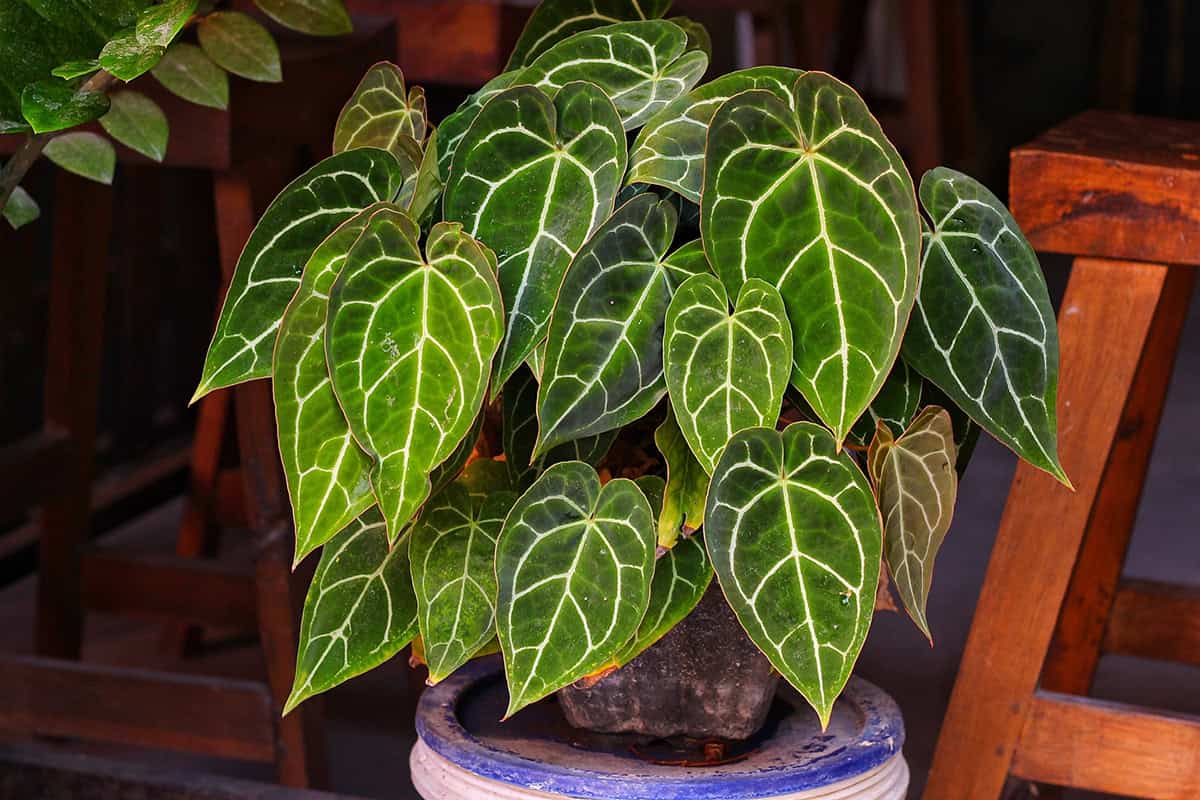
Anthurium crystallinum grows broad, velvety, heart-shaped leaves etched with silver-white veins, and the foliage draws all the attention. New leaves open bronze or pinkish and darken to deep green over a few weeks.
Steady growth depends on warmth, humidity above 60 percent and a chunky aroid mix. Four cheap fixes for the dry air of a heated home appear in the humidity section, a must-read for anyone with crispy leaf edges.
Table of Contents
Quick Care Summary
Grown for its broad, velvety leaves with sharp white veins, Anthurium crystallinum comes from the tropics and needs warmth, high humidity and bright, filtered light. Steady indoor conditions reward you with large, flawless leaves.
- Light: Bright, indirect light, sheltered from harsh sun.
- Soil: Airy, well-drained aroid mix of orchid bark, perlite and coco coir or peat.
- Watering: Water when the top inch dries, and aim for light, even moisture.
- Temperature: 65 to 85°F, away from drafts.
- Humidity: 60 to 80 percent for the best leaves.
- Fertilizer: Half-strength balanced feed every 4 to 6 weeks in spring and summer.
- Propagation: Division of multi-stemmed plants, or stem cuttings with a node and an aerial root.
The roots need air as much as water, and dry air or poor light shows up quickly in the leaves.
Plant Overview
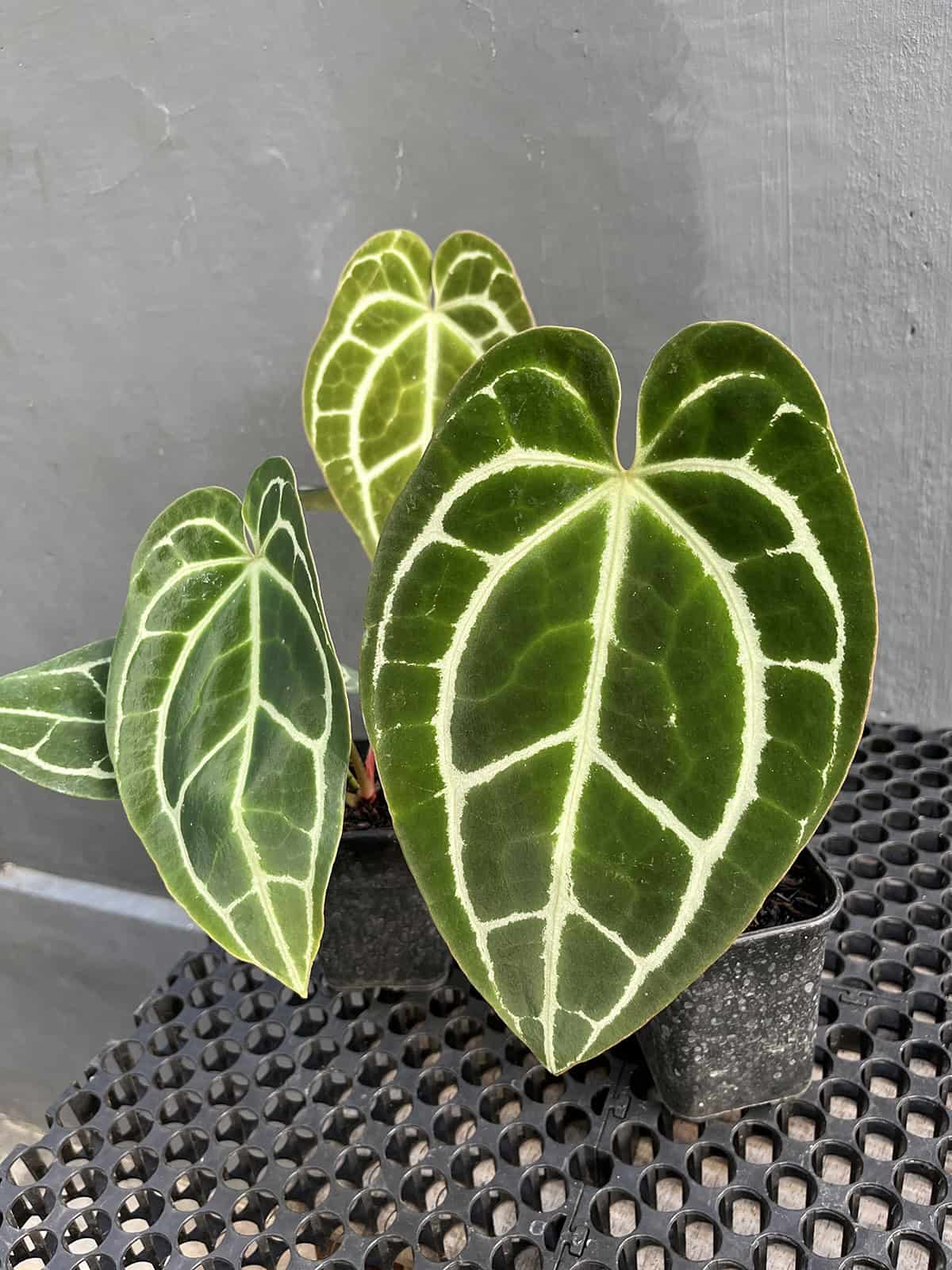
The contrast hits right away. Broad, heart-shaped leaves with a velvet surface draw more attention than any bloom.
Native to rainforests of Central and South America, it belongs to the aroid family, Araceae, and thrives in warmth and humidity.
- Botanical name: Anthurium crystallinum
- Common names: Crystal anthurium, crystal laceleaf
- Plant type: Tropical evergreen perennial
- Mature size: 1 to 3 feet tall, with a similar spread indoors
- Growth rate: Moderate in good conditions
- Toxicity: Toxic to pets and people if eaten, due to calcium oxalate crystals
- Native region: Central and South America, from Panama to Peru
Upright stems carry the signature leaves, which reach over a foot long on a healthy plant. Indoors, plants grow more compact than in the wild.
Light
Soft, filtered sunlight sets off the leaf color and sheen. Near a south or west window, a sheer curtain protects the leaves from sunburn, since direct rays scorch and fade the velvet surface fast.
In a spot that runs too dim, new leaves shrink and growth drags. The whole plant leans toward the light and loses its compact shape.
A sheer curtain, or a spot a few feet back from the window, solves most light problems. East windows fit well, since morning sun runs gentle. Rotate the pot every couple of weeks for even growth.
In a dim home, a full-spectrum LED about a foot above the leaves for roughly 12 hours a day fills the gap. Consistency matters most.
Water
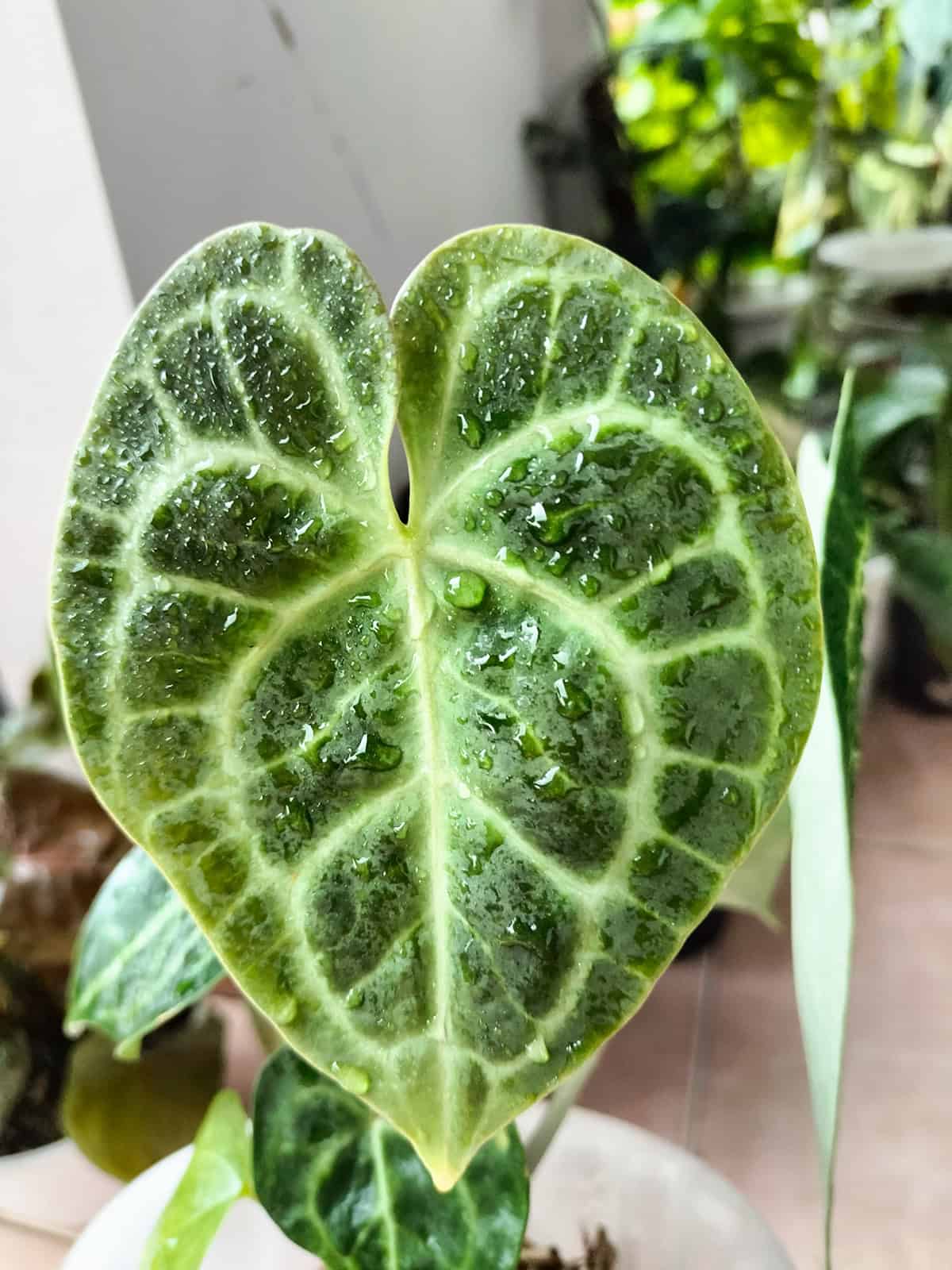
Aim for damp, never soaked, roots. Check the soil with a finger, and water when the top inch dries. Fixed schedules fail here, since room temperature and pot size both change how fast the mix dries.
Use a pot with drainage holes and empty the saucer after watering. Soggy roots grow mushy and smell, and yellow leaves follow.
Room-temperature water protects the roots from cold shock. With hard tap water, filtered water or rainwater lowers mineral buildup, and a flush with clean water every few months clears accumulated salts.
Water a little less in winter, when growth slows, though the soil should never go bone dry.
Soil
A chunky, airy mix produces healthy roots. Heavy, dense soil suffocates them, and the leaves show the damage before long. A blend of orchid bark, perlite and peat or coco coir balances moisture and airflow.
A popular recipe uses equal parts orchid bark, perlite and coco coir, plus a handful of sphagnum moss. The bark adds air, and the sphagnum holds just enough water.
Skip garden soil, which compacts and chokes off oxygen. In the wild, anthuriums grow on tree trunks and the forest floor in loose, organic debris, and pot culture needs the same airy structure.
After watering, excess water should drain quickly. Water pooling on top signals a need for more bark or perlite. Repot every year or two, since old mix breaks down and loses airflow.
Temperature & Humidity
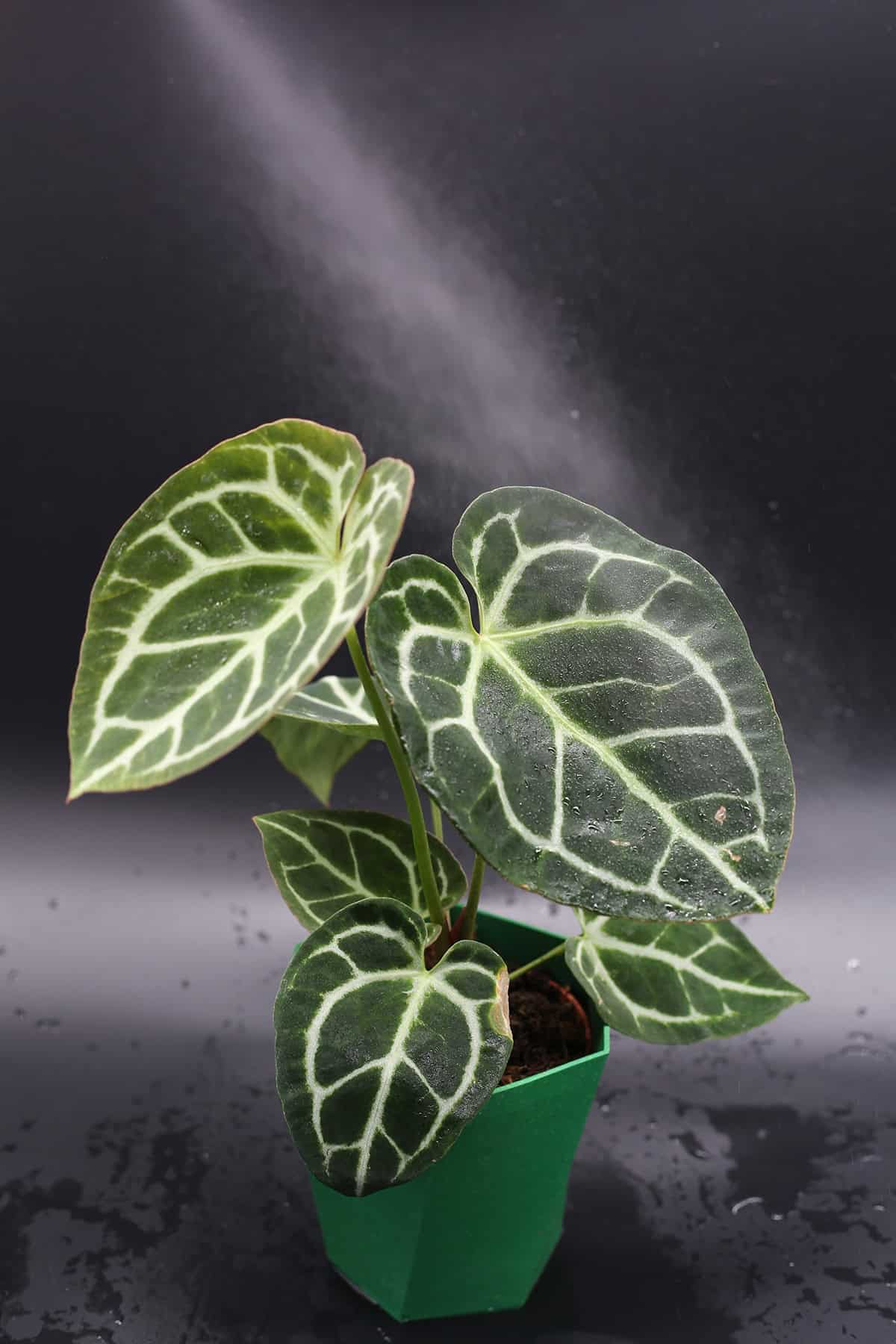
Aim for daytime temperatures of 70 to 85°F and nights above 60°F. Cold drafts stunt growth or worse.
Sudden chills and blasts from vents cause trouble, and long spells below 55°F kill the plant. Consistency matters.
Humidity matters just as much. The leaves need 60 to 80 percent humidity, and dry air browns the edges and dulls the velvet. Steady moisture in the air produces the signature sheen.
A humidifier nearby, a pebble tray under the pot or a cluster of plants raises the local moisture. Maintain gentle air movement too, since stagnant, humid air invites fungal problems.
A bathroom with bright, indirect light makes a good home in a dry climate, and a cheap hygrometer nearby removes the guesswork. Once warmth and humidity hold steady, the plant settles in.
Fertilizer
Feeding takes little effort, though overfeeding backfires. Use a balanced, water-soluble fertilizer such as 10-10-10 or 20-20-20 at half strength, since the roots burn easily. In spring and summer, every four to six weeks covers its needs.
A slow-release fertilizer at a light dose replaces frequent feeding. Excess fertilizer burns leaf edges, and a flush with clean water every few months rinses out residue.
Skip feeding in colder months, when growth stalls, and resume once new leaves appear.
Potting & Repotting
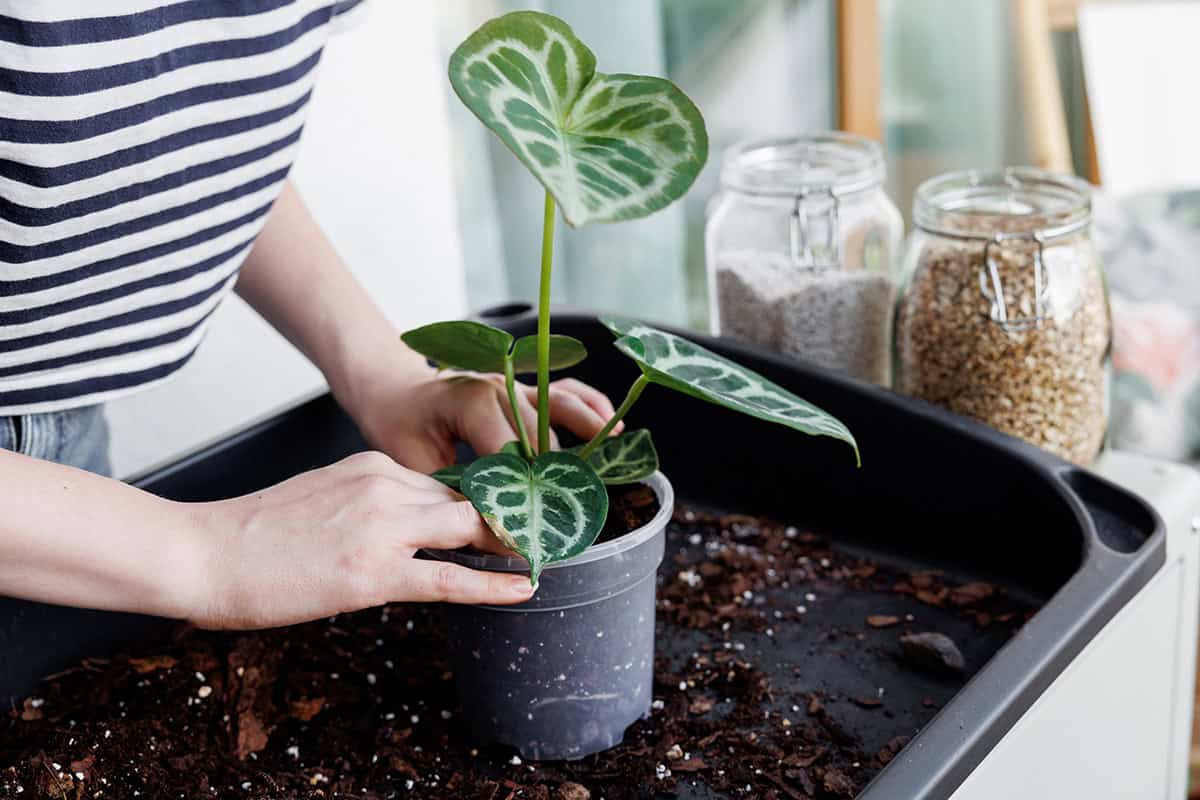
Aim for a loose, coarse, fast-draining potting mix, such as equal parts peat moss, pine bark and perlite. Roots need air, and every pot needs at least one drainage hole.
Repot when the roots circle the pot or poke out the bottom. Move up just one pot size, since a large pot holds the mix wet too long.
Water lightly before repotting so the root ball holds together. Tease apart tangled roots and snip off any that look mushy or dark. Replant at the same depth, fill in with fresh mix, firm it gently and leave a little space at the top for watering.
Afterward, place the plant in bright, indirect light with lightly moist mix, and hold off on fertilizer for about a month.
Pruning
This plant needs little trimming. Prune mainly to remove yellow, brown or sickly leaves.
Use sharp, sanitized scissors or pruners, and cut damaged leaf stems close to the base, since clean cuts heal faster and reduce disease risk.
Snip off dead or weak growth as it appears, which directs energy into healthy leaves. Remove no more than a third of the foliage at once.
Cut old flower stalks back near the base. Healthy leaves power the plant, so leave them in place, and divide a crowded plant during repotting in place of heavy cuts.
Clean tools with rubbing alcohol before and after each use to limit the spread of disease.
Propagation
Division produces the most reliable results, especially with a mature plant that has several stems. Divide in spring or early summer, during active growth.
Remove the plant from its pot and gently pull apart the root ball, with at least one healthy stem and some roots in each piece. A clean knife helps with stubborn clumps. Pot each section in fresh, loose mix rich in organic matter.
Stem cuttings succeed too when they include a node and an aerial root. Set the cutting in moist sphagnum or a chunky mix, maintain high humidity and hold temperatures around 70 to 85°F, and roots appear in a few weeks.
Aim for consistent moisture short of soggy, since waterlogged mix rots cuttings. Once new leaves appear, care for it as an established plant.
Common Problems
Yellow leaves point to overwatering or soggy soil in most cases. Mushy stems or a foul smell signal root rot, so unpot the plant, trim away dead roots and repot in fresh, airy mix.
Crispy brown edges point to low humidity or erratic watering. This species needs steady moisture in both soil and air, and new growth recovers once humidity rises and watering evens out.
Dark, water-soaked spots on the leaves suggest bacterial blight, a disease that spreads in muggy, still air. Isolate the plant, cut away affected leaves with clean tools and water at the soil line to protect the foliage. Better airflow helps too.
Pale leaves and sluggish growth point to low light or a lack of nutrients. Move the plant somewhere brighter and feed during active growth, in moderation, since salt buildup harms the roots.
Spider mites and mealybugs appear now and then. Check the leaf undersides and stems, wipe pests off, use insecticidal soap as needed and inspect regularly to catch new outbreaks early.
Varieties
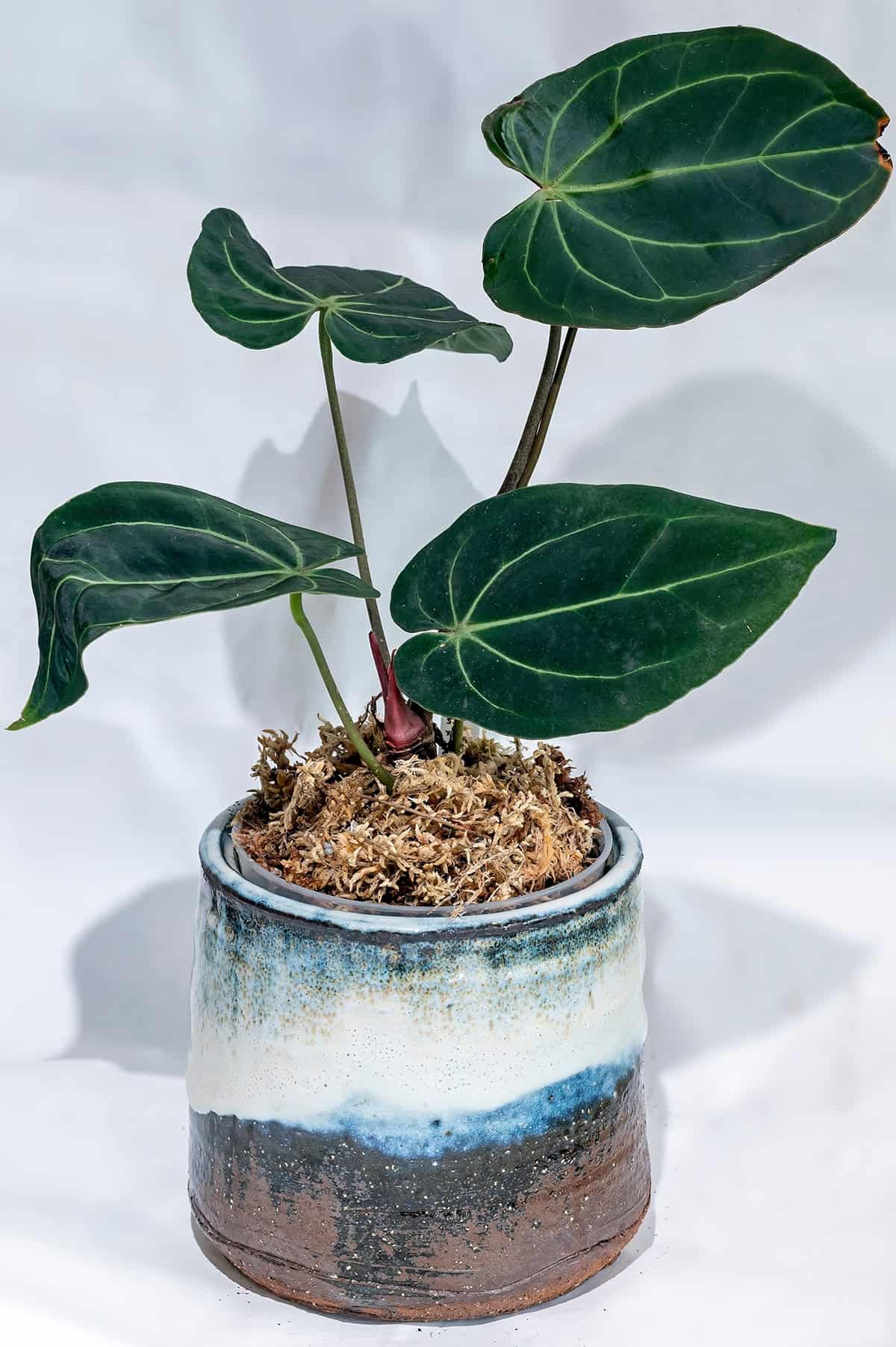
Serious aroid collections hold several forms of Anthurium crystallinum, all with deep green, velvety leaves etched with white veins. Leaf shapes vary, from plump, rounded hearts with bright veins to longer, narrower leaves with finer vein patterns. Older leaves grow firmer and almost leathery with age.
Hybrids appear everywhere in this group. Collectors chase new crosses, especially A. crystallinum × Anthurium clarinervium, which inherit thicker, darker leaves, equally bold veins and a sturdy build from the clarinervium parent. Some hybrids grow faster or show unusual vein patterns.
Plant shop labels run loose, and “Crystal Anthurium” appears on several velvet-leaf species besides crystallinum. For an exact plant, check the botanical name before buying.
With steady warmth, high humidity and bright, indirect light, these plants reach about two to three feet indoors over several years.