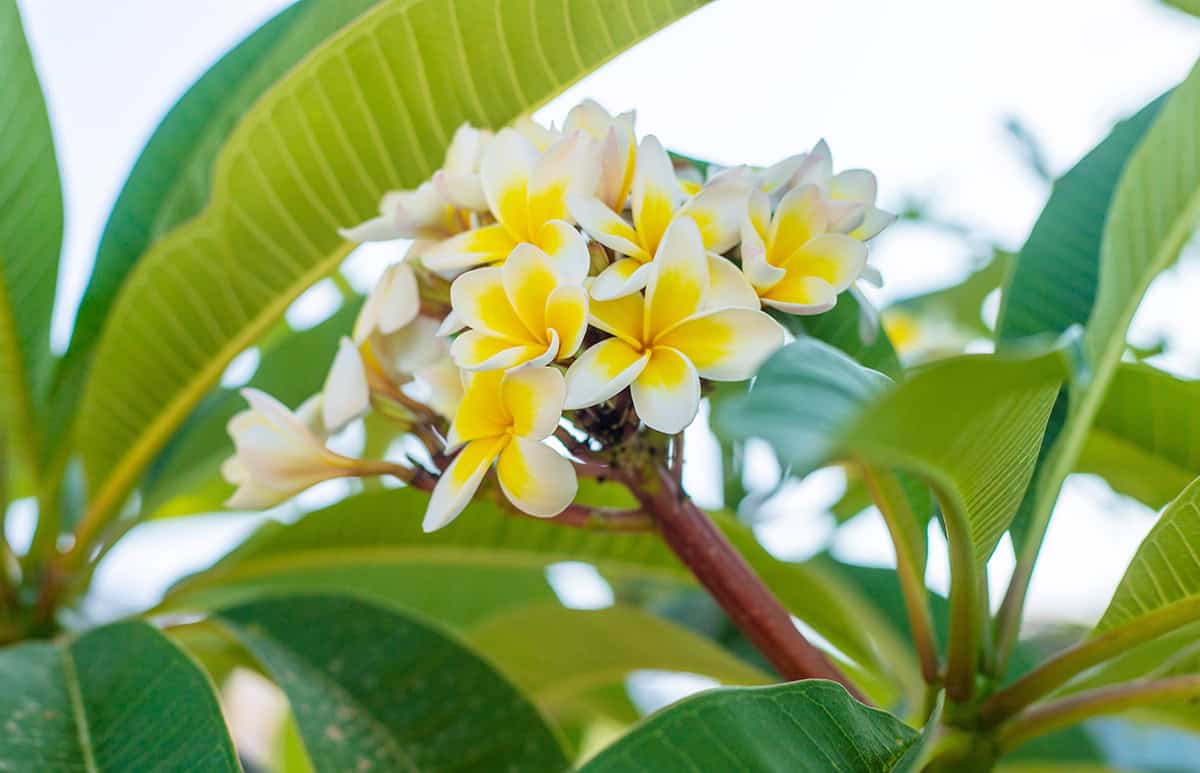
Plumeria flowers have five waxy, overlapping petals and a fragrance strong enough to scent a whole patio on a warm evening.
Outside frost-free climates, the tree grows happily in a large pot and spends winter dormant indoors. Full sun, fast drainage and a dry rest during the cold months lead to the most flowers.
Rubra, obtusa and pudica, the three species behind most garden plumerias, close out the guide.
Table of Contents
Light
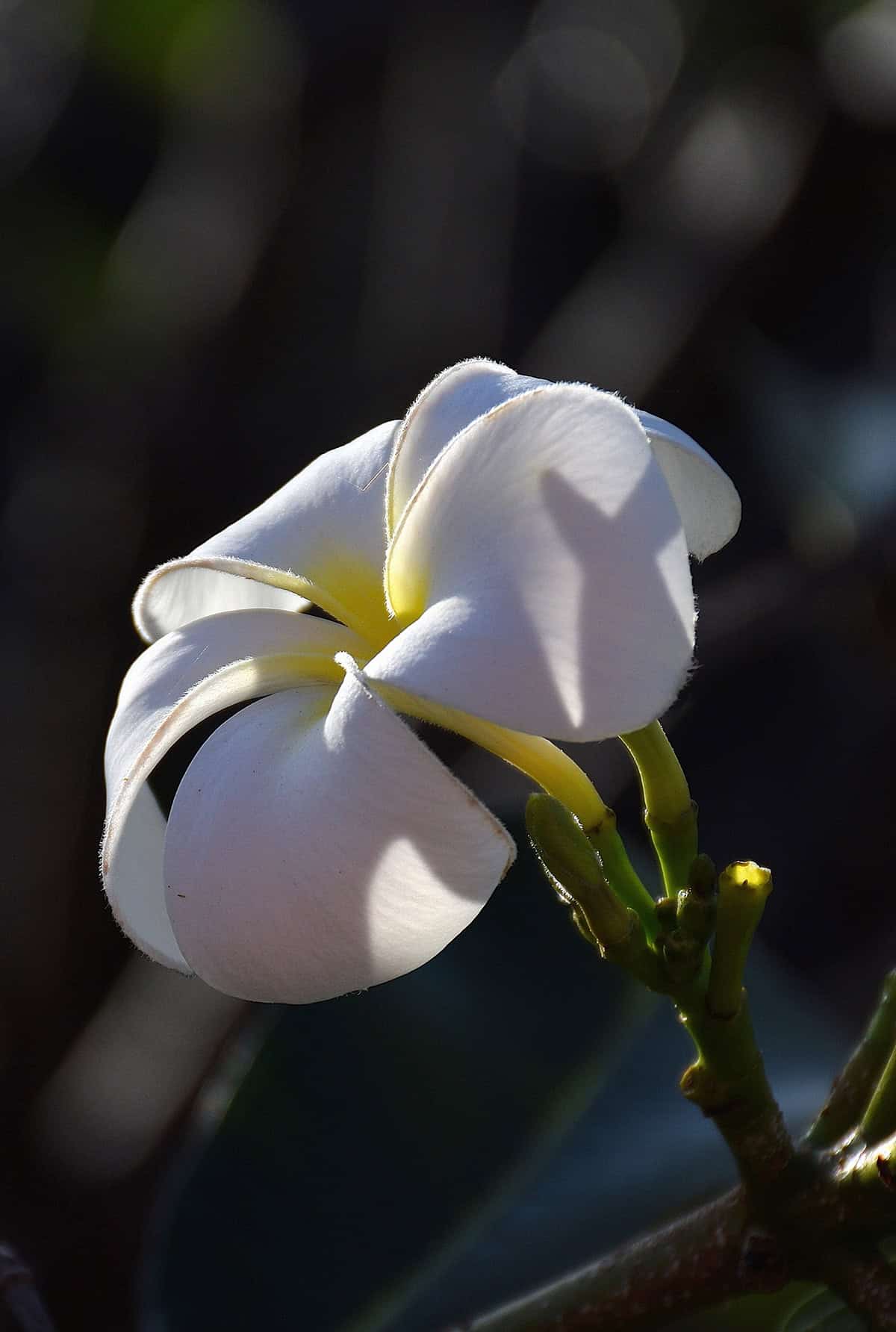
Plumeria needs full sun, with at least six hours of direct light a day, and the heaviest bloom comes with eight or more. A bright, open spot outdoors produces thick, sturdy branches.
In desert heat, light afternoon shade protects young plants and newly rooted cuttings from sunscald. Mature trees handle full sun all day.
Indoors, set the plant in front of a south- or west-facing window and move it outside once nights hold above 50°F. Increase its sun exposure over about a week to prevent leaf burn. Weak light produces long, thin branch tips, pale leaves and few flower clusters.
Soil
Plumeria roots rot quickly in heavy, wet soil, so drainage comes first. Sandy or loamy garden soil with plenty of grit fits it well.
For containers, use a cactus or succulent mix, or blend two parts potting soil with one part perlite and one part coarse sand.
Garden beds with clay benefit from compost and coarse sand dug in deeply, or from planting on a raised mound. Slightly acidic to neutral soil, around pH 6 to 7, produces the best growth.
Water
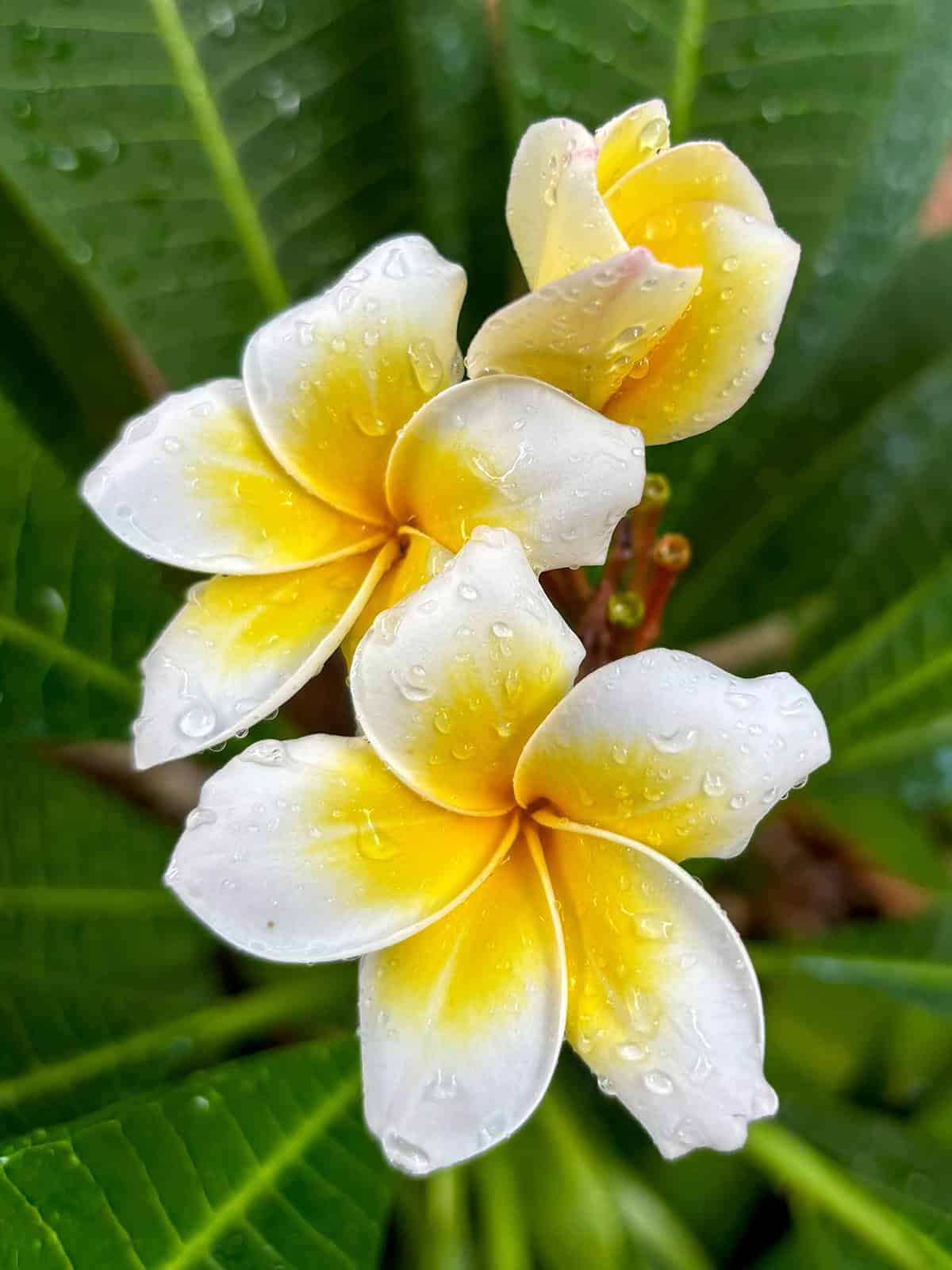
During spring and summer growth, water deeply whenever the top inch or two of soil dries. In hot weather, potted plumerias may need water every two to three days, while plants in the ground need it about once a week.
Let excess water drain away completely, and never leave a pot in a full saucer.
In fall, as temperatures cool and leaves yellow and drop, cut back on water. Dormant plumerias need little or no water until new leaves appear in spring, since wet soil around a leafless plant leads to stem and root rot.
Water at the base of the plant to protect the leaves from rust and other fungal problems.
Temperature And Humidity
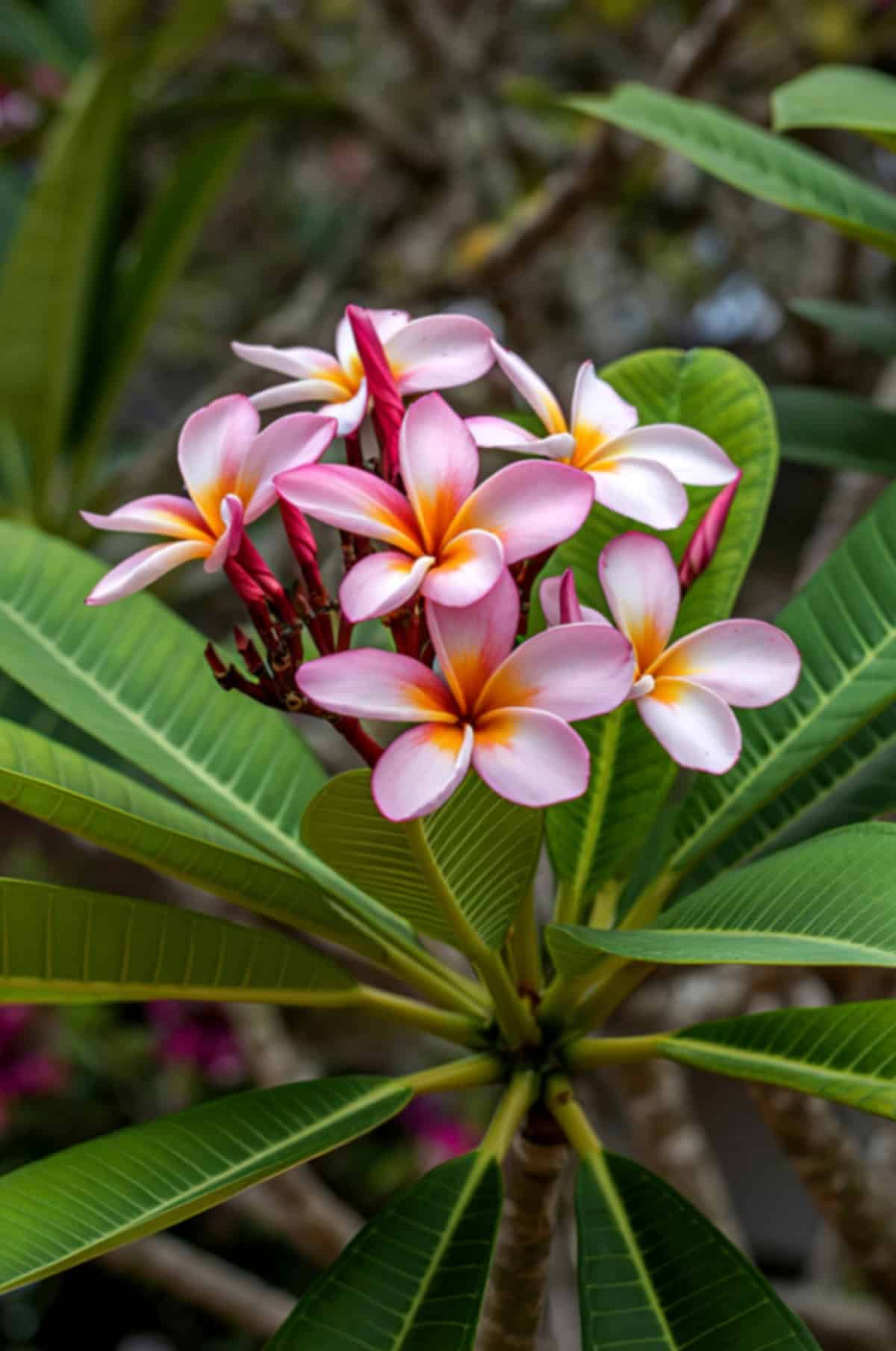
Plumeria grows best between 65°F and 85°F and survives outdoors year-round in USDA Zones 10 to 12. Frost damages branch tips, and a hard freeze kills the plant.
Move potted plants indoors or into a garage when nights drop below 50°F. A dormant plumeria handles a cool, dark space as long as temperatures hold above about 40°F.
Plumeria tolerates dry air well, and ordinary household humidity suffices. In very dry indoor air during active growth, a pebble tray helps, and misting is unnecessary. Plants left near cold, drafty doors in winter drop leaves faster and are more prone to rot.
Fertilizer
Feed plumeria during active growth, from spring through late summer. A bloom-boosting fertilizer with a higher middle number, such as 10-30-10, promotes flower clusters.
Water-soluble fertilizer goes on every two to three weeks, and slow-release granules every three to four months according to the label. Apply to moist soil around the root zone, away from the trunk, and water afterward.
Stop feeding in fall and through winter dormancy. Excess nitrogen from heavy compost or lawn fertilizer pushes leaves at the expense of flowers, and yellow leaf edges or a salty crust point to overfeeding.
Propagation
Most growers propagate plumeria from cuttings, which produce plants identical to the parent. Cut a healthy branch tip 12 to 18 inches long in spring or early summer.
Let the cutting dry in a shaded, airy spot for one to two weeks, until the cut end forms a hard callus. Planting it fresh invites rot.
Set the callused end 3 to 4 inches deep in a gritty mix, water once and wait until leaves emerge before watering regularly. Roots form in four to eight weeks in warm weather.
Seeds sprout easily, but seedlings vary in color and fragrance and take three or more years to bloom. Grafting joins a favorite cultivar to a strong rootstock, and air layering roots a branch while it is still attached to the tree.
Pruning
Prune plumeria in late winter or early spring, just before new growth begins. Each cut tip produces two or three new branches, and more branch tips mean more flower clusters.
Remove dead, damaged or crossing branches, and shorten tall, leggy stems for a fuller canopy. Make cuts at a slight angle with clean, sharp loppers to shed water.
Most mature trees need only light shaping. A heavy cut delays flowering, because new branches need a season to mature before they bloom.
The milky sap irritates skin and eyes, so wear gloves and eye protection. Let fresh cuts dry before watering the plant.
Potting And Repotting
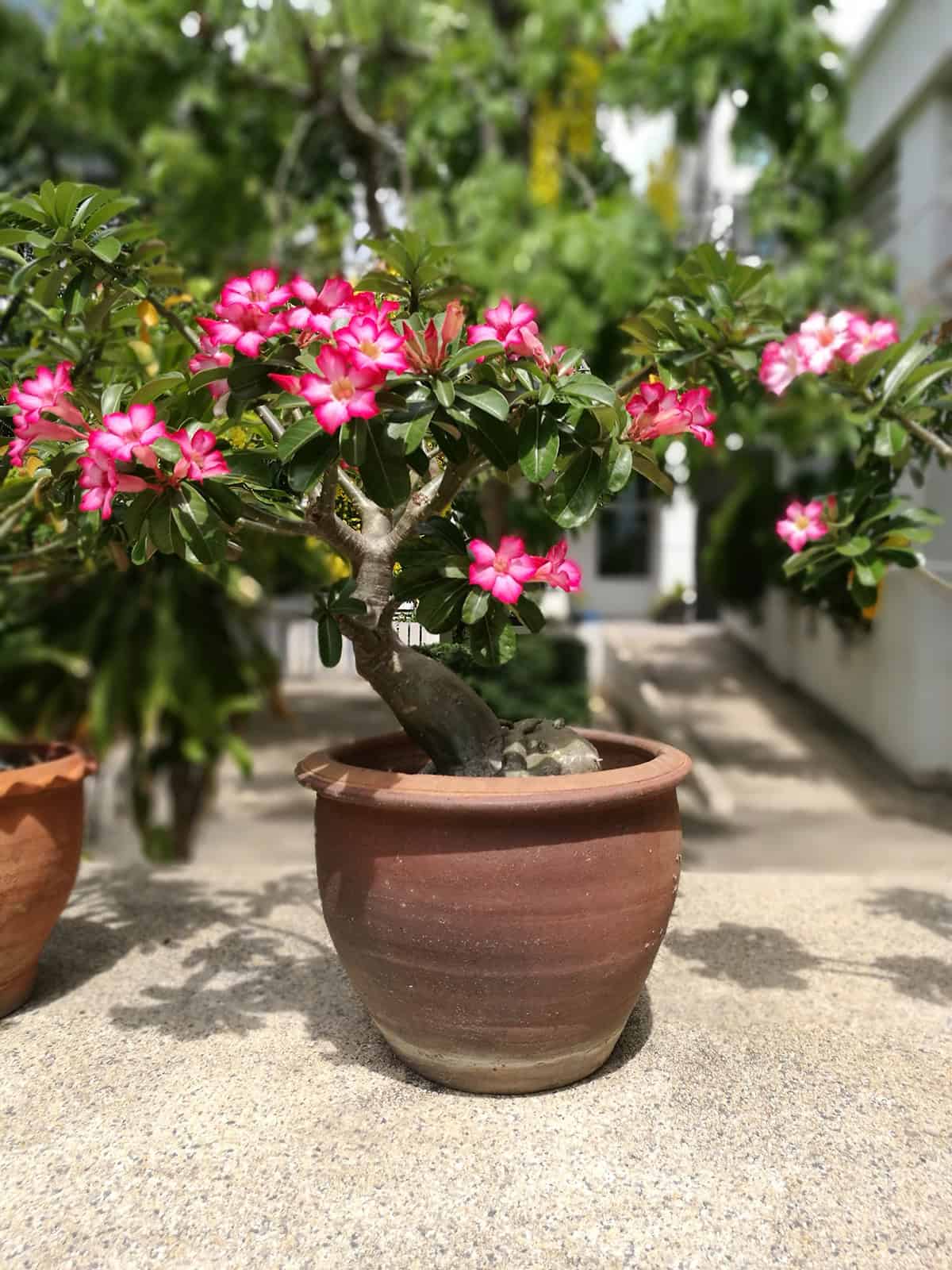
Choose a pot with large drainage holes, only a couple of inches wider than the root ball. Snug pots encourage flowering and lower the risk of soggy soil.
Use a cactus mix or another fast-draining blend. Set the plant at its original depth, with the base of the stem just above the soil line.
Repot every two to three years, in late winter or early spring before leaves appear. Gently loosen circling roots, trim any that are dead or mushy, and move the plant up one size.
Water well after repotting and place it in bright, indirect light for a few days. Once it settles, return it to full sun.
Common Problems & Troubleshooting
Plumeria rust leaves yellow spots on the tops of leaves and orange, powdery pustules underneath, especially in warm, humid weather. Remove and bin infected leaves, rake up fallen ones and treat serious outbreaks with a fungicide labeled for rust.
Spider mites, whiteflies and mealybugs feed on the sap and weaken new growth. Spray affected leaves and their undersides with insecticidal soap, and repeat weekly until the pests are gone.
Soft, black stem tips or a mushy base point to stem rot from wet soil, especially during dormancy. Cut back to firm, healthy tissue and let the plant dry out.
Lots of leaves and no flowers come from too little sun, too much nitrogen or a young plant. Dropped buds follow cold snaps and sudden dry spells, and yellow leaves in fall are a normal part of dormancy.
Plant Varieties
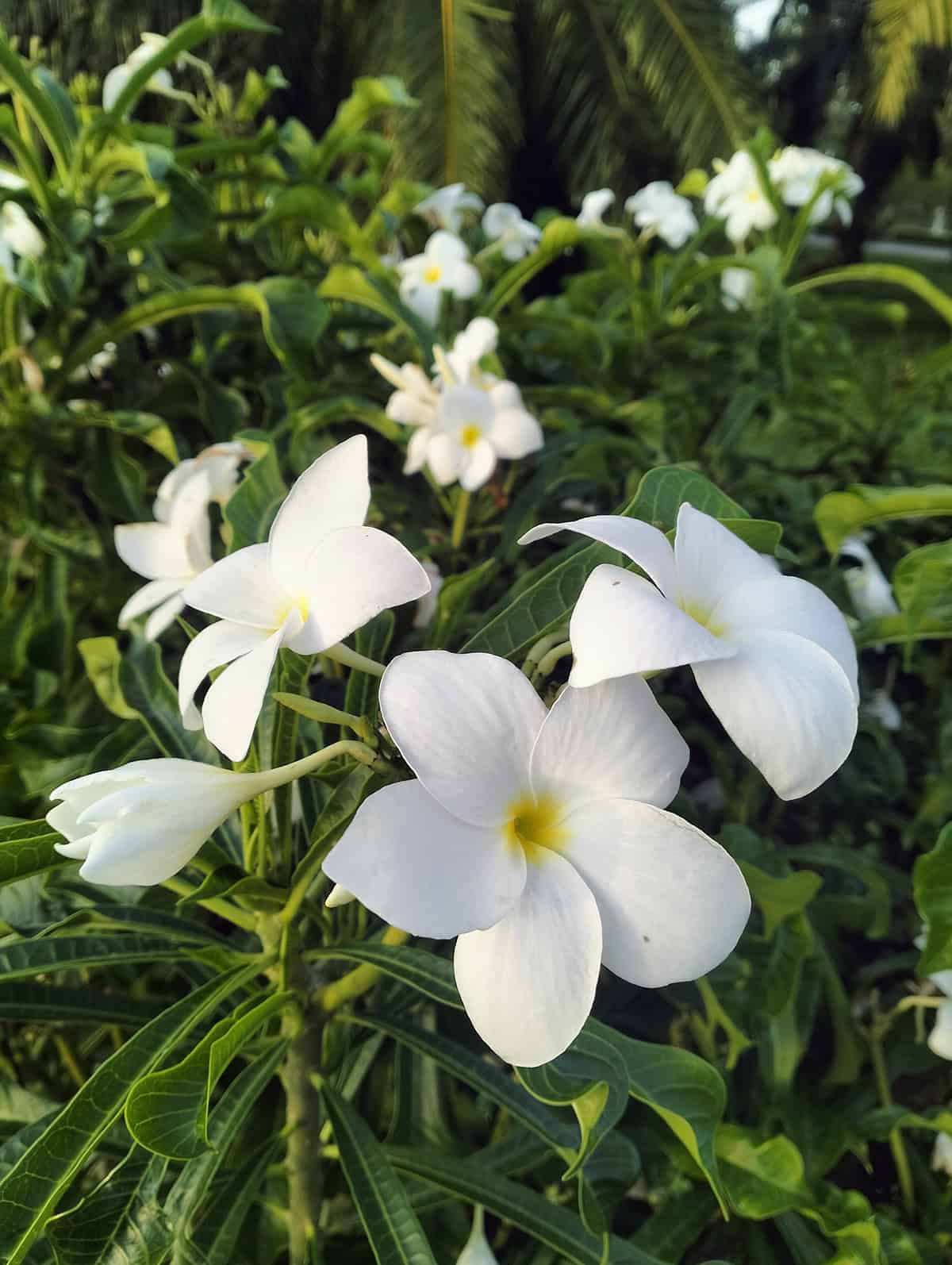
Most garden plumerias come from Plumeria rubra, Plumeria obtusa and Plumeria pudica, and the long list of named hybrids belongs mostly to P. rubra.
Plumeria rubra carries the widest color range, with red, pink, yellow, white and sunset blends, and loses its leaves in winter. Plumeria obtusa has white flowers with a yellow center, rounded leaf tips and a strong sweet scent, and it holds its leaves longer in warm conditions. ‘Singapore’ is the best-known selection.
Plumeria pudica stands out for its fiddle-shaped leaves and pure white flowers with a yellow eye. It has little fragrance, but it blooms for months and fits smaller spaces.
Dwarf rubra selections top out around 3 to 6 feet in pots, while full-size trees reach 20 to 25 feet in the tropics. Seedlings rarely match their parent, so buy named, grafted or rooted plants for a specific color.