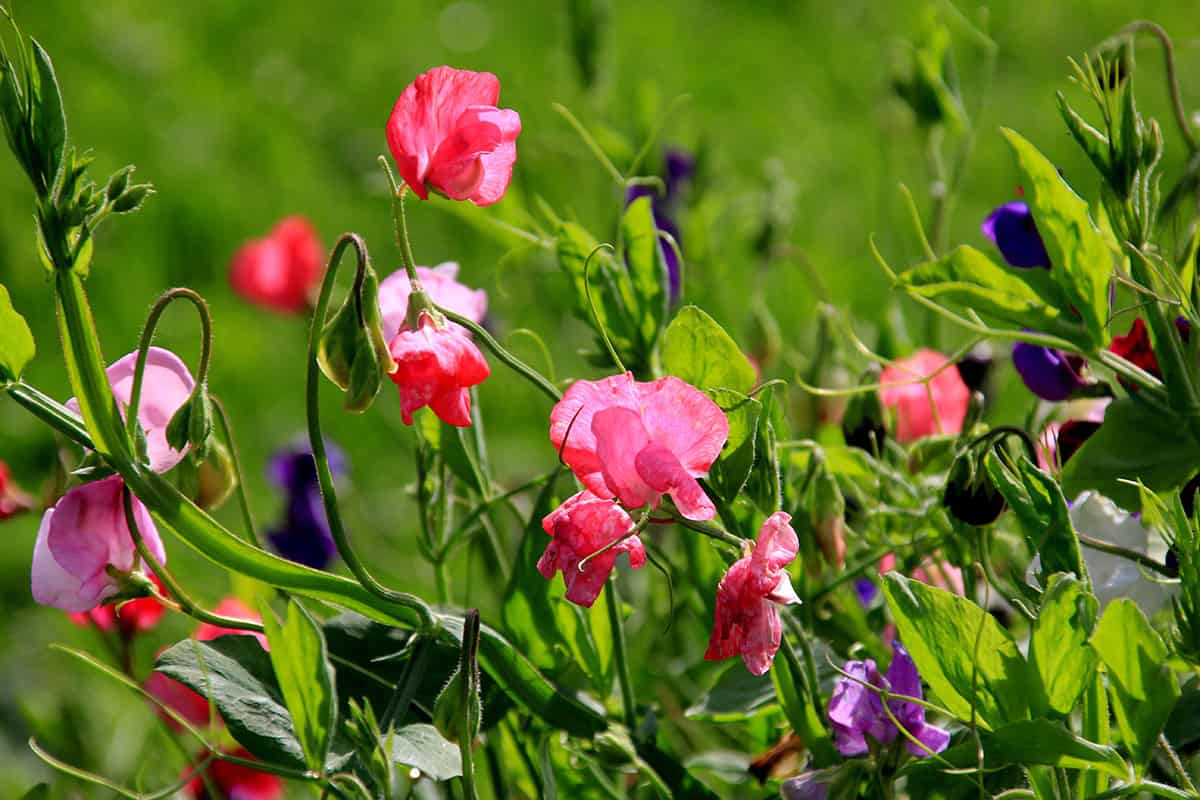
Ruffled, intensely fragrant flowers on climbing vines have made sweet peas a garden favorite for over three centuries. They bloom best in cool spring weather and fade once summer heat arrives.
Early sowing, rich soil and regular picking stretch the flowering season by weeks.
Seed soaking, tip pinching and vase care round out the growing notes.
Table of Contents
Choosing The Right Sweet Pea Variety
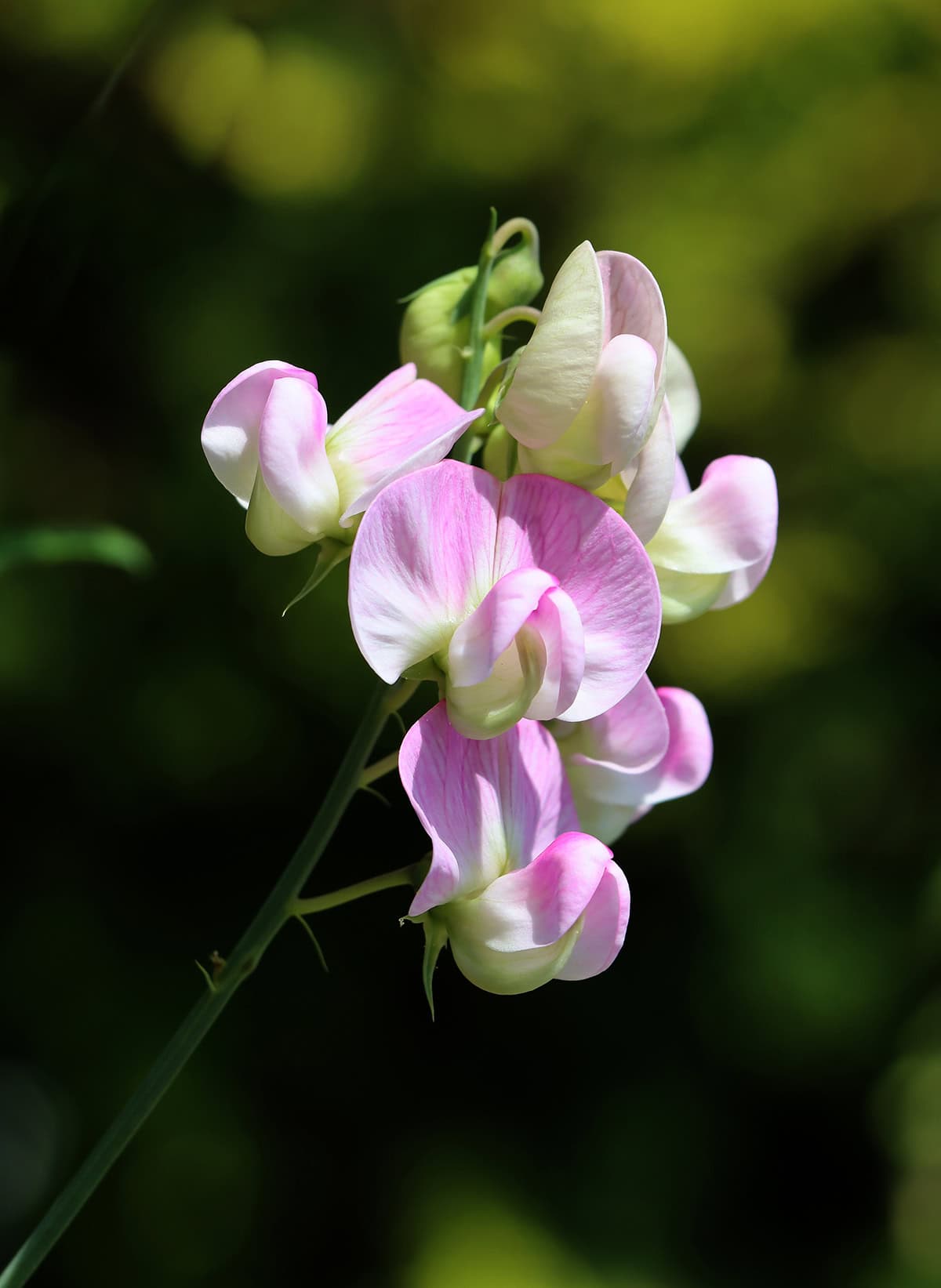
Fragrance, growth habit and flower form all matter when choosing sweet peas, and each type has its own strengths in the garden or the vase.
Fragrant Vs. Non-Fragrant Types
Fragrance draws most growers to sweet peas, and many annual varieties have a strong, sweet scent. Certain modern hybrids trade scent for larger blooms or a wider color range.
Perennial sweet peas, Lathyrus latifolius, have little or no fragrance. For scent indoors or out, choose cultivars labeled as highly fragrant, such as ‘Old Spice’, ‘Matucana’ and ‘Cupani’. Low-scent types are a good choice for color and appearance alone. All sweet pea seeds are toxic if eaten, which matters in gardens with children and pets.
Dwarf Vs. Climbing Varieties
Sweet peas come in bush, or dwarf, and climbing types. Bush varieties grow 6 inches to 3 feet tall, need little support and fit containers and borders.
Climbing varieties reach 6 feet or more and need a trellis or mesh, since they climb by tendrils. Climbers produce longer stems and more blooms per plant. Bush types fit small spaces and low borders, and climbers reward vertical support with more flowers.
Best Varieties For Cut Flowers
Stem length and bloom size matter most for cut flowers, and tall climbing varieties produce the best stems for arrangements. The Spencer, Royal and Mammoth series are popular with cut flower growers.
These types have long, sturdy stems and large, vibrant flowers, and they last well in the vase. Dwarf and bush types lack the stem length for cutting. Seeds labeled for cutting produce the best results.
When And Where To Plant Sweet Peas
Planting season, light and site conditions all shape success, and correct timing and placement lead to healthy vines and abundant blooms.
Ideal Planting Time By Region
Planting time depends on climate. In mild-winter regions, USDA Zones 8 and warmer, sow seeds outdoors in late fall or winter for an early spring display.
In cold-winter areas, sow as soon as the ground is workable in late winter or very early spring. Sweet peas tolerate light frost, and early planting matters most where summers heat up fast, since the plants fade in hot weather.
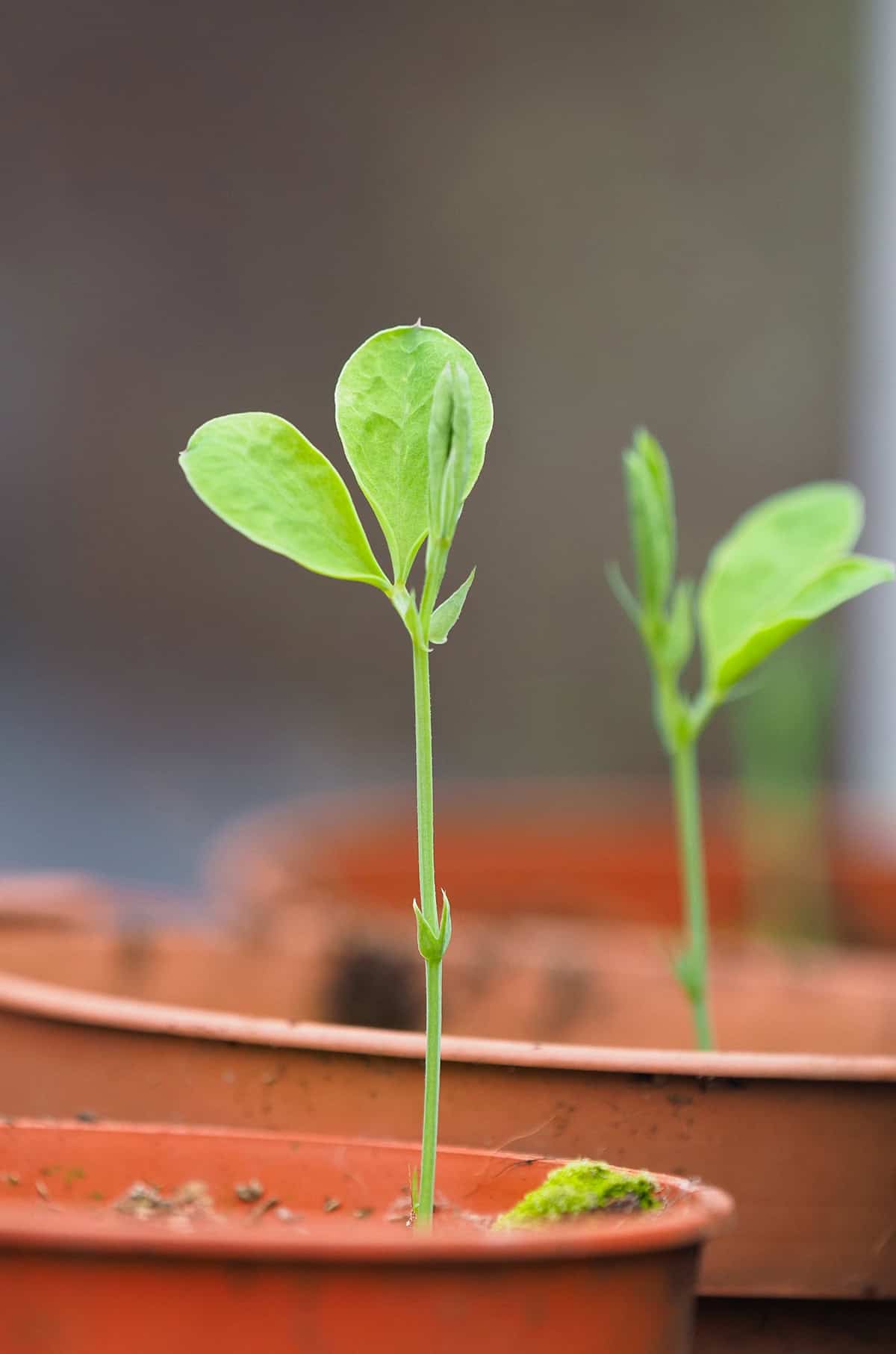
Northern gardeners gain time by starting seeds indoors about six to eight weeks before the last expected frost. Harden off the seedlings and transplant them outside two to four weeks before the last frost, while the weather is still cool.
Sunlight And Temperature Needs
Sweet peas thrive in sunlight. Full sun, at least six hours a day, produces the strongest vines and the most flowers.
In hot climates, afternoon shade extends the season, since heat causes bud drop and ends flowering early. Sweet peas grow best at 55 to 65°F (13 to 18°C).
Temperatures above 75°F (24°C) slow growth and halt flowering. A spot with morning sun and a cooler afternoon is ideal in warm regions.
Choosing The Best Location
Pick a location with good air movement and rich, well-drained soil. Sweet peas prefer neutral to slightly alkaline soil with plenty of organic matter, and compost or well-rotted manure dug in before planting prepares the bed.
Avoid spots where water stands after rain, since soggy roots rot. Set up a trellis, mesh or other sturdy structure for climbing varieties before the seeds sprout.
Space plants for good airflow, since crowding encourages disease. The right spot sets the stage for long flowering and healthy stems.
Preparing The Soil
Healthy sweet peas start with soil that supplies nutrients, drainage and the right pH, and good preparation pays off in vigorous growth and abundant blooms.
Soil Type And Drainage
Sweet peas need soil that drains well and holds some moisture. Heavy clay and unamended sandy soil both cause problems, since roots rot in soggy ground and dry soil produces slow, patchy growth.
The ideal soil is loose, friable and crumbly. A squeezed handful that barely holds its shape is in the right range. Plenty of organic matter prevents the soil from baking hard in full sun.
Adding Compost Or Organic Matter
Sweet peas benefit greatly from compost before planting. Mix in well-rotted compost or manure to raise fertility and moisture retention and to feed the plants as they grow.
Dig a thick layer of compost into the top 6 inches of soil, and blend it evenly to avoid wet pockets. In depleted soil, repeat each year to build fertility. Many gardeners dig a trench a foot deep in fall and fill it with compost for spring-sown sweet peas.
Adjusting Soil PH If Needed
Most sweet peas thrive in neutral to slightly alkaline soil with a pH of 6.5 to 7.5. Check the soil with a home test kit or through the local extension service, since sweet peas struggle in acidic soil.
Below pH 6.2, apply garden lime in fall for time to react, and mix it into the planting area. Above about 7.5, add organic matter to buffer the soil. Annual testing holds pH in the right range.
How To Plant Sweet Pea Seeds
Correct planting produces strong, healthy, fragrant flowers. Soil temperature, seed preparation and plant spacing all play a role.
Soaking Seeds Before Planting
Sweet pea seeds have tough coats, and a soak in water for about 12 to 24 hours before planting improves germination. Use a shallow dish of clean, room-temperature water that just covers the seeds.
After soaking, check each seed. Swollen seeds are ready to plant. Seeds that are still hard and small benefit from a small nick in the coat with a nail file, on the side opposite the eye, and dark-seeded varieties respond especially well. Discard soft or damaged seeds.
Unsoaked seeds still germinate but take several days longer. Soaking is optional and produces a quicker, more even stand of seedlings.
Spacing And Depth Guidelines
Plant each seed about 1 inch deep, 2 inches apart in beds or containers, and thin seedlings to 4 to 6 inches apart.
Use rich, well-drained soil. Water the furrows before sowing, then press soil gently over each seed and hold the surface moist.
Plant double rows about 6 to 8 inches apart on either side of a trellis for good airflow. Add support for tall types soon after planting, since crowding leads to mildew and weak plants.
Direct Sowing Vs. Starting Indoors
Sow directly outdoors where spring arrives early, as soon as the ground thaws in late winter or very early spring.
For an earlier start, or in regions with long, cold springs, begin seeds indoors in deep individual pots or root trainers. Sweet peas dislike root disturbance, which makes biodegradable pots a good choice for planting whole.
Transplant gently to protect the roots, and move seedlings outdoors on time, since rootbound plants grow poorly after planting.
Caring For Sweet Pea Plants
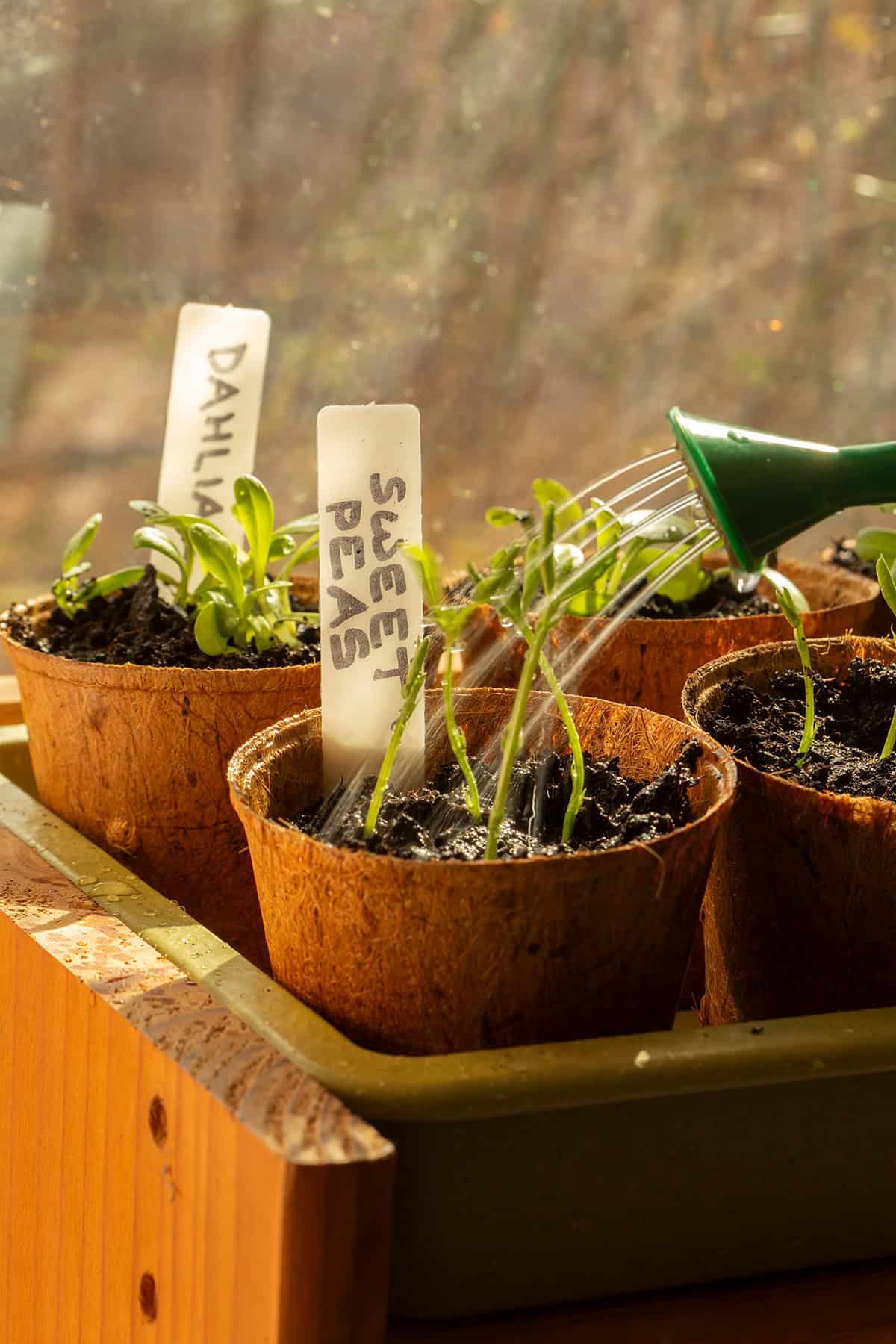
Thriving sweet peas need attention to water, nutrients and strong support as the plants grow.
Watering And Mulching
Sweet peas need regular moisture, especially early in the season. Aim for damp, never soggy, soil. Dry spells weaken stems and reduce blooms, and hot weather calls for more frequent checks.
A layer of mulch cools the soil and holds moisture, two things sweet peas need. Spread straw or leaf mold around the base of the plants to suppress weeds and reduce watering.
Avoid letting the soil dry out during flowering, since even moisture supports larger flowers and stronger plants. Mulch also buffers sudden soil temperature changes that stress roots.
Feeding And Fertilizer Needs
Sweet peas thrive in fertile soil. Prepare the bed with compost or rotted manure, and apply a balanced liquid fertilizer every two to three weeks during the season.
As legumes, sweet peas fix part of their own nitrogen, and a low-nitrogen fertilizer higher in phosphorus and potassium produces the most flowers. Look for an N-P-K ratio near 5-10-10 or 3-12-6, since excess nitrogen leads to lush foliage and fewer blooms.
Pale leaves and weak growth signal a nutrient shortage, and a liquid feed corrects it quickly.
Providing Support For Climbing Types
Climbing sweet peas need sturdy support to reach full height. Install a trellis or net at planting time or soon after. Wood, wire and plastic mesh are all good options.
Tie young plants loosely to the supports until their tendrils take hold, and space supports for good airflow to prevent mildew.
Climbers reach 6 feet or more, which makes a steady structure essential, since strong wind damages top growth. Check supports regularly and adjust them as the season goes on.
Encouraging More Blooms
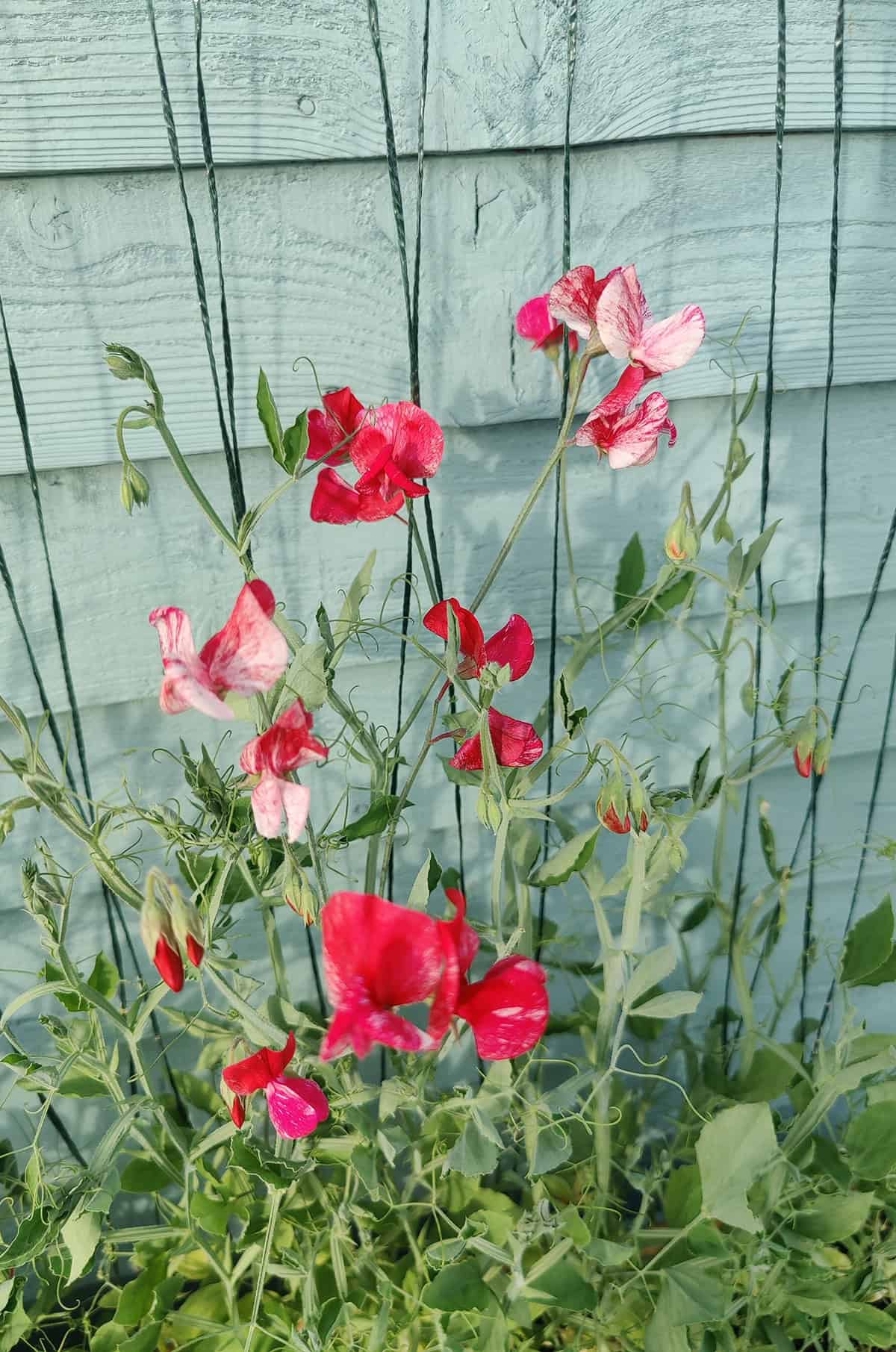
Careful tending and a handful of simple techniques produce the most flowers, extend the season and protect plant health.
Pinching Seedlings For Bushier Growth
Once seedlings reach about 4 to 6 inches tall, with three or four pairs of leaves, pinch out the growing tip with fingers or scissors. The plant responds with side branches.
Each side shoot produces stems with blooms of its own, and an early pinch prevents tall, spindly growth.
Pinch early, before flower buds appear, since late pinching produces less branching. Bushier plants cover their supports better and create a denser, more colorful display.
Deadheading And Regular Harvesting
Once sweet peas start blooming, remove spent flowers before they set seed. Seed pods signal the plant to slow or stop flowering.
Regular cutting for bouquets doubles as deadheading, and the plant responds by producing more flowers. The result is fresh flowers week after week.
Snip stems back to the next set of leaves with clean, sharp scissors. Steady removal of flowers and pods maintains growth and flower production through the season.
Common Problems And Solutions
Insects, diseases and poor flowering are the main problems with sweet peas, and early detection and adjusted care protect plant health.
Pests To Watch For
Aphids cluster on young shoots and buds, feed on sap and stunt growth. Slugs and snails chew through tender stems and leaves, especially in damp or shady gardens.
Birds pull up seedlings and peck at flowers, and a net or row cover prevents the damage. Check for insects regularly, remove visible pests by hand and treat aphid infestations with insecticidal soap.
Good garden hygiene, such as clearing old plant debris, reduces pest habitat. Healthy, well-spaced plants suffer fewer infestations.
Fungal Issues And Mold Prevention
Fungal diseases appear with poor air circulation and wet leaves. Powdery mildew forms white patches on leaves and reduces bloom quality, and botrytis, or gray mold, strikes during long damp spells.
Space plants well apart for airflow, and water at the base instead of overhead for dry foliage. Remove and discard infected parts right away to slow the spread.
Mulch beneath plants stops soilborne spores from splashing onto leaves. For persistent problems, use a fungicide labeled for sweet peas.
Poor Blooming Causes
Sparse flowering has several preventable causes. Too much nitrogen encourages leafy growth at the expense of flowers, and deep shade and crowded plants hold back blooming.
Dry roots at the bud stage also limit flowers. Water consistently, feed with compost or a low-nitrogen fertilizer and deadhead spent blooms to trigger more flowers.
Heat ends flowering too, which explains a sudden stop in midsummer. For leafy plants with few blooms, check sun exposure, plant spacing and soil fertility, and adjust them as needed.
When And How To Harvest Sweet Pea Flowers
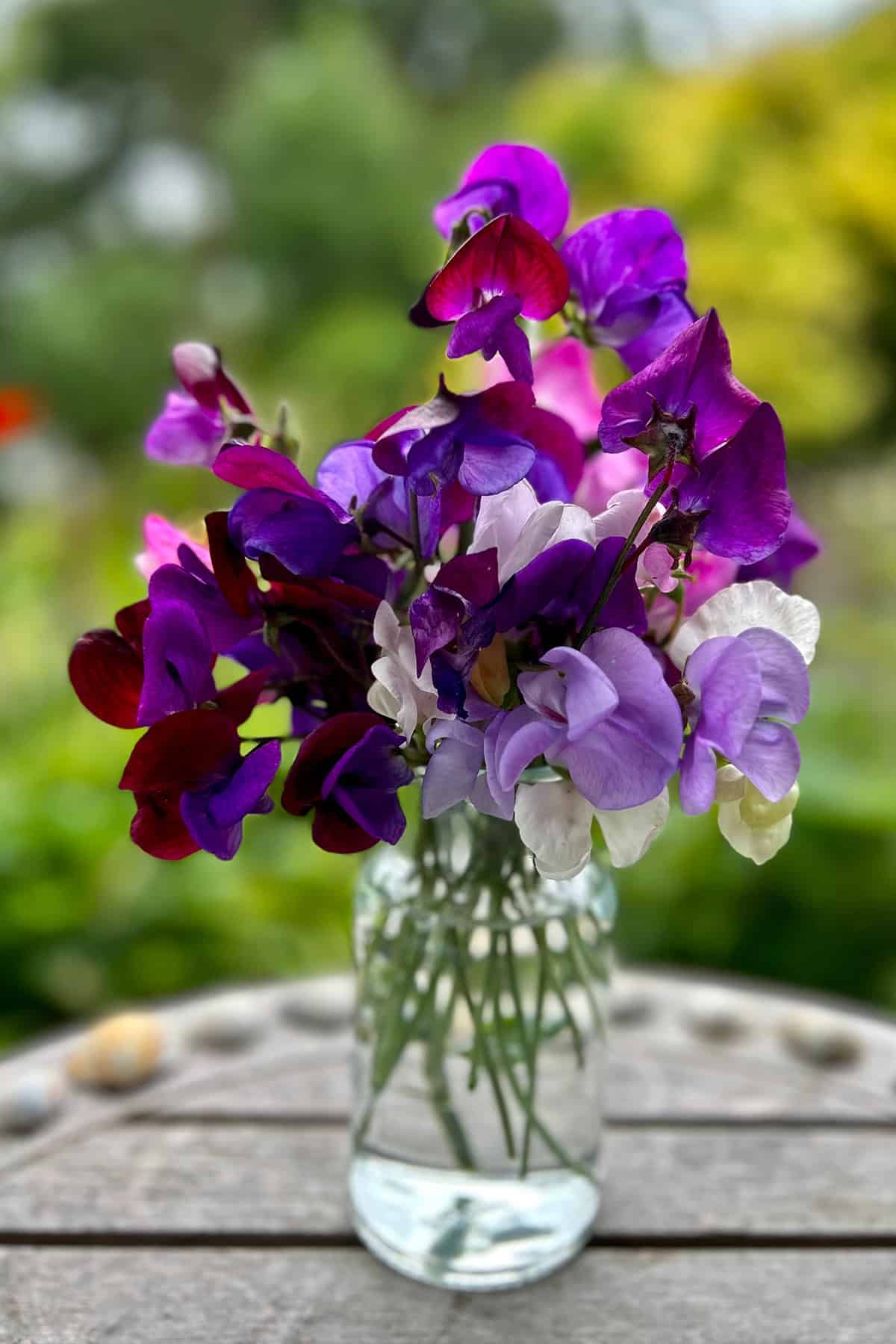
Timing and technique both affect flower quality, and careful handling from the start helps blooms last longer in the vase.
Best Time To Cut For Vases
Pick sweet peas early in the morning while temperatures are cool, which helps the flowers hold moisture. Choose stems with the lower blooms open and the top buds still closed, and avoid fully open or wilted flowers. Cut with sharp, clean scissors, and place stems in cool water right away.
Regular harvesting holds plants in production and encourages more flowers. Check plants every day or two at peak bloom, since frequent picking produces more sweet peas over the season.
How To Extend Vase Life
Proper care helps cut sweet peas last up to a week indoors. Change the vase water daily, trim a little from each stem before returning them to fresh water and remove leaves below the waterline. These steps prevent bacterial buildup and slow stem decay.
Place the vase in indirect light, away from heat. Avoid arrangements near fruit, since ripening fruit releases ethylene, which shortens vase life. Flower preservative or a homemade sugar solution helps, though cool, clean water matters most.