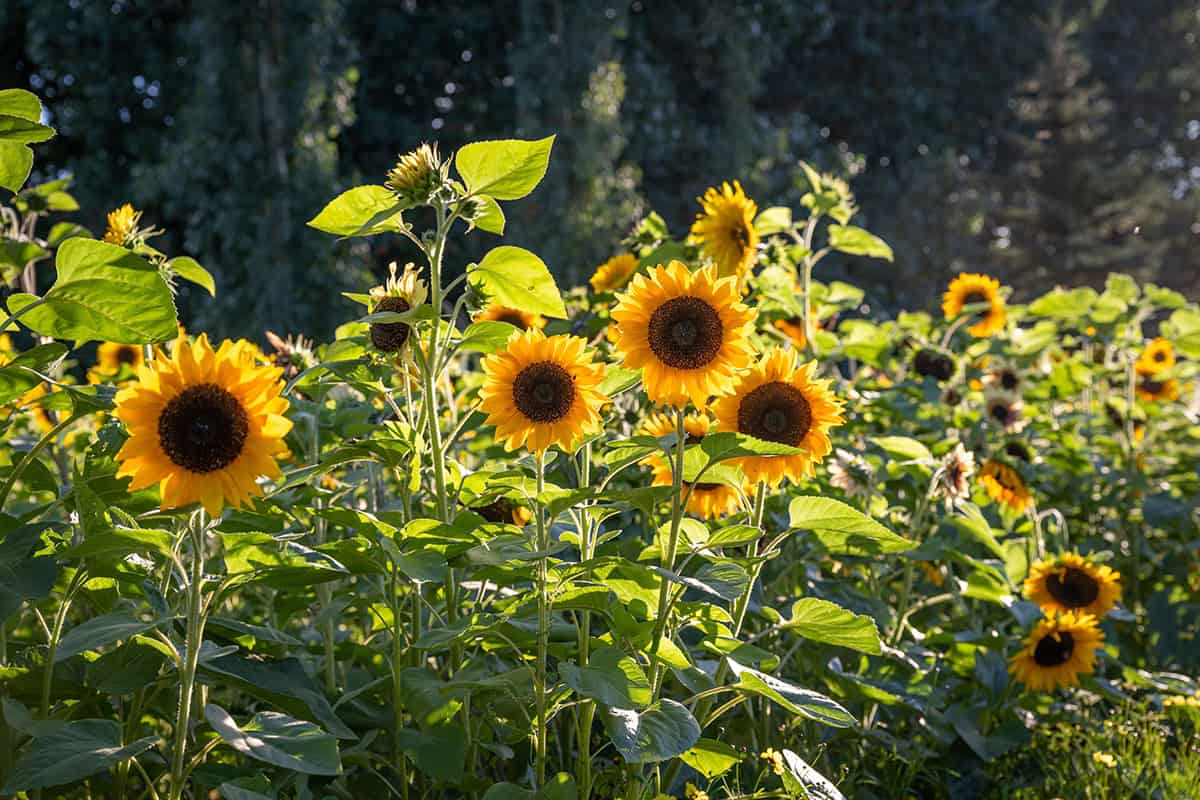
Sunflowers sprout within a week in warm soil and race toward bloom in two to three months. Full sun, loose soil and a deep weekly watering cover most of their needs.
Mature height on the seed packet decides spacing, staking and the right spot in the yard. Netting or paper bags over ripening heads protect the seed harvest from finches and squirrels.
Table of Contents
Why Grow Sunflowers?
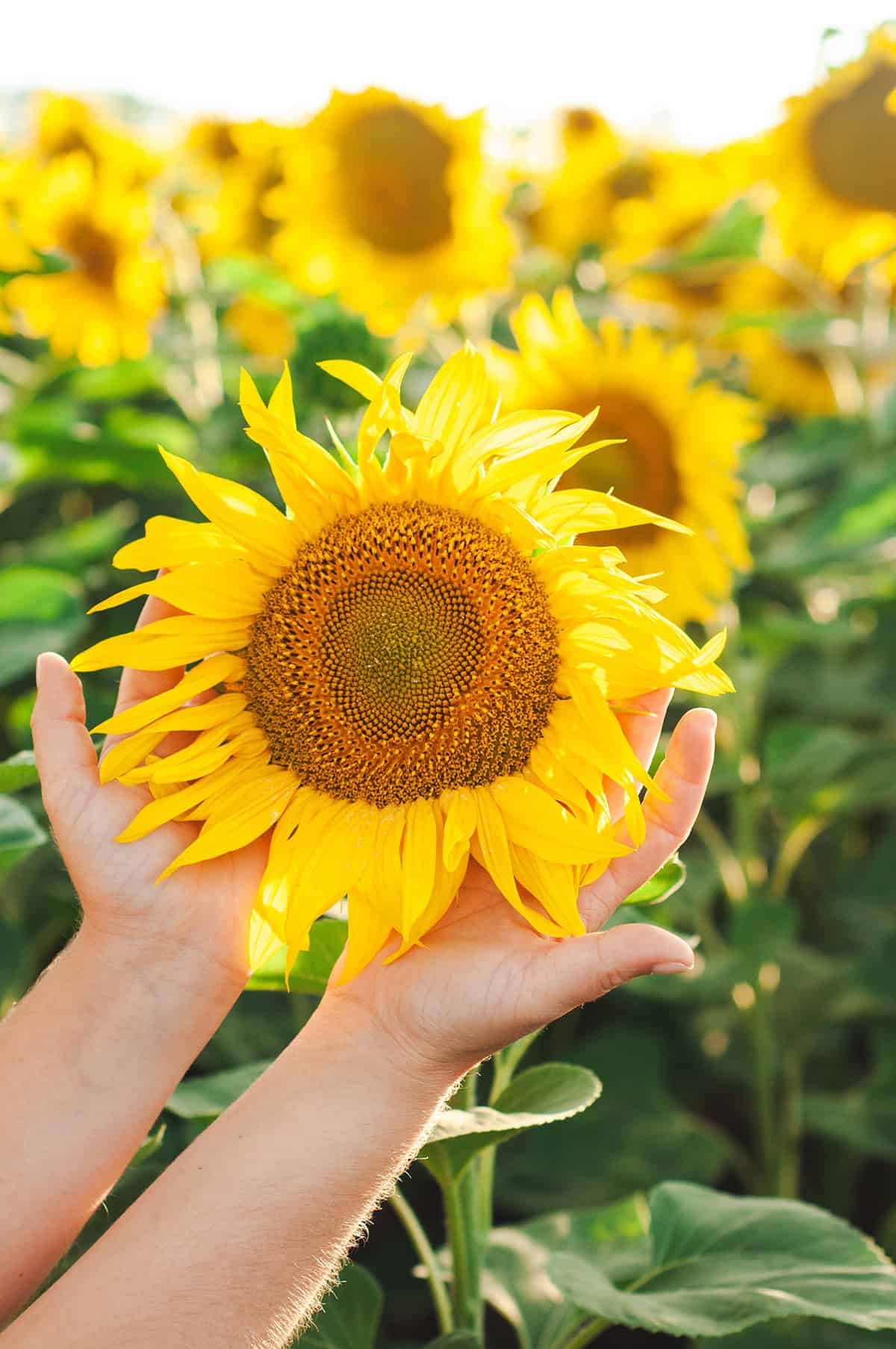
Sunflowers grow fast, tolerate heat and draw bees, butterflies and seed-eating birds. Seed varieties also produce a snack crop by late summer.
The Beauty and Benefits of Sunflowers
Tall stalks, broad flower heads and golden petals mark sunflowers from across the street. Giant types reach 10 feet or taller, and compact ones fit borders and pots.
Each large flower head holds hundreds of small florets rich in nectar and pollen, a magnet for bees. Finches and chickadees pick at the ripe seeds in fall, and roasted seeds supply protein and healthy fats for people.
Sunflower roots and residue release compounds that slow the growth of nearby plants, especially seedlings, so leave space between sunflowers and small vegetables. Clear spent stalks and hulls from beds before the next sowing.
Varieties to Suit Every Garden
Dwarf sunflowers top out near 1 to 2 feet, and giants pass 10 feet. Single-stem types produce one large head, and multi-stem types carry many smaller blooms over several weeks.
Grow oilseed or confection types such as Mammoth Gray Stripe for seeds. Ornamental picks include Moulin Rouge, with deep red petals, and Teddy Bear, a fluffy, double golden dwarf. All need full sun and well-drained soil.
Choosing the Right Sunflower Variety
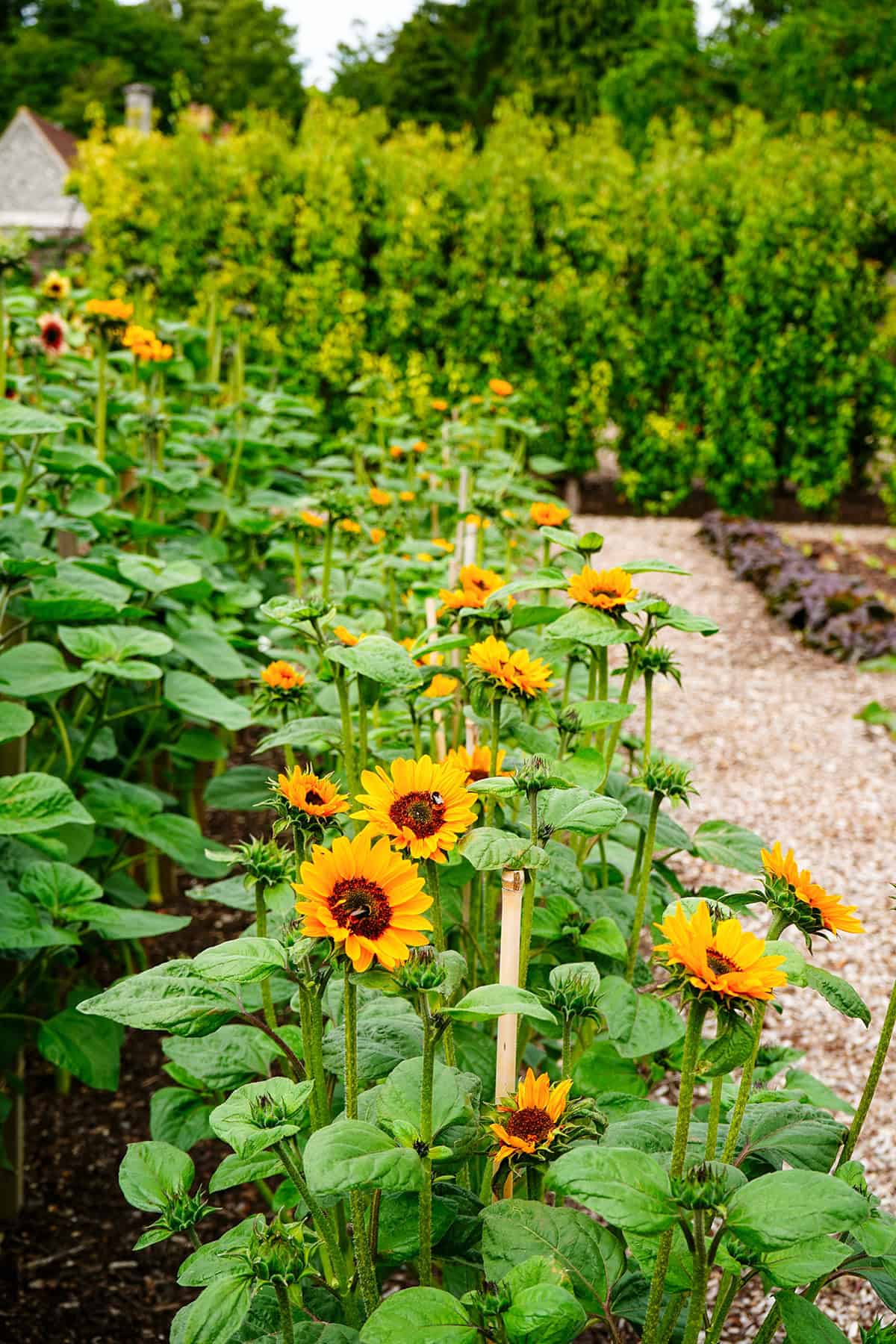
Height, stem habit and pollen production separate sunflower varieties. Match those traits to the planting spot and the main goal, such as seeds, cut flowers or food for pollinators.
Tall vs. Dwarf Sunflowers
Tall sunflowers grow 6 to 12 feet or more and carry heads up to a foot across. Mammoth types produce the biggest seed heads, though they need staking in windy spots.
Dwarf sunflowers top out under 3 feet and fit containers, borders and windy sites. Many bloom sooner, in about 50 to 60 days, and their short stems rarely flop. Choose tall types for drama along a fence, and dwarfs for pots and front borders.
Heirloom and Hybrid Types
Open-pollinated heirloom sunflowers grow true from saved seed. Classics such as Mammoth Russian and Lemon Queen produce plenty of pollen for bees.
Hybrids come from controlled crosses and deliver uniform height, bloom time and color. Pollenless hybrids such as Sunrich and Pro Cut leave no yellow dust on tablecloths and last longer in vases, though they supply little for bees. Seed saved from hybrids grows into mixed, unpredictable plants.
How to Plant Sunflowers
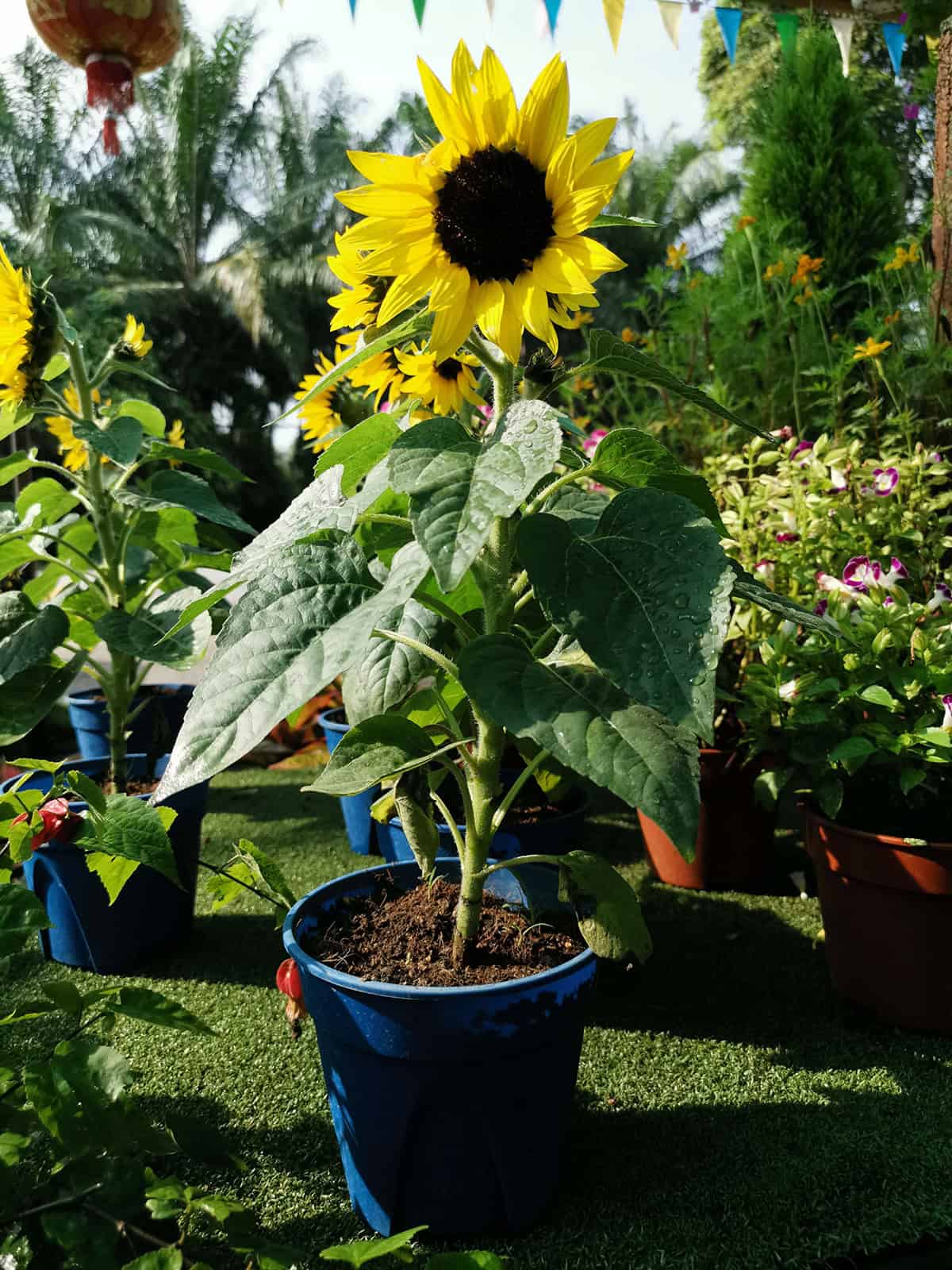
Strong sunflowers start with good timing, a sunny site, loose soil and the right spacing. Sow seeds directly outdoors, since sunflowers resent root disturbance from transplanting.
When and Where to Plant
Sow sunflower seeds outdoors after the last frost, once the soil reaches at least 50°F, and ideally closer to 60°F. Choose a spot with 6 to 8 hours of direct sun, away from the shade of trees and buildings.
Tall varieties need shelter from strong wind, such as a fence or the side of a garage. Plant them on the north side of the garden so their shade falls away from shorter crops. Stagger sowings every two to three weeks until early summer for blooms into fall.
Soil Preparation
Sunflowers grow best in loose, well-drained soil. Heavy clay that holds water rots the roots, and very sandy soil dries out fast.
A pH of 6.0 to 7.5, slightly acidic to slightly alkaline, covers their range. Mix compost or aged manure into the top 8 to 12 inches before planting, clear weeds and break up clods. Low-fertility soil benefits from a balanced slow-release fertilizer, but skip high-nitrogen formulas, which push leaves at the expense of flowers.
Sowing Sunflower Seeds
Plant seeds 1 to 1.5 inches deep. Space tall types 12 to 24 inches apart, giants 24 to 36 inches apart, and dwarf types about 6 inches apart.
Cover the seeds, firm the soil gently and water well. Seedlings emerge in about 7 to 10 days. Thin crowded seedlings to the strongest one at each spot. Birds, squirrels and slugs target seeds and sprouts, so cover the row with netting or a floating row cover until the plants reach a few inches tall.
Caring for Sunflowers
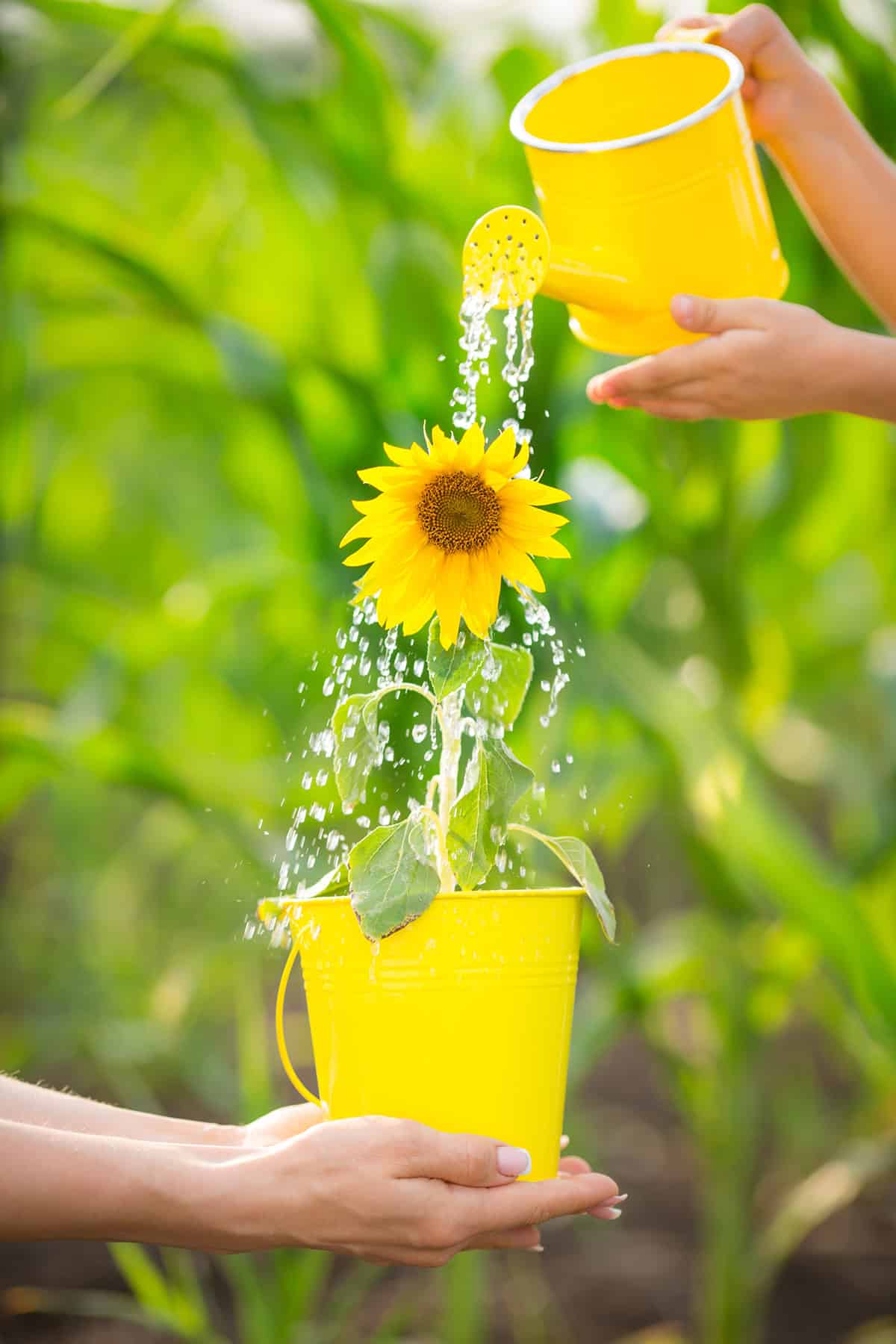
Sunflowers need little care once established. Deep watering, light feeding and support for tall stems produce the biggest blooms.
Watering Needs
Water young sunflowers regularly while roots establish, enough to wet the top few inches. Once plants grow taller, water deeply once a week, enough to soak the soil about 6 inches down. Hot, dry spells call for extra water.
A soaker hose or drip line wets the soil and leaves the foliage dry, which reduces disease. Established plants tolerate short droughts, though steady moisture during bud and bloom produces larger flowers. Avoid soggy soil, which rots the stems at ground level.
Fertilizing for Healthy Growth
Mix compost or a balanced fertilizer into the bed before planting. Most garden soils need little else.
Pale leaves or slow growth call for a light dose of low-nitrogen fertilizer once plants reach about a foot tall. Water after feeding. Heavy feeding produces weak stems and fewer flowers, so err on the light side.
Supporting Tall Sunflower Stalks
Stake tall sunflowers in windy gardens to prevent bent or snapped stalks. Set a sturdy stake a few inches from the stem while the plant is small, which protects the roots.
Tie the stalk loosely with soft twine or strips of cloth, and add ties as the plant grows. Tall types planted in blocks or tight rows brace each other against wind. After storms, check for leaning stalks and retie as needed.
Common Problems and Solutions
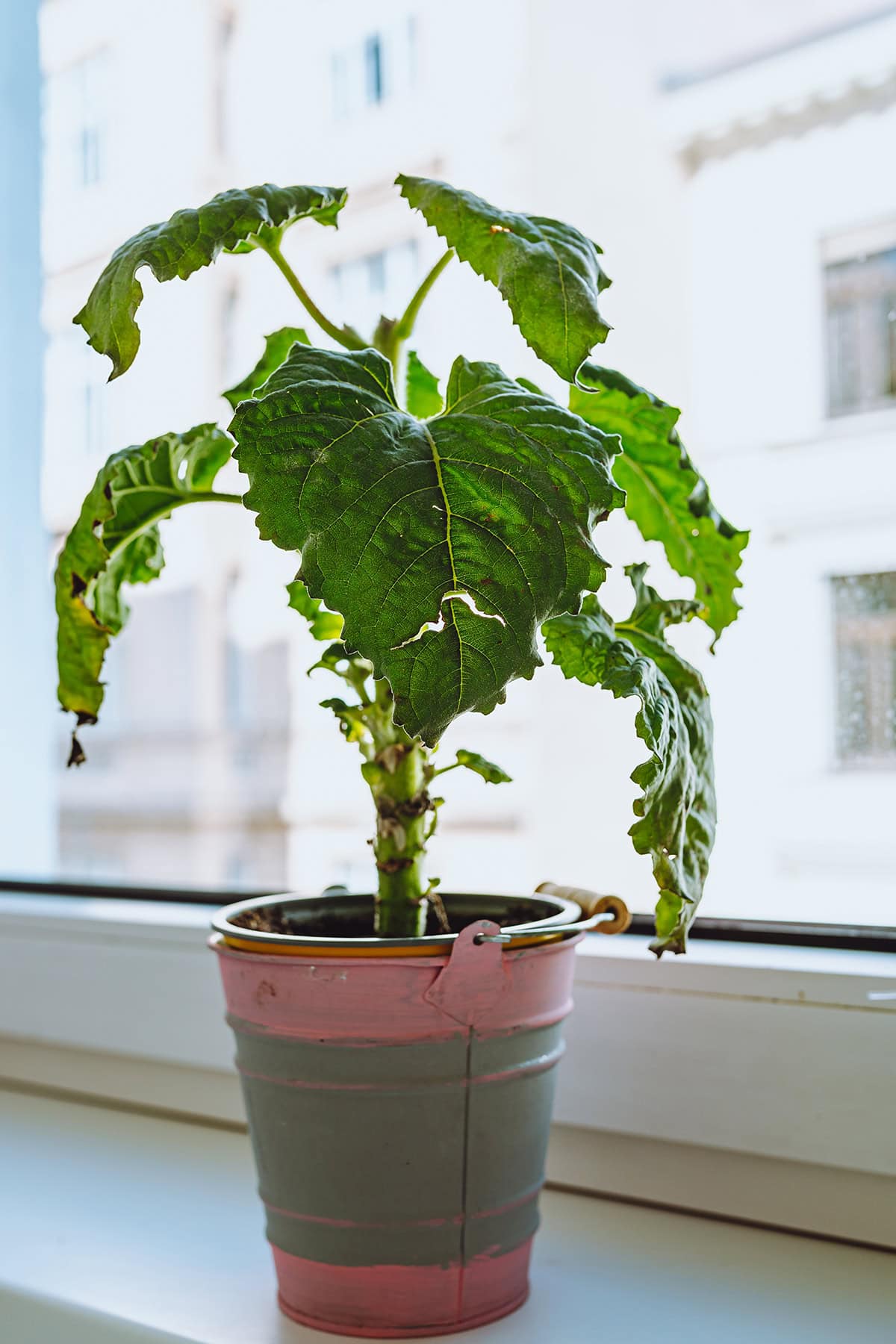
Pests, fungal disease and limp heads cause most sunflower trouble. Quick action limits the damage in almost every case.
Pest and Disease Management
Aphids cluster on stems and the undersides of leaves. Spray them off with water, or use insecticidal soap for heavy infestations. Sunflower moth larvae and head-clipping weevils damage flower heads in parts of North America, and birds strip ripening seeds, so cover the heads with mesh or paper bags once the petals fade.
Downy mildew, rust and powdery mildew spread in humid weather. Water at the soil line, thin crowded plants for airflow and remove infected leaves. Bag diseased material for the trash, since compost piles spread the spores.
Dealing with Poor Growth or Drooping
Weak stems and small heads point to low light. Sunflowers need at least six hours of direct sun, and plants in partial shade lean and stretch.
Drooping in the afternoon heat signals dry soil, and limp stems in wet soil point to root rot. Water deeply, then let the top inch dry before the next watering. Pale leaves and stunted flowers signal low nutrients, so side-dress lightly with a balanced fertilizer. Mature heads droop naturally as the seeds fill and grow heavy, a sign of ripening.
Harvesting Sunflowers
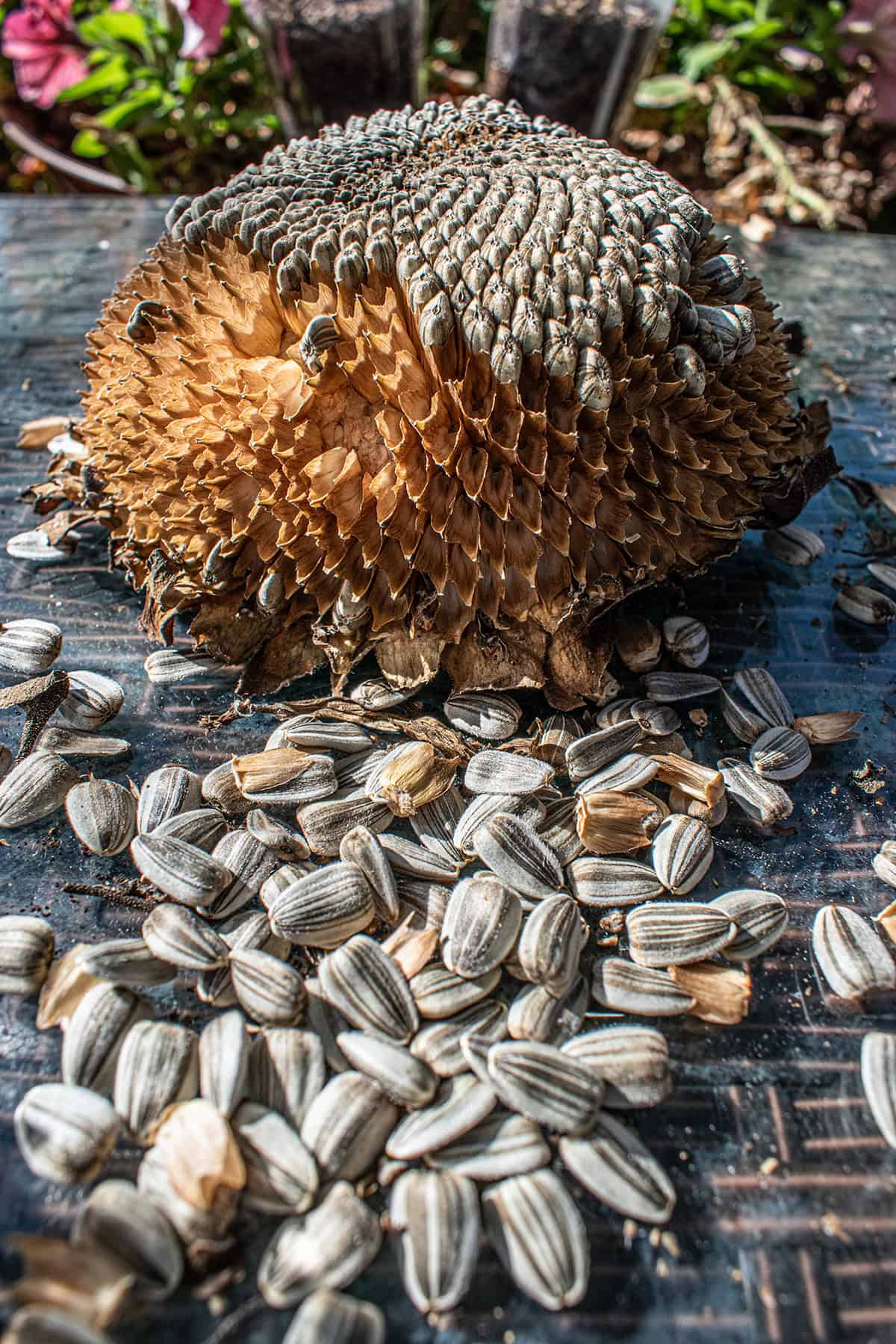
Well-timed harvests protect the seed crop from birds and mold. A dry, airy spot finishes the drying process.
When to Harvest Sunflower Heads
Most sunflowers mature 70 to 120 days after sowing, by variety. The back of the head fades to yellow and then brown, the petals dry and drop, and the seeds look plump with black or striped shells.
Rub a few seeds loose to test ripeness, and check the heads daily once the color changes. Cut the heads with about a foot of stalk attached. Heavy bird damage calls for an early cut, with the heads finished indoors.
How to Collect and Store Seeds
Hang the heads upside down in a dry, airy spot out of direct sun, with paper or mesh bags tied around them to catch falling seeds. Drying takes one to three weeks.
Rub the dried seeds out over a clean surface, pick out debris and spread them out for a few more days of air drying. Store fully dry seeds in an airtight container in a cool, dark spot, labeled with the variety and date. Seeds for planting last several years in cool, dry storage, and snack seeds hold their quality for a few months.
Fun Ways to Use Sunflowers
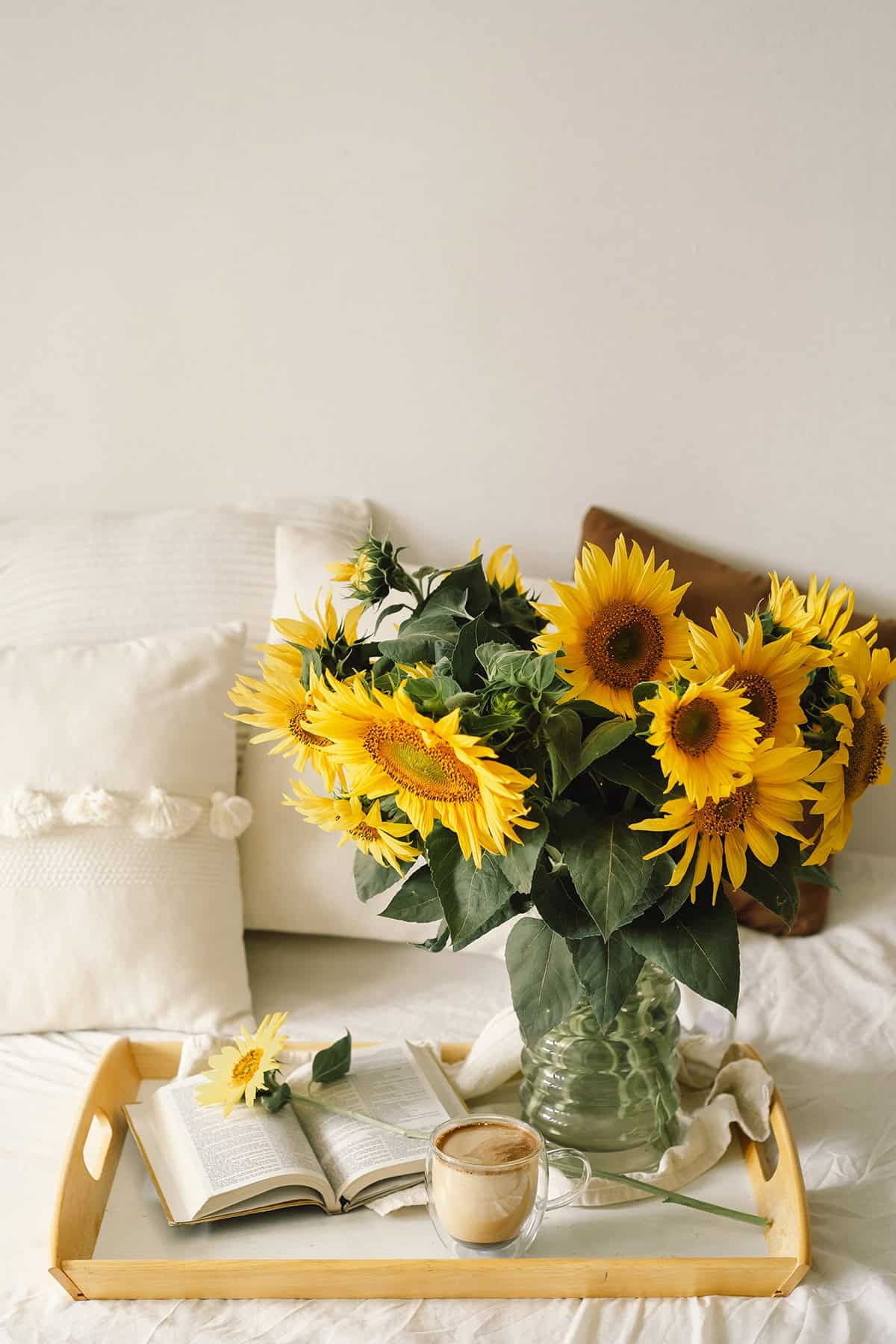
Sunflowers fill vases, supply seed for next season and feed birds and pollinators. Each use calls for a slightly different variety and harvest time.
Enjoying Cut Flowers
Cut sunflower stems early in the morning, once the dew dries, when the petals have just begun to open. Use sharp pruners for a clean cut, strip any leaves below the water line and place the stems in a clean vase of cool water.
Change the water and trim the stem ends every two days. Set the vase out of direct sun and away from ripening fruit, which releases ethylene gas and shortens vase life. Branching and pollenless varieties produce the best cutting stems, and smaller blooms fit petite vases or mixed bouquets.
Saving Seeds for Next Season
Saved seed from open-pollinated varieties grows true the next year, and hybrid seed produces mixed results. Leave the heads on the stems until the backs fade to yellow or brown and the seeds look plump, then cut them with a foot of stem.
Dry the heads in a cool, airy spot for about a week, then rub the seeds loose by hand. Store them in a paper envelope or a glass jar with a loose lid, labeled with the variety and date, until spring. Different varieties grown together cross-pollinate, so grow a single variety, or bag the flower heads before they open, for pure seed.
Attracting Birds and Pollinators
Pollen-rich sunflowers draw honeybees, native bees and butterflies, which also visit nearby vegetables and flowers. Avoid pesticides around the blooms to protect these visitors.
Leave a few mature heads standing in fall, and finches, chickadees and nuthatches arrive to pick out the seeds. Several varieties with staggered bloom times extend the season for wildlife. Pollenless hybrids look the same but supply far less food for bees, so mix in pollen-producing types.