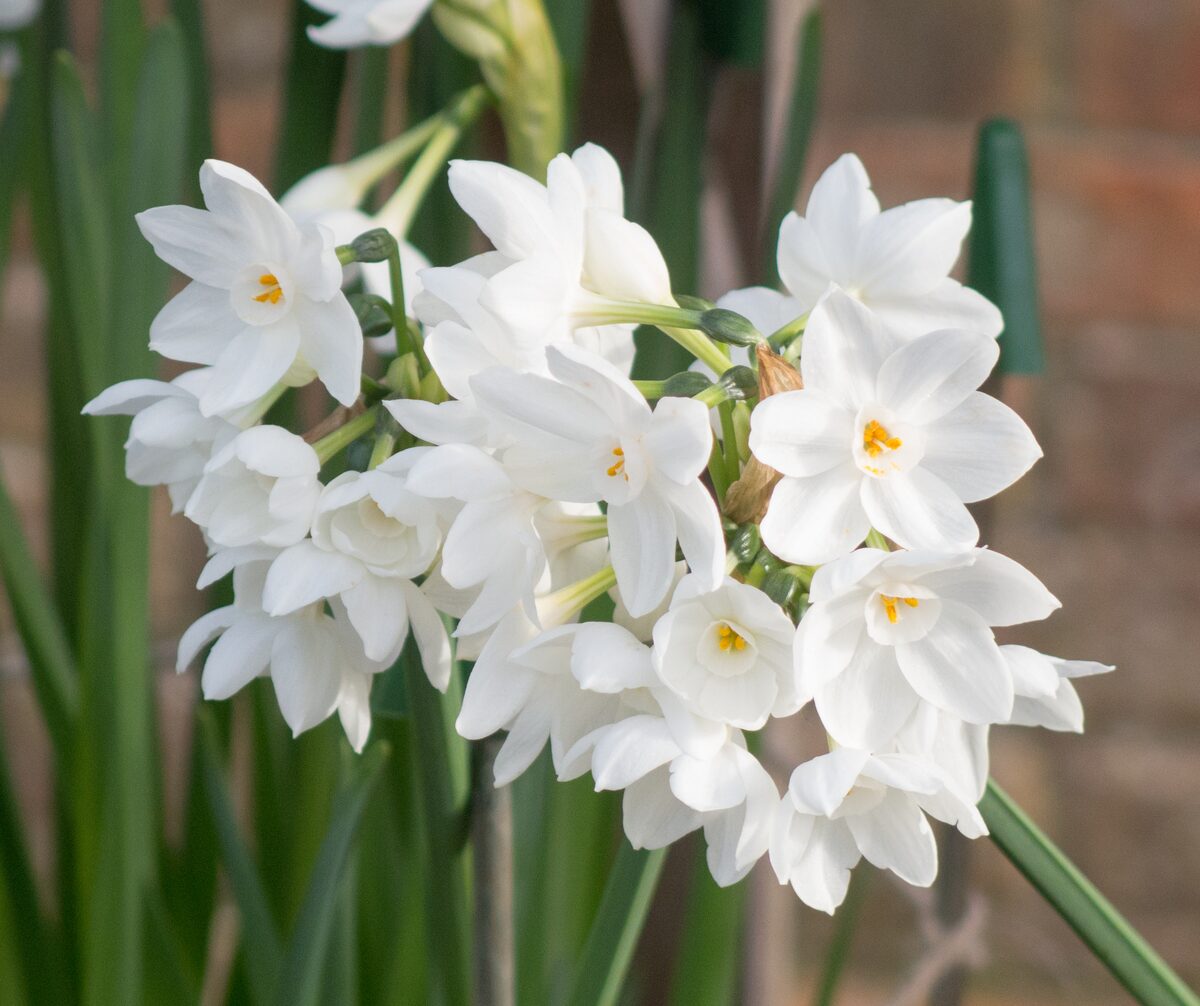
Paperwhites bloom indoors with almost no effort. They need no cold storage, and a bowl of pebbles and water on a bright windowsill produces fragrant white flowers in about four to six weeks.
The main challenge is height. In a warm house the stems stretch fast and topple just as the blooms open, and a splash of diluted alcohol in the water fixes the problem.
This guide covers timing for holiday blooms, choosing bulbs, growing in water or soil, light, temperature, and what to do once the flowers fade. The first step starts below.
Table of Contents
What Paperwhites Are
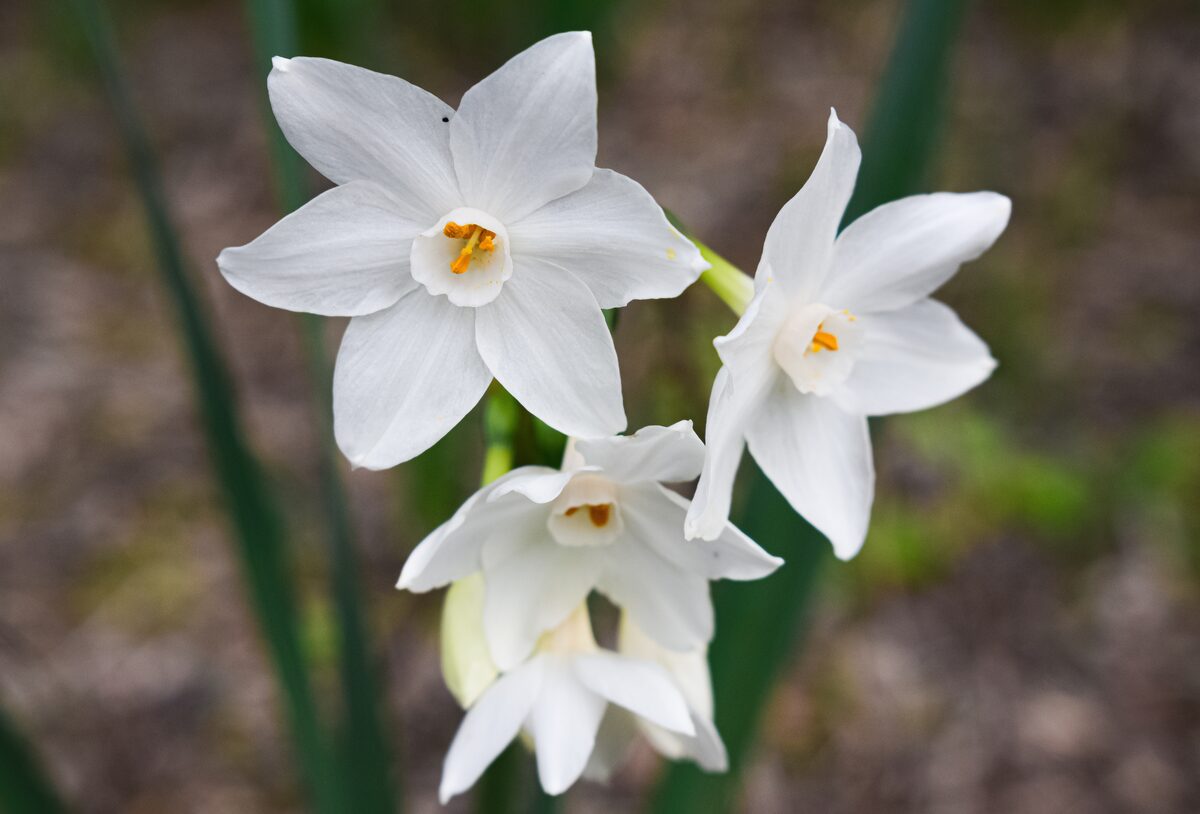
Tender and quick to flower, the bulbs sold as paperwhites belong to the genus Narcissus. Garden centers list them as Narcissus papyraceus or as tazetta types such as ‘Ziva’. Each stem carries a cluster of small white blooms with a scent that certain noses find overpowering.
Their great advantage for growing indoors is the lack of any chilling requirement. Tulips and hyacinths need weeks of cold before forcing, and paperwhites skip that stage altogether. A bulb bought in late fall goes straight into a bowl and begins rooting soon after.
One caution belongs at the start. The bulbs are toxic to cats and dogs if chewed, which means every bowl should sit well out of reach of curious pets.
When to Plant for Holiday Blooms
How early should bulbs go in for a December display? Count back four to six weeks, since that is the typical span between planting and open flowers.
Bulbs set out in the first half of November have a reasonable shot at mid-December color. Room temperature shifts that schedule in either direction, which means any calendar date is only an estimate.
For a longer season indoors, stagger the planting. A fresh pot every two weeks through late fall and early winter means a new batch opens as the previous flowers fade. Mark each planting date on its pot with a grease pencil to track the sequence.
Choosing Healthy Bulbs
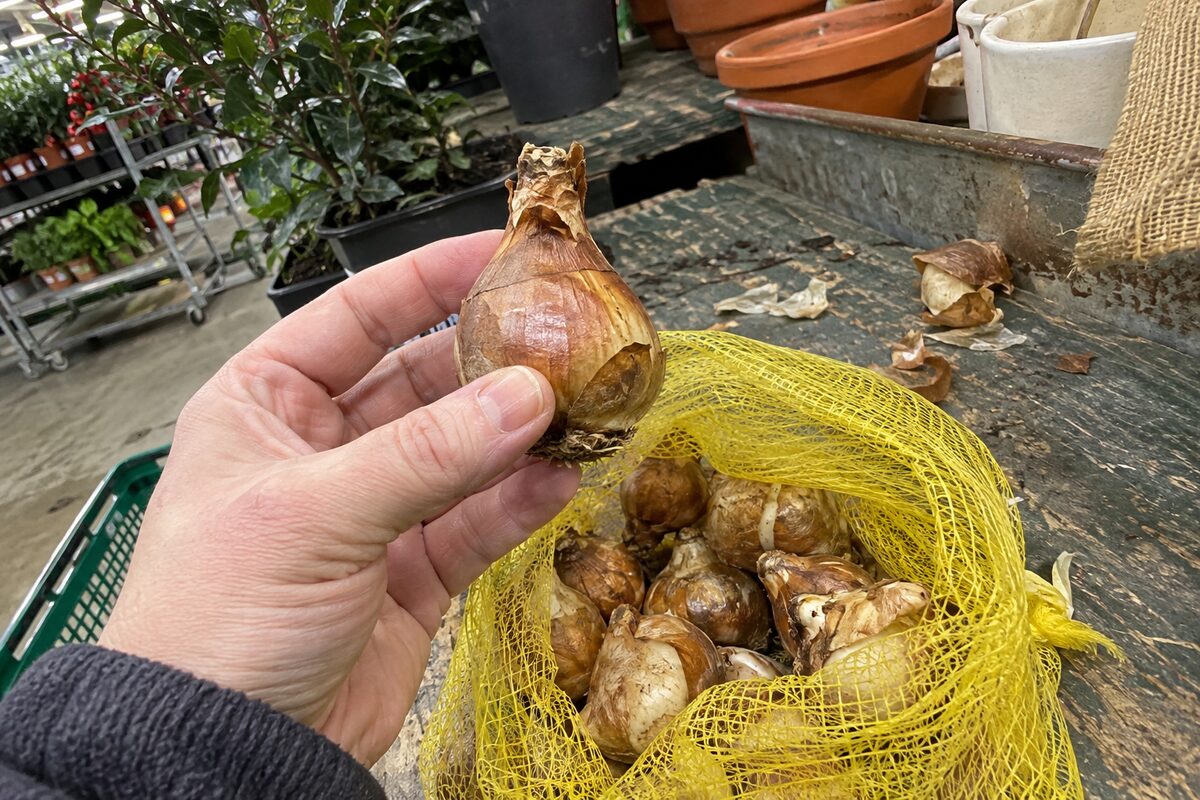
In early fall, as the first shipments reach garden centers, look for bulbs that are firm and heavy in the hand. Press the base gently with a thumb. Soft spots, mold, or a sour smell point to rot, and those bulbs belong in the compost.
Papery outer skins that flake or split are normal and harmless. A pale green shoot tip already showing at the neck is fine too, and those bulbs simply need planting soon.
The common mistake happens after purchase. Bulbs left in a hot car or on a sunny sill may dry out or sprout early. Store them in a cool, dry, dark place until planting day.
Growing Paperwhites in Pebbles and Water
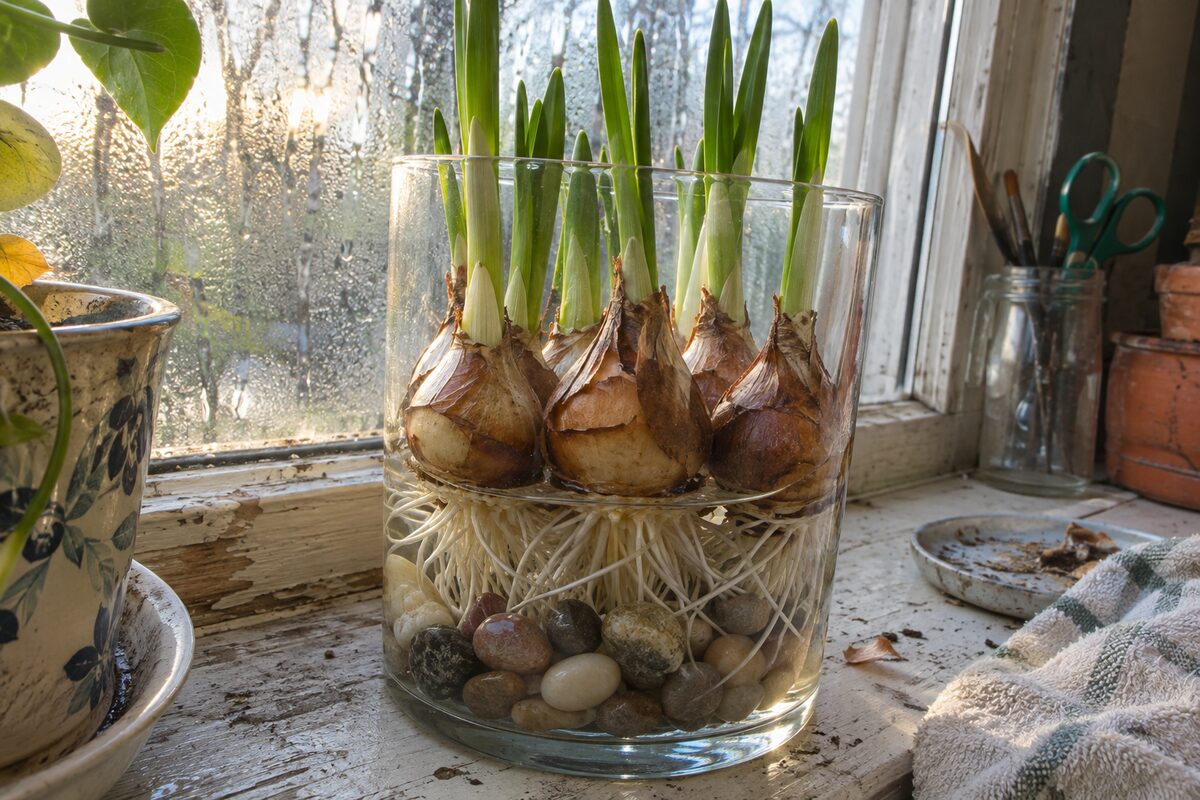
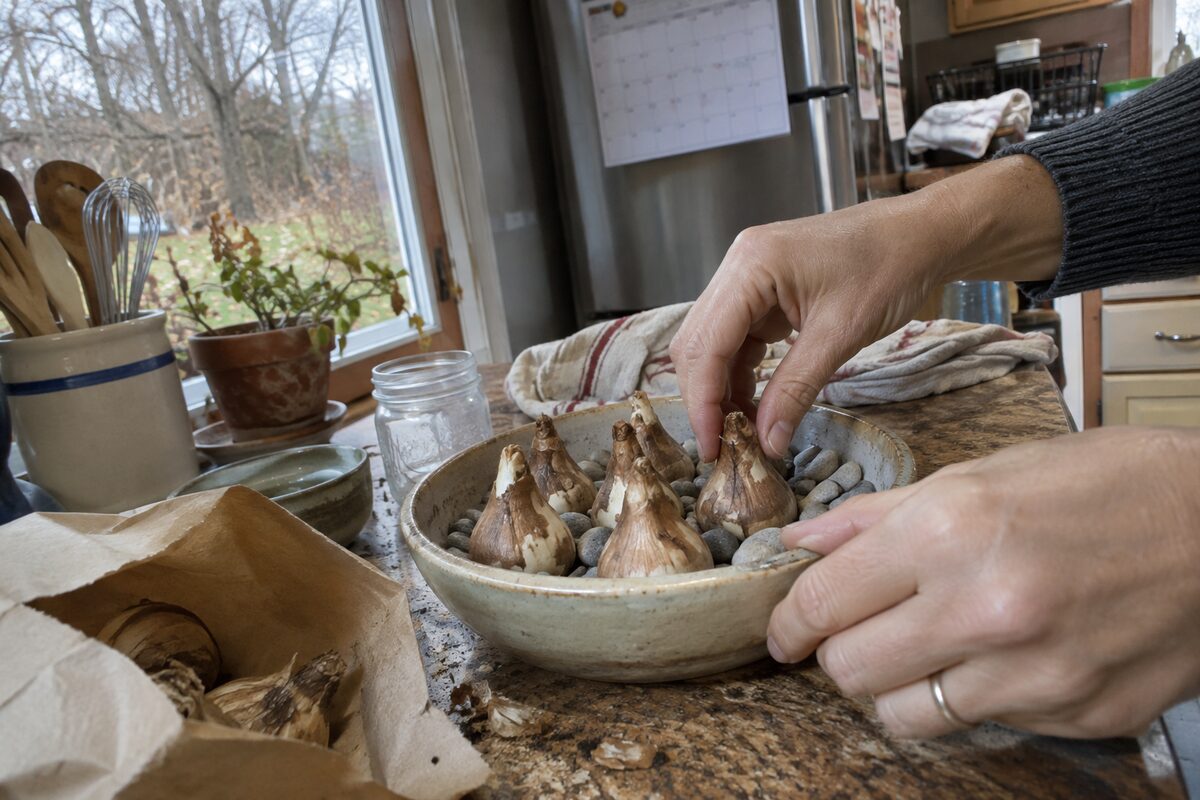
One watertight bowl and a bed of gravel, pebbles, or glass beads make up the entire setup for paperwhites in water. The bulbs sit pointed end up, close enough that their sides nearly touch, and more stones around them hold them steady.
Pour in water until it reaches just the base of the bulbs. The roots grow down to find it, and water that covers the bulb itself invites rot.
Check the level every couple of days and top it up as it drops. A clear glass vessel shows the waterline and the white roots spreading through the stones, which makes refilling easy to judge.
Growing Paperwhites in Soil
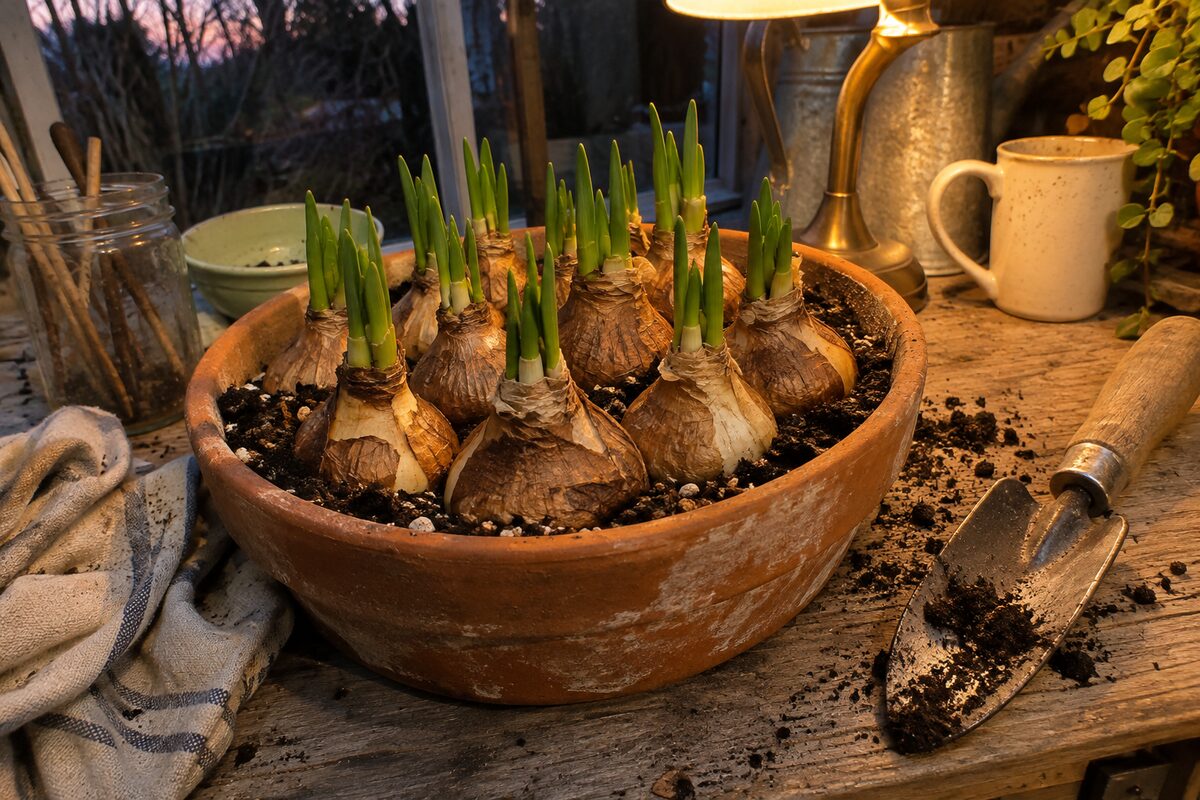
In a shallow pot with a drainage hole, regular potting mix anchors paperwhite bulbs firmly. Fill the container partway, set the bulbs pointed end up and close together, then add mix until only their upper halves show.
Water thoroughly once and let the excess drain away. After that, moisten the mix whenever the surface dries, because soggy soil around the bulbs leads to rot. Clay and plastic pots both hold up fine as long as water escapes freely.
A layer of moss or small stones over the surface hides the bare mix on a dining table or sideboard. Skip garden soil indoors, since it packs down hard in a pot and drains poorly.
Light and Temperature
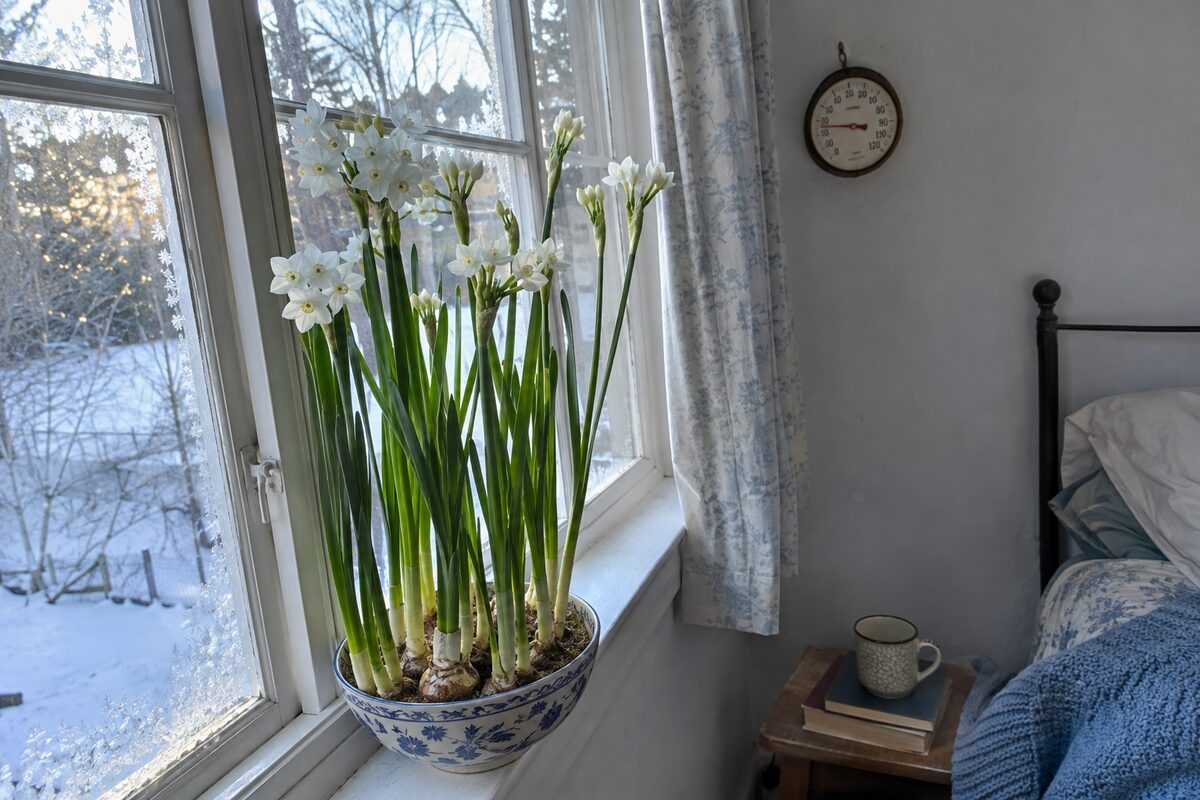
Move the container to the brightest window available as soon as green shoots show. Strong light slows the stretch of leaves and flower stalks, and dim light lets them grow pale and lanky.
Cool air is the other half of the equation. Rooms in the 60s °F produce shorter, sturdier stems, and a spot near a heat register or above a radiator pushes fast, weak growth. A bright guest room with the thermostat lowered is a good home for the bowl.
Rotate the bowl a quarter of the way around every few days, which evens out any lean toward the glass.
Keeping Stems From Flopping
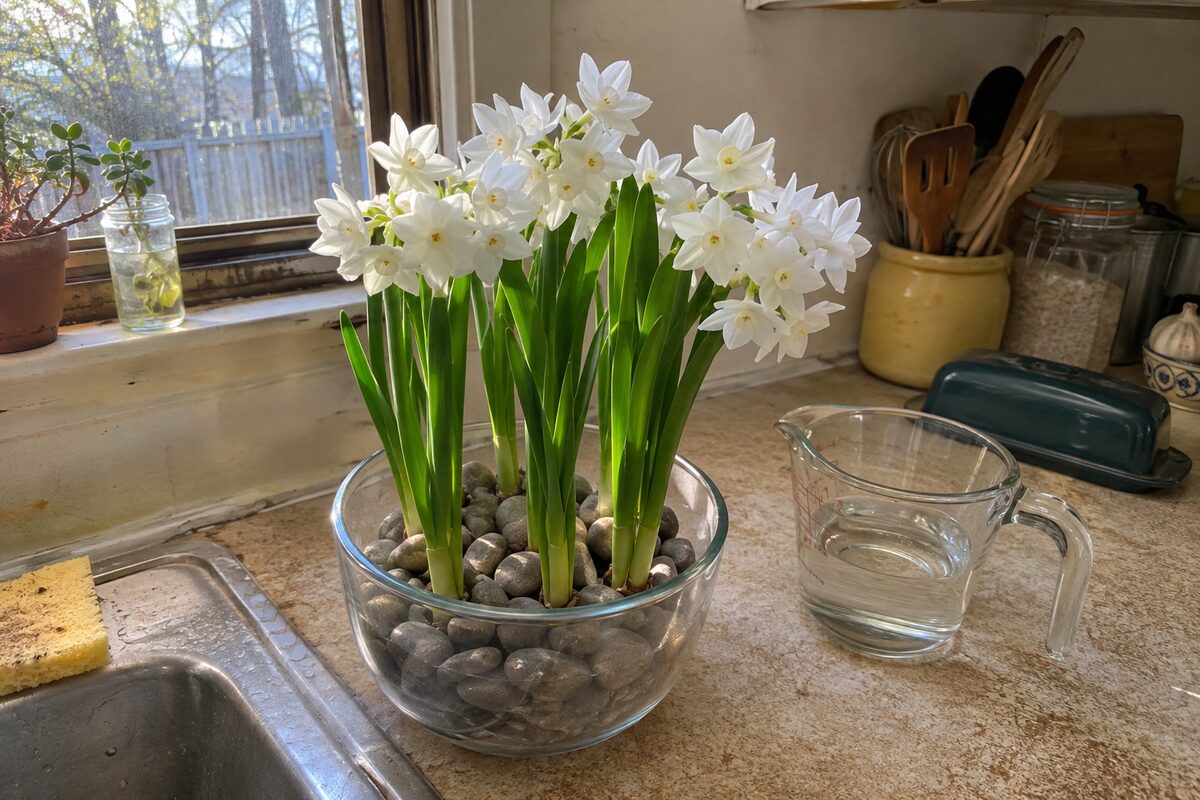
Because forced stems stretch quickly in a warm living room, the flower clusters tend to topple just as they open. Research by William Miller at Cornell University’s Flowerbulb Research Program found a fix in the liquor cabinet.
Once shoots reach 1 to 2 inches tall, pour off the water and replace it with a 4 to 6 percent alcohol solution. Plants grown this way come out a third to a half shorter, with the same flowers.
For the mix, combine 1 part 40 percent spirits such as gin or vodka with 7 parts water. Rubbing alcohol at 70 percent goes in at 1 part to about 11 parts water. Beer and wine are off the list entirely.
How Long the Flowers Last
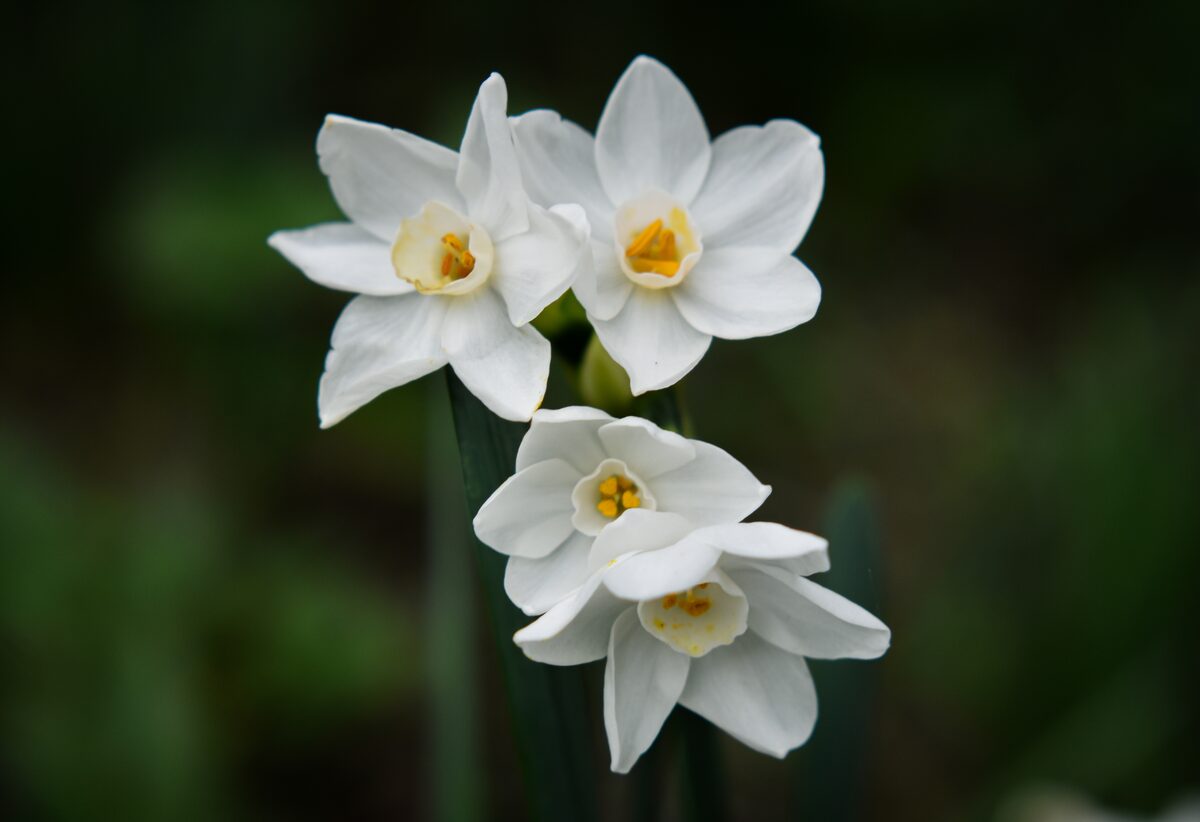
Room temperature has the biggest say in the length of the show once the first buds split. A spot in the 60s °F holds the blossoms in good condition longer, and warmth from a heater or fireplace hurries them past their peak.
Snip individual florets as they brown, and the cluster looks tidy until the last buds fade. Topping up the water through bloom time also helps the stems hold firm.
Placement indoors also affects how strongly the scent fills a room. Guests sensitive to the fragrance will appreciate a bowl in an entry hall, well away from the dining table.
What to Do After Flowering
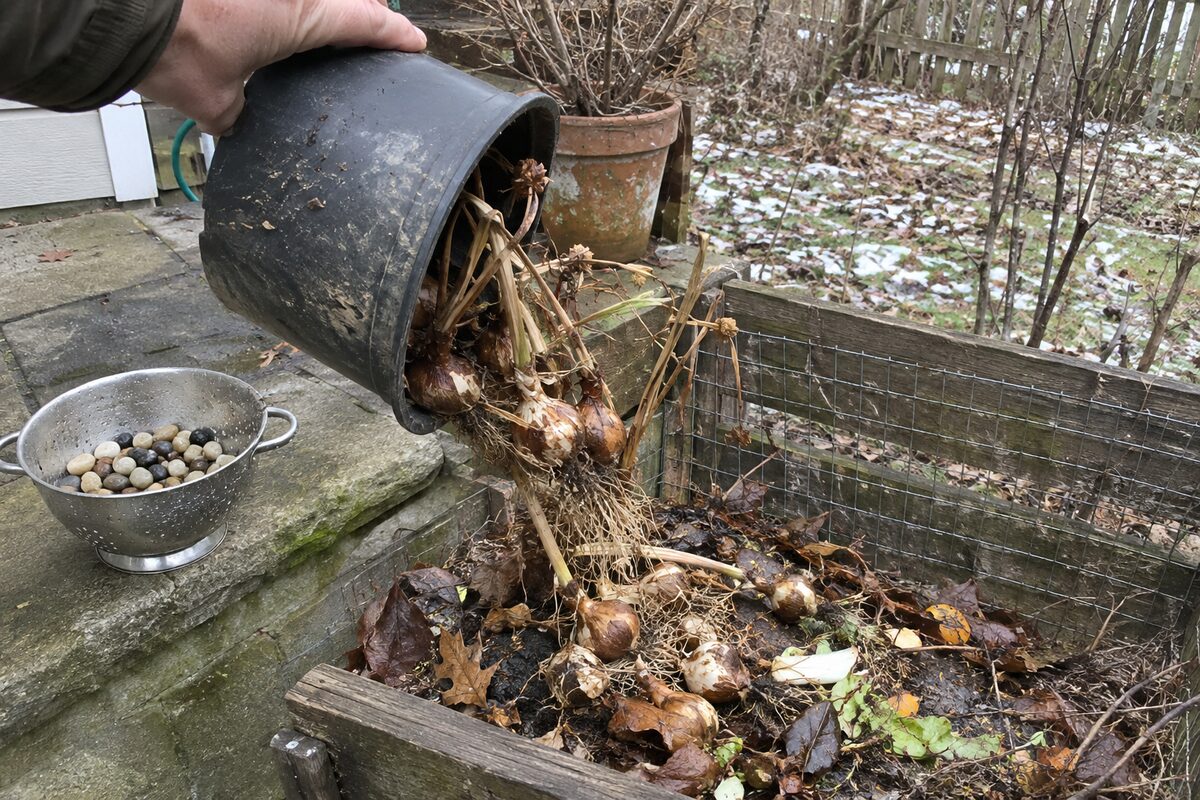
Shrunken and spent after weeks in water, forced paperwhites have little energy left for another round of blooms. Most gardeners add them to the compost pile and rinse the pebbles for next year.
Homeowners in about zones 8 to 10 have another option. Planted outdoors in a sunny garden bed, the bulbs may flower again in later years. Let the foliage die back on its own once they are in the ground.
Wash the bowl well before storing it, especially after an alcohol solution. Dispose of old bulbs where pets have no access, since a chewed bulb is toxic to cats and dogs.
Common Paperwhite Problems
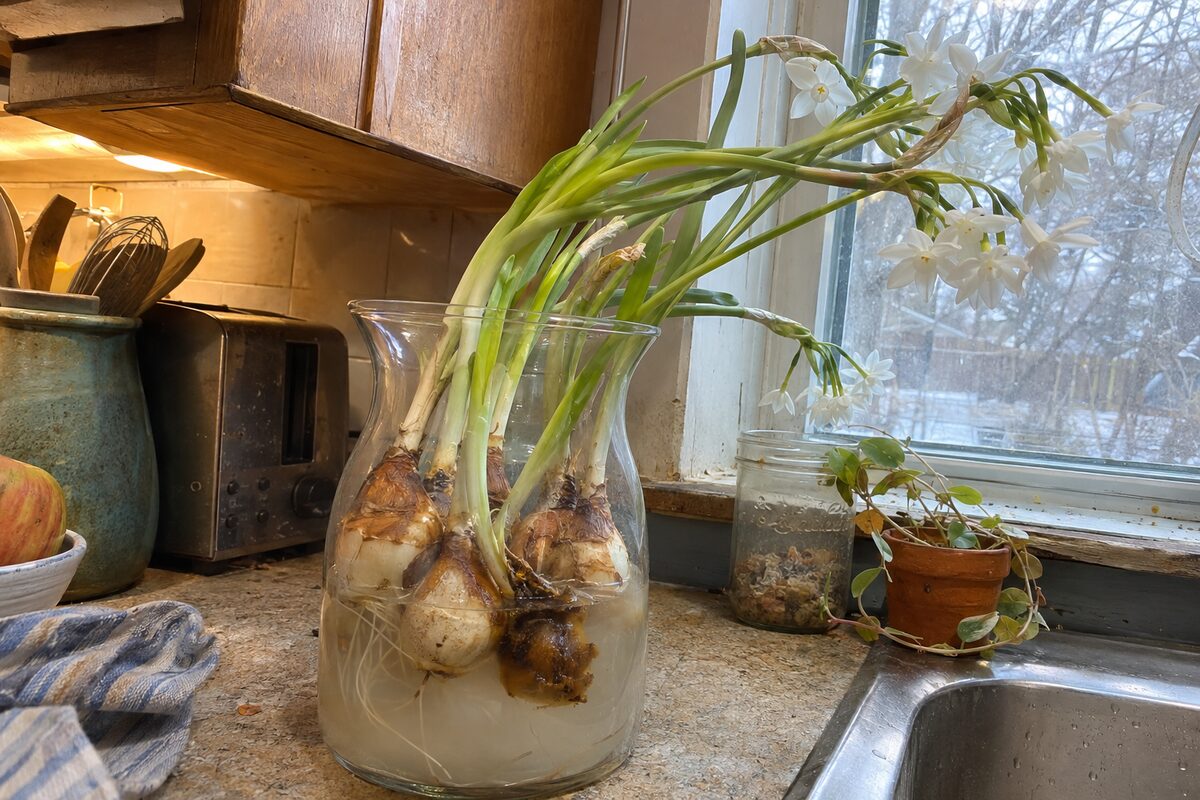
Since bulbs sitting in water rot readily, a mushy base or a foul odor tops the list of trouble. Cloudy water is an early warning sign. Pull any soft bulb, rinse the rest, and refill until the waterline sits beneath them.
Pale, lanky growth leaning hard toward the glass points to dim light and a warm room. Shift the bowl to a brighter, cooler spot, and try the diluted alcohol method on the next batch.
Fragrance is its own complaint. Certain households find the scent strong enough to bother them, and a bowl in a mudroom or porch room indoors lets everyone enjoy the flowers at a distance.