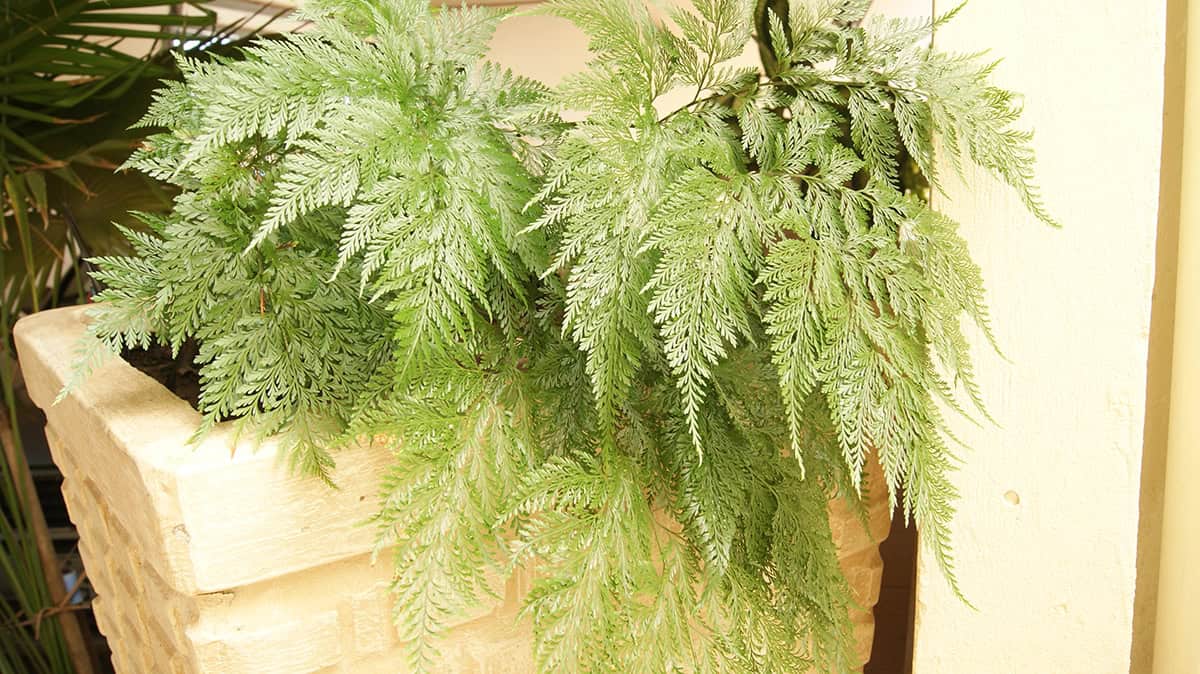
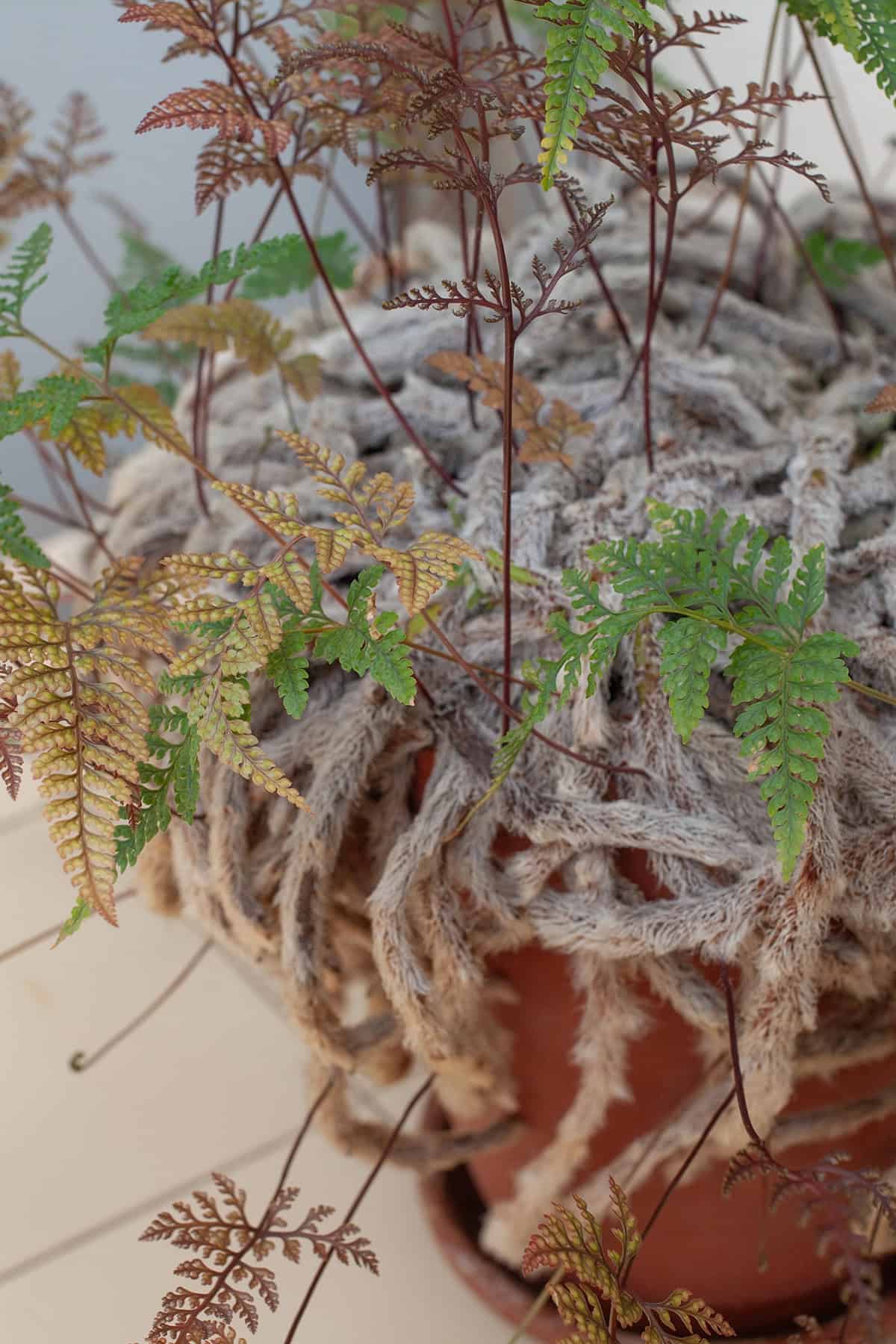
Fuzzy, silver-brown rhizomes creep over the rim of the pot like small furry paws, and they are the reason rabbit’s foot fern earns a spot on countless shelves. In the wild the plant grows on tree bark and rocks and catches moisture from humid air and rain that trickles down the bark.
Those paws belong on top of the mix, never under it, and that single rule prevents the most common way this fern dies.
Table of Contents
Light
Rabbit’s foot fern grows best in bright, indirect light for most of the day. Gentle morning sun is fine, but strong direct sun through glass scorches the fronds quickly.
East-facing windows are ideal, and a north-facing window is fine in a bright room. In dim corners, growth slows and the fronds thin out. A grow light set about 12 inches above the fronds is a good backup, and consistent light matters more than intensity.
Soil
Choose a loose, airy potting mix that holds some moisture but never goes soggy, closer to the crevices of tree bark than heavy garden soil.
A peat-based or coir-based houseplant mix with added perlite or fine orchid bark is ideal, and heavy, compacting blends cause rot.
Set the furry rhizomes on top of the mix. They are creeping stems that absorb moisture from the air, and burying them leads to rot.
Drainage is essential. Avoid rich, dense soils, and focus on a mix that drains freely and holds an open structure.
Water
Aim for evenly moist, never soggy, mix. Let the top half inch dry before watering again, which mimics the plant’s natural cycle.
Check with a finger instead of following a strict schedule. Dry indoor air, especially in winter, speeds drying, and warm rooms mean more frequent watering. Use room-temperature water, since cold water shocks the roots.
Water the mix directly and avoid drenching the rhizomes, which rot in constantly wet conditions. Good drainage is essential.
Filtered or rainwater prevents mineral buildup. Every few months, flush the pot with plain water until it runs clear from the bottom.
Temperature and Humidity
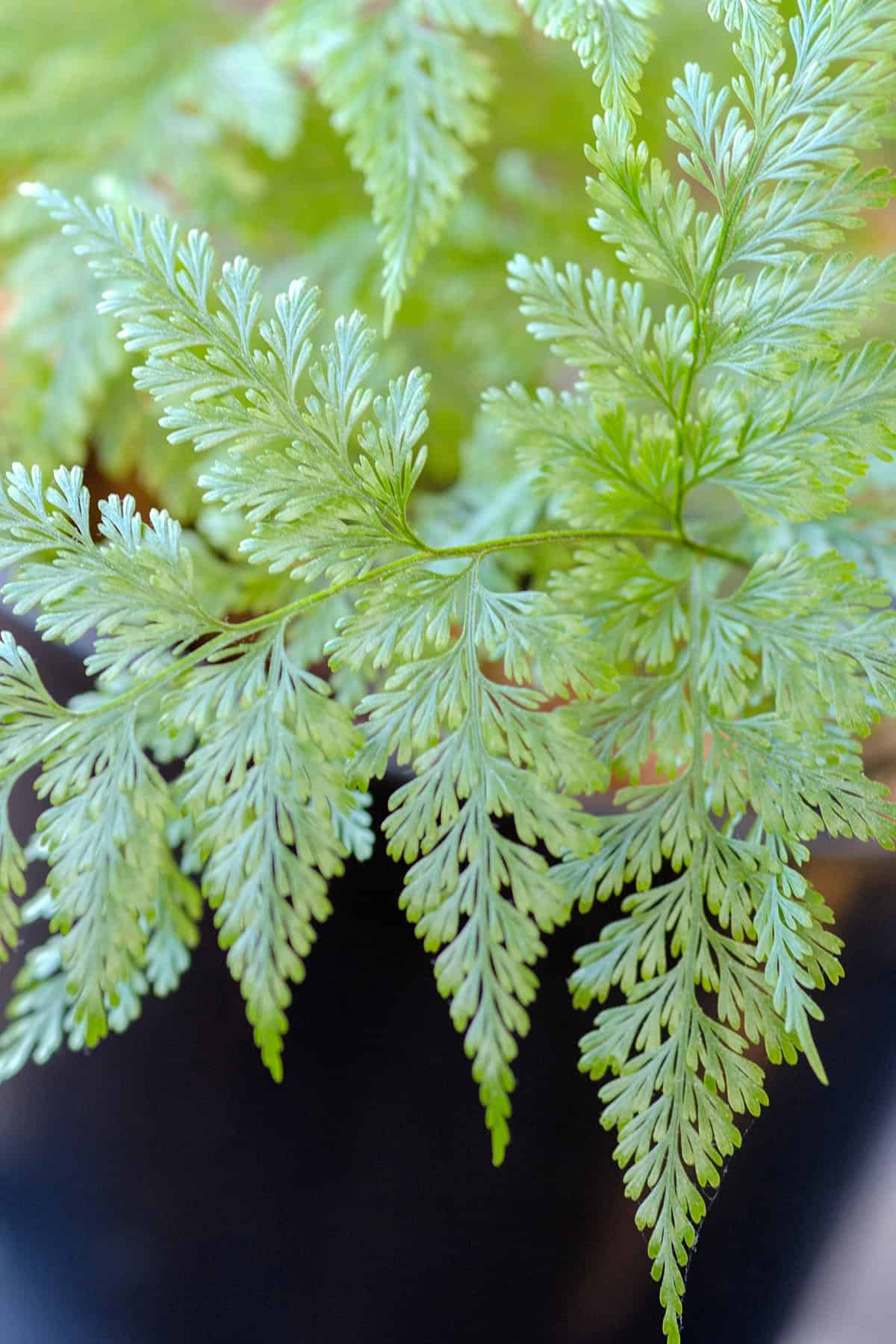
Rabbit’s foot fern likes the same temperatures people do, about 60°F to 75°F. Cold drafts and wide swings stress it, and very high heat is unwelcome too. Stable night temperatures support steady growth.
Moderate to high humidity is helpful, and dry air causes brown frond tips. A bright bathroom is a perfect spot, and grouping plants raises humidity.
The rhizomes need air and dislike constant dampness. Place the plant away from hot air vents, and provide gentle airflow to prevent rot.
Fertilizer
Feed lightly. As an epiphyte, this fern is adapted to small, scattered nutrients, and heavy feeding stresses the roots and rhizomes.
Use a balanced houseplant fertilizer at a quarter to half strength every four to six weeks in spring and summer. Skip feeding in fall and winter, when growth slows.
Avoid splashing fertilizer on the rhizomes, which burns them. Water first if the mix is dry, then feed. Brown tips signal salt buildup, so flush the pot with plain water every few months.
Propagation
Dividing the rhizomes is the easiest way to propagate. Cut sections that each carry at least a couple of healthy fronds, and press them onto moist, airy mix so they rest on the surface.
A clear cover raises humidity until the section roots. Once new fronds appear and the piece is anchored, care for it like an established plant.
Spores are another option, though slow and fiddly. They appear as rows of brown dots on the undersides of mature fronds.
Pruning
This fern needs only light trimming. Remove old, brown or damaged fronds for a tidy look, since the plant sheds older fronds naturally.
Use clean, sharp scissors and cut close to the rhizome. Torn tissue invites disease.
The rhizomes are the plant’s energy stores, so trim them only when diseased. Rhizomes wandering over the pot edge are normal and a sign of health.
Prune during the growing season, when extra light and warmth speed recovery, and maintain steady care afterward.
Potting and Repotting
Wide, shallow pots are best, since the rhizomes creep across the surface. Drainage holes are essential. Plastic holds moisture a little longer than clay. Hanging baskets also show off the trailing rhizomes beautifully.
Set the rhizomes on the surface with only the fine roots covered. Use a loose, peat- or coir-based mix with good drainage, and press it gently around the roots to anchor the plant.
Repot when the rhizomes crowd the edges, roughly every couple of years. Move up only one pot size, and use fresh mix.
Best Spot Indoors
Choose a spot with bright, indirect light, since direct sun crisps the fronds quickly. An east window or a window with a sheer curtain is ideal.
Stable warmth and humidity produce the best growth. Avoid drafts, heating vents and very dry air, and consider a bright bathroom.
Allow room for the rhizomes to spread over the pot edge. A shelf or plant stand with good airflow is better than a cramped, stuffy corner.
Common Problems and Troubleshooting
Yellow fronds most commonly point to overwatering or poor drainage. Let the surface dry slightly between waterings, and leave the rhizomes uncovered to prevent rot.
Brown tips suggest dry air or salt buildup. Consistent humidity helps more than frequent misting, and filtered water with an occasional flush prevents salt damage.
Pale, slow-growing fronds signal low light. Move the plant to a brighter spot out of direct sun, since scorched fronds result when it sits too close to a sunny window.
Spider mites, thrips and fungus gnats appear at times. Dry air invites mites, and soggy mix attracts gnats. Rinse the plant gently, and use insecticidal soap if needed.
Mushy or dark rhizomes indicate rot, caused by burying them or overwatering. Improve airflow, water less and repot into a loose mix if the damage spreads.
Plant Varieties
Several ferns share the common name. Davallia fejeensis is the species most commonly sold as rabbit’s foot fern, with finely cut, lacy fronds and soft, silvery rhizomes that spill over the pot edge. It adapts well to indoor life.
Davallia solida has broader, glossier fronds and a sturdier look, and compact forms under 18 inches tall fit shelves and hanging baskets.
Davallia canariensis, known as hare’s foot fern, has thicker, leathery fronds and a denser habit. Care is the same, though it spreads wider. Plant labels are inconsistent, so the furry rhizomes and finely divided fronds are the most reliable clues.