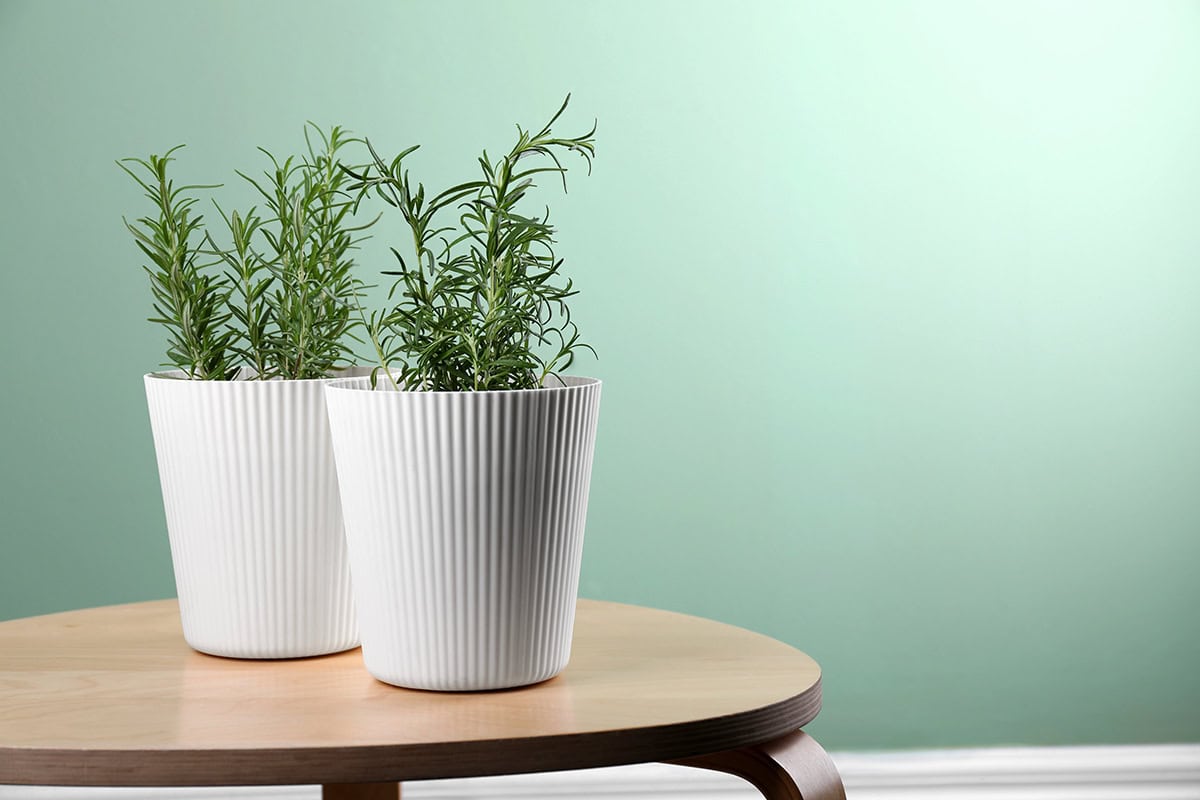
Rosemary that sails through summer on the patio tends to sulk once it moves indoors for winter. The light drops, the air dries out, and the pot that drained fast outdoors holds moisture for a week on a windowsill.
A south window, a clay pot and a stingy watering habit fix most of that, and cool nights encourage pale blue flowers in late winter.
Table of Contents
Planting
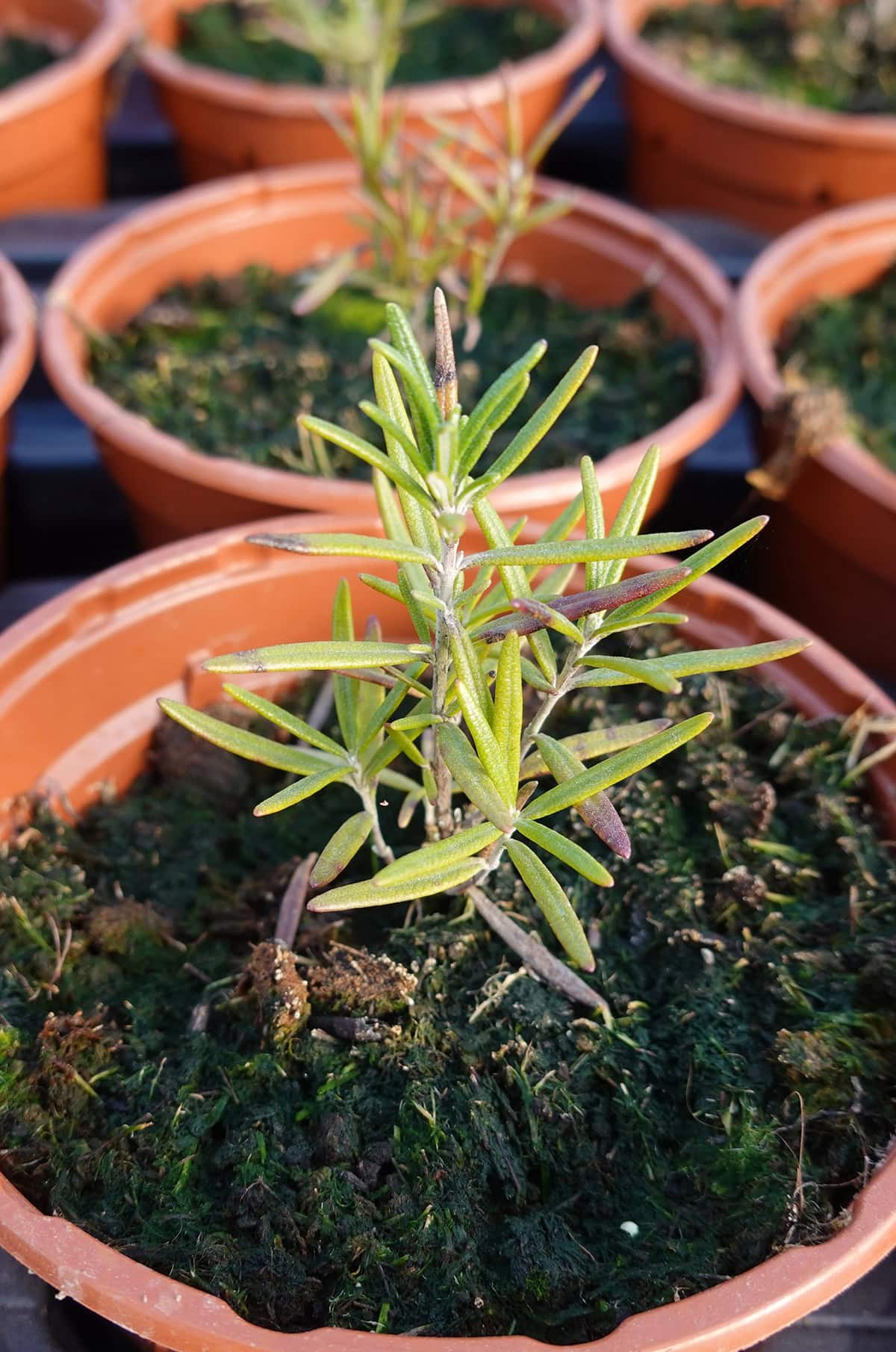
Indoor rosemary starts with the right pot, the right mix and a healthy start, whether a cutting or a nursery plant. Each choice affects the roots, moisture levels and growth, and a good setup prevents problems later.
Container and Drainage
Choose a pot at least 10 to 12 inches wide and deep, which allows the roots room. Shallow pots crowd the roots and hold the mix wetter than rosemary likes.
Drainage holes are essential, since water needs a quick exit to prevent root rot.
Terracotta and unglazed clay are excellent choices, since moisture escapes through the walls. Plastic holds water longer and calls for extra care with watering. Use a saucer, and empty it right after watering.
Soil
Rosemary hates wet roots. A loose, fast-draining mix produces healthy roots, while heavy, dense soil stresses the plant.
Use a potting mix for herbs or containers, and add coarse sand or fine gravel for extra drainage. Garden soil compacts indoors and should be avoided.
The finished mix should be light and crumbly. Aim for a pH around 6.5 to 7.5, and skip mixes heavy in peat or moisture-retaining additives.
Seeds or Cuttings
Rosemary grows from seed, though cuttings are far quicker and more reliable. Seeds germinate slowly and unevenly, especially indoors.
Cuttings also produce a plant identical to the parent. Snip a 4 to 6 inch stem from a healthy plant, strip the lower leaves and insert it into moist, airy mix. Rooting hormone improves success.
Water to hold the mix barely moist until roots form, which takes two to four weeks. Once established, treat the new plant like a mature one and water less.
Light
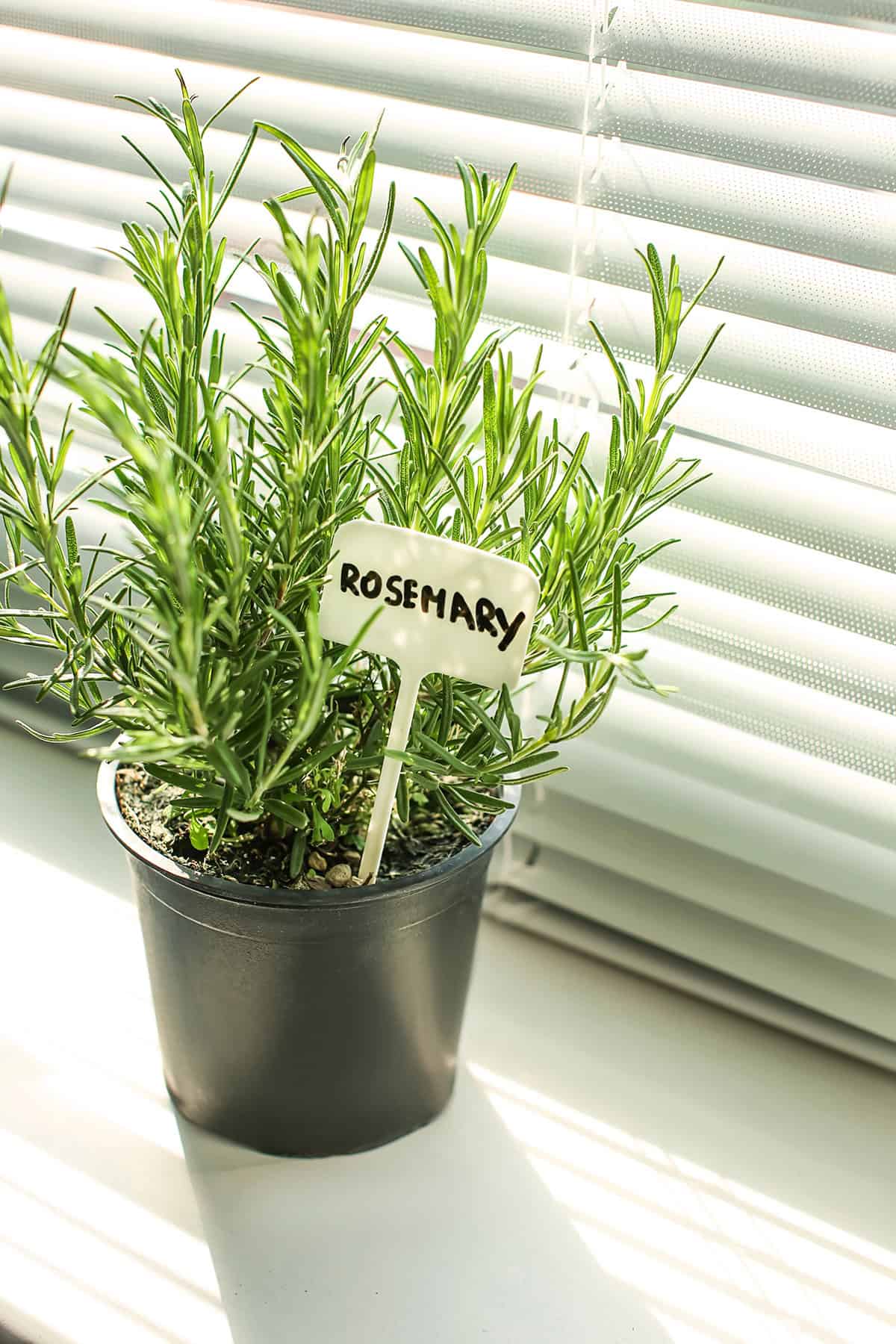
Rosemary needs plenty of sun, with at least 6 to 8 hours of direct light a day. A south-facing window is the best choice, and bright east or west windows are fine when unobstructed.
Leggy stems or pale leaves mean the plant needs more light. Rotate the pot every few days for even growth.
Where natural light falls short, grow lights fill the gap. Aim for 14 to 16 hours a day under artificial light, with the fixture close enough to be effective, about 6 to 12 inches above the plant.
Water
Let the mix dry between waterings, and wait until the top couple of inches are dry before watering again. Overwatering is the fastest way to kill indoor rosemary, while short dry spells cause little harm.
Water slowly until it drains from the bottom, then empty the saucer. Indoor winter air is very dry, and brown needle tips at that time of year come mainly from dry air.
Frequency depends on season and light. Plants in bright windows or under grow lights dry out faster than those in cooler spots. Watering every week or two is typical, though always check the mix first.
Feeding
Indoor rosemary is a light feeder. A light, diluted fertilizer applied occasionally is better than frequent feeding, since too much produces soft stems and weaker flavor. Rosemary prefers lean conditions.
Use a balanced liquid fertilizer at half strength every four to six weeks in spring and summer. Stop feeding in fall, when light levels drop.
Watch the plant for clues. Pale needles suggest a light feeding is due, while floppy growth or a white crust on the pot means too much fertilizer. Flush the mix with plain water to clear salt buildup.
Small pots run out of nutrients faster, and fresh potting mix each spring reduces the need for fertilizer.
Pruning
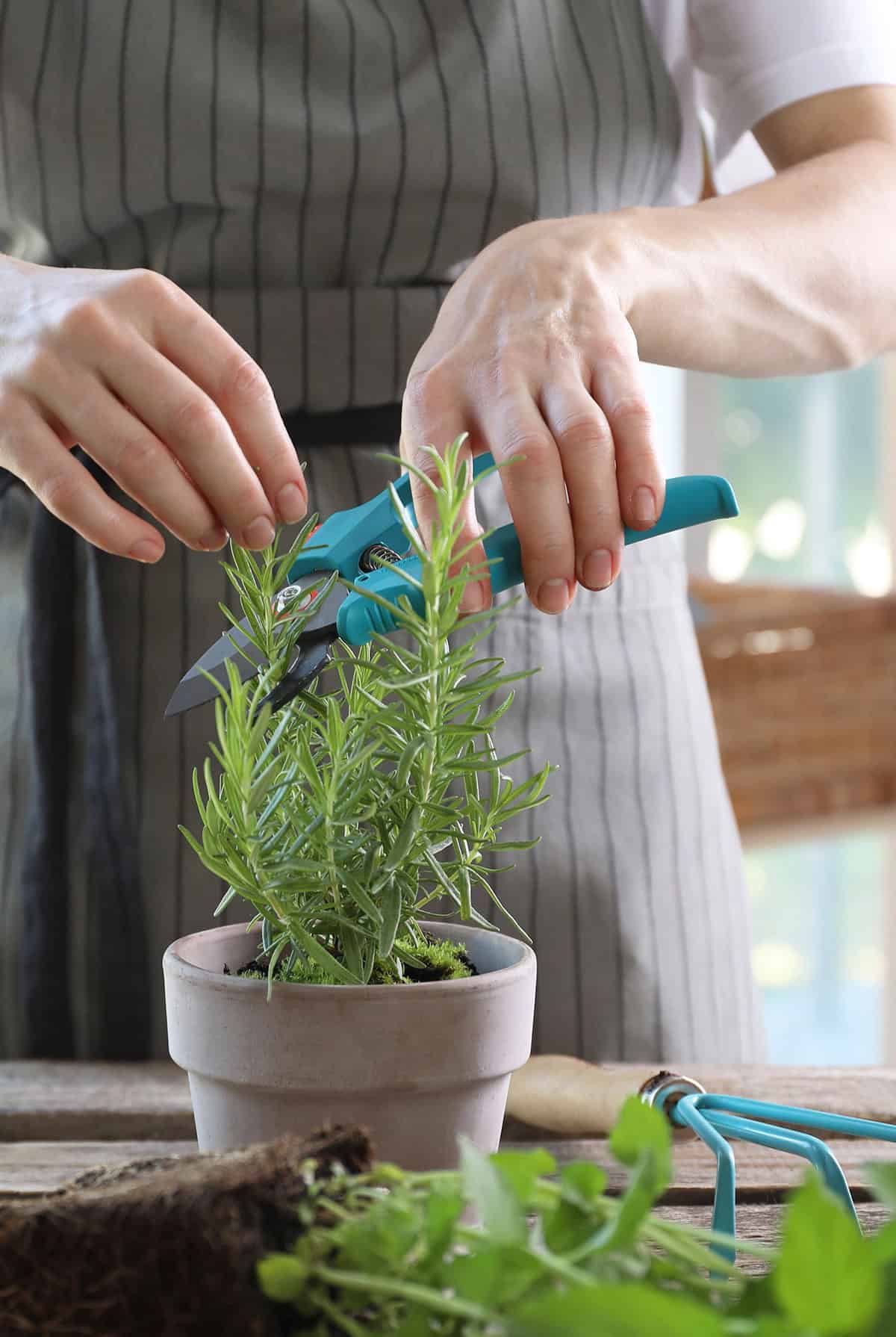
Regular snipping produces a bushy, productive indoor rosemary. Once the plant is growing well, trim a little at a time from the green, flexible stems, which produce new shoots and improve airflow.
Use sharp, clean scissors, and remove no more than a third of the plant at once. Cut just above a leaf node to push growth outward. After flowering, a heavier trim thickens the plant. Avoid cutting into bare wood, which rarely resprouts.
Use trimmings fresh or refrigerate them. Light, frequent pruning is better than occasional heavy cuts, and a few weeks between sessions allows recovery.
Harvest
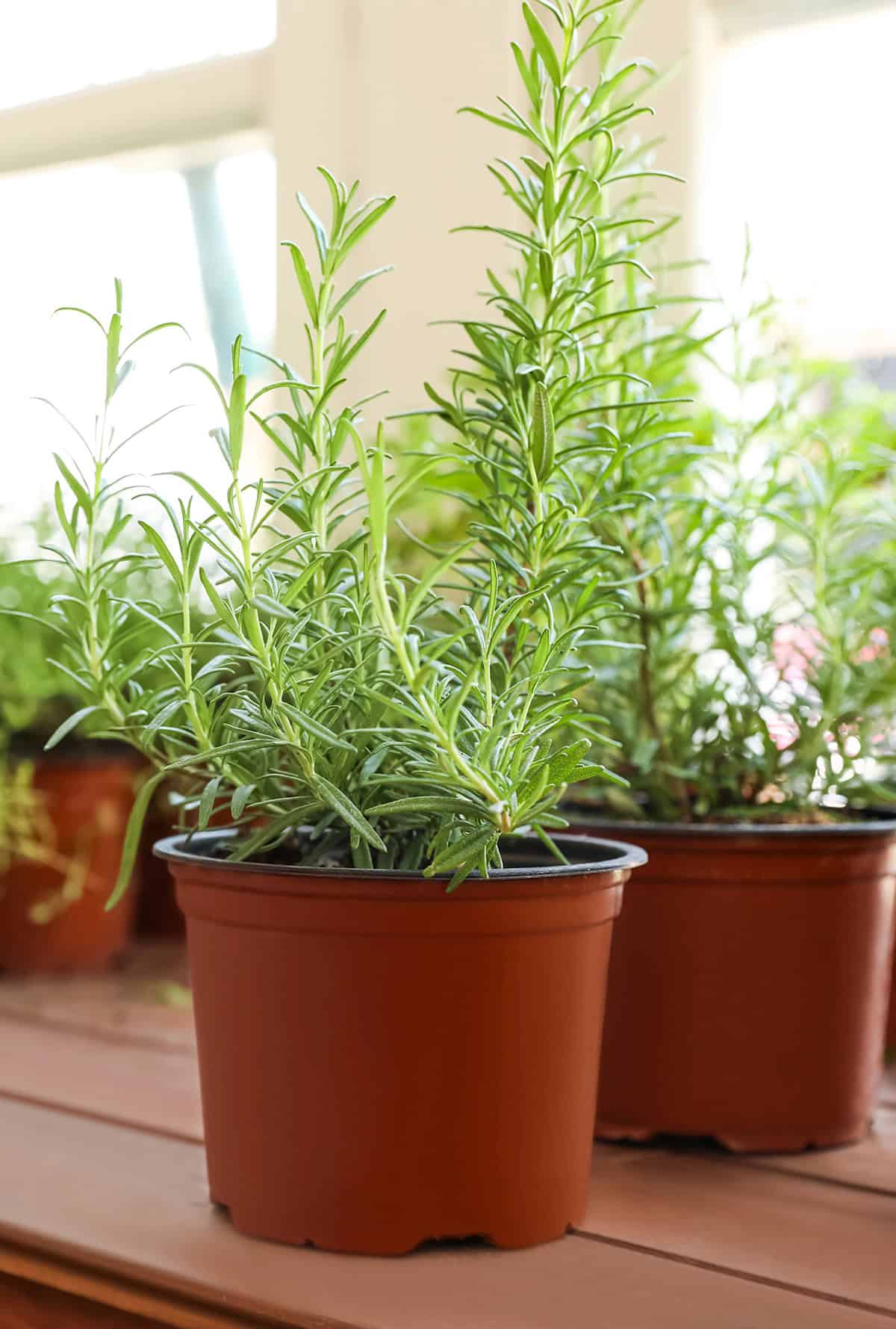
Once the stems are long enough, harvest rosemary any time. Indoor plants handle frequent light harvests well, and regular picking encourages a neat shape.
Use clean scissors to cut 3 to 4 inch sprigs from the soft tips, and avoid cutting into woody growth.
For short-term storage, wrap fresh sprigs in a dry paper towel and refrigerate them for up to two weeks. For longer storage, dry the sprigs.
Flavor is strongest just before flowering. If growth slows or the plant looks stressed, pause harvesting. More light speeds recovery after each harvest.
Problems
Water is behind most indoor rosemary problems. Overwatering rots the roots and invites fungal disease, and soggy mix leads to limp, dull foliage. Letting the pot dry between waterings prevents most of these issues.
Indoor air causes its own trouble. Dry heat produces crispy needle tips and brittle stems, while still, humid air invites powdery mildew. Bright light and gentle airflow help prevent both.
Pests are more common indoors than many growers expect. Aphids, mealybugs, whiteflies and spider mites target stressed plants, and sticky residue or pale needles appear before the insects themselves. A quick rinse or gentle wipe controls most early infestations.
Light and temperature also matter. Low light causes leggy stems and faded color, and a room that is too warm in winter leads to weak growth. A cool, sunny window, around 50°F to 60°F at night, produces compact plants and encourages winter flowers.