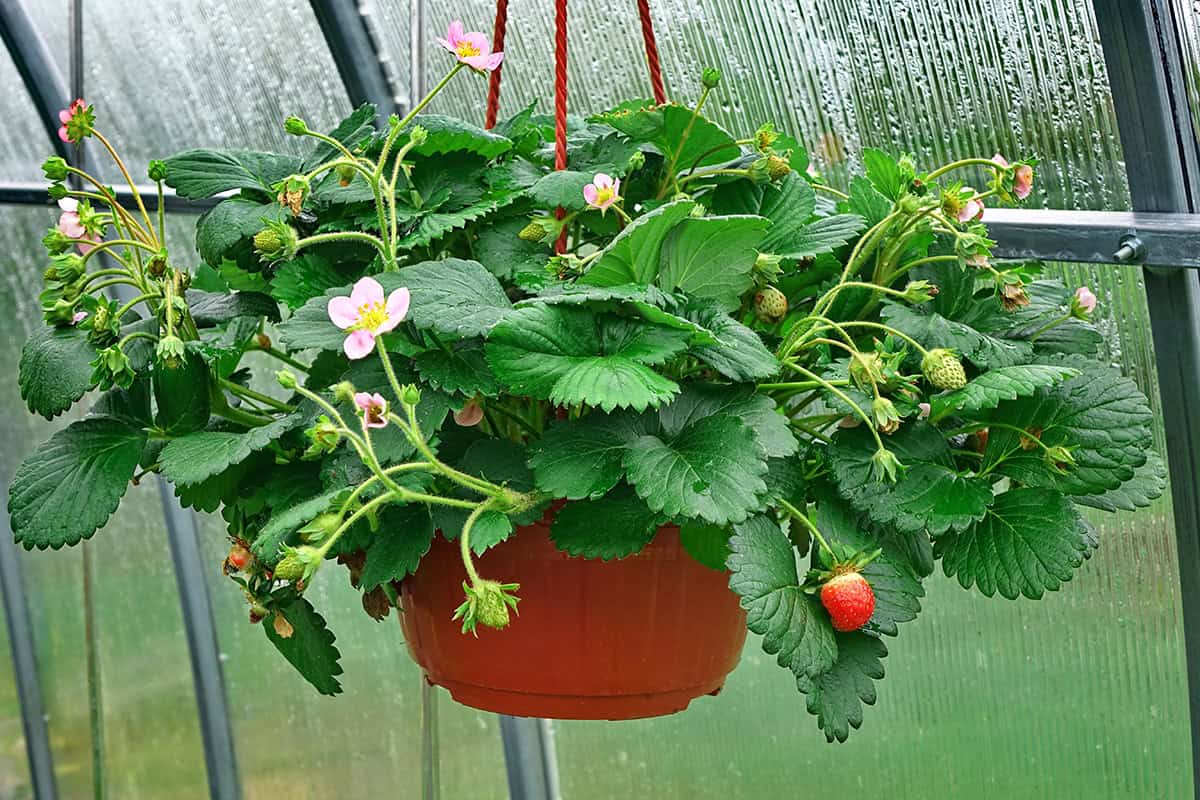
Day-neutral strawberries flower in waves regardless of season, which means a bright windowsill or a shelf under LED lights produces berries in February. Indoors, the grower controls every variable, even the job bees normally handle.
Plants set out today ripen their first berries in about two to three months.
Table of Contents
Best Varieties for Indoors
Indoor strawberries need varieties that ignore the seasons. Day-neutral and everbearing types are the best choices, since they flower regardless of day length on windowsills and under grow lights.
Among day-neutral varieties, ‘Albion’ produces firm, sweet berries and tolerates indoor temperature swings. ‘Seascape’ is another reliable container choice, and ‘San Andreas’ thrives with generous light and feeding.
Everbearing varieties such as ‘Quinault’ and ‘Ozark Beauty’ are also good choices, and both produce well in small pots and compact spaces.
Alpine strawberries such as ‘Alexandria’ and ‘Mignonette’ form tidy clumps with no runners. The berries are tiny but intensely flavored.
Avoid June-bearing types indoors, since they need a large root zone and seasonal cold to flower. Varieties bred for containers and patios produce the best yields and healthiest plants.
Container Size
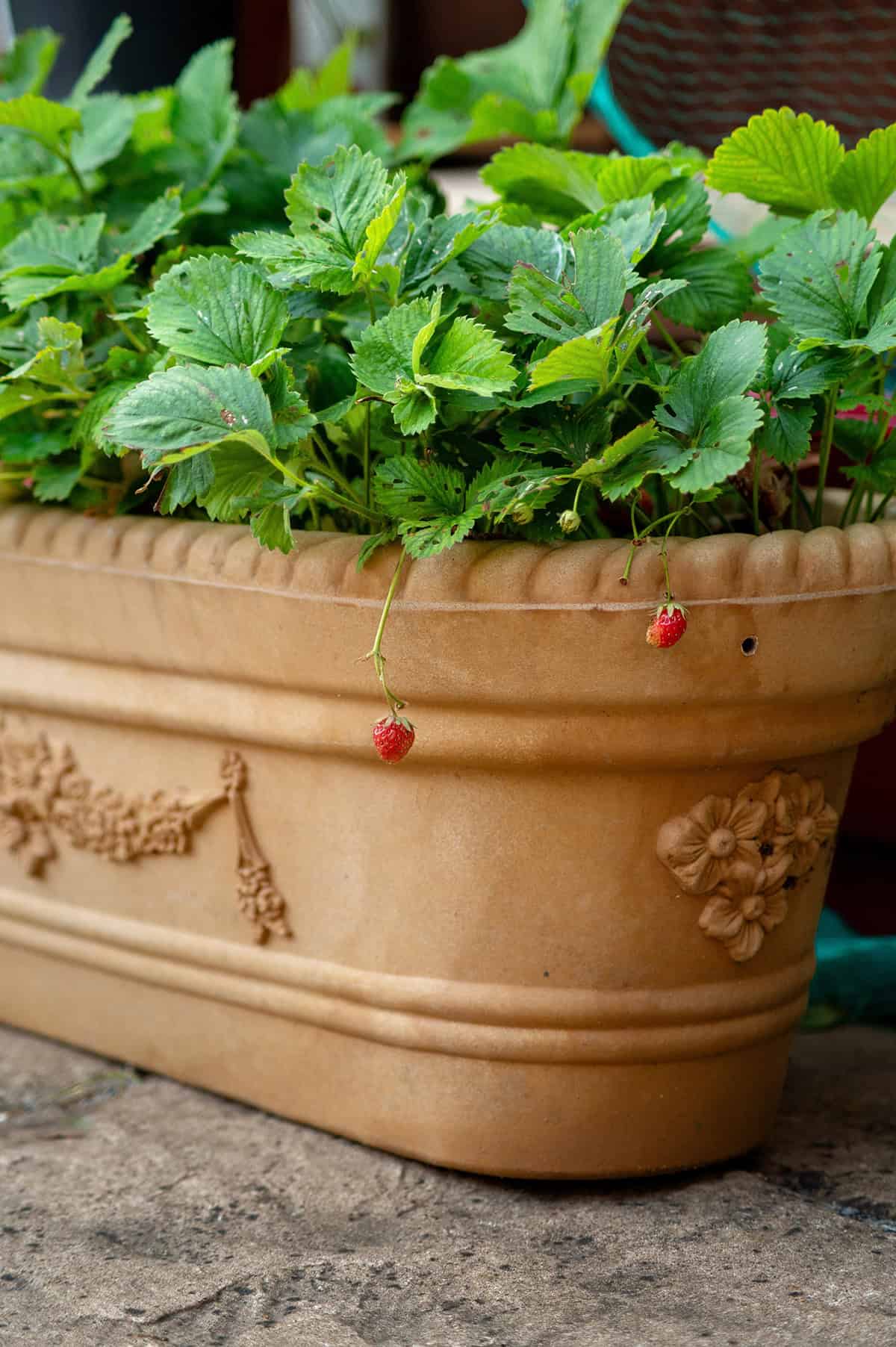
Pot size makes a big difference. Strawberry roots are shallow and need width more than depth. Aim for a pot at least 12 inches wide and 8 to 10 inches deep for a single plant.
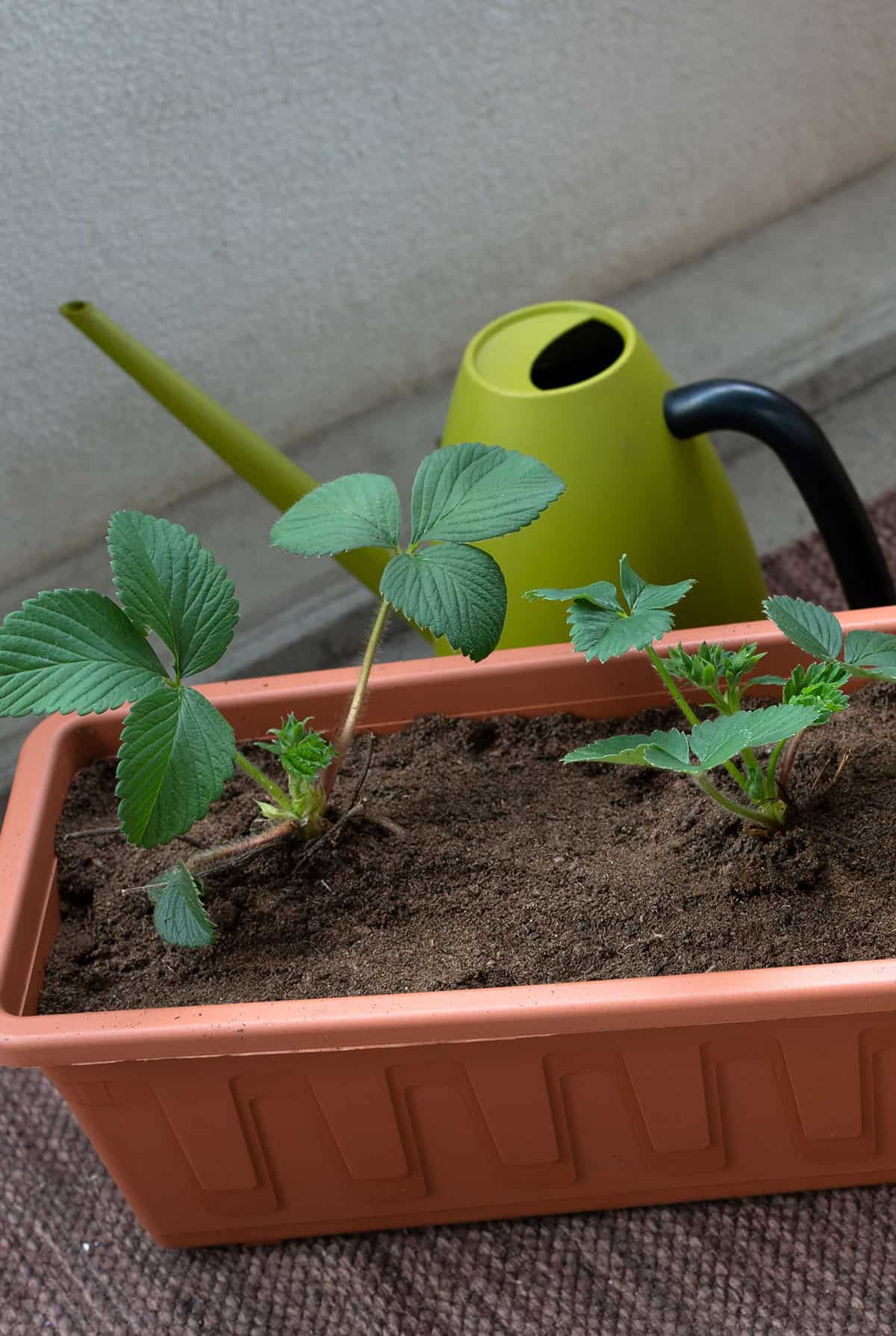
Crowding several plants together produces smaller fruit and weaker plants. In a long window box, space plants 8 to 10 inches apart, so each crown receives light and air.
Choose a sturdy pot with drainage holes. Light-colored pots reduce root overheating near bright windows or under lights.
Larger pots also buffer moisture swings, since small containers dry out quickly. More mix around the roots means steadier conditions for flowering and fruit.
Planting
Start with healthy, certified disease-free plants, which avoids problems later. Day-neutral and everbearing types fruit most of the year indoors.
Use containers with drainage holes at least 8 inches deep. Strawberry roots are shallow but spread quickly, and crowded roots lead to small fruit and sluggish growth.
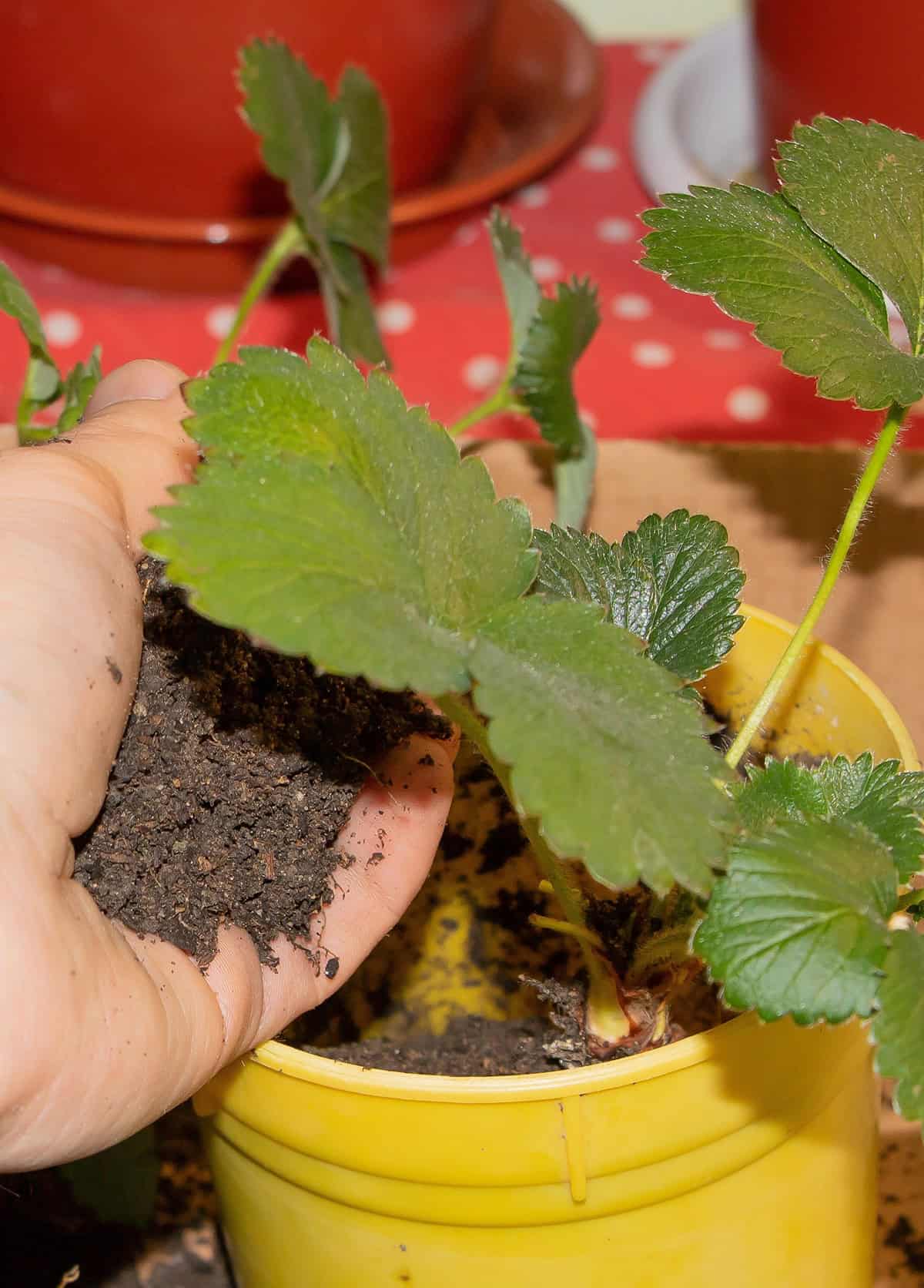
Fill the pot with a loose, well-drained potting mix, and set the crown exactly at the soil surface. A buried crown rots, and an exposed crown dries out.
Water the mix before and after planting so the roots settle in. Water to hold the surface lightly damp for the first couple of weeks while the plants adjust.
Move the containers into strong light right after planting. Most indoor setups need grow lights running 12 to 16 hours a day, and steady light supports early root and leaf growth.
Allow enough space between plants for air to move between the leaves, which helps prevent disease and makes pollination easier.
Light
Fruit depends on bright, consistent light equal to full sun outdoors. Weak light produces leggy plants with few berries.
South-facing windows are the best natural option. Rotate the pots every few days for even growth, and place the foliage close to the glass, since light intensity drops quickly with distance.
Grow lights make a huge difference indoors. Run full-spectrum fixtures for 12 to 16 hours a day on a timer, and maintain a consistent schedule to support flowering.
Watch the plants for feedback. Pale leaves or stretched stems call for more light, while compact, dark green growth means the setup is right.
Water
Indoor strawberries want steady moisture but dislike soggy roots. Water to hold the mix evenly moist, and let the surface dry slightly before watering again.
Drainage is essential, since standing water rots the roots and ruins fruit quality. Always use pots with drainage holes.
Drip systems are effective for day-neutral types indoors. They deliver water to the roots and leave the leaves dry. Dry foliage matters, since wet leaves invite disease in an enclosed space.
Use room-temperature water to avoid shocking the roots, and check moisture frequently, since indoor heat and grow lights dry the mix faster than expected.
Feeding
Potted strawberries need a steady supply of nutrients for both leaves and fruit. Use a balanced fertilizer with nitrogen, phosphorus and potassium, ideally one formulated for fruiting plants, which favors berries over foliage.
Light, regular feeding is the best approach. A diluted liquid fertilizer every two to three weeks during active growth is easy for roots to absorb, and feeding eases off when growth slows.
Calcium and magnesium deplete over time in potting mix, and burned leaf edges or slowing growth suggest a supplement is needed. Pale new leaves point to iron deficiency, common in mixes with a high pH.
Avoid overfeeding, which builds up salts in the pot. Flush the mix with plain water once a month, and fertilize only when the mix is already moist.
Support and Training
Strawberries grow low, but developing fruit weighs down the flower stems. Once flowers appear, small clips or soft ties lift the stems and hold berries off the damp mix, which prevents rot.
Most indoor varieties need no trellis. They grow close to the soil, so a stable, wide-based pot matters more than vertical support. Make sure light reaches all sides for even growth.
Runners multiply quickly indoors. Remove most of them so the plant puts its energy into the main crown and fruit, and save one or two for new plants if needed.
Good airflow strengthens stems and prevents moisture buildup around leaves and berries. A small fan on low is enough.
Pollination
Strawberries are self-fertile, though indoors there are no bees to move the pollen. Hand-pollination produces full, well-shaped berries.
Use a soft brush or cotton swab to dab the center of each open flower gently, then move on to the next flower. Repeat every couple of days during bloom.
Light and temperature affect pollen quality, so hold conditions bright and moderate. A gentle fan helps move pollen, though strong airflow knocks off flowers.
Poor pollination produces small, misshapen berries, and a few minutes of extra effort pays off at harvest.
Fruit Development
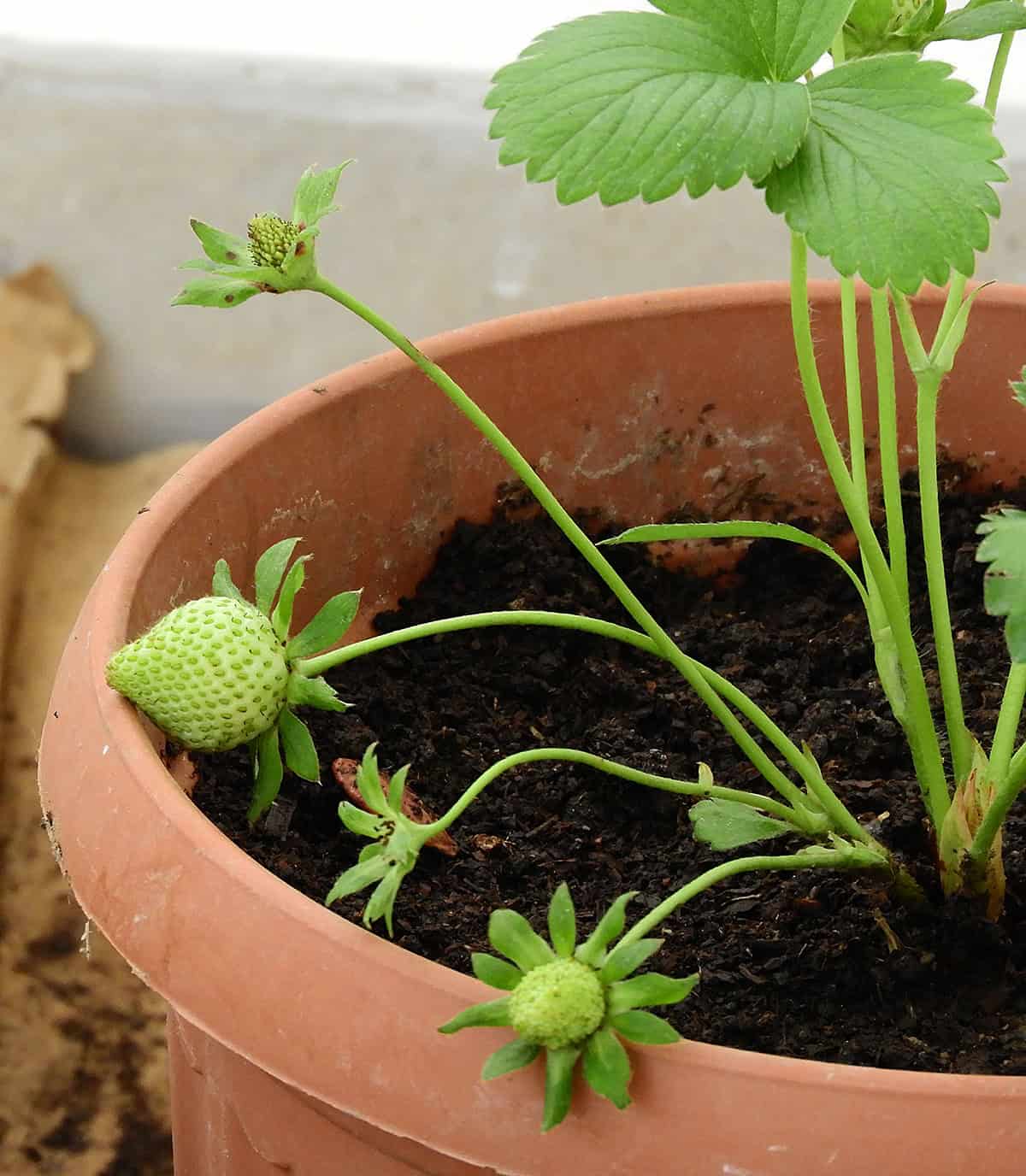
Once flowers open, steady light, temperature and care matter most. Hand-pollinate each flower, since unpollinated flowers produce small, lumpy berries.
After pollination, tiny green berries form and ripen in about 30 days under stable conditions. Cool rooms slow ripening, and excess heat produces smaller fruit.
Light affects flavor and color, and bright, even exposure every day produces the sweetest berries. Weak or uneven light leads to pale, bland fruit, so rotate the pots regularly.
Consistent watering is especially important now. Mix that swings between dry and soaked causes misshapen or split fruit. Continue light, steady feeding.
Pruning
Pruning maintains productive, healthy indoor strawberries by directing the plant’s energy and opening it to light and air.
Remove runners as soon as they appear, so the main crown and fruit receive the resources. Let a runner grow only to replace an older plant. Cut close to the base with clean scissors.
On newly planted day-neutral plants, pinch off the flowers for the first four to six weeks. It helps the crown build strength and produces larger yields afterward.
Remove yellow, damaged or crowded leaves at the base of their stems with a clean cut, which improves airflow and light. Check the plants every week or two.
Day-neutral and everbearing varieties need regular runner removal throughout the season.
Harvest
Strawberries are ready when fully colored from tip to cap, typically about four weeks after flowering, and the timing shifts with light and temperature. Waiting for full, even color produces the best flavor, while size depends mainly on variety and plant age.
Pick in the morning once any moisture has dried. Twist the berry gently with the green cap attached, which helps it last longer, and handle carefully, since indoor berries bruise easily.
Store unwashed berries in a shallow container in the refrigerator and eat them within a few days. Wash only what is needed, just before eating.
Common Problems and Troubleshooting
Fruiting suffers when light is inadequate, since strawberries need strong light most of the day. Weak light produces plenty of leaves and very few berries. Indoors, hand-pollinate every open flower with a soft brush, since missed flowers produce small or lopsided fruit.
Yellow leaves or sluggish growth point to nutrition or crowding. Excess nitrogen produces lush leaves at the expense of fruit, while crowded plants compete for root space and hold moisture too long. Space plants generously and feed lightly.
Wilting despite damp mix signals root rot. Indoor containers dry slowly, so drainage holes are essential, and the surface should dry slightly between waterings.
Soft fruit, spots or fuzzy gray mold come from stale, humid air. Gray mold spreads quickly in stuffy rooms, so space plants for airflow and remove damaged fruit right away. Fresh potting mix and clean tools help prevent disease.
Aphids and spider mites still appear indoors. Check plants weekly and rinse off any pests early, before infestations build.