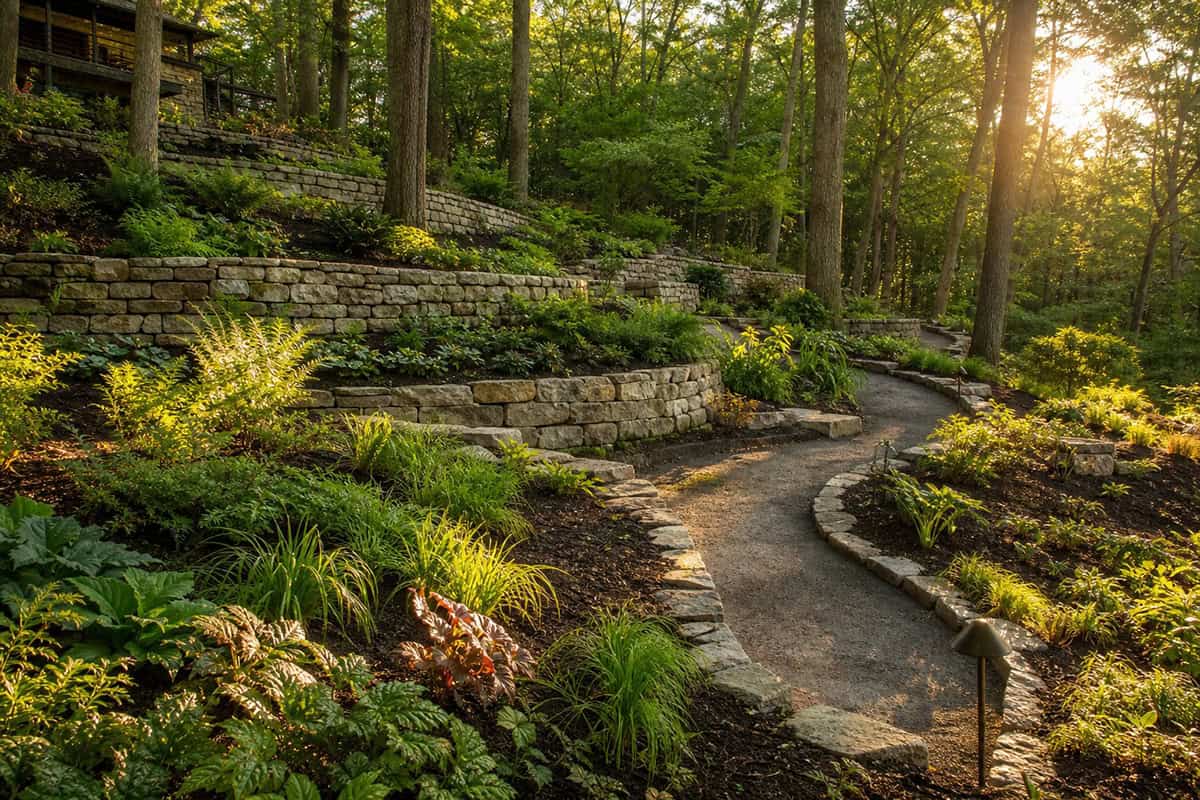
A steep woodland garden can seem intimidating when viewed as a blank canvas. Once paths, planting areas, and focal points begin taking shape, the possibilities become much easier to see. Many of the most enchanting gardens take advantage of natural slopes rather than avoiding them. The ideas ahead may spark your next project.
Table of Contents
- How To Create A Sloped Woodland Garden
- Plants For A Sloped Woodland Garden
- Ideas For A Sloped Woodland Garden
- Terraced Garden On A Slope
- Winding Stone Steps
- Natural Waterfall Feature
- Log Or Timber Retaining Walls
- Stepped Pathways With Ground Cover
- Rock Garden On A Woodland Slope
- Woodland Deck Overlook
- Shrubs Anchoring A Slope
- Wildflower Meadow On A Gentle Slope
- Rustic Wooden Railings On Pathways
- Mossy Retaining Walls
- Multi-Level Planting Layers
- Tree Stumps As Natural Planters
- Seating Nook In The Slope
- Woodland Archway On A Slope
How To Create A Sloped Woodland Garden
First, pay attention to how the slope behaves. After a heavy rain, walk the ground—where does water pool, where does it tear downhill, and which spots barely get damp? Those patterns will quietly dictate your layout, from retaining wall placement to what will thrive where.
Terracing is usually the most dependable way to make steep ground workable. Stone walls have a kind of permanence, while timber terraces soften the look and blend into a wooded setting. Either way, you get a series of planting beds, each with its own quirks and microclimate.
Don’t overlook drainage. Erosion can undo months of work if runoff isn’t managed. On sloped beds, drip irrigation or soaker hoses are far less destructive than overhead sprinklers. It’s worth the trouble to plan for water now rather than chase gullies later.
Layered planting brings out the vertical character of the place. Before you get too far, sort out access—paths that traverse each level mean you’re not sliding around or trampling plantings just to weed or prune.
Plants For A Sloped Woodland Garden
Plants on a hill have to do double duty: look good and lock the soil in place. Deep roots matter. Regional natives usually settle in faster and need less coddling.
For those shady or dappled spots, ferns are almost foolproof. They knit together, root deep, and just feel right in woodland light. Hostas tuck into the shadier corners, while astilbes and bleeding hearts throw up color and height where sun filters through.
Groundcovers fill the gaps and do the heavy lifting against erosion. Vinca minor covers shaded ground quickly. Creeping phlox does best on brighter banks, trailing over rocks in spring. Dry, exposed slopes? Creeping thyme, sedum, or creeping juniper rarely disappoint and don’t fuss about neglect.
Where the woodland starts to open up, ornamental grasses step in. Blue fescue, Japanese forest grass, sedges, feather reed grass, little bluestem—they all bring their own texture and movement. Lavender and yarrow can handle the hottest, driest upper banks and don’t ask for much in return.
Canopy and understory aren’t just extras—they set the tone. Dogwood and serviceberry fit right in at the woodland edge and keep things interesting year-round. Evergreens give backbone during winter. Vines on trellises or arbors add height and density.
Spring bulbs—daffodils, especially—fit right between perennials, and wildflowers make the whole thing feel natural. Rocky, well-drained bits at the top? That’s alpine plant territory.
Here is a short summary.
- Shade: Ferns, Hostas, Astilbes, Bleeding Hearts
- Ground Covers: Vinca Minor, Creeping Phlox, Creeping Thyme, Sedum, Creeping Juniper
- Grasses: Japanese Forest Grass, Blue Fescue, Sedges
- Trees & Shrubs: Dogwood, Serviceberry, Evergreens
- Seasonal Color: Daffodils, Native Wildflowers
- Rocky Areas: Alpine Plants
Ideas For A Sloped Woodland Garden
With a hillside, it’s all about working with the tilt. Terraces, water flow, plant choices, built features—they only click when the slope itself is the organizing force.
Terraced Garden On A Slope
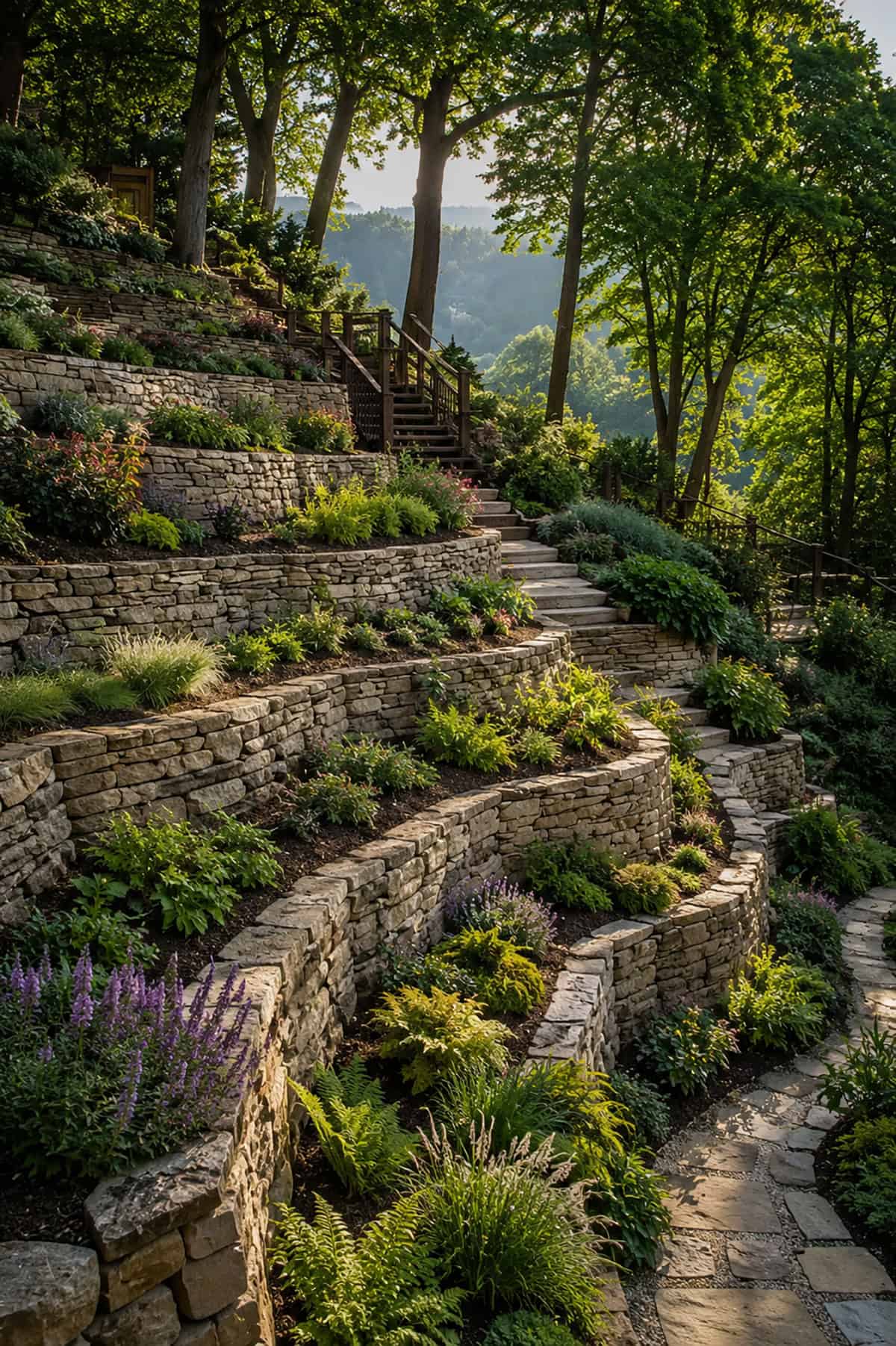
There’s a certain satisfaction in carving out flat spaces from a hillside. Each terrace becomes its own ecosystem, with drainage, sunlight, and soil all shifting from level to level. Stone or timber retaining walls hold everything steady.
A layer of gravel at each base keeps water from pooling and undermining your work. Native ferns and shade perennials planted in these beds start to erase the line between garden and woodland.
Winding Stone Steps
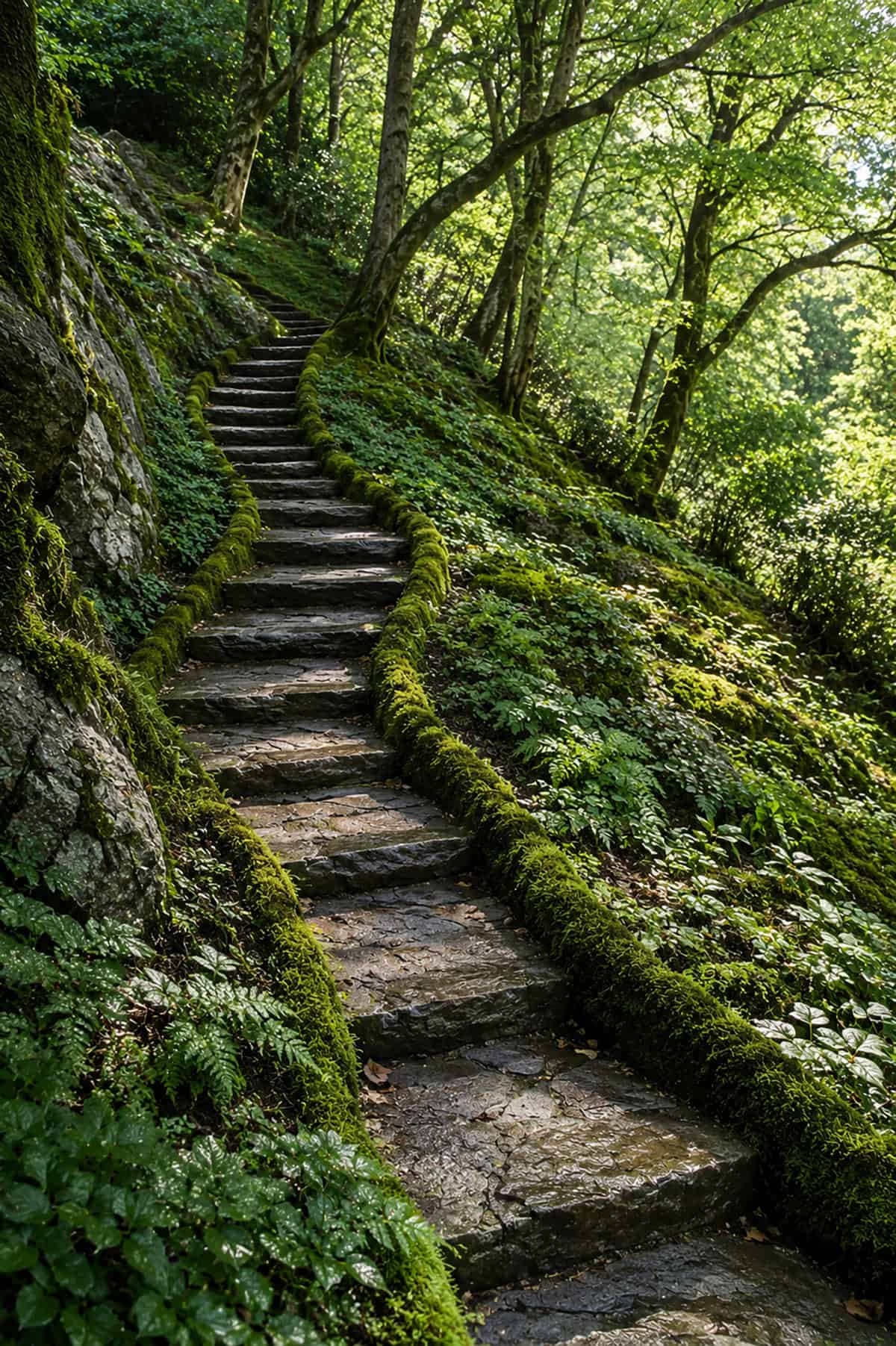
Taking the long way up a slope can be a feature. Curving steps slow you down, reveal new angles, and spread out the wear. Granite or slate lasts for years and shrugs off frost. Compacting the base is key. Tucking moss or creeping green between stones softens the look and helps with traction on rainy days.
Natural Waterfall Feature
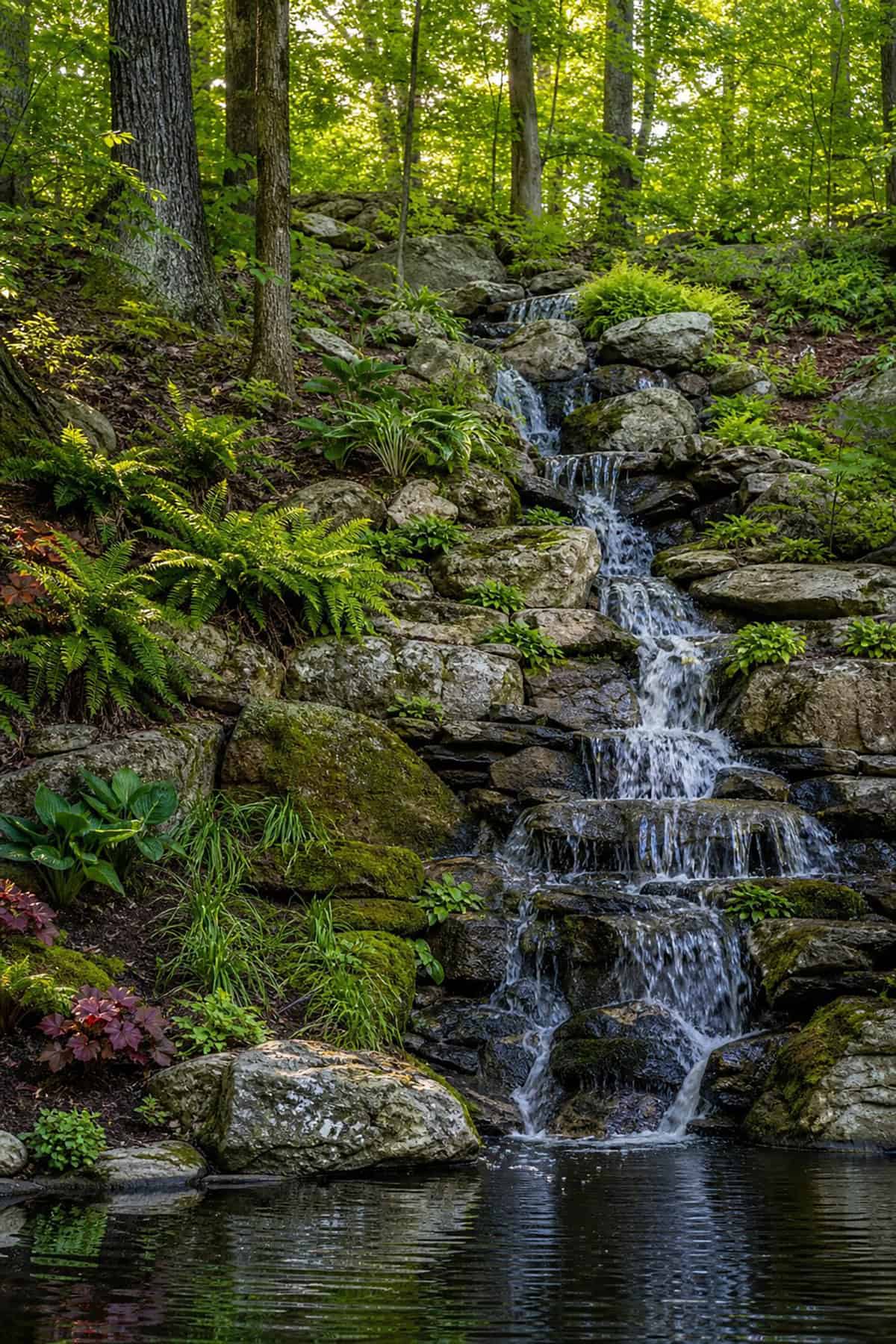
Water’s already headed downhill, so why not give it a stage? Start at the highest sensible spot, shape rocks to guide the flow, and tuck a pond liner underneath to keep things contained. A pump recirculates the water. Ferns, sedges, and moisture lovers planted along the edges help the feature blend in.
Log Or Timber Retaining Walls
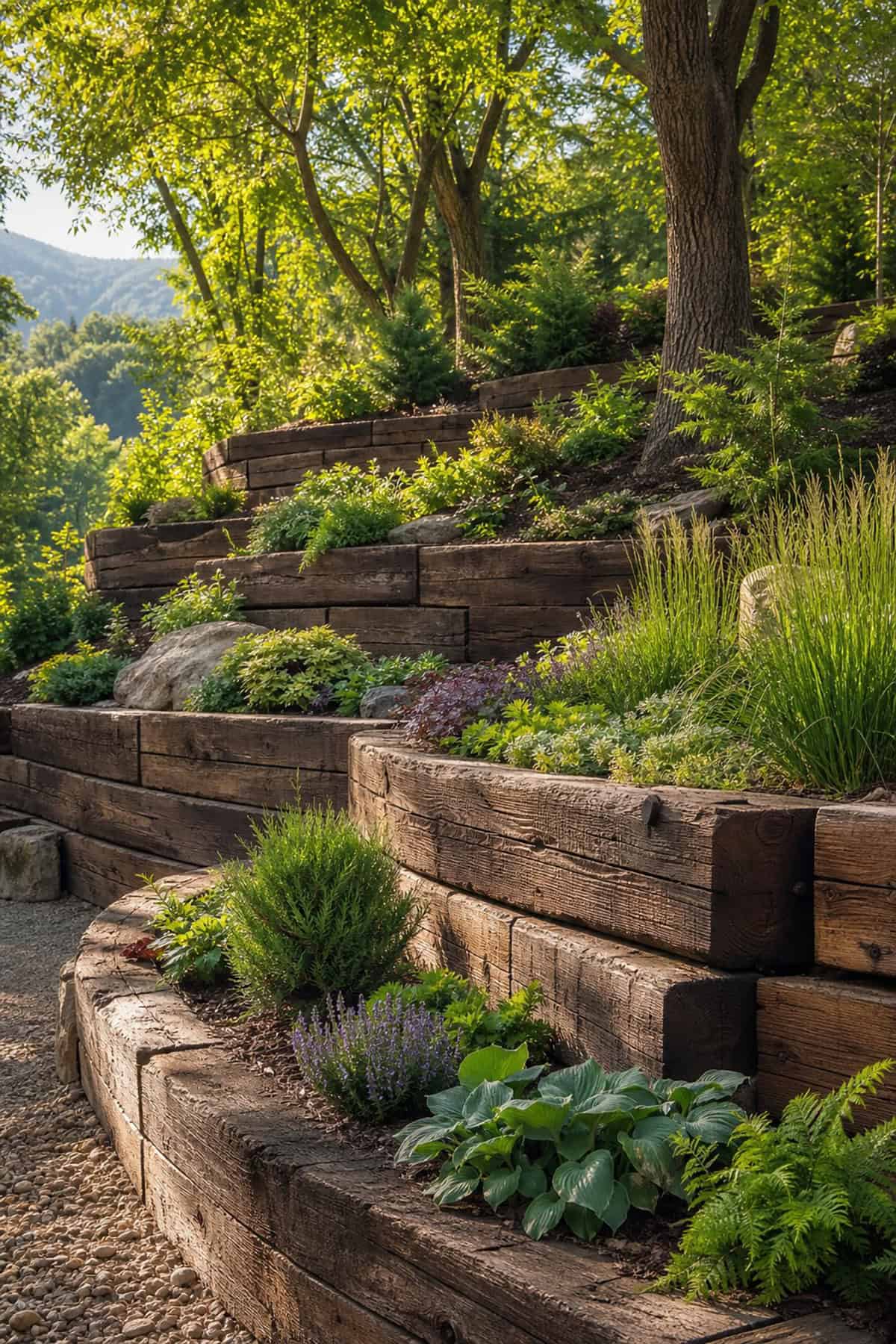
Cedar or redwood logs, cut to length and stacked with vertical stakes, can hold back a slope and look like they grew there. Leaving gaps between logs lets water drain out. Over time, moss and low plants will colonize the wood, blurring the line between structure and landscape without much help from you.
Stepped Pathways With Ground Cover
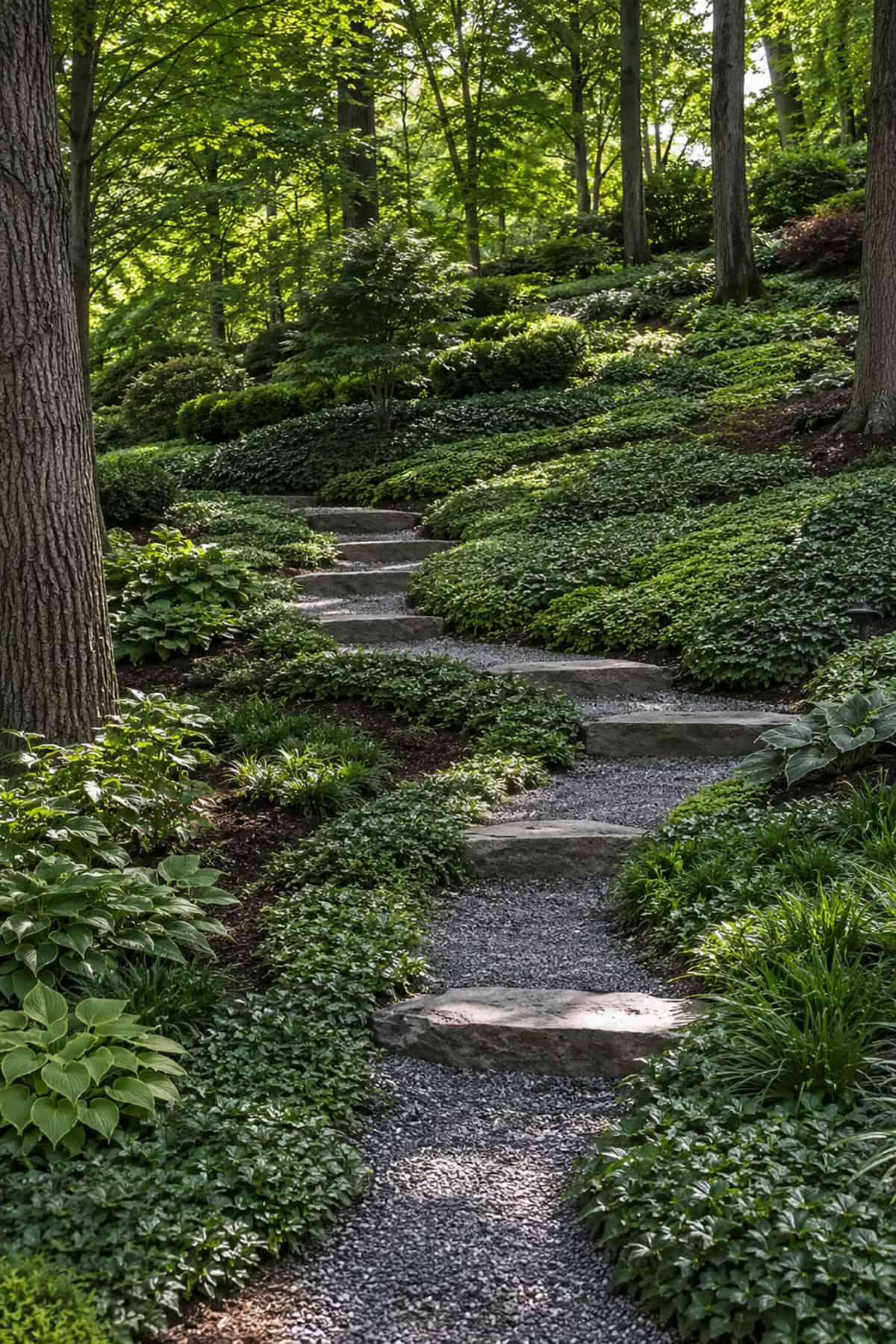
Mixing steps with planted edges isn’t just practical—it stabilizes the slope. Creeping thyme and sedum along the borders take root and keep the soil from sliding.
Pea gravel underfoot keeps things safe. Keep the risers comfortable and let the groundcover spill over, softening the edges and making the hardscape feel less rigid.
Rock Garden On A Woodland Slope
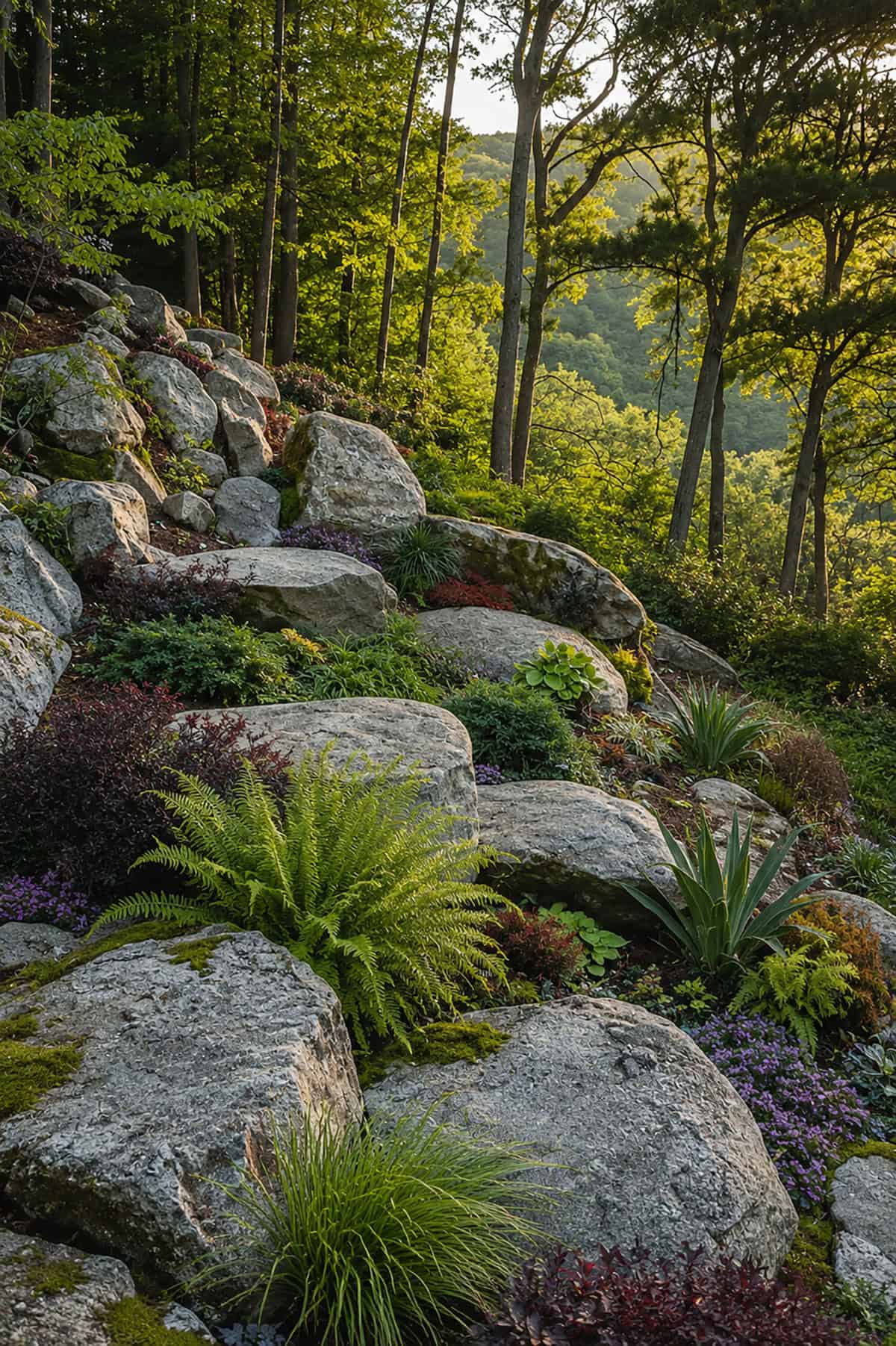
Where the hillside is stony, lean into it. Place the biggest rocks first, as if they’ve always been there, then wedge smaller ones between.
Soil packed into crevices forms homes for alpine and drought-tolerant plants like rock cress and dwarf evergreens. Mulch the open areas to hold moisture and cut weeds. Play with plant heights and colors so the area feels like a scene, not just a scattering of rocks.
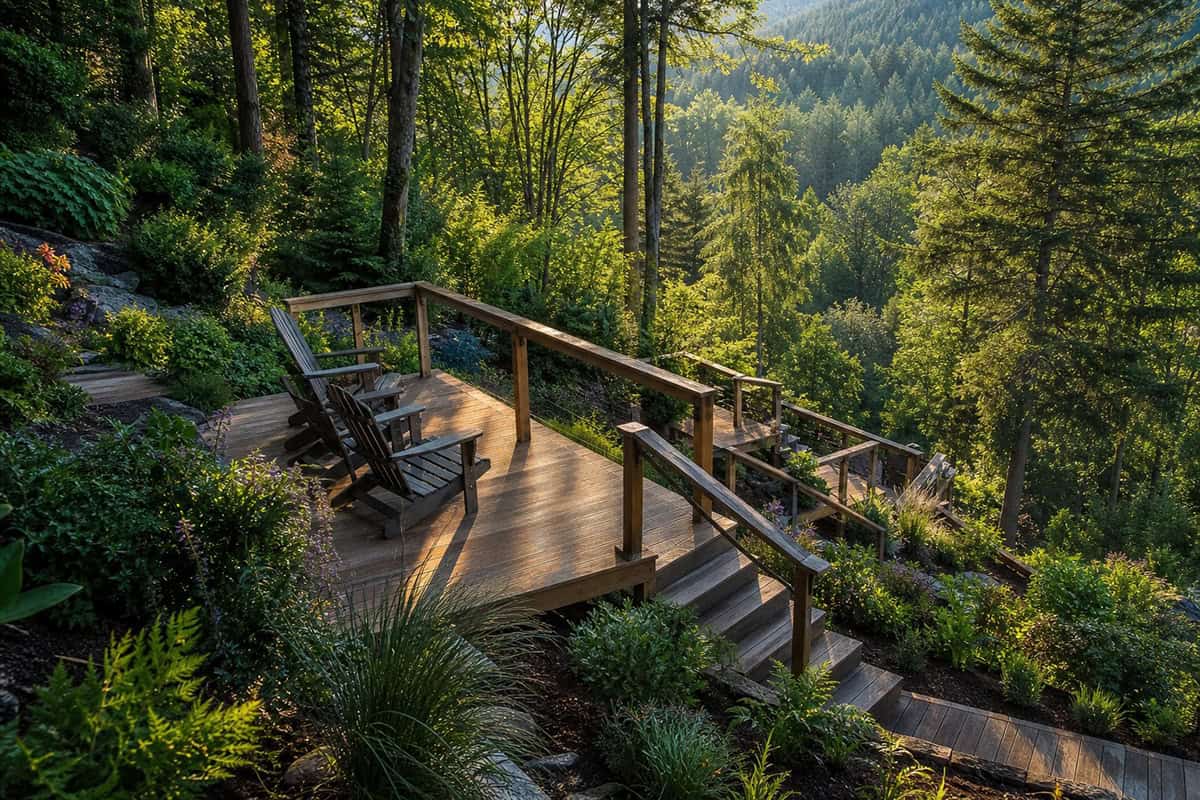
Woodland Deck Overlook
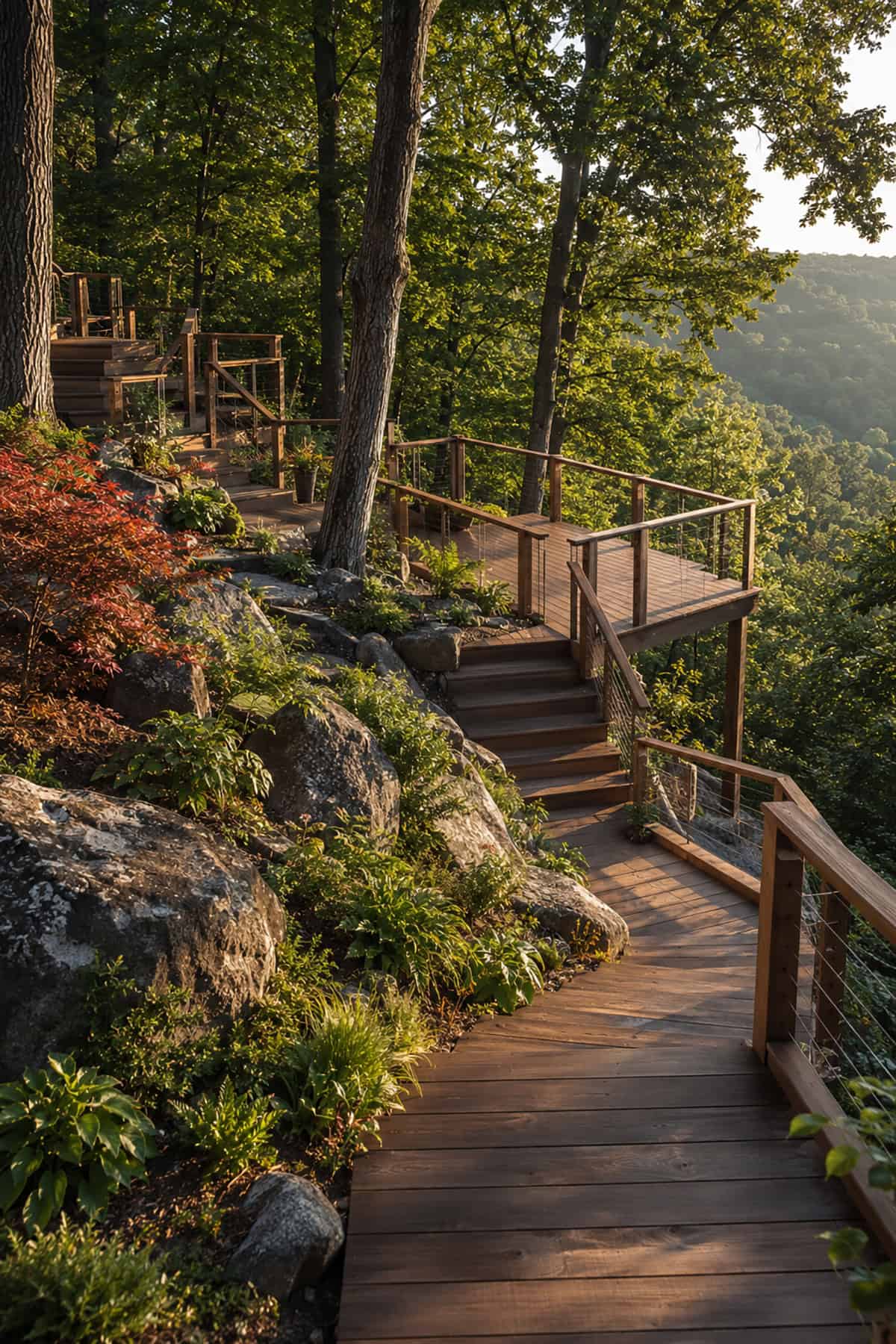
Perched mid-slope, a deck lets you take in the whole garden—sometimes the best seat is halfway up. Use materials that last, like treated wood or composite.
Keep railings low enough for a clear view. Plant natives around the edges so the deck feels tucked in, not tacked on.
Shrubs Anchoring A Slope
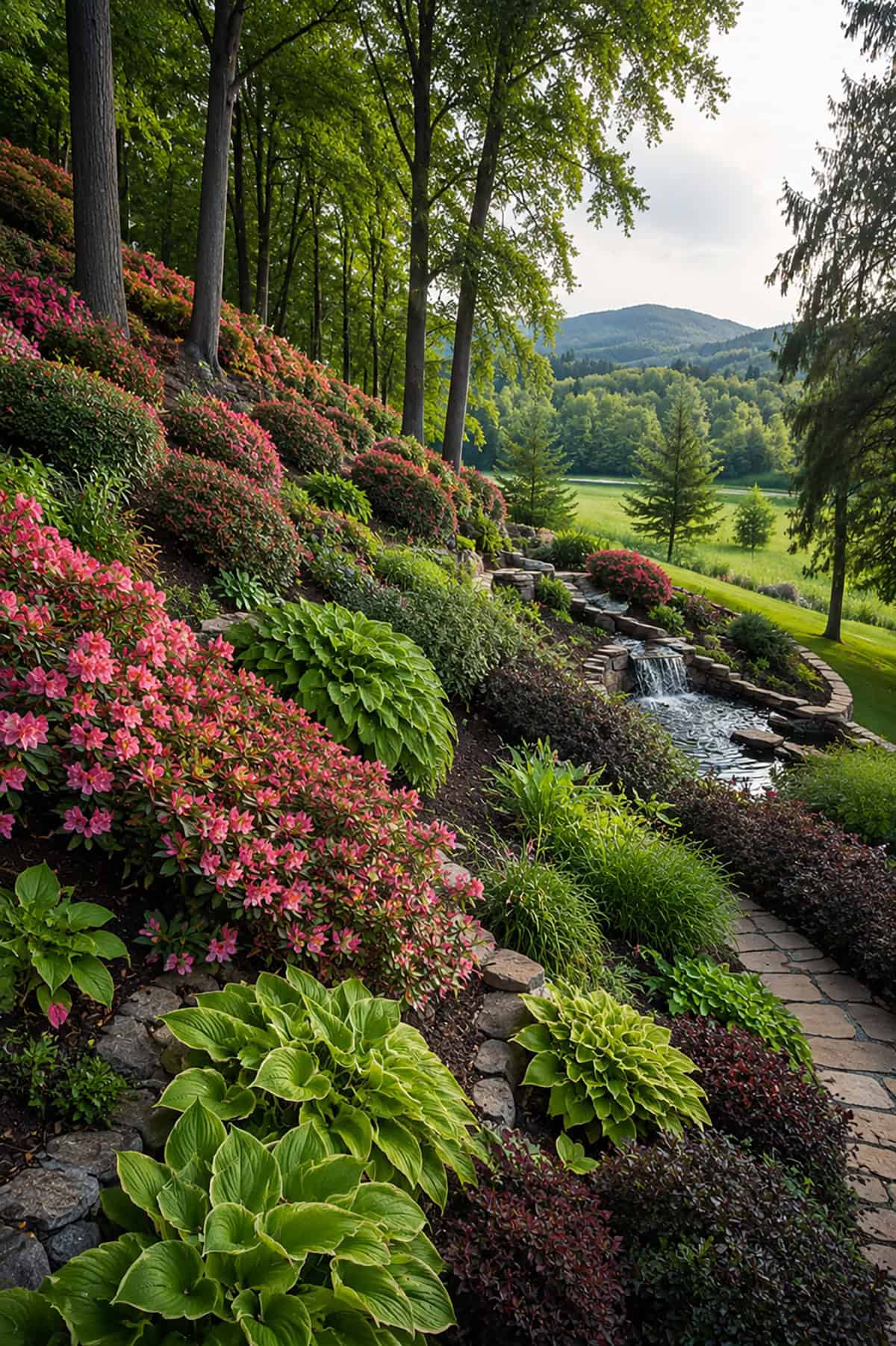
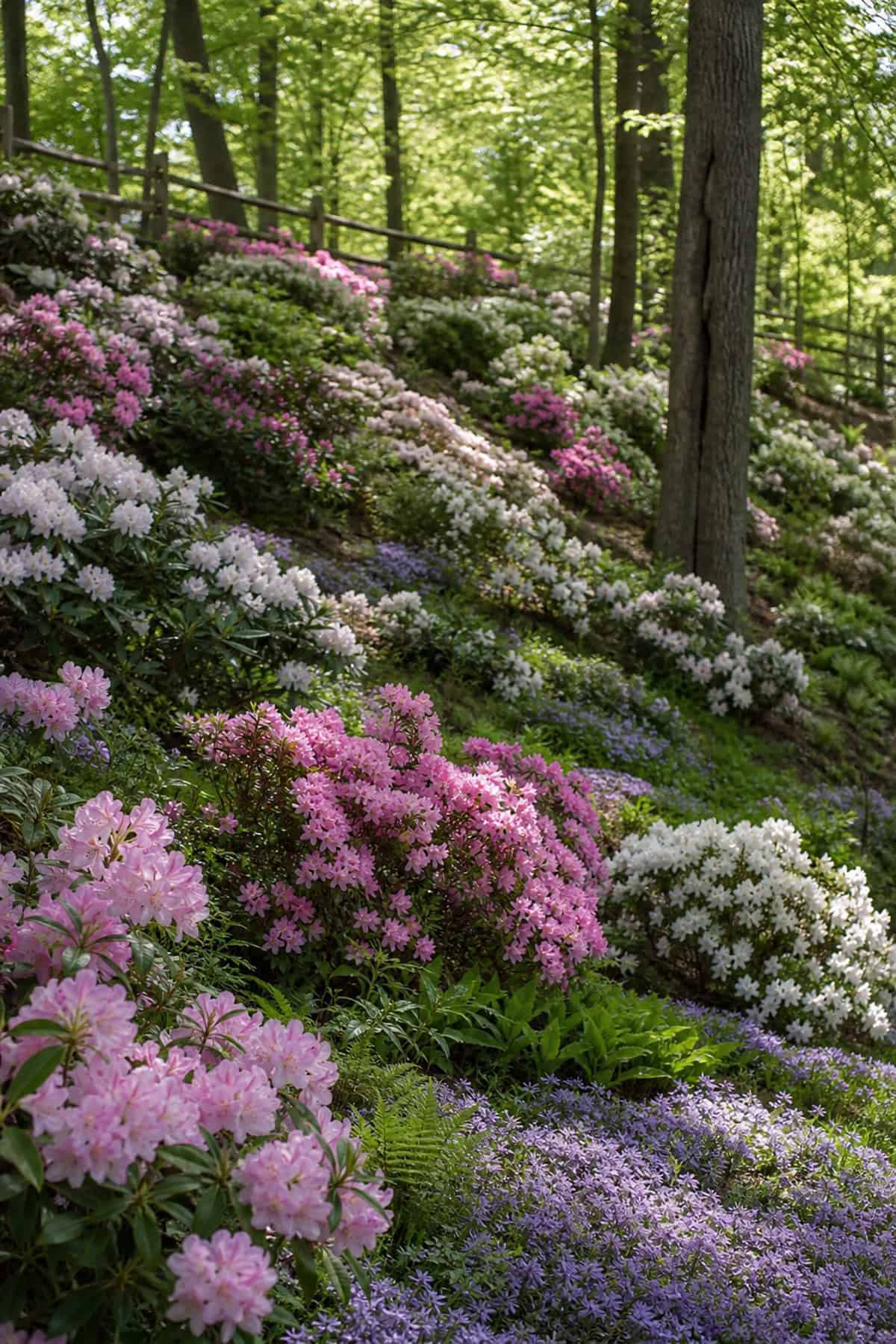
When it comes to real slope stability, shrubs take the prize. Rhododendrons, azaleas, and other woody natives send roots deep and wide, holding the bank far better than perennials.
Planting them in staggered rows helps overlap root zones. Mix evergreens and deciduous types for year-round presence. Mulch heavily at planting to help them settle in.
Wildflower Meadow On A Gentle Slope
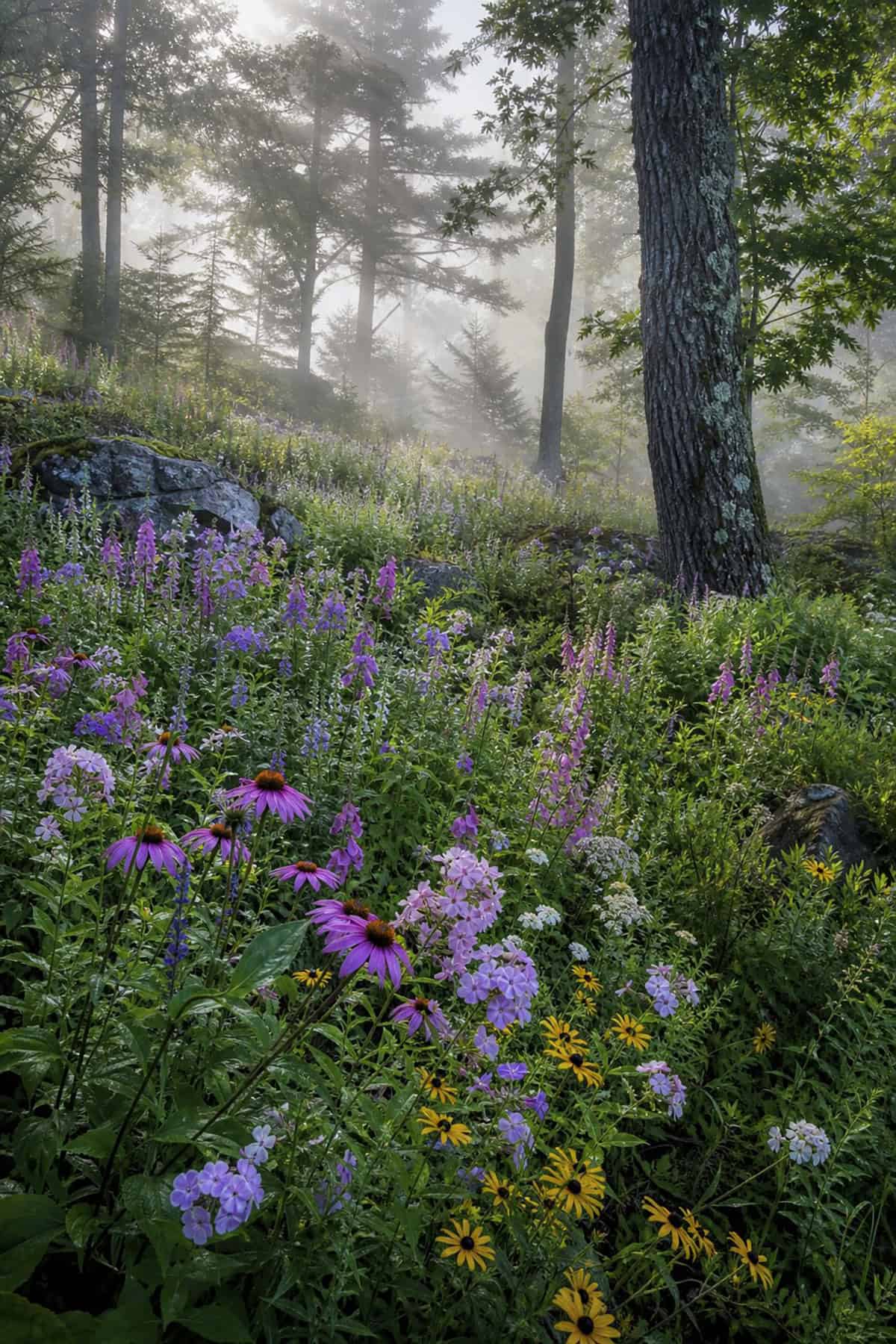
Where the grade is mild, a meadow can sweep across the hill without fuss. Clear out weeds, rake the soil, and sow a mix heavy on local natives.
Once established, it mostly takes care of itself. Pollinators love it, and the shifting colors and textures make the slope feel alive without extra design work.
Rustic Wooden Railings On Pathways
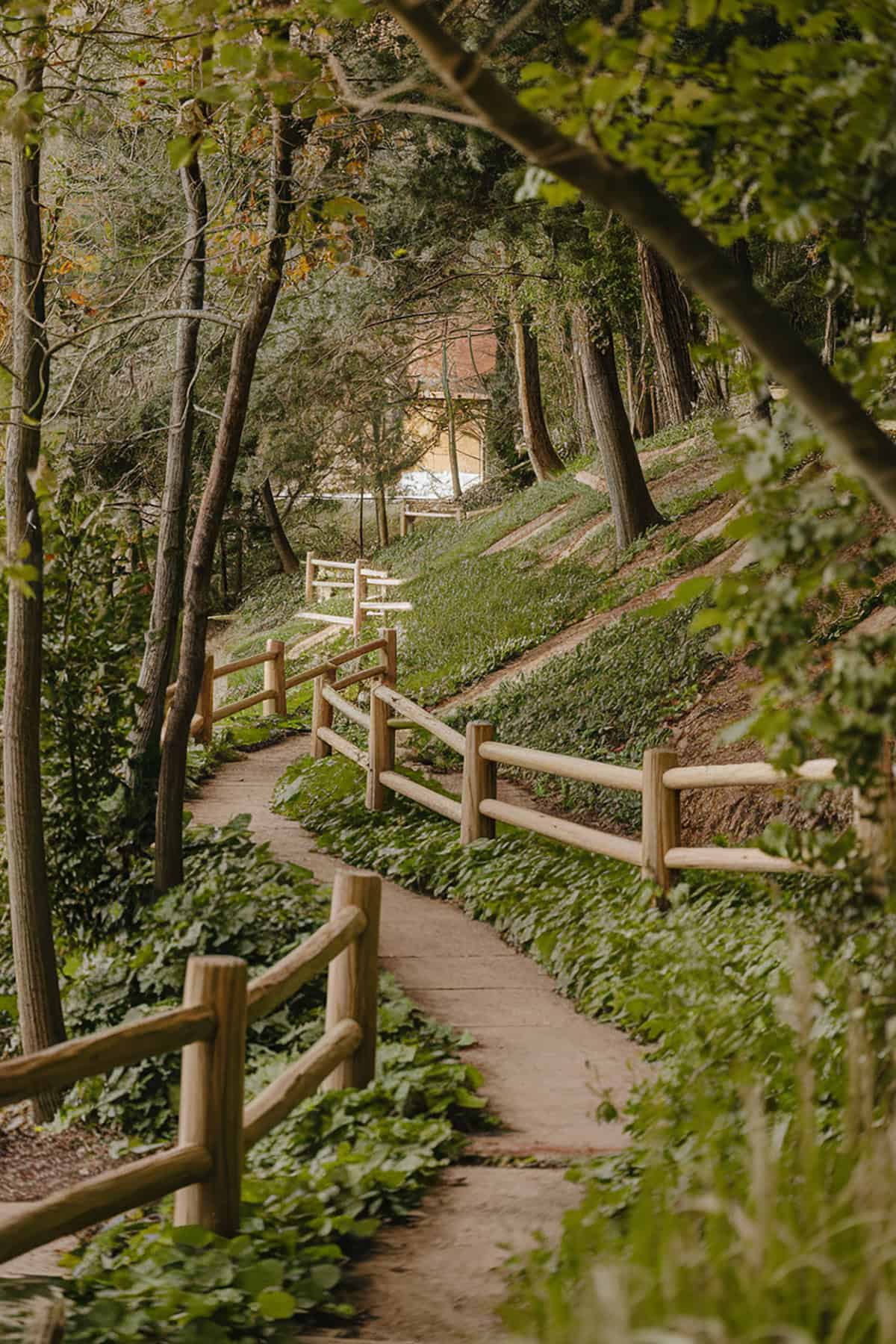
On steeper paths, a simple railing makes all the difference. Cedar posts set deep last well without harsh treatments.
Check them now and then—wood and damp soil aren’t friends forever. Running a trellis or arbor along the railing lets vines scramble up, turning a safety feature into a green wall over time.
Mossy Retaining Walls
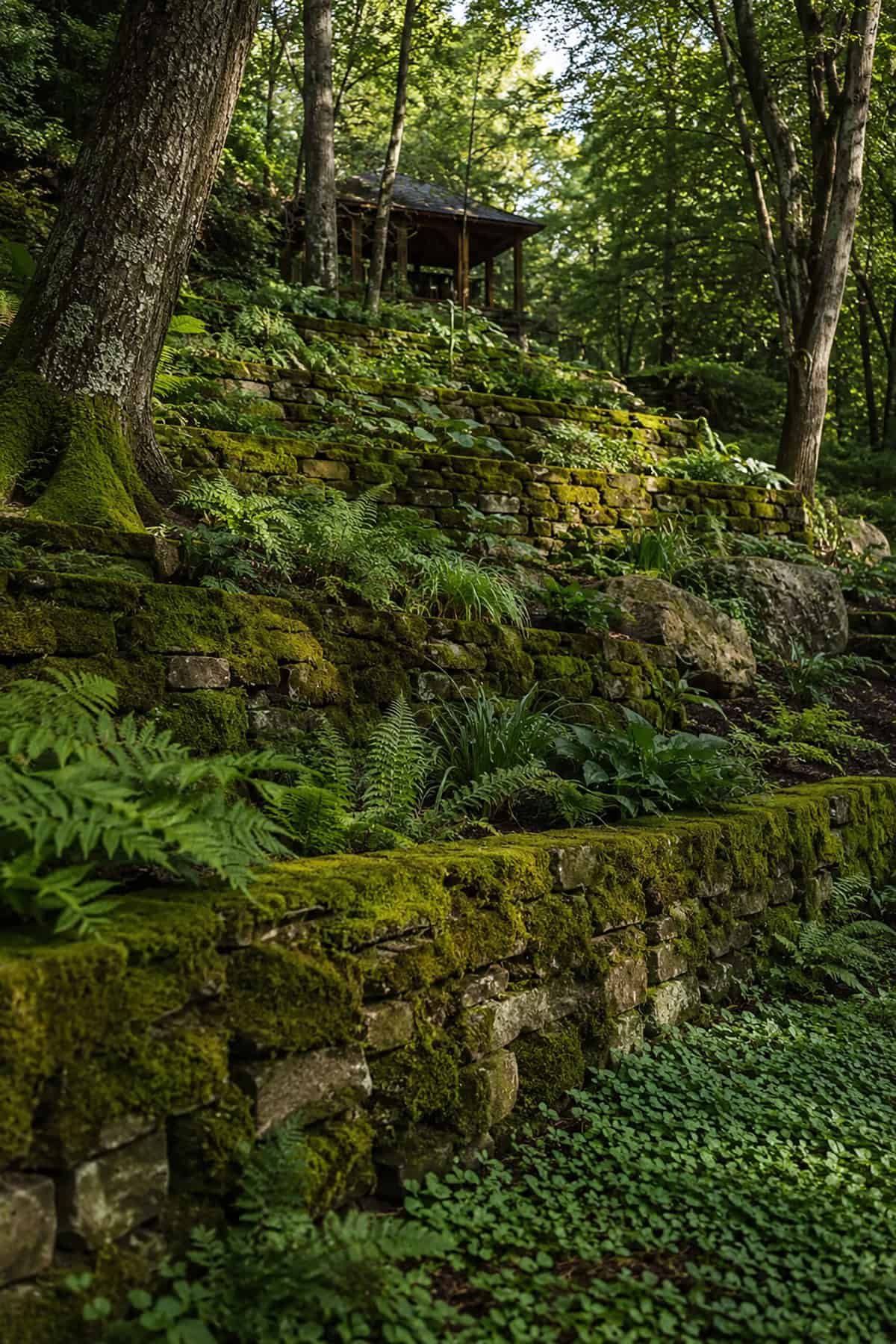
Shade and steady moisture turn stone or brick walls into moss magnets. You can speed things up by pressing moss fragments into damp mortar.
Keep the surface moist but not soggy. Once moss takes, it needs almost no care and gives the wall a sense of age and belonging that’s hard to fake.
Multi-Level Planting Layers
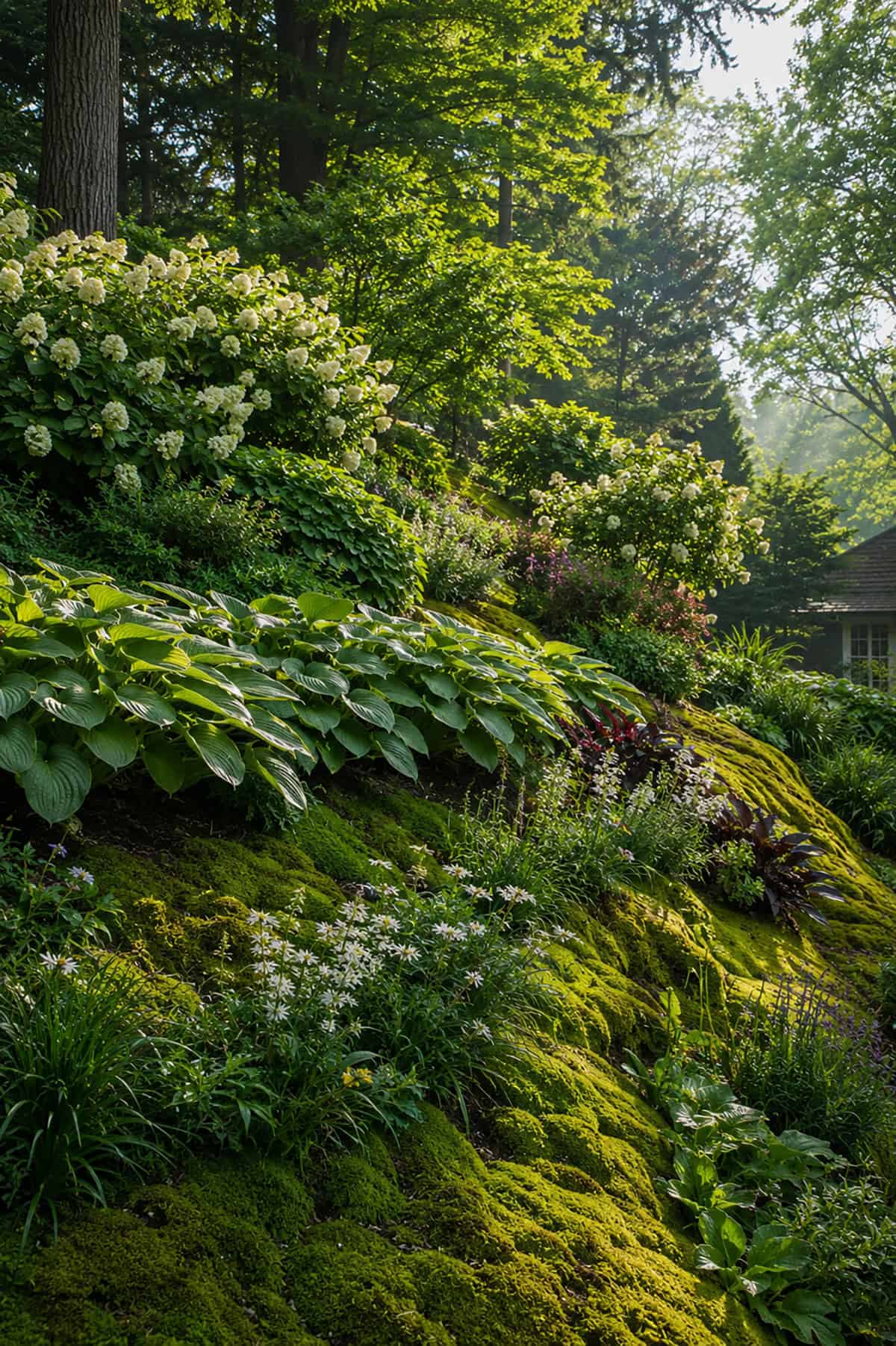
Stacking canopy trees, mid-story shrubs, and groundcovers in sequence recreates the forest’s vertical rhythm. Taller species up top won’t shade out what’s below.
Each layer catches rain at a different height, softening the blow of storms. A bit of annual pruning keeps the tiers distinct and prevents one from swallowing another.
Tree Stumps As Natural Planters
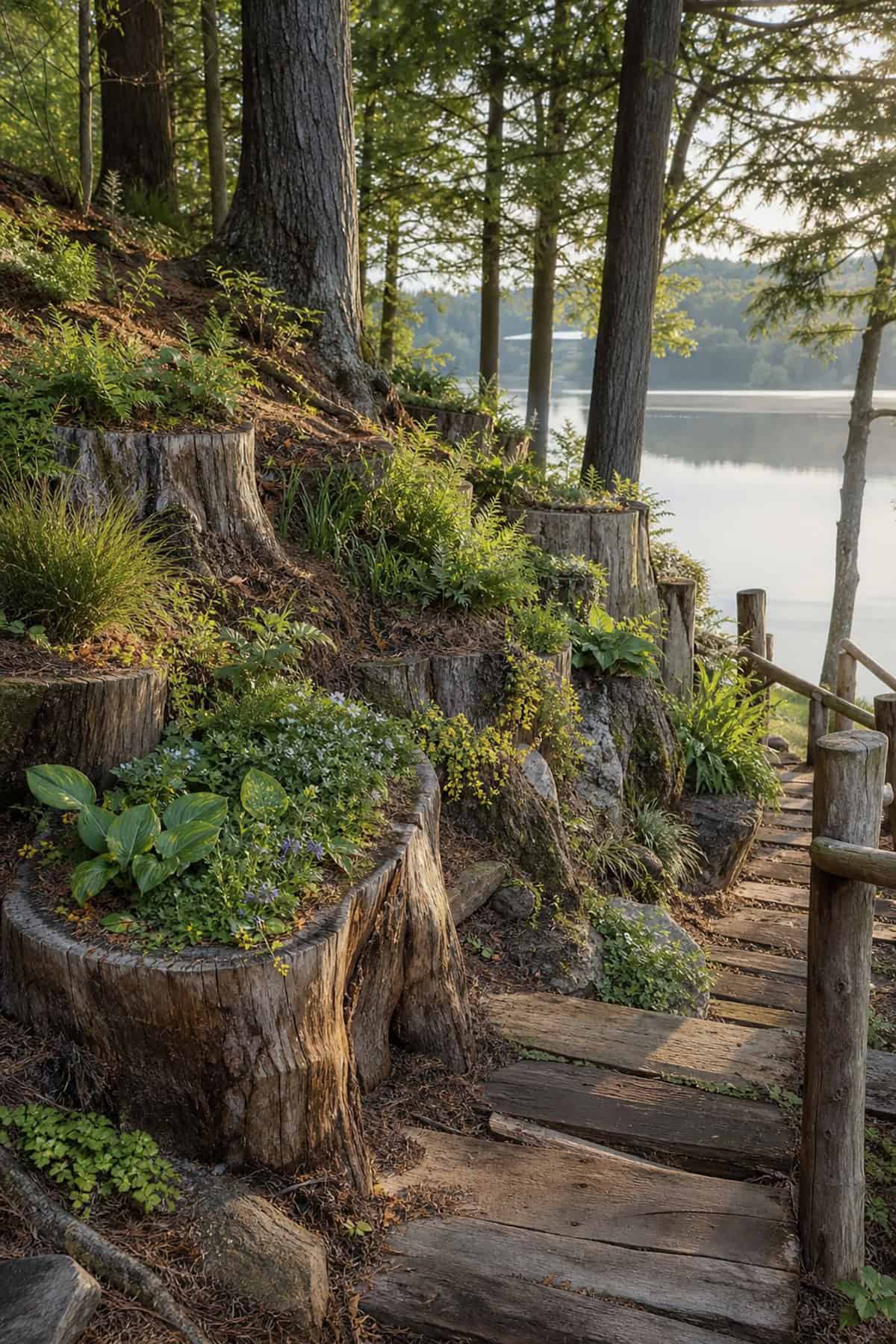
Old stumps aren’t just obstacles—they’re ready-made planters. Hollow them out a bit, pack with rich soil and compost, and drop in ferns, wildflowers, or shade annuals, depending on the light.
Stumps hold moisture better than most pots. Keep an eye out for pests, and top up the soil every year or so as it settles.
Seating Nook In The Slope
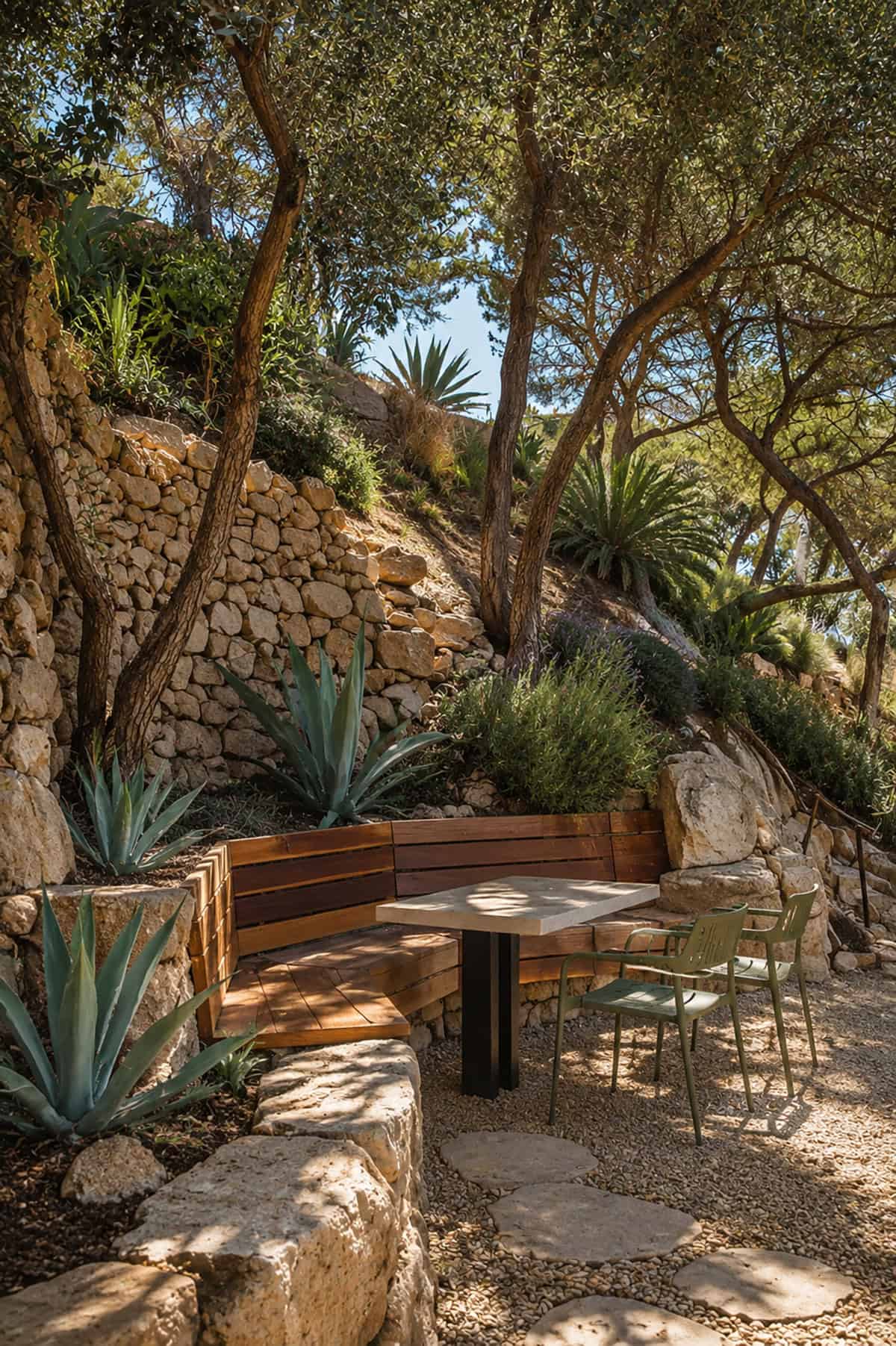
Carving a small, flat nook into the bank—framed with stone or timber—creates a hideaway that feels like part of the hillside. Face it toward your best view.
Tall plants on three sides make it feel private without blocking all the light. Use sturdy materials that can handle the weather, and keep the scale cozy—just enough for two chairs, so it’s a retreat, not a patio.
Woodland Archway On A Slope
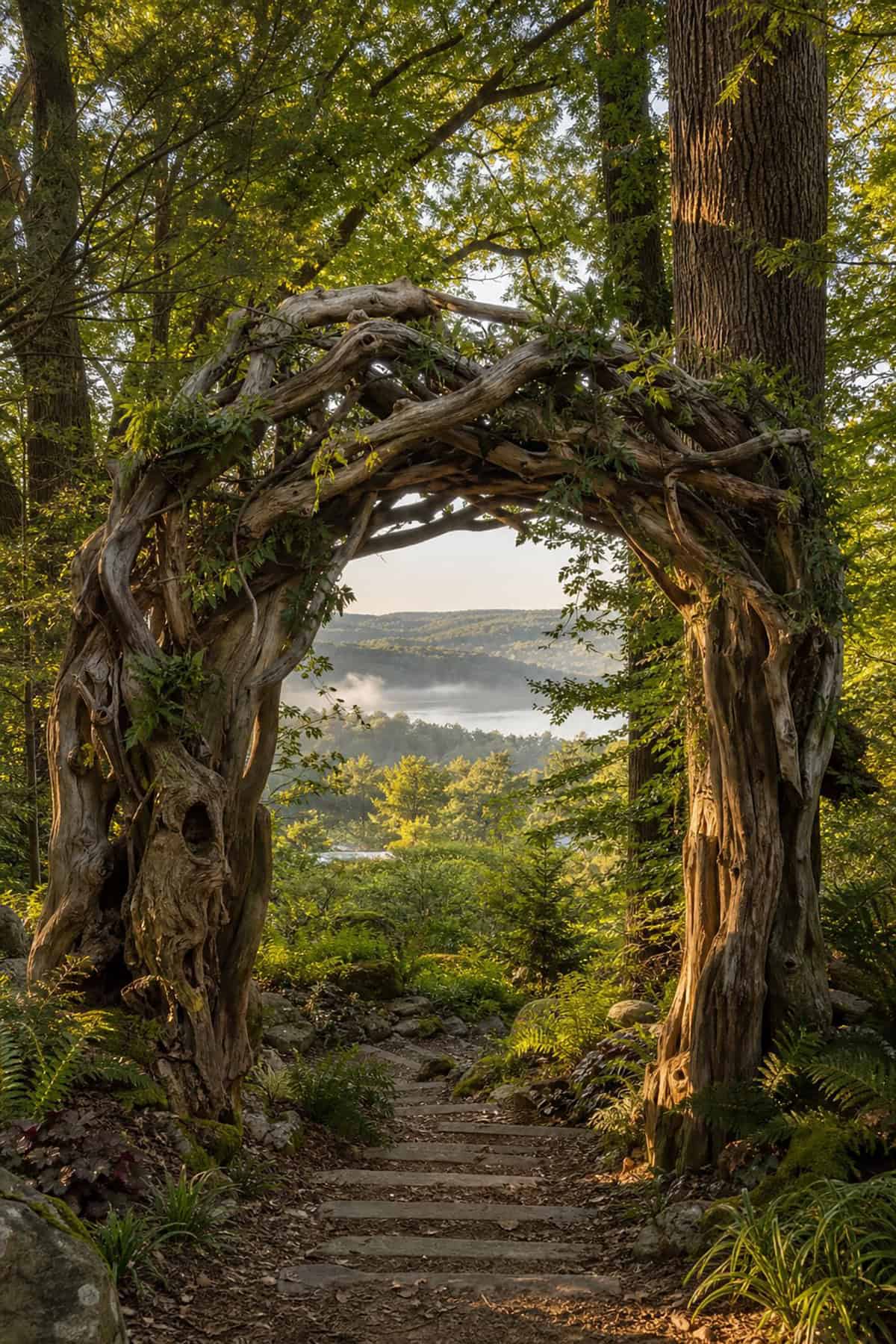
Stepping onto the main path, you’re greeted by an archway—branches woven or a sturdy timber frame—hinting at what lies beyond. Let honeysuckle scramble over it; few climbers handle woodland shade quite as gracefully.
Give the frame a solid build before letting any green take hold, though, or you’ll regret it when the stems start to weigh in. A little annual pruning goes a long way, too, or the whole thing vanishes under a wild tangle and you lose the charm of the structure itself.