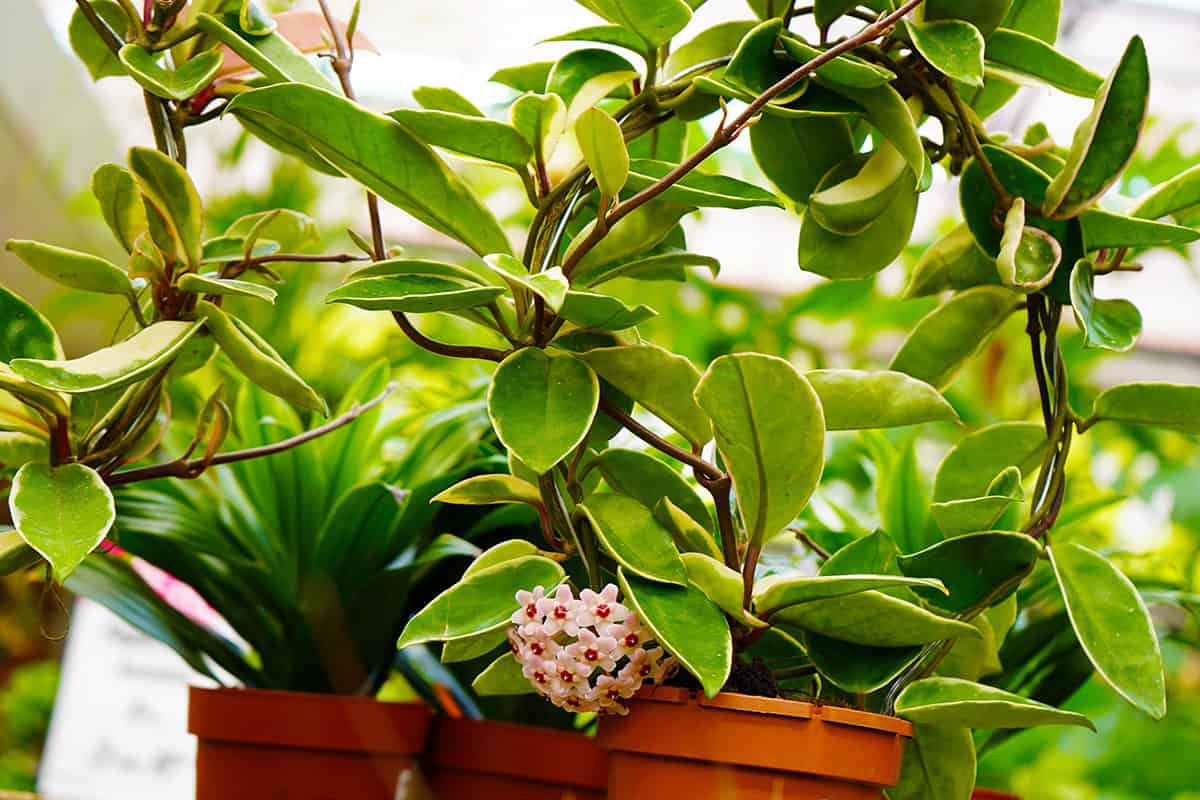
Hoya carnosa, the classic wax plant, charms with its thick, glossy leaves and clusters of starry, fragrant blooms. Whether you let it trail or wind it up a trellis, it thrives indoors and handles modern home life with surprising ease.
Give Hoya carnosa bright, indirect light, a fast-draining soil mix, moderate watering, and some warmth with a touch of humidity. When its needs are met, this vine just keeps going—growing steadily, occasionally bursting into bloom. Pruning here and there helps it stay lush and manageable.
Coming up: the nitty-gritty on light, soil, feeding, and repotting, plus tricks for propagation and dodging common headaches. There’s a quick cheat sheet and a detailed plant profile to help you get started on the right foot.
Table of Contents
Quick Care Summary
Evergreen and long-lived, this vine produces thick, waxy leaves and those distinctive, star-shaped blooms. Hang it or let it climb—either way, it’s well-suited for bright spots indoors and adapts to typical household conditions.
- Light: Needs bright, indirect light. A bit of gentle morning sun can nudge it into flowering.
- Soil: Fast-draining mix—think epiphyte blend, or regular potting soil plus perlite or bark.
- Watering: Wait until the top 1–2 inches of soil are dry. Cut back on water in winter.
- Temperature: 60–85°F is the sweet spot. Keep away from drafts and temperature swings.
- Humidity: Average home humidity is fine, but moderate is even better.
- Fertilizer: Once a month in the growing season, diluted balanced fertilizer.
- Propagation: Stem cuttings—root them in water or moist soil.
Plant Overview
- Botanical name: Hoya carnosa
- Common names: Wax plant, porcelain flower, honey plant
- Plant type: Perennial evergreen vine, grown mostly as a houseplant
- Mature size: Indoors, vines stretch 6–10 feet with support
- Growth rate: Moderate if it gets enough light
- Toxicity: Not considered toxic for pets or kids, but the sap can be mildly irritating
- Native region: Southeast Asia, Japan, and Taiwan
Plant Overview
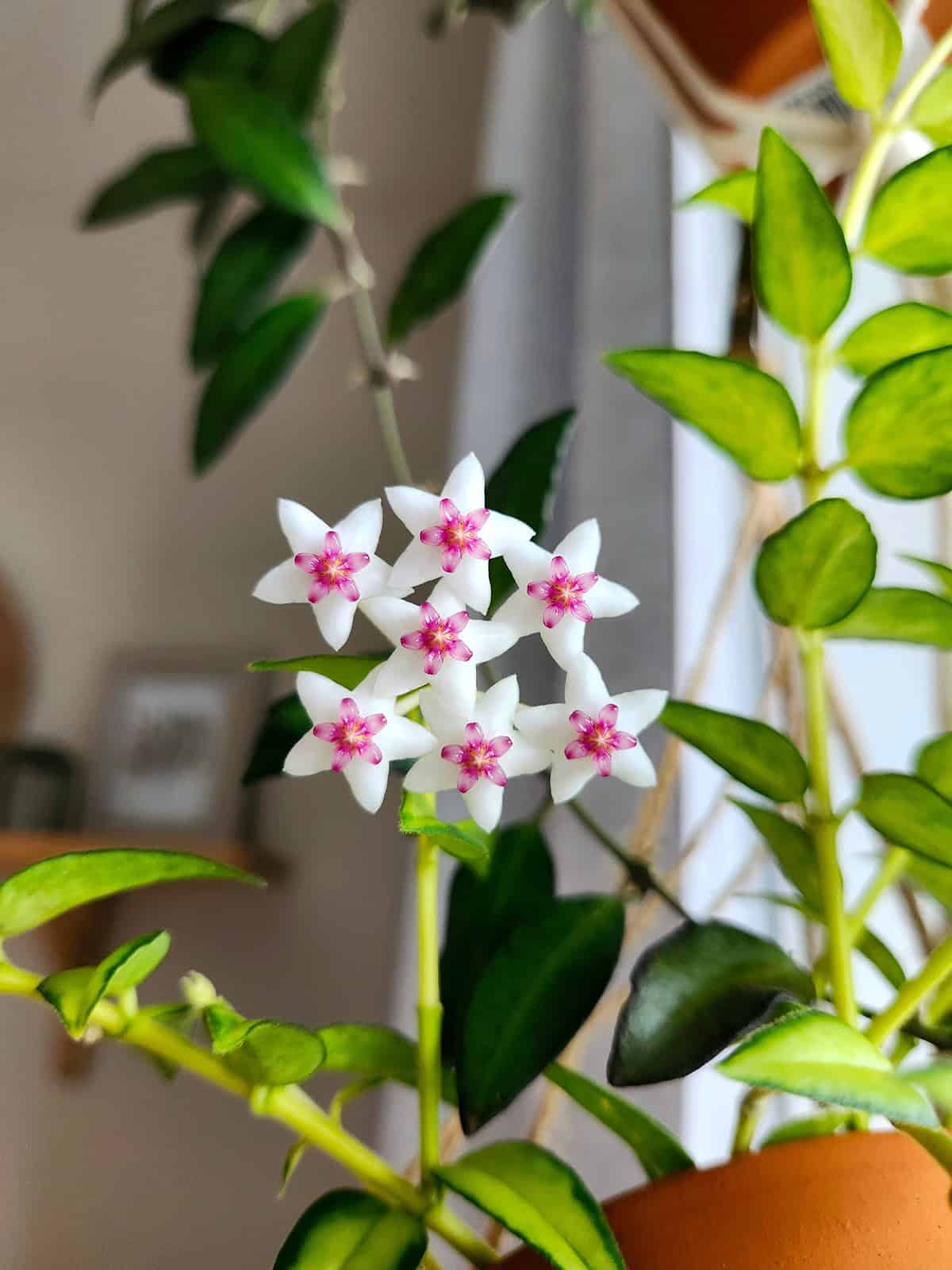
Originating from forests in Southeast Asia and nearby regions, this tropical vine is surprisingly forgiving indoors. Its thick, waxy leaves and clusters of starry flowers have made it a staple for generations of houseplant lovers. There’s a light, sweet scent when it blooms—hard to beat on a quiet evening.
Some folks let their hoya tumble from a basket, others wind it up a trellis for a vertical accent. Indoors, mature vines can easily reach six feet or more if you let them. Growth isn’t exactly speedy, but with consistent light and warmth, it keeps chugging along.
In the wild, it’s an epiphyte, hitching a ride on tree branches rather than rooting in the ground. At home, it needs a container filled with a chunky, well-drained mix.
Botanical name: Hoya carnosa
Common names: Wax plant, Porcelain flower, Honey plant
Plant type: Evergreen perennial vine
Mature size: 6–10 feet indoors
Growth rate: Moderate
Toxicity: Can be mildly toxic to pets if chewed
Native region: Southeast Asia, Japan, Taiwan
Quick Care Summary
Light: Bright, indirect; tolerates a little soft sun
Soil: Well-drained, with perlite or bark for extra airflow
Watering: Wait until the top inch or two dries
Temperature: 60–85°F
Humidity: Prefers it on the higher side
Fertilizer: Balanced liquid feed, used in moderation
Propagation: Stem cuttings with at least one node
Light
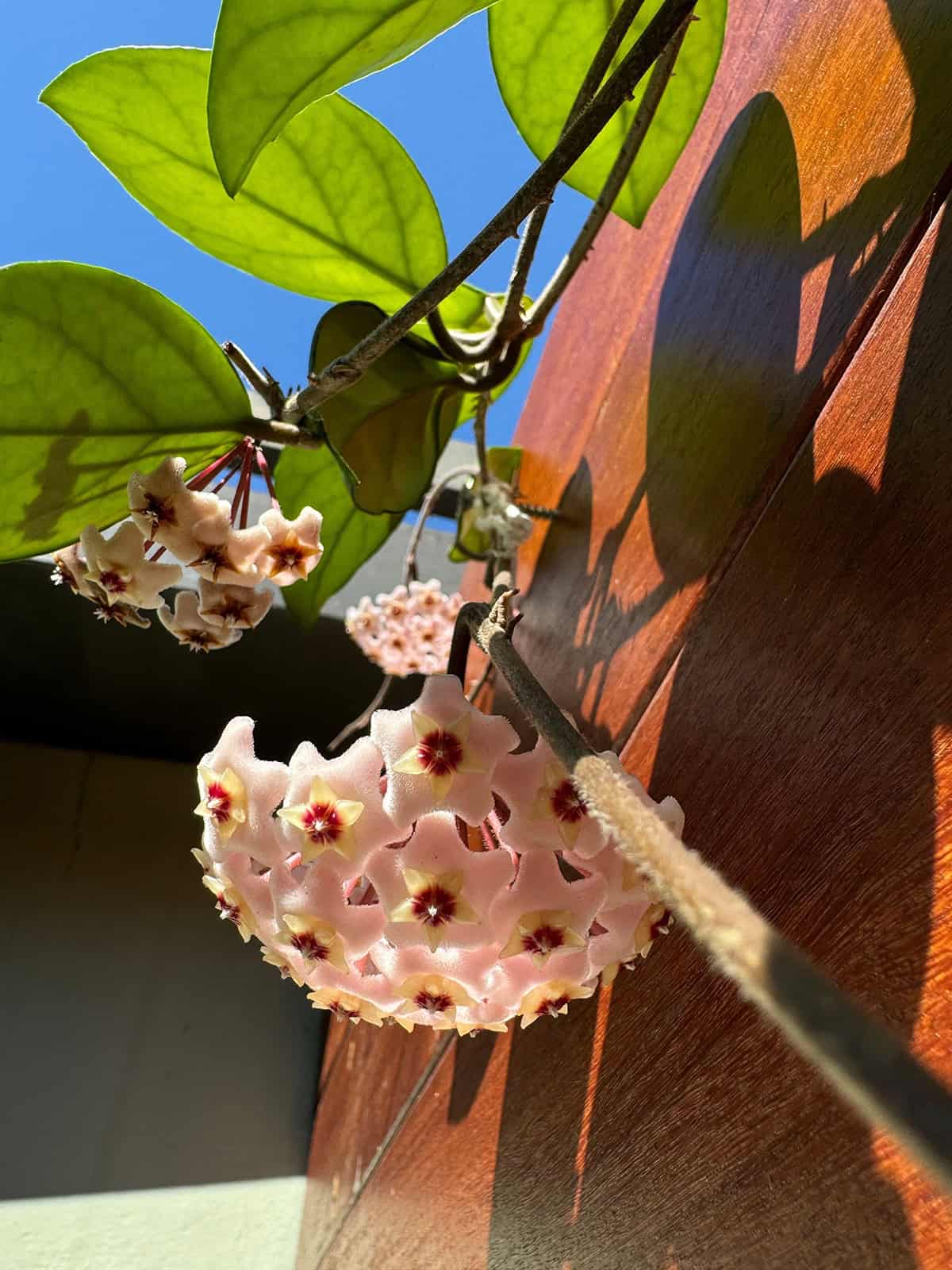
Spaces filled with soft, bright light bring out the best in Hoya carnosa. An east or west window does the trick—just filter harsh rays with a curtain if needed. When midday sun beats down, leaves can scorch, so steer clear of those hot spots.
Growth slows and flowers fade away in dim corners. Variegated types, especially, lose color in low light. If you notice long, stretched stems or leaves spaced far apart, that’s your cue to increase the light. Give the pot a quarter turn every so often for balanced growth.
Short on windows? Full-spectrum LED grow lights can fill the gap. A few hours a day, close but not too close, keeps vines compact and leaves glossy. Consistency in lighting beats dramatic swings.
Water
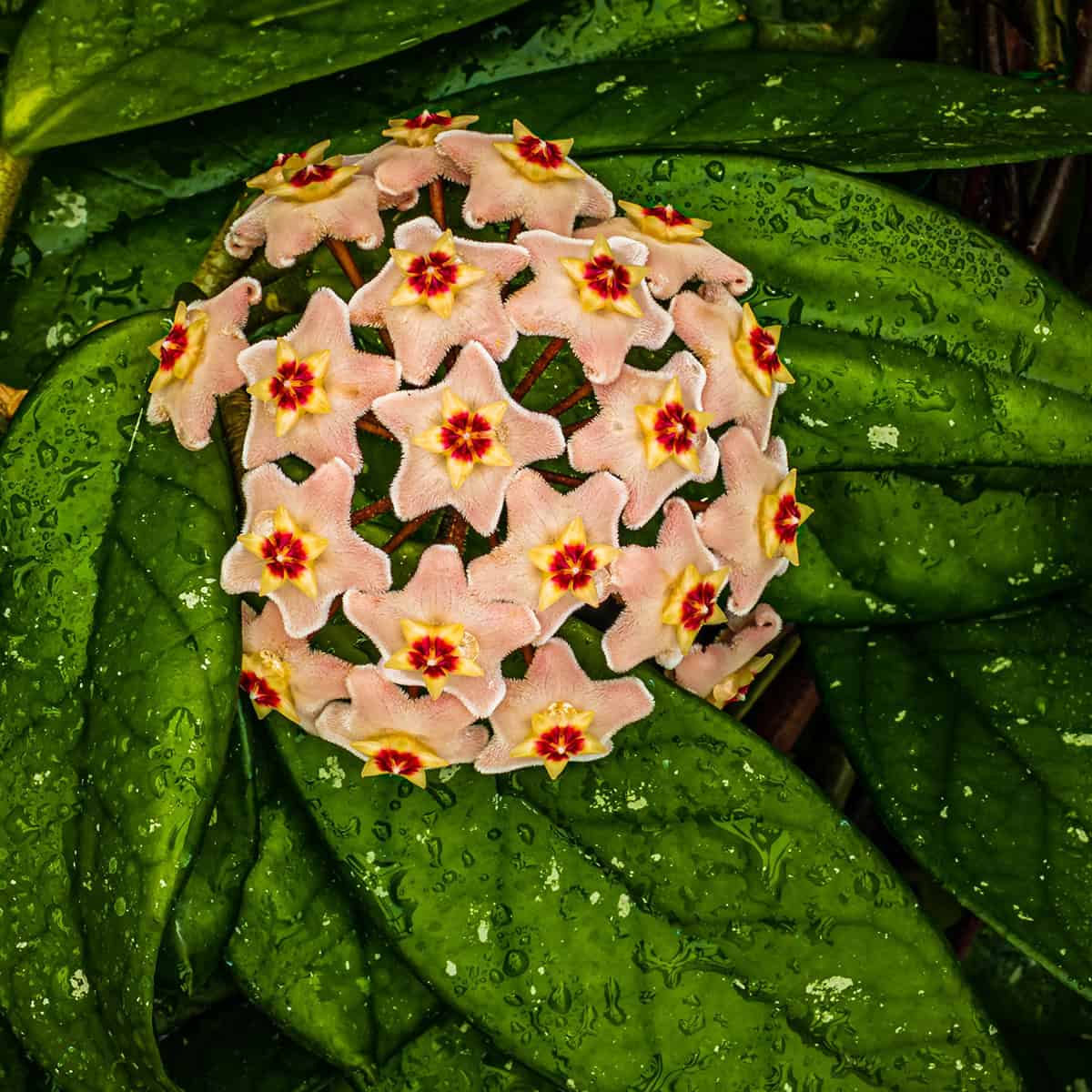
With Hoya carnosa, restraint pays off. Those thick leaves act as water tanks, so it can handle brief dry spells. Overwatering? That’s a fast track to root rot, especially in dense soil.
Check the top inch or two with your finger—don’t just go by the calendar. Typically, watering every 10 to 14 days works during active growth, but always let the plant (and the soil) guide you. In winter, dial it back.
Use room-temperature water and soak thoroughly, letting the excess run right out. Never let roots stew in a soggy saucer. Leaves looking a bit wrinkled? You might’ve waited a tad too long, but a good soak usually perks things up.
Humidity and temperature play their part. Dry, heated rooms mean faster soil drying; cool, damp spaces mean less frequent watering. Adjust as needed—no strict schedules required.
Soil
Chunky, airy mixes are your friend here. In its natural habitat, this vine clings to trees where roots dry out quickly. Heavy, compacted potting soil just spells trouble—roots suffocate and rot sets in.
Try a blend for epiphytes, or mix your own: regular potting soil with a generous scoop of orchid bark, perlite, or coarse sand for drainage. You want a mix that feels loose and light, not dense or sticky.
Drainage holes are non-negotiable. Water must escape quickly, or roots suffer. When in doubt, lift the pot—if it feels heavy and damp, hold off on watering. Dry soil feels crumbly, not cool or moist.
Repotting isn’t a frequent chore. Hoya actually likes things a bit crowded and often blooms better when slightly root bound.
Temperature & Humidity
Warmth is key. Daytime temps around 70°F–80°F and nights above 60°F keep it happy. Sudden chills or cold drafts? That’s a recipe for leaf drop. Avoid setting it near doors or vents where temperature swings are common.
Chilly spells below 55°F slow it down and can damage leaves. On the flip side, heat waves above 90°F aren’t ideal either—flowers may stall. In winter, shield it from icy windows. Consistency wins out over extremes.
Humidity in the 40%–60% range is usually enough, but dry air can lead to shriveled tips or flower buds dropping off. If your home is arid, a humidifier or grouping plants together can help create a cozier microclimate.
Fertilizer
This isn’t a plant that wants to be force-fed. Go easy—light, regular feeding does more than dumping on the nutrients. Use a balanced, water-soluble fertilizer (10-10-10 or 20-20-20), diluted to half strength. Too much, and you’ll see leaf tips burn or growth get floppy.
Once every two or three months during spring and summer is usually plenty. Skip the fertilizer in the fall and winter. Overdoing it leads to salt buildup, weak growth, and fewer flowers.
Flush the pot every so often with plain water to wash out lingering salts. Always feed onto moist soil—never dry. High-nitrogen blends? They’ll push leaves at the expense of blooms, so stick to balanced formulas for best flowering.
Potting & Repotting
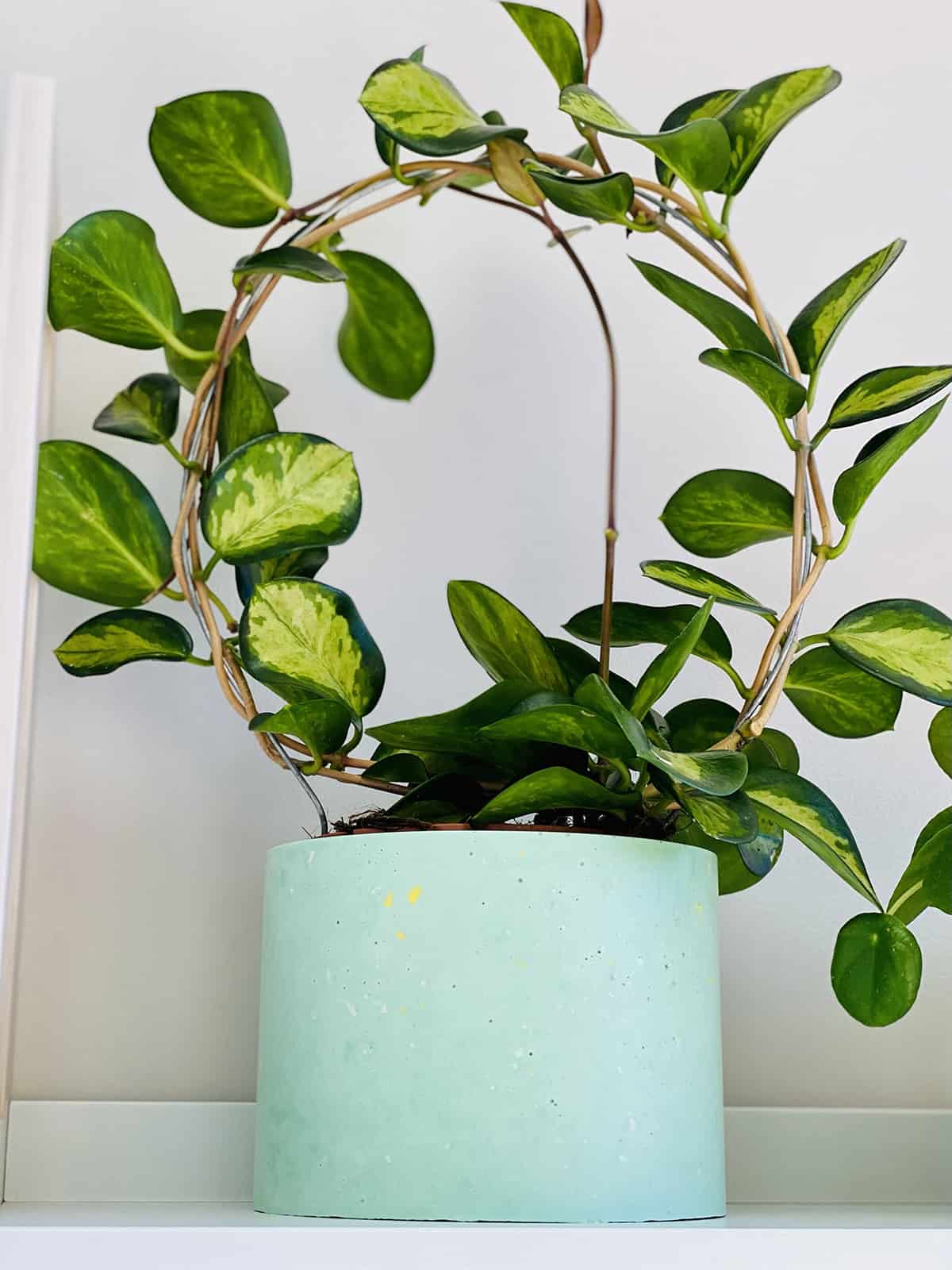
Pick a pot with reliable drainage. Hoya carnosa actually likes its roots a bit snug, so don’t size up too much—just an inch or two wider than the current pot is enough. A light, chunky mix (houseplant blend with extra bark or perlite) keeps roots healthy and breathing.
Don’t cram the soil in—set the root ball so it sits just below the rim and gently tuck soil around it, leaving space for water. Give it a good drink right after, but always let the excess drain away.
Repotting only needs to happen every couple of years, or when roots start circling the pot. If that happens, loosen them gently before settling into fresh soil. Oversized pots hold too much moisture and can backfire. After blooming, water a little less if things cool off, then resume normal care as growth picks up again.
Pruning
Shaping this plant is more about finesse than heavy-handed snipping. Tame wild vines with clean, sharp scissors, trimming just above a leaf node to encourage bushier growth.
Whatever you do, don’t cut off the stubby flower spurs (peduncles)—that’s where blooms return year after year. Focus instead on scraggly, bare, or tangled stems.
Dead or damaged leaves? Remove them as you spot them—keeps things tidy and pests at bay. For overgrown vines, trim back by about a third, but avoid drastic cuts, especially on younger plants.
Best timing is right after flowering winds down or early spring before new growth takes off. Go slow, let the plant recover, and don’t overdo it—moderation is your friend here.
Propagation
Snipping a healthy stem and rooting it is the go-to way to make more Hoya carnosa. Select a firm, unblemished vine and cut a section with at least two nodes—four to six inches works well. Strip off the lower leaves to leave bare nodes for rooting.
Pop the cutting in water or a light, airy potting mix. The node needs to be under the surface, since that’s where roots will sprout. Bright, indirect light helps roots develop strong and steady.
Soil-grown cuttings want to stay lightly moist, never soggy. Warmth (65–80°F) and moderate humidity boost your chances. Most cuttings root in three to six weeks. Once roots reach an inch or two, move water-rooted pieces into a small pot with chunky soil. Wait for new leaf growth, then treat it like a mature plant.
Common Problems
Yellowing leaves? That’s usually a watering misstep—most often, too much. Soggy, smelly soil is a dead giveaway for root rot. Let things dry out and stick with well-drained pots.
When leaves shrivel or feel papery, it’s a sign the plant’s been left dry too long. While those waxy leaves store water, they’re not immune to drought. Check soil moisture before watering—don’t just guess.
Frustrated by a lack of blooms? Low light is the usual culprit. Move the plant somewhere brighter and keep it a bit root bound. Repotting too often can delay flowering.
Mealybugs and spider mites occasionally show up—look for sticky residue or fine webs. Wipe leaves with a damp cloth and use insecticidal soap if needed.
Sudden temperature swings can cause leaves to drop. Keep things steady between 60 and 85°F, away from drafts and vents, and the plant usually bounces back.
Varieties
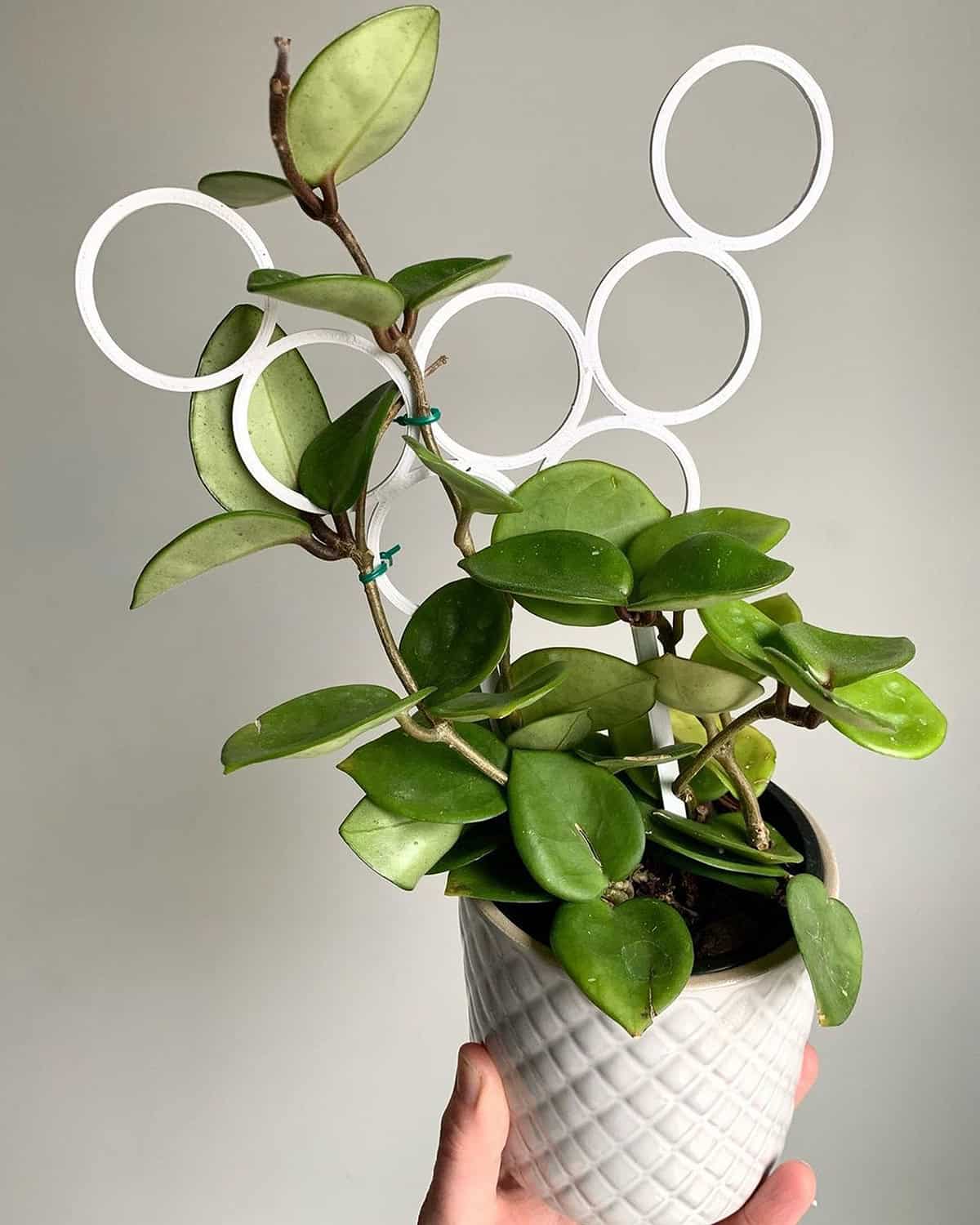
Leaf texture, unexpected color, and odd twists—these are the things that set Hoya carnosa varieties apart. While their care stays pretty consistent, the foliage can look wildly different from one to the next. Flower shape? Not really the main event here. It’s all about the leaves.
That wild, knotted look of ‘Compacta’ (sometimes called ‘Krinkle Kurl’ or Hindu rope plant) comes from vines packed with curled, folded leaves. The twists pile up, making the whole thing feel like a living rope. Growth is slow, so it won’t take over your windowsill.
Some folks chase the creamy edges of ‘Variegata’ (often sold as ‘Krimson Queen’), where pale margins and the occasional blush of pink on new leaves steal the show. Flip over to ‘Krimson Princess’ and the variegation shifts to the leaf’s center instead. Kind of a fun reversal.
Rippled, offbeat forms like ‘Crispa’ and ‘Regalis’ lean into texture. They skip the heavy variegation and just go for a bold, sculptural vibe—even if you never see a single flower.
Then there’s ‘Chelsea’, where the leaves stay small, thick, and quietly heart-shaped. They’re firm, almost waxy to the touch, and somehow manage to look both classic and a bit quirky. No matter the cultivar, those signature star-shaped, fragrant blooms show up once the plant decides it’s ready.