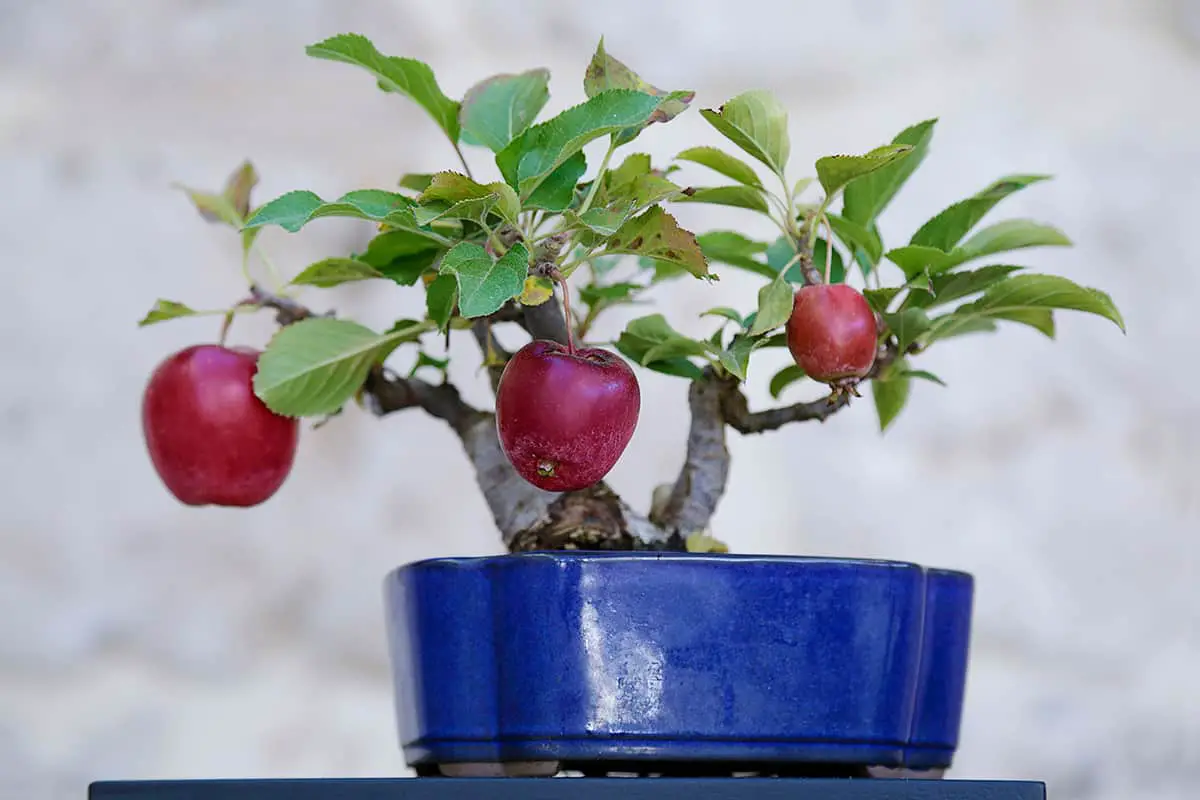
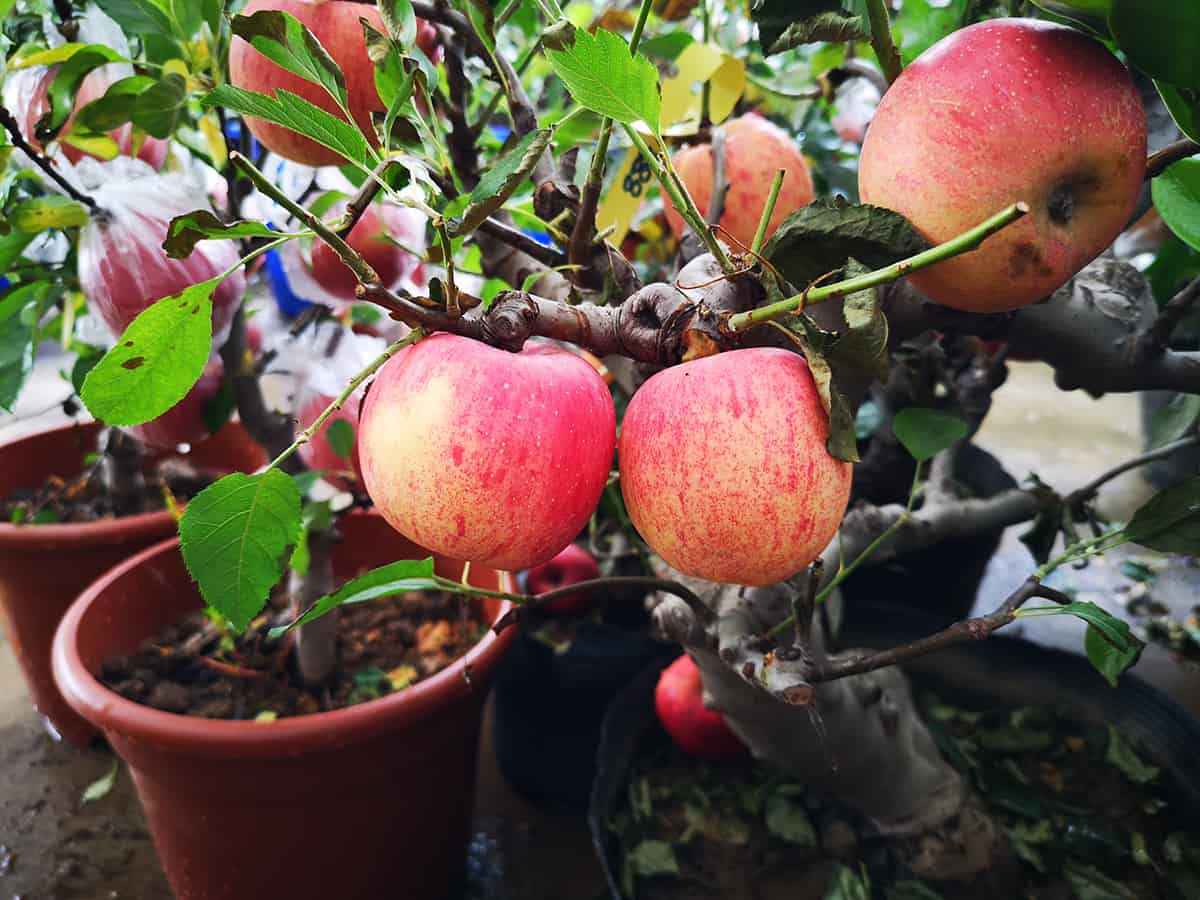
Apple trees grow happily in containers when they’re grafted onto dwarfing rootstock, which holds them to patio size.
A large pot, full sun and steady water are the core needs, and a potted tree fits a balcony, deck or small courtyard. Most start bearing fruit within 2 to 3 years.
The steps run in the order a new grower meets them, with variety and pot choice first and harvest last.
Table of Contents
- Choosing the Right Apple Tree Variety
- Selecting the Right Pot
- Potting Soil and Fertilization
- Planting the Apple Tree
- Watering and Humidity
- Sunlight and Temperature Control
- Pruning and Maintenance
- Pollination Tips
- Harvesting and Storing Apples
- Frequently Asked Questions
- Which types of apple trees are most suitable for pot cultivation indoors?
- How should one feed and fertilize apple trees grown in pots?
- How should potted apple trees be protected and cared for during winter months?
- After planting, how long does it generally take for an apple tree in a pot to start bearing fruit?
Choosing the Right Apple Tree Variety
Dwarf vs. Semi-Dwarf Varieties
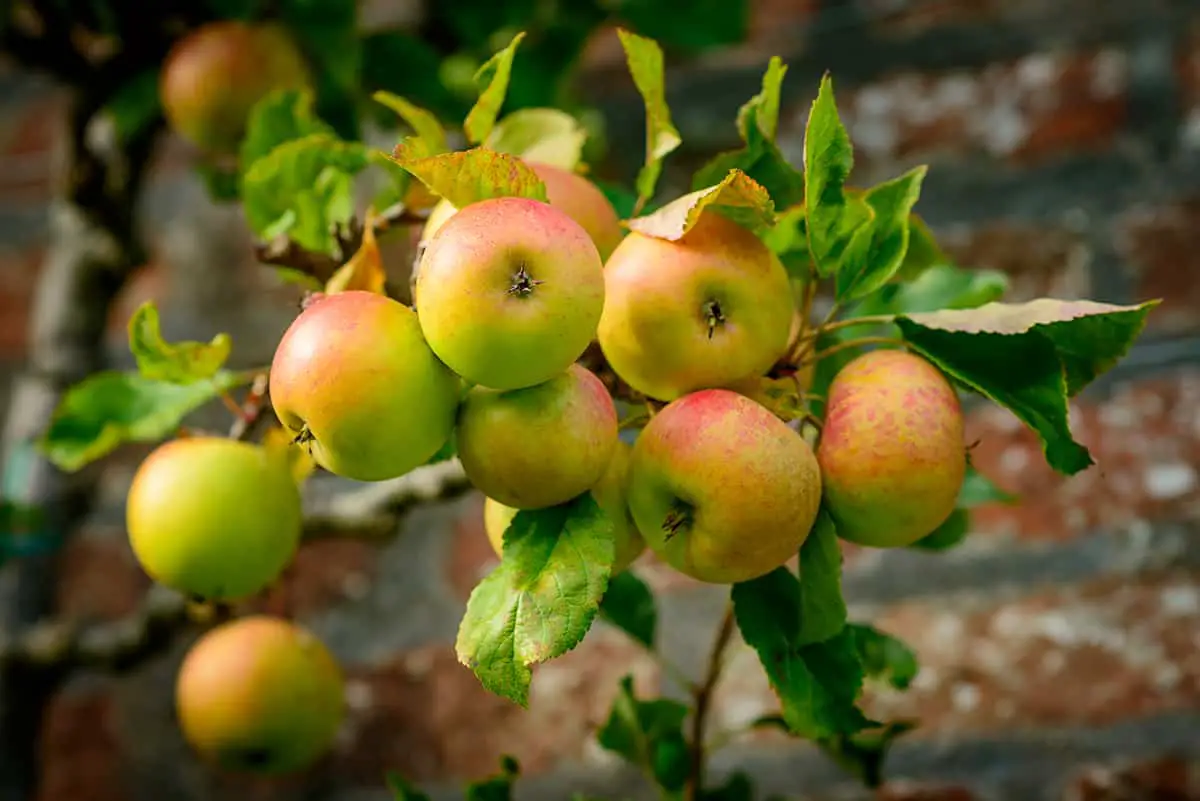
Rootstock matters more than variety for container growing. Choose a tree grafted onto a dwarf rootstock such as M27, M9 or G.41, or a columnar apple bred for narrow, upright growth. These trees grow slowly, fruit young and are easy to prune.
In the ground, dwarf apples reach 8 to 10 feet and semi-dwarf trees 12 to 15 feet. A pot restricts the roots and holds them smaller, though semi-dwarf types quickly outgrow all but the largest containers.
Climate and Zone Considerations
Apple trees need 6 to 8 hours of direct sun a day and a cold winter for proper flowering. Most varieties require several hundred hours below 45°F, and low-chill varieties such as ‘Anna’ and ‘Dorsett Golden’ fit warm climates. Check your zone on the USDA Plant Hardiness Zone Map, and remember that roots in a pot are about one zone less hardy than roots in the ground.
This table lists popular apples available on dwarf rootstock, with their typical zones.
| Apple Variety | Climate | Hardiness Zones |
|---|---|---|
| Gala | Mild | 5-8 |
| Fuji | Mild | 6-9 |
| Granny Smith | Mild, long season | 6-9 |
| Honeycrisp | Cold | 3-6 |
| Golden Delicious | Wide range | 4-9 |
Most of these need a second variety nearby for pollination, and Golden Delicious is a dependable pollen partner for the others.
Selecting the Right Pot
Pot Size Requirements
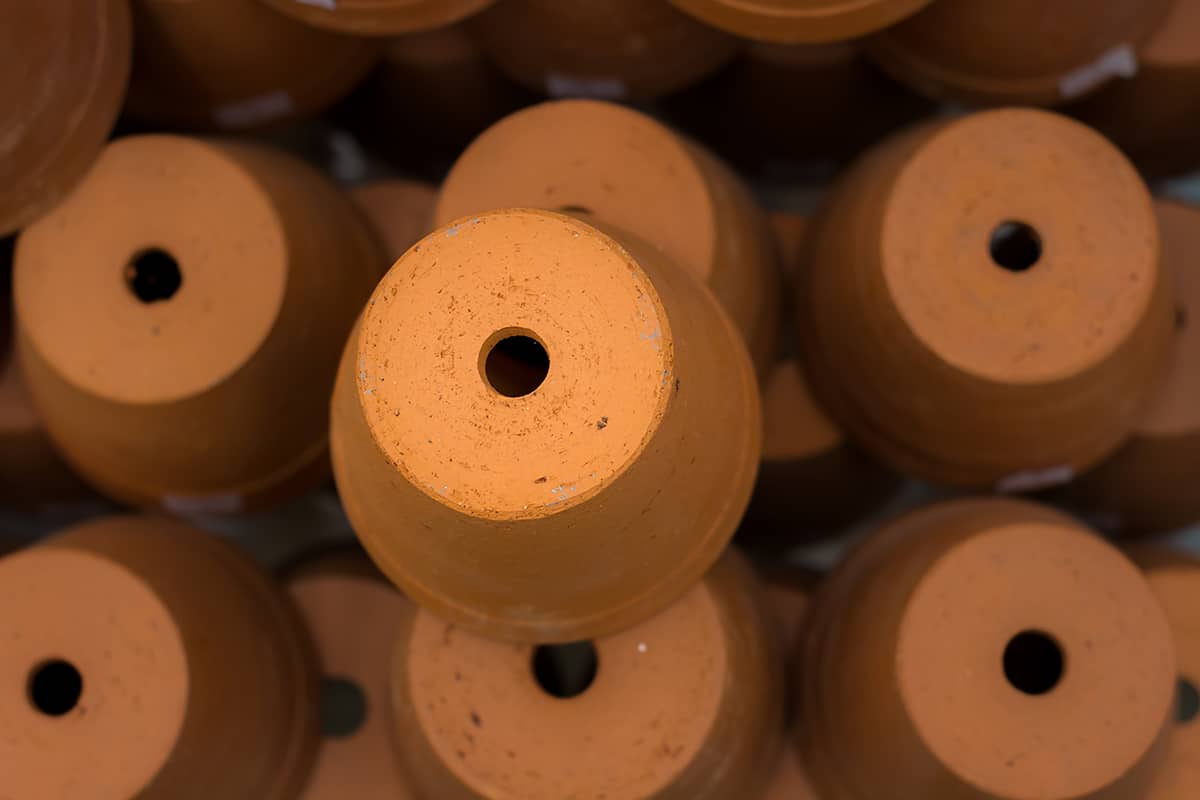
Start a young tree in a container about 15 to 18 inches wide and deep, then move it up to a 20- to 24-inch pot, roughly 15 to 25 gallons, as it matures. Bigger pots hold more water and buffer the roots against heat and cold, but they’re heavy once filled, and a wheeled plant caddy makes moving one much easier.
Material and Drainage Considerations
Terra cotta, stone and ceramic pots are sturdy and stable in wind, but heavy. Plastic, polystyrene and other modern composite materials are lighter and easier to move.
Drainage holes are a must. Skip the layer of gravel at the bottom, which raises the wet zone into the root area, and raise the pot slightly on pot feet for free drainage.
Potting Soil and Fertilization
Soil Mixture for Apple Trees
Use a high-quality potting mix blended with about one-quarter compost, or a loam-based container mix. Plain garden soil compacts in a pot and drains poorly. The mix should hold moisture but drain freely after watering.
Fertilizer Types and Application
Feed with a balanced, slow-release fertilizer such as 10-10-10 or 14-14-14 in early spring, at the label rate. A liquid fruit-tree fertilizer every 2 to 4 weeks through early summer is another option.
Stop feeding by midsummer, which lets new shoots harden off before winter. Pale leaves, weak growth or small fruit point to hungry roots, and a top-dressing of compost each spring helps.
Planting the Apple Tree
Step-by-Step Planting Guide
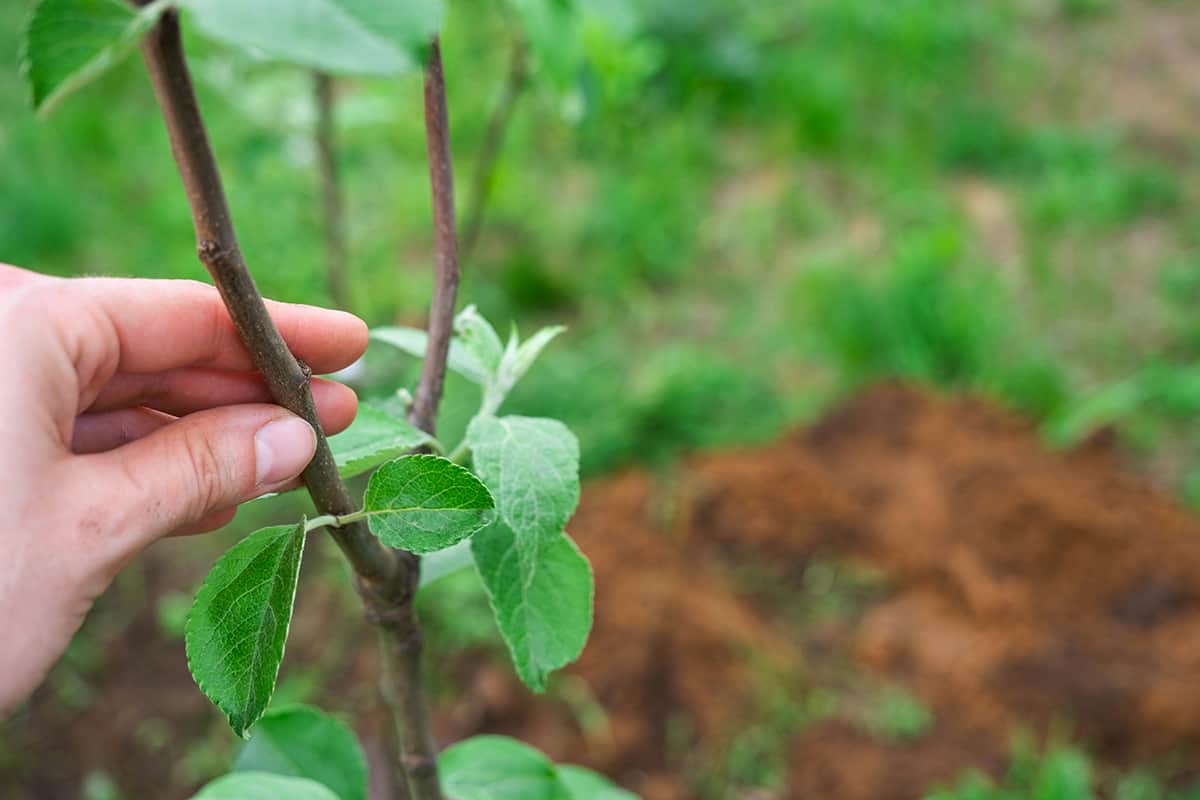
Plant bare-root trees in late winter or early spring, and container trees any time during the growing season. Fill the pot partway with potting mix enriched with compost, and leave about 2 inches of space at the top for watering.
Dig a hole in the center as deep as the root ball, then prepare the roots.
Root Ball Preparation
Slide the tree out of its nursery pot, and gently loosen the outer roots, cutting any that circle the root ball. Set the tree in the hole with the graft union, the knobby joint low on the trunk, 1 to 2 inches above the soil line.
Fill in around the roots with potting mix, and firm it gently to remove air pockets. Water thoroughly to settle the mix, then top it up if the level drops, with the graft union still above the surface.
Watering and Humidity
Watering Schedule
Potted apple trees dry out far faster than trees in the ground. Water whenever the top inch of soil is dry, until water runs from the drainage holes. In hot summer weather, that may mean every day.
Small pots and terra cotta dry fastest. In cool weather and during dormancy, water much less, just enough to prevent the root ball from drying out completely.
Humidity and Airflow
Apple trees are outdoor plants and need no special humidity. Air circulation matters more, since damp, still air around the leaves encourages apple scab and powdery mildew.
Place the pot where breezes reach it, prune for an open canopy, and water the soil early in the day instead of wetting the leaves.
Sunlight and Temperature Control
Sunlight Requirements
Apple trees need at least 6 to 8 hours of direct sun a day for good flowering and fruit. Shaded trees grow weak, leggy branches and produce few apples.
A south- or west-facing patio, balcony or wall is the best spot. Indoor growing rarely succeeds, since apples need strong outdoor light and a cold winter rest.
Temperature Optimization
Apple trees need winter cold to bloom well in spring. Leave the tree outdoors through fall for natural dormancy and chill hours.
In cold regions, container roots freeze more easily than roots in the ground. Move the pot to an unheated garage or shed during hard freezes, or wrap it with burlap or bubble wrap, and avoid a heated room, which breaks dormancy. Good drainage through winter protects the roots from rot.
Pruning and Maintenance
Pruning Techniques
Prune in late winter, while the tree is dormant. Start by removing dead, diseased or broken limbs, then cut out water sprouts, the shoots that grow straight up from branches. Regular pruning controls the tree’s size and opens the canopy to light and air.
For young apple trees, prune immediately after planting. Head an unbranched whip back to about 30 inches, just above a bud, for a central leader with side branches below. Use clean, sharp pruners, and cut just outside the branch collar.
Pest and Disease Management
Check leaves, shoots and fruit weekly for aphids, mites, codling moth and apple maggot. Insecticidal soap, horticultural oil and neem oil handle soft-bodied pests, and sticky traps or fruit bags protect apples from moths and maggots.
Apple scab, powdery mildew, cedar apple rust and fire blight are the most common diseases. Choose resistant varieties where possible, rake up fallen leaves, prune out infected shoots and use fungicides or copper sprays as the label directs.
Pollination Tips
Cross-Pollination Methods
Most apples need pollen from a different variety that blooms at the same time. Pick compatible cultivars, or a self-fertile variety for a single tree. Dwarf apple trees make it easy to fit two varieties on one patio, and a flowering crabapple nearby also serves as a pollinator.
On a high balcony with few bees, hand pollination helps. With a small, soft paintbrush, collect pollen from the anthers of one tree’s blossoms and dust it onto the stigmas in the center of the other tree’s flowers. Repeat over several days during bloom.
Attracting Pollinators
Bees are the main pollinators of apple blossoms. Plant nectar-rich flowers such as lavender, borage and catmint nearby, and set out a shallow dish of water with pebbles for landing spots.
Avoid insecticides while the tree is in bloom, since they harm bees and other pollinators. Organic, targeted pest control protects both the fruit and the insects that set it.
Harvesting and Storing Apples
Harvesting Indicators
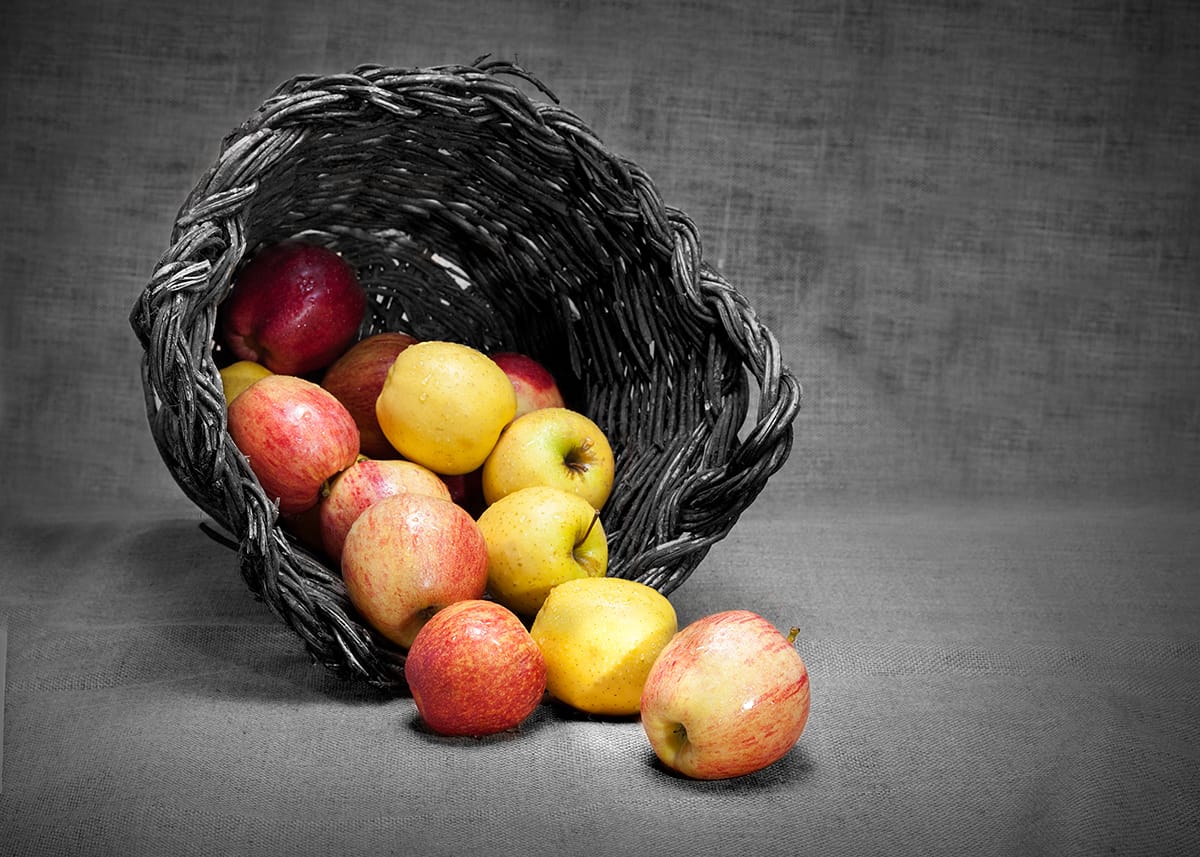
Ripe apples show full color for their variety, brown seeds and crisp, sweet flesh. The background skin color also shifts from green toward yellow as they ripen. Lift the apple and twist it gently, and a ripe fruit separates easily from the branch. Pulling damages the fruiting spurs.
Storage Guidelines
Store apples in a cool (34-40°F), humid (90% RH) and dark place. A refrigerator crisper drawer is the simplest option, and a root cellar or cold garage handles larger harvests. Store apples away from strong-smelling foods, which they absorb.
Perforated plastic bags in the refrigerator slow moisture loss for small batches. For larger harvests, sort out bruised fruit for immediate use, and check stored apples every week, since one rotten apple spreads decay to its neighbors.
Frequently Asked Questions
Which types of apple trees are most suitable for pot cultivation indoors?
Apple trees grow poorly indoors, since they need full outdoor sun and a winter chill to flower. For containers on patios and balconies, columnar and spur-type varieties on dwarfing rootstock are the best fit. Choose a self-fertile variety or two compatible varieties for pollination.
How should one feed and fertilize apple trees grown in pots?
Apply a balanced, slow-release granular fertilizer in early spring, or use a liquid fruit-tree fertilizer every 2 to 4 weeks until midsummer. Stop feeding after that, which lets new growth harden before winter, and watch leaf color and growth to fine-tune the amount.
How should potted apple trees be protected and cared for during winter months?
Move the pot to a sheltered, unheated spot such as a garage or shed during hard freezes, or insulate it with straw, burlap or bubble wrap. The tree still needs winter cold, and a heated room breaks dormancy. Water lightly whenever the soil dries out, much less frequently than in summer.
After planting, how long does it generally take for an apple tree in a pot to start bearing fruit?
Dwarf apple trees typically start bearing fruit 2 to 3 years after planting. Variety, rootstock and care all affect timing, and a young tree with its first year’s blossoms removed puts more energy into its roots before fruiting.