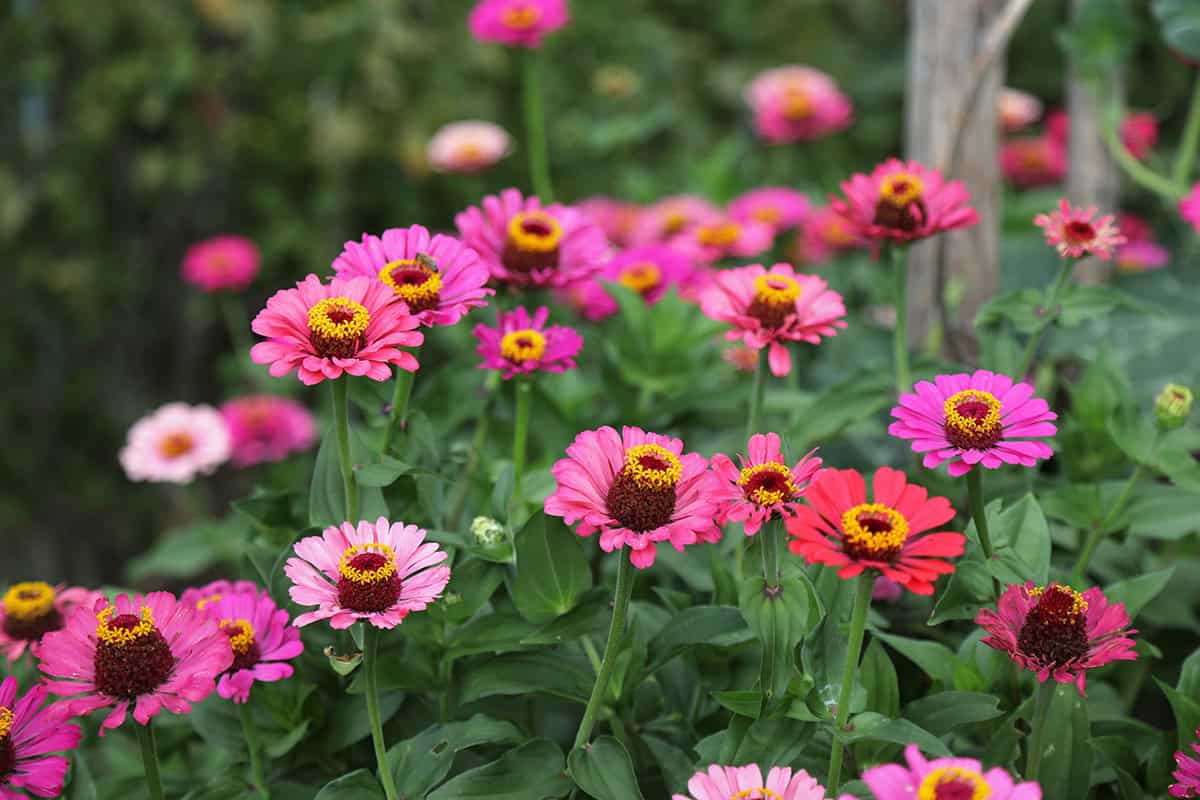
Few summer annuals reward a sunny bed as generously as zinnias. The seeds sprout within a week in warm soil, and the plants flower nonstop until frost.
They also rank among the easiest flowers to grow for cut bouquets, since every stem you snip pushes the plant to make more.
The care basics for a patch worth cutting all summer start with sunlight.
Table of Contents
Light
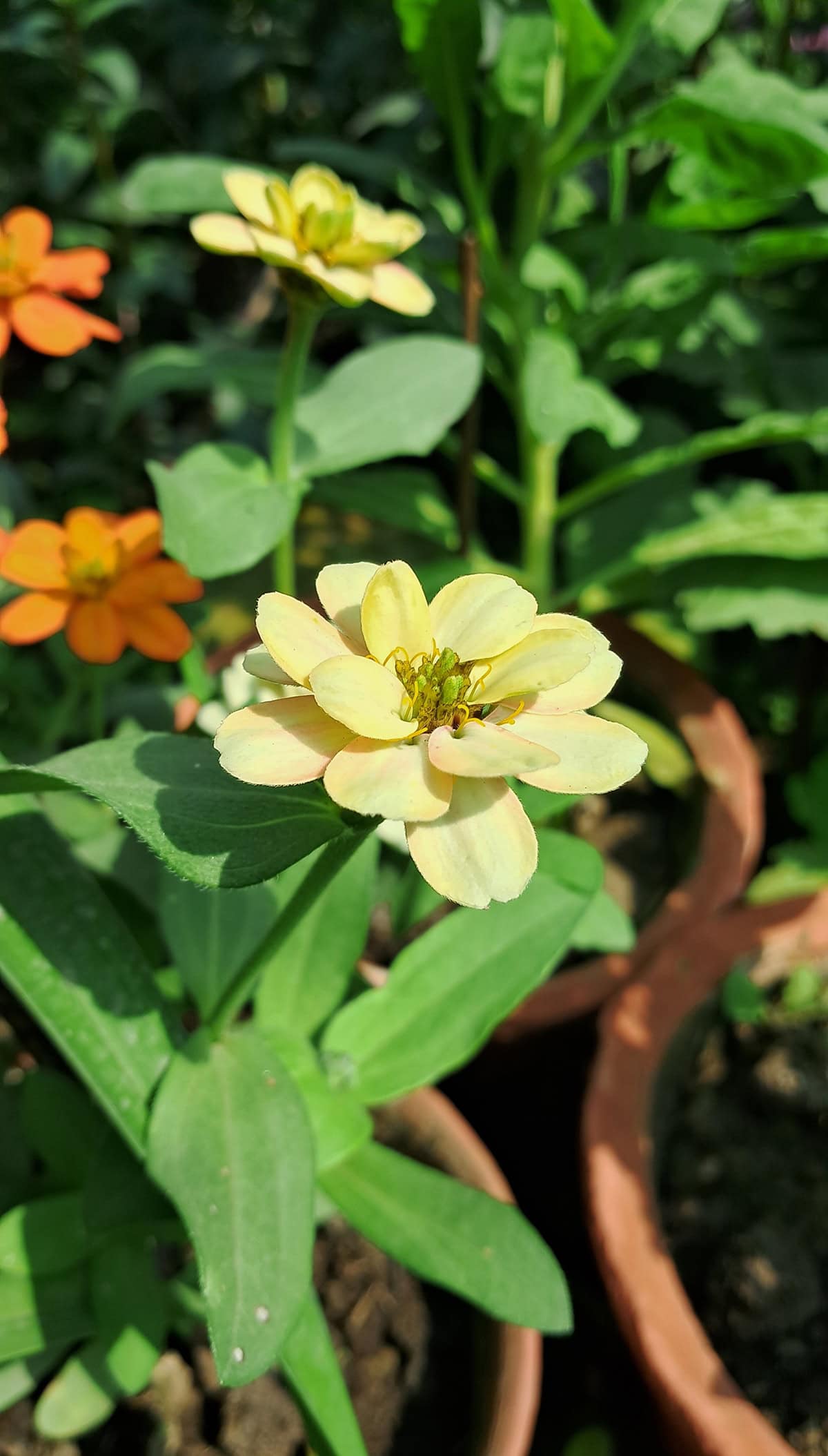
Plant zinnias where they get at least six hours of direct sun each day. More light means more flowers, and plants in partial shade grow floppy stems with only a handful of blooms.
An open bed away from trees and fences is the right choice, especially where afternoon shade is the problem. Seedlings started indoors need a bright south window or a grow light set a few inches above the trays, or they stretch into weak, leggy stems.
Morning sun matters most because it dries dew off the leaves early, which cuts down on mildew. Check potted zinnias after moving them around the patio, since a spot that was sunny in May may sit in shade by July.
Soil
Zinnias tolerate average soil, but soggy ground rots their roots fast. Loosen heavy clay with compost before planting, and avoid beds where rainwater puddles.
Loose, rich soil with plenty of organic matter grows the strongest plants. A pH between 6.0 and 7.5 is fine, and a cheap test kit from the garden center tells you where your bed sits.
Mix compost into sandy soil to help it hold moisture, and add perlite or coarse grit to dense soil to speed up drainage. Wait to sow until the ground warms in late spring, because seeds in cold, wet soil rot before they sprout.
Water
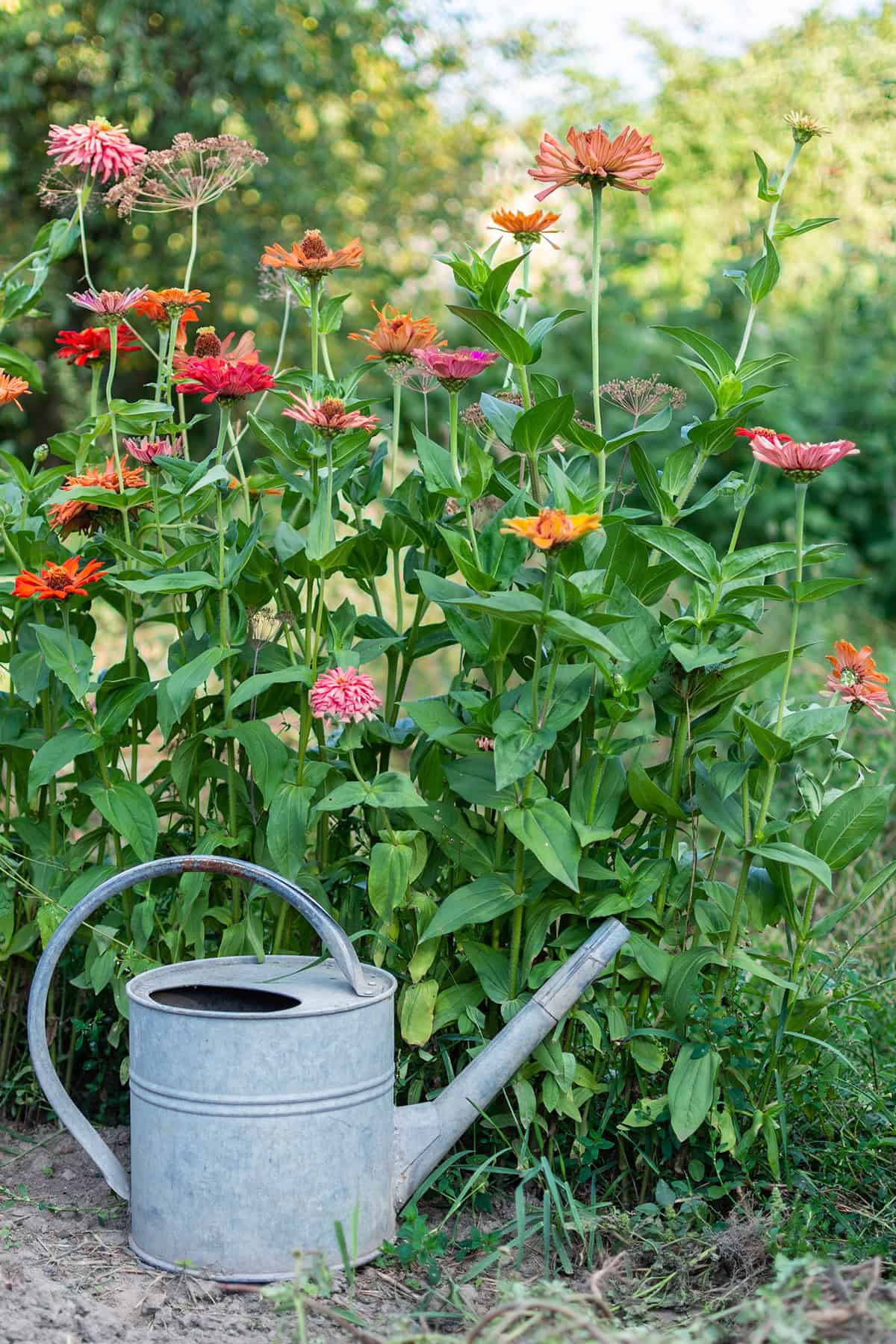
Water zinnias when the top inch or two of soil is dry. Push a finger into the bed before reaching for the hose, and skip a day if the soil is still damp.
Plan on about an inch of water per week, rain included. Established plants handle a short dry spell well, while constant moisture leads to root rot.
Aim the water at the base of the plant and leave the foliage dry, since wet leaves invite powdery mildew and leaf spot. Sandy soil and July heat call for extra watering, so check beds every couple of days during a heat wave.
Temperature And Humidity
Hold off on sowing outdoors until daytime temperatures hold above 60°F and the soil reaches about 70°F. One late frost kills young seedlings, so wait until the last frost date has passed.
Cool spells slow growth and leave plants more prone to disease.
Humidity itself is fine, though muggy summers raise the odds of powdery mildew. Space plants 9 to 18 inches apart for airflow, water at the soil line, and choose mildew-resistant series such as Zahara or Profusion in humid regions.
Fertilizer
A balanced water-soluble fertilizer such as 20-20-20 does the job, or use slow-release granules for less effort. Feed once at planting and again at midseason at the rate on the label.
Too much nitrogen produces lush leaves and fewer flowers, so a light hand pays off. Compost improves the soil but supplies only modest nutrients. Water the bed before applying any synthetic fertilizer, because fertilizer on dry roots burns them.
Propagation
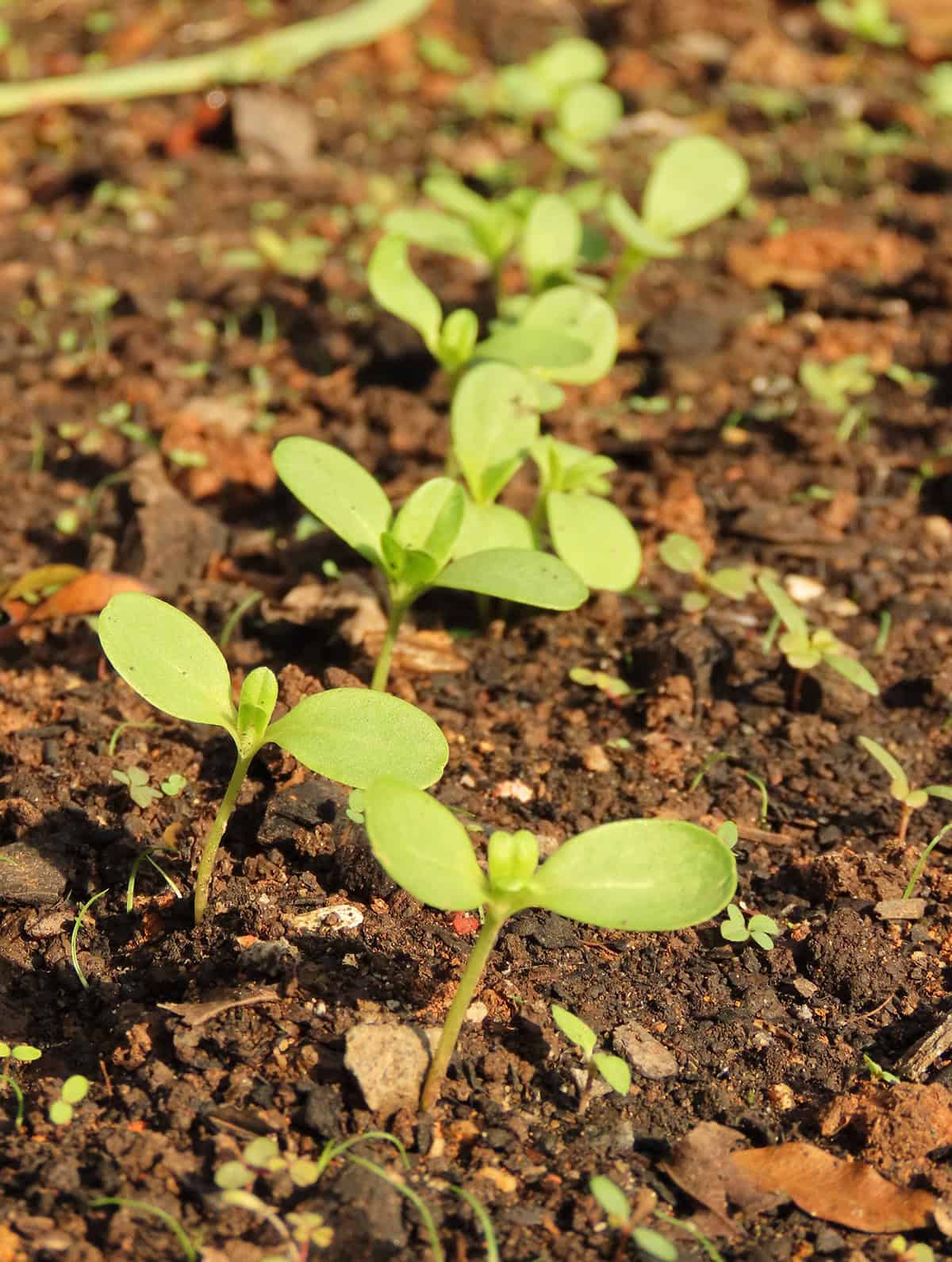
Start zinnias from seed for the easiest results. The seeds are large, simple to handle and sprout reliably indoors or straight in the garden.
Sow seeds about 1/4 inch deep in moist, well-drained soil. Indoors, use a tray of seed-starting mix and cover it with a plastic dome to hold moisture. Move the tray under bright light as soon as the first sprouts appear.
Transplant seedlings after the last frost with room for airflow, and handle the roots gently because zinnias resent disturbance. For direct sowing, wait for warm soil, then thin the seedlings once they have two sets of true leaves.
Cuttings root poorly compared with seed, which is why most gardeners skip them. Saved seed lasts three to four years in a cool, dry jar, though seed from hybrids produces plants that differ from the parent.
Pruning
Pinch out the growing tip just above a leaf pair once young plants reach 8 to 12 inches tall. The plant responds with side branches, which means a bushier shape and more stems for cutting. Deadhead faded flowers every few days to prompt fresh buds.
Cut out weak or crowded stems at the base to open up airflow. Use sharp, clean pruners and snip just above a healthy set of leaves. Prune in the morning, and never remove more than a third of the plant at once.
Potting And Repotting
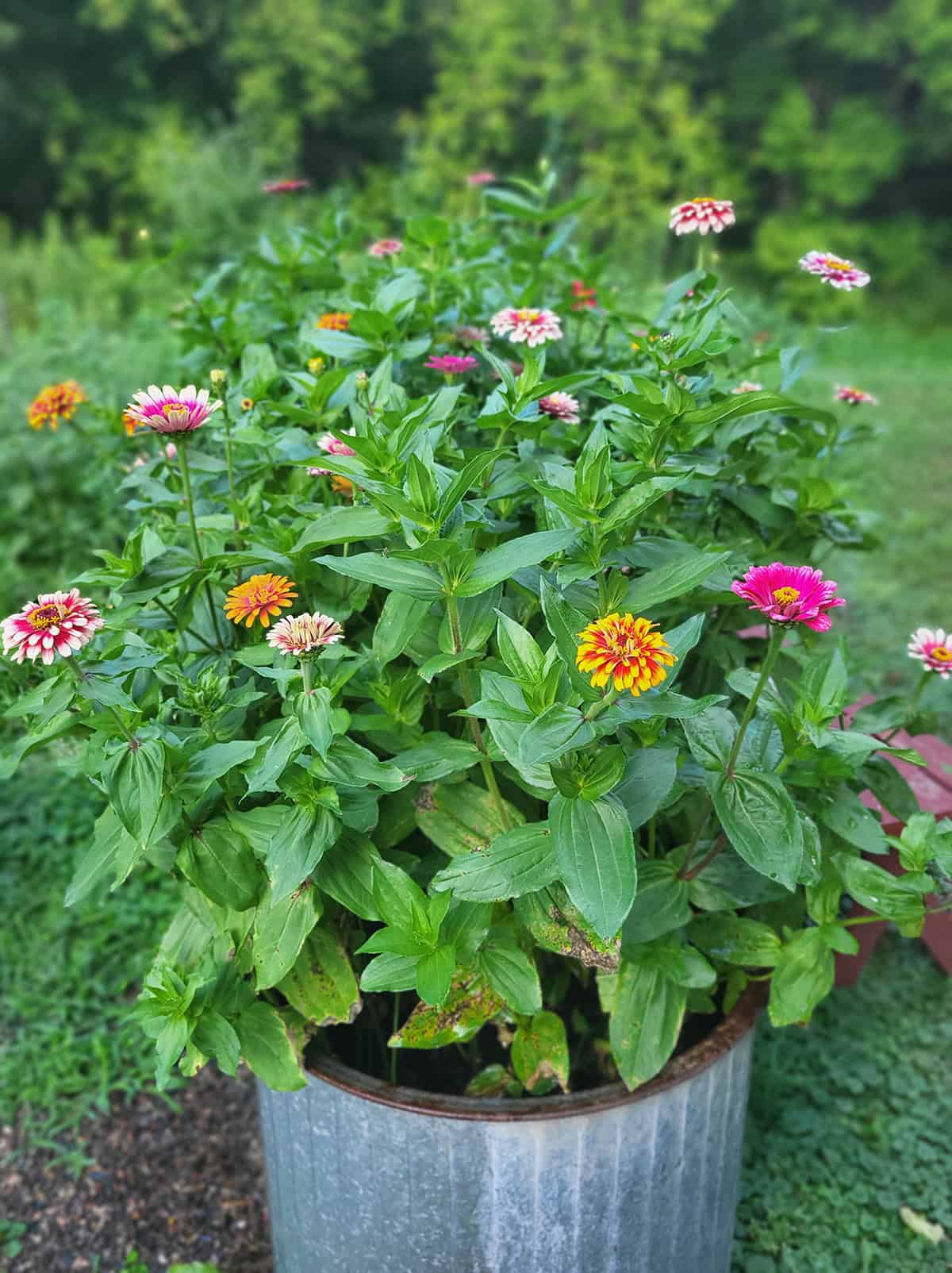
Zinnias grow well in pots with drainage holes. Fill the pot with a loose, fast-draining mix, and choose one at least 6 inches deep for dwarf types and 12 inches or more for tall cutting varieties. Remove plastic nursery pots before planting, and set transplants at the same depth they grew before.
Repot when roots circle the pot or growth stalls. Loosen the root ball gently, move the plant to a container one size larger with fresh mix, and water slowly until it drains from the bottom. Empty the saucer afterward so the pot never sits in water.
Handle the roots as little as possible, because zinnias sulk after rough transplanting. Return the pot to full sun and watch for wilting or pests over the next week.
Common Problems & Troubleshooting
A white, powdery film on the leaves points to powdery mildew, the most common zinnia problem. It spreads fastest in humid weather and crowded beds. Wider spacing and morning watering help the foliage dry quickly.
Wilting plants in damp soil are a sign of root rot from overwatering or heavy ground. Check the soil before watering again, and let the top layer dry between drinks. Yellow, limp leaves are an early warning.
Aphids and spider mites cause curled, pale or sticky leaves. A strong spray from the hose knocks most of them off, and insecticidal soap handles heavier infestations. Treat them early, before numbers climb.
Brown spots on leaves and petals come from fungal leaf spot. Water at the soil line, deadhead spent blooms and clear away fallen petals and leaves.
Pale leaves and weak growth hint at hunger. A dose of balanced, slow-release fertilizer perks the plant up, and regular deadheading directs its energy into new flowers.
Plant Varieties
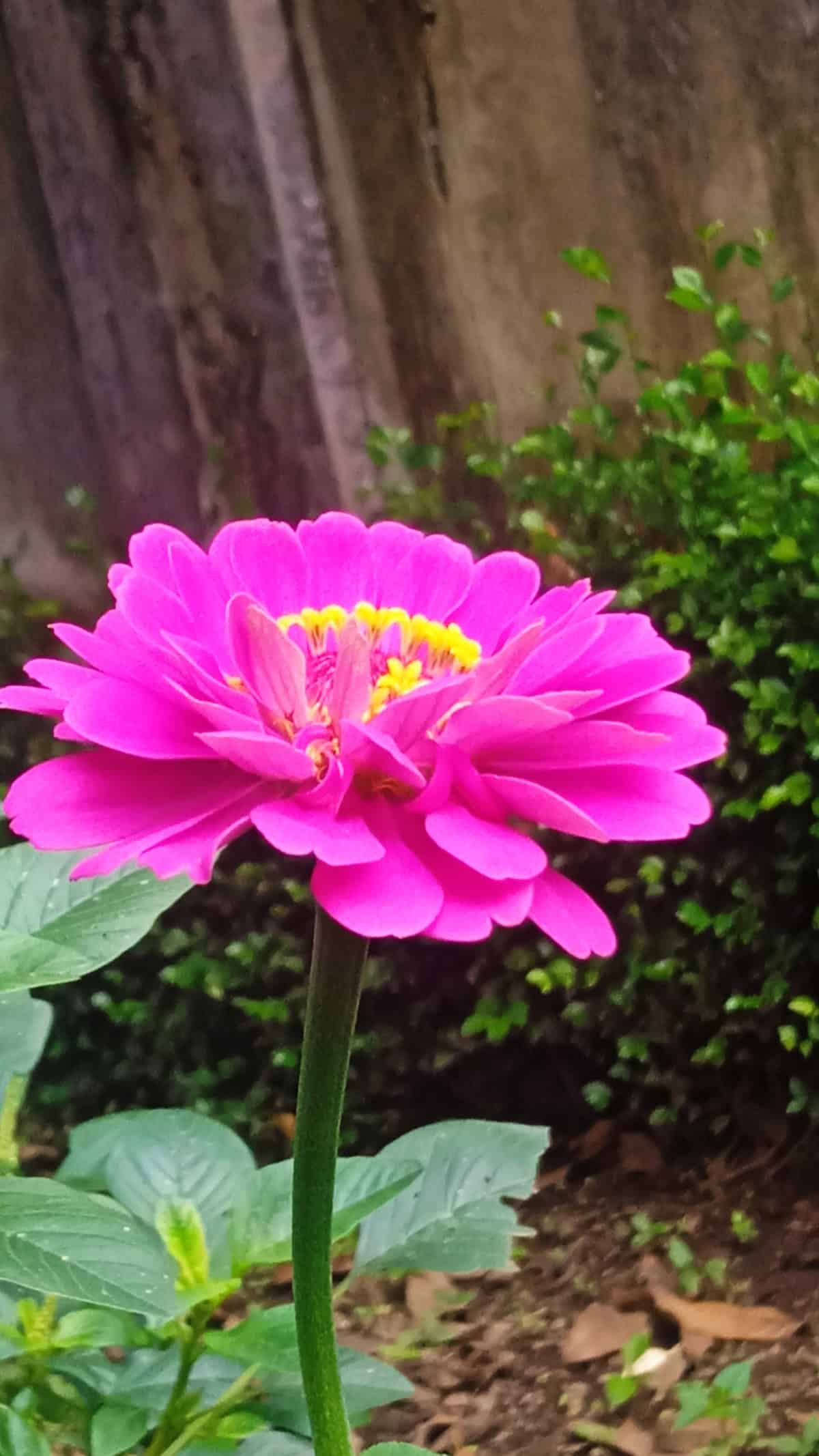
Zinnias come in an enormous range of heights, flower forms and colors, with options for large beds and small pots alike.
Most garden zinnias belong to Zinnia elegans, Zinnia angustifolia or hybrids between related species. Zinnia elegans produces the big, classic blooms of cutting gardens. Zinnia angustifolia has smaller, daisy-like flowers and handles heat and humidity better.
Flower shapes include beehive, button, cactus, dahlia-flowered and single types. Dwarf varieties top out around 8 inches, while giants such as Benary’s Giant reach 3 to 4 feet. Colors run through nearly every shade except true blue, lime green included.
Match the variety to your space. Short zinnias edge paths and fill containers, and tall ones belong at the back of a bed or in a cutting row.
In muggy climates, disease-resistant series such as Profusion and Zahara hold up best. Many newer cultivars also have sturdy stems and long-lasting flowers.