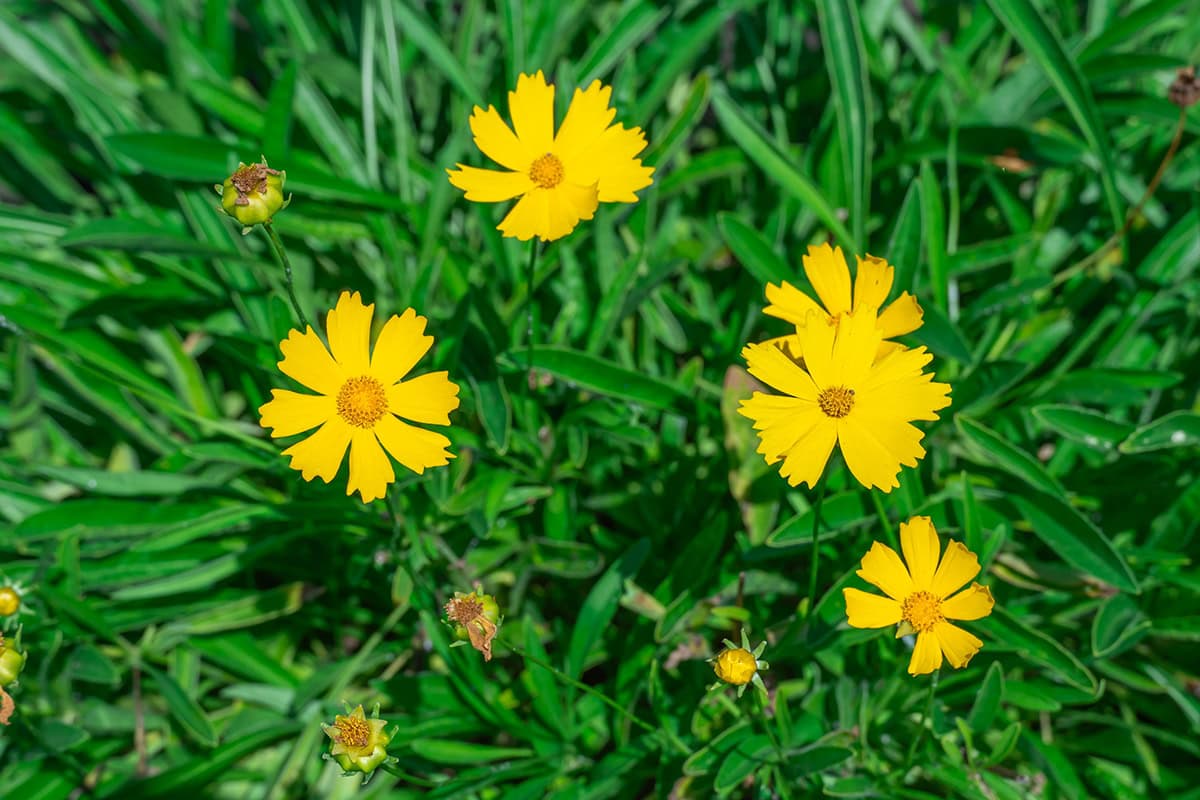
Tickseed got its common name from its seeds, which look a lot like tiny ticks. Coreopsis thrives in the poor, dry soil where fussier perennials struggle.
The flowers themselves are bright, daisy-shaped and produced in waves for months, especially on plants that get regular deadheading.
Deadheading earns the most attention in the pruning notes, since it decides how long the show lasts.
Table of Contents
Light
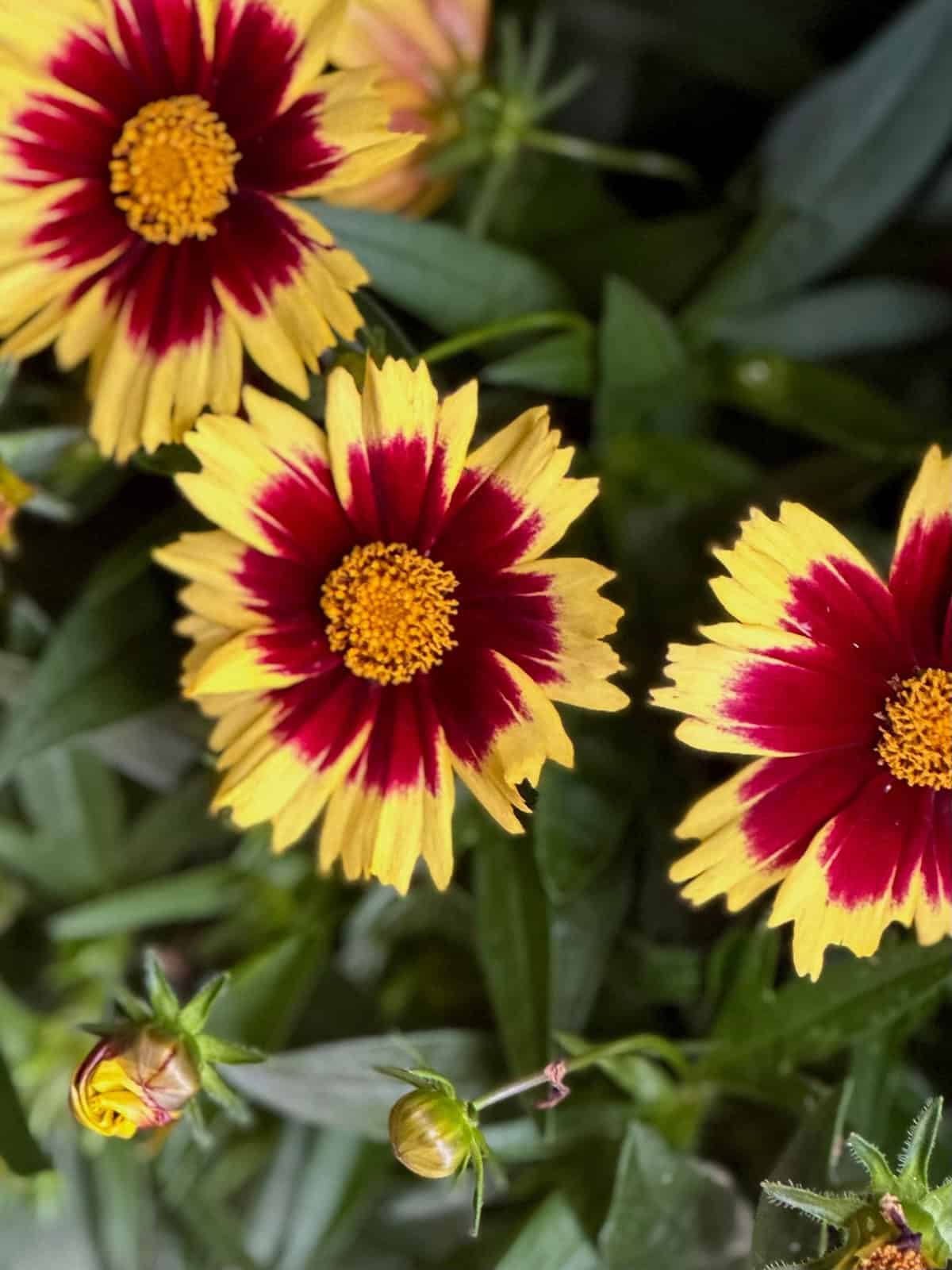
Coreopsis needs at least six hours of direct sun each day. More sun means more flowers and sturdier stems.
Light afternoon shade is fine in hot climates. Deeper shade leads to fewer blooms and leggy, floppy growth, and the strongest displays come from open, sunny spots.
Seedlings started indoors and plants in pots need plenty of bright, direct light. A sunny windowsill handles young plants, as long as they sit in the brightest part of the room.
Soil
Coreopsis demands well-drained soil and rots in wet ground. Sandy or rocky soil is a good match, and loam is fine as long as it drains freely. Heavy, soggy clay is the main thing to avoid.
Fertility matters little. Rich soil actually produces tall, floppy plants, while average or even poor soil grows sturdier ones.
Coreopsis grows in garden beds and containers alike. In heavy ground, mix in coarse sand or gravel to improve drainage, and use a well-draining potting mix in pots.
Frequent fertilizing reduces flowering. A bit of compost or a light mulch covers its needs.
Established plants handle dry spells well. Water only when the soil is dry a few inches down, which prevents root rot and toughens the plants.
Water
Water new plantings regularly for the first few weeks so the soil is evenly moist and never soggy. A steady routine helps young roots settle in.
Once established, coreopsis is surprisingly drought-tolerant. Mature plants need extra water only during long dry stretches.
During a heat wave or drought, an occasional deep soak helps. Overwatering and soggy soil lead to weak growth and disease.
Let the top inch of soil dry before watering again. Wilted or yellow leaves on wet soil point to excess moisture around the roots.
Temperature And Humidity

Coreopsis handles summer heat well, and most types bloom best with warm days and cool nights.
Hardiness varies by species, though most perennial types grow in USDA zones 4 through 9. Seedlings started indoors go outside after the danger of frost has passed, since young plants dislike cold.
Tickseed grows happily in dry and humid air alike, as long as the soil drains well. Humidity rarely causes trouble.
Fertilizer
A slow-release fertilizer mixed into the soil at planting helps young coreopsis get started.
Plants in very poor soil benefit from a balanced water-soluble fertilizer once a month during the growing season. Established coreopsis in decent soil needs little or no feeding, and too much fertilizer produces leggy stems and fewer flowers.
Deadheading does more for flower production than any fertilizer, and regular snipping supports blooms all season.
Propagation
Coreopsis propagates easily by seed or division.
Sow seeds outdoors in early spring, or start them indoors 6 to 8 weeks before the last frost. Press the seeds onto the surface and leave them uncovered, because they need light to sprout. Water lightly so the soil is moist until seedlings appear.
Another easy option is division. Dig established clumps in early spring or fall, split the roots gently and replant the pieces 12 to 18 inches apart in well-drained soil. Dividing every few years also refreshes older clumps that die out in the center.
Stem cuttings also root, though they are less common. Use healthy stems and clean tools to avoid spreading disease.
Pruning
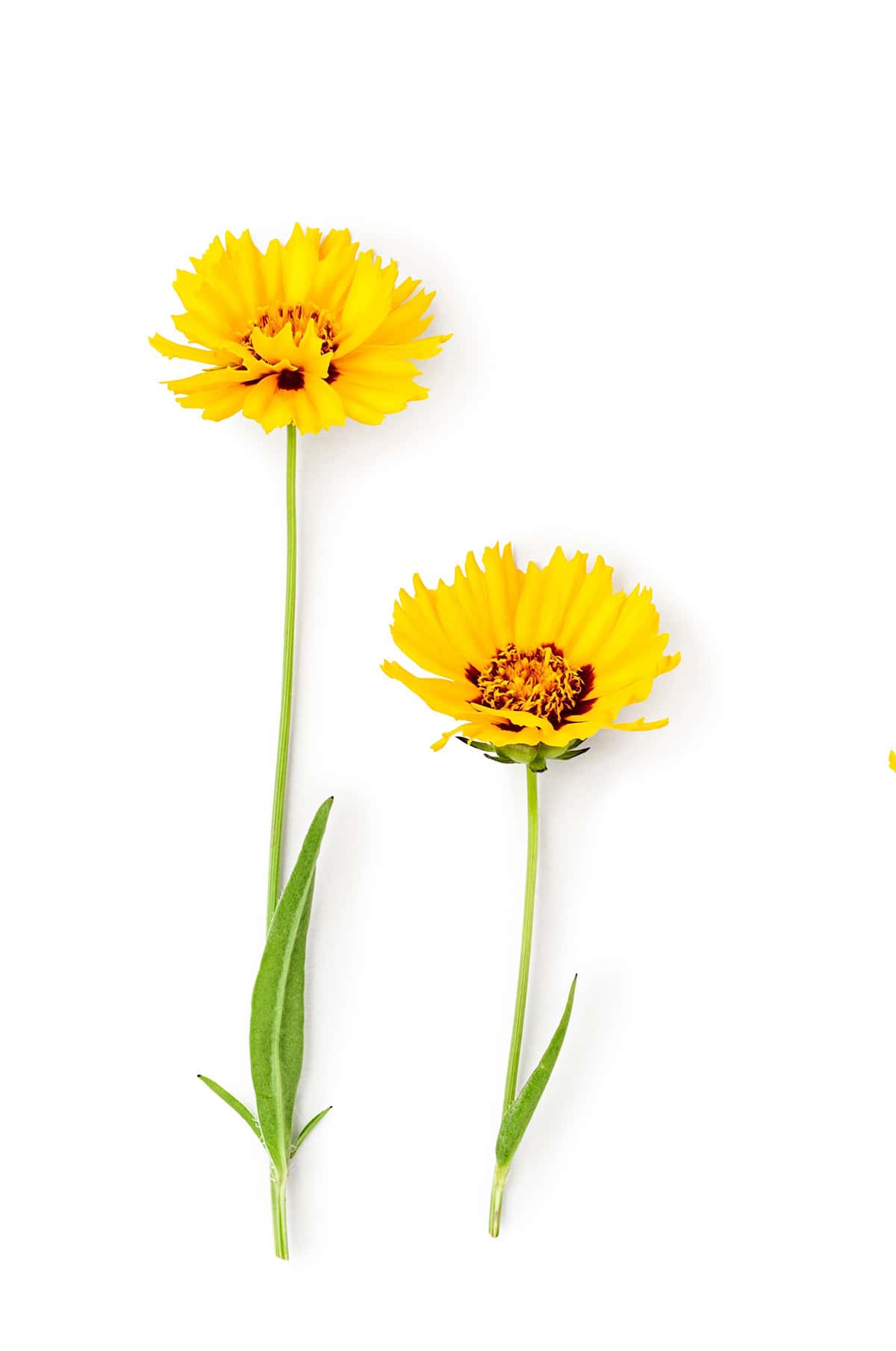
Deadhead coreopsis regularly to prompt more blooms and a tidier plant. Pinch or snip spent flowers just above a leaf.
Shear back about a third of the plant after the first big flush of flowers, and a second round of blossoms follows within a few weeks. Remove brown or damaged stems whenever they appear.
Leave the old foliage in place over winter and clean it up in early spring. New growth sprouts quickly once the last frost passes.
Potting And Repotting
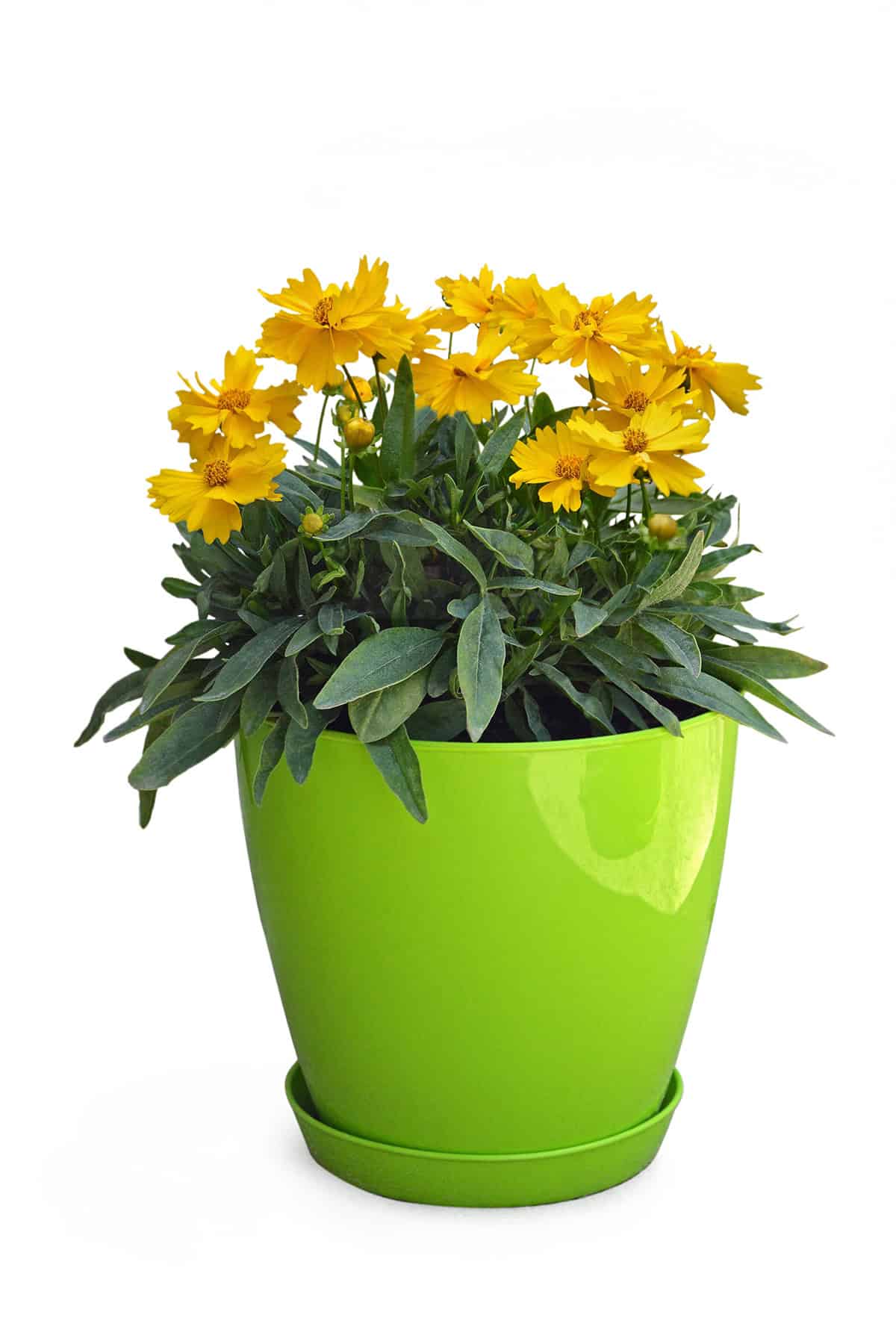
Coreopsis grows well in pots on a sunny patio or deck. Choose containers with drainage holes and fill them with a lightweight, well-draining mix.
At planting time, set the root ball just below the soil surface and water well. Remove plastic nursery pots and peel away fiber pots before planting.
Repot when roots circle the pot or poke through the drainage holes. Move up one pot size, shake off loose soil and trim dead or mushy roots. Spring, before new growth starts, is the best time. A plant that looks slow or wilted despite good care may simply need a bigger pot.
Place potted coreopsis in full sun and let the soil dry slightly between waterings. Empty the saucer after each watering.
Common Problems & Troubleshooting
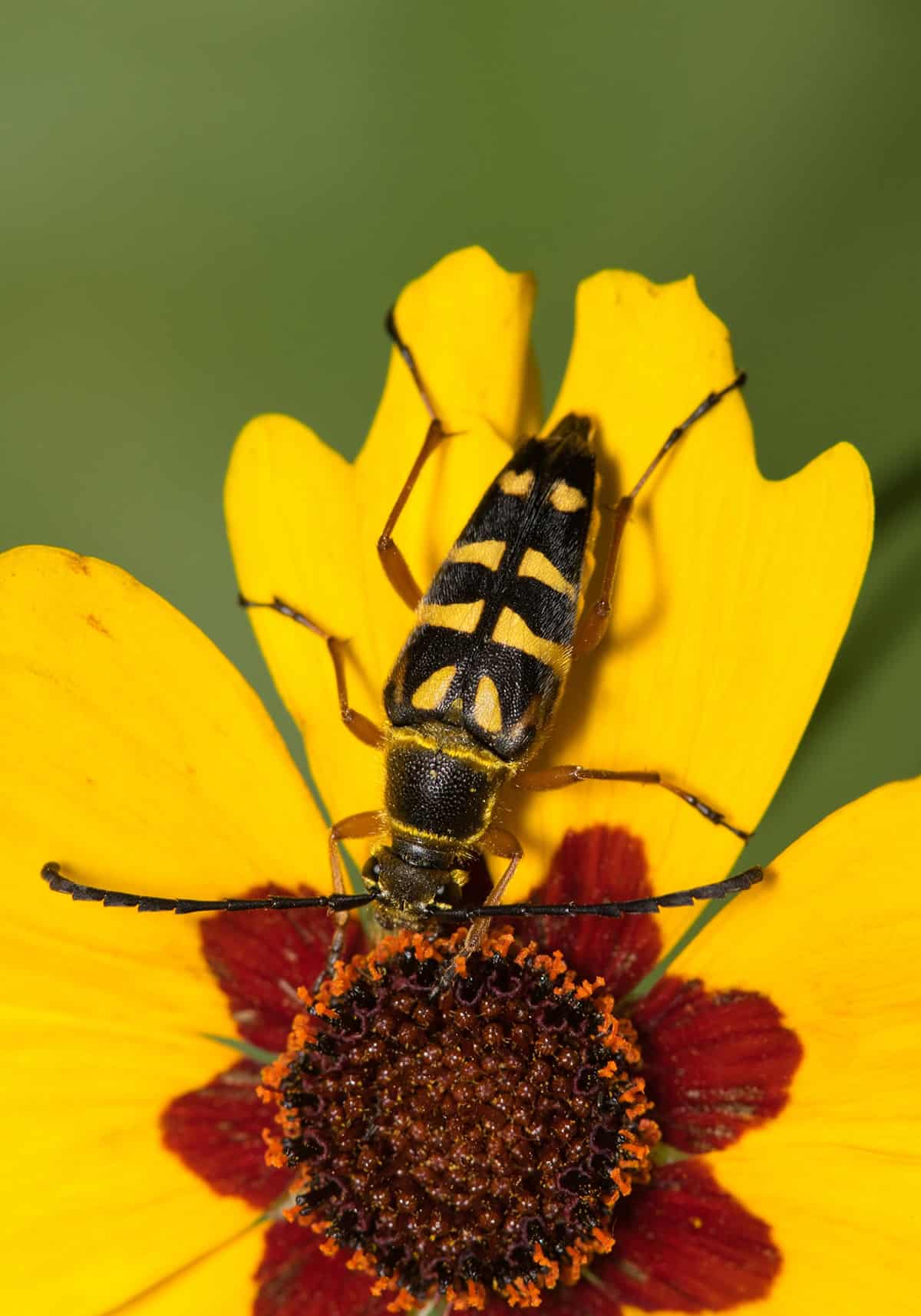
Leaf spot and powdery mildew appear in humid weather or crowded beds. Space plants for airflow and water at the base.
Yellow leaves point to overwatering or poor drainage. Improve drainage around soggy roots, and cut away any mushy stems right away.
Tall, floppy plants are common in rich soil or windy spots. Stake them, or cut the stems back by a third to encourage sturdier growth.
Aphids occasionally cluster on new growth. A blast of water knocks most of them off, and insecticidal soap handles stubborn colonies. Deer and rabbits rarely bother mature plants.
Coreopsis self-sows freely and pops up in unexpected places. Deadhead spent flowers to prevent unwanted seedlings, and throw diseased plant parts in the trash, away from the compost pile, to avoid problems next year.
Plant Varieties
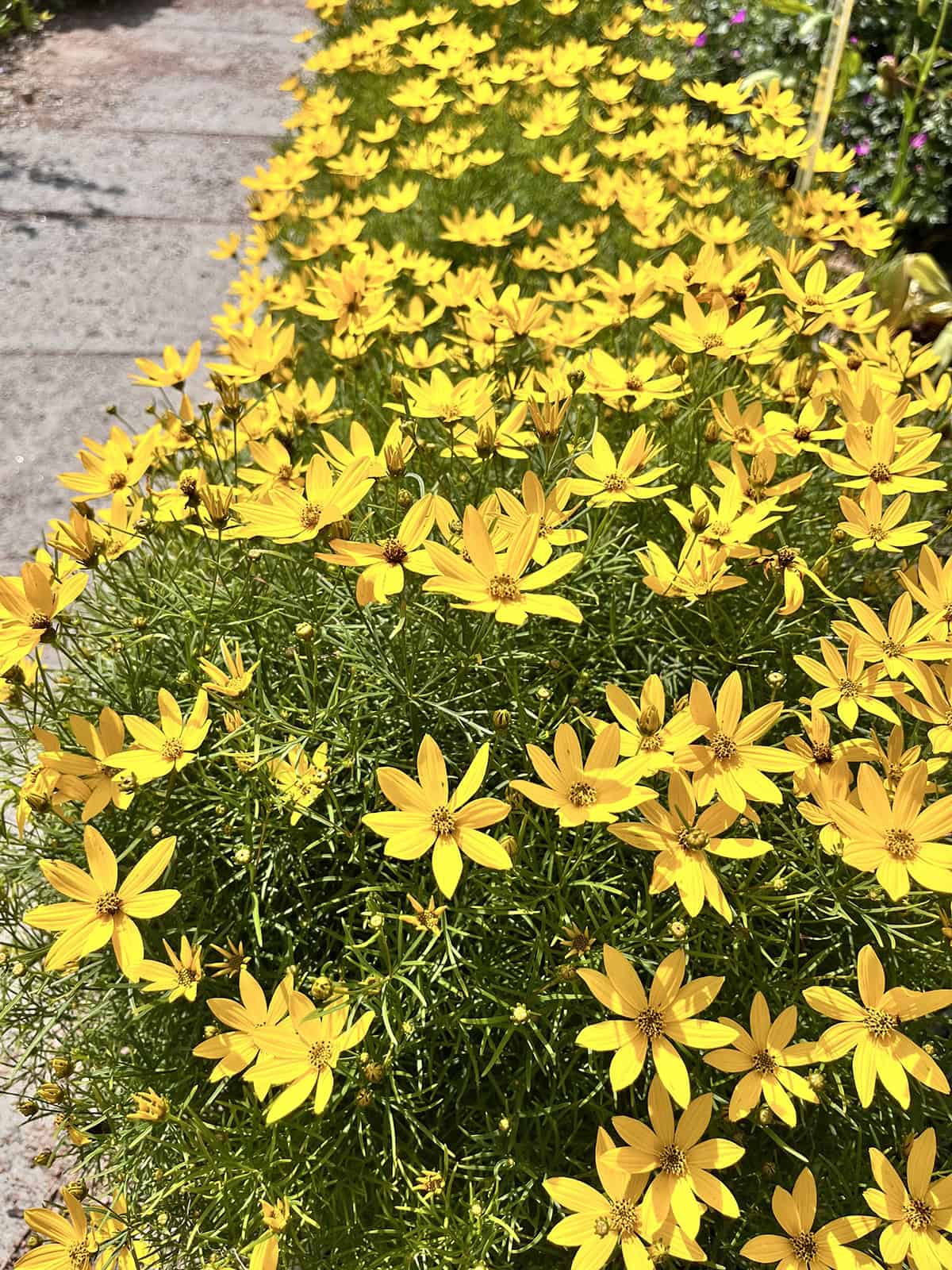
Coreopsis comes in compact, mounding forms and taller, upright types for borders. Flowers range through golden yellow, orange, red-centered bicolors and pink.
Gardeners love Coreopsis grandiflora for its big, sunny yellow blooms on a short-lived perennial. Coreopsis tinctoria, or plains coreopsis, is an annual with yellow flowers and a deep red center that self-seeds readily.
Coreopsis verticillata, or threadleaf coreopsis, has fine, feathery leaves and a long run of yellow flowers. It ranks among the most drought-tolerant species. Eared coreopsis (Coreopsis auriculata) is a low grower with small, ear-shaped lobes at the base of its leaves.
Coreopsis rosea has soft pink flowers and prefers moister soil than other species. Dozens of hybrids and cultivars add more colors and longer bloom times, and many self-seed and return year after year.