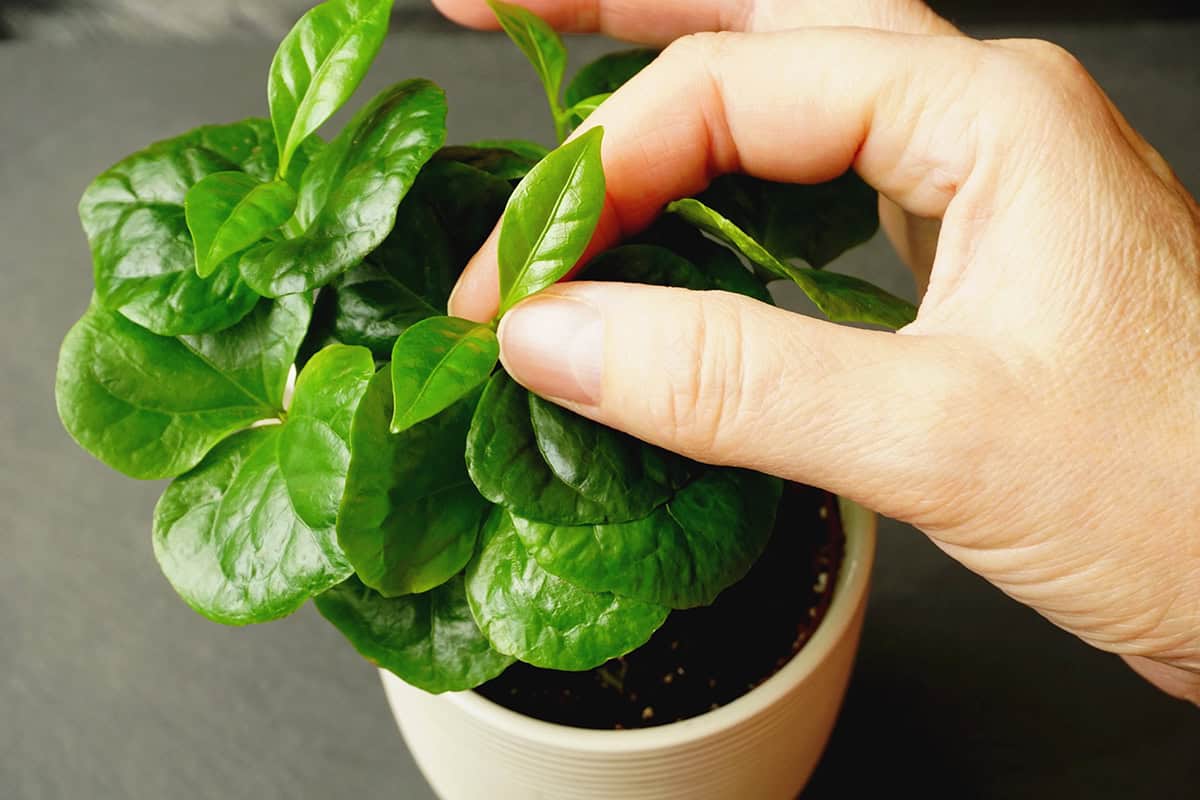
Coffea arabica grows as a glossy evergreen shrub in the understory of mountain forests, and that shady origin explains why it takes to bright rooms with indirect light. A young plant needs three or four years to reach flowering size.
Patience pays off in white, jasmine-scented blooms and red cherries, each holding two seeds for a home roast. The final section walks through the dry and wet methods that change ripe cherries into green beans for the roaster.
Table of Contents
What Is a Coffee Plant?
Coffee plants grow wild as evergreen shrubs and small trees in tropical Africa, where they thrive in warm, humid forest shade. The “beans” are seeds, tucked in pairs inside red or purple cherries.
Outside the tropics, coffee lives as a houseplant or summer patio plant, since temperatures below about 50°F damage the leaves. Indoors, growth runs slow and steady.
Why Grow Coffee at Home
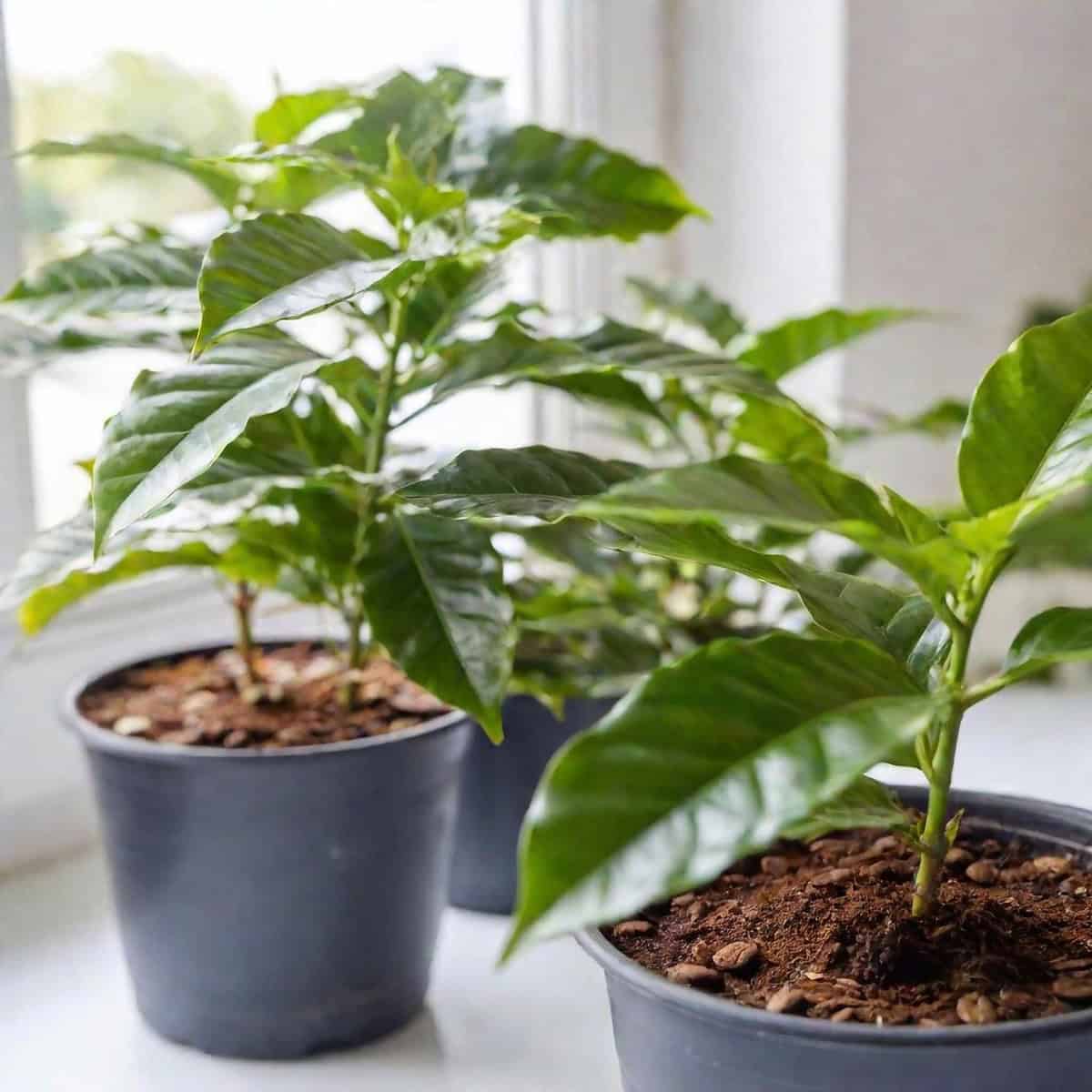
Home growers control every condition, and with luck they harvest a few cherries of their own. The glossy, dark green leaves look handsome year-round and lend a tropical note to a room.
The plant adapts to indoor life in good light. Place it near an east, south or west window with filtered sun, and add a grow light in a dim room.
Choosing Arabica or Robusta
Arabica (Coffea arabica) prefers mild temperatures of 60 to 75°F and grows at high elevations in the wild. It likes steady moisture and suffers in soggy soil, and its beans brew a smoother, sweeter cup.
Robusta (Coffea canephora) handles heat and low elevations, resists disease and yields heavily. Its beans taste stronger and more bitter and carry about twice the caffeine of arabica. Robusta also needs a second plant for pollination, and arabica pollinates itself.
For a gentler cup and a cool home, choose arabica. Robusta fits hot climates and growers who want a hardier plant, though a single robusta sets little fruit.
In a small space, choose a compact form. Dwarf arabica selections such as ‘Nana’ top out around 3 to 4 feet and fit indoors with ease.
Garden centers sell mostly arabica as houseplants, and young plants fit a bright windowsill or a small greenhouse.
Preparing for Planting
Coffee plants need the right light, temperature and soil from day one. Container size matters too, since roots need room, and excess soil holds water too long.
Best Growing Conditions Indoors
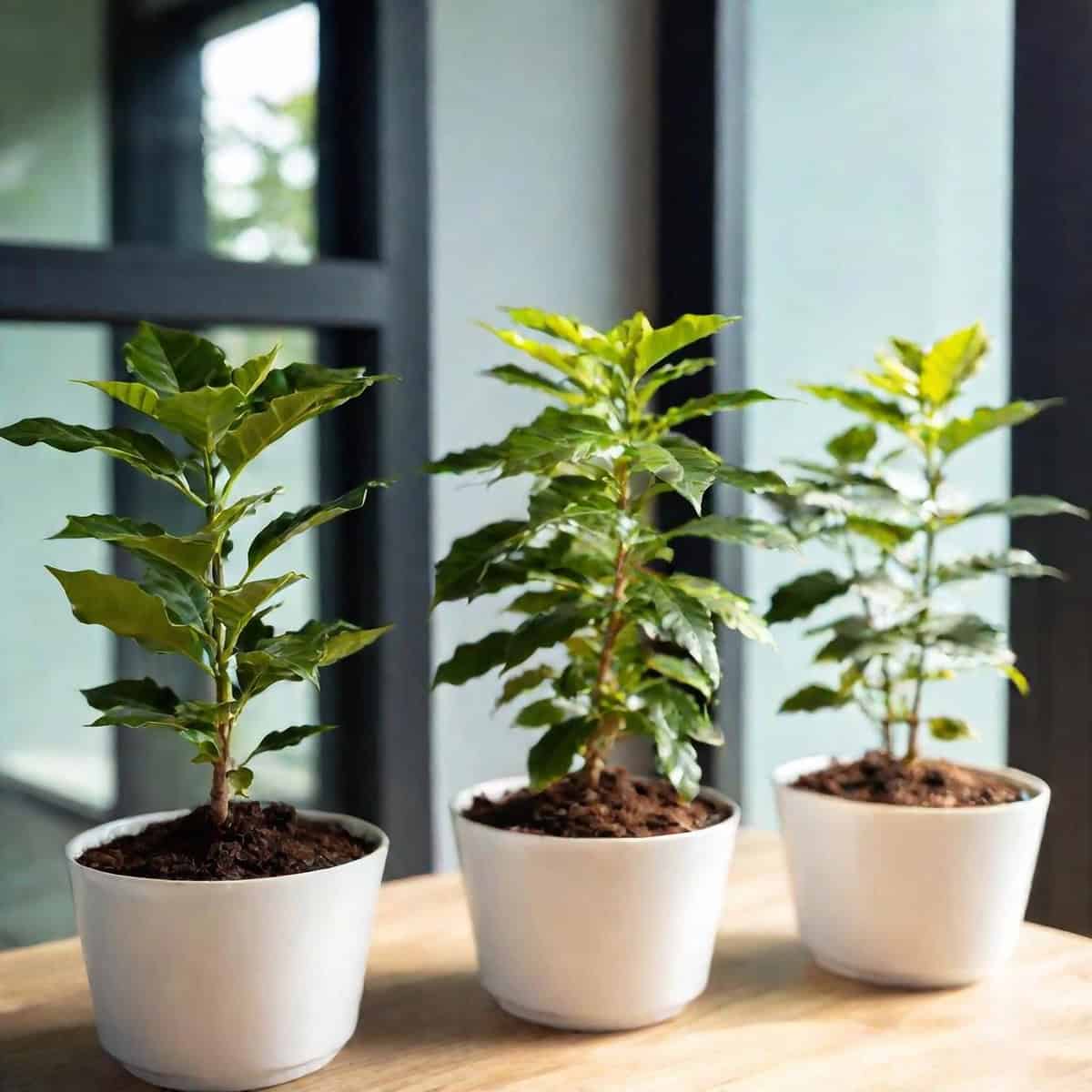
Set the plant where it receives bright, indirect light most of the day. North windows run too dim, and a grow light fills the gap.
Hold indoor temperatures between 65°F and 75°F, away from cold drafts, hot vents and sudden swings.
Aim for humidity above 50 percent. A small humidifier or a pebble tray with water nearby helps, and brown leaf edges signal dry air.
Water with room-temperature water when the top inch of soil dries. Aim for consistent moisture short of soggy, since drowned roots rot.
Choosing Soil and Pot Size
Pick a potting mix that drains well and holds some moisture, such as a blend of peat, perlite and compost. Coffee prefers slightly acidic soil, around pH 6 to 6.5. Skip heavy garden soil.
Use a pot with drainage holes, and start a young plant in a 6 to 8 inch pot.
Repot when roots fill the container, one size up at a time, since an oversized pot holds excess water.
Clay pots dry quickly and plastic pots hold moisture longer, so match the pot to your watering habits.
Propagating Coffee Plants
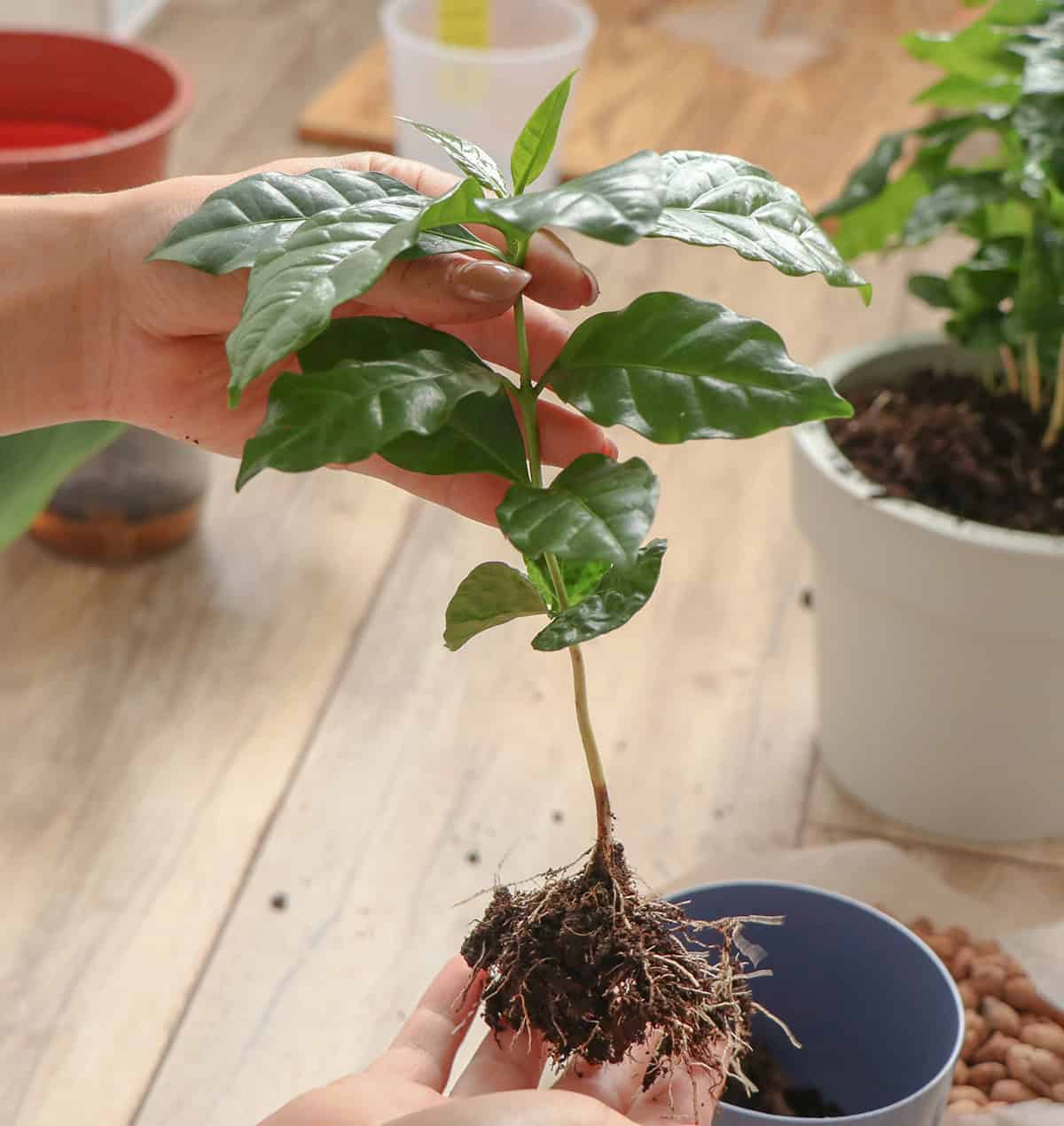
Start from seed or buy a young plant. Each route has quirks, and both produce a healthy coffee plant when the basics are right.
Starting from Seeds
Use fresh, ripe cherries or seeds under three months old, since coffee seed loses viability quickly.
Remove the pulp from fresh cherries, wash the seeds and dry them for a day. Peeling off the papery parchment speeds germination. Sow in a shallow tray of well-draining mix, such as equal parts sand and compost.
Maintain even moisture in the mix and a warm 70 to 80°F. Seeds take two to three months to sprout, so patience matters.
Once seedlings have two sets of true leaves, move each into its own pot of rich, slightly acidic soil in bright, indirect light.
Starting from Young Plants
A young nursery plant saves a lot of time. Look for healthy leaves and firm stems, free of pests and odd spots.
Transplant it into a pot with drainage holes and a mix of loamy soil and organic matter.
Caring for Coffee Plants
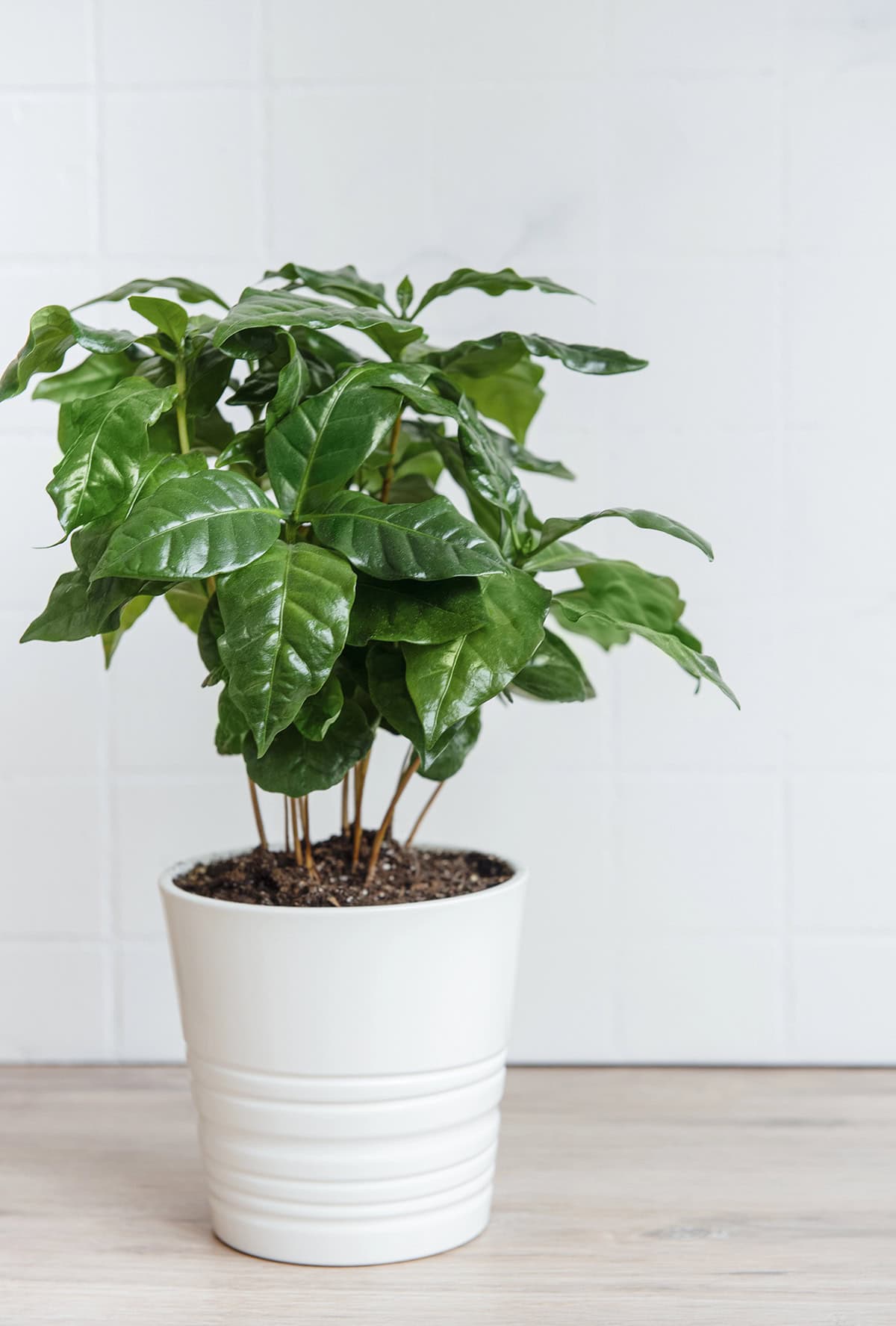
Consistent light, careful watering, balanced feeding and light pruning cover the basics, and a plant with all four in place grows steadily for years.
Light and Temperature Needs
Bright, indirect light near a window produces the healthiest growth. East or south exposures fit most homes, and direct midday sun scorches the leaves, so filter it with a sheer curtain.
Aim for 65 to 75°F indoors, away from cold drafts, heaters and air conditioners, since sudden changes stall growth.
Where sunlight falls short, a full-spectrum LED grow light for 12 to 14 hours a day fills in, hung about a foot above the plant.
Watering and Humidity
Water when the top inch of soil dries, with room-temperature water, and let the excess drain away. Empty the saucer so the pot never sits in water.
Coffee likes evenly moist soil, neither soggy nor bone dry. Too much water leads to root rot and too little to leaf drop, so check the soil every few days.
Humidity above 50 percent helps. A water tray, a humidifier or occasional misting raises humidity in a dry home.
Fertilizing
Feed with a balanced, water-soluble fertilizer every two to four weeks in spring and summer, with equal parts nitrogen, phosphorus and potassium.
Cut back to every six to eight weeks in fall and winter, when growth slows and the plant needs less food.
Fertilize after watering, and follow the dilution directions, since excess fertilizer burns roots and leaves.
Pruning and Shaping the Plant
Prune to control size and encourage bushier growth. Trim long stems just above a leaf node to prompt new side shoots.
Remove dead or damaged branches, since better airflow and light mean fewer pests and healthier plants.
For a fuller look, plant a few seedlings together in one pot and prune them evenly. Regular shaping maintains a tidy indoor plant.
Common Problems and Solutions
Slow growth, limp leaves and pests point to trouble, and the cause traces back to light, nutrients or insects in most cases. Quick action puts the plant back on track.
Pest Control
Watch for aphids, spider mites, scale and mealybugs, tiny sap-suckers that slow growth. Check under the leaves weekly for webbing, sticky residue or little moving dots.
Isolate an infested plant from the others. Wipe the leaves with a damp cloth, treat with insecticidal soap or neem oil as directed, and repeat until the pests disappear.
Avoid overfeeding, since soft new growth attracts insects. Good airflow helps too, and plants back from a summer outdoors need a close inspection for hitchhikers.
Leaf Yellowing and Dropping
Yellow or falling leaves point first to low light or underwatering. North windows lack the brightness coffee needs, and a grow light fixes that.
Excess water rots the roots and leads to leaf loss. Let the top inch dry before the next watering, and check that the pot drains well.
A shortage of nutrients, nitrogen in particular, yellows the older leaves. Follow the feeding schedule above with a balanced fertilizer such as 10-10-10, and avoid overdoing it, since excess burns roots.
Flowering and Berry Production
A healthy, mature plant produces small, white, jasmine-scented flowers, and each one develops into a coffee cherry with one or two seeds inside. Indoor plants rarely bloom before three or four years of age.
Encouraging Blooms Indoors
Indoor blooms depend on stable conditions. Ample light, warmth and steady care help, ideally in a bright spot with indirect sun.
Hold temperatures between 65°F and 75°F and avoid big swings. In the wild, a short dry spell followed by rain triggers flowering, and a slightly drier few weeks in winter mimics that.
Fertilize every two to four weeks during the growing season and cut back in cooler months.
Flowers appear in late winter or spring on a happy plant. They last only a few days, so watch closely.
From Flowers to Coffee Cherries
Small green cherries form after pollination. Arabica pollinates itself, and a gentle shake of the branches or a soft brush across open flowers helps set fruit.
Cherries ripen slowly, over six to nine months, and change from green to yellow, then bright red.
Pick cherries when they are fully red and firm, since early fruit holds underdeveloped beans.
Each cherry holds two seeds, the beans. After picking, remove the pulp, then dry and roast the beans before brewing.
Harvesting and Processing at Home
Gather the fruit at full ripeness, then prepare the beans for storage or roasting, with careful timing and gentle handling at each step.
Picking Ripe Cherries
Choose cherries that look bright red and firm, the ones with the best flavor. Leave pale or soft fruit for now, since early and late picks both dull the cup.
Check the plant every few days in season, since cherries ripen unevenly. Prompt picking also heads off insect trouble and fruit rot on the branch.
Pick gently with clean hands or scissors to protect the plant, and collect the harvest in a clean container free of dirt and leaves.
Process the cherries soon after picking, since they ferment or mold when left to sit. Hold them cool and out of the sun until then.
Drying and Removing the Beans
Home growers choose between the dry and wet methods. For dry processing, spread the cherries in a single layer in a sunny, sheltered spot you check daily.
Rake or stir them daily for even drying, and cover them against rain and humidity. Drying takes two to four weeks in good sun, and longer in damp weather. Once the cherries rattle, crack off the dry husk to free the beans.
The wet method takes more effort. Squeeze the pulp off the fresh cherries, soak the beans in water for a day or two until the sticky layer loosens, then rinse and dry them.
Once fully dry, wet-processed beans sit inside a papery parchment layer. Crack it open to reach the green coffee beans, and store them in a cool, dry place away from moisture until roasting time.