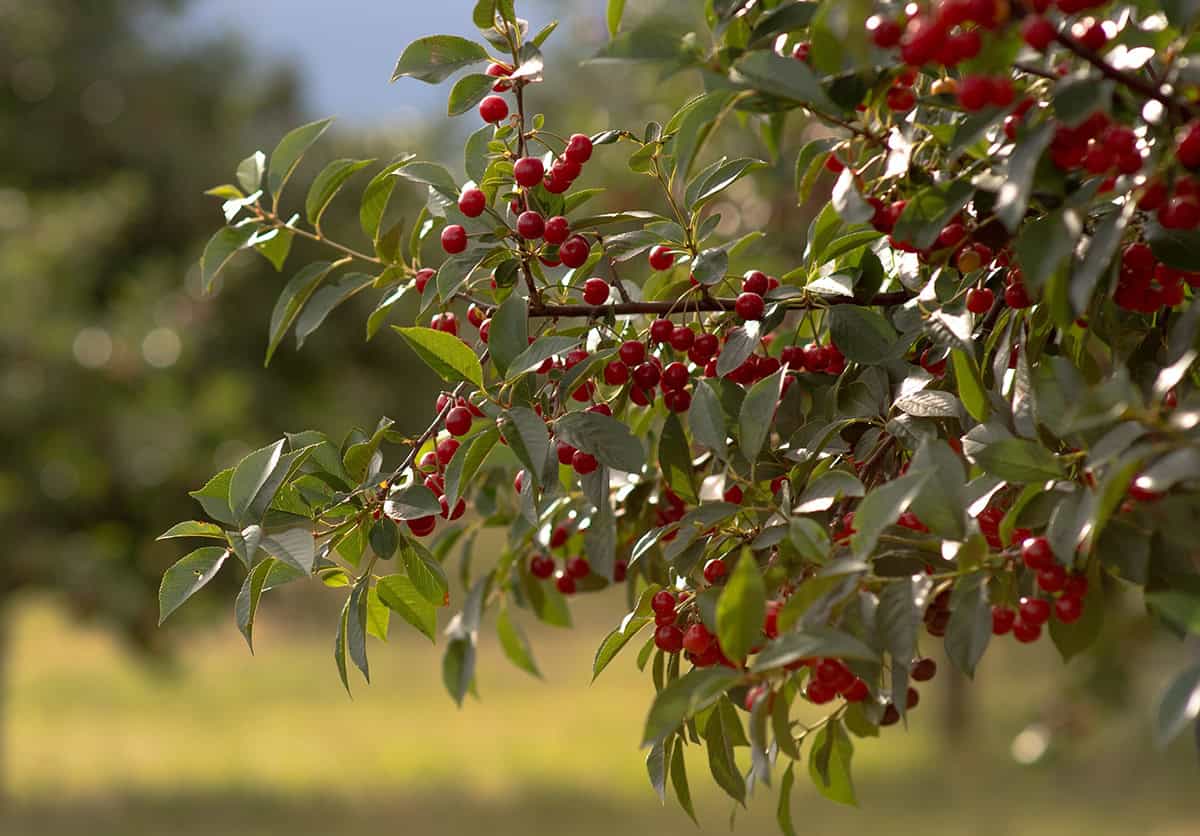
Cherry trees bloom in early spring and ripen fruit by early summer in most home gardens.
Most sweet cherries need a second variety for pollination, and tart cherries fruit on their own. Climate, space and pollination decide which type belongs in the yard.
Planting depth, pruning timing and bird netting all play a part in the first good harvest.
Table of Contents
Types of Fruiting Cherry Trees
Climate, available space and taste decide the right cherry tree, along with the differences between sweet and sour types and the varieties that fit a home garden.
Sweet Cherry vs. Sour Cherry
Two main types of cherry trees produce fruit, sweet cherries (Prunus avium) and sour or tart cherries (Prunus cerasus). Sweet cherries bear larger fruit for eating fresh, with a mild, sugary flavor. Standard sweet cherry trees grow 30 to 35 feet tall, and trees on dwarf rootstocks reach to 10 to 15 feet.
Sour cherry trees bear smaller, tart fruit that home bakers prize for pies and preserves. Most reach 15 to 20 feet. Many sweet cherry varieties need a second variety for pollination, and most sour cherries are self-fertile.
Best Varieties for Home Gardens
Reliable sweet cherries for home growers include ‘Bing’, ‘Stella’ and ‘Lapins’. ‘Bing’ needs a cross-pollinator and is prone to cracking in rainy climates, and ‘Stella’ and ‘Lapins’ are self-fertile, which means a single tree sets fruit.
Sour cherries such as ‘Montmorency’ and ‘North Star’ fit smaller spaces. ‘Montmorency’ is the most widely grown tart cherry and yields consistently. ‘North Star’ is a natural dwarf that reaches about 8 to 10 feet. Local nurseries and extension offices know which varieties perform best in each area.
Choosing Based on Climate and Space
Sweet cherries need a cold winter to set fruit, 700 chill hours or more for most varieties, and grow best in USDA Zones 5 through 7. Their early blossoms are sensitive to late spring frost. Sour cherries are hardier, to Zone 4, and bloom a little later, which makes them more reliable in regions with unpredictable spring weather.
Space matters too. Standard sweet cherry trees need plenty of room, and dwarf rootstocks such as Gisela hold height down and fit more trees in a small yard. Sour cherries, with their smaller natural size, are a good choice for limited gardens and urban yards. Every cherry needs full sun and well-drained soil.
How to Plant a Cherry Tree
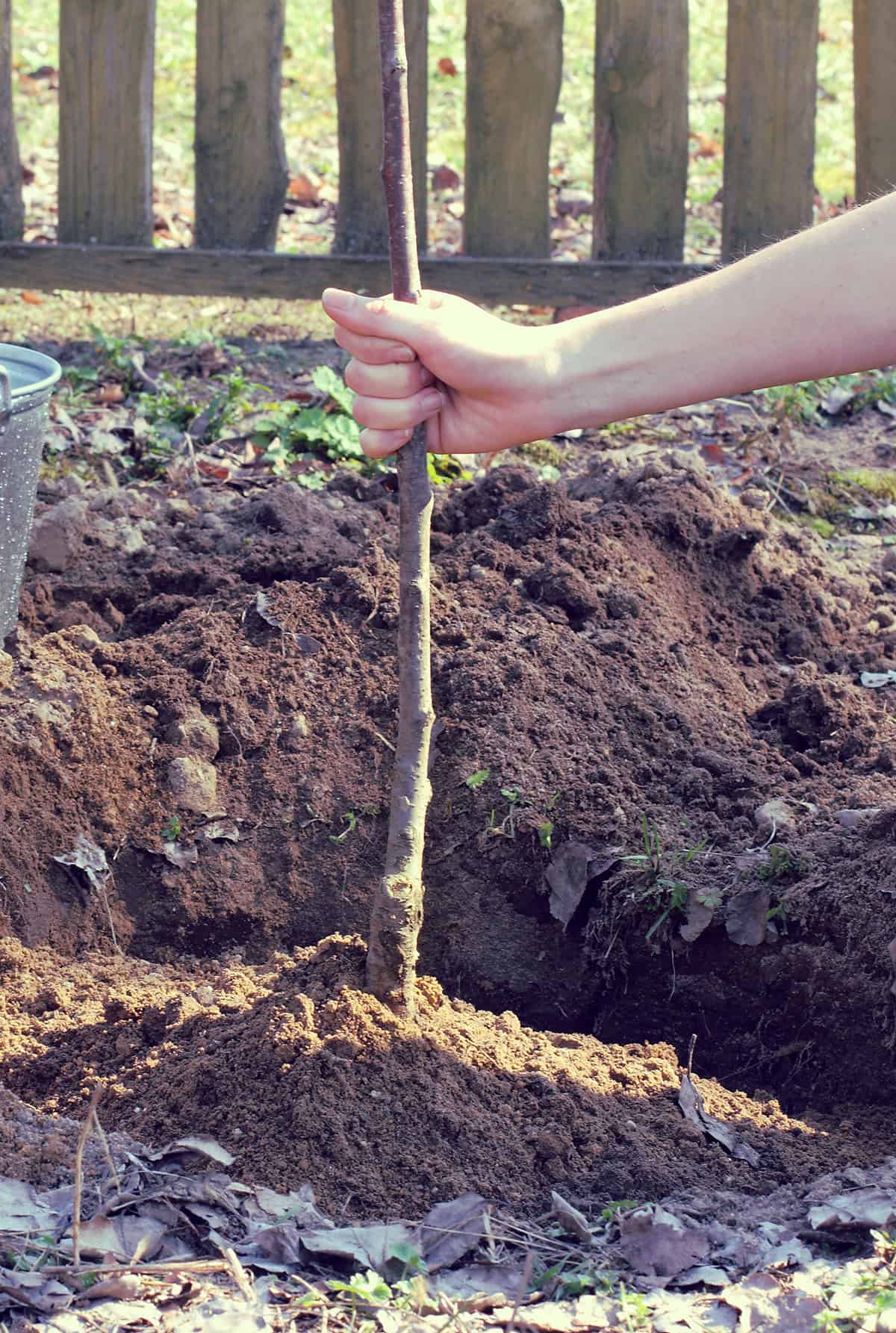
Proper planting gets a cherry tree off to a healthy start, and timing, placement, depth and watering all matter for strong establishment.
When to Plant
Plant cherry trees in early spring, once the ground thaws and the soil is workable. Roots then establish before summer heat. In mild-winter regions, fall planting is also an option.
Avoid planting in late spring when temperatures climb fast, since late-planted trees struggle to establish. Bare-root trees do best planted while dormant in early spring, and container-grown trees allow more flexibility.
Early planting lets roots grow before hot, dry weather. Avoid wet or soggy soil at planting time, and choose a mild, calm day to limit stress.
Spacing and Depth
Choose a spot with full sun and well-drained soil. Standard sweet cherries need about 25 feet between trees, dwarf types about 10 to 12 feet and tart cherries 15 to 20 feet.
Dig a hole as deep as the root ball and twice as wide. Set the tree with the graft union 1 to 2 inches above the soil line, then backfill with the original soil, break up clumps and firm it gently as you go.
Planting too deep stunts growth. Correct spacing and depth let roots spread and lower disease risk, since crowded trees get less sun and airflow.
Watering After Planting
Water deeply right after planting to settle the soil and remove air pockets. Young cherry trees need consistent moisture through the first growing season.
About 5 to 10 gallons per tree is enough for the first watering. Check the soil regularly over the next weeks, and aim for a moist root zone that is never waterlogged.
As the tree grows, water less frequently but deeply, and never let the roots dry out completely. Mulch holds moisture, as long as it sits several inches away from the trunk to prevent rot.
Caring for Cherry Trees
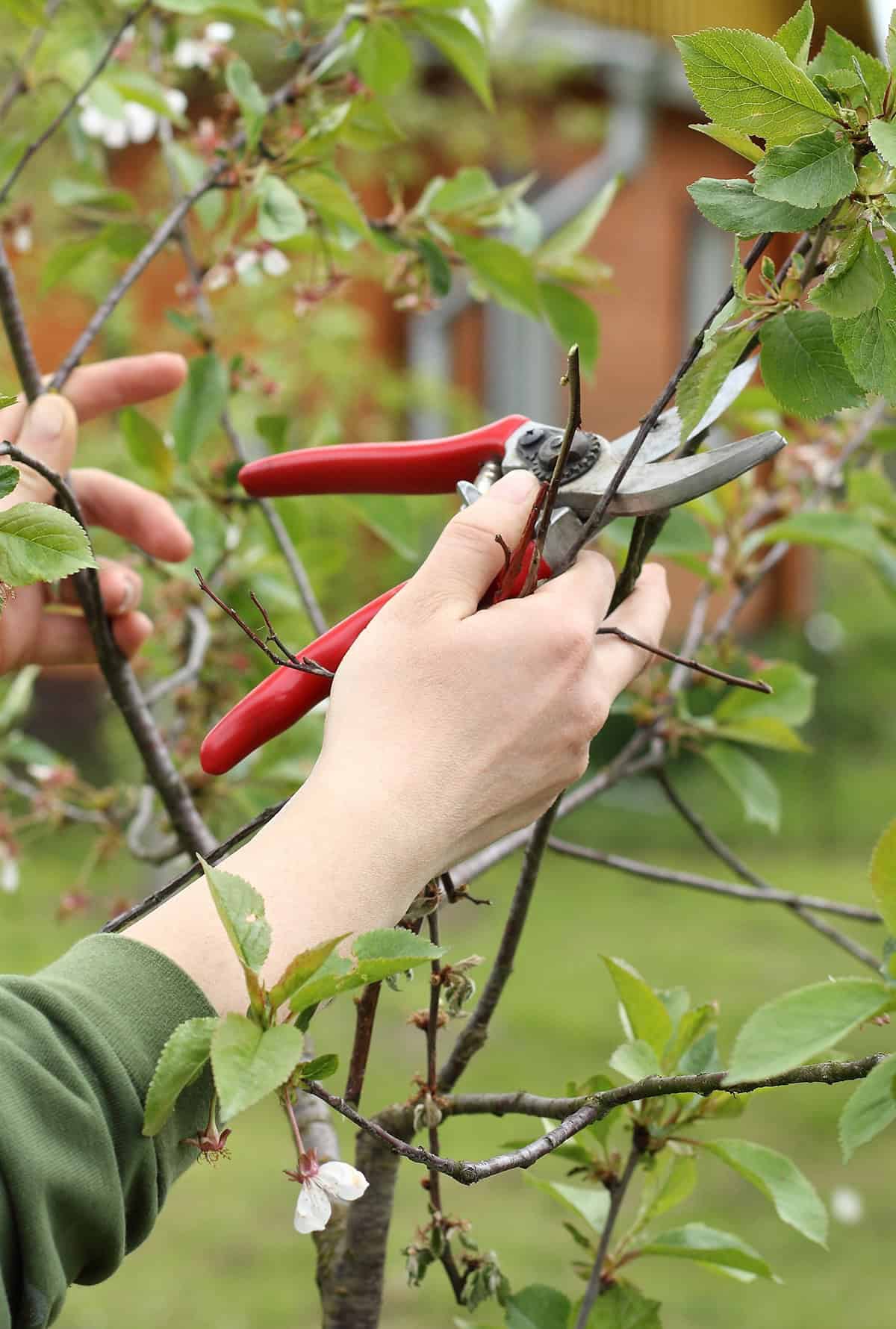
Cherry trees grow best with a steady care routine. Healthy soil, regular pruning and good weed control lead to more fruit and stronger growth.
Watering and Fertilizing Schedule
Cherry trees need steady moisture, especially in their first years. Newly planted trees need about 1 inch of water a week from rain or irrigation. Water deeply for moist, never saturated, soil.
Established trees still need water during dry periods. Consistent watering as fruit develops helps cherries ripen evenly and reduces fruit drop, and sudden heavy watering just before harvest causes cracking.
Fertilize in early spring before bud break with a balanced fertilizer such as 10-10-10, at the rate on the package. Excess fertilizer pushes leafy growth at the expense of fruit, and trees with strong growth the previous year need none.
Pruning for Growth and Shape
Annual pruning lets light and air reach the inner branches and builds a strong frame. Prune tart cherries in late winter before new growth begins. Sweet cherries are prone to bacterial canker and silver leaf, and many growers prune them in dry summer weather right after harvest. Remove dead or damaged wood first.
Thin crowded branches for an open canopy. Sweet cherries are trained to a central or modified central leader, and tart cherries to an open center. A good framework prevents branches from breaking under heavy fruit.
Avoid cutting large limbs unless they are diseased or hazardous. Light pruning reduces stress and supports fruit production. Use clean, sharp tools for every cut.
Mulching and Weed Control
A layer of mulch around cherry trees cools the soil, conserves water and smothers weed seeds. Spread it 2 to 4 inches deep in a wide ring, with a gap around the trunk to prevent rot.
Pull weeds by hand or use shallow cultivation to protect roots near the surface. Mulch topped up each season controls most weeds.
Check around the trees every few weeks, and remove competing grass and weeds right away. A clear root zone protects tree health and supports better harvests.
Pollination and Fruit Production
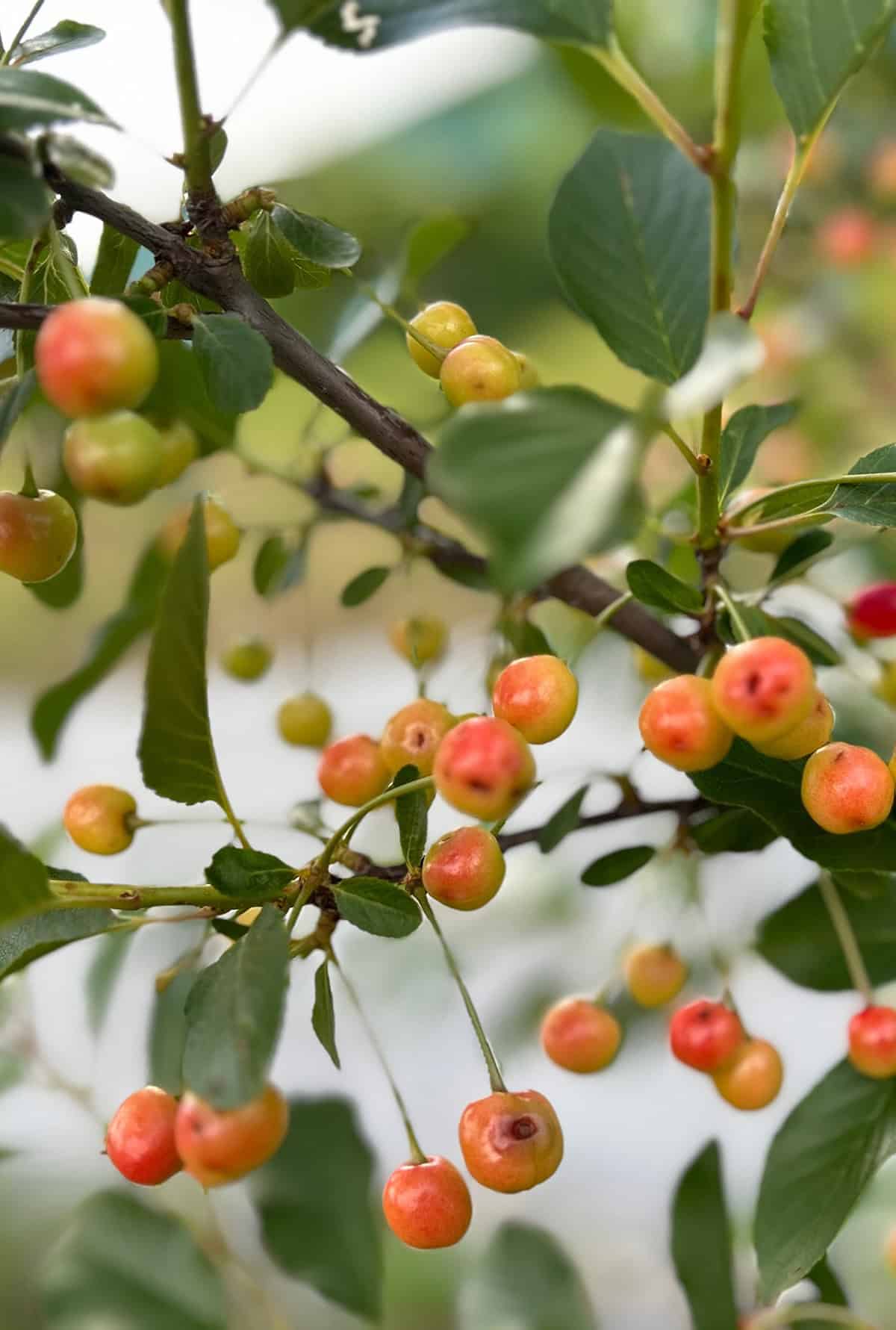
Fruit set depends on pollination and the right type of tree. Many sweet cherries need a second variety and bees to set fruit, and most tart cherries pollinate themselves.
Do You Need More Than One Tree?
A single tart cherry tree is enough for fruit in most cases, since tart cherries are self-fertile and set fruit with their own pollen.
Sweet cherries need more planning. Many varieties set little or no fruit with their own pollen and need cross-pollination from a compatible sweet cherry variety. Plant at least two compatible varieties that bloom at the same time, or choose a self-fertile type such as ‘Stella’ or ‘Lapins’.
Honey bees and other bees do most of the pollination and carry pollen between blossoms on warm, calm days. Pollinizer trees need to be close, ideally within 100 feet.
Self-Pollinating vs. Cross-Pollinating Varieties
Tart cherry trees, such as ‘Montmorency’, set fruit with their own pollen. Self-fertile types fit limited space well, since one tree produces a crop.
Most sweet cherry varieties are self-incompatible and need a second variety nearby. The two must flower at the same time for bees to transfer pollen.
Choosing the right pair matters, since certain sweet cherries are incompatible with each other. Check pollination charts before buying. A self-incompatible tree with no pollinizer produces little fruit, which makes it essential to know the requirements of each variety.
Protecting Trees from Pests and Disease
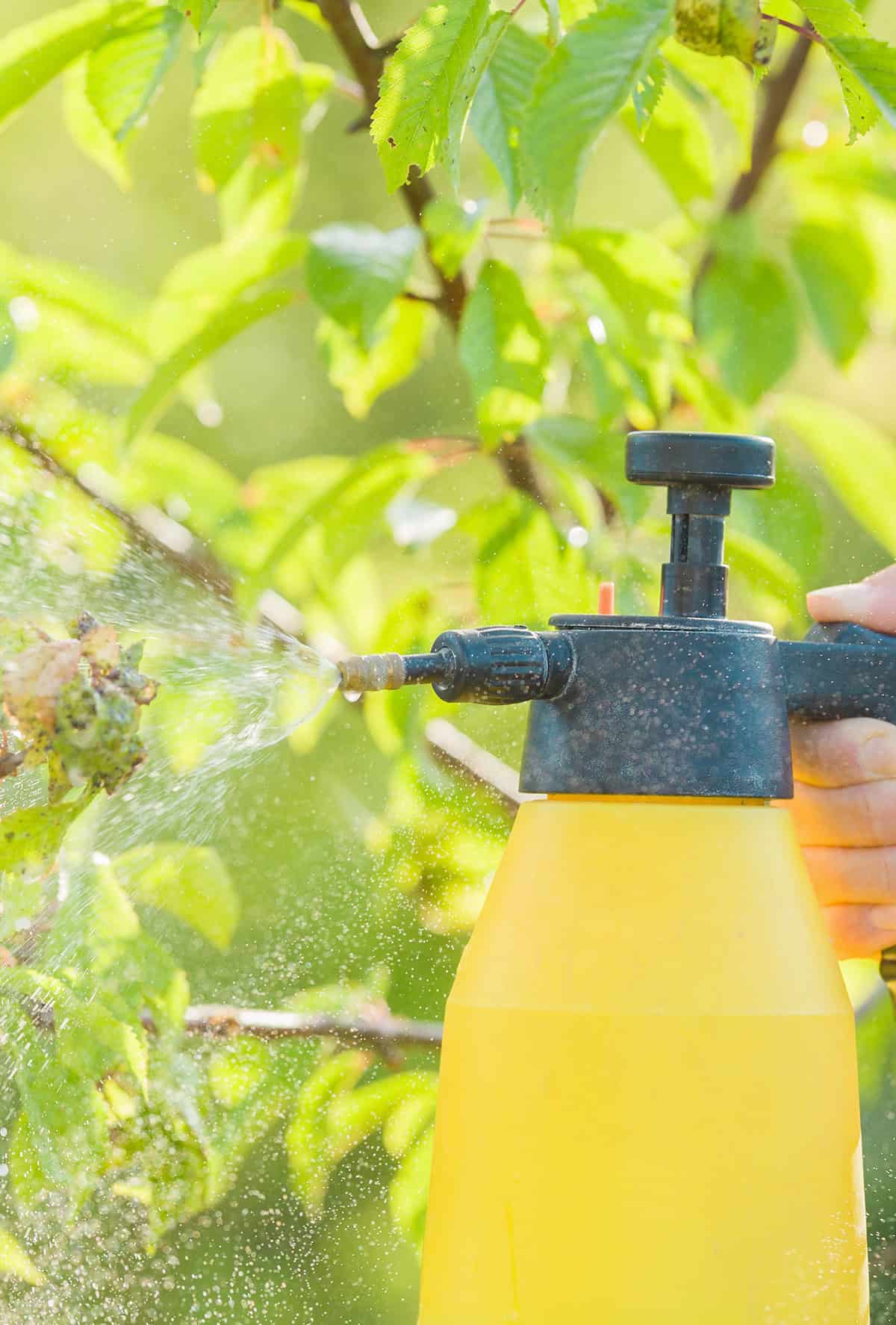
Cherry trees face threats from insects, birds and several diseases. Early identification, prevention and timely treatment protect growth and the harvest.
Common Issues to Watch For
Ripening cherries draw birds more than any other pest, and squirrels raid trees too. Netting reduces the damage, especially on small or dwarf trees.
Diseases such as bacterial canker, brown rot, Coryneum blight and cytospora canker hit cherries hard. Fungal leaf spots and blights appear where airflow in the canopy is poor. Insect pests include spotted wing drosophila, cherry fruit fly, peach tree borers, pear slugs and cherry bark tortrix.
Watch for oozing sap, gum and sunken, dead areas on the bark, signs of cankers or borers. Regular checks allow quick action before problems spread, and pruning for sun and airflow lowers most disease pressure.
Organic and Chemical Control Options
Netting or cages limit bird and squirrel access, though complete protection is difficult. Sticky trunk barriers stop crawling insects and do little against flying or burrowing pests. Sanitation, including cleanup of fallen fruit and pruned wood, removes overwintering sources of disease and insects.
Copper sprays help manage bacterial canker when applied in fall at leaf drop and again before bud break. Borer and fruit fly treatments depend on local timing, and extension services publish spray schedules for each region. Fungicides at bloom and before harvest protect against brown rot.
Organic growers rely on dormant oil, neem oil, kaolin clay and beneficial insects. Follow label directions for timing and coverage. Healthy, well-pruned trees suffer fewer serious outbreaks.
When and How to Harvest Cherries
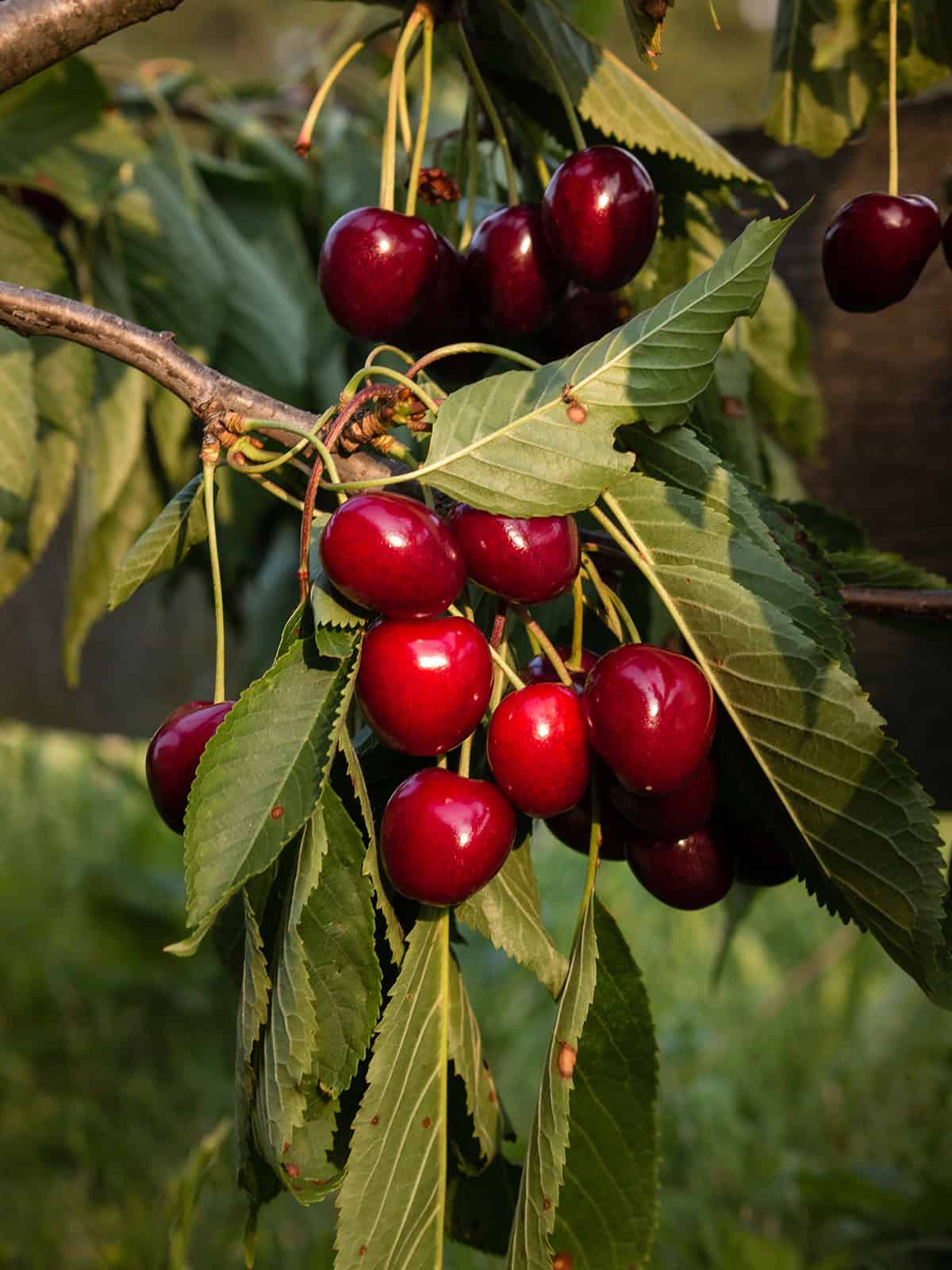
Picking time shapes taste and storage, and the right technique protects both fruit and tree.
Signs of Ripeness
Cherries develop full flavor and sweetness only on the tree. Wait until the fruit reaches the deep, mature color of the variety. Ripe sweet cherries are firm, glossy and juicy, and ripe sour cherries brighten in color and soften slightly.
Look for full, even coloring and taste a few before picking in quantity. Green, flexible stems signal fresh, well-hydrated fruit. Dull, soft cherries that drop at a touch are overripe.
Cherries picked early never ripen or sweeten off the tree. Pick in the cool part of the day when the fruit is dry, since wet cherries spoil faster.
Best Harvesting Techniques
Harvest with care to protect fruit and tree. Grasp the stem between finger and thumb and lift upward with a slight twist. Avoid pulling hard on the fruit or bending branches sharply.
Leave the stem attached for longer storage and unbroken skin, or pull stems off for fruit headed straight to the kitchen. Fruiting spurs produce cherries for years, and damaged spurs reduce future harvests, which calls for slow, careful movement around the tree.
Collect fruit in shallow containers to prevent bruising. Move picked cherries into shade and refrigerate them soon after harvest, since quick cooling extends storage and protects flavor. Handle them as little as possible.