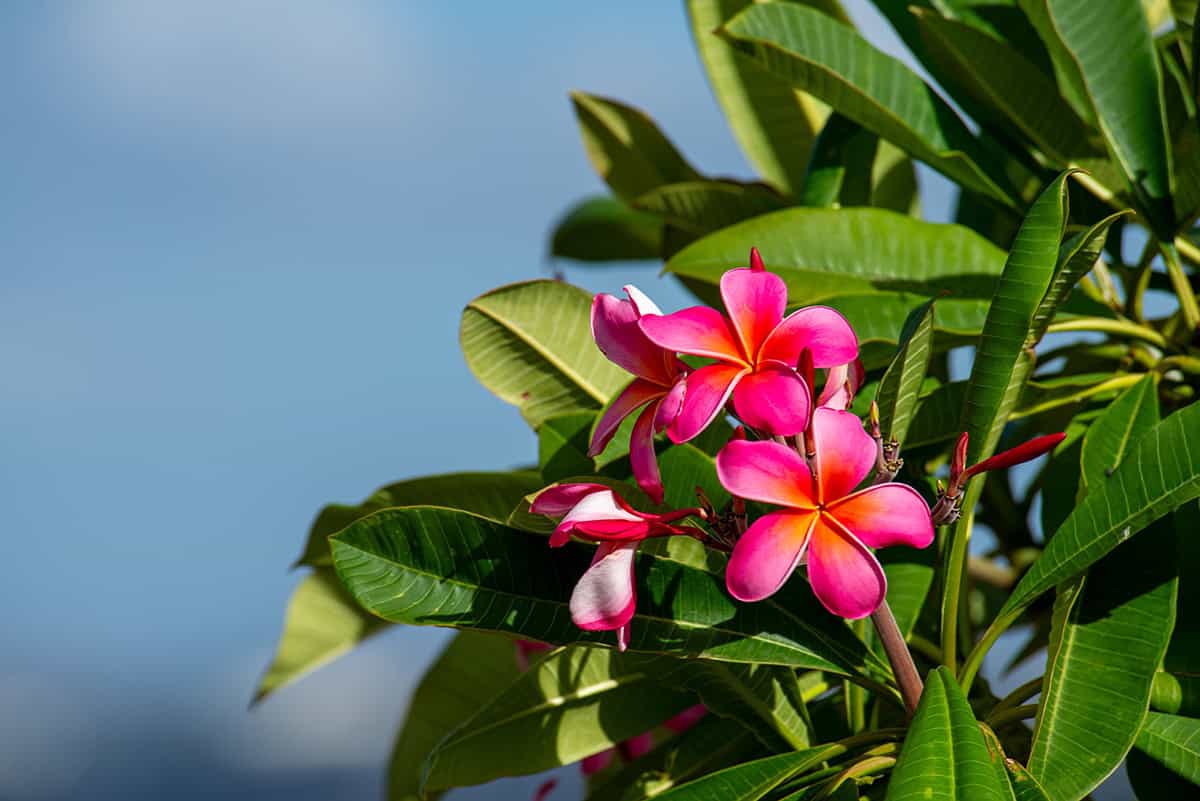
Hawaii’s flowers carry more history than most visitors realize. A lei of pikake, ilima or crown flower once signaled rank, romance or royal favor.
Many of the showiest blooms arrived from other tropical regions, and a handful of native species now grow only in protected pockets of the islands.
Each entry notes where the plant came from, which island claims it and the story Hawaiians tell about it.
Table of Contents
- Hawaiian Flowers
- Hibiscus (Hibiscus rosa-sinensis)
- Plumeria (Frangipani)
- Bird of Paradise (Strelitzia reginae)
- Anthurium
- Naupaka
- Pikake (Jasmine sambac)
- Ohia Lehua
- Tuberose
- Puakenikeni
- Orchids (Dendrobium & Other Varieties)
- Red Ginger (Alpinia purpurata)
- Heliconia
- Ti Plant (Cordyline fruticosa)
- Kukui Blossom
- Ilima (Sida fallax)
- Crown Flower (Calotropis gigantea)
- Ma’o Hau Hele (Hibiscus brackenridgei – Hawaii State Flower)
- Blue Jade Vine
- Lokelani (Damask Rose – Maui’s Official Flower)
- Heliconia Caribaea
- Torch Ginger (Etlingera elatior)
- Uluhe Fern
- Hawaiian Gardenia (Nanu)
- Spider Lily (Crinum asiaticum)
- Awapuhi (Shampoo Ginger)
Hawaiian Flowers
Each island has its own official flower, and the state flower, ma’o hau hele, is a native yellow hibiscus. Several plants below arrived with Polynesian voyagers centuries ago, while others came with plantation-era settlers and now fill gardens across the islands.
Hibiscus (Hibiscus rosa-sinensis)
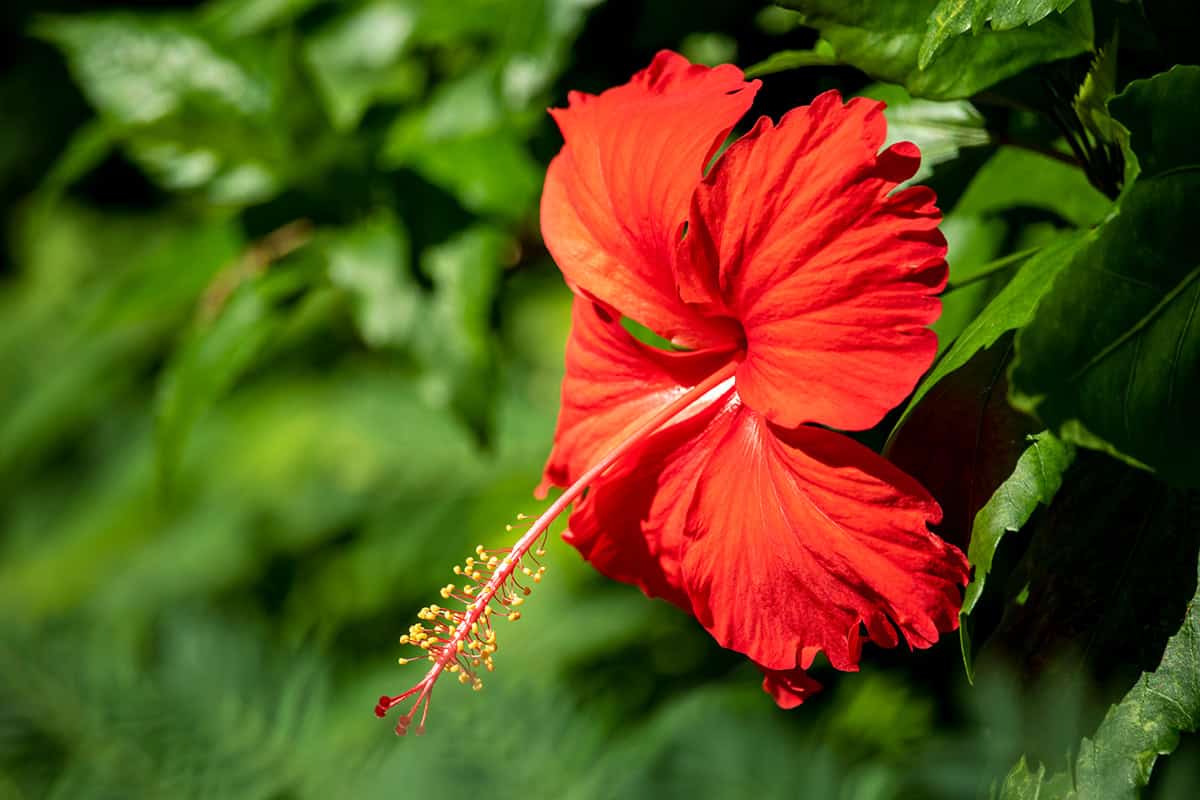
Tropical hibiscus, Hibiscus rosa-sinensis, came to Hawaii from Asia and now grows in nearly every island garden. Its wide, papery flowers in red, pink, orange, yellow and white last a single day. Worn behind the left ear, a blossom traditionally signals that the wearer is taken, and behind the right ear that the wearer is single. The shrubs bloom year-round in full sun.
Plumeria (Frangipani)
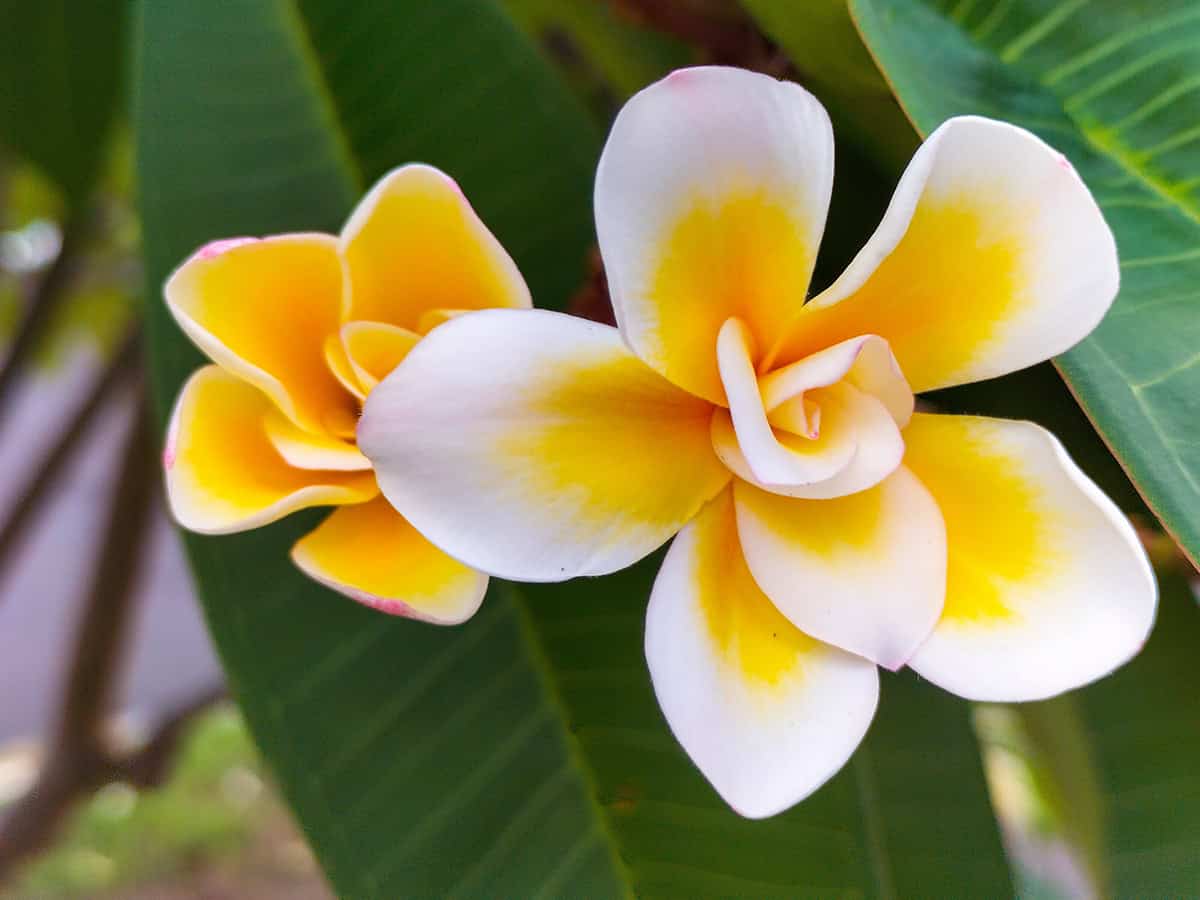
Plumeria arrived in Hawaii from tropical America in the 1860s and became the classic lei flower. Its waxy, five-petaled blooms in white, yellow, pink and red carry a sweet fragrance that peaks in the evening. Trees thrive in full sun and well-drained soil, bloom from spring into fall and drop their leaves in a dry winter.
Bird of Paradise (Strelitzia reginae)
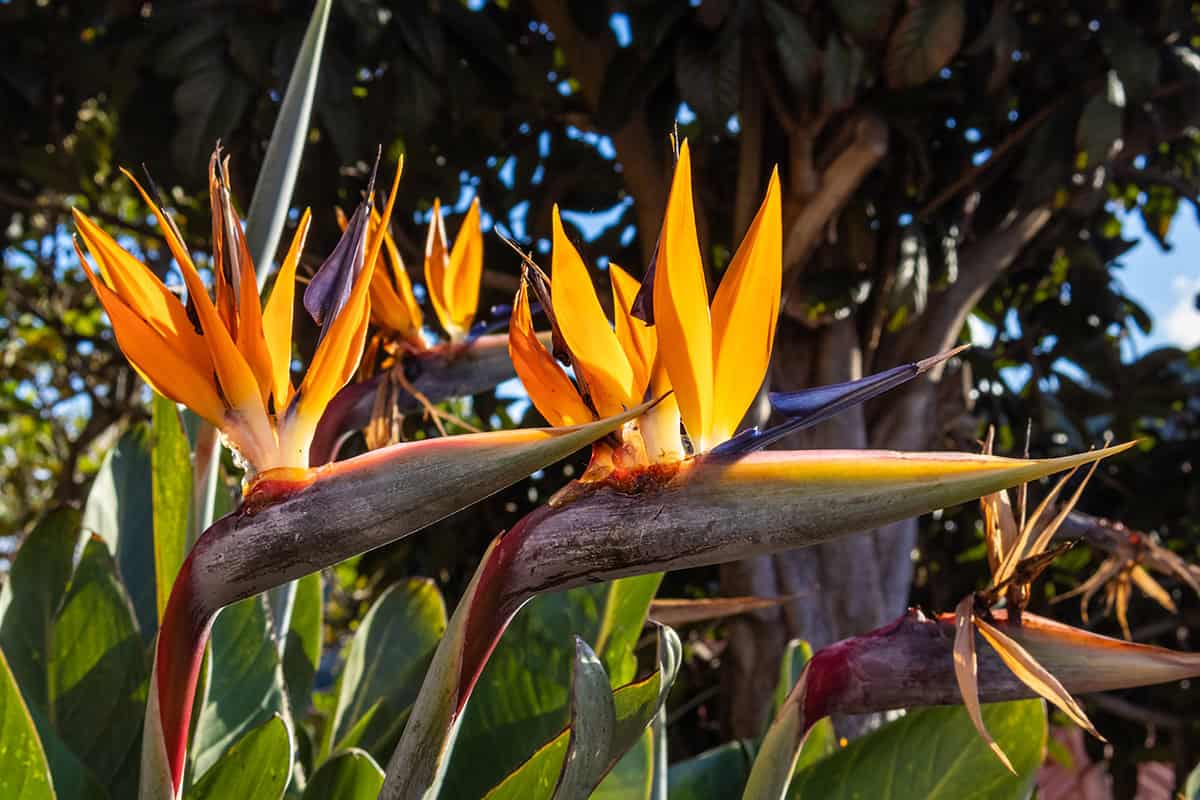
Bird of paradise, a South African native, fits right into Hawaiian landscapes. The orange and blue flowers emerge from a beak-shaped bract and look like the head of a tropical bird. Hotels and public gardens across the islands plant it for its long-lasting blooms. It grows best in full sun to light shade with regular water.
Anthurium
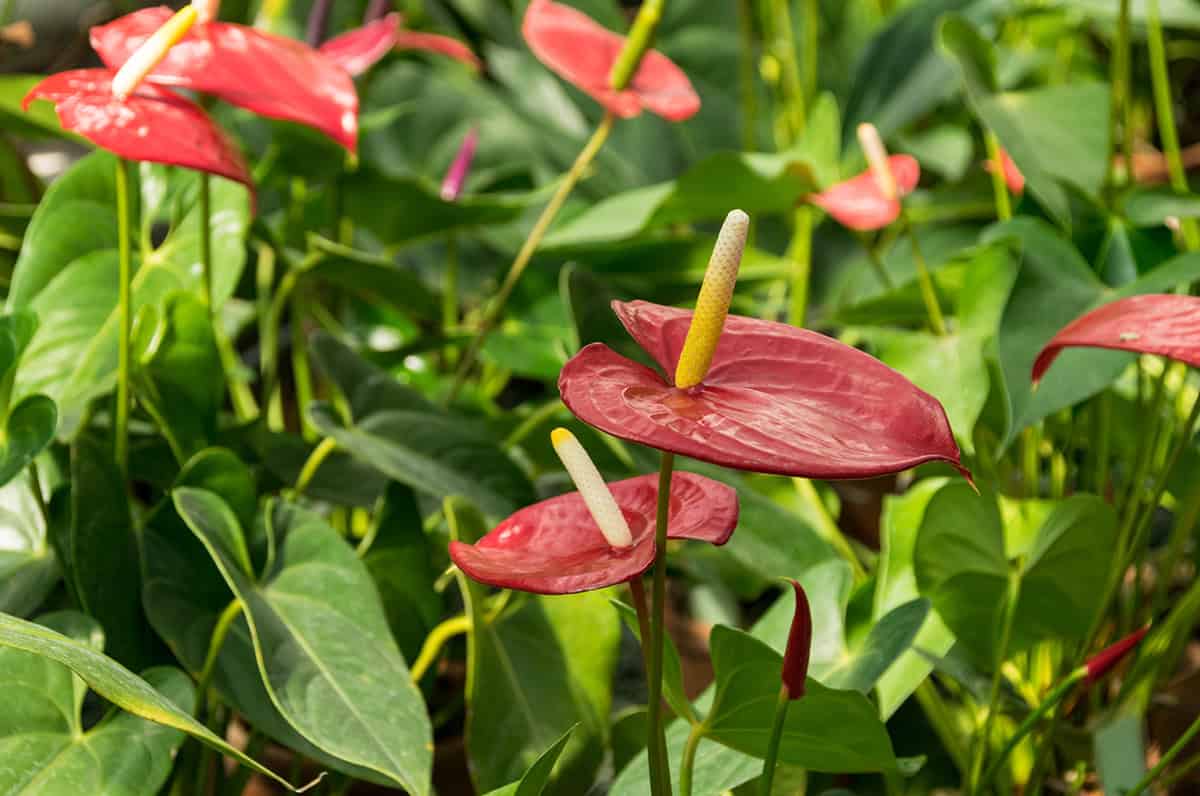
Anthuriums reached Hawaii from Colombia in 1889, and the Big Island grew into a major exporter of cut flowers. The glossy, heart-shaped spathes in red, pink and white last weeks in a vase. They grow best in humid shade, typically under shade cloth, in loose volcanic cinder or bark.
Naupaka
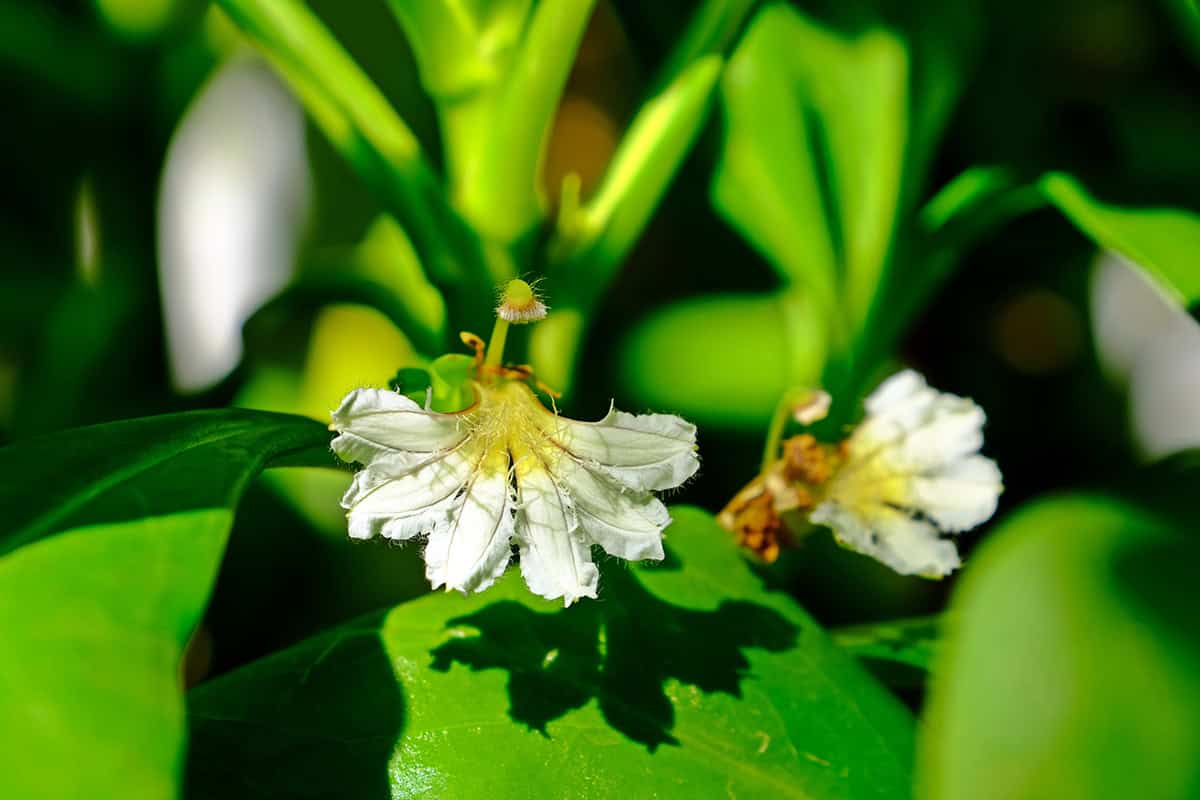
Naupaka produces white flowers that look torn in half, with all five petals on one side. One legend tells of lovers separated by an angry family, one sent to the mountains and one to the sea, and each plant carries half the blossom. Beach naupaka grows on coastal dunes, where it holds sand in place, while mountain naupaka grows in upland forests.
Pikake (Jasmine sambac)
Pikake, the Arabian jasmine, takes its Hawaiian name from the word for peacock. Princess Ka’iulani loved both the flower and the peacocks in her garden, and the name stuck. Its small white blooms carry an intense, sweet scent and make prized wedding leis. It flowers mainly in summer in full sun and well-drained soil.
Ohia Lehua
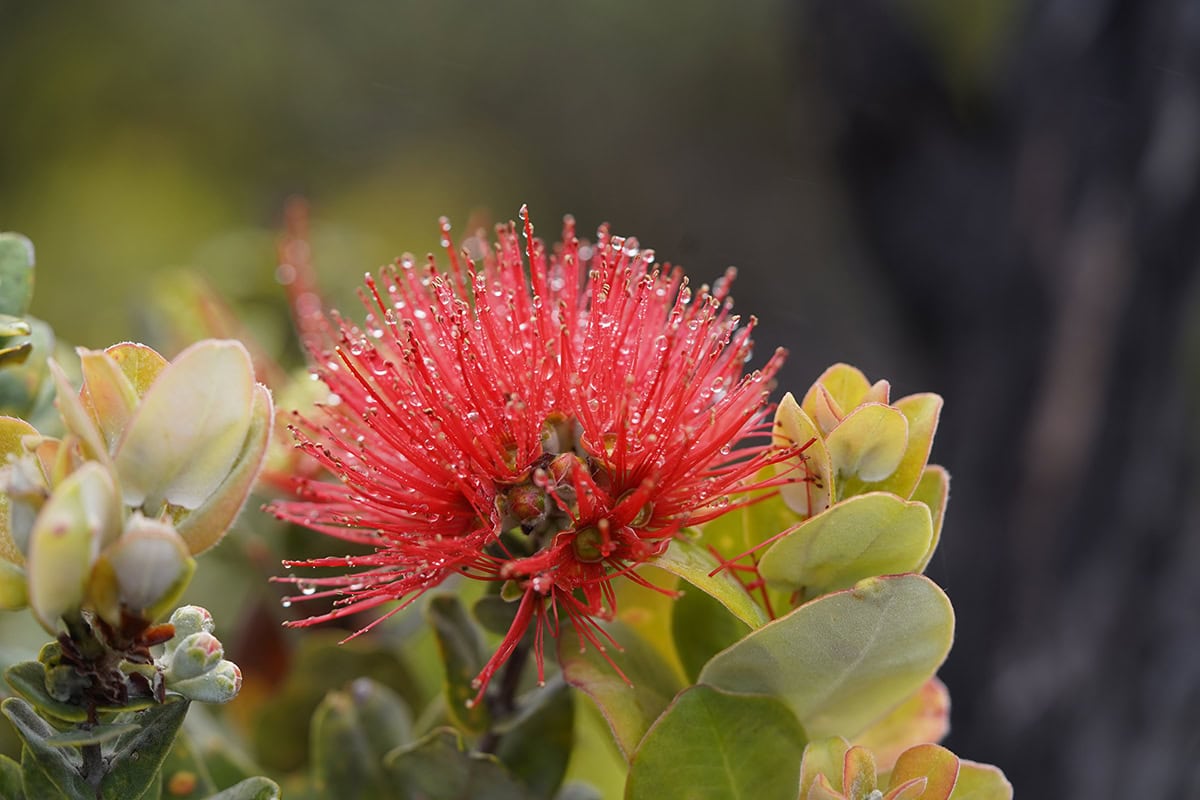
Ohia lehua, Metrosideros polymorpha, grows only in Hawaii and covers more of the islands than any other native tree. Its red, pom-pom flowers feed native honeycreepers such as the apapane and iiwi. Legend says Pele changed the warrior Ohia into a tree, and his love Lehua became its blossoms. Rapid Ohia Death, a fungal disease, now threatens the species, so moving ohia plants between islands is restricted.
Tuberose
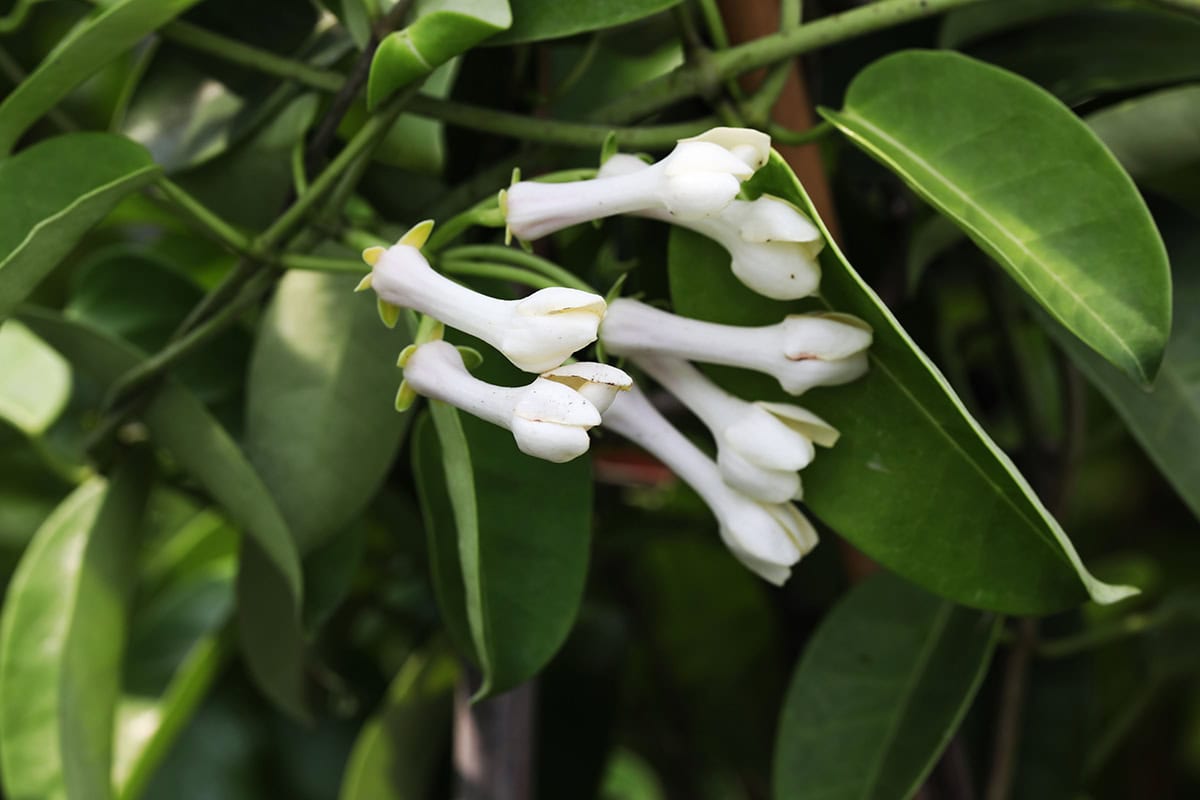
Tuberose produces spikes of waxy white flowers with one of the strongest scents in the plant world, especially after dark. Lei makers string the buds into fragrant strands for weddings and graduations. It grows from bulb-like tubers in full sun and well-drained soil, and perfumers have prized the flowers for centuries.
Puakenikeni
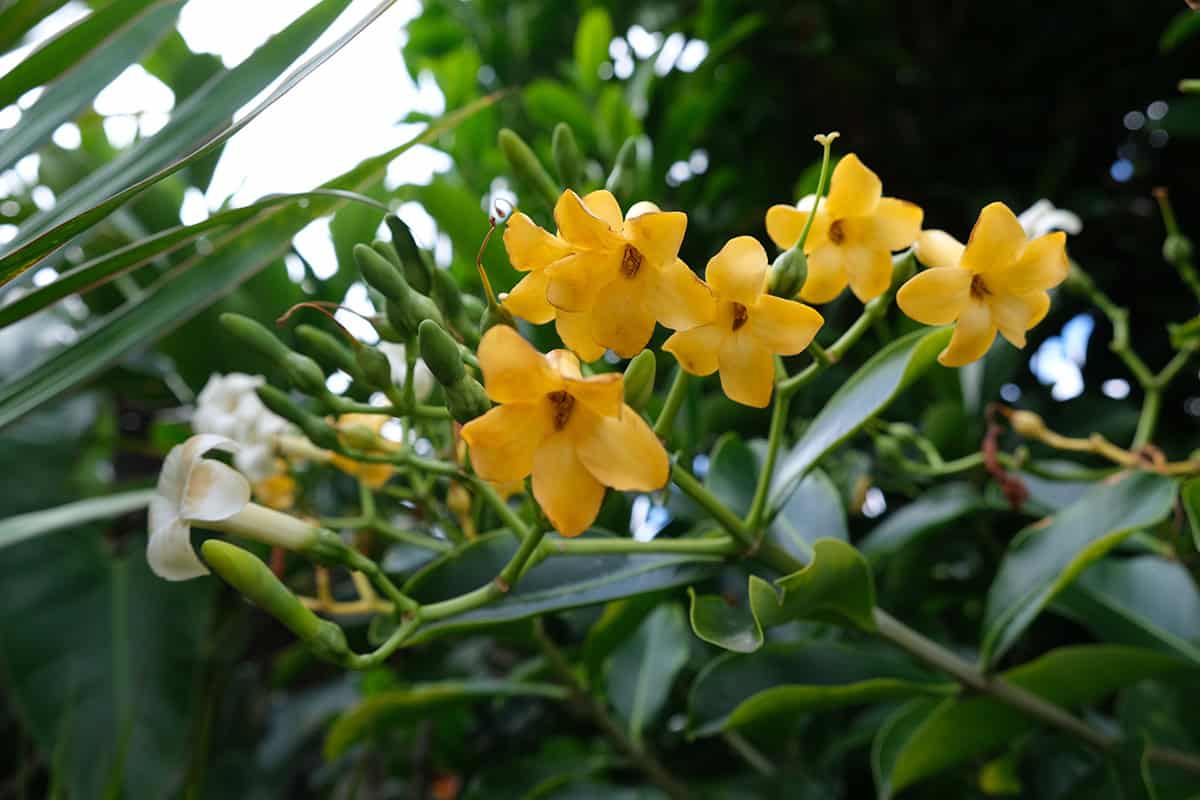
Puakenikeni means ten-cent flower, the price a single blossom once fetched from lei sellers. The tubular, fragrant flowers open creamy white and age to yellow and deep orange over a few days, so one lei holds all three colors. The small tree grows in full sun to partial shade in warm, humid areas.
Orchids (Dendrobium & Other Varieties)
Dendrobium orchids, grown by the thousands on the Big Island, fill the purple and white leis handed out at airports and hotels. Hawaii has only three native orchid species, all small and rare. Cultivated orchids grow well outdoors in Hilo’s humid climate, mounted on tree fern or potted in bark under bright, filtered light.
Red Ginger (Alpinia purpurata)
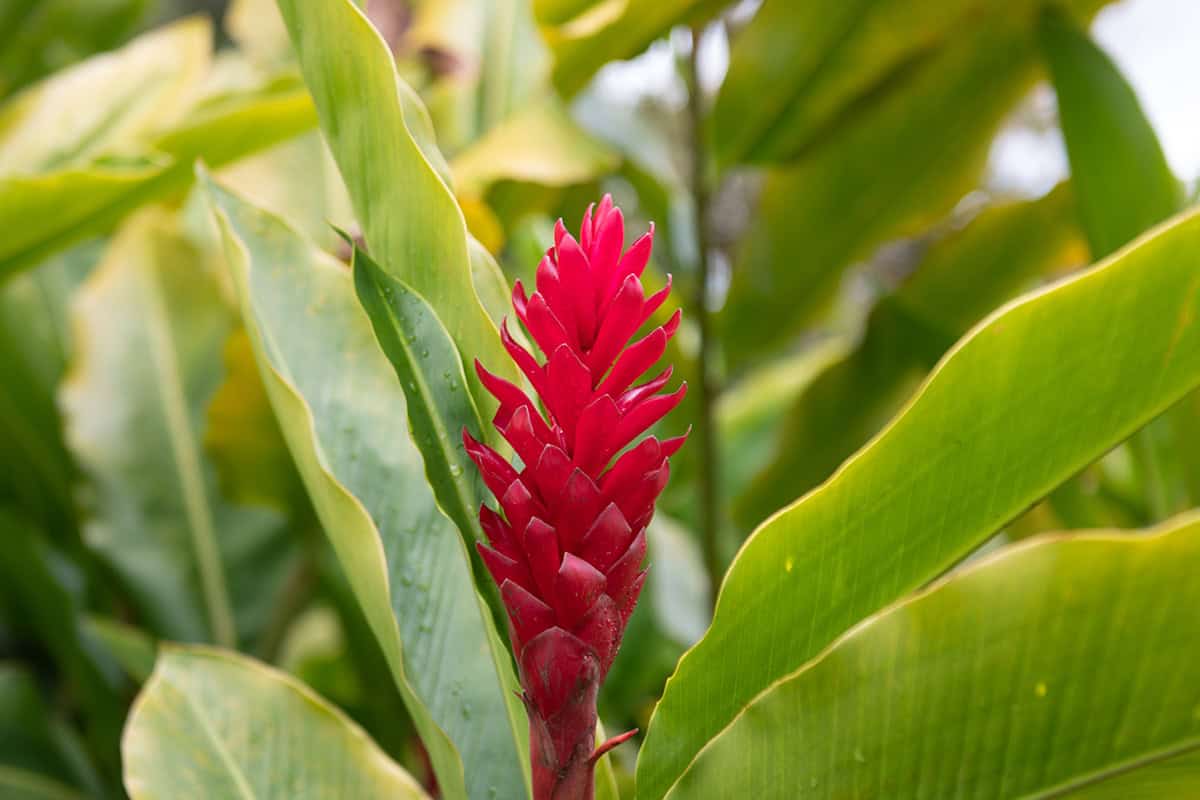
Red ginger, native to Malaysia and nearby Pacific islands, grows 6 to 10 feet tall with spiky red bracts at the tips of leafy stems. The tiny white true flowers peek out between the bracts. It grows in moist, rich soil in partial shade and blooms year-round in warm, wet areas. Florists use the long-lasting stems in tropical arrangements.
Heliconia
Heliconias, from tropical Central and South America, carry hanging or upright chains of bracts in red, orange, yellow and pink. Their common name, lobster claw, matches the shape. In their native range, hummingbirds pollinate them. They grow in rich, moist soil in sun to partial shade and spread from underground rhizomes into large clumps.
Ti Plant (Cordyline fruticosa)
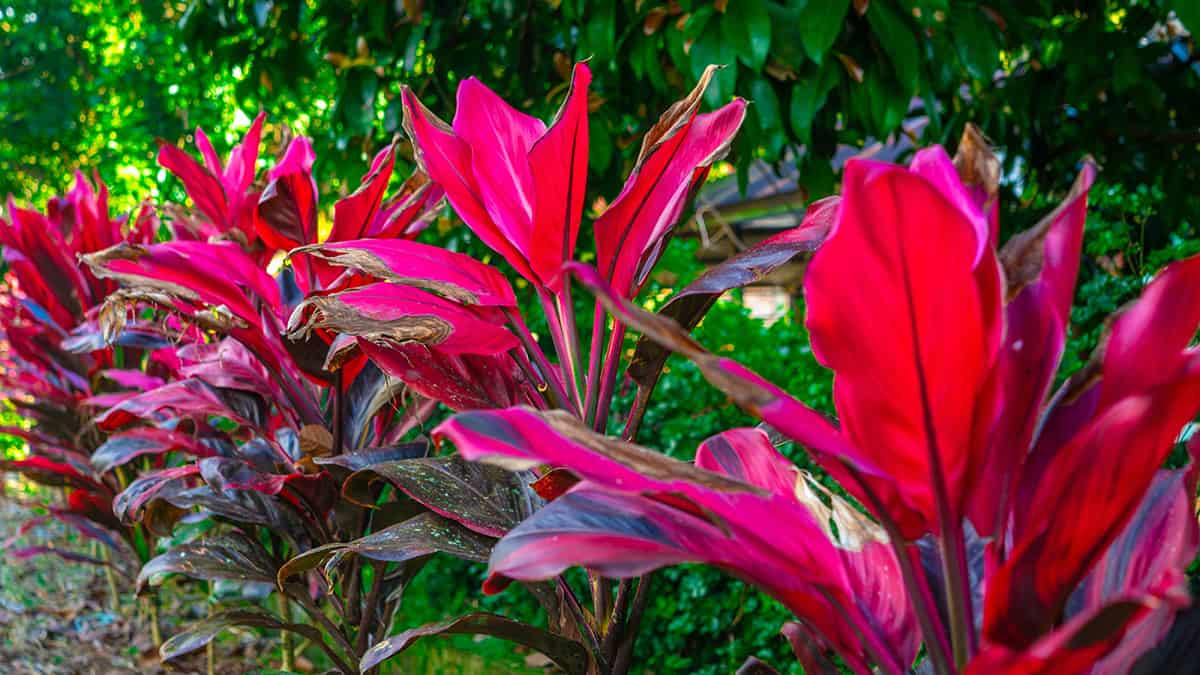
Ti, or ki, arrived with the first Polynesian voyagers and holds deep spiritual meaning in Hawaii. Green ti planted around a house is believed to ward off bad spirits. The long leaves wrap laulau and other foods, form hula skirts and twist into durable leis. Colorful red and pink cultivars grow in gardens across the islands.
Kukui Blossom
Kukui, the candlenut tree, holds the title of Hawaii’s state tree, and its blossom serves as the official flower of Molokai. Polynesian settlers carried it to the islands for its oily nuts, which once burned as candles and now polish into glossy black leis. The small white flowers bloom in clusters against pale, silvery green leaves.
Ilima (Sida fallax)
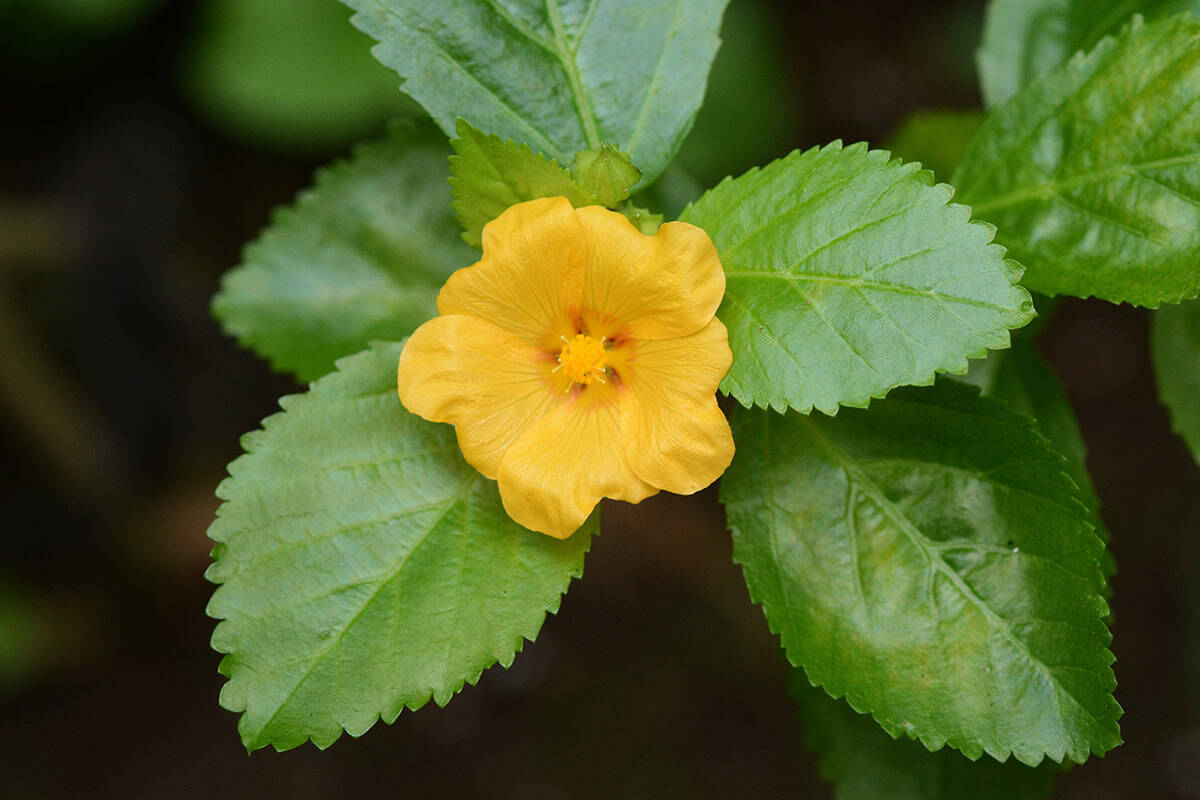
Ilima, the official flower of Oahu, produces small, papery yellow-orange blooms. A single lei takes hundreds of the delicate flowers, and ilima leis were once reserved for royalty. The native shrub thrives in dry, sandy coastal soil and tolerates drought and salt spray, a strong choice for low-water Hawaiian landscapes.
Crown Flower (Calotropis gigantea)
Crown flower produces waxy, crown-shaped blooms in lavender or white. Queen Liliuokalani counted it among her favorites, and leis strung from the small crowns still carry a royal association. The shrub hosts monarch butterfly caterpillars. Its milky sap irritates skin and eyes and harms people and pets if eaten.
Ma’o Hau Hele (Hibiscus brackenridgei – Hawaii State Flower)
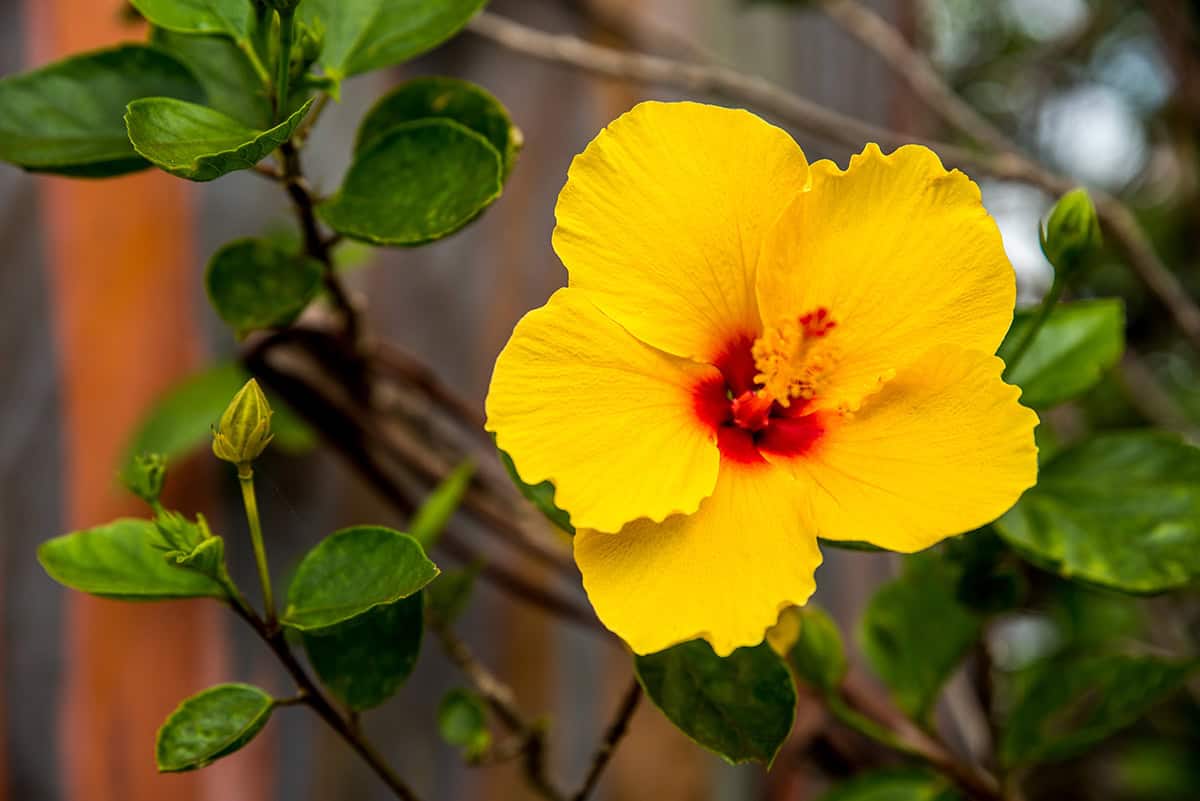
Ma’o hau hele, Hibiscus brackenridgei, became Hawaii’s official state flower in 1988. This native shrub bears bright yellow blooms with a maroon center and grows in dry lowland forests. Wild populations have dwindled, and the species is now federally listed as endangered, though nurseries sell cultivated plants for home gardens.
Blue Jade Vine
Jade vine, Strongylodon macrobotrys, comes from the Philippines and hangs long clusters of claw-shaped flowers in a striking turquoise. Bats pollinate it in the wild. It needs a sturdy pergola or arbor, warm temperatures, high humidity and rich, moist soil. Botanical gardens in Hawaii display it in spring.
Lokelani (Damask Rose – Maui’s Official Flower)
Lokelani, the pink damask rose, serves as Maui’s official flower. It came to Hawaii in the 1800s and thrived in Maui’s upcountry gardens. The fragrant, double pink blooms appear in flushes, and the plant needs full sun, good drainage and regular water.
Heliconia Caribaea
Heliconia caribaea, a large species from the Caribbean, holds upright, boat-shaped bracts in red, yellow or both on stems up to 15 feet tall. Its banana-like leaves add height to tropical gardens. Plant it in rich, moist soil in full sun to light shade, and cut stems for arrangements that last up to two weeks.
Torch Ginger (Etlingera elatior)
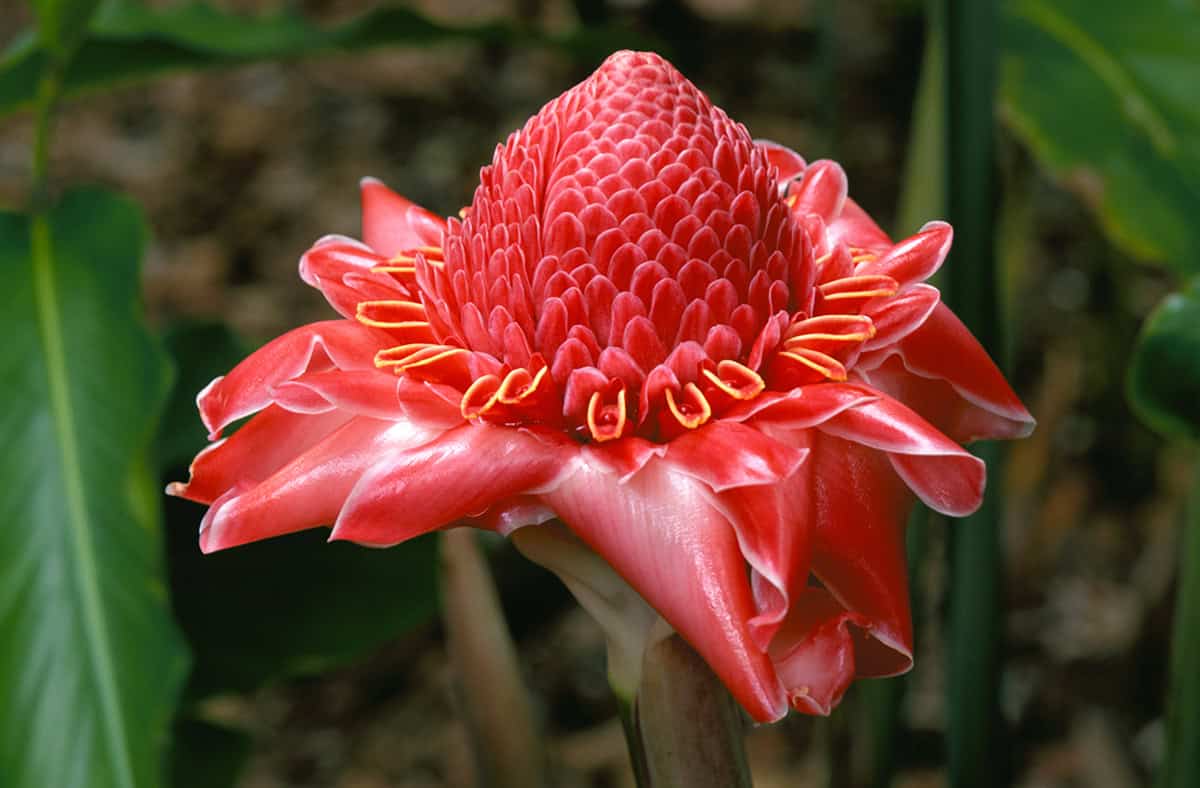
Torch ginger sends up tall stalks topped with waxy, torch-shaped flower heads in red, pink or white. The stalks reach 5 feet or more beside leafy stems up to 15 feet tall. It needs rich, constantly moist soil and partial shade. The flower buds also flavor Southeast Asian dishes such as laksa.
Uluhe Fern
Uluhe, Dicranopteris linearis, ranks among the first native plants to colonize fresh lava flows and landslides. Its forked fronds branch again and again into tangled thickets several feet deep. These mats hold soil on steep slopes and shelter seedlings of native trees. It grows wild in moist, open areas and rarely appears in home gardens.
Hawaiian Gardenia (Nanu)
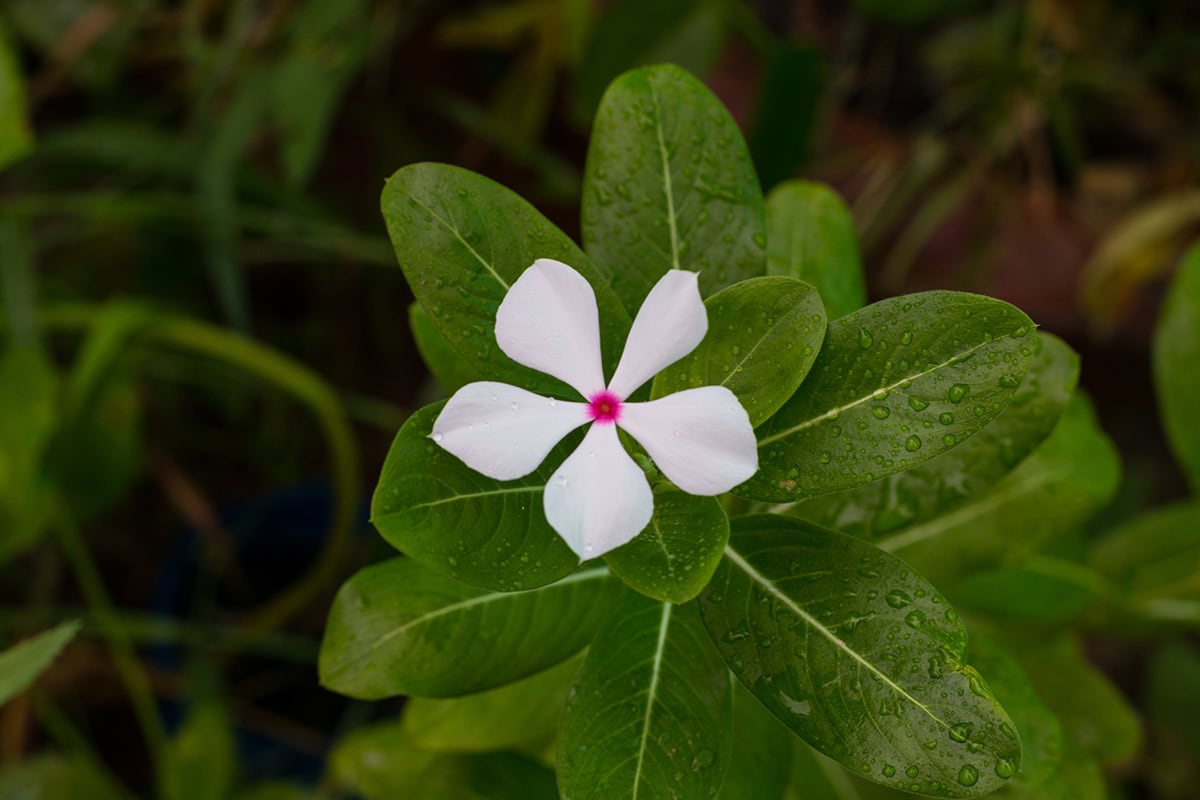
Nanu, Gardenia brighamii, ranks among Hawaii’s rarest native plants, with only a few wild trees left in dry forests. Its small, creamy white flowers carry a strong gardenia scent. Nurseries propagate it for native gardens, where it needs full sun to partial shade and well-drained soil.
Spider Lily (Crinum asiaticum)
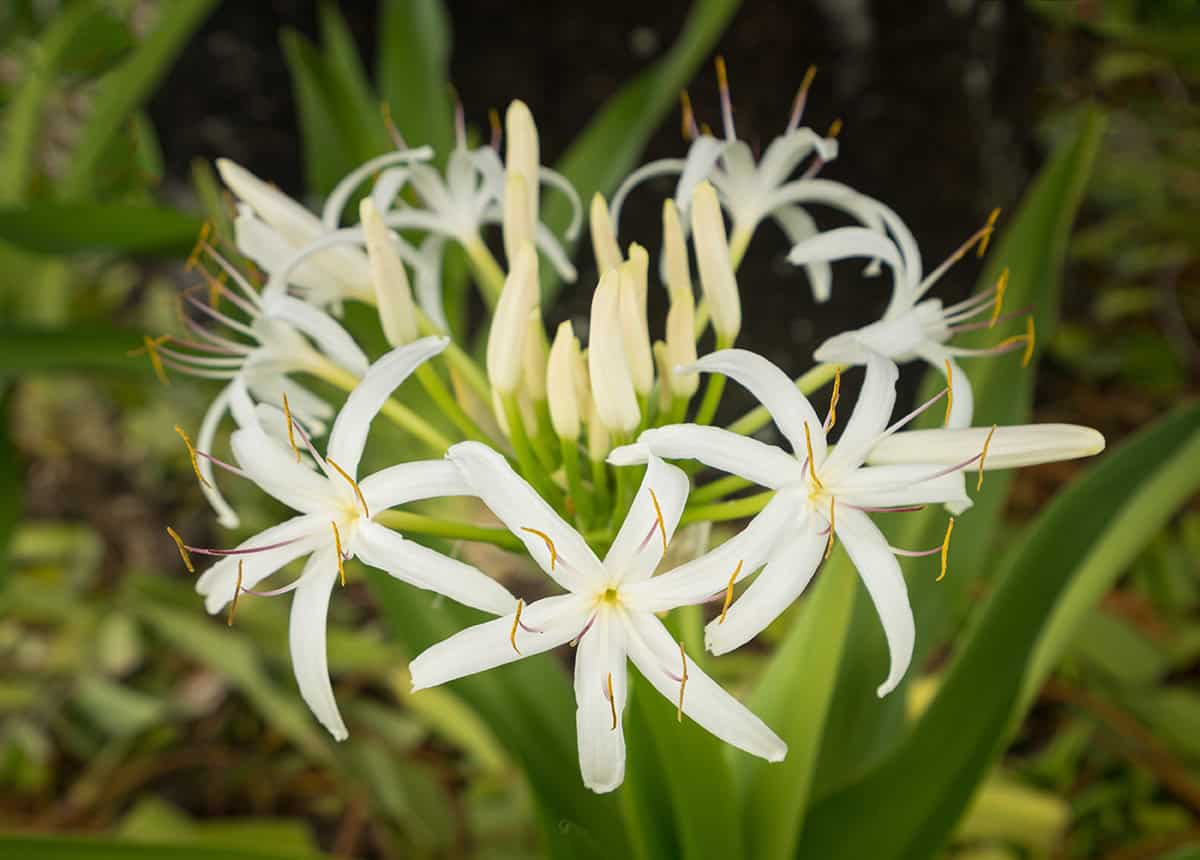
Spider lily, Crinum asiaticum, forms large clumps of strappy leaves topped with fragrant white flowers with long, thin petals. Polynesian voyagers likely carried it across the Pacific. It handles salt spray, full sun and moist soil, and it lines many coastal gardens. Every part of the plant harms people and pets if eaten.
Awapuhi (Shampoo Ginger)
Awapuhi kuahiwi, or shampoo ginger, arrived with early Polynesians and now grows wild in moist, shaded forests. In late summer, its green cones ripen to red and fill with a clear, slippery liquid. Hawaiians squeezed that juice into their hair as shampoo and conditioner, and commercial shampoos still use it today. The plant dies back in winter and returns from rhizomes in spring.