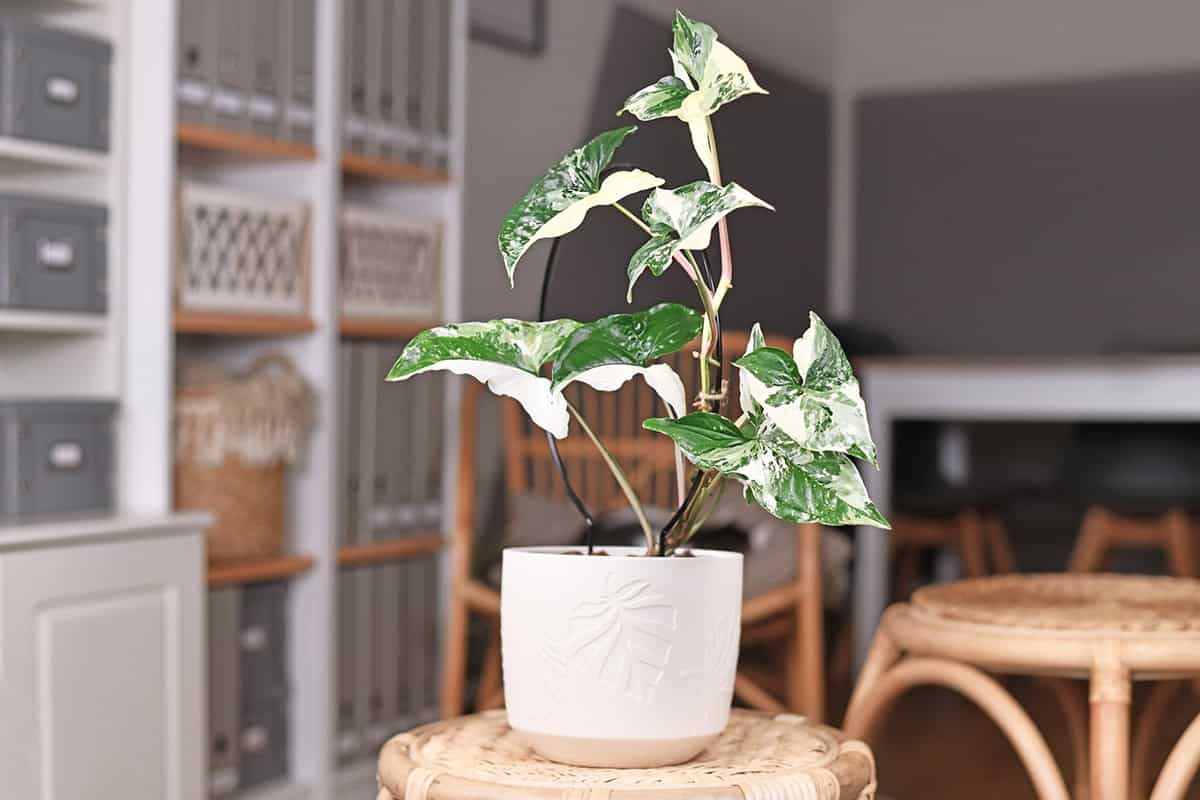
Syngonium Albo brings a bold splash of white to any indoor jungle, with arrow-shaped leaves that climb and twist as they grow. This tropical vine stays fairly compact in a pot, adapting surprisingly well to apartment corners, bright kitchen shelves, or wherever you’ve got a bit of filtered light.
Bright indirect light, a chunky, well-draining soil, moderate watering, warmth, and humidity—these are what keep Syngonium Albo looking its best. Miss one, and the plant won’t hesitate to show you by fading, crisping, or dropping leaves. Get it right, though, and you’ll have a steady grower with dramatic contrast.
Here’s how to nail the balance: from light and soil choices to watering, feeding, and dealing with the usual hiccups. Pruning, propagation, and repotting are all in here, too. Each step is laid out so you can keep those variegated leaves sharp and healthy.
Table of Contents
Quick Care Summary
Variegated arrowhead vines thrive when they get plenty of bright, indirect light and warmth. The amount of white in the leaves really depends on lighting and how you handle watering. Stable, cozy conditions help this plant stay compact and lush.
Light: Needs bright, indirect rays. White areas scorch fast in direct sun, and too little light means less variegation.
Soil: A chunky, loose mix with organic matter—think aroid blend that drains quickly but still clings to a bit of moisture.
Watering: Wait until the top 1–2 inches of soil are dry before watering. Never let the pot stand in water. Cut back in winter.
Temperature: Prefers 60–85°F. Drafts and chilly rooms will stress it. Below 55°F? That’s asking for trouble.
Humidity: 50% or more is ideal. Regular indoor air works, but more humidity brings bigger leaves.
Fertilizer: Half-strength balanced liquid fertilizer once a month in the growing season. Don’t go overboard.
Propagation: Snip stem cuttings with at least one node. Root them in water or moist soil, keep warm and bright.
Plant Overview
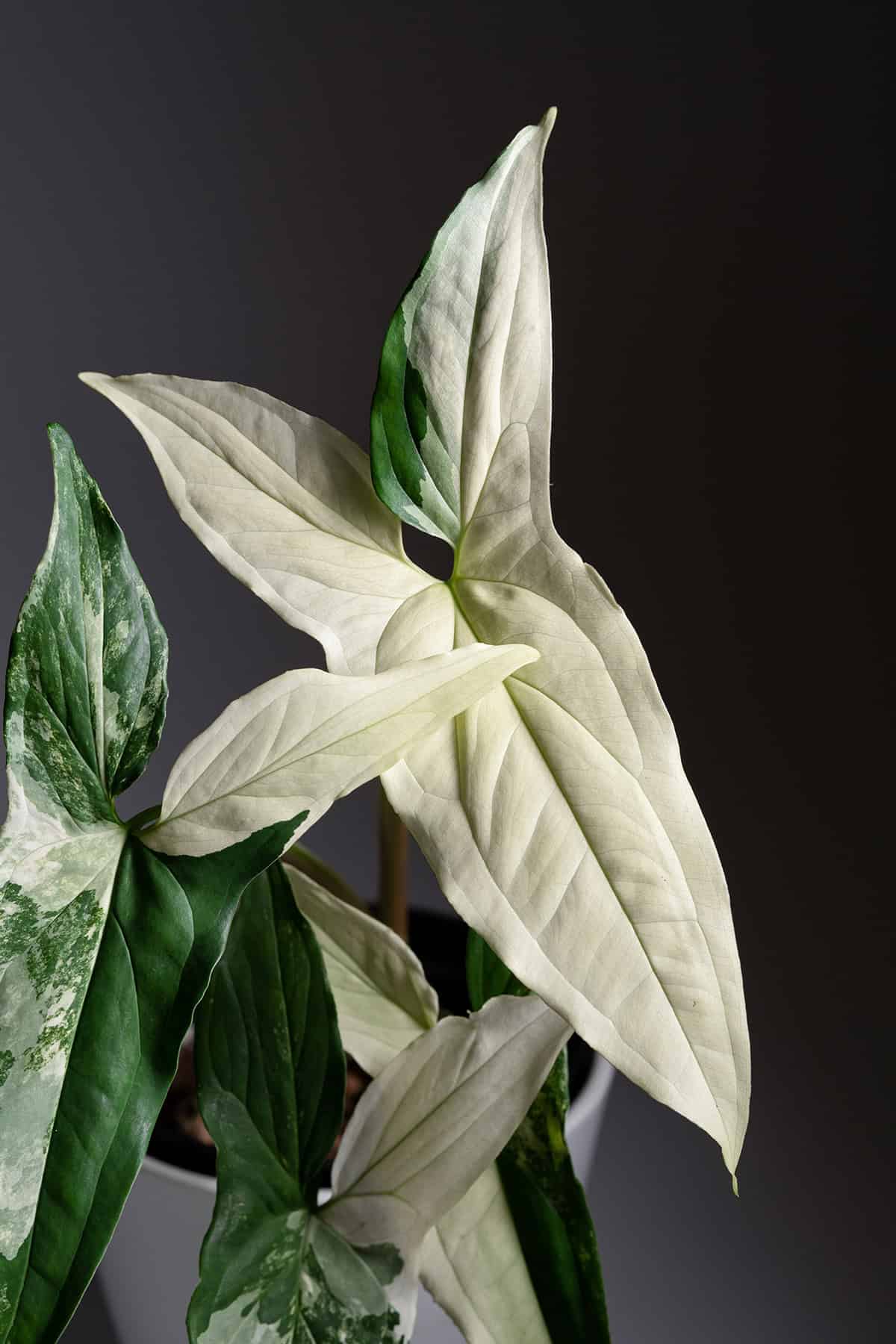
A flash of white marbling, compact vines, and leaves that change shape as they age—Syngonium Albo has a knack for standing out. It fits just as well in a hanging basket as it does climbing a moss pole beside your desk.
As the plant matures, you might notice those simple arrow leaves splitting into more intricate shapes. Pruning and pot size let you control its spread, while good light keeps the variegation crisp and bold.
Botanical name: Syngonium podophyllum ‘Albo-Variegatum’
Common names: Syngonium Albo, variegated arrowhead plant
Plant type: Tropical perennial vine
Mature size: 3–6 feet indoors with support; smaller if you keep it trimmed
Growth rate: Moderate, as long as it’s warm and bright
Toxicity: Not safe for pets or kids to chew
Native region: Mexico and Central America
Part of the Araceae family, this vine naturally climbs up trees in steamy forests. Indoors, it appreciates similar warmth and a touch of humidity.
Light: Bright, indirect
Soil: Airy, well-draining
Watering: Lightly moist, never soggy
Temperature: 60–85°F
Humidity: Medium to high
Fertilizer: Balanced liquid feed in growing months
Propagation: Stem cuttings with nodes
Light
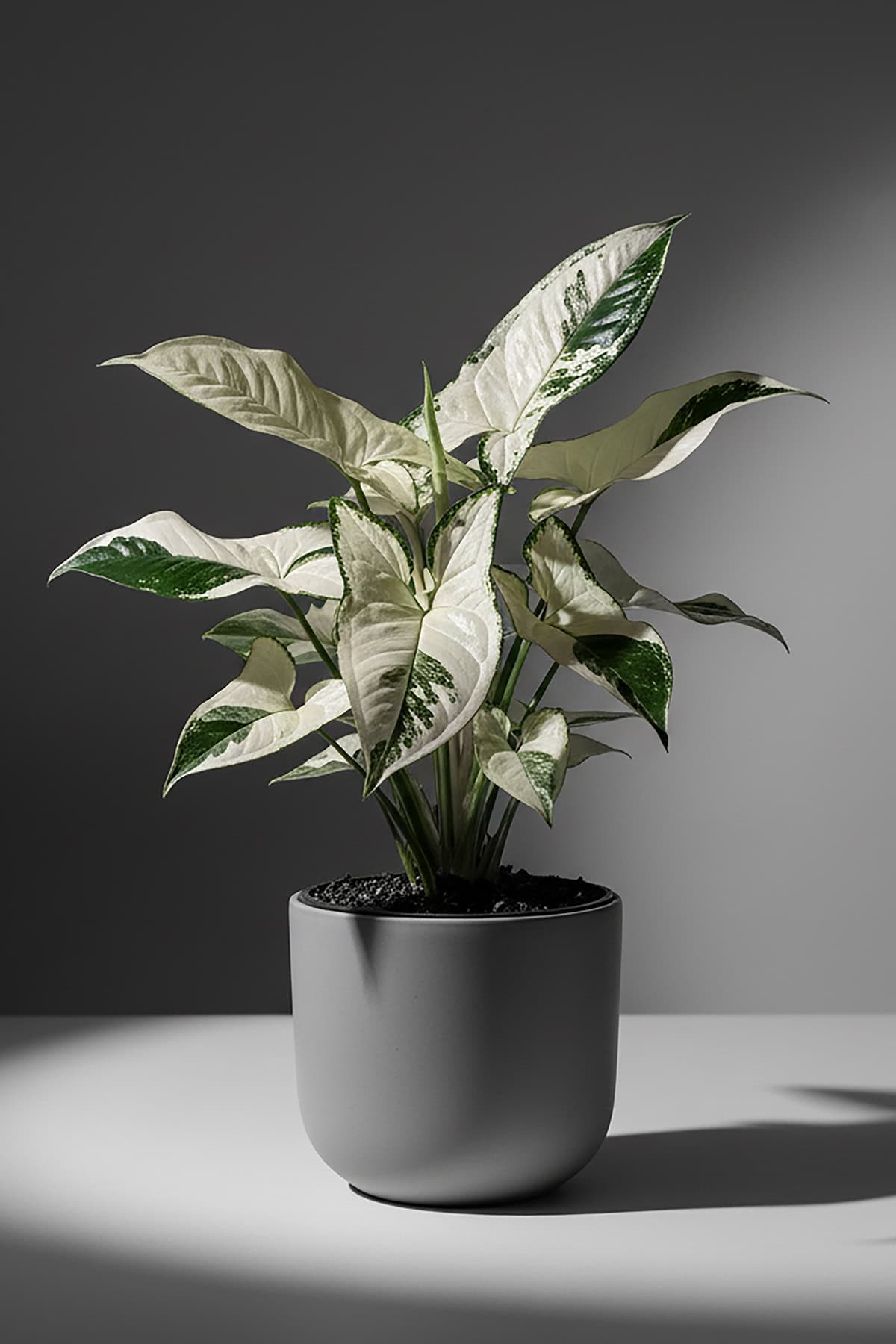
A room with soft, filtered sunlight sets the stage for those dramatic white patches to really pop. East or north windows usually deliver just the right amount of gentle morning rays. A few hours of mild sun is fine, but afternoon glare can be brutal—especially for those delicate white sections.
Dim corners dull the contrast, and over time, the leaves shift toward green. Growth slows, too. This plant’s ancestors thrived under a canopy, so it’s not built for harsh, direct light.
If you start seeing dry, faded patches or crispy edges, especially on the white parts, it’s likely getting too much sun. Pull the pot back or diffuse the light.
A little rotation goes a long way—turning the pot every week or so keeps it from leaning and helps each side get a fair shot at balanced color.
No good natural light? A full-spectrum LED grow light, set 12 to 18 inches above the plant, can do the trick. Aim for about 10–12 hours of light daily.
Water
Letting the soil dry out a bit on top before watering is key. Stick your finger in—if the top inch or two feels dry, it’s time. If it’s still damp, wait.
Soggy roots spell disaster. Root rot creeps in fast if water pools at the bottom. Always go for pots with drainage holes, and don’t forget to empty the saucer after watering.
During the warmer months, weekly watering is usually enough. Once temperatures drop and growth slows, space it out. The soil should get closer to dry between drinks in winter.
Room-temperature water helps avoid shocking the roots. If your tap water’s especially hard, you might end up with mineral spots on leaves. Filtered or distilled water sidesteps that issue.
Leaves tell you what’s up: yellowing usually means too much water, while crispy brown tips hint at thirst or dry air. Adjust as needed based on your home’s quirks.
Soil
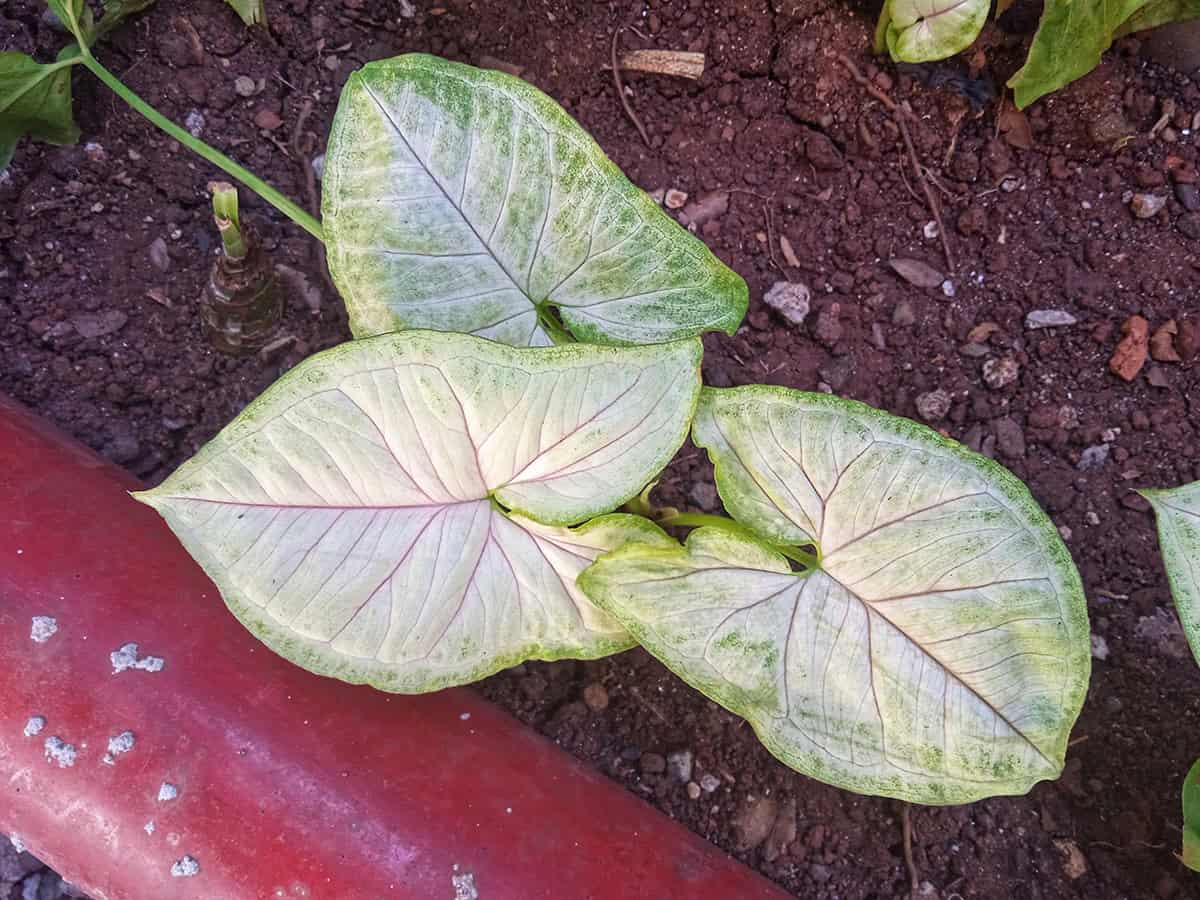
Roots in tropical vines do best when they have space to breathe. A chunky, loose mix mimics their natural habitat and keeps things from getting soggy.
Start with a rich indoor potting soil, but don’t stop there—toss in a couple handfuls of perlite, coarse sand, or pumice to boost drainage. Orchid bark is a solid addition for structure.
Slightly acidic to neutral soil (pH 5.5–7.0) works well. Heavy, dense mixes or garden dirt just won’t cut it—roots need air, not mud.
After watering, let the top inch or so dry out before going again. Drainage holes are a must. Water sitting at the bottom is a recipe for rot.
Every year or two, refresh the soil. This perks up the plant and helps prevent compaction. Go up just one pot size when repotting to avoid soggy conditions.
Temperature & Humidity
A warm, steady environment makes all the difference. Daytime temps in the 70–85°F range suit Syngonium Albo perfectly. Nights can dip to 60°F, but avoid sudden chills or blasts from heaters and AC units.
Cold snaps below 55°F? That’s a quick way to lose leaves and stall growth. Overly hot rooms (above 90°F) can cause faded variegation and limp foliage. Keep it away from drafty windows, doors, and radiators.
Humidity is another biggie. Aim for 60–80% if you want lush, oversized leaves. Most homes fall short, especially in winter—grouping plants or running a humidifier can help boost the moisture in the air.
Fertilizer
During the spring and summer, a monthly dose of balanced liquid fertilizer (diluted to half strength) keeps growth steady. Something like a 10-10-10 or 20-20-20 blend works fine.
Once autumn hits and growth tapers off, it’s best to cut back on feeding. Overdoing it when the plant’s resting can cause salt buildup and root problems. Every couple of months, flush the soil with distilled water to clear out any residue.
Variegated types like this one don’t need as much food as their solid green cousins. Too much nitrogen can lead to floppy stems and less striking leaves. If you go with slow-release pellets, use just a light sprinkle at the start of spring. When in doubt, less is more.
Potting & Repotting
A pot with a decent drainage hole is non-negotiable. If you’re using a decorative planter, keep the plant in a nursery pot inside to avoid trapped moisture.
Go for a chunky, airy mix—most commercial aroid or indoor blends with peat, coco coir, and perlite will do. Add some orchid bark if you want to boost airflow around the roots. The goal: moist, never soggy.
Repotting every year or two is usually enough. If growth slows or roots start circling, it’s time. Move up just one pot size to avoid waterlogged soil.
Before you repot, water the plant the day before. Gently tip it out, keeping the root ball intact. Settle it at the same depth in the new pot, fill in with fresh mix, and leave a little space at the top for watering.
Check the roots as you go—trim away anything mushy or dark with disinfected scissors. Healthy roots are firm and pale.
After repotting, water thoroughly and let it drain. Hold off on fertilizer for a few weeks while the plant adjusts.
Pruning
Keeping Syngonium Albo bushy and tidy is all about regular trims. When vines start getting unruly, snip them back just above a leaf node—this encourages branching and a fuller look.
Always use sharp, clean scissors or pruners. Wipe them down before and after to avoid spreading anything nasty. Damaged or yellow leaves should go as soon as you spot them.
It’s easier to shape younger plants, so don’t be shy about pruning early. If it’s gotten leggy or wild, cut back several vines at once, but try not to remove more than a third at a time.
Healthy trimmings double as propagation material. Each cutting should have at least one node. Root them in water or moist soil. Regular pruning helps the plant maintain its variegation and keeps it from looking sparse.
Propagation
Snipping a healthy stem just below a node is the first step to multiplying your Syngonium Albo. Each cutting needs at least one node and a leaf.
Drop the cut end into a glass of water or tuck it into moist soil, making sure the node is buried but the leaf stays above. If you’re rooting in water, swap it out every few days to keep things fresh. Roots usually appear in two to four weeks.
Once roots are an inch or two long, pot up the new plant in a small container with a well-draining mix. Keep things warm and lightly moist for the best results. Dividing a mature root ball is another option—just make sure each piece has roots and a node.
Common Problems
Yellowing leaves are usually a red flag for overwatering or poor drainage. Soggy roots suffocate fast, sometimes bringing a sour smell or mushy stems. Let the soil dry more between waterings and check your drainage setup.
Crispy brown edges? That’s often due to dry air or underwatering. Variegated leaves are especially sensitive to swings in humidity and moisture. If leaves curl or fade, bump up the humidity and double-check the light situation—too much sun can fry the white parts.
Pests can sneak in, too. Aphids, mealybugs, and spider mites love hiding on the undersides of leaves and along stems. Look for sticky spots, webbing, or pale dots. Wipe down leaves and treat with insecticidal soap as needed.
Bacterial leaf spot and rot sometimes show up in warm, damp rooms. Dark, mushy spots spread quickly. Remove affected leaves and isolate the plant. Good airflow and dry foliage help keep disease in check.
Varieties
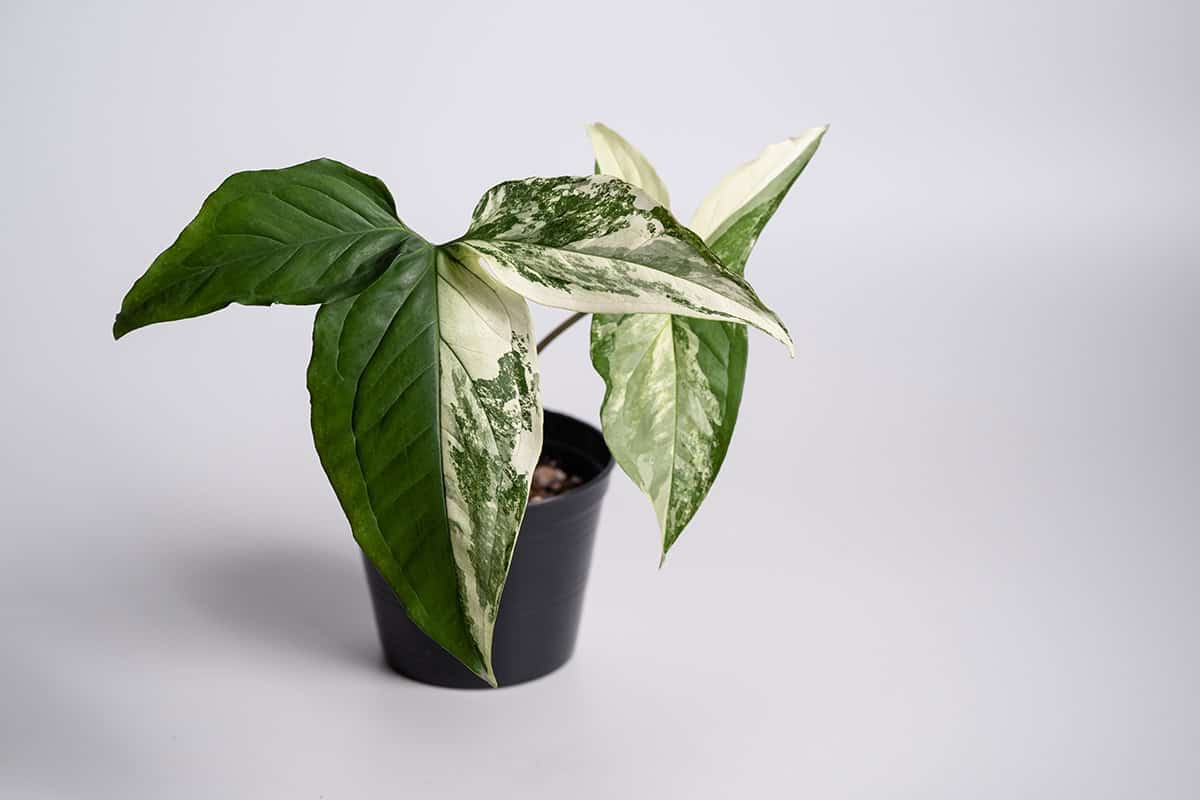
Shifting patterns of white and green pop up across the leaves of Syngonium podophyllum cultivars sold as Syngonium Albo, or ‘Albo-Variegatum’. It’s unpredictable—sometimes you’ll see bold, snowy blocks, other times just a hint of marbling. No two leaves really echo each other, which honestly keeps things interesting.
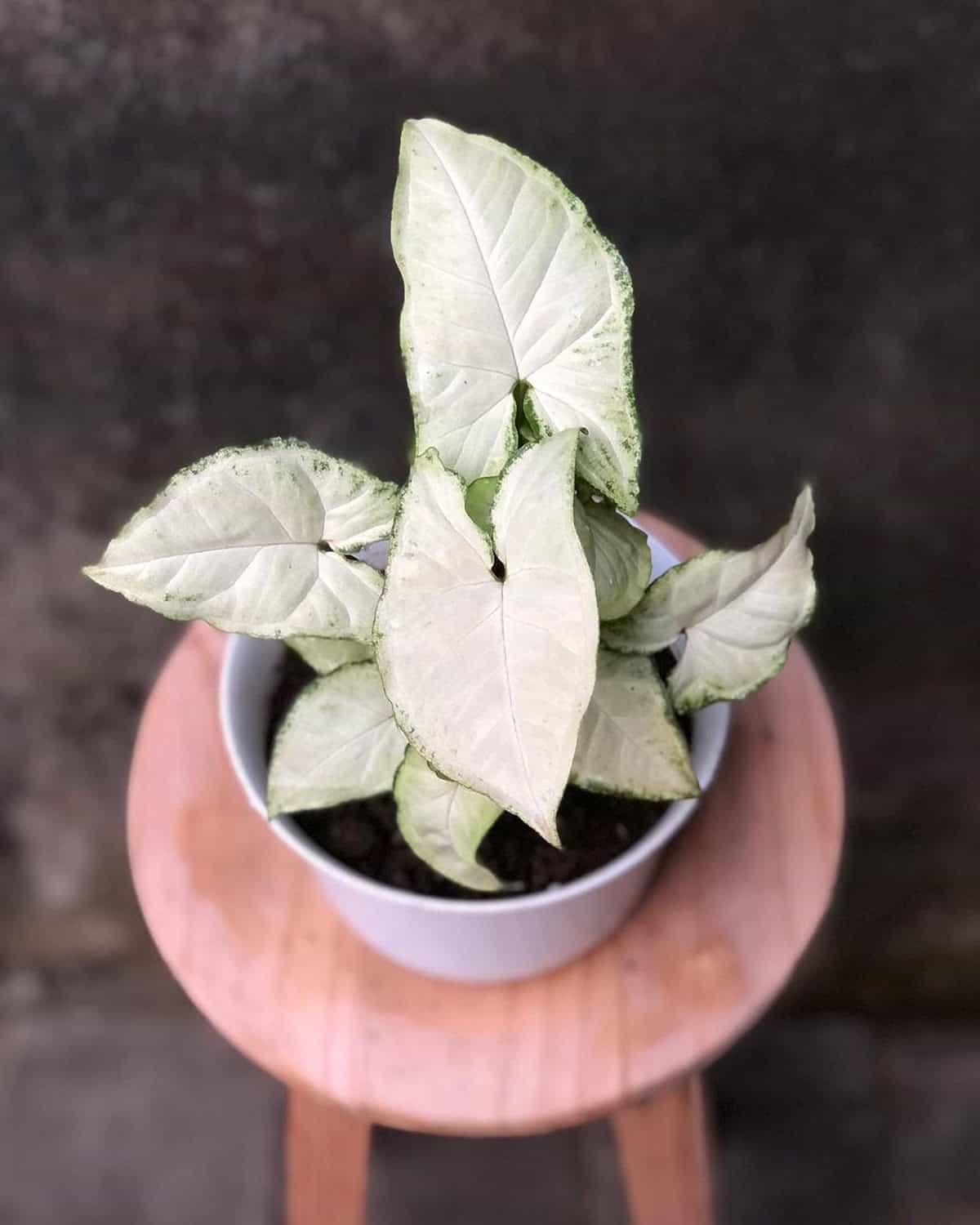
If you’re after something a bit more subtle, ‘White Butterfly’ tends to lean gentle. Its leaves have pale, creamy centers edged with green, so the effect is softer—almost like the color fades out toward the margins. Some folks like that more uniform, cushiony look.
Pink varieties? They’re having a moment. ‘Milk Confetti’ pops with playful pink flecks scattered over mint and cream backgrounds. Then there’s ‘Neon Robusta’, which goes all in with a warm, rosy blush over the whole leaf. These don’t go for the high-contrast drama of Albo, but the steady, cheerful color has its own charm.
Space at a premium? Compact or dwarf types keep things tidy, branching low and staying manageable. On the flip side, climbing forms get ambitious—give them a pole and they’ll stretch up, sending out bigger, more dramatic leaves as they mature. Letting them trail from a shelf works too, if that’s your style.
Growth throws a few surprises as well. Young plants stick with that classic arrow shape. With enough light and something to climb, mature leaves get more deeply lobed, sometimes almost unrecognizable from their juvenile form. It’s kind of wild how much they can change.