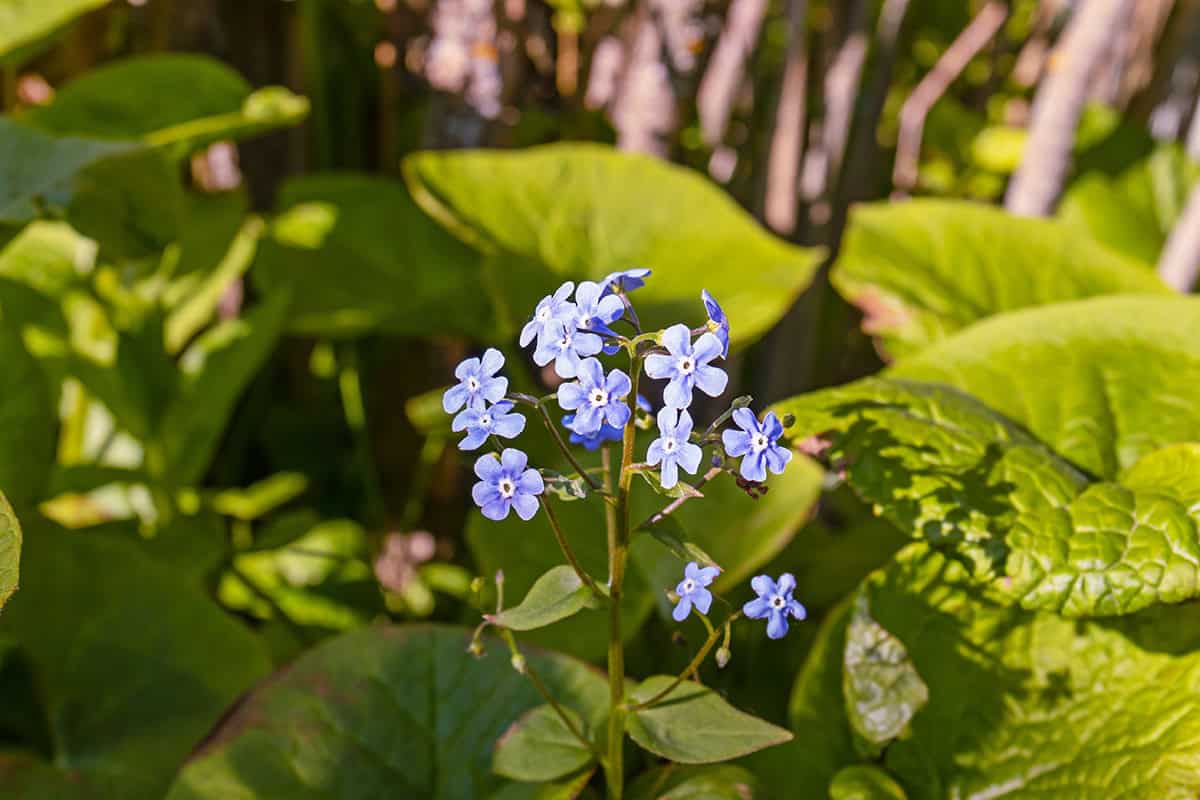
German legend gave forget-me-not its name, with a knight who fell into a river while picking the flowers for his sweetheart and tossed her the bouquet as he drifted away.
The tiny sky-blue blooms with yellow eyes carpet shady beds in spring, then scatter seed for the following year’s display. Cool weather and damp soil are what the plants crave.
Seed timing makes the biggest difference in how thick that carpet grows, and the propagation notes cover when to sow.
Table of Contents
- Light
- Soil
- Water
- Temperature And Humidity
- Fertilizer
- Propagation
- Pruning
- Potting And Repotting
- Common Problems & Troubleshooting
- Plant Varieties
- Frequently Asked Questions
- How do I properly plant forget-me-not seeds in pots?
- Can forget-me-nots be efficiently grown inside?
- What are the different growing stages of forget-me-not flowers?
- Are forget-me-nots perennials that will return each season?
- What is the significance behind the forget-me-not flower?
- How should I care for forget-me-not leaves to ensure healthy plant growth?
Light
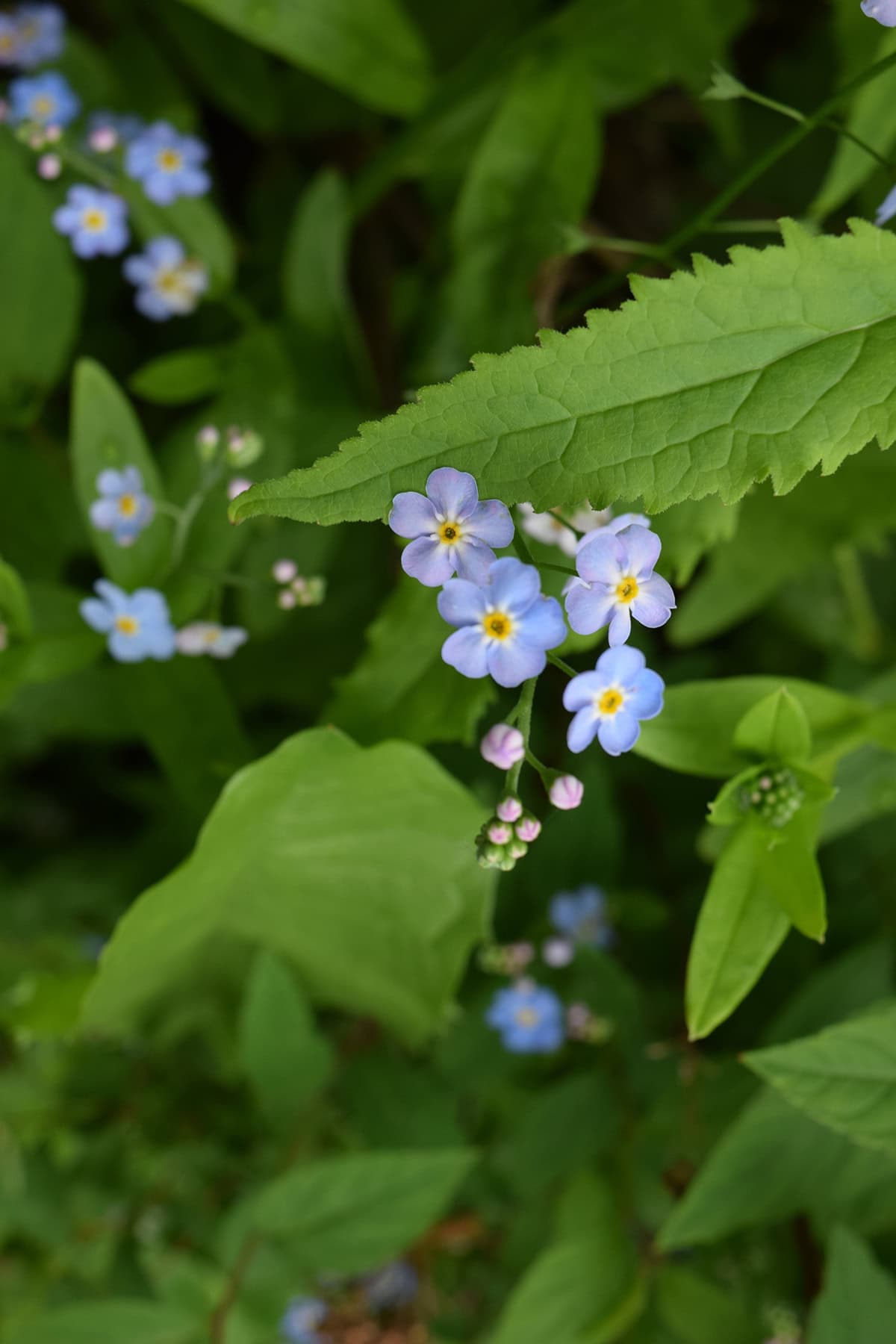
Forget-me-nots grow in full sun or partial shade, with more flowers where they get a few hours of sun daily.
Full sun produces compact plants and a heavy bloom, though the soil dries faster and needs more water. In hot climates, afternoon shade prevents drooping leaves and extends the season.
Heavy shade leads to leggy plants with fewer flowers and floppy stems. Morning sun followed by afternoon shade is the ideal setup.
The plants adapt to most light levels short of deep shade, where the drop in flowering is obvious. Good airflow and some direct light are enough.
Soil
Moist, well-drained soil is the goal. Forget-me-nots tolerate a lot, but rich, loose soil grows the best plants. Mix compost or other organic matter into heavy clay before planting.
Steady moisture is essential, especially in hot weather. Avoid both bone-dry soil and mud.
Loam and clay-loam are fine as long as they hold moisture. A pH between 6.1 and 7.5 is ideal, and very alkaline soil benefits from amendment.
Water forget-me-nots grow in shallow standing water, while other species need steady moisture. Check which species you have before choosing a site.
Compost or peat moss improves poor soil, and a layer of mulch cools the roots and holds moisture. Healthy soil means more flowers and better leaves.
Water
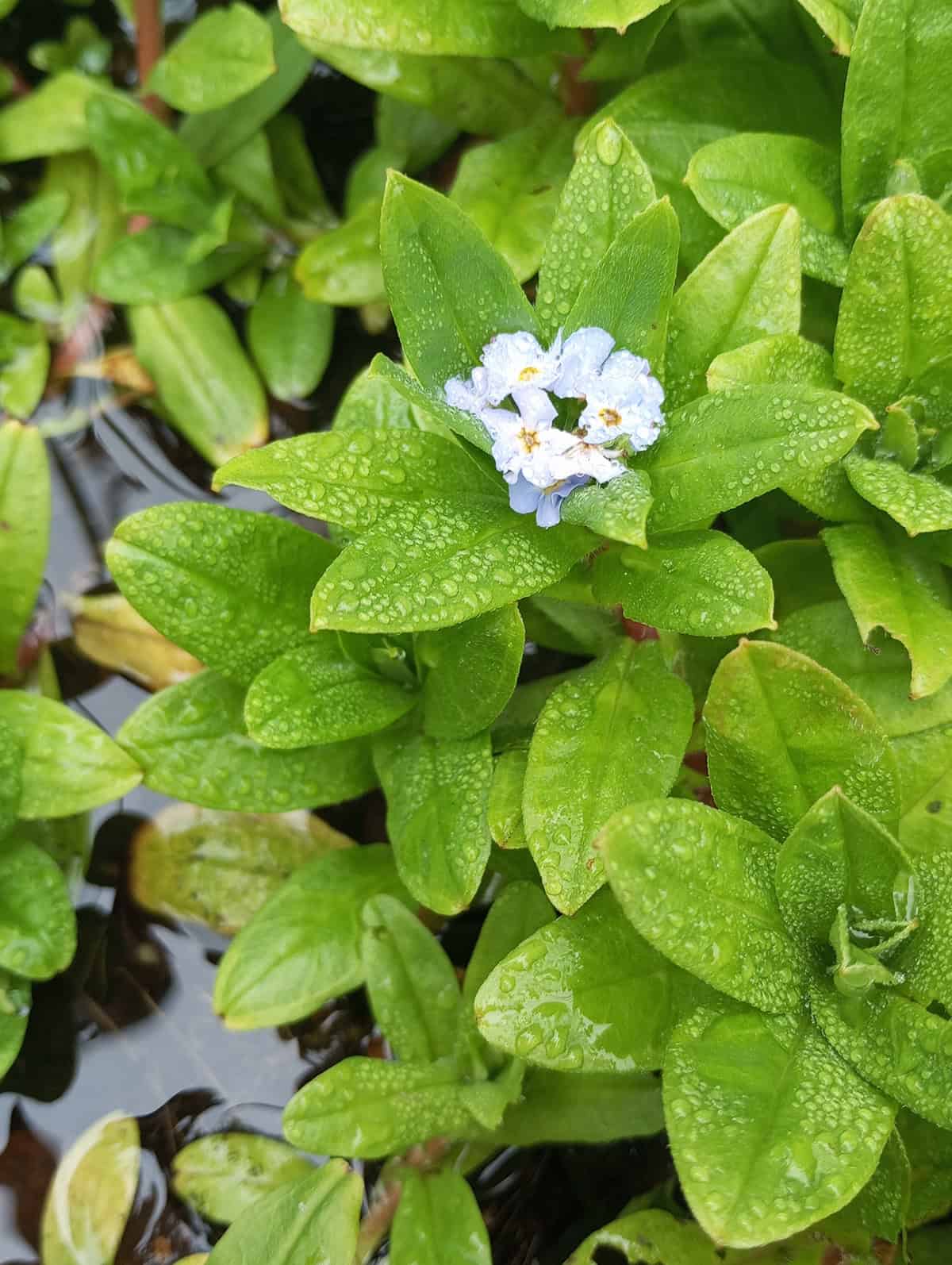
Forget-me-nots need slightly damp soil that is never soggy. Dry soil causes wilting and an early end to flowering.
Water forget-me-nots handle very wet spots, even a few inches of standing water.
Woodland and alpine types need evenly moist soil through the warm months. They tolerate brief puddles but struggle in ground that floods for weeks.
Wind and heat dry the soil faster, so check it with your fingers and water more frequently in those conditions.
Collect rainwater if possible, and use tap water at room temperature to avoid shocking the roots.
Temperature And Humidity
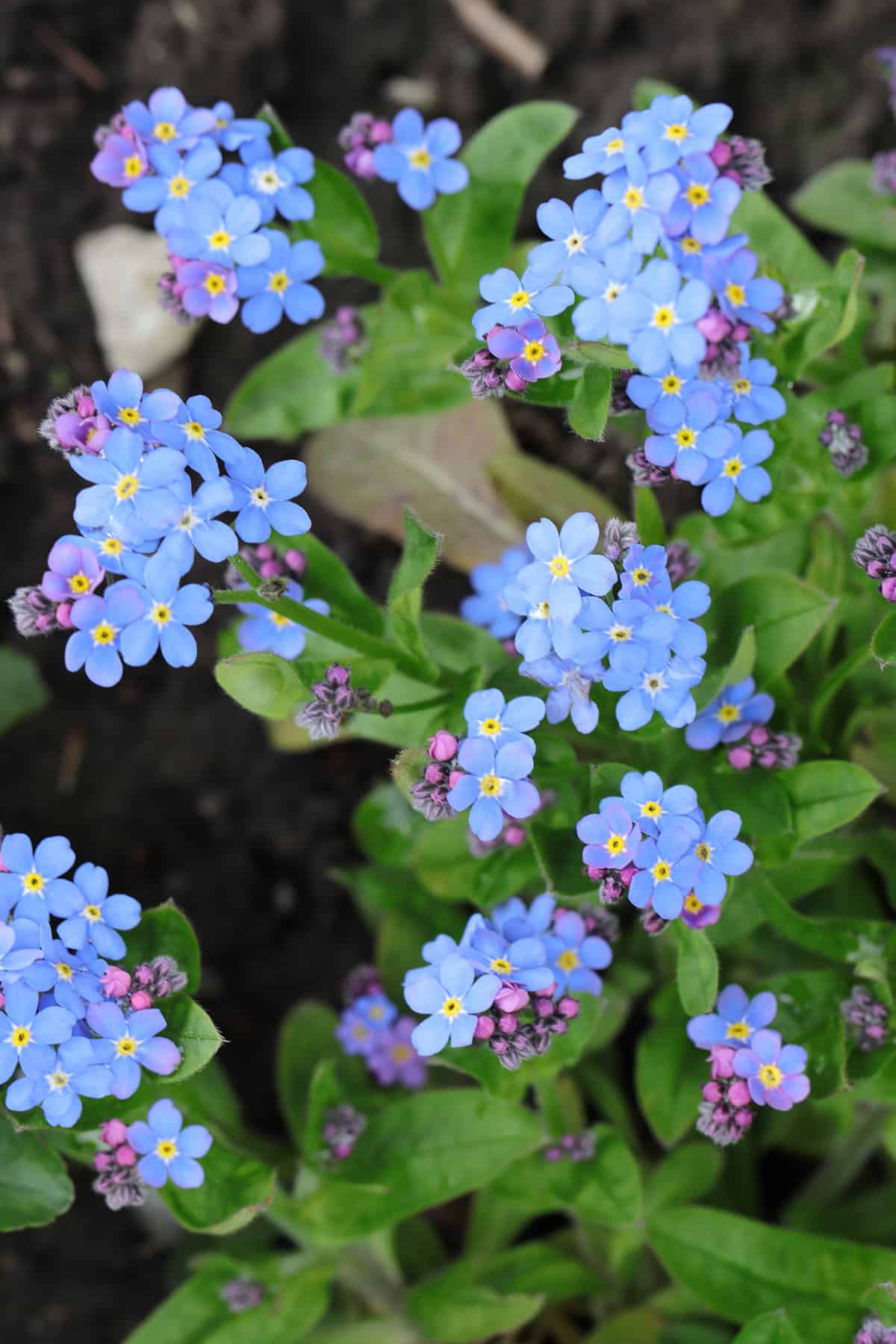
Forget-me-nots grow best in cool weather, with days around 60°F to 70°F and nights down to 50°F. Most species are hardy in USDA zones 3 to 8.
Extreme heat is hard on them, and plants fade quickly once summer heats up. A spot with steady, mild temperatures is best.
Moderate humidity is ideal. High humidity encourages mildew, while low humidity is rarely a problem as long as the soil has steady moisture.
Indoors, place pots away from hot air vents and drafts. Outdoors, good airflow helps, though strong winds dry the plants out.
Fertilizer
Forget-me-nots need only light feeding. Mix a balanced, general-purpose fertilizer such as 8-8-8 or 10-10-10 into the soil at planting time.
Reapply every six weeks or so for annual plantings, since soil nutrients run low as the season goes on.
Overfeeding produces lots of leaves and few flowers, so follow the package directions.
Water after fertilizing to carry nutrients to the roots. Moist, never waterlogged, soil is the target.
Propagation
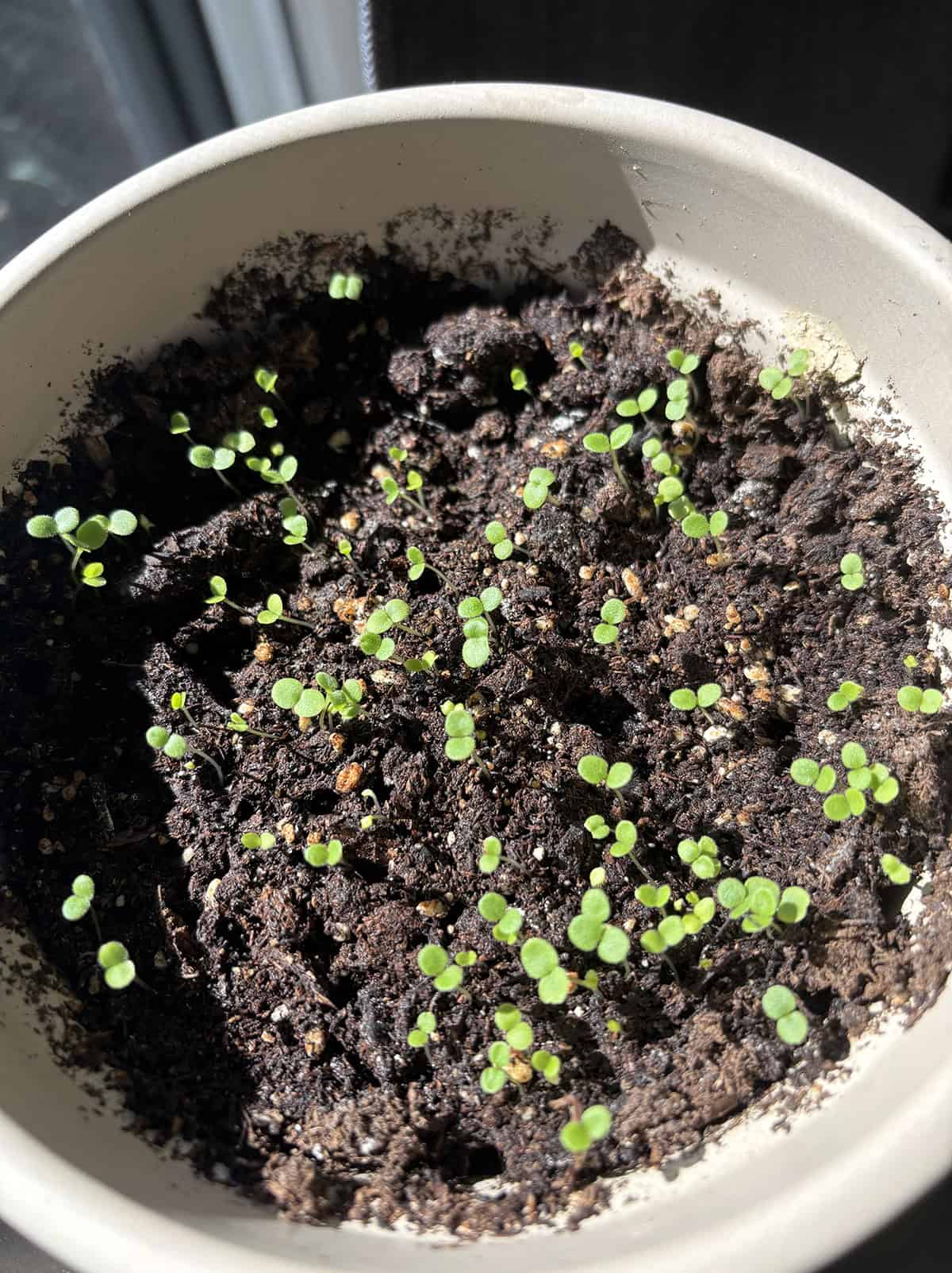
Forget-me-nots propagate easily from seed or division.
Sow seeds outdoors in early spring, or in late summer for blooms the following spring. Cover them with about 1/8 inch of soil, since darkness helps germination, and water so the soil is moist until they sprout.
For a head start, sow seeds indoors and move the seedlings outside once they are sturdy and the weather has warmed.
Perennial types also divide. Dig mature plants in early spring or fall, split the clumps and replant each piece.
Many types self-seed heavily, and new plants pop up on their own each year. Thin them if they get crowded. In some regions, woodland forget-me-not spreads aggressively enough to count as invasive, so check local guidance before planting near wild areas.
Pruning
Snip off faded flower stems to encourage more blooms and a tidier plant. Overgrown plants handle a trim.
Removing old flowers also controls self-seeding. Leave a few spent blooms in place for new plants next year.
Annual types die back at the end of the season and need little pruning. Trim perennials after flowering for a neater look and better airflow.
Remove diseased or damaged leaves as soon as you spot them.
Thin plants that crowd out their neighbors. Use clean tools and avoid heavy cuts, which stress the plants.
Potting And Repotting
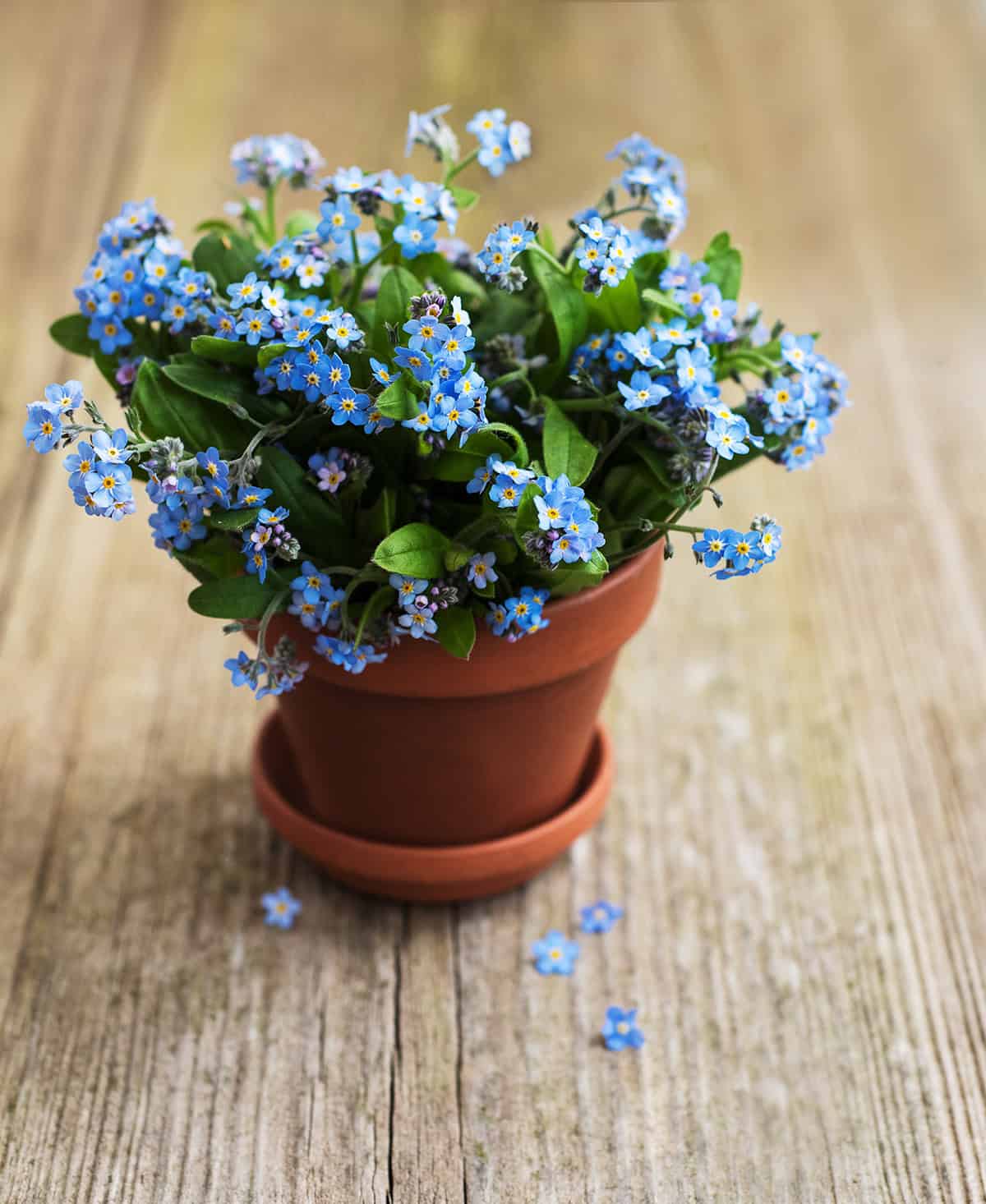
Choose a container with drainage holes, and place a piece of mesh or broken pottery over each hole to hold the soil in. Skip gravel at the bottom. Fill with fresh potting mix to about an inch below the rim for watering.
Rich, organic soil that drains well is best. A blend of peat, compost and regular potting soil is a good mix.
Repot when the plant outgrows its pot or roots poke out the bottom. Loosen the roots gently before moving it to a bigger container.
Water thoroughly after repotting, and place the pot in a spot with sun and some shade during the hottest part of the day.
Repotted plants look sluggish for a week or two, which is normal. Water so the soil is evenly moist, and watch for wilting or dropped leaves.
Divide crowded plants that stop blooming and pot up each section separately for healthy, flowering plants year after year.
Common Problems & Troubleshooting
Yellow leaves or spots point to too much water or poor drainage. Aim for moist soil, and let the top layer dry slightly before watering again.
Powdery mildew appears in humid weather or crowded beds. Remove leaves with white or gray patches and space plants for better airflow.
Aphids and slugs are the main pests. Aphids cluster on new growth and curl the leaves, and slugs chew holes. A spray of water knocks off aphids, and slugs come off by hand at dusk.
Hot weather causes wilting and brown leaf edges. Shade during the hottest part of the day helps, and early-morning watering gets the plants through the heat.
Leggy, thin plants need more light. Move them somewhere brighter, away from harsh afternoon sun, and trim weak stems for bushier growth.
Dividing or replanting every couple of years renews the planting. Pull unwanted seedlings by hand.
Plant Varieties
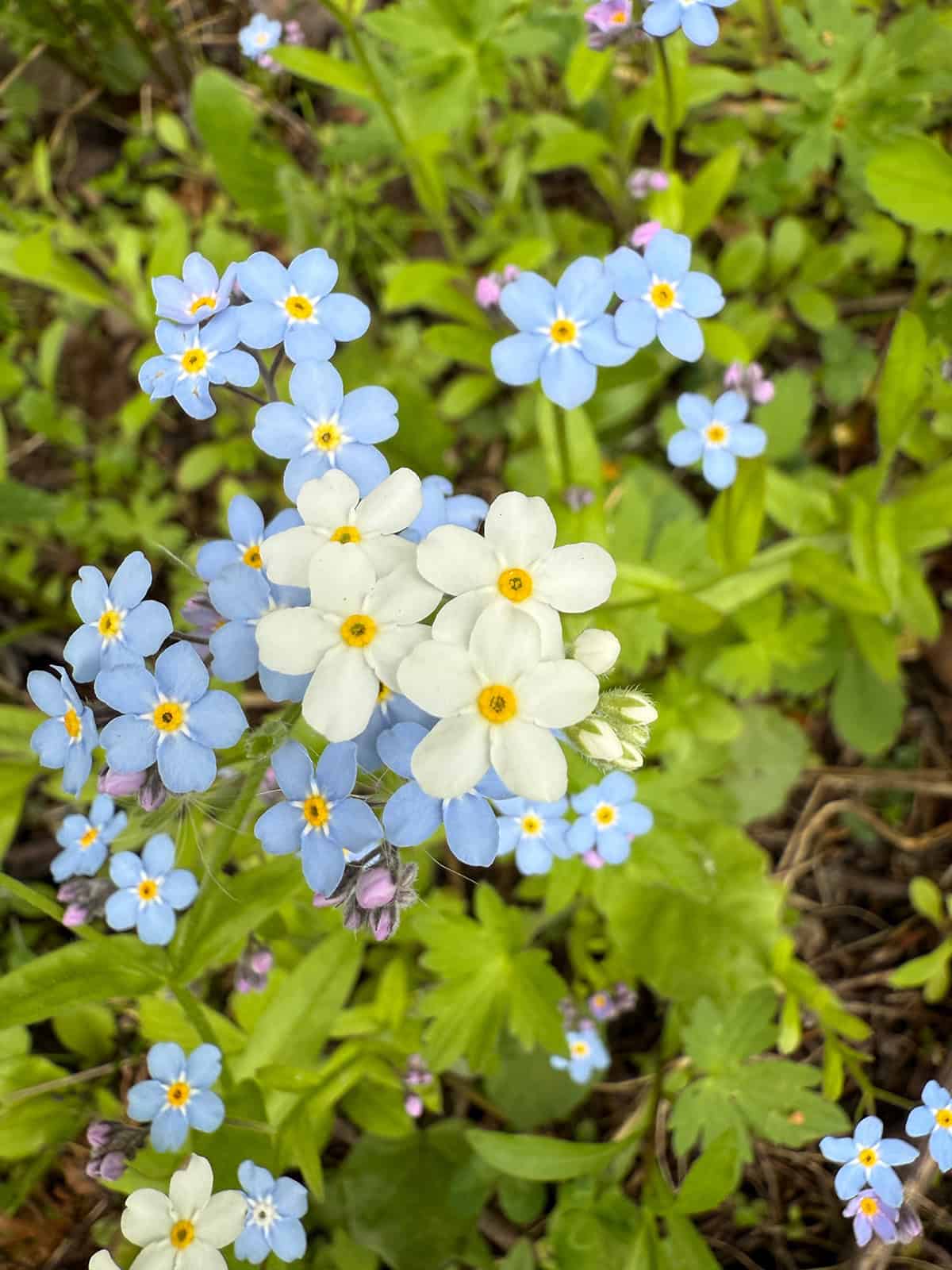
Forget-me-nots come in more types than most gardeners expect, with options for beds, containers and wildflower patches.
Alpine forget-me-not (Myosotis alpestris) has tiny sky-blue flowers about a quarter inch across on compact plants roughly 8 inches tall and wide.
Woodland forget-me-not (Myosotis sylvatica) likes moist, shady spots and rich soil. Its flowers come in blue, pink or white, and it is the most common garden type.
Water forget-me-not (Myosotis scorpioides) thrives in boggy soil or shallow water. Its petals overlap less than those of other types.
False forget-me-not, such as Brunnera macrophylla ‘Jack Frost’, has silvery leaves and blue flowers. It is a larger plant with foliage as striking as the blooms.
Match the type to your site, whether a bog edge, a shady bed or a pot.
Frequently Asked Questions
Questions about pots, indoor growing, life cycle and symbolism come up most for forget-me-nots.
How do I properly plant forget-me-not seeds in pots?
Fill a shallow pot with moist, well-draining mix. Scatter the seeds over the surface and cover them with a thin layer of soil, since they germinate best in darkness.
Water so the soil is evenly moist and never soggy, and place the pot in bright, indirect light once seedlings appear. Germination takes one to two weeks.
Can forget-me-nots be efficiently grown inside?
Forget-me-nots grow indoors in bright, indirect light and steadily moist soil. A cool room is best, since warm rooms shorten their life.
Use pots with drainage holes, check for pests now and then and snip off unhealthy leaves.
What are the different growing stages of forget-me-not flowers?
Seeds sprout in about 10 to 14 days and form a low rosette of small leaves.
As temperatures warm, flower buds appear on slender stems. Blue blooms open in spring or early summer and last several weeks.
Are forget-me-nots perennials that will return each season?
Forget-me-nots include annual, biennial and perennial types. Myosotis sylvatica, for example, behaves as a biennial or short-lived perennial.
Perennial types return for a few years in favorable conditions. Self-seeding is common, so new plants appear even as the old ones fade.
What is the significance behind the forget-me-not flower?
Forget-me-nots symbolize remembrance and lasting connection, and many people plant them to honor loved ones who have died.
Memorial events and causes, including dementia charities, use the flower for the same reason, and its modest blue color adds to the meaning.
How should I care for forget-me-not leaves to ensure healthy plant growth?
Water the soil when it is dry and avoid wetting the leaves, since moisture sitting on foliage invites disease. Snip off yellow or damaged leaves to tidy the plant and direct energy into new growth.
Mulch around the base holds moisture between waterings. Check the leaves now and then for pests or unusual spots, since problems caught early are easier to fix.