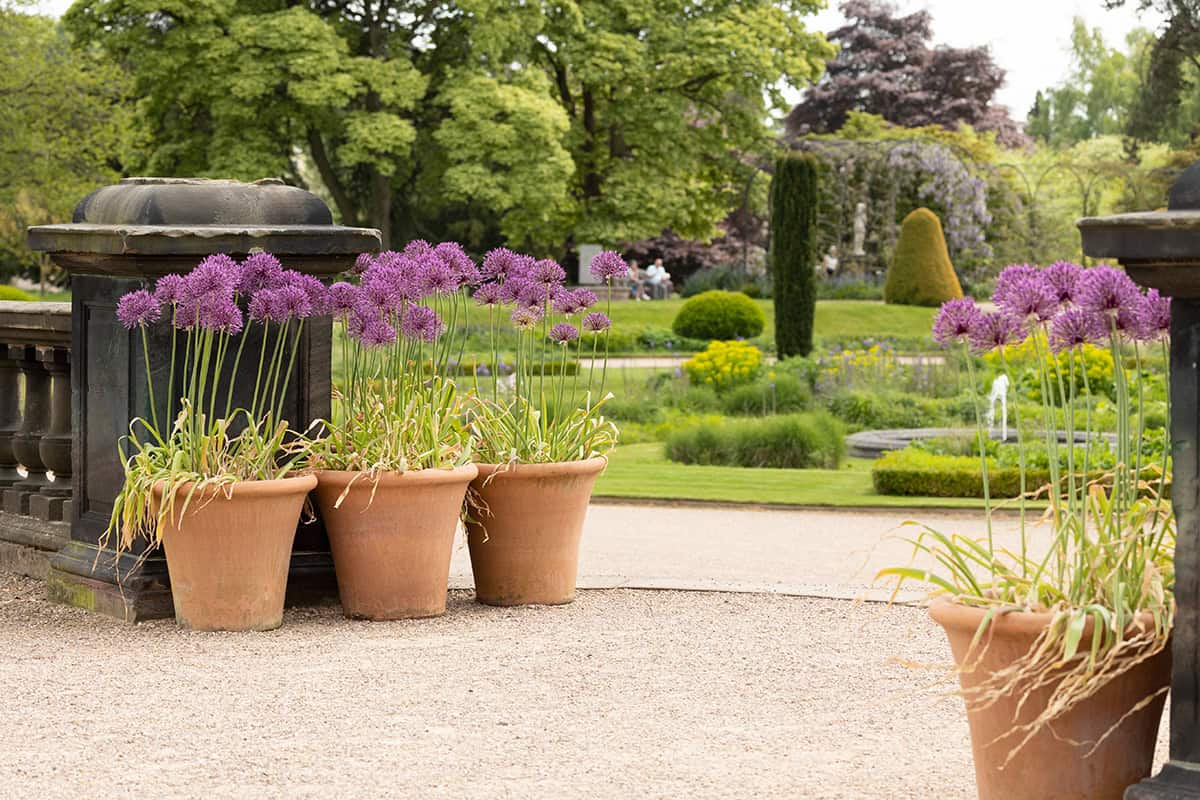
Terracotta and dark plastic pots heat up fast in July sun, and the roots inside cook along with them.
The twenty plants below handle that heat, and many need water only once the top inch of soil dries.
Mix a tall thriller, a mounding filler and a trailing spiller from the list, and one pot holds a full summer display.
Table of Contents
Outdoor Plants For Full Sun Pots
Pick pots at least 12 inches wide for most of these plants, since larger soil volumes dry more slowly. Light-colored or glazed containers run cooler than black plastic, and a saucer of gravel under each pot catches runoff while the roots drain freely.
Geranium

Zonal geraniums anchor a sunny pot with rounded flower heads in red, pink, coral or white. Ivy geraniums trail instead and look great spilling from window boxes. Both prefer soil on the dry side, so water once the top inch dries. Snap spent flower stalks off at the base for steady blooming from spring until frost.
Petunia

Petunias in full-sun pots need water daily in hot weather, and twice a day for hanging baskets in a heat wave. Spreading types like Wave and Supertunia fill large containers in weeks. Feed every week or two with a liquid fertilizer, since frequent watering flushes nutrients from the mix. Cut the plants back by a third in midsummer if they stretch.
Lantana

Lantana handles reflected heat from walls and pavement better than almost any other container plant. Butterflies crowd the small clusters of yellow, orange, pink and red flowers. Let the soil dry between waterings and shear the plant lightly in midsummer for a fresh round of color. Place pots out of reach of pets, since the leaves and berries are toxic.
Marigold

French marigolds grow 8 to 12 inches tall, a tidy size for pots, while African marigolds reach 2 to 3 feet with huge pom-pom blooms. Both handle heat and full sun. Water when the surface dries and pinch off faded flowers to extend the show into fall.
Calibrachoa (Million Bells)

Calibrachoa, or million bells, trails hundreds of tiny, petunia-like flowers over pot rims and basket edges. It drops spent flowers on its own, so deadheading is unnecessary. Use a well-drained mix, and feed weekly with a fertilizer that contains iron, since yellow leaves signal an iron shortage in high-pH soil.
Zinnia

Zinnias sown directly in a pot sprout within a week and bloom about two months later. Compact types such as Profusion and Zahara fill 10- to 12-inch pots with single or double flowers in every color except blue. Water at the soil line in the morning to prevent powdery mildew, and cut flowers freely, since picking encourages more.
Salvia

Salvias come in two main groups for pots. Annual scarlet sage forms neat red spikes, while perennial types such as May Night and Black and Blue carry purple or deep blue flowers that hummingbirds love. Water when the top inch of soil dries, and cut faded spikes back to the next set of leaves.
Verbena

Verbena forms mats of rounded flower clusters that spill over container edges in purple, pink, red, white and bicolors. Varieties bred for mildew resistance, such as the Superbena series, hold up best in humid summers. Water when the top of the mix dries, and trim the tips lightly every few weeks to encourage branching.
Portulaca (Moss Rose)

Portulaca, or moss rose, thrives in the hottest, driest pots on the patio. Its succulent leaves store water, and the ruffled flowers open each sunny morning in pink, orange, yellow, red and white. Use a gritty, fast-draining mix and water only when the soil is completely dry. Shallow bowls and strawberry jars fit its low, wide habit.
Lavender

Lavender needs a pot at least 12 inches wide with plenty of drainage holes and a mix of potting soil and coarse sand or perlite. Compact varieties like Munstead and Hidcote fit containers best. Water deeply once the soil dries, and shear the plant by a third after flowering. In cold climates, potted lavender survives winter best in an unheated garage or sheltered corner.
Sunflower (Dwarf Varieties)

Dwarf sunflowers such as Teddy Bear and Sunspot grow 2 to 3 feet tall with full-size blooms on short stems. Sow seeds directly in a pot at least 12 inches deep, since sunflowers dislike transplanting. Young flower buds track the sun across the sky, while mature heads settle facing east. Water steadily, especially as the flowers form.
Sedum

Sedums store water in fleshy leaves and shrug off heat and dry spells. Low groundcover types such as Angelina and Dragon’s Blood spill over pot edges, while upright Autumn Joy forms clumps of flat flower heads that age from pink to rusty red in fall. Use a gritty mix and water only when the soil is dry.
Rosemary
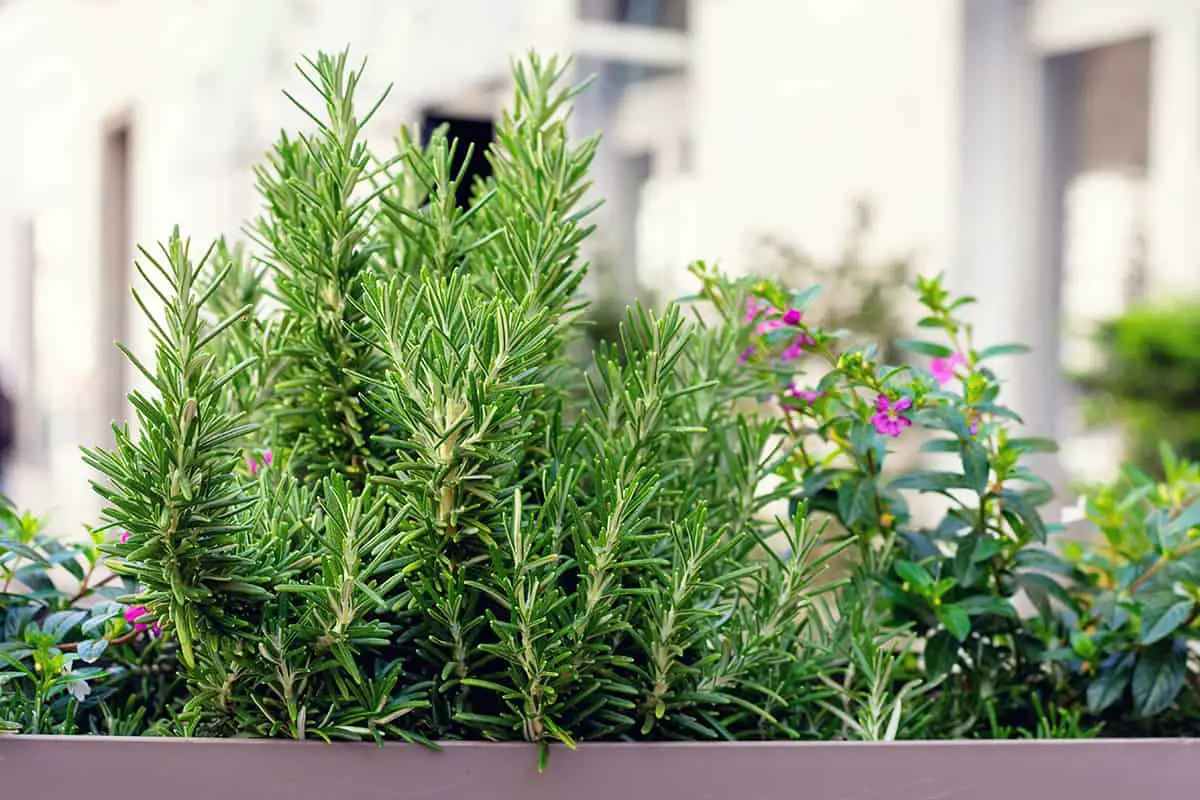
Rosemary grows into a fragrant, woody shrub in a sunny pot. Upright types such as Tuscan Blue add height, and prostrate rosemary trails over the rim. Let the soil dry between waterings, since soggy roots kill rosemary fast. In zones colder than 7, move the pot indoors to a bright, cool window for winter.
Gazania

Gazania, also called treasure flower, opens bold daisies striped or ringed in orange, yellow, red and cream. The flowers close in the evening and on cloudy days. It thrives in dry, sandy mix and needs water only when the top few inches dry. Deadhead regularly for blooms from early summer until frost.
Dianthus

Dianthus forms tidy mounds of blue-green leaves topped with fringed, clove-scented flowers in pink, red, white and bicolors. It prefers slightly alkaline, well-drained soil and blooms best in spring and early summer. Shear the plants after the first flush, and many varieties rebloom in fall.
Euphorbia ‘Diamond Frost’

Euphorbia Diamond Frost fills the gaps between bold flowers with a cloud of tiny white bracts from spring until frost. It handles heat and dry spells and needs no deadheading. Water when the top inch of soil dries. The milky sap irritates skin and eyes, so wear gloves when trimming.
Gaillardia (Blanket Flower)

Blanket flower blooms nonstop in hot, sunny pots, with daisies in red, orange and yellow rings. Compact varieties such as Arizona Sun fit containers. Use a lean, fast-draining mix, since rich soil and frequent watering shorten its life. Snip spent flowers to push out more.
Coreopsis
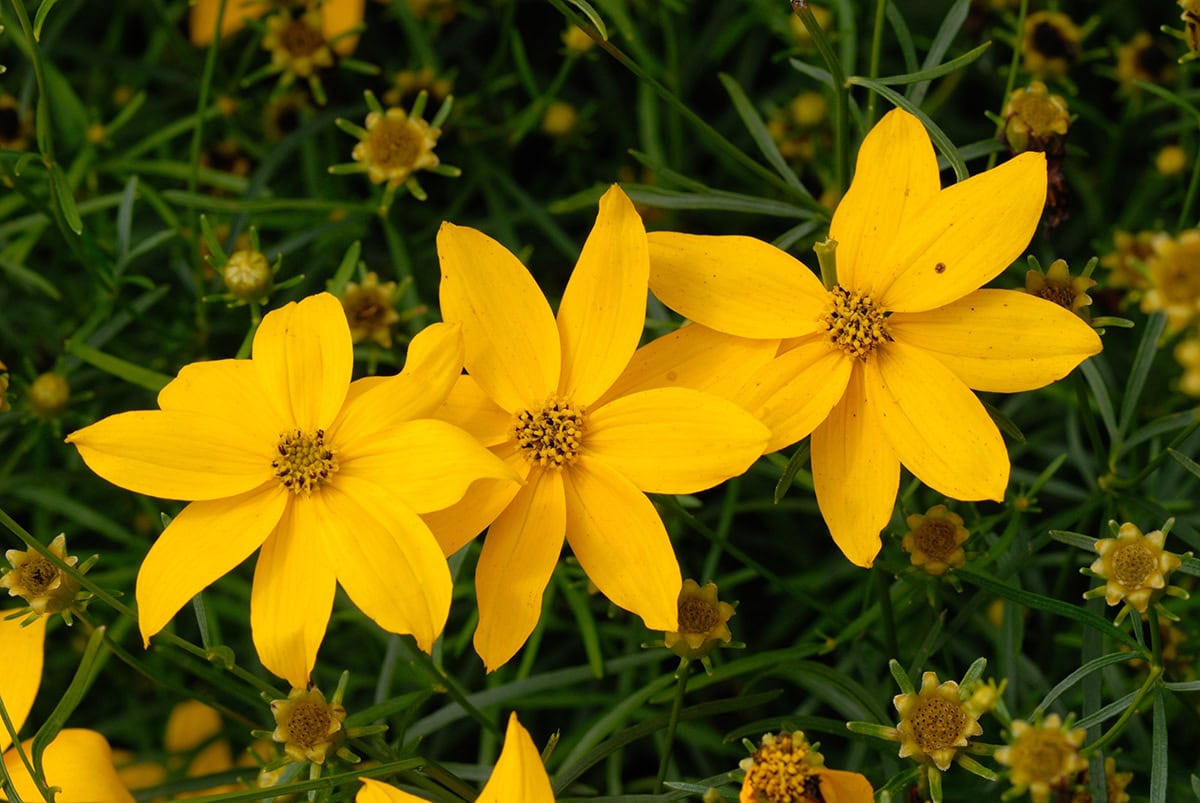
Threadleaf coreopsis such as Moonbeam forms airy mounds of fine leaves covered in pale yellow stars. Large-flowered types like Early Sunrise carry bigger golden blooms. Both tolerate drought once established and need little feeding. Shear the plants back by a third in midsummer for a second wave of flowers.
Echinacea (Coneflower)
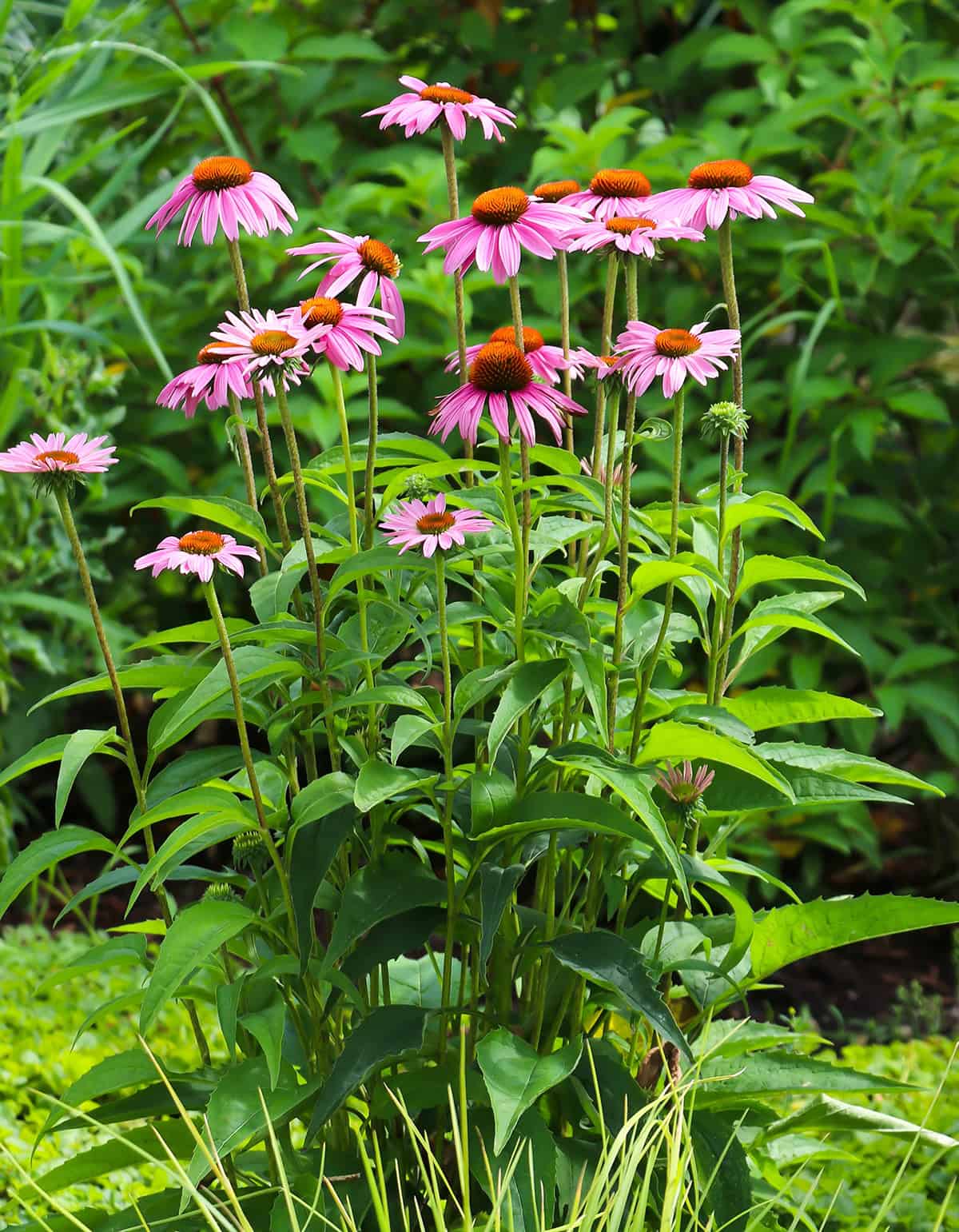
Coneflowers grow deep roots, so pick a pot 14 inches or more deep. Compact series like Kismet and Sombrero produce flowers in pink, orange, red, yellow and white on stems under 2 feet. Water deeply once the top couple of inches dry, and deadhead through summer for more blooms. Leave the last seed heads for goldfinches.
Dusty Miller

Dusty miller grows lacy, felted leaves in silver-white that cool down hot-colored combinations of red, orange and purple flowers. It tolerates heat and drought and needs water only when the top inch dries. Pinch off the small yellow flower buds to hold a dense, leafy shape.